I Dream of Jeannie was created and produced by Sidney Sheldon* and it seems like for a long time, he was the only person that believed in it. He originally wanted the first season to film in color — it was one of only two shows on NBC at the time not in color, but special photographic effects employed to achieve Jeannie’s magic weren’t technologically advanced enough to be in a full range of colors yet — but NBC did not want to pay it.
It was $400 an episode.
The network and Screen Gems didn’t think the show would make it to a second season. But Sheldon saw that ABC’s Bewitched was a success and bet on the show.
He was right. It was in the top 30 shows for almost every year that it was on before becoming a syndication powerhouse.
In the pilot episode, “The Lady in the Bottle”, astronaut USAF Captain Tony Nelson (Larry Hagman) lands his one-man capsule Stardust One on a deserted island in the South Pacific. While wandering the beach, Tony notices a strange bottle** that moves by itself. When he rubs it, smoke and a genie (Barbara Eden) pop out.
Tony’s first wish is to be able to understand her, then for a helicopter to rescue him. Jeannie, who has been trapped in the bottle for 2,000 years, falls in love with him and follows Tony back home where she soon breaks up his engagement with his commanding general’s daughter, Melissa. It seems like this was a storyline being set up for the long game, but Sheldon realized that this romantic triangle didn’t have much rope.
Tony keeps Jeannie in her bottle until he realizes she needs a life of her own, which is mostly her using her genie powers to try and make his life better. He worries that if anyone finds out that she exists that he won’t get to be part of NASA, but his worries lead him to being investigated by psychiatrist U.S. Air Force Colonel Dr. Alfred Bellows (Hayden Rorke) with the only person — at first — that knows his secret being Major Roger Healey (Bill Daly).
Unlike many of the sitcoms of the era, I Dream of Jeannie had multipart story arcs (which were created to serve as backgrounds for national contests). For example, nobody knew when Jeannie’s birthday was and the guessing game led to a contest, with the answer being April 1. There was also a four-episode event where Jeannie was locked in a safe on the moon and fans had to guess the combination to save her and another where Tony was replaced and had to be found. But there are also several long storylines, like Jeannie’s evil sister also named Jeannie, Jeannie’s ever-changing origin story which includes Eden’s first husband Michael Ansara as the Blue Djinn, Jeannie taking over the crown of her home country Basenji and so many more.
Supposedly, Hagman was so hard to work with that the producers seriously considered replacing him with Darren McGavin. They even wrote out a story with Tony losing Jeannie and McGavin finding her, but it never ended up happening. In her 2011 book Jeannie Out of the Bottle, Eden wrote, “Larry himself has made no secret about the fact he was taking drugs and drinking too much through many of the I Dream of Jeannie years and that he has regrets about how that impacted him.”
When there were two TV movies in the 80s, Hagman didn’t return. In I Dream of Jeannie… Fifteen Years Later his role was played by Wayne Rogers and as he’s on a space mission in I Still Dream of Jeannie, he’s simply written out and Hagman’s Dallas co-star Ken Kercheval took over as Jeannie’s master. There was also a cartoon called Jeannie that aired from 1973 to 1975 that had Julie McWhirter (who in addition to being the voice in so many cartoons is also the wife of Rick Dees) play Jeannie, “Curly” Joe Besser as Babu a genie in training and Mark Hamill as Corey Anders, a high school student.
Eden has also gone on the record as saying that she never connected with another actor in the same way as she did with Hagman. They’d reunite for the 1971 TV movie A Howling in the Woods.
Why did the show end? It was still near the top thirty after all. Well, Eden believes that there were enough episodes for syndication already and the ratings had gone down after Jeannie and Nelson got married in season 5. No one except for the network wanted that and it eliminated the romantic tension of the show.
I grew up watching this show multiple times a day, often paired with its one-time rival Bewitched. Just going back through these — the original 8 episodes with Paul Frees narration instead of the theme song are a revelation — has made the end of the year doldrums so much better.
You can get all 139 episodes on the Mill Creek I Dream of Jeannie The Complete Series blu ray set. You’ll get hours and hours of fun for a really great price at Deep Discount.
*Sheldon was inspired by the movie The Brass Bottle, which has Tony Randall’s character get a genie played by Burl Ives. Randall’s girlfriend was played by Eden.
**The bottle is actually a special Christmas 1964 Jim Beam liquor decanter containing “Beam’s Choice” bourbon whiskey. How weird is that?
There is no better film to start off our “Christian Cinema/Christploitation Week” of film reviews than this faith-based trailblazer distributed, in part, by 20th Century Fox. Its success resulted in a shift for Christian and faith-based films that took their battered, film-canistered reels off the roadshow circuit, out of church auditoriums and revival tents, and into mainstream, secular theaters*. The gambit paid off, as the once beleaguered production was not only a box-office success in the states, but a hit in over 150 countries where the film was translated into 30 languages.
The original theatrical one-sheet. The film was produced by Billy Graham associate Rick Ross and written and directed by actor Don Murray.
Not bad for a paperback copy of a book catching the corner of Pat Boone’s eye at an airport newsstand on the way to Mexico City. In interviews, Boone stated he was immediately engrossed in the life story of Pentecostal pastor David Wilkerson, which he called “a modern day sequel to the New Testament’s Acts of the Apostles.” So he optioned the book to transform it into a movie. . . .
Easier said than done.
Less than a dollar for a best-selling book that sold four million copies by 1968; by 1975, adapted into 30 languages, the sales blossomed to six million.
Boone said in interviews at the time of the film’s release that all the major studios passed, with the opinion that “religion is poison at the box office.”** So began Pat Boone’s five-year journey to get the film made.
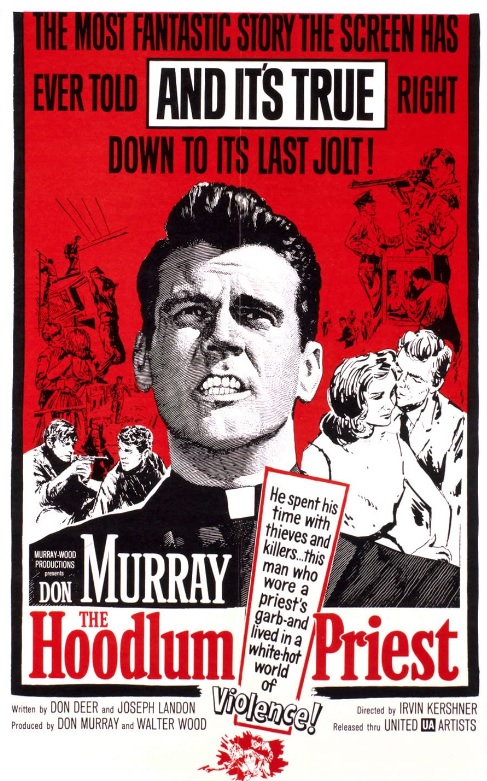
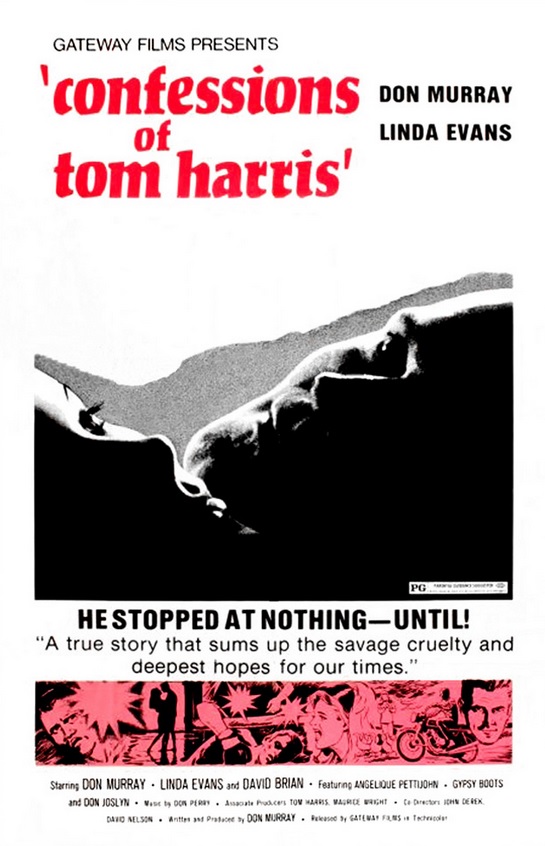
Luckily, Rick Ross, who made films for fifteen years with the Billy Graham Organization, and with the help of the Pennsylvania-based American Baptist Convention, production began on location in Harlem in October 1969. The script was penned and directed by actor Don Murray. Murray had already penned two, long forgotten, faith-based films: The Hoodlum Priest (1961), in which he starred in the true story of street minister Friar Charles Clark, and Confessions of Tom Harris (1969), in which he starred with Linda Evans in the true story of Tom Harris, an alcoholic ex-GI and loan shark debt collector who experienced a religious conversion and became a drug counselor (Harris was also a Golden Gloves boxer and future Hollywood stuntman).
Image left: Murray penned as screenwriter Don Deer. Image right: Also known under the titles Tale of the Cock and Childish Things.
Christian and secular audiences responded positively to The Cross and the Switchblade, making it a modest box office hit against its slight budget. The film’s detractors, of course, didn’t take the film’s production values to task nor its script or directing by actor Don Murray: their main rub was that Pat Boone starred — and was “unconvincing” in the role.
Ugh. Whatever, you uppity-degree, English literature critics who failed as screenwriters. Hey, are you by any chance related to the studio executives that said the film would never be a hit?
Also adapted into a comic book by iconic artist Al Hartley, the story begins as Assemblies of God pastor David Wilkerson reads a 1958 issue of Life magazine about the lives of seven Brooklyn teenagers who are members of a criminal gang. From that, Wilkerson receives a calling to minister to the city’s gangs — and steps into the middle of a gang war between the Mau Maus — led by Nicky Cruz (a fine Eric Estrada, forget the critics) — and the Bishops. And both gangs scoff at the pastor’s plans to hold a youth rally to invite all of the gangs and drug addicts in New York.
At first, Cruz conspires to get “rid of the preacher man” by using Rosa, his heroin-addicted girlfriend in his plans. In time, the pastor, though Christ, melts the gang leader’s heart — and he brings a truce among the gangs. Nicky Cruz then becomes an ordained minister and, with David Wilkerson, they start a teen center, Teen Challenge, to help other, trouble youths.
Sound hokey? Well it’s all true. It happened. Sometimes, real life — and the best things in life — are corny.
Al Hartley, who worked for Stan Lee and Marvel comics drawing Spiderman, The Hulk and Ironman, received Christ as His Lord and Savior in 1967.
Al Hartley now has many of his secular and faith-based titles — including his Archie-verse — available as Kindle Digitals through Amazon.
A sequel, which concentrated on the post-salvation life of Nicky Cruz and his own ministry, was to be produced by the team behind Erik Estrada’s second Christian-based film, The Ballad of Billie Blue (1972). Sadly, that film was never realized, and Estrada’s chance to have his name, alone, on the top of a marquee, was lost. He’d go on to co-star with George C. Scott and Stacy Keach in The New Centurions (1973), Airport 1975 (1974), and Midway (1976). He then booked his iconic role on NBC-TV’s CHiPs (1977 – 1983): a blessing that made him a star, but derailed his theatrical potential.
You can enjoy this simply wonderful movie courtesy of the Vision Video You Tube portal; it’s an ad-supported steam with the ability to skip through the ads. The studio shingle also offers the film as a 50th anniversary DVD via their website. You can also watch it on Christian Cinema auteur David A.R. White’s (whose name you’ll see mentioned, often, this week) PureFlix platform. You can sample the trailer on You Tube.
The Cross and the Switchblade is a stellar, inspirational film filled with a lot of heart. Boone and Estrada are fine, and Don Murray’s script and direction — considering the budget and the long journey to the get the film made — is an engaging, entertaining watch.
So watch it.
* One of those later, well-received, mainstreamed faith films was 1978’s Born Again, Frank Capra, Jr.’s biographical film on the life of Richard M. Nixon’s Special Counsel and Watergate co-conspirator, Charles Colson. Colson converted to Christianity while in prison and came to incorporate the Prison Fellowship Ministries.
** In 1955, screenwriter and director Henry Koster, who achieved critical and box office acclaim with his 1953 biblical epic, The Robe, met with equal acclaim for A Man Called Peter. A chronicle on the life of preacher Peter Marshall, who came to serve as Chaplain of the United States Senate, was adapted from a 1951 best-selling biography written by his wife, Catherine. Another of Catherine Marshall’s best sellers, 1967’s Christy, based on the life of her mother, a school teacher who taught impoverished Appalachian children, was adapted into a 1994 CBS-TV movie and television series.
About the Author: You can learn more about the writings of R.D Francis on Facebook.He also writes forB&S About Movies.
A Harlequin for my heart:Image courtesy of Sherry E. DeBoer via her IMDb page from a “Teen” magazine photo shoot.
Well, you know how the VCRs roll at B&S About Movies . . . where a review of Peter Carpenter’s Point of Terror, as well as Blood Mania, leads to a reader inquiry and discussion on whatever happened ever happened to Pete . . . which inspires a two-fer review of Vixen! and Love Me Like I Do to finish off his all-too-slight resume. And those discussion about Pete left us wondering . . . “What ever happened to Gene Shane from Werewolves on Wheels and The Velvet Vampire?”
Well, as you know, we solved “The Case of Peter Carpenter” with that said, two-fer review, and we peeled away at the onion that is “The Mystery of Gene Shane” watering our eyes with our review of The Velvet Vampire. Luckily — because we are so exhausted from those two crazed investigations of our favorite actors of yore — “The Case of Sherry Miles,” now known as DeBoer, is more easier slice and diced, thanks to her involvement in her own IMDb page, along with the many, loyal websites* dedicated to all things Hee Haw (an old “Kornfield Kountry” TV series that aired on CBS in the ’60s).
So, let’s pay tribute to one of our favorite — and missed — actress of the ’60s and ’70s.
What might have been: Sherry won — then lost — the role of Bobbie to Ann-Margret in Mike Nichols’s Carnal Knowledge (1971) — which also starred the equally burgeoning Jack Nicholson and Candace Bergen. Image courtesy of the Sherry E. DeBoer Archives, via IMDb.
That Teen modeling spread we used for our banner, above, soon transitioned Sherry into an acting career, which began with the pre-Gilligan’s Island Bob Denver series The Good Guys (1969), an early Aaron Spelling series, the counterculture sci-fi drama, The New People (1969), and Medical Center (1969) starring Chad Everett (The Intruder Within). Sherry’s other, early ’70s appearances included the popular series Mod Squad, Nanny and the Professor, Pat Paulsen’sHalf a Comedy Hour, The Name of the Game, The High Chaparral, The Beverly Hillbillies, Adam 12, Love American Style, and The Partridge Family (Sherry over Susan Dey, every day of the week — and twice on Sundays!). As we crossed the nation’s bicentennial, Sherry appeared on the popular series Baretta with Robert Blake (Corky), Police Woman with Angie Dickinson (Big Bad Mama), Richie Brockelman, Private Eye with future director Dennis Dugan (Love, Weddings & Other Disasters), and Wonder Woman with Lynda Carter (Bobbi Joe and the Outlaw). And let’s not forget Sherry’s 26-episode run as part of the comedy ensemble on the homegrown variety show Hee Haw* during its 1971 to 1972 season.
A one-time heiress to the Hawaii-based Long’s Drug Store chain (now owned and operated by CVS since 2008; I’m in there, often), Sherry Miles got married, became a DeBoer, and retired from the business after her final, on-camera appearance during the third season of Wonder Woman. Since her retirement, she’s become a long-respected animal rights activist.
Adorable. Sherry in 1969 on Pat Paulsen’s Half a Comedy Hour/Walt Disney Television.
Some of Sherry’s films you may not know. Others you have seen. And, hopefully, after this “Exploring” feature, you’ll search out the others. But you’ll surely revisit with Sherry in everyone’s favorite film of her career: The Velvet Vampire, a film so gosh-darn fine that, no offense to Sherry, intended: even if she weren’t in it . . . basically, we’re telling you to put The Velvet Vampire on your must-watch list, unintended insults to Sherry, be damned.
Okay, let’s unpack Sherry’s all-too-brief, big screen career, shall we?
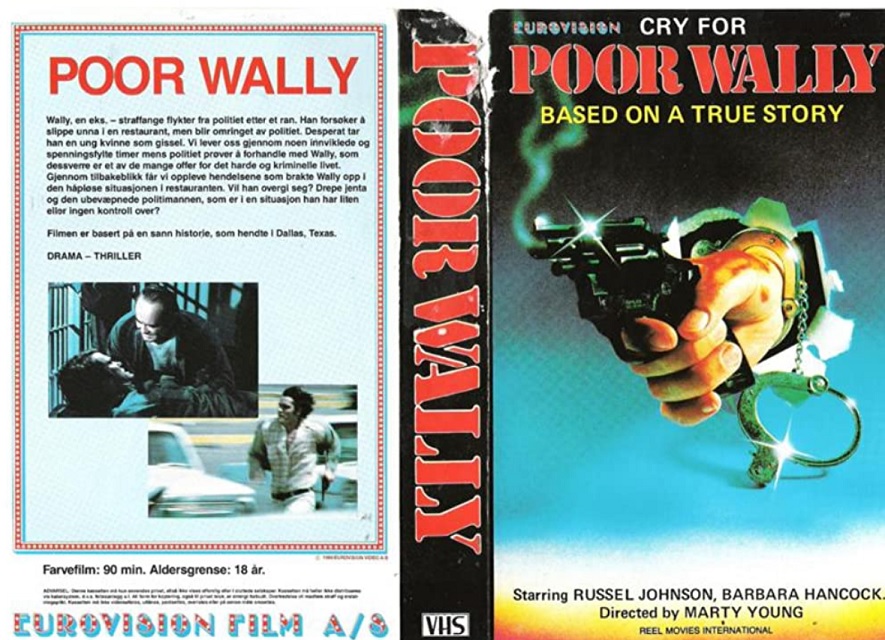
Cry For Poor Wally (1969)
Everything . . . ended up on VHS in the ’80s. Everything.
Russell Johnson (the Professor of Gilligan’s Island fame) stars as the small town sheriff in this “based on a true story” crime-drama filmed in Dallas, Texas. Johnson confronts Wally (a very good Keith Rothschild in his only film role; Johnson is equally fine): a fugitive on the run who takes a woman hostage in a diner with the goal of staying out of prison — no matter the cost. As Johnson tries to talk down Wally, the story flashes back as to the “why” it all happened: upon the death of his mother, his father leaves (abandons) him for greener pastures; his girlfriend (Sherry Miles) also contributes to his psychotic break.
Keep your eyes open for another slight-resume actress in Barbara Hancock, who we enjoyed in her fourth and final film, the “GP” horror film, The Night God Screamed (1972). In addition to Russell and Sherry, this is packed with a great cast of familiar character actors of the you-know-them-when-you-see-them variety of Elisha Cook, Jr., Bill Thurman (!) ,Gene Ross, and Paul Lambert.
Cry for Poor Wally proved to be the only producing and directing effort by Marty Young. Screenwriter Marshall Riggan followed with the Christian apocalypse drama Six-Hundred & Sixty Six (1972) and completed his features career with the lost, psychological horror, So Sad About Gloria (1973).
There’s a copy on the Internet Archive to stream. There’s also a ten-minute highlight reel — of its opening diner scene — courtesy of our friends at Scarecrow Video on You Tube, who also contributed the film’s full-digitized upload to the IA.
To say Sam and I love this movie — Sherry’s presence, aside — is a well-worn trope.
The Phynx are a manufactured band — kind of like the Monkees meets Stripes — made up of A. “Michael” Miller, Ray Chipperway, Dennis Larden and Lonny Stevens. They’re trained in all manner of espionage, as well as rock ‘n roll, including meeting Dick Clark, record industry-emissary James Brown, and being taught how to have some “soul” by Richard Pryor. Hey, wait a sec . . . didn’t Cliff Richards and the Shadows do the “spy rock” thing in Finders Keepers (1966)?
At once an indictment of the system and the product of the very hand that it is biting, The Phynx occupies the same weird space as Skidoo, i.e., big-budget Hollywood films trying desperately — and failing — to reach the long-haired hippy audience — like the Monkees with Head — yet failing to understand them at any level. Sort of like the next film on today’s program.
Since this is locked up in the Warner Archive, there’s no streams to share, but here’s a clip on You Tube.
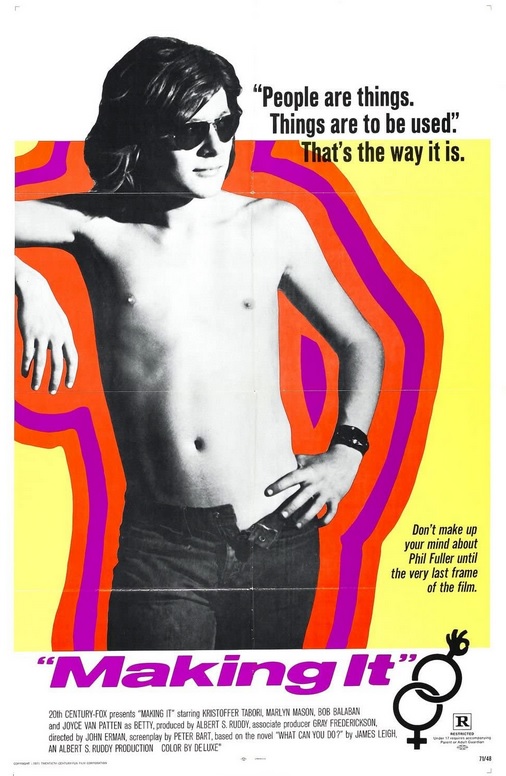
Making It (1971)
Ugh. The marketing of movies.
Based on the theatrical one-sheet and the R-rating, you’re expecting a soft-core sexploitationer: you actually end up with a not-so-bad, smart “coming of age” teen dramedy. As it should be: it’s written by Peter Bart (for 20th Century Fox), who you known best as the co-host, with film executive Peter Guber, of AMC’s film talk and interview programs Shootout and Storymakers, as well as Encore’s In the House. True movieheads known, that, after his screenwriting career, Bart was a writer at the New York Times, an Editor-In Chief at Variety, and later a Vice President of Production at Paramount Studios. While serving as the screenwriting debut for Bart, Making It was also the feature film debut for longtime TV director John Erman (Outer Limits, My Favorite Martian, Star Trek: TOS); continuing with TV series, Erman directed numerous TV movies into the early-2000s.
While Sherry Miles is what brought us here: we’re also captivated by a cast that features early roles for the familiar Bob Balaban (made his debut in in the iconic Midnight Cowboy), David Doyle (yep, Bosley from TV’s Charlie’s Angels), character actor extraordinaire John Fiedler, Denny Miller, Lawrence Pressman, and Tom Troupe, along with the brother-sister thespian duo of Dick and Joyce Van Patten.
Based on the ’60s best-seller, What Can You Do?, a very young Kristoffer Tabori (later of Brave New World and a Star Wars video game voice artist) stars as Phil Fuller: a 17-year-old ne’er-do-well clone of David Cassidy (who would have been perfect in the “grown up” role) living with his widowed mother (Joyce Van Patten). He quenches his self-centered needs by using the girls in his school (prom queen, Sherry Miles), his nerdy best friend (a very young Bob Balaban), and his basketball coach (Denny Miller) — by taking up with his wife (Marlyn Mason). Meanwhile, Joyce Van has or own sexual issues: she’s facing the thoughts of an abortion after shacking up with an insurance agent (played by her brother!). Then Phil, himself, deals with the issues of abortion when he gets one of his high school-conquests, pregnant.
In the end, what you get in the frames of Making It is not a sexploitation comedy, or even a “coming of age” dramedy, but an insightful examination of a pre-Roe vs. Wade world regarding the legalities surrounding abortions (then illegal in California, where this takes place, but legal in New York, where a Patten’s character considers going to get one).
It’s pretty heavy stuff of a time and place, but without the favorable atmosphere of Fast Times of Ridgemont High — if that film centered soley on Mike Damone knocking up Stacy Hamilton. My youthful nostalgia for movies like this slide in nicely next to an early Sam Elliot in Lifeguard, Dennis Christopher in California Dreaming, and the genre change-up with Cathy Lee Crosby in Coach. Your own nostalgia mileage — and for all films Sherry Miles — may vary.
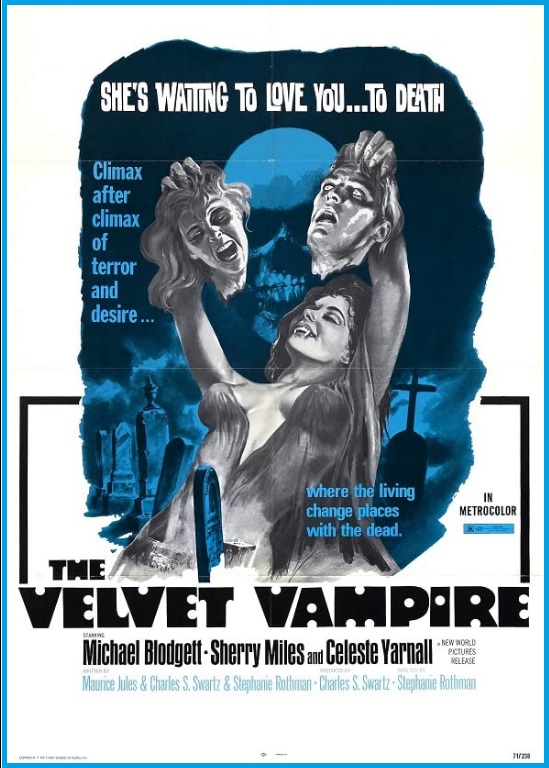
My enjoyment of this movie, which serves as the suffix-title to this retrospective on Sherry Miles, is unbound. Sherry is not only stellar in it: so is the cast, under the pen and lens of Stephanie Rothman. Simply put: this is a beautiful, creepy film.
Swinging Lee Ritter and his vapid, but pretty wife, Susan (Sherry Miles), make the mistake of accepting the art gallery invitation of a mysterious, red-dressed vixen, Diane LeFanu (Celeste Yarnall), to visit her secluded, desert estate. The couple soon discover Diane is a centuries-old vampire — and both are objects of her bisexual thirsts.
The Todd Killings (1971)
Also known as Maniac in the VHS ’80s.
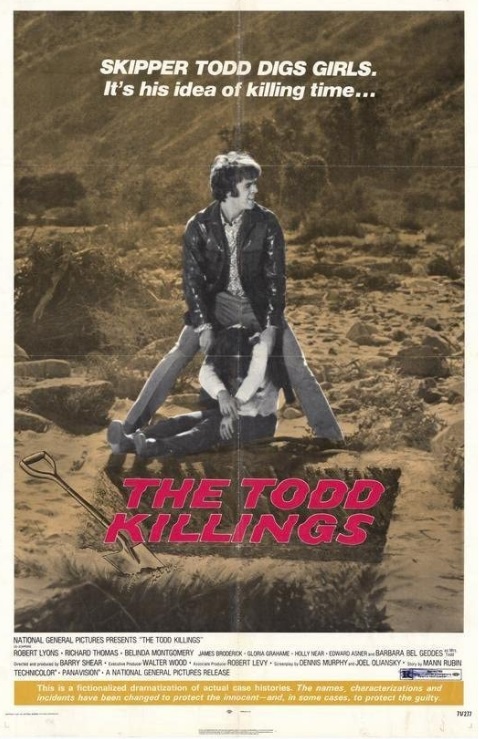
Fans of the based-in-fact teen murder tale of River’s Edge (marketed on the later VHS “slasher” reissues as Maniac; it’s why we rented it) will enjoy Sherry Miles’s second — after Cry for Poor Wally — true crime drama, this one based on the true story of ’60s thrill-killer Charles Schmid, known as “The Pied Piper of Tuscon.”
The film was inspired by a March 1966 Life magazine article about the killings, which, in turn, inspired the 1966 short anthology story “Where Are You Going, Where Have You Been?” Schmid’s exploits were also loosely adapted into the Treat Williams-starring Smooth Talk (1985), as well as the (woefully inferior) films Dead Beat (1994) and The Lost (2005).
Skipper Todd (an outstanding Robert F. Lyons, a much-seen ’60s TV actor in his fourth feature film, but first starring role) is a charismatic, 23-year old ne’er-do-well who charms his way into the lives of out-of-his-age-bracket high school kids in a small California town. The girls, of course, fall instantly for him and head out to the desert for some romantic fun — only never to return. As in the true crimes that inspired River’s Edge, Todd, aka Schmid, was assisted by his girlfriend and best friend in luring, killing, and burying the victims. Shocking for its time, Belinda J. Montgomery and Richard Thomas are frontal nude; Montgomery’s is cut from the later VHS versions.
As with Cry for Poor Wally, this is another one of those lost, underrated gems — it’s heartbreaking for all concerned, even the beyond salvation Skipper Todd — of the Drive-In era rediscovered, not during the UHF-TV ’70s, but the home video ’80s. The quality comes courtesy of its familiar cast of a just-starting-out Richard Thomas (as Skipper’s loyal hanger-on buddy), along with Edward Asner, Barbara Bel Geddes, James Broderick, Michael Conrad (remember the gruff commander on Hill Street Blues?) Gloria Grahame, and Fay Spain. Also keep your eyes open for musician-actress Holly Near in her third role; she made her debut in the critically lambasted Angel, Angel Down WeGo (1969).
There’s no trailers or streams to share — well, there’s a You Tube Italian-dub to skim — but the DVDs abound in the online marketplace. This is a great film. It’s also a nihilistic, downbeat one, but still worthy of a watch.
Calliope (1971)
The new and improved Calliope.
“Spoofs today’s sex films (i.e., porn) the way Batman spoofed Super Heroes!” — tagline for the original, first release of Calliope
I just can’t see my dearest Sherry signing on the dotted line for a goofy, post-Russ Meyer wannabe skinflick that proclaims: “It spreads, and spreads, and spreads,” only to equate its comedy to a beloved Adam West TV series. Obviously, what was presented during negotiations to Sherry, and what was distributed to theaters, differed. Wildly. But what else should we have expected from writer-director Matt Climber, he who gave us The Black Six (1973), Pia Zadora in Butterfly (1981), and a sex-bent take on Indiana Jones with Yellow Hair and the Fortress of Gold (1984)?
Well, this movie. That’s what. And this one is truly a lost film.
So much for producing an Americanized remake of the significant and cinematically-respected La Ronde (1950), a 1900s-era, spicy-romantic, French-language comedy by German-born director Max Ophüls, which earned a 1952 “Best Screenplay” Oscar nod. He also repeated that Oscar feat with his next film, Le Plaisir (1952), which earned a 1955 nod for its Art Direction, done by Max, himself. So loved was La Ronde in its homeland, as well as across Europe, Roger Vadim (Barbarella) updated the film as Circle of Love (1964), with his soon-to-be lover, Jane Fonda. As for the Ophüls original: it took four years before U.S. film sensors approved the film, sans cuts, for theater showings in 1954.
As for the U.S. remake, originally released under the title, Calliope, what could go wrong: everything. Didn’t you hear the sound of two-time Oscar-nominated Max Ophüls turning over in his grave?
Both films are concerned with ten people “in various episodes in the endless waltz of love” (they go “round and round,” thus the titles), as they each hop from encounter to encounter . . . and that’s were it all stops. Dead.
Since Americans were still swingin’ from the free-loving, Summer of Love ’60s, and Mike Nichols answered the “sex revolution” charge with the aforementioned Carnal Knowledge (1971) (and Paul Mazursky’s 1969 effort, Bob & Carol & Ted & Alice), Allied Artists (an outgrowth of Monogram Pictures, a library now owned-split among Warner Bros., Metro-Goldwyn-Mayor, and Paramount; Warner owns Calliope) decided that, instead of the main protagonist (now a hippie musician instead of soldier-on-leave) eventually finding love with the partner he started off with (Sherry Miles, now a band groupie, instead of the original’s prostitute) . . . he receives “the gift that goes on giving”: a sexually transmitted disease, i.e., venereal disease, since this was the ’70s and not the AIDS ’80s.
Yuk Yuk.
Calliope (no theatrical one-sheets exist, at least online), needless to say, bombed. Ah, but the “Golden Age of Porn” was in full swing, so Allied Artists didn’t give up: a year later, in 1972, the reimaged Love Is Catching hit the circuit; it opened in, of all places, the home base of B&S About Movies: Pittsburgh. It bombed, again, and harder than a Richard Harrison Philippine film he was edited-into and never signed on to do.
This soft-sexploitation romp causes me to reflex on poor Gerald McRaney and Tom Selleck, each scoring their first major roles in Night of Bloody Horror and Daughters of Satan, respectively. The scripts are pretty good . . . and work is work . . . and they thesp’d up a sweat to make it all work . . . then J.N Houck, Jr., and worse, in Tom Selleck’s case, since U.S. major, United Artists, backed it, cheesed the films with exploitative ad campaigns. Just like Calliope. And Skidoo. And Myra Breckinridge.
Sherry, six films in to her career, and just missing out on a co-starring role with Jack Nicholson in one of Mike Nichols best films — a frank, adult-discussion of modern-day sexual issues — was deserving of a better, leading lady role than this STD sex farce.
Sure, it’s a well-shot picture, and the acting is pretty decent (we have great character actors Marjorie Bennett and Stan Rose, on board). And it’s not all that bad; sure, modernizing from the early 1900s to the late 1960s is inspired. And it’s not at all porny, since the sex scenes are implied, more than shown . . . but I still have this need to go back in time and kick someone . . . for having my sweet Sherry transmitting VD in a movie.
But things are looking up, nicely, with our next feature.
The Ballad of Billie Blue (1972)
Also known as Starcrossed Road on ’80s VHS shelves.
From a sexploitation flick to a Christian cinema obscurity: only in Tinseltown, baby. And while his name is nixed from the one-sheet (whatever, Plekker, nice n’ cheesy paste-up work): the writer-director here is Ken Osborne, the man behind the pen and lens on the biker flick Wild Wheels (1969). He also appeared in our Uncle Al Adamson’s Blood of Dracula’s Castle (1969), Five Bloody Graves (1969), and Hell’s Bloody Devils (1970).
And there’s more!
In addition to Sherry Miles, we have Marty Allen and Eric Estrada? Ray Danton (too many ’60s to ’70s TV series to mention)? Bruce Kimball (Rollercoaster)? Where’s the VCR. Load the tape. LOAD THE TAPE!
The pedigree is the thing in this imperiled-musician-in-a-spiritual-crisis tale, not only with our director, Ken Osborne: the scribe behind this Christploitationer, Ralph Luce, also wrote Wild Wheels. Why, yes, that’s Robert Dix and William Kerwin from Satan’s Sadists, and Herschell Gordon Lewis’s Blood Feast, respectively, in the cast, as well as, again, a very youthful, pre-CHiPs Erik Estrada. And we mention Erik a second time, since this second film in his career was also his second Christploiter. The first was The Cross and the Switchblade, which starred ’60s crooner Pat Boone, as directed by Don Murray (Conquest of the Planet of the Apes).
The Ballad of Billie Blue is the tale of a drug-and-boozed out country music star — our faux-message “Jesus Christ” of the proceedings — sent to prison, aka Hell, on a bum murder rap; he finds God by way of a prison preacher and a Christ-following country music star.
Regardless of its secular, exploitative pedigree, this was Rated-G — and it ran as a “Special Church Benefit” in rural theaters, as well as in churches and tent revivals. Granted it’s no country-cautionary tale in the vein of A Star Is Born (1976) with Kris Kristofferson, but it’s not a total disaster.
I still say the Oscar-winning dramedy Sideways (2004) starring Paul Giamatti (in the Beau Bridges role) and Thomas Haden Church (in the Rob Liebman role) stole this movie lock, stock, and wine bottle. But I digress. . . .
So . . . the ’70s and their slew of ne’er-do-well “buddy films” were entertaining times, with the likes of Midnight Cowboy (1969), starring Jon Voight and Dustin Hoffman, Busting (1974), with Elliott Gould and Robert Blake, Freebie and the Bean (1974), starring Alan Arkin and James Caan, and Let’s Do It Again (1975), with Bill Cosby and Sidney Poitier.
My old Pop loved his “buddy films,” so you didn’t have to sell us twice — especially when the buddies are Beau Bridges and Ron Liebman. And we ain’t hatin’ Janet Margolin in the frames, either. Mom and Pop dumped me at the sitter to see this back when; I watched it later, amid the ultra-high frequency haze of my pre-cable TV youth. All, of course, were rented, again, when they hit home video.
Oh, and speaking of Sideways: this isn’t just a buddy film. You know all of those Judd Apatow, gross-out “road movies” you love: this is where that road, began. Only without any of the Paul Rudd or Seth Rogen annoyance aftertaste.
Charlie (a perfectly cast Beau Bridges) is a henpecked office drone-doormat at a dead-end job, engaged to harping woman (Janet Margolin, Planet Earth). The lone spark in his life is his “idol,” Mike (an even more perfectly cast Rob Liebman), a narcissistic and misogynistic, well, dickhead, of a buddy. So, to get Charlie out from under his soon-to-be-loveless marriage — and his own, mounting debts and his recently cut-off unemployment benefits — the pair hits the roads of the California coast on Mike’s last two, usable credit cards, subsidized by a little bit of larceny. Along the way, the pick up two, nubile hippie chicks (in the expertly cast) June Fairchild (Up In Smoke) and Sherry Miles.
So, somewhere in the frames is a message about America’s newfound “liberation” forged in the ’60s (more effectively done with Beau’s brother, Jeff, in 1974’s Thunderbolt and Lightfoot), but while this warms the ol’ UHF-TV cockles of watching it with ol’ Pop all those years ago, Your Three Minutes Are Up is an erratic, rambling TV movie-flat messadventure that could have easily went the bloody-serial killer route — if not for its purposeful, comedic slant. Think Easy Rider sans the drugs and bikes, or Five Easy Pieces with Liebman as our ersatz Jack Nicholson, and you’re on the right road in this still, effectively cast and well-acted adventure.
Look, Steven Hilliard Stern (The Park Is Mine) is directing . . . so what’s not to like, here?
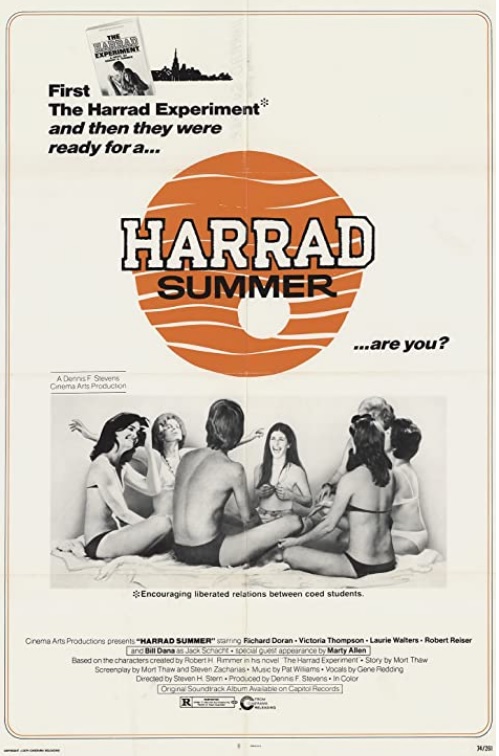
Well, uh, not much, in this woefully dated “sex revolution” tale that sequels the box office hit, The Harrad Experiment (1973), which grossed $3 million against $400,000.
So, why did this sure-fire hit, flop?
Well, the character of James Whitmore (Brooks Hatlen in The Shawshank Redemption) doesn’t return. Tippi Hedren’s does, but is replaced by a lookalike in Emmaline Henry (Ms Amanda Bellows from TV’s I Dream of Jeannie). And Don Johnson and Bruno Kirby bowed out. Sure, Laurie Walters (Warlock Moon; later TV’s Eight Is Enough), who made her acting debut in the original, is back, and so is bit TV actress Victoria Thompson, but who is coming to see either? And we want more Sherry Miles, thank you.
Note to executives: When you loose three quarters of your cast, don’t make the sequel.
Anyway, the premise is that faux-Stanley and Harry, along with real-Sheila and Beth, are out on summer break from their first year at Harrad College: it’s time to test their new found sexual freedom in the real world. Or something. Like going back and re-watching Bob & Ted & Carol & Alice and Carnal Knowledge.
Hey, I champion Stern’s TV work just as much as my fellow fan of the VHS obscure, but this is simply yawn-inducing . . . .the total opposite of The Harrad Experiment, which has Don and Bruno — especially Bruno — going for it. Robert Reiser and Richard Doran in their places, well . . . they’re not awful: they just don’t have the same spunk to make the hippie proceedings, hep.
No streams, but the DVDs are out there; here’s the trailer.
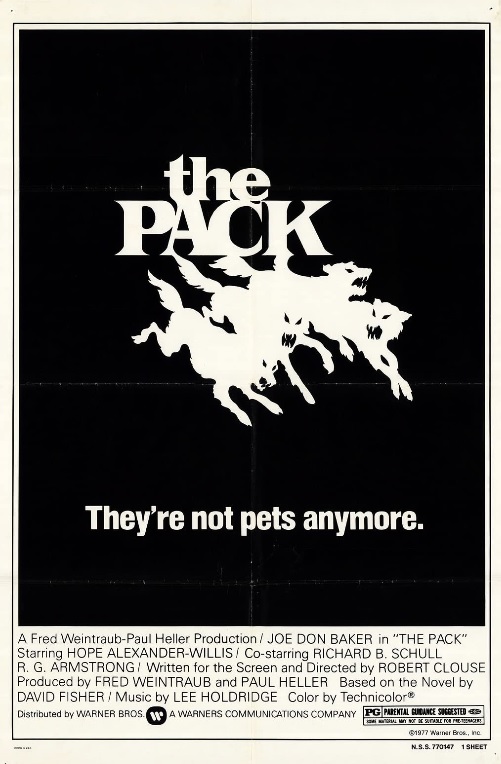
Okay. So, the heart breaker and dream maker of my wee-lad years, Sherry Miles, closes out her career by running around an island with Joe Don Baker to escape a pack of wild dogs . . . get this: under the lens of Robert Clouse of Enter the Dragon, Black Belt Jones, and Golden Needles fame?
Load. The. Tape. Now.
Sure, this beat Stephen’s King’s Cujoto theaters and was all about a literal army of dogs biting everyone on Seal Island — which has nothing on Dog Island from Humongous. So, was Robert Clouse inspired by the 1976 film starring David McCallum that you don’t want to confuse with The Pack, aka Dogs? Probably. No, not Devil Dog: Hound of Hell (1978), as that one starred Richard Crenna. Get your horror dog movies, straight, buddy! Did Clouse’s dog romp inspire Earl Owensby’s (Dark Sunday) backwater sheriff fighting off government-bred mutts in Dogs of Hell (1983)? Probably.
What else can we say: it’s a killer dog movie. Not even Sherry’s presence can save it. But horror was hot and, as an actor, you jump the trend and hope for a hit. Well, it is to us, at B&S About Movies. We’re weird that way.
There’s no freebie streams, but the PPVs are out there; here’s the trailer.
The blue eyes and crooked smile that launched a thousand ships: Sherry, in her final role for an episode of TV’s Wonder Woman.Imagine Sherry going “Scream Queen” and dominating the Slasher ’80s . . . what might have been.
So wraps this latest “Exploring” featuring, this one on (sigh . . . skyrockets . . . rainbows . . . fields of flowers . . . hearts with angel wings) Sherry Miles. Be sure to click the “Exploring” tag below to read the full list of all of our “Exploring” features on the lost, forgotten and awesome actors and directors, as well as genres, of the Drive-In ’60s, the UHF-TV ’70s, and VHS ’80s eras.
Yeah, we’re doin’ it for the celluloid love. And because we’re just crazy that way. This is B&S About Movies, after all.
* Learn more about Hee Haw at this Alchetron.com fan site.
Some of our other actor and director career explorations include:
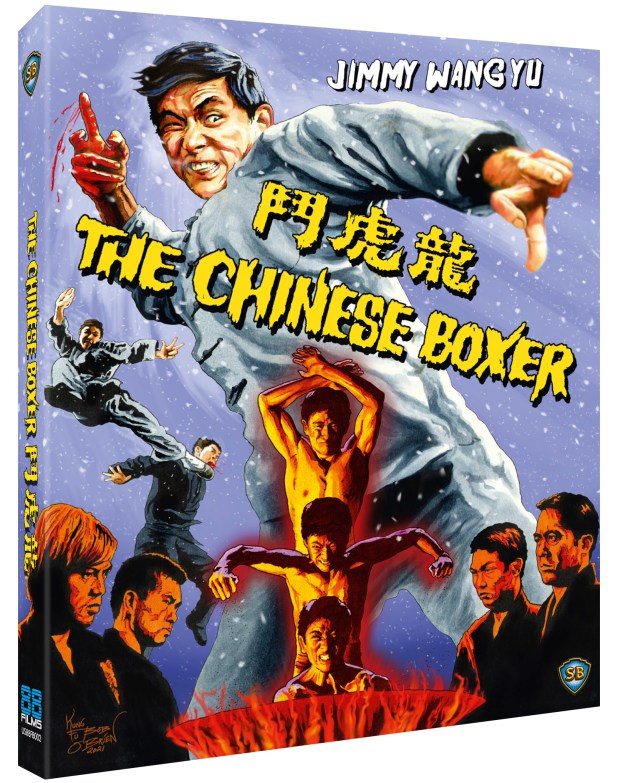
Written, starring and directed by Jimmy Wang Yu, The Chinese Boxer moved martial arts films away from fantasy and weapons into a world where one man and his fists could do plenty of damage.
Jimmy Wang Yu was a martial arts superstar in Hong Kong before even Bruce Lee and this movie proves exactly why. I’ve honestly never seen a bloodier hand to hand combat film, as nearly every punch sends mouthfuls of blood everywhere when they’re not blasting people through walls.
Diao (Hsiung Chao, Five Fingers of Death) was thrown out of the kung fu temple and spent years learning judo, defeating each of the students of the school upon his return until the master defeats him. Not being a man of honor, he sends for Japanese karate mercenaries, who are also defeated, until he sends samurai who not only destroy the school and murder all of the kung fu students and the master but also have the gall to take over the town and make it a city of sin.
Lei Ming (Jimmy Wang Yu) has survived, however, and he’s willing to do anything and everything to take his town back. You may think you’ve seen this before — and you have — but that’s because every other movie like this came after. A training sequence, much less one where the hero punches his hands into burning sand to toughen them? Yep. A room full of men with weapons and one unarmed hero? Here. A man fighting for the honor of his dead master? This is where it all began at least in film form.
There’s also the bad guy KItashima (Lo Lieh, nearly a Shaw Brothers supervillain) who can chop tables in two and provides a more than perfect secondary villain for our hero to fight. And it all looks astounding, because it shares a cinematographer — Hua Shan — with one of the most kinetic and strange movies that Shaw Brothers put out, The Super Infra-Man. Just one look at the fight in the snow and you’ll know that this is a movie to be studied just as much as it was stolen from.
It’s gorgeous and the 88 Films blu ray release makes it look even better. The Chinese Boxer also has audio commentary by critic and author Samm Deighan, an interview with Wong Ching, a feature from David West and the U.S. Hammer of God TV commercial. You can get it from MVD or Diabolik DVD.
EDITOR’S NOTE: This movie has already appeared two times on our site with entries by Bill Van Ryn on February 13, 2021 and Eric Wrazen on February 15, 2021. Here are both their takes!
First up, Bill…
ABOUT THE AUTHOR: Bill Van Ryn is the creator of Groovy Doom and publisher and editor of Drive-In Asylum. I’m always so happy when he gets the opportunity to write something for us.
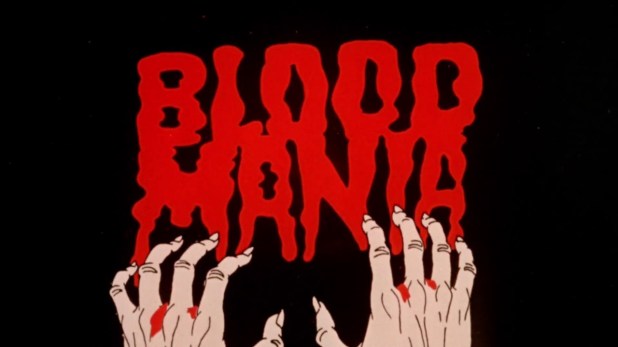
So let’s say you’re a kid in the later 1970s, and you’re really into watching scary movies on late night TV. You can’t get away with that very easily at home, but when you visit your grandparents on the weekend, they go to bed early and don’t really care if you stay up and watch TV. When you’re there, you try and see anything marked “-THRILLER” in the TV Guide. On one dark night Saturday night, you stay up late to watch a movie called Blood Mania. With a title like that, it’s going to be really scary, you just know it. The opening credits are a weird montage containing slow-motion shots of a woman in a nightgown running from some unidentified horror. This is interrupted by an animated piece where the word “BLOOD” – in large, gruesome red letters – is attacked by a pair of cartoon hands, which claw at the letters until they say “BLOOD MANIA”. There is a terrifying scream that makes your hair stand on end. You don’t realize it yet, but this movie has just shown you everything that is possibly of interest to an 8-year-old monster kid, and it won’t be very long before the TV is turned off and you’re asleep.
This may have been the experience of anybody who happened to watch “Blood Mania” as a child, because it’s one of the talkiest things you could hope to see. The shocks in the film are mostly of the daytime drama variety, so kids would probably check out of this movie very early on. This is probably a good thing too, because during the course of the story we are confronted with situations such as cheating on one’s romantic partner, a hopelessly dysfunctional family of estranged people, a woman who is willing to murder her invalid father for a little bit of money, a ruthless blackmail scheme, the use of amyl nitrate for kicks in bed, and repressed trauma linked to incestuous abuse.
Revisiting it as an adult, however, I appreciated it in a totally different way. Director Robert Vincent O’Neil (Angel, Wonder Women) finds an absolutely glacial pace for this movie, but it is such a visually compelling experience that you don’t seem to mind. Back in the days of turntables, sometimes you might have played one of your 45 rpm records on 33 1/3, just to hear what it would sound like slowed down, and “Blood Mania” is the visual equivalent of just that. I’m a sucker for any movie that emulates Bava’s colored lighting, but the set – a Los Angeles mansion that was once the home of Bela Lugosi – is just as wonderful.
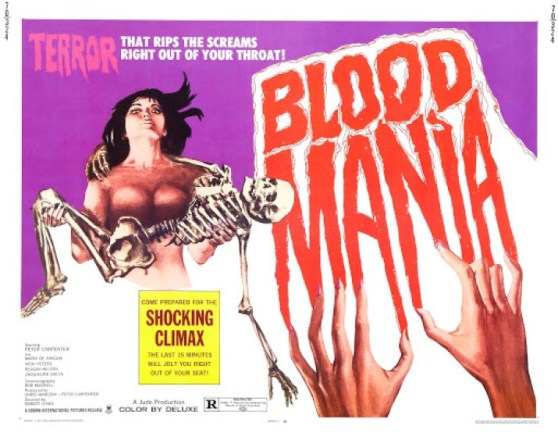
Blood Mania was co-written by lead actor Peter Carpenter, one of two films (Point of Terror is the other) that were created by Carpenter with producer Chris Marconi. Carpenter had been selected by Russ Meyer for a small role in Vixen! after Carpenter’s girlfriend included a photo with him as part of her audition materials. A role alongside Dyanne Thorne in 1970’s softcore drama Love Me Like I Do followed, and this two-film package with Marconi undoubtedly represented a bid for establishing himself as a working actor – a commodity, even. A career never manifested, and Carpenter disappeared. Despite rumors that he vanished because he died, he actually simply left the movie business, although he did pass away at the too-young age of 56.
Carpenter plays a shady doctor named Cooper, who is being blackmailed for providing illegal abortions. The sex-starved daughter of one of his patients offers to help him with his ‘tax problems’, and after he beds down with her to consummate the deal, she kills her father, expecting to inherit his estate. When her younger sister appears for the reading of their father’s will, however, things don’t turn out quite the way Victoria had hoped, and all three of their lives quickly begin to unravel.
Although made in the United States, Blood Mania sure does have the feel of a European film, in part because of its sumptuous look, but also because of its dreamlike atmosphere. Its horror film approach to soap opera material felt like a cheat the first time I saw it, but that’s what actually appealed to me in the long run. Like the Sisters of Mercy doing a Dolly Parton cover version, the result is something a little unexpected and marvelous. Although it does appear on Mill Creek compilations, there is also an incredible 2017 blu ray restoration by Vinegar Syndrome out there that blew my mind when I saw it.
***
Update: July 21, 2021: We’ve also previously reviewed Peter’s work in his forth and final film — which he, as with Blood Mania, wrote and produced — Point of Terror. And, thanks to frequent reader and uber Peter Carpenter fan, librarian Mike Perkins (thus his awesome research), we learned of this new blog entry from B&S About Movies’ friend Mike Justice, on his The Eerie Midnight Night Detective Agency blog regarding Peter Carpenter’s life and all-too-short career. Strap it on, it’s a great read.
And, surf over to this really cool Flickr posting from Mike Perkins, featuring early photos of Peter. And, there’s no stopping Mr. Perkins’s fandom, as he also honored Peter by not only having Peter’s IMDb page updated with correct information, he created an all-new Find A Grave entry for Peter. Did you know that Peter’s real name was Nathaniel Joseph? Or that he was in the Air Force? We do now, thanks to Mike Perkins’s hard work.
Yeah, we love our readers! Thanks for contributing to B&S About Movies, Mr. Perkins! (Yeah, we love you too, Justice.) And we love it when our readers reinforce and uplift our passions in honoring the actors and filmmakers of our youth. You gotta fight for the ’cause!
Now here’s Eric’s take…
ABOUT THE AUTHOR: Eric Wrazen is a Technical Director and Sound Designer for live theatre, specializing in the genre of horror, and is the Technical Director the Festival de la Bête Noire – a horror theatre festival held every February in Montreal, Canada. You can see Eric as an occasional host and performer on Bête Noire’s Screaming Sunday Variety Hour on Facebook live. An avid movie and music fanatic since an early age, this is Eric’s first foray into movie reviewing.
(From Wikipedia) Blood Mania is a 1970 American horror film written by Peter Carpenter and Tony Crechales and directed by Robert Vincent O’Neil, and starring Carpenter, Maria De Aragon, Vicki Peters, Reagan Wilson, Jacqueline Dalya, and Alex Rocco. The film stars Carpenter as a doctor whose mistress, an heiress, murders her terminally ill father to help him pay off a debt.
If there is one thing that can be said about Blood Mania, it’s that it’s a movie.
You really have to hand to Mill Creek Entertainment. “Gore House Greats” is an amazing title for a movie collection. Likewise, Blood Mania is an amazing title for a movie. Unfortunately, in the case of Blood Mania, it is neither gory, nor that bloody. There’s a little bit of mania, so I guess they get points for that.
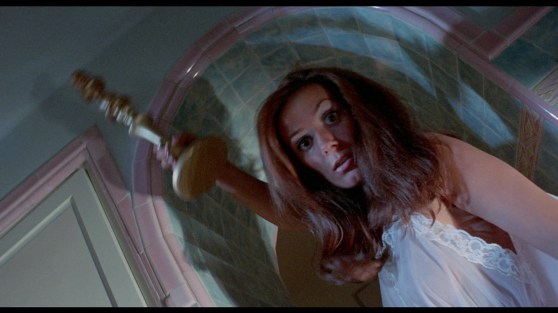
The opening sequence for Blood Mania is a freaky dream sequence depicting the stalking of a hippie babe in a peekaboo nightie over the sounds of a budget version of the Velvet Underground detuning and abusing their instruments. OK. So far so great!
Sadly, the rest of the movie doesn’t come anywhere near this level of freakiness and fun.
A more apt title for Blood Mania would have been “Worlds Dumbest Doctor” or possibly, “Victoria, The Crazy Bitch”. Either of these is a better indicator of the easy, sleazy melodrama you are about to witness.
Briefly (and without spoilers) Bloody Mania follows the sordid tale of Dr. Craig Cooper, one hunky hunk of burning physician as he beds babes of varying levels of wealth in order to bang his way out of a bad debt. Even this synopsis makes Bloody Mania sound more interesting than it actually is. In reality, this movie is closer to a soap opera with a little nudity thrown in to keep things sleazy.
I feel that this movie would have been better pitched as a Russ Meyer or Doris Wishman style sexploitation flick. There’s plenty of sex and it includes a plethora of sexploitation’s favorite tropes like nymphomania, blackmail, abortion, lesbians, and drugs. It also uses a bunch of classic sexploitation tricks used to fill out the running time when there isn’t enough plot to fill 90 minutes. A fair portion of Blood Mania consists of people driving around, frolicking on the beach, or visiting an amusement park. This is the kind of movie that “fast forward” was invented for.
Blood Mania isn’t a good movie, nor is it a “so bad it’s good” movie. But it is a movie. And I guess for Mill Creek Entertainment – that counts for something.
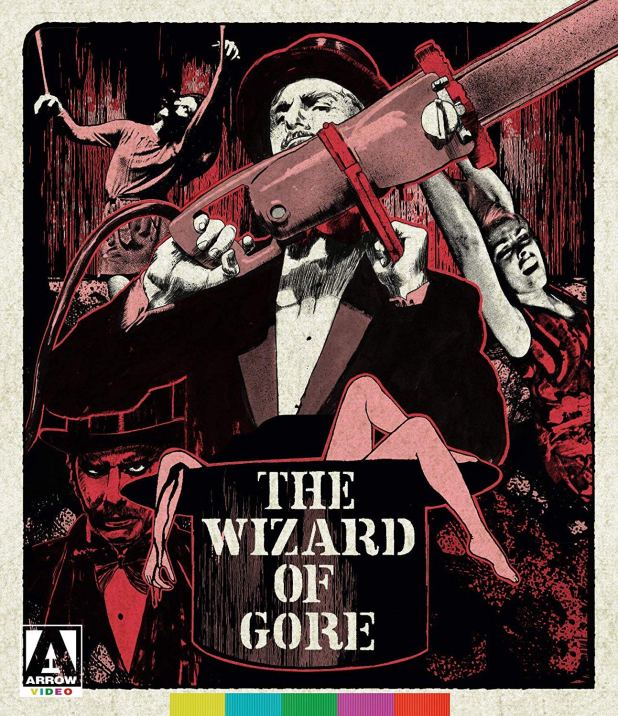
As a kid, I used to watch Bloodsucking Freaks at least once a week and now I’m kind of ashamed because I never realized that it’s pretty much a retread of Wizard of Gore and I’m sorry that we didn’t have the internet to teach me in 1986 rural Western Pennsylvania.
Montag the Magnificent — played by crew member Ray Sager after the original actor left after a confrontation with another member of the production team — is given to long speeches, saying things like “What is a magician? A person who tears asunder your rules of logic and crumbles your world of reality so you can go home and say: “Oh what clever tricks he has. What a sly deceiver” and go to sleep in the security of your own, real world. What is real? Are you certain you know what reality is? How do you know that at this second you aren’t asleep in your beds dreaming that you are here in this theater? Ah, yes. It all seems too real. Well, haven’t you ever had a dream that seems so very real until you woke up? Then again, how do you know that you ever did wake up? In fact, perhaps when you thought you were waking up, you had actually just begun to dream! You see what I mean, don’t you? All you lives, your pasts, your rules of what can or cannot be may all be part of one long dream from which you are about to awaken and discover the world as it really is!”
Then he does a stage magic act where he murders gorgeous women in front of the audience and then makes them appear healed and then they die in the same way later, which does not seem suspicious at all.
But man, the end of this movie gets absolutely insane, as Montag and his victim Susan play mind games against one another and the speech above is inverted and the illusion is cast on the illusionist.
That may sound rather high minded and intellectual, but never forget that the effects in this movie come from two dead sheep whose guts were dunked repeatedly in Pine-Sol.
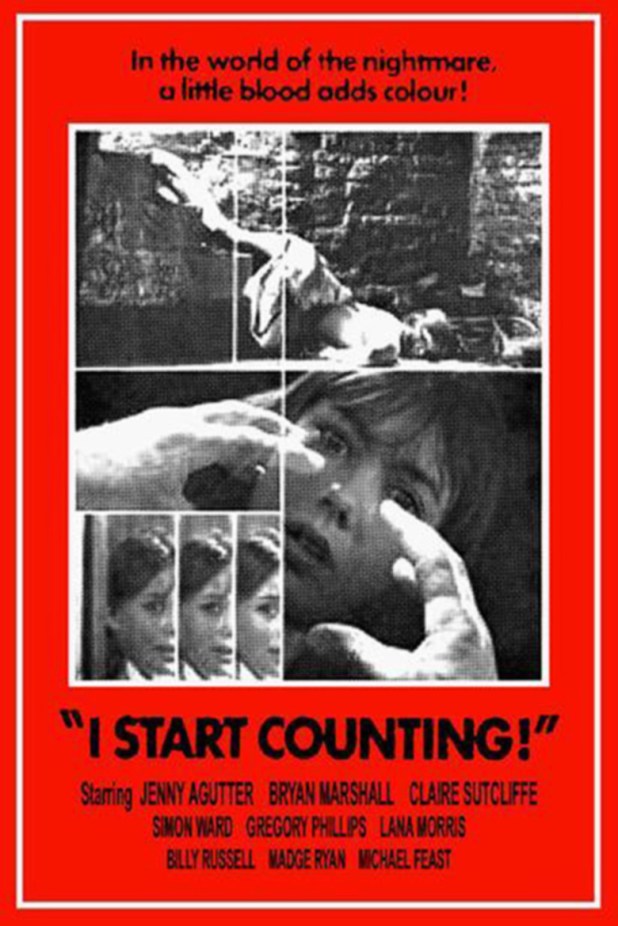
Sure, this is a pre-slasher, slasher adjacent, pseudo-slasher, whatever. But it has killing, it has suspense and it has style. It also has a 16-year-old Jenny Agutter playing a sexually obsessed 14-year-old so it was pretty rough for conservative people in 1970 and probably still is 51 years later.
Director David Greene also made The People Next Door, Roots, The Shuttered Room and Madame Sin among others. Here he’s leading Agutter through the trials of her teenage years, which include her crush on a twice her age stepbrother who just may be the serial killer at large in her community. Nonetheless, she remains devoted to him, literally throwing herself at him throughout the film, even starting to explain away why he feels the need to kill.
But is he the killer? And will she even see whoever is the murderer coming her way if it happens? Seldom discussed, I really dug this one. Growing up is difficult. Here’s hoping Agutter’s Wynne gets the chance.
The soundtrack — especially the Basil Kirchin and Lindsey Moore title track — is incredible, too.
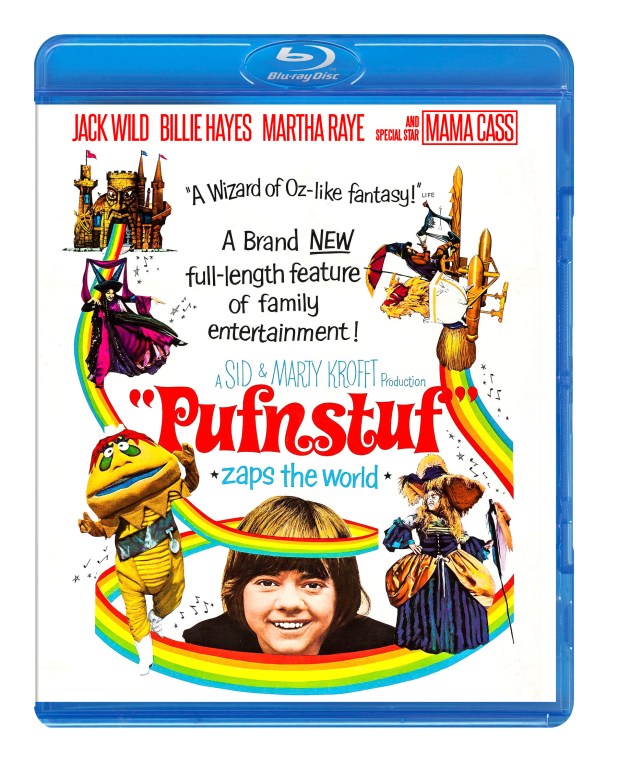
Right after the H.R. Pufnstuf television series ended its initial run, this film was quickly made to take advantage of its popularity. Financed by Universal and Kellogg’s, the sponsors of the TV show, this film adds two new witches alongside Billie Hayes’ Wilhelmina W. Witchiepoo: Witch Hazel, played by co-creator Sid Krofft’s neighbor Cass Elliot and Boss Witch, played by Martha Raye, who was so beloved by the cast and crew that she ended up playing Benita Bizarre in the Kroffts’ next show The Bugaloos.
The first choice to play Boss Witch? Bette Davis. When Sid called her, she was so upset that she was his first choice to play a witch that she hung up on him.
Pufnstuf is going to seem absolutely insane to anyone who didn’t grow up in the 70s. It tells the story of Jimmy (Jack Wild), who gets along with absolutely no one in his school and then ends up getting kicked out of the school band before he meets a magical talking flute named Freddy. Today, we would get Jimmy the right drugs and therapy and he’d be successful integrated into a group of kids that would understand him — before mercilessly roasting him on social media — but in 1970 Jimmy ends up on an evil boat and being taken to Living Island, which is ruled by Mayor H.R. Pufnstuf.
As for the antaognists, Witchiepoo wants to steal Freddy the Flute away from Jimmy in order to impress the visiting Witches’ Council and win the Witch of the Year Award. Oh yeah — th witches also plan on eating Pufnstuf, who I assume tastes like the best sashimi ever made.
What’s wild is that Norman Gimbel and Charles Fox worked together for the first time creating the music for this movie and stuck together afterward, writing the songs “Killing Me Softly with His Song”, “I Got A Name”, “Ready To Take A Chance Again” and many other popular songs.
You know who had it rough? Marty Krofft, who accepted the guardianship of Jack Wild while the teenage boy was working in the United States, in addition to producing the show and movie.
I’ve always wondered if McDonald’s ripped off the Kroffts. And I was right. The show was the subject of a successful lawsuit — Sid & Marty Krofft Television Productions Inc. v. McDonald’s Corp., 562 F.2d 1157, — which was decided in the Krofft’s favor by the Ninth Circuit Court of Appeals in 1977.
Pufnstuf the movie was directed by Hollingsworth Morse, who also made Daughters of Satan and Ark II, and was written by John Fenton Murray, who also scripted Arnold, Lidsville, Sigmund and the Sea Monster and Partridge Family 2200 AD., and Si Rose, who wrote plenty of TV.
You can now get this movie from the awesome people at Kino Lorber, who have released it on blu ray along with an extra trailer. I’m excited to have this film as part of my collection and you will be too.
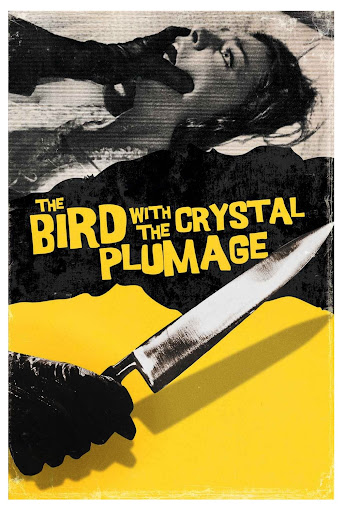
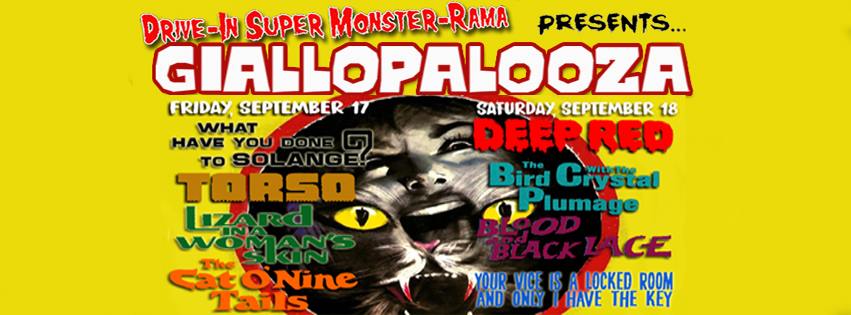
EDITOR’S NOTE: We originally covered this giallo cornerstone back on March 26, 2019 and then expanded on it when Arrow Video has released a UHD edition of this film. This is playing on the second night of the Drive-In Super Monster-Rama Giallopalooza on September 17 and 18. You really can’t get into giallo without seeing this film, so I’m excited to share these thoughts with any first-timers who will be checking out L’uccello dalle piume di cristallo at the Riverside!
Other than the films of Mario Bava (Blood and Black Lace, The Girl Who Knew Too Much), there’s no other film that has no influenced the giallo. In fact, the most well-known version of the form starts right here with Dario Argento’s 1970 directorial debut. Until this movie, he’d been a journalist and had helped write Leone’s Once Upon a Time in the West.
Sam Dalmas (Tony Musante) is an American writer suffering from an inability to write. He’s gone to Rome to recover, along with his British model girlfriend (yes, everyone in giallo can score a gorgeous girl like Suzy Kendall). Just as he decides to return home, he witnesses a black-gloved man attacking a girl inside an art gallery. Desperate to save her, he can only watch, helpless and trapped between two mechanical doors as she wordlessly begs for help.
The woman is Monica Ranier and she’s gallery owner’s wife. She survives the attack, but the police think Sam may have had something to do with the crime, so they keep his passport so he can’t leave the country. What they’re not letting on is that a serial killer has been wiping out young women for weeks and that Sam is the only witness. That said — he’s haunted by what he’s survived and his memory isn’t working well, meaning that he’s missing a vital clue that could solve the crime.
As you can see, the foreign stranger who must become a detective, the missing pieces of memory, the black-clad killer — it’s everything that every post-1970 giallo would pay tribute to (perhaps rip off is the better term).
Another Argento trope shows up here for the first time. It’s the idea that art itself can cause violence. In this film, it’s a painting that shows a raincoat-clad man murdering a woman.
Soon, Sam is getting menacing calls from the killer and Julia is attacked by the black-clad maniac. The police isolate a sound in the background of the killer’s conversations, the call of a rare Siberian “bird with the crystal plumage.” There’s only one in Rome, which gets the police closer to the identity of who is wearing those black gloves (in truth, it’s Argento’s hands). It’s worth noting that the species of bird the film refers to as “Hornitus Nevalis” doesn’t really exist. The bird in the film is actually a Grey Crowned Crane.
Alberto, Monica’s art gallery husband, tries to kill her, finally revealing that he has been behind the attacks. Ah — but this is a giallo. Mistaken identity is the main trick of its trade. And even though this film was made nearly fifty years ago, I’d rather you get the opportunity to learn for yourself who the killer really is.
I may have mentioned before that my parents saw this movie before I was born and hated it to a degree that any time a movie didn’t make any sense, they would always bring up “that weird movie with the bird that makes the noises.” Who knew I would grow up to love Argento so much? It’s one of those cruel ironies that would show up in his movies. I really wonder if my obsession with giallo and movies that are difficult to understand is really me just rebelling.
An uncredited adaptation of Fredric Brown’s novel The Screaming Mimi, this film was thought of as career suicide by actress Eva Renzi. And the producer of the film wanted to remove Argento as the director. However, when Argento’s father Salvatore Argento went to speak to the man, he noticed that the executive’s secretary was all shaken up. He asked her what was wrong and she mentioned that she was still terrified from watching the film. Salvatore asked her to tell her boss why she was so upset and that’s what convinced the man to keep Dario on board.
The results of all this toil and worry? A movie that played for three and a half years in one Milan theater and led to copycats (and lizards and spiders and flies and ducklings and butterflies and so on) for decades. Argento would go on to film the rest of his so-called Animal Trilogy with The Cat O’Nine Tails and Four Flies on Grey Velvet, then Deep Red before moving into more supernatural films like Suspiria and Inferno.
Drive-In Super Monster-Rama is presenting “Giallopalooza”, two big nights of classic, fully restored giallo thrillers from such maestros as Dario Argento, Mario Bava, Lucio Fulci and Sergio Martino!
Admission is $10 per person each night (children 12 and under FREE with adult guardian). Camping on the premises is available each night for an additional $10 a person, and that includes breakfast.
Advance tickets are available online at the Riverside Drive In’s webpage.
Les animaux dénaturés was written by Jean Bruller under his pseudonym Vercors and it was printed in English under the titles You Shall Know Them, The Murder of the Missing Link and Borderline. One imagines that producer Saul David and 20th Century Fox were looking for another ape-related story after the success of their last simian-centric adaption of a French novel. That would be La Planète des Singes. And the movie would be Planet of the Apes.
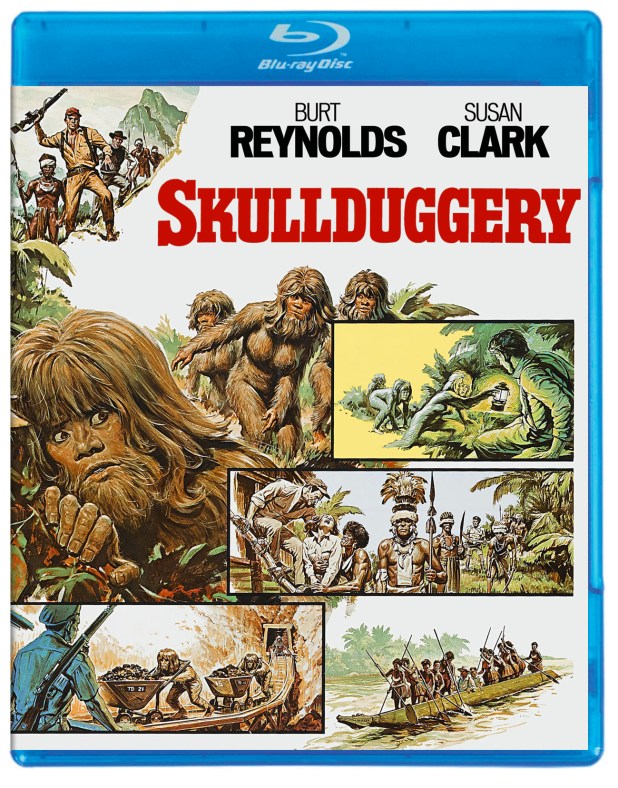
David replaced original director Richard Wilson and brought in In Like Flint— and Viva Knievel!— director Gordon Douglas, who was not well-thought-of by star Burt Reynolds, who turned down M*A*S*H* for this movie! Burt would tell Roger Ebert that the movie had a good script, continuing “The guy’s a good writer, Lorenzo Semple Jr. Badly directed, kind of sloughed off. Susan Clark was good; she’s a good actress. But nobody knew how to sell the picture. Any time you have Pat Suzuki dressed as a small ape, I think you’re in trouble.”
During an expedition to Papua New Guinea, Clark and Reynolds discover a tribe of ape-like people, called the Tropis. They may be the missing link, but no one will know if they are human or animal. The only way to know the truth is if someone knocks one of them up, which if they don’t have a child means that it’s just bestiality. And if they have a kid, well, evolution is going to get a lot weirder.
Anyways, one of the Tropis gets murdered — actually a whole bunch of them get barbecued and chowed down upon at one point — leading to a murder trial, so this is one of the few courtroom science fiction ape movies not called Planet of the Apesor Escape from the Planet of the Apes movies to have a court scene. Man, maybe apes lend themselves to legal drama, what with that whole Scopes trial.
But do those movies have Blacula, William Marshall, as the attorney general?
I love that Burt Reynolds is in this, just gamely playing along. I’m sure he was having the time of his life.
Kino Lorber’s new blu ray release of Skullduggery has a brand new 2K master, as well as commentary by Howard S. Berger, C. Courtney Joyner and Sergio Mims and a theatrical trailer.








 B&S About Movies
You must be logged in to post a comment.