JESS FRANCO MONTH: Eugenie (1970)

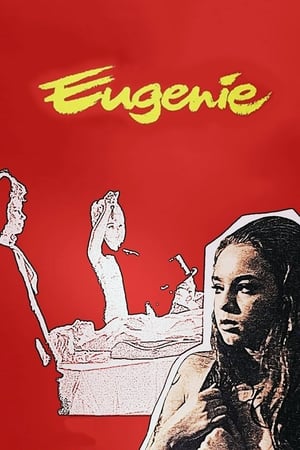
An adaptation and modern-day update of Marquis de Sade’s Philosophy in the Bedroom, this was the second de Sade film made by Jess Franco*, but by no means the last. In fact, it’s not even the last movie called Eugenie that he would make. While this one is Eugenie… The Story of Her Journey into Perversion (or De Sade 70 or Marquis de Sade’s Philosophy in the Boudoir), there’s also the better-known — and Soledad Miranda-starring — Eugenie de Sade.

Eugenie (Marie Liljedahl, IngaDorian Gray) has spent her entire life in a convent and despite an exterior that drives men and women wild with list, she’s inexperienced in the ways of the world. Her father (Paul Muller, NanaBarbed Wire Dolls) wants to bed Madame Saint Ange (the wife of producer Harry Alan Towers who appears in 99 Women, Venus In Furs and The Boody Judge amongst other movies; don’t judge her being in this as nepotism, because she’s amazing in this movie), who agrees as long as she can take Eugenie to her secluded island mansion, where she and her step-brother Mirvel (Jack Taylor, whose career in exploitation movies took him all over the world) can seduce her and probably each other and definitely everyone and play the kind of strange incestual games that only the super rich seem to play.

Sir Christopher Lee also shows up as the narrator for all this wallowing and also as Dolmance, the leader of a cult of fiends that drug young women and beat them with whips and yeah, Sir Christopher claims he had no idea what kind of movie he was in, which I find hilarious, because this wouldn’t be the last time he’d work with Franco. Providing his own wardrobe — the smoking jacket he wore in Sherlock Holmes and the Deadly Necklace — Lee claimed that he was unaware there was a nude woman on the sacrificial altar behind him, as Franco and crew had wrapped drapery over her that they’d yank off as soon as the camera started and would then recover her when he was done with his scene. I mean, I love Jess, but sometimes he can barely focus the camera. One wonders how he’d ever had the chicanery and ability to pull one over on a man that was once quite literally a secret agent.

This movie feels like a dream. I’ve said that of other Franco movies, but trust me, a much better realized and better shot dream, with a score by Bruno Nicolai that makes it seem way classier than it is.

*The first is Marquis de Sade: Justine.
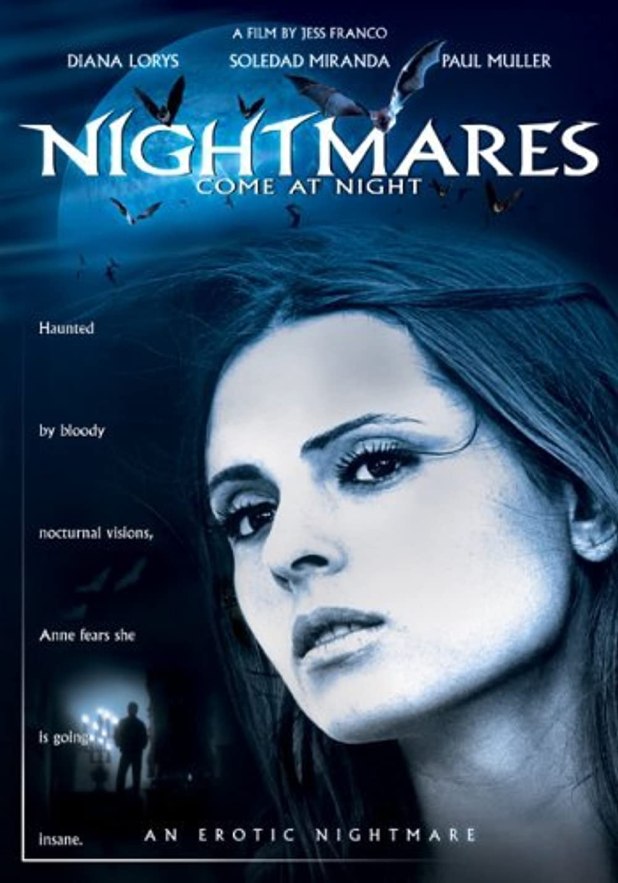
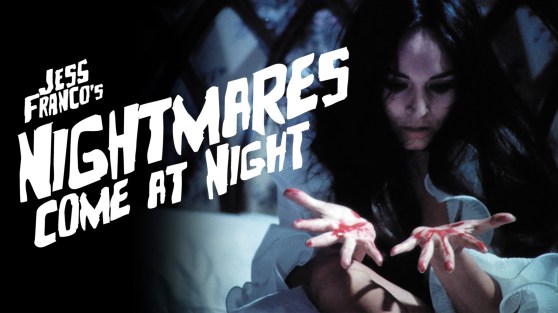
JESS FRANCO MONTH: Les cauchemars naissent la nuit (1970)

Movies take a lot of work. And yet Nightmares Come At Night only played at a single theatre in Belgium and was considered a lost movie until 2004. So all that sweat and energy and anxiety took years for the world to see. And what they saw was a movie that finds Jess Franco giving in to a new way of making movies and more and more, giving up logic.

Diana Lorys (Get MeanFangs of the Living Dead) is the gorgeous Anna de Istria, a dancer who has become obsessed with another dancer, Cynthia (Collette Giacobine, What the Peeper Saw), an attraction so intense that it causes her to hallucinate, having waking dreams — or nightmares — so powerful that not even medical science can save her.

Meanwhile, Cynthia owes two jewel thieves, played by Jack Taylor and the wonder that is Soledad Miranda, a share of their recent crimes.

When you try to capture your dreams in the morning in writing, it always gets lost in translation. That’s how writing about this movie feels. It’s also two dreams smashed together, an attempt by Franco to save two different films that were unfinished.

Except that this is Jess Franco’s dream, but he was dreaming about his obsessive love for Soledad himself and you don’t speak the language and Jess may have been an alien and you just try and make sense and then give up to it deliriously making no sense, hoping it never ends, that the world could really be a place where jewel thieves can manipulate the most gorgeous of women to wrap and curl and undulate around their fingers, all while Bruno Nicoli sets the most jazz of all jazz scores and you wake up in a cold sweat, fumbling for water and a pen to try and figure out where it all went right.

So at one point, you realize Anna is trapped in her home, but also trapped by lust, but also trapped by her dreams in which she alternatively kills people or listens to men drone on and then the camera pans across a wall that says “Life is all shit.”

The at home equivalent of putting your face in front of a speaker at a doom show and taking handfuls of whatever drugs someone has in their pocket and shining a gel light directly in your eyes while someone whispers in your ear and tells you that you’re pretty great.

Or Jess Franco making his own expensive masturbation mix tape.

Either way, a success.

You can watch this on Kino Cult.

This Jess Franco film is also on the ARROW PLAYER. Head over to ARROW to start your 30-day free trial. Subscriptions are available for $4.99 monthly or $49.99 yearly. ARROW is available in the US, Canada, the UK and Ireland on the following Apps/devices: Roku (all Roku sticks, boxes, devices, etc), Apple TV & iOS devices, Android TV and mobile devices, Fire TV (all Amazon Fire TV Sticks, boxes, etc), and on all web browsers at https://www.arrow-player.com.

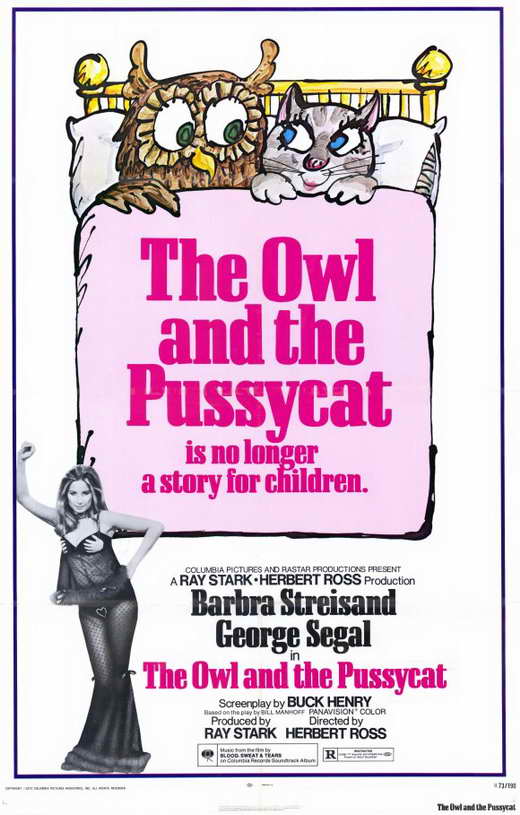
Mill Creek Through the Decades: 1970s Collection: The Owl and the Pussycat (1970)

Written by Buck Henry, based on a stage play by Bill Manhoff and directed by Herbert Ross, The Owl and the Pussycat was a huge romantic comedy hit. It stars Barbara Streisand (who did a nude scene for the film that was cut at her request and then published by High Society; Babs sued) as a prostitute who also has acted in two TV commercials named Doris who finds herself living with Felix, her writer neighbor (George Segal) when she’s evicted. Then, they both get evicted when he tries to cure her hiccups.

They end up moving in with Barney (Robert Klein), a friend of Felix, but their arguing — followed by lovemaking — leads to Barney and his girlfriend (Marilyn Chambers, credited as Evelyn Lang, two years before she went Behind the Green Door) leaving. Hijinks, as they say, ensue, like the fact that the two can’t stop falling in love — and driving each other crazy — and that well, Felix may already have a fiancee. Will these two ever just get along?

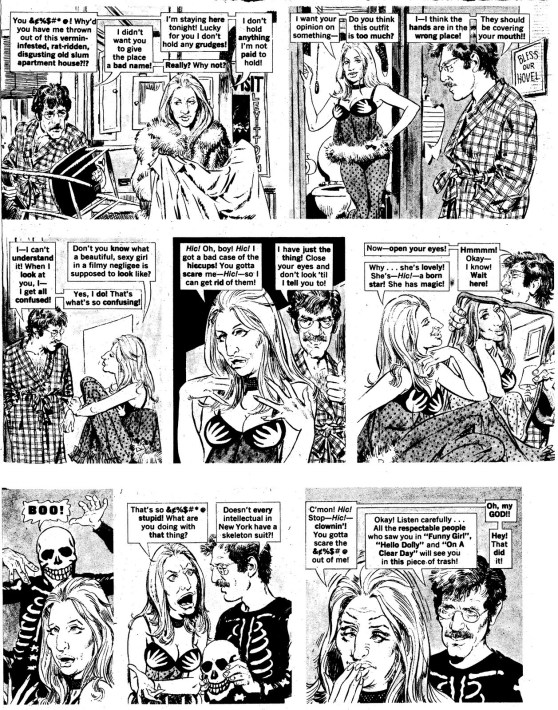
Mad Magazine #145 had a great parody of this movie, The Fowl and the Prissycats, written by Stan Hart with pencils and inks by Angelo Torres.

Hey! Roz Kelly is in this and so is an uncredited Tom Atkins!

Interestingly enough, Sidney Poitier was supposed to play opposite Streisand, yet it was decided that audiences weren’t ready for an interracial romance. Which is even weirder, because this started on Broadway with Alan Alda and Diana Sands as the principals.

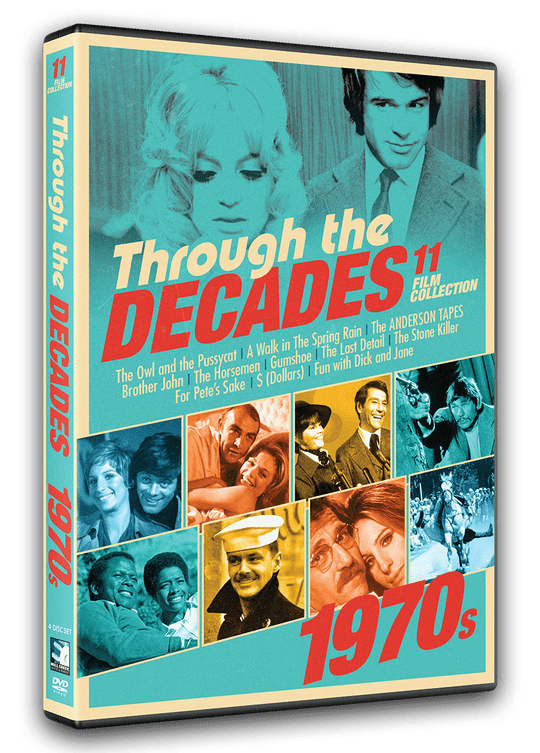
Through the Decades: 1970s Collection is new from Mill Creek. It also has A Walk In the Spring Rain, DollarsFun With Dick and JaneFor Pete’s Sake, The Anderson TapesThe HorsemenThe Stone Killer, Brother John, Gumshoe and The Last Detail. You can learn more on their site and order it from Deep Discount.

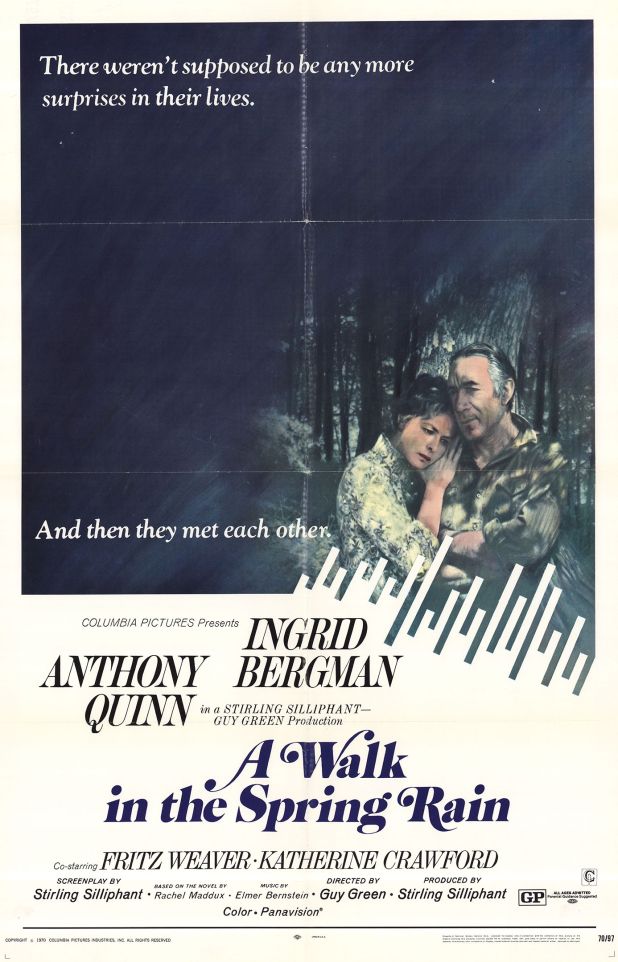
Mill Creek Through the Decades: 1970s Collection: A Walk In the Spring Rain (1970)

Producer Stirling Silliphant wrote the screenplay for this movie, based on novel A Walk in the Spring Rain by Rachel Maddux. Silliphant’s best known works are In the Heat of the Night, The Towering Inferno and The Poseidon Adventure, but he also created Route 66 and did the screenplays for Village of the DamnedThe SwarmCharly and Circle of Iron amongst many other movies. And oh yeah — Over the Top.

He was also close friends with Bruce Lee, who he studied from and included in movies he wrote like Marlow and the TV series Longstreet. Together, they worked on The SIlent Flute, which was eventually made as Circle of Iron. Lee would coordinate the fight scene in this movie between one of the leads, Will Cade (Anthony Quinn), and his son.

Cade is the next door neighbor of writer Roger Meredith (Fritz Weaver) and his wife Libby (Ingrid Bergman), who soon finds her way into his bed due to the lack of interest of her husband. Everything seems perfect, but the city calls the Merediths back, just as Will’s son stalks and assaults Libby in the woods, which ends up with the aforementioned fight between father and son that ends up costing son his life.

Perhaps most amazingly, the actor who plays the son is Tom Fielding, who we know today as Tom Holland. Yes, the same Tom Holland who wrote The Beast WithinClass of 1984Psycho IICloak & Dagger and created the Fright Night and Child’s Play films.

In the end, the city wins out over true love. And this movie didn’t do well with audiences or critics. But  hey — Quinn and Bergman are awesome, as you’d expect. 

Through the Decades: 1970s Collection is new from Mill Creek. It also has DollarsFun With Dick and JaneThe Owl and PussycatFor Pete’s Sake, The Anderson TapesThe HorsemenThe Stone Killer, Brother John, Gumshoe and The Last Detail. You can learn more on their site and order it from Deep Discount.

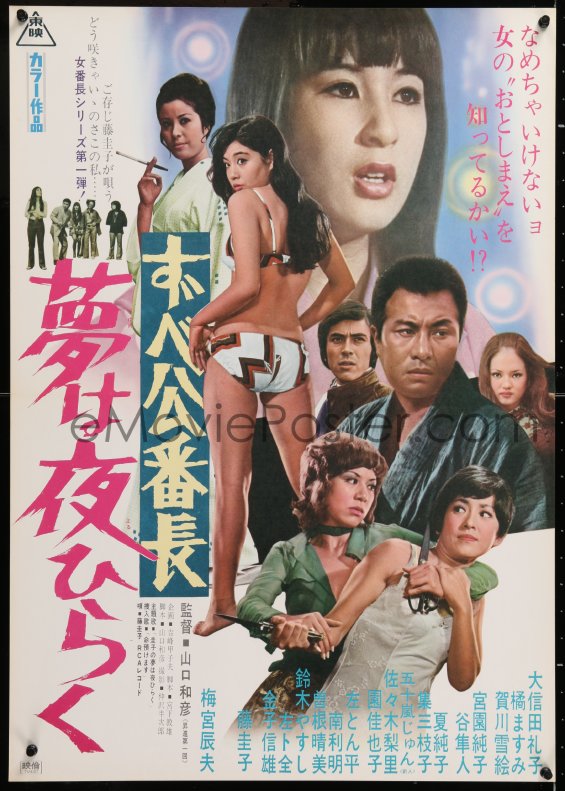
Zubekô banchô: Yume wa yoru hiraku (1970)

The first movie in the Delinquent Girl Boss series — perhaps not to be confused with 1970’s Stray Cat Rock: Delinquent Girl Boss* — this Kazuhiko Yamaguchi (Sister Street FighterWolfguy: Enraged Lycanthrope) film introduces Rika Kageyama (Reiko Ôshida), the titular girl boss who will appear in a series of four movies.

We find Rika graduating from reform school and supposedly being ready for a bright and cheerful life, putting the crimes of her youth behind her, but would a Japanese Pinky Violence film be interesting at all if Riku stayed on the straight and narrow path?

After a job at a laundry ends with the owner attempting to force himself on her and his wife blaming the victim, Riku gets a job at a hostess club. The Yakuza is trying to muscle in on this place, so she must come to the rescue of the other girls that work there, even if she has to put her own virtue on the line to do so.

While this film doesn’t go to the depraved depths of many Pinky Violence films, it also displays the juxtaposition at the heart of so many films in this genre: it puts its heroines in danger tinged with sexual violence, but it also presents them as capable characters who have agency and stand with one another against the abusive men in their universe. At the same time that these films invite you to watch what happens, it reminds you that you are just as wrong as any of the men who treat these women so horribly.

*Toei made the same series and the band Golden Half shows up in this, playing the same “Yellow Cherry” song that they rocked out in Stray Cat Rock: Sex Hunter.

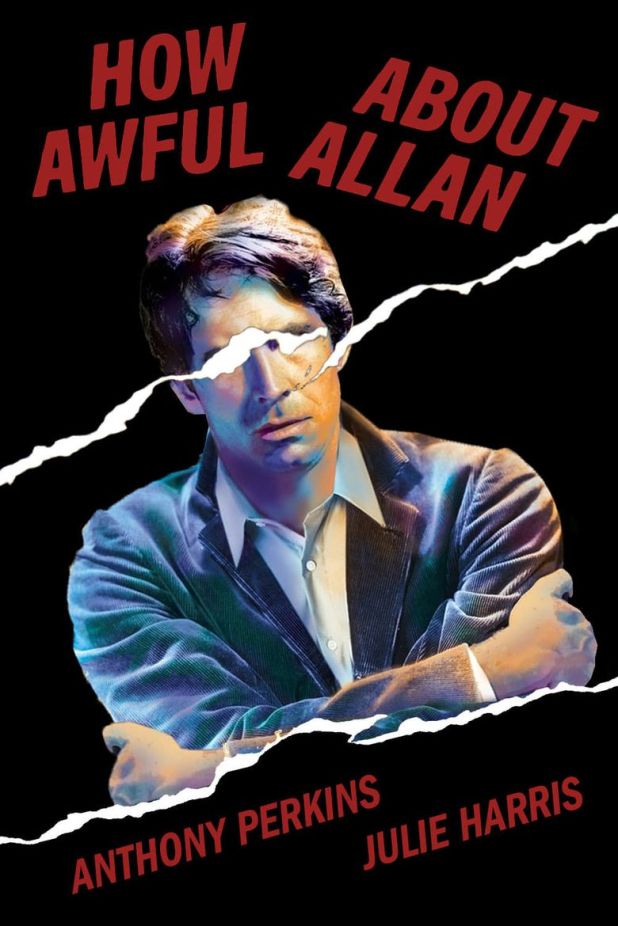
CURTIS HARRINGTON WEEK: How Awful About Allan (1970)

EDITOR’S NOTE: This made for TV movie was originally on our site on May 19, 2020. As we explore the movies of Curtis Harrington, we’ve brought this article back.

Along with What’s the Matter With Helen?, this movie is one of the two collaborations between writer Henry Farrell and director Curtis Harrington.  It was the ABC Movie of the Week on September 22, 1970 and has stood the test of time as one of the better TV movies. And there’s some stiff competition for that.

Shot in just 12 days, it stars Anthony Perkins as Allan Colleigh, who has psychosomatic blindness after an accident — he left paint cans too close to a fire — that killed his abusive father and scarred his sister Katharine (Julie Harris from the 1963 version of The Haunting).

After Allan returns to their home after time in a mental hospital, he’s convinced that everyone is out to get him, including a new boarder with speaks in a hoarse whisper and one of his sister’s ex-boyfriends on the phone.

Joan Hackett — who was in two great TV movies, Dead of Night and The Possessed — appears as Allan’s former girlfriend. She gets caught up in his mania as rooms of the house explode into flames and he’s kidnapped by that mysterious ex.

How Awful About Allan has plenty of actors as comfortable on the stage as they were on the big or small screen. Perkins agreed to wear special contacts that completely made him blind so that his performance would be more realistic.

This didn’t get great reviews when it came out, but do the movies we love ever do?

You can download this on the Internet Archive, watch it on Amazon Prime or just use this YouTube link:

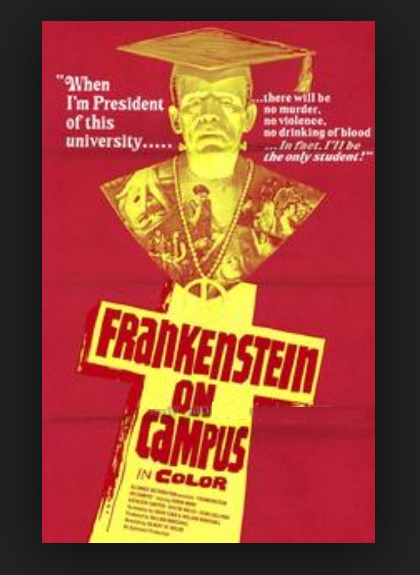
Frankenstein On Campus (1970)

Viktor Frankenstein (Robin Ward, the narrator of the 80s Twilight Zone) has been expelled from the old country for his experiments, so he heads to Canada to study mind control before campus radicals kick him off campus. So Viktor does what you and I would. He controls the mind of Tony (Ty Haller, One Minute Before Death), a karate expert, and beats those hippies to death.

At one point, Viktor’s love interest Susan takes him to see an acid rock concert with the band Lighthouse. The saxophonist is Howard Shore, who would score the films of Cronenberg.

Shot at the University of Toronto and made with Canadian Film Development Corporation money, this movie looks dated but hey it was made 52 years ago. It was written by David Cobb (who has an extra role in Rhinestone), William T. Marshall and director Gilbert W. Taylor, who other than a short doc called The Mississauga Movie and some production credits (Pinocchio’s Birthday Party and Klondike Fever) never did anything else.

Also: young Frankenstein is a never nude.

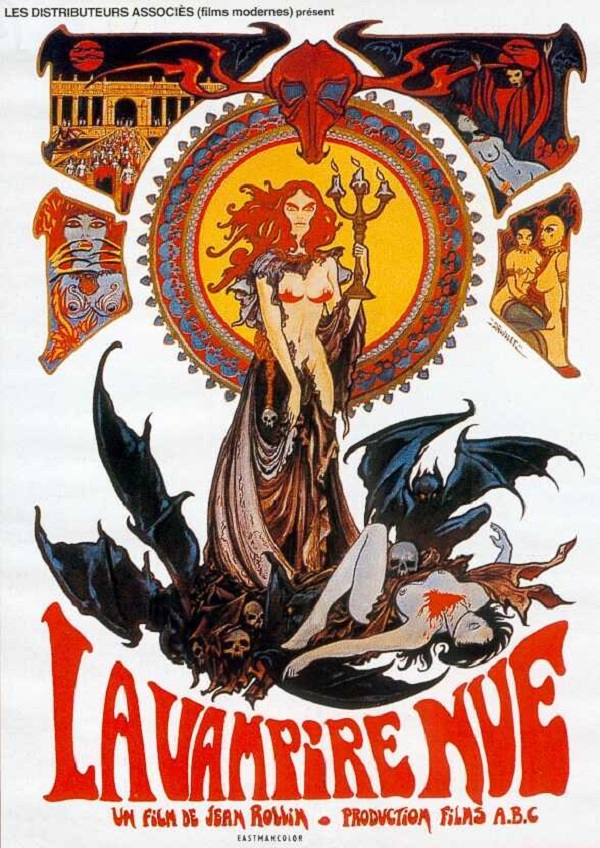
La Vampire Nue (1970)

Either you get into the druggy vibe of Jean Rollin or you think it’s the most boring filmmaking ever. But me, well, I’m nodding off and living inside the languid pace of his films and looking for those moments when masked maniacs wander the streets and indiscriminately murder people and the film doesn’t really feel like cluing you into what’s going on because why should it? You have to earn it.

I mean, what if you went to a party where a woman’s photo is projected on a screen and she kills herself in front of the guests so that a strange woman in an orange nightgown can drink her blood and then your photo comes up next?

None of these things will ever happen to any of us. We’ll never have days where we don’t see the sunlight and realize we’re the first humans to be immortal. At least I don’t think we will. I mean, wouldn’t it be great? But then I wonder, would my acid reflux get bothered by certain types of blood?

I mean, the basic description of this movie says: “Wealthy and decadent industrialist Georges Radamante rules over a strange secret suicide cult and wants to achieve immortality by figuring out a way to share the biochemistry of a young mute orphaned vampire woman.”

If you don’t want to watch that, well, I don’t know what hope there is for you to experience magic.

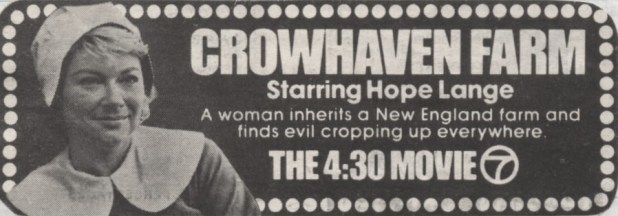
Crowhaven Farm (1970)

The ABC Movie of the Week for November 24, 1970, Crowhaven Farm embraces two trends of the 70s. One, the feeling that the hippy movement was over and a return to some small town normlacy was the only way to heal after the last few tumultuous years — indeed, it seems like several decades pass between 1963 and 1969, with tentpole events like the Tate-LaBianca murders and Woodstock occurring a week apart. And the second, and for our purposes most critical piece of the 70s was that the occult was no longer saying mantras and lighting candles and enjoying white witch magic. The true black arts were here, they wanted your soul and they would crush you using your elders. Remember that ironic pin you wore, “Don’t trust anyone under thirty?” Now you’re living it.

Maggie and Ben Porter (Hope Lange, who had an Oscar for Peyton Place and years of TV fame on a much friendly visit into the world of the supernatural, The Ghost and Mrs. Muir; Paul Burke, the lead on ABC’s 12 O’Clock High and Naked City, as well as Lyon Burke in Valley of the Dolls, later found innocent of a racketeering scheme with Harry Connick Jr.’s dad and after that the grandfather of Arrested Development‘s Alia Shawkat) inherit a farm in New England, a place that another family member wants so badly that he heads up before them, nearly hits a ghost girl with his car and dies in a fireball.

Aren’t the young meant for the city? Well, Ben’s been trying to get his art career off the ground. Crowhaven Farm just seems to inspire him. But Maggie can’t stop seeing the past of that town and the 15th century seems even more restrictive and oppressive than the white picket fence Eisenhower America that the Love Generation was running from and now to.

The last remnants of that Love Generation, the weekenders as they call themselves, come to town and use it for a place to swing, baby. And while it seems like Maggie is barren, taking care of a girl named Jennifer (Cindy Eilbacher, who is in Shanks, but also between this movie, Bad RonaldThe Death of RichieThe Force of EvilCity in Fear and The Ghost of Cypress Swamp can lay claim to some degree of made for TV movie royalty) seems to make up for their lack of family.

But ah, Crowhaven Farm is an odd place. And as soon as Old Hollywood shows up, much less John Carradine as an eerie handyman, you know that Maggie is doomed. So while Jennifer attempts to become more than just a daddy’s girl and really daddy’s girl, she’s haunted by the spirits of Satan loving Puritans that she sold out for a child centuries ago, which makes her willing to release herself of her marriage and rush back to the city with the child she wants and without the husband too quick to believe that one of those swingers knocked her up or that she’s been giving it up to her boss.

All this plus a blink and you’ll miss it cameo by Willaim Smith as a policeman!

Director Walter Grauman filmed quite a few TV movies in the 70s, including Daughter of the MindThe Old Man Who Cried Wolf and Are You In the House Alone? Writer John McGreevey’s career started back in 1951, writing two episodes of Lights Out and included movies like Hot Rod Girl and TV like eighteen episodes of The Waltons (my own personal hellscape), Charles & Diana: A Royal Love StoryNight Crossing and The New Adventures of Heidi.

This is the perfect example of what a TV movie can do, providing sinister feelings and true fright within a tight, taunt under two hour runtime.

You can watch this on YouTube.

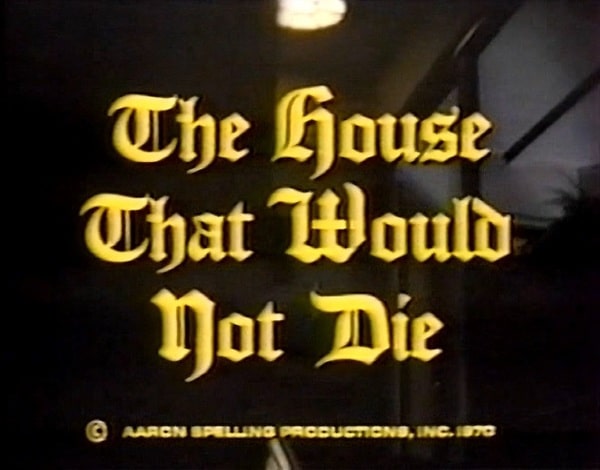
The House That Would Not Die (1970)

ABOUT THE AUTHOR:  Melanie Novak writes about the Golden Age of Hollywood, infusing her weekly movie reviews with history, gossip, and the glamour of the studio era.  You can read her reviews at www.melanienovak.com and follow her on Instagram @novak_melanie.

Barbara Stanwyck was a legend of the golden age of Hollywood.  From 1929-1964, she starred in 81 feature films, earning four Academy Award nominations for Best Actress and eventually receiving an Honorary Oscar for her lifetime body of work in 1981.  She’s at number 11 on the American Film Institute’s list of the 50 Greatest Female Screen legends.  Her film Double Indemnity (1944) is number 29 on the AFI’s list of the 100 Greatest American Films of All Time, and her films The Lady Eve (1941) and Ball of Fire (1941) are numbers 55 and 92 on the AFI list of the 100 Funniest American Films of All Time.  She was beloved by audiences, directors, co-stars, and especially film crews, who called her The Queen.

In the 1960s, she turned her attention to television, where she won a pair of Emmy Awards for her work on The Barbara Stanwyck Show and her role as the beloved matriarch Victoria Barkley on the western series The Big Valley.

So you’d be forgiven for thinking that by the 1970s, when Stanwyck was nearing her mid-sixties with a mane of pure white hair she refused to dye and nothing left to prove, she’d ride off into the sunset and enjoy a life of leisure.

But if you thought that, you don’t know Barbara Stanwyck.  The orphan from Brooklyn who’d been supporting herself since she was fourteen was not about to go gently into that good night.

Jacques Tourneur, her director on The Barbara Stanwyck Show summed her up when he said, “She lives only for two things, and both of them are work.”1

In October 1970 ABC premiered The House That Would Not Die as their movie of the week, the first of three films Stanwyck would make with producer Aaron Spelling. 

Stanwyck gets top billing as Ruth Bennett, a woman who inherits a two-century old house that’s reputed to be haunted.  She and niece Sara (Kitty Winn) move in, and soon the neighbors are coming to get a look inside the beautiful old house.

Ruth and Sara make fast friends with a pair of potential suitors in Professor Pat McDougal (Richard Egan) and Stan Whitman (Michael Anderson, Jr.)  As a bit of a lark, Ruth allows two of the neighborhood busybodies to host a séance in the house, which sets the ghost story in motion.

The house starts to get creepy—doors open and close without warning, the wind blows wildly, and Ruth has disturbing dreams.  Pat turns unexpectedly violent for a moment, then forgets what he has just done.  Sara’s behavior is the most bizarre of all, and when she attacks and nearly strangles Ruth in the middle of the night, it’s clear she was possessed by a ghost during the séance. 

The pedestrian plot unspools as Ruth, Pat, Sara, and Stan try to unravel the mystery of who is possessing Sara and why.  There’s the requisite visit to the Hall of Records to research untimely deaths in the house, trips to the attic to read through old diaries and family history, and a climactic scene in a dank cellar hiding a secret grave where both Pat and Sara are possessed and turn murderous.

In the end, the ghost’s murderer is identified, justice is done, and Sara is set free as her possessor can finally rest in peace.

It pains me to pan a Barbara Stanwyck film, but this is one to miss.  It doesn’t contain enough scares or twists to disturb or surprise the audience, yet Stanwyck’s professionalism prevents it from being corny enough to enjoy as camp.  Her follow-up film with Spelling, A Taste of Evil (1971) is more entertaining, and Stanwyck really gets to let loose in the final act.

But even if these late additions to her towering resume aren’t worthy of her talents, Stanwyck was still in the game, the top-billed star in these made-for-television movies when most of her contemporaries were sidelined, dead, or relegated to cameo appearances.

Even in schlock like The House That Would Not Die, the Queen stays Queen.


Notes

1 Smith, Ella.  Starring Miss Stanwyck.