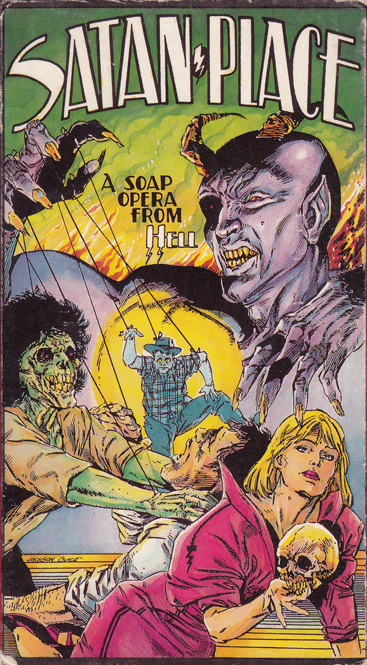
The SOV format is pretty much made for horror anthologies. There’s a great story in here about a girl who watches a horror movie host all day long and tries to figure out how to murder her mother. This has more of a brain than you’d expect it to — I would assume that the feminine edge came from Melanie Johnson, who wrote this with Scott Aschbrenner and Alfred Ramirez. I mean, there’s still a story where a man kills his wife and puts her down the garbage disposal — he gets his, stay tuned — but it’s not the typical gore for the sake of gore that most SOV is all about.
There are also some great trailers for movies that never happened, like Bathroom Bullies, Pretty Girl Floyd, Missouri Mop Massacre, Nursing Home Revenge and Don’t Go Into the Kitchen.
There’s also a Satanic wraparound, which is always appreciated.
It’s not perfect, but this feels like the kind of movie that — were it on the shelf of one of the two rental stores in my hometown — I would have gone back and rented again and again. I mean, drunk drivers dealing with zombies is always something that I seem to enjoy in an anthology.
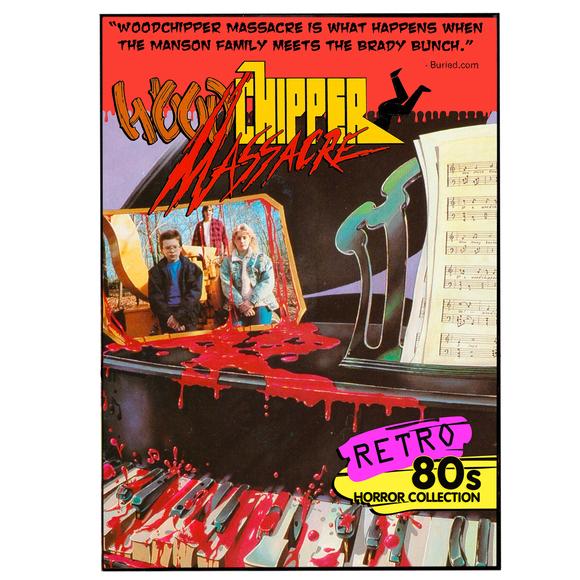
Jon McBride acted, wrote, directed, edited, and composed this movie for $400. I kind of wonder why he didn’t name it The Connecticut Woodchipper Massacre. That may be because it’s way closer to Don’t Tell Mom the Babysitter Is Dead, but that movie never had a kid accidentally stab his aunt with a Rambo knife that she wouldn’t let him have. Let me tell you, I wanted one of those knives too, so I completely get it.
I also completely get the worry of having the yard raked before your father gets home when you told him it’d be done. That said, again, I’ve never used my cousin as compost spread all over the yard. I guess I lived a pretty sheltered life.
This film was based on the 1986 Newtown, CT murder of Helle Crafts by her husband Richard, which also was where Fargo got the idea. I would guess that the Coen Brothers didn’t have to shoot all of their woodchipper scenes in one weekend because they only had money to rent it once.
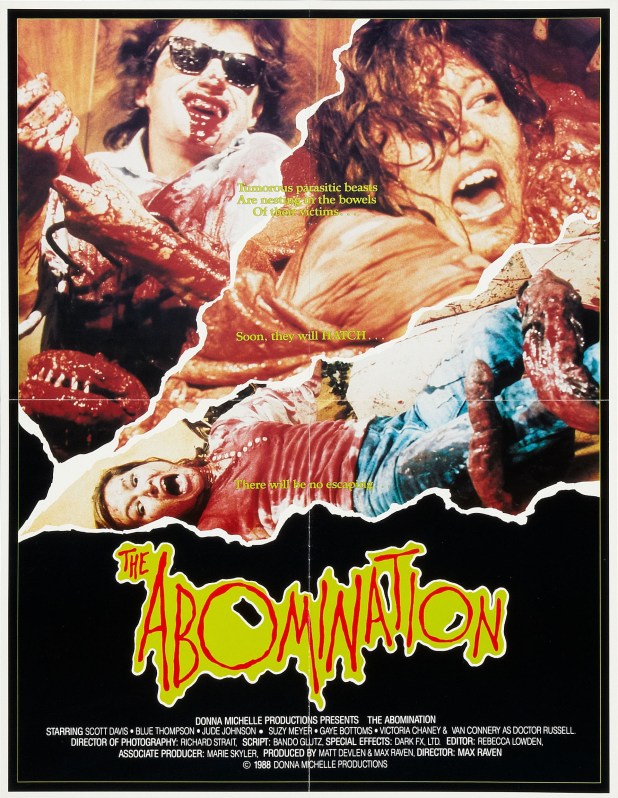
There is every other movie in the world and then there’s The Abomination.
No hype. This movie is absolutely brain destroying junk transmitted from some terrifying alternate timeline that I hope and pray never reaches our own. It’s a world where televangelist Brother Fogg can pray a tumor out of a woman, who vomits it out, and then that tumor crawls into her son who undergoes a transformation into a killing machine that feeds the many spores of the creature and pushes forward the end of all things.
This is also the kind of movie that starts with a blast forward of all the gore that you’re about to see in this movie and still not feel boring when that gore comes back. And man, that gore comes back and takes over the world of this movie, transforming protagonist Cory’s home into a panormama of teeths and blood and muscle and sinew and gristle and gore.
Man, what’s wrong with Texas? Or right? This movie feels like it wasn’t released and that it escaped, like it should have been destroyed before it infected anyone’s brain but here it is, hiding in its low-fi menace out there waiting for people to watch it and wonder, “Why are people driving so much?” when they aren’t wretching from the endless parade of blood and viscera being literally thrown at the screen and the dubbed soundtrack which makes me love this movie even more, because when you put your budget into gigantic monsters that emerge from appliances and kitchen nooks, you don’t have the cash for synched sound.
Director and writer Bret McCormick also made parts of Tabloid and the films Time Tracers and Repligator. Even at this early stage, he’s showing off a real eye of how to use the budget and how pretty much frighten you through the sheer strangeness of what he’s created.
This isn’t a perfect movie but perfection is an ideal that cannot exist. This is The Abomination.
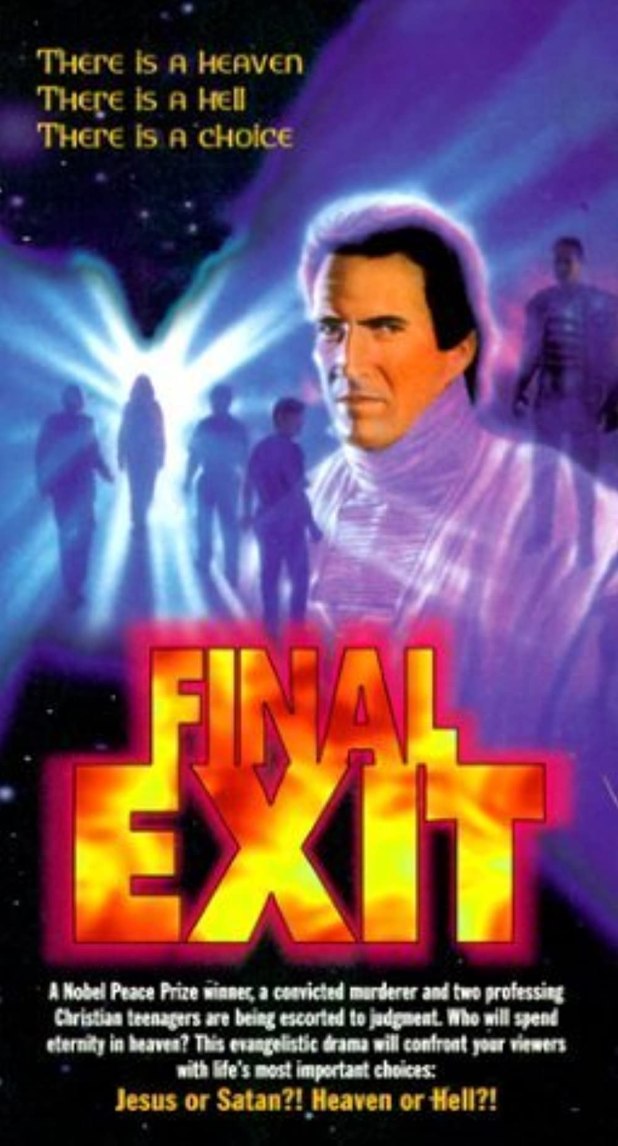
Stop me if you’ve heard this on before. A Nobel Peace Prize winner, a convicted murderer and two professing Christian teenagers meet St. Peter at the Pearly Gates and, well, make a movie. Final Exit is an “evangelistic drama will confront your viewers with life’s most important choices: Jesus or Satan? Heaven or Hell?”
Oh man, yeah. This is why I watch movies.
As a kid, I repeatedly encounter Jack Chick tracts that, if anything, pushed me away from the path that Mr. Chick wanted me on. This Was Your Life is a really good overall view of the world of Chick: a man has led an ordinary life full of sin, wasted what God gave him and is thrown into Hell and he’ll never get out. Variations on this theme appear, telling us that even the clergy — especially Catholics — can still go to Hell. Reading so many of these so often as a kid led to the man that I am today.
In case you haven’t been amazed by what the Christian side of the world endorses these days, this movie will set you straight. Of course, the serial killer will go to Heaven because he made a very specific prayer the night before he was executed and he would have never found Heaven without the death penalty. The Nobel prize winner did amazing, wonderful, astounding things in his life and ended war and saved lives, but he was selfish and did it all for himself and not God, so he’s going to burn.
And then the movie reminds you that even though this man stopped some wars, there will still be more wars. Also, one of the serial killer’s victims is innocent, but never found God, so they show her being removed from Hell for just a moment before pushing her back in.
Writer/director Danny Carrales has made a ton of movies like this, moving up from SOV quality to actual films. His latest one, 2018’s Beyond the Darkness — and you just know that I love that he used the name of a Joe D’Amato movie — has lighsaber-looking things on the cover, which means I need to track it down and do a full deep dive. And oh yeah, Carrales is also a professor at Jerry Falwell’s Liberty University.
Some people ask me, “How did our country get like this?” We always were. It just used to be tracts, SOV videos and the 700 Club wasn’t watched by everyone and shared like social media. It’s someone’s POV, no matter how much you disagree with it. And you know, no matter what you do, you’re going to Hell.
Hey, there’s nothing like an “SOV Week” to inspire us to fill out the holes in B&S About Movies’ SOV database while we also polish off the unholy triumvirate of Christopher Lewis — the Julius Ceasar of the SOV domains — with Blood Cult, The Ripper, and the sequel to Blood Cult: Revenge. Ah, there’s a catch, afoot: more money means improved production values, so we’ve made the transition from video to 16mm film. But we didn’t know that back then . . . so while it’s not “technically” an SOV, it still is in our video store pumpin’ hearts.
I begged to buy this poster off the video store wall. The mint-deficient halitosis owner wouldn’t budge. Even after taking it down for a new one-sheet, he still wouldn’t sell. He told me, “I’d rather throw it out.” And probably did. Dick.
So, did you read our review of Blood Cult? Then you’re up-to-speed with the dog-worshiping cult shenanigans.
In the grand tradition of notable-successful actors hitting hard times and slumming in an SOV romp to pay the rent (and for a producer to get a marketable name on the Big Box), such as Michael J. Pollard in Sleepaway Camp III: Teenage Wasteland (1989), adult-film star Amber Lynn in Things (1989), and Janus Blythe of The Hills Have Eyes in Spine (1986), Revenge stars John Wayne’s son, Patrick — the star of the huge (in our hearts!!!!) mid-‘70s drive-in hits The People That Time Forget and Sinbad and the Eye of the Tiger.
Exhibiting still cheesy, but vastly improved technical skills in front of and behind the camera — in a script penned by actor Joe Vance (the dead Joel Hogan from the first film) — star Wayne returns home to investigate the death of his brother from the first film. And he runs afoul of our dog-god cult with a body-part fetish overseen by cadaverous horror icon John Carradine, who, even with the dreck he’s been in (see Cirio H. Santiago’s Vampire Hookers), deserves better than ending his career with an SOV appearance (ugh, I know, 16 mm, but you get the point).
While we still have the slasher element from Blood Cult, things are a bit more supernatural-cum-mystery — no Halloween homages this time, as with the first film — with our cult members using ESP to dispatch their victims with a little cerebral cortex rupturing. It’s not exactly Michael Ironside Scanners explosive, but it’s messy . . . and SOVs (okay, frack, 16mm) have to be Karo food coloring-messy.
A couple of months after the end of the Blood Cult timeline, Patrick Wayne’s Micheal Hogan, the brother of dog-cult victim Joel Hogan, returns to town and comes to help Gracie Moore (a returning Bennie Lee McGowan) now terrorized by the dog cult that murdered her husband and wants her farmland to conduct a sacrifice. Also back are David Stice as our Deputy and Peter Hart as Dr. White. In a QAnon twist: John Carradine’s Senator is the head of the Lord Caninus sect (funny, Ted Cruz strikes me more as the dog cult demigod-type). And more of the same body part collecting to resurrect ol’ Canny, ensues . . . and the “ensuing” includes a head-hatching, leg-removal by bear trap, a Jacuzzi slice n’ dice-cum-decap, and the ESP kicks in for a fleshy BBQ.
You can pick up Revenge, paired with Blood Cult and The Ripper, on a nifty catch-all The Ripper Blood Pack DVD from Amazon. You can also watch a VHS-era rip on You Tube. And speaking of “revenge” . . . bang the head that doesn’t bang with a little Slayer, Exodus, and Venom, for, as you know, metal and horror films are a bloody Reese cup from hell.
About the Author: You can learn more about the writings of R.D Francis on Facebook.He also writes for B&S About Movies.
I had several video store memberships back in the day — both with the chains (Blockbuster and Hollywood Video) an array of mom n’ pops — not counting the ones where I wasn’t a member that I’d road trip for a cut-out bin divin’ weekend (if I couldn’t find it as a rental, I’d buy the cutout version) — and my local comic bookstore.
Yes. At the comic book store.
As my neighborhood video store knocked a hole in their wall and the owner dumped all of his warehoused vinyl into the bay next door to not only sell, but rent records like video tapes (of which I recorded many to cassettes), my local comic book store also punched a hole in their wall and opened a dinky video store. Another comic shop — which was bit more of a drive — cleared out a corner and started shelving rental videos, as well. (For a fee, that comic shop would high-speed a copy; used vinyl record stores, before and during the early days of the compact disc, when everything wasn’t yet on disc, copied albums: first to cassettes, and then, eventually CDs.)
The U.S. reissue from the fine folks at Bleeding Skull. Hi, Hog. Dig the shirt.
What my cherish comic honey holes shelved is many of the films we’ve reviewed during our “Regional Horror Week” back in March, our “Hong Kong Week” back in May, and last month’s “SOV Week” and “Video Nasties Week” tribute . . . then there’s our “Japan Week” coming the beginning of next year (cut and paste those “weeks” into our search box to populate those reviews). For when your local comic book store decides to compete in the home video market, you know that they’re going deeper than the mom ‘n pop outlets where your dad is renting The Godfather, mom (mine’s an action whore) wants First Blood — and you’re renting a Wizard “Big Box” “video nasty” to the tune of Headless Eyes. (And let’s not forget our beloved pre-Internet catalog grey-market retailer VSOM – Video Search of Miami and our trusty Starlight Video bootleg catalogs helping us discover the deep corners of the VHS-doms. I miss that: I’d rather the ol’ catalogs and mail-order than the web. I know: shut up, nostalgic old bastard.)
Such a “deep” film is Cards of Death: the feature film debut — and lone film — by actor Will MacMillan. Born in Stuebenville, Ohio, he came to work at the Lovelace Marionette Theatre in Pittsburgh (the hometown of the online publication you’re reading right now). Oh, you know MacMillan. He starred in George Romero’s The Crazies and co-starred alongside Clint Eastwood in The Enforcer. Then there’s a dozen-plus network TV series, as well as Oliver Stone’s Salvador. Then more TV series and a couple of TV movies.
Did my common regional roots to MacMillan, along with the Romero connection, mean anything to me at the time when I rented the grey-version of Cards of Death from my ol’ comic hole? Nope. No more than the Hollywood and rock music lineage of Christopher Lewis inspired me to rent Blood Cult. All I know is that I saw a weird-and-wonderful, never before seen oddity imported and grey’d from Japan and I wanted it. And, as it turns out: it wasn’t an Asian cinema set-piece, but an American (SOV) flick masquerading as Asian cinema. And I think MacMillan inspired all of that later, Asian-VHS insanity from Japan and Hong Kong. I have a feeling, if you read reviews and interviews of the fans and makers of those films: MacMillan is name-dropped, often.
Yep. That’s the one. Originally issued on Japan Sony’s “Exciting Video” label. Only the “U.S.” cover was a fuzzy, laser-printed copy tucked into a clamshell sleeve and dubbed on a TDK-VHS tape.
Anyway, MacMillan wanted to move behind the camera. And with the home video revolution and the new accessibility of commercial video cameras — with the shot-on-video and direct-to-video successes of the likes of the influential SOV game changers Boardinghouse and Blood Cult, MacMillan realized he had a cost-effective way to prove his skills as a writer and director. And, from what I’ve read: to tell Hollywood to “f-off,” as he had grown disenchanted with the business. (I wonder why: he worked consistently; perhaps he lost out on auditions for a couple mainstream roles?)
And, with that, the crime-horror Cards of Death was born.
However, unlike the SOV’ers Boardinghouse and Blood Cult, Cards of Death couldn’t obtain (widespread) U.S. distribution — so no one saw it. Why? With its gratuitous nudity, lesbianism, sex scenes smeared in blood, and on-screen kills — more so than Spine, an SOV also released in 1986 — MacMillan’s vision was a perfect programmer for porn purveyors 4-Play Video, Inc. and producer Xeon, Ltd.’s joint, “commercial” SS – Sterling Silver imprint; the label was created for that porn-slasher hybrid’s marketing into the brick-and-mortar marketplace. Cards of Death would have made for a great, second release for the label — instead of having Sterling Silver go under after the release of Spine. Sure, MacMillan had years of mainstream Hollywood experience behind him. Surely, he had the industry connections. But a scuzzy porn-leaning horror film snipping inspiration from ’50s and ’60s French New Wave existentialism? It’s easy to see why MacMillan was left to his own devices to market and distribute his admittedly unconventional film. (Why do you think Alejandro Jodorowsky (Santa Sangre; 1989) never got his version of Dune made?)
So, in a business deal with details lost to the analogs of time, MacMillan got the film into the Asian home video market via Sony’s “Exciting Video” VHS imprint. That’s when Cards of Death — like Cheap Trick’s Japan-only released Live at Budokan breakthrough album before it — found its way back the greylands of the good ol’ U.S.A. to be nestled onto my local comic book store’s underground-video nasties shelf. Those shelves also held imported copies of Toshiharu Ikeda’s Evil Dead Trap and the grey-market rips of Kinji Fukasaku’s Battle Royale (which took ten years to officially appear in the U.S.) and the Guinea Pig and Tomiefranchises.
If only MacMillan turned the directorial reins over to Takashi Miike of Dead or Alive fame; for Cards of Death is under the same Sapporo Dome as Gozu(2003), Miike’s bizarre, low-budget direct-to-video horror with its mix of mobsters and ghosts and breast milk and cow-headed men. (Yeah, a Miike remake of Cards of Death is a film I’d pay to stream.) The violence of Cards of Death, while it has its moments, isn’t Evil Dead Trap-brutal — and is certainly not as expertly-crafted as a Miike joint — but it does foretell torture porn before there was an Eli Roth (his game-inspired Hostel, in particular). And that gore comes courtesy of another SFX artist (see our review of Night Feeder) who moved onto bigger and better things: Bryan Moore ended up doing the effects for one of Charles Band’s better Empire budgeters, Dolls (1987), by Stuart Gordon (Re-Animator), and Underworld: Evolution. But let’s not forget Moore’s makeups on the oft-run USA Network’s Chopper Chicks in Zombietown and the much HBO-played C.H.U.D. II: Bud the Chud.
The you-want-to-shower-after vibe of Cards of Death comes in the form of graphic sex scenes: one features a nude, punk-rock makeup lesbian f**king Hog next to a corpse she just offed and drained into their wine goblets — and smear the bloody over their bodies. And if that’s not enough: a chair-cuffed cop (MacMillan as Captain Twain on the case) has his fingers, ears, and nose sliced off — then mailed to the police station. One gamer gets an axe to the chest and a crown of barbed wire around the face and throat — all in-camera. And there’s a (admittedly clumsy) human crushing by a pneumatic walled-device, aka “The Crush Room.” There’s an impaling on a wrought iron fence (because of cost, we don’t see the fall, just the aftermath). Then there’s rape. And strangulation. And sadism. And a chainsaw. And cheese graders used on dairy products and epidermal products. And bullets. And the coke flows. And there’s no mystery — and that seems to be MacMillan’s “narrative choice” — as we know our killers, and since everyone is killing, there’s no Giallo-done-to-death Voorhees POVs typical of the slasher genre for us to “guess” what’s what. MacMillan is about the existential weirdness, with what can be described as a slasher-porn inversion of Ingmar Bergman’s medieval masterpiece The Seventh Seal (1957). Is Hog a representation of death, while the felted-table of tarot card death is MacMillan’s version of Bergman’s errant knight and death perched over a chess board?
But what we do know: The “cards of death” is an underground card game (in a black-plastic draped and burning-neon, new wave room tucked inside a dilapidated warehouse) with its cult-following players fronted by the mysterious Hog — complete with a crudely-drawn spider on his forehead. The game’s stakes are one’s life. To up the weirdness — and which is why Sony Japan snapped it up for Pacific Rim distribution — our male players wear rubber masks (of clowns, skulls; interpret the subtext to your liking) while the females slaughter in full Nazi dominatrix regalia (your subtext guess is as good as ours) as they play a Poker-inspired game, only with Tarot cards. The rules are simple: If you’re left holding the death card in your hand, you die — with a violent Grand Guignol death set-in-wait for you. If you hold a winning hand, you win the pot, but you’ll lose the pot — and you’re own life — if you fail to kill the loser within 24 hours. The game is held every Wednesday. On Thursday, the loser’s body is dumped in the city. And the cops are stumped. And the financial windfall is so substantial, a priest with gambling debts is willing to play the game (he’s the guy that ended up fence-impaled).
So, why does the game exists? What’s the “end game” of the game? Why, after all of the seriousness of the film, do we have black comedy end credits — complete with goofy music, rolling? What’s our “message” take away? Well, what I do know: Cards of Death is grainy. It’s sadistic. It’s repugnant. It should not exist, but it does. Cards of Death is an SOV dream of a simpler, analog membership card time as we searched for the off-beat. And I love it.
But that’s not to say Cards of Death is not awkward and clumsy. While the scenes in the warehouse game room are entertaining and has its directing, thespian, and scripting weirdness-moments, the game’s over when the story returns to the jittery, flat camera work of awkward framing with the (awful acting) cops and their investigation. As with the (even more) awkward police investigation plot-jinxing of fellow SOV’er Spine ditching the bondage-murder antics of Lawrence Ashton — the grime that everyone came for — Cards of Death draaaags when the fuzz show up. We want the new wave weirdness and murderous lesbians. In comparison, the influential Blood Cult, with its admitted share of flaws, is clearly the better-shot film. And Cards of Death is, in turn, better shot than Spine. Got that?
MacMillan appeared in two more SOV-made films: Dark Romances Vol. 1 (1990) and Schemes (1994), so you can search for those to kill the cat. Sadly, we lost Mac in December 2015. You can read his obituary at Hollywood Reporter, People, and Varietymagazine (notice how Cards of Death isn’t mentioned; and one obit is more detailed than the other).
And would you believe that some of the actors from Cards of Death not only moved onto other works, but are still in the business?
Ron Kologie, who stars as MacMillan’s son, Billy, appears in two, recent Lifetime holiday movies: Random Acts of Christmas and A Cheerful Christmas. (You know us and cable Christmas movies around here; denied: Fred Olen Ray or David DeCoteau didn’t make Kologie’s good cheer’ers. Oh, well.) Greg Lawrence, here as Ross, one of our intrepid cops, continued to work in indie features and shorts, including the works of Dennis Devine (Get the Girl). Joel Hoffman, as wrought-iron’d Father Morris, turned up in Slaughterhouse, Slumber Party Massacre II, and the much-loved Stan Winston-directed Pumpkinhead (Hoffman’s since retired; he’s a high school English and Spanish teacher).
You can purchase appropriate retro-VHS reissues — with the U.S. artwork — via Bleeding Skull and Mondo’s joint efforts. Oh, yes! The You Tube gods have delivered a streaming copy. If there is one SOV’er you decide watching this week, make it Cards of Death: even with its flaws, it’s a Dan Curtis, tape-shot ’70s TV movie on acid with a speedball chaser, a dominatrix with an axe, and a coil of razor wire.
About the Author: You can learn more about the writings of R.D Francis on Facebook.He also writes for B&S About Movies.
Writer/director/FX artist Olaf Ittenbach must have been thinking, “No one has any idea what a SOV horror movie from Germany could do to peoples’ brains. Let’s change that.” He pushed things so far that this movie was banned for twenty years from the very nation that it came from, which is pretty astounding — and a testament to how offensive it is — if you think about it.
Ittenbach plays Peter, a junkie whose parents somehow trust enough to babysit his sister, so he reacts as any of us would be shooting up and then telling her some stories that no child — or adult really — should ever hear.
In “Julia’s Love,” Julia has a date with the perfect man. The perfect man who is also a serial killer who is going to follow her home and decimate her entire family. And then in “The Purity,” a series of murders and assaults rocks a 1950s town and the wrong man is accused; unfortunately, he’s being protected by the real killer. And then, as things happen, everything literally goes to hell.
And then Peter kills his sister and himself.
It’s a feel good movie packed with gore, depravity and — depending on how many times you watched your VHS tape — bad tracking. I mean, it does have a priest drinking blood, worshipping Satan and then torn in half while in Hell, so it immediately gets 6 stars.
This is exactly the kind of movie that people that worry about kids watching horror movies think that they are watching. So don’t let those closed-minded jerks down!
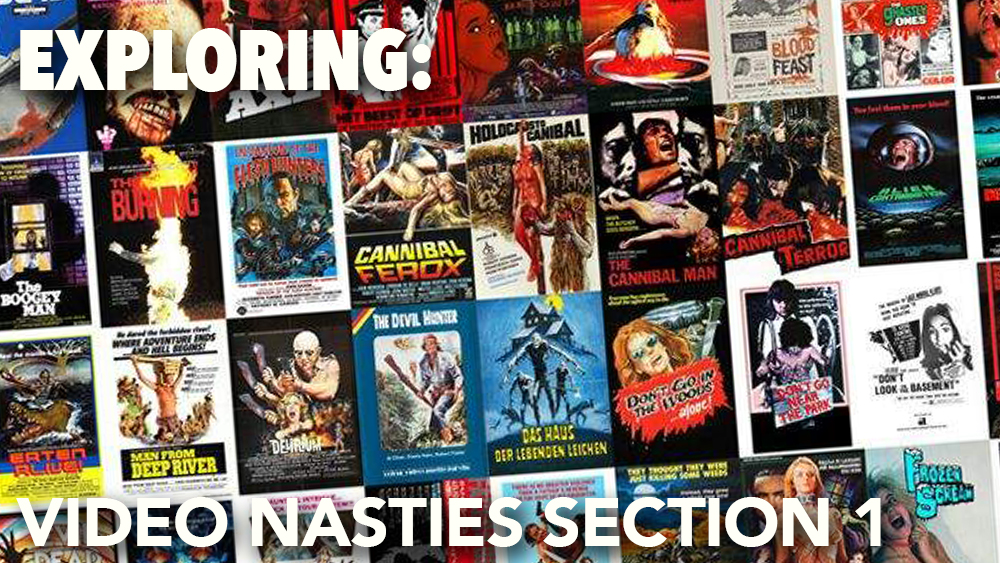
Zombies get frozen and unfrozen — in a fever dream of bizarre ADR-dubbing, hypodermic needles to eyeballs, and laughable gore effects — before they kill people in this not-so-well known zom-effort. And what notoriety this zom-romp received came courtesy of the puritanical purveyors of England placing Frozen Scream on the U.K.’s “Video Nasties” Section 2 list.
Nothing like a stuffy Brit inspiring you to watch a movie. You know how it is: tell me it’s taboo — I only want it more. Heck, shoot it on film in a start-stop-start production, screw it all up, have no one see in the the drive-ins, then make it “look” like we’re getting a piece of the SOV ’80s (click through to our SOV category for more films) by sticking it on hungry-for-product home video store shelves alongside “real” camcordered SOVs — I only want it more.
Two scientists, Lil Stanhope (producer Renee Harmon) and Sven Johnson (Lee James, a makeup artist who worked on Al Adamson’s late ’60s ditties Blood of Ghastly Horror and Brain of Blood; let that serve as a quality caveat, here) are, as all scientists of the VHS variety, on a maniacal quest to unlock the secrets of immorality. To that end, the “secret” is that the subjects are kidnap and murder victims (medical students who get too nosy for their own good) revived by the way of electronic neurosurgery. (Uh-oh, Ulli Lommel’s BrainWaves!)
Only the neck-installed device (looks like a radio audio connector, and probably is; the wonders of spirit gum and a vial of rigid collodion) has a side effect: it turns subjects into homicidal zombies that must be stored in freezers. When Tom Girard, one of the project’s scientists (Wolf Muser in his debut; still in the business with a resume rife with U.S. TV credits, he recently portrayed Adolf Hitler in the stellar streaming series The Man in the High Castle), refuses to be part of the experiments any longer, he’s murdered by a gang of zombie-hooded monks (all sporting bushy, ’70s porn-style staches). Now his wife Ann (Lynne Kocol, later of the production-connected Nomad Riders), who witnessed the murder, is under Stanhope’s care — and brainwashing Ann into believing it was all a hallucination.
As with George Romero’s Night of the Living Dead (1968) and Ken Wiederhorn’s superior Shock Waves (1977): Ann, along with Stanhope and her ex-hubby detective (Thomas McGowan; 20-some films, none notable; he serves as the voice-over thread for the film) are on the case — and face a zombie siege at a house during a (cliché) Halloween Party — complete with screaming kids, natch — and a final mad scientist showdown in Stanhope’s lab of terror.
Since this film is an across-the-years start-stop production on a shoestring budget, the zero-production values hamper the somewhat decent plot (that sort of reminds of Stuart Gordon’s later-amazing Re-Animator), and the hampering goes deeper with the strained voice-overs to thread the film’s vignettes into a coherent plot. The non-cinematography, the audio (the voice-overs are placed over the actor’s dialogs; in fact, the entire film was ADR’d in post) is beyond muddy, and the painful thespin’ throughout — especially from star Renee Harmon in a bad German accent, probably to give us a Nazi subtext (but it’s never explored beyond the accents from her and Lee James) — and makes Don Dohler’s efforts look like award winners. Only Frozen Scream has none of that rooting-for-the-underdog-filmmaker charm of a Dohler effort. Perhaps if Dohler made this, I’d dig it as much as I do Fiend (1980), which is an admittedly weak cup of tea, but . . . I don’t know why, I just love that Dohler film.
All in all, Frozen Scream is a great idea, but one woefully in need of a) a budget, b) a consistent, fluent shooting schedule that doesn’t leave it looking like an Al Adamson chop-shop joint, c) a guy like Ken Wiederhorn to pull it off, and d) a pacing and logic that doesn’t leave a renter (well, today, a streamer) needing to take five attempts to make it through the entire film with their sanity intact (yes, it took me a week to even start to write this review, as result).
Overall, it’s a hard watch of poorly-framed shots where you want to jump through the screen to operate the camera: the static wide shots that offer no mediums or close-ups, the over-the-shoulder shots with no reverse angles, and lighting so dark and muddy, that you want to break out a couple of flashlights are frustrating as hell. But when you’re shooting on 35 mm short ends, that’s par for the course. And it still looks like a shot-on-video delight via post-U-Matic camera. And I care way too much about this film than it deserves.
Frozen Scream is a film that traveled a long, strange road . . . a (production) trip that began in 1975 and took five years to complete. By the time the film was finished, the drive-ins for which it was intended, were defunct — and no distributor wanted the film, anyway. Luckily, the VHS home video boom was in full effect, and Frozen Scream finally made its debut on VHS in 1983, and then was reissued on the format in 1985 — amid the flurry of shot-on-video and direct-to-video films inspired by the success of Blood Cult and Spine (thus my SOV-critical lumping). As is the case with low-budget productions always looking to maximize their dollar, Renee Harmon did the Roger Corman-sensible thing and recycled footage from Frozen Scream into the films Night of Terror (1986) and Run Coyote Run (1987), both produced, written by, and starring Renee Harmon. (The former concerns a sadistic doctor and his family kidnapping subjects for brain experiments; the latter is a crime thriller about a psychic searching for her dead sister’s killers.)
Harmon’s director, Frank Roach, made his second and final film — both as a writer and director — with Nomad Riders (1987), a Stallone-esque cop-out-for-revenge thriller regarding a rogue who, after the brutal murder of his wife and daughter by a gang of vicious bikers, exacts revenge on the bikers and the mobsters behind the bikers. (No, that’s Nomads (1985) you’re thinking of that stars Pierce Brosnan and Lesley Ann Warren under the eye of John “Die Hard” McTiernan.)
Of Frozen Scream‘s co-writing team, Doug Ferrin, never wrote another film.
The same can’t be said for writer Michael Sonye. He later wrote Star Slammer (1986) and Commando Squad (1987) for Fred Olen Ray, the Brad David and Sharon Stone thriller Cold Steel (1987), and the always-welcomed Robert Ginty-starrer Out on Bail (1989). But Sonye’s best known film to video fringe horror fans is the hugely popular horror-comedy VHS-renter, Blood Diner (1987). Across his 28 acting credits, you’ve seen Sonye appear in Star Slammer (as Krago), and the U.S. by way of Japan SOV’er Cards of Death (1986), as well as the ’80s USA Network’ers Surf Nazis Must Die, Sorority Babes in the Slimeball Bowl-O-Rama, and Hollywood Chainsaw Hookers.
If the soundtrack — to you fellow junk video hounds — sounds a wee-bit familiar to the ears, that’s because composer H. Kingsley Thurber recycled his work on Frozen Scream on another inept backyard’er, Don’t Go Into the Woods (1981) (and that film is really bad. Really bad).
You’ve also seen actress Rene Harmon in the vansploitation romp Van Nuys Blvd. (1979), the women-in-jepaordy-seeks-revenge thriller in a ghost town, Hell Riders (1984), and the aforementioned horror flick, Night of Terror (1986), across her scant 11 acting credits — eight of which she wrote. Her final film before her 2008 death was Revenge of Lady Street Fighter (1990), while her final film overall, Jungle Trap (2016) was completed posthumously. In between her acting and writer gigs, she taught screenwriting at the College of the Sequoias Community College in Visalia, California. (Heads up, Adam West fans, for he stars in Hell Riders alongside Tina “Ginger of Gilligan’s Island” Louise; hell, yeah, that’s on our watch list.)
You can purchase the DVD of the original 1986 VHS two-fer with The Executioner 2 from Vinegar Syndrome, both of which starred Rene Harmon. There are also grey-market looking DVDs that pair Frozen Scream with Tobe Hooper’s mad alligator romp, Eaten Alive. Then there’s a double-sided, uncut Region 2 DVD that features the German version (Blautrausch Der Zombies) of Leon Klimovsky and Paul Naschy’s Vengeance of the Zombies (1973) on the other side. Yet another version is a single-disc grey impress. So, outside of the Vin Syn version, shop smart.
Renee Harmon, amid a flurry of a dozen or so self-published educational books on acting, filmmaking and screenwriting (see ThriftBooks and Good Reads), adapted Frozen Scream into a novel — issued under the title Evil Covenant (2001) — and used copies can be found on Amazon and eBay. Her other educational work, Hollywood Mysteries (2001), complies two of her studies, “The Hunting Party” and “Let the Dice Roll,” subtitled as “Book One,” as an insight on creating suspense-genre films. The book is of particular interest as it features the complete script from Frozen Scream, including production notes that she later used to complete the whole of Hollywood Mysteries. Sadly, Harmon passed away in 2008 before writing additional volumes to the series.
Say what you will about her films, but Renee Harmon was, as Doris Wishman, a true renaissance woman who should have her name spoken more often in the realms of indie film, alongside the fandom of Al Adamson, Larry Buchanan, Don Dohler, and countless other up-against-the-budget underbelly dreamers and schemers of the celluloid side streets and back alleys of Tinseltown. Most of her books — based on reviews — seem to be rife with typographical and layout errors. However, I read her non-self published book How to Audition for Movies and TV (1992) via a public library copy (issued by a larger publisher, natch, with a quality assurance queue to minimize errors) and found it to be a well-written, insightful book that I utilized in my own adventures “in the room” as an actor. Renee knew her stuff and then some, so she did me a solid.
About the Author: You can read the music and film reviews of R.D Francis on Medium and learn more about his work on Facebook.
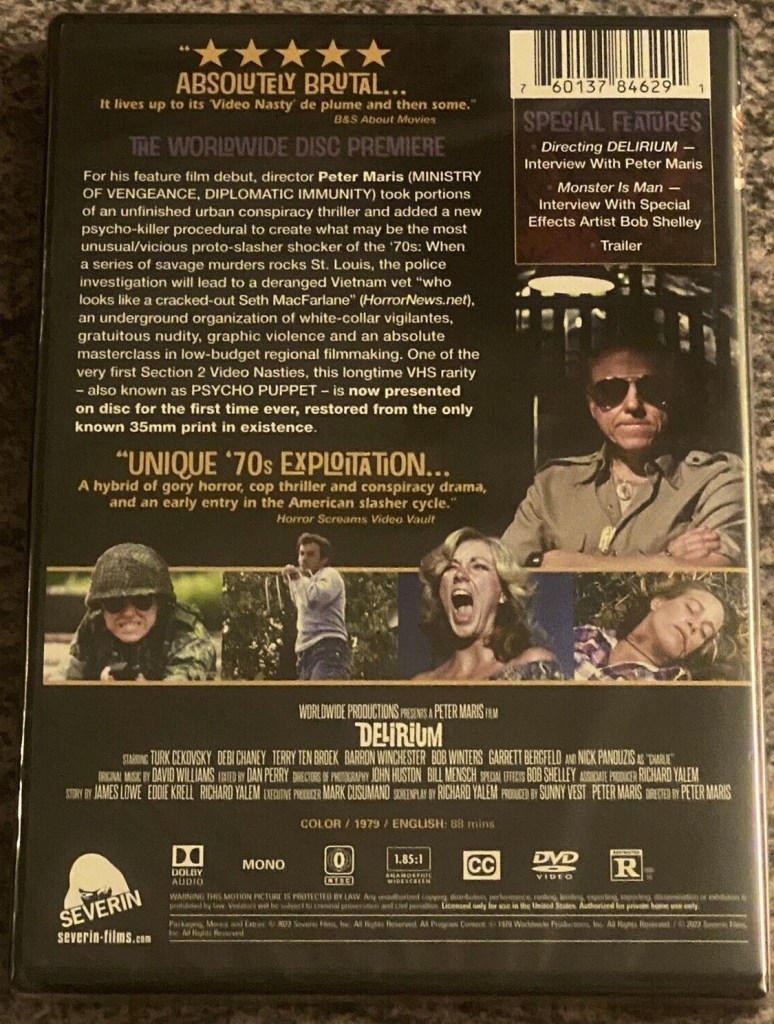
EDITOR’S NOTE, January 2022: We’re excited to share Severin has used a quote from R.D. Francis’s review on the back of the limited-edition slipcaseversionfor their new Blu-ray release of Delirium. They since used the quote for the rear cover on their mass-marketed DVD.
At the time of composing this September 2021 review, we were simply crossing-off another film from our ongoing goal of reviewing all of the British “Video Nasties” of the ’80s (we’ve linked that three-part series at the end of this review). We were unaware that, first, Severin, then 88 Films in the U.K. — who didn’t make their respective, reissue announcements until November and December 2021 — were releasing the upgraded film in January 2022. . . .
So, yes . . . another obscure, mostly forgotten, even unknown in most quarters, 40-year-old film (see our recent — and now, updated — reviews for The Spirits of Jupiter and UFO: Target Earth) crawls out of the analog snows, aka woodwork, and bites us in the ‘ol arse!
DVD imagecourtesy of dcjsalesofficial/eBay.
Okay, so it goes without saying, but we’ll say it, anyway: This isn’t Lamberto Bava’s 1987 film of the same name — at least not in the celluloid confusing lands of the alternate-title U.S. In other parts of the world, that film was known as Le foto di Gioia, aka The Photos of Giola, starring the heart-melting Serena Grandi (Antropophagus), Dame Daria Nicolodi (Shock), and George “Big Ape” Eastman (who we’ve “Explored“).
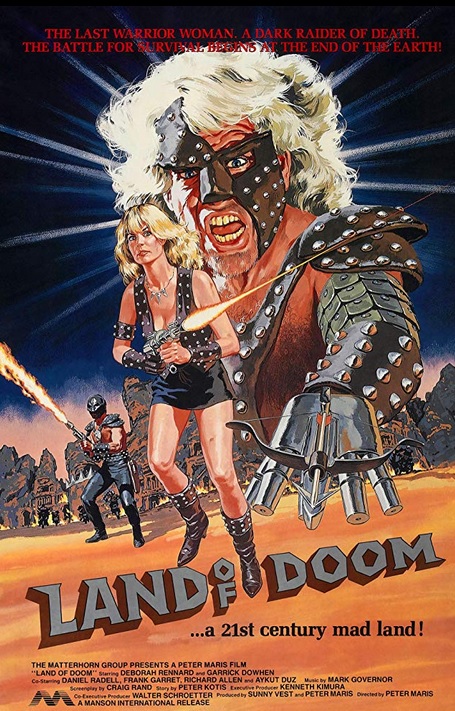
No, this Delirium is the U.K. “Section 2” Video Nasty (see, we are finally getting around to polishing off those reviews, in full*) that served as the feature film debut by producer, writer and director Peter Maris, he who later gave us the cheesy-fun The Road Warrior rip Land of Doom(1985), and the god awful (sorry, Pete, it just is), one-two punch CGI’d ripoff of not only Independence Day, but Species, with the oft-Mill Creek box set-programmed Alien Species (1996). Maris, however, unlike most auteurs whom appeared on “Video Nasty” and bloody “SOV” lists, carved himself a rather prolific, low-budget resume of directing a film roughly once a year, for a total of fifteen films until 2007. As a producer, he also gave us four more: True Blood (1989), Ballistic (1995), the Christian apoc-rocker Raging Angels (1995)(!), and a pretty good neo-cable-noir with The Murder in China Basin (1999).
Okay, so back to the “Video Nasty” that is Delirium.
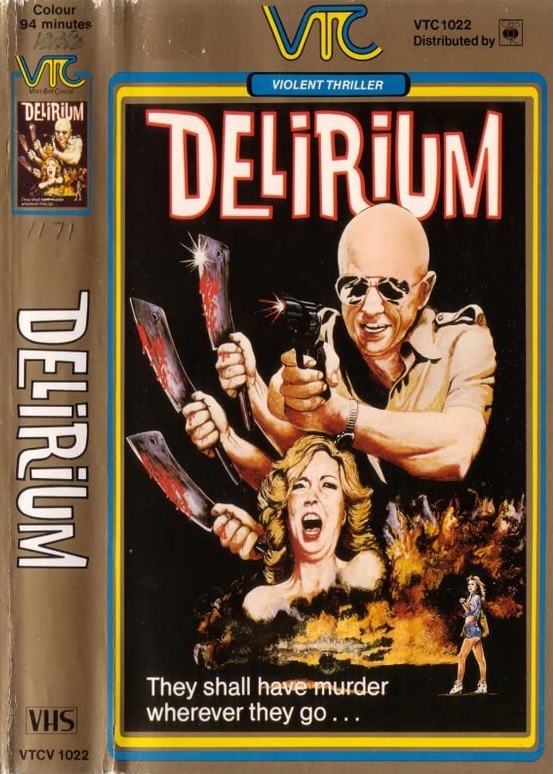
Ah, the VHS I remember. It feels like home. It also aka’d as the cooly-titled Psycho Puppet throughout Europe.
Charlie is your garden variety, Giallo-influnced-by-way-of-John Carpenter psycho trapped in a graphic foreshadowing of the Micheal Douglas-vehicle The Star Chamber (1983). In that film, Douglas becomes part of a secret society of judges who hire hitmen to assassinate criminals who slip through the system. Perhaps your nostalgia miles may recall the James Glickenhaus** written and directed The Exterminator (1980), with Robert Ginty’s war vet barbecue’in criminals with a flame thrower (we’ve since reviewed Part II as part of our “Cannon Month” of reviews). However, as with The Star Chamber, Peter Mavis, was — brilliantly — first.
In a Mavis low-fi world, we have a secret society of community leaders who’ve formed a “vigilante counsel.” Taking the law into their own hands, the committee’s kangaroo court convicts in absentia and murders the convicted. To run their court — and handle the “assassinations” — they hire Charlie: an ex-solider. At first, Chuck mops the streets with efficiency and plausible deniability on part of the counsel. However, as any emotionally damaged Vietnam vet (of the celluloid variety) should: Chuck freaks out and just friggin’ kills everyone — including squeezing in the butchering of innocent, young women: for he side hustles between “assignments” with his serial killer gig.
Delirium — as result of its foreshadowing two, better known, more popular movies, and its crazed, hybrid-amalgamating of Dario Argento with the later action-thrills of John Carpenter (see his earlier Assault on Precinct 13 vs. Halloween) — is an oddly-styled, unusual film that, again, also foreshadows Sylvester Stallone’s own, later Giallo-action hybrids in Cobra, and his less-successful attempt with D-Tox. We can even go as far as mentioning Charles Bronson’s graphic, but not as gruesome as Delirium, Italian Poliziotteschi-Giallo hybrid with 10 to Midnight.
However, unlike the films we’ve mentioned in comparison: Delirium is absolutely brutal in its misogyny (and Stallone had women hanging as hogtied-meat slabs in D-Tox). This movie — not Mavis, mind you — hates women: even more so than Joe Spinell’s head-scalping Frank Zito in William Lustig’s — again, more popular, better known; but Mavis was first — Maniac (1980). Look at the cover: this movie lives up to the “video nasty” de plume and then some, as it decides jamming a pitchfork through a woman’s throat (Pastor Estus Pirkle jammed sharpened bamboo rods into kids’ ear canals, so why not; you’ve never seen If Footmen Tire You, What Will Horses Do?, well, you should*˟) and nail-gunning women to doors is the way to go — then justifies it all with the ol’ “Vietnam flashback” gag (the Gooks made me do it). The vet-flashback gag didn’t work in the earlier (I can’t not believe Peter Mavis wasn’t influenced by it), porn-industry backed The Last Victim/Forced Entry from 1973/1975. Only Mavis’s film is the more skillful of the two. (I keep flashing back — or is that forward — to Will MacMillan’s serial-killer oddball Cards of Death (1986); however cool that SOV’er is, Mavis made the better-quality film).
So, if you have a hankering for a “heavy metal” experience of an uber-weird n’ scuzzy amalgamate of John Carpenter’s Halloween and Sean. S Cunningham’s Friday the 13th — with a soupçon of Death Wish — load ‘er up. And while Cunningham is credited as being more bloody than Carpenter, Mavis out-bloodies Cunningham — by several gallons of Karo n’ food coloring — in this splatter-cum-cop flick.
Two thumbs up and five stars — as far as I am concerned. But what do I know: I’m the guy who likes Cards of Death.
Upon the Blu’s release, Eric Cotenas of DVD Compare dives deep on Delirium — and offers up some insights from Peter Mavis’s commentary and its two vignette supplements: “Directing Delirium” and “Monster Is Man,” the latter offers more insights from Effects Artist Bob Shelley (Moonrunners). Movies and Mania dives even deeper into the Blu, digging up a couple newspaper reviews from 1979, newsprint ads, and alternate VHS covers. Both are great reads for those D.I.Y ’80s fans of yore. Need more technical aspects on the release: Blu-ray.com has you covered.
* Click the images and enjoy all three parts of our “Video Nasties” series.
** Glickenhaus produced Maniac Cop, Frankenhooker, and the Basket Case franchise. He made his writing and directing debut with the Christploitation’er, The Astrologer, aka Suicide Cult.
*˟ We round up the “Christian Gore” of Pastor Pirkle — as well as director Ron Ormond’s lighter, Christian wares — with our review of The Second Coming.
We take a second look at Deliriumas part of our May 2023 tribute to Roger Avery and Quentin Tarantino’s weekly podcast tribute to their days at Manhattan Beach’s Video Archives.
About the Author: You can learn more about the writings of R.D Francis on Facebook.He also writes forB&S About Movies.
“Bleeding women. No wonder there are so many queers.” — Steve “the Mancunian” Donovan
I’ll forever program this British-made ’80s SOV’er (titled with and without the periods) alongside the American-made Spine as result their analogous porn roots. It’s even possible that the porn-backed production of G.B.H influenced the later, 1984-begun and 1986-released production of Spine. Produced, written, and directed by John Howard and Justin Simonds, the horror/slasher-based Spine came together with financing from porn purveyors 4-Play Video, Inc. and producers Xeon, Ltd., who created the SS “Sterling Silver” Video imprint for the sole purpose of distributing Spine — and other planned horror flicks that were, sadly, never made — without the nasty porn aftertaste.
Ah, the ol’ big-box, paper-thin sleeve slid under the ol’ plastic cover. Sweet VHS delights.
Meanwhile, over in England, pornographer David Grant jumped on the stag film bandwagon along the yellow brick road to the “Golden Age of Porn” halcyon days initiated by Gerard Damiano’s box office bonanza known as Deep Throat (1972). Grant’s first film — Love Variations (1969) — masqueraded as a “sex education” film. So successful, Grant’s first film lead to his porn-pire expanding to include the incorporation of a chain of adult cinemas — the first being The Pigalle (named after the rue Pigalle section of Paris where Oscar Méténier’s famed horror-based Grand Guignol theatre was located) — and a film distribution company, Oppidan (read: Oedipus complex) — to distribute, not only foreign sex film acquisitions, but his own feature-length “sex comedies,” such as Girls Come First, The Office Party, and Under the Bed. He rose through the Golden Age-ranks to rake in the green with Snow White and the Seven Perverts (1973) and Pussy Talk (1975). Using a British taxation loophole, his films became wildly known for their inclusion as the undercard on numerous drive-in and grindhouse theater double bills. He also came to distribute the films of others — and break box office records — such as his 1977 reissue of Emmanuelle (1974).
Then the home video market exploded and grinded the grindhouse circuit into dust: it was time to break into the VHS-based marketplace. His new company, World Video 2000, started with the production and distribution of “soft sex” films in 1981. And it was a racket, to say the least. You may recall our Mill Creek “Pure Terror” box set review of Night Fright (1967) and its later home video title of E.T.N – The Extra Terrestrial Nastie (1983). Well, that’s was all Grant’s idea — to capitalize on the fact that Steven Spielberg’s E.T the Extra Terrestrial had not yet been released in the U.K. on home video.
As we say here often at B&S About Movies: the lawsuits from Universal, ensued.
Marketing: David Grant style.
Then — prior to GBH earning an entry on the U.K.’s Section 3 “video nasty” list, Grant’s World Video 2000 ended up on the Section 1 list with their “mainstream” follow up to their Spielberg boondoggle, Nightmares in a Damaged Brain, aka Nightmare. Again, more legal troubles, ensued (insert your “eye roll,” here). Only, this time, instead of just a pesky ol’ cease and desist lawsuit, he was imprisoned in the U.K. for distributing the film.
And, with that, Grant’s attempts to “go legit/mainstream” with the World of Video 2000 imprint was over: the company — and his parent company, April Electronics — were liquidated. Upon his release and those legal issues resolved, Grant issued one more film: Who Bears Sins (1987), which, if you know your Al Adamson schlock, was a piecemeal effort made from clips of Grant’s previous productions: Girls Come First, You’re Driving Me Crazy, Pink Orgasm, Miss Deep Fantasy, and A Woman’s Best Friend. Some of his other, 24 box office hits — which he either produced, wrote, or directed during the ’70s “porn chic” era — were the notable Au Pair Girls (1972), Secrets of a Door-to-Door Salesman (1973), The Over-Amorous Artist (1974), and The Great McGonagall (1974). Grant’s 50-plus distributed titles — in addition to the usual porn titles — included legit-mainstream films you’ve seen: Last House on the Left (1974), Ilsa, She Wolf of the SS (1975), Cathy’s Curse (1977), John Water’s Desperate Living (1977), John Carpenter and Dan O’Bannon’s Dark Star (1978), and the Peter Cushing-starring Nazi-Zom’er, Shock Waves (1978).
Retiring to the Turkish island of Cyprus — then being kicked out of that country for an array of alleged, questionable social and relationship issues — he returned to England, only to end up in a hot mess of (more) love triangles and violence, (unproven) drug-distribution accusations, as well as being suspected of — but never charged — with producing child pornography. So the fact that Grant was allegedly murdered — but never proven — as result of a “contract killing” in 1991, really doesn’t come as much of a shock.
If there was ever a life that deserves a hard cover biography or dramatic film, it’s the life of David Grant. (And yes, I have seen most of Grant’s notable adult titles listed this article. (More so than Twemlow’s!) That doesn’t make me weird. It just means I am SOV-VHS inquisitive.)
So, anyway . . . back to GBH . . . one and two.
At least there’s a bio on Cliff’s works. It’s a great read . . . and out of print and harder to find than his movies.
“When they put teeth in your mouth they ruined a good arse.” — Steve “the Mancunian” Donovan
The Reviews
So, you’ll notice Grant took it upon himself to name-drop The Long Good Friday, a critically acclaimed 1980 British gangster film starring Bob Hoskins and Helen Mirren that appears at #19 on the BFI – British Film Institute’s “Top 100 British Films.”
Grant — no pun intended — had a set of them, and then some.
Shot-on-Video with amateur actors — and like Spine before it — GBH is shaky across all of its respective disciplines as it tells its definitely, more brutal story than its mainstream, runyonesque inspiration (but fails). The man issuing the Jason Vorhees-without-the-mask grievous bodily arm is Steve Donovan, aka “The Mancunian” (a native or resident of Manchester/played by writer/director Cliff Twemlow): a gangster released from prison hired as a bouncer-body guard to stand down the brutal Keller (Jerry Harris), nightclub-owning mobster hellbent on controlling the city’s criminal enterprises — local gangster Murray in particular, who becomes Donovan’s new boss.
GBH is everything you expect in an SOV: it’s scuzzy, it’s brutal, it’s sexually gratuitous and stupidly lurid. After watching, you’ll know where Jim Van Bebber found his inspiration for this Death Wish-inspired street violence in his overly brutal SOV’er, Deadbeat at Dawn (1988). Van Bebber’s film may be — slightly — better made, but GBH, for moi, is still the more gritty, brutal of the pair. And it has all of the car chases and beat downs, and heartless brutal kills, white Bond-ish sportcoats splattered in blood, and strippers. And Donovan, like a low-budget Schwarzenegger, simply will not stop until no one is left standing.
Played by Cliff Twemlow — in the only notable film of his eleven-film acting career — he wrote eight films, including GBH (which is co-directed with David Kent-Watson). Known primarily as a music composer, his mostly notable film scores are Deathdream (1974) and Dawn of the Dead (1978), along with the long-running British TV series, Crown Court. His other, hard-to-find written/directed films (with David Kent-Watson) are his debut, Tuxedo Warrior (1982), The Ibiza Connection (1984), Predator: The Queitus (1988), Firestar (1991), and The Eye of Satan (1992). If you Google around, you’ll find uploaded clips and beat-to-hell VHS tapes for most of them (I’ve seen Firestar and Eye of Satan, but not the others).
“The booze tastes almost as bad as you look, Keller.” — Steve “the Mancunian” Donovan
The elusive sequel.
In 1991 Cliff Twemlow and Jerry Harris returned as Donovan and Keller in a sequel: Lethal Impact, aka GBH 2: Lethal Impact, aka GBH 2: Beyond Vengeance, which was also written and directed by Twemlow. Sadly, Lethal Impact, as did the rest of his SOV resume of action and horror films, did not live up to the infamy of the original. But Lethal Impact is even more of everything than the first film, with Donovan cutting a swath across Manchester as a low-budget Paul Kersey to avenge the forced-into-porn death of his schoolgirl niece.
Courtesy of You Tube uploader VoicesInMyHead (Wow, what a page!), you can watch GBH and GBH 2: Lethal Impact in all their static-shimmering and low-rez hummin’ glory. And we found the trailers for GBH and GBH 2.
About the Author: You can learn more about the writings of R.D Francis on Facebook.He also writes for B&S About Movies.








 B&S About Movies
You must be logged in to post a comment.