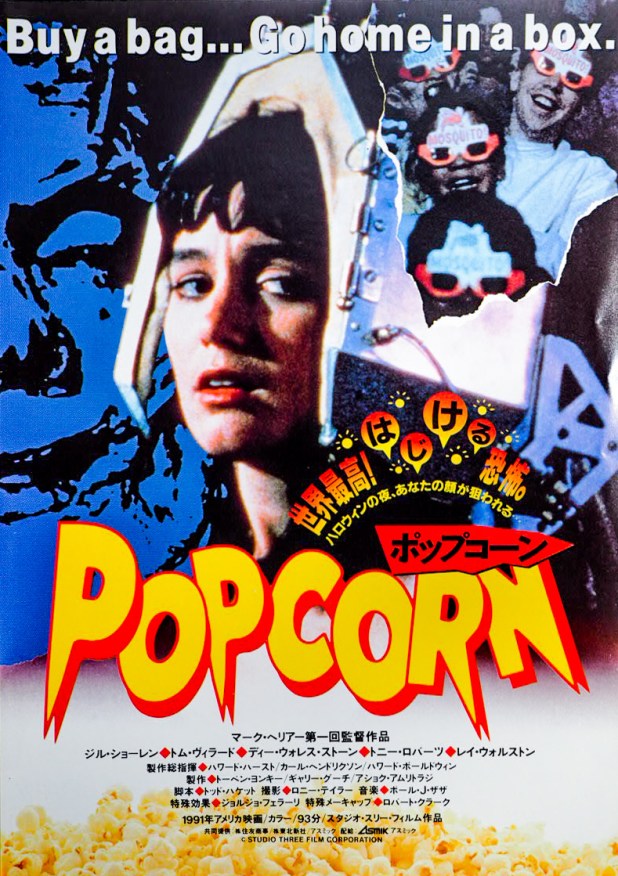
April Ghouls Drive-In Monster-Rama 2026 Primer: Popcorn (1992)

April Ghouls Drive-In Monster-Rama is back at The Riverside Drive-In Theatre in Vandergrift, PA on April 24 and 25, 2026. Admission is still only $15 per person each night (children 12 and under free with adult) and overnight camping is available (breakfast included). You can buy tickets at the show, but get there early and learn more here.

The features for Friday, April 24 are Prince of DarknessPopcornFade to Black and Evilspeak.

Saturday, April 25 has Halloween 4Halloween 5A Bay of Blood and Funeral Home.

Sometimes, you end up loving a movie for what it could be, way more than for what it is.

Popcorn would be one of those films.

Buried somewhere in its slasher framing story and four films within a film, some great ideas should have been explored further. And the closer the film gets to its conclusion, the more it starts to explain itself. I’m more in the John Carpenter camp when it comes to too much information — I’m often just fine not needing to know every motivation of a film’s villain. To wit — I don’t need to know that Michael Myers made papier-mache masks to assuage his pain. I don’t even need to know that he’s a human being. I just want the story to thrill me.

Popcorn was filmed entirely in Kingston, Jamaica — which explains the later dance numbers. That’s right. Dance numbers. The more you watch this film, the more incongruous it becomes. The production was also fraught with changes, as Alan Ormsby was originally the film’s director before being replaced by Porky’s actor Mark Herrier several weeks into filming.

Ormsby has a crazy bio — in addition to working with Bob Clark on Children Shouldn’t Play with Dead Things, Deranged and Death Dream, he also wrote Paul Schrader’s remake of Cat People and My Bodyguard. And strangely, he’s also credited with creating Kenner’s 1975 action figure Hugo: Man of a Thousand Faces!

At the same time, Jill Schoelen (The Stepfather) replaced the original lead, Amy O’Neill. In fact, Schoelen was barely in scenes with the rest of the cast because so much had already been filmed, so she mostly appeared in reshoots! Even the title had something to do with a plot element that was cut from the final film, but the producers and distributor liked it so much that it was retained.

The film begins with Maggie Butler (Schoelen), an aspiring screenwriter and college student, who has recurring nightmares in which she is a young girl named Sarah. These dreams — in which a strange man stalks her — happen so often that she has an audio diary of them. Those very same dreams may or may not be connected to the prank phone calls her mom, Suzanne (Dee Wallace Stone, The Howling, E.T., Critters and many more), has been getting.

Sarah is also dating Mark (Derek Rydall, Eric from Phantom of the Mall: Eric’s Revenge), who tries to get her to come to his dorm room. She can’t — the script that she’s writing based on her dreams is more important. And so is the all-night horrorthon (JOIN US FOR THE HORRO-RITUAL!) that the school’s film department is putting on. It’s all Toby D’Amato’s (Tom Villard, who was one of the first 90s actors to openly admit that he was dying from AIDS) idea — with the goal of purchasing new editing equipment. NOTE: One assumes that Toby is named for Joe D’Amato, director of Emanuelle and the Last Cannibals, Antropophagus, Absurd, Troll 2 and the Ator the Fighting Eagle series, plus 200 or more films.

The kids convert the Dreamland Theater — due to be destroyed in three weeks — with the help of Professor Davis (Tony Roberts, Annie Hall, Amityville 3-D) and a quick cameo from Ray Walston as Dr. Mnesyne, the provider of the props for the films.

Ah, those films — these movies-within-a-movie provide the best part of Popcorn. They are:

Mosquito: This 3-D film is a tribute to nature gone wild and nuclear terror movies of the 1950s. Even better, it pays tribute to Emergo, the technology (well, as far as sliding a skeleton down a rope can be called technology) that William Castle used to gimmick up House on Haunted Hill.

The Attack of the Amazing Electrified Man: A callback to films like The Amazing Colossal Man, while also a nod to German expressionistic camera angles (a certainly odd blend). There’s a great scene here where the Electrified Man battles a gang of greasers armed with switchblades. There’s another gimmick here called “Shock-o-Scope” which is another tribute to William Castle and his film The Tingler.

The Stench: This is obviously a dubbed Japanese film, ala The Green Slime, but with the added gimmick of Odorama. There have been actual movies that use this technology, such as Scent of Mystery and, more dear to this author’s heart, John Waters’ Polyester.

Possessor: Found within Dr. Mnesyne’s — his name translates as memory — equipment, this short film is the most interesting part of Popcorn. It’s supposed to be a snuff film made by a Mansonesque cult of acidheads, but it looks and feels like something straight out of José Mojica Marins’ oeuvre (known as Coffin Joe, he’s made some of the strangest and best-titled films ever, such as At Midnight I’ll Take Your Soul and This Night I Will Possess Your Corpse). Seriously, this strange little film, in which a voice just repeats “possessor” over and over while blood fills the screen, is awesome. If only the rest of the film — and one scene I’ll get to shortly — had been as imaginative and odd as this, we’d have a real winner on our hands.

Just by watching Possessor, Maggie passes out and has another nightmare. Upon awakening, Professor Davis informs the class that the film comes from Lanyard Gates (Bruce Glover, father of Crispin Hellion Glover), the leader of the aforementioned cult, who ended his final film by killing his family onstage while the theater burned down in flames around the audience. There were no survivors and no explanation for why the film survived.

As Maggie grows increasingly obsessed with the film, her mother becomes upset, telling her to just quit the film festival. That night, her mother gets a call from Lanyard Gates, telling her to meet him at the festival and to bring a gun.

The next day, when Maggie mans the box office, a man buys a ticket and calls her Sarah. She freaks, thinking it’s Gates. Meanwhile, just as the Professor is about to launch the mosquito prop during the film cue, a shadowy figure takes control of it, impaling him. Then, we see the same figure making a mask of the dead man’s face.

Oh yeah — Maggie’s mom shows up at the theater with a gun, and in the film’s best scene, Gates takes over reality, transforming the marquee to read “POSSESSOR.” That said — this scene has NOTHING to do with the rest of the film, as our villain has no such psychic or reality warping powers.

No one will believe Maggie’s story, and the films continue. A student named Tina (Freddie Marie Simpson, who, along with Megan Cavanagh and Tracy Reiner, appeared in both the movie and TV series A League of Their Own) has been having an affair with the Professor, whose doppelganger kills her and then uses her body to electrocute wheelchair bound Bud while he sets off the buzzing seats during the next film.

When Maggie finds his body, she runs into Gates and has a flashback. Turns out that she’s really his daughter, Sarah Gates, and Suzanne is not her mother, but her aunt who saved her. She tells all to Toby, who turns out to not be Gates, but his imitator. He was badly burned at the only showing of Possessor and holds Maggie and her aunt responsible. He prepares them both for his final act…of murder!

While setting up the Odorama, Leon is killed by Toby (but not before he pees all over him), yet he stops from killing Joanie when she confesses her unrequited love for him — an odd choice for a slasher film.

Whew. There are so many unnecessary characters and extra girlfriends and weird asides like a landlord who wants to be an actor, which, honestly, take away from the film. Long story short, Toby reenacts the end of Possessor to the jeers of the crowd, revealing his full face — a gruesome visage of wires and burned flesh. Luckily, he’s killed by the Mosquito prop just in time to save everyone — which is either a cheap repeat or a previous kill or a sly comment on sequels. Let’s go with the former. That said, it has a really nice pre-GoPro-mounted camera effect as Toby dies, but not before hearing the cheers of the crowd.

Honestly, Popcorn is a mess. But it’s an enjoyable mess. It’s simultaneously a tribute to 1950s black and white gimmick films while attempting to be meta commentary on the slasher genre, with none of the teeth of a film like Scream. There are ridiculous parts, like death by toilet and a way too long musical number where a reggae band plays while a cosplay-heavy crowd dances and Toby going from quiet kid to Freddy Krueger clone in the too quick conclusion to the tale. Throw in a balls-out bonkers end song — “Scary Scary Movies” — that features lyrics like “psycho on the move got a blade two feet long, kisses for his wife while he slices the bitch….so long!” screamed at the top of the rapper’s lungs, and you have something worth watching.

As an aside, the rapper Kabal has been doing entire albums of cheesy rap songs from horror movies. He even covered the theme from Popcorn!

There’s a heart and inventiveness to the film. There’s a real love for movies in here, particularly the fun promotional style of William Castle. It’s definitely worth a watch, as the 90-minute or so runtime practically flies by. 
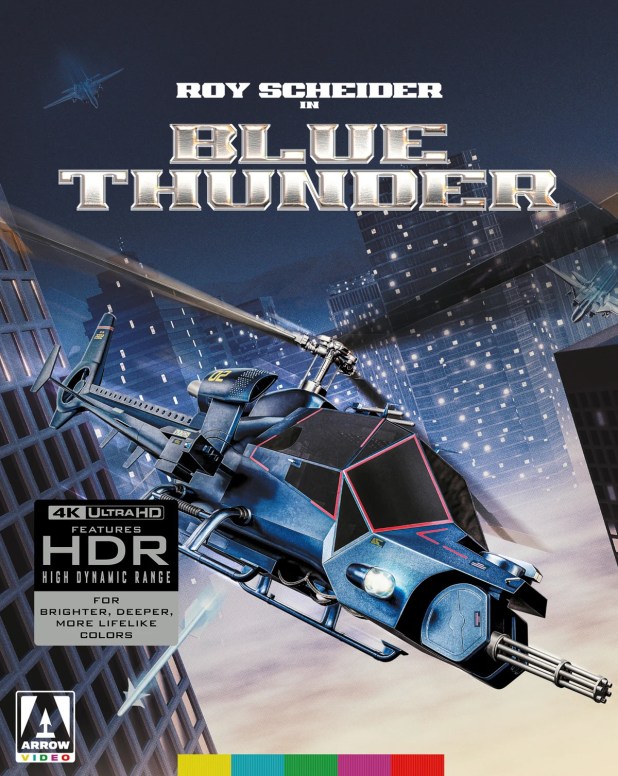
ARROW 4K UHD RELEASE: Blue Thunder (1983)

Directed by John Badham (Saturday Night FeverDraculaStakeout) and written by Dan O’Bannon (AlienDark StarReturn of the Living DeadLifeforce) and Don Jakoby (The Philadelphia ExperimentDeath Wish 3Double Team), Blue Thunder stands between the conspiracy thrillers of the 70s and the big budget action films of the 80s.

O’Bannon and Jakoby began lived together in a Hollywood apartment where low-flying police helicopters kept them awake all night. Their original take was even more political with the police state controlling the population of Los Angeles through high-tech surveillance and military-level weapons. They also got extensive script help from Captain Bob Woods, then-chief of the LAPD Air Support Division.

What emerged was a movie with a totally awesome helicopter — I owned the toy as a kid — designed by Mickey Michaels. They’re a combination of Aérospatiale SA-341G Gazelles and Apache military helicopters with alterations that made them so heavy that they could barely fly much less pull off the moves in the battle at the close of the film.

Frank Murphy (Roy Scheider, who made this so he wouldn’t have to be in Jaws 3D) is a Vietnam War vet with PTSD who flies a helicopter for the Metropolitan Police Department — you know, the LAPD — along with observer Richard Lymangood (Daniel Stern). Together, they help police forces on the ground in Los Angeles. They’re invited to check out — and even pilot — a special helicopter known as Blue Thunder that can help protect the city during the Olympics.

It all seems too good to be true and Murphy figures that it’s a conspiracy to lead to more police militarization and illegally spying on civilians. He learns that the copter is part of T.H.O.R. Tactical Helicopter Offensive Response) and is being used to kill any politician that is standing in its way. It will eventually be piloted by U.S. Army Colonel F.E. Cochrane (Malcolm McDowell, who hated flying and looks incredibly upset during the fight at the end), the same man who gave Murphy all those bad memories from the war.

When Murphy and Lymnangood film evidence of this conspiracy, the pilot takes Blue Thunder and the observer is murdered by hitmen. Murphy gets the videotape to his girlfriend Kate (Candy Clark, who is awesome in this) and escorts her via the super copter to a TV station while more hitmen are in pursuit, as well as more copters, F-14s and Cochrane come after him.

This was one of the last films Warren Oates made and do I even have to tell you how incredible he is in it?

Somehow, a movie about the dangers of the LAPD getting these machines led to a series where they did and it was sold as a good thing and the dark movie that inspired the movie gets forgotten. James Farentino flew Blue Thunder along with Dana Carvey with Dick Butkus and Bubba Smith working as the ground crew. It lasted eleven episodes. However, another show about a futuristic helicopter, Airwolf, lasted 79 episodes.

“The hardware, weaponry and surveillance systems depicted in this film are real and in use in the United States today.”

Just imagine what’s out there 39 years later.

The Arrow 4K UHD release of this movie has a 4K restoration from the original negative, archival audio commentary by director John Badham, editor Frank Morriss and motion control supervisor Hoyt Yeatman; new interviews with Badham, Candy Clark and Malcolm McDowell; Ride with the Angels: Making Blue Thunder, an archival three-part documentary; The Special: Building Blue Thunder, an archival featurette on the design and construction of the iconic helicopter; an archival 1983 promotion featurette; an extended scene; the theatrical trailer; an image gallery; a reversible sleeve featuring original and newly commissioned artwork by Chris Skinner and a collectors’ booklet featuring new writing on the film by Dennis Capicik and original production notes. You can get it from MVD.

April Ghouls Drive-In Monster-Rama 2026 Primer: Prince of Darkness (1987)

April Ghouls Drive-In Monster-Rama is back at The Riverside Drive-In Theatre in Vandergrift, PA on April 24 and 25, 2026. Admission is still only $15 per person each night (children 12 and under free with adult) and overnight camping is available (breakfast included). You can buy tickets at the show, but get there early and learn more here.

The features for Friday, April 24 are Prince of DarknessPopcornFade to Black and Evilspeak.

Saturday, April 25 has Halloween 4Halloween 5A Bay of Blood and Funeral Home.

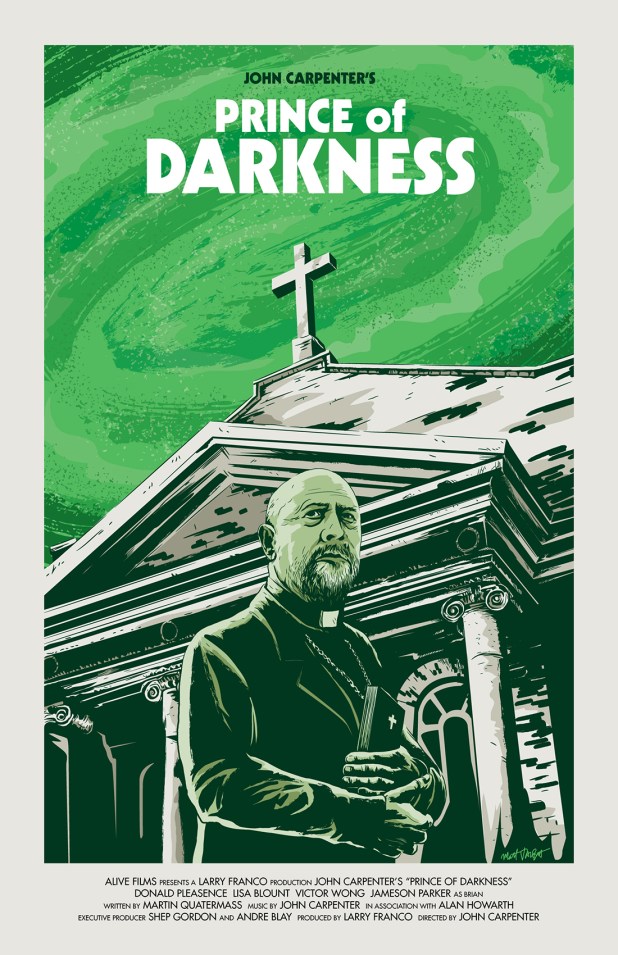
The second film in John Carpenter’sApocalypse Trilogy(preceded by The Thing and followed by In the Mouth of Madness), Prince of Darkness was the first fruit of Carpenter’s deal with Alive Pictures. The pact was a filmmaker’s dream: complete creative control provided he kept the budget under a lean $3 million.

This is likely the only horror flick you’ll ever encounter that masterfully blends theoretical physics and atomic theory with ancient religious orders and the Antichrist. The DNA of Nigel Kneale (creator of Quatermass and the Pit) is all over this script; Carpenter even paid homage by using the pseudonymMartin Quatermassfor the screenplay. From transmissions from the future to ancient malevolence being uncorked in the modern age, it feels like a lost Kneale script. Ironically, the British writer was famously grumpy about the association, having previously clashed with Carpenter on the gore-filled Halloween III: Season of the Witch.

Donald Pleasence, Carpenter’s go-to for gravitas, plays a character simply namedPriest(though fans often call him Father Loomis). He discovers a deceased member of the Brotherhood of Sleep just as a secret is about to leak. It turns out a dilapidated Los Angeles church is hiding a canister of swirling green liquid that represents the Anti-God. This sentient sludge begins transmitting data that requires the brains of Professor Howard Birack (Victor Wong) and his team of students to decipher.

One by one, those students are taken over by the Anti-God or killed by the homeless people and insects that surround the building, led by Alice Cooper.  Also, every single person who hasn’t been killed or taken over starts to have the same dream, one where a shadowy figure emerges from the church. Each time they have this dream, a warning sent from the year one-nine-nine-nine, they see more detail. This part of the film, shot on video, played on a television and then reshot with Carpenter’s voice intoning the warning message, is one of the strangest and most surreal sequences ever included in a mainstream film.

I can’t say enough about how much I love this movie. It has great little character bits, moments of true horror and even some great compressed storytelling. I love that, instead of a long explanation of how a physics professor and a Catholic priest could be close friends, one student just offhandedly mentions that they were both part of a BBC exploration of God’s existence. That’s all we really need to know and it lets us answer that and move on to more important matters.

Hw can you not love a film that theorizes that Jesus was an alien and the Catholic Church has known that all along and kept the secret that another alien, an evil one, was on its way…or has a scene where someone just keeps typingI live!over and over again, then this message: You will not be saved by the holy ghost. You will not be saved by the god Plutonium. In fact, YOU WILL NOT BE SAVED.”

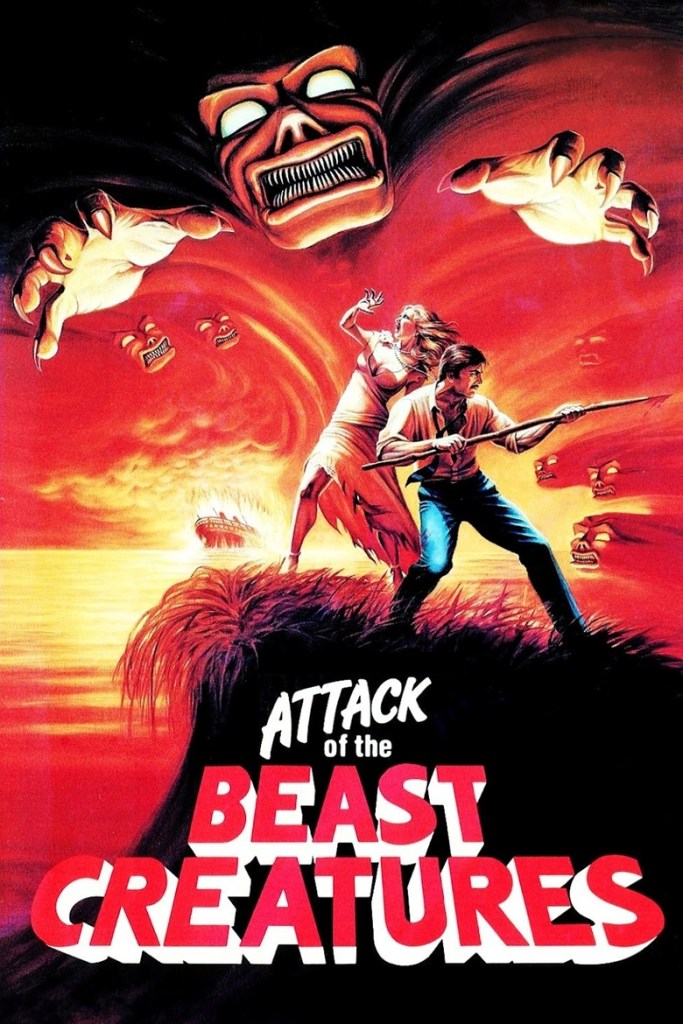
APRIL MOVIE THON DAY 20: Attack of the Beast Creatures AKA Hell Island (1985)

ABOUT THE AUTHOR: Jennifer Upton is an American (non-werewolf) writer/editor in London. You can listen to her podcast at https://thecinemajunction.com

Her latest book is Japanese Cult Cinema: Best of the Second Golden Age. She writes for Horror & Sons and Drive-in Asylum. She has also appeared on the podcasts Japan on Film, Making Tarantino, Making Scorsese, The Rad Revivalhouse and contributes to Cinemaforce. For links to her work, please visit https://www.jennuptonwriter.com or follow her on Instagram @jennxlondon

April 20: Regional Horror — A regional horror movie. Here’s a list if you need an idea.

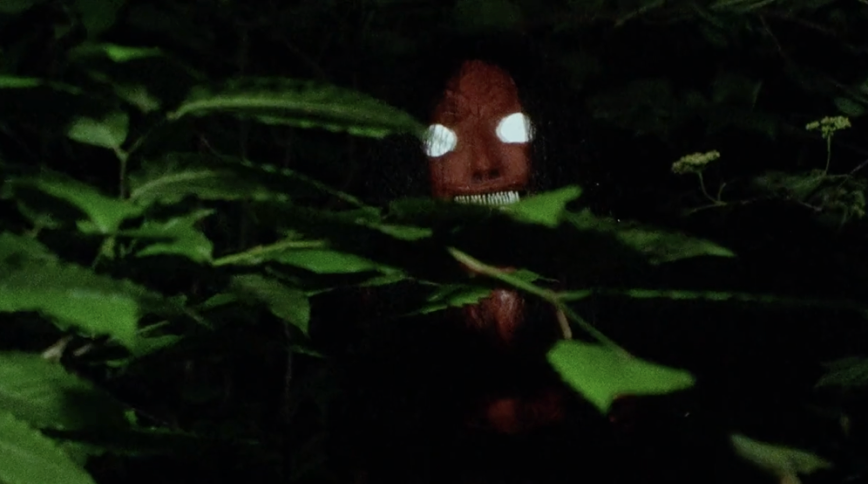
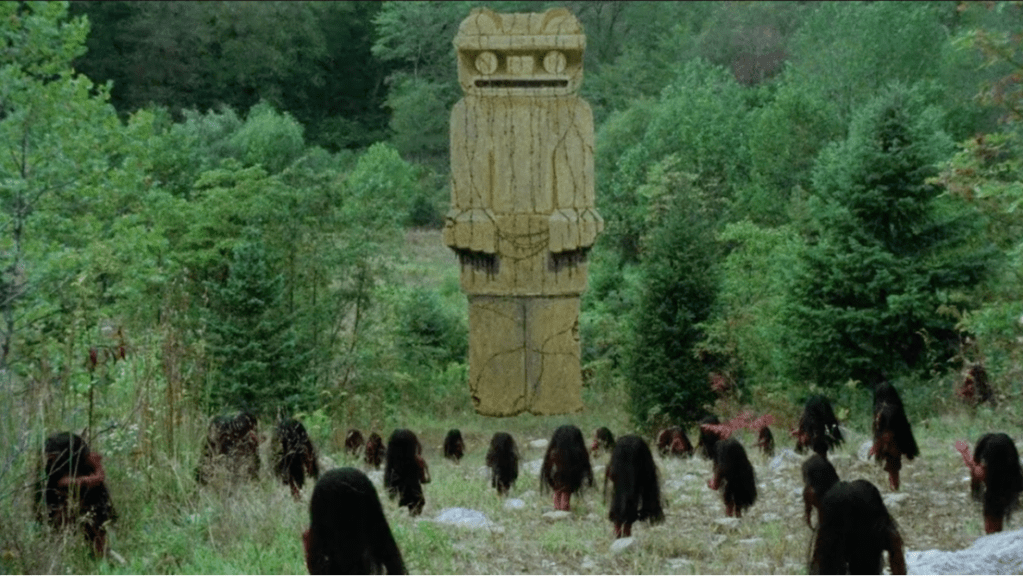
An ambitious regional horror movie that asks two good questions. “What if the little Zuni fetish warrior doll from Trilogy of Terror came from a tribe of hundreds more rampaging dolls?” And, “What if some survivors of a sunken ship got stranded on an island inhabited by the little blighters?” 

It doesn’t matter that the island is in the North Atlantic instead of a country in Africa. It’s entirely plausible that these industrious creatures could have built themselves a boat and explored the world, establishing tiny populations wherever they could find enough food. They even have their own religion. These are just some of the reasons I love this film. 

Other reasons include: 

  1. Tiny wooden dolls with glowing eyes swinging on vines. 
  2. Tiny wooden dolls with glowing eyes biting right through a castaway’s trousers to the soft, chewy center of the calf. 
  3. Tiny wooden dolls praying to their wooden doll deity. 
  4. Castaway getting his face melted off trying to drink from an acid pond. 
  5. A body picked clean to the bones. 

Shot in Connecticut on a miniscule budget, the director cleverly shows the sinking of the 1920s pleasure cruiser and subsequent journey to the island in quick cuts during the opening credits. This leaves plenty of time for the characters to walk around in the woods, pick berries and argue with zeal. Yes, there’s a lot of walking in this movie. 

We even get a know-it-all character very similar to Harry Cooper in Night of the Living Dead. Then we have Ginger, Mary-Ann, Gilligan….Oh. Wait. To be honest, I can’t remember any of the castaways’ names in this movie. I was too blown away by the puppetry and special effects. The puppets are the stars. The filmmakers truly did make something out of nothing here. It’s a lot of fun. 

The attack scenes make this movie. The first attack starts at approximately 32 minutes into the film. The monsters wait until our group is fast asleep by the campfire. Cathy takes first watch. She notices a pair of glowing eyes in the darkness. Then another…and another…. until there are too many to count. A very effective sequence. By the time she calls for help, it’s too late. 

The monsters launch their hunting party into action. Needle-like fangs sink into shoulders, necks and asses. I watched this scene 3 times before writing this review and it gets better every time. My favorite shot features one creature swinging down on a vine while two others cross into the foreground in front of him. Excellent stuff.

The next day, the monsters push the castaways’ boat out to sea and execute a series of daylight attacks. They patter through the underbrush, scale trees and leap onto their prey until most of the humans are picked off. Along the way, the beasties lose a few of their own, but it never slows them down. 

They stop their hunting activities just long enough to pray to their totem god. Likely paying homage to their fallen comrades and giving thanks for their delicious bounty. 

The fact that we see some of their culture showcases the filmmakers’ enthusiasm. I was fascinated by this scene. I wanted to see more of their daily lives on the island. Do they live in little huts? Do they have hunting strategy meetings around a tiny wooden table? Answering all my questions would be giving too much of the mystery away and cost too much. 

In the end, two of the castaways escape the island when a rowboat with two men passes by. I was hoping for an aquatic attack but that would be too ambitious even for this film. 

One of the men asks, “What were those things?” We are given no answer. I’d like to think the tiny creatures made their way back to the other bodies and finished feasting. 

In later years, these valiant hunters would be revered in their tribe. When future generations of beast creatures tucked their offspring into their beds at night, they’d tell them about, “The Great Hunt.”  

Vinegar Syndrome released a restored Blu Ray version, or you can watch the full movie here. I’ve cued it to the first attack scene. I’m totally in love with these little guys. Enjoy! 

APRIL MOVIE THON DAY 20: The Evictors (1979)

April 20: Regional Horror — A regional horror movie. Here’slist if you need an idea.

Do you think Jessica Harper ever wonders,Could I not be in a cult movie?” 

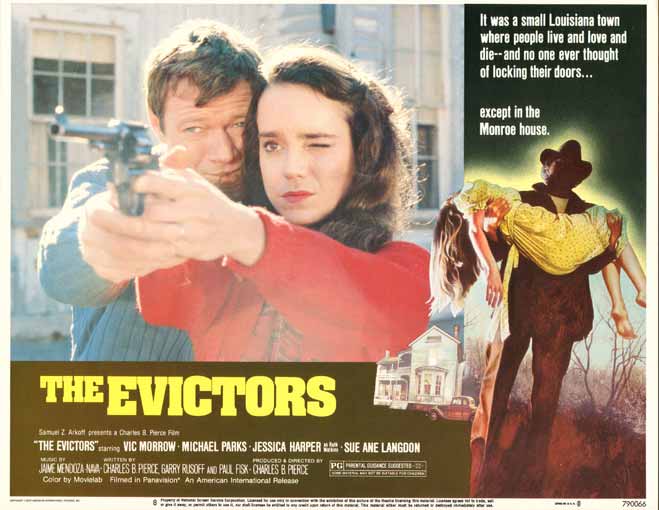
In The Evictors, Harper brings that signature wide-eyed vulnerability to the humid, claustrophobic world of 1940s Louisiana. She plays Ruth Watkins, the wife of Ben (Michael Parks). They’ve just learned that every couple who has ever lived in their new home has been killed since the Monroes had a shootout all the way back in 1928. Every time Ben goes away on business, his wife is threatened by a shadowy figure who turns out to be one of the Monroes. In fact, everyone ends up being one, including their real estate agent, Jake Rudd (Vic Morrow). 

Despite teaching Ruth how to shoot, Ben may have taught her a little too well, as she thinks he’s the man who has been bothering her. She shoots and kills him just as she learns that Jake is Todd Monroe and that he’s been reselling the Monroe house over and over again to unsuspecting young couples, while his sister-in-law Anna/Olie e befriends the new tenants to learn more about them, and their brother Dwayne Monroe (Dennis Fimple) does the killing. Then Jake buys the house back, splits the money with his family and it all starts over again. But during an argument, Dwayne murders Olie and then goes after Ruth. Jake kills him.

In the bleakest of turns, the film skips forward five years to find Ruth hasn’t just survived. She’s been assimilated. Now insane and living as Jake’s wife, she’s become a willing gear in the Monroe family’s murderous machine.

Director Charles B. Pierce was the king of drive-in docudrama. While he’s best known for The Legend of Boggy Creek and The Town That Dreaded Sundown, this shows a more polished, albeit cynical, side of his filmmaking. Unlike Hollywood slashers, Pierce’s films feel lived-in. The sweat, the heavy Southern air, and the period-accurate 1940s costuming give it a grit that feels more like a True Crime magazine come to life than a standard horror flick. That may be because he was inspired to make this after reading a detective magazine article about a Kansas family who murdered somebody trying to evict them.

This was one of the final gasps for American International Pictures, the legendary studio that fueled the drive-ins. Its financial failure signaled the beginning of the end of an era for independent regional distribution.

Pierce considered it his most downbeat film and told Fangoria that it had a dark ending becauseI probably just didn’t have any other way to end it.”

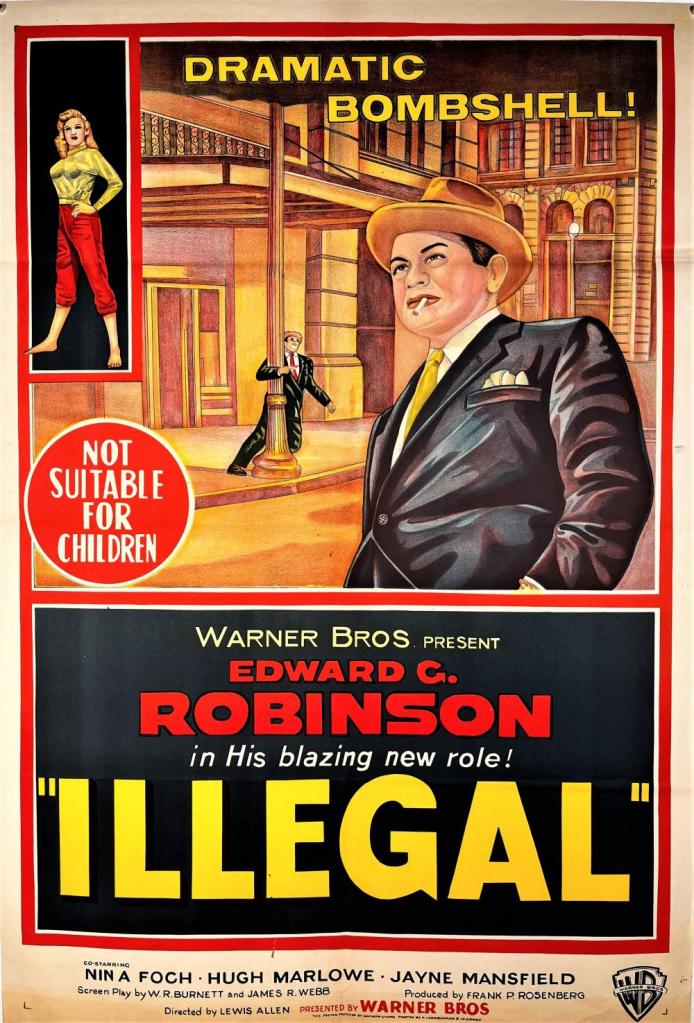
APRIL MOVIE THON DAY 19: Illegal (1955)

April 19: What Happened to Jayne — A movie starring Jayne Mansfield.

I’ve seen almost every movie that Jayne had a major role in, so I’ve been making my way through her early roles. In Illegal, she plays Angel O’Hara, a singer whose testimony is crucial to the movie’s conclusion. 

The main star is Edward G. Robinson, who plays Victor Scott, a district attorney who has risen from the slums to become a courtroom star. He was mentored by an older man who made him promise to watch over his daughter, attorney Ellen Miles (Nina Foch). She’s in love with him, he’s in love with the job and therefore encourages her to marry another man, Ray Borden (Hugh Marlowe). 

When his spectacular courtroom abilities lead to an innocent man named Edwqard Clary (DeForest Kelley!) being put to death, he decides to give up the law and hits the bottle. While in court for a public drunkenness charge, he saves a man accused of murder by knocking out a witness, Mr. Taylor (Henry Kulky), who claimed that he couldn’t be taken out by a man the size of the accused. Now a civil lawyer, Victor ends up working for one of his former enemies, Frank Garland (Albert Dekker), a mob boss. Somehow, Garland keeps getting out of every case and it seems like there’s a leak. Spoiler — Ray isn’t the nice guy he seems to be and nearly kills Ellen, who shoots him in self-defense. However, everyone thinks she’s the leak, so Victor has to defend the woman he’s always been in love with. 

Robinson owned an amazing contemporary art collection used to decorate this film, including impressionist works by Gauguin, Degas, Duran and Gladys Lloyd. He was being investigated by the House Un-American Activities Committee at the time. Robinson had been graylisted, meaning that while not officially banned, major studios were hesitant to hire him. This is why a titan of cinema was working for a smaller budget at Warner Bros.

Based on the play The Mouthpiece by Frank J. Collins, this was directed by Lewis Allen, best known for the classic ghost story The Uninvited. It was written by W.R. Burnett and James R. Webb. Burnett wrote the novel Little Caesar, which made Robinson a star in 1931. Having them reunite for Illegal was a poetic, full-circle moment for the film noir genre.

If you’re someone like me who enjoys seeing props from other movies show up in a film, keep an eye out for the Maltest Falcon. You can see it on a bookcase when Victor enters the office of DA Ralph Ford.

While Jayne Mansfield’s role as Angel O’Hara is relatively brief, it was a calculated career move. At this point, she was being groomed by Warner Bros. as a blonde bombshell alternative to Marilyn Monroe. Her performance ofToo Close for Comfort(though dubbed by Bonnie Lou Williams) served as her screen test for the world. It proved she could command the screen with the same va-va-voom energy that would make her a household name a year later in The Girl Can’t Help It. Seeing her play a canary (mob slang for a singer/witness) against a gritty veteran like Robinson creates a striking tonal shift in the film, moving from the dark, smoky corners of a courtroom drama to the glitzy, dangerous world of the nightclub.

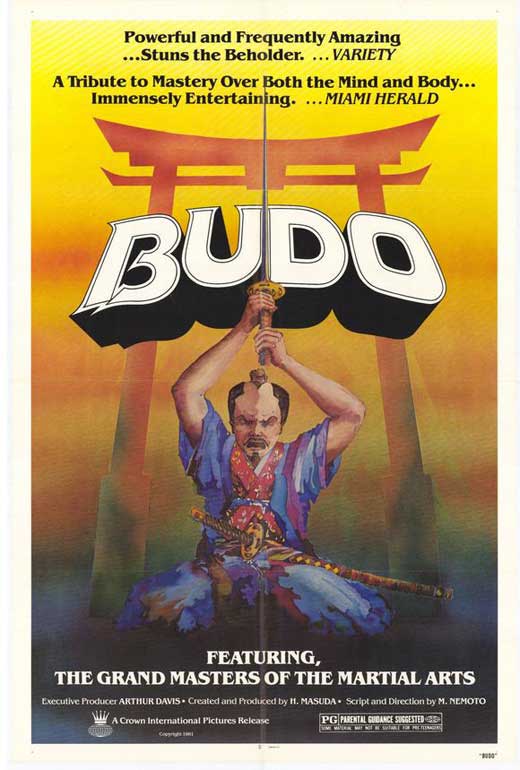
APRIL MOVIE THON DAY 18: Budo the Art of Killing (1978)

April 18: King Yourself! — Pick a movie released by Crown International Pictures. Here’s a list!

Created and produced by Hisao Masuda and financed by The Arthur Davis Company, this film explores a range of Japanese martial arts and the abilities of some of the most famous martial arts masters of the time.

We kick things off with a terrifyingly efficient demo of the Japanese sword. It’s sleek, it’s sharp and yet Okinawan farmers learned how to stop them. These guys didn’t have katanas, so they turned their pitchforks and gardening tools into instruments of absolute destruction. We meet Teruo Hayashi, the Karate-do legend, who shows us how this Okinawan weaponry was used before Fujimoto, the Human Sledgehammer, fought a train and karate-chopped beer bottles. Then, Suzuki shows off his nunchaku skills.

We go from judo to the elegant but lethal Naginata-do. Often associated with female practitioners, it’s a master class in reach and timing. We also meet the legendary Gozo Shioda, the founder of Yoshinkan Aikido; watch Shinto practitioners fire walking and see sumo stable training with Takamiyama. 

Then, we head back into the world of Teruo Hayashi, who’s here to remind us that kata isn’t just a synchronized dance for a trophy. It’s a rehearsal for a funeral. The narrator, who sounds like he’s seen a few things he can’t forget, doesn’t mince words: Karate is severe and cruel.

The film takes a detour into the connection between Zen Buddhism and Budo as we watch Shuji Matsushita sitting in zazen when—WHACK—he takes a strike from an abbot’s kyosaku, the encouragement stick. It’s a wake-up call for the soul that’ll make you glad you’re just watching from your couch. Then, Taizaburo Nakamura steps up for the film’s absolute highlight. Using slow-motion footage that feels like it belongs in a Peckinpah flick, the movie shows how fast a sword cut is.

Before the credits roll, we get a peek at the forge of Amada Akitsugu, a national living treasure. Seeing a nihonto sword born from fire and a hammer is a reminder that these aren’t just weapons. They’re masterpieces.

If you have any interest in fighting, this is a movie for you.

You can watch this on Tubi.

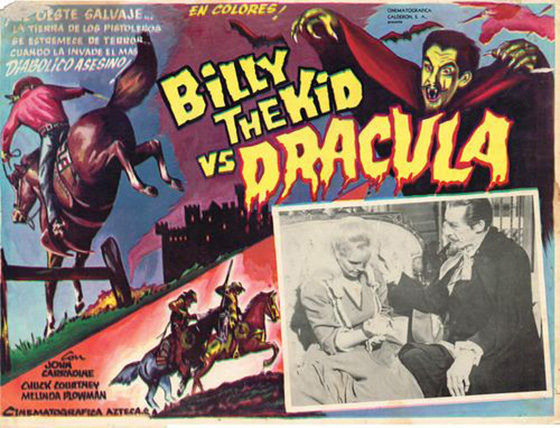
APRIL MOVIE THON DAY 17: Billy the Kid vs. Dracula (1966)

April 17: Fake Bat Appreciation Day —Watch a movie with a fake bat in it.

It’s Fake Bat Appreciation Day, a holiday I just made up to celebrate the kind of cinema where the strings are visible, the wings are made of felt and the actors have to pretend they aren’t being pelted with a taxidermy project gone wrong. I wish I could watch A Lizard In a Woman’s Skin again so I could delight in the bats in it, but this starts with an animated bat and has a bat-on-a-string moment that lasts an eternity.

I’ve heard a lot of people say some bad things about this movie, and man, I realize I have no taste because I loved every single moment of it. I could go back right now and watch it again, which I can’t say I’ve done for any movie in a long time. 

Billy the Kid (Chuck Courtney, who played the Lone Ranger’s nephew Dan Reid on TV) has gone straight. He’s moved to a mining town to find a good woman and settle down. Well, he actually stole a good woman and made her his fiancée. He’s efficient like that. 

That girl is Betty Bentley (Melinda Plowman), and she’s a catch: she’s cute, she knows how to work a Winchester and her family owns the local mine. She’s also caught the eye of Count Dracula, played by the legendary John Carradine. I love Skinny Dracula, which is what I call any Carradine Dracula. This one is dumb enough to hide out in a silver mine when silver can kill him. What are you thinking? Then again, this Dracula also walks around during the day, so who are we to put limits on him?

Dracula decides to pose as Betty’s uncle to get close to her, but he’s got competition. Not just Billy, but also Dan “Red” Thorpe (Bing Russell, father of Kurt!), the man Billy cucked to get Betty. Red is so blinded by rage that he doesn’t even care that a vampire is snooping around his Western hometown; he just wants Billy dead.

This was shot at the same time as the movie it played double features with, Jesse James Meets Frankenstein’s Daughter, both directed by William Beaudine as his last films. It took eight days to film both.

Carradine said of this movie: “I have worked in a dozen of the greatest, and I have worked in a dozen of the worst. I only regret Billy the Kid Versus Dracula. Otherwise, I regret nothing.”

You can watch this on Tubi.

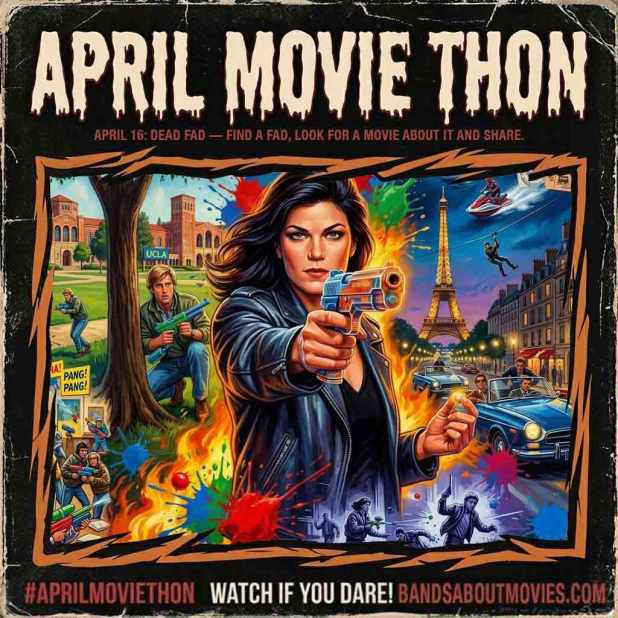
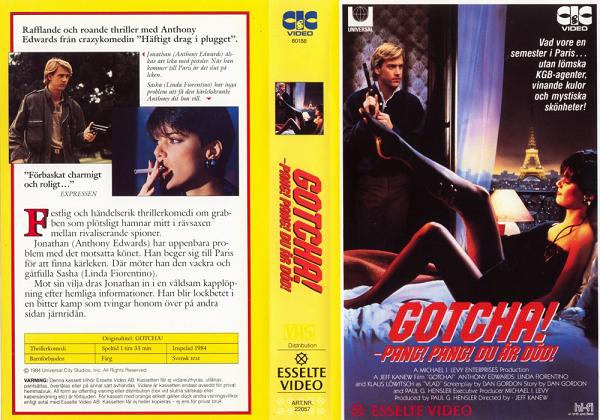
APRIL MOVIE THON DAY 16: Gotcha! (1985)

April 16: Dead Fad — Find a fad, look for a movie about it and share.

Before it was a standardized extreme sport with professional leagues, paintball was part of a larger, slightly more chaotic campus fad called The Assassination Game. Students would stalk each other through dorm halls and libraries with suction-cup darts or water pistols. Gotcha! took this localized craze and elevated it into a Cold War spy thriller, suggesting that if you could navigate a UCLA library without getting hit by a paint pellet, you were basically halfway to being a CIA operative.

Jonathan Moore (Anthony Edwards) is a veterinary student at UCLA and an expert at Gotcha, a game where students hunt down one another with paintball guns. Look for the LJN tie-in line of Entertech line of paintball and water guns and the NES game, Gotcha! The Sport, which wouldn’t come out until 1987 and is only the paintball tournament from the beginning of this, but yes, it is a tie-in game.

Jonathan and his roommate, Manolo (Nick Corri), travel to Paris during spring break, where Jonathan meets Sasha Banicek (Linda Fiorentino) and loses his virginity. I mean, that’s a big jump from nerdy paintball-playing virgin to aggressive cuddling with the star of The Last Seduction, but good for him. Of course, there are all sorts of complications, as she’s being tracked by Russian spies. Turns out she’s a CIA agent from Pittsburgh.

Shout-out to this movie for featuring “Two Tribes” and “Relax” by Frankie Goes to Hollywood on the soundtrack.

Gotcha! was directed by Jeff Kanew, who also filmed V.I. WarshawskiTough Guys, Troop Beverly Hills and Revenge of the Nerds. It was written by Dan Gordon (TankLet There Be LightPassenger 57).

This movie is not Tag: The Assassination Game, nor is it Paintball Massacre or Masterblaster.

I definitely rented this from 7-11 off a spinner rack as a kid and was shocked by how much I liked it. Maybe I, too, dreamed of being a nerd spy, which never happened.

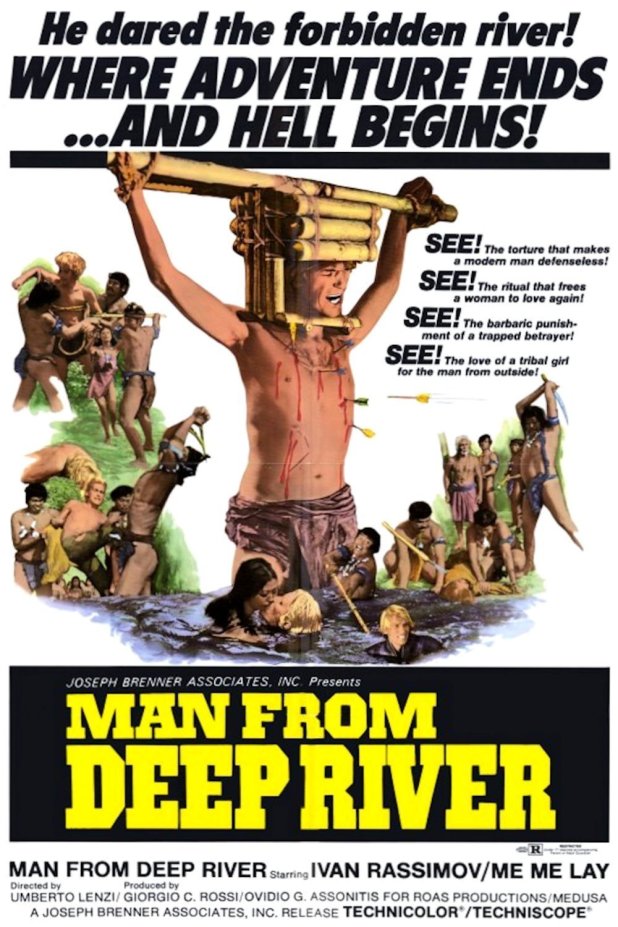
WEIRD WEDNESDAY: Man from Deep River (1972)

Call it Il paese del sesso selvaggio (The Country of Savage Sex). Or refer to it as Deep River Savages and Sacrifice! Or just say it by the name most of the U.S. saw it as, Man from Deep River. Whatever title you see it as, you can claim to have seen the first movie in Italy’s cannibal cycle, which, like all filones, takes another, the mondo, and goes even further.

British photographer John Bradley (Ivan Rassimov, who was Serbian) has been photographing the Thai wildlife. A boxing match is more interesting to him than the woman he’s with and soon, he’s so drunk that he’s stabbing a man in a bar fight. Then, it’s time to go into the heart of darkness and go down the river. He wakes up, and his guide is dead, and he’s been taken, as the natives believe him to be a merman thanks to his wetsuit. 

After some torture, the chief Luhanà agrees to release John to Maraya (Burmese/British cannibal movie queen Me Me Lai), who has shown an interest in him. Her governess, Taima, speaks English and decides to help him escape. That night, a helicopter comes close, and John tries and fails to get away, killing Maraya’s fiancé, Karen. This, for some reason, makes him seem like he could be a member of the tribe, so they start to torture him all over again to see if he belongs. In case you’re wondering, yes, this would like you to think it’s A Man Called Horse.

By the end of the film, he’s had a child with Maraya, but she doesn’t make it. When the helicopter comes to rescue him again, he hides and goes deeper into the jungle, having left the world of civilization behind.

This film was a huge success in New York City’s grindhouses, but it ran into problems when it tried to cross the pond. Even though the BBFC took one look at the celluloid in ’75 and slammed the door on a theatrical release, the flick pulled a fast one, sneaking into UK homes under the title Deep River Savages. But you can’t keep a good exploitation film down for long without the moral crusaders noticing. By 1983, when the DPP was busy clutching their pearls and drafting the infamous Video Nasties list, Lenzi’s opus was right there in the crosshairs. Once the Video Recordings Act of 1984 became the law of the land, the UK government dropped the hammer. Deep River Savages wasn’t just trimmed. It was banned in its entirety until 2003, when three minutes were cut. In 2016, another release saw three more minutes chopped with the same disdain that animals are sliced to bits in this. In the U.S., this got an R rating.

Director Umberto Lenzi really hit almost every filone Italy had to offer, from peplum (Samson and the Slave Queen) and Eurospy (008: Operation ExterminateSuperSeven Calling Cairo) to comic book movies (KriminalTarzan In the Golden Grotto), giallo (Seven Blood-Stained OrchidsEyeballSpasmo), pliziotteschi (The Tough Ones), Conan rip-offs (Ironmaster), horror (GhosthouseNightmare Beach) and even VHS era cash-ins (Primal RageHitcher In the Dark). He also made two more cannibal films, Eaten Alive! (which takes scenes from this film) and Cannibal Ferox, which was released in the U.S. as Make Them Die Slowly

In case you’re wondering about that scene where Me Me Lai gets raw-dogged on the ashes of her dead fiancé, it’s based on truth and isn’t just the kind of transgressive imagery we expect in Italian movies. It’s based on a traditional African ritual known as widow cleansing. In the internal logic of the culture, a woman becomes dirty when her husband dies. She’s essentially a walking biohazard of bad luck and grief, supposedly possessed by the lingering spirit of the deceased. To stop this curse from spreading like a supernatural virus through the rest of the village, the widow has to be scrubbed clean and the only way to wash away the shadows of the dead is through a three-day marathon of unprotected sex with a purifier, who is usually the dead guy’s brother.

A warning: For many fans of cult and exploitation cinema, scenes of real animal death are often the ones that make the movie difficult to revisit. Here is the breakdown of the animals killed on screen in this film:

  • A Crocodile: This is one of the film’s more protracted and famous scenes. The animal is dragged from the water, bound and then cut open and gutted while still alive.
  • A Python/Large Snake: The snake is decapitated during a sequence intended to show the dangers of the jungle.
  • A Monkey: In a scene that reflects the survival tropes of the genre, a monkey is killed and its brain is eaten by the characters.
  • A Mongoose vs. Cobra: True to the mondo style that influenced Lenzi, there is a sequence featuring a fight between a mongoose and a cobra that ends with the snake’s death.

While Man from Deep River is often praised for its lush cinematography and for being more of a fish-out-of-water adventure than the later, more mean-spirited cannibal films like Cannibal Holocaust (intended as a Lenzi-directed sequel, but he turned it down twice), the inclusion of these non-simulated animal deaths remains its most controversial element.