Mill Creek has been putting out some truly astounding Ultraman collections as of late and man, they look incredible on the shelf. Their latest set is Ultraman 80, the ninth show in the series and the last Ultraman show for 16 years.
After the 1979-80 animated series The Ultraman, Ultraman 80 returns to the Showa continuity, taking place after 5 years after Ultraman Leo. Takeshi Yamato, the new science teacher, is living a double life as a member of the elite UGM (Utility Government Members), an earth defense organization. He’s also the 50 meter tall Ultraman 80.
Well, at least for the first 13 episodes, when he joins the UGM full-time. Over the fifty episodes, the team fights kaiju including Crescent, Gikogilar, Zandrias, Alien Bam, Devilon, Robo-Fo, Delusion Ultraseven and so many more.
While not as well-known as other Ultraman shows, there are some interesting ideas here, such as the previously mentioned Delusion Ultraseven, which is created when a young child is attacked by a biker gang and uses his Ultraseven toy and plenty of rage to create an evil form of the hero that Ultraman 80 must fight.
There’s even a great ending when the UGM forces our hero and the alien princess who joins the team to stay out of the final battle, just to prove that humanity can defend its own planet. And while the gimmick of a kid creating or finding a new monster every show may get a little repetitive, you’re really coming here to see Ultraman 80 beat up all manner of kaiju, right?
Mil Creek has really put together a great looking set, complete with an episode guide that helps you learn who each monster is. I’m always amazed that I can now own full series of Ultraman, as I was so hungry for new episodes as a kid. The world really is an amazing place and this set is pretty great, too.
6. IT CAME FROM THE SEA: Some kind of threat from below the brine.
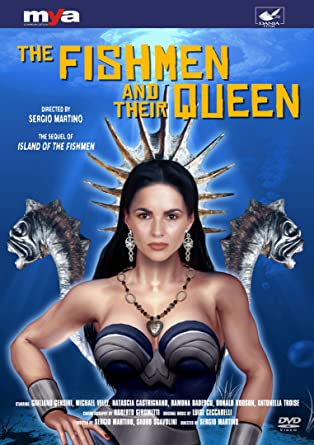
Sergio Martino can do no wrong. Seriously, even when he’s combining footage from Island of the Fishmen AKA Screamers and 2019: After the Fall of New York into one TV movie, I can’t be anything but entertained.
Two teenagers are stuck in the hell that is the end of all things, with radioactive waste everywhere and barely a chance to survive against the horse-riding, masked and completely berserk (and great) Exterminator Warriors. When an old man named Socrates and his magic dog Lampo take them to the island of the fish people — who are ruled by a stunning queen (Ramona Badescu, who also sang the movie’s theme song) — everything seems like it’s about to get better,
Man, I love the scene where one of the kids waves to one of the mer-men and they wave back in an action that was meant in anger in the original film.
Well, it turns out that the queen has enslaved the fishmen and is trying to destroy a masked dwarf that the kids save along with Selva the jungle girl, whose sister — and rightful queen of the island — has been turned into a wooden statue. That means that our heroes must set free the fishmen and save the transformed ruler.
This movie makes less sense than any other late-period Martino movie and I’m counting Uppercut Man and American Tiger in that. This is as dumb as it gets, ending with a spaceship leaving Earth for no reason other than there was no crane that lowered a god in either of the two movies strip-mined to make this one.
Speaking of American Tiger AKA American Rickshaw, the first time I went to Scarecrow, I wanted to see just how deep their library was. Even before Cauldron Films released the film on blu ray, Scarecrow had it on VHS. That made me believe in them.
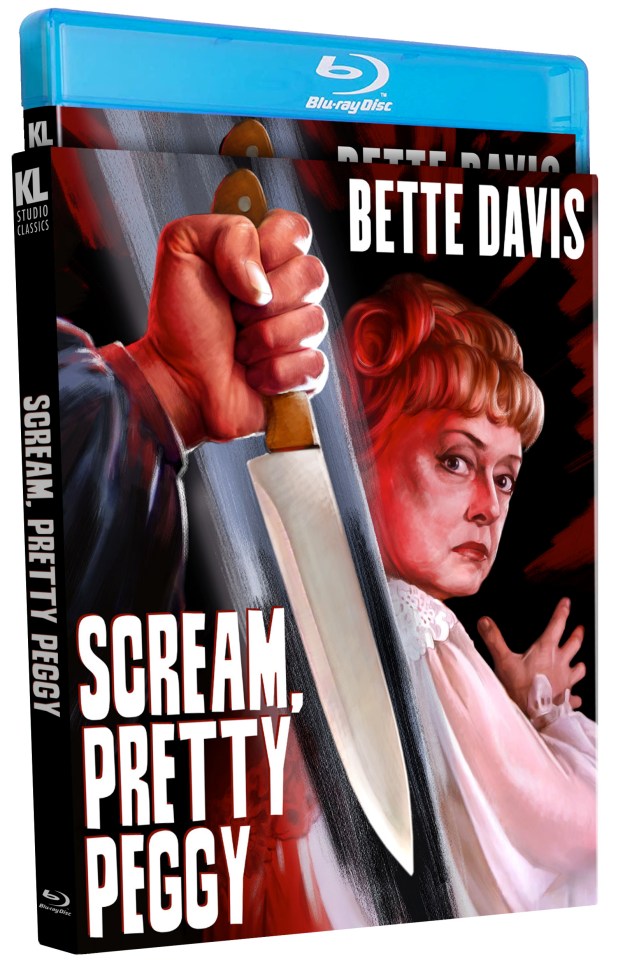
EDITOR’S NOTE: This movie originally ran on our site on March 8, 2018. We’re sharing it again as Kino Lorber has released it on Blu-ray, and we’re beyond happy that more made-for-TV movies are coming out on home video and want people to buy and support the companies that are putting them out. This new release has a revised 2K master, commentary by Troy Howarth, a TV commercial and new art by Vince Evans.
The central character of the film is Peggy, a college student who aspires to become an artist. She applies for a job at the home of noted sculptor Jeffrey Elliott (played by Ted Bessell, TV’s That Girl) and his mother, the iconic Bette Davis. Peggy’s annoyingly chipper character adds a unique dimension to the story.
Let me give you some advice, in case you are a young girl looking for a housekeeping job and find yourself in a 1970s TV movie. If the house you’re working in has an Old Hollywood actress in it, run (refer back to my past rules of always avoiding Old Hollywood actors and actresses). And if you find out that there’s a room that you aren’t allowed to go into, don’t try to go into that room. Just get away as fast as you can.
However, Peggy’s curiosity gets the better of her. She stumbles upon Jeffrey’s collection of eerie demon sculptures, each more terrifying than the last. She also encounters George Thornton, whose daughter used to work in the house. This leads to a confrontation with the formidable Mrs. Bette Davis, a situation one should never find themselves in.
It turns out that Jessica, Jeffrey’s sister, is living in the room above the garage that Peggy isn’t allowed into. Again, get out. Now.
No, Peggy decides she wants to make a new friend. And what if that friend is really Jeffrey, who killed his sister and has split his personality with her inside his head? Oh, Peggy. You brought this on yourself.
Scream, Pretty Peggy is a fine slice of 70s TV movie thrills. Any time you have Ms. Davis deigning to be in a TV movie, you will get something good. But seriously, I wish these girls would wise up. There are better things to do in this world than live in a house of maniacs!
EDITOR’S NOTE: We originally watched this made-for-TV movie on April 3, 2018. We’re bringing it back because Kino Lorber has released it on blu ray — making us go wild because we’ve dreamed of a day when TV movies were commercially available — and we want you to get a copy for your collection. Their release has a commentary track by the awesome Amanda Reyes, art by Vince Evans and a new 2K master.
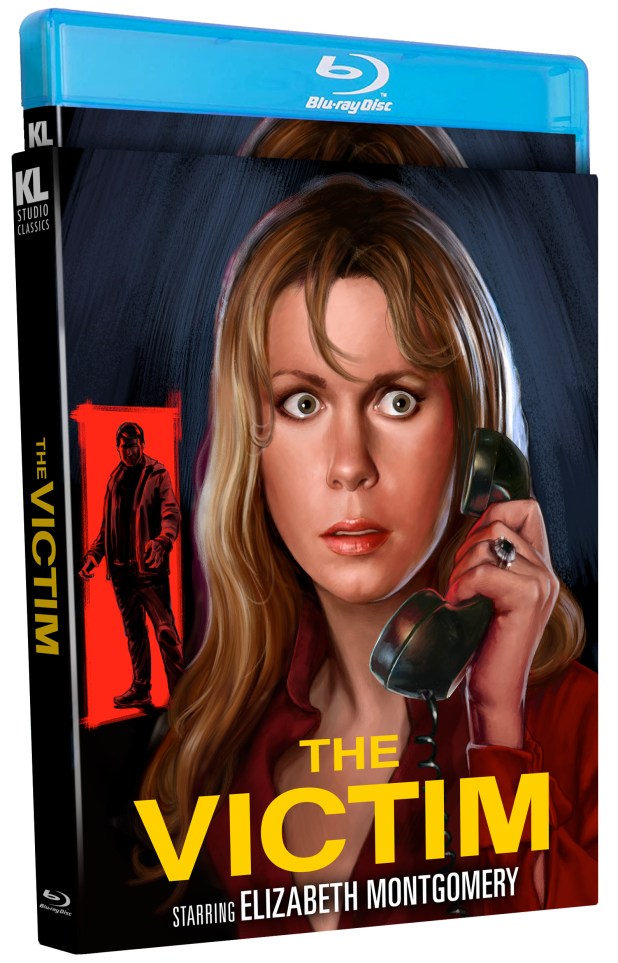
If you ever wonder why I love my wife so much, I watched this movie, and she walked into the room, sat on the couch and excitedly remarked, “That’s Eileen Heckart!” Yes, Becca loves The Bad Seed, a classic psychological thriller where Heckart’s performance as the mother of a sociopathic child is unforgettable. And she isn’t shy about it.
Director Herschel Daugherty’s directorial efforts run the gamut of TV classics, from Star Trek to Alfred Hitchcock Presents, Thriller and The Six Million Dollar Man. He was even the dialogue director for Mildred Pierce!
Kate Wainwright (Elizabeth Montogomery, who you may know from Bewitched, but around here we celebrate her for her role in The Legend of Lizzie Borden) is coming to visit her sister, but unbeknownst to her, her sister is already dead. She has to deal with the increasingly crazy attention of her sister’s maid, Mrs. Hawkes (Heckart), power outages, and an increasingly frightening storm. We soon learn that her sister already fired the maid and plans to divorce her husband, Ben.
While the film opens with the murder of the sister, the identity of the killer remains a mystery. As we witness Kate’s growing fear, Montgomery’s performance is nothing short of superb, keeping us on the edge of our seats.
The McKnight Malmar story this was based on was first filmed for a 1962 episode of Boris Karloff’s Thriller, ‘The Storm,’ also directed by Herschel Daugherty. The Victim was rewritten by Merwin Gerard and doesn’t stick as close to the original story, but it retains the core elements of the original, including the intense psychological suspense and the theme of a woman in peril.
The ending of this movie is bound to stir up some strong emotions. It might leave you feeling frustrated, or you might find it enjoyable, as it maintains a consistent level of suspense and creepiness throughout.
EDITOR’S NOTE: We originally reviewed this movie on January 1, 2021. Now Kino Lorber is releasing it on Blu-ray, complete with a new 2K master, commentary by film historian/screenwriter Gary Gerani and great new art by Vince Evans. I’m beyond excited to see more TV movies make their way to Blu-ray. Thanks Kino Lorber!
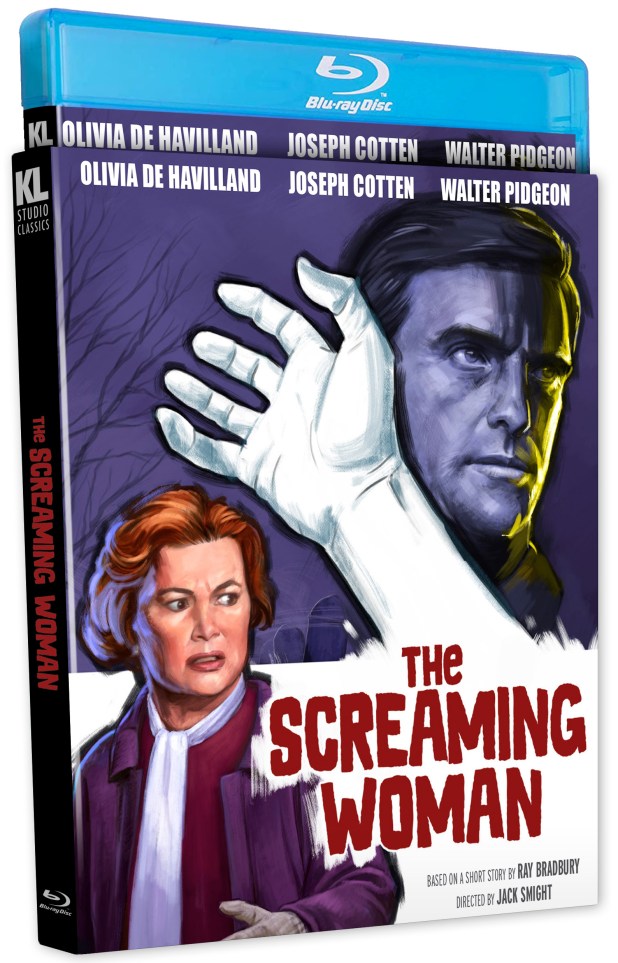
Jack Smight, known for his exceptional directing in films like No Way to Treat a Lady, Airport 1975 and Damnation Alley— well, maybe not movie — brings his talent to this TV movie. Working from a short story by Ray Bradbury, he delivers a quick and suspenseful reminder of the unique cinematic style of 1970s TV movies, a style that could truly get under your skin.
Olivia De Havilland plays Laura Wynant, a wealthy former mental patient who has gone to the country to continue healing. That’d be easier if she didn’t keep hearing the pleas of a woman who has been buried alive on her property. Arthritis has robbed her hands of the ability to save the woman and as she brings others in to help her, her family starts to think that she is losing her control over her sanity again.
De Havilland, Cotten, and Pidgeon deliver stellar performances that elevate the movie to another level. Their talent and dedication to their roles are evident, making this TV movie a must-see for any classic TV movie enthusiast.
This is a movie that masterfully builds its suspense, keeping you on the edge of your seat from start to finish. It’s a rare gem that doesn’t let up, a testament to the captivating storytelling of TV movies from this era.
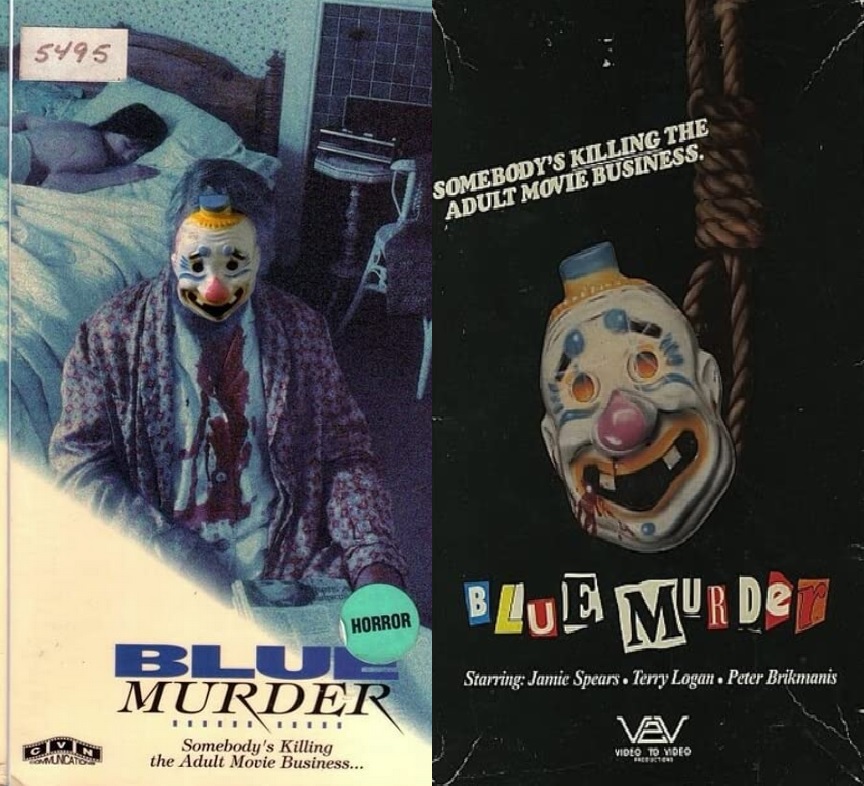
It is “films” such as Blue Murder that give our beloved SOV ’80s a bad reputation because, as with the lesson in apoc-tedium that is Survival: 1990 (yes, made by Emmeritus Productions, the Canadian studio that also made this; as well as the computer-takes-over-a-skyscraper romp, The Tower), this inert John Carpenter knock off is just another mismarketed Canadian TV movie, a chunk of celluloid with the unmitigated, analog gall to dovetail its fast-forwarding poo-stank alongside our cherished, rightful SOV classics of Boardinghouse (1982), Blődaren (1983), Copperhead (1983), Black Devil Doll from Hell (1984), Sledgehammer (1983), Truth or Dare (1985), and Spine (1986). Now, as we ramble n’ praddle our SOV love, there’s a caveat: Not all were shot-on-video. Some of these VHS oddities (such as Truth or Dare) critically lumped in the SOV category were shot on 16 mm and released on video — and if it’s released in a direct-to-video format for exclusive, off-the-beaten Blockbuster Video path distribution at mom ‘n pop video stores, then it’s an SOV. Got it?
Two covers, twice the Underoos stinkeroos.
You’ve been caveated, ye dear reader, for there is nothing worse than a shot-on-video Canadian TV movie (that gives those old Dan Curtis shot-on-video ’70s TV movies a bad name) masquerading as a legitimate “made for the home video market” slasher of the superior Christopher Lewis Blood Cult (1985) variety. So let’s unpack this loaded baby diaper. And don’t let the emptor hit you in the ass on the way out when you see this grindhouse aka’ing in the VHS marketplace as The Porn Murders. And if you’re wondering what the “Blue Murder” title means, well, Google “blue movies” to find that bit of marketing brilliance.
Don’t be Trans World Entertainment duped: The Clown Murders is another stinkeroo from 1976 reissued in the video ’80s (not) starring John Candy, as directed by Martyn Burke of The Last Chase fame. Oh, yeah . . . John also made an early appearance in 1978’s The Silent Partner.
Now, you’d think with a movie with a killer adorned in a dime store, plastic-elastic Clown mask hacking up porn filmmakers and actresses — leaving them with a clown-mask calling card on their faces — we’d end up with some serious shower-after-watching sleaze n’ gore. Well, we could have — if the “Roger Corman of Canadian,” William Fruet of Death Weekend (1976) fame, was at the bow of the U.S.S Argento. Or Shaun Costello of Forced Entry (1973) fame was second mate. Or Jim Sotos of that film’s remake The Last Victim (1975) was swabbin’ the decks, ye matey. Maybe if real-life porn makers Justin Simonds and John Howard of Spine fame were in the galley.
Be we digress, again.
So, to solve the crimes, the old “hard-nose homicide cop” and “intrepid crime reporter” trope (neither are hard-nosed nor intrepid, natch) spools from the master to slave sprocket as we see our killer clown fire a gun . . . then cut to the body falling to the floor. And this goes on for eight more bloodless killings — nary a boob in sight via POV Italian black-leather gloved hands clutching a silencer. Remember how Billy Eye Harper killed all of those people in Rocktober Blood (1984) — off camera? Yeah, it’s like that. Only there’s no Sorcery tunes aka’in as Head Mistress rockers to ease the boredom.
“Sexy, slick and bloodthristy — with an amazing surprise ending.” — CVN Communications copywriter hornswogglin’
Oh, speaking of music: There’s an opening credits-glam rock theme, “Blue Murder,” but it’s not by the band of the same name Carmine Appice put together with John Sykes of Whitesnake and Tony Franklin of the Firm because, well, Carmine was too busy with King Kobra tunes masquerading as Damien-written tunes for Black Roses (1988) rockers. There’s another sappy-as-sentimental-ass love song “Madly in Like with You,” that’s not by Girlschool — and both songs should have been ditched for Kim McAuliffe and company’s “Screaming Blue Murder” and “Don’t Call it Love.”
“Okay, R.D. Enough with the ’80s heavy metal memories. Get back to the movie.”
Okay, well, the real band in the movie is known as One Life to Live. And don’t bother, as we already researched those never-was Cannuck non-rockers and there’s nary a QWERTY-character of web-Intel. But we do know that they’re not one of “Canada’s Top 20 Greatest Bands” . . . but Nickelback and Bare Naked Ladies? Oh, Canada, what the hell. Thank god Four Non-Blondes aren’t from the Great White North . . . but April Wine, is.
Hey, maybe if our killer dressed like a kitchen worker and had a beef with Entenmann’s and killed pastry chefs and left Jelly Roll calling cards. Then add in a couple Girlschool tunes — and (real life) porn actresses in schoolgirl outfits instead of friggin’ one-piece bathing suits with feather boas — and we’d be onto a sticky-sweet something.
I know, back to the movie . . . with the only online clip available . . . from Turkish TV. Yes, this made it across the ocean into Turkey.
So, eh . . . “The Porno Killer” is on the loose and attempts to harangue Dan Blake, our resourceful crime reporter, into covering his exploits . . . or more will die. So Dan consults with Lt. Rossey, his homoerotic-implied buddy-boy (e.g., the sitting-on-the-toilet-while-I-take-bubble-bath conversation) to sift through the so-not-giallo red herrings of mobster-cum-porn producers battling for each other’s 3/4-inch tape territory and corrupt cops on-the-porn take. Then there’s the one-eyed henchman and houseboys in the mansions and on the yachts of the porn producers. And don’t forget the Catholic Priest with a psychology degree explaining why someone would don a clown mask and hot-wire bombs to beds and wine bottles. (No joke: there’s bomb-wired libations.) There’s not even one of the 24th letters of the alphabet here, let alone three; but there’s a whole lot of Zzzzzz that take us to that “amazing” twist ending. . . .
Alas, the only “twist” we care about: Is the Jamie Spears starring here — in his only acting role as our intrepid reporter Dan Blake — really the father of Britney and Jamie Lynn Spears? The Magic 8-Balls of the web say, “YES” — but there’s nothing amid the web-myriad of Spears digital ephemera that states that fact. And I’m looking at both Jamie-stills and I’m not seeing the resemblance between the actor and the dad. If it is Brit’s pop — eh, is it — no wonder this was his only movie and he leeched off his daughters, aka he’s awful at acting. Really awful. And wouldn’t it have been funnier — and this film needed a dash of comedy, if anything — if the football jersey Danny-boy perpetually wears throughout the film was number “69” (yuk-yuk) instead of 66? Ah, but “66” is the numeric code for spooning . . . which makes Danny’s downward stare and Lt. Rossey’s leg hike in the tub even more distributing . . . jokes about sexually denied spherical objects in one of the three primary colors between violet and green, be damned.
“Oops, I’m lookin’ again.”
The name of Charles Wiener — considering the material — is no joke: he’s a real person who, after this writing and directing debut — wrote a Canadian not-Police Academy ripoff Recruits (1986) that only has the presence of Jon-Mikl Thor (Zombie Nightmare) to recommend it, as well as writing and directing the-Police Academy-set-inside-a-fire station-ripoff Fireballs (1989). Did you see Wiener’s Animal House-cum-Porky’s inversion, Screwball Hotel(1988)? Neither did we . . . DOH! We did? But if you’re a martial arts completionist and need a Canadian not-starring Jean-Claude Van Damme rip, there’s Wiener’s third and final directing effort, Dragon Hunt (1990), for your shelf. (No, I will not review the dogger that is Dragon Hunt, for I’ve choked down enough wieners for one day.)
Hmmmm. This sounds like another B&S About Movies gauntlet drop. But Sam never answered the Robert Clouse Gymkata (1985) challenge, so my Dragon Hunt throw down to complete the Wiener catalogin’ at B&S is for naught.
Okay, time for a nice cup of Green Tea and a slice of Entenmann’s Pound Cake, hold the crappy-ass Van Hagar not-a-pastry ode. Excuse me, could you pass a spoon? You’re lookin’ mighty fine in that numero “66” jersey, big fella.
Fork me, R.D. out.
About the Author: You can read the music and film reviews of R.D Francis on Medium and learn more about his work on Facebook.
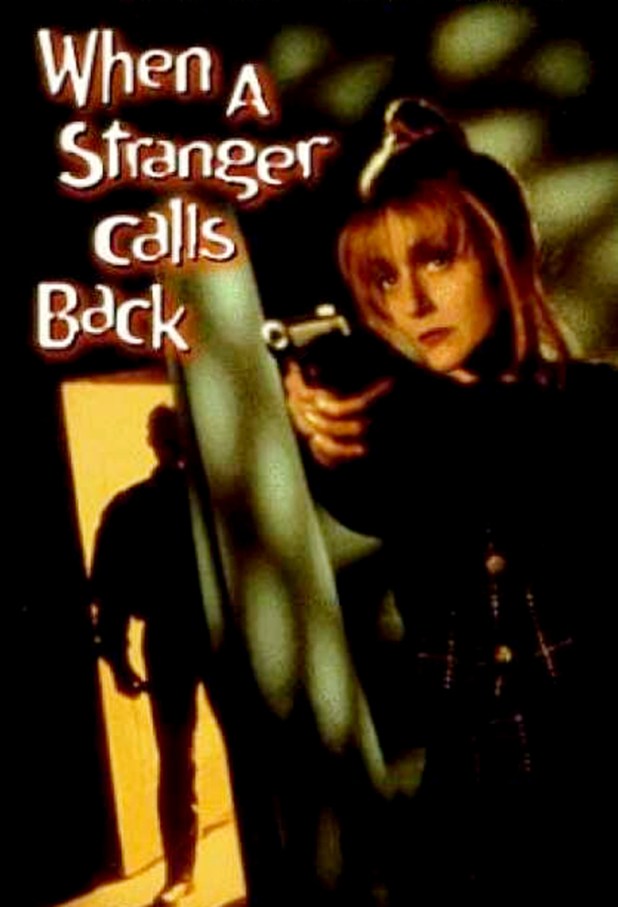
Fourteen years after When a Stranger Calls, this TV movie brings back Cheryl Wilson, Carol Kane and Charles Durning as Mrs. Schifrin, Jill Johnson and John Clifford, as well as director Fred Walton.
The opening of this movie is great. Julia Jenz (Jill Schoelen, an unsung scream queen) is babysitting when she hears a knock on the door. Smart enough to not let anyone in, she tells the man on the other side of the door that she can call a tow truck for him but won’t let him in. When she does try to call, the lines are cut and as she begins lying to the mysterious voice, she realizes that someone is coming in and out of the house. It’s too late — the children she was watching have been abducted.
Five years later and Julia is still traumatized, with whoever stole the children continuing to break into her apartment. She’s helped by counselor Jill Johnson, but the constant abuse causes her to try and kill herself with a self-inflicted head wound. Julia and John Clifford decide to figure out who the stalker is, a man who can throw his voice and has special makeup and clothing that allows him to blend into the walls of Julia’s apartment.
And while this is just a TV movie made years after the glorious decade of giallo, Mozart is a Murderer reminds us that Martino is an expert filmmaker.
It all starts years ago when one bad note ruins a concert. This innocuous event will spiral to claim the lives of many. Starting with a girl named Chiara, those connected to the event are found stabbed and have a circle and a cross cut into their bodies.
Commissioner Antonio Maccari has been trying to rebuild his life after his wife’s death at the hands of a serial killer he was hunting for. He’s been dating a therapist, Dr. Marta Melli, who is treating one of the students who was in the recital. It turns out that their teacher, Professor Baraldi, may have a sweet tooth for his male students and that Chiara and her boyfriend had been blackmailing their old music professor. But there are so many red herrings to swim through before we learn who the killer is.
Martino had some success in the 90s with TV movies and miniseries, including Private Crimes, which feature the queen of all things giallo Edwige Fenech and the always doomed Ray Lovelock.
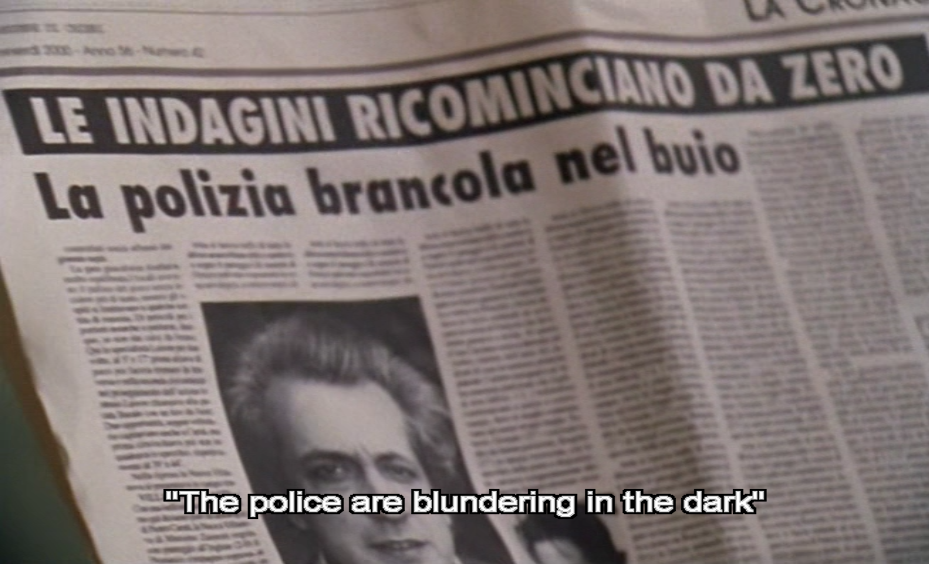
This looks pretty 90s instead of being filled with the visual flourishes that Martino showed in his past work. But hey — even a low budget Martino is another joy to find, right? And it’s filled with little nods to past films, such as a headline that proclaims “The police are fumbling in the dark,” which is a line used in many giallo and also the title of a 1975 film with that very name, The Police Are Blundering In the Dark.
Did you know Anthony Michael Hall is also an accomplished musician?
It’s true.
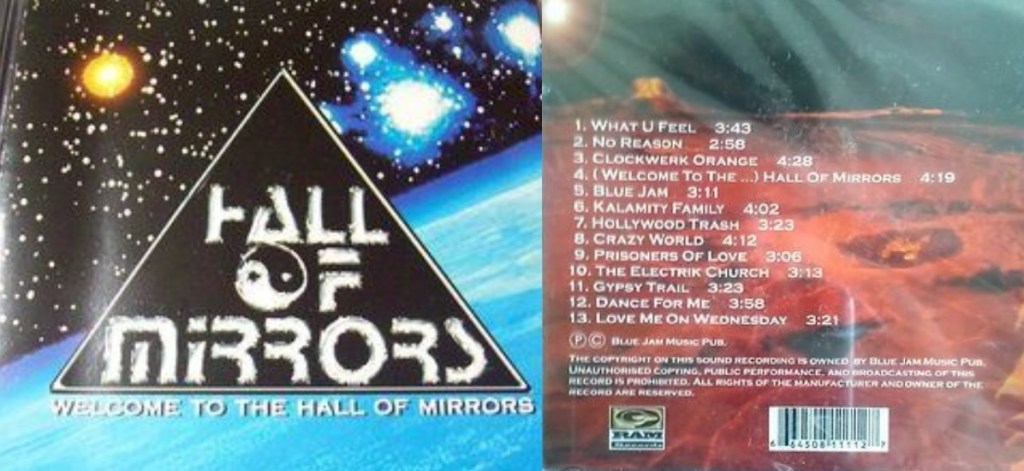
His “band,” Hall of Mirrors, issued a lone album through Hall’s own vanity impress, RAM Recordings. Welcome to the Hall of Mirrors, a 1999 studio project, features thirteen tracks that Hall wrote, sang, and produced — and played all the guitars, bass, and drums. Guest assisting him in the studio was former Guns N’ Roses guitarist Gilby Clarke (who put out a pretty cool glam-pop album with Candy, Whatever Happened to Fun; sound like sloppy-polished the Replacements, then there’s the harder-edged Kills For Thrills) and Prince’s former keyboardist, Tommy Barbarell.
What’s it sound like? Well, if “fuzzy funk-jazz” is a thing, that’s sums it up.
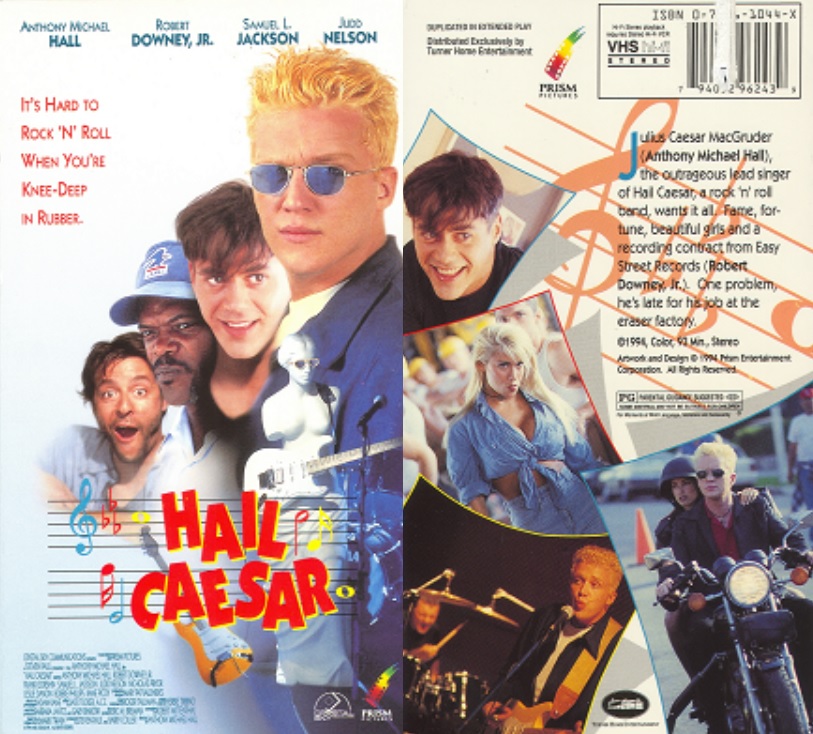
In an online podcast with (defunct) “Hollywood Spotlight” at Real Hollywood, at the time of the time of the CD’s release, Hall stated he was “a fan of everything from Rage Against the Machine, to Green Day, to Puffy Daddy, and has ‘diverse tastes,’ with a love of classic rock, R&B, and funk from the ‘70s.” Hall’s work on the album was long-gestating, since the early ’90s, as four of the songs from the album appeared in Hall’s directorial effort, Hail Caesar, which doubled as the music for the film’s Julius Caesar MacGruder’s band, Hail Caesar.
The plot — devised by family television showrunner and writer Bob Mittenthal (Double Dare, Rugrats, Robotboy, and It’s Pony) — Hail Caesar tells the story of the trials and tribulations of Julius MacGruder trying to score a recording contract (from Robert Downey, Jr.’s record executive). To make ends meet, Julius works in a . . . pencil eraser factory . . . managed by . . . Frank “The Joker” Gorshin. While there, Julius meets Buffer Bidwell (Bobbie Phillips of the abysmal Showgirls from 1995 and the 1998 remake of Carnival of Souls), the boss’s daughter . . . and romance blooms . . . to the chagrin of the factory’s owner, Mr. Bidwell (Nicholas Prior of The Gumball Rally fame). Wanting rid of Julius from his daughter’s life, Bidwell makes a bet with the ne’er-do-well rocker that he knows the slick-slacker will never honor: make $100,000 in six months; if he does, he can marry Buffer, if not, he’s banished.
Since Hall was firmly established at this point and made a lot a friends in the business, he was able to call in favors and secure the services of his past co-stars in Robert Downey, Jr. (the 1988 sports comedy Johnny Be Good) and Judd Nelson (1985’s The Breakfast Club), and, in a very early, pre-stardom role as a postman, Samuel L. Jackson. (The caveat: each are not around for long.)
In proof that everyone in Hollywood has to start somewhere: The cinematographer here is Adam Kane, who would go on to lens The Boondock Saints and TV’s Grey’s Anatomy. The editor, Jack Turner, also worked on A Nightmare on Elm Street 4, but his work dates back to the blaxploitation classic, Petey Wheatstraw. And, yes, the producer here, Steven Paul, is the same Steven Paul who made bank with the Ghost Rider, Baby Genius, and Stallone’s The Expendables franchises.
So, enough with the film trivia. What do I think about the film?
Well, I didn’t think I’d ever find another rock ‘n’ roll flick more deserving of the blue screen of death as Corey Feldman’s Rock ‘n’ Roll High School Forever (1994) — yes, there’s a sequel to Rock ‘n’ Roll High School (!) — and I did just that. Yeah, Hail Caesar is another one of those coveted rock ‘n roll obscurities that was poorly distributed; so, in lieu of seeing it on cable (it was made exclusively for Showtime) or as a Blockbuster rental, my first exposure was picking up a cutout bin copy. So much much for that $2.00; I could have had a McNuggets sixer and a small Dr. Pepper. Hey, I love indie-quirky, as Ed and His Dead Mother and Trees Lounge are two of my favorite, oddball VHSers, but not this time. Sorry.
While I really dig Hall’s quirky compositional style, which has an off-kiltered Crispin Glover vibe (see Glover’s “Dance Etiquette” by his studio project The Uncalled Four, which appeared in the 1994 comedy Twister), for a “rock ‘n’ roll movie,” the music really isn’t all that “rock,” and there’s just not enough of it (to hold my rock ‘n’ radio interests). In fact, even with all of the familiar, established actors in the cast (who’ve done far better work), the proceedings are all snooze-enducing boring and a wee-bit too hammy (especially by Downey; Gorshin is just sad as can be), with a lot of flat-as-a-worn out-eraser humor. Maybe if this was a Pauly Shore joint . . . or Adam Sandler did the ol’ immature adult routine with that annoying baby-talk voice he does . . . maybe if it was done as an animated feature . . . or cast with tween actors for Bob Mittenthal’s old Nickelodeon home base. . . .
Let’s put it this way: This is the second time I’ve watched Hail Ceasar since finding that VHS cutout all those years ago. And I dozed off on it back then (and it took a month to finish it) . . . and I fast-forwarded though it today, so as to refresh my memory to pull together this review. And if not for this being another “Rock ‘n’ Roll Week,” you wouldn’t be reading this final sentence. . . .
Courtesy of You Tuber Jok3r Girl, you can listen to four of Hall’s songs that appear in the film: “What U Feel,” “Dance for Me,” “Crazy World,” and “Blue Jam.” Another song in the film, that’s not on the later CD, is “Love Is.” You can watch Hail Caesar as a free-with-ads stream on Tubi.
About the Author: You can read the music and film reviews of R.D Francis on Medium and learn more about his work on Facebook.
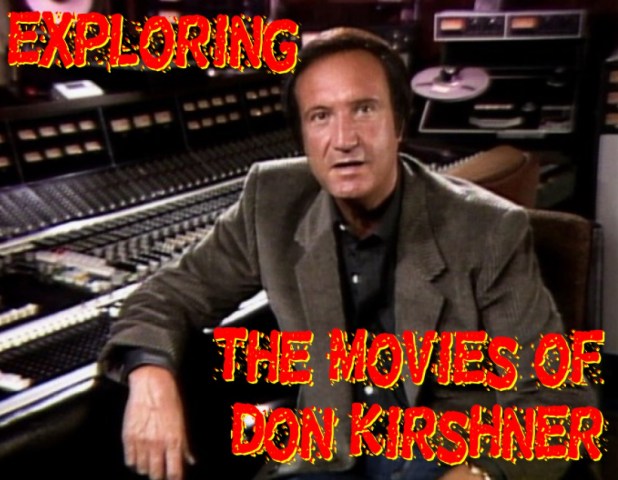
Everyone knows Don Kirshner as “The Man With the Golden Ear” who conceived the music of the Monkees and the animated the Archies, as well as managing ’70s prog-rockers Kansas. Moving into television production, Kirshner also created the MTV progenitors In Concert for ABC-TV and the weekly syndicated Don Kirshner’s Rock Concert as a counter programming to NBC-TV’s The Midnight Special. His other musical endeavors include providing/consulting music to The Flintstones, the children’s productions of Sid and Marty Kroffts, and TV projects starring the Harlem Globe Trotters (cartoon) and the Hudson Brothers (live action).
While there’s a wealth of online materials regarding Kirshner’s musical accomplishments, little — outside of The Monkees — is said about his accomplishments as a producer in developing a wealth of series and TV movies.
So get ready for monkees, bees, and beauty queens, along with Wild West hippies, a Newton-John, a Victorian musician’s ghost, a hippie magician, a killer virus, and Ol’ Scratch. Let’s get to exploring!
The Reviews
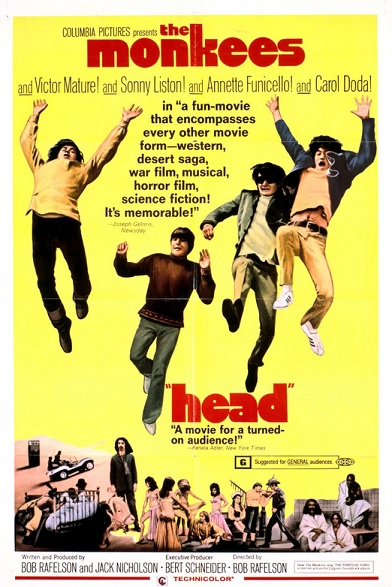
Head (1968) The Kowboys (1970) Toomorrow (1970) The Rock ‘N’ Fun Magic Show (1975) Song of the Succubus (1975) Rock-a-Die Baby (1975) The Kids from C.A.P.E.R (1976) The Savage Bees (1976) Roxy Page (1976) The Night They Took Miss Beautiful (1977) A Year at the Top (1977) Terror Out of the Sky (1978) The Triangle Factory Fire Scandal (1979)
Hey, hey, we need Don Kirshner!/courtesy of the IMBb.
Okay, settle down. Settle. We are well aware Don Kirshner had no involvement in this box office boondoogle. There’s a method to the monkey business, here. Patience, ye fellow primates.
Beginning its production with the title Changes (later the title of the Monkees ninth album — and final contractual album for Colgems — when they were reduced to the duo of Micky Dolenz and Davy Jones), what ultimately became Head made its debut in Los Angeles in the summer of 1968 under the title Movee Untitled. The already confusing and perpetual Andy Warhol-inspired non-sequitur that bombed in that L.A. test screening was cut down from a 110-minute length — to an even more baffling 86-minute cut (not that the lost 24-minutes said much, either) — that premiered in New York City on November 6, 1968.
The kid and tweens who loved the TV series hated the film. The mature hippies that the Monkees wanted to reach hated the film. So much for mixing pot, mellow yellow, and reel-to-reel tapes with a Beatles clone and a script by ol’ Jack, who previously gave us the drug-drama The Trip (1967) directed by Roger Corman.
While Kirshner was the creative force behind the multiple hits-packed The Monkees (1966) and More of The Monkees (1967), Mike Nesmith’s constant power struggles with Kirshner led to the Monkees having complete control over their next album, Headquarters (1967). Only one problem: Nesmith and Peter Tork — the experienced musicians of the group who had the biggest issues in being a “prefabricated band” — couldn’t pull off an album on their own devices. So they ended up resorting to the very Kirshner model of using outside songwriters and studio musicians that pissed them off in the first place.
Headquarters was released on May 22, 1967, and charted at No. 1 in the U.S.
Then the Beatles released Sgt. Pepper’s Lonely Hearts Club Band on May 26.
Sing it, with me!
Bye, bye, the Monkees It was nice having you around We’re busy too listening to the Beatles And watching the Beatles’ television film Magical Mystery Tour And their animated feature film Yellow Submarine You know, the films you ripped off As your model in making Head So people wouldn’t see you as Beatles clones
Unlike the hit-packed Kirshner-produced albums — and even with the TV series still on the air to promote the music — Headquarters produced no hit singles — with only the curiosities of “Shades of Grey” and “Randy Scouse Git” to show for it. In fact, the music from the troublesome third album was barely promoted via the series. The Monkees Top 40 hits during this period touted by the series was the single “A Little Bit Me, A Little Bit You / The Girl I Knew Somewhere,” which reached #2 and #39, respectively; neither were included on the album, as result of being connected to the Kirshner-era.
By the time of the release of the soundtrack to Head, the TV series was over. And without a TV series to promote the music, the album, as did the movie, bombed. Hard. Harder than a day’s night. The album creaked to #45 on the U.S. chart and its lone single, “Porpoise Song (Theme from Head)” was the first Monkees song not to make the Top 40. Both the album and the single quickly dropped from the charts.
As with his perpetual complaining that lead to Kirshner’s firing from The Monkees TV project, Nesmith, initially, wasn’t happy with the behind-the-scenes business dealings with the film production of Head. And now, instead of Tork backing him, as on Headquarters, Dolenz and Jones towed the Nesmith company line over the fact that they — based on their stoned babbling into a tape recorder — wouldn’t received a screenwriting credit. And that Bob Rafelson — the experienced filmmaker that gave them their careers in the first place (and gave us the influential Easy Rider) — would direct, instead of the Monkees themselves.
Disillusioned egos. You gotta love it. How would this saga turned out if the Dave Clark Five or the Lovin’ Spoonful — who were originally wanted as the band for the series — were cast?
So, the band, sans Tork, staged a walkout. To get the film back on track, the studio allowed themselves to be strong-armed into giving the band a higher percentage rate of the film’s net — which was next to nothing, anyway. Now, in addition to alienating Don Kirshner, Bob Rafelson and Bert Schneider (who co-produced with Rafelson and Nicholson) were pissed. Their relationship with the Monkees was over. So the duo, along with Jack Nicholson, went on to make Five Easy Pieces, The King of Marvin Gardens, and a remake of the noir, The Postman Always Rings Twice to critical and box office acceptance. The Monkees made 33 1⁄3 Revolutions per Monkee, the first in a trio of variety specials for NBC-TV in 1969. And the Monkees — especially Mike Nesmith, big shock — didn’t get along with the program’s writer and director, Jack Good (TV’s musical variety show Shindig!).
Bye, bye, the Monkees. It was nice having you around.
As Sam the Bossman notes in his review of Head, Mike Nesmith said, “By the time Head came out the Monkees were a pariah. There was no confusion about this. We were on the cosine of the line of approbation, from acceptance to rejection . . . and it was basically over. Head was a swan song.”
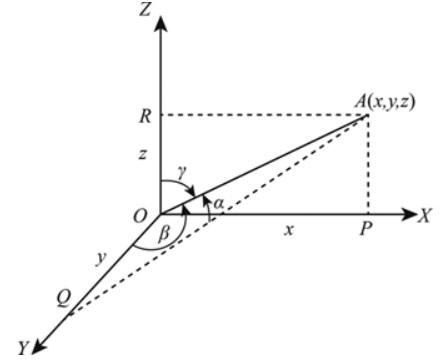
Cosine of the line of approbation? What the hell, Nesmith? Oh, I get it now: it wasn’t your ego that caused the rejection, it was direction cosines of a line.
The Infinite Rider on the Big Dogma rejection principle.
Z = Don Kirshner, O = Mike Nesmith, X = Headquarters
A = Bob Rafelson (Bert Schneider)
y = Micky Dolenz, α = Davy Jones, β = Peter Tork
Y = Head
Meanwhile, after Don Kirshner formulated the Archies and rode them to #1 with the song “Sugar, Sugar” — a song intended for the Monkees as sung by Davy Jones that sent Nesmith off on one of his rants — he teamed with one of the writers behind one of the Monkees hit singles to formulate his next studio band: the Kowboys.
And you thought Head was a movie out of its mind.
Courtesy of the IMDb.
The Kowboys (1970)
Huh?
The flower power ’60s of the 20th century collides with the post-Civil War Wild West of the late 19th century in this hippie-western parody that served as Don Kirshner’s lone screenwriting credit. Produced by the same production team behind The Monkees, Kirshner and gang — foolishly — hoped for a repeat of that series.
Since you’ve more than likely never heard of this TV movie pilot, guess what happened?
Seriously, who wants to see a weekly series with Jesus Christ Superstar-cum-Hair-inspired hippies battling an evil rancher to save a dusty western town . . . peppered with pop tunes? As with the Australian-bred Toomorrow, this film failed in its bid to manufacture a pop band — one that featured cult actress Joy Bang, who we dig around the B&S About Movies’ cubicles courtesy of her starring in her final feature film, 1973’s Messiah of Evil. (You can learn more about Joy’s career with a great retrospective courtesy of Spectacular Optical.)
The Micheal Martin Murphey heading the cast is the same country-pop musician who wrote the Monkees’ Mike Nesmith-sung hit “What Am I Doing Hangin’ ‘Round,” as well as his own ’70s Top 40 solo hit, “Wildfire.” Murphey, along with fellow cast Kowboys’ cast member Boomer Castleman, fronted the Lewis & Clarke Expedition, which recorded one eponymous album for Colgems, the Kirshner-run label that issued the music of the Monkees.
In addition to the Lewis and Clark expedition scoring a minor ’60s chart hit with “I Feel Good (I Feel Bad),” they starred alongside John Saxon in the teen film For Singles Only (1968) to perform “Destination Unknown” (You Tube clip from the film). L&W bassist John London came to be in Mike Nesmith’s post-Monkees First National Band, which had their own minor chart hit with the country-flavored “Joanne.”
Another of Kirshner’s failed, manufactured bands was the band/TV series The Kids from C.A.P.E.R (1976), but first, there’s was his bid to transform Olivia Newton-John into the latest teen sensation.
And you thought Head and The Kowboys were movies out of their minds.
So, what do you get when you put Harry Saltzman, the producer behind the James Bond franchise, and Don Kirshner, the producer of the Monkees, in a room? You get a three-picture deal that barely made it through the production of their first movie — one starring Olivia Newton-John in a hippie-musical about aliens.
Yes. Aliens and music. And you thought Menahem Golan’s The Apple for Cannon Pictures was off the hinges. Toomorrow must be seen to be believed to prove that it actually exists.
Courtesy of its official reissue to DVD, there’s a ripped copy posted to You Tube, as proof.
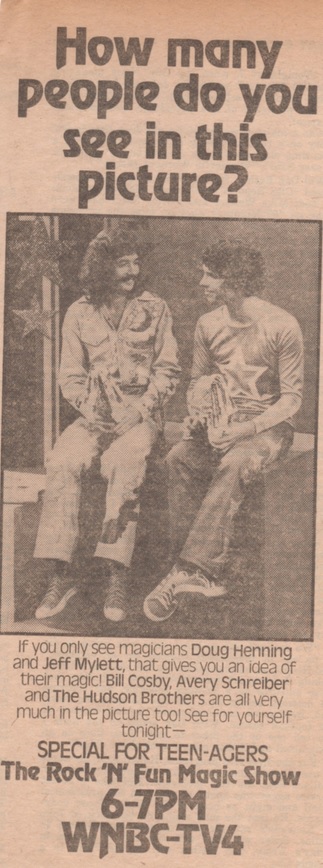
The IMBb lists this as a “TV Movie,” but in reality — or in its non-reality, as we shall soon see — this was actually an hour-long pilot conceived as an early evening, family-oriented TV series to join the parents and kids in front of the TV set. Yes, a then hot hippie magician — in this case, Doug Henning — and hippie-inspired bubblegum rock, together on one show, so as to as to bridge the generation gap. Not only did Doug Henning get the big TV push by NBC-TV, ABC-TV, as this article by Television Obscurities investigates, laid down their cards on breaking David Copperfield to television audiences with his own musical variety show.
At the time, variety shows hosted by then hot musical acts, such as Donnie and Marie, Sonny and Cher, and even one-hit wonder groups such as the Starland Vocal Band (of the ’70s the #1 Top 40 hit “Afternoon Delight”), were all the rage. So Kirshner got the idea to to meld rock music, magic, and comedy into a weekly series co-hosted by musician Doug Henning and the Hudson Brothers (who starred the the previous year’s Saturday morning kids series The Hudson Brothers Razzle Dazzle Show from the Kirshner brain trust). The pilot also featured the planned, first roster of rotating guest-star comedians with Bill Cosby (Leonard: Part 6) and Avery Schreiber (Galaxina) and rotating musical guests, in this case, ’50s doo-woopers the Tokens. Yes, the Tokens, as in the “o-wim-o-weh” guys from that annoying “The Lion Sleeps Tonight” song. Again, it’s all about “bridging the generation gap” and turning the kids onto their parent’s music, and vice versa.
Yes, you’d need a nice deep toke to digest the psychedelic inanity of it all. Don’t bogart that joint, Nesmith.
Hey, Sam <passing the roach>, dude. How have the mighty B&S QWERTY warriors not reviewed the Hudson’s Brothers in their feature films Zero to Sixty (1978) and Hysterical (1983) — especially when Darren McGavin starred in the first and and Richard “Jaws” Kiel starred in the latter? We need to pencil those in, post-haste.
“Yeah,” Nesmith takes back the roach. “But not until after you do Gymkata. How much longer will that Robert Clouse-Kurt Thomas challenge, stand, R.D?”
From your suitcase to God’s TV tray, Mike. We’re out of weed, bro. Better call Sunset Sam. And tell Lucy and Ramona to come over. Bill Van Ryn is bringing over his ’70s disco albums and we’re firing up the drink blenders.
After the success of the live action The Monkees and the animated The Archies . . . and the failure to bring Toomorrow and the Kowboys to a worldwide audience, Don Kirshner set out to expose ex-Jeff Beck Group vocalist Kim Milford and his real-life band, Moon, to the world with a pair of TV movies. Both aired as part of ABC’s The Wild World of Mystery, a 90-minute late night mystery and suspense anthology series that ran on the network from 1973 to 1978 and aired in the overnights at 12:30 AM—after Kirshner’s In Concert rock program.
Lone before ersatz-rockers Black Roses, Sammy Curr, Billy Eye Harper and Headmistress, Holy Moses, Sacrifyx, and Tritonz possessed our VCRs with their rock ‘n’ horror tales, there was the forgotten, horrific chronicles of Moon, who, after their rearrangement and recording of an old, discovered song, find themselves stalked by the ghost of the Victorian musician who composed the suite. In the sequel, Rock-a-Die Baby, the psychic premonitions of one of Moon’s fans helps the band solve the mystery behind the deaths of their fans that ties back to the Victorian musician.
As result of these two movies airing back-to-back in consecutive weeks during the summer of 1975, many mistook the adventures of Moon as a quickly cancelled weekly TV series. Nope, it was just a pair of movies that may — nor may not — have been intended as series pilots. (You can learn more about Kim Milford’s music and acting endeavors with the Medium article “Rocky Horror, Jeff Beck, Corvettes and Lasers: The Life and Career of Kim Milford.” He was managed by the guy who guided Kiss, Billy Squire, and Billy Idol. True story!)
So, while Kirshner was musically maturing, vying for the now grown up Monkees fans by cultivating Kim Milford’s career . . . there were still a new bunch of kids and tweens to entertain during the daytime hours. . . .
Yeah, we’re breaking from this “Exploring” feature’s theme remembering the films — and the assumed films — of Don Kirshner for a quick mention of his third, faux Monkees creation after his film-based the Kowboys and Toomorrow. Oft confused as a Sid and Marty Krofft production (who Kirshner worked with on their 1973 Hollywood Bowl TV special), the show was launched as part of an hour-long, early-evening special, The Great NBC Smilin’ Saturday Mornin’ Parade (the fellow WordPress blog Tune In Tonight has a great, 2017 spread on that Freddie Prinze-hosted event).
Intended as “pop culture parody” of current shows and events of the day, our ersatz Monkees meets the Bay City Rollers meets Scooby Doo not only fought crime with a pinch of ’60s spy shows between the cheeks, they also had “hit” (awful) songs, such as “When It Hit Me (The Hurricane Song).” The Monkees connection comes from, not only Don Kirshner, but his long-time producing and directing partner Stanley Z. Cherry, who helped developed the Beatles knockoff.
A simple Google search of the show will unearth a wealth of retro blogs, photos, and songs. The most extensive, dedicated site is kidsfromcaper.com. The show’s thirteen episodes have never been released to video and, to date, never reissued on DVD. As with many U.S.-bred TV series — as well at TV movies — Caper may have been cut into an overseas theatrical feature (see Battlestar Galactica, TV’s Captain American and The Amazing Spiderman as examples), but there’s no evidence to suggest such. (We discovered the show’s opening and theme song on You Tube.)
Eh, in a ratings battle between The Kids from C.A.P.E.R . . . I was always a Hot Hero Sandwich kinda kid, anyway. The fans for this are rabid, as this Google Image search for the show, proves.
Courtesy of the IMDb.
The Savage Bees (1976)
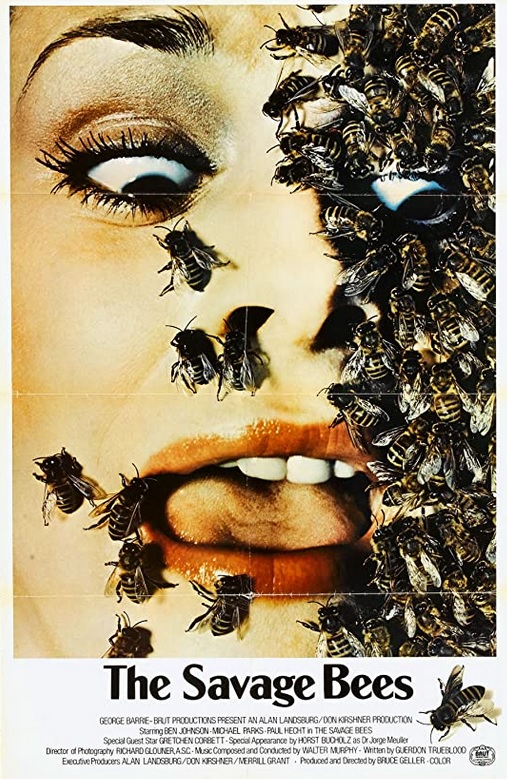
Ah, the feared African Bee craze of the ’70: the little buggers were going to advance to U.S. shores and go all “biblical plague” on our Western asses. Yeah, sure . . . there was the Freddie Francis-directed The Deadly Bees (1966), but that was before the bees craze of the ’70s. So, first, there was the Gloria Swanson-starring TV movie The Killer Bees (1974). And there was the Irwin Allen disaster movie flop for Warner Bros. that was The Swarm (1978). Then there’s Roger Corman’s knockoff of that film for New World Pictures with the John Saxon-starring The Bees (1978). In between was this Don Kirshner-produced tale starring Ben Johnson and Michael Parks — as our requisite sheriff and doctor — battling nature in a New Orleans besieged by killer African bees unleashed from a foreign freighter during Mardi Gras. Why, yes, the “Walter Murphy” credited for the score is the same guy who unleashed that annoying disco-inflected “A Fifth of Beethoven” from Saturday Night Fever up on the world.
You know director Bruce Geller primarily as the writer who developed and executive produced the 1966 – 1973 TV series Mission: Impossible (1966 – 1973). He made his first venture to the theatrical world as the producer of the “Fast and Furious” precursor Corky (1973) starring Robert Blake. In addition to fronting the long-running TV series Mannix (1967 – 1975; Kim Milford starred in an episode as a stalked musician, natch), Geller also produced the failed, late ’70s series pilot adaptations of the successful feature films The Supercops (1974) and Mother, Juggs and Speed (1976). While The Savage Bees proved to be his final feature film as a director (it was a TV movie in the U.S., but a feature film in overseas markets), Geller made his feature directorial debut with the box office hit Harry In Your Pocket (1973) starring James Coburn.
Kirshner’s bee epic proved to not only be a U.S. TV ratings blockbuster, but an overseas box office hit. And you know what that means: a sequel, which we will discuss in a few moments. But first, there’s that Mary Tyler Moore, wait, Marlo Thomas, rip off to check out.
Screen cap via You Tube.
Roxy Page (1976)
How obscure is this series and the short-lived anthology series programming block in which it aired? Our crack team of cubicle farmers were unable to track down a TV Guide or newspaper advert. So all we have is this screen cap from the series’ opening throes that we discovered on You Tube. And if it all looks A LOT like the ’60s series That Girl starring Marlo Thomas (about another actress trying to make it in New York), then it probably is. Why Kirshner didn’t have Roxy written as a musician trying to make it in Los Angeles — which is the sure bet with ol’ Golden Ears — is anyone’s guess, but he solves that issue with another failed TV pilot, which we will soon discuss.
Roxy Page is oft-noted as a TV movie in the Don Kirshner canons by fans, but it was actually a half-hour TV pilot aired as of NBC-TV’s Comedy Theatre programming block that first aired in 1976, then and again in 1979. During the 1976 season, there were a total of 12 pilots aired across six episodes between 8 to 9 PM.
Roxy Page starred daytime TV/soap actress Janice Lynde (The Young and the Restless, Another World, One Life to Live) as an actress who wants to be on Broadway, much to the chagrin of her family. The other series pilot aired during the block was Local 306 starring Eugene Roche (The Ghost of Flight 401) as an Archie Bunker-styled head of the local plumber’s union. You can learn more about NBC-TV’s Comedy Theatre block and other unsold TV pilots at site Television Obscurities.
Uh, Sam? How is it that we’ve never reviewed the divine Miss Lynde in Herb Freed’s Beyond Evil, especially when it stars John Saxon and Lynda Day George for cryin’ out loud! But at least we reviewed Freed’s Graduation Day, Tomboy and Haunts, so Freed’s representin’ at B&S. (Don’t worry, Sam. I’m obsessed now. I am on the Beyond Evil case!)
Courtesy of the IMDb.
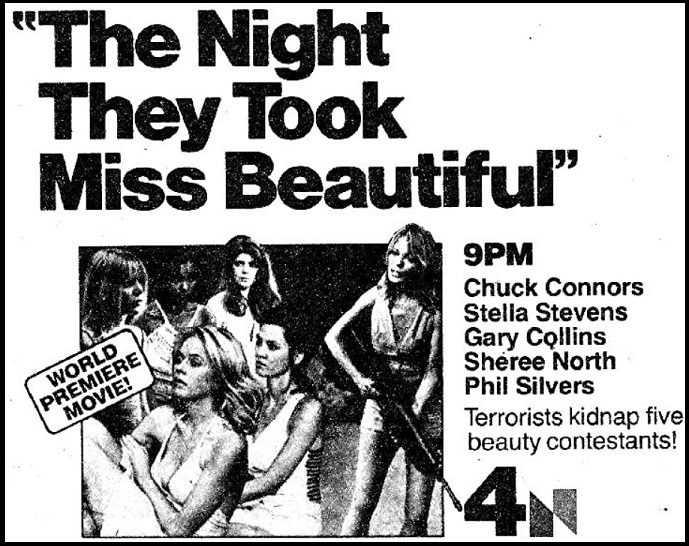
The Night They Took Miss Beautiful (1977)
When a movie — be it TV or theatrical — stars Chuck Connors (Virus, Tourist Trap) and tosses in Gary Collins (Hangar 18) along with Stella Stevens (Las Vegas Lady), you do not ask questions and just accept the absurdity of it all. The “absurdity,” in this case, is the logic in transporting a top secret biological organism on the same plane as beauty contestant finalists.
Who came up with this insanity?
Well, the reason — beyond having Chuck, Gary, and Stella helping us swallow the baloney — is TV series and telefilm scribe Robert Michael Lewis in the director’s chair. Lewis made his debut with the much-loved The Astronaut, the even better Prey for the Wildcats, and Flight 90: Disaster on the Potomac. In the theatrical realms, Robert gave us the bonkers-trashy S*H*E – Security Hazards Expert. As for writer George Lefferts, he also penned the TV movie oddball we love that is Alien Lover, which aired as part of ABC’s Wide World of Mystery programming block that also aired Kirshner’s two Kim Milford flicks.
Yes. Paul Shaffer, who we came to know as David Letterman’s longtime musical director and comedic sidekick (1982 – 2015) and as part of the Saturday Night Live‘s house band (1975 – 1980) had the lead in television series. While Shaffer occasionally stepped away from the SNL Band to participate in that show’s occasional skits as a Not Ready For Prime Time Players satellite member, this Don Kirshner project served as Shaffer’s official acting debut. We, of course, came to love Shaffer best for his work as clueless music promoter Artie Fufkin in This Is Spinal Tap. And do we have to mention that Greg Evigan eventually hit series pay dirt with the Smokey and the Bandit-inspired B.J. and the Bear (1978 – 1981)? Well, we just did.
As many of Don Kirshner’s fans recall Kim Milford’s two rock films as a lost “TV series,” just as many recall A Year at the Top as a lost “TV movie” — and it was, to a degree.
Conceived by Norman Lear on the story end and Kirshner on the music end, A Year at the Top began as a one-hour pilot special. So, with commercial spots, it’s a 50-minute short film, if you will, that settled into a half-hour sitcom format. Unlike Lear’s other successful TV series, such as the All in the Family and its spinoff Maude, and that series spinoff, Good Times, A Year at the Top aired for five, low-rated episodes from August 5th to September 2nd, 1977, and was quickly cancelled. The chief writer behind the musical fantasy goings-on was ex-Milton Berle and long time Lear cohort Heywood “Woody” Kling. In addition to writing the late ’60s The Beatles cartoon series, he also wrote for the ’70s animated series Josie and the Pussycats, Speed Buggy, and other Lear and Kirshner productions.
The show followed Greg (Greg Evigan) and Paul (Paul Schaffer) as two struggling musicians from Boise, Idaho, who arrive in Hollywood with the hopes of making it big. They come to meet Frederick J. Hanover (Gabriel Dell, an ex-Dead End Kid and The Bowery Boys; ask your dad or granddad about it), the head of the world famous Paragon Records, who has made many a musician famous. The catch: Hanover is the devil’s son. And D. Jr. duped Greg and Paul into signing their souls away to be famous for one year. And they spend the rest of the series being famous and getting out of the contract.
Yes. This is a comedy. Maybe it’s “comedy” in the ’50s with Danny Kaye (again, ask pop or grand-poppa) as the ne’er-do-well musician and Milton Berle (the old crusty dude in those RATT videos) as ol’ Bub, but not in the ’70s with a guy from the SNL house band and a grown-up Dead End Kid.
Keep your eyes open for Mickey Rooney and Robert Alda (Lisa and the Devil) in the cast, as well as Nerda Volz, who was the replacement housekeeper on TV’s Diff’rent Strokes, and Julie Cobb, who was the mom (I think, or replacement mom, but who cares) on TV’s Charles in Charge. You may also remember Gabriel Dell for his work as Sal, the agent for Richard Roundtree’s motorcycle stuntman in the ’70s proto-disaster film, Earthquake.
Outside of the few photos on the show’s IMDb page, all that exists of A Year at the Top is the TV promotional ad we’ve included, and this TV spot promo posted on You Tube.
The bees from The Savage Bees are back! Only with a whole new cast headed by Efrem Zimbalist Jr. and Dan Haggerty (The Chilling). Also appearing are TV series and telefilm mainstay Tovah Fedshuh (The Idolmaker with Ray Sharkey, TV’s Law and Order franchise), and Efrem’s daughter Stephanie (The Babysitter), who also starred in Kirshner’s next project, The Triangle Factory Fire Scandal. Be sure to keep your eyes open for always welcomed TV actors Richard Herd (Hey, Sam, it’s Wilhelm from Seinfeld!) and Charles Hallahan (the guy from John Carpenter’s The Thing whose head sprouted spider legs and ran away).
This time out, Efrem is Dr. David Martin, the head of the National Bee Center (eye roll; was there, is there, such a place) who has discovered a new queen bee that’s repopulated a new, more deadlier strain. Along with his assistant and ex-wife (Tovah), and her new lover (Haggerty), they head off to California for the ultimate man vs. nature battle.
Why does this all sound a lot like Twister from 1996 — only with tornadoes instead of bees?
Courtesy of the IMDb.
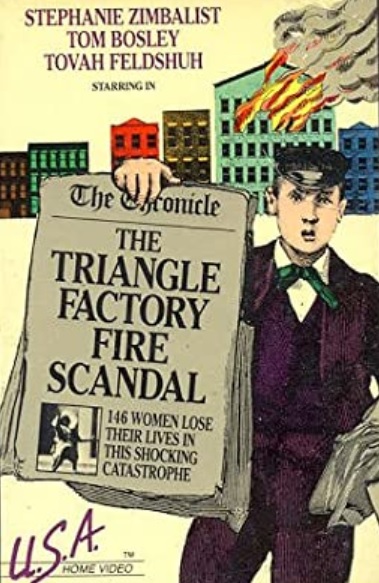
The Triangle Factory Fire Scandal (1979)
It’s wild to see a review by a French critic on the IMDb for this American TV film, but that how it was with U.S. TV movies released during the ’70s through the ’90s: what was a television film in the states became a theatrical feature in the overseas markets.
While Kirshner’s previous executive produced films were fiction pieces that bordered on the enjoyable-ridiculous with killer bees and beauty queens battling a deadly virus, this time he drew from the tragic, true story about New York’s first “9-11” embodied in the notorious, 1911 Triangle Shirt Mfg. Co. factory fire. The tragedy saw over a hundred people, most of them young immigrant girls, perish — most by jumping from the building to their deaths. The ensuing investigation revealed the company’s disregard for its worker safety in pursuit of increased production and profits, and resulted in the passage of new worker safety laws and the formation of the International Ladies Garment Workers Union.
As with any TV movie based in fact, those “facts” were skewed for dramatic effect, but this is still one of the best TV movies based in fact produced during the ’70s. And that quality comes courtesy of the always reliable — and familiar faces of — Tom Bosley and Charlotte Rae (Mr. Cunningham! Ms. Babbit!) starring alongside Ted Wass (TV’s Soap in the ’70s, Blossom in the ’80s, and his failed theatrical attempt, Sheena — with Tanya Roberts! — in between) and Stephanie Zimbalist. And it doesn’t hurt having Mel Stuart, of Willy Wonka and the Chocolate Factory fame, in the director’s chair. The daytime soap opera writing team behind the tale is Mel and Ethel Brez, who also developed and penned Roxy Page for Kirshner.
A company by the name of SOFA Entertainment & Historical Films recently acquired the rights to ABC-TV’s Rock Concert from the late-Kirshner’s estate for a box-set release on DVD. Hopefully, SOFA purchased not only Rock Concert, but Kirshner’s entire TV program catalog, which includes The Savage Bees (1976; You Tube film), The Night They Took Miss Beautiful (1977; film), Terror Out of the Sky (1978; film), and The Triangle Factory Fire Scandal (1979; film). As we discussed in this expose on Kirshner’s film production career, each appeared as theatrical features in overseas markets, as well as on the U.S. VHS home-video market and low-powered UHF television replays. As result, you can find those films on a wide variety of imprints — especially as grey market DVD rips of the initial ’80s VHS issues and UHF replays of those films.
About the Author: You can learn more about the writings of R.D Francis on Facebook.He also writes for B&S About Movies.














 B&S About Movies
You must be logged in to post a comment.