LIBERATION HALL BLU RAY RELEASE: Project Alf (1996)

On March 24, 1990, NBC aired the final episode of Alf.

The main character on the show was, well, ALF (Alien Life Form). No one used his real name, Gordon Shumway. He came from the exploded world of Melmac to Earth, smashing into the garage of the suburban middle-class Tanner family who are made up of Willie (Max Wright), Kate (Anne Schedeen), Lynn (Andrea Elson), Brian (Benji Gregory), cat Lucky and later baby Eric.

ALF was such a big deal that there were stuffed toys at Burger King and a cartoon series, which was infamous for one episode supposedly having a subliminal message.

For four seasons, the family dealt with the completely rude and often hilarious being and kept him safe from the Alien Task Force. And Alf also made plenty of friends, including Willie’s brother Neal (Jim J. Bullock), a psychologist named Larry (Bill Daily) and Jody (Andrea Covell), a blind woman who falls in love with him.

ALF was incredibly difficult to make, so much so that in a People article in 2000, everyone admitted that people were constantly freaking out on the set. Max Wright hated every minute of it, losing most of the laugh lines to a puppet. He supposedly even physically attacked ALF once. That said, in the same article, he was more open-minded about the show, saying “It doesn’t matter what I felt or what the days were like, ALF brought people a lot of joy.”

Yet after the final episode, “Consider Me Gone,” Anne Schedeen said that after the final take, “there was one take and Max walked off the set, went to his dressing room, got his bags, went to his car and disappeared… There were no goodbyes.”

I always wondered why the show ended, but now that I know more, I feel for the cast. Schedeen also reported that “It’s astonishing that ALF really was wonderful and that word never got out what a mess our set really was.”

One example is her TV daughter Andrea Elson. After suffering from bulimia during the show, she admitted that if the show went one more year, everyone would have really lost their minds.

That said, ALF was in tenth place in season 2 and never went below 39th place. The kind of ratings it got back then would be a huge success today. By season 4, NBC was on the bubble, so the show did a cliffhanger. Then they got a verbal commitment from NBC. But then the show never came back.

Imagine being a child when the true worry of the show finally came true. ALF was taken by the government to be dissected after he missed aliens from New Melmac coming to rescue him. It said “To be continued,” but it never was. NBC executive Brandon Tartikoff would years later tell puppeteer Fusco “It was a big mistake that we canceled your show, because you guys had at least one or two more seasons left.”

ABC would finally resolve the cliffhanger six years later with Project:ALF.

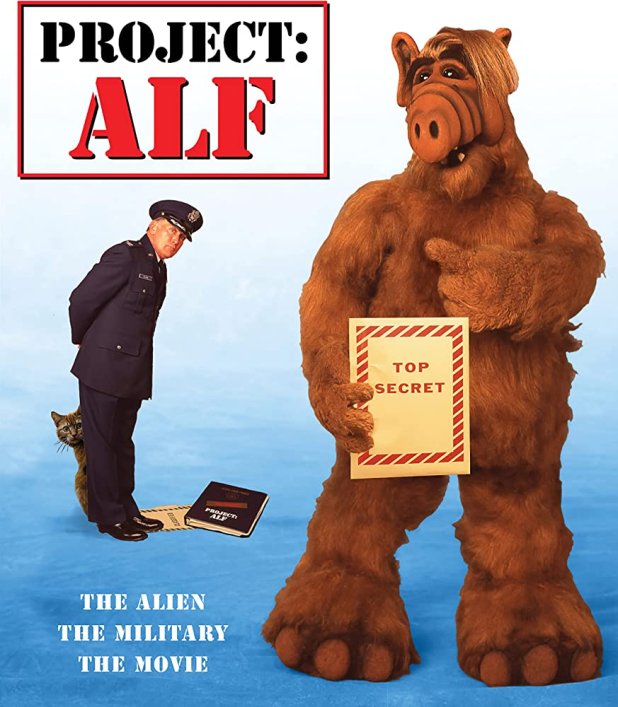
Project: Alf is one strange movie. On one hand, it has plenty of the humor of the original show. But it comes off as gallows humor, as ALF is detained at Edmonds Air Force Base and constantly being threatened by Colonel Gilbert Milfoil (Martin Sheen). He’s finally had enough and plans to incinerate the creature, despite how beloved he is by the base. Of course, ALF has taken advantage of everyone, creating a black market out of a hangar and continually winning money playing poker.

As for the Tanner family, they used the Witness Protection Program to go to Iceland.

Two of the scientists, Major Melissa Hill (Jensen Daggett, Friday the 13th Part VIII: Jason Takes Manhattan) and Captain Rick Mullican (William O’Leary, who was on Home Improvement playing the husband of his co-star Daggett) kidnap ALF and take him on the run where he meets Ray Walston — once My Favorite Martian — as a motel clerk and goes to the Kitty Kat Lounge, which he thinks is a buffet but ends up being filled with exotic dancers.

He finally ends up in the orbit of Dexter Moyers (Miguel Ferrer), who was nearly one of the men on the moon ad has now been discredited by the government. He’s going on a Piers Morgan-esque show where he will publicly show ALF to the world but Minfoil wants to exterminate Gordon Shumway before that can happen.

There’s a wild cast in this. Beyond Sheen and Ferrer, there’s John Schuck, Ed Begley, Jr., Charlie Robinson (Mac from Night Court), Beverly Archer (who was Mrs. Byrd on the original show), Ahmet Zappa and even a robot that seems to be set up to be the Higgins for ALF if this ever became a series.

The movie was directed by Dick Lowry (Smokey and the Bandit Part 3Archie: To Riverdale and Back AgainIn the Line of Duty: The F.B.I. MurdersThe GamblerThe Jayne Mansfield Story) and written by Tom Patchett, who was one of the creators of ALF along with Paul Fusco, who returns to play ALF. Patchett also created the shows Buffalo Bill and The Tony Randall Show, as well as writing Up the AcademyThe Great Muppet Caper and Muppets Take Manhattan.

I really enjoyed this, as it brought back happy memories from my late teen years. I think you’ll feel the same way.

Project Alf is now available on blu ray from Liberation Hall, who have been releasing some interesting TV movies lately. It has a photo gallery, a trailer and an interview with creator Paul Fusco. You can get it from MVD.

MILL CREEK BLU RAY RELEASE: Battle Kaiju Series 01: Ultraman vs. Red King

The “Skull Monster” Red King — Reddo Kingu phonetically in Japanese — has been a fan favorite since he was introduced back in a live stage show that went in-between Ultra-Q and Ultraman. It had the Ultra Q monsters — Garamon, Kanegon and M1 — destroying a lab and being joined by Antlar, Alien Baltan, Chandlar and their leader, Red King, joining in. Only Ultraman could stop them, joined by a chorus of children singing, “The mark in his chest is a meteor / He beats down the enemies proudly with his jet / From the Land of Light for the sake of us / Here he comes, our hero Ultraman.”

Designed by Tohi Narita, Red King was sculpted and built by Ryosaku Takayama. He’s always been blue topped with gold, except in Ultraman: The Ultimate Hero, in which he finally was red. His roar, which is written as Shparr!” — is a combination of Gaira from War of the Gargantuas and Godzilla.

First showing up in the eighth episode of Ultraman, appeared along with Magular, Chandlar and Pigmon, one of the few monsters — maybe because he’s small — that is nice to humans. In that episode, Red King uses his strength — he has no other powers — to rip off Chandlar’s arm and wing, then kill Pigmon under a pile of rocks. Yes, Ultraman was pretty rough but kids back in 1966 were pretty tough.

The Ultraman series were masters of recycling. The Red King suit was later used to make Aboras, then reused when Red King returned to fight Ultraman again in episode 25. The arms were then used for Zetton. These days, however, all the kaiju of Ultraman are their own unique costumers (and they’re much better as costumes and not CGI). Red King Jr. fought Ultraman Taro in episode 40 and would come back as one of the spirits of defeated kaiju that would make the ultimate monster Tyrant. Red King Jr. would become the legs while the other parts were made from Alien Icarus, King Crab, Hanzagiran, Bemstar, Seagorath and Baraba.

From 2005’s Ultraman Max to today, there’s pretty much always been a Red King variant to challenge the Ultras and humans that help them.

You can check them all out in this set from Mill Creek, including the two Red Kings from the original series, Red King III from Ultraman 80, the armored Red King from Ultraman Max and the red Ex Red King from Ultra Galaxy Mega Monster Battle — Never Ending Odyssey.

Other battles between Ultras and Red King on this set include him battling Ultraman Joneus in the animated The Ultraman, Ultraman 80 in Ultraman 80, three battles against DASH and Ultraman Max, a fight against Ultraman Mebius, one fight from Ultraman Galaxy Mega Monster Battle, three appearances against the ZAP SPACY, Gomora and Litra in Ultra Galaxy Mega Monster Battle — Never Ending Odyssey (in which he even kind of becomes good), as a spark doll in Ultraman Ginga and Ultraman Ginga S, and “the most violent Red King of all time” even defeats Ultraman Rosso Aqua and Ultraman Blu Flame in Ultraman R/B.

If you already have all of the Mill Creek sets, you have all of these fights, but it’s a gorgeous package and all of the fights look wonderful on blu ray. I’m so excited to look at it amongst the many Ultraverse movies on my shelf.

You can get this Mill Creek box set from Deep Discount. You can also see all of their releases — 38 and more on the way — at The Ultraverse.

Sources

  1. Battle Kaiju Series 01: Ultraman vs. Red King booklet.
  2. Ultraman wiki: Red King.

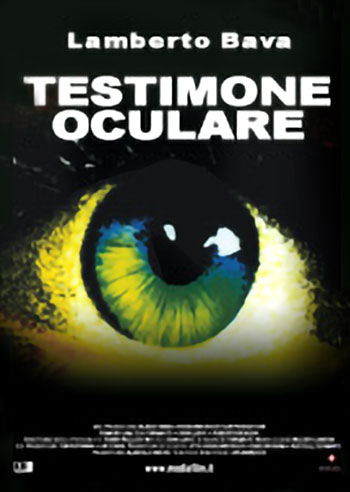
Eyewitness (1989)

Elisa (Barbara Cupisti) and Karl (Giuseppe Pianviti) are in a department store at closing time, waiting until no one is watching so that she can steal a shirt. She’s stuck there alone as Karl runs out to get their car and while the store is closed, she sees a secretary get killed by her manager (Alessio Orano)

Or, well, she doesn’t.

Because Elisa is blind.

Directed by Lambero Bava with a script by Giorgio Stegani and Massimo De Rita, this is a made for TV giallo in which police commissioner Marra (Stefano Davanzati) investigates the suspects, which includes the secretary’s lover (Francesco Casale), as well as Elisa and Karl. At the same time, the manager thinks that Elisa knows who he is because he believes that she can sense him.

There are moments here — when it isn’t trying to be Wait Until Dark — when the film aspires toward the giallo of the past. I love the idea of a rehabilitation center for people with disabilities that tries to get them to expand their abilities. And of course the manager tracks down Elisa in the hopes of killing her in a scene that has echoes of Tenebre and “Blind Alleys” from Tales from the Crypt mixed with some incredible POV shots and great editing.

Unlike most giallo, we know the killer from the beginning. But that’s fine. The tension here comes from how close the killer gets to our heroine. And yes, as always, the cops are the absolute worst. Defund the giallo police, I always say.

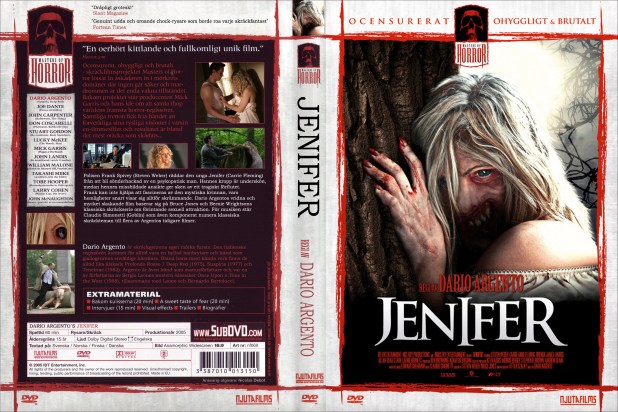
Jenifer (2005)

“Jenifer” is based on a ten-page black-and-white story — written by Bruce Jones and illustrated by Berni Wrightson — that originally appeared in Creepy 63.

Directed — for Showtime in America no less — by Dario Argento and written by star Steven Weber, this is the story of Frank Spivey (Weber) and Jenifer (Carrie Fleming). They first meet when he saves her from a man who is trying to kill her with a meat cleaver. As a cop, Spivey tries to save her as the man says, “You don’t know what she is.” He kills the man before he can kill Jenifer. And when he sees her face, it doesn’t match her luscious body. Instead, it looks quite a bit like the child in Phenomena.

That night, while making love to his wife Ruby (Brenda James), all he can think about is Jenifer. Whatever it is about her makes him grow violent and Ruby shoves him off. It turns out that no one will take her, so he brings Jenifer home, which disgusts his wife and son Pete (Harris Allen). Yet at night, he keeps dreaming of making love to her.

Ruby tells him that he must get rid of the girl, so he drives around, trying to find somewhere to leave her. Instead, she seduces him, eats the family cat and then murders a young neighbor named Amy (Jasmine Chan). Realizing that all hope is lost, Frank leaves town with her, looking for a hidden town somewhere that they can hide out in.

Frank starts to work at a general store and begins to lose his fascination with Jenifer as he’s starting to have feelings for the store’s owner. Jenifer retaliates by finding that woman’s son, seducing him and, well, eating his penis while the teen screams in pain. Frank then tries to kill her and just like Spellbinder, the cycle starts all over again when a man saves her from a murderous Frank.

Of all the Masters of Horror episodes in the first season, this was the first to be censored with oral sex taken out and Jenifer literally castrating the young man on screen. Another story, Takeshi Miike’s “Imprint,” was outright rejected by Showtime.

There’s also a great score by Claudio Simonetti and plenty of gruesome sights from KNB. Sure, Argento’s filming here looks like a TV movie because that’s what it is. He is following a lot of the panels of the comic book, though. He would return for the second season to make “Pelts.”

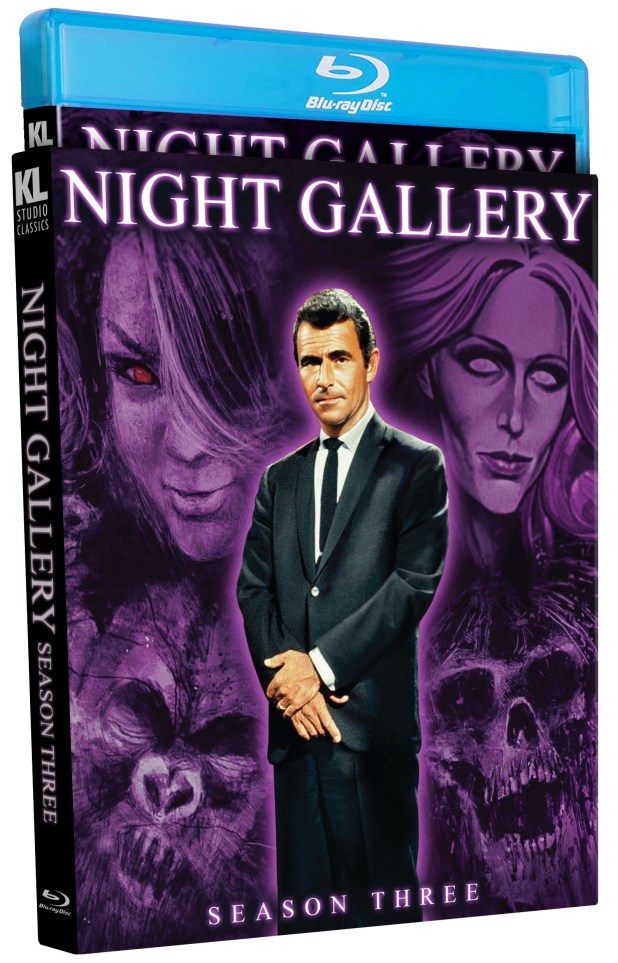
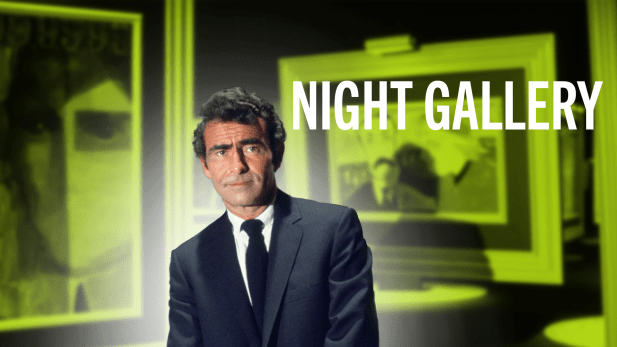
Night Gallery Season 3 Episode 1: The Return of the Sorcerer (1972)

With season 3 of Night Gallery, the show moved to half an hour and often only had one story per episode, which allows some of the better tales to breathe. Or so you’d think, until you realize they had only 24 minutes for each story.

Sadly, this is the last season of the show, but we’ll try not to be too broken up about it. But when you read about how this show was treated going into season 3, that gets a bit difficult.

According to Rod Serling’s Night Gallery: An After-Hours Tour by Scott Skelton and Jim Benson, NBC wanted some changes with the show, as it kept coming in second place to CBS’s Mannix. Beyond the half an hour format, they also made the show more action and suspense instead of outright horror. And they moved it from Wednesday nights to Sundays, a night usually reserved for family viewing.

Serling was not pleased.

“I’m fucking furious. These people are taking what could have been a good series and are so commercializing it,” he told actress Tisha Sterling.

Instead of a battle between Laird and Serling, now he was facing Universal, who wanted to keep NBC happy so the show could be picked up for syndication and make them money. And NBC wanted “an action-packed horrorfest.”

After one of his scripts, “A View of Whatever” was rejected, Serling even wrote a resignation letter in May of 1972 and asked for his name to be taken off the show. However, he had a contract with Universal and he was stuck.

Now that there was one story per week, the creative budgeting that allowed for multiple stories to be shot all in the same larger budget went away. And Jeannot Szwarc said that the scripts weren’t the same quality because once the network stopped caring, everyone else seemed to. “The ratings were good enough, the demographics were sensational, but NBC never understood that show,” he said. “All those guys are heavily into control and there was something a little bit chaotic and anarchistic about Night Gallery that NBC didn’t like.”

CBS responded to the move by sending Mannix to Sundays and ABC had their Sunday Night Movie, which always got big numbers.

The funeral for Night Gallery started before the season did.

Directed by Jeannot Szwarc and written by Halsted Welles from a story by Clark Ashton Smith, “The Return of the Sorcerer” finds Noel Evans (Bill Bixby) answering a want ad for an interpreter. He’s to work for John Carnby (Vincent Price), a sorcerer who is studying the Latin Necronomicon but has found a new Arabic book of spells. The last two men he hired have quit and he threatens Noel’s life to keep him on task.

Meanwhile, Carnby’s assistant Fern (Tisha Sterling, The Coming) has dinner with Noel. joined by her Carnaby’s goat father. There, he learns that the warlock has already killed and dismembered his twin. But more importantly, Fern wants him. She wants him bad.

The translation of the Arabic book frightens Carnaby more than Noel, as it discusses that some magic users can keep their power. Even after death. Even after dismemberment. He cries of his brother, “I hated him because his magic was stronger. But Fern — she caused it! She wanted to be stronger than both of us.”

What follows is a Black Mass — on a Sunday night on NBC no less — where the two brothers are reunited and, one assumes, Fern finally has the power she craves. Now, spider to the fly, she wants to lead Noel to her bed.

What a wild story to start this season off with. The sets were designed by Joseph Alves, who worked with Szwarc on Jaws 2 and ended up directing Jaws 3, as well as building the model New York City for Escape from New York and many other production design miracles. Szwarc showed him the art of William Blake and Aleister Crowley, which led Alves to Dennis Moore and Babetta Lanzilli, the witch owner of the Sorcerer’s Shop in Hollywood.

The Black Mass in the show really does have the names off Astototh, Asmodeus, Baal, Belial and more. It was all too much for Serling, who said “I believed those words we were saying were really powerful and meaningful, and one shouldn’t conjure up that kind of energy. It frightened me. I felt I was giving myself over to some dark. horrible force.”

Again, in 1972, this could air on prime time. At the start of the next decade, the Satanic Panic would be in full bloom.

Despite how dour season 3 will get, this is a great start filled with talent. Let’s see how things progress.

Junesploitation: Girls of the White Orchid (1983)

June 8: Junesploitation’s topic of the day — as suggested by F This Movie— is Cannon! We’re excited to tackle a different genre every day, so check back and see what’s next.

This is totally kind of a cheat. I’ve watched nearly every Cannon movie. All 162 Golan and Globus Cannon movies. The 35 post-Menahem Ovidio G. Assonitis, Yoram Globus and Christopher Pearce-led Cannon. Yeah, I’m missing eight of the movies that exist between the Dewey-Friedland and Golan and Globus Cannon, but I’ve seen all 56 of the original Cannon-released films (Take Her By Surprise through The Swap), the eight initial movies Golan and Globus brought to Cannon (American RaspberryAmerican NitroOperation ThunderboltGas Pump Girls, Incoming FreshmenSavage WeekendGoing Steady and The Magician of Lublin) and the 39 movies Menahem released as 21st Century.

But there’s always more Cannon.

There were more than forty movies released on video in the Pathé era.

Sixty-nine movies not produced by Cannon but that were theatrically distributed by them (like ContaminationHighlander and, yes, When Father Was Away on Business).

Twenty-three Pathé era theatrical releases.

And two hundred and fifty plus movies that Cannon released on their various home video labels like Cannon / MGM/UA Home Video, HBO/Cannon Video, Cannon Video, Cannon / Guild Home Video, Cannon / Rank Video, Cannon Screen Entertainment Limited, Cannon Classics, Cannon / Warner Home Video, Cannon/VMP, Cannon Screen Entertainment, Scotia/Cannon, Cannon International, Cannon/ ECV, Cannon / Showtime, Cannon / United Film, Cannon / Isabod, Cannon / Mayco and so many more.

That’s where Girls of the White Orchid AKA Death Ride to Osaka comes in.

This was based on a report by ABC’s 20/20 about women who go to Japan to work as entertainers but end up becoming sex workers for the Yakuza. NBC wanted producer Leonard Hill to use Melinda Culea from The A-Team but he wanted Jennifer Jason Leigh. He did use two actors who were currently on NBC shows, Ann Jillian (who was on Jennifer Slept Here at the time this was made) and Thomas Byrd (who was on the show Boone).

Director Jonathan Kaplan started his directing career making New World movies like Night Call Nurses and The Student Nurses and ended up making more socially acceptable stuff like The Accused. This would be in the middle of all that and unites the exploitation and the art and makes a TV movie out of it.

Jennifer Jason Lee is Carol Heath, a waitress who has come to Japan to be a new wave singer and, well, you can imagine how that worked out. Ann Jillian plays Marilyn, who made the same journey years ago and stuck around, and Carolyn Seymour plays the woman who runs the hostess bar, Madame Mori. Yes, this is pretty much a Mr. Mom reunion with those two actresses. Plus, Mako and Soon-Tek Oh show up. They take Carol’s passport, the U.S. embassy refuses to help and perhaps only her American ex-boyfriend Don (Thomas Byrd) can save her.

Brad Fieder did a pretty fun synth score for this and wow, Steve Miller’s “Abracadabra”” pops up and you forget this was a TV movie. You know, unless you watched the international cut of this which has a few moments of nudity and sex. The Tubi edition has them, as does the Fun City Editions Primetime Panic box set.

You can watch this on Tubi.

Night Gallery season 2 episode 22: The Caterpillar/Little Girl Lost

We’ve arrived at the end of the second season of Night Gallery. Don’t be sad — there are a few more episodes to go for season 3.

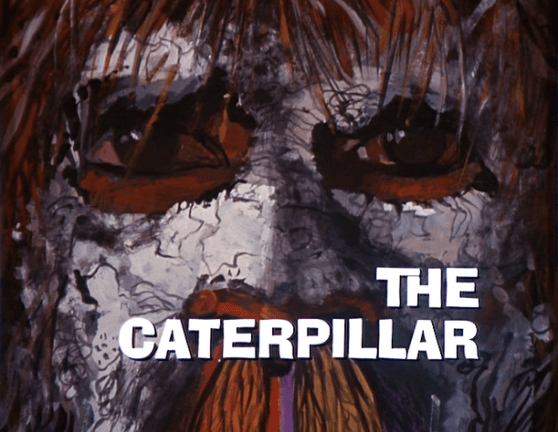
“The Caterpillar” is a classic story for this show, one that gets repeated often and even has entered into being an urban legend. Directed by Jeannot Szwarc and written by Rod Serling from the story by Oscar Cook — who actually served in its setting, Borneo — this is the story of British civil servant — and new man in Borneo — Stephen Macy (Laurence Harvey). He’s moved into the home of Mr. Warwick (Tom Helmore) and his much younger wife Rhona (Joanna Pettet, The Evil) and as you can imagine, quickly makes a move on Mrs. Warwick. He hires Tommy Robinson (Don Knight) to place an earwig — a small bug that burrows into the brain and death is always the end of its work — on the pillow of Warwick.

Except that Macy’s pillow is used. Somehow, the evil man survives and even confesses that he did what he did for love. Sadly, the worse is yet to come, as the earwig that went through his brain — giving “agonizing, driving, itching pain” — was female.

And she laid eggs.

Just a perfect Night Gallery story, directed and told by the two of the best talents on the show. No gore, just a spot of blood and plenty of acting gives this the kind of darkness that some turn away from.

“Little Girl Lost” was directed by Timothy Galfas (Black Fist) and written by Stanford Whitmore (The Dark) from a E.C. Tubb story. Professor Putman (William Windom) was once a brilliant military physicist but the death of his daughter Ginny after a hit and run accident has destroyed him. A psychologist, Dr. Charles Cottrell (Ivor Francis), wants an injured test pilot, Tom Burke (Ed Nelson), to bond with the man, help him think his daughter is still alive and keep him working on the weapon the government needs.

It works at least until they go out in public and someone sits where Putman’s daughter is supposedly sitting. He then realizes what they want. “Bigger and better bombs at a fraction of the cost.”

So he gives it to them. He really does.

This is one of the best Night Gallery episodes as it dispenses with the silliness and gives us dread and darkness. There are no black out gags here, just the end of the world for one man and, well, for everyone, all told in the moral play style that Serling pioneered for television.

MILL CREEK DVD RELEASE: Go On – The Complete Series (2012, 2013)

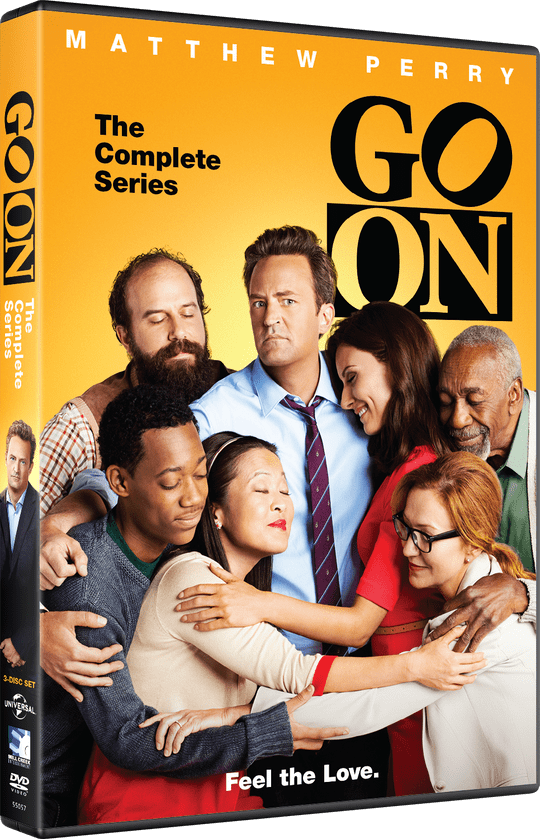
Radio talk show host Ryan King (Matthew Perry) has barely taken any time to get over the death of his wife. He just wants to get back to work, but his boss Steven (John Cho) won’t allow him back on the air until he goes to grief counseling.

Ryan joins a support group but he could really care less. However, the way he approaches the sessions actually helps the others in his group. Led by the barely trained Lauren Bennett (Laura Benanti), the members are Anne (Julie White), a lesbian proscutor unable to get past the loss of her partner; Yolanda Mitsawa (Suzie Nakamura), whose fiancee ran off; Owen Lewis (Tyler James Williams), whose brother is in a coma; Mr. K (Brett Gelman), who has a mysterious job with NASA and who also refuses to reveal why he’s there; Sonia (Sarah Baker), who misses her cat; Fausta (Tonita Castro), whose father and brother just died; Danny (Seth Morris), whose wife had a child with another man while he served in the army; George (Bill Cobbs), who is dealing with the loss of his sight and a former member of the group who shows up from time to time, Simone (Piper Perabo), who Lauren dislikes, perhaps because she starts dating Ryan.

Scott Silveri, who was a writer and executive producer on Friends, also created Joey, which was another sitcom with an alumni of the show. While that Matt leBlanc sitcom lasted for two seasons, this show only lasted one. Maybe all the sadness on the show was a bit much for viewers. Or perhaps they didn’t like how  it felt so much like Community.

I love sitcoms and had never seen this show before, so I enjoyed sitting down with it and getting to know its characters. Ever since the first Newhart series and Dear John, group therapy has been a perfect t story engine for comedy shows. It works here, as you really enjoy the interplay between the characters. Gelman is probably the most entertaining of all of them and his governement ties are funny when you consider that a decade later, he’d be known as the conspiracy obsessed Murray Bauman on Stranger Things.

This was streaming for some time on the Roku channel, but seeing as how you can never tell when things are going to be removed, it’s a really cool thing to own this DVD set of the only season of the show. I wish we could have seen where a second season would have gone.

You can buy the Mill Creek DVD set of Go On from Deep Discount.

LIBERATION HALL DVD RELEASE: Noon Wine (1966)

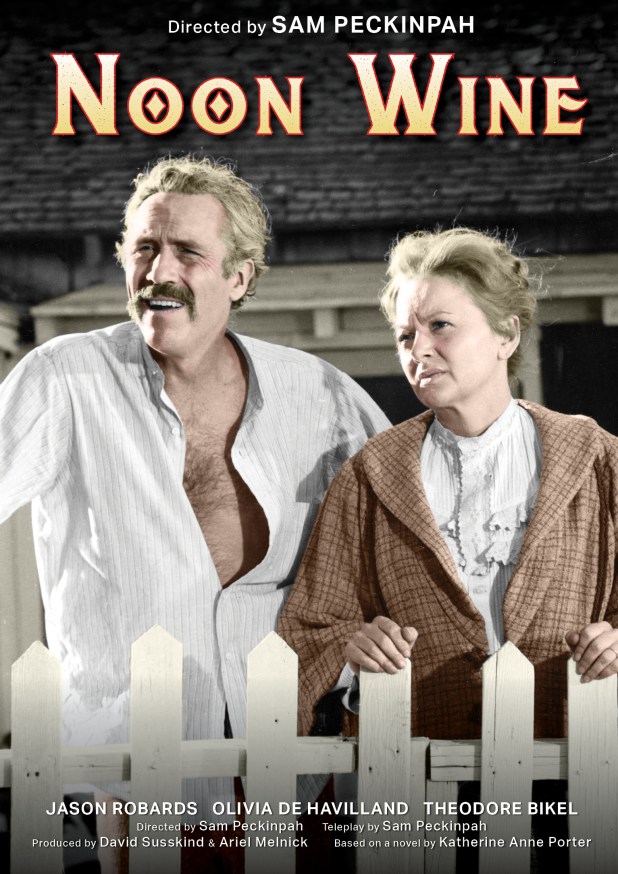
Originally airing on November 23, 1966 on ABC Stage 67 and now made available on DVD thanks to Liberation Hall and the UCLA Library Film & Television Archive, Noon Wine was directed and written by Sam Peckinpah.

At the time, the legendary cantankerous director was a Hollywood outcast — I wonder when the time happened when he made anyone like him or was popular with studios — following the troubled Major Dundee and being fired from The Cincinnati Kid.

Producer Daniel Melnick was a big fan of Peckinpah’s television series The Westerner and his movie Ride the High Country. Producer Martin Ransohoff had fired him from that movie for “vulgarizing the picture” and shooting it in black and white. He replaced him with Norman Jewison and Strother Martin was fired at the same time as Peckinpah.

Melnick thought that it was pretty unfair, so he went against a lot of big names and gave Peckinpah complete freedom. The writer of the book it was based on — part of three stories, including “Old Mortality” and “Pale Horse, Pale Rider,” that were in her 1939 Pale Rider, Pale Rider book — Katherine Anne Porter loved what he did with the script.

This was a big hit and saved Peckinpah, leading to his comeback. He was nominated by the Writers Guild for Best Television Adaptation and the Directors Guild of America for Best Television Direction. He did one more TV job — “The Lady Is My Wife” for Bob Hope’s Chrysler Theater — and then wrote Villa Rides and taught a class at UCLA. In 1969, he got to make The Wild Bunch.

Star Jason Robards would keep a personal copy of the film in his private collection, but for half a century, you could only see it at the Library of Congress and the Museum of Broadcasting, I’m so excited that I own this DVD now.

Royal Earle Thompson (Robards) is a dairty farmer in southern Texas, sometime before the 20th century. He talks a great game, but he’s too lazy for farming life. He’s married to Ellie (Olivia de Havilland), who is  sick more often than she’s well, and has two young sons named Arthur (Steve Sanders) and Herbert (Peter Robbins). Basically, it could all fall to bits any second until a quiet stranger named Olaf Helton (Per Oscarsson) comes for a job and a place to live.

Nine years later and the farm is thriving, thanks completely to Helton. Everything is perfect now. Perfect until a bounty hunter named Homer T. Hatch (Theodore Bikel) shows up and claims that Olaf is a mental patient. Thompson has a vision of his farming hand being killed, so he grabs an axe and kills Hatch. Helton runs away as Sheriff Barbee (Ben Johnson) and his deputy (L.Q. Jones) arrive.

Thompson is found not guilty but he may as well have been convicted. Even his own wife fears him and his sons want nothing to do with him. He writes a letter at the close, saying that it was all his fault, not Helton, saying he only wanted to defend his friend.

Peckinpah didn’t think that De Havilland was convincing in the closing moments of the film. He had a plan, however. He asked the cameraman to keep shooting the next scene. After he said cut, he told her that she was a nasty actress. Her reaction is what’s in the film.

In the book, Thompson kills himself with aa shotgun. How amazing is it that we don’t see that in Peckinpah’s film after the excesses that he’d unleash on audiences in a few years?

I loved the Liberation Hall release of this, as it has two versions, one with the original commercials that aired back in 1966. It gave me a time machine feeling and man, this movie is something else, a nuanced take on a story that draws you in and holds you for the entire length of this movie.

You can get this from MVD.

MILL CREEK BLU RAY BOX SET: Dawson’s Creek (1996-2003)

I know no bigger fan of Dawson’s Creek than my friend Jim Sloss, who was kind enough to teach me that Pacey’s boat is named True Romance and to write this:

Over the years Sam has asked me many times if I’d like to write something for B&S and I’d always hem & haw and then never get around to it. Then came the box set of all box sets, the show that is like a time capsule to the 1990s and one of my all-time favorites, Dawson’s Creek.

In 1998 when this show came out I can remember vividly watching it on my VCR the following morning (because I had to work the night before) and from the first moment of the pilot to the last I was hooked, the dialogue was nothing that I’d heard before in a teen soap. They took a chance at treating the audience like adults rather than kids and it paid off. So, from that night on I followed the “kids” from Capeside each week for six seasons.

Created by Kevin Williamson, the co-creator of the horror franchise Scream, this series is a fictionalized account of a young film buff from a small town just trying to find his way. Pretty much what Kevin Williamson did was pitch what he knew and so he told a fictionalized version of his growing up in North Carolina. The show was launched on the WB network in January 1998 and was an instant hit with the show being parodied on MTV and Saturday Night Live. Their use of current pop culture and hit music for the time was what kept it relevant each week and talked about on school campuses.

During the late 90s, Dawson’s Creek was considered cutting edge for teen angst, touching on issues that were not talked about on TV and even less so in public. The first season dealt with drug abuse, addiction and infidelity along with every teenage boys dream… the inappropriate relationship with a hot teacher. In 1998 that was a huge story arc for a main character with the teacher just leaving to avoid scandal. These types of stories were becoming more and more common during this time and now leads to the teacher spending long stretches in prison rather than just moving on to another school.

Yet along the way these colorful kids learned from their mistakes and grew into functioning adults just trying to make their way. With the main character Dawson Leery, played by James Van Der Beek, not getting his High School crush Joey Potter, played by Katie Holmes, but instead getting to fulfill his dream of working in movies and TV where he turned his life into a teen drama TV show just like Kevin Williamson.

I would be remiss if I didn’t leave you with the greatest quote and moment of this fantastic tv show. In the finale we find our core characters several years in their future living their lives with little interaction when everyone is reunited for a wedding they immediately learn that one of the main characters, Jen Lindley, is dying of cancer. While Dawson is spending time with his close friend at a hospice facility she has this Hollywood filmmaker record a video for her infant daughter to watch when she’s older. In that video one line she says that gets me every time is “Be sure to make mistakes. Make a lot of them, because there’s no better way to learn and to grow.” While she’s saying that you can see the anguish on Michelle Williams’ face, showing the audience how fragile she is at the end of her short life and how she just wants the best for her child.

This show never shied away from tough storylines and in the end wrapped up everyone’s arc phenomenally.

I would give this series a 10 out 10!!

P.S. The popular Jenna Ortega can be seen watching Dawson’s Creek in Scream 5 out in 2022 and currently on Paramount+.

Thanks again Jim.

The Mill Creek release of the entire series has all 127 episodes across six seasons, along with seven hours of bonus extras, which include Entertainment Weekly‘s 20th Anniversary Reunion, audio commentaries on select episodes, a retrospective featurette and alternate scenes and an alternate ending to the pilot episode.

I watched several of the episodes on this set as, surprise, I never watched this show, despite Jim telling me near consistently — we lived in a house with six people while this show was popular, so I have no idea how I didn’t watch it with him — that I need to watch “The Dawnson,” as he put it.

Surprisingly — as I have often remarked about Williamson’s other work — I really liked what I watched. It felt honest and truthful, nearly lived in. I’ve been watching a few episodes a week now and really enjoying the opportunity to be part of the lives of these characters.

These Mill Creek TV sets are great because they really give you the opportunity to do the same, exploring or binging or however you choose to watch. And unlike streaming, they’re always there for you, not being edited or taken down when you’re in the middle of watching a season.

You can buy the Dawson’s Creek set from Mill Creek at Deep Discount.