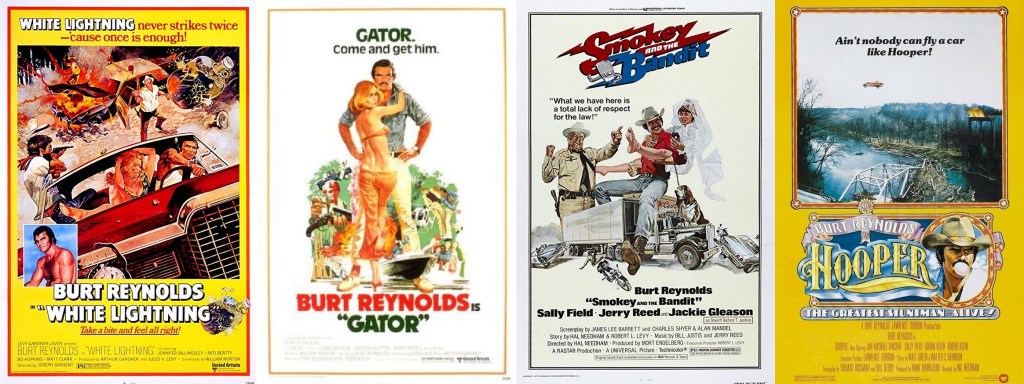
Lost somewhere Burt Reynolds’s White Lighting (1973) and Peter Fonda’s Dirty Mary, Crazy Larry (1974) is this hicksploitation passion-cum-vanity project that served, not only as Jack Conrad’s lone acting effort, but his lone feature film writing and directing effort. Perhaps if his negotiations with a then up-and-coming and hot Jeff Bridges and Robert Blake — both who made inroads with their early, southern-fried films The Last American Hero and Corky, respectively (both 1973) — hadn’t broken down to the point that Jack had no choice but starring himself, maybe we’d remember this ersatz-Bonnie and Clyde (see Fabian in A Bullet for Pretty Boy) beyond its inclusion on Mill Creek’s Drive-In Movie Classics 50-film pack.
Hey, Jack, being on a Mill Creek boxer ain’t a bad place to be.
Jack Conrad is a name you know as rolling in the credits of The Howling as a producer: he was originally slated to serve as the project’s writer and director. After his dust-ups with the studio cleared: John Sayles — a two-time, future-nominated Academy Award Winner — was given the job of adapting Gary Brander’s novel of the same name. Joe Dante sat in the director’s chair (and, if you are keeping track: Dante and Sayles previously worked together on Piranha).
So goes the life of a then twenty-something film school graduate fresh of the prestigious USC Film School, one who got his first job as a second unit director on an 1870s-era drama called West Texas (1970), in addition to editing a psychological horror film called Moonchild (1972) that starred Victor Buono and John Carradine.
While Jack isn’t exactly Bridges-Blake (or even Fonda) magnetic, he’s certainly serviceable in the role of the fresh-out-of-prison, ne’er-do-well-to-inept bankrobber-cum-garage mechanic Bobby Lee Dixon. What saves the picture is the presence of well-worn, southern fried character actor Dub Taylor (Bonnie and Clyde and Bridges’s Thunderbolt and Lightfoot) in his lone, leading-man role as Bobbie Lee’s boss, J.J “Jumpy” Belk. Adding to the need-to-stream is the presence of equally “southern” character actor David Huddleson with one of his rare, marquee roles.
Rednecks, Vampires, and Richard Burton? We ain’t hatin’!
On a low-budget and in Tallahassee, Florida (although we are in “Georgia”) — and certainly done better, by others — Jack Conrad shoots it all on location as he opens with great shots of a local stock car mudtrack where he serves on Jumpy’s pit crew — trying to go straight. But Bobby Lee’s tired of the poverty — and he’s in love with Jumpy’s daughter: his married daughter. So, to impress Ruthie by making a better life for himself in Mexico, he returns to robbing banks — and she goes the “bad boy” route to become his “Bonnie” for the inevitable, bloody shootout.
Considering Jack Conrad was two years out of school and on his first film (around the same time, George Lucas put together THX 1138; John Carpenter assembled Dark Star), Country Blue isn’t great, but it’s not a disaster, either. Sure, there’s sound issues (not the print itself from which Mill Creek copied, but in the film itself) and a few awkward shots, some which looks like too-long, lingering filler to pump the running time. For the most part, Conrad captures everything with a decent, competent against-the-budget skill set (as you can see below: the film’s car chase set piece is well done).
Country Blue is a decent B-Movie from the mosquito-strewn, bygone drive-in days of yore. Watch it on You Tube HERE and HERE or own it as part of Mill Creek’s Drive-In Movie Classics 50-film pack that we’re reviewing all this month. And here’s all the car crashes cut as one easy-to-use clip.
Be sure to check out our rundown of hicksploitation and redneck cinema delights from the ’70s and ’80s with our “Top 70 Good Ol’ Boys Film List.”
UPDATE: Our thanks to The CultWorthy website for the comments below, on Country Blue, and for Day of the Panther. It’s great to talk film with you in a positive way. Guys like you keep me QWERTY’ing against the odds!
About the Author: You can learn more about the writings of R.D Francis on Facebook.He also writes for B&S About Movies.
March 2022 Update: Uncork’d Entertainment has announced Reed’s Point will be released to DVD and Digital platforms on April 12, 2022. You can follow the project’s ongoing developments on its Facebook and Instagram pages. In fact, you can now watch Reed’s Point as a free-with-ads stream on Tubi.
Advanced Release News:
You’ve enjoyed the work of director Dale Fabrigar and producer Suzanne DeLaurentiis (got her start as an actress in the ’80s slasher Evil Judgment; produced Academy Award-winning writer Bobby Morceso’s 2006 mob flick, 10th and Wolf) with the Lance Henriksen-starring D-Railed (2018). The duo returns — with 310-credits strong acting warhorse Joe Estevez (Hell Asylum) — in a tale about New Jersey’s mythical Pine Barrens, a legend that’s fed the narratives of horror films dating back to one of the first found footage mockumentaries, The Last Broadcast (1998).
In a tale co-penned by DeLaurentiis, a vehicle crash in the Pine Barrens leads to a missing teen and stirs the once forgotten conspiracy theories regarding the infamous Jersey Devil legend. On the anniversary of the crash, Sarah Franklin (Sasha Anne), convinced her cousin Kelsey is still alive somewhere in the Jersey woods, returns to the crash site with Alex, Kelsey’s boyfriend (Evan Adams). They soon come to discover what’s lurking in the barrens. . . .
In addition to Joe Estevez, the film co-stars — in her first feature film role — lymphoma survivor and social media influencer, Sasha Anne (Instagram, TikTok, You Tube). The film also stars Anthony Jensen, whose work we recently reviewed in Jared Cohn’s fun shark fest, Swim (2021). Since we’re huge fans of director David DeCoteau — to the point we watch his Lifetime movie offerings (A Christmas Cruise and A Husbandfor Christmas) — we recognized Evan Adams, here, who made his acting debut in DeCoteau’s most recent holiday offering, The Wrong Valentine.
Currently well-received on the festival circuit, Reed’s Point will become available to streaming platforms in early 2022. Our thanks to Sasha Anne for the opportunity to allow B&S About Movies to be the first to review the film prior to its distribution. And don’t forget to check out Anthony Jensen in Swim and Evan Adams in The Wrong Valentine!
We wish actress Sasha Anne and producer Suzanne DeLaurentiis all the best of success in their joint efforts. Do stream Reed’s Point — and look for the Wild Eye Entertainment DVDs at your favorite retailers where hard media is sold.
Our Post-Release Review
So, to expand upon what we learned about the film in the pre-release press kit: After we watch an effective opening titles sequence — complete with news report voiceovers regarding a series of missing person cases in the Pines Barrens — we meet three high school friends on their last day of school and first day of summer vacation. Yes, it’s time to cut loose before heading off to college. So Uncle Greg decides to take his daughter, Kelsey (Madison Ekstrand), niece Sarah (Sasha Anne), and Kelsey’s boyfriend Alex (Evan Adams), on vacation.
Yep, cue the errant deer in the headlights. In the middle of the Barrens. And let lose The Jersey Devil. And reveal the within-a-dream flashback: one where Sarah is tortured by her witnessing the death of her uncle (in a decent, in-camera effect: he’s clubbed with his own torn-off arm) and Sarah being dragged off into the woods by a Bigfootesque creature. Sarah knows what she saw. She’s convinced Kelsey is still alive. The cops stopped searching or caring. She knows people thinks she’s crazy. . . .
A year later: Sarah and Alex are journalism students working on a story about the legend (there’s a long-standing feud between two backwoods families in the area, natch) for the school newspaper. Their editor, reluctantly, lets the duo run with the story, under one condition: do not go into the woods for research.
Yep. They go into the woods. And there is no Jersey Devil. Nope. There is a plot twist. There is a Jersey Devil.
Look, we won’t sugar coat: IMDb’ers and digital film critics haven’t been kind to this film. As usual: streamers are placing A-List filmmaking comparisons against a low-budget horror film released on the Uncork’d Entertainment direct-to-stream-DVD shingle. So why is everyone expecting an A24 or Blumhouse “shock scares” summer tent pole — or a retro-Paramount Friday the 13th knock off — for that matter. The streaming machine (Hey, Tubi) needs product — and Reed’s Point is a solid product where your streaming coin isn’t wasted.
As I watched, I found all the disciplines, well, on-point. The cinematography is crisp and well-framed, the acting — which everyone seems to take issue with — is what you’d expect of the Lifetime “damsel in distress” variety. Reviews I’ve read take issue with Sarah’s personal appearance: she’s not attractive, therefore, she can’t act? Balderdash! Shelley Duvall doesn’t trip my trigger (that’s my hang up), but there’s no doubt Ms. Duvall is stellar in Stephen King’s The Shining. And I was already a fan of Evan Adams’s effective work in The Wrong Valentine. If anyone is a weak link in the thespin’ department, here, it’s Joe Estevez with his crazed, warning-the-meddling-kids-Scooby Doo shtick. But he is supposed to be the crazy and irrational local, so. . . .
When Reed’s Point was officially released to streaming platforms five months later after our advance review, we gave this debut project from actress-producer Sarah Anne another look/new take on April 15, 2022 — in addition to my own take, now added to this review. As is the case with films — and you know how funny they can be — I enjoyed this low-budget take, more so than my contemporary, as an advanced screener.
The original festival trailer, courtesy of Sasha Anne.
The new theatrical trailer issued by Uncork’d Entertainment and OC Trailers.
To learn more, you can visit Uncork’d Entertainment on their website or Facebook page.
You can also learn more about Suzanne’s production career with our June 2021 interview regarding her Amazon Prime horror series, Saturday Night Scares.
About the Author: You can read the music and film reviews of R.D Francis on Medium and learn more about his work on Facebook. He also writes for B&S Movies.
If you’ve spent any amount of time amid the digitized realms of B&S About Movies, you know us good sons of the “City of Bridges” Spider Man-swing off the steel girders over The Three Rivers for the VHS ’80s resumes of Fred Olen Ray and David DeCoteau — so much so that we make it a point to follow the newest phases of their long careers in providing “damsel in distress” flicks and holiday-centric romance films for Hallmark and Lifetime. If I must be “chick flicked” into watching a Christmas movie, the cottage industry of made-for-streaming and small network Christmas movies flowing down the Ray-DeCoteau confluence is my cup o’ muddy Allegheny River water.
Okay, so how did we end up, here . . . beyond having David DeCoteau behind the lens? Why are we reviewing a Valentine’s Day-centric flick released this past February on Lifetime — just after Halloween on the cusp of Thanksgiving? Well, Sasha Anne, the star of the upcoming Reed’s Point, reached out to B&S About Movies about her new film — and we noticed that Evan Adams, her co-star, stars here — with Vivica A. Fox. Yeah, it’s those “Six Degrees of David DeCoteau” that we live for in our cramped cubicle farm along the Allegheny shores.
Yeah, as you look over David DeCoteau’s “Wrong” franchise, you’ll notice a second common denominator in the franchise: Vivica A. Fox — yes, Vernita Green from Kill Bill: Volume 1** and Jasmine Dubrow from Independence Day — is the franchise producer, as well as starring in 22 of the films. About her work in the made-for-TV series franchise, she told Jennifer Moos in The Wrap:
“I get to cast myself in characters that normally Hollywood wouldn’t even give me an opportunity to play. I’ve played a detective, a principal, a mom. The only thing David DeCoteau, the director, won’t let me play is the villain, because I’ve always got to deliver that catchy phrase: ‘Well it looks like you’ve got the wrong cheerleader’ or ‘You’ve got the wrong Valentine’ or ‘You’ve got the wrong Mr. Right.’ And people are like, ‘I can’t wait for her to deliver the line.’ . . . I’m doing good producing and starring . . . we film them in 10 days, so that’s why we are able to do so many.”
Vivica, if you’re reading this: no offense intend. You’re wonderful, and we know you’re “bringing the guys to Lifetime,” and this is stone cold truth. However, the B&S staff are movie dorks and we’re coming for the David DeCoteau fix. And that’s (our) squishy-body soft-as-veal truth.
Yes. We have this box set. Why? David made ’emall!
Okay, let’s unpack this gushy “chick flick,” shall we?
Also starring Mariah Robinson and Michael Bergin (J.D Davis from TV’s Baywatch and a few of DD’s Lifetime X-Mas and “Wrong” flicks; he’s a college admissions professor, here), this dark holiday offering tells the story of an about-to-graduate high school senior, Emily (Robinson) who, after grieving over the death of her father, decides to love again . . . and the fact that her birthday falls on Valentine’s Day isn’t helping. A bright student under the wing of her History Club teacher, Ms. Connelly (Fox), she find the courage to date David (Evan Adams), the “new boy” in school and member of the scholastic club. Oh, you know it: David is the heartthrob from hell. His screws aren’t just loose: they’re missing. And it’s not just that he’s nuts: there is an ends to his sociopathic means. As with any socio-Lothario: Emily can’t date anyone else, but David can date whomever he wants . . . including Emily’s best friend, Michelle (Jacqi Vene, effective in what is sure to be her first of many Lifetime romps).
As is the Lifetime model: The houses these kids live in — complete with single moms (we delve into that narrative milieu with our recent “Slasher Month” review of Seduced by a Killer) — are amazing, like British royalty-rock star-A List actor amazing. The school campus (not rivaling the use of Stadium High School in Tacoma, Washington, in 10 Things I Hate About You, but still. . .) is amazing. (You should have seen the dump I spent the four “best years” of my “real” lifetime. The college campus wasn’t much glamour-better.)
Yeah, sure, the people are perpetually perfect and physical stunning (even the guys), the locations and homes are over-the-top glamorous. So, yes, one could dump on the not-so-reality production of The Wrong Valentine. As Vivica told The Wrap: these films are shot in ten days. Sure, DeCoteau is stock-raiding his other Lifetime efforts for various (familiar?) establishing shots. Sure, maybe scripts, with slight tweaks, are equally-familiar recycled. Well, you know what: so were Roger Corman’s, as were DeCoteau’s old Full Moon boss, Charles Band’s films. It’s the same ’60s drive-in to ’80s VHS/cable business model: shoot ’em quick and shoot ’em cheap. It’s said that Roger Corman “never lost a dime on a movie” (well, outside of the Warren Oates-starring Cockfighter; that’s another review for another time). The only change is the distribution model of lower-tier cable channels (Lifetime is the “new” USA Network*˟ in these ‘ere parts, padre) and streaming platforms.
To this “wrong” installment’s credit: there’s a decent twist-ending you don’t see coming. Yeah, you may have seen it before, in other films of yore, sure: but you don’t see it coming, here, not this time. Yeah, you’ll also hear Vivica’s iconic one liner: “It looks like you had the wrong ________.” that makes us jump with “You go girl” glee.
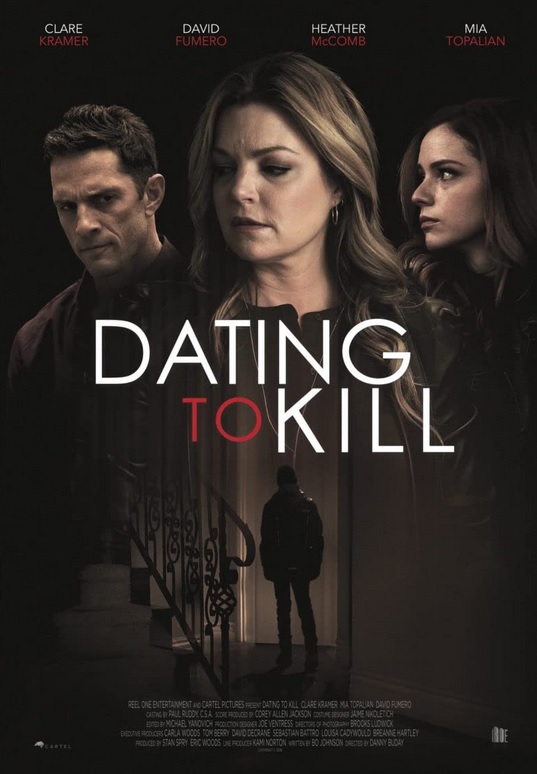
Another recent Lifetime “slasher” we’ve reviewed: Dating to Kill, aka Seduced by a Killer.
Sure, I’m partial to David DeCoteau’s oeuvre and that may be disrupting my critical radar, but I enjoyed this Lifetime entry. It’s well-shot and DeCoteau pulls the best from his actors. The acting debut of Evan Adams (who could pass for Young Sheldon actor Montana Jordan, aka Georgie, who passes for a young Patrick Swayze) is thespian solid. He goes from sweet and warm to creepy-cold on a dime. And when he goes dark, he keeps it in his pocket: nothing is frantic over-the-top, as is the case with most obsessive-hubby films — especially those major studio features where those A-List actors are going for the Oscar gold. I see a bright future for Adams, as he certainly kept me engaged . . . like those days of seeing Matt Dillon for the first time in Over the Edge (1979). An actor is, of course, only as good as their script. Screenwriter Robert Dean Klein (Dark Ride), whose work we recently reviewed as part of our “Salem Horror Fest October 2021” week of reviews with the film 6:45 — and in his eighth-overall “Wrong” entry — provides Adams a well-arced character of depth . . . that eventually comes to elicit sympathy.
A great job by all concerned.
* David’s “Wrong” Flicks Resume The Wrong Roommate – 2016 The Wrong Child – 2016 The Wrong Student – 2016 The Wrong Crush – 2017 The Wrong Man – 2017 The Wrong Cruise – 2018 The Wrong Friend – 2018 The Wrong Teacher – 2018 The Wrong Stepmother – 2019 The Wrong Boy Next Door – 2019 The Wrong Mommy – 2019 The Wrong Tutor – 2019 The Wrong Cheerleader – 2019 The Wrong House Sitter – 2020 The Wrong Wedding Planner – 2020 The Wrong Stepfather – 2020 The Wrong Cheerleader Coach – 2020 The Wrong Real Estate Agent – 2021 The Wrong Fiance – 2021 The Wrong Mr. Right – 2021 The Wrong Prince Charming – 2021 The Wrong Valentine – 2021 The Wrong Cheer Captain – 2022 The Wrong High School Sweetheart – 2022 The Wrong Blind Date – 2022
All of David DeCoteau’s non “Wrong” and Christmas flicks — with things such as Bloody Blacksmith and Swamp Freak — can be found on his VOD RapidHeart.TV platform on Vimeo. You can learn more about his recent, direct-to-streaming offerings of Knock ’em Dead and Immortal Kiss at Rapid Heart Pictures. Fellow WordPress blogger Will Sloan sat down for an interview with David in July 2021.
About the Author: You can read the music and film reviews of R.D Francis on Medium and learn more about his work on Facebook. He also writes for B&S Movies.
Oh, how I love Italian sci-fi, horror and adventure flicks — in this case, a cross-pollination of pirate and women-in-prison flicks — as women slop around the 19th century island sands and jungles in formal wear; a land where make-up never runs or smudges and nary a bead of sweat drips from their perfectly-shaped brows. Oh, and they’re all (implied) lesbians . . . and nary a breast or triangle-of-death shot, appears. But those French-period military uniforms and gowns are impressive. . . . Did Paul Naschy make this movie? If you’ve seen his works Panic Beats and Horror Rises from the Tomb, you know what we mean.
The star of this slave-woman-panning-for-gold tallywacking is U.S. TV western star Guy Madison who starred as “U.S. Marshall James Butler” for seven seasons on The Adventures of Wild Bill Hickok. But B-Movie stalwarts will remember Guy best for his pre-television, early ’50s westerns Massacre River, Drums in the Deep South, and The Charge at Feather River. Then there’s the sci-fi and horror classics (well, they are to me) On the Threshold of Space and The Beast of Hollow Mountain, made during his television series’ hiatuses.
Then, as we’ve discussed many times at B&S About Movies: the actors of the 1950s that we loved — such as Gordon Mitchell and Richard Harrison (Three Men on Fire) — saw their careers cool into the acceptance of European audiences. For Guy Madison, as with Mitchell and Harrison: the sword-and-sandal epics, beckoned. So, after knocking out Slave of Rome and Sword of the Conqueror — and before knocking out films for the Italian film industry in every Neapolitan-ripped off genre imaginable — such as Executioner of Venice from my UHF-TV days — as only the Italians can finance, Guy found himself on a boat (okay, well, he shows up, later, as the camp’s new administrator) transporting scantily-clad women to France’s famed Devil’s Island penal colony off the coast of South America.
If you know your Nazisploitation* films (and we know you do), Third Reich-styled chaos, ensues, — only not as violently or sleazy — with the females forced as mining slave labor under the boot of corrupt commandants and guards. Then in steps Guy’s “new sheriff in town” who’s going to clean up the camp’s corruption. Yeah, he falls in love with a prisoner as he catches a bit of gold fever.
Yeah, Domenico Paolella, who directs — and cranked out 40-plus films between 1940 to 1979 (I’ll always remember his 1977, Death Wish-cum-Dirty Harry romp, Stunt Squad via the VHS ’80s) gets the history all wrong, and the women slopping through dirtless, rubbery swamps — only to remain perpetually stunning throughout — is pretty dumb. Well, at least we have Michèle Mercier who, while getting her start with drek like this, thanks to her leading role in the later, three-film Angélique series, rose to instant stardom and rivaled Bridgette Bardot for our testosterone-beating hearts.
Alas, a remake with Shannon Tweed and Christopher Lee was never meant to be.
Mill Creek’s copy on the Drive-In Classics set is, needless to say, pretty rough. At least it scratches another (again, G-rated mild) “women in prison” flick off your completists list. During the UHF-TV ’70s, when you’re stuck with braces and acne and couldn’t part with your Molly Hatchet concert shirt, the divine Ms. Mercier — under threat of whippings, molestation, and lechery — was a date for a Friday Night fantasy.
We found two clean rips on You Tube, here and here.
Oh, Brian Trenchard-Smith, how do we at B&S About Movies love thee? Let us count the reviews. . . .
The rocking, magical majesty of Stunt Rock (your amazing, feature film debut as both writer and director that leaves us jumpin’ off the walls in glee), your apoc-game show shenanigans of Turkey Shoot, your giving the future Ms. Tom Cruise her big break in the U.S. cable favorite BMX Bandits, the apoc-fuckery of Dead End Drive-In, and not one, but two Leprechaun flicks: both 3 and 4! Then you went Trinity Broadcasting-biblical on our asses with Megiddo: The Omega Code 2. Even when you team up to produce with Nico Mastorakis for Bloodline, our VHS-pumpin’ heart belongs to you. Night of the Demons 2? Others scoffed, but we were there, for you, oh, Brian.
So, when Sylvester Stallone and Arnold Schwarzenegger issued the disgruntled war veteran challenge, you answered the call. And we answered your call, in kind. Sigh . . . for we only wish the programmers at Mill Creek planned ahead and also included your second “Rambo”: The Siege of Firebase Gloria (1988). Look at that cast, headed by the B-Movie, direct-to-video delights of Wings Hauser and R. Lee Ermey! So what if you shot it near the same locations where Return from the River Kwai (1989) was being shot, so you could pinch stock battle scenes from that production. You make the Philippines work-like-Vietnam like no one can, Brian.
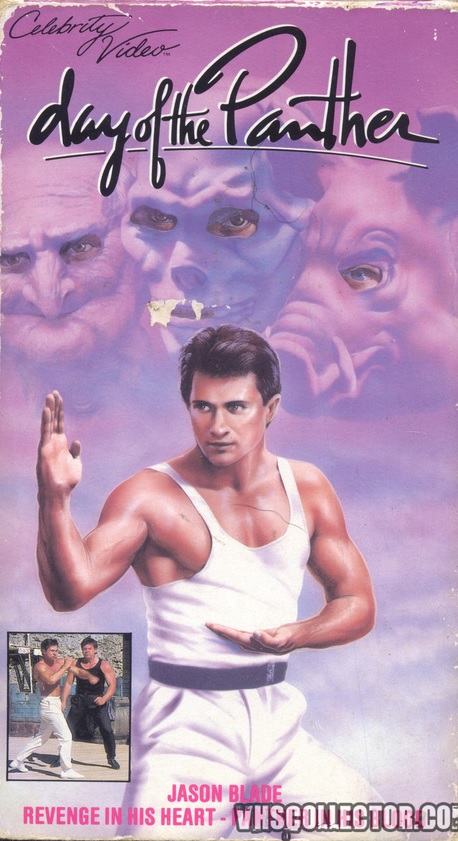
“Happy, Happy Halloween! Silver Shamrock!”Yes. The villains run around in Halloween masks/image courtesy of VHS Collector.com.
Trenchard-Smith’s road to Ramboness begins with prolific Australian stunt man Peter West. West cooked up a Down Under version of the better-known American counterparts as Jason Blade (fellow stunt man Edward John Stazak*): a martial-arts expert who launches an all-out war against a drug-running enterprise responsible for the death of his partner. Okay, well, this isn’t exactly a war-oriented movie, but closer to the vengeful, rogue cops of Sly’s Cobra (1986) and Arnie’s Red Heat (1988), but you get the idea.
So Jason Blade, and his love interest, Linda (Linda Megier; herself a stunt woman, also in her acting debut), have risen to the martial arts-levels to be inducted into the ancient “Order of the Panthers,” a secret crime fighting organization. During their first mission: Linda dies. The authorities — on the take and powerless — won’t take down the bad guys, so Blade has to go, well, Stallone, well, Chan, well, Van Damme on their asses.
For the most-discriminating Brian Trenchard-Smith fan.**
Sadly, well . . . okay, look: we’re partial to Trenchard-Smith’s works, but we’re not ranting to our levels of boyish glee for his previous work, here. The proceeding are all very direct-to-video, B-Movie weak (in the U.S.; this was a theatrical in Australia), rife with all of the hand-to-hand combat you can handle — Stazak even breaks out the Jackie Chan broom handle whoop ass. So, while it’s all B-Movie pedestrian and Stazak’s script is a cut-n-paste job of many, better-known Jean-Claude Van Damme flicks, Trenchard-Smith does keep it moving, so the chop-socky tomfoolery is certainly not boring to the point of you wanting to fast-forwarding through it or skipping-without-finishing-it to the next film on the Mill Creek box set. Hey, it’s a hell of a lot better than a Hulk Hogan or any WWF-backed action flick from the ’80s. . . .
“How could you leave out Frog Dreaming?!?” fellow WordPresser, Antonio from cultcutz.com, shouts with glee.
“The same way I forgot Paris Jefferson’s (three) aerobic dance numbers in the gym while Jason Blade works out. And the total clip job of John Saxon’s big, ending fight scene in Enter the Dragon.” For ours is not to plot spoil why, ours is but to review and let the viewer cry . . . in laughter at discovering the absurdities abound in a Trenchard-Smith flick: such as Frog Dreaming (1986, aka The Quest) with Henry “Elliot” Thomas. Pencil that in our “reviews to-do list,” Sam.
See? All movies and off-the-beaten path directors have fans. Some more than others. Others less than the rest. And BTS is the best.
You can free-stream Day of the Panther on Daily Motion and sample the trailer on You Tube. There’s no free-streams of Strike of the Panther, but we found the trailer on You Tube.
Get your copy as part of Mill Creek’s Drive-In Classics set.
* Since Day of the Panther was a big hit Down Under, Stazark also starred in the Trenchard-Smith helmed sequel, Strike of the Panther (1988). Well, it’s said both were filmed back-to-back, not that that fact matters much. Anyway, Stazark also penned his starring role in Black Neon, a tale of a club bouncer out for bloody revenge (see G.B.H), before fading away into the analog snows.
Co-star Linda Megier did one more: she starred alongside Nicole Kidman in the Australian TV movie, Nightmaster (1988).
Our chief villain is played by prolific Australian TV actor John Stanton, who U.S. audiences my recall starring in the James Clavell-adaptation of his best-selling novel, Tai-Pai (1986).
** Do you need more? Do yah? Well, Tubi hooks you up with thirteen Brian Trenchard-Smith films — including Megiddo: The Omega Code 2 and Dead End Drive-In. There’s a few I haven’t seen or was aware of . . . so guess what I’ll be doing this weekend? Brian Trenchard-Smith MOVIE SIGN!!!!
About the Author: You can learn more about the writings of R.D Francis on Facebook.He also writes for B&S About Movies.
“Between the worlds and music, something evil was tearing them apart.” — Vidmark’s alternate, copywriter hornswogglin’
As the televangelist-inspiring carnival barkers of old once said, “Step right up! You ain’t seen nothin’ yet!”
So, if you are keeping track of your rock ‘n’ roll flicks, and we know you are, you know that Michael Paré (Moon 44) and Sean Patrick Flanery (Boondock Saints, forever!) each made two of them: Sean Patrick Flanery made this, and the even more obscure grunge chronicle, Girl (2000), while Michael Paré made this, and Eddie and the Cruisers.
In Girl, Flanery was an ersatz-Cobain who becomes the love interest of a wayward, college-bound high school girl. In Eddie and the Cruisers, Paré was an ersatz-Jim Morrison who faked his death.
Here, Flanery’s aspiring, oh-so-not-metal rocker (which a film of this genre needs: metal) runs afoul of Paré’s, well, faux-Tom Cruise — if his Stacee Jaxx from the abysmal Rock of Ages was running Scientology and brainwashing teens into hard rock zombies, like Damian in Black Roses. Oh, only if this film were as cool as that last sentence. . . . If this film was as cool as American Satan.
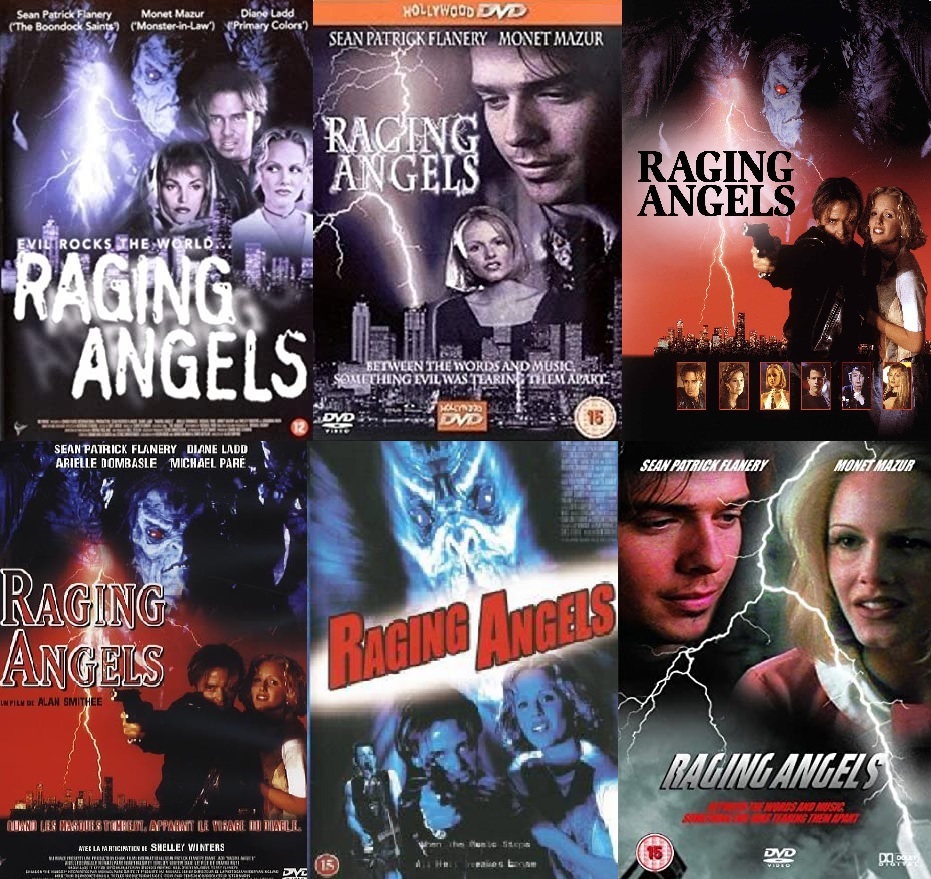
Of the many foreign and domestic VHS and DVD sleeves issued. The original, disembodied floating-head design trope, wins . . . at least this time.
I just don’t know how to describe Raging Angels . . . this political sci-fi rock n’ roll heavy metal horror romantic musical (Phew!). I don’t know how to assume the “Christian” intent of the film, if any . . . what was its spiritual inspiration? And with five screenwriters (well, two on “story” and three scribes) — and with our fair director taking an “Alan Smithee” credit (plot spoiler: It’s Asian actress Hisako Tsukuba aka’ing on the writing front as Chako van Leeuwen; this is a “Chako Film International Production,” after all) — there’s no way to know whom is wholly responsible for this biblical-plot plethora pathos of analog schadenfreude. (One of the scribes taking a pass on it was Kevin Rock, who worked on sequels to The Howling, Warlock, and The Philadelphia Experiment, as well as Roger Corman’s rights-holding tax shelter, The Fantastic Four.)
Imagine Menahem Golan’s biblical tale of the Book of Genesis‘ Adam and Eve colliding with Johann Wolfgang von Goethe’s Faust in The Apple, with its subplot regarding the power of love and music . . . and you thought producer Richard Zanuck greenlighting Russ Meyer, an independent X-rated filmmmaker, and Roger Ebert, a first time, inexperienced screenwriter, for a 20th Century Fox “sequel” with Beyond the Valley of the Dolls was a weird picture, with its cautionary tale of innocent hopefuls chewed up and shat out by the Tinseltown music industry.
I just don’t know. . . .
No matter how you pack it . . . see what we mean?
Did the tape of Jon Mikl Thor’s Rock ‘n’ Roll Nightmare end up inside the VHS sleeve of Sam Raimi’s The Evil Dead on Hisako Tsukuba’s personal home video shelf? Perhaps, after watching Keanu Reeves in The Devil’s Advocate — and taking into consideration his work as a metal head and musician River’s Edge and Bill and Ted’s Excellent Adventure — Tsukuba decided to re-imagine Al Pacino’s Lucifer-as-a-lawyer as a cult-leading rock star? Perhaps it was one too many spins of the likes of ’80s Christian (aka “White Metal”) bands Stryper, Believer, Deliverance, Holy Solider, Messiah Prophet, Whitecross, Trouble (okay, settle, they’re “Doom Metal”), and X-Sinner? (If only I just rattled off the soundtrack listing with that sentence, but alas, I have not.)
Oh, the majesty of it all, with this film’s pinches from Brian De Palma’s Phantom of the Paradise (Gramercy’s concert hall headquarters; the concert assassination), They Live (recruiting the wayward homeless to boost their ranks), and John Frankenheimer’s The Manchurian Candidate (conspiracy, subversion, and government overthrow).
The beauty of Raging Angels is that it is inherently meta: The filmmakers (well, again, Asian actress Hisako Tsukuba, who co-produced Joe Dante’s Piranha, as well as ALL of its sequel/remakes) are using film to push what is best described as a (Tsukuba’s) socialism viewpoint; that a united, one-world welfare state under a supreme leader is the only way for the world to succeed in perpetual peace — which is the very message pushed by the film’s rock star-cum-celebrity spokesperson, Tom Cruise, er, Colin Gramercy (Paré). Ah, it turns out, Gramercy (in a plot twist), isn’t Satan-as-a rocker; he’s been brainwashed by Satan (a George Soros-styled billionaire philanthropist) as the chief advocate for a dopey, 501 c3 tax-evading pseudo-religion masquerading as a “self-help” book and tape-schilling amalgamate.
Like Daddy Rich pimpin’ his prosperity theology says: “There’s a good place in this world for money, and it’s right here in my pocket.”
Yes, praise Green Jesus! By watching this film . . . you will see the light! For watching Raging Angels will quell the “raging angels” within. This film will lead to your spiritual enlightenment . . . as you will learn how to be “your own god.” Yes you can! Just like “prosperity gospel” (i.e., “money gospel”) megachurch overseers Joel Olsteen and Creflo Dollar whom “God tells” to pick the pockets of the flock to buy the Houston Astrodome (to turn into a church; get those flood victims out of here: this ain’t no horse stable with mangers) and private 747s (fitted in real gold-plated fixtures, natch) to “spread the good word.” Hey, God can’t live or fly in junk, dear flockster. Hey, there, Lamor “Brooklyn Bishop of Bling” Whitehead (finally caught by the F.B.I). So, forget that utility bill and tithe to Gramercy: for “God” will provide the water, light, and curb-side pick-ups. The Coalition for World Unity will provide the room and board and you’ll never have to work again . . . as long as you “obey” the word. OBEY!
Eh, sorry, Ol’ Scratch, for I’ve stopped believing. Your attempt to brainwash me into socialism via a bad movie . . . you created a recruitment video for atheism. Besides, your film doesn’t even have backmasking? How can you make a movie with this subject matter and not have someone playing records backwards!
Anyway . . . our not-so-metal-warrior, Chris D’Amico (Flanery), is an arrogant, temperamental rocker on the way up who believes in his hype; and with his alcohol abuse out of control, his band sacks him. And the band he fronts is . . . none other that the aforementioned Holy Solider — ripping through Ronnie James Dio-era Rainbow with “Gates of Babylon” (on screen; here’s the clip), which is this film’s lone high mark (on the soundtrack we also hear their original, “The Pain Inside of Me“). And Chris ends up like Pete Best and Chad Channing (know your Nirvana heritage), as Holy Soldier nets a deal and achieves great success . . . as a metal band . . . during the height of the grunge era (put a pin in that, for more, later).
So, our now penniless rocker, who has beat the bottle and stowed the cockiness, needs a gig. He and his musician-girlfriend, Lila Ridgeway (ex-daytime TV actress Monet H. Mazur, in her feature film debut), audition for gigs in Colin Gramercy’s new, worldwide satellite-cable concert (Paré, unlike in his star-making turn as Eddie, actually sings here, with “The Hunger”). And Colin wants Lila as a back up singer, who quickly falls under the cult-rocker leader’s spell (for all good televangelists have that enclave of chicks to help work through those sermons), but not Chris.
Uh, oh . . . but Lila is changing. She’s not the same girl, anymore. And the drinking didn’t make Chris wreck his car, it was Satan (literally; a ghostly image appears in the windshield). But Lila ain’t buying the excuses, anymore. She dumps him on Gramercy’s word.
Cue Chris’s Grandma Ruth (Shelley Winters!), who, thanks to her horrific dreams and visions (that screws up his new band’s audition), starts with the nagging warnings that “Chris is in danger.” Well, the demons won’t have any of that. Let the demon attack begin. But not before our dead Grandma recruits the eccentric, religious-psychic-preacher Sister Kate (Diane Ladd!) to save Chris and Lila’s souls from eternal damnation. The demeaning of Jesus Christ down to evil-warding, biblical-verse spells and religious trinkets, ensues.
Eh, on the upside: everyone is trying. Grandma Shelly and Aunt Diane are going at it with gusto, and Sean Patrick and Paré always sell the drama — no matter how awful it usually is, as is the case with most of their films.
Finally!
Yes, the final good vs. evil showdown we’ve been waiting for at Colin’s global, subliminal worldwide satellite concert, is here — the concert that will transform the citizens of Earth to the Coalition for World Unity way-of-life once and for all! Well . . . I think it’s best you watch the clip of the final battle, for the rest of the story.
(Sorry video embed elves, not this time; we’re hyperlinkin’ the final battle clip.)
See what we mean . . . did you click through?
Where’s Jon Mikl Thor when we need his bare-chested, bad-ass metal warrior self? Where’s Billy Eye Harper, Lynn Starling and Headmistress with the epic concert show closer? Ah, now I see why the CWU needs to subliminal message their concert: because the concert, with their screeching Christian symphonic rocker signing, Mozart (“One World”), and Colin Gramercy’s “life changing” epic, “The Hunger,” is — as is any Christian “rock concert” held in a church’s chapel-cum-gymcafeditorium that I’ve been too — absolutely, utterly awful (and when you realize the music sucks, they “kidnap” you by blocking the door and will not let you leave before the show’s over . . . and not even then. Screw you, One Bad Pig. Your Red Hot Chilli Peppers-for-Jesus schtick, sucked. At least Ronnie James Dio didn’t abduct me and force me to listen and indoctrinate me).
And that is what is ultimately missing from Raging Angels, the one thing that would have taken this Satan-steals-souls-with-rock-music mess over the top: a soundtrack on the level of the “No False Metal” classic Black Roses. For Raging Angels needs the likes of Lillian Axe, Lizzy Borden, and Carmine Appice’s King Kobra masquerading as the faux bands of the film. This film needed Metal Blade Records’ Brian Slagel as its music consultant to transcend it as the “No False Metal” classic it so wants to be . . . and utterly fails to be.
Granted, Sean Patrick Flanery impresses here (yes that is him singing, with “Come In My Mind“; in fact, here he is belting “One Step Forward” in Girl), but for as much as I enjoy any film with the ‘Flan, his character and the related songs are a bit too — through no fault of his own — douchy to pull off the demonic side of the proceedings. The rest of the soundtrack’s mostly B-Side castoffs — faux-Led Zeppelin’ers Kingdom Come (“What Love Can Be”), Golden Earring (?) (“Twilight Zone”), Boston (“Livin’ for You”), The Mission U.K (“Wasteland”), and well, what do you know, the aforementioned Stryper (“To Hell with the Devil”), and Sweden’s “dance rockers” Army of Lovers (“Supernatural”) (a big deal in Europe, but not in the U.S.) — just aren’t lathing the grooves on my vinyl. And, yes, shockingly, that snippet of “Arrow” by a band called Candlebox is the very same, we-relocated-the-band-to-Seattle-to-be-a-grunge-band, Candlebox. (Odette Springer, who scored Cirio H. Santiago’s Mad Max-rips Dune Warriors and Raiders of the Sun, scores here, as well as co-writing, with Hisako Tsukuba, Monet Mazur’s character’s vocal showcase, “I’m Crying Out for You.”)
And if the lack of metal in this Satanic music flick ain’t cuttin’ it, then, chances are, neither are the not-so-special effects.
When was this made? Well, based on the dated-soundtrack, certainly not during the post-1990 grunge-era. Raging Angels reeks as a film shot at some point during the hair metal ’80s — courtesy of its à la Rock ‘n’ Roll Nightmare, practical-sfx rubbery monsters (taking into account that film’s epic “Plan 9 from Outer Space” Satan vs. Angel battle) and burgeoning-technology CGI. Yeah, the dank n’ moldy aromas of years-languishing on the shelf — as most “Alan Smithee” films do — to then be thou looseth on the shelves of oneth’s local Blockbuster Video, permeates.
In the end, what we ultimately have in the frames of Raging Angels isn’t a errant, “No False Metal” heavy-metal horror film: we have an evangelical Christian Cinema precursor to the rash of low-budget, direct-to-video evangelical Revelation/Apocalypse films triggered by Christian author Tim LaHaye’s mid-’90s end-of-the-world Left Behind novel series. Those best-sellers were, of course, produced into a tetraology franchise by Canadian’s Paul and Peter LaLonde Christian-based Cloud Ten Pictures, which specializes in end-times films.
So, forget about the Black Roses and Rock ‘n’ Roll Nightmare analogies. The true spiritual cousins to Raging Angels are those proselytizing flicks starring past-their prime actors, such as the Apocalypse tetraology (1998 – 2001) with Gary Busey, Corbin Bernsen, Jeff Fahey, Margot Kidder, Mr. T, and Nick Mancuso, Six: The Mark Unleashed (2004), with Eric Roberts and Stephen Baldwin, David A.R White’s dopey Rapture-flicks, such as The Moment After (which rip off Schwarzenegger’s End of Days to lesser-and-lesser effect), and the biggie of the bunch: The Omega Code starring Casper Van Dien and Michael York. Raging Angels is all of those premillennialist flicks — only with a Satan-recruits-with-music plot device, and worse production values.
Eh, whatever, ye leaders of the CWU. If douchy music from tapered haircut and scruffy soul-patched dudes is the way to global peace, then give thee chaos. At least Satan has better music to-be-brainwash-by. At least I learned that the way to rock is to sling my axe behind my back and wear glittery tank tops.
Here’s the trailer to check out. As for the VHS tapes: they’re out there, but watch out for those DVDs, they’re grey DVD-r rips. And while they look really good, I am still not jammin’ on those Euro Region 2 copies, either. Emptor the caveats and know your regions before you go hard digital, kids.
In all of my years coveting this film for the VHS collection, I never found a copy. Sure, I could easily buy a copy online these days, but, well . . . it’s just not the same as discovering a copy in a video store’s cut out bin — or at today’s library book drives or second hand stores, is it? For the joy is the thrill of the analog chase and the celluloid discovery . . . and then having your expectations deflated as you struggle to get through the movie, and then apologize to your VCR.
Eh, I’ll just free-with-ads stream it on Tubi with ya’ll.
See the light with Christian Cinema!
Don’t fear Satan! Hail Sammy Curr!
All of the Italian and Spanish Omen ripoffs you can handle.
Producer, writer and director Peter Filardi is a name you know by way of his writing and producing the critically-mixed but box-office successful horror, Flatliners (1990), and the better critically-received and even more box-office successful, The Craft (1996). So, after writing a film about the near-death experience and witchcraft-pursuing teenage girls, it made sense that Filardi, for his third feature film, would tap the myth and legend of drugs, satanism, and murder in the upper class town of Northport, Long Island, in 1984 perpetrated by Ricky Kasso. (In the film: we are in the upscale enclave of Harmony.)
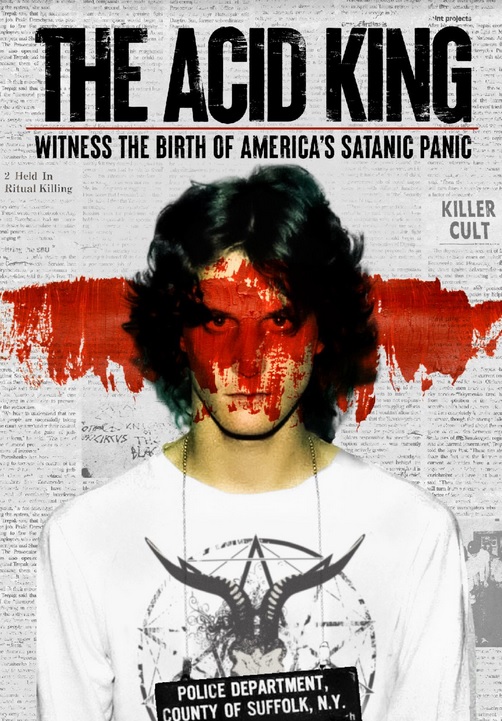
The life and ongoing influence of Ricky Kasso, an American teenager who murdered his friend, Gary Lauwers, along the windswept, Long Island Sound shores are examined at length in Jesse P. Pollack soon-to-be-released documentary The Acid King (2021). In the pages of B&S About Movies, we discussed Kasso’s exploits — and the dangers of the media-driven and religious-opportunistic “Satanic Panic” movement of the ’80s — with our review of River’s Edge (1986). Prior to Filardi’s nonfiction take on the material, Jim Van Bebber (Deadbeat at Dawn) released the short film, My Sweet Satan (1994). The first full-length feature film attempt at bringing Ricky Kasso’s exploits to the big screen was the more fictionalized, Black Circle Boys (1998).
Courtesy of the success of his first two productions, Orion Pictures (ironical releasing the 1978 juvenile delinquency classic, Over the Edge) gave Peter Filardi the opportunity to direct his first feature film: one that garnered two nominations for “Best International Film” at the 2000 Fantasia Film Festival and 2001 Fantasporto Festival — while winning the “Audience Prize” at the Fantasia Festival. It is also to be noted that the cinematographer, here, is three-time Academy Award-nominated Rodrigo Prieto, who received those nods for his work on Ang Lee’s Brokeback Mountain (2005) and Martin Scorsese’s Silence (2016) and The Irishman (2019). Prieto also lensed Eminem’s 8 Mile (2002) and Scorese’s The Wolf of Wall Street (2013) and is the winner of four Ariels (Mexico’s Oscars).
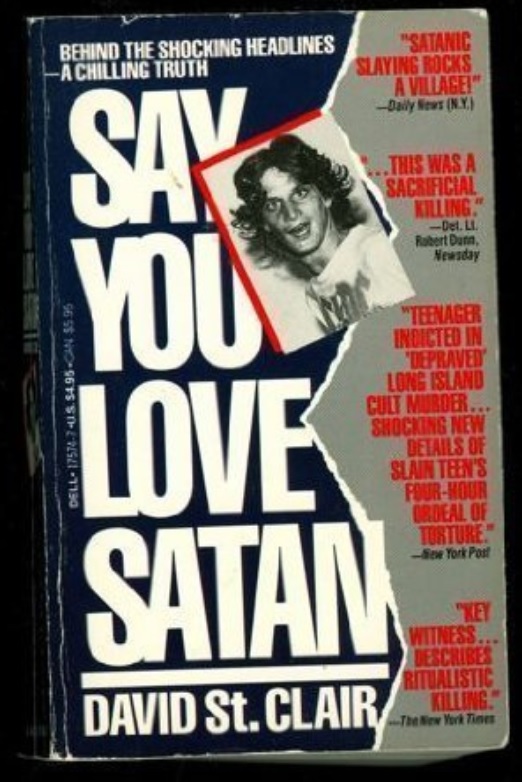
As with Black Circle Boys: David St. Clair’s since discredited, best-selling paperback, Say You Love Satan (1987), fueled Filardi’s more fact-based tale. Then, the film — appropriately filmed in the geographically-similar St. George, New Brunswick, Canada — vanished. Never commercially released by the studio, outside of a smattering of horror-centric film festival showings, the film went, appropriately enough, underground, and came to find a cult audience as a bootlegged VHS and DVD. (There are rumors that DVD copies (generic or “work print” DVD-r rips, or consumer-grade packaged DVDs?) were given to the cast and crew upon the film’s completion. As of 2017, the film began appearing online through fans’ video-sharing accounts and torrent sites.)
So what went wrong?
When are you dudes, finally, going to make a decent movie about me. . . and get the facts, straight?
Well, the film’s closing disclaimer telling us that “some parts of the film were fictionalized, with many names changed and some characters invented” is disconcerting, but what biographical film — regardless of studio or budget — hasn’t taken those narrative liberties?
One Letterboxd reviewer compares Ricky 6 as the WB’s Dawson’s Creek meets River’s Edge (comparisons to a Katie Holmes TV series isn’t a good sign). Another user compares it as Richard Linklater’s ’70s stoner-comedy classic Dazed and Confused meets Lords of Chaos (never a film so anticipated has so disappointed me).
So what do we have here: just another forgotten, ’90s teen-horror romp or a dark, true crime film? For this reviewer: the latter. If anything, the inferior — and more fictionalized Kasso account in Black Circle Boys — is the tenny-bopper misfire.
Peter Filardi has never publicly spoken about the troubles shrouding his lone directing effort (it is, however, horror message boards-rumored the primary copyright holder on the film currently serves time in a South American prison). Filardi has since backed the modernized remakes and sequels to his two previous films, Flatliners and The Craft, as well as adapting Stephen King’s Salem’s Lot as a 2004, two-part mini-series. At press time, there’s no (online) insights from Filardi himself or the mainstream horror press to discover as to what went wrong on the production. Usually, even when a film fails at finding a theatrical release, it finds itself dumped into paid-cable channel rotation (refer back to the aforementioned Over the Edge, which became an oft-run HBO cult favorite in the early ’80s).
In addition to Orion Pictures, KatzSmith Productions — a shingle that later found solo success with their reboot adaptation of Stephen King’s It (2017), as well as Child’s Play (2019) — along with British Columbia-based Bron Studios — which later found acclaim with the DC franchise entry Joker (2019), as well as the “woke”-rebooted Candyman (2021) — backed the film. Three production companies on one film spells trouble. Then there’s those opening credits of six producers. And that the film was an American-Mexican-Canadian film production (chiefly by Terry G. Jones, Juan-Carlos Zapata, and William Vince, respectively). So, with that many fingers in the creative pie, rest assure: we’re dealing with a legal morass that not even the dark prince himself can escape.
The book that started it all. . . and not as “truthful” as we believed.
Vincent Kartheiser (who came to star on the WB’s Angel from 2002 to 2004 and Mad Men from 2007 to 2015; he’s now on the channel’s DC entry, Titans) stars as Kasso, aka Ricky Cowen (“Coven”; cows are a “graven image”), our drug-dealing Satan worshiper. Patrick Renna, who the many know as Hamilton “Ham” Porter in The Sandlot, thespin-shines in a dark, mature role as one of Cowen’s co-conspirators (Ollie, aka the real life Albert Quinones who turned state’s witness) who murders Tweasel (a one-and-done Richard M. Stuart), our drug-stealing, ersatz Gary Lauwers. The always spot-on reliable Kevin Gage (all the way back to Dee Snider’s Strangeland; devastating in David DeFalco’s controversial Chaos) is perfect is his small role as Pat Pagan, aka “Pagan Pat” Toussaint, who took a fatherly interest in Ricky — and introduced him to Satanism. (When police began questioning him in the murder — of which he had no part — he committed suicide-by-train. Since the narrative is voice-over driven by the film’s faux-Jimmy Troiano, the narrative never transitions to Pat’s perspective; so we’re “told” of the suicide.)
While the film ignores some historical accuracy for the sake of narrative and takes low-budgetary stabs at depicting our malcontents’ drug trips and Ricky eventually meeting Satan himself (in a fire-stern swamp inside a hollow tree trunk; backed by Disembowelment’s “Your Prophetic Throne of Ivory”), as well as a murder-intent Jesus in a supermarket, Peter Filardi, while not the most visually stunning director, is a serviceable one, nevertheless (most likely discouraged by the film’s legal boondoggling to never direct, again). He captures — unlike the previous Black Circle Boys — Ricky Kasso’s (in hindsight) heartbreaking, downward spiral of parental mental abuses, drug addiction, homelessness, and discovering a misguided solace in the occult.
Unlike Black Circle Boys, and as with River’s Edge: Filardi did right in supporting the discontent by bankrolling an era-appropriate soundtrack featuring “The Number of the Beast” by Iron Maiden, “Screaming in the Night” by Krokus (who also appeared on Mad Foxes), “Rainbow in the Dark” by Dio, “Street of Dreams” by Rainbow, and “Love Will Tear Us Apart” by Joy Division. Contrary to fan-opinions: “And the Cradle Will Rock” by Van Halen does not appear in the film; that familiar “Eddie” guitar riff is an effective, ersatz copy by Abel Ferrara’s go-to composer Joe Delia (Ms. 45 and Driller Killer). (Too bad there’s no AC/DC, Ricky’s favorite band, and some Metallica and Slayer in the frames. Ah, those licensing rights: which is why our faux-Ricky doesn’t wear any concert shirts. In reality: Ricky Kasso lived in concert tees and jerseys.)
“So, come on! Jump in the fi-yah!”: We review those heavy metal horror flicks of VHS ’80s yore with our “No False Metal Movies” featurette.
The rest of the capable, strong cast features Sabine Singh: in her feature film debut, you’ve seen her work in the U.S. teen soaps Charmed and Dawson’s Creek. Emmanuelle Chriqui rose through the thespin-ranks to co-star alongside Adam Sandler in You Don’t Mess with Zohan, as well as currently starring as Lana Lang in TV’s Superman & Lois; you’ve also seen her as a cast regular on HBO’s Entourage and the modern horror classic, Wrong Turn (2003). Chad Christ (the tale comes from his POV, so he provides the we-can-do-without narrative voice-over as Tommy Portelance, aka the real life Jimmy Troiano, also arrested in the murder) has since left the business, but is best remembered in the late ’90s alt-rock comedy, Jawbreaker. (Chriqui, in a promotional interview for Wrong Turn, briefly spoke about working on Ricky 6 in an issue (possibly June 2003; #223) of Fangoria.)
I loved The Craft and enjoyed Peter Filardi’s take on Salem’s Lot; let’s face it: adapting-compressing Stephen King isn’t an easy task. So, to my critical end: I enjoyed Filardi’s honesty in not only chronicling Ricky Kasso’s exploits, but speculating as to what was going on inside Kasso’s mind: did he really think he finally met Satan in the flesh? So, yes: I wished it all would have worked out for Peter Filardi, as it surely hurt to have his labor of love — his directing debut, no less — cast into legal limbos for now, 21 years. (The only time any parts of the film were officially seen came result of segments of Ricky 6 recycled as “reenactment” padding in the hour-long, 2000 Australian television documentary, Satan in the Suburbs.)
Now, that’s not to say Ricky 6 is a great film: but it’s not an awful film, either. Again, it’s a film where I appreciate Filardi’s serious take on the material — and his ability to work against a slight budget — when compared against the inferior, more comical, over-the-top acted, first feature-length take on Ricky Kasso’s life with Black Circle Boys. Now, before you hate on me for not raving about the film: As we spoke about in our review of Black Circle Boys: The appreciation of a film — whether it is good or bad, well-made or poorly made — is based in the age of the viewer; for film appreciation is of a time and place. So, if you were in middle school or just starting high school at the time Ricky 6 was released — as I was when the juvenile delinquency drama Over the Edge was released in 1979 — rewatching this film will warm the cockles as your own person “classic” film.
The Omen and all of the Italian and Spanish “Satanic Panic” ripoffs.
While Ricky 6 does result in one to reflect back on those dramatic, teenage misanthropes from Over the Edge (1978) and River’s Edge (1984), and the comical, retro-’70s counterpart of Dazed and Confused (1993), Filardi’s lone directing effort is not to the standards set by those classics. We certainly don’t want the brutality of say, the aforementioned David DeFalco’s controversial Chaos (2005), but we do want Atom Egoyan’s beautifully acted and production solid (but wholly unnecessary, in light of Joe Berlinger’s acclaimed, three-part Paradise Lost franchise) Devil’s Knot (2013; based on Mara Leveritt’s Devil’s Knot: The True Story of the West Memphis Three). In fact, when considering Joe Berlinger — in what I thought was a fine, well-made, first fiction film for the documentarian — gave us the dramatic metafilm, Book of Shadows: Blair Witch 2 (2000), I believe he would bring us a definitive Ricky Kasso narrative film.
It’s also too bad that Joseph Gordon-Levitt has aged-out to play Ricky Kasso; if you’ve seen his work in the Metallica soundtrack-backed Hesher (2010), you know what I mean — but Joe would give us one hell of a Pagan Pat. Thinking about Over the Edge: Again, Vincent Kartheiser is mighty fine (maybe a little too soft, clean n’ cute as some have said), here: but can you see Matt Dillon as Ricky Kasso and Micheal Kramer as Jimmy Troiano, as they, instead of tossing him in the lake: kill the narc drug-dealing Tip? Yeah, Over the Edge with a “Satanic Panic” backstory: that’s the Ricky Kasso theater ticket, right there.
Courtesy of Hyaena Gallery; original news source of images, unknown.
In the end: Ozzy Osbourne didn’t “recruit” Ricky Kasso no more than Judas Priest convinced — via “subliminal messages” — James Vance and Raymond Belknap, nor did Ozzy “brainwash” John McCollum — to commit suicide. Nor did Ozzy’s “Bark at the Moon” brainwash James Jollimore to commit multiple murder.
Ricky Kasso was a powerless, verbally and physically (non-sexual) abused child also bullied in school who found solace in drugs at an early age as an escape. He was on the cosine of metal illness. His “model” parents kicked him out of the house to live as a vagabond in the woods, friend’s houses, garages, and harbored, Long Island boats. No one took responsibility for Ricky: not his parents, teachers, or doctors. They all failed him. Then they blamed “Satan” to cover up their mistakes. Now, that doesn’t justify what Ricky did (and let’s not turn him into a Masonesque-cum-Mafiso, anti-folk hero); however, as with Ronald DeFeo, Jr.’s multiple murder in suburban Amityville, Long Island, New York, in November 1974: DeFeo simply wanted to cover up his theft of a large sum of family money. Ricky was out for revenge on a drug theft. Both incidents — as with the victimization of Judas Priest and Ozzy Osbourne — were blown out of proportion in the pages of the since discredited books Say You Love Satan by David St. Clair and Jay Anson’s “true story,” The Amityville Horror.
Satan, indeed. Eh, Tipper Gore needed something to bide her time to keep her out of Al’s hair. Nancy Reagan had drugs: Tipper had Satan: “Just Say No!”. For kickstarting the “Satanic Panic” craze of the ’80s, Tipper, we thank you. . . .
Meanwhile, on the Pacific Northwest side of the country, existed Ricky Kasso’s doppelganger. The “Devil’s rock ‘n’ roll” also got hold of him: he picked up a guitar instead of knife. And for a brief time, Kurt Cobain, unlike Ricky Kasso, became infamous for his musical talents . . . but just as suddenly and shockingly, both burnt out in similar fashion. . . .
The critically-derided Australian TV documentaryfrom 2000.
Regardless of my brevity-lacking, critical sidebaring: Ricky 6 is worth your watch as you delve into the twisted mind of Ricky “The Acid King” Kasso — so as to complement your rental stream of the upcoming The Acid King. Hey, after that documentary’s debut, it just may inspire another film on the sad life of Richard Kasso. It’s “never say never” in Hollywood.
If Ricky 6 is your first exposure to Ricky Kasso’s infamy, you can cut through the books and the films with two, well-written, truncated-quick reads of the true events: Emily Thompson of the Morbidology podcast (August 2018) and Gina Dimuro of All That Is Interesting (October 2020). Another definitive read on the true events is Dave Breslin’s timely “Kids in the Dark” published by the Rolling Stone in November 1984. Again, we discuss Ricky Kasso — and the “Satanic Panic” craze of the ’80s — at B&S About Movies in our reviews of River’s Edge, Black Circle Boys, and Deadbeat at Dawn.
— You can watch rips of Ricky 6 on You Tube HERE and HERE and HERE. The caveat is that they’re all muddy rips from those bootlegged DVDs or probably downloaded from torrent sites. Pick which one works best for your viewing pleasure.
— You can also stream a six-part upload of Satan in the Suburbs on You Tube.
— In addition to supplementing your watch of Ricky 6 with The Acid King, you can also watch two direct-from-television-to-video releases from the “Christian Scare” industry of the ’80s we’ve reviewed: Heaven’s Gates and Hell’s Flames and Devil Worship: The Rise of Satanism.
— You can enjoy Peter Filardi’s newest horror streaming series, Chapelwaite — based on Stephen King’s short story, “Jerusalem’s Lot” — on EPIX. The 2021 Adrien Brody-starring series was co-created and written by Peter’s brother, screenwriter Jason Filardi (Steve Martin’s Bringing Down the House; the Zac Efron-starring 17 Again).
About the Author: You can learn more about the writings of R.D Francis on Facebook. He also writes for B&S About Movies and publishes musical journalism explorations and interviews, as well as horror short stories, on Medium.
From Luca Signorelli’s “The Sermon and the Deeds of the Antichrist”/multiple sites.
During the earliest days of the site, we put together a loose, in no particular order, Top Ten listing of “Ten Possession Movies that Aren’t The Exorcist.” We’ve since teased, on a few occasions, we’d do a list to honor the Italian and Spanish film industry’s next favorite horror film to copy: The Omen.
Well, it took the power of the Internet three years to compel us to finally make up the list. Feel free to share it on your social media and comment on your favorites, below.
1.The Tempter, aka The Antichrist (1974) — Okay, so the business model here is The Exorcist — with a dash of Rosemary’s Baby. Yes, this was made before The Omen, but this was also made under, and originally released as, The Antichrist, so there you go. Alberto de Martino (behind one of our favorite Giallos with Strange Shadows in an Empty Room) weaves a tale about a Mia Farrow-cum-Rosemary lookalike who, under a psychiatrist’s care, goes into past-life regression therapy and becomes possessed by a Spanish Inquisition ancestor. Yes, the ancestor is the feared Antichrist. Yes, the nudity and swearing is mind-numbing in is ferocity. Yes, this movie is out of control in its crazed ripoffery. And it only gets stranger with de Martino’s next ode to the Dark Prince.
2. Holocaust 2000, aka The Chosen (1977) — We still haven’t figured out how Stanley Donen convinced Kirk Douglas to star in Saturn 3, and here’s the three-time Oscar nominee starring in an Antichrist romp directed by Alberto de Martino, back for another bite of the Crucifix after giving us The Tempter. So what’s this Italian-British co-production all about? Well, it seems the dreaded beast of the book of Revelation . . . is actually a nuclear power plant built near a sacred cave in the Middle East by Kirk’s industrialist, Robert Caine. Oh, and as in Saturn 3, regardless of his age, Kirk’s a virile young buck shacking up with a woman half his age. Oh, and his son, the aptly named Angel Caine, turns out to be the Antichrist.
3. Fear No Evil (1981) — Sure this is a low-budget Omen rip, but this tale of a high school student who, upon turning 18, discovers he is the prophetized Anitchrist is oh, so good. In a pinch taking from Carrie: Andrew is a dorky, weirdo bookworm who spends his days as a bully punching bag. Before you know it: Andrew has paralyzed his mother, his dad is in the booby hatch, and his mortal enemy, Tony Idavino, spouts breasts. Yes, the baby Jesus is murdered — don’t worry — its during the town’s annual Passion Play. Then Andrew — looking more like an ’80s glam rocker than a demon — lays waste to the town with a zombie apocalypse. Yes. It is as awesome and strange as it sounds.
4. The Inquisition, aka Inquisición (1977) — Okay, so this is more about “witch hunting” than the rise of the Antichrist. However, unlike Michael Reeves’s Witchfinder General (1968), Michael Armstrong’s Mark of the Devil (1970), and Ken Russell’s The Devils (1971), the sexually depravity and spiritual corruption of Witchfinder Bernard de Fossey (Paul Naschy, who writes, but also in his directing debut), actually conjures a reincarnation of Satan. And when Naschy conjures an “Antichrist,” rest assured that his Ol’ Scratch enjoys (plenty) of naked women and nipple-ripping.
5. The Visitor (1979) — Did you hear the one where Ovidio G. Assonitis (Tentacles) and Giulio Paradisi (who worked with Fellini on 8 1/2 and La Dolce Vita!) decided to cash-in on The Omen with a cross between Chariots of the Gods meets Rosemary’s Baby? So goes this tale regarding the soul of a telekinetic young girl at the center of a war between God and the Devil. Franco Nero is a space god? Check. Sam Peckinpah — yes, the director of western classic The Wild Bunch — as an abortionist who removes one of the space babies? Check. John Huston — yes, the director of The Maltese Falcon and The African Queen — as an angel to stop Zathaar, aka Satan, the “bad alien” from succeeding? Check. Lance Henriksen (Near Dark, Aliens) as an ersatz Ted Turner media mogul who wants the power? It’s all there . . . and it just goes on and on . . . The Bad Seed meets Close Encounters of the Third Kind? Okay, if you say so. And we thought Jodorowsky’s El Topo was a chore to interpret.
6. Bloody Sect, aka Secta siniestra (1982) — Spain’s “Roger Corman,” Ignacio F. Iquino — in his only horror film — takes no chances with his take on the birth of the Antichrist as he clips scenes not only from The Omen, but Rosemary’s Baby and The Exorcist, as well as The Shining, Suspiria, and Rabid, along with stylistic soupçons from Dario Argento, Joe D’Amato, Ruggero Deodato, Jess Franco, and Bruno Mattei. It’s a tale of a woman artificially inseminated with the sperm of Satan (!) by a fertility doctor. It’s also a tale that never lets up as it piles on the plot absurdities — refer to your favorite Mattei opus — amid the gore and the sleaze.
7. The Late Great Planet Earth (1978) — Narration by Orson Welles intersperses the biblical reenactments, as chicken-little-the-sky-is-falling talking-head academics babble to stock footage of war and starving children, then tell us about planetary alignments and supercomputers running Ronald Reagan through numerology algorithms to determine if he is the dreaded Antichrist. Nuff said, for we love you, Hal Lindsay: you frightened us kiddies unlike no other Spanish or Italian ripoff purveyor before or since.
8. Prince of Darkness (1987) — Basically, John Carpenter did a remake-retool of Hammer Studios’ Quartermass and the Pit (1967) for $3 million dollars. As the characters prattle about theoretical physics and atomic theory, we learn that a canister of green liquid discovered in an abandoned church is the essence of The Antichrist. Yeah (yawn), before you know it: we are back in Carpenter’s old 13th precinct haunts with another variation on Rio Bravo as we hear about theories that Jesus is actually an alien and the Catholic Church covered it up and the world will end in 1999. (For the record: I’m the “yawner”; Sam likey. We are still friends, canisters of green goop, be damned.)
9. God Told Me To (1976) — According to Larry Cohen (The Stuff): God is one of the most violent characters in literature. Take that insight, then concoct a police procedural drama about a cop mixed up in some ancient astronaut tomfoolery à la Chariots of the Gods as a series of killings sweeps New York City in which the perpetrators claim, before their own suicide, that “Gold told me to.” Of course, it’s not “God,” but Bernard Phillips, the Antichrist, who according to his mother, was a immaculately concepted aliens, you know, just like Jesus.
10. The Sect (1991) — Is there a real life, worldwide Satanic “army of evil” responsible for the Manson Family and Son of Sam murders? Well, Michele Soavi (Stage Fright, The Church) answered the call with this story about a German schoolteacher impregnated by a giant bird that opens a glowing, blue gateway to Hell in a basement that will unleash the Antichrist to Earth. And that’s the short version synopsis, which doesn’t even begin to describe this film’s crazed, biblical non non sequiturs.
Never say “ten” movies. Never.
11. Reborn (1981) — Okay, so we are cheating one more . . . and there’s no actual “exorcism” . . . but it’s all for the love of Bigas Luna. Mixing the erotic with the spiritual, it’s a religious fantasy piece that questions faith, explores Luna’s own Catholicism, and the mysteries of one’s acquiring healing powers. Then things go bonkers, more so, as Dennis Hooper shows up as the maniacal Rev. Tom Hartley — our “Antichrist” — an American televangelist-head of a racketeering revivalist church who wants to exploit a young woman’s abilities of “hearing” the Holy Ghost, for his own, greedy purposes.
12. Raging Angels (1995) — Okay, so we are cheating two . . . and this is actually a “Satanic Panic” flick about the Devil using rock music to control the world. Released in the ’90s but made during the end of the Hair Metal ’80s, Michael Paré stars as a religious rocker fronting an organization pushing for a one-world government. An aspiring rocker played by Sean Patrick Flanery of The Boondock Saints fame tries to stop the Rapture and the rise of the Antichrist. Hey, Christian metal band Holy Soldier shows up to belt out Ronnie James Dio-era Rainbow with “Gates of Babylon” . . . as you ponder the awful CGI of it all amid Shelly Winters and Diane Ladd doing what they can to battle the evil.
13. The Judas Project (1993) — Okay, three. While many modern-day set religious flicks have an apocalyptic setting concerned with the return of the Antichrist, this film dares to be a sci-fi Jesus movie . . . where, well, how can the Antichrist rise if Jesus hasn’t arrived yet? Oh, yes, this movie is a fictionalized retelling of the story of Jesus Jesse: it’s told as if The Holy Savior arrived in our late 20th century. The “message,” however, is the same ol’ salvation trope: Humanity is in peril, so God sends forth his son in the form of a man named Jesus Jesse to save mankind from the impending terror that will destroy the Earth.
Honorable Mentions Roman Polanski’s pre-Exorcist/Omen game changer that is Rosemary’s Baby, Al Pacino’s tour de force as the Antichrist in The Devil’s Advocate, James Glickenhaus’s debut oddball, The Astrologer, aka Suicide Cult, and the Richard Matheson TV movie-penned The Stranger Within. Does The Godsend fit in here? It has a creepy devil kid, but it’s more sci-if . . . eh, why not? Can we toss William Girdler’s The Manitou — with it’s tale of a gigantic growth on a woman’s neck that ends up being the reincarnation of the Native American spirit Misquamacus? That’s short of “Antichristy,” right? Eh, The Next One with Keir Dullea and Adrienne Barbeau? Yeah, Keir may or may not be an alien washed up on a Greek island — and he may or not be Jesus Christ (or the Antichrist; been so long, I don’t recall, fully) — but that’s a sci-fi flick and not the least bit horror.
What’s your favorite? Did we miss it? Let us know in the comments, below.
A deeper exploration on the influences of Christ in cinema.
About the (hyperlinked) Review Authors: Sam Panico is the founder, Chief Cook and Bottle Washer, and editor-in-chief of B&S About Movies. You can visit him on Lettebox’d and Twitter. R.D Francis (who wrote this piece) is the grease bit scrubber, dumpster pad technician, and staff writer at B&S About Movies. You canvisit him on Facebook.
(I know: This is technically a “vampire” flick, but this chick removes hearts and penises after sucking ’em dry. That’s “slashy” enough for me!)
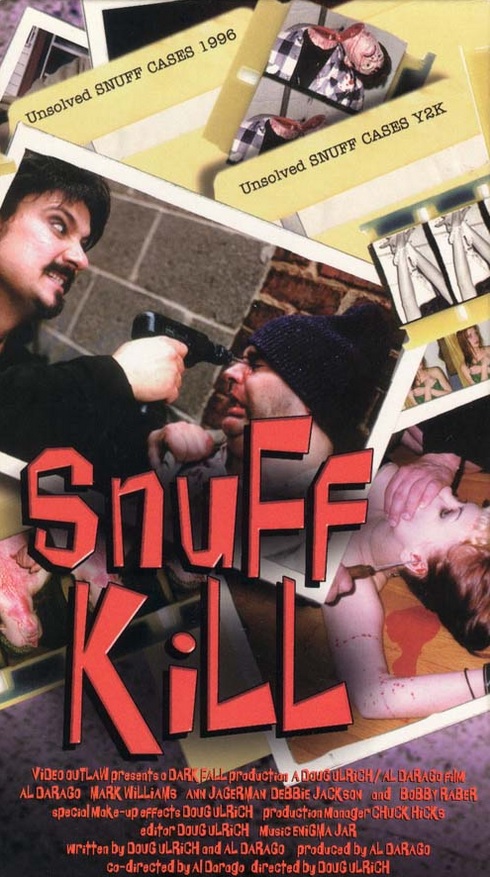
Here’s the rub with 7 Sins of the Vampire: You’re watching and wondering why it looks the way that it does: like an ’80-era VHS SOV release — considering this came out in 2013, the era of digital cameras and software editing suites. Well, that’s because 7 Sins of the Vampire — shot and private-press released as Blood Seduction (year unknown) — was completed in 2002; its production began in the late-90s, not long after the completion and release of Snuff Kill in 1997. Personally, when considering how much Doug Ulrich and Al Darago improved as filmmakers across their three films, and the positive reception given to their best-known and distributed film, Snuff Kill, I’m shocked that it took a decade for the film — shot in Dundalk, Maryland — to make its first baby steps into national distribution platforms.
Another alternate title for the film — which sometimes appears as a tagline on alternate DVD pressings — is Invasion of the Vampire Hookers. Now, is team Ulrich-Darago going for an Al Adamson-patch job-starring-John Carradine vibe — without (thankfully) any John Carradine footage dropped in from another film? Probably, because these guys are one of us and have probably VHS O.D’d on way too many Al Adamson flicks with superfluous, edited-in-from-another-picture John Carradine (in lieu of superfluous John Rhys-Davies and Eric Roberts). Ugh. You’re making me remember Cirio H. Santiago’s inept Vampire Hookers and Nai Bonet’s inert vanity-fanger Nocturna: Granddaughter of Dracula — both with John Carradine. Oy. I don’t know if that’s a good thing . . . or a bad thing.
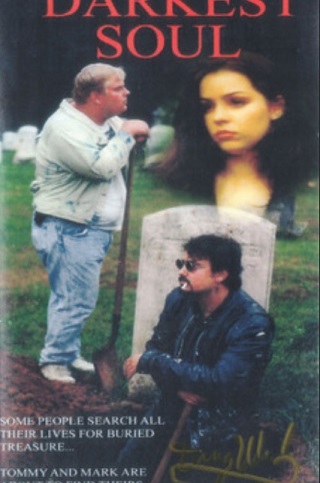
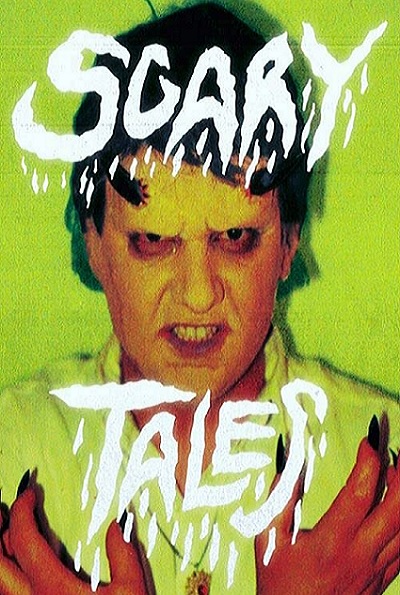
I hope you’ve read my reviews for Doug and Al’s previous three films (Scary Tales, Darkest Soul, and Snuff Kill) and previous SOV film reviews and analysis of the genre (click the SOV tag at the end of this review to populate the site’s SOV reviews). You know how I feel about SOV films — and the respect I have for Doug Ulrich and Al Darago, who grew up as longtime, Patterson High School friends. Sure, 7 Sins of the Vampire is technically rough — and what SOV, whomever makes it, isn’t — and there’s artistic-disciplinary miscues, especially in the acting department. But team Ulrich-Darago’s storytelling matured in this ’70s drive-in styled, supernatural detective tale — that reminds of the law enforcement horrors of Christopher Lewis’s Blood Cult (1985) — concerned with two detectives who come to discover the recent rash of murders plaguing their city are being committed by a vampire pimp and his bevy of vampire hookers. And our vamp-pimp is a chauvinist and there can only be one: he can bite and turn any woman he wants, but the girls, after feeding, need to de-heart the Johns so they don’t turn. Oh, and remove their penis.
Groper and Butkus (our filmmakers Al Darago and Doug Ulrich) are rival cops, one always trying to outdo the other, always butting heads on cases. So, when they both end up at a crime scene with a man hanging by his neck and his guts slit open, Grouper calls it a murder: Butkus, a suicide. But that’s their relationship: opposites attract. Meanwhile, Groper’s grizzled “Dirty Harry” gets assigned a Slimski: a baby-faced rookie for a partner — whose teenage sister is the latest vampimp (a new word!) victim. It all comes to a head — pardon the pun — at the pimp and hooker’s abandon warehouse lair. It’s all very Carl Kolchak: The Night Stalker on a shoestring and couch change — and I like it. And it’s all wrapped up in just over an hour, making it the shortest film of Al and Doug’s quartet of films (Snuff Kill was the longest, at 80 minutes).
Is this gory? Of course. How gory? Well, when a John picks up one of our fair-fanged hookers, she doesn’t just fang ’em: she rips out his throat. And don’t forget the heart removals. Oh, and the penis-ripping. Oh, and this SOV ups its game with the casting of professional Baltimore-based actors — a first in the Ulrich-Darago’s canons — George Stover (100-plus credits; including John Waters films and Don Dohler’s The Alien Factor and The Galaxy Invader) and Vincent DePaul (140-plus TV and film credits).
So, yeah. Heart and penis removals . . . with subsequent licking, sucking, and munching. Lovely.
The DVD, a well-pressed and easy-to-purchase release via Amazon Prime and other online retailers, features a “Making Of” featurette, along with actor screen tests and make-up effects tests. Also featured is the 15-minute, black-and-white thriller-short The Devilish Desire of Dario Dragani (2012; thus why the DVD was issued in 2013). Shot by Mark Mackner in Philadelphia, Pennsylvania, for $100, it’s a modernized re-telling of the silent German short, The Cabinet of Dr. Caligari (1920). (But I’d have to film-drop the really cool Michael Caine black comedy, A Shock to the System (1990), with his put-upon executive resorting to murder to move up the corporate ladder.)
Here, Dario Dragani’s desires take a supernatural turn: he uses an office underling, Cecil, as a somnambulist to murder those who stand in his way to promotions — and winning the heart of Jane, the office heartbreaker. It’s very retro-homagey and very nicely done. You can watch a rip on Vimeo. Mackner — who has made four features films since 2008 — is completing his forth feature: Daisy Derkins and the Dinosaur Apocalypse. Now how can you pass up a film with a title like that?
The embedded clip below (ugh, another You Tube black box of death) — courtesy of DarkFallFx — features the trailer and a couple post-production clips and camera test vignettes. When you go to that You Tube portal, you can also watch the short film The Prophet of Oz (2013), Doug Ulrich’s Christian-based inversion of The Wizard of Oz.
I’ve had a lot of fun revisiting and reviewing the Doug Ulrich and Al Darago canons this fine, and viewing-appropriate, October. I dig these dudes and so will you. Stream ’em.
About the Author: You can learn more about the writings of R.D Francis on Facebook. He also writes for B&S About Movies.
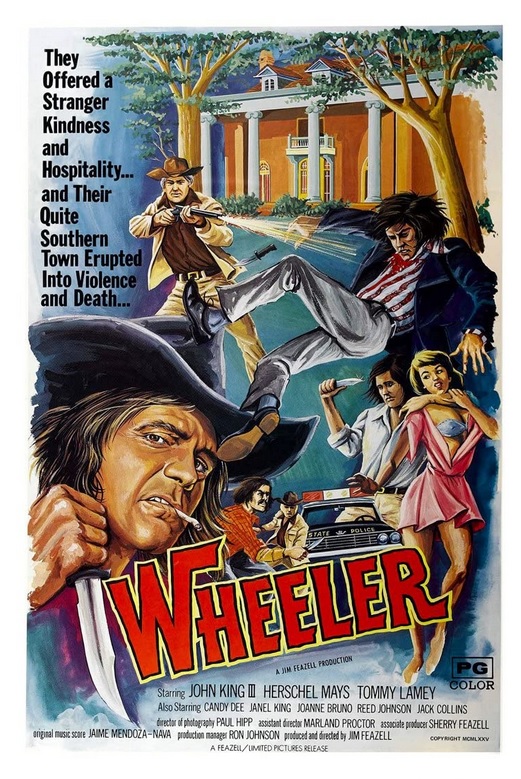
“Momma? Momma, please don’t hurt me, momma!” — thus Wheeler’s love of the knife
He hunts women. His knife tells him to! — a tagline that says it all
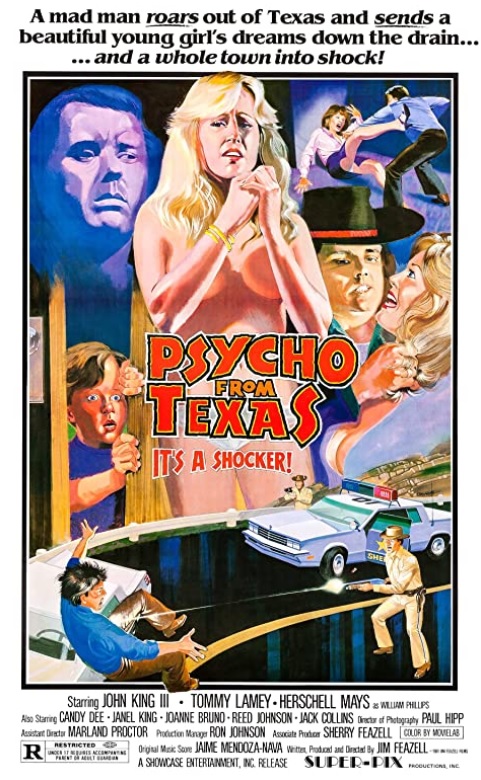
Okay, if that tagline and line of dialog doesn’t sell it, along with the one-sheets: This is a story of a drifter who makes his way as an ersatz hitman — now hired by a local businessman to kidnap the local, big wig oil baron. Our hitman, of course, was reared in squalor, suffering the abuses of his whoring mama. So when the baron escapes, it’s time to go “Texas Chainsaw” — only cheaper and less effectively — to tie up those few loose ends, you know, to get back at momma.
Hey, our beloved Linnea Quigley had to start her exploitation career, somewhere . . .in this lone writer, directing, and producing credit by Hollywood stuntman Jim Feazell. You’ve seen Jim’s work in the iconic, late ’60s westerns The Wild Bunch, Butch Cassidy and the Sundance Kid, The Undefeated, Paint Your Wagon, and Chisum. He also manned the cameras on 1971’s Blood and Lace and Wild Riders.
If you’re a biker flick maven, you may recognize our star, John King III, as the twisted Wheeler; he made his debut in the blaxploitation biker romp, Black Angels (1970), which he followed with Guess What’s Happening to Count Dracula? (1971). King made his last film appearance in the oft-programmed Mill Creek box setter, the cheapjack . . . but pretty decent horror anthology, House of the Dead (1978). Yep! You can find House of the Dead on Mill Creek’s Chilling Classics and their Nightmare Worlds 50 film packs.
Because in the ’80s “aliens” were hot and ’70s Amicus anthologies were not: a drive-in repack of House of the Dead.
As for Wheeler, itself repacked for a renewed drive-in live as Psycho from Texas: Well, it’s still a great, sloppy-on-the-cheap drive-in hokum produced in the Texas Chainsaw backwashes. This is the stuff we packed in the cars for . . . in between The Exorcist ripoffs and the eventual, later ripoffs of The Omen. Hey! A “Ten Backwoods Slashers* (That Aren’t The Texas Chainsaw Massacre)” exploration, anyone? Come on! Who’s up for it!
You can watch Lone Star State slashin’ fun on You Tube HERE and HERE — and sample the trailer, HERE, because, well, fool us once, trailer embed elves. No more black boxes, here!
Bonus! You can git yerselves a restored copy of this redneck romper stomper courtesy of Dark Force Entertainment with their “Drive-In #6” DVD restoration.
About the Author: You can learn more about the writings of R.D Francis on Facebook.He also writes for B&S About Movies.















 B&S About Movies
You must be logged in to post a comment.