You know, there are times when you get the Jess Franco who is obsessed with sex and times when you get the jazz-loving, Old Hollywood fan Jess Franco and this would be the latter.
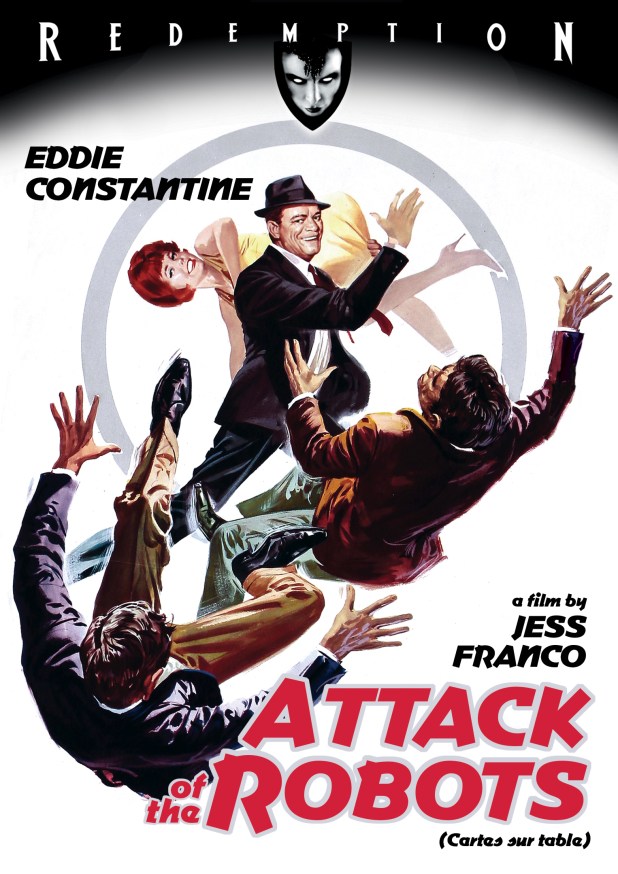
This Eurospy affair stars Eddie Constantine as Al Pereira*, who is hunting down a series of bronze-skinned and horned-rim glasses-wearing killer robots commanded by Lady Cecilia Addington Courtney (Françoise Brion, probably the only person to be in movies like Le Divorce and Otto Preminger’s Rosebud, as well as a Franco film) who is using computers to destroy Europe.
So yeah, Jess shows up playing jazz piano, but don’t worry. Plenty of BDSM and mind control lurk right around the corner, instead of appearing full frontal and center. Perhaps the strangest thing about this movie is that it was shot in color and released in black and white. And that it’s nothing like the Franco movies that people dislike his movies harp on.
*Franco would return to the character in the films Les Ebranlées, Downtown, Botas Negras, Látigo de Cuero, Camino Solitario, Al Pereira vs. the Alligator Ladies and Revenge of the Alligator Ladies.
Man, I’m ultra forgiving of Brigitte Nielsen. She’s been in some movies the normal world dunks on, like Red Sonja and Domino— who am I kidding, I’m the only person I know who has seen this movie where Nielsen plays a music video director who has a pet turtle and an obsession with Billie Holiday — and I am a fan of every one of them.
Kyla (Richard Moll) has destroyed Sintaria to get the jewel that he needs to rule everything. He didn’t count on invisible woman Ladera (Nielsen) to track down another jewel and challenge him, much less the fight coming to Earth. She has to help a human named Jed and fight mercenaries led by Victor Menendez, who is played by an actor named Fred Asparagus, who was Joe “Mama” Besser in This Is Spinal Tap.
This is a movie made for people like, well, you. People who come to this site and say, “I wonder what Cindy Morgan did after Tron and Caddyshack?” The answer is, she played a cop in Galaxis.
William Mesa, who directed this, was a special effects guy. He still is, as he’s worked on movies like Geostorm and Dolphin Tale 2 in recent years. He also directed The Darkening.
Also known as Terminal Force and Starforce, if you get drunk enough, you can pretend that you are watching The Hidden or I Come In Peace.
A trucker (Pamela Jayne Morgan) has just pulled her rig into a state park to rest when a hysterical young woman (Juliette Alice Gobin) accosts her, claiming that she’s fleeing from being a kidnap victim. She doesn’t believe a word the younger woman tells her, which leads to a fight between the two of them that ends with lost keys, a broken phone and nothing but the dark of night around them both.
After this bad beginning, the women start bonding over their shared history of abuse and trauma. But if they want to make it out of this dark night of the soul alive, they better learn how to trust one another.
Writer Todd Rawiszer and director Max Strand have put together a taut thriller here that starts with high tension and doesn’t let up until a late in the story reveals that makes all of the coincidences of the story a little hard to swallow. Luckily, the two leads carry this movie over that barrier and deliver a rewarding film that shows that the talent that made this film may be unknown, but it won’t be that way for long.
Goodbye Honey is available on demand from Freestyle Digital Media.
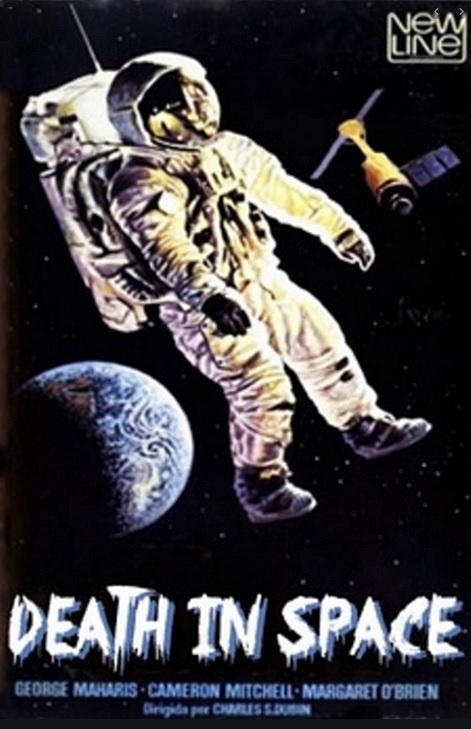
When Colonel Cliff “Rocky” Rhodes (ubiquitous ’60s biker flick stalwart Jeremy Slate), commander of an astronaut crew, mysteriously disappears through an airlock during a mission orbiting 250 miles above the Earth, it appears to be a simple case of suicide . . . or was he murdered? In the vastness of space, and with their communications array damaged, only one of his crewmates can be the murderer. Who among the crew had a reason to kill Col. Rhodes?
Back on Earth, in Mission Control, George Maharis (TV’s Route 66; Murder on Flight 502 and SST: Death Flight), Cameron Mitchell, and Sandy Kenyon (The Doors tome Down on Us) work on the case while Susan Oliver (yes, the Green-skinned girl from Star Trek) frets as the put-upon wife. The ship’s crew stars Star Trek alum Robert Walker, Jr. (“Charlie X”), TV actor John Carter (The Andromeda Strain; fellow TV flick Earth II), and William Bryant, whose long TV career began in the ’50s and lasted into the late ’80s. Margaret O’Brien, who stars as Mrs. Rhodes, won an Oscar for Outstanding Child Actress* for Meet Me in Saint Louis (1944), starred in Jane Eyre (1943), The Canterville Ghost (1944), and continues to work in television and indie films. She’s currently in production on her 75th project, Love Is in Bel Air (2021).
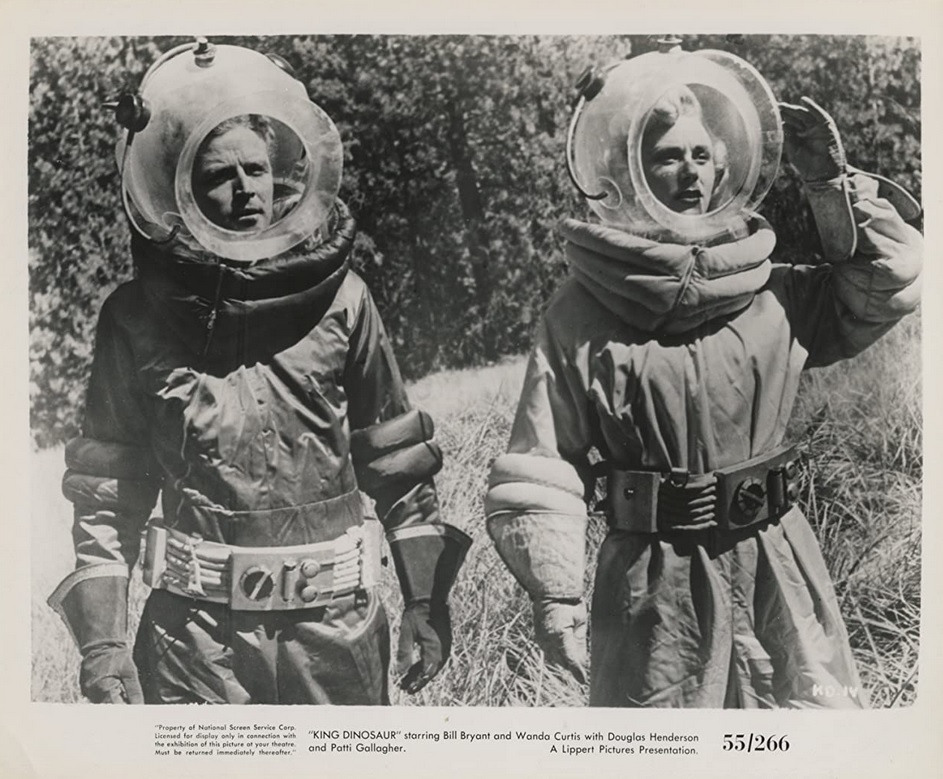
Sadly, as I fondly as recall this flick, the adult screenwriter in me today sees this as a Bechdel test failure: why not have either Susan Oliver or Margaret O’ Brien in a meatier role as an astronaut? Well, this is set in the same present-day Apollo-Saturn V-Skylab era that’s just a few nautical miles down the equator from Marooned (1969) penned by Martin Caidin of The Six Million Dollar Man (1973) fame. Men ruled the stars back in the Kennedy-era and women didn’t conquer space until the far-flung “future” in Project Moonbase (1953), Gog (1954), King Dinosaur (1955), and Angry Red Planet (1959) — even though they were stuck wearing sensible corked-wedged mules and smart black ballet slippers to go with their waist-tailored and pegged flight suits, and smart gauchos with knee-high boots. And screaming and imploring men to “do something” and shoot everything in sight.
But I digress. Again. . . .
Is the odd-looking “New Line” log on the box the same studio later acquired by Turner Broadcasting and merged into Warner Brothers?Your guess is as good as ours.
So . . . why are we here reviewing another Cameron Mitchell (Space Mutiny) sci-fi epic?
Well, it’s another “TV Week” at B&S About Movies . . . and all of that talk concerning Cameron Mitchell and his family’s galactic oeuvre for Allan Sandler and Robert Emenegger’s Gold Key Entertainment — which we discussed at length in our previous review of the studio’s 1981 release, Lifepod — got me to thinking of this ABC-TV movie obscurity (part of the “Wild World of Mystery” shingle) originally broadcast on June 17, 1974. Since I was Apollo crazy and still into my Matt Mason toys, I remember watching Death in Space when it first aired, then again in a post-Star Wars world during a late-night, local UHF-TV rebroadcast — pre-VCR (damn it).
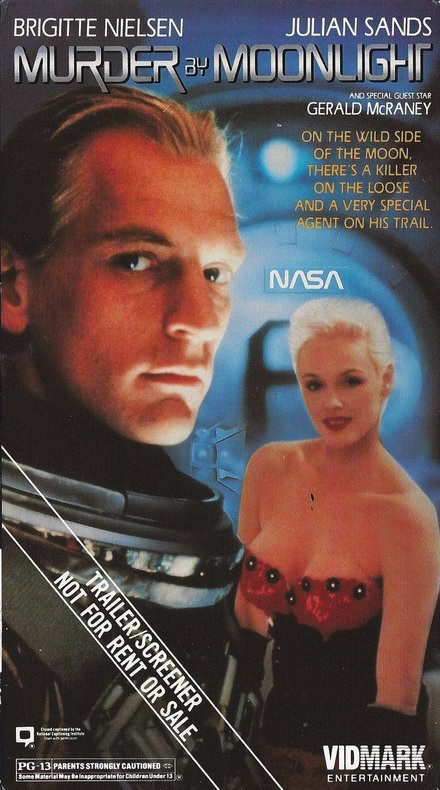
Now, if you know your sci-fi the way we know you do, then you know the whole “murder mystery in space” plotting of this ’70s galactic progenitor was done to a lesser and lesser effect with the Canadian TV romp — which also aired in the U.S. as a first-run Showtime movie — Murder in Space (1985), and the Viacom/CBS-TV production Murder by Moonlight (1989) that, to make it all the more confusing, aka’d in the home video realms as “Murder in Space.” Courtesy of their respective directors, Steven Hilliard Stern (The Ghost of Flight 401 and This Park is Mine) and Michael Lindsay-Hogg (the Beatles “What If” flick Two of Us), and respective stars in Michael Ironside and Martin Balsam, and Brigitte Nielsen and Julian Sands, both films also ran as overseas theatrical features. The effects, sets and costumes are fine, but look cheap in the post-Star Wars environs and each feel like Battlestar Galactica: TOS and Buck Rogers in the 25th Century two-part episode rejects.
Mattel’s Major Matt Mason courtesy of SyFy Wire. Robert Zemeckis and Tom Hanks have been trying for years to get a feature film made.
Sadly, like Don Kirshner’s lost-to-the-ages TV rock ‘n’ roll horror, Song of the Succubus, the only known surviving copy of the English language print of the Agatha Christie-inspired space mystery of Death in Space is stored at the Library of Congress. Never released in an English-language VHS (as far as our research indicates), this Charles S. Dubin-directed telefilm was, however, issued as a dubbed VHS throughout Europe (which is where our image comes from).
In spite of the “Red Scare” blacklisting frenzy of the 1950s (along with Dalton Trumbo, the Award-winning writer of Roman Holiday and Spartacus; the subject of the Brian Cranston-starring Trumbo), Charles S. Dubin, fortunately, was able to build a prolific resume (mostly for CBS-TV) consisting of over 100 series (including 40-plus episodes of M*A*S*H; a few Kung Fu episodes) and TV films dating back to the early ’50s. Making his first bow in the sci-fi genre with the one-season anthology series Tales of Tomorrow, he made his feature film debut with the early rock ‘n’ roll flick Mister Rock ‘n’ Roll (one of five films starring famed disc jockey Alan Freed).
William Bryant starring in the much easier to find King Dinosaur (1955).
Of his many TV movies, Dubin’s best known are his take on Cinderella (1965; starring Ginger Rogers!, Walter Pidgeon!, and Celeste Holm?) and Murdock’s Gang (1973; Janet Leigh), with the best VHS-distributed of them — courtesy of William Shanter starring (more Star Trek connections!) — being The Tenth Level (1976). That same year he directed his second and final feature film: the car-crashin’ hicksploitation romp, Moving Violation** (1976). And, if you’re a TV movie airline disaster connoisseur (Did you check out our last “TV Movie Week” back in December dedicated to those films?), he directed the Arthur Hailey-penned (Airport) International Airport (1985) starring Gil “Buck Rogers,” aka “The Polish Sausage,” Gerard.
The western-bred scribe behind the Brother typewriter is the one and only Lou Shaw, who not only tweaked the dialog on the U.S. version of Hannah, Queen of the Vampires, aka Crypt of the Living Dead (1973), and wrote The Bat People (!), but many-an-episode of Lee Major’s The Fall Guy*˟, as well as an aborted attempt to turn Westworld into the series Beyond Westworld (and Dubin directed the failed series version of Logan’s Run!).
Image Left: Robert Walker, Jr. from the Euro-VHS of Death in Space courtesy of todocoleccion.net. Image Left: ABC-TV promotional still of Jeremy Slate courtesy of Worthpoint.com.
Sigh . . . what I would give to see this faded childhood memory, again, that I’ll always pair with almost-the-Six Million Dollar Man Monte Markham’s The Astronaut (1972). Mill Creek Entertainment or TV distributor Park Circus (Do those Lane Caudell flicks in your library, too, Park Circus) needs to get in touch with the Library of Congress and get this one out on DVD or on the air of the national retro-channels Antenna or Cozi. Other lost TV movies I want to find — that are not uploaded online, anywhere — are the Adam West-starring Curse of the Moon Child (1972) and the ABC-TV “Wild World of Mystery” entry Distant Early Warning (1975) starring Micheal Parks.
Ah, those hazy, snowy memories of TV yore that haunt your ol’ analog memory cores — and reviews that connect Oscar winners to Star Trek guest stars and the guy who wrote The Bat People. You gotta love ’em.
* Read the tale of Margaret O’Brien’s stolen and 40-years returned Oscar at The L.A Times.
William Marshall was born in Chicago, Illinois. He started his entertainment career as the vocalist for Fred Waring and the Pennsylvanians — Waring was “The Man that Taught America to Sing,” as well as the inventor of the first commercially available electric blender in the U.S., the Miracle Mixer, which Dr. Jonas Salk used to help mix up his polio vaccine; plus he had one of the largest collections of original comic strip art in the world — before moving to Hollywood to be an actor.
Marshall acted in twenty-five movies, including Knute Rockne All American, State Fair and Blackmail before becoming a director. He wrote and directed 1951’s Hello God, which starred Errol Flynn, as well as directing a movie Fynn wrote, Adventures of Captain Fabian. The Phantom Planet would be his last film.
In addition to all that singing, writing and directing, Marshall also found time to get married four times. He was with his first wife, French leading lady Michèle Morgan, for seven years and they had a son Mike* (who is in this movie), then was married to Devil in the Flesh star Micheline Presle, with whom he had a daughter, director Tonie Marshall. Then, he was married to Ginger Rogers for a decade* before he found a lasting marriage– 23 years before his death — to Corinne Aboyneau.
But hey, didn’t we have a movie to discuss?
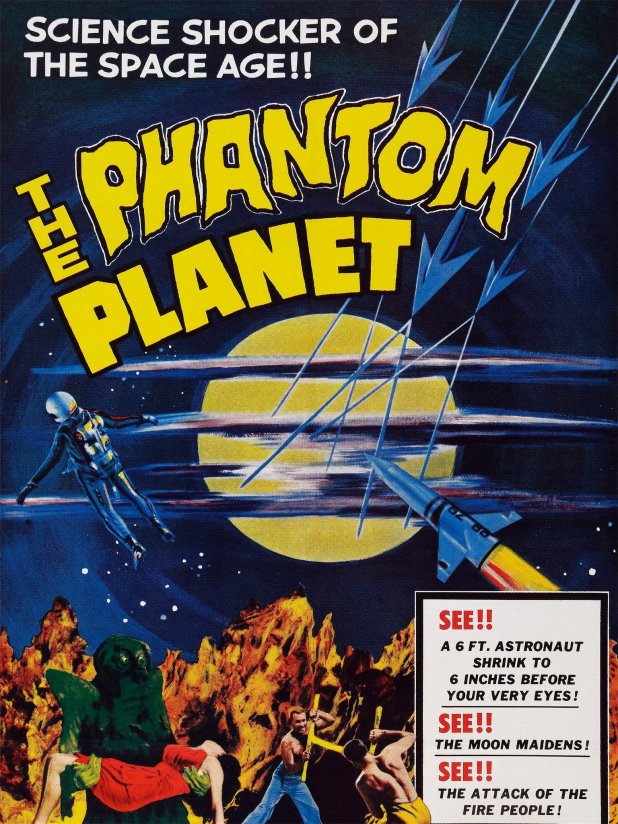
The Phantom Planet takes place in 1980, a time when In 1980, the United States Air Force’s Space Exploration Wing has bases on the Moon and is getting ready to head to Mars. The only problem is that spaceships and astronauts are disappearing. Rumors abound that it’s yet another case of phantom planets and space monsters, so Captain Frank Chapman and Lt. Ray Makonnen are called in.
Don’t get too attached to the latter, as he dies about two minutes later, before Chapman crashes on to the Phantom Planet and shrinks down to six inches in size. Now he has become a citizen of Rheton, where he will have the full rights of everyone else, but can never leave. He even has the choice between two women, the leader Sessom (Francis X. Bushman) entitled daughter Liara or the mute and kind Zetha (Dolores Faith, who disappeared from acting when she married the heir to Maxwell House, James Robert Neal, after a long courtship; she supposedly died in 1990, but there were reports of her still alive as late as 2006).
After some romantic misadventures and trial by combat with Herron, who is in love with Liara, our hero repels the evil forces of the Solarites (Richard Kiel is ond of them) before leaving behind the planet and growing back to full size.
This is the very definition of made on the cheap, as all of the film’s sets, spacesuit helmets and special effects originally appeared in the CBS TV series Men into Space. Speaking of recycling, there are some rumors that Voyage to the Bottom of the Sea reused some of these sets.
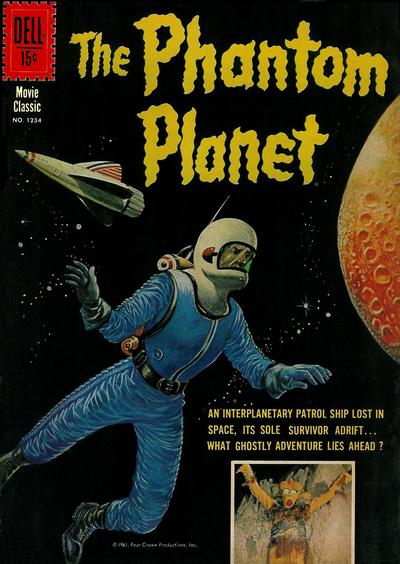
Hey but someone loved this movie! It has a Dell comic book, after all.
*Marshall’s first two wives were friends and he’d begun dating the second (Micheline over Michèle) while still married. She’d already started an affair with her co-star Henri Vidal, so he hired detectives who caught her in bed with him and Marshall got full custody of his son Mike.
Strangely enough, Marshall hated France, despite three of his wives coming from there and would call his first wife Mike because he refused to learn how to pronounce her name.
Strangely enough, Marshall had really conservative values, so when his first wife moved from France to Hollywood, he refused to live in the house she built at 10050 Cielo Drive. He demanded that she sell the property, which years later would be purchased by Roman Polanski and, well, we all know how that turned out. In some level of irony, his daughter Toni was one of the people who signed the Free Roman Polanski petition following the director’s arrest in Switzerland in 2009.
**Actually, he produced a movie for her that bombed called Quick, Let’s Get Married and they were seperated for most of the time they were officially betrothed.
British science fiction force Gerry Anderson is probably best known in the U.S. for his series Thunderbirds, which used Supermarionation to tell the stories of the team known as International Rescue. By the 70’s, he and his wife Sylvia were working together on shows like UFO and The Protectors, while being courted by Cubby Broccoli to write a treatment for Moonraker that was never used.
As part of the Andersons long and successful association with media impresario Lew Grade and his company ITC, Space 1999 was, at the time it was made, the most expensive British series ever made. Airing from 1075 to 1977 — man, they just missed the chance to be part of the Star Wars boom — the series is all about Moonbase: Alpha, staffed by 311 humans who are suddenly launched into deep space when nuclear waste stored on the moon explodes and sends them through the galaxy, in effect turning our moon into a spaceship. One imagines that the Earth itself did not survive, so everyone involved in this show really are the last human beings in the galaxy.
This all came about because the show UFO did better ratings when it was set on the moon. Anderson had been working on a show called UFO: 1999, but when the original show was canceled, he couldn’t get Grade interested in a follow-up. When he pitched this show, the producer demanded that there not be any Earth-bound settings. Anderson responded by blowing up the planet real good in the very first episode.
The issues on this show started when Grade demanded American leads and Sylvia, who usually handled the casts, wanted British actors. She would later say that she could have seen Robert Culp and Katharine Ross in the show, but the main characters of John Koenig and Helena Russell went to real-life couple Martin Landau and Barbara Bain, who had appeared on Misson: Impossible together and who were thought to have been a ratings draw for American audiences.
The show seemingly was always a battle, with writers leaving, budgets being overspent and ITC worried that the show would only run on American syndication and not a network, despite being sold to nearly every nation around the world. It also didn’t help that the Andersons split up between the first and second seasons.
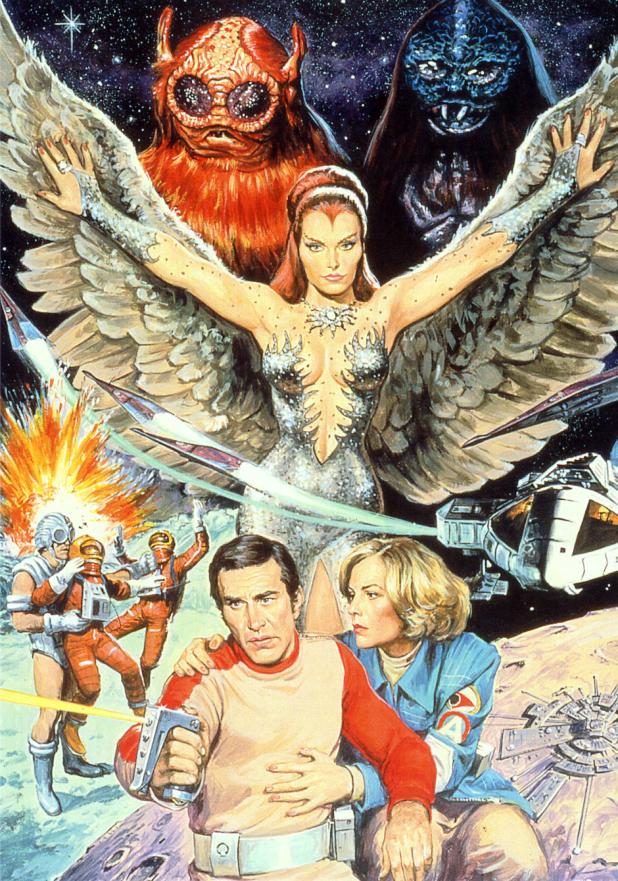
All of this brings us to Cosmic Princess, which is basically two episodes from season 2 — “The Metamorph” and “Space Ward” — edited together. These stories introduce Maya (Catherina Von Schell, On Her Majesty’s Secret Service), an alien who would take up the “Spock” role that some felt would propel the show into being must see TV.
By the time of this story, Moonbase:Alpha had already made its way through two space warps and entered the orbit of Psychon, which just so happened to have the minerals that the crew needed to survive. There’s a theory throughout the show that the leaps that the planet made were predestined and guided by outside forces — like the writing team, maybe? — but that may also be to covered narrative lapses in logic.
That said, it’s all a trap by the planet’s leader Mentor (Brian Blessed!) who is using a machine to drain their souls and make his planet less like hell and more like heaven. His daughter Maya helps the crew escape and joins them. The second episode in here has an alien ship to be explored as Maya deals with a virus that makes her transform into all sorts of monsters.
Speaking of Star Wars, one of the aliens in the second part is named Vader, which is done in voiceover and certainly seems like a complete cash-in.
This movie aired in syndication and all over the world, including KTLA, where it was one of the original movies that Mystery Science Theater 3000 made fun of.
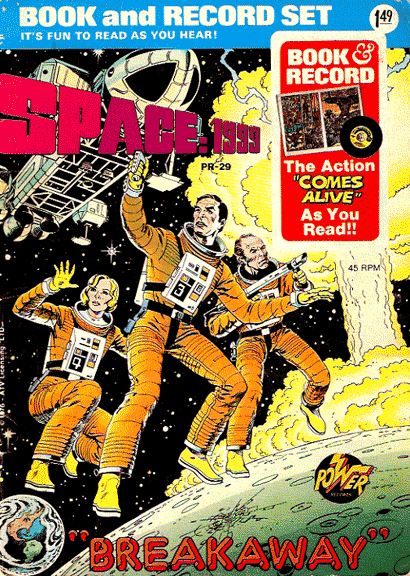
So yeah. I kind of loved Space: 1999as a kid. I had the Mattel Eagle 1, the Power Records book and record sets and the Charlton comics. If you watch this today and think, “Man, this is really wooden and slow and somewhat boring,” I’ll just say that pre-Star Wars, science fiction fans did not have many choices other than watching Star Trek again and again.
Another of the TV movies/overseas threatricals — of which there were four, Cosmic Princess was the final film — was the first: Destination Moonbase Alpha. UFO, itself, was also culled into a series of TV movies and foreign theatricals with the first being Invasion: UFO.
Two cult members named Nigel and Job learn that a comet is about to destroy the world in just fourteen days, so they decide to go on a road trip. As their motorhome tours Scotland, they discover that vampires need to be stopped as part of God’s plan so that they can end their existence in good conscience.
The first full-length film by writer/director John Williams (who also has five acting parts), The Slayers in no way takes itself seriously and you should approach it with a sense of good humor. The comedy gets a bit ridiculous in here and it may go on a bit longer than it should, but you should find at least a good laugh or two.
I can honestly say that it’s the only end of the world vampire movie that I’ve seen, so that’s definitely something worth finding.
You can watch this on Tubi. Wild Eye has also released this on DVD (and were kind enough to send us a copy).
Editor’s Desk: As result of their production synergies, we’ll also discuss the Star Wars-cum-Alien resume of Gold Key Entertainment’s nine direct-to-video/cable-telefilms, which includes the 1981-version of Lifepod.
“It’s a homage, not a remake.” — Tony Award-winning actor Ron Silver about his film directing debut
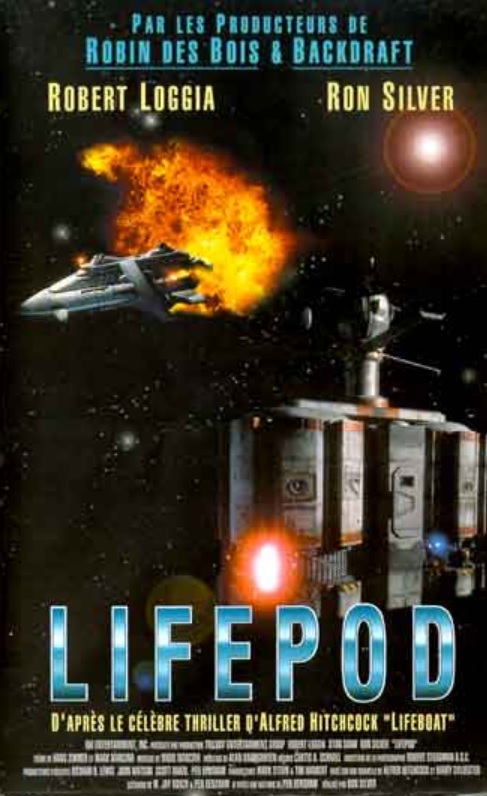
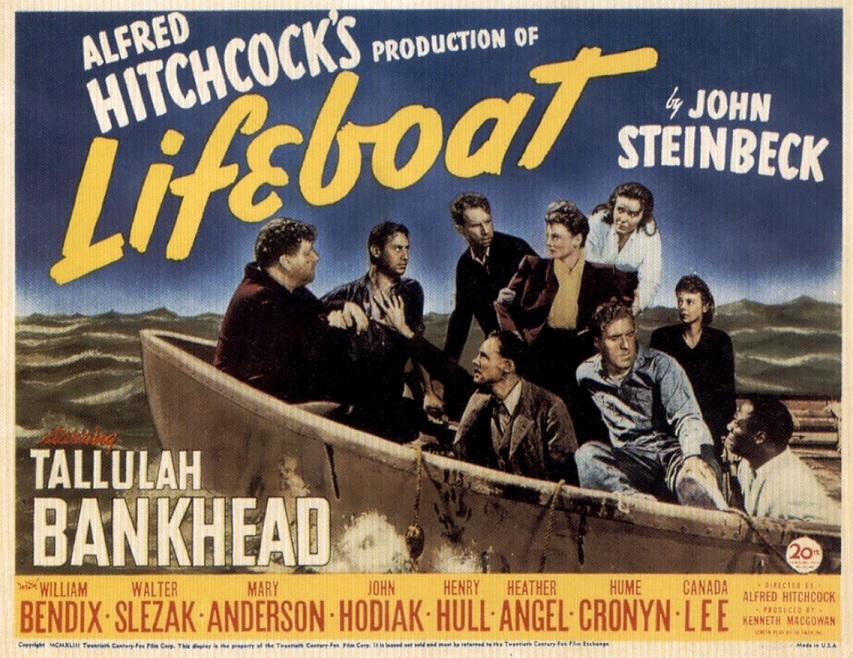
If you’re familiar with the classic, 1944 Hitchcock source material, you know that Lifeboat* was a World War II-set psychological thriller about a group of shipwrecked survivors adrift in a lifeboat — and they have to depend on a surviving Nazi officer to sail them to rescue.
This Fox Television sci-fi version — which aired simultaneously as a commercial-free Cinemax cable exclusive, was produced by Trilogy Entertainment, the studio that also produced Ron Howard’s firefighter drama Backdraft and Kevin Costner’s big screen Robin Hood romp — is written by Jay Roach, whose expansive resume has given us everything from the ’80s Animal House-inspired radio romp Zoo Radio to the Oscar-beloved Bombshell.
We’re so sorry, Uncle Albert.
This time out, our group of survivors (a great cast of Silver, Robert Loggia, C.C.H. Pounder, and Adam Storke, who you’ll recall as Larry Underwood in the ’94 TV adaptation of Stephen King’s The Stand) are lost somewhere between Venus and Earth on Christmas Eve in the year 2169 on a shuttle craft jettisoned from an exploded spacecruiser. And they spend the rest of the film — in plotting that reminds of John Carpenter’s The Thing remake — bickering over who is alien-infected set the bomb that destroyed their ship and has already murdered one of the survivors.
So, do the Star Wars-inspired bells and whistles satiate the younger Starlog magazine subscriber-set in digesting Hitchcock? Well, courtesy of the remake homage’s financial and creative backing by Trilogy and Fox, the production values are high and the acting is top notch . . . but didn’t we see this film already? Wasn’t this fodder for an old ’80s Battlestar Galactica or Buck Rogers in the 25th Century episode? Weren’t Starbuck and Cassiopeia or Buck and Wilma lost on a lifepod with a gaggle of ne’er do wells before their series cancellations?
Me and Kristin DeBell stuck in a space pod? Sounds like heaven.
No . . . wait a minute . . . now I remember!
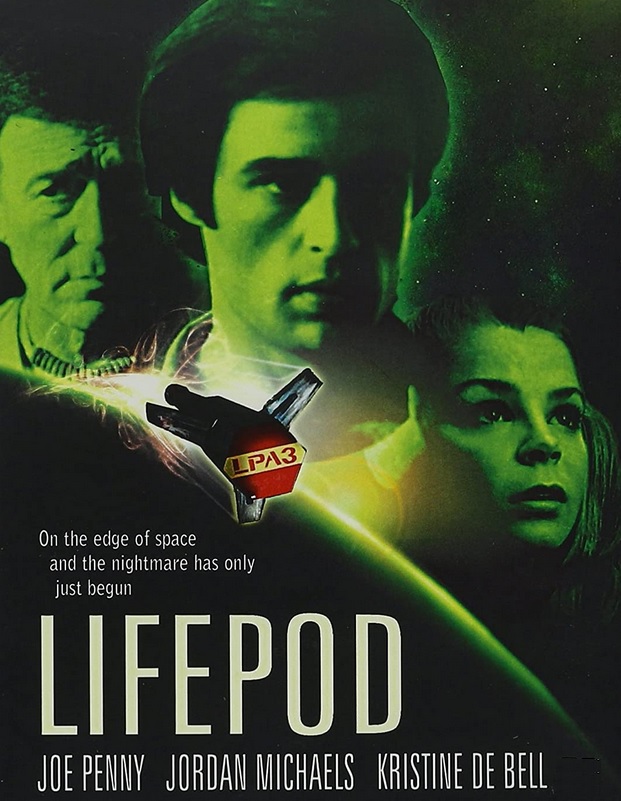
The “Glen Larson” Lifepod I am thinking of is the screenwriting and directing debut of go-to TV main titles designer Bruce Bryant (Salvage I) and his sci-fi remake (not a homage; this time) of the Hitchcock concept with 1981’s Lifepod. It’s this one, starring TV’s Joe Penny (Jake and the Fatman) and Kristin DeBell (Meatballs), made, by not by Glen Larsony, but by producer Allan Sandler for Gold Key Entertainment for the VHS home video shelves.
Yes . . . we are talking about the same Gold Key who gave us the early ’70s kid adventures of H.R Pufnstuff and Sigmund and the Sea Monsters. But, since this is B&S About Movies: Gold Key unleashed the likes of Amando de Ossorio’s Fangs of the Living Dead (1969), I Eat Your Skin (1971), UFO’s: It Has Begun (1981), Piranha(1982), and Don Dohler’s The Alien Factor upon the unsuspecting drive-in masses. (Is this the same Gold Key who also produced comic books; my beloved cheap jack Space Family Robinson issues bought in a three-pack off the comic rack at my local strip mall bookstore, in particular?)
So, the Penny-DeBell one is set 22 years after the Ron Silver one, in the year 2191, with the maiden voyage of the Whitestar Lines’ (know your British nautical history) new Arcturus cruiser in jeopardy on the way to Saturn (yes, this is better, at least in script, than Saturn 3).
Hey, wait a minute . . . this is SST: Death Flight all over again! No, wait . . . Starflight One (where’s Lee Majors?)**. Ugh, don’t you follow along, B&S readers: Lifepod ’81 is the same, but different: we have a talking “Mother” computer, like Alien, natch, who alerts everyone to abandoned ship . . . so instead of planting a bomb, the ship’s “main cerebral” is sabotaged. See, different. Oh, no! Wait . . . the ship was originally intended as an interstellar exploration vessel and the greedy corporation refitted the Arcturus into a pleasure cruiser . . . so, what we really have here is Hitchcock meets Kurbrick, aka a confused Hal has another temper tantrum over mission directives. But since there’s more than one lifepod bouncing amid the stars, we also have a touch of James Cameron’s Titanic in the pinch-o-rama spacestakes.
So, that’s that. There’s no there there, Joe. Uh, what?
Oh, by the Lords of Kobol . . . there’s another Lifepod movie! Is Glen Larson committing sci-fi larceny, again? Roger Corman, are you making more cheapjack sci-fi cable movies? Ugh, not more footage and sets from Space Raiders, again. Please, spare us the Buck Rogers plastic sets, Glen.
Aka, Lifepod. What, no “3” suffix, Mr. Distributor?
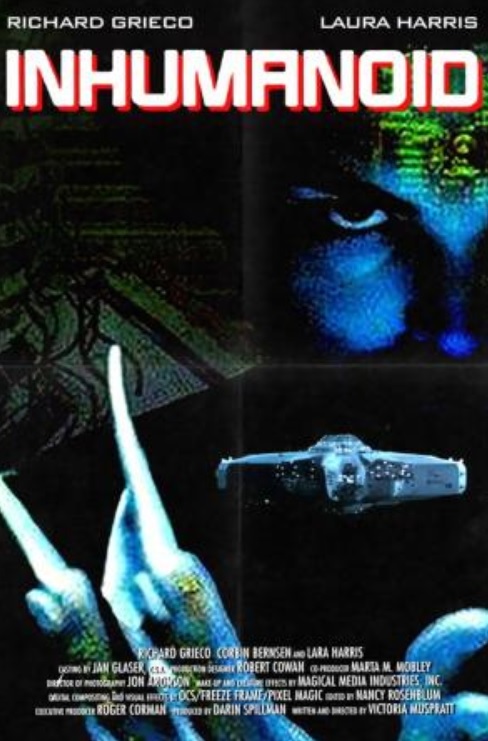
While it’s not a Larson or Corman flick (Oh, no! There’s a “Roger Corman Presents” title card!), this is, in fact, a third Lifepod flick, one that’s also known as Circuit Breaker and Inhumanoid in various markets. In this version of the battle of the Lifeboat/Lifepod sci-fi homages remakes reboots, this one was released direct-to-video in 1996 and stars Richard Grieco (Raiders of the Damned) and Corin Bernsen (The Dentist).
Ah, oh, okay . . . I see, it’s not the same, but different (you know, like when Within the Rock clipped Armageddon and Creature), since, in addition to Lifeboat, they’ve also ripped the 1989 Sam Neill-Nicole Kidman starring Dead Calm — with Richard Grieco as the star-stranded galactic serial killer, aka the Billy Zane role, and Corbin in the Sam Neill role.
Whatever.
I refuse, on principle, to never watch it: ever, as I have my limits on how much galactic feldercarb I can swallow a secton. Hey, wait a sec . . . yep, ol’ Rog is copycatin’ again! Event Horizon, which started out with the pitch of “Dead Calm in space” (and became something completely different by the time it hit the big screen), came out in 1997 — and it starred Sam Neill. Bravo, Rog! You beat ’em to the punch, again!
2001: A Space Boat Odyssey.
Gold Key Entertainment in Space!
I have, however, watched the 1981 and 1993 Lifepod flicks, and truth be told: they’re really not that bad and both are solid on the production and acting fronts — the ’81 Penny-version over the ’93 Silver-version for me.
So, does this mean the rest of Gold Key Entertainment’s Kessel Run are just as good as their version of Lifepod: a series of pumped-out-in-quick-back-to-back-succession sci-fi flicks by writer-director-producer Allan Sandler and his partner, Robert Emenegger (he’s the point man, here, as he wrote them, directed six, and by Atari and Casio, scored them all) between 1979 to 1981.
As far the order in which these were made or released: your guess is as good as ours. It’s possible — since it’s the best looking of the nine films and has the stronger, best-known cast — Lifepod ’81 was probably the last film produced. However, we’ll defer to the order in which the IMDb lists the films. Some are more easily available to purchase or stream, than others:
Captive (1980) — Two survivors of an alien spaceship crash-land on Earth and hold two people hostage. Cameron Mitchell stars with ubiquitous TV actor David Ladd.
PSI Factor (1980) — Aliens from another dimension appear on Earth as a scientist tries to learn of their intentions. The first Gold Key’er for Gretchen Corbett, alongside go-to TV bad guy Peter Mark Richman (one of his films was Jason Takes Manhattan).
Killing at Outpost Zeta (1980) — A team is sent to a remote planet outpost to investigate two missing expeditions. Jackson Bostwick, aka TV’s Captain Marvel from the ’70s Saturday morning series Shazam!, stars. Yes, that’s Paul Comi, aka Lt. Stiles, from Star Trek: TOS: the first season episode, “Balance of Terror” (and this almost plays like an old ST episode-arc). This one is still out there in 2023 on Tubi!
Beyond the Universe (1981) — A scientist tries to save the Earth after two atomic wars. Familiar TV actor Christopher Cary of Planet Earth (1974) with John Saxon, stars.
Escape from DS-3 (1981) — A man framed for a crime he didn’t commit breaks out of a satellite-based security prison. Jackson Bostwick returns (then he’s off to the Future Zone with David Carradine), alongside Cameron Mitchell’s son, Jr., who had a small role in the even-cheaper, somewhat similar production stumble, Space Mutiny (1988), that starred his dad, and sister, Cissy.
Lifepod (1981) — Our space-take on Hitchcock’s Lifeboat.
Warp Speed (1981) — A psychic is dispatched to an derelict vessel in space to discover what happened to her crew. Cam Jr. returns, his sister Camille is on board, along with Adam West, and early roles for TV actors David Roya (Law & Order franchise) and Barry Gordon (Archie Bunker’s Place).
Time Warp (1981) — An astronaut returns from space only to discover he somehow traveled through a “time warp” and is now one year into the future — rendering him invisible. Gretchen Corbett, Cam Jr. and Adam West, returns. As result of the Adam West-connection: Time Warp and Warp Speed are available as a double-feature DVD — and the only other of the series on Tubi. (Even after the likes of Adam’s work in Omega Cop and Zombie Nightmare, which are, well, you know: this is a major step down for him.)
Laboratory (1983) — Aliens kidnap a group of humans in order to perform experiments upon them. Camille Mitchell returns, alongside Martin Kove (John Kreese from The Karate Kid.)
Based on these film’s syndicated UHF-TV, pay cable plays, and VHS quick releases and common-cast actors threaded throughout — including many more, very familiar ’70s TV actors in support — there’s LOTS of stock prop, set, and footage recycling — courtesy of Steven Spielberg’s sister, Ann, as the Production Designer.
So, after Lifepod: Warp Speed my interest as the best of the bunch — as far as acting, sets, and script; it reminds of a cheaper Silent Running. Then, Killing at Outpost Zeta, since — even though it’s ripping Alien and foreshadowing Aliens — has some nice cinematic atmosphere that reminds of Mario Bava’s Planet of the Vampires (1965). But it is still pretty bad, with its motorcycle space helmets and flexi-hoses.
Let’s put it this way: Are you into Alfonso Brescia’s five Italian space operas that we covered with our “Drive-In Friday: Pasta Wars” tribute? Are you hankering for Filmation’s Ark II, Jason of Star Command, and Space Academy Saturday Morning “Star Wars” homages? Have you wondered if there were pseudo-sequels (at least in style and tone) to the Canadian Lucasian rip that is The Shape of Things to Come? Did NBC-TV’s plastic Kessel Run hopefuls The Martian Chronicles and Brave New World capture your imagination? Well, then, you’ll have yourself a fun-filled weekend of it-ain’t-George Lucas-or-even-Glen Larson-it’s-Allan Sandler sci-fi watching to occupy your time adrift on that intergalactic lifepod that Alfred Hitchcock built.
Oh, yes, there’s stock footage, sets, props, and costume recycling adrift in those there stars, keep looking up, young warrior!
Back to the Lifeboats, er, ah, Pods!
You can stream the 1981 Joe Penny-version on Amazon Prime and You Tube, and the 1993 Ron Silver-version on Amazon Prime and You Tube. If you absolutely must defy the Magic 8 Ball’s heeds beyond the trailer or skimming the upload . . . you can watch the 1996 Richard Grieco-version on You Tube.
** Be sure to check out our “Lee Majors Week“ tribute of film reviews. Also check out our month-long “Star Wars” tribute blowout rife with over 50 space opera droppings and clones reviews, as well as our “Space Week” tribute of films from the ’50s and beyond. And we got all your Alien-rips, too, with our “Ten Films that Ripoff Alien (and more)!” feature.
About the Author: You can learn more about the writings of R.D Francis on Facebook.He also writes forB&S About Movies.
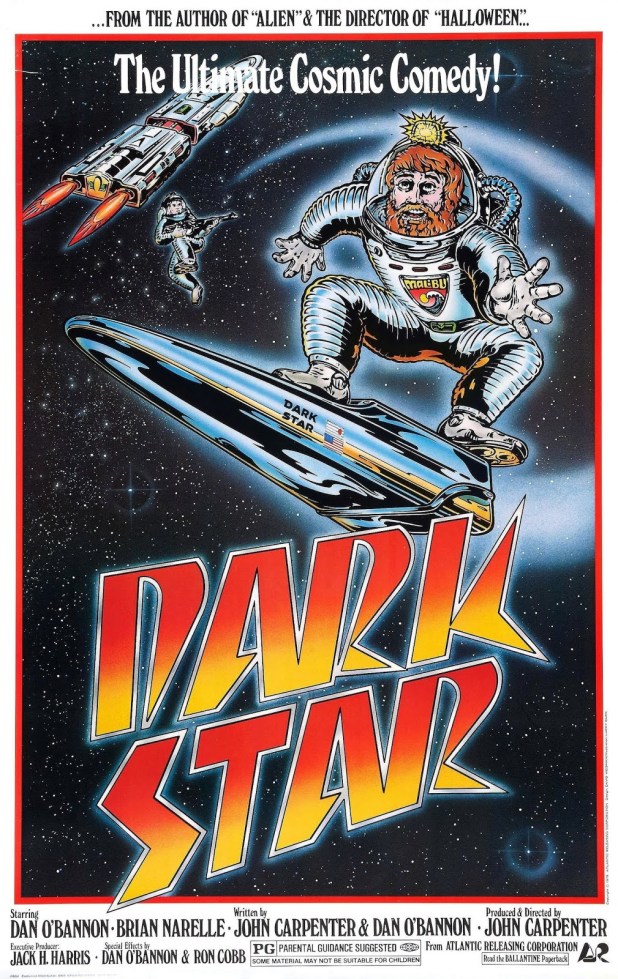
As a kid, I was obsessed with seeing Dark Star. This film, which combined the talents of John Carpenter, Dan O’Bannon, Ron Cobb, Greg Jein and Bob Greenberg, was constantly in the pages of Starlog.
When I finally saw it — it played theaters until 1980 and then I was able to rent it when I got older — it didn’t live up to what I wanted it to be. Now, watching it as an old man instead of a kid just starting his life, I get it. It finally makes sense to me: even a job in space is totally going to suck, no matter how fantastic the worlds we get to travel to.
Twenty years into their mission to destroy unstable planets with Thermostellar Triggering Devices so that these worlds don’t threaten future colonization of other planets, the crew of the Dark Star has all gone insane. Or dead, as Commander Powell — voiced by Carpenter — is just a voice from cryostorage.
Lieutenant Doolittle dreams of surfing. Sergeant Pinback — O’Bannon — claims to be Bill Frug, a liquid fuel specialist, and says that the real Pinback is dead. Corporal Boiler has grown obsessed with his mustache. And Talby just watches the universe go by. None of them will be able to escape the crushing ennui of this voyage or a ship that is falling apart, filled with talking bombs that have learned Cartesian doubt.
In the end, all you can do is surf out into nothingness and burn out instead of fading away.
This started as a 45-minute 16mm student project with a six grand budget, but to get it in theaters, it needed more footage and to be pushed to 35mm to get in theaters. John Landis got the filmmakers in touch with Jack H. Harris, who padded the film some more. O’Bannon would later say that somehow “the world’s most impressive student film and it became the world’s least impressive professional film.”
Beyond writing and starring in the movie, O’Bannon also designed several of the film’s special effects, including one of the first usages of hyperspace in a movie. The influence of this movie goes beyond that, as O’Bannon would use the sequences with the evil ball to write Alien and the British show Red Dwarf would take the ball — pun unintended — and run with an entire series based on the themes of this movie.
As for influences on the movie, Phillip K. Dick’s idea of frozen dead people communicating from beyond definitely informs the commander. O’Bannon would later adapt We Can Remember It For You Wholesale and Second Variety as Total Recall and Screamers. Plus, while I don’t want to give away the ending, but it’s the exact same way that Ray Bradbury’s Kaleidoscope wraps up.
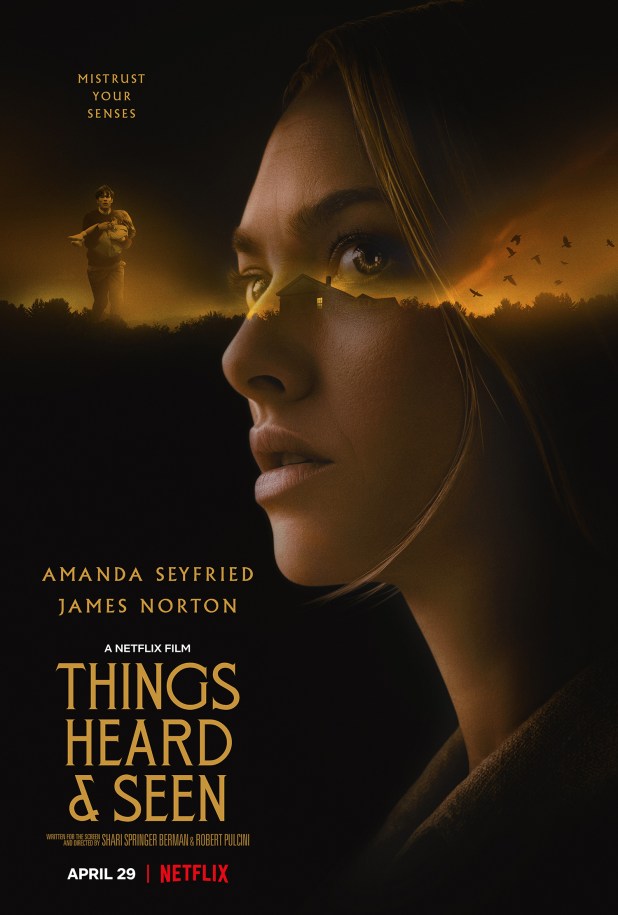
Based on All Things Cease to Appear by Elizabeth Brundage, this movie reminded me equally of Cold Creek Manor and What Lies Beneath, except that it really makes great use of Thomas Cole and the Hudson River School of painters.
Catherine Clare (Amanda Seyfried) had a career as an art restorer in Manhattan until her husband George (James Norton) lies his way into a job teaching art history in Chosen, New York. In their new home, Catherine finds an old ring and a Bible with the names of those who had once lived in the house scratched out.
Much like the aforementioned Cold Creek Manor, the children of the last tenants come to help fix up the house. Beyond the supernatural feeling of the home, George starts sleeping around and alienating his wife from any relationships that she starts to form.
By the end of the film, George has gone from bad husband to pretty much a supervillain, taking the paintings of his dead cousin as his own, attacking anyone who will keep his perfect life from continuing and spitting profanity at anyone near him.
But hey! Michael O’Keefe from Caddyshack shows up, as does Karen Allen as his wife. F. Murray Abraham is — as always — dependable. And the ending is pretty wide open to interpretation, as is a scene where Catherine pulls a flesh-colored tadpole out of the sink while she’s trying to get her ring out of the drain.
Shari Springer Berman and Robert Pulcini have directed several movies together, including The Nanny Diaries, Girl Most Likely and American Splendor.
A lot of reviews of this movie have been upset that the film seems to be building to something and just kind of ends. As for me, that was the thing that I really liked. It just gets wild at the end and enters a world where things don’t make sense. Then again, I like the ending of The Beyondand my taste is not to be trusted at all.







 B&S About Movies
You must be logged in to post a comment.