B-MOVIE BLAST: Indian Paint (1965)

The Mill Creek B-Movie Blast set is even more all over the place than your normal Mill Creek set, which usually at least has a horror or science fiction theme. Honestly, they could have just called this Mill Creek presents Nearly Everything Crown International Pictures Released. Actually, they totally should have, because I would have bought it even sooner.

Yes, not everyone has a Crown International Letterboxd list. But I sure do and one of my life’s goals — look, it’s my grail, not yours — is to see every single movie they ever released.

To get there, I’m going to have to make it through Indian Paint, a 1965 western with Johnny Crawford (Mark McCain from TV’s The Rifleman), Jay Silverheels (Tonto from TV’s The Lone Ranger) and Crawford’s brother-in-law Pat Hogan, a Native American actor who showed up in plenty of films before his untimely death at the age of 46. Hogan seems pretty awesome, as in his spare time he wrote for men’s magazines and was such a good writer that John Steinbeck sent him a note praising his writing. Know what’s even more amazing? His dog’s name was White Man.

This being a 1965 Western, Crawford ends up playing Nishko, the chief’s son who must tame a painted pony. Nobody told him anything about the rattlesnakes,cougars, wolves and enemy tribes that he’d have to handle along the way.

This was directed by Norman Foster, who made a pretty great film noir called Kiss the Blood Off My Hands, as well as several of the Mr. Moto, Charlie Chan and Davey Crockett movies. He wrote the film as well, which isn’t as problematic as most westerns from this time. So there’s that.

The quest to complete the Crown International library continues.

You can watch this on YouTube.

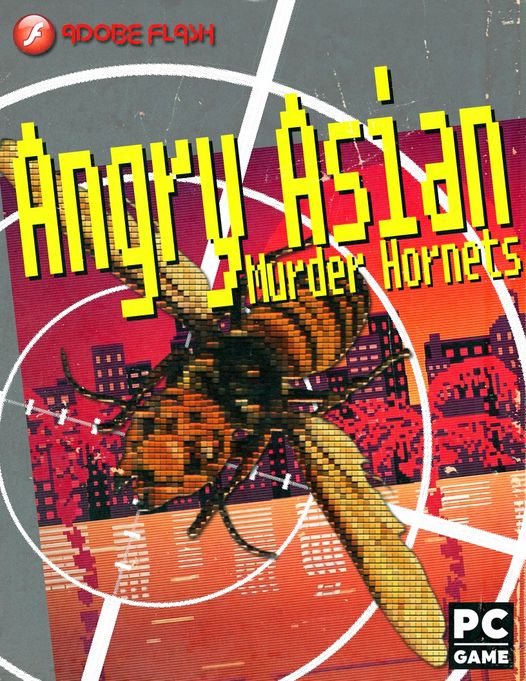
Angry Asian Murder Hornets (2020)

Filmed in less than 2 weeks during the COVID-19 pandemic, Angry Asian Murder Hornets has just one more way that last year could have been the worst in our lifetime: yes, murder hornets getting into Chinese nuclear product.

The thing I loved best about this movie was that the first five minutes feel like a B-roll filled nature reality show all about these bugs which don’t really exist. I mean, murder hornets sound bad. Angry murder hornets are even worse.

Asian, well, I guess at least we know where they’re from.

Director Dustin Ferguson seems to make a movie every time he wakes up, but you have to give the guy points for being prolific and having a hefty sense of fun in the movies that he makes. Also, it’s kind of interesting that his movies seem to be 70s grindhouse movies upcycled to 80s video rental movies that have 90s and 00s soundtracks, what with the We’re Wolves cover of “Break Stuff” that plays when an angry murder hornet buzzes by, much less the second cover, this time “Let the Bodies Hit the Floor” over the closing credits.

He’s also pretty good at being meta, bouncing the film from location to location, often using cable news and a horror hostess, Malvolia The Queen of Screams, to keep things jumping.

By the time you’ve read this review, Dustin has made three more movies. One of them is Ebola Rex Versus Murder Hornets, which I really want to see. I kid — I watch just about everything the guy makes! You should too.

You can watch this streaming on So Cal Studios On Demand or order the DVD right here. There’s even an online game the filmmakers have hinted at. You can learn more on the official Facebook page.

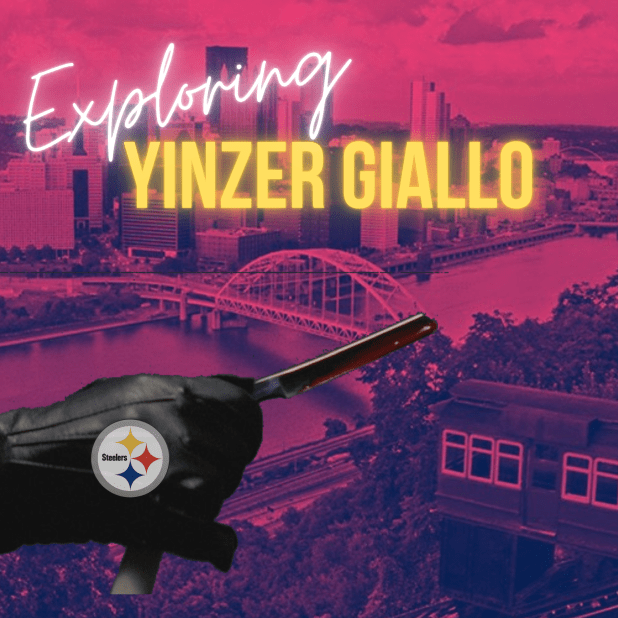
EXPLORING: Pittsburgh Giallo

yinz

The other night, while we were watching The Majorettes on the Groovy Doom Drive-In Double Feature, I was struck by a strange idea.

“Do you think this is a giallo?” my co-host Bill asked me. This is a regular occurrence, as I often see the yellow-tinged edges of the traditionally Italian psychosexual film genre — inspired by English writers like Ellery Queen and Edgar Wallace and German krimi films — that got its start in the early sixties thanks to films by Mario Bava, Massimo Dallamano and Umberto Lenzi amongst others before finding its true bloody heart in 1970 with Argento’s The Bird with the Crystal Plumage.

As I continued watching the film, a low-budget slasher-era flick written by Night of the Living Dead co-writer John Russo, that question kept knocking around in my head. If I were born anywhere other than Western Pennsylvania, so much of the film would seem like any old movie. But the movie’s theme of someone being obsessed with the innocence of young women and feeling the need to kill them to preserve it definitely is right in line with classic giallo like Don’t Torture A Duckling — Fulci in the provinces dealing with religion — and The Blood Stained Shadow, which has the fascinating alternate title Solamente Nero (Only Blackness).

By the end of the evening, I came to admit that yes, this pretty much was a giallo and that there are at least four other films that I would classify in my newly created genre of yinzer giallo.

If you’re not from Pittsburgh, the word yinzer is “historically used to identify the typical blue-collar people from the Pittsburgh region who often spoke with a heavy Pittsburghese accent. The term stems from the word yinz, a second-person plural pronoun, brought to the area by early Scots-Irish immigrants.”

Pittsburghers — yinzers — speak with a certain patois that transforms simple words like downtown to dahntahn and ideas like being a busy body and snooping to simple, junk drawer catchall phrases like the word nebby. I’ll use it in a sentence for the benefit of anyone that hasn’t been within a hundred miles of The Strip District: “Why yinz being nebby? Mind your own business.”

I love Pittsburgh—a Rick Sebak doc will move me to tears in seconds—and I adore giallo. So together? Well, that’s like putting fries on a salad, which is pretty much Allegheny County’s major contribution to the world of cuisine.

So what is yinzer giallo?

I have some rules about what is and is not a giallo. As you’ll notice, Yinzer Giallo breaks from some of these traditions, but let’s review:

  • There’s a murder, generally by someone with black gloves and we see several of the kills from their point of view.
  • The lead character is often impacted by the killings or accused of them; they are often a fish out of water, a foreigner in a new place who is confronted by shocking violence.
  • If the movie isn’t about murder, it’s a psychosexual freakout where the lead character undergoes a drug-like or drug-filled odyssey through a permissive time period or thinks they may have killed someone and can’t really remember all the details.
  • If possible, religious guilt should be explored. This makes sense as most giallo was made in Italy, a country that has the Roman Catholic Church’s own country smack dab in the middle of one of its largest cities. Not so coincidentally, the large number of Italian immigrants to Western Pennsylvania also makes Catholicism and its morals central to growing up yinzer.
  • Artistically, there should be high fashion, beautiful people, abundant nudity, red herrings, nonsensical plotlines, and you should care about discovering who the killer is more than the kills themselves. To wit: if the movie at any point makes you believe the killer or the final girl is the most important element of its story, you’re watching a slasher, the cheap American cousin of the giallo.

To be a Pittsburgh giallo, the film must accomplish all of the above — when possible — and also:

  • Be true to its Pittsburgh roots, meaning that the movie must be filmed here while speaking directly to the experience of growing up in the city.
  • If the movie has been filmed here, it must reference Pittsburgh and not have the city stand in for another town.
  • It must feel authentic, which helps several films on this list as they are movies with moments that only make sense when you’re a lifelong Pittsburgher.
  • Bonus points for featuring Pittsburgh landmarks, Steelers jerseys and local brands. Trust me, seeing a can or bottle of Iron City in a yinzer giallo is like a J&B bottle in a traditional example.

Without further ado—I already used seven hundred words to get her—here are the first few films that I’d label as yinzer giallo.

Season of the Witch (1973, directed by George Romero): Sure, plenty of movies have been made in the Steel City. There is one that is the most important, however.

I subscribe to the notions of Joe Bob Briggs, who opined that modern horror has its roots right here with the release of 1969’s Night of the Living Dead, a movie that ferociously broke with the Universal monster and b-movie science fiction tropes and presented our neighbors and family members as a cannibalistic threat that was out to get us, as well as the people outside our doors ready to destroy the hero because — yeah, my hometown is complicated — black people are just as much of a threat as flesh-eating ghouls.

After Night, Romero kept working in TV commercials and seeking other films to direct. His first follow-up was the comedy There’s Always Vanilla, which makes me think of this Edgar Wright quote about Romero: “…there was always the sense that George had interests in film that stretched beyond the realm of horror.” It’s a romantic comedy, but it doesn’t work as well as it should.

Romero’s second commercial failure was this film, released initially as Back and re-released as Hungry Wives with sex scenes added in by its distributor. After the success of Dawn of the Dead, it was reissued as Season of the Witch.

This film neatly fits into the giallo mold of films that are less about murder and more about women awakening to feminism or sexuality at the dawn of the 1970s. It fits neatly in alongside films like A Lizard In a Woman’s Skin and All the Colors of the Dark (ironically released in the U.S. as a Night-ripoff with the title They’re Coming to Get You that truncates the original film’s denouncement), movies that show how the supernatural, drugs and sex can take a woman away from the boring life of committed servitude to uncaring husbands into a world that is at once more interesting, darker and often deadly. Often, these films are trying to take Rosemary’s Baby and make it work within the constraints of the giallo.

Joan Mitchell is the Jack’s wife of the title, a woman with a daughter leaving the nest for college and a husband who is often gone and when he is around, continually mutters about the need to “kick some ass,” which more often than not is hers. Soon, she learns that there’s a coven of witches in her suburban neighborhood — somewhere in the North Hills — and that by joining them, she can have the men her daughter sleeps with fall for her while discovering a violent solution to her marital woes. Of course, she also has to deal with terrifying visions of a devil-masked man attacking her.

Season of the Witch is not a traditional giallo. Still, it fits into the genre, a feminist movie made by a man trying to understand the massive and sweeping changes that 1973 would witness.

Martin (1978, directed by George Romero): I consider Martin to be Romero’s greatest film and the one that so perfectly encapsulates Pittsburgh, casting it as one of the movie’s main characters, a dangerous place that may have lost its fangs, but one that can still claim young lives.

I’ve often said that the more supernatural a film is — Suspiria, for example — the less giallo it is. Yet Martin, a film about a vampire, is on my list of yinzer giallo. The answer is simple: Martin believes that he is a bloodsucker in the mold of classic films, a romanticized ideal, when the truth is that he’s a boy with a dark dream that must be aided and abetted by drugs and a razor blade. And while I also stated above that if you care more about the killer the movie is a slasher, the real monster in this movie is its setting, which has lost the vital blood of the young men that once worked its mills and mines and kept it alive, and the old men left behind like Martin’s uncle Tateh Cuda, who will not break from tradition and remains trapped in the days when the word of men and church was not just respected, but feared. Martin may believe that he’s a vampire, but Tateh is dead sure of it and equally certain that he will be the one to destroy him.

With its thrilling stalking sequence on a train—juxtaposed by the sad reality of what is really happening—Martin has moments of bloodletting that bring it into the Giallo while flirting with the supernatural, yet never going far from its hardscrabble Braddock roots.

Effects (1980, directed by Dusty Nelson): Little known outside of Pittsburgh until Synapse released it on DVD in 1985 and then later, when AGFA re-released it in 2017, this film often gains the label of a slasher when it mines much deeper territory.

While the movie starts as a story about a team of coked-up horror movie-making maniacs descending on the quiet town of Ligonier to make a film about coked-up psychopaths making a snuff film in the woods, the meta nature of this movie—made decades before that kind of exploration was accepted—creates a world where the violence the crew is lensing is more real than the murder they expected.

In essence, everyone in the film becomes that stranger in a strange land that the Gialloo form seeks as a hero, all unsure whether they are just a character or another victim at the hands of the killer.

Again, this is not a well-known film, and its time has changed.

The Majorettes (1987, directed by S. William Hinzman): Released in the UK as One by One, this claims to be a slasher but really fits into the giallo mold for several reasons. One, the plot is in no way as straightforward as a slasher, constantly shifting who the hero or heroine is, setting up multiple plots and red herrings, and using the central conceit of a killer needing to preserve the innocence of young girls as his or her reason for needing to slay them.

Russo had already directed 1982’s Midnight, a film that I’ve referred to as “the movie that Rob Zombie keeps trying to make” and The Pittsburgh Press film critic Jim Davidson savaged, saying that the film was “grave and heavy-handed. Russo isn’t doing Grand Guignol; he isn’t spoofing Satanism or catering to an audience that enjoys silliness and artificiality of horror movies.” So basically, the guy hated the movie because it played its brutality straight. Cool.

The Majorettes is a shambling mess, but as stated at the beginning of this article, this is a film that becomes a yinzer giallo because of the cultural touchstones lost by those far from our city. VFWs that double as seedy strip clubs (look for multiple Iron City bottles all over the place and several Steelers jerseys), an above-ground pool as a quick reference to the affluence of one of the girls (that only makes sense if you’re from here, trust me) and the fact that every one of these girls has the hairspray enabled hair claw that was the style of my teen years. People had big hair in the eighties, I know. Girls in Pittsburgh strove to be the one personally responsible for tearing a hole in the ozone layer.

The film also does what giallo always does and what makes it so uncomfortable to watch for some in a modern frame of mind: sex is presented at once as exhilarating and then as a sin that causes destruction. Except that this isn’t a faceless maniac in the woods. This is an authority figure out of control; the first of many in this film, as the only person able to truly have agency, becomes a murderer and succumbs to the shock of what he’s done. Priests, nurses, cops — every one of them is a horrible person, and the only one who is innocent in the film is an old woman in a wheelchair who can’t even communicate anymore.

Midnight, also written by Russo, closer to a rural slasher than a giallo, while it’s lo-fi SOV sequel, Midnight 2: Sex, Death and Videotape gets so close to making this list, except that parts of it were shot in Akron and if there’s one thing people here dislike, it’s another city taking the place of our own. See Stigmata below, and never bring it up to me.

Lady Beware (1987, directed by Karen Arthur): Arthur also made The Mafu Cage, an oddball movie about two incestuous sisters — one an astronomer, the other a primate-obsessed maniac prone to violent outbursts fading away in a decrepit Hollywood Hills mansion — that sounds absolutely perfect.

Her contribution to yinzer giallo has been selected because Diane Lane’s character has the dream job of nearly every young Pittsburgh girl in the 1980’s: she’s a window-dresser for Horne’s department store, a venerable downtown institution that is sadly long gone (another burst of yinzer speak: when you tell someone to mind their own business, you reference another downtown retailer and say, “Does Kaufmann’s tell Horne’s their business?”).

She’s also decorated her mannequins — another giallo trope! — in kinky poses clad in lingerie. That’s pretty much enough to qualify this film, but it goes even further to have Lane be stalked by a married psychopath.
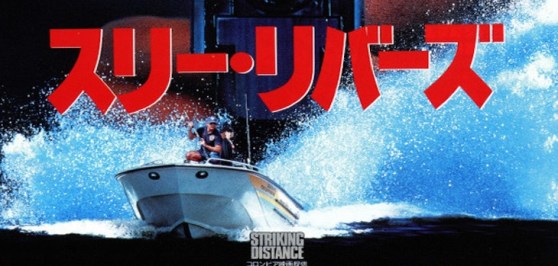
Striking Distance (1993, directed by Rowdy Herrington): In any other city, Striking Distance is not a movie that is remembered. In Pittsburgh, however, it is recalled with the same intensity that other locales afford to Herrington’s more famous film, Road House.

This was Herrington’s return to the city of his birth, which was initially called Three Rivers and was due to start Robert De Niro (to learn that story and how the name changed, check out part three of our interview with Rowdy). Things didn’t quite work out, but despite the issues Herrington had making the movie, it’s still beloved, perhaps most of all for a car chase that illogically combines Pittsburgh neighborhoods miles and miles away from one another, leading to a line constantly referenced in Pittsburgh traffic: “Take Bigelow!”

It has a stranger in a stranger land. Bruce Willis’ homicide cop Thomas Hardy is now off the force and on the River Rescue Squad, his life destroyed by his claim that the Polish Hill Strangler is a fellow cop. And that killer hasn’t stopped murdering people. Beyond killing Thomas’ father, he’s now murdering every woman that Tommy dated (which ends up being plenty of ladies) and calling the ex-cop to play “Little Red Riding Hood” while taunting our hero.

There’s also the black gloves of the Polish Hill Strangler, plenty of red herrings, interfamily secrets and perhaps the best the Steel City has ever looked on film. The fact that there isn’t a River Rescue Squad for real is one of the saddest things I’ve ever learned in my life. In fact, it’s worse than that Santa myth.

Santa Claws (1996, directed by John Russo): While this film may not have all the proper elements of a proper giallo, this shot-on-video movie has the deepest dive into the heart of downtown Pittsburgh I’ve seen in nearly any movie. If you wandered Market Square in 1996, you’ll be amazed to see it back here with everything from the gigantic National Record Mart to GC Murphy’s and the Oyster House making appearances. And if you were really there, you remember the mysterious Novelties, a store that always smelled of incense and sold nothing but hats. Certainly, it was a front for some criminal business, and in this movie, it’s where the killer buys his Santa costume.

Raven Quinn (Debbie Rochon) is an ex-scream queen turned housewife as her husband keeps sleeping with other horror stars, drawing Wayne and his holiday murder spree into their lives.

Imagine Night Killer made in Allegheny County, and you have this movie, and I couldn’t be happier about it. This movie is more Pittsburgh than fries on your steak salad. It’s trash, but the best kind of unrepentant trash. The dance scenes remind you of when the Edison Hotel wasn’t tied to a national group of men’s clubs, and Chez Kimberly was a place you were potentially worried about walking into. And don’t get me started on the Roman V.

Russo also made Heartstopper, a vampire movie set in the Paris of Appalachia. While it thanks the Oyster House in the credits, it is not a yinzer giallo. It’s pretty fun, however.

Movies shot in Pittsburgh that have giallo elements that are not giallo

Whispers In the Dark is about a sadomasochistic sexually obsessed patient who confesses his fantasies to his Manhattan psychiatrist, who soon begins sleeping with him. However, a series of murders begins, which seem to echo the stories that he tells her. Beyond being closer to the erotic cable thriller genre — yes, an offshoot of the giallo — the other fact that disqualifies this film is that it only uses Pittsburgh as a double for the true setting of the film, Manhattan.

Flashdance is by no means a giallo, but it has dance numbers and direction that would seemingly fit right in. It also has a theme song entitled “Maniac” that was supposedly inspired by Michael Sembello watching Joe Spinell in Maniac.

Innocent Blood was also filmed in Pittsburgh, but it does not make the Yinzer Giallo list. It’s a vampire movie with cop and gangster elements.

The Silence of the Lambs definitely has enough elements—a musical number, psychosexual identity issues in the killer’s modus operandi, a strong female character in the strange male-dominated land and being a sequel to the definitive American Giallo Manhunter — that I could make an argument for it being a giallo. However, it is yet another film that only uses Western Pennsylvania locations and claims they are elsewhere.

Bloodsucking Pharaohs in Pittsburgh is more slasher than giallo, a film all about a chainsaw killer loose in Polish Hill. It’s the only movie I can think of where Mr. Rogers’ friend Chef Don Brockett co-stars with Veronica Hart.

Two Evil Eyes united Romero and Argento—the producer of Dawn of the Dead—to retell two Edgar Allan Poe stories. While not directly referencing the city, these stories are well-told and hey, Argento once walked our streets, along with Luigi Cozzi!

The Dark Half has George Romero in the director’s chair and a story about a split personality. It was shot in Edgewood and at Washington & Jefferson College. But it’s based on a Stephen King story and is missing many of the elements of the giallo.

Diabolique, the 1996 version, takes place in Pittsburgh and features Western PA native Sharon Stone. I’m going to disqualify this one because the original film that it is remaking—Les Diaboliques—was made in 1955 and predates the first accepted giallo, Mario Bava’s The Girl Who Knew Too Much.

Stigmata is a film that aspires to be a religious-themed giallo, one in which a non-believer hairdresser played by Patricia Arquette learns that she has stigmata, which is blood coming out of her body in the same places as the wounds of Christ.  Beyond the fact that it’s a boring mess, what keeps the movie off this list is the worst sin of all against being a yinzer giallo: only using the Pittsburgh setting for establishing shots, then making the rest of the movie in Los Angeles. There’s a goth club in this that Pittsburgh horror fans and goth kids have made fun of for years. Why? Because there is absolutely no way that we’d have something that cool in Pittsburgh. Come on.

Desperate Measures had an interesting premise: a serial killer played by local favorite Michael Keaton has the bone marrow that a cop needs for his dying son. The killings are never seen, and the cat-and-mouse game between the manic and the detective is the real story.

Riddle is a movie about a stranger in a strange land — a college student looking for her missing brother in the small town of Riddle, PA — and coming against the town’s mysterious past, reinforced by Val Kilmer as a lawman and William Sadler as one of the town’s leaders. The issue? Well, this was shot in Brownsville and Pittsburgh, but never set there. After all, there’s no such town as Riddle.

What do you think?

The beauty of films is that you can see them in any way that you wish. Your rules for what makes a movie a slash, a giallo, or just a typical film are all up to you. But as you can see, I love discussing them.

You can also read the Letterboxd list here.

Does your town have its own giallo form? Can you think of another one from Pittsburgh? Let us know!

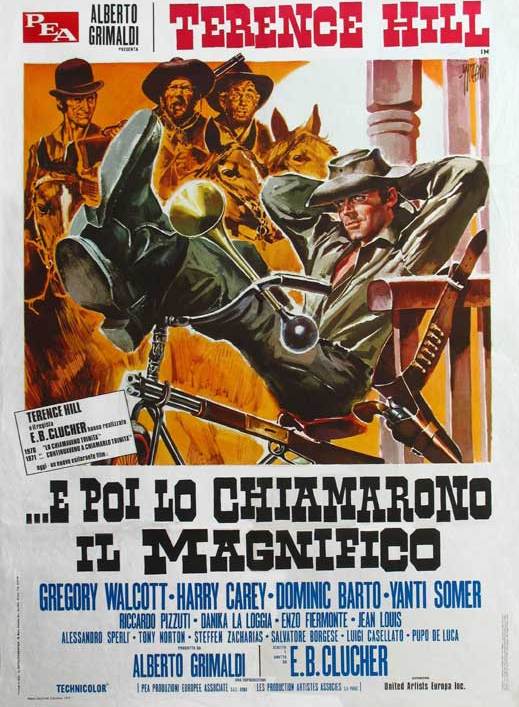
E Poi Lo Chiamarono il Magnifico (1972)

Man of the East is a vehicle for Terence Hill, directed by Enzo Barboni and written by E.B. Clucher*. Barboni had tremendous success parodying the Italian western genre, starting with They Call Me Trinity and then following that with the even bigger Trinity Is STILL My Name!

These movies follow a pretty simple formula of Hill and Bud Spencer as a comedy duo. Every once in a while, they’d make solo films, which this one being a good example.

It’s really close to the story “The Tenderfoot” from the Lucky Luke comic. Hill would go on to direct and star in an adaption of the overall comic, so this may be no accident.

Sir Thomas Fitzpatrick Phillip Moore (Hill) has come from England at the request of his father, who had to leave the country behind after an affair got him in trouble. His father wants him to see the country he had come to love, which brings our hero into the orbit of his dad’s associates, stagecoach robbers Monkey Smith (Dominic Barto, Jungle Warriors), Holy Joe (Harry Carey Jr., a John Ford company actor) and Bull Smith (Gregory Walcott, Plan 9 from Outer Space).

Thomas’ father — known as the Englishman — wants his hapless gang to turn his son into a man, as his head is in the clouds. He’d rather ride a bike than a horse and refuses to skip baths. However, he’s great with the ladies, as he quickly woos Candida Olsen (Yanti Somer, Star Odyssey) with his knowledge of Lord Byron.

This puts him into conflict with her rich father Frank (Enzo Fiermonte, War of the Planets), who doesn’t think he’s good enough for her, and Morton Clayton (Riccardo Pizzuti, the creature in Lady Frankenstein), one of their ranch hands who has his eyes set on Candida.

The gang teaches Thomas how to fight, shoot and spit tobacco, which he takes to quite well and ends up winning the day. That’s to be expected. What isn’t is the sadness underpinning this movie, which sees the gang facing the progress of technology and realizing that soon, the west that they know will no longer exist.

Another odd thing to watch out for is the opening credits and subsequent transition shots are B-roll from Support Your Local Gunfighter.

You can get this from Kino Lorber on a new blu ray, which looks gorgeous. Here’s to them releasing more little known Italian westerns!

*E.B. Clucher is…Enzo Barboni. Just look at the initials.

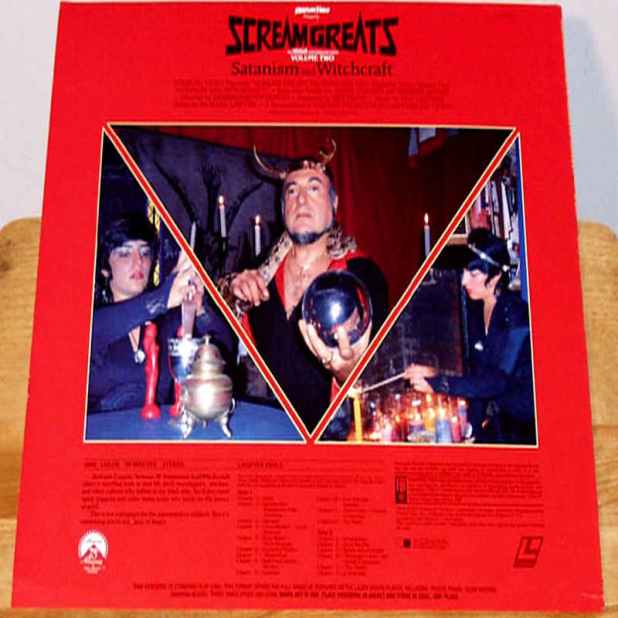
Scream Greats, Vol. 2: Satanism and Witchcraft (1986)

The first Scream Greats may have been about Tom Savini, but the second Fangoria VHS documentary release suddenly remembered that it was being released in the dead heart of the Satanic Panic.

Of course, Ed and Lorraine Warren show up to warn everyone watching this that the world was in a constant battle with demons. Of course, according to the Hollywood Reporter, “in the early 1960s, Ed Warren initiated a relationship with an underage girl with Lorraine’s knowledge. Now in her 70s, Judith Penney has said in a sworn declaration that she lived in the Warrens’ house as Ed’s lover for four decades.” But yeah, please tell us about Amityville.

Director Damon Santostefano also made Fright Show for Starlog magazine and the first volume of this series and trust me, I’ve heard for years how angry readers were that the second installment wasn’t about horror movies.

This was made during the period where Anton LaVey was strangely enough not doing publicity, so his only appearance here is via clips from Satanis. Otherwise, the rest of the blurred out devil worshippers come off as ridiculous, except for Paul Douglas Valentine, who led the Church of Satanic Liberation.

This was $39.95 when it came out, which really seems like a small price to pay to upset anyone that saw it on top of your VCR. Take it from someone who was obsessed with offending people in high school. I would have totally bootlegged this.

Also, this came out on laserdisc, which we all know is the most Satanic of all media formats.

You can watch this on YouTube.

B-Movie Blast: The Road to Nashville (1967)

Back in the day, the concert industry wasn’t a Live Nation money pit. And there was no MTV. There wasn’t even a Midnight Special. Or a Don Kirshner’s Rock Concert. Or ABC-TV’s In Concert, produced by Don (read our “Exploring: The Movies of Don Kirshner” feature for more on Don’s TV and film exploits).

No, for back in those pre-cable and World Wide Web days of yore, in order to see all of those music stars of the radio, you went to the drive-in. You know the films: Alan Freed’s Mr. Rock and Roll and Rock, Rock, Rock in particular, films that had nary a plot and were padded with musical performances — which were the whole point of the films in the first place: for record labels to promote their artists. And since not everyone had TVs yet, the more accessible movie theater was the next best thing. Oh, yes. These flicks were performance-padded rock concerts that masqueraded as dramatic-comedy narratives . . . well, in reality, aren’t they just rock documentaries?

So, just like Alan Freed gathering up the kids and the artists for a big show in those films, here we have a Hollywood studio wanting to jump on the Elvis-inspired country music crazy and make a movie. So they send out Colonel Feetlebaum (Doodles Weaver . . . Oh, you’ll know his face when you see it; we reviewed his exploitative work in Hot Rod Gang, Trucker’s Women . . . and that’s just two of his 150 TV and film credits) to round up Marty Robbins (who produced this as a vanity showcase) along with Webb Pierce, Waylon Jennings, Bill Anderson, Porter Wagoner, and Dottie West. Of course, no county film is complete without Johnny Cash (in his second film: he made his dramatic acting debut in 1961’s Five Minutes to Live, aka the more sensational Door to Door Maniac; he followed up Road to Nashville with 1971’s A Gunfight). Oh, and did you know this is Marty Robbins’s second bow on Mill Creek’s B-Movie Blast 50-Film pack? And did you know he raced stock cars? Marty did, and he made a film about it (with John Ashley of Blood Island fame), Hell on Wheels, which, if you’re keeping track of our Mill Creek Mania at B&S, that flick is also on their Savage Cinema set.

Oh, the brains behind it all: Will Zens, he who gave such drive-in delights as The Starfighters (1964), the aforementioned Hell On Wheels and Trucker’s Women, as well as the redneck romps Hot Summer in Barefoot County and Redneck Miller.

The cinematographer on this? The legend that Kevin Smith eloquently referred to as “a stubborn old cuss,” aka “ornery old cuss” (depending on the story-version regarding their mutual exploits on Jersey Girl): Vilmos Zsigmond. Cuss or no, ornery or not . . . just wow, there’s so many B&S films Vilmos has done (Psycho a Go Go, for one), as he worked his way up to Deliverance (with Burt Reynolds), Scarecrow (with Richard Lynch and Al Pacino), The Deer Hunter (Robert DeNiro), and Close Encounters of the Third Kind.

You can get Road to Nashville with Mill Creek by way of their B-Movie Blast 50-movie set.

About the Author: You can learn more about the writings of R.D Francis on Facebook. He also writes for B&S About Movies.

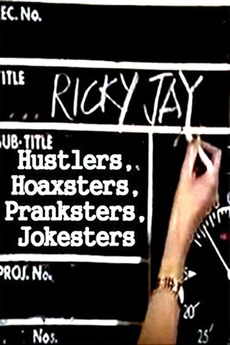
Hustlers, Hoaxsters, Pranksters, Jokesters and Ricky Jay (1996)

Ricky Jay was one of my heroes. Beyond acting, writing books and being one of the best sleight of hand men ever, no one else was more devoted to capturing the history of magic than him.

Jay did not have a great childhood, said that possibly the only kind memory he had of his parents was when they hired magician Al Flosso to perform at his bar mitzvah. He was devoted, however, to his grandfather, Max Katz, an amateur magician who introduced Jay to the world of magic.

By the age of seven, he was performing, becoming the youngest magician to perform a full magic act on TV. He was also the first magician to ever play comedy clubs and probably the first magician to open for rock and roll bands.

What I love about this film is more than just seeing Jay do his illusions. I love that he let the curtain back a little and answers exactly who would sit in their room as a child for hours and hours, practicing with a deck of cards over and over.

There aren’t many celebrities that I’d want to meet. But Jay would have been one of them, even just to have a casual conversation.

B-Movie Blast: The Young Graduates (1971)

Sam, the Chief Cook and Bottle Washer and Mix Master of Movie Themed Drink for B&S About Movies, is scary-psychic when it comes to my writing assignments. I don’t recall Dennis Christopher and Bruno Kirby ever popping up in conversation . . . Sam, how do you do it? It’s like my head is a Magic 8-Ball and you give it a shake. . . . It’s like Christmas!

Anyway . . . this why I love Mill Creek box sets — in this case, their B-Movie Blast 50-Film Pack — as it gives me a chance to see a movie that I never heard of, or seen. Yes . . . even with the Den and the Kirb in the house, so I don’t know how this one slipped by me. Sure, I’ve seen my fair share of ’70s soft-sexploitation flicks and T&A coming-of-age romps (but beware of advertising department scams) but this one . . . I don’t recall ever seeing The Young Graduates on a home video self. And, based on the college chick (What, high school?) showing off some strappy-sandals leg, along with the dune buggies, cycles, and rails . . . and that Crown International logo, well, what’s not to likey, here?

Now, you know how we are about particular actors ’round the B&S About Movie cubicles, right? In this case, for moi, I was into this lost drive-in ditty from the get, as it features early starring roles for two of my favorite actors: Dennis Christopher (Fade to Black and the really cool 10-Speed romp Breaking Away) and Bruno Kirby (How is Almost Summer not on a Mill Creek set? But, you know Bruno best from City Slickers and Good Morning, Vietnam). See? All actors have to start somewhere — and sometimes it has to be a Crown International flick.

Will you just look at Dennis! He’s just a kid, for gosh sakes! Yep, 16!, and he went on to appear nearly 40 movies and made-for-TV flicks since this debut (he was also in the proto-slasher Blood and Lace that same year). And Quentin? Well, he obviously knows both of Dennis’s 1971 debuts from his video clerkin’ days, so the Q recruited Dennis as Leonide Moguy in Django Unchained. Oh, and Dennis is such a stoner dude that his name is “Pan,” and not a more stoner name there be.

Anyway, while Bruno was a bit older, at 22, he was still able to play “young,” as a high schooler seven years later — at 29 — in, again, one of my favorite of his films, Almost Summer. But I’ll always also remember Bruno for The Harrad Experiment (which, in spite of the title, is not a horror film, but a coming-of-age drama led by James Whitmore and Tippi Hedren . . . with a babe-in-the-woods Don Johnson). Then there’s Bruno’s oft-aired HBO favorite, Baby Blue Marine with Jan-Michael Vincent (that also needs a Mill Creek bow).

Oops. I digress with the Charmin squeezin’ over the actors I dig.

This is loaded with mini-dressed dancing chicks, hippes in flower-power vans, wah-wah psychedelic guitars, and drag-racing rails, hippie chicks, doobies and roach clips, squares in suits and ties who want to be engineers, and those teens who just want to dropout and ride their motor scooters.

Rompin’ through this Partridge Family-cum-Easy Rider-lite world is the requisite sort-of-bad girl, Mindy, who’s like an early version of a romantically confused, can’t-make-her-mind Rachel Green with her endless I-hate-Ross-I-love-Ross insanity. Here, Mindy’s dilemma is between her decent, educated boyfriend Bill or her hunky married-but-he’s-so-hot teacher.

Oops. She’s hot for teacher and the rabbit just hopped in: Mindy’s pregnant. And how does she deal? Well, she runs away with her bestie, Sandy, on motorbike ride to Big Sur, California

Only in the B&S Movie-verse.

You can get this from Mill Creek on their B-Movie Blast 50-Film Pack, but we found a copy on You Tube and an extended teaser on You Tube. Mill Creek also carries the film on their “The Swingin’ Seventies” 50 Film Pack.

About the Author: You can learn more about the writings of R.D Francis on Facebook. He also writes for B&S About Movies.

B-Movie Blast: The Kidnapping of the President (1980)

Why am I remembering this Canadian-made political thriller from Crown International Pictures as, not a theatrically-run film, but as a U.S. network TV movie? Yeah, I remember watching this William Shatner and Hal Holbrook effort on HBO at one point. . . . Perhaps it’s because director George Mardeluk worked primarily in television throughout the ’80s and ’90s on several TV series, along with LOTS of TV movies into the mid-2000s. He made his feature film debut with the great Richard Crenna (The Case of the Hillside Strangler) in the neo-noir crime thriller Stone Cold Dead (1980) — a film that I also don’t recall being in theaters, but enjoying immensely on HBO.

Well, one thing is for sure: Crown International upped their game with this, Mardeluk’s second thriller, to get their studio out of the exploitation gutter (with fare like Superchick, also reviewed this month) by acquiring the rights to Charles Templeton’s 1977 international best-seller of the same name; not a bad feat for a first-time novelist.

President Adam Scott (Hal Holbrook) is one of those leaders who tosses common sense out the window when it jeopardizes his image in the political arena. So when Secret Service agent Jerry O’ Connor (William Shatner) warns Scott of a potential threat and that he should cancel his state visit to Canada — Scott scorns his protective attache and takes the trip anyway — and is subsequently abducted by terrorists for ransom.

Of course, as is the case with such recent political action-thrillers as the battling destroy-the-Whitehouse features of White House Down and Olympus Has Fallen, we have Ethan Richards (Van Johnson), Scott’s politically ambitious Vice President ready to take his seat of the most powerful office in the world. Meanwhile, O’Conner races against the clock to rescue the President from a booby-trapped armored truck. Ava Gardner practically copies her role as Charlton Heston’s overbearing, bitchy wife from Earthquake . . . as Van Johnson’s overbearing, bitchy Second Lady of the United States. And there’s lots of Canadian actors afoot that you’ll recognize, most notably the always welcomed Maury Chaykin (Def Con 4, WarGames) as the world’s most ill-organized terrorist.

I never read the novel, but critics say the book is better and the movie is slow. Whatever, I liked this movie back in the day and enjoyed revisiting it these years later. In fact, we discussed George Mardeluk’s career and my enjoyment of his first two movies in our review of one of his latest films, Ants on a Plane (2019). For you Lifetime damsel-in-distress fans, his last directed film was The Wrong Babysitter (2017), which currently plays on Netflix.

Look, The Kidnapping of the President is a Crown International flick, after all, so don’t expect Clint Eastwood’s fantastic In the Line of Fire (1993) — and I name drop that flick because, well, take a look at the clip below. Does that guy in the cap with the explosives on his chest look a bit like John Malkovich’s Mitch Leary from that film?

Ugh, again You Tube? Sorry, that clip is gone.

You can watch the full movie on You Tube and get your own copy on Mill Creek’s B-Movie Blast 50-movie set. What? It’s back again on their as part of their Excellent Eighties 50-Film pack? Yep, we reviewed it, again, because anything with Hal Holbrook deserves two reviews.

About the Author: You can learn more about the writings of R.D Francis on Facebook. He also writes for B&S About Movies.

B-Movie Blast: Liar’s Moon (1981)

And it all began — not just for Matt Dillon, but for all of us — with the greatest, modern juvenile delinquency film of all time: Over the Edge (1979), another one of those poorly-distributed, lost films that found a cult audience on HBO.

Needless to say, the girls loved Matt. And, between my sister and girlfriends, I went to the theaters to see his next four films: My Bodyguard (the best), Little Darlings (too romantic-sappy, but we did have Tatum O’Neal as a hot bad girl), Tex (much better), and this, his fifth and least-remembered film — made prior to his breakout role as Dallas “Dally” Winston in box-office hit, The Outsiders.

Now, if the theatrical one-sheet hasn’t given it all away, we’re dealing with star-crossed lovers from the wrong side of the tracks (set in 1940s Texas): Dillon’s a blue collar teen who elopes with the town banker’s daughter (Cindy Fisher from 1974’s Bad Ronald). (And yes, the “forbidden love” ends up being incest.)

As for the rest of the cast: We have American folk singer Hoyt Axton (of the Gone in Sixty Seconds franchise; best known for Gremlins) in one of his many, likable ’80s acting roles as Matt’s hardworking pop. Christopher Connelly (Atlantis Interceptors and a whole bunch of ’80s Italian stuff) is great in a rare, non-horror/action role as the snobby banker-pop, and film noir stalwart Broderick Crawford shines in his final film role. We’ve also have Susan Tyrrell (Butcher, Baker, Nightmare Maker) chewin’ the scenery like the pro-thespian she is, as always (yes, when you need the work, even Susan Tyrrell will go “slasher” for a paycheck). And it’s nice to see Yvonne “The Munsters” DeCarlo (Silent Scream . . . but she also made Nocturna) given a decent dramatic role for a change, proving she really can “act” outside of a B-horror flick. And, why yes, that is requisite sci-fi baddie Richard Moll (The Survivor, The Dungeonmaster) in an early role as a police detective. And look out for support roles from Jim Greenland (Joysticks) and Dawn Dunlap (Forbidden World). And, why yes . . . that is Asleep at the Wheel (remember Meatloaf’s Roadie, and their song “Texas, You and Me”) pickin’ and-a grinnin’ up the soundtrack.

You can watch Liar’s Moon as a free-with-ads stream on Roku via your PC or Laptop and get your own copy courtesy of Mill Creek on their B-Movie Blast 50-movie set. It’s also part of their Excellent Eighties box set that we are also unpacking this month; Sam will give us his take on the film for that set because, when you’re dealing in Susan Tyrrell — and that sexy, whiskey-hewn voice — you review her films as many times as you can to celebrate her awesomeness. Hey, she didn’t earn an Academy Award for “Best Supporting Actress” nomination for John Huston’s Fat City (1972) and a earn a Saturn Award for “Best Supporting Actress” for Andy Warhol’s Bad (1977) for nothin’!

About the Author: You can learn more about the writings of R.D Francis on Facebook. He also writes for B&S About Movies.