DAY 18. RESURRECTIONISTS: Watch something that came out on one of the many reissue labels that we love like Arrow, Criterion, Bleeding Skull, Scream Factory, Indicator, Vinegar Syndrome, AGFA etc.
I remember being at a convention and seeing my first Severin booth and thinking, “If I start buying these movies, I’m never going to stop.”
I can’t always predict the future all that well, but after my first purchase — Dr. Butcher M.D., in case you wondered — I keep buying something from this label almost every single month.
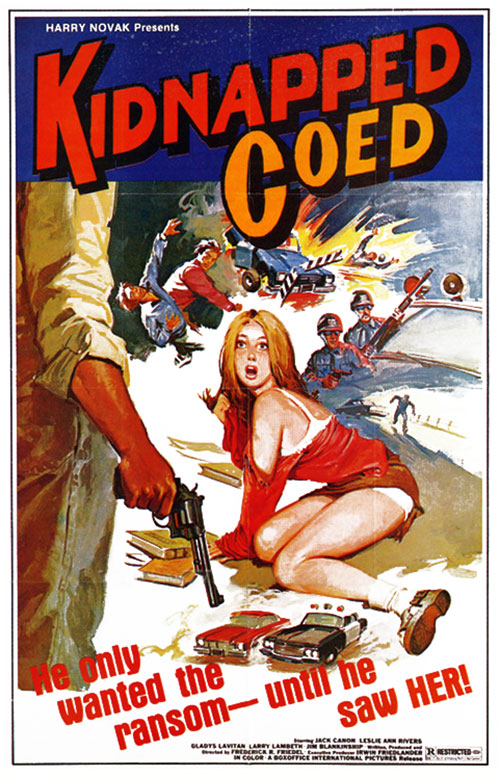
The films of Frederick R. Friedel set — which also has Axe and Blood Brothers — is just one of so many examples as to why I love Severin. Not only have they taken a Video Nasty and a drive-in obscurity and made them look better than they ever have before, they’ve also found almost everyone that worked on these films, gotten their side of the story and explain what actually happened before, during and after they were filmed.
Jack Canon, who the credits erroneously refer to as the kidnapped co-ed, plays Eddie Matlock, who is really the kidnapper. He was also in Axe, Maximum Overdrive and Trucker’s Woman. As the film begins, he’s already taking Sandra Morely (Leslie Rivers) captive. Her father puts a big ransom out for her return, so other criminals now are after them both to try and get paid.
Also known as Date With a Kidnapper, this is 75-minutes of a movie where things just happen for no reason, with no set-up or explanation. Axe is a movie where nothing happens for long stretches of time, while this is the opposite, a movie where all kinds of things happen and the Stockholm syndrome is in full effect — although the kidnapper isn’t truly the villain he seems to be when this all begins.
Day 18: Resurrectionist: Watch something that came out on a reissues label
Courtesy of AIP Studios’ Witchfinder General (1968), everyone knows of the exploits of British witch-hunter Matthew Hopkins (as portrayed by Vincent Price) and his fictionalized counterparts in Count Christian von Meruh and Lord Cumberland (as portrayed by Udo Keir and Herbert Lom) in Mark of the Devil (1970) and Mark of the Devil II (1973). And now you’ll learn of the even bloodier exploits of Witchfinder Inquisitor Boblig von Edelstat.
Witchcraft was born during Europe’s transition from the Dark to the Middle Ages. For over five hundred years, fueled by ignorance and religious paranoia, governments decreed their countries be cleansed of evil and immorality. Thus, through armies funded by churches, soldiers hunted down the witches who carried the pestilence. Entire villages were laid waste, in acts analogous to the social cleansings committed by the third world countries of modern society. In fact, the acts committed by Witch Hunters in the name of the Lord surpassed the body count of modern day serial killers. Thus, the witch hunts led by General Cromwell and Matthew Hopkins begat McCarthy’s Red Scare in the nineteen-fifties. And the witch hunts begat the gathering of Japanese-Americans during World War II, and the Nazi regime shipping Jews, Pols, and Slavs on trains to their deaths. And the burning of witches at the stake begat African-Americans tormented with religious symbols wrapped in gas soak rags. The brutal truth of the world’s current sociopolitical system: these same hunts and killings, based in ignorance, continue. In today’s world of light and knowledge, men continue to invest in fear, ignorance, and greed. Will man ever be capable of conquering the delusions, the urges, and the ugliness? When will witchcraft disappear from our society?
Born in Austria-Hungary, Czech Republic filmmaker Otakar Vavra ranks alongside Denmark’s Carl Theodor Dreyer (1928’s The Passion of Joan of Arc and 1932’s Vampyr) as a first-rate director with a career that is, sadly, outside of their respective homelands (and the most discriminating, international film aficionadi), fading from our celluloid memories. Vavra’s IMDb page, while cataloging his oeuvre in full, the individual pages for those films are barren; not only are no plots or synopses offered, there’s no user or critic reviews.
Vavra is the cinematic equivalent of Polish futurologist and sci-fi writer Stanislaw Lem (Solaris, The Astronauts, The Magellan Nebula*): for as many of Lem’s books that have seen English adaptation, many never will—and many of us will never experience all—if any at all—of Vavra’s films. Across his 53 directing and 56 writing credits from the early ’30s up until his 2011 death, less than twenty of his films have expanded outside of Europe into the English-domestic marketplace. Some made the transition to the VHS format and later DVD format, but most have not been honored with digital preservation.
After three shorts, Vavra made his feature film debut as a director with the comedy Camel Through the Eye of the Needle (1937) and followed with the drama Virginity (1937). He closed out the 1930s with his two best-known and revered films: the historical dramas The Merry Wives (1938; hailed by the U.S. film trade Variety) and the working class-morality tale The Magic House (1939). Prior to those directing efforts, he wrote seven screenplays: the most notable of those is the comedy Three Men in the Snow (1936); the film’s homeland success initiated his directing career. His career culminated with a teaching position at Prague’s Film and TV School of the Academy of Performing Arts, a position he held since the 1950s. He was awarded the Czech Lion in 2001 and a presidential Metal of Merit in 2004 for his contributions to Czech cinema.
His other widely-distributed, directorial works include:
The Masked Lover (1940) — a romantic comedy concerning a Czech General
Enchanted (1942) — a romantic comedy
I’ll Be Right Over (1942) — a slapstick comedy
Happy Journey (1943) — a romantic comedy
Rozina, the Love Child (1945) — a historical drama
Against All (1957) — a historical war drama; part of the “Hussite Trilogy,” which are three of the most expensive Czech films ever made, with Against All as the most expensive at 25 million Czech Koruna (1.2 million U.S.)
August Sunday (1961) — a comedy
Night Guest (1961) — a drama
Golden Queen (1965) — a psychological drama
Romance for Bugle (1967) — a drama that won the Special Silver Prize at the 5th Moscow International Film Festival
Days of Betrayal (1973) — a historical war drama that won a honorary diploma at the 8th Moscow International Film Festival
Sokolovo (1974) — A Soviet co-production about the ’43 Battle of Sokolovo
The Liberation of Prague (1977) — a historical war drama; the third of a trilogy that began with Days of Betrayal and preceded by Sokolovo
Dark Sun (1980) — a crime drama that serves as Vavra’s rare foray into sci-fi that serves as a remake of his own 1948 film Krakatit
The Wanderings of Jan Amos (1983) — a biographical drama about 17th century Christian crusader Jan Amos Comenius
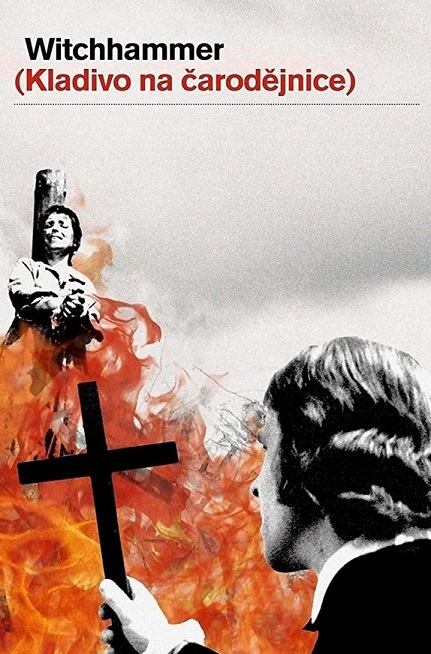
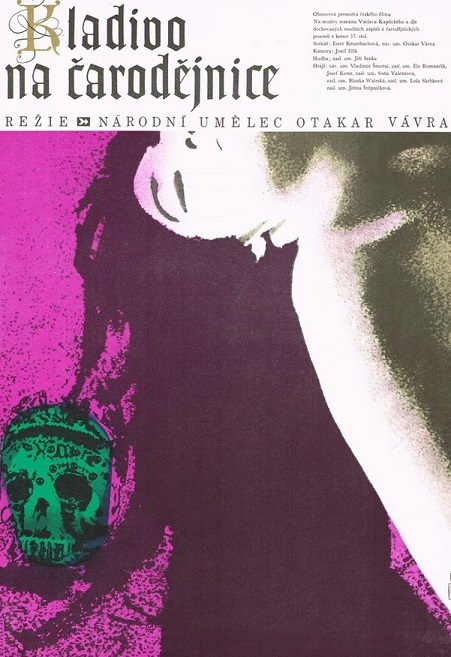
And that brings us to Vavra’s lone foray into the horror genre, a historical-drama concerned with the brutal inquisition of witches during the medieval era—a film that is heralded as Vara’s chef-d’œuvre and won several awards at Argentina’s Mar del Plata International Film Festival in 1970. One of those wins was for cinematographer Josef Illik who, after watching Witchhammer, you’ll wonder why Illik’s name is not as revered in international film circles as Hungarian-American cinematographer Vilmos Zsigmond (Deliverance, Close Encounters of the Third Kind).
Based on the best-selling Czech history novel Kladivo na čarodějnice (1963) by Vaclav Kaplicky, the 17th century tale chronicles the real-life, human rights atrocities of the North Moravia Witch Trails of the 1670s by Witchfinder Inquisitor Boblig von Edelstat in which 100 people were murdered. The book’s main protagonist, Priest Josef Lautner (Kryštof Lautner in the film), is a cleric who tries to help his people, but soon falls victim to the trails for opposing “God’s Law.” The book is heralded as an important to literary lesson of man’s ills in political-based paranoia and political prosecution on-level with Arthur Miller’s The Crucible (1953) (required high school reading; at least it was for me).
The resulting film adapted by Vavra was banned, ironically, not for its graphic nature, but for Vavra adapting the film as an acidic allegory to the Communist show trails that rocked Czechoslovakia in the 1950s. While the film was banned from showing by the Czechoslovakian government, it was accepted by the international marketplace as a cinematic masterpiece.
The atrocities began with an altar boy observing and reporting a destitute old woman hiding the bread given out during Holy Communion—a theft that she admits to, with the intend to feed it to her barren cow to re-enable its milk production. The indiscretion of hoarding holy bread, according to Witchfinder Inquistor Edelstadt, smacks of “witchcraft,” as based on his interpretation of the Catholic treatise The Malleus Maleficarum, aka Hammer of Witches (thus, the film’s title). The thumbscrews and other torture devices are dispatched in quick succession—and a young priest who opposes the trails soon finds himself among the wrongly executed.
Even if you’ve watched the admittedly more sensationalistic, West German-produced Mark of the Devil, aka Witches Tortured til They Bleed (1970), its sequel Mark of the Devil II, aka Witches Are Violated and Tortured to Death (1973), and the more reserved, Gothic-slanted AIP film that inspired its production: Michael Reeves’s Witchfinder General, aka The Conqueror Worm (1968), you’re not going to be prepared for this horrifying lesson in the absolute corruption of power. We won’t sugarcoat: Witchhammer, as was Pier Pasolini’s Salo, or the 120 Days of Sodom, isn’t pleasant (Pasolini’s film even more so), but it is an exquisite example of perfection in cinema.
You can watch Witchhammer on You Tube, but there’s a far superior, superb DVD rip available on the European F Share TV free-with-ads VOD platform. There’s an account sign-in viewable trailer on You Tube (due to graphic content). DVDs are readily available in the online marketplace at a wide variety of eRetailers or you can buy direct from Arrow Video.
Other classic witchcraft films to supplement your viewing of Witchhamer are the Sweden-Denmark co-production Haxen (1922) and Carl Theodor Dreyer’s own forgotten classic, Day of Wrath (1943). We also examine the life of another Middle Ages’ serial killer of the von Edelstat variety, Gilles de Rais, and his inspiration behind two films by Spain’s Paul Naschy: Panic Beats and Horror Rises from the Tomb.
About the Author: You can learn more about the writings of R.D Francis on Facebook.He also writes for B&S About Moviesand publishes on Medium.
I’ve had some bad luck of late with picking out movies to watch with my in-laws. The first, Officer Downe, started with male on female oral pleasure and that got a hard pass from the room. This was going to be the follow-up and they might have felt even stronger about how this one made them feel.*
As for me, I have mixed feelings about the film.
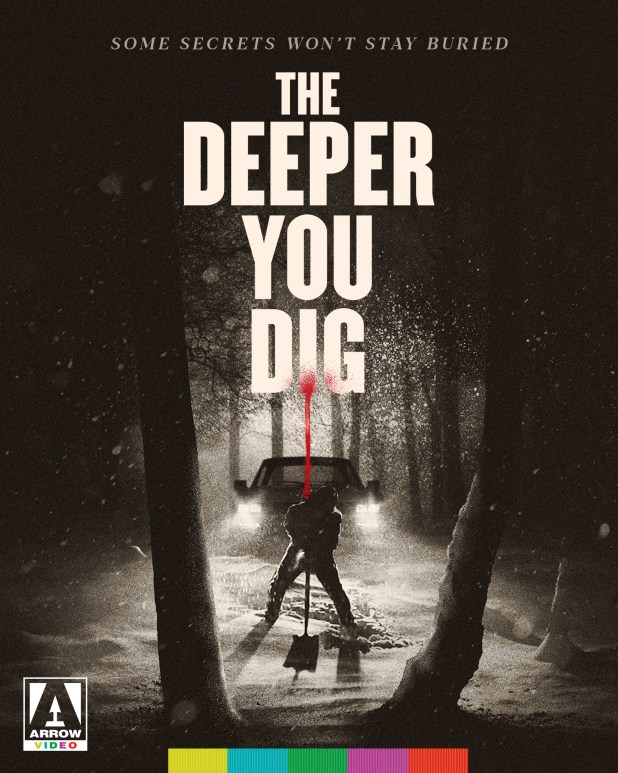
It looks gorgeous, unlike anything else I’ve seen out of horror this year. And I honestly feel like it’s pacing and tone owe more to strange 70’s American drive-in folkish stuff like Let’s Scare Jessica to Death and Dark August. It’s a simple tale — a mother comes to terms with the loss of her daughter while meeting the man who caused her death — but it’s told in an incredibly interesting way.
But there are great stretches where it lost me. And yet, it always got me back.
Written, directed by and starring filmmaking family the Adams Family (Tobey Poser, John Adams and Zelda Adams), this is all about a tarot card reader named Ivy, whose teenage daughter Echo is accidentally killed bt a new neighbor. However, Echo refuses to pass away quietly and starts to become part of the man’s every waking moment, slowly taking over him and reaching out to her mother from the other side.
There are moments of shocking violence in this film, as well as scenes of the other side that are the parts that lost me. I’d like the clown makeup scene explained to me. It all feels more silly than earnest and took me completely of the film, but the end of the story won me over. It’s wildly uneven, but so filled with promise that I think that it’s totally worth you taking the time to watch it. It’s certainly better than the next direct to streaming or meant for the multiplex film you’ll suffer through.
The Arrow Video release of this film also comes with The Hatred, another of the Adams Family’s films, as well as an exclusive, in-depth interview with the filmmakers, music videos, trailers and more. I’m used to Arrow putting out releases of past favorites, so it’s nice to see them tackle a recent release.
You can also watch this on Shudder. I’m interested in seeing what others think of this movie. Also — thanks to Arrow for sending this our way.
*The B of B&S About Movies, Becca, wanted me to provide her review of this movie, which is short and to the point: “It was stupid.”
I don’t share a political affiliation or views with Bo Copley, but I left his documentary feeling that he’s someone who I could see trusting and listening to.
At a town hall in Ohio, Hillary Clinton spoke of replacing fossil-fuel energy with renewable sources, saying that she wanted to create “economic opportunity using clean renewable energy as the key into coal country.” Yet in a major mistake, she seemingly finished by saying, “Because we’re going to put a lot of coal miners and coal companies out of business.”
Of course, that’s where the quote stopped in the media, but she did continue to state, “We’re going to make it clear that we don’t want to forget those people. Those people labored in those mines for generations, losing their health, often losing their lives to turn on our lights and power our factories. Now we’ve got to move away from coal and all the other fossil fuels, but I don’t want to move away from the people who did the best they could to produce the energy that we relied on.”
Copley was invited to join a roundtable discussion with Clinton, who was campaigning in West Virginia before the state’s presidential primary. He showed Hillary a photo of his three children and with raw emotion, he broke through the political spin cycles and reached the hearts of many across the country.
Now, two years later, he’s struggling to win the Republican nomination for U.S. Senate in his home state. Sure, he has peoples’ best interests at heart and so much emotion, but he lacks experience, a traditional campaign and most importantly, money. That’s because Bo has been unemployed for two years and is facing the taxes mounting from cashing in his 401K.
Again, Bo, I can relate to you.
A lifelong resident of Mingo County, WV — I’ve wrestled there — Copley worked in the coal industry for 11 years before the industry got rough. But even tougher was the campaign trail, where he was attacked for everything in his life, despite being the type of outsider that other candidates can only dream of being.
The trouble is, the state of West Virginia desperately wants coal to come back in a world where natural gas and other cleaner energy resources are more efficient and inexpensive. The past truly can’t return, but who can help those that depended on it? There are no easy answers — and while I like Bo, I don’t think he had any other than a great media appearance and the belief that God told him to run.
World Channel will screen this movie on October 19 at 4 PM PT and 9 PM PT and October 20 at 5 AM PT. It will also screen in New York, Los Angeles, Chicago, Philadelphia, San Francisco, Washington, Houston, Boston, Atlanta, Seattle, Detroit, San Diego and many more markets. You can learn more on the official site.
DAY 17. VIDEO STORE DAY: (10th anniversary!!) This is the big one. Watch something physically rented or bought from an actual video store. If you don’t have access to one of these sacred archival treasures then watch a movie with a video store scene in at least. #vivaphysicalmedia
The last Family Video in our area closed this year. Both of the spaces have been filled with new stores, as if someone you love had been replaced by someone you never want to meet.
I try not to dwell on it, but honestly, life hasn’t gotten better once we lost video stores.
That’s why the Scarecrow Challenge is so important to me. It’s a chance to celebrate physical media, as well as genre films, in all their wonder and glory. 2020’s Scare Package may have been a movie that I caught on the Shudder streaming service, but it feels like it was made by people who know more than a little about the feeling of having a stack of rented movies on top of your VCR and a cold beer in your hand.
Written and directed by Aaron B. Koontz, Courtney Andujar, Hillary Andujar, Anthony Cousins, Emily Hagins, Chris McInroy, Noah Segan and Baron Vaughn, it revolves around Rad Chad’s Horror Emporium, a store stacked with horror tropes that we expect and that subvert those expectations. This framing sequence allows the employees and the video tapes of the store to tell several stories, along with bringing Chad into the orbit of the Devil’s Lake Impaler (Dustin Rhodes!) and even Joe Bob Briggs.
Here are some of the other stories.
“Cold Open” tells the story of a man named Mike Myers, who yearns to be the main character in the many movies he walks into. Instead, he is the one that moves the characters through their stories. Pay attention to Mike, as he makes another appearance.
“One Time in the Woods” takes the slasher trope and body horror and goes wild, with more gore than in twenty modern films.
“M.I.S.T.E.R. (Men In Serious Turmoil Establishing Rights)” is about werewolves and the occult and men’s help groups, while “Girls Night Out Of Body” concerns sugar skull lollipops and “The Night He Came Back Again! Part IV: The Final Kill” is concerned with the multiple ways that slashers are dispatched and yet come back, again and again, ruining lives.
Finally, “So Much to Do” features plenty to do all amidst the worries of having one’s favorite show get spoiled.
While not every segment hits perfectly, many of them do, making one remember the feeling of getting to the third or fourth video in a stack of weekend movies, knowing that you still have a few more hours left in a Saturday night, an entire Sunday to sleep in and plenty time to watch teh rest before they’re due back at the store.
You can watch this on Shudder with and without commentary by Joe Bob Briggs. You can also get this on blu ray from Diabolik DVD, which lives up to the demands of video store day. And hey — if you live near a video store, take advantage of it! You never know when the things you love will go away.
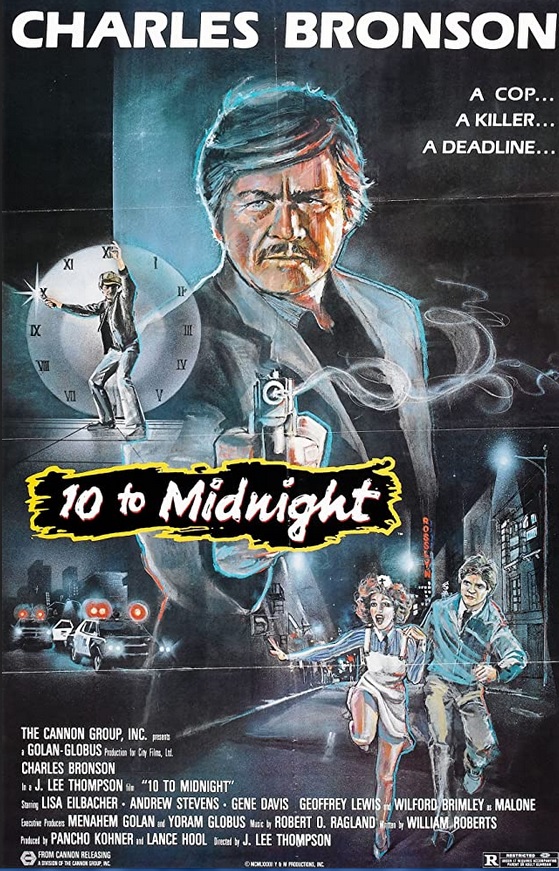
What if Charles Bronson made a film to compete in the John Carpenter Slasher ’80s — and no one came?
So goes this J. Lee Thompson effort for Menahem Golan’s Cannon Films.
Watch the Shout Factory! reissue trailer and the epic, “final scene” clip.
It all looked pretty good on paper: Bronson was a still popular, aging action star; Thompson’s resume included The Guns of Navarone (1961), Cape Fear (1962), and Mackenna’s Gold (1969). And let’s forget J. Lee’s two POTA flicks: Conquest of the Planet of the Apes (1972) and Battle for the Planet of the Apes (1973), and one of the slasher era’s most unconventional slashers, Happy Birthday to Me (1981). Behind the Brother typewriter was William Roberts, who gave us The MagnificentSeven (1960) and a really great war movie with The Bridge at Remagen (1969). He also gave us (soon to be reviewed for “Fast and Furious Week II”) The Last American Hero (1973), and a pretty fine TV movie with SST: Death Flight (1977).
So where did this self-described “crime-horror-thriller” go wrong?
When I went to see this during its initial theatrical run, I enjoyed it; the general consensus, however, was that it just an unnecessarily bloodier and more violent knock-off of Clint Eastwood’s “Dirty Harry” series of films embodied in Charles Bronson’s rough-hewn,”shoot first, ask questions later,” LAPD Detective Leo Kessler. (His aprehensive, wet-behind-the ears partner is Andrew Stevens of Massacre at Central High.)
Mainstream critics, such as Roger Ebert, pounced on the film’s “gratuitous” violence and nudity and its overabundance of vulgar language, profanity, and sexual situations. (Those moments of nudity and sexual scenes were cut out and re-edited with alternate, clean-clothed scene (underwear instead of full nudity) for television.)
It seems Cannon Pictures was shooting for a Italian Poliziotteschi (which were much violent and bloodier than any U.S. “Dirty Harry” flick) and Giallo (which were even more graphic than any U.S. John Carpenter-knockoff) hybrid-homage of the two genres that would have likely played well to Euro-audiences. And it did. In the U.S. it barely cleared its almost $5 million budget. So, while not exactly a flop, thanks to its international box office, it wasn’t exactly a hit, either.
It certainly seems that Bronson and Thompson’s efforts had an effect on Sly Stallone, as it’s easy to see a creative through line of 10 to Midnight‘s “detective vs. serial killer” plot to Sly’s Cobra (1986) to — even more so — D-Tox (2002). And it definitely had an effect on the production of the “mainstream” porn-slasher hybrid of Spine, a film that did its best — against its budget — to emulate John Carpenter’s Halloween (1978) and Brian De Palma’s Dressed to Kill (1980).
That comparison to Spine comes as result of that film’s Lawrence Aston and 10 to Midnight’s Warren Stacy both with an affinity for nurses — a trait shared by real-life serial killer Richard Speck and his July 1966 Chicago murders of eight student nurses. However, while Speck’s exploits served as the inspiration behind William Roberts’s script, John Howard and Justin Simonds have stated that the similarity to Speck’s crimes was mere coincidence and it was, in fact, Brian De Palma and John Carpenter who influenced their development of Spine.
The roots of 10 to Midnight began with Cannon’s (initial) failed attempt to adapt R. Lance Hill’s novel The Evil That Men Do (1978), an action tale about an ex-assassin that comes out of retirement to avenge the death of a friend. During a “brainstorming session” at that year’s Cannes Film Festival, with Cannon still wanting to do a film with Bronson, came up with new project — 10 to Midnight. To sell the film, Golan did what he did best: the ol’ Hollywood shuffle, selling a film filled with “action, danger, and revenge” — but no script. And the buyers bought it. Now, they need a script.
The script they found — based on the exploits of Richard Speck — was a William Roberts spec script, Bloody Sunday. And, as for the Evil that Men Do: that became one of the final film’s produced by ITC Entertainment, which went bankrupt after the dual failures of Raise the Titanic and Saturn 3.
In all, Bronson and Thompson made five films: St. Ives (1976), The White Buffalo (1977), Caboblanco (1980), 10 to Midnight (1983), and The Evil That Men Do (1984). And while it failed at the box office and with critics — Bronson’s lone foray into the horror-slasher genre is the lone Thompson-Bronson project everyone remembers and revers as a “classic” film in the Bronson canons.
You can purchase DVDs and Blus from Shout! Factory and stream it via Cinemax-Amazon Prime. There’s also a great, hour-long documentary about Bronson’s career, Charles Bronson: Hollywood’s Lone Wolf, on TubiTv.
Other films we reviewed — for this month’s “All Horror, All Slasher Month” for October — that are based on real life serial killers, include Black Circle Boys, River’s Edge, and Naked Fear (both on the way this month, search for ’em!). And we discussed the Cropsey urban legend that resulted in the more traditional slashers The Burning(1981) and Madman (1982).
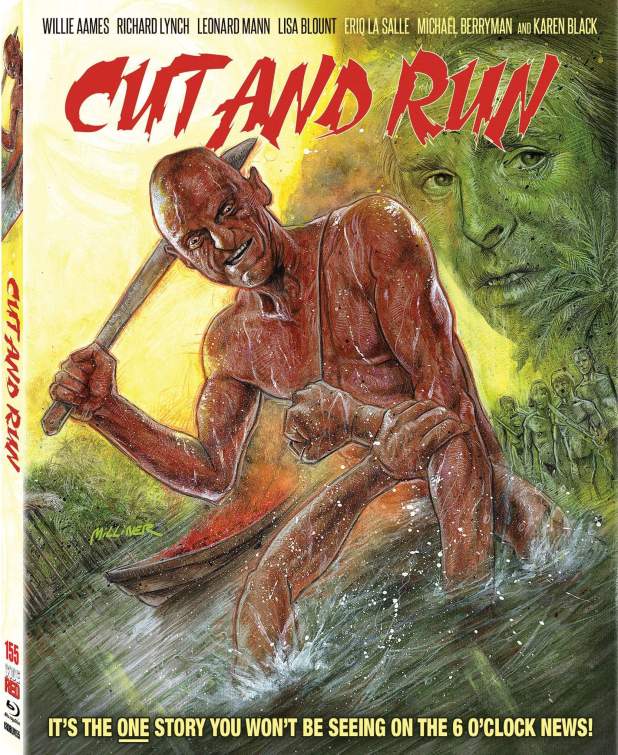
Cut and Run was originally going to be directed by Wes Craven with the working title Marimba, with Tim McIntire, Dirk Benedict and Christopher Mitchum as the cast. However, when money never showed up, they turned to Ruggero Deodato, who got a script from Cesare Frugoni and Dardano Sacchetti and ended up making Inferno in diretta.
There was a softer R-rated American version and then another one for places that were used to the madness that is Deodato in the jungle.
This one is simple, but the best exploitation movies always are. Reporter Fran Hudson (Lisa Blount, Prince of Darkness) is investigating a war in the jungles of South America between drug cartels and the army of Colonel Brian Horne (Richard Lynch). Yes, that’s right. Richard Lynch in the jungle commanding a cult of maniacs, including Michael Berryman.
Does that sell you? What if I told you that Willie Aames is in it? And he wears a Mickey Mouse shirt throughout?
Man, this movie has an Italian star for every Italian. Eriq La Salle from ER? I’ll give you Laura Gemser’s husband, Gabriele Tinti. Karen Black? I’ll raise you Barbara Magnolfi. Plus, you also get Italian Western actor Leonard Mann, John Steiner, Valentina Forte (from Blastfighter!) and Richard Bright.
Seeing as how this is a Deodato movie, there’s all manner of lunacy, like people being ripped in half and crucified. Instead of making another Cannibal Holocaust, he decided to make his own Apocalpyse Now, but with the kind of cast I’d choose to be in my version of that movie, with a chaser of Flavor Aid from Jonestown.
Claudio Simonetti did the score, which is really all you need to know. This movie is complete junk food, but the best kind of junk food that melts in your hands, your mouth, all over your face and ruins your new shirt, too. It’s filled with massive amounts of sleaze and gore and strangely enough, was filmed with actual English instead of the typical Tower of Babylon shooting style that Italian films usually use.
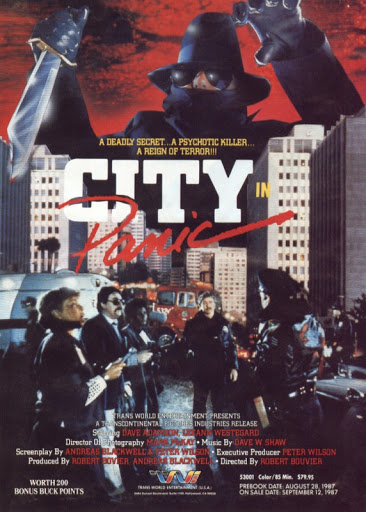
City In Panic has a poster that looks like a giallo — well, it’s not as gorgeously designed as a traditional Italian poster, but the killer sure looks like he stepped off the set of a movie made in 1973 with an animal-based title — and makes the AIDS crisis a major part of its story, which is pretty woke for 1986. That said, it’s filled with so many homophobic moments and slurs that this will be the last time that I say that this movie has anything to do with being culturally sensitive*.
There aren’t many direct to video Canadian slashers that are willing to rip off — sorry, pay homage — to Fritz Lang while looking cheaper than any made for TV movie you’ve seen. That’s this movie, which was originally titled The AIDS Murders. The Lang steal is because the murderer, much like Peter Lorre, leaves an “M” behind on their victims (notice that I was PC in my pronoun usage, but really, I was trying to not spoil who the killer was).
Unlike every slasher ever, gay men are the targets here, with the first man being killed in the shower of Toronto’s Oak Leaf Steam Bath. Yes, this is a film either brave or foolish enough to start things off by shamelessly aping Hitchcock.
It’s also one of the only slashers I can think of where a slasher is opposed by a final boy, a shock jock who constantly argues on the air with right wingers.
Beyond being somewhere between slasher and giallo — that ending in a mannequin factory almost made me label it the latter — this is also a “based on a true story” movie, as it was inspired by the real-life murders of 14 gay men that all frequented the St. Charles Tavern on Yonge Street in Toronto.
*That said, several of the victims aren’t stereotypically gay, which is refreshing.
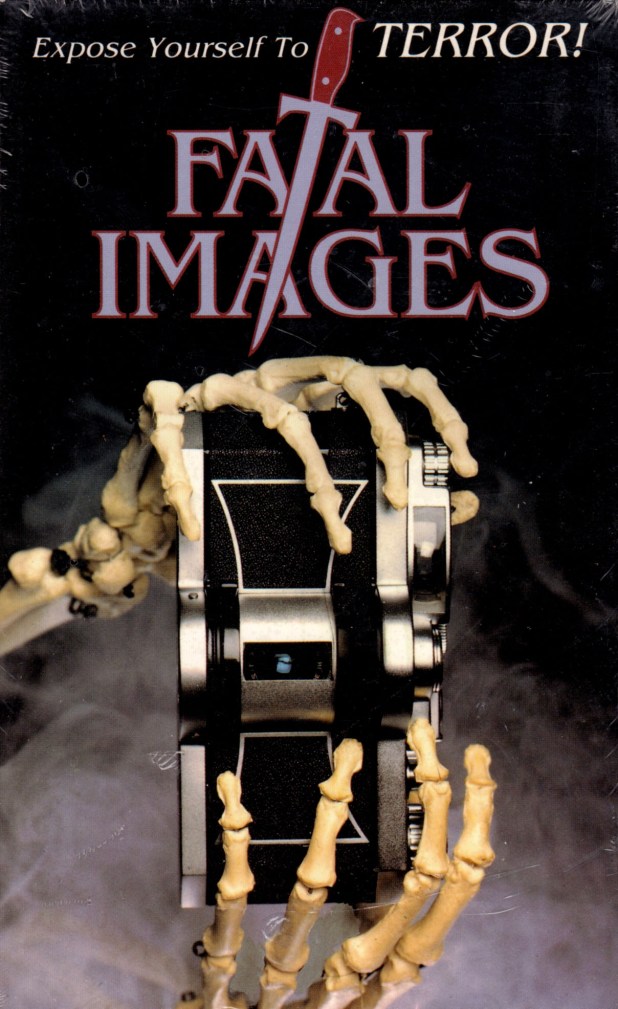
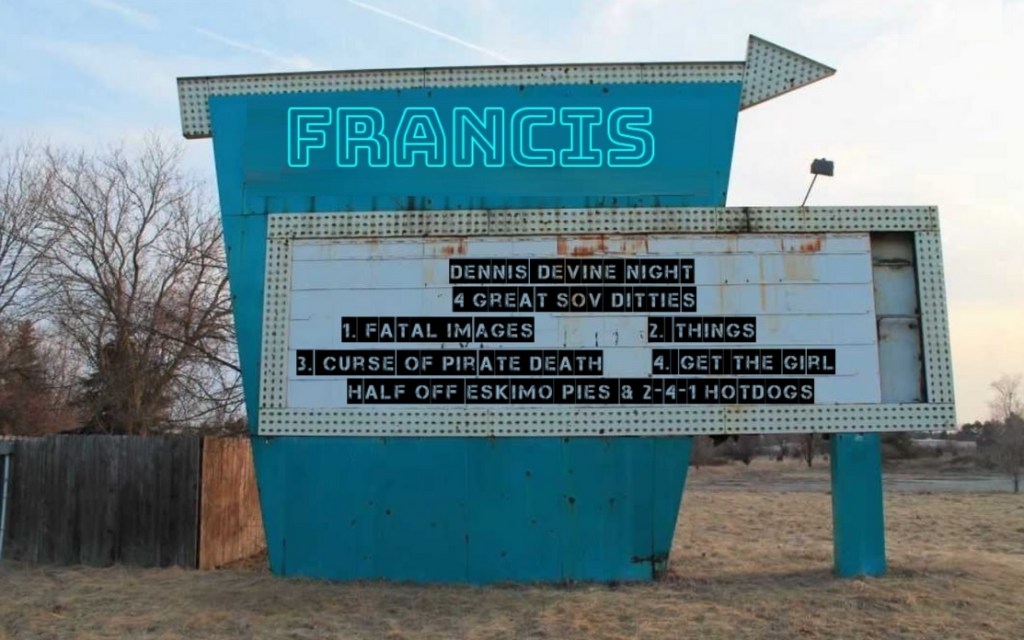
Dennis Devine has been making movies since this film, turning out stuff like Dead Girls (Kay Schaber, Angela Eads, and Brian Chin from that film, star here), Fat Planet, Vampires of Sorority Row, and, most recently, Camp Blood 8: Revelations. For this one, a serial killer kills himself, but not before he seals his soul into a camera. And what if, by pure happenstance, that camera sends up being sold to a young girl and all of her friends start dying? Why, we’d have a slasher, would we not?
This movie has a character that wears her pajamas under her clothes all day long because it saves time at night. It’s hard to argue with that kind of logic, which you would not expect to arrive within an SOV slasher made 31 years ago. Yet here we are.
A hair metal band plays in a field, everyone has on comfy sweaters and someone’s arm gets ripped off. There are worse things you could be doing with your time, to be perfectly honest. Devil worshipper photographers bonded forever to their cameras, emerging to murder everyone they see? It’s basically a feel-good picture. What helps this along is the effects that come courtesy of the iconic Gabe Bartalos, who worked on Dead Girls, as well as Frankenhooker, Spookies, Brain Damage, and the Fright Night, Basket Case, Leprechaun, and Texas Chainsaw Massacre and, Gremlins.
You can watch Fatal Images on YouTube. And be sure to join us for our “Drive-In Friday” tribute to the works of Dennis Devine.
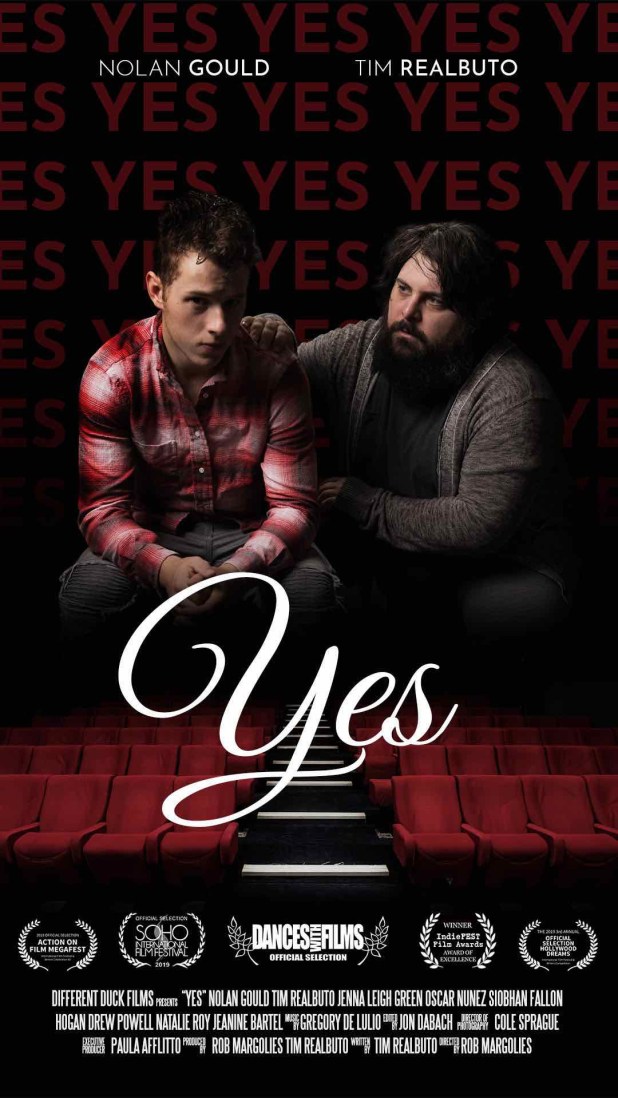
Yes seems metatextual right from the beginning, as it explores how Jeremiah Rosenhaft (Nolan Gould of TV’s Modern Family) and Patrick Nolan (Tim Realbuto, who wrote and presented this as an off-Broadway play) have each come to escape from their lives with acting. Jeremiah moves past their sessions to become a major star who started in sitcoms, which seems how Gould’s career is going. And sadly, Nolan has been destroyed by failure, scandal and an almost made it past.
Directed by Rob Margolies, who also brought us Immortal, this is a look at just what it takes to escape from the world and become an actor, told through the intriguing visual trick of having everything else fall away once the acting begins.
While this isn’t the typical film we feature on our site, we can definitely recognize the value of this film. The two characters really are lost souls, but only one of them will emerge from their relationship with the tools that will allow them to survive, yet be forever haunted by the time they spent together.
Yes is available on demand. We were sent a copy for review but that does not impact our opinion.


 B&S About Movies
You must be logged in to post a comment.