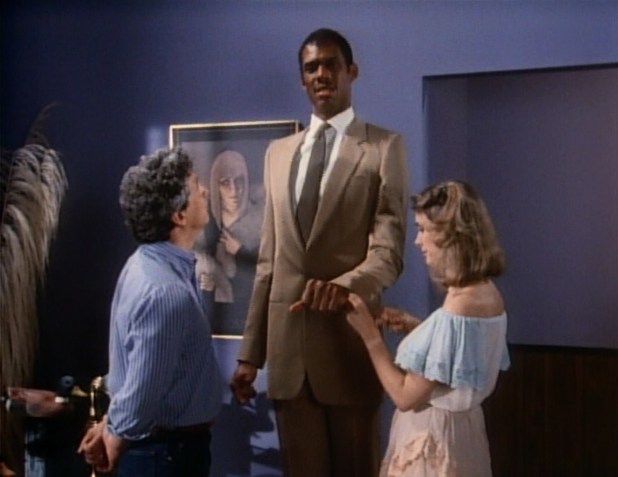
Based on a Harlan Ellison story, directed by Shelley Levinson and written by Haskell Barkin, this episode has Danny Squires (Charles Levin) in a lunatic wing explaining how his wife Connie (Coleen Camp) had bought an old lamp that brought a djinn (Kareem Abdul-Jabbar) into their lives. Nothing good has happened since that day.
Sadly, this episode is one of the sillier episodes and not in the best of ways. It’s wacky humor with a payoff that is an even bigger groaner. It’s as if all the issues of Danny in a straihtjacket don’t matter because of how easily everything comes together at the end.
Look, they can’t all be winners on Tales from the Darkside.
EDITOR’S NOTE: This was first on the site on July 14, 2020. If you want even more Commando love, read my interview with Vernon Wells.
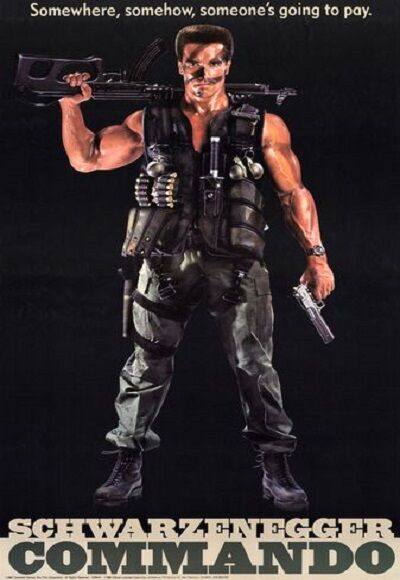
Do you remember that feeling where you wanted to be a character in a movie? As we grow up, that feeling goes away. Well let me tell you, I can still feel the yearning to be John Matrix that I felt as a 13-year-old. Sure, Conan the Barbarian and The Terminator made many take notice of Arnold. This is the movie that — to me — put him over the top.
Director Mark Lester told Empire, “It’s the granddaddy of action films as we know them today. And Arnold was the reason it got made.”
Who knew that it was originally a movie all about a soldier turning his back on violence? Well, that wasn’t what ended up on the screen. Instead, we have Arnold gleefully getting revenge on all manner of soldiers, thugs, mercs and habitual linesteppers for around 90 minutes of rip-roaring fun.
Yet when the movie starts, John Matrix is happy. He’s in the woods, feeding deer by hand, hanging out with his daughter Alyssa Milano and carrying trees around by himself. Then, after turning down an offer to come back in, a bunch of no-goodniks come on in and take his daughter. Even worse, his old best friend Bennett (Vernon Wells!) is their leader.
Also: Bennett dresses like, well, no one who has ever lived on this earth before. A chain mail sleeveless shirt would be enough, but then he has leather pants and fingerless gloves. It’s as if the entire design staff of Capcom, Data East, Konami and SNK all looked at the screen and said, “This is the blueprint for every fighting game we will ever make.”
Wells is legitimately unhinged in this movie. In that same Empire article, he said “.. I was so hyped to be in the movie, they could have asked me to jump off the Empire State Building and I probably would have. Making Commando was better than anything you could have smoked.”
Wings Hauser was going to play Bennett, which probably would have been awesome too.
This is a movie where Arnold murders between 81-102 people in twenty minutes. There’s a rocket launcher scene that sends me into a fit of hysteria. The hanging dudes off cliffs by their feet. All the wonderous one-liners. And oh yeah, “Let off some steam, Bennett!” You have no clue how many times that scene was rewound while we all screamed the line to one another.
Arnold made two films at Sherman Oaks and that place should have a gold statue of him that we can all genuflect in front of. This movie is a piece of cinema that no one would have the audacity to make today.
Look, when Dan Heyada is the big bad of your film, you’re doing it right.
EDITOR’S NOTE: This originally was on the site on December 2, 2020 and has been updated for Arnold Week.
I am sorry, Red Sonja. For years, I have doubted you. Surely you cannot be as good as Conan the Barbarian and Conan the Destroyer. You have to be a weaker sister, I always thought, so I avoided you.
I was wrong. So wrong.
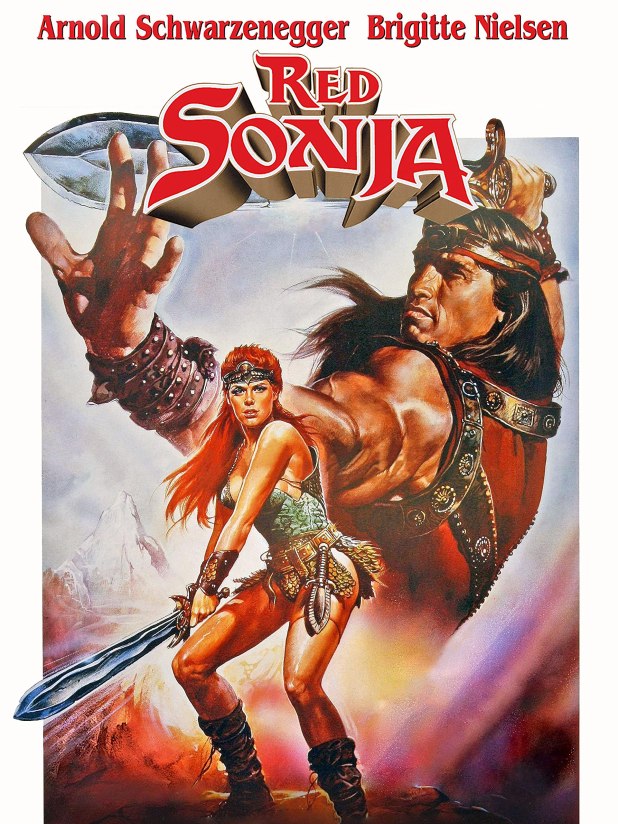
Today, dear reader, I am here to tell you that while this film is not as good as the first two Conan romps, it’s still an astounding sword and sorcery adventure filled with plenty of great effects, well-shot battles and a cast of some of my favorite actors.
Oddly enough, Red Sonja may be owned by the Robert E. Howard estate, but the character itself was really created by Roy Thomas and Barry Windsor-Smith, who used Howard’s Red Sonya of Rogatino as inspiration. But man, those 70’s Conan comics were monsters and people fell in love with the idea that Sonja could be as tough as Conan and had promised the goddess Scáthach that in exchange for heightened strength, stamina, agility and fighting skills that she would never lie with a man until he could defeat her in fair combat.
Let’s not debate how the survivor of sexual assault must pretty much get beat up to enjoy lovemaking, because that’s the kind of complex argument that won’t be solved inside a movie that’s really about stabbing people. I’m not saying it’s an important discussion to have, but I’m an expert in exploitation movies, not humanity.
Directed by Richard Fleischer, whose career goes from the heights of Soylent Green and 20,000 Leagues Under the Sea to the depths of The Jazz Singerand Amityville 3-D — not to mention Mandingo — this moves quick, looks good and is just plain fun.
After surviving the death of her family and being attacked by the soldiers of Queen Gedren (Sandahl Bergman*, who seems to relish the opportunity to play a villain instead of the female sidekick), Sonja trains to become a legendary warrior.
Meanwhile, her sister Varna (Janet Agren, Hands of Steel, City of the Living Dead) has become a priestess in an order of women who plan on banishing the Talisman, which created the world but could now destroy it. If any man touches it, he disappears, so of course Gedren wants to use it for her own ends. Led by Ikol (Ronald Lacey, Toht from Raiders of the Lost Ark), her army kills the priestesses and takes the Talisman for their queen.
Lord Kalidor** (Arnold Schwarzenegger) finds Varna and brings Sonja to her, where she learns of the Talisman and how she can kill two birds with one stone by destroying it and Gedren. Her adventures take her to meet Prince Tarn (Ernie Reyes, Jr.), a young king of a land destroyed by Gedren, and his bodyguard Falkon (Paul L. Smith, who the handyman in Pieces and Bluto in Popeye). She also defeats the ominous Lord Brytag (Pat Roach, the former pro wrestler who shows up as a major bad guy in so many movies, from the mechanic that Indiana Jones knocks into a Flying Wing in Raiders of the Lost Ark to Hephaestus in Clash of the Titans, Toth-Amon in Conan the Destroyerand General Kael in Willow) before an awesome duel with Kalidor for the right to aardvark*** and then another battle against Gedren as her castle explodes with lava flowing everywhere.
Speaking of that great cast, this also has a third Indiana Jones alumni, Terry Richards, who played the Arabian swordsman that Indy so memorable shot after a long flourish of sword swinging. Plus, Tutte Lemkow, best known as the Fiddler on the Roof is a wizard and The Swordmaster that trains Sonja is Tad Horino, who was also Confucius in Bill and Red’s Bogus Journey. Erik Holmey, who played the soldier who asked “What is best in life?”, and replied, “The open steppe, fleet horse, falcons at your wrist, and the wind in your hair!” is in this. And of course, Arnold’s buddy Sven-Ole Thorsen shows up.
Plus, how can you be let down by an Ennio Morricone score?
Again, I’m sorry, Red Sonja. You’re actually pretty darn good.
*Bergman was offered the role of Red Sonja, but turned it down, choosing instead to play Queen Gedren. Producer Dino De Laurentiis met with actress Laurene Landon and was set to offer her the role until he learned that she had pretty much already played the same part in Hundra. He spent a year looking for an actress who looked like an Amazon, almost picking Eileen Davidson (The House On Sorority Row) before discovering Brigitte Nielsen on the cover of a magazine.
**There’s a fan theory that Kalidor is really Conan, as some heroes would use “adventuring names” while they were in other counties, like how Gandalf was also known as Mithrandir. De Laurentiis didn’t have the rights to use Conan again, which explains this financially. Speaking of money, Arnold signed up for a cameo as a favor to the producer, but one week turned into four and when he saw a rough cut of the movie, he realized that he was really a co-star. This is why he terminated his 10-year deal with De Laurentiis.
***They totally did, for real, according to Arnold in his book Total Recall – My Unbelievably True Life Story. Neilsen confirmed this in her book You Only Get One Life, saying that they had “no restrictions” in their lovemaking. You know, while some of us debated whether Stallone or Schwarzenegger was the best action hero, Neisen had Biblical knowledge.
June 16: Junesploitation’s topic of the day — as suggested by F This Movie— is 80s action! We’re excited to tackle a different genre every day, so check back and see what’s next.
I have no idea what genre this movie is and I’ll bet it has no idea either. It is an example of one of my favorite microgenre: Italian filmmakers in America, further subset Italian filmmakers in Florida*.
Alberto De Martino doesn’t get mentioned in the same conversation as Argento or Fulci. He’s not even in the Lenzi, Martino or Deodato world either. But he did direct The Antichristand Holocaust 2000, two examples of the Xerox 70s occult boom that I have a particular fondness for. And he also made the shot in Canada poliziotteschi/giallo hybrid Strange Shadows In an Empty Room, which is a movie more people should watch and the downright weird superhero film The Pumaman. Also — and how can I forget this — he made the wildest Eurospy movie, Operation Kid Brother, which uses Sean Connery’s kid brother and everyone else that has ever been in a Bond film, daring Cubby Brocoli to repeat the violence — and yes, murder allegedly — that he unleashed on Ted Healy.
De Martino was also smart to cast David Warbeck and Laura Trotter as the leads. If I had my way, this would say “The stars of The Beyond and Nightmare City are back together for the first time!”
Warbeck is Craig Milford, a local reporter sent to a college — let’s assume it’s the University of Miami — to interview a professor cloning a cell from DNA that was found inside a meteorite. This seems like the worst of ideas, but you know how movie science works. As Milford leaves, gunmen break in, kill everyone and take the alien cells. They start erasing anyone who knows anything about the experiment and as that includes Milford, he goes on the run.
Somehow, Milford becomes our backwoods planet’s only savior as telekinetic businessman Anderson (John Ireland, who was in great stuff like Spartacus and Red River but I know him as King Arthur from Waxwork II: Lost in Time) wants to use that alien DNA, which is already growing into a quite honestly freaking me out looking alien fetus. He has help from another psychic extraterrestrial, Joanna Fitzgerald (Trotter), who he of course is going to do some reading under the covers with just as my wife walks in, angrily looks at the TV and says, “Why does this happen all the time in Italian movies?” and “That woman’s body hair is upsetting.”
The aliens left a message on the videotape for Milford that the alien baby is bad, baby, and we’re going to have to do something about it. That means that we’re going to watch Milford get launched around a room by a tentacled fetus, which I had no idea just how much I’d love. Also, by aliens, I mean that they are ghosts and one of them is just a big giant hand.
Between the score by Detto Mariano that approximates Harold Faltermeyer’s “Axel F” and Jan Hammer’s synth beats**, this movie’s title — and alternative version Miami Horror — are supposed to make us think Crockett and Tubbs. De Martino going by the name Martin Herbert is also supposed to fool us into thinking this is an American movie. Thankfully, it is deliriously Italian, filled with swamp boats, assassins and conspiracy. It makes a great double feature for the similarly goofball UFO quasi-gialo Eyes Behind the Stars.
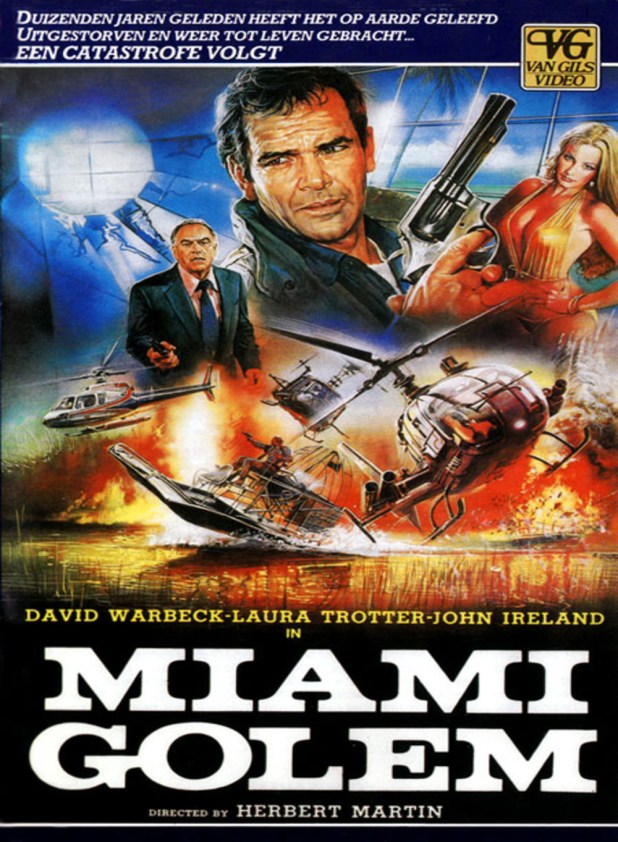
Compounding the fact that this is an action movie is that the poster has three helicopters and an airboat all racing away from a gigantic explosion while Werbeck holds a revolver and a woman who is not in this movie in any way wears an outfit that Vampirella would think is kind of uncomfortable.
Also: Werbeck shoots a helicopter out of the air with a handgun, the kind of lunacy that only Jack Nicholson in whiteface gets away with.
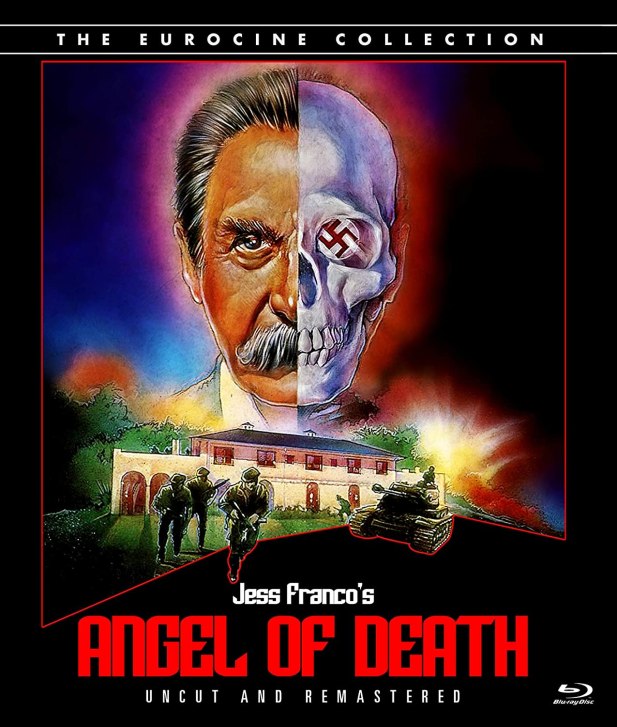
In Jess Franco: From the Margins to Auteur Cinema. Analysis of the Cinematographic Story, he said “I started doing a movie that was titled Gente del Rio, in which appeared Mengele who was hidden there, and was wonderfully played by Howard Vernon. Gente del Rio was a film about some fishermen who live in a town in Central America and know that Mengele lives there, but nobody dares to come up to him. Until some of them attempt to catch him. The movie is their fight to get hold of that bastard. And they get him. It was based on persons I met in Brazil, former Nazis who lived like gods on some fucking rural estates, and what I wanted was to show the clash between these people and the humble people of the river. But the producer wanted to give more importance to the character of Mengele, but in Andrea Bianchi’s shabby action movie way. I did not want to do that with that character, who is a sinister and sordid type, but who must be given another treatment, not as if he was a street whore. So I abandoned the film, and in the end I left it. I did not finish it, nor did I want to finish it, because it was wrong, and I did not want it to appear out there on video. Almost all the material that I did with the Italians is like this, they did me a thousand dirty tricks, everything went wrong, and that’s why I have never admitted the film as mine.”
Nazi hunters Aaron Horner (Jack Taylor) and Marc Logan (Antonio Mayans, who was in nearly all of Franco’s later movies) have hunted down the escaped Nazi war criminal Dr. Josef Mengele (Howard Vernon) to South America, where he and his assistant Gertrud (Shirley Knight) have created a Fourth Reich, which mostly seems to involve experiments that created a monkey man and starting an army trained by crippled Vietnam veteran Wolfgang von Backey (Christopher Mitchum). Luckily, Horner and Logan have an army that includes kung fu experts, a crossbow shooting soldier, an acrobat named Mr. Agility and a female spy named Eva (Suzanne Andrews) already on the inside.
So yeah, while Franco wrote and started this, the aforementioned Bianchi (Burial Ground) finished it. It has little to none of the sleaze you expect from Jess Franco making a movie where soldiers face off against neo-Nazis who experiment on humans. Even Fernando Rey showing up for a cameo can’t make this any better and that’s a shame. This is being sold on the Franco name and it isn’t a Franco film.
The name Commando Mengele is better, though. I also feel that Jess Franco is like pizza or sex. Even if its bad, it’s still pizza or sex.
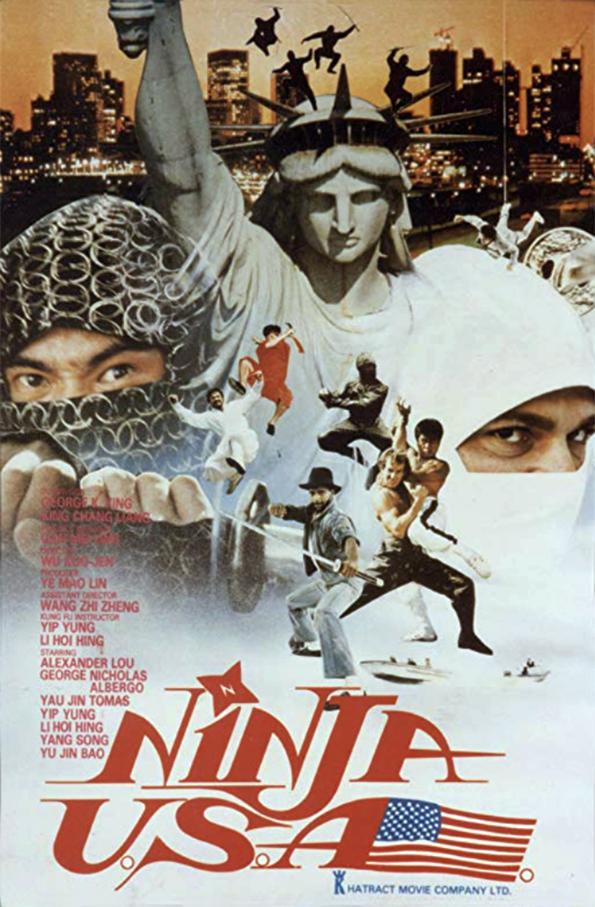
Also known as Ninja in the U.S.A., Ninja U.S.A. but not American Ninja — but if you told someone to get you that movie at the store and they brought you this the name did its job — this movie knows what you want right off the bo staff, showing Jerry Wong (Alexander Lou) fighting tons of ninjas to the death while also beating the absolute bark out of a tree for no reason at all. This movie gets the message that Ninja 3: The Domination laid bare for us all to never forget: start your movie with ninjas killing people and don’t connect it at all to the plot and you will be better for this experience.
Tyger McPherson has put together an army of ninjas to wipe out any witnesses to his drug dealings and the NYPD is stumped. This ninjitsu army follows Tyger so devoutly that they will die for him no questions asked. But Tyger has another side. He’s a Vietnam vet who adopted two kids, Jerry (who grew up to be the Jerry the ninja we already met) and NYPD cop Ronny (Alex Yip), who is devoted to putting drug dealers in jail. To add insult to injury, Jerry is getting married to Penny (Rosaline Li), a reporter also out to expose her new father-in-law and somehow, she gets evidence on the wedding day and gets kidnapped. Man, I thought the cops coming to my first wedding was bad.
If you hate your dad, at least he never kidnapped your wife, had some thugs assault her, videotaped it for you and then sent it to your house.
You can watch this on YouTube and see if it makes any sense to you, I guess.
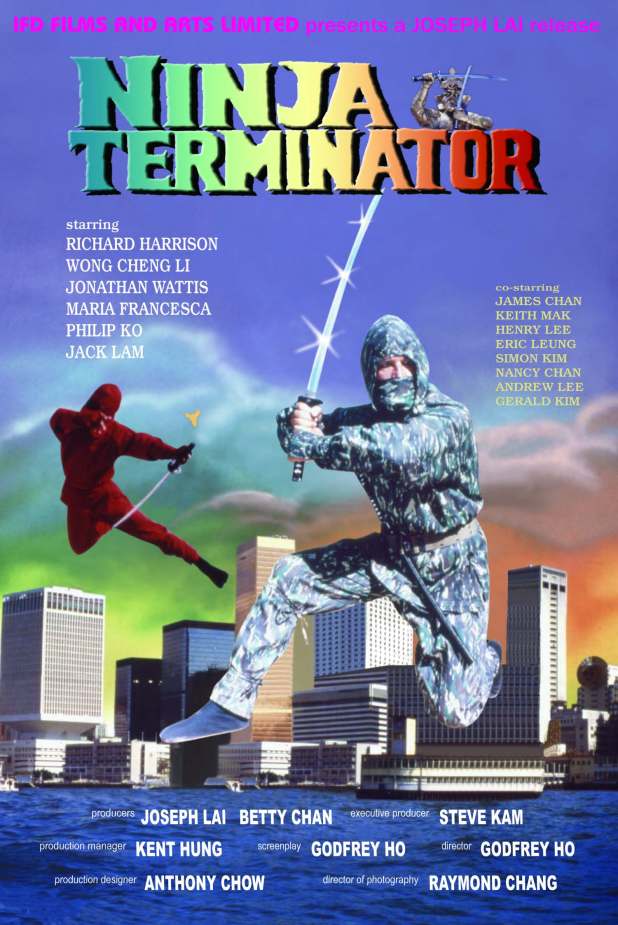
If you owned a Korean film called The Uninvited Guest Of The Star Ferry, it probably wouldn’t sell in the west. But what if you shot new footage of Supreme Ninja having his three greatest warriors — Ninja Masters Tamashi, Baron and Harry MacQueen (Richard Harrison) — celebrate the second decade of his power by assembling the Golden Ninja Warrior and making him impervious from swords, well, then you’d be able to sell that.
Godfrey Ho. Genius or madman? Maybe both?
Two years after the three ninjas took each part of the statue to keep their master from becoming too strong, Karada has killed the ninja Tamashi and Baron and Harry have been manipulated into battling one another. Will Supreme Ninja take the statue and reign forever?
So yes, that’s the basic plot. What I have not captured — I really don’t know if I can — is just how lunatic this movie gets, constantly introducing new characters and ideas and rarely following up on them, like if someone introduced Jack Kirby to manga and then slipped him some amphetamines. I also am writing this under the influence of COVID-19 and the way my brain has been going from lucid to foggy to sleep to pain to being exhausted in a matter of seconds feels exactly like this movie but in a way better way than not being able to breathe and needing to sanitize my hands every ten seconds.
Richard Harrison is a hero. I mean, yes, his career probably was ruined by Godfrey Ho repeatedly re-editing him into movies. I wish there was a way I could send him some cash by Paypal to make up for that because in this movie he wears a camouflage ninja suit and talks on a Garfield phone and honestly, I’ve never seen Robert Deniro do that.
There’s also a scene where one ninja can shoot fire out of his hands and another shoots ice and you know, that’s no CGI, it’s two dudes putting their lives on the line to entertain you thirty some years in the digital future. Also: sex scenes that refine the word gratuitous.
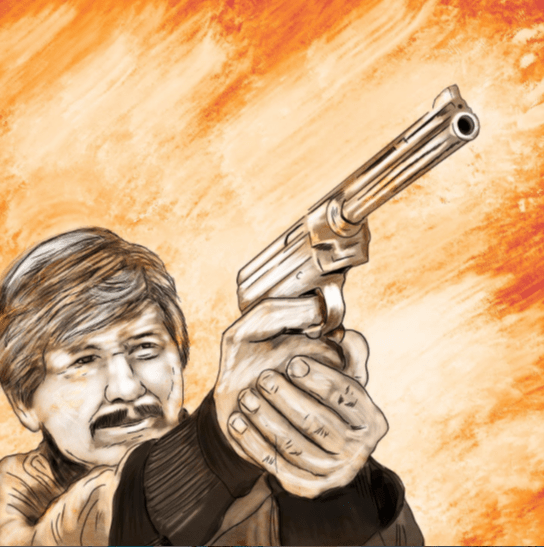
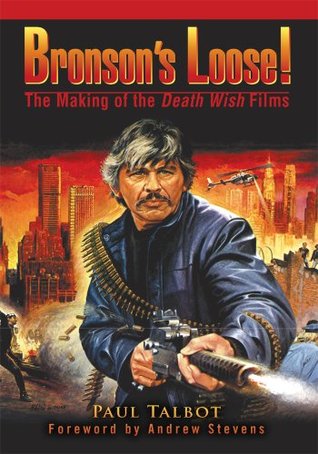
With The Cannon Canon celebrating Bronson Don’t Like May(onnaise) this month, I decided to watch some Bronson and bring back several of his films. Seeing as how I’ve done an entire Death Wish week before, why not just put them all in one review for easy reading?
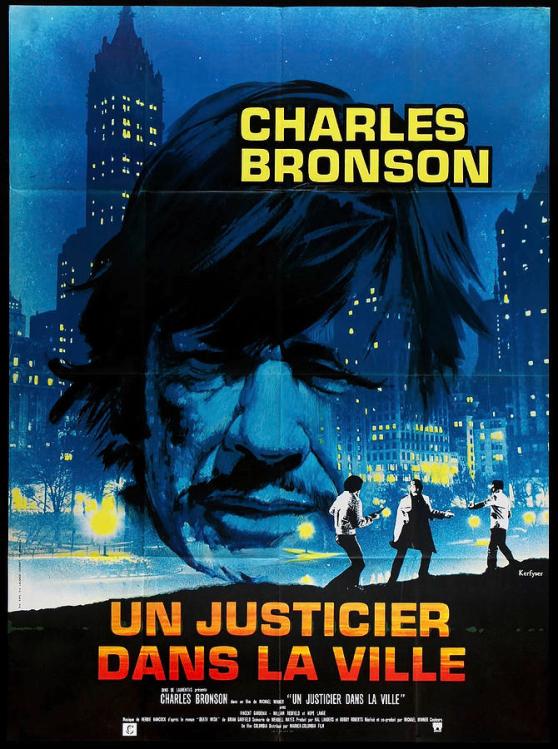
Death Wish (1974): New York City in 1974 must have felt like the end of the world. Based on the 1972 novel by Brian Garfield, Death Wish was the answer. In fact, in many theaters, the audience stood up and cheered as Paul Kersey got his bloody revenge for the crims visited upon him and his family.
The film we’re about to discuss went through many twists and turns as it made its way to the screen. Originally, it ended with the vigilante hero confronting the thugs who attacked his family and them killing him, police detective Ochoa discovering his weapon and deciding to follow in his footsteps. And get this — the first choice to play the lead was Jack Lemmon, with Henry Fonda as Ochoa and Sidney Lumet directing.
Finally, United Artists picked the gritty action veteran Michael Winner to direct. Several studios rejected the film due to its subject matter and the difficulty of casting the lead. Winner wanted Bronson, who he’d worked with in the past, but the actor’s agent hated the message of the film and Bronson felt that the book was about a weak man, someone he would not be playing on film.
Death Wish turned Bronson, who was 53 at the time of its release, into a major star known worldwide. It’s a movie made exactly for its time. Despite its lurid subject matter and dangerous acceptance of its hero’s actions, it’s still a great exploitation film that actually explores the why behind its hero’s actions instead of just setting him loose upon people.
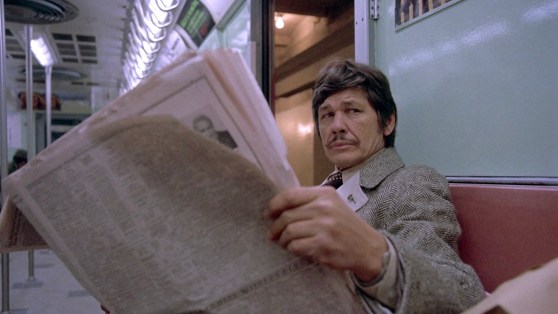
Paul Kersey (Bronson) starts the movie in Hawaii with his wife Joanna. When they return home to the squalid streets of New York City, it’s only days before three thugs — including Jeff Goldblum! — invade their apartment, raping their daughter Carol and bearing Joanna so badly that she dies. Beyond Goldblum in this early role, keep an eye open for Christopher Guest and Olympia Dukakis as cops, as well as Sonia Manzano (Maria from Sesame Street, who was dating director Winner at the time and suggested that Herbie Hancock do the score) and Lawrence Hilton-Jacobs (Freddie “Boom Boom” Washington from TV’s Welcome Back, Kotter) in supporting roles.
As he recovers from his wife’s death, Paul is mugged. He fights back and chases off his attacker and finds new strength from the battle. An architect by trade, Paul heads to Tucson where he helps Ames Jainchill with his residential development project. After work one night, he goes to a gun club with Ames, where we learn how good of a shot Paul is. Turns out he was a conscientious objector and combat medic who was taught marksmanship by his father, but promised his mother he’d never pick up another gun after his dad was killed in a hunting accident. On the way back home, Paul discovers that Ames has given him a gun as a gift.
Now back home, Paul learns from his son-in-law that his daughter is still catatonic and would be better off in a mental hospital. That night, when walking, Paul is mugged again but he has the gun with him. He fights back and kills the mugger, but even that action causes him to grow physically sick. But soon, he’s prowling the mean streets and looking for a fight.
Before long, NYPD detective Lt. Frank Ochoa (Vincent Gardenia) begins investigating the vigilante killings and quickly narrows down his suspect list to Paul. As the manhunt gets closer and closer, Paul finally is caught after passing out from blood loss after a shootout. Instead of arresting him, the NYPD wants the case quietly solved, so they send him off to Chicago. The minute he arrives, he helps a woman who was almost mugged and stares at the criminals with a smile, his fingers in the shape of a gun.
There’s a story which may be apocryphal, but when Michael Winner told Bronson what this film would be about — a man who goes out and shoots muggers — Bronson replied, “I’d like to do that.” Winner said, “The film?” And Bronson replied, “No. Shoot muggers.”
After viewing the film, author Brian Garfield hated how the film advocated vigilantism, so he wrote a sequel called Death Sentence that was made into a movie in 2007 starring Kevin Bacon. No word on whether or not he hated that movie too, as it only keeps a little of the book.
Compared to the heights of mayhem that this series will descend to, this is a retrained meditation of a man facing an increasingly violent world. Stay tuned. Paul Kersey is just getting started.
Death Wish II (1982): Paul Kersey can’t catch a break. Seriously, in this sequel, he goes through the Trials of Job all over again. You think he went through some bad stuff in the first movie? Michael Winner is just getting started putting our vigilante hero through hell on earth.
Paul has taken his daughter Jordan and moved to Los Angeles, where he’s found love again with radio reporter Geri Nichols (Bronson’s wife, Jill Ireland). However, horror and pain is never far from Kersey, so one day at a fair, some punks steal his wallet. He chases one of them down named Jiver down and teaches him a lesson. The gang — Nirvana, Punkcut, Stomper and Cutter (Laurence Fishburne) — find his address in his wallet and pay a visit to his house. They rape his housekeeper Rosario, beat Paul into la la land and steal his daughter (this time played by Robin Sherwood from Tourist Trap). After raping her, she goes even deeper into her depression and jumps out a window, falling to her death and getting impaled like she’s Nikos Karamanlis or Niko Tanopoulos.
Of course, Paul doesn’t need help from the cops. He only needs one thing: to give in to the rage within, to become the vigilante once more. Det. Frank Ochoa is back to chase him one more time, as he’s the only one who can track him.
Soon, Paul is wiping out the gang one by one, his own personal safety and relationship with Geri be damned. This is the first time we discover that Kersey is able to do magical things like make fake IDs with just a Xerox machine and talk his way into anywhere and out of anything. By the end of this film, he’s gone from a man whose life has been destroyed to a walking angel of death willing to do whatever it takes to kill everyone that’s crossed him.
To be as authentic as possible, this movie was shot in the sleaziest parts of Los Angeles, such as the abandoned and crumbling Hollywood Hotel location. Many of the film’s extras were local color who were either hired to play a bit part or just walked over to the set, such as drug addicts, drag queens, Hare Krishnas and bikers. Even crazier, Bronson’s alcoholic brother was a frequent set visitor, constantly asking for money. Bronson wanted to be careful not to give him too much cash so that he wouldn’t be mugged, but that brother was soon found dead, stabbed in the ass.
My favorite part of this was the score, composed by Jimmy Page in his first post-Led Zeppelin musical appearance here by creating the film’s soundtrack. It’s almost surreal to hear his signature guitar tone over Bronson killing rapists.
Death Wish 3 (1985): Paul Kersey is back in New York City, despite being kicked out at the end of the first Death Wish. His Korean War buddy Charley has invited him to ask for help as his East New York apartment building has been under attack by a gang. Paul gets there just in time for his friend to die in his arms and the police arrest him for the murder. Inspector Richard Shriker recognizes him as the vigilante from back in the first movie, so he throws him into a holding cell with the leader of the gang, Manny Fraker (Gavan O’Herlihy, son of Halloween 3: Season of the Witchbad guy par excellence Dan O’Herlihy). After a fistfight ensues, the villain gets released before Paul. If you think that’s the end of all of this, you haven’t been reading our website this week.
Shriker offers our hero a deal: kill all the punks you want, but inform him of any activity so that he can get a big bust and make the news. With that, we’re off and to the races in what is not only the craziest of the Death Wish movies, but perhaps the most bonkers movie you’ll ever see.
Paul moves into his dead friend’s apartment and into a warzone. He makes friends with the other tenants, including World War II vet Bennett Cross (Martin Balsam from Psycho), a kindly old Jewish couple named Mr. and Mrs. Kaprov, a young Hispanic couple named Rodriguez and Maria (a pre-Star Trek: The Next Generation Marina Sirtis who in real life is a Greek girl born in London). There’s even a young kid who continually walks into the path of gunfire. Obviously, this is a neighborhood made for Paul Kersey. It is, as my wife pointed out, Sesame Street where people die horribly.
Paul uses a car as bait for the gang, killing two who break into it. And he saves Maria twice, but the third time, the gang takes her and she soon dies in the hospital, not knowing the most important rule of Death Wish: if you are a woman, stay away from Paul Kersey.
That’s when Paul orders a .475 caliber Wildey Magnum, a gun that has the same muzzle velocity as a .44 Magnum at 1000 yards. This big bore handgun, as Danny Vermin once said, “shoots through schools.” He traps The Giggler by putting his new camera where he knows the criminal can steal it, then he blows him into another dimension with his gigantic handcannon. “I can’t believe they got The Giggler, man,” laments the punk rock gang.
Why this gun? Well, it was Bronson’s personal handgun in real life. According to the gun’s inventor and the film’s technical consultant, Wildey Moore, sales for the Wildey Magnum increase whenever this film airs on TV.
You know who else didn’t get that memo about dating Paul? Public defender Kathryn Davis (Deborah Raffin, The Sentinel), who dates our hero long enough for him to joke that he likes opera and for mohawked punk gang leader Manny to shove the car she is waiting for Paul in toward oncoming traffic, where it explodes in a giant fireball.
Shriker decides that enough is enough and he puts Paul into protective custody. But after the gang blows up Bennett’s taxi garage, the old man tries to use the ancient Browning .30 machine gun that Charley brought back from the war. Sadly, the ancient detective from Psycho is no Roadblock from G.I. Joe and he’s quickly beaten into near death by the gang. Paul is allowed to visit him at the hospital and quickly makes a break to defend his new friends once and for all.
There’s another big machine gun, so Paul and Rodriguez use it to kill every single gangbanger they can before they run out of ammo, just as their neighbors finally come to arms to help them. What follows is what can only be described as sheer orgasmic violence, as hundreds of stunts all happen at the same time. Grenades are thrown from motorcycles. Handgun blasts send people flying through glass windows. Fire is everywhere. And there’s Paul Kersey, walking cooly and doing what he does best: killing punk rock criminals of all colors, races and creeds, including a very young Alex Winter.
Finally, Manny almost kills Paul, but he’s saved by Shriker, who is wounded by the punker but succeeds in shooting him. Kersey calls for an ambulance just as Manny rises, showing his bulletproof vest. In a moment that will live in my mind forever, Paul shoots him dead in the chest with an M72 LAW rocket and sends him flying through the side of the building as his girlfriend (Barbie Wilde, the female Cenobite from Hellraiser) screams in pain, their psychic link obviously broken like Cyclops and Jean Grey on the dark side of the moon. The gang realizes they’re beaten as the cops show up in force, with Kersey simply walking away.
Death Wish 3 is many things, but none of them are subtle. It’s a sledgehammer blow to your sensibilities, a veritable tour of depravity and sadism. It’s also entertaining as hell. Bronson hated Don Jakoby’s (Invaders from Mars, Lifeforce and a frequent collaborator of Dan O’Bannon, with whom he wrote an unproduced script called Pinocchio the Robot that would have featured Lee Marvin as Geppetto!) script and the fact that they turned Paul Kersey into Rambo, but he got $1.5 million for starring in this movie. Frequent rewrites led to Jakoby taking his name off the film and he’s listed as Michael Edmonds.
All told, 74 people die in Death Wish 3, as detailed in this completely amazing article. They are stabbed, shot, run over, set on fire and more. They fall from tall buildings. They are thrown from tall buildings. And there’s a gang that combines all races and creeds — except old people — including white supremacists, punk rockers and lovers of reggae. It is the rainbow coalition of death. There was also a video game that lives up to the violence on screen.
The film also includes a rape scene with the victim played by Sandy Grizzle, who was the girlfriend of director Michael Winner. After they broke up, she reported to London tabloids that this was part of him treating her as a sex slave. Winner sued the News of the World tabloid and won.
Before you scoff at this notion, keep in mind that Winner spent six days filming the rape scene in Death Wish 2, a movie that took from May to July of 1981 to shoot. Also, following the allegations made against Harvey Weinstein in 2017, Winner was accused by three women of demanding they expose their breasts to him. Seeing as how he’s not around to refute the charges, let’s just move on.
Beyond these rumors, Winner was the kind of special individual that almost died from eating dinner — twice. He got the bacterial infection vibrio vulnificus from eating an oyster in Barbados, nearly losing his leg and his life. Then, years later, he’d almost die from food poisoning after eating steak tartare four days in a row. He died in 2013 at the age of 77.
Let’s ignore the gossip on Michael Winner and concentrate on how awesome Death Wish 3 is. Because wow, they literally can’t, don’t — and some folks would say probably shouldn’t — make them like this anymore.
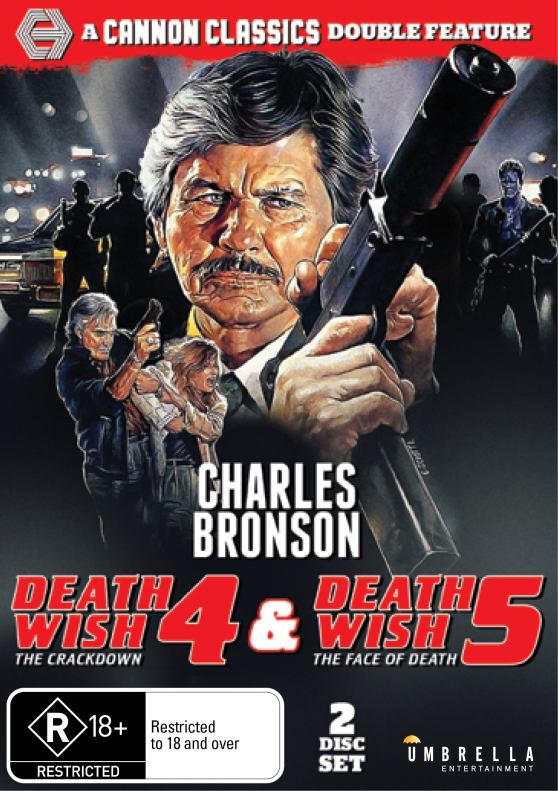
Death Wish 4: The Crackdown (1987): Where do you go after the utter lunacy that is Death Wish 3? Well, you replace Michael Winner with J. Lee Thompson, who was the director for The Guns of Navarone, the original Cape Fear, the slashtastic Happy Birthday to Me and The Reincarnation of Peter Proud amongst many other films. He’d already worked with Bronson on 10 to Midnight, Murphy’s Law and The Evil That Men Do and would also direct Bronson in Messenger of Death and Kinjite: Forbidden Subjects after this movie wrapped. In fact, counting St. Ives, The White Buffalo and Caboblanco, they’d work on seven movies together.
Paul Kersey hasn’t learned anything from the last three movies. He has a new girlfriend, Karen Sheldon (Kay Lenz, The Initiation of Sarah, House) with a teenage daughter named Erica (Dana Barron, the original Audrey from National Lampoon’s Vacation) that you shouldn’t get to know all that well. That’s because — surprise! — she overdoses thanks to her boyfriend and her getting into crack cocaine and doing it an arcade. If you’re shocked that a Death Wish movie would prey upon the worst fears of America’s middle class, then you may have watched the last three films too.
Paul loved that girl like his own daughter, probably because she wanted to be an architect like him and also possibly because he hasn’t yet learned that the moment that he says something like that, tragedy is right around the corner. Honestly, the main message of the Death Wish films is that God hates Paul Kersey, will not allow him to die and will wait until he finds happiness again before visiting upon him great suffering, only for the cycle to repeat.
The night she died, Paul saw Erica smoke a joint with her boyfriend and was already suspecting the young dude, so he follows him back to the arcade the next night. That boyfriend confronts Jojo and Jesse (Tim Russ, Commander Tuvok himself!), two of the dealers who sold them the crack cocaine, and threatens to go to the police. This being a Death Wish film, they kill him pretty much in public. That murder unlocks the ability for Paul to start killing again, so he shoots Jojo and launches his body on to the top of bumper cars, where he’s electrocuted. No one dies in a Death Wish movie without a flourish.
Meanwhile, Paul gets a call from tabloid publisher Nathan White (John P. Ryan from It’s Alive), who knows that he’s the vigilante. His daughter had also become addicted to drugs and died, so he knows what Paul is going through. The storyline becomes pretty much like The Punisher’s first mini-series where The Trust paid for him to wipe out crime, as White funds Paul’s one man war against drugs while his girlfriend starts writing an expose on the two rival gangs in town.
To cut down the budget in this movie, when Paul and Nathan meet in the movie theater, that’s Cannon’s screening room.
One of those gangs is led by Ed Zacharias (Perry Lopez, Creature from the Black Lagoon) and the other is commanded by Jack and Tony Romero. Two LAPD officers, Sid Reiner and Phil Nozaki are also on the case, trying to figure out who killed the drug dealers at the arcade.
This is the first Death Wish film where Paul feels more like an urban James Bond than a fed up war vet. Trust me, he gets even more gadgets in the next one. Here, he uses his skills as a master of disguise — he has none — to dress as a waiter and serve a party at Zacharias’ house. The birthday cake is…man, let me just show you the birthday cake.
After witnessing the drug lord kill one of his guys who stole some cocaine, he’s ordered to help carry out the body. Soon, he’s killing all of that drug dealer’s men, including three guys in an Italian restaurant with a bomb shaped like a wine bottle. Look for a really young Danny Trejo in this scene!
After all that mayhem, Paul also starts wiping out the Romero gang one by one, including breaking onto a drug front and blowing it up with a bomb. Yet Nozaki ends up being on the take for Zacharias and tries to kill our hero and you know how well that works out. Now Paul looks like a cop killer, too.
In the stuntman piece de resistance of this one, the two drug lords are lured into an oil field shootout where Paul kills Zacharius with a high-powered rifle, instigating the fireworks. Nathan comes out to congratulate Paul, but sets him up with a car bomb. It turns out that the Nathan that Paul has met is a third drug lord (!) who set him up to take out all the competition. Then, two fake cops arrest Paul and take him downtown, but they’re really just trying to kill our hero. Again, you know how well that works.
The film ends with Detective Reiner searching for Paul out of revenge for his partner’s murder, the third drug lord kidnapping Paul’s woman and everything coming together in a parking lot and a roller rink where Paul uses an M16 with an equipped M203 grenade launcher to unleash holy hell.
Only the drug lord survives, holding Karen. She tried to escape and gets shot numerous times with a MAC 10 submachine gun. He tries to kill Paul but he’s out of bullets. Paul may be, but he still has a grenade, which he uses to blow the villain up real good.
The film closes with Reiner coming and ordering Paul to surrender and threatening to kill him if he walks away. “Do whatever you have to,” says the old gunfighter as he walks into the sunset.
For all the mayhem and madness throughout this film — keep in mind our hero just used an explosive device to decimate another bad guy just seconds before — this is a poignant ending. But of course, Paul — whether he wanted to use the new last name Kimble he came up with in this film or Kersey — would be back one more time.
Bronson made $4 million for this movie and in my opinion, he should have asked for more.
Death Wish 5: The Face of Death (1994): You think Paul Kersey has learned his lesson about love and loss? No way, pal. Now back in New York City in the witness protection program and going by Paul Stewart, he’s keeping a low profile by going to fashion shows with his super hot girlfriend (Lesley-Anne Down) who also has a young daughter named Chelsea who is surely doomed. Come on, everyone. We’ve made it this far. We may as well watch Death Wish 5: The Face of Death.
It turns out that Olivia has been paying protection money to her evil mobster ex-husband Tommy O’Shea, who is Michael Parks! Paul confronts the guy at the fashion show, but one of the villain’s goons shows him his revolver. He tries to do the right thing and brings in a District Attorney.
Paul again proves he has no short or long-term memory by proposing to Olivia, who doesn’t understand what we all have accepted: God hates Paul Kersey like He has never hated another of His creations. Excusing herself to the powder room to piddle in absolute joy after being asked to be the life partner of a man who has personally murdered thousands of scumwads, one of Tommy’s men named Flakes (Robert Joy, Lizard from The Hills Have Eyesand, as my wife would exclaim loudly, Jim from Desperately Seeking Susan) shoves her face so hard into a mirror that she’s disfigured for life. Even surgery won’t fix her face. Such is the life of a woman who gets involved with Paul Kersey.
After meeting two cops, Mickey King (Windom Earle from Twin Peaks!) and Janice Omori, the female cop dies in the very next scene. She must have gotten a little too close to Paul. In the hospital, King tells Kersey not to go back to his old ways. King tells him that he’s been on this case for 16 years. “16 years? That’s a long time to be failing,” replies Kersey.
Even after getting out of the hospital, Olivia still has to deal with the life she’s chosen as more henchmen come after Paul, shooting her in the back and finally ending her suffering. Well, it turns out that Tommy runs all of the police and has taken his daughter back, so Paul goes full on 007 by killing one goon with poisoned canoli and another with a remote-controlled soccer ball! At this point, this film has gone from boring to right where I want it to be.
What follows is exactly what we want to see: a slasher movie with the righteous Paul going old man nutzoid on every crook there is left, shooting them into sewing machines, slashing their faces with broken bottles and shotgun blasting them into acid baths. At the end, he walks away with his dead fiancee’s daughter, yelling to the cop who couldn’t keep up, “Hey Lieutenant, if you need any help, give me a call.”
After the last three movies coming from Cannon Films, which was in Chapter 11 bankruptcy and under investigation by the U.S. Securities and Exchange Commission, this one comes from Menahem Golan’s new 21st Century Film Corporation. They were having trouble making money and figured that a new Death Wish was going to be a sure-fire hit. Incredibly, for reasons no one is sure about, Bronson and Golan weren’t speaking during the filming, so they’d only communicate through Allan A. Goldstein.
Sadly, the film failed at the box office (but it did fine on home video). Golan planned to continue the film series without Bronson (!) and was planing Death Wish 6: The New Vigilante before 21st Century Film Corporation went bankrupt. This would be Bronson’s last theatrical film, as he was 71 years old as this was being filmed.
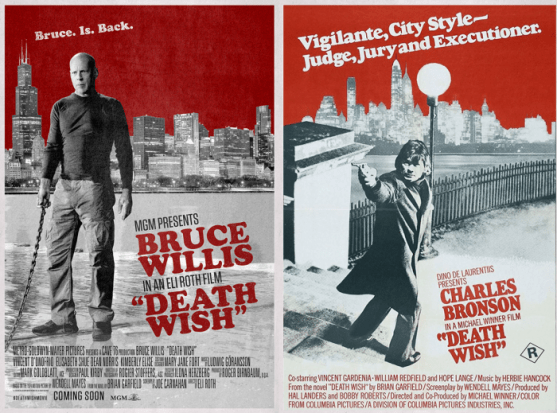
Death Wish (2018): Written by Joe Carnahan (writer and director of Smokin’ Aces and the movie version of The A-Team, as well as a member of the Creative Council of Represent.Us, a nonpartisan anti-corruption organization) and directed by Eli Roth (Cabin Fever, The Green Inferno), Death Wish was a movie delayed several times by the rampant mass shootings in our country. It arrives at a time when the debate over guns has reached a fever pitch. That said, one viewing of The Killing of America, made way back in 1982, shows that that argument has been going on almost the entire way back to the original Death Wish series.
Do we need another Death Wish? After all, there were five different movies already. Is there something new that the film can speak to? This one attempts to, with numerous blips of info from various media sources as diverse as Chicago DJ Mancow, memes and the site mediatakeout to hip hop’s Sway in the Morning.
Paul Kersey (Willis) and his wife (Elisabeth Shue) are getting ready to say goodbye to their daughter Jordan before she goes to college. After lunch at a restaurant, a valet looks up their home address on their car after hearing they’ll all be out that night. However, Paul gets called into his job as a trauma surgeon — instead of an architect — leaving his family alone at home. This being Death Wish, I’m certain we can all guess what happens next.
Police Detective Kevin Raines (Dean Norris, Starship Troopers) and Detective Leonore Jackson are the cops in charge of the case, but they aren’t getting anywhere. Jordan remains in a coma while Paul grieves for his dead wife, including trying to stop a mugging which ends up with him being beaten. He debates buying a gun but realizes he’ll have to register it and be videotaped (the film wavers here between gun ownership being too easy and providing the right info).
A patient drops a Glock 17 while Paul tries to save his life and thanks to online videos, Paul learns how to use it. Soon, he’s stopping carjackings and killing drug dealers and has been dubbed the Grim Reaper by the media.
When Paul recognizes his stolen watch on a man’s wrist, he uses that man’s phone to get closer to the men who destroyed his family. One by one, he eliminates them before realizing that his actions have brought his family — daughter Jordan, who has emerged from her coma, and brother Frank (Vincent D’Onofrio) — into the killer’s sights.
Paul then uses his legally purchased weapons to defend his home, the police come after its all over and our hero easily explains that he’s not the Grim Reaper. Free of consequence, he’s able to take his daughter to college in New York City. There, he sees a mugging and stares right at the criminals, making the same finger pistol mannerism that Bronson used at the end of the first Death Wish. Interestingly enough, this is an inversion of the original film’s ending, where Kersey moves from New York City to Chicago.
Seeing as how director Eli Roth loves exploitation films, there are plenty of references, such as Paul telling a criminal that he’s torturing that he’s about. to put them into “the most pain a human can endure before going into cardiac arrest,” a fact discovered by scientists of Unit 731 and chronicled by the movie Men Behind the Sun. That scene also uses the Sorcery song “Sacrifice,” which comes from the film Stunt Rock (Sorcery also played the band Headmistress in Rocktober Blood). And a trivia note just for my wife: the last movie that Elisabeth Shue and Vincent D’Onofrio appeared in together was Adventures in Babysitting, which also takes place in Chicago.
This isn’t a bad film. But there’s no real reason for it to exist as it says nothing new other than being a serviceable action film. It’s been criticized as alt right and racist, but I think any Death Wish film is going to be branded the same way. I thought it was pretty even in its depiction and had plenty of different voices throughout.
Want to know more about Death Wish?
Death Kiss: This 2018 film features Bronson clone Robert Bronzi.
A breakdown of cover versions of Death Wish: From two Turkish remakes to an adult version, there have been plenty of Death Wish ripoffs.
Cellat: The Turkish Death Wish somehow gets parts of the second movie into their story years before it was filmed.
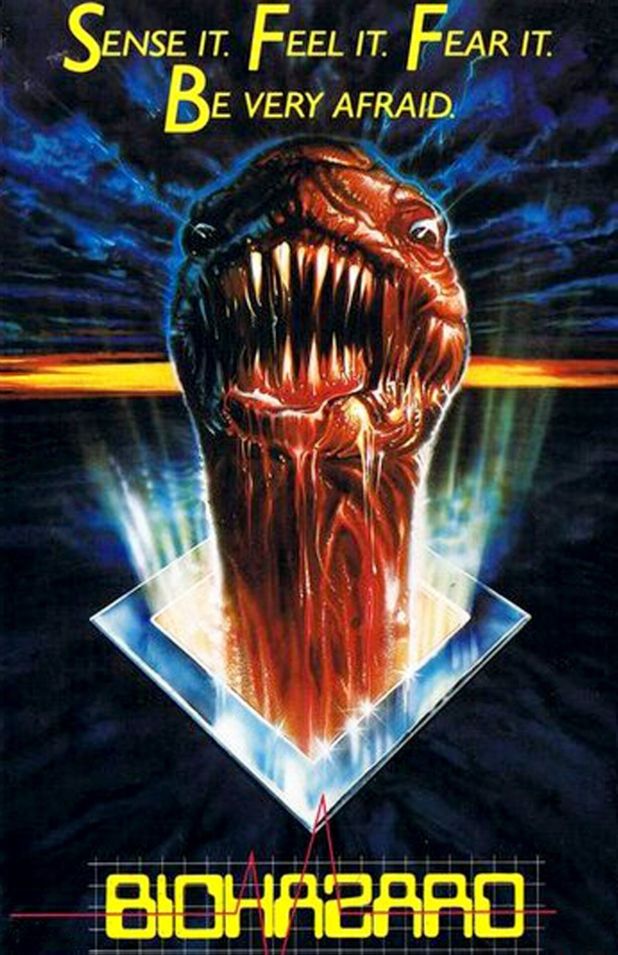
You know, there’s lots to love in this goofy little movie, from Angelique Pettyjohn being a psychic used to bring objects out of another dimension to a monster played by director Fred Olen Ray’s seven-year-old son Christopher to Aldo Ray playing a general and songs by Johnny Legend. It’s a rubber suit monster romp that really has no interest in being anything else which you have to respect.
This was released as Space Gremlins in other countries and I love that name.
Psychic Materialization, drugs, monsters, busty psychics, the military industrial complex, bad computer graphics, a comedy relief hobo in love with the E.T. poster he’s found and a shock ending that mixes blood, boobs and beasts all at once — you know that Biohazard isn’t good for you but have you ever huffed paint? Let me tell you, it’s cheap and it hurts your head for days and you know that you’ll be slowed down for a few minutes, probably unable to stand and then you realize that you’re doing way more than smoking or drinking, you’re messing with your brain for life because that rag or bottle you’re sneaking smells out of makes you forget things, sometimes for so long that you never remember them again.
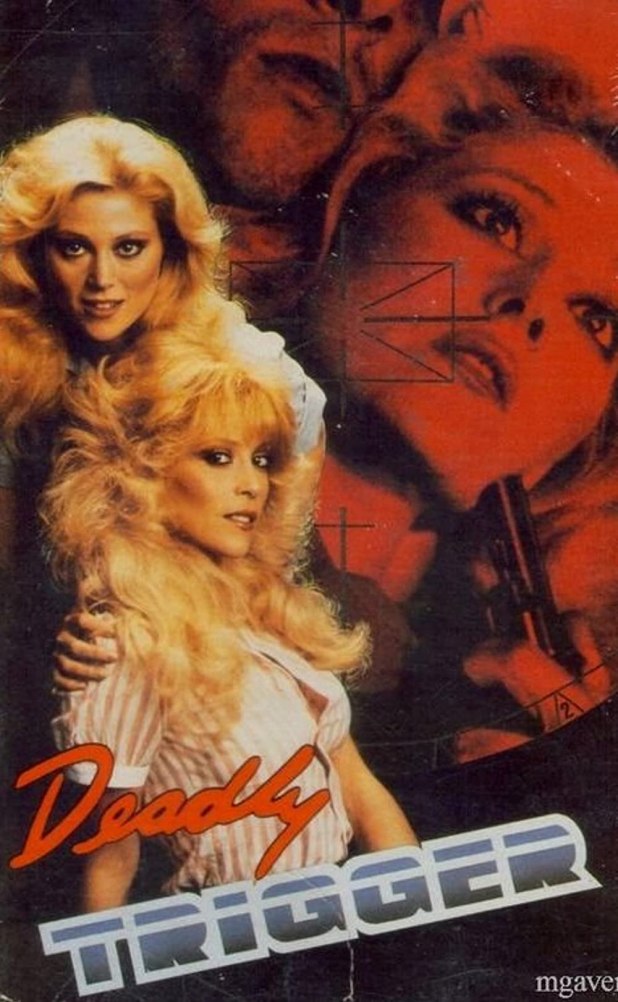
Also known as Double Exposure, Deadly Trigger, Shutter and Femme Fatales, Deadly Twins is somehow a starring video for the Landers sisters. They’re not twins — Audrey is two years older than Judy — but you’re forgiven if you believed they were.
Born in Philadelphia, Audrey was noticed first and recorded a country record for Epic Records before moving to Los Angeles and appearing on eighty-plus episodes of Dallas. Judy moved to LA and showed up in movies like Hellhole, Stewardess School and Dr. Alien.
The two made plenty of appearances together on The Love Boat and two movies produced by their mother Ruth, Circus Island and Ghost Writer. They also were on the cover of the January 1983 Playboy and did not appear nude inside.
In this movie, they play Polly and Ruth Madison, twin sisters who are booked to do a singing appearance in Germany — their last one because Ruth is with child — but they end up getting assaulted. Ruth loses the baby, her boyfriend Warner dies when he drives too quickly to the hospital and they go on the kind of endless chase that reminds one of children playing with Hot Wheels and refusing to come inside for dinner.
I have a theory that directors Joe Oaks and Joe Berger were super fans of the Landers and wanted to try and win them over by claiming to be big filmmakers. When they all got together, the two Joes got super shy and sitcom style had to back up their lies by actually making the movie. They didn’t win the ladies but they did leave behind a movie that I’ve watched more than once and several times with other people, all of whom are usually incredulous and say things like, “Why did you make me watch this?” and “Are these drag queens?”
Bill made this amazing trailer for this movie which is pretty much the best thing ever.



 B&S About Movies
You must be logged in to post a comment.