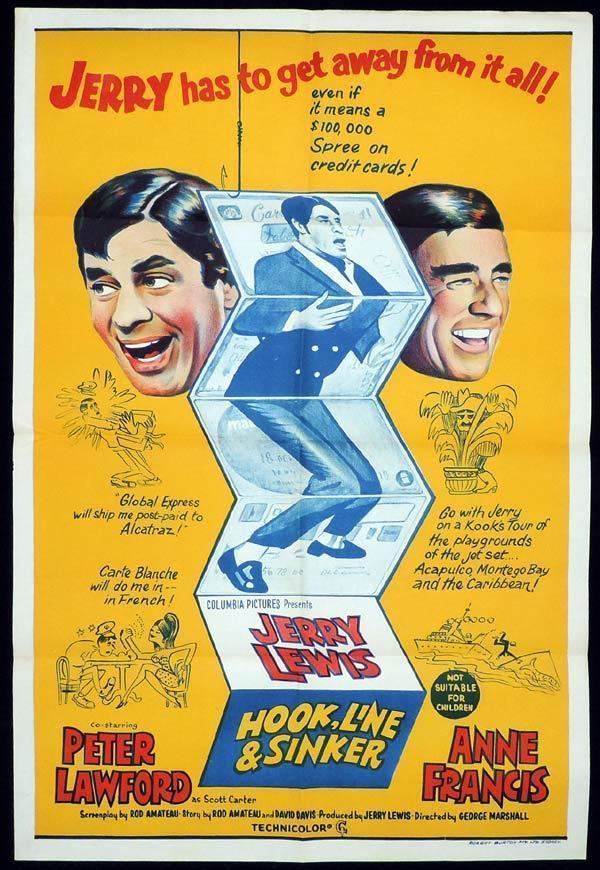
Both the last movie that Jerry Lewis would make for Columbia Pictures and the last movie directed by George Marshall, who directed his first film in 1916, Hook, Line & Sinker comes at a strange time in Hollywood, when studios were trying to find something, anything to save their bottom line.
Shot on the Columbia Ranch using the exterior of TV’s Gidget’s house and the interior soundstages of Bewitched, part of this film feels like a TV movie. And another part is some kind of quasi-giallo where Lewis’ goofball character steals money and fakes his own death.
You read that right.
And much like an Italian psychosexual detective story, the movie begins at the end, where Peter Ingersoll (Lewis) is on an operating table, surrounded by doctors, stunned by what they are seeing. Yet to explain how he got here, he has to tell how his supposed best friend Dr. Scott Carter (Peter Lawford) told him he had a month to live and how his wife Nancy (Anne Francis, Forbidden Planet) told him to use his company credit cards to fish out his last days and he told none of them that this was a bad idea.
Carter compounds the problem by explaining that now Peter isn’t going to die, but he will go to jail because he used company funds to pay his bills and if he fakes his death, his wife will get $150,000. All he has to do is hide seven years until the statute of limitations is up, but there are immediate problems, like Dr. Carter and Anne getting married.
Which is how Peter got to Chile, as he went on vacation after he ruined their plans and ended up with a swordfish stuck in his chest.
Writer David Davis would go on to create The Bob Newhart Show and Taxi, as well as develop Rhoda. He worked on this with Rod Amateau, who would go on to direct The Statue, episodes of Supertrain and Enos and perhaps most importantly, produce, direct and write The Garbage Pail Kids Movie.
I Dream of Jeannie was created and produced by Sidney Sheldon* and it seems like for a long time, he was the only person that believed in it. He originally wanted the first season to film in color — it was one of only two shows on NBC at the time not in color, but special photographic effects employed to achieve Jeannie’s magic weren’t technologically advanced enough to be in a full range of colors yet — but NBC did not want to pay it.
It was $400 an episode.
The network and Screen Gems didn’t think the show would make it to a second season. But Sheldon saw that ABC’s Bewitched was a success and bet on the show.
He was right. It was in the top 30 shows for almost every year that it was on before becoming a syndication powerhouse.
In the pilot episode, “The Lady in the Bottle”, astronaut USAF Captain Tony Nelson (Larry Hagman) lands his one-man capsule Stardust One on a deserted island in the South Pacific. While wandering the beach, Tony notices a strange bottle** that moves by itself. When he rubs it, smoke and a genie (Barbara Eden) pop out.
Tony’s first wish is to be able to understand her, then for a helicopter to rescue him. Jeannie, who has been trapped in the bottle for 2,000 years, falls in love with him and follows Tony back home where she soon breaks up his engagement with his commanding general’s daughter, Melissa. It seems like this was a storyline being set up for the long game, but Sheldon realized that this romantic triangle didn’t have much rope.
Tony keeps Jeannie in her bottle until he realizes she needs a life of her own, which is mostly her using her genie powers to try and make his life better. He worries that if anyone finds out that she exists that he won’t get to be part of NASA, but his worries lead him to being investigated by psychiatrist U.S. Air Force Colonel Dr. Alfred Bellows (Hayden Rorke) with the only person — at first — that knows his secret being Major Roger Healey (Bill Daly).
Unlike many of the sitcoms of the era, I Dream of Jeannie had multipart story arcs (which were created to serve as backgrounds for national contests). For example, nobody knew when Jeannie’s birthday was and the guessing game led to a contest, with the answer being April 1. There was also a four-episode event where Jeannie was locked in a safe on the moon and fans had to guess the combination to save her and another where Tony was replaced and had to be found. But there are also several long storylines, like Jeannie’s evil sister also named Jeannie, Jeannie’s ever-changing origin story which includes Eden’s first husband Michael Ansara as the Blue Djinn, Jeannie taking over the crown of her home country Basenji and so many more.
Supposedly, Hagman was so hard to work with that the producers seriously considered replacing him with Darren McGavin. They even wrote out a story with Tony losing Jeannie and McGavin finding her, but it never ended up happening. In her 2011 book Jeannie Out of the Bottle, Eden wrote, “Larry himself has made no secret about the fact he was taking drugs and drinking too much through many of the I Dream of Jeannie years and that he has regrets about how that impacted him.”
When there were two TV movies in the 80s, Hagman didn’t return. In I Dream of Jeannie… Fifteen Years Later his role was played by Wayne Rogers and as he’s on a space mission in I Still Dream of Jeannie, he’s simply written out and Hagman’s Dallas co-star Ken Kercheval took over as Jeannie’s master. There was also a cartoon called Jeannie that aired from 1973 to 1975 that had Julie McWhirter (who in addition to being the voice in so many cartoons is also the wife of Rick Dees) play Jeannie, “Curly” Joe Besser as Babu a genie in training and Mark Hamill as Corey Anders, a high school student.
Eden has also gone on the record as saying that she never connected with another actor in the same way as she did with Hagman. They’d reunite for the 1971 TV movie A Howling in the Woods.
Why did the show end? It was still near the top thirty after all. Well, Eden believes that there were enough episodes for syndication already and the ratings had gone down after Jeannie and Nelson got married in season 5. No one except for the network wanted that and it eliminated the romantic tension of the show.
I grew up watching this show multiple times a day, often paired with its one-time rival Bewitched. Just going back through these — the original 8 episodes with Paul Frees narration instead of the theme song are a revelation — has made the end of the year doldrums so much better.
You can get all 139 episodes on the Mill Creek I Dream of Jeannie The Complete Series blu ray set. You’ll get hours and hours of fun for a really great price at Deep Discount.
*Sheldon was inspired by the movie The Brass Bottle, which has Tony Randall’s character get a genie played by Burl Ives. Randall’s girlfriend was played by Eden.
**The bottle is actually a special Christmas 1964 Jim Beam liquor decanter containing “Beam’s Choice” bourbon whiskey. How weird is that?
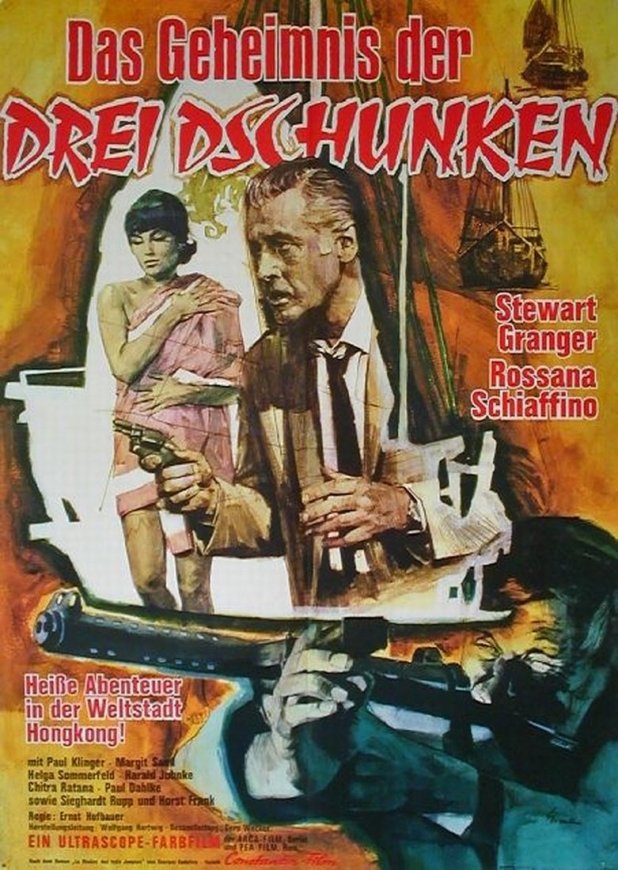
Gene Levitt wrote and directed The Phantom of Hollywoodas well as creating Fantasy Island. Here, he’s making a kinda sorta pre-Argento giallo in which Paul Dennison (Stewart Granger) tries to kill his wife Nancy (Lois Nettleton) but ends up giving her amenesia instead.
The problem? The amnesia she gets could go away at any time and then she’ll remember that he was cheating on her, that she was going to cut off his cash and that he set her up to die. But until then, he’s going to try and ride this out.
This isn’t a classic of the small screen. That said, it has some nice locations and moves along quickly. It’s innocuous and sometimes, you just need some old made for TV movies to get you through the day.
The line between TV movie and giallo is always so close.
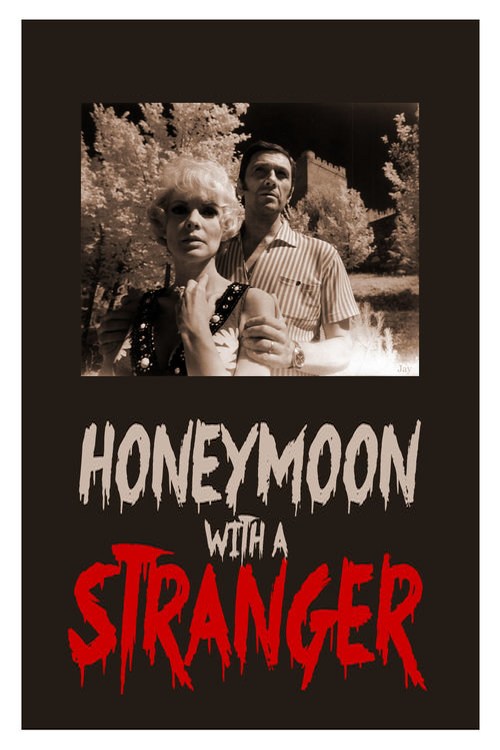
While on a honeymoon with her husband Ernesto in Spain, Sandra (Janet Leigh) wakes up one morning to discover that he’s gone. When she reports it to the police, Ernesto comes back, except that he’s not the same man. Then, his attorney (Eric Braeden, Victor from The Young and the Restless) and sister (Barbara Steele!) claim that nothing is wrong and that perhaps Sandra is deranged.
This has to be a giallo, because the cops are just the worst at their jobs.
This movie is based on the French play Piège pour un Homme Seul (Trap for a Single Man), which was based on the Indian movies Sesh Anka and Puthita Paravai, which were — following all this? — based on the British movie Chase A Crooked Shadow. And it wouldn’t be the last TV movie based on this story, as it was also turned into One of My Wives Is Missing and Vanishing Act.
A Harlequin for my heart:Image courtesy of Sherry E. DeBoer via her IMDb page from a “Teen” magazine photo shoot.
Well, you know how the VCRs roll at B&S About Movies . . . where a review of Peter Carpenter’s Point of Terror, as well as Blood Mania, leads to a reader inquiry and discussion on whatever happened ever happened to Pete . . . which inspires a two-fer review of Vixen! and Love Me Like I Do to finish off his all-too-slight resume. And those discussion about Pete left us wondering . . . “What ever happened to Gene Shane from Werewolves on Wheels and The Velvet Vampire?”
Well, as you know, we solved “The Case of Peter Carpenter” with that said, two-fer review, and we peeled away at the onion that is “The Mystery of Gene Shane” watering our eyes with our review of The Velvet Vampire. Luckily — because we are so exhausted from those two crazed investigations of our favorite actors of yore — “The Case of Sherry Miles,” now known as DeBoer, is more easier slice and diced, thanks to her involvement in her own IMDb page, along with the many, loyal websites* dedicated to all things Hee Haw (an old “Kornfield Kountry” TV series that aired on CBS in the ’60s).
So, let’s pay tribute to one of our favorite — and missed — actress of the ’60s and ’70s.
What might have been: Sherry won — then lost — the role of Bobbie to Ann-Margret in Mike Nichols’s Carnal Knowledge (1971) — which also starred the equally burgeoning Jack Nicholson and Candace Bergen. Image courtesy of the Sherry E. DeBoer Archives, via IMDb.
That Teen modeling spread we used for our banner, above, soon transitioned Sherry into an acting career, which began with the pre-Gilligan’s Island Bob Denver series The Good Guys (1969), an early Aaron Spelling series, the counterculture sci-fi drama, The New People (1969), and Medical Center (1969) starring Chad Everett (The Intruder Within). Sherry’s other, early ’70s appearances included the popular series Mod Squad, Nanny and the Professor, Pat Paulsen’sHalf a Comedy Hour, The Name of the Game, The High Chaparral, The Beverly Hillbillies, Adam 12, Love American Style, and The Partridge Family (Sherry over Susan Dey, every day of the week — and twice on Sundays!). As we crossed the nation’s bicentennial, Sherry appeared on the popular series Baretta with Robert Blake (Corky), Police Woman with Angie Dickinson (Big Bad Mama), Richie Brockelman, Private Eye with future director Dennis Dugan (Love, Weddings & Other Disasters), and Wonder Woman with Lynda Carter (Bobbi Joe and the Outlaw). And let’s not forget Sherry’s 26-episode run as part of the comedy ensemble on the homegrown variety show Hee Haw* during its 1971 to 1972 season.
A one-time heiress to the Hawaii-based Long’s Drug Store chain (now owned and operated by CVS since 2008; I’m in there, often), Sherry Miles got married, became a DeBoer, and retired from the business after her final, on-camera appearance during the third season of Wonder Woman. Since her retirement, she’s become a long-respected animal rights activist.
Adorable. Sherry in 1969 on Pat Paulsen’s Half a Comedy Hour/Walt Disney Television.
Some of Sherry’s films you may not know. Others you have seen. And, hopefully, after this “Exploring” feature, you’ll search out the others. But you’ll surely revisit with Sherry in everyone’s favorite film of her career: The Velvet Vampire, a film so gosh-darn fine that, no offense to Sherry, intended: even if she weren’t in it . . . basically, we’re telling you to put The Velvet Vampire on your must-watch list, unintended insults to Sherry, be damned.
Okay, let’s unpack Sherry’s all-too-brief, big screen career, shall we?
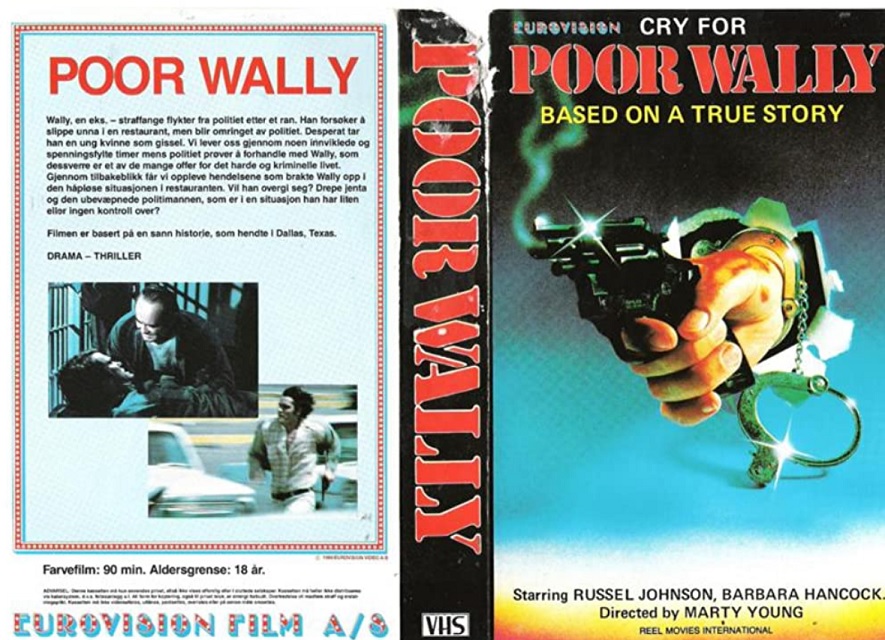
Cry For Poor Wally (1969)
Everything . . . ended up on VHS in the ’80s. Everything.
Russell Johnson (the Professor of Gilligan’s Island fame) stars as the small town sheriff in this “based on a true story” crime-drama filmed in Dallas, Texas. Johnson confronts Wally (a very good Keith Rothschild in his only film role; Johnson is equally fine): a fugitive on the run who takes a woman hostage in a diner with the goal of staying out of prison — no matter the cost. As Johnson tries to talk down Wally, the story flashes back as to the “why” it all happened: upon the death of his mother, his father leaves (abandons) him for greener pastures; his girlfriend (Sherry Miles) also contributes to his psychotic break.
Keep your eyes open for another slight-resume actress in Barbara Hancock, who we enjoyed in her fourth and final film, the “GP” horror film, The Night God Screamed (1972). In addition to Russell and Sherry, this is packed with a great cast of familiar character actors of the you-know-them-when-you-see-them variety of Elisha Cook, Jr., Bill Thurman (!) ,Gene Ross, and Paul Lambert.
Cry for Poor Wally proved to be the only producing and directing effort by Marty Young. Screenwriter Marshall Riggan followed with the Christian apocalypse drama Six-Hundred & Sixty Six (1972) and completed his features career with the lost, psychological horror, So Sad About Gloria (1973).
There’s a copy on the Internet Archive to stream. There’s also a ten-minute highlight reel — of its opening diner scene — courtesy of our friends at Scarecrow Video on You Tube, who also contributed the film’s full-digitized upload to the IA.
To say Sam and I love this movie — Sherry’s presence, aside — is a well-worn trope.
The Phynx are a manufactured band — kind of like the Monkees meets Stripes — made up of A. “Michael” Miller, Ray Chipperway, Dennis Larden and Lonny Stevens. They’re trained in all manner of espionage, as well as rock ‘n roll, including meeting Dick Clark, record industry-emissary James Brown, and being taught how to have some “soul” by Richard Pryor. Hey, wait a sec . . . didn’t Cliff Richards and the Shadows do the “spy rock” thing in Finders Keepers (1966)?
At once an indictment of the system and the product of the very hand that it is biting, The Phynx occupies the same weird space as Skidoo, i.e., big-budget Hollywood films trying desperately — and failing — to reach the long-haired hippy audience — like the Monkees with Head — yet failing to understand them at any level. Sort of like the next film on today’s program.
Since this is locked up in the Warner Archive, there’s no streams to share, but here’s a clip on You Tube.
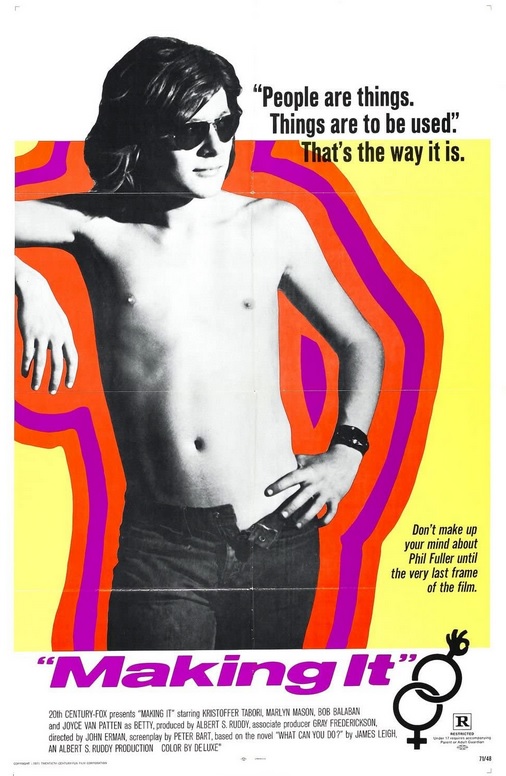
Making It (1971)
Ugh. The marketing of movies.
Based on the theatrical one-sheet and the R-rating, you’re expecting a soft-core sexploitationer: you actually end up with a not-so-bad, smart “coming of age” teen dramedy. As it should be: it’s written by Peter Bart (for 20th Century Fox), who you known best as the co-host, with film executive Peter Guber, of AMC’s film talk and interview programs Shootout and Storymakers, as well as Encore’s In the House. True movieheads known, that, after his screenwriting career, Bart was a writer at the New York Times, an Editor-In Chief at Variety, and later a Vice President of Production at Paramount Studios. While serving as the screenwriting debut for Bart, Making It was also the feature film debut for longtime TV director John Erman (Outer Limits, My Favorite Martian, Star Trek: TOS); continuing with TV series, Erman directed numerous TV movies into the early-2000s.
While Sherry Miles is what brought us here: we’re also captivated by a cast that features early roles for the familiar Bob Balaban (made his debut in in the iconic Midnight Cowboy), David Doyle (yep, Bosley from TV’s Charlie’s Angels), character actor extraordinaire John Fiedler, Denny Miller, Lawrence Pressman, and Tom Troupe, along with the brother-sister thespian duo of Dick and Joyce Van Patten.
Based on the ’60s best-seller, What Can You Do?, a very young Kristoffer Tabori (later of Brave New World and a Star Wars video game voice artist) stars as Phil Fuller: a 17-year-old ne’er-do-well clone of David Cassidy (who would have been perfect in the “grown up” role) living with his widowed mother (Joyce Van Patten). He quenches his self-centered needs by using the girls in his school (prom queen, Sherry Miles), his nerdy best friend (a very young Bob Balaban), and his basketball coach (Denny Miller) — by taking up with his wife (Marlyn Mason). Meanwhile, Joyce Van has or own sexual issues: she’s facing the thoughts of an abortion after shacking up with an insurance agent (played by her brother!). Then Phil, himself, deals with the issues of abortion when he gets one of his high school-conquests, pregnant.
In the end, what you get in the frames of Making It is not a sexploitation comedy, or even a “coming of age” dramedy, but an insightful examination of a pre-Roe vs. Wade world regarding the legalities surrounding abortions (then illegal in California, where this takes place, but legal in New York, where a Patten’s character considers going to get one).
It’s pretty heavy stuff of a time and place, but without the favorable atmosphere of Fast Times of Ridgemont High — if that film centered soley on Mike Damone knocking up Stacy Hamilton. My youthful nostalgia for movies like this slide in nicely next to an early Sam Elliot in Lifeguard, Dennis Christopher in California Dreaming, and the genre change-up with Cathy Lee Crosby in Coach. Your own nostalgia mileage — and for all films Sherry Miles — may vary.
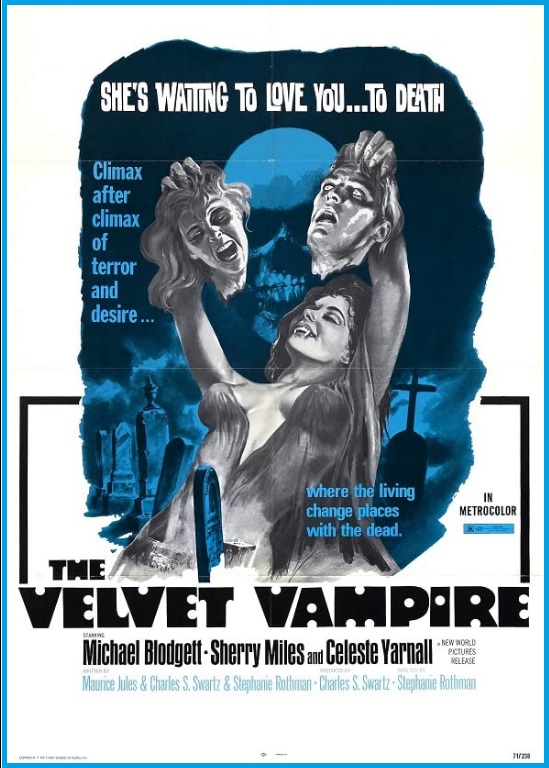
My enjoyment of this movie, which serves as the suffix-title to this retrospective on Sherry Miles, is unbound. Sherry is not only stellar in it: so is the cast, under the pen and lens of Stephanie Rothman. Simply put: this is a beautiful, creepy film.
Swinging Lee Ritter and his vapid, but pretty wife, Susan (Sherry Miles), make the mistake of accepting the art gallery invitation of a mysterious, red-dressed vixen, Diane LeFanu (Celeste Yarnall), to visit her secluded, desert estate. The couple soon discover Diane is a centuries-old vampire — and both are objects of her bisexual thirsts.
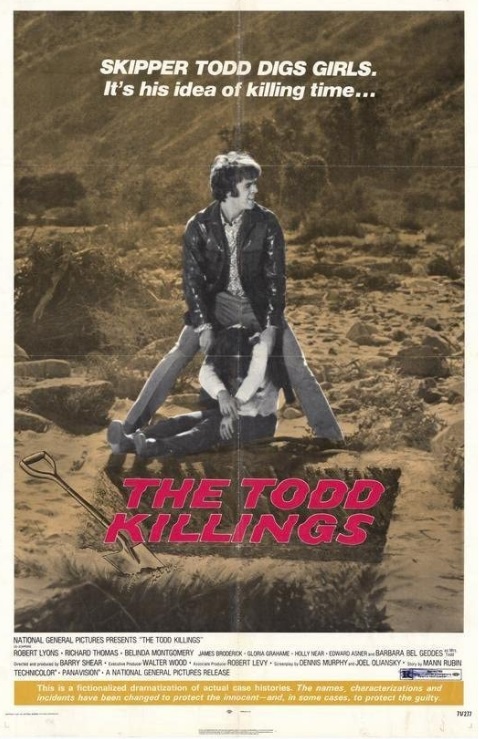
The Todd Killings (1971)
Also known as Maniac in the VHS ’80s.
Fans of the based-in-fact teen murder tale of River’s Edge (marketed on the later VHS “slasher” reissues as Maniac; it’s why we rented it) will enjoy Sherry Miles’s second — after Cry for Poor Wally — true crime drama, this one based on the true story of ’60s thrill-killer Charles Schmid, known as “The Pied Piper of Tuscon.”
The film was inspired by a March 1966 Life magazine article about the killings, which, in turn, inspired the 1966 short anthology story “Where Are You Going, Where Have You Been?” Schmid’s exploits were also loosely adapted into the Treat Williams-starring Smooth Talk (1985), as well as the (woefully inferior) films Dead Beat (1994) and The Lost (2005).
Skipper Todd (an outstanding Robert F. Lyons, a much-seen ’60s TV actor in his fourth feature film, but first starring role) is a charismatic, 23-year old ne’er-do-well who charms his way into the lives of out-of-his-age-bracket high school kids in a small California town. The girls, of course, fall instantly for him and head out to the desert for some romantic fun — only never to return. As in the true crimes that inspired River’s Edge, Todd, aka Schmid, was assisted by his girlfriend and best friend in luring, killing, and burying the victims. Shocking for its time, Belinda J. Montgomery and Richard Thomas are frontal nude; Montgomery’s is cut from the later VHS versions.
As with Cry for Poor Wally, this is another one of those lost, underrated gems — it’s heartbreaking for all concerned, even the beyond salvation Skipper Todd — of the Drive-In era rediscovered, not during the UHF-TV ’70s, but the home video ’80s. The quality comes courtesy of its familiar cast of a just-starting-out Richard Thomas (as Skipper’s loyal hanger-on buddy), along with Edward Asner, Barbara Bel Geddes, James Broderick, Michael Conrad (remember the gruff commander on Hill Street Blues?) Gloria Grahame, and Fay Spain. Also keep your eyes open for musician-actress Holly Near in her third role; she made her debut in the critically lambasted Angel, Angel Down WeGo (1969).
There’s no trailers or streams to share — well, there’s a You Tube Italian-dub to skim — but the DVDs abound in the online marketplace. This is a great film. It’s also a nihilistic, downbeat one, but still worthy of a watch.
Calliope (1971)
The new and improved Calliope.
“Spoofs today’s sex films (i.e., porn) the way Batman spoofed Super Heroes!” — tagline for the original, first release of Calliope
I just can’t see my dearest Sherry signing on the dotted line for a goofy, post-Russ Meyer wannabe skinflick that proclaims: “It spreads, and spreads, and spreads,” only to equate its comedy to a beloved Adam West TV series. Obviously, what was presented during negotiations to Sherry, and what was distributed to theaters, differed. Wildly. But what else should we have expected from writer-director Matt Climber, he who gave us The Black Six (1973), Pia Zadora in Butterfly (1981), and a sex-bent take on Indiana Jones with Yellow Hair and the Fortress of Gold (1984)?
Well, this movie. That’s what. And this one is truly a lost film.
So much for producing an Americanized remake of the significant and cinematically-respected La Ronde (1950), a 1900s-era, spicy-romantic, French-language comedy by German-born director Max Ophüls, which earned a 1952 “Best Screenplay” Oscar nod. He also repeated that Oscar feat with his next film, Le Plaisir (1952), which earned a 1955 nod for its Art Direction, done by Max, himself. So loved was La Ronde in its homeland, as well as across Europe, Roger Vadim (Barbarella) updated the film as Circle of Love (1964), with his soon-to-be lover, Jane Fonda. As for the Ophüls original: it took four years before U.S. film sensors approved the film, sans cuts, for theater showings in 1954.
As for the U.S. remake, originally released under the title, Calliope, what could go wrong: everything. Didn’t you hear the sound of two-time Oscar-nominated Max Ophüls turning over in his grave?
Both films are concerned with ten people “in various episodes in the endless waltz of love” (they go “round and round,” thus the titles), as they each hop from encounter to encounter . . . and that’s were it all stops. Dead.
Since Americans were still swingin’ from the free-loving, Summer of Love ’60s, and Mike Nichols answered the “sex revolution” charge with the aforementioned Carnal Knowledge (1971) (and Paul Mazursky’s 1969 effort, Bob & Carol & Ted & Alice), Allied Artists (an outgrowth of Monogram Pictures, a library now owned-split among Warner Bros., Metro-Goldwyn-Mayor, and Paramount; Warner owns Calliope) decided that, instead of the main protagonist (now a hippie musician instead of soldier-on-leave) eventually finding love with the partner he started off with (Sherry Miles, now a band groupie, instead of the original’s prostitute) . . . he receives “the gift that goes on giving”: a sexually transmitted disease, i.e., venereal disease, since this was the ’70s and not the AIDS ’80s.
Yuk Yuk.
Calliope (no theatrical one-sheets exist, at least online), needless to say, bombed. Ah, but the “Golden Age of Porn” was in full swing, so Allied Artists didn’t give up: a year later, in 1972, the reimaged Love Is Catching hit the circuit; it opened in, of all places, the home base of B&S About Movies: Pittsburgh. It bombed, again, and harder than a Richard Harrison Philippine film he was edited-into and never signed on to do.
This soft-sexploitation romp causes me to reflex on poor Gerald McRaney and Tom Selleck, each scoring their first major roles in Night of Bloody Horror and Daughters of Satan, respectively. The scripts are pretty good . . . and work is work . . . and they thesp’d up a sweat to make it all work . . . then J.N Houck, Jr., and worse, in Tom Selleck’s case, since U.S. major, United Artists, backed it, cheesed the films with exploitative ad campaigns. Just like Calliope. And Skidoo. And Myra Breckinridge.
Sherry, six films in to her career, and just missing out on a co-starring role with Jack Nicholson in one of Mike Nichols best films — a frank, adult-discussion of modern-day sexual issues — was deserving of a better, leading lady role than this STD sex farce.
Sure, it’s a well-shot picture, and the acting is pretty decent (we have great character actors Marjorie Bennett and Stan Rose, on board). And it’s not all that bad; sure, modernizing from the early 1900s to the late 1960s is inspired. And it’s not at all porny, since the sex scenes are implied, more than shown . . . but I still have this need to go back in time and kick someone . . . for having my sweet Sherry transmitting VD in a movie.
But things are looking up, nicely, with our next feature.
The Ballad of Billie Blue (1972)
Also known as Starcrossed Road on ’80s VHS shelves.
From a sexploitation flick to a Christian cinema obscurity: only in Tinseltown, baby. And while his name is nixed from the one-sheet (whatever, Plekker, nice n’ cheesy paste-up work): the writer-director here is Ken Osborne, the man behind the pen and lens on the biker flick Wild Wheels (1969). He also appeared in our Uncle Al Adamson’s Blood of Dracula’s Castle (1969), Five Bloody Graves (1969), and Hell’s Bloody Devils (1970).
And there’s more!
In addition to Sherry Miles, we have Marty Allen and Eric Estrada? Ray Danton (too many ’60s to ’70s TV series to mention)? Bruce Kimball (Rollercoaster)? Where’s the VCR. Load the tape. LOAD THE TAPE!
The pedigree is the thing in this imperiled-musician-in-a-spiritual-crisis tale, not only with our director, Ken Osborne: the scribe behind this Christploitationer, Ralph Luce, also wrote Wild Wheels. Why, yes, that’s Robert Dix and William Kerwin from Satan’s Sadists, and Herschell Gordon Lewis’s Blood Feast, respectively, in the cast, as well as, again, a very youthful, pre-CHiPs Erik Estrada. And we mention Erik a second time, since this second film in his career was also his second Christploiter. The first was The Cross and the Switchblade, which starred ’60s crooner Pat Boone, as directed by Don Murray (Conquest of the Planet of the Apes).
The Ballad of Billie Blue is the tale of a drug-and-boozed out country music star — our faux-message “Jesus Christ” of the proceedings — sent to prison, aka Hell, on a bum murder rap; he finds God by way of a prison preacher and a Christ-following country music star.
Regardless of its secular, exploitative pedigree, this was Rated-G — and it ran as a “Special Church Benefit” in rural theaters, as well as in churches and tent revivals. Granted it’s no country-cautionary tale in the vein of A Star Is Born (1976) with Kris Kristofferson, but it’s not a total disaster.
I still say the Oscar-winning dramedy Sideways (2004) starring Paul Giamatti (in the Beau Bridges role) and Thomas Haden Church (in the Rob Liebman role) stole this movie lock, stock, and wine bottle. But I digress. . . .
So . . . the ’70s and their slew of ne’er-do-well “buddy films” were entertaining times, with the likes of Midnight Cowboy (1969), starring Jon Voight and Dustin Hoffman, Busting (1974), with Elliott Gould and Robert Blake, Freebie and the Bean (1974), starring Alan Arkin and James Caan, and Let’s Do It Again (1975), with Bill Cosby and Sidney Poitier.
My old Pop loved his “buddy films,” so you didn’t have to sell us twice — especially when the buddies are Beau Bridges and Ron Liebman. And we ain’t hatin’ Janet Margolin in the frames, either. Mom and Pop dumped me at the sitter to see this back when; I watched it later, amid the ultra-high frequency haze of my pre-cable TV youth. All, of course, were rented, again, when they hit home video.
Oh, and speaking of Sideways: this isn’t just a buddy film. You know all of those Judd Apatow, gross-out “road movies” you love: this is where that road, began. Only without any of the Paul Rudd or Seth Rogen annoyance aftertaste.
Charlie (a perfectly cast Beau Bridges) is a henpecked office drone-doormat at a dead-end job, engaged to harping woman (Janet Margolin, Planet Earth). The lone spark in his life is his “idol,” Mike (an even more perfectly cast Rob Liebman), a narcissistic and misogynistic, well, dickhead, of a buddy. So, to get Charlie out from under his soon-to-be-loveless marriage — and his own, mounting debts and his recently cut-off unemployment benefits — the pair hits the roads of the California coast on Mike’s last two, usable credit cards, subsidized by a little bit of larceny. Along the way, the pick up two, nubile hippie chicks (in the expertly cast) June Fairchild (Up In Smoke) and Sherry Miles.
So, somewhere in the frames is a message about America’s newfound “liberation” forged in the ’60s (more effectively done with Beau’s brother, Jeff, in 1974’s Thunderbolt and Lightfoot), but while this warms the ol’ UHF-TV cockles of watching it with ol’ Pop all those years ago, Your Three Minutes Are Up is an erratic, rambling TV movie-flat messadventure that could have easily went the bloody-serial killer route — if not for its purposeful, comedic slant. Think Easy Rider sans the drugs and bikes, or Five Easy Pieces with Liebman as our ersatz Jack Nicholson, and you’re on the right road in this still, effectively cast and well-acted adventure.
Look, Steven Hilliard Stern (The Park Is Mine) is directing . . . so what’s not to like, here?
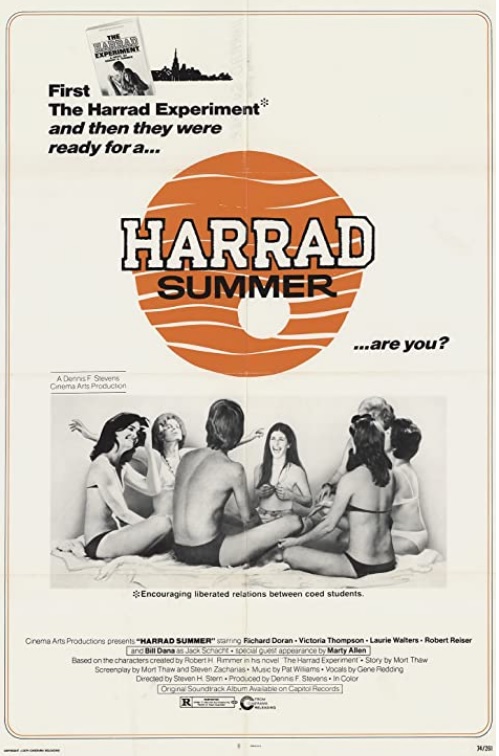
Well, uh, not much, in this woefully dated “sex revolution” tale that sequels the box office hit, The Harrad Experiment (1973), which grossed $3 million against $400,000.
So, why did this sure-fire hit, flop?
Well, the character of James Whitmore (Brooks Hatlen in The Shawshank Redemption) doesn’t return. Tippi Hedren’s does, but is replaced by a lookalike in Emmaline Henry (Ms Amanda Bellows from TV’s I Dream of Jeannie). And Don Johnson and Bruno Kirby bowed out. Sure, Laurie Walters (Warlock Moon; later TV’s Eight Is Enough), who made her acting debut in the original, is back, and so is bit TV actress Victoria Thompson, but who is coming to see either? And we want more Sherry Miles, thank you.
Note to executives: When you loose three quarters of your cast, don’t make the sequel.
Anyway, the premise is that faux-Stanley and Harry, along with real-Sheila and Beth, are out on summer break from their first year at Harrad College: it’s time to test their new found sexual freedom in the real world. Or something. Like going back and re-watching Bob & Ted & Carol & Alice and Carnal Knowledge.
Hey, I champion Stern’s TV work just as much as my fellow fan of the VHS obscure, but this is simply yawn-inducing . . . .the total opposite of The Harrad Experiment, which has Don and Bruno — especially Bruno — going for it. Robert Reiser and Richard Doran in their places, well . . . they’re not awful: they just don’t have the same spunk to make the hippie proceedings, hep.
No streams, but the DVDs are out there; here’s the trailer.
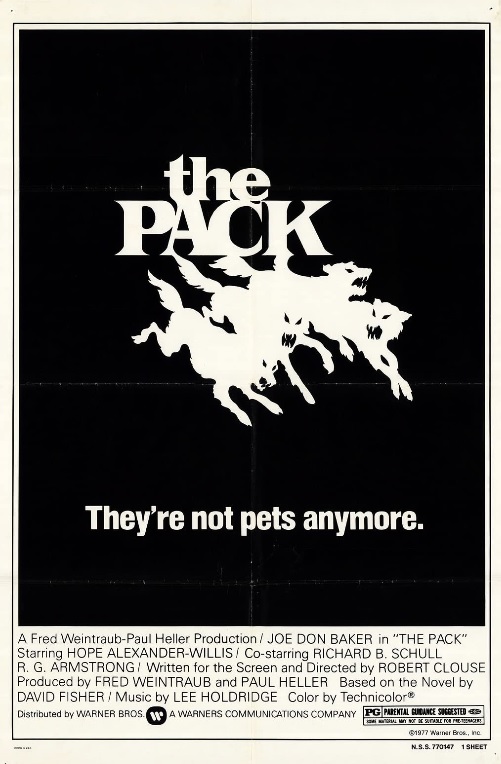
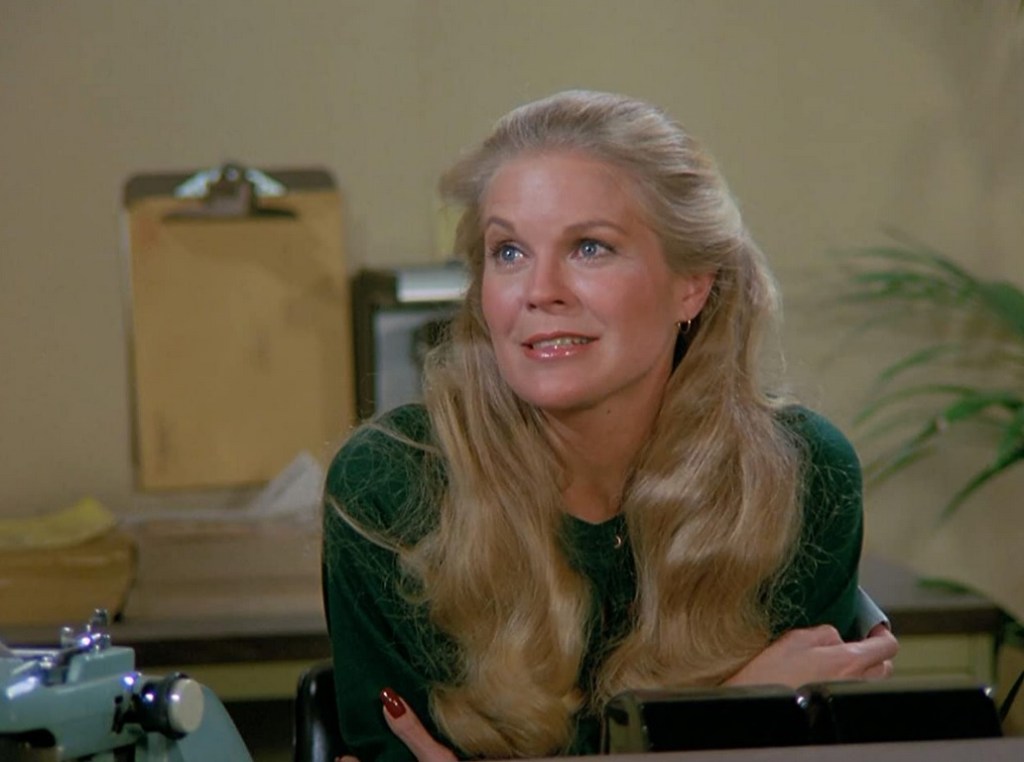
Okay. So, the heart breaker and dream maker of my wee-lad years, Sherry Miles, closes out her career by running around an island with Joe Don Baker to escape a pack of wild dogs . . . get this: under the lens of Robert Clouse of Enter the Dragon, Black Belt Jones, and Golden Needles fame?
Load. The. Tape. Now.
Sure, this beat Stephen’s King’s Cujoto theaters and was all about a literal army of dogs biting everyone on Seal Island — which has nothing on Dog Island from Humongous. So, was Robert Clouse inspired by the 1976 film starring David McCallum that you don’t want to confuse with The Pack, aka Dogs? Probably. No, not Devil Dog: Hound of Hell (1978), as that one starred Richard Crenna. Get your horror dog movies, straight, buddy! Did Clouse’s dog romp inspire Earl Owensby’s (Dark Sunday) backwater sheriff fighting off government-bred mutts in Dogs of Hell (1983)? Probably.
What else can we say: it’s a killer dog movie. Not even Sherry’s presence can save it. But horror was hot and, as an actor, you jump the trend and hope for a hit. Well, it is to us, at B&S About Movies. We’re weird that way.
There’s no freebie streams, but the PPVs are out there; here’s the trailer.
The blue eyes and crooked smile that launched a thousand ships: Sherry, in her final role for an episode of TV’s Wonder Woman.Imagine Sherry going “Scream Queen” and dominating the Slasher ’80s . . . what might have been.
So wraps this latest “Exploring” featuring, this one on (sigh . . . skyrockets . . . rainbows . . . fields of flowers . . . hearts with angel wings) Sherry Miles. Be sure to click the “Exploring” tag below to read the full list of all of our “Exploring” features on the lost, forgotten and awesome actors and directors, as well as genres, of the Drive-In ’60s, the UHF-TV ’70s, and VHS ’80s eras.
Yeah, we’re doin’ it for the celluloid love. And because we’re just crazy that way. This is B&S About Movies, after all.
* Learn more about Hee Haw at this Alchetron.com fan site.
Some of our other actor and director career explorations include:
11. SKINS & NEEDLES: Body art or body harm? When getting the mark leads to all hell breaking loose.
Beyond Bird with the Crystal Plumage, there’s one movie my mother has already brought up that she hated. And that would be this one.
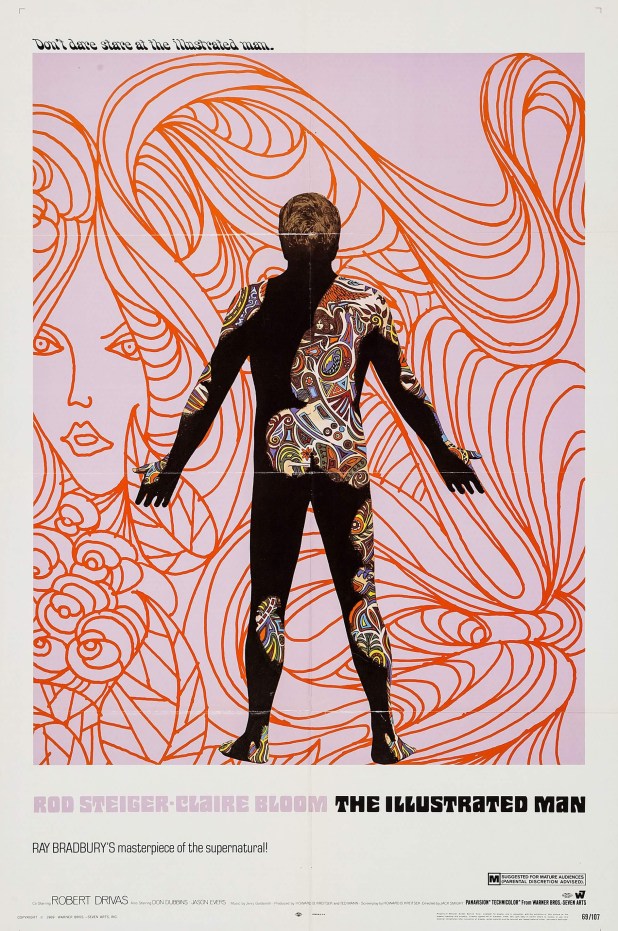
The book that these stories come from has eighteen of them, but Howard B. Kreitsek and Jack Smight picked these three for the film without ever speaking to Ray Bradbury, the author of the book. The tattooed man who appears in the book’s prologue and epilogue would become this film’s main story and be played by Rod Steiger.
The funny thing is that when Steiger takes off his glove to reveal his hand, it’s tattooed and played off as a horrific moment. A half-century after this movie was made, nearly all my friends have this many tattoos.
Carl, the tattooed man, meets Willie and uses his skin illustrations to tell tales throughout time. The ink came from a mysterious woman named Felicia. At the end of the film, Willie sees his death at Carl’s hands in the only bare patch of skin on the Illustrated Man.
The stories that are told include “The Veldt,” which takes place in the future and involves children who study within a virtual version of the African veldt. Soon, the lions will solve this issue of their parents. “The Long Rain” has solar rains* that drive an entire crew to madness in space. And “The Last Night of the World” predates The Mist, with parents who must decide if their children should survive the end of the world.
The final story—and its bleak ending—is exactly why my mom hates this movie. The fact that she may have told me all about it when I was a kid may have given me nightmares.
This movie did poorly critically and financially. Rod Serling, an expert on adapting short stories to film, called it the worst movie ever made.
I often think about Elvis and what his life would have been like without Colonel Parker and going into the Army and how at one point, you couldn’t show him from the waist up or girls would spontaneously get pregnant and by 1969, The King had been in 31 movies. They made them fast, they made them cheap, but even then they weren’t making as much money. But hey — Parker still got a million a movie, even if the films moved to TV.
Change of Habit was supposed to be a Mary Tyler Moore movie until Elvis came on board, but really, it’s still her movie. She plays Sister Michelle, who along with her fellow future Brides in Christ Irene (Barbara McNair, Mister Tibbs’ wife) and Barbara (Jane Elliot, General Hospital) have been sent to the inner city to work as lay missionaires until completing their vows. So yeah, the whole point of this movie is that even a life in service to God is difficult to comprehend after the potential of being pounded by The King of Rock and Roll. Or Dr. John Carpenter, which makes me laugh every time they say his full name.
Actually, this is the mosy upstanding occupation that Elvis ever had in a movie, but when you consider that he played a shrimp fisherman, a photographer, a water skiing instructor, a frogman, a lifeguard, a helicopter pilot, a rodeo rider, a tour guide and a race car driver three times, well, it’s a living.
That said, Elvis himself was doing pretty well. The comeback special had already been broadcast, the album that it sold was a huge success and he’d just finished recording the two songs that would point to his comeback as a force in American music, “In the Ghetto” and “Suspicious Minds.” His career no longer needed the movies.
Anyways, Change of Habit is a fun time. I mean, nuns and Elvis. You can’t beat that. And Ed Asner shows up as a cop, which is hilarious given his politics, and he and Moore don’t share a scene here but a year later they’d be talking spunk on The Mary Tyler Moore Show.
With a trailer and commentary by film historians Howard S. Berger and Nathaniel Thompson, the Kino Lorber blu ray of this movie is a blast. I kind of like that I have an Elvis movie just waiting to watch whenever I need it. Here’s hoping they release some more beyond this, Clambake, Frankie and Johnny, and Elvis: Return to Tupelo.
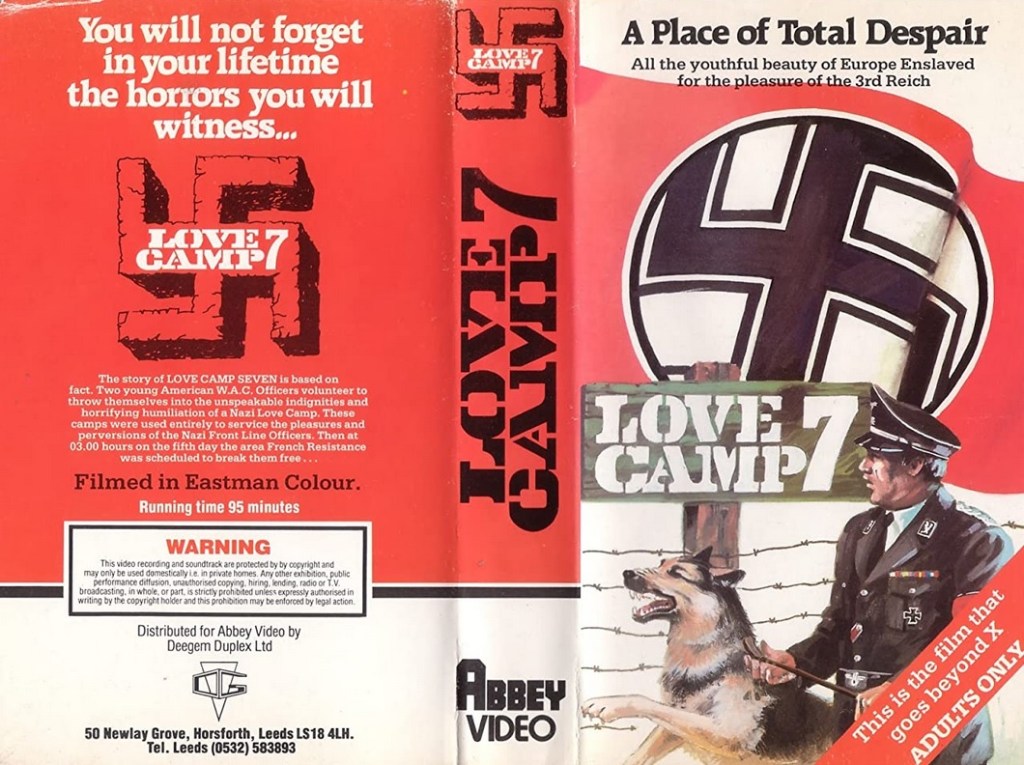
“It should be comforting for you to know that you’ll always have a friend, here, at Love Camp 7.” — The Commandant, making the understatement of the decade
Sam the Bossman, who touched on this ’80s VHS ditty with his three part “Video Nasties” series nails it: there’s just some films that ask for it. And this Lee Frost and Bob Cresse Naziploitation affair — Frost directed and Cresse scripted with Wes Bishop — about two American female officers-agents (the large-breasted, natch, Maria Lease and Kathy Williams) going undercover in a Nazi prison camp — rightfully when straight to the front of the U.K.’s “Section 1” video nasties line.
So, how rough is this film?
Well, our Commandant (Bob Cresse) personally greets his prisoners in his office, while the women strip, are hoisted on to a table, and a female doctor slips on a glove for an “examination” — but don’t worry: it all stops just before it goes into full-on porn territory. To Frost and Creese’s credit: There is an actual story here, with plot and character development, the set design and costuming is solid, and, unlike its exploitation-offsprings, while it’s rough, Love Camp 7 isn’t rough for roughness sake. It truly is the best made — excluding Isla, She-Wolf of the SS — of the Nazisplotation films, even with its cinematographic weakness.
Yeah, I know Dr. Dalton, opinions vary down at the ol’ Cinema Road House, but the celluloid proceedings here are, still, more laughable than despairing, not all that horrifying, and utterly forgettable. Love Camp 7 was, however, a movie of its time — a time when the major studio mainstream films Valley of the Dolls (1967), Midnight Cowboy (1969), and Shampoo (1975) were slapped with X-ratings for their content about drug-pushing housewives, New York sex hustlers, and sexually-aggressive hairdressers.
So, yes, in the context against those films — which, watching these years later, are so not X-rated (to my eyes, anyway) — Love Camp 7 certainly deserves the 24th letter-branding, but when watched against the films from the ’70s “Golden Age of Porn” — films wholly deserving of their X-ratings — this Nazisplotation debut is tame in comparison. When you claim your movie is based in fact — and sadly, Jewish women were subjected to real life horrors in German interment camps and that is what makes the genre offense, on whole — you get, as Sam pointed out, what you asked for: a U.K. scarlet letter.
Spreading a woman in an eagle positions to play up your X-rating? Geeze-a-lou, Market Video.
As with all of the films released in its wake, the women — two WAC Lieutenants who dually work as spies, but also to attempt a rescue of a female inmate: a captured aero-engineer with information regarding a cutting edge jet engine — come to discover the female inmates (in perpetual full-frontal nudity) serve as sex slaves for German officers, subjugated to various experiments, bondage, torture, and rape.
Amid the cast, keep your eyes open for exploitation stalwart Bruce Kimball . . . wow, Bruce Kimball . . . he goes back to Run, Angel, Run! (1969), Al Adamson’s Brain of Blood (1971) and Dracula vs. Frankenstein (1971), and Moonshine County Express (1977). He eventually hit the mainstream with the box office hit Rollercoaster (1977), along with appearances on TV’s CHiPs and B.J and the Bear. (Uh, yeah, we’re pretty big Bruce Kimball fans around here.)
Not as “X” as we were lead to believe.
Love Camp 7 rightfully earned its cult classic status in the exploitation realms for inspiring two, very hot genres in the drive-in and grindhouse cinema ’70s: women-in-prison flicks and Nazisploitation films.
The former genre — which dates to the rock ‘n’ roll bad girl romps Reform School Girl (1957) and High School Hellcats (1958), flourished in the ’70s courtesy of Lee Frost’s own hit, Chain Gang Women (1971), and the Pam Grier-starring hits Women in Cages (1971) and The Big Bird Cage (1972), and then continued into the VHS ’80s with the Wendy O. Williams-starring Reform School Girls (1986) and the Grim Reaper song-fronted (“Lust for Freedom,” “Rock You to Hell“) Lust for Freedom (1987) — could be a B&S theme week in itself.
The latter genre began with this first, iconic film in the Nazisploitation cycle of films centered around WWII concentration camps populated by incarcerated women. The genre achieved its nadir — or zenith, depending one’s perspective — with Love Camp 7 actor David F. Friedman producing the superior Isla: She-Wolf of the SS (1974), which starred the divine Dyanne Thorne (Point of Terror) that led to a series of Thorne-starring sequels. That birthed the Mario Caiano-directed and Sirpa Lane-starring (The Beast in Space) not-a-sequel Nazi Love Camp 27 (1977) and the (recently reviewed; look for it) fellow U.K. nasty, Gestapo’s Last Orgy (1977). In fact, many films released in the backwash of Love Camp 7 each had titles or alternate titles deploying the verbiage of “Love” or “Camp.”
Director Lee Frost amassed 30-plus directing credits in his career; his most “commercial” achievement — again, depending one’s perspective regarding nadirs and zeniths — was his genre-pollination of the Blaxploitation and Nazisploitation genres with The Black Getaspo (1975) and more so with the Warren Oates hicksploitation romp Dixie Dynamite (1976). However, if you’re a loyal hound of the video fringe, you’ve picked up Frost’s (we’ll always watch William Smith) bikesplotation slopper Chrome and Hot Leather (1971), and the cheapjack Frankenstein-inspired rip The Thing with Two Heads (1972).
Writer Bob Cresse — best know for his ’60s “Mondo” films and exploitation pieces, such as Mondo Bizarro (1966), produced with Lee Frost and Freidman — faded from the “mainstream” business after Love Camp 7. As the “Golden Age of Porn” matured, they each moved into the lucrative adult film realms, but Frost returned to the mainstream, somewhat, with the Jack Starrett-directed and Peter Fonda-starring drive-in hit, Race with the Devil (1975).
Shot in muddy-to-grainy 35-mm — that looks like it’s 16-mm, which isn’t a good sign — and burdened by obvious stock shots, narrative-threading voice overs, dialog by actors not seen-on-screen (Who’s talking; Where are they?), wide shots with no coverage; no medium shots or close-ups or reverses, you’re left thinking your watching a Larry Buchanan (Mistress of the Apes, Down on Us) production. And those English-accented Germans — ugh — are straight out of a Hogan’s Heroes episode.
X? It’s really not that nasty; Eli Roth and his 2003–2009 “torture porn” minions and the New French Extremity scene made a lot worse.
Due to the trailer’s content, you can only view it upon an account sign-in at Grindhouse Theatre’s You Tube portal. You can free stream the full film of Love Camp 7 at the Full Moon Archive (Thank you, Mr. Band, the VHS ’80s wouldn’t have been the same without you!), but it is also readily available on various pay-streaming platforms. You can learn more about Love Camp 7 as part of the insightful genre documentary Fascism on a Thread: The Strange Story of Nazisploitation Cinema (2020).
Not a drive-in or VHS reissue, but a wholly new film from Jess Franco released 1977.
Also known as The New Adventures of Snow White, this sex farce is part of the career downward trajectory of Rolf Thiele, who had once been a mainstream director, but increasingly found himself making lower-budget sex comedies. It’s all about Snow White (Marie Liljedahl, who was Eugenie in Eugenie…The Story of Her Journey into Perversion), Cinderella (Eva Rueber-Staier, who was General Gogol’s assistant Rublevitch in the films The Spy Who Loved Me,For Your Eyes Only and Octopussy) and Sleeping Beauty having a series of adult adventures.
There’s also a dude in a bear suit.
As for the evil queen, she’s played by Ingrid van Bergen, who famously shot her lover dead in 1977 and was released five years later to continue being a star. She also was in the Edgar Wallace adaption The Avenger and The Vampire Happening.
A section 3 video nasty, this is a pretty tame film other than the scene where one of Cinderella’s wicked stepsisters literally slices her heel off to fit it into the glass slipper. Wow. That even took me a second to get over. Well done, silly sex comedy from 1969.
Poet, novelist, playwright and screenwriter Robert Thom is someone the B&S About Movies crowd knows best for Roger Corman’s quest to beat Rollerball to the theaters, with an adaptation (which Charles B. Griffith* doctored) of Ib Melchoir’s short story “The Racer” as Death Race 2000 (1975). Thom’s Hollywood (or is that Hollyweird) resume goes back a bit further, with the “teensploitation” screenplays for All the Fine Young Cannibals and an adaptation of Jack Kerouac’s The Subterraneans (both 1960). His screenwriting debut, Complusion (1959) — in which he was rewritten and not credited — was based on the infamous Leopold and Loeb murders and starred Orson Wells. (For Don Kirshner, he’d write the 1975, Kim Milford-starring Song of the Succubus.)
Thom’s next teen-oriented romp was the more “hep” counterculture-rock flick Wild in the Streets (1968), based on his short story “The Day It All Happened, Baby!”. When that American International Pictures’ $700,000-budgeted project cleared $4 million in drive-in receipts, Thom was given an opportunity to direct his first film, which he also wrote — and is the film we’re reviewing today: Angel, Angel, Down We Go.
Is it a counterculture drama . . . or a horror flick? Hey, whatever AIP – American International Pictures needs it to be to make a buck.
As with Wild in the Streets, Thom’s sole directing credit centers around a disillusioned rock star; its genesis was an unproduced stage-play of the same name written as a vehicle for his then wife, Janice Rule (better known for her ’70s guest-starring TV work than her films), who later became the wife of Ben Gazzara (The Neptune Factor, Road House).
By the time the script made it to the big screen, five-time Academy Award nominated and winning actress Jennifer Jones (won for 1944’s The Song of Bernadette) was cast as the affluent Mrs. Astrid Steele, the downtrodden wife of an airline magnate (think a gay Howard Hughes) and mother of the overweight and emotionally troubled Tara (folk musician, Broadway musical actress, and ’70s TV actress Holly Near in her feature film debut; she was Barbara Pilgrim in Slaughterhouse-Five) who becomes involved with Bogart Peter Stuyvesant, a charismatic rock star who takes advantage of the Steele family’s damaged emotional state to integrate himself and his Manson-like clique into their lives.
So, for his rock star, Thom cast . . . well, remember how Ben Affleck and Jennifer Aniston experienced a career boost based on their marriages? Such was the case of struggling Ohio-to-New York-based rock singer Jordan Christopher.
After his unsuccessful years as the leader of the doo-wop-inspired the Fascinations in the early ’60s (they recorded a few singles; here and here), Christopher came to join New York’s the Wild Ones, which replaced Joey Dee and the Starlighters¹ (of which Joe Pesci was once a member; without Pesci, they starred in Hey, Let’s Twist!) as the house band at New York’s famed Peppermint Lounge (where that movie was filmed). After that successful residency, the Wild Ones booked the same gig at the more chichi club, Arthur, operated by Richard Burton’s soon-to-be ex-wife Sybil Williams, aka Burton; Burton owned the club.
As with Ben and Jen after her, Sybil found her fame via her marriage to Richard Burton, who was a huge screen star at the time. And when Sybil came to become involved with — and within a month of the band’s residency, married — Jordan Christopher, his “star” began to rise, as well. Thanks to the pre-Internet gossip press and scandal sheets of the day, not only did Arthur transform into a “hot” club that decimated the Peppermint Lounge out of existence, Jordan Christopher’s the Wild Ones signed a record deal with United Artists Records to release the live-recorded The Arthur Sound (that’s Christopher at cover right; that’s Sybil hoisted on the band’s shoulders).
However, after that lone album, and his “image” hotter than ever, Christopher left the Wild Ones to become a “star” in Hollywood. An accomplished stage actor in minor productions back in New York, Christopher booked supporting roles in the forgotten late ’60s flicks The Fat Spy (a really awful “beach movie”; the worst of the pack, which featured the Wild Ones), Return of the Seven (the awful nobody-wanted-it bomb-sequel to western classic The Magnificent Seven), and The Tree (a kidnap drama). Angel, Angel, Down We Go, his fourth film, was Christopher’s leading man debut. In addition to recording the soundtrack to the film, UA signed Christopher as a solo artist for the album Has the Knack; without Christopher, the Wild Ones recorded the first, original version of “Wild Thing,” which was penned by Chip Taylor (brother of actor Jon Voight) specifically for the band (the Troggs version is the one you know).
The novelization/image WonderBook eBay.
So, since you probably never heard of Jordan Christopher, you have probably guessed the fame-cum-career by marriage and connection to the Richard Burton dynasty doesn’t not a solo career or a hit film make.
As with any of today’s cable TV-cum-Internet social media influencers, Jordan Christopher’s Kardashianesque fame, well . . . down, down it went, as the all-important Los Angeles Times and New York Times referred to his leading-man debut film Angel, Angel, Down We Go as “a pretentious mess” and “an unmitigated financial disaster,” respectively; the NY Times’ review was titled “The dime-store way to make a movie and money.”
Actress Holly Near, already Rubensque (think of a ’60s Ricki Lake of Hairspray; chunky-cute), put on even more weight for her debut film role, had hoped the film would transition her out of stage work, referred to the film as “it was trash.” She left film at that point and retreated into stage and limited TV guest-star work.. And it’s no loss, for Near’s no prize in the acting department; her binge eating scene at the coming-out party is still cringe-inducing; she even gorges on the scenery throughout. The gist behind party: Near’s Tara Steele turned 18 and returns from boarding school; her parents hired Bogart Peter Stuyvesant and the Rabbit Habbit to play the party . . . and Tara falls in love.
While Christopher never publicly spoke of the film, he retreated into stage work as an actor and theatre operator — not appearing on the big screen again until Star 80 and Brainstorm (both 1983). Truth be told, Christopher’s departure into theatre was no big loss to Hollywood, either; he’s simple awful in both films marking his return — and truly annoying as a childish/horny, unrealistic “scientist” in the latter. And he’s pure ham — by lack of a thespian skill set, not an acting choice — here, and you see why the undercarded Roddy McDowell, and not Christopher, had the career.
As for Robert Thom, who actually was a decent writer in the low-budget realms, came to write the ’70 gangster romps Bloody Mama and Crazy Mama for Roger Corman — but he never directed another film.
And Jennifer Jones, starring here as a former porn actress whose mainstream Hollywood “movie star” career is on the skids, playing up an overtly, sexed-up homage to Gloria Swanson’s Norma Desmond in the noir classic, Sunset Boulevard (1950), well, just what was she thinking? Jennifer couldn’t have possibly been hoping for a repeat on the lessons of social obscenity with Madame Bovary (1949), in which she starred? Doing an AIP grindhouse flick is a long, hard fall for Jones — who was long-time married to David O. Selnick, the producer who gave us the original King Kong**. Sadly, this was Jones’s first film after her much-publicized suicide attempt; then, later, her daughter committed suicide by jumping from a 20-story window.
To see an Oscar-caliber actress quoting the likes of . . . “I made thirty stag films and never faked an orgasm,” “In my heart of hearts, I’m a sexual clam,” “Do you want me, or do you want my daughter?,” and “You’re a bloody, sadistic dyke” . . . you’re sorry and embarrassed for her. So, with the one-two punch of her performance slammed by critics, and her daughter’s later suicide, one can see why Jones walked away from the biz, only to return one more time in Irwin Allen’s The Towering Inferno (1974). And, in the end, out of her mere 26 films, Angel, Angel, Down We Go is the one film of Jones’s that trash cinema lovers care about because, well, video fringe fandom is all about the trashy.
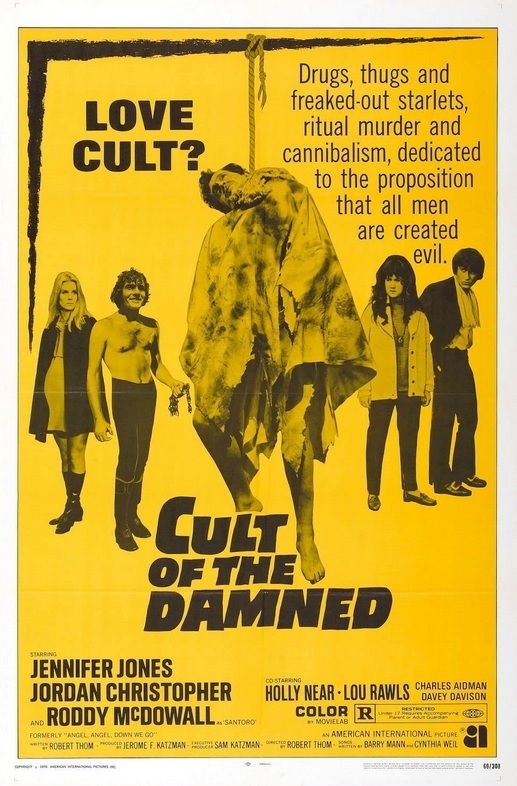
Meanwhile, American International Pictures wasn’t about to flush $2 million down the toilet. So, courtesy of Jordan Christopher’s Manson-like rocker, and with Charles Manson all over the press as result of the Tate-LaBianca Murders of August 8-9, 1969 (which fueled Quentin Tarantino’s Once Upon a Time . . . in Hollywood), AIP retitled and reissued the film as Cult of the Damned on a double bill with the first entry in Hammer Studios’ “Karnstein Trilogy,” The Vampire Lovers. And the Los Angeles Times slammed it, again, as “a terrible piece of trash.”
As the Los Angeles Times’ review stated in their negative review of this tale centered around the overweight debutante daughter of a wealthy couple who falls in with a tripped out, skydiving-addicted rock star and his reactionary clan, “. . . it can never be said to bore.” Hey, we never said bad films can’t be entertaining . . . well, except the ones with Jennifer Aniston and Jennifer Lopez, for the two-Jens — that’s just movie hell in a hand basket (and their bitching when they’re not “nominated” come awards season, doesn’t endear them to anyone; at least Holly Near has reality on her side).
The Barry Mann-produced soundtrack/image Discogs.
Valley of the Dolls (1967), the trashy, celluloid doppelganger to Angel, Angel, Down We Go, is in no way a good movie nor a classic; however, that Patty Duke-starrer is an undeniable guilty pleasure. And Angel, Angel, Down We Go so wants to be that Jacqueline Susann-adapted flick, but only ends up being even abysmal-trashier than the Roger Ebert-written and Russ Meyer-directed ripoff sequel Beyond the Valley of the Dolls (1970). And let’s not forget: Susann called the adaptation of her own book, “a piece of shit.” So that gives you a good idea on the low-grade, non-quality of Robert Thom’s sole directing effort. I’d even take the critical comparison a wee-bit lower, down to Peter Carpenter’s trashy, sexually-manipulating lounge singer in Point of Terror (1971). (If Christopher didn’t star here, Carpenter could have filled the role, admirably; hey, anything to bring back that red-fringe Elvis get-up, Peter! We recently honored Peter with a two-fer review-career blowout with Vixen! and Love Me Like I Do.)
Then again, if you’re into these counterculture LSD flicks of yore and enjoy the whacked-out realities of Skidoo (1968), The Phynx (1970), or the “fucked up future” of Gas-s-s (1970), then there’s something in the frames of this symbolism feast of the stoned senses. For lost . . . somewhere . . . in the frames is a statement on the nihilism of wealth and celebrity. But my inner being tells me even Kant and Nietzsche would reject Robert Thom’s tales as poppycock . . . once the house maid is exposed as a lesbian and the husband’s bisexuality come to light (he’s shower be-boppin’ the butler). And never in the writings of those metaphysical thinkers, did they ever dream up the Machiavellian likes of the Rabbit Habbit, a band which features Lou Rawls (in his feature film debut) and Roddy McDowall . . . with McDowall’s Santoro spewing his nihilistic sociopolitical ejaculate over his love for carrots. Yes, Cornelius is “turned on” by veggies. Read into that as you may, you dirty bird.
Jim? Is that you? Nope, that’s Bogart Peter Stuyvesant! Bogie, Bogie, Bogie. . . .
In the end, both the counterculture hippie masses, as well as the conservative masses (aka my parents, who got dressed up for dinner and a movie to see Valley of the Dolls, as parents did in the ’60s; mom loved the book, but HATED the movie), rejected Robert Thom’s attempt to graft the teachings of Kant and Nietzsche into the taboo-intellectual visuals of Pier Paolo Pasolini*˟. An allegorical work on the level of Pasolini’s underbelly tale of pimps and thieves in Accatone (1961) and his bourgeoisie-supernatural thriller Teorema (1968), Robert Thom’s lone directing effort, is not; it’s as inept as an inept high school production of a Tennessee Williams play.
The only real stand out of the film is Jordan Christopher (by singing, not acting) cloning a shirtless and leather pant Jim Morrison — with a touch of Iggy Pop — as our ersatz rocker belting the Barry Mann and Cynthia Weil-penned tunes (as part of Don Kirshner’s house of hits, they supplied tunes to the Monkees˟*) “Angel Angel Down We Go,” “The Fat Song,” “Hey Hey Hey and a Hi Ho,” “Lady Lady,” “Mother Lover,” and “Revelation,” which are actually pretty good tunes. Oddly enough, Lou Rawls — who reached his own solo career highs with the Top 40 ’70s hits “Lady Love” and “You’re Gonna Miss My Love,” doesn’t sing in the film.
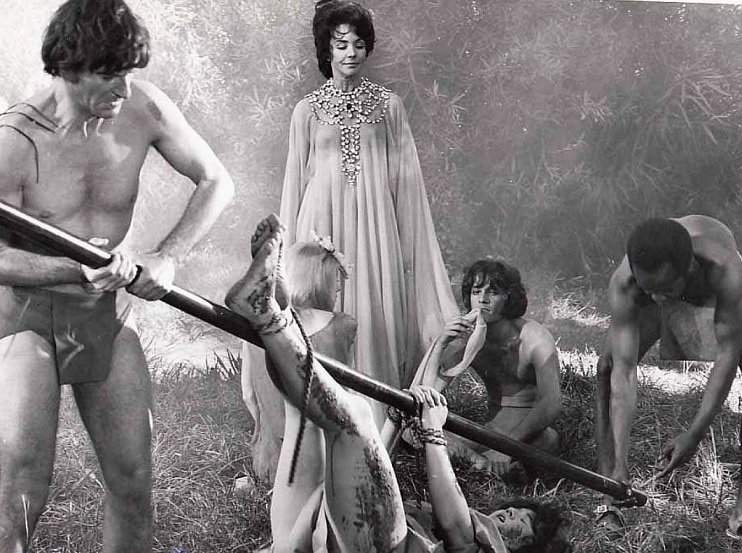
L – R: Roddy McDowall, Jennifer Jones, Davey Davison (seated/back), Holly Near (on the spit), Jordan Christopher, and Lou Rawls— bringin’ on the pretentioussymbolism.
If you read our recent review for Breaking News in Yuba County, you know that on October 7, 2020, four decades after the imprint’s closure, Metro-Goldwyn-Mayer reactivated the AIP-imprint to release digital and limited theatrical releases (MGM will handle streaming while United Artists will handle the theatrical end). The studio was founded by James H. Nicholson and Samuel Z. Arkoff and all AIP releases followed the ARKOFF formula:
Action (exciting, entertaining drama) Revolution (novel or controversial themes and ideas) Killing (a modicum of violence) Oratory (notable dialogue and speeches) Fantasy (acted-out fantasies common to the audience) Fornication (sex appeal for young adults)
So, yeah, Angel, Angel, Down We Go is a bizarre pint of an ARKOFF-crafted microbrew (bubblin’ with images of Near’s face on a guerilla, and then a lion, as part of a trip and its “message”), a libation of choice that we gulp with glee at B&S About Movies. You know us, with our celluloid schadenfreude of the Sexette (1978)˟˟ and Myna Breckenridge (1970) variety (both spiritual, washed-up actor sloppers), for that is what it’s all about, out on the video brewin’ fringes. So pair Angel, Angel, Down We Go with Robert Thom’s rock “prequel” Wild in the Streets and Mick Jagger’s decadent rock star turn in Performance (1970), toss back an ARKOFF, and pop open a bag of salty American International Psychedelic Trash Nuggets. Yum.
You can stream Angel, Angel, Down We Go on You Tube. For a cleaner, commercial-free stream, we found a PPV copy on Vudu. To get you started, we found a trailer and a copy of the 45-rpm/7″ single for the film’s title cut-theme song.
** Join us for our “Kaiju Day” and “Son of Kaiju Day” review recaps as we pay homage to all manner of Kong and Godzilla movies to celebrate the release of 2021’s Kong vs. Godzilla.
¹ Felix Cavaliere, later of the Young Rascals and the Rascals, got his start with Joey Dee & the Starlighters. He, along with Gene Conrish, have recently reactivated the Rascals (then, as with all other tours, got COVID derailed); after his stint with Joey Dee, Cavaliere formed the Young Rascals with Gene Cornish, Eddie Brigati, and Dino Danelli.
After the Rascals collapsed, they morphed into the harder rocking Bulldog, with Gene Cornish and Dino Danelli at the helm. After Bulldog’s two albums in the early ‘70s, Cornish and Danelli teamed with Wally Bryson, from the early ‘70s “power-pop” pioneers the Raspberries (also out of the same Akron, Ohio, scene as Jordan Christopher), to form Fotomaker, which issued three albums in the late, new-wave ‘70s: Fotomaker, Vis-à-vis, and Transfer Station. A Cars or Knack-like success for Fotomaker was not meant to be, even with their great, debut single, “Where Have You Been All My Life.”
While Fotomaker was going on, Felix Cavaliere — who once played with Joey Dee, mind you — formed Treasure, a harder AOR band that issued an album in 1977 — and featured Vinnie “Vincent” Cusano, later of Kiss, on lead guitar.
Dino Danelli ended up in Little Steven and the Disciples of Soul — playing alongside ex-Plasmatics bassist, Jean Beauvior. After the Raspberries, and before Fotomaker, Wally Bryson formed the hard-rock outfit Tattoo with Thom Mooney from Todd Rundgren’s the Nazz, which put out one album in 1976 on Prodigal Records (a Motown subsidiary). Thom also did time in Fuse with Rick Neilson and Tom Petersson, both later of Cheap Trick. And, the drummer in Fuse was Chip Greenman; he ended up in the Names, which doubled as faux “No False Metal” rockers the Clowns in Terror on Tour. And, of course, Cheap Trick came to be known via their first soundtrack effort, Over the Edge.
Don’t forget! We are deep into our third “Rock ‘n’ Roll Week” blowout. Yes, we’ve done this twice before, and you can catch up with our “Rock ‘n’ Roll Week” Round-Ups 1 and 2 with their full listings of all the rock flicks we’ve watched.
About the Author: You can learn more about the writings of R.D Francis on Facebook.He also writes for B&S About Movies.














 B&S About Movies
You must be logged in to post a comment.