The Last Dinosaur (1977)

Also known as Polar Probe Ship: Polar Borer, this film was a co-production of Rankin/Bass and Tsuburaya Productions. It was directed by Tsununobu “Tom” Kotani and Alex Grasshoff, who also made The Wave, a TV movie we watched repeatedly in high school classes.

This movie was intended for theatrical release, but failed to find a distributor. That meant it ended up on ABC, with a 92-minute edit airing on February 11, 1977. In other countries, it played as a 106-minute film (it was a double feature with Sorcerer in the UK!).

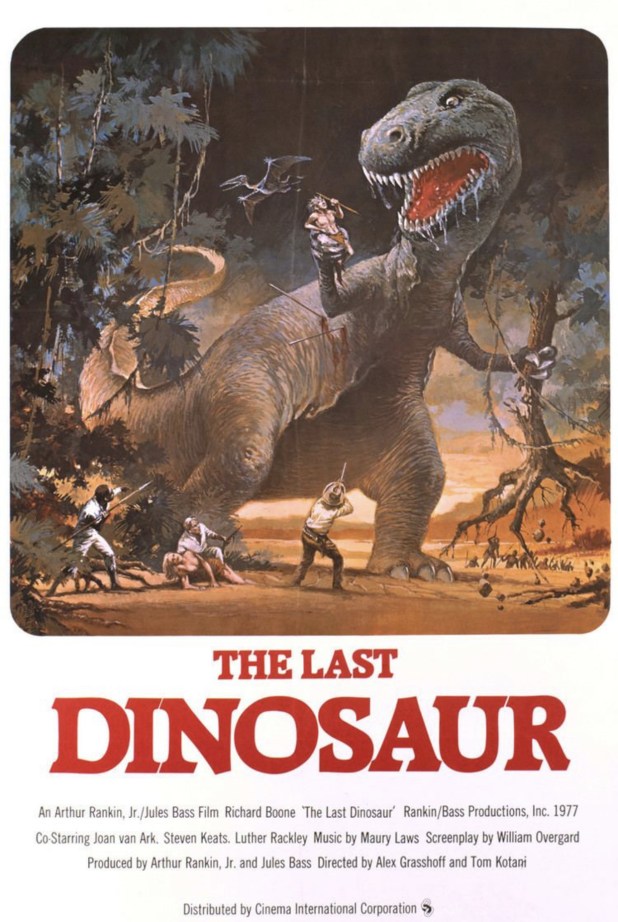
Oil company owner and big-game hunter Maston Thrust (Richard Boone) — what a combination for a heel, right? — is using a laser drill to find oil under the polar ice caps when a T. Rex is discovered living in a valley that is heated by a volcano. The first crew that explores the area dies, other than geologist Chuck Wade (Steven Keats, who also appears in another Rankin/Bass and Tsuburaya film, The Ivory Ape), so a new crew is sent in.

Thrust himself leads it, along with Maasai tracker Bunta (NBA and ABA player Luther Rackley), Dr. Kawamoto (Tetsu Nakamura in his last role), Chuck and Frankie Banks (Joan Van Ark), a Pulitzer Prize-winning photographer who gets on the trip by sleeping with Thrust. Yes, that really happens. Also, it was 1977.

The laser borer gets destroyed fairly early and all modern conveniences fail in the face of multiple dinosaurs, all portrayed with man-in-a-suit techniques, which I absolutely loved. The entire crew is nearly killed by numerous kaiju attacks. Also, there are cave people and one of them, named Hazel, ends up washing Joan Van Ark’s hair.

If you love the T. Rex costume here, well you’ll be excited to know that it was reused as Dinosaur Satan Gottes for the simply baffling Japanese anime/live action mashup Dinosaur War Izenborg, which you can find in the U.S. as Attack of the Super Monsters.

Perhaps the best thing about this movie is its theme song, “He’s The Last Dinosaur.” It’s worth getting through the whole film just to hear it.

Into Thin Air (1985)

Ellen Burstyn has no luck with her movie children, let me tell you.

In this movie, she stars as the Canadian mother of a college student who drives a beat up van from Canada to the United States and then disappears. The police barely help, so she hires her own detective (Robert Prosky, Christine, Grandpa Fred from Gremlins 2) to learn the truth.

The search for the van takes the retired detective to Maine, Nebraska, Colorado and Utah. For some reason, the cops offer no help at all and actually get angry that he’s on the case.

Into Thin Air was based on the real life case of Eric Wilson, who disappeared after driving from Ottawa to Colorado for a summer college class. It’s fictionalized somewhat, as was the documentary Just Another Missing Kid that came out the same year. In that film, director John Zaritsky had the interview subjects recreate their actions for the camera, which isn’t really a documentary, right?

You can watch this on Tubi.


The Great Los Angeles Earthquake (1990)

ABOUT THE AUTHOR: Herbert P. Caine is the pseudonym of a frustrated academic and genre movie fan in Pennsylvania. You can read his blog at https://imaginaryuniverseshpc.blogspot.com.

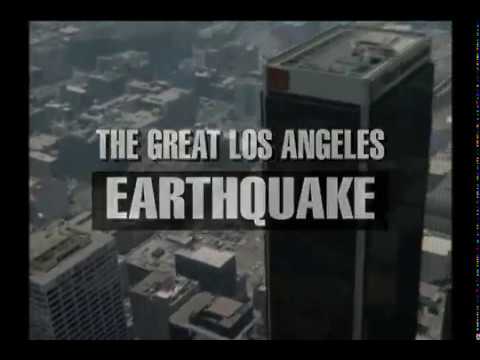
The Great Los Angeles Earthquake is essentially a TV miniseries version of the 1974 disaster movie Earthquake. It makes no attempt to hide this fact, as within the first ten minutes of the movie, we see a clip of the Universal Studios Theme Park ride based off the original movie. Both films use the same sets, according to Wikipedia. The film also starts the same way, with ominous music playing over a helicopter shot of the Los Angeles skyline. The theme music is a weak imitation of John Williams’s original disaster movie score, much as the movie is a weak imitation of the original theatrical release.

The Great Los Angeles Earthquake has the default plot for this genre: an intrepid seismologist, played by Joanna Kerns, has discovered a foolproof method of predicting earthquakes, and all the indications are that Los Angeles is about to be hit with a massive earthquake. However, her attempts to warn the populace are hindered by the machinations of a sleazy real estate developer, played by Robert Ginty from The Exterminator and The Paper Chase, who fears her predictions will cause housing prices to crash. Will she be able to warn the population in time?

One of the main problems facing this disaster film is that it is overloaded with too many supporting characters and subplots and not enough disaster. The earthquake only happens nearly two-thirds of the way through the film. In the meantime, we are treated to a variety of unnecessary and not particularly interesting sub-plots, ranging from the tense relationship between our hero’s sister and her mother to a plot to assassinate a South African trade minister who might become the country’s first black prime minister. The filmmakers would have been better off cutting one or two sub-plots to focus more on the destruction of the city.

However, this issue is mitigated by the quality of the supporting cast. Although Kerns and the other leads are not especially impressive, the supporting players include a number of talented character actors. Robert Ginty is suitably unctuous as the film’s antagonist, playing a more subtle version of Donald Trump. (The film even lampshades this, referring to the character as a wannabe “Donald Trump of the West Coast.”) Richard Herd is also good in a small role as Kerns’s superior at the U.S. Geological Survey, conveying authority and trustworthiness despite having little character development. Ed Begley Jr. does well as Kerns’s subordinate who leaks the story to the press. (Be warned, though: although Begley is prominently featured on the film’s cover, he is only in the film for 10-15 minutes.) Ultimately, the cast stand out is Richard Masur (Clark from The Thing), who plays a sleazy, hard-driving reporter whose efforts to exploit Kern’s warnings for ratings only succeed in making things worse. The reporter goes through a decent character arc as he confronts the destruction wrecked by the earthquake, with Masur conveying his emotional breakdown. Although none of these performers manage to surpass the awesomeness of Marjoe Gortner in Earthquake, they make the film worth watching.

The Great Los Angeles Earthquake also boasts impressive special effects for a TV movie. The film’s practical effects are far more convincing than the cheap CGI that too many televised disaster movies now resort to, with sets that actually shake and collapse and the actors interacting with actual flames. The way the disaster is shot is also effective, conveying the disorientation and chaos such a massive earthquake would actually cause. After the quake, the city looks dark and foreboding as it is engulfed with fire and smoke darkens the sky. Moreover, the last hour of the film is suitably downbeat as people struggle to find their friends and relatives amid the carnage.

Perhaps the most disturbing aspect of the film is how it illustrates the incapacitation of emergency and rescue services in the face of an 8.1 earthquake. Police, fire fighters, and EMS are hindered by the scale of the destruction and the blocking of roads and highways. This unsettles on a far deeper level than any special effect. In a better film, this could be used to show the total breakdown of society in the face of catastrophe, as in the beginning of the original Dawn of the Dead where we see the uselessness of the Emergency Broadcast System in the face of the zombie outbreak. Scenes like this hold real-world resonance, especially in the wake of the pandemic. When I first saw a late-night broadcast of this movie as a kid on the Million Dollar Movie, these elements disturbed me, but now they are arguably the most effective aspects of the film.

The Great Los Angeles Earthquake can be found on YouTube here.
The Phantom of Hollywood (1974)

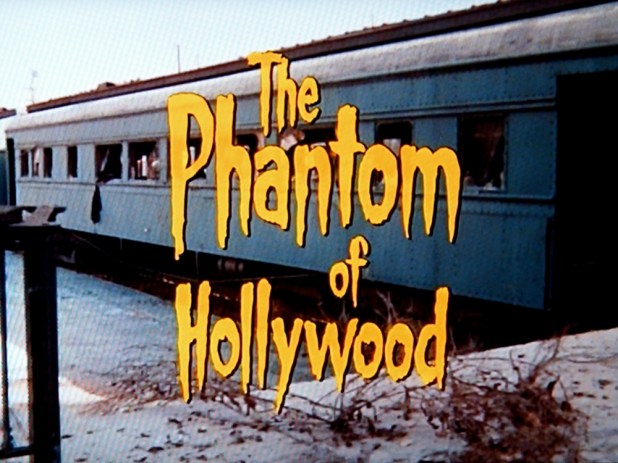
The Phantom of Hollywood was one of the last films shot on the Metro-Goldwyn-Mayer backlot, which was being demolished at the time of filming. It’s actually a major plot point, as it takes the place of the backlot of Worldwide Studios, the fictional studio within this movie.

A disfigured actor — just like the Phantom of the Opera — is killing anyone that tries to take down the studio. There are some great shots of famous films of the past — The Philadelphia StoryGrand HotelMutiny on the BountyThe Wizard of Oz — juxtaposed with the sets that have fallen into disrepair.

In 1974, no one — perhaps save the Phantom — knew the value of this history.

This one has a great cast, with Jack Cassidy (father of Shaun and David), Broderick Crawford, Peter Lawford, Jackie Coogan, John Ireland, Kent Taylor, Corinne Calvet and more appearing. It was written by George Schenck, who the normal world may know as one of the main writers and executive producers of NCIS, but we know as the writer, producer and director of Superbeast (and the writer of Turkey Shoot, too!). Director Gene Levitt is best known for creating Fantasy Island.

You can download this from the Internet Archive.

Time Travelers (1976)

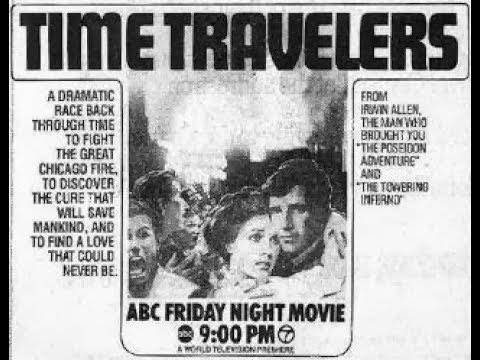
Time Travelers was scripted by Jackson Gillis (whose career stretched back to radio) from a story by Rod Serling (which led to a lawsuit, as Charles Willard Byrd claimed that this movie was taken from an unpublished 1959 book A Time To Live. Byrd and the producers reached a monetary settlement that allowed Byrd to claim the original story as his work). It was developed by Irwin Allen in the hopes that he could relaunch his series The Time Tunnel, but the litigation kept the show from being bought and it ended up running as an ABC Movie of the Week on March 19, 1976.

Dr. Clint Earnshaw (Sam Groom, Deadly Eyes) and Jeff Adams are trying to cure the XD virus that has been slowly wiping out humanity. When they discover that a similar disease had been seemingly cured around the time of the Chicago fire, they head back in time to see if they can learn anything from Dr. Joshua Henderson (Richard Basehart!) Jeff ends up falling for Henderson’s niece Jane (Trish Stewart, who played Basehart’s daughter in Mansion of the Doomed) and nearly stays behind. However, the timeline must be protected and our heroes end up saving the day, if not every person.

Director Alex Singer went to the Bronx’s William Howard Taft High School with Stanley Kubrick and one of his first jobs was as the cinematographer on Kubrick’s short Day of the Fight. He also made the films A Cold Wind in AugustGlass Houses and Captain Apache*, but the majority of his credits were in television.

*Written by Night Train to Terror impressario Philip Yordan!

You can watch this on YouTube.

Nightmare in Badham County (1976)

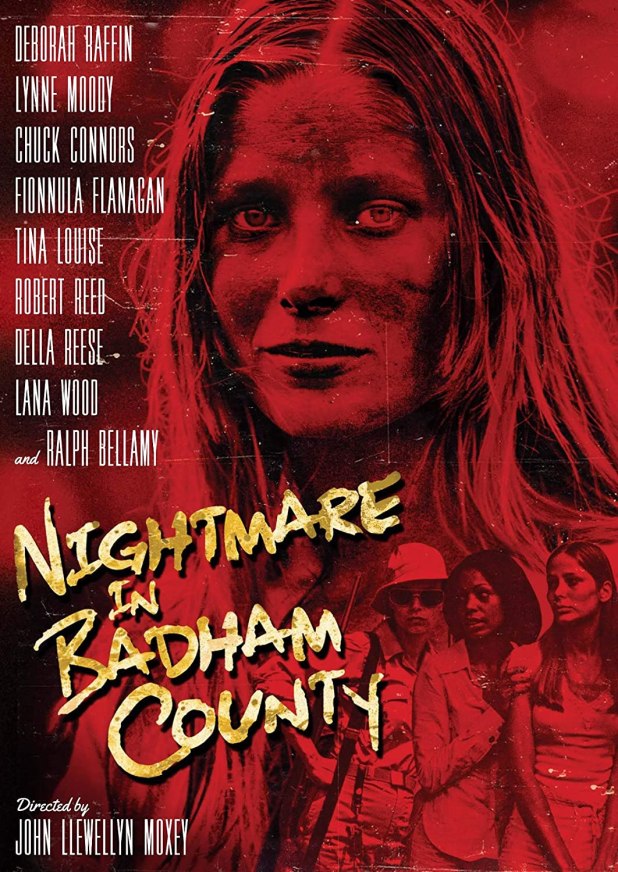
This was a made-for-TV movie but was released in theaters internationally with extended footage and nudity. It was so popular in China that actress Deborah Raffin became the first Western actress to make a promotional tour of the country and became an unofficial ambassador helping China make deals with Hollywood.

Raffin plays Cathy Phillips, who is driving across the country with her friend Diane Emery (Lynne Moody), ends up on the wrong end of the law after turning down the intentions of Sheriff Slim Danen (Chuck Connors), who puts them in jail and assaults Diane. This being a small Southern town, our heroines get sent to a work camp run by Superintendant Dancer (Robert Reed) and his guards, Dulcie, Smitty (Lana Wood) and Greer (Tina Louise).

Not everyone is going to make it out alive in this John Llewellyn Moxey — the man who made just about every great TV movie — film. Its writer, Jo Helms, also wrote the scripts for Play Misty for Me and The Girl in Lovers Lane.

This is another movie that reminds me I don’t go on vacation and talk to police officers too long. The saddest thing about this movie is that for all the attention it paid to having the women be in segregated jails, the actors all had to stay in segregated hotels while making this movie.

…And Then She Was Gone (1991)

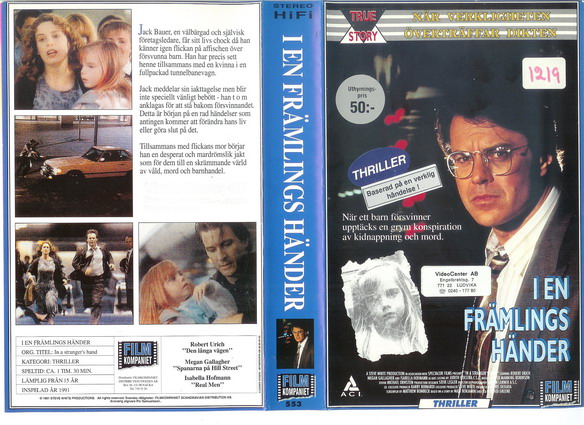
Jack Bauer (Robert Urich) is a workaholic who gets involved in a case of child kidnapping when he returns a doll found in the subway. This ends up finding him get repeatedly abused, verbally and physically, and making you wonder why he even tried.

Director David Greene also was behind Madame Sin; the movie adaption of GodspellRich ManPoor ManHard Country and the TV movie remakes of What Ever Happened to Baby Jane? and Night of the Hunter.

Bauer soon joins with the girl’s mother, played by Megan Gallagher, and they do what they can to find her daughter. This, again, involves Urich charging in like an alpha male and continually getting beaten unmercifully.

This looks way better than a TV movie and could have played theaters.

The Rape of Richard Beck (1985)

ABOUT THE AUTHOR: Herbert P. Caine is the pseudonym of a frustrated academic and genre movie fan in Pennsylvania. You can read his blog at https://imaginaryuniverseshpc.blogspot.com.

The Rape of Richard Beck, also known as Deadly Justice, is a far more serious film than its exploitation-style title would lead one to assume. Far from the Death Wish wannabe its alternate title suggests, it is a serious examination of one man’s response to being raped, highlighted by an award-winning performance from Richard Crenna.

Crenna plays Richard Beck, a jocular homicide detective with a mean streak towards rape victims. Like many police officers back then – and far too many now – Sergeant Beck regards rape as a less important crime that victims bring upon themselves. When Beck allows a rape suspect to go free in exchange for information about the whereabouts of a murderer, he is forced to join the sex crimes unit, where his insensitivity comes to the fore, to the disgust of a community representative played by Meredith Baxter.

Then Beck himself gets raped by two criminals whom he chases into an underground passageway….

The main selling point of this film is Richard Crenna’s performance as Sgt. Beck. This role is the polar opposite of his stolid performances in the Rambo movies as Col. Trautman, requiring Crenna to display a wide range of emotions as Beck struggles with his traumatic experience. As Crenna described in an interview with the Television Academy, many people advised him against taking the role due to its disturbing content. He wisely ignored them, going on to win an Emmy for his performance. Crenna is backed by an excellent supporting cast, with George Dzundza as a fellow officer, Meredith Baxter as an anti-rape activist, Joanna Kerns as his girlfriend, and Frances Lee McCain (the mother from Gremlins) as his ex-wife.

The film is as graphic as could be gotten away with on 80s broadcast television, to the point that the TV Guide listing from its first airing noted that “ABC plans an announcement warning that this movie may not be suitable for all members of the family.” Although the rape is not depicted, we see the build up to it as the criminals threaten and terrorize Beck. Director Karen Arthur does well at making the film as disturbing as she could given the limitations of network censorship, as in scenes where we see a woman and later Crenna examined following their rapes.

The Rape of Richard Beck also deserves praise for its realistic depiction of the trauma caused by rape. The movie traces his emotional struggles in the immediate aftermath of the incident, as well as the social ramifications when his fellow police officers find out. The character is inspired by Sgt. Richard Ramon, a police officer who gave talks to police cadets about the best ways to treat rape victims.

The Rape of Richard Beck can be seen for free on YouTube.

The Ivory Ape (1980)

Rankin/Bass had some experience working with Japanese filmmakers after making King Kong Escapes, the Desi Arnaz Jr. feature Marco, Rudolph and Frosty’s Christmas in JulyWilly McBean and His Magic MachineThe Bushido Blade (which has Mako, Sonny Chiba, James Earl Jones, Richard Boone and Laura Gemser all in the same movie), The Bermuda Depths and The Last Dinosaur there.

The last two movies we mentioned and this one were made with Tsuburaya Productions, the company that brought us Ultraman.

While this debuted on ABC on April 18, 1980, an extended version would later play theaters in Japan.

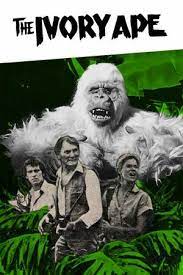
A rare albino gorilla has escaped somewhere in Bermuda, and the hunter who caught it once before (Jack Palance!) is set to destroy it. Can Steven Keats (Bronson’s son-in-law in Death Wish) and Céline Lomez (originally going to play Linda Thorson’s part in Curtains) stop him in time?

Kotani’s work, including The Bushido Blade, is a fascinating blend of Western and Eastern elements. The film, which stars Richard Boone leading sailors versus samurais under the command of Toshirô Mifune, is a unique exploration of cultural dynamics. If that’s not enough to pique your interest, the fact that Laura Gemser is in it might. Kotani’s diverse filmography also includes Pinku redi no katsudoshashin, a feature-length movie about Mie and Keiko Masuda, two idol singers whose Japanese success was imported to the shores of the U.S. Their song “Kiss in the Dark” reached #37 in America, making them the first Japanese act to chart here since Kyu Sakamoto’s “Sukiyaki” in 1961. Sadly, their Sid and Marty Krofft developed series – The Pink Lady and Jeff – only lasted six weeks on NBC during Fred Silverman’s disastrous year of 1980, which also unleashed the Supertrain on an uncaring television audience. Kotani’s other works include The Last Dinosaur and The Bermuda Depths.

There’s something truly unique about the 1970s TV movies from Rankin/Bass. Each one carries a certain level of darkness and palpable sadness, making them the perfect choice for a snowy day in 1981 when all you wanted to do was stay under the covers. They still possess that same strange magic today, evoking a sense of nostalgia and appreciation for their historical significance.

You can watch this on YouTube.

The Girl Most Likely To… (1973)

My acting career pretty much begins with an appearance as Sergeant-Major Morris in The Monkey’s Paw and ends with my role as Dr. Green from this story. No, I was not in the movie. I was in a stage play version and the kiss that gave me a fatal heart attack was the first kiss I ever had from a non-family member girl. She said I tasted like a chili dog. A much cuter blonde girl offered to give me lessons after the play (and some mints).

Inspired by The Second Face, this was written by Joan Rivers and Agnes Gallin It was directed by Lee Phillips, who starred in Peyton Place and also made The Stranger Within and The Spell. It was the ABC Movie of the Week, first airing on November 6, 1973.

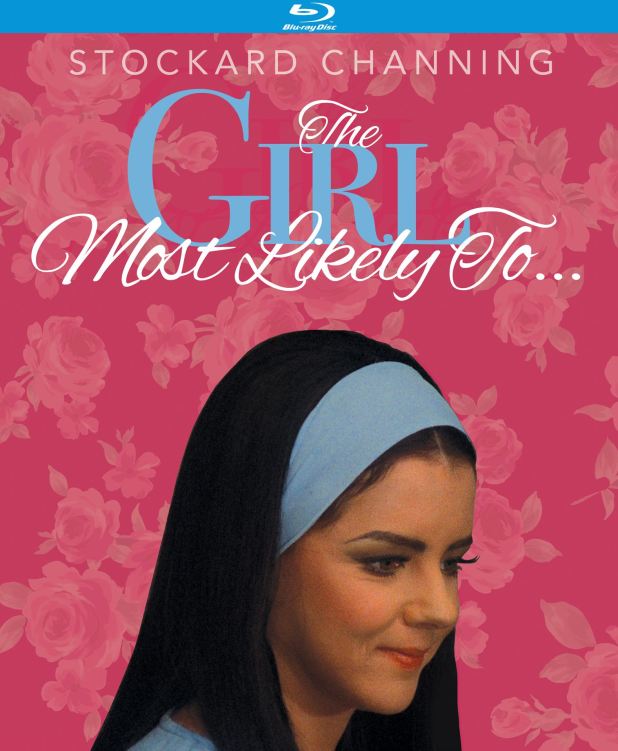
It’s also Stockard Channing’s first movie and she’s Miriam Knight, an intelligent young lady who is overlooked because of, well, her looks. Her roommate grows jealous when Miriam gets the lead in a stage play, so she sneak attacks her with roses. Miriam’s allergies send her running from the stage and into an accident which changes her looks and life forever.

Once the bandages come off her face, she’s a totally new girl. One who is now willing to do whatever it takes to get revenge — murderous revenge — on everyone who has ever wronged her.

The Girl Most Likely To… has a great cast, such as Ed Asner, Jim Backus, Joe Flynn from McHale’s Navy, Chuck McCann (a voice of a ton of animated characters), comedy magician Carl Ballantine, Fred Grandy from The Love BoatCHiPs star Larry Wilcox, future director Dennis Dugan (who, before directing a LOT of Adam Sandler movies, such as Just Go with It, acted in films, such as 1980’s The Howling) and the man who would be Captain America and Yor Hunter from the Future, Reb Brown.

This is a comedy, but man, it’s a really dark one. How was my school allowed to put this play on?