Phantom Brother (1988)

Five years ago, a fiery car wreck wipes out a family and orphans young Abel Evans. Then, like Billy Eye Harper before him, Abel’s dead brother is back from the dead and taking his revenge. Of course, as the copy on the box gives it away . . . Abel’s brother isn’t a zombie: he’s a ghost. And, if the tagline of “It kin (can) happen to you” doesn’t give it away: this is a horror comedy (although some will debate on the “comedy”). But “Cain” on the cover looks like a hardcore Halloween-inspired slasher.

Starting out as Blood Brother, the film shot in Mamaroneck, New York, at a house that was owned by director Jeffrey Delman; the home also appears in his film, Deadtime Stories (1986). Another location that appeared in another film was the “hillybilly house,” aka the grandparent’s home of Gabriel Bronsztein, a film crew member; it was used in Frank Henenlotter’s beloved home video renter, Frankenhooker (1989).

Phantom Brother is one of those movies we love for the fact that the individuals who worked on the film drop their two-cents worth on social media (sometimes You Tube; in this case, the IMDb) about their experience. Right off the bat, Gabriel Bronsztein, who was the film’s camera assistant, key grip, and gaffer (holding multiple jobs on-set is par for the SOV course), lets it be known that the film “was not his fault” — which only succeeds in us wanting to watch Phantom Brother, even more. Bronsztein also appears as the director of “Vampires on Valium on Valentines Day” within the film. Phantom Brother was his first job fresh out of film school; he worked for director William Szarka as an assistant editor at a film distribution company.

Like Dead Girls . . . before Scream there was the . . .

Bronsztein speaks about how most [backyard] filmmakers [like Don Dohler] would opt to shoot on 16mm. Of course, as we have discussed all this week (and we still have a couple of more days of reviews and SOV analysis on deck), the ’80s home video revolution hit and the likes of Boardinghouse* and Blood Cult revolutionized the low-budget film industry. Because of video tape, filmmakers could eschew expensive film stocks, fiddling with “short ends,” and bypass regional drive-ins and go straight for national home video distribution — either via brick-and-mortar outlets or via mail order. (Blood Cult, while not the first SOV, it was the first SOV to eschew drive-in premieres or festivals and go straight to the stores while “four-walling” pulpy, genre movie mags.) In the case of Phantom Brother, they broke out the camcorder: a Betacam. Gabriel’s brother, David, who was the DP (Director of Photography) and owner of the camera, chipped in funding. Another actor who wanted to be in the movie, Patrick Malloy, who played Dr. Van Dam, also funded the production. Others involved with the film also held dual jobs: Art Director and set designer Nora Maher, appeared as the pasty-face “Killer Girl Scout.”

So, if you haven’t been in these woods before . . .

Not the Phantom Brother. Hold the Tranya.

We have a two “Totally ’80s” couples who run afoul of a crazy family at a secluded county house, complete with a masked brother and his perpetually, Girl Scout uniform-clad sister and their fat mother — of course, they’re all dead from the car crash, remember? Now, why did the couple end up at this house of horrors? Well, to work on that movie shooting there that we mentioned earlier. So we get a little meta here — and a shiny implement here and there — with a horror movie concerned with murders while real murders are being committed. And Able tends to, aka hides, the real murder committed by his family, got that?

Ack, no we don’t.

The four MTV-rocker dopes ventured into the woods to find the head of Abel’s dad and cash-in on the “buried treasure” urban legend. Oh, and get a little of the rock ‘n’ roll hoochy-coo. You know the teen-type: Pentgrams and “666” on the walls, and the little creepy doll (that resembles our killer) are of little concern when you’re a horny, 30-year-old high school teenager. To that end: Yes, we do get breast shots. And undie bottoms. And bad ’80s synth-ballad augmentation. And Able’s not telling everything.

Okay, so the plot is settled.

Hey, this is an SOV, so that means the special effects are so special, but what SOV throat slash n’ dismembered body part fest of the Karo Syrup variety is, right? We give these Tiger Bloodin’ Charlie Sheen’ers credit for tryin’ at “winning,” as they give us a decent body count, just like a good SOV should (but this should have gone full-on Fatal Exposure in the gore department; we’ve also reviewed that fellow SOV’er, this week).

And this is good. Okay, decent-to-fair (so spare us the smart-fuckery in the comments below that “we’re hipster douche bags” and this is the worst movie you’ve seen in 25 years). The parody aspect actually works here, with the hammy scenery-chews of Dr. Van Dam, in particular. Yeah, the film itself is grainy (leave the Ed Wood and “Citizen Kane of bad movies” comments at the B&S About Movies’ smoke post/ash can out back) — as it was shot on a camcorder, after all — but the shots are well-framed. I could, however, done without the voice over narration (the lazy deathknell of screenwriting). But the sub-plots are all over the place, so there’s a bit o’ skill here in the thought-process department, and there’s a decent twist that improves on the we-seen-it-coming twist in Rocktober Blood. Well, a double twist: once the “brother” angle is exposed.
Nope. Not the Phantom Brother: The before-Scream dude from Dennis Devine’s Dead Girls (1989).

I always thought screenwriter Joseph Santi and director William Szarka (who got his start cutting “coming attractions” promos for a distribution company) did alright with this late ’80s addition to the SOV canons, as each displayed sparks of potential. While Phantom Brother (which sounds like an ’80s “Brat Pack” mystery-thriller starring James Spader) is not as horror-comedy effective as the black laughter (a county-hicks connection in both) of Charles Kaufman’s Mother Day (and what horror-comedy is), this masked slasher romp is not as much of an epic fail as the comedic-horror boondogglin’ tomfoolery of Hard Rock Zombies (dopey teens and a remote house of crazies) — and that was shot on film by a “more experienced” filmmaker in Krishna Shah. Phantom Brother is not incompetent on the behind-the-lens end, but is a wee-bit clumsy in the comedy and even more so, as well as awkward, in the thespin’ departments.

And, with that, Santi and Szarka punched out after Phantom Brother. But Szarka made two prior films: South Bronx Heroes (1985) and Plutonium Baby (1987). I never came across his debut on VHS (it was shot on film). Plutonium Baby is another story. I have seen that on the shelf under a different title: The Mutant Kid. For whatever reasons, even after seeing it a couple of times on different shelves, I never rented it. Phantom Brother was the pure camcorder-shot film that I wanted and rented. It’s also Szarka’s best-known film — and one of the better SOV’ers of the era.

There’s no trailer to share . . . but BurialGround5 comes through again with the SOV-VHS memories assist (and spares us coin). You can watch Phantom Brother via their You Tube page.

* That review on Boardinghouse is coming. You know it! So search for it.

About the Author: You can read the music and film reviews of R.D Francis on Medium and learn more about his work on Facebook.
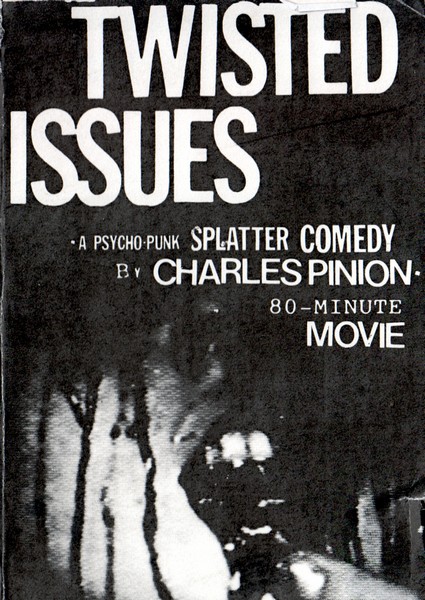
Twisted Issues (1988)

Man, talk about a movie I was not prepared for!

Originally intended to be a documentary of the Gainesville, FL punk/skate/thrash scenes, this somehow became a horror movie just as much as the opportunity to document bands like Psychic Violents, Young Pioneers, Mutley Chix, Doldrums, Just Demigods, Cindy Brady’s Lisp, Officer Friendly, the Smegmas, Hellwitch and the Bill Perry Orchestra.

Yet it can also be the story of the Death Skater, influenced by — according to director Charles Pinion in Underground Film Journal The Incredibly Strange Creatures Who Stopped Living and Became Mixed-Up ZombiesPolyester, Psych-Out, The 5,000 Fingers of Dr. T and Return of the Living Dead.

The moment where a girl sees a killer in her own house on her television before being killed by him and him enacting what he did on the TV afterward messes with time and scene and place and image better than most movies with way more of a budget. It also has tons of filler and moments of nothingness, but you know, we didn’t have jump to chapter buttons back in the days of VCRs.

Also: there’s an extended sequence inside a 1988 7-11 and for someone that hates advertising — and juxtaposition crazy has worked in it his entire life — I absolutely love everything about 7-11. The first thing I do in any new city — our new hometown has two of them — is find the 7-11 and grab a drink. In every fancy city my ad career has ever taken me, I’ve dined at more of these places and “thanked heaven” for them because they’re always there, even if my hometown didn’t get one until a year before I graduated high school. So the opportunity to drink in a time capsule of the store with the older branding and just live that world, man, that’s why I love movies.

If you die on a skateboard and a doctor brings you back to life, I hope that you have the festering brains that it takes to screw your board to your foot, wrap your face in bandages and then hunt down everyone who has ever wronged you.

You can get a handmade bootleg of this from the man who made it, Charles Pinion, on his official site. Sometimes they are sold out, but hey — again, it’s good to be made to wait.

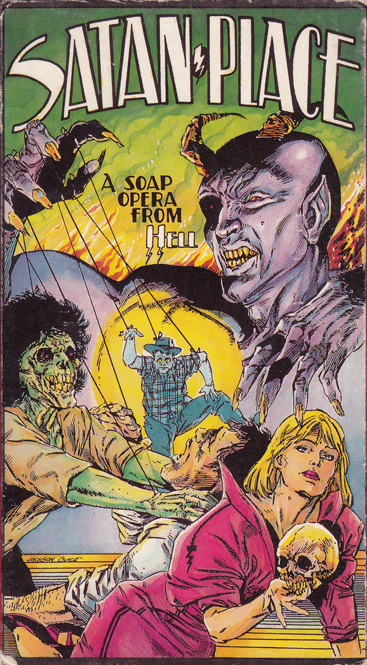
Satan Place: A Soap Opera from Hell (1988)

The SOV format is pretty much made for horror anthologies. There’s a great story in here about a girl who watches a horror movie host all day long and tries to figure out how to murder her mother. This has more of a brain than you’d expect it to — I would assume that the feminine edge came from Melanie Johnson, who wrote this with Scott Aschbrenner and Alfred Ramirez. I mean, there’s still a story where a man kills his wife and puts her down the garbage disposal — he gets his, stay tuned — but it’s not the typical gore for the sake of gore that most SOV is all about.

There are also some great trailers for movies that never happened, like Bathroom BulliesPretty Girl FloydMissouri Mop MassacreNursing Home Revenge and Don’t Go Into the Kitchen.

There’s also a Satanic wraparound, which is always appreciated.

It’s not perfect, but this feels like the kind of movie that — were it on the shelf of one of the two rental stores in my hometown — I would have gone back and rented again and again. I mean, drunk drivers dealing with zombies is always something that I seem to enjoy in an anthology.


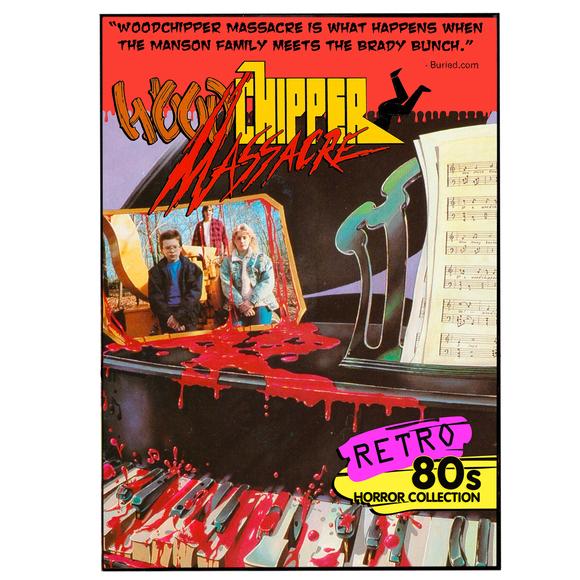
Woodchipper Massacre (1988)

Jon McBride acted, wrote, directed, edited, and composed this movie for $400. I kind of wonder why he didn’t name it The Connecticut Woodchipper Massacre. That may be because it’s way closer to Don’t Tell Mom the Babysitter Is Dead, but that movie never had a kid accidentally stab his aunt with a Rambo knife that she wouldn’t let him have. Let me tell you, I wanted one of those knives too, so I completely get it.

I also completely get the worry of having the yard raked before your father gets home when you told him it’d be done. That said, again, I’ve never used my cousin as compost spread all over the yard. I guess I lived a pretty sheltered life.

This film was based on the 1986 Newtown, CT murder of Helle Crafts by her husband Richard, which also was where Fargo got the idea. I would guess that the Coen Brothers didn’t have to shoot all of their woodchipper scenes in one weekend because they only had money to rent it once.

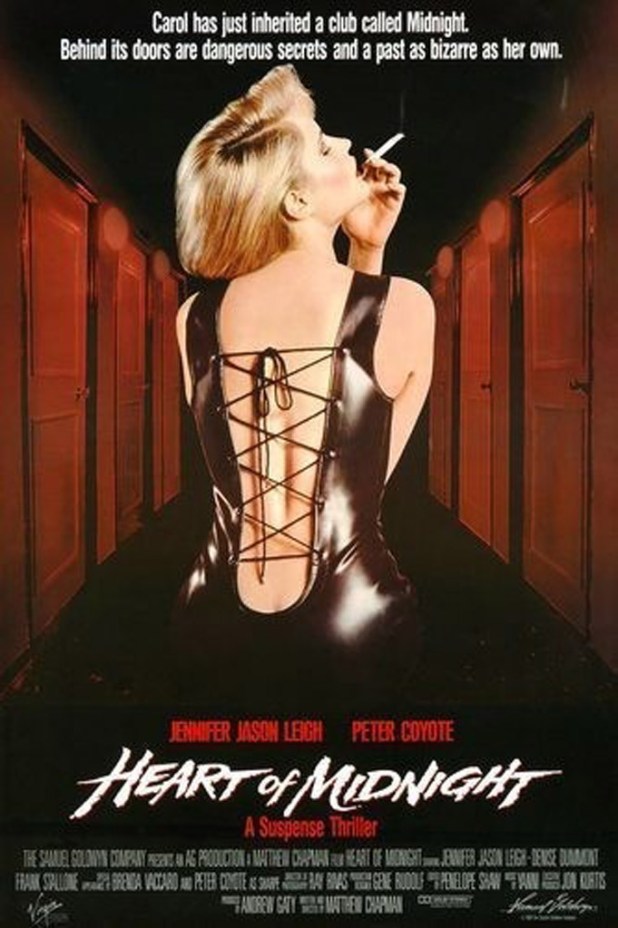
Heart of Midnight (1988)

Carol (Jennifer Jason Leigh) has had more than one nervous breakdown, which immediately qualifies for her to be the heroine of a female-centric giallo. Now, she’s inherited the Midnight — a broken-down club that for some reason is continually being remodelled despite the fact that the neighborhood that it’s located in is shady at best — from an uncle that she doesn’t remember.

Her mother (Brenda Vaccaro!?!) just wants her to sell the place, but Carol doesn’t just decide to reopen the place, she moves in and discovers that the Midnight was once the kind of club that people visit to take care of some very special needs.

On the first night that she stays at the Midnight, three men break in thinking that she wants them to. While the two white men assault her — including Steve Buscemi — the black man amongst them tries to stop them, which means that the cops shoot him, making this the sole moment of reality in a movie that exists in another plane.

The cops learn of her mental illness and start to not believe her, yet promise to send Lieutenant Sharpe, who she thinks is Peter Coyote, but he’s perhaps a ghost inside the club? Who can say — all we know is that the real cop is soon killed by something inside the haunted bar.

By the end of this, Carol starts to realize that what she is seeing are the past memories and things that happened inside this club, moments trapped inside these walls that she must move back to heal herself.

Also — Frank Stallone shows up!

Writer and director Matthew Chapman should make more movies. He hasn’t directed since 2011’s The Ledge but he has written a few scripts. That said, the great-great grandson of Charles Darwin seems busy writing books and being the founder and president of ScienceDebate.org, which advocates that presidential candidates hold a live debate solely dedicated to science and technology issues.

I love that so many reviews complain about how odd and how hard to understand this movie is. When viewed when wearing black gloves and through a glass of J&B, it perfectly adds up.

Screwball Hotel (1988)

Once upon an ’80s VHS time . . . there was a Canadian exploitation tax shelter film franchise known as “Screwballs” that was created to cash-in on Porky’s and the Police Academy series. Courtesy of your HBO subscription back in the ’80s, the Screwballs films were oft-run T&A favorites on that early pay-cable service, as well as perfect programming fodder for the USA Network’s “Up All Night” weekend programming blocks.

It all began with Screwballs (1983). Then along came Loose Screws, which aka’d on HBO and the USA Network as Screwball Academy, and home video as Screwballs II (1985/1986). Then there’s this third and final entry — sometimes appended with a “3” in home video quarters — which has less to do with the first film as the second film has to do with the first film. The overall gist of the first Screwball film isn’t so much Police Academy as it is Porky’s, courtesy of the resident screwballs as a gaggle of horny, 1960s high school students trying to get laid.

AKA, Screwballs 3 . . . notice that while the legs look real, the dippy bellhop is an artist rendering? Way to go, art department!

The only real through line between the first and second films (well, there is one more connection, for all three films, but we will get to that, later) is that Rafal Zeilinski directed both screenplays written by actress/director Linda Shayne (she wrote her own directing debut Purple People Eater; Screwballs (I) served as her screenwriting debut; she also wrote Crystal Heart). The original plan for what became best known as Screwball Academy to the cable television masses was to bring back the four leads from the first film; instead, all new actors were cast in a re-write of the original story. Only now, our horny students covet their new, sexy French teacher at . . . Cockswell Academy (yes, that’s the level of comedy you’re getting); the original lads attended Taft and Adams High School and coveted the school’s “hottest, pure girl,” Purity Bush (again, comedy . . . you gotta love it).

So that’s the Screwball-back story . . . and brings us up to speed — somewhat — for Screwball Hotel, a film whose only connection to the “franchise” is that Rafal Zielinski directed all three films. And you know what: while each have their detractors, each also has their fans: ones who fondly recall either watching them on cable TV via HBO or The USA Network or as a $.49 cent Friday Night rental (I fall in that grey area-between the two of not loving but not hating them. But as you get older . . . nah, nostalgia wins, again).

The Review

Yeah, it’s the same ‘ol song and song and dance in the pants as horny ne’er-do-wells kicked out of a military academy take jobs at a dying Miami Beach hotel (while a Canadian production, this shot in Miami). To save the hotel, our lustful lads organize the “Miss Purity Pageant” — with the hotel’s prudish female guests (boilerplate-reminding of Purity Bush from the first Screwballs) as contestants. Of course, as with the first film, and despite the material’s intent, there’s no nudity or sex scenes to trip the triggers; just lots of T&A innuendos, but no actual nudity or sex. Pour Porky’s, Police Academy and the teen-flick cycle of John Hughes into your National Lampoon logo-tumbler and serve up a film that’s . . . not so much of a plot, but SNL-styled vignettes and sight-gags that run from the outrageous to the raunchy to the ugh-enduring stupid.

The character boilerplating continues with . . . remember the tubby, food-loving Larry “Fink” Finkelstein from Meatballs (1979)? Well, Screwball Hotel has a Finkelstein. Remember the “Spanish Fly in the food” scene in Screwballs? Well, we have one of those — only with cocaine. Then there’s offensive Arab stereotypes, a dominatrix trope shows up, a Australian guest into sheep-bestiality appears, along with women’s oil wrestling, more nympho women, more horny men, and hot-but-ditzy women everywhere.

If this sounds a lot like Johnny Depp’s marquee-leading man debut in Private Resort (1985), then it probably is. Adding to the six degrees of celluloid separation is the fact that actor Michael Bendetti, who replaced Johnny Depp’s replacement of Richard Grieco on FOX-TV’s 21 Jump Street, as Anthony “Mac” McCann in that series’ fifth and final season, makes his feature film debut, here (his dual acting and leading man debut), as Mike, the ne’er-do-well leader of the hospitality shenanigans. The only other actor worth mentioning is two-time Penthouse “Pet of the Month” and “Pet of the Year” Corrine Alphen Wahl, who we’ve enjoyed in BrainWaves (1982), Spring Break (1983), and Equalizer 2000 (1987). (Wait, there’s another Penthouse Pet, here, more on that later.)

The ’80s comedy déjà vu caveats: Don’t confuse any of this Cannuck tax shelter tomfoolery with Oddballs (1984), which Miklos Lente, the cinematographer of Screwballs, directed . . . and it’s pretty much a rip of Meatballs, which, if you haven’t figured out, is ripped ‘n’ pinched by Screwballs, natch. Of course, Golfballs! (1999) — which is no way connected to the Screwball franchise — is as much like Oddballs as Oddballs is like Meatballs, which is, in turn, is like Caddyshack. And the beat, well, ball, bounces on . . . to Daniel “Paco Querak” Green, who made his big screen acting debut in the same ol’ “dying hotel on Miami Beach” plot in Rosebud Beach Hotel (1988).

Thanks to Paul and his efforts at VHSCollector.com — and to Archive AusVhs for the very rare trailer.

So, this time — for Screwball Hotel — in lieu of Linda Shayne, we get the pen of Charles Wiener. After his writing and directing debut with a Canadian TV movie slasher ripoff, known as Blue Murder (1985; Starring Britney Spear’s dad? Nah. Uh, maybe?), he wrote a Canadian not-Police Academy ripoff, known as Recruits (1986), as well as writing and directing the-Police Academy-set-inside-a-fire station-ripoff, Fireballs (1989) — which was shot back-to-back with Screwball Hotel. If you’re a martial arts completionist and need a Canadian not-starring Jean-Claude Van Damme rip, there’s Wiener’s third and final directing effort, Dragon Hunt (1990), for your shelf.

Rafal Zeilinski made his directing debut with Screwballs; his fifth directing effort, Valet Girls (1987), copies the template of the Screwball movies and Recruits — but changes it up with an all-female valet car service; it’s a film as blatant in its copying Deborah Foreman’s better-remembered My Chauffeur (1986) as it is Porky’s. And Zeilinski repeated the Screwball Hotel premise one more time in Last Resort (1994), which was backed by National Lampoon and starred the “Two Coreys” Feldman and Haim (another Corey two-fer is Dream a Little Dream) . . . but don’t confuse that film with the better (but not by much) Charles Grodin-starrer Last Resort (1986). And let’s not forget Zeilinski remade it all over again with State Park (1988), which ditches the schools, academies, and hotels for, well, a state park. By the early aughts: Zeilinski moved into Christian Cinema — yes, the guy who made T&A Screwball movies made Jesus movies — with The Hangman’s Curse (2003).

The Soundtrack

We had this penciled in for our “Rock ‘n’ Roll Week III” review series at the end of August (and we master listed Screwball Hotel in our round up of that week), but we bumped it back to our one of our “free range” weeks, when we just review anything that tickles the fancy. Just because.

So, Taiwan’s Golden Horse Film Festival nominee and China’s Changchun Film Festival winner, songwriter and composer Nathan Wang made his soundtrack debut with the songs “Check In, Check It Out,” “Making Money,” and “Punk Song” on Screwball Hotel, which he also scored. You may also have heard his tune “You Are the One” in Jackie Chan’s Rumble in the Bronx. He’s since scored over 160 international films and TV series. The songs on Screwball Hotel were sung by Terrea Oster, who provides the vocals for our ersatz rocker chick of the film — portrayed by Penthouse Pet Lisa Bradford-Aiton, in her only mainstream film role. The fruitful career of Oster’s son, Canadian Douglas Smith, led to roles in Terminator Genisys (2015), as well as starring in the Bill Paxton-fronted HBO series, Big Love.

Terrea Oster, who acted under the name Foster, as well, appears in the aforementioned, original Screwballs (1983), Oddballs (1984), and Screwball Academy. In addition to providing her singing voice to their soundtracks, she also worked in both disciplines on Flesh Gordon Meets the Cosmic Cheerleaders. Her husband, British producer Maurice Smith, has a resume that goes all the way back to classic counterculture biker romps The Glory Stompers (1967), The Cycle Savages (1969), and Scream Free!, aka Free Grass (1969). Yep, in addition to backing Flesh Gordon, he gave us Linda Blair’s Grotesque (1988) — and ALL of the Screwball/Oddballs films.

So, there’s the final through line we teased earlier, as well as the music portion (and Penthouse connection) of the film — for what that’s worth in your wanting to watch Screwball Hotel. Hey, sometimes you just gotta — even if you’re not a smarmy online film critic navigating the Three Rivers of cinematic fate in Steeltown.

You can check out more snobs vs. slobs comedies with our “Drive-In Friday: Slobs vs. Snobs Comedy Night” featurette.

About the Author: You can read the music and film reviews of R.D Francis on Medium and learn more about his work on Facebook. He also writes for B&S About Movies.
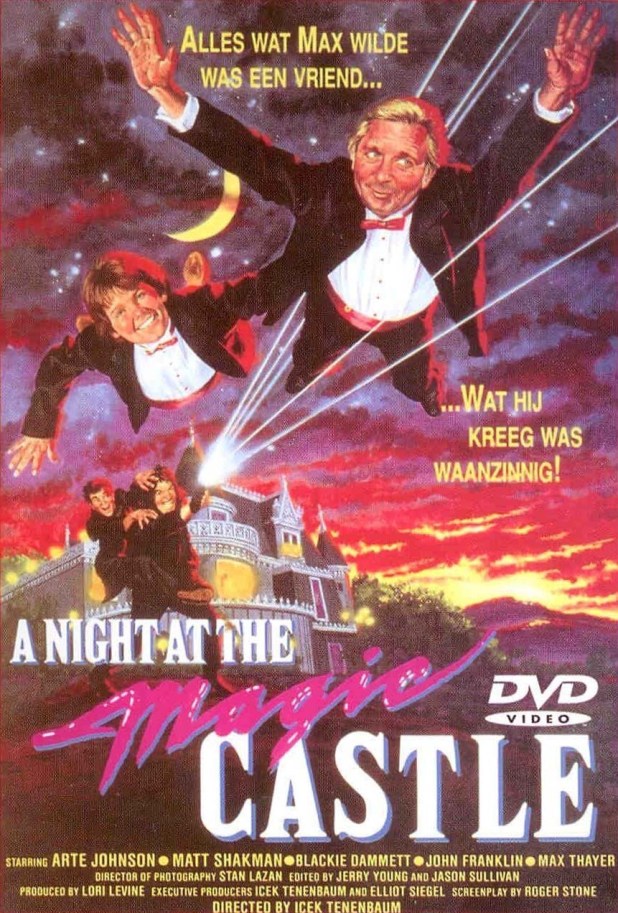
A Night at the Magic Castle (1988)

Oh man, The Magic Castle, the place where Dai Vernon performed all the time. It’s an invite-only place where strict dress code and the ways of classic Hollywood still remain, a clubhouse for magicians and magic enthusiasts and the home of the Academy of Magical Arts. “The most unusual private club in the world,” visitors must say a secret phrase to a sculpture of an owl to even see the entrance to the club.

This is the first movie ever made inside the walls of The Magic Castle, with many of its illusionists and magicians performing within the film.

Producer and director Icek Tenenbaum only made one other movie, a vacation gone wrong movie called The American Scream. He co-wrote this with Roger Stone — no, not the Penguin-looking Republican heel — who also wrote Goin’ All the WayLethal Pursuit and “Get Even” from the soundtrack of Gymkata. Also, his songs “Sparks” and “Dirty Talk” were in the adult films Bodies In Heat and Talk Dirty to Me Part 2.

Arte Johnson palys Harry Houdini, so between my mania about the master magician and my love of Laugh-In, you knew I’d have to watch this one of these days. A young kid in this learns all about losing his imaginary friend and the power of magic and the evil of Blackstar, who is played by Anthony Kiedis’ dad Blackie Dammit, who am I convinced may have George Eastman and William Smith powers, because he has rescued many a movie that I was iffy about the second he walks on screen.

Oh yeah — Isaac from Children of the Corn shows up!

This movie is ridiculously cheesy and yet endearing, kind of like magic on stage itself. Plus, how else are you gonna go back in time and go inside The Magic Castle?

Check this out on YouTube.

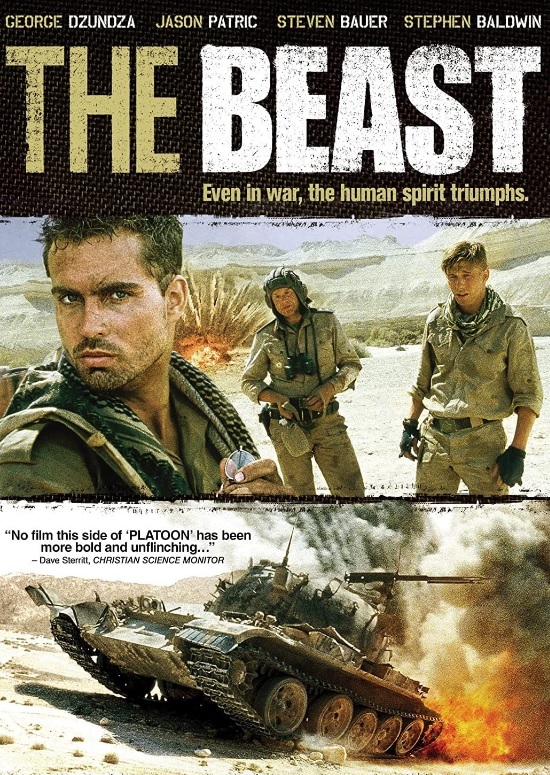
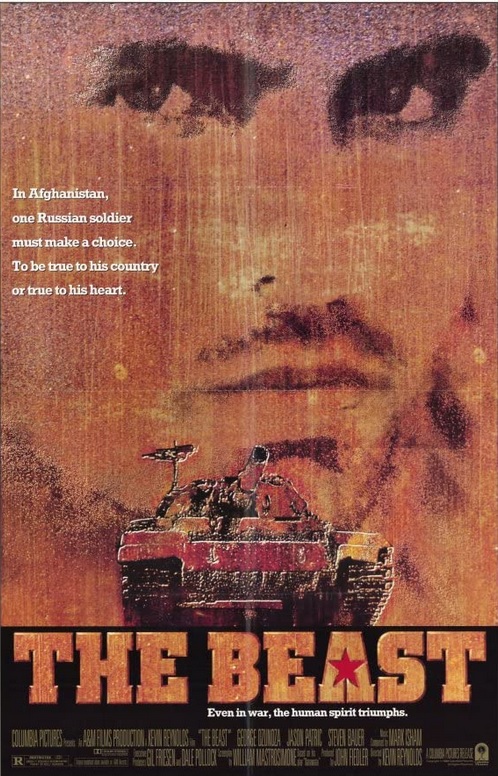
The Beast of War, aka The Beast (1988)

Editor’s Note: This review is a perfect example of when our readers contact us in the positive to uplift our efforts to discuss film with a like-minded kindness. In this case: this review began with a reader inquiry (which we get into detail within the review) and said reader contributed materials, providing us with production information. This same reader-synergy resulted in our recent reviews of Robo Warriors and Future-Kill — not to mention the endless “pingbacks” or cites we receive from other film blogs.

Also, this is NOT a political dissertation intended to incense any reader. This is a film review on the craft of filmmaking, only. Thanks for your understanding.


Oliver Stone’s Platoon meets Wolfgang Petersen’s Das Boot is not a critical understatement.

“Not foreseeing where we were going to be 20 years on, at the time I saw the Soviets’ situation in Afghanistan as something akin to their Vietnam.”
— Director Kevin Reynolds, The Austin Chronicle

We’ve had this war flick (working as a deeper character study and war treatise) on our backburners since January, when one of our loyal readers, Nick Paticchio, discovered this lost Kevin Reynolds film for the first time. He reached out, urging B&S About Movies to review and, in his words: “drag it out of complete obscurity.”

Nick schooled us that the film, originally known as The Beast of War, was directed by ex-Kevin Costner associate Kevin Reynolds and it stars George Dzundza, Jason Patric and Steven Bauer. A box office flop, it was released on only two screens in the U.S. by Columbia Pictures. Nick also told us that Roger Avery, Quentin Tarantino’s old writing partner, has The Beast listed as “The Best Movie of 1988” on his personal Letterboxd page, as well as one of his “20 Desert Island Films” — with Apocalypse Now as the only other war film on the list.

You’ll recall that Kevin Reynolds made his bones with his feature film debut script for the “brat pack” apocalypse flick, Red Dawn (1984), a film that he envisioned as a modernized take on William Golding’s 1954 novel, Lord of the Flies; understandably, he wasn’t happy with the John Milius-directed end product.

Then, with his second script (and one of my “desert island” movies since discovering it as a UHF-TV re-run and taping it), which caught the eye of producer Steven Spielberg, Reynolds first worked with Kevin Costner and made his directing debut with the coming-of-age road comedy, Fandango (1985). Then the two Kevins collaborated on four more films: the Kostner-directed Dances with Wolves (1990; but as second unit director), Robin Hood: Prince of Thieves (1991), Rapa-Nui (1994; with Costner as producer), and Waterworld (1995).

In between Fandango and Robin Hood sits this second Reynolds directing effort — a film originally conceived as Nanawatai (sanctuary), a stage production by Trenton, New Jersey-born playwright William Mastrosimone. The playwright made his debut mark in Hollywood by giving Farrah Fawcett the best role of her career with the rape thriller, Extremities (1986) (if you’ve seen Somebody Killed Her Husband (1978) and Sunburn (1979), you know what we mean).

Why Columbia Pictures released The Beast in only two theaters (for a $160,000 take against $8 million), then both mothballed it — even with rave reviews from the Lost Angeles Times, PBS-TV Sneak Previews, The Christian Science Monitor, and the Lost Angeles Daily News is anyone’s guess. The film, however — based on its many Euro IMDb reviews — received a wider, as most failed U.S. theatricals do, overseas theatrical release.

Some say it was the changing of the guard at Columbia Pictures: The film began production when David Puttnam (produced one of our favorites, Foxes) was head of the studio. By the time of release, Puttman was replaced by Dawn Steel (made her producing debut with Honey, I Blew Up the Kid). It’s opined that Steel didn’t think audiences would relate to Afghan characters played by Steven Bauer, who is of Cuban/German-Jewish descent, while Erick Avari is an Indian Parsi, Kabir Bedi is an Indian Sikh — and the rest are played by Israeli Jews (with the deserts of Israel doubling for Afghanistan). Others believe, even thought the film is effectively subtitled and the Russian language is minimal, large portions of the Afghan dialog is spoken in native Pashto.

Well, courtesy of a 2014 interview with Rutgers graduate playwright William Mastrosimone, on the digital pages of Matthew Gault’s War is Boring blog (a newly discovered and incredible blog; thanks, Nick), we know the reasons why The Beast failed: Sylvester Stallone.

Mastrosimone tells us that the new executives at Columbia weren’t interested in his take on Afghanistan. Sly had approached them with an idea for Rambo III (1988) around the same time — another film set in Afghanistan that the suits at Columbia thought had a better chance of making money.

The Beast was buried.

As we discussed during our “Box Office Failures Week” in the context of our reviews for Zyzzyx Road (2006) and the Christian Slater-starrer Playback (2012), The Beast did, in fact, suffer its unjustified fate as result of a contractual obligation. Troubled productions or films that lose a studio’s faith, to fulfill a clause in a SAG or IATSE agreement regarding release-distribution regulations (among other clauses only lawyers can dream up), Columbia held up their end of the contract by releasing the film in two theaters in New York City and Los Angeles. The movie ran a few weeks — and vanished.

That’s until filmmakers like Roger Avery and fans like B&S About Movies’ reader Nick Paticchio discovered the film. Nick, in fact, came to have a discussion about the film with Roger Avery.

Avery, along with Quentin Tarantino*, came to see the film in Westwood, California, on the opening weekend . . . and no one was there; they had the theater to themselves. In speaking with the owner, they learned it was in the theater for one day, for “awards qualifications.” As Nick and Roger continued their discussion, Roger astutely analogized the similarities between The Beast — its release suppressed for reasons of political agenda — to Mike Judge’s (brilliant, IMO) Idiocracy (2006): too intelligent for its own good.

There’s no room in a tank for a conscious.

“It’s my best work. I don’t care if it’s an Academy Award [winner]. I just want the movie to get its due some day.”
— Screenwriter William Mastrosimone, War is Boring

The Beast follows the exploits of a Soviet tank crew that becomes lost in the desert during the 1981 invasion of Afghanistan** (the invasion began December 24, 1979, ended on February 15, 1989, the U.S.S.R fell on December 26, 1991). Following the heartless assault of a Pashtun village and the resulting slaughter of mujahidin freedom fighters by a tank unit, that lone tank commanded by Daskai (an incredible, Oscar-level turn by George Dzundza; he campaigned hard for the role and went on a heavy diet and workout routine prior to filming, losing over 50 pounds) becomes lost in a mountain pass.

That wrong turn becomes the catalyst for the tribe’s new khan, Taj (a really incredible Steven Bauer of Scarface fame; later of TV’s Breaking Bad and Better Call Saul), to ban with Moustafa, his warring, desert scavenger cousin (a fine Chaim Jeraffi; sorry Sam, he was the Jiffy Dump Guy / Jiffy Park Guy in two Seinfeld episodes). Together, reluctantly, they gather up the survivors and, manned with a captured RPG anti-tank weapon, seek bloody revenge. The same stress and betrayals also plague the Soviet tank crew, jeopardizing their escape (the crew stars India-born Erick Avari of Stargate (1994) and The Mummy (1999) fame as the crew’s Afghani guide).

A battle of wills between a rogue commander and a solider with a conscious.

“The Beast was written by a great playwright by the name of Bill Mastrosimone. It was sent to me in a 50-page outline, I read it and thought, ‘Wow, this is cool,’ and then I found out it was a play. So I went to see the play . . . and I thought, this isn’t a play, this is a movie.”
— Director Kevin Reynolds, “The Constancy of Sorrow” by Marc Savlov of The Austin Chronicle

To say anymore would be plot spoiling: this is a film to be experienced and not by a review read. Everything works in this second, overly ambitious film by Kevin Reynolds — and foretells his directorial skills in pulling off the “Mad Max on the Water” effort of Waterworld, itself a film that languished in development hell since 1986 because no one knew how, or was confident enough, to make that liquid apoc’er, work. The Beast truly is a tour de force masterpiece in writing and directing, acting, set design and costuming. I loved Waterworld . . . but I love The Beast, even more. This is a repeat-viewing movie.

Nick — who inspired this review — is right: Criterion or Shout Factory! — or Arrow or Severin — need to reissue this on a DVD and Blu-ray proper, complete with commentary tracks from all concerned. For now, we did find one production insight from the film’s art director, Richard James, courtesy of his recent, July 2021 comment on the You Tube channel VOD upload of the film. Here’s his insights from July 2021:

“I was the art director on this movie. My focus was to build the interior of the [Israeli] T-55 [Tiran] Russian Tank. The goal was to make the interior so it could be filmed and to look like the real thing. The interior set had to function to meet requirements in the script, such as loading and firing the gun. The turret had to revolve 360 degrees. I was able to locate a shop manual of the tank. The tank interior set was suspended by metal framing, all sitting on a turn table; port holes allowed the camera to position itself perched also on turntable. The whole contraption had to be dismantled and shipped to Israel for the shooting location. The set was reassembled in a warehouse in Old Haifa, as [we] filmed in the desert. Even the studio suits didn’t know how [Kevin Reynolds] was able to accomplish his interior shots.”

In addition to Richard James, actor Jason Patric provides his insights on the production as part of the June 9, 2021, podcast of Ty & That Guy, hosted by producer Ty Franck and actor Wes Chatham of SyFy/Amazon’s The Expanse. The timestamp where you need to start to learn more about The Beast begins around the 39 minutes and 40 seconds mark and runs to the 51:00 minute mark. (Great find, Nick!)

You can stream The Beast on Tubi and the trailer on You Tube. For an ad-free experience, you can rent it from You Tube Movies. As a testament to the love of the film’s effectively shot action sequences: you can find several fan-cut clips on You Tube. (You’ve seen the film’s opening tank assault of the village in the 2001, better-distributed film, Megiddo: The Omega Code.)

* We did a week-long blow out on his films, which we recapped with our “Exploring: The 8 Films of Quentin Tarantino’s Rolling Thunder Pictures” featurette.

** To learn more about the politics behind the invasion, you can read an overview at The History Channel.com.

Again: Positive reader input also resulted in our recent reviews of Peter Carpenter’s Vixen! (1968) and Love Me Like I Do (1970), as well as the aforementioned Future-Kill (1985), and Robo Warriors (1996). God bless their VHS-pack rattin’ brains! Surf ’em up, if you can.

A very special thanks to Nick Paticchio for his collaborative efforts in our exposing this incredible film to a wider audience. We got you, Mr. Mastrosimone. We got you.

About the Authors: You can learn more about the writings of R.D Francis on Facebook. He also writes for B&S About Movies.

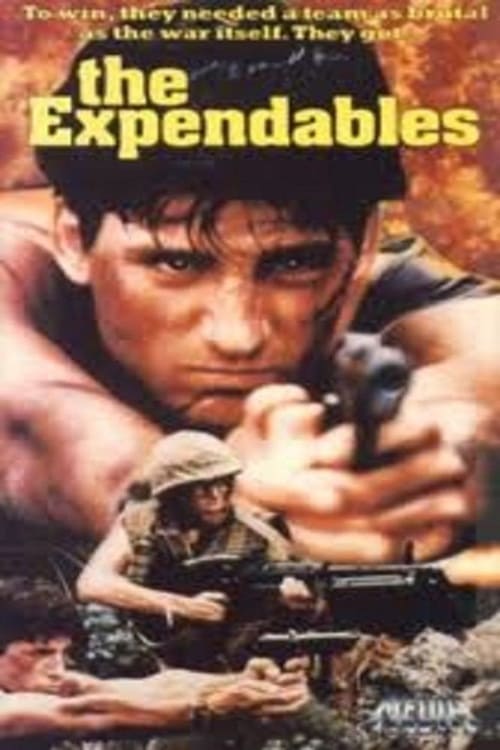
Philippine War Week: The Expendables (1988)

Editor’s Note: Welcome to our final review for our first “Philippine War Week,” in which we reviewed 24 flicks. Yes, we said “first” because we’ll be back during the first week of December with 24 more. To populate a complete list of all of our reviews, click here.

Cirio H. Santiago is kinda royalty around these parts, what with his involvement in movies like TNT JacksonVampire Hookers, FirecrackerStrykerWheels of Fire, The SisterhoodDune Warriors and so many more movies.

Here, he takes the Dirty Dozen to Vietnam by way of the Philippines and hey look, there’s Vic Diaz!

Well, it all starts with Captain Rosello (Anthony Finetti) taking a platoon into combat but nearly everyone dying. In fact, no one wants to be in his command as nearly everyone dies under his watch. So they assign him the scumbags and misfits stuck in Nam as his next group of sacrificial lambs and, of course, none of them get along.

This team is hard-wired to not get along, what with a racist named Richter being forced to work alongside a black demolition expert, all while one is a pothead, one is the requisite mysterious Native American and the other one is obsessed with God and says stuff like, “Thy will be done. In Vietnam as it is in Heaven.”

They capture Vic Diaz, lose a member and then bond at a brothel, which lands them in the brig, during which they get their big mission: they have to free their commanding officer and some nurses from NAV forces.

Trust me, not everyone is coming back alive.

Also released as Full Battle Gear, this movie blows up more huts than any other film you’ll see made in any other country. Plus, Don “The Dragon” Wilson shows up!

You can watch this on YouTube.

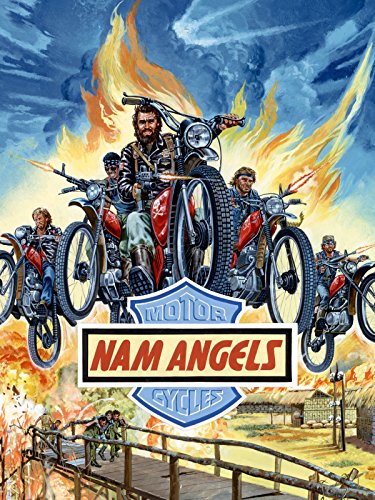
Philippine War Week: Nam Angels (1988)

This is not Nam’s Angels. It’s Nam Angels. That one was made in 1970 and was also known as The Losers. This one in the late 80s in the Philippines.

Lt. Vance Calhoun (Brad Johnson, who was a rodeo cowboy and former Marlboro Man who later was in AlwaysFlight of the Intruder and played Rayford Steele in the Left Behind movies) is a West Texas soldier with a lasso and a sawed-off shotgun who has taken on a dangerous rescue mission to get some POWs back from Vietnam. Luckily, he has five Hell’s Angels — Larger (Rick Dean, Tales from the Hood), Bonelli (Mark Venturini, Suicide from Return of the Living Dead!), Carmody (Jeff Griffith, The Sisterhood) and Turko (Romy Diaz) — who are ready to fight anyone, anywhere, even if Calhoun tells them they’re on a very different mission.

Vernon Wells plays — well, he’s Vernon Wells so you know he’s completely insane throughout — Chard, a guy who has gone all Heart of Darkness in Vietnam and encourages the villagers to kill everyone on every side of the battle. After all, they have gold to keep safe. That gold is what Calhoun tells the bikers they’re after, not a mission of mercy.

The theme song from this movie does not fit at all and that’s probably why I love it so much.

A Concorde Roger Corman release directed by Cirio H. Santiago, this movie will definitely do the job if you can’t find an Arnold, Chuck, JCVD or Stallone movie.

You can watch this on Tubi.