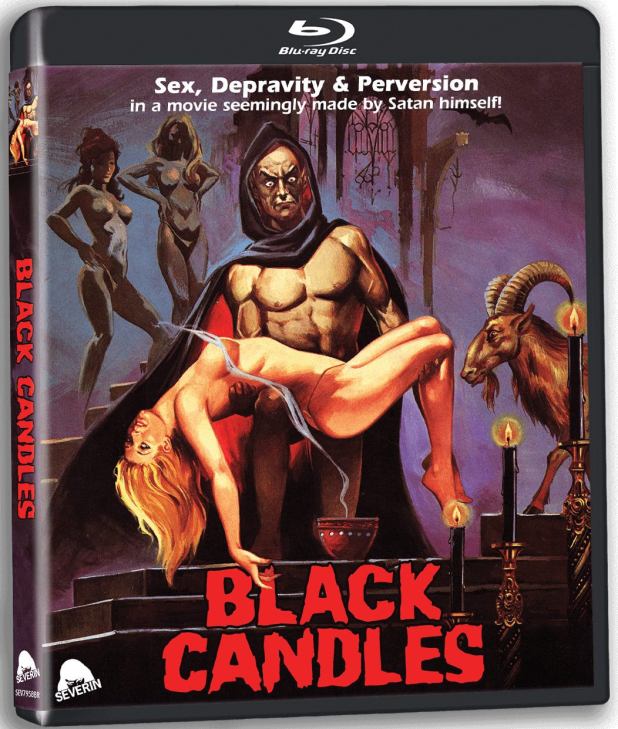
This movie is also called Los ritos sexuales del diablo (The Sexual Rites of the Devil) and in no way is it lying. This is José Ramón Larraz having 84 minutes to gio absolutely berserk, fusing his softcore films of the last few years with his occult and mental disorder efforts of the early to mid 70s. Supposedly he was embarrassed by this movie, but even with that in mind, there are so many wild things in this that you can’t help but stare at it.
This has other titles like Hot Fantasies and Naked Dreams and the film also does all it can to make those titles true. There’s literally non-stop sex in display here, lots of weird early 80s licking kissing and even a young girl laying with a goat in the most diabolical of all Biblical ways (and simulated, so don’t get too worried but still, the fact that I have to call out that the bestiality is fake should tell you exactly what kind of Satan majesties show up in here; that scene was also shot in a historical religious building to add even more sleaze to this).
I’m happy to see Larraz return to the foggy homes in London that are filled within and without with ethereal dread. I wish just as much attention was paid to the supernatural as the sex. But the story — Carol (Vanessa Hidalgo) and her husband Robert (Jeffrey Healy) should have never come to that ancient family manor filled with devils on the walls and Fiona (Helga Liné, Horror Rises From the Tomb) ready to sexually corrupt anyone and everyone. I mean, how could Robert resist? Does he want to get a sword up the backside like that other cultist who screwed this up?
It’s got a great title — actually it has more than one — and an incredible poster and it’s about sex, Satan, sin and sacrifices. I really loved reading other reviews that say, “It gets a little slow,” as if to gloss over that this is a movie filled with drug use, incest, an evil priest and — one more time — that horny goat. Have our lives become so staid that we can’t be shocked by things?
This is the kind of movie that churches salivate over burning.
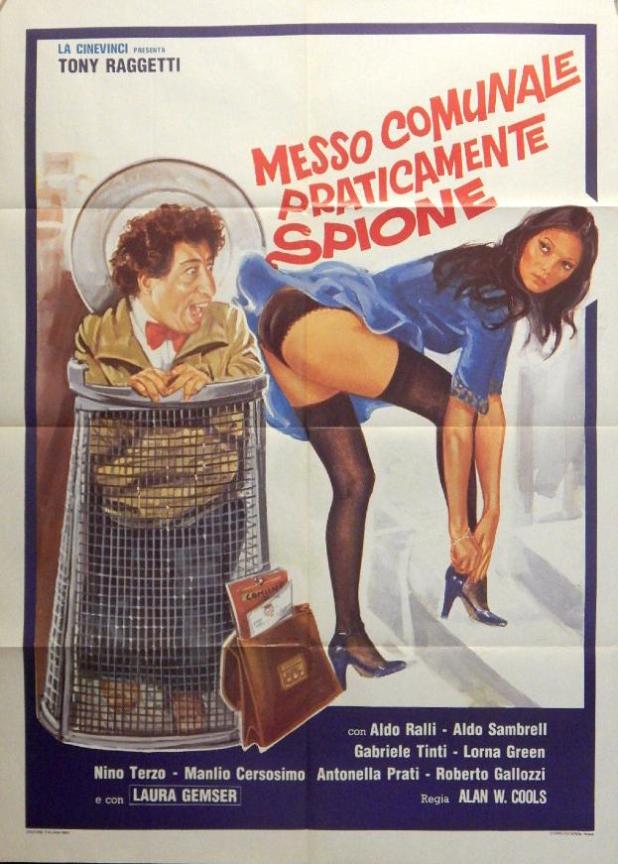
Better known as Emanuelle in the Country — because Laura Gemser is in it — this movie has Emanuelle (Gemser) arriving to be a doctor in a small Italian village. Italian men are complete libido-driven pigs — I can say that, I know — and they start acting like Tex Avery characters when they’re near her.
I realize that this is not connected to the other Gemser Black Emanuelle films because nobody watches snuff footage or eats a nurse. Mario Bianchi may have made Nightmare In Venice and The Murder Secret, but he’s no Joe D’Amato. I mean, that’s not fair to even make that comparison because my love for D’Amato is nearly infinite. But still. You have Laura Gemser and you put her in a sad small town and this is the best you can do?
Because if either Laura Gemser or Joe asked me to loan them a lot of money, I would do it. Especially Joe, because he’d be a ghost and I wish I could hang out with his sleazy specter.
Seriously, what drugs is this movie on, how can we go back in time and get them and how great will the high be?
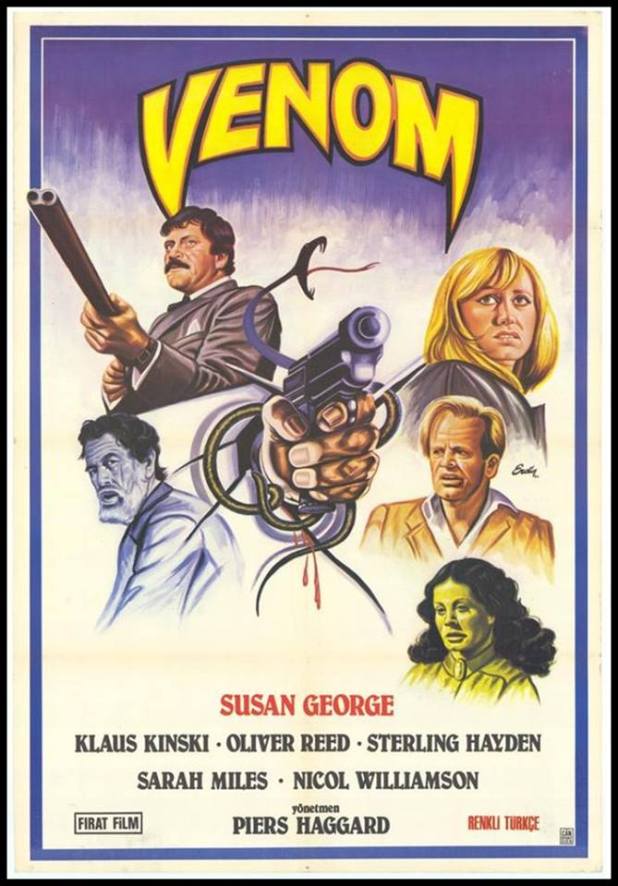
International criminal Jacques Müller (real-life maniac Klaus Kinski) and his lover Louise Andrews (Susan George) kidnap Philip Hopkins (Lance Holcomb), the grandson of hotel chain owner and great white hunter Howard Anderson (Sterling Hayden). It’s easy — Louise works as a maid, seduces chauffeur Dave Averconnelly (Oliver Reed) and gets him into the team without ever thinking through the psychosexual dynamics of the triad that she’s created.
The problem — well, one of many — is that Phillip meant to bring his snake and ended up grabbing a black mamba that is ready to kill anything and everything, but toxicologist Dr. Marion Stowe (Sarah Miles) was late, the switch was off and well, now we have a deadly snake that bites Louise’s face until she dies, leaving the cucker and the cucked to deal with the emotional fallout, as well as Dave just blasting cops when he gets too nervous.
Commander William Bulloch (Nicol Williamson) arrives — you can’t shot a cop in England without this happening, go figure — and Müller demands a million in different bills and transportation, while Dr. Stowe brings a case of anti-venom she just whipped up.
That snake wipes out all the bad guys and the end, well, it bits Müller repeatedly, then they both get shot so many times that you’d think they were a black criminal trying to outrace a white cop on foot, then they both fall off the building. Truly a death that was earned by Kinski.
As you can imagine, Kinski and Reed measured dicks this entire film, constantly trying to outdo each other. This was going to be a Tobe Hooper movie, which is blowing my mind right now, before he was replaced by Piers Haggard, who made The Blood On Satan’s Claw.
Haggard told Fangoria, “I took over that at very short notice. Tobe Hooper had been directing it and they had stopped for whatever reason. It hadn’t been working. I did see some of his stuff and it didn’t look particularly good plus he also had some sort of nervous breakdown or something. So anyway they stopped shooting and offered it to me. Unfortunately, I had commitments, I had some commercials to shoot. But anyway I took it over with barely ten days of preparation – which shows. It doesn’t become my picture, it’s a bit in between. . . Oliver Reed was scary at first because he was always testing you all the time. Difficult but not as difficult as Klaus Kinski. Because Oliver actually had a sense of humor. I was rather fond of him; he could be tricky but he was quite warm really. He just played games and was rather macho and so on. Klaus Kinski was very cold. The main problem with the film was that the two didn’t get on and they fought like cats. Kinski of course is a fabulous film actor and he’s good in the part, the part suits him very well. They were both well cast but it was a very unhappy film. I think Klaus was the problem but then Oliver spent half the movie just trying to rub him up, pulling his leg all the way. There were shouting matches because Oliver just wouldn’t let up. None of this is about art. All the things that you’re trying to concentrate on tend to slip. So it was not a happy period.”
Once, at a party at Elaine’s, Kinski bragged about how he and other members of the cast and crew ganged up on Hooper a couple of weeks into the shoot to get him fired. It must have been a horrific set, as cinematographer Anthony B. Richmond quit at the same time and Haggard claimed that the Black Mamba was the nicest person on set.
And oh yeah — Kinski took this movie instead of Raiders of the Lost Ark, telling Spielberg that his script was “moronically shitty.”
For that alone, you should watch this movie. It’s on Tubi.
June 12: Junesploitation’s topic of the day — as suggested by F This Movie— is prison! We’re excited to tackle a different genre every day, so check back and see what’s next.
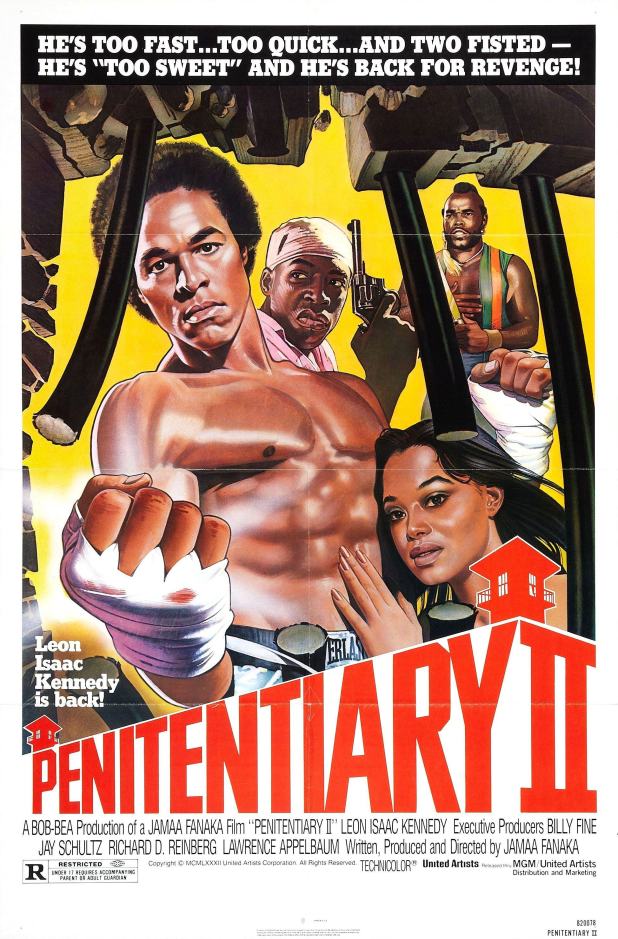
Leon Isaac Kennedy made Body and Soul, a movie for Cannon in which he got Muhammad Ali to show up as himself. In the second of three boxing in prison movies, Mr. T and Archie Moore do the same, appearing as their real world selves in this near comic book of a movie. Then again, Mr. T feels like a movie character in our real world most of the time.
Martel “Too Sweet” Gordone (Kennedy) has earned his parole from jail by winning a prison boxing tournament, so you should forget anything about this movie taking place in the universe we accept as our own.
He moves in with his sister and her husband while getting a job sweeping floors at a boxing gym. He wants nothing to do with the ring, staying on the outside, content with his life as a free man. “Too Sweet” even hooks back up with Clarisse (Eugenia Wright) but that’s when this movie decides that he’s had things too easy, because the enemy from the last movie who tried to assault him — physically and sexually — at every turn, “Half-Dead” Johnson (this time played by Ernie Hudson) has broken out. On a rare night that his sister and her husband go out, the lovemaking between our hero and his lady turns into a horror movie when “Half-Dead” locks her in a bathroom and treats her like he wanted to treat “Too Sweet,” who responds by beating the man into oblivion and leaving him near brain-dead with his head in the toilet.
This movie defies film logic, because “Too Sweet” gets destroyed in his first pro match back — yes, it takes his lover’s death to make him fight — by Jesse “The Bull” Amos (Donovan Womack), it’s the fact that he won’t get knocked out that makes him a star. At the same time that his career is on the rise, the rest of “Half-Dead’s” gang is targeting “Too Sweet’s” family.
To add even more weirdness, you’d think the hero would be the one to get revenge on the villain, who attacks him before his big fight. Nope. It’s Mr. T who saves the day.
This is also a movie that starts with a way too long Star Wars text that made me laugh out loud.
Director and writer Jamaa Fanaka made every movie in this series, as well as Street Wars and Welcome Home, Brother Charles. I am excited to report to you that if you thought this movie was strange,Penitentiary III goes even further, existing in a world beyond your wildest boxing prison movie dreams.
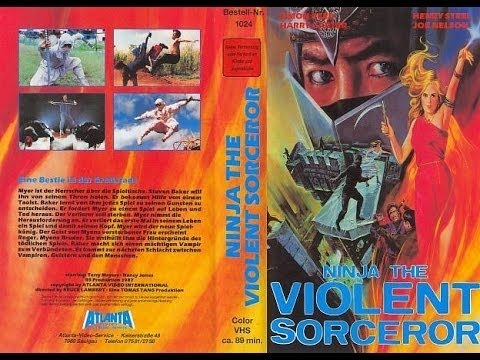
A remix of Du wang qian wang qun ying hui (The Stunning Gambling) which was directed by Chung Ching-Woon and changed beyond comprehension by the demonic entity known as Godfrey Ho, this movie is all about Stephen Baker, a gambling magician who uses the powers of the North and South Gambling Kings and dice taken from the mouths of dead people to become a Gambling King in his own right.
He then challenges the Gambling Master, Mr. Myer, to a card game with both of their lives as the bet. He cheats to win and even though there’s proof of his bad sportsmanship, Myer keeps his word and blows his brains out despite his son Leslie begging him to stay alive for their family.
Now, the ghost of his wife Rose appears to his brothers Roger, a white ninja, and Ken, a green ninja who is also a priest, to avenge his death. As they battle Chinese zombie vampires, Leslie and his father’s best friend seek out an alcoholic by the name of James Webber. He’s only lost once and that was enough to make him crawl into a bottle. At this point, the movie decides to pile on the characters, including a bar brawling girl named Ann, a stuntman named Ricky and a special effects girl called Lily and they combine fighting and gambling while the ninjas throw grenades.
I don’t know how anyone can dislike a movie that somehow combines the thrill of gambling with jiāngshī hopping into fisticuffs against multicolored ninjas. Seriously, how sad is your life if you look down on something so wonderful?
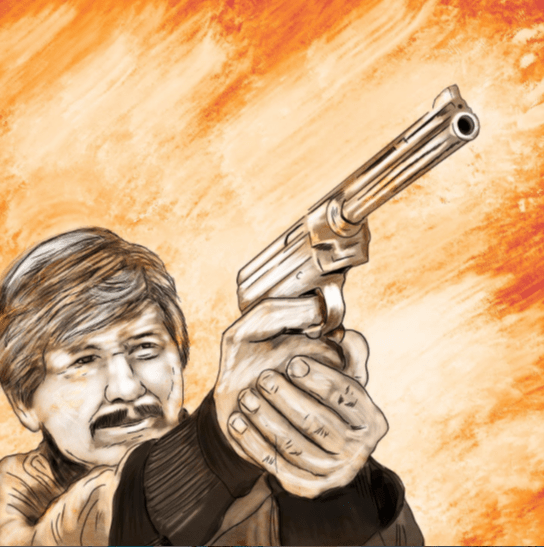
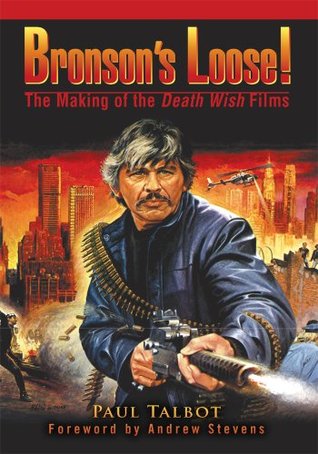
With The Cannon Canon celebrating Bronson Don’t Like May(onnaise) this month, I decided to watch some Bronson and bring back several of his films. Seeing as how I’ve done an entire Death Wish week before, why not just put them all in one review for easy reading?
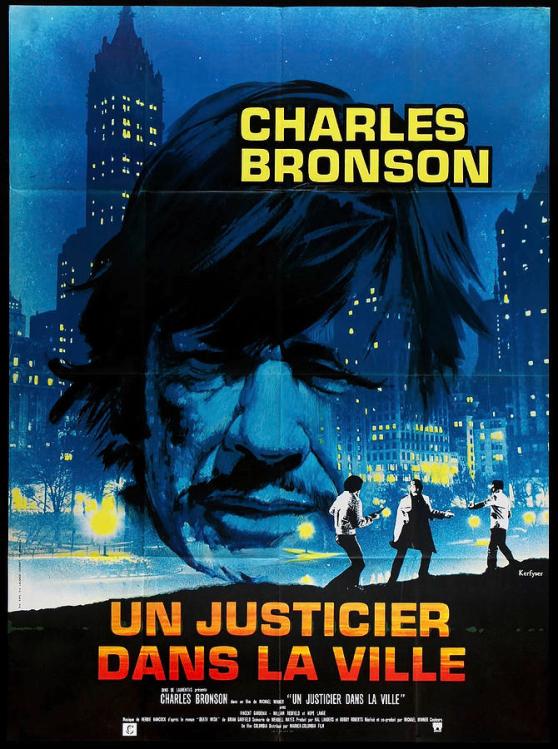
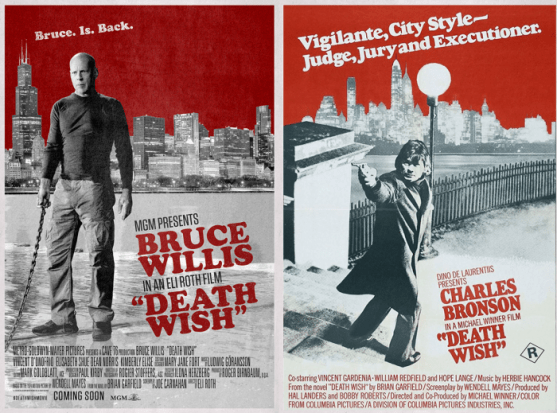
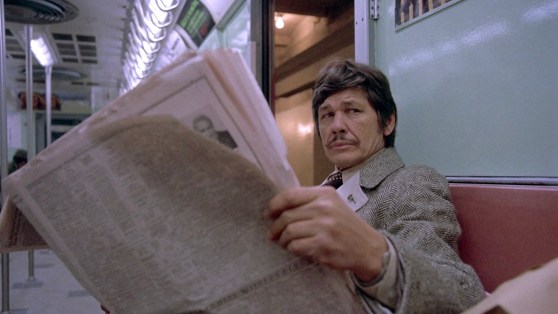
Death Wish (1974): New York City in 1974 must have felt like the end of the world. Based on the 1972 novel by Brian Garfield, Death Wish was the answer. In fact, in many theaters, the audience stood up and cheered as Paul Kersey got his bloody revenge for the crims visited upon him and his family.
The film we’re about to discuss went through many twists and turns as it made its way to the screen. Originally, it ended with the vigilante hero confronting the thugs who attacked his family and them killing him, police detective Ochoa discovering his weapon and deciding to follow in his footsteps. And get this — the first choice to play the lead was Jack Lemmon, with Henry Fonda as Ochoa and Sidney Lumet directing.
Finally, United Artists picked the gritty action veteran Michael Winner to direct. Several studios rejected the film due to its subject matter and the difficulty of casting the lead. Winner wanted Bronson, who he’d worked with in the past, but the actor’s agent hated the message of the film and Bronson felt that the book was about a weak man, someone he would not be playing on film.
Death Wish turned Bronson, who was 53 at the time of its release, into a major star known worldwide. It’s a movie made exactly for its time. Despite its lurid subject matter and dangerous acceptance of its hero’s actions, it’s still a great exploitation film that actually explores the why behind its hero’s actions instead of just setting him loose upon people.
Paul Kersey (Bronson) starts the movie in Hawaii with his wife Joanna. When they return home to the squalid streets of New York City, it’s only days before three thugs — including Jeff Goldblum! — invade their apartment, raping their daughter Carol and bearing Joanna so badly that she dies. Beyond Goldblum in this early role, keep an eye open for Christopher Guest and Olympia Dukakis as cops, as well as Sonia Manzano (Maria from Sesame Street, who was dating director Winner at the time and suggested that Herbie Hancock do the score) and Lawrence Hilton-Jacobs (Freddie “Boom Boom” Washington from TV’s Welcome Back, Kotter) in supporting roles.
As he recovers from his wife’s death, Paul is mugged. He fights back and chases off his attacker and finds new strength from the battle. An architect by trade, Paul heads to Tucson where he helps Ames Jainchill with his residential development project. After work one night, he goes to a gun club with Ames, where we learn how good of a shot Paul is. Turns out he was a conscientious objector and combat medic who was taught marksmanship by his father, but promised his mother he’d never pick up another gun after his dad was killed in a hunting accident. On the way back home, Paul discovers that Ames has given him a gun as a gift.
Now back home, Paul learns from his son-in-law that his daughter is still catatonic and would be better off in a mental hospital. That night, when walking, Paul is mugged again but he has the gun with him. He fights back and kills the mugger, but even that action causes him to grow physically sick. But soon, he’s prowling the mean streets and looking for a fight.
Before long, NYPD detective Lt. Frank Ochoa (Vincent Gardenia) begins investigating the vigilante killings and quickly narrows down his suspect list to Paul. As the manhunt gets closer and closer, Paul finally is caught after passing out from blood loss after a shootout. Instead of arresting him, the NYPD wants the case quietly solved, so they send him off to Chicago. The minute he arrives, he helps a woman who was almost mugged and stares at the criminals with a smile, his fingers in the shape of a gun.
There’s a story which may be apocryphal, but when Michael Winner told Bronson what this film would be about — a man who goes out and shoots muggers — Bronson replied, “I’d like to do that.” Winner said, “The film?” And Bronson replied, “No. Shoot muggers.”
After viewing the film, author Brian Garfield hated how the film advocated vigilantism, so he wrote a sequel called Death Sentence that was made into a movie in 2007 starring Kevin Bacon. No word on whether or not he hated that movie too, as it only keeps a little of the book.
Compared to the heights of mayhem that this series will descend to, this is a retrained meditation of a man facing an increasingly violent world. Stay tuned. Paul Kersey is just getting started.
Death Wish II (1982): Paul Kersey can’t catch a break. Seriously, in this sequel, he goes through the Trials of Job all over again. You think he went through some bad stuff in the first movie? Michael Winner is just getting started putting our vigilante hero through hell on earth.
Paul has taken his daughter Jordan and moved to Los Angeles, where he’s found love again with radio reporter Geri Nichols (Bronson’s wife, Jill Ireland). However, horror and pain is never far from Kersey, so one day at a fair, some punks steal his wallet. He chases one of them down named Jiver down and teaches him a lesson. The gang — Nirvana, Punkcut, Stomper and Cutter (Laurence Fishburne) — find his address in his wallet and pay a visit to his house. They rape his housekeeper Rosario, beat Paul into la la land and steal his daughter (this time played by Robin Sherwood from Tourist Trap). After raping her, she goes even deeper into her depression and jumps out a window, falling to her death and getting impaled like she’s Nikos Karamanlis or Niko Tanopoulos.
Of course, Paul doesn’t need help from the cops. He only needs one thing: to give in to the rage within, to become the vigilante once more. Det. Frank Ochoa is back to chase him one more time, as he’s the only one who can track him.
Soon, Paul is wiping out the gang one by one, his own personal safety and relationship with Geri be damned. This is the first time we discover that Kersey is able to do magical things like make fake IDs with just a Xerox machine and talk his way into anywhere and out of anything. By the end of this film, he’s gone from a man whose life has been destroyed to a walking angel of death willing to do whatever it takes to kill everyone that’s crossed him.
To be as authentic as possible, this movie was shot in the sleaziest parts of Los Angeles, such as the abandoned and crumbling Hollywood Hotel location. Many of the film’s extras were local color who were either hired to play a bit part or just walked over to the set, such as drug addicts, drag queens, Hare Krishnas and bikers. Even crazier, Bronson’s alcoholic brother was a frequent set visitor, constantly asking for money. Bronson wanted to be careful not to give him too much cash so that he wouldn’t be mugged, but that brother was soon found dead, stabbed in the ass.
My favorite part of this was the score, composed by Jimmy Page in his first post-Led Zeppelin musical appearance here by creating the film’s soundtrack. It’s almost surreal to hear his signature guitar tone over Bronson killing rapists.
Death Wish 3 (1985): Paul Kersey is back in New York City, despite being kicked out at the end of the first Death Wish. His Korean War buddy Charley has invited him to ask for help as his East New York apartment building has been under attack by a gang. Paul gets there just in time for his friend to die in his arms and the police arrest him for the murder. Inspector Richard Shriker recognizes him as the vigilante from back in the first movie, so he throws him into a holding cell with the leader of the gang, Manny Fraker (Gavan O’Herlihy, son of Halloween 3: Season of the Witchbad guy par excellence Dan O’Herlihy). After a fistfight ensues, the villain gets released before Paul. If you think that’s the end of all of this, you haven’t been reading our website this week.
Shriker offers our hero a deal: kill all the punks you want, but inform him of any activity so that he can get a big bust and make the news. With that, we’re off and to the races in what is not only the craziest of the Death Wish movies, but perhaps the most bonkers movie you’ll ever see.
Paul moves into his dead friend’s apartment and into a warzone. He makes friends with the other tenants, including World War II vet Bennett Cross (Martin Balsam from Psycho), a kindly old Jewish couple named Mr. and Mrs. Kaprov, a young Hispanic couple named Rodriguez and Maria (a pre-Star Trek: The Next Generation Marina Sirtis who in real life is a Greek girl born in London). There’s even a young kid who continually walks into the path of gunfire. Obviously, this is a neighborhood made for Paul Kersey. It is, as my wife pointed out, Sesame Street where people die horribly.
Paul uses a car as bait for the gang, killing two who break into it. And he saves Maria twice, but the third time, the gang takes her and she soon dies in the hospital, not knowing the most important rule of Death Wish: if you are a woman, stay away from Paul Kersey.
That’s when Paul orders a .475 caliber Wildey Magnum, a gun that has the same muzzle velocity as a .44 Magnum at 1000 yards. This big bore handgun, as Danny Vermin once said, “shoots through schools.” He traps The Giggler by putting his new camera where he knows the criminal can steal it, then he blows him into another dimension with his gigantic handcannon. “I can’t believe they got The Giggler, man,” laments the punk rock gang.
Why this gun? Well, it was Bronson’s personal handgun in real life. According to the gun’s inventor and the film’s technical consultant, Wildey Moore, sales for the Wildey Magnum increase whenever this film airs on TV.
You know who else didn’t get that memo about dating Paul? Public defender Kathryn Davis (Deborah Raffin, The Sentinel), who dates our hero long enough for him to joke that he likes opera and for mohawked punk gang leader Manny to shove the car she is waiting for Paul in toward oncoming traffic, where it explodes in a giant fireball.
Shriker decides that enough is enough and he puts Paul into protective custody. But after the gang blows up Bennett’s taxi garage, the old man tries to use the ancient Browning .30 machine gun that Charley brought back from the war. Sadly, the ancient detective from Psycho is no Roadblock from G.I. Joe and he’s quickly beaten into near death by the gang. Paul is allowed to visit him at the hospital and quickly makes a break to defend his new friends once and for all.
There’s another big machine gun, so Paul and Rodriguez use it to kill every single gangbanger they can before they run out of ammo, just as their neighbors finally come to arms to help them. What follows is what can only be described as sheer orgasmic violence, as hundreds of stunts all happen at the same time. Grenades are thrown from motorcycles. Handgun blasts send people flying through glass windows. Fire is everywhere. And there’s Paul Kersey, walking cooly and doing what he does best: killing punk rock criminals of all colors, races and creeds, including a very young Alex Winter.
Finally, Manny almost kills Paul, but he’s saved by Shriker, who is wounded by the punker but succeeds in shooting him. Kersey calls for an ambulance just as Manny rises, showing his bulletproof vest. In a moment that will live in my mind forever, Paul shoots him dead in the chest with an M72 LAW rocket and sends him flying through the side of the building as his girlfriend (Barbie Wilde, the female Cenobite from Hellraiser) screams in pain, their psychic link obviously broken like Cyclops and Jean Grey on the dark side of the moon. The gang realizes they’re beaten as the cops show up in force, with Kersey simply walking away.
Death Wish 3 is many things, but none of them are subtle. It’s a sledgehammer blow to your sensibilities, a veritable tour of depravity and sadism. It’s also entertaining as hell. Bronson hated Don Jakoby’s (Invaders from Mars, Lifeforce and a frequent collaborator of Dan O’Bannon, with whom he wrote an unproduced script called Pinocchio the Robot that would have featured Lee Marvin as Geppetto!) script and the fact that they turned Paul Kersey into Rambo, but he got $1.5 million for starring in this movie. Frequent rewrites led to Jakoby taking his name off the film and he’s listed as Michael Edmonds.
All told, 74 people die in Death Wish 3, as detailed in this completely amazing article. They are stabbed, shot, run over, set on fire and more. They fall from tall buildings. They are thrown from tall buildings. And there’s a gang that combines all races and creeds — except old people — including white supremacists, punk rockers and lovers of reggae. It is the rainbow coalition of death. There was also a video game that lives up to the violence on screen.
The film also includes a rape scene with the victim played by Sandy Grizzle, who was the girlfriend of director Michael Winner. After they broke up, she reported to London tabloids that this was part of him treating her as a sex slave. Winner sued the News of the World tabloid and won.
Before you scoff at this notion, keep in mind that Winner spent six days filming the rape scene in Death Wish 2, a movie that took from May to July of 1981 to shoot. Also, following the allegations made against Harvey Weinstein in 2017, Winner was accused by three women of demanding they expose their breasts to him. Seeing as how he’s not around to refute the charges, let’s just move on.
Beyond these rumors, Winner was the kind of special individual that almost died from eating dinner — twice. He got the bacterial infection vibrio vulnificus from eating an oyster in Barbados, nearly losing his leg and his life. Then, years later, he’d almost die from food poisoning after eating steak tartare four days in a row. He died in 2013 at the age of 77.
Let’s ignore the gossip on Michael Winner and concentrate on how awesome Death Wish 3 is. Because wow, they literally can’t, don’t — and some folks would say probably shouldn’t — make them like this anymore.
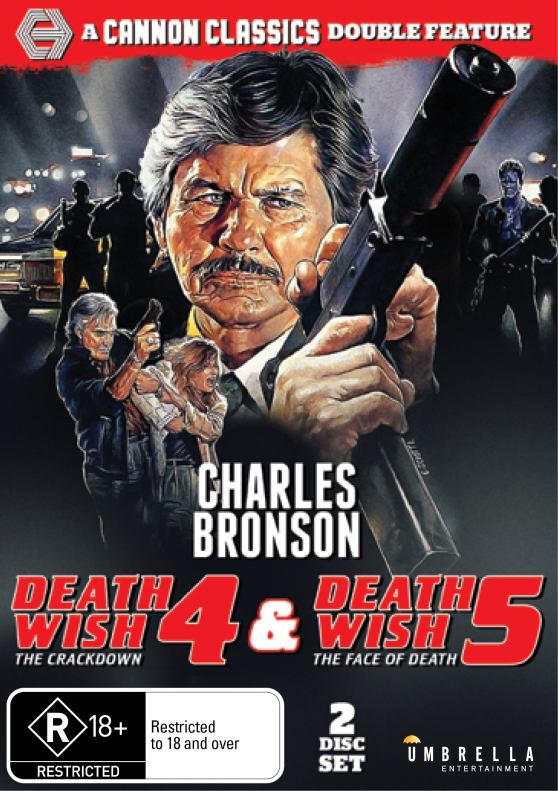
Death Wish 4: The Crackdown (1987): Where do you go after the utter lunacy that is Death Wish 3? Well, you replace Michael Winner with J. Lee Thompson, who was the director for The Guns of Navarone, the original Cape Fear, the slashtastic Happy Birthday to Me and The Reincarnation of Peter Proud amongst many other films. He’d already worked with Bronson on 10 to Midnight, Murphy’s Law and The Evil That Men Do and would also direct Bronson in Messenger of Death and Kinjite: Forbidden Subjects after this movie wrapped. In fact, counting St. Ives, The White Buffalo and Caboblanco, they’d work on seven movies together.
Paul Kersey hasn’t learned anything from the last three movies. He has a new girlfriend, Karen Sheldon (Kay Lenz, The Initiation of Sarah, House) with a teenage daughter named Erica (Dana Barron, the original Audrey from National Lampoon’s Vacation) that you shouldn’t get to know all that well. That’s because — surprise! — she overdoses thanks to her boyfriend and her getting into crack cocaine and doing it an arcade. If you’re shocked that a Death Wish movie would prey upon the worst fears of America’s middle class, then you may have watched the last three films too.
Paul loved that girl like his own daughter, probably because she wanted to be an architect like him and also possibly because he hasn’t yet learned that the moment that he says something like that, tragedy is right around the corner. Honestly, the main message of the Death Wish films is that God hates Paul Kersey, will not allow him to die and will wait until he finds happiness again before visiting upon him great suffering, only for the cycle to repeat.
The night she died, Paul saw Erica smoke a joint with her boyfriend and was already suspecting the young dude, so he follows him back to the arcade the next night. That boyfriend confronts Jojo and Jesse (Tim Russ, Commander Tuvok himself!), two of the dealers who sold them the crack cocaine, and threatens to go to the police. This being a Death Wish film, they kill him pretty much in public. That murder unlocks the ability for Paul to start killing again, so he shoots Jojo and launches his body on to the top of bumper cars, where he’s electrocuted. No one dies in a Death Wish movie without a flourish.
Meanwhile, Paul gets a call from tabloid publisher Nathan White (John P. Ryan from It’s Alive), who knows that he’s the vigilante. His daughter had also become addicted to drugs and died, so he knows what Paul is going through. The storyline becomes pretty much like The Punisher’s first mini-series where The Trust paid for him to wipe out crime, as White funds Paul’s one man war against drugs while his girlfriend starts writing an expose on the two rival gangs in town.
To cut down the budget in this movie, when Paul and Nathan meet in the movie theater, that’s Cannon’s screening room.
One of those gangs is led by Ed Zacharias (Perry Lopez, Creature from the Black Lagoon) and the other is commanded by Jack and Tony Romero. Two LAPD officers, Sid Reiner and Phil Nozaki are also on the case, trying to figure out who killed the drug dealers at the arcade.
This is the first Death Wish film where Paul feels more like an urban James Bond than a fed up war vet. Trust me, he gets even more gadgets in the next one. Here, he uses his skills as a master of disguise — he has none — to dress as a waiter and serve a party at Zacharias’ house. The birthday cake is…man, let me just show you the birthday cake.
After witnessing the drug lord kill one of his guys who stole some cocaine, he’s ordered to help carry out the body. Soon, he’s killing all of that drug dealer’s men, including three guys in an Italian restaurant with a bomb shaped like a wine bottle. Look for a really young Danny Trejo in this scene!
After all that mayhem, Paul also starts wiping out the Romero gang one by one, including breaking onto a drug front and blowing it up with a bomb. Yet Nozaki ends up being on the take for Zacharias and tries to kill our hero and you know how well that works out. Now Paul looks like a cop killer, too.
In the stuntman piece de resistance of this one, the two drug lords are lured into an oil field shootout where Paul kills Zacharius with a high-powered rifle, instigating the fireworks. Nathan comes out to congratulate Paul, but sets him up with a car bomb. It turns out that the Nathan that Paul has met is a third drug lord (!) who set him up to take out all the competition. Then, two fake cops arrest Paul and take him downtown, but they’re really just trying to kill our hero. Again, you know how well that works.
The film ends with Detective Reiner searching for Paul out of revenge for his partner’s murder, the third drug lord kidnapping Paul’s woman and everything coming together in a parking lot and a roller rink where Paul uses an M16 with an equipped M203 grenade launcher to unleash holy hell.
Only the drug lord survives, holding Karen. She tried to escape and gets shot numerous times with a MAC 10 submachine gun. He tries to kill Paul but he’s out of bullets. Paul may be, but he still has a grenade, which he uses to blow the villain up real good.
The film closes with Reiner coming and ordering Paul to surrender and threatening to kill him if he walks away. “Do whatever you have to,” says the old gunfighter as he walks into the sunset.
For all the mayhem and madness throughout this film — keep in mind our hero just used an explosive device to decimate another bad guy just seconds before — this is a poignant ending. But of course, Paul — whether he wanted to use the new last name Kimble he came up with in this film or Kersey — would be back one more time.
Bronson made $4 million for this movie and in my opinion, he should have asked for more.
Death Wish 5: The Face of Death (1994): You think Paul Kersey has learned his lesson about love and loss? No way, pal. Now back in New York City in the witness protection program and going by Paul Stewart, he’s keeping a low profile by going to fashion shows with his super hot girlfriend (Lesley-Anne Down) who also has a young daughter named Chelsea who is surely doomed. Come on, everyone. We’ve made it this far. We may as well watch Death Wish 5: The Face of Death.
It turns out that Olivia has been paying protection money to her evil mobster ex-husband Tommy O’Shea, who is Michael Parks! Paul confronts the guy at the fashion show, but one of the villain’s goons shows him his revolver. He tries to do the right thing and brings in a District Attorney.
Paul again proves he has no short or long-term memory by proposing to Olivia, who doesn’t understand what we all have accepted: God hates Paul Kersey like He has never hated another of His creations. Excusing herself to the powder room to piddle in absolute joy after being asked to be the life partner of a man who has personally murdered thousands of scumwads, one of Tommy’s men named Flakes (Robert Joy, Lizard from The Hills Have Eyesand, as my wife would exclaim loudly, Jim from Desperately Seeking Susan) shoves her face so hard into a mirror that she’s disfigured for life. Even surgery won’t fix her face. Such is the life of a woman who gets involved with Paul Kersey.
After meeting two cops, Mickey King (Windom Earle from Twin Peaks!) and Janice Omori, the female cop dies in the very next scene. She must have gotten a little too close to Paul. In the hospital, King tells Kersey not to go back to his old ways. King tells him that he’s been on this case for 16 years. “16 years? That’s a long time to be failing,” replies Kersey.
Even after getting out of the hospital, Olivia still has to deal with the life she’s chosen as more henchmen come after Paul, shooting her in the back and finally ending her suffering. Well, it turns out that Tommy runs all of the police and has taken his daughter back, so Paul goes full on 007 by killing one goon with poisoned canoli and another with a remote-controlled soccer ball! At this point, this film has gone from boring to right where I want it to be.
What follows is exactly what we want to see: a slasher movie with the righteous Paul going old man nutzoid on every crook there is left, shooting them into sewing machines, slashing their faces with broken bottles and shotgun blasting them into acid baths. At the end, he walks away with his dead fiancee’s daughter, yelling to the cop who couldn’t keep up, “Hey Lieutenant, if you need any help, give me a call.”
After the last three movies coming from Cannon Films, which was in Chapter 11 bankruptcy and under investigation by the U.S. Securities and Exchange Commission, this one comes from Menahem Golan’s new 21st Century Film Corporation. They were having trouble making money and figured that a new Death Wish was going to be a sure-fire hit. Incredibly, for reasons no one is sure about, Bronson and Golan weren’t speaking during the filming, so they’d only communicate through Allan A. Goldstein.
Sadly, the film failed at the box office (but it did fine on home video). Golan planned to continue the film series without Bronson (!) and was planing Death Wish 6: The New Vigilante before 21st Century Film Corporation went bankrupt. This would be Bronson’s last theatrical film, as he was 71 years old as this was being filmed.
Death Wish (2018): Written by Joe Carnahan (writer and director of Smokin’ Aces and the movie version of The A-Team, as well as a member of the Creative Council of Represent.Us, a nonpartisan anti-corruption organization) and directed by Eli Roth (Cabin Fever, The Green Inferno), Death Wish was a movie delayed several times by the rampant mass shootings in our country. It arrives at a time when the debate over guns has reached a fever pitch. That said, one viewing of The Killing of America, made way back in 1982, shows that that argument has been going on almost the entire way back to the original Death Wish series.
Do we need another Death Wish? After all, there were five different movies already. Is there something new that the film can speak to? This one attempts to, with numerous blips of info from various media sources as diverse as Chicago DJ Mancow, memes and the site mediatakeout to hip hop’s Sway in the Morning.
Paul Kersey (Willis) and his wife (Elisabeth Shue) are getting ready to say goodbye to their daughter Jordan before she goes to college. After lunch at a restaurant, a valet looks up their home address on their car after hearing they’ll all be out that night. However, Paul gets called into his job as a trauma surgeon — instead of an architect — leaving his family alone at home. This being Death Wish, I’m certain we can all guess what happens next.
Police Detective Kevin Raines (Dean Norris, Starship Troopers) and Detective Leonore Jackson are the cops in charge of the case, but they aren’t getting anywhere. Jordan remains in a coma while Paul grieves for his dead wife, including trying to stop a mugging which ends up with him being beaten. He debates buying a gun but realizes he’ll have to register it and be videotaped (the film wavers here between gun ownership being too easy and providing the right info).
A patient drops a Glock 17 while Paul tries to save his life and thanks to online videos, Paul learns how to use it. Soon, he’s stopping carjackings and killing drug dealers and has been dubbed the Grim Reaper by the media.
When Paul recognizes his stolen watch on a man’s wrist, he uses that man’s phone to get closer to the men who destroyed his family. One by one, he eliminates them before realizing that his actions have brought his family — daughter Jordan, who has emerged from her coma, and brother Frank (Vincent D’Onofrio) — into the killer’s sights.
Paul then uses his legally purchased weapons to defend his home, the police come after its all over and our hero easily explains that he’s not the Grim Reaper. Free of consequence, he’s able to take his daughter to college in New York City. There, he sees a mugging and stares right at the criminals, making the same finger pistol mannerism that Bronson used at the end of the first Death Wish. Interestingly enough, this is an inversion of the original film’s ending, where Kersey moves from New York City to Chicago.
Seeing as how director Eli Roth loves exploitation films, there are plenty of references, such as Paul telling a criminal that he’s torturing that he’s about. to put them into “the most pain a human can endure before going into cardiac arrest,” a fact discovered by scientists of Unit 731 and chronicled by the movie Men Behind the Sun. That scene also uses the Sorcery song “Sacrifice,” which comes from the film Stunt Rock (Sorcery also played the band Headmistress in Rocktober Blood). And a trivia note just for my wife: the last movie that Elisabeth Shue and Vincent D’Onofrio appeared in together was Adventures in Babysitting, which also takes place in Chicago.
This isn’t a bad film. But there’s no real reason for it to exist as it says nothing new other than being a serviceable action film. It’s been criticized as alt right and racist, but I think any Death Wish film is going to be branded the same way. I thought it was pretty even in its depiction and had plenty of different voices throughout.
Want to know more about Death Wish?
Death Kiss: This 2018 film features Bronson clone Robert Bronzi.
A breakdown of cover versions of Death Wish: From two Turkish remakes to an adult version, there have been plenty of Death Wish ripoffs.
Cellat: The Turkish Death Wish somehow gets parts of the second movie into their story years before it was filmed.
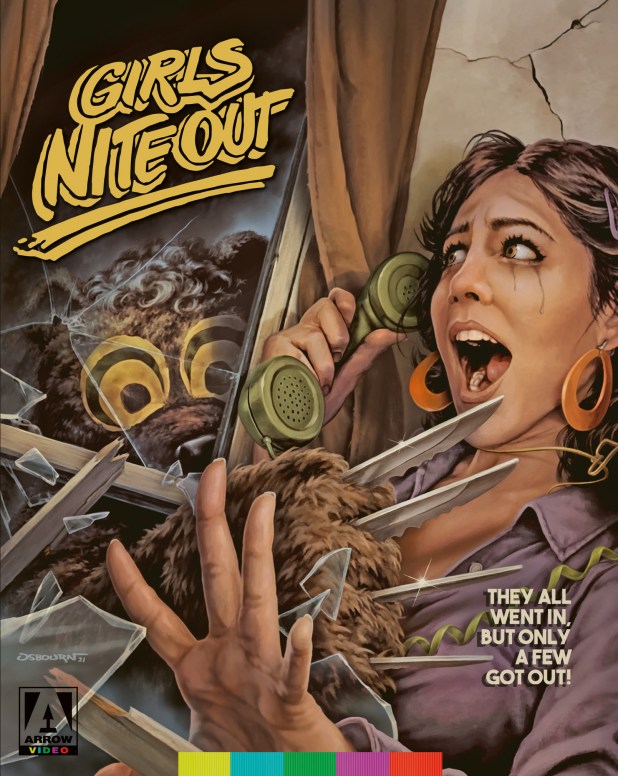
EDITOR’S NOTE: This originally was on the site on October 1, 2020 as part of one of the Slasher Months I do every year. Now, you can get the Arrow Video release of this movie. It comes complete with a brand new 2K restoration from 35mm vault elements; new audio commentary with genre film critic/author Justin Kerswell and film historian/author Amanda Reyes; new interviews with Julia Montgomery, Laura Summer, Lois Robbins, Paul Christie, Lauren-Marie Taylor and John Didrichsen, as well as an archival interview with Julia Montgomery; The Scaremaker alternate title card, original trailers, a reversible sleeve featuring original artwork and newly-commissioned artwork by Justin Osbourn and an illustrated collector’s booklet featuring new writing on the film by Michael Gingold. You can buy it from MVD.
First off, the fact that one of the posters for this film rips off Night School‘s art makes me love it before I’ve even seen one second of footage. Second, when I did watch it, it so shamelessly takes from other slashers that you’d very nearly be convinced that it was made in Italy.
Originally released as The Scaremaker, this was shot over the weekend at New Jersey’s Upsala College. That means that most of the scenes were shot in two takes or less.
After Dickie Cavanaugh kills his girlfriend in a jealous rage, gets committed and then hangs himself, all hell breaks loose. The men trying to bury him are killed and the school’s all-night scavenger hunt could not come at a worse time. Yes, I had no idea that when your college basketball team wins the big game everyone has to engage in just such a contest.
There’s a killer on the loose wearing the school’s bear costume, using serrated knives as if they were bear claws. There are lots of POV shots as if you’re being attacked by the bear and I always enjoy being the participant in a bear battle.
For a movie made on a shoestring, they got some big names. Hal Holbrook is on hand! Julia Montgomery from Revenge of the Nerds and Stewardess School (yes, she’s a star in my world)! Lauren-Marie Taylor (Vickie from the second Friday the 13th)! Page Mosely (who is something of a scream queen, with appearances in Open House, Edge of the Axe and this movie)! And most importantly Rutanya Alda, who makes this film all hers in the last few minutes, despite the fact that this movie rips off Mrs. Vorhees’ motivation, as all lower-level slashers must. I love Rutanya, who claims that she still hasn’t been paid her $5,000 fee for this movie. She should get way more than that, as the close is literally made so much better because of her commitment to more than one role.
If you’ve seen the trailers or poster for this, you may wonder, “Where are the girls in the artwork? Who is this girl in the trailer?” You are right to question these things, as the sales material was made reverse-Corman, in that it was created years after the film was complete.
Admission is still only $10 per person each night (children 12 and under free with adult) and overnight camping is available (breakfast included) for an additional $10 per person.
You can buy tickets at the show or use these links:
There is also a limited edition shirt available at the event.
Midnight is the movie Rob Zombie keeps trying to make. It’s seriously demented and filled with so many truly unlikeable characters. Most of them make you want to take a shower just watching them.
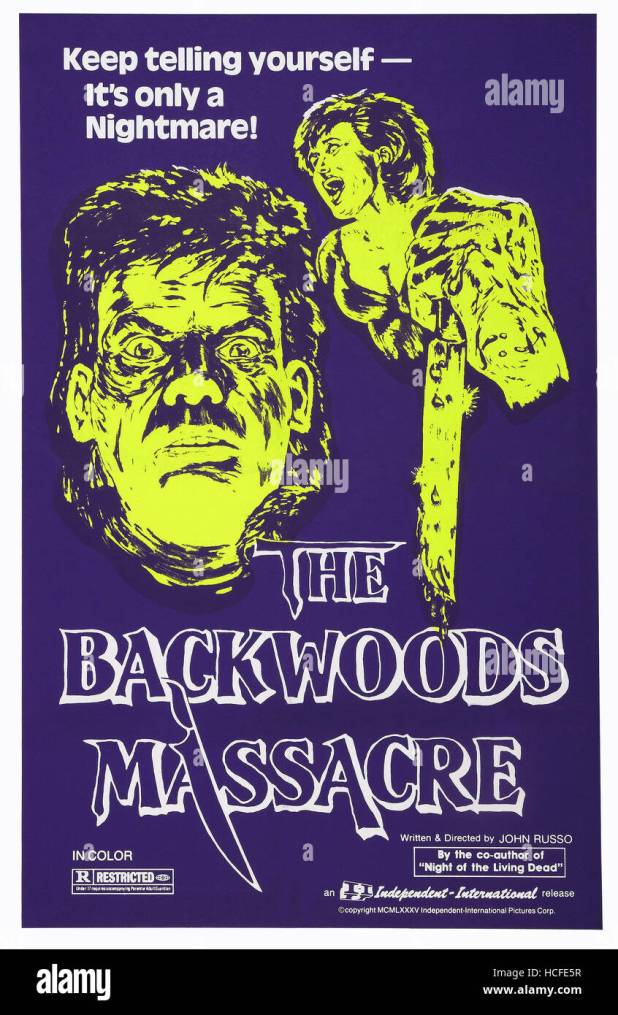
Written and directed by John Russo, one of the creators of Night of the Living Dead, Midnight was shot on location outside Pittsburgh, Pennsylvania, and features special effects by Tom Savini. While never prosecuted, the film was seized and confiscated in the UK as a section 3 video nasty.
How can you not love a movie that starts with a girl caught in an animal trap getting killed by a bunch of children who all pray to Satan while they murder her? And hey look — one of the killers is John Amplas, Martin in the flesh.
Midnight is really about Nancy Johnson, who runs away from home after her police officer stepfather Bert (Lawrence Tierney, berserk as always) tries to assault her. She gets picked up by two guys, Hank and Tom, who also grab a Baptist preacher and his daughter.
As they stop to see the preacher’s wife’s grave, the older man is soon killed. To top that off, the killer delivers the body to his daughter’s door and then kills her with the same machete.
After racists in the town refuse to serve Hank, the three heroes steal groceries before they’re stopped by some even more racist cops. The two men are quickly gunned down and Nancy goes on the run. Of course, the house she ends up in just so happens to be the one where her friends are being cut into pieces.
The movie then descends into even more depravity, like locking our heroine in a cage to witness a Black Mass, her insane stepfather tracking her down and finally, our heroine discovering herself in time to wipe everyone out with extreme malice.
The original ending had the crazed family — who had already killed the cops and stolen their uniforms — getting away with the murders. However, the distributors demanded that the film have a more uplifting ending, which is why the one that is in here happens so quickly. It works for me — it’s really shocking.
While the film was released as Backwoods Massacre, I’d compare it to more of a Western Pennsylvania Texas Chainsaw Massacre in tone.
UPDATE: I’m beyond happy that Severin has released this on blu ray and even used a quote from our site on the back cover!
How much do I love this movie? This poster is in our movie room.
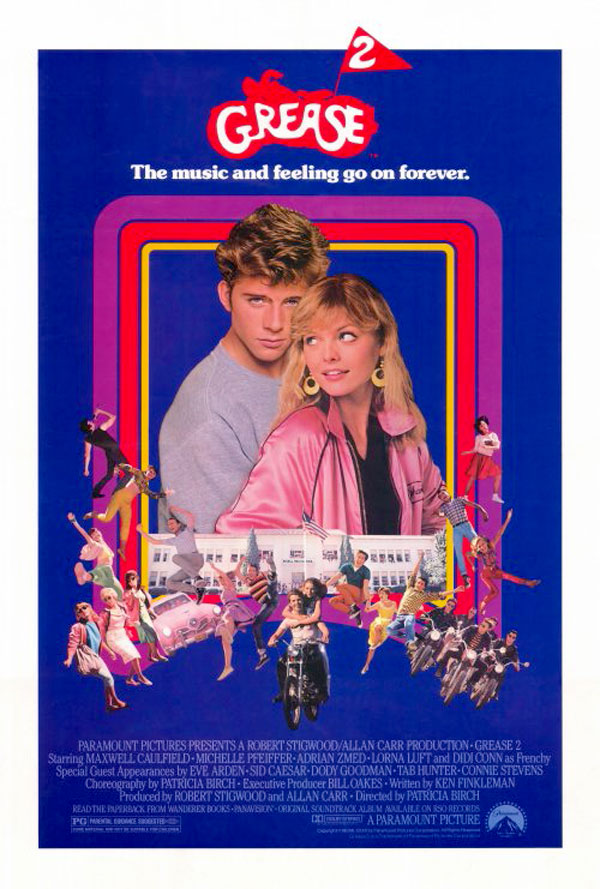
Michelle Pfeiffer made her debut in this movie and still isn’t all that happy about it, saying ” to star in the film to her age at the time, saying, “I hated that film with a vengeance and could not believe how bad it was. At the time I was young and didn’t know any better.”
The total budget for the production was $11.2 million, almost double the budget of the original, but hardly anyone* was coming back other than producer Allan Carr. He was getting $5 million for the sequel and it was three years since Grease was a success. Composers Jim Jacobs and Warren Casey, director Randal Kleiser and actors John Travolta and Olivia Newton-John weren’t coming back. So Carr got Patricia Birch — who choreographed the first movie — to direct and choreograph this. It’s the only theatrical movie she’d ever direct, but she did make Cyndi Lauper’s videos for “Money Changes Everything” and “True Colors.” Sadly for her, she’d also been pulled into another movie that co-producer Robert Stigwood made, Sgt. Pepper’s Lonely Hearts Club Band. I hope she got paid enough.
You know who else was in a bad spot? Ken Finkleman. He was writing this movie and Airplane 2 while also directing that movie, all at the same time. Two hits whose original creative teams refused to come back for the bigger budgeted sequel. This, as you may guess, is usually a recipe for disaster. Speaking of projects after this with 80s singers, he’d go on to write the Madonna vehicle Who’s That Girl.
There was an idea to get Travolta and Newton-John to be a married couple that ran a gas station. Thankfully, they refused and I could keep the morbid fantasy in my head that they both drowned in Grease and the entire movie is the fantasy they have while the oxygen leaves their brains. There was also the idea to base the sequel around Jeff Conaway and Stockard Channing, who would be playing a 37-year-old — and still fabulous — teenager. They also turned it down.
While Pfeiffer was an unknown, Maxwell Caulfield was already a Broadway star. And also unlike her, his career paid the price for this movie bombing. He told MovieTome, “Before Grease 2 came out I was being hailed as the next Richard Gere or John Travolta. But when Grease 2 flopped nobody would touch me. It felt like a bucket of cold water had been thrown in my face. It took me 10 years to get over Grease 2.”
It’s 1961, school at Rydell is n session and The Pink Ladies — Sharon Cooper (Maureen Teefy, who was also Lucy Lane in another bomb we need to get to, Supergirl), Paulette Rebchuck (Lorna Luft, half-sister of Liza and one of the girls in Where the Boys Are ’84), Rhonda Ritter (Alison Price, who is also in the aforementioned Airplane 2), Dolores Rebchuck (Pamela Segall, the voice of Bobby Hill) and their leader Stephanie Zinone (Pfeiffer) — and The T-Birds — Goose McKenzie (Christopher McDonald, who most people would say is Shooter McGavin but he’s also in The Black Room), Louis DiMucci (Peter Frechette, The Hills Have Eyes Part II), Davey Jaworski (Leif Green, Joysticks) and their leader Johnny Nogerelli (Adrian Zmed from TJ Hooker!) — are battling over the fact that Stephanie just dumped Johnny.
Frenchy** (Didi Cohn) has come back to school to get her diploma and gives Michael Carrington (Caulfield) a quick tour of the school. He’s an English exchange student who coincidentally happens to be a cousin of Sandy because the UK and Australia are the same thing. He falls for Stephanie, who ends up kissing him accidentally at a bowling alley, but she’ll only date a motorcycle-riding man. Michael is smart enough to do the T-Birds homework, earning the money and the cred to get a bike of his own and becoming the mysterious Cool Rider who saves them from the Cycle Lords — formerly the Scorpions — and gets Stephanie all hot and bothered.
So yeah — mistaken identity, dudes trying to date rape their ladies by pretending a nuclear war is happening, Tab Hunter as a teacher, Olivia Newton-John’s first husband Matt Lattanzi as one of the Prep-Tones (they got married after being meeting on the set of Xanadu), Katey Segal’s twin sisters Jean and Liz, Andy Tennant (whose career somehow survived being in this, Sgt. Pepper’s and 1941), Connie Stevens as Miss Yvette Mason, Mrs. Gretzky Janet Jones as a girl who missed her last two periods and Ninja 3 and Breakin’ star Lucinda Dickie as a female greaser.
There were going to be four Grease movies*** and a TV series and everything was going to be great. Of course, it didn’t work out that way.
Except in Kannada (South India), where the script was turned into the 1987 blockbuster Premaloka.
*That’s not exactly true. Frenchy (Didi Conn), Principal McGee (Eve Arden), Coach Calhoun (Sid Caesar), Blanche Hodel (Dody Goodman), Eugene Felsnick (Eddie Deezen), Craterface (Dennis C. Stewart) and Mr. Spears (Dick Patterson) all came back for another helping.
**Frenchy disappears halfway through the movie, never to be seen again.
***The rumors that Disney made the third script as High School Musical are just that. Rumors.
The story of X may have been three years early, but the video revolution — driven, as all technology is, by sex — changed the world of pornography, moving it from the fleshpots of 42nd Street and dirty book stores into suburban living rooms. In 1982, there was still the glimmer of hope that the Golden Age of Porn — that starts with Bill Osco’s Mona and ends sometime around 1984 or so with The Dark Brothers’ 1984 mind-twisting New Wave Hookers — would find new life, better budgets and a more appreciative audience.
Yet videotape would open up adult for everyone and by the 90s, few films had a storyline, instead given to gonzo explorations of “can you top this” madness with few exceptions, such as the output of John Stagliano (who may have popularized gonzo, but could also create a coherent and interesting narrative film like Buda), the glossy Michael Ninn glamour movies, Andrew Blake’s NightTrips, Phillip Mond’s Zazel, John Leslie’s Chameleons and Curse of the Cat Woman, the aforementioned Dark Brothers and ridiculous parodies of existing films.
Yet in 1982, a movie could be made that transcends its adult origins and uses them to make you as the viewer complicit in the action on screen.
Stephen Sayadian only made seven adult films (this film, as well as two sequels to Nightdreams, two Untamed Cowgirls of the Wild West and two Party Doll-a-Go-Go films which take the staccato editing and weird dialogue to its absurd limit on sets that had to cost absolutely nothing yet with a cast of all-stars such as Raven, Madison Stone, Patricia Kennedy, Bionca, Jeanna Fine, Nikki Wilde and Tianna Collins and yes, I wrote that from memory) as well as the somewhat spiritual sequel — or at least next steo — to this movie, the mainstream — yet still delightfully insane — Dr. Caligari. A veteran of advertising and design — he worked on the posters for The Fog, The Funhouse, Ms. 45 and Dressed To Kill which took inspiration from the iconic The Graduate poser — Sayadian used the alter ego of Rinse Dream to make his films, much as Gregory Dark would adopt a new name for his porn changing efforts.
The script — yes, adult movies can have a script — was written by Herbert W. Day, who is really Pittsburgh native Jerry Stahl, the son of a coal miner who later became Pennsylvania attorney general and a federal judge. He found that he had a talent for writing short stories, was the humor editor for Hustler and also discovered a love of hardcore drugs. To fuel that, he started writing for TV shows like Moonlighting, Twin Peaks, Thirtysomething, Northern Exposure and, perhaps most intriguingly, ALF. He’s also written ten episodes of CSI which have been the most aberrant examples of that show to middle America, which is wild as he introduced viewers of the grandparent network CBS to furries, infantilism, a measured story about transgendered people and introduced Lady Heather, the potential bad girl love interest of lead Gil Grissom, who was played by Return of the Living Dead III star Melinda Clarke. His autobiographical novel Permanent Midnight was a success and made into a movie starring Ben Stiller.
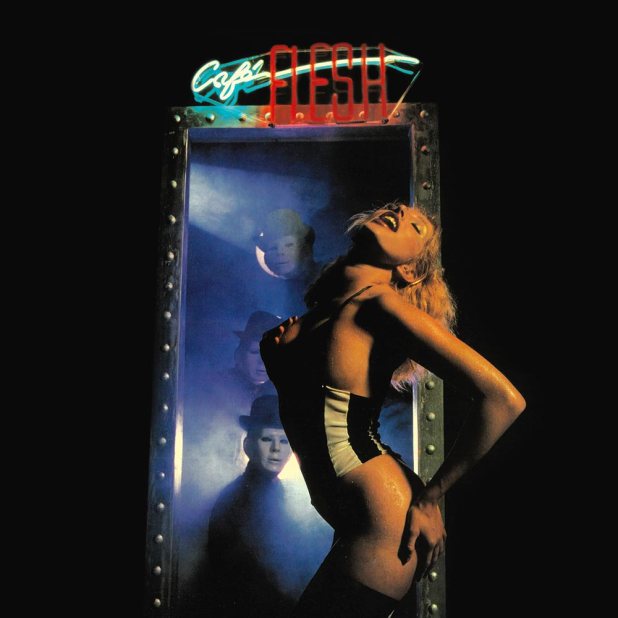
Years after a nuclear war, nearly every survivor is a Negative, often shambling zombie-like humans who become vomitous if they attempt to copulate. To attempt any hope at remembering what human contact was like, they come to Café Flesh, a place where Positives make love while they watch, often engaging in surrealist scenes that defy the ability of the viewer to become titillated.
That’s the point. Where the goal of nearly all pornography is to get the viewer off, Cafe Flésh casts you as a Negative, stuck at home with no one next to you, as far from true warmth and, well, flesh as the puking crowd — Richard Beltzer is one of them — gathered to watch and watch and watch.
It also feels like the vaudevillian stage of the men’s club gone to Hell, as Max Melodramatic (Andy Nichols, who also played the doctor in Nightdreams) introduces live sex acts with people dressed as rats or milkmen surrounded by men dressed as demonic babies. Even the typical jerk-off scenario of a female oil tycoon lies with a gigantic pencil while her secretary repeatedly intones, “Do you want me to type a memo?”
Is the film making light of the fact that male performers had often become interchangeable, their faces are obscured for most of the movie?
Angel (Marie Sharp) came from Wyoming, where they found that she was Positive and she’s been forced into the slavery of the club, performing with each man that they bring on stage. However, one of the audience members, Lana (Michele Bauer, using her Pia Snow name here before she would go on to appear in so many horror movies like Demonwarp, Evil Toons, Sorority Babes in the Slimeball Bowl-O-Ramaand Jess Franco’s Lust for Frankenstein and Mari-Cookie and the Killer Tarantula In Eigtht Legs to Love You) has been keeping have Positive diagnosis a secret as she doesn’t want to hurt her boyfriend Nick. Yet as she watches the famous Positive Johnny Rico (Kevin James, who speaking of nuclear war is also in the porn parody Dr. Strange Sex) — someone liked Robert Heinlein — go through his motions with Angel, her frustrations take hold and she takes the stage.
Screen Slate has an amazing article that details the music of this movie, which Sayadian describes as “…like an Elmer Bernstein score from the ’50s, only played with the most modern synthesizers available at the time. I thought: old vibe, new technology.” There’s a lot to learn about composer Mitchell Froom — and the rest of the film’s creators — at that site.
By the way — Sayadian didn’t direct Rockwell’s “Someone’s Watching Me” video. That would be Francis Delia, who directed Nightdreams as F.X. Pope. Seeing as how Stahl and Sayadian wrote that movie, I can see how some may make the mistake. Delia was a producer on this film as well as the director of photography.
Café Flesh isn’t for someone who is looking to get off. I can’t even imagine those that were confronted by it in adult theaters, as it punches you in the face with its AIDS allegory while daring you to find a single erotic thing in it. Strangely enough, I’d always heard that an R-rated edit was made so that mainstream audiences would see it at midnight shows, but Sayadian stated — in the above linked Screen Slate piece — that the movie was an “R-rated movie, funded by X-rated people” and that he was forced to add the sex scenes by the money men behind the budget.
He said, “I got financing from three guys — two were hardcore producers and one was a Harvard business grad who somehow got lost in the porno world.” After adding in the adult scenes, he told Froom, “I want you to extend some of these pieces because we may have to put porn in there. And all I can say is, I want the music to be as disturbing as possible. I don’t want it to be hot or sexy or anything like that.”
That said, the moans of joy that came from this movie show up in a place that many have heard them, White Zombie’s Blade Runner quoting — “Yeah I am the nexus one I want more life” — “More Human than Human.”






 B&S About Movies
You must be logged in to post a comment.