Thanks to the British Film Institute, there’s a list of films that played Scala. To celebrate the release of Severin’s new documentary, I’ll share a few of these movies every day. You can see the whole list on Letterboxd.
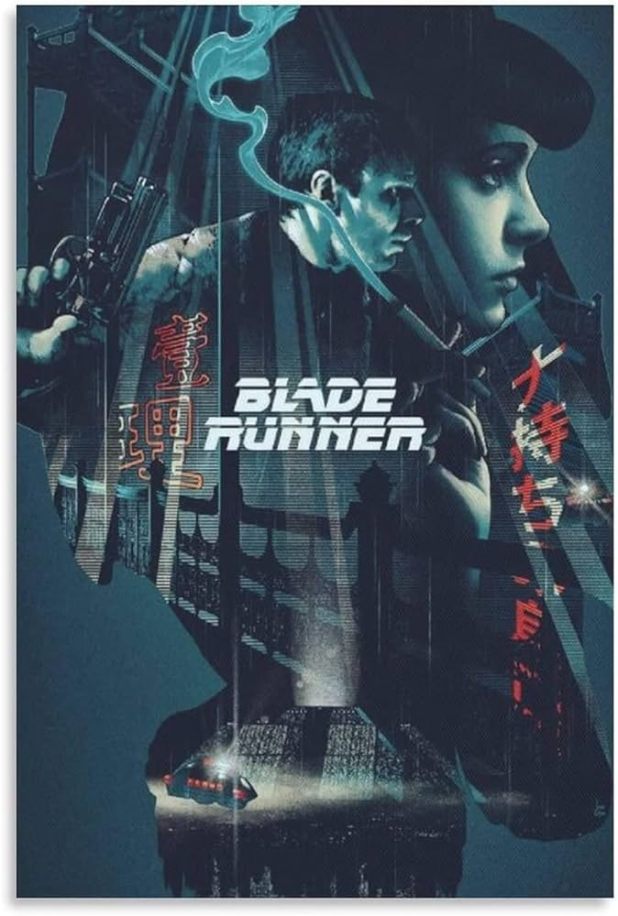
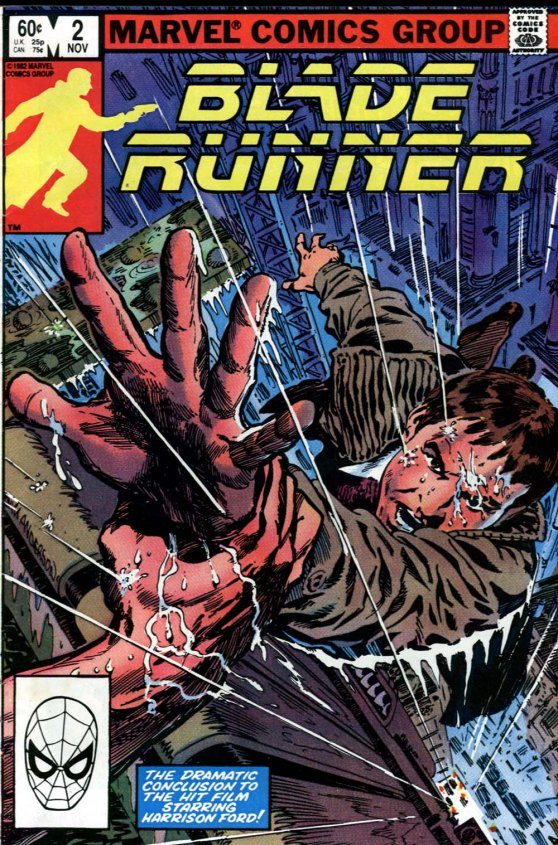
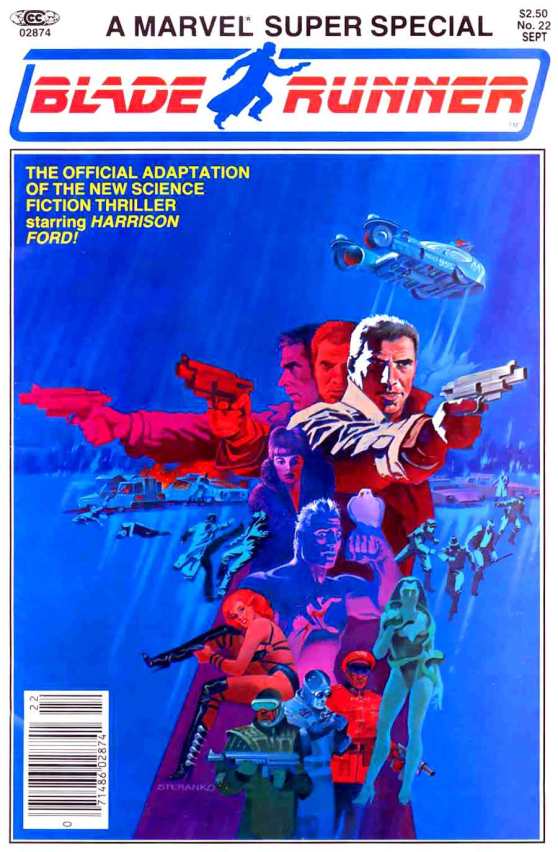
I was ten years old when Blade Runner came out and it played theaters so briefly in my small hometown that I never got the chance to see it. Also, ten year olds didn’t get to see R rated films in 1982. So my first experience was reading the Archie Goodwin/Al Williamson Marvel Comics adaptation, a book of which I literally read until the cover came off.
I must have read this issue a thousand times.
Steranko cover!
I also asked my uncle, a librarian, for a copy of Philip K. DIck’s Do Androids Dream of Electronic Sheep? Perhaps a ten-year-old was not yet ready for the complexity of Philip K. Dick, but he never dumbed it down for me.
The first time I finally saw Blade Runner on HBO it was after a year of reading about the film in Starlog, obsessing over the comic book and the source novel, so my experience was so alien to anyone else that saw it in theaters in 1982.
For a movie seen as a failure — it made $41.6 million on a $30 million budget, so I have no idea how that is failure — this is a movie that literally changed the world and has grown to become our world.
And yet, this is a movie that has seven different versions thanks to all of the changes from studio executives. Even the voiceover, which was added by them, has star Harrison Ford reading the words as if he has no interest, perhaps hoping if they were bad they’d never be used.
The blade runner is former police officer Rick Deckard (Ford), who is charged by Gaff (Edward James Olmos) and Bryant (M. Emmet Walsh) with doing what he does best: hunting down robotic humanoids and retiring them. Now, he must stop four Nexus-6 replicants: Leon Kowalski (Brion James), Zhora Salome (Joanna Cassidy), Pris (Daryl Hannah) and Roy Batty (Rutger Hauer).
Yet within this film noir story set in a neon-filled future straight out of a Moebius drawing, the real tale is about whether Rick and his lover Rachael (Sean Young) are humans or machines themselves. In fact, of all the characters, Batty is the most human of them all, a character of both deep menace and surprising tender thoughts.
Blade Runner arises from pain. Ridley Scott had left Dune and lost his brother in short order and wanted something to take his mind off life. Dick had no idea it was even being made, but his initial distrust was saved somewhat when he saw the script revisions and special effects footage. Ford and Scott also fought throughout.
Neither can agree if Deckard is human or replicant, even if they’ve made up.
I think about Blade Runner a lot. I think about Pris flipping across the room, how her face paint looks, how deadly these killing machines are with such grace. I think of Rutger Hauer ad-libbing “All those moments will be lost in time…like tears in rain” and caressing the dove. I remember the spinner police car and Deckard’s car that I had as a kid and played with constantly. And I wonder, does Gaff leave the silver unicorn after not killing Rachael as him telling Deckard to pursue his dream or is Deckard’s dream of the unicorn just one programmed into him?
Most of all, I’m so thankful for this movie because without it, I may not be so fascinated by Philip K. Dick, a person who I quote or reference every day. My uncle knew what he was doing.
Thanks to the British Film Institute, there’s a list of films that played Scala. To celebrate the release of Severin’s new documentary, I’ll share a few of these movies every day. You can see the whole list on Letterboxd.
Directed and written by Jan Švankmajer, this dark take on Alice’s Adventures in Wonderland looks like nothing else. This was Švankmajer’s first full-length movie after twenty years of making shorts.
Instead of writing the entire plot out, let me explain as best as I can what I remember of this: the White Rabbit coming back to life, shaking off its taxidermy and being a real animal again, breaking through the glass of his case, leading Alice on a journey that takes her past doors and on elevators to another world. Alice drinks ink and becomes a doll, then emerges from that same doll as a human again. Alice’s tears being so plentiful that she fills a room with them and swims away. A mechanical tea party, a pig dressed in baby clothes and so many other images that it goes into overload.
You know that people got really stoned or dropped acid and watched this. I’d like you to know that this could be one of the most dangerous movies to watch on substances. This is pure movies drugs, a film ready to take you on a bad trip all on its own. 10/10, no notes.
Thanks to the British Film Institute, there’s a list of films that played Scala. To celebrate the release of Severin’s new documentary, I’ll share a few of these movies every day. You can see the whole list on Letterboxd.
This was written in two and a half days by Werner Herzog, who was inspired by a book his friend gave him and what he read about Lope de Aguirre. He was on a trip with a football team at the time and someone got so drunk on the bus that they puked all over the script.
Herzog knew who he wanted to be Aguirre: Klaus Kinski. Years ago, as a child, he met the actor when he rented a room in Herzog’s family apartment and proceeded to destroy it in three months, reducing a sink and toilet to dust. He sent the script to the actor and a few days later, at four in the morning, Kinski called him screaming.
Kinski wanted to play Aguirre as a madman. Herzog wanted him to be a quiet menace. So he would enrage Kinski before each shot and wait for the actor’s anger to work itself out and then yell for the camera to roll. This may have backfired, as Kinski was so upset at the noise extras were making while playing cards that he shot a man’s fingertip off, which was soon followed by Kinski trying to leave the set, only for Herzog to claim he would murder-suicide to stop that from happening.
Gonzalo Pizarro (Alejandro Repullés) sends Don Pedro de Ursúa (Roy Guerra), Don Lope de Aguirre (Kinski), nobleman Don Fernando de Guzmán (Peter Berling), Brother Gaspar de Carvajal (Del Negro), Ursúa’s mistress Doña Inés (Helena Rojo) and Aguirre’s teenage daughter Flores (Cecilia Rivera) along with forty slaves down the river to find El Dorado, the city of gold. Of course, things don’t work out that way, leaving us with Aguirre starting a mutiny that ends with him clutching a monkey and yelling, “Who else is with me?” but everyone is dead.
I wish someone had filmed the making of this movie, as Herzog chopped down a tree and was attacked by hundreds of fire ants, Kinski nearly killed an extra by hitting them in the head with a sword, Herzog filming with a camera that he stole from the Munich Film School, the monkeys biting Herzog fifty times and Kinski a few times as well and no regard for history, only the movie that Herzog wanted to make.
Look, we live in a world where there’s a Werner Herzog action figure. Also: Just seeing Kinski’s insane face, brooding on a raft that everyone was really in danger riding, all in the literal heart of darkness making a movie that Herzog almost lost the film for makes me realizing that magic can be real.
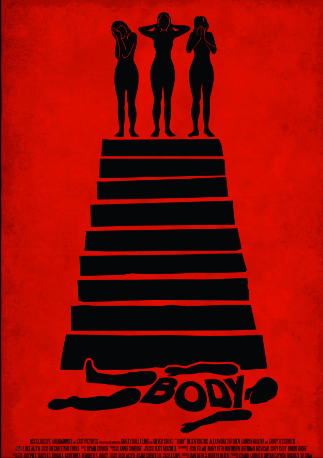
Directed and written by Dan Berk and Robert Olsen, this finds Holly (Helen Rogers), Cali (Alexandra Turshen) and Mel (Lauren Molina) — girls home from college for the holidays but also representations of Freud’s id, ego and superego — going to party at Cali’s uncle’s house.
It’s only after they’re there for some time that the girls realize that she lied and that she has no idea who owns the house. That’s when Arthur (Larry Fessenden), the groundskeeper, arrives and tries to kick them out. He falls down the stairs and appears to die, so the girls decide to tell the cops that he showed up and attacked Holly, but fell down the stairs. They make up evidence by Cali ripping out some of Holly’s hair and Holly scratching herself with the man’s fingernails. That’s when they find out that he’s not dead but paralyzed.
The girls also learn that Cali is probably mental, as she smothers Arthur with a pillow and tries to kill Holly, thereby eliminating the person that Arthur attacked and allowing her to get away with the crime. I won’t ruin the end of this, but this is certainly one brutal holiday film.
Berk and Olsen have since made another movie about a burglary gone wrong, Villains, and Significant Other.
Thanks to the British Film Institute, there’s a list of films that played Scala. To celebrate the release of Severin’s new documentary, I’ll share a few of these movies every day. You can see the whole list on Letterboxd.
I despise the notion that Ed Wood was a horrible filmmaker. Sure, his movies aren’t technically proficient and are often pretty maudlin in moments, but he’s an actual auteur. For this movie, he didn’t just direct and write, he also starred as Daniel Davies. Who else could? After all, Wood convinced producer George Weiss that he was the perfect director for this movie as he was a real-life transvestite.
In this movie, Wood takes pains to emphasize that a male transvestite is not automatically a homosexual. He swore that he had never had a single homosexual relationship in his life and was considered a womanizer. He also was given to directing his adult work in full drag and claimed that his greatest fantasy was to come back as a gorgeous blonde. Yet he still would say that he was comforted by the feel of angora.
So while the Golden Turkey Awards may give Wood the title of Worst Director of All Time and Leonard Maltin may say that this is “possibly the worst movie ever made,” it has heart. An inept heart, but heart.
A transvestite who has been to prison four times for cross-dressing has killed themselves, saying “Let my body rest in death forever, in the things I cannot wear in life.”
This leads Dr. Alton (Wood player Timothy Farrell) to seek out Glen, another man who loves to dress as the other sex, often stealing the clothing of his fiancee Barbara (Dolores Fuller, Wood’s girlfriend at the time). Glen is struggling between being honest with Barbara before their wedding or telling her afterward. Through extended dream sequences, he finally comes to terms with who he is and his other side, revealing it to her. As she hands him an angora sweater, she accepts every side of him.
The doctor then learns of another person, Alan/Anne. Anne was born a boy, but her mother wanted a girl and raised her that way, which left her abused throughout school. Despite hiding her true self during the war, she has since had an operation to become “a lovely young lady.”
Let me tell you, this kind of movie is incendiary in 2022. This was made in 1953.
A movie with these words, which we should live by: “Give this man satin undies, a dress, a sweater and a skirt, or even the lounging outfit he has on, and he’s the happiest individual in the world. He can work better, think better, he can play better, and he can be more of a credit to his community and his government because he is happy.”
So yes, Ed Wood isn’t someone with a cinematic eye. But he put himself — all of himself — on the screen. That’s worthy of celebration.
The inclusion of Bela Lugosi is as well. That’s what takes this movie from message movie to true oddity, as Bela plays The Scientist, a character unconnected to any narrative that begins the film and is not even the narrator, much like how Encounter with the Unknown decides to have a second uncredited voice take the role because just having Rod Serling is not enough.
“Beware. Beware. Beware of the big, green dragon that sits on your doorstep. He eats little boys, puppy dog tails and big, fat snails. Beware. Take care. Beware.
Wood would bring back Glen/Glenda again in two of his novels. Killer in Drag has Glen/Glenda becoming a serial killer while Death of a Transvestite has Glen/Glenda being executed.
On the bonus discs of Severin’s new Scala!!! Or, the Incredibly Strange Rise and Fall of the World’s Wildest Cinema and How It Influenced a Mixed-up Generation of Weirdos and Misfits release, you’ll find examples of several shorts that played at the theater. You can buy this from Severin.
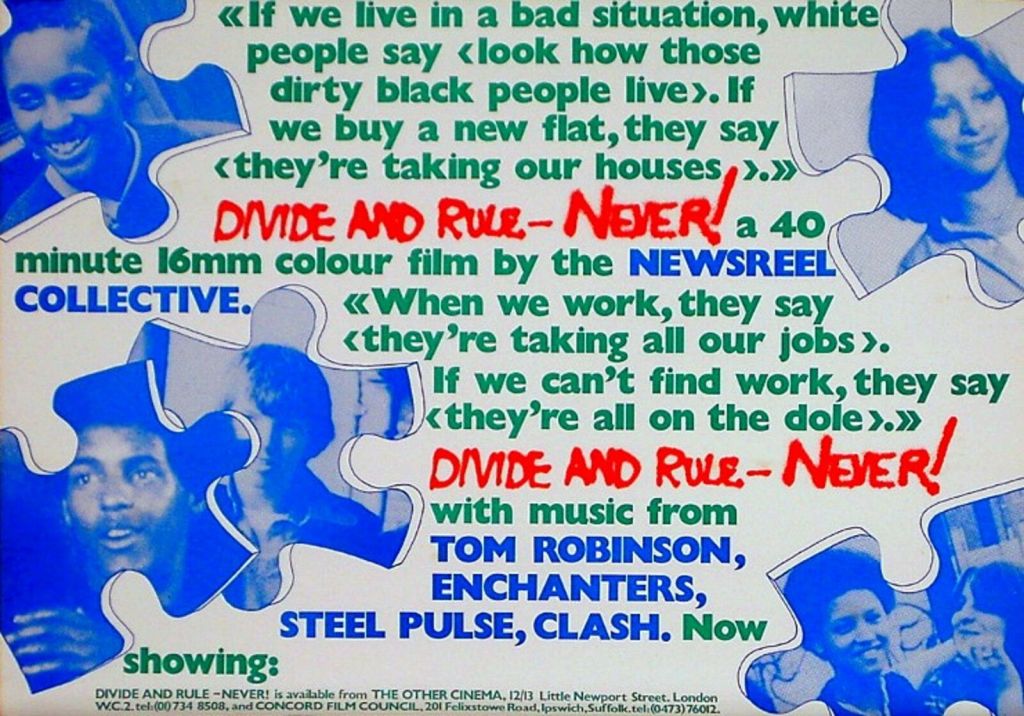
Divide and Rule – Never! (1978): Made for and by young people, this forty-minute or so film looks at race and how it is viewed in school, at work and by the law. There are also some historic sequences of British imperialism and a discussion of how Germany got to the point that it was pre-World War II, plus plenty of punk rock and reggae. This has many sides represented, from Black and Asian immigrants to ex-National Front members.
Divide and Rule — Never! was distributed by The Other Cinema, a non-profit-making, independent film distribution company in London.
Sadly, so much of this movie — made 45 years ago — are just as relevant today in America. This is movie that doesn’t shy away from incendiary material, but that’s what makes it so powerful. In addition to the interviews, it has some interesting animation and a soundtrack with Steel Pulse, TRB, X-Ray Specs and The Clash.
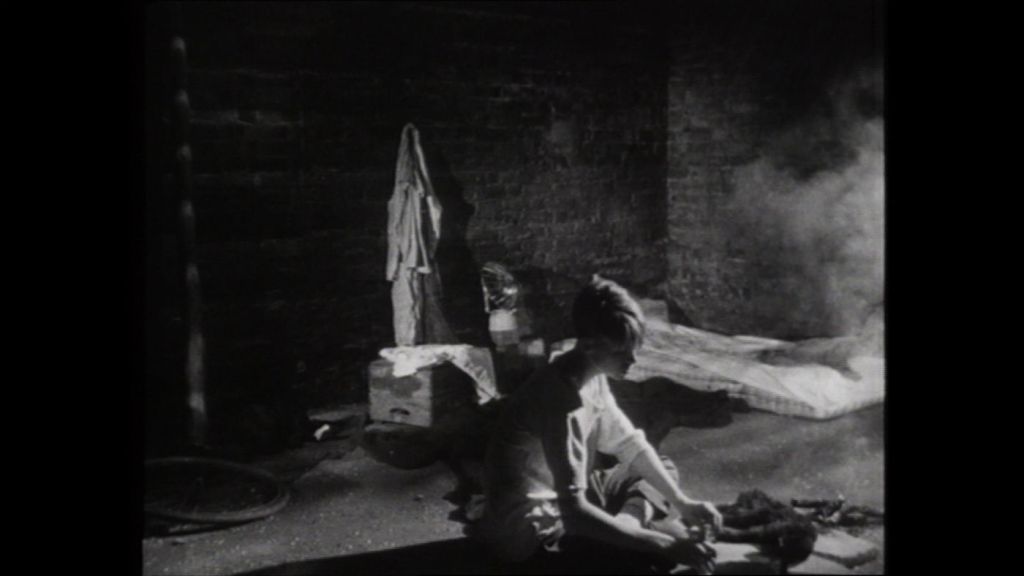
Dead Cat (1989): Directed and written by Davis Lewis, this has Genesis P-Orridge in the cast and a soundtrack by Psychic TV, which has been released as Kondole/Dead Cat.
A boy (Nick Patrick) has a cat that dies and his grief deposits him into a psychosexual nightmare, including a medicine man (Derek Jarman) and several unhoused people (P-Orridge, Andrew Tiernan).
This was shown at only a few theaters the year it was release — including Scala Cinema — before fading away and almost being lost before Lewis found it. In the program for this film, Scala said “The torture that occurs at the transition of sexuality.” If you liked videos for bands liek Skinny Puppy and Nine Inch Nails, this feels like the inspiration.
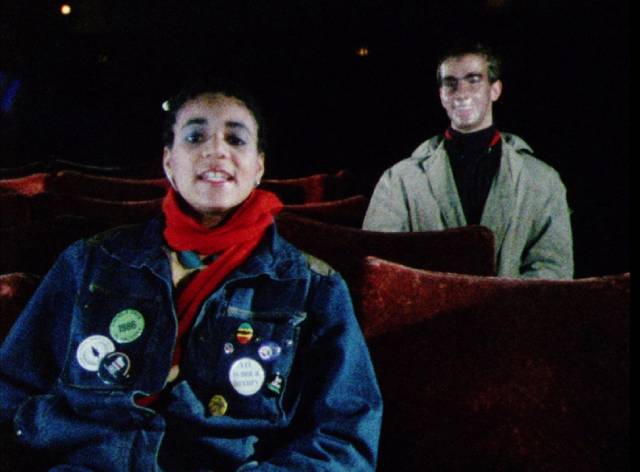
The Mark of Lilith (1986): Directed by Bruna Fionda, Polly Gladwin and Zachary Nataf as a project at The London College of Printing, this is all about Zena (Pamela Lofton), who is researching monstrous women. She meets Lillia (Susan Franklyn) a vampire, at a horror movie and the two start a relationship.
Liliana, trapped with an abusive male partner by the name of Luke (Jeremy Peters) who is what vampires probably would be, scavengers who feed on the weak, dreams of movies in which she is the victim of just such a vampire. She’s often fed on human beings, but has been careful not to be caught or make a mess, unlike her partner. As for Zena, she’s been studying how female gods were once worshipped but now only appear in horror fiction as monstrous creatures.
So much of this movie is as right on now as when it was made, like the speech that Zena gives when Liliana tracks her down: “Have you noticed that horror can be the most progressive popular genre? It brings up everything that our society represses, how the oppressed are turned into a source of fear and anxiety. The horror genre dramatizes the repressed as “the other” in the figure of the monster and normal life is threatened by the monster, by the return of the repressed consciously perceived as ugly, terrible, obscene.”
Her argument is that we can subvert the very notions of horror, making the monsters into heroes that destroy the rules that hold us down.
However, this being a student film, it’s very overly earnest and instead of working these ideas into the narrative as subtext, they take over the entire movie. If you’re willing to overlook this, it’s a pretty fascinating effort.
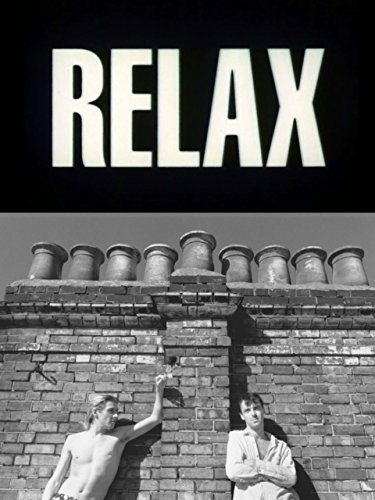
Relax (1991): Steve (Philip Rosch) lives with his lover Ned (Grant Oatley), but as he starts to engage in a more domestic relationship, he starts to worry about all of the partners he’s had. After all, the AIDS crisis is happening and he’s never been tested. Ned tells him to relax, but there’s no way that he can.
The wait for the test is just five days but it may as well be forever. This also makes a tie between sex and death, as Steve strips for both Ned and his doctor. And in the middle of this endless period of limbo, he dreams of death and fights with Ned, who just smiles and keeps telling him to relax. But how could anyone during the time of AIDS?
I remember my first blood test and the doctor lecturing me after he gave it, telling me that I should have been a virgin until I married and whatever happened, I brought it on myself. The funny thing was, I had been a virgin, I thought I was getting married and I had no knowledge that my fiance was unfaithful to a level you only see in films. That night, my parents came to visit, leaving their small town to come to the big city and my mother asked, “What is that bandage on your arm?” I could have lied, but I told her it was for a blood test, and I dealt with yet someone else upset with me. My problems were miniscule in the face of the recriminations that gay people had to deal with, a time of Silence=Death, a place seemingly forgotten today other than by the ones who fought the war.
Directed and written by Chris Newby, this is a stark reminder of that time.
Boobs a Lot (1968): Directed by Aggy Read, this is quite simple: many shots of female breasts, all set to The Fugs’ song of the same name. Banned in Australia, this has around three thousand sets of mammaries all in three minutes, the male gaze presented over and over and, yes, over again until it goes past just being sophomoric and becomes mesmerizing in the way that breasts are when you’re starting puberty. I’m ascribing artistic meaning to this but really, at the end of the day, it’s just a lot of sweater meat. Fun bags. Cans, dirty pillows, babylons, what have you. My wife is always amazed at how many dumb names I can come up with for anatomy and I blame years of John Waters and reading Hustler as a kid and yeah, I’m not as proud of the latter than the former. That said, there are a lot of headlights in this one.
Kama Sutra Rides Again (1971): Stanley (Bob Godfrey, who also directed and write this) and Ethel are a married couple looking to keep their love life interesting, so they have been trying out new positions. Things start somewhat simple, but by the end, Ethel is being dropped through trap doors and out of an airplane onto her husband. A trapeze love making attempt ends in injury, leading Ethel to chase Stanley while all wrapped up.
Stanley Kubrick personally selected this film to play before A Clockwork Orange in theaters in the UK. I wonder if this played at Scala before the screening that shut down the theater. More than just a dirty cartoon, this was nominated for an Oscar. Despite being about lovemaking, it’s all rather innocent and remains funny years after it was made.
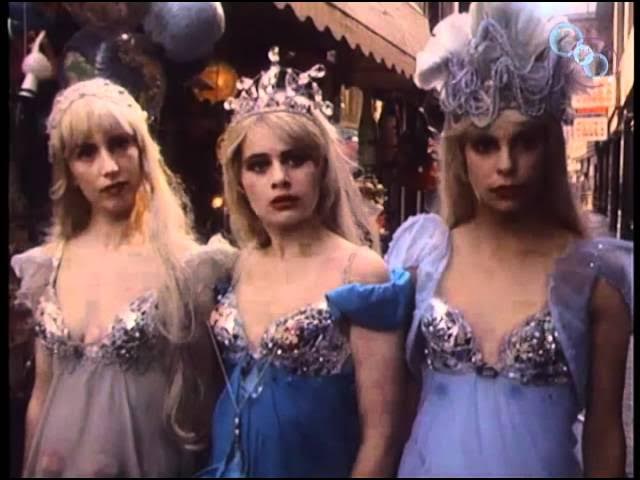
Coping With Cupid (1991): Directed and co-written by former Slits guitarist Viv Albertine, this finds three blonde alien women — played by Yolande Brener, Fiona Dennison and Melissa Milo — who have come to Earth to learn what love is, under the command of Captain Trulove (the voice of Lorelei King). They meet a man named Peter (Sean Pertwee), who hasn’t found anyone, as well as interview people on the street to try and learn exactly how one person can become enamored of another.
On Guard (1984): Sydney: Four women — Diana (Jan Cornall), Amelia (Liddy Clark), Adrienne (Kerry Dwyer) and Georgia (Mystery Carnage) — juggle their lives, careers and even families to destroy the research of the company Utero, who are creating new ways of reproductive engineering. Or, as the sales material says, “Not only are the protagonists politically active women, but the frank depiction of their sexual and emotional lives and the complexity of their domestic responsibilities add new dimensions to the thriller format. The film also raises as a central issue the ethical debate over biotechnology as a potential threat to women and their rights to self-determination.”
One of the women loses the diary that has all of the information on their mission, which leads to everyone getting tense over what they’re about to do. Directed by Susan Lambert, who wrote it with Sarah Gibson, this allows the women to be heroes and not someone to be saved. I like that the advertising promised that this was “A Girls’ Own Adventure” and a heist film, hiding the fact that it has plenty of big ideas inside it.
Today, in vitro fertilisation (IVF) is an accepted way of having children, yet here, it’s presented as something that will take away one of the primary roles of women. Juxtapose that with IVF being one of the women-centric voting topics of the last U.S. election.
Thanks to the British Film Institute, there’s a list of films that played Scala. To celebrate the release of Severin’s new documentary, I’ll share a few of these movies every day. You can see the whole list on Letterboxd.
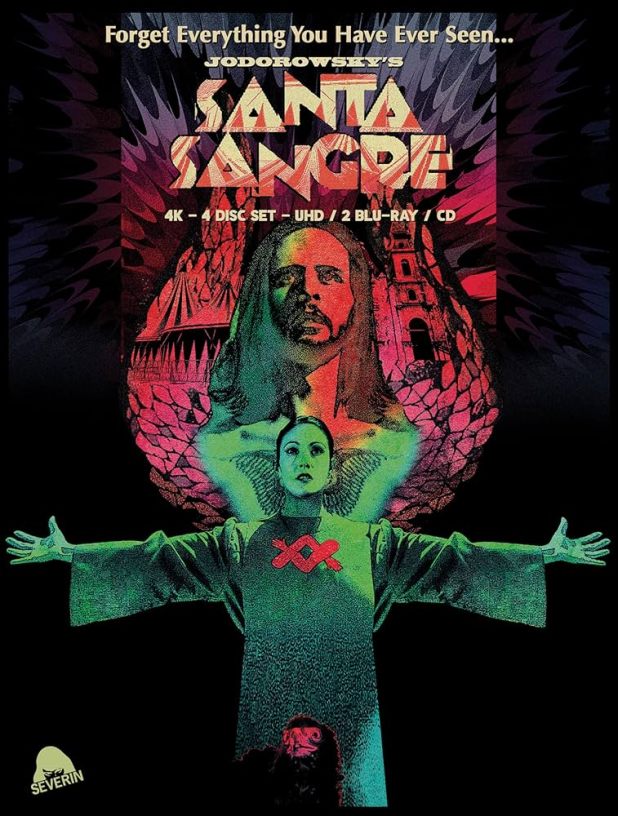
I first encountered Sante Sangre at Prime Time Video in Ellwood City, the video store of my childhood. For some reason, it was stocked in the horror section. I have no idea where I’d put the film myself, but it felt like horror was often the catchall for the films that were not understood. And, of course, as I grew up in a very small town between Pittsburgh and Youngstown, no one was going to rent anything out of a foreign section. As such, amongst the gorehounds of home, Sante Sangre was a film that was too odd, too strange and ultimately not violent enough to appease our needs. I’d never rented it and now, an old man who worships at the foot of The Holy Mountain, I find myself wishing that I could send a message back to my younger self and tell him to seek this film out.
Interestingly enough, this film was written by Roberto Leoni, who had worked in the library of a psychiatric hospital which inspired this film. Leoni also wrote My Dear Killer, Casablanca Express and one of the oddest movies I’ve ever seen, Sergio Martino’s American Rickshaw.
He brought the script to Claudio Argento, who felt that Alejandro Jodorowsky was the only director who could make this movie. However, after Duneended due to money issues and Tusk was considered a failure, Jodorowsky had disappeared. The director would only meet Leoni, telling him that the angel of stories had passed over Paris and taken this story to Italy, but it was meant for him to tell.
After all, Jodorowsky had had a chance meeting in the alley outside a bar with Gregorio Cardenas Hernandez, the famed Estrangulador de Tacuba who had emerged after nearly thirty years in prison able to play the piano, write poetry, practice law and with a wife and four children. He was pardoned of his crimes and led a normal, if famous, life until his death in 1999.
Fenix, played at different times by Jodorowsky’s sons Axel and Adan, has grown up in the circus, the child of Orgo the knife-thrower and Concha the trapeze artist. His mother is also the leader of a cult that worships a dead child who was raped and had her arms cut off by two brothers. As the Catholic church and the government destroy their place of worship, Orgo is making love to the tattooed woman who he performs alongside. Concha catches him, but is hypnotized and raped as well.
As if that isn’t bad enough, the beloved elephant dies despite Fenix’s prayers. He watches as scavengers tear it apart in the city dump and all his father can do is carve up his chest with a tattoo to try to stop his tears and make him a man.
That night, Concha finally rises up against Orgo, burning his privates with acid. He retaliates by cutting off her arms before slicing his own throat, unable to live without his sexual member. The tattooed woman takes the mute Alma — who Fenix already loves — and runs off into the bloody night.
We move back to the present, where the film began with Fenix in a mental institution. A chance outing reveals to him that the tattooed woman is still alive and trying to introduce Alma to a life of selling her body. That night, a strange woman kills the older inked female, but we can’t see who it is.
We soon learn that Concha is forcing Fenix to be her arms — not just in their knife throwing act, which forces him to become a strange substitute for his father — but in a series of murders. Alma tries to get Fenix to leave this all behind, but his mother demands that he kills the only woman he has ever loved. He responds by stabbing her, yet she does not die.
That’s when we learn the truth. Concha has been dead since the night Orgo took her arms all those years ago and an armless mannequin has been the one that our hero — such as it is — has been listening to. Along with the help of more imaginary friends, Fenix destroys the past and surrenders to the police, amazed that he has regained control of his arms once again.
As the elephant dies in this film, inspiration was born. In Eddie Murphy’s song “Whazupwitu,” everything begins with the words of the clown: “The elephant is dying.” This is not the last time Murphy would mention the director’s work, as he often brought him up while he did press for Dolemite Is My Name.
I am also amused that beyond Argento’s brother producing this — and by osmosis some of the murder scenes feeling as if they are inspired by Dario — Rene Cardona Jr. (yes, the director of Tintorera) was also a producer.
Even after several watches of this film, I am still astounded by its rich palette of colors, the way it synthesizes references from Universal’s Invisible Man to the lucha movies of Mexico’s past and how the hero is the villain while also being pure of heart, despite the many murders he has committed.
Perhaps in my teenage years, I was not yet ready for the psychomagic cocktail that a teacher like Jodorowsky was shaking up with this film. Yet today, I can definitely tell you that it has my highest recommendation. Please watch it. I’d love to discuss it with you.
Thanks to the British Film Institute, there’s a list of films that played Scala. To celebrate the release of Severin’s new documentary, I’ll share a few of these movies every day. You can see the whole list on Letterboxd.
A few things amaze me about this movie:
That it was intended as a sequel to 1967’s Valley of the Dolls, a veritable smorgasbord of sleaze and stupidity that I adore with all my heart, but which was a sizeable mainstream success.
That 20th Century Fox would hire Russ Meyer and Roger Ebert to make it. Ebert himself says that it wasn’t until after making the film that he realized how unusual it all was: “…in hindsight, I can recognize that the conditions of its making were almost miraculous. An independent X-rated filmmaker and an inexperienced screenwriter were brought into a major studio and given carte blanche to turn out a satire of one of the studio’s own hits.” When Fox producer Richard Zanuck greenlit the script, Meyer said, “I felt like I had pulled off the biggest caper in the world.”
That anybody has ever made a movie afterward, because this is the literal ultimate film of all ultimate films, a movie awash in overwrought pathos, exploitation and you can’t believe they went there insanity, blows my mind.
Neither Meyer nor Ebert read the novel Valley of the Dolls, but they knew what the film was all about — young innocent girls get chewed up and spit out by the hard and violent world of Hollywood and not all of them find redemption.
Ebert said that the duo wanted to take that ever further: “We would include some of the sensational elements of the original story- homosexuality, crippling diseases, characters based on “real” people, events out of recent headlines…heavily overlaid with such shocking violence that some critics didn’t know whether the movie knew it was a comedy.”
Meyer wanted to appeal to all audiences under thirty with something for everyone: mod fashion, hip music, soap opera romance, amazing set design, lesbians, orgies, drugs, transgender characters, Nazis, comedy, serious drama, plenty of skin, violent exploitation and an ending that had a moral — the so-called square-up reel.
They changed some characters — Susan Lake and Baxter Wolfe are really Anne Welles and Lyon Burke from Valley of the Dolls — but some are real people, like Ronnie “Z-Man” Barzell being based on Phil Spector decades before he became a killer. Randy Black is Muhammed Ali. And the end of the movie was based on the Tate-LaBianca Murders, claiming the life of Valleystar Sharon Tate at the hands of the Manson Family.
Complicating the movie — for the actors — is that Meyer wouldn’t let on if the movie was really serious or comedic. Some decisions — SPOILER WARNING like Z-Man being Z-Woman SPOILER WARNING — were made on the spot, despite it having nothing to do with the rest of the film.
Roger Ebert said, “It’s an anthology of stock situations, characters, dialogue, clichés and stereotypes, set to music and manipulated to work as exposition and satire at the same time; it’s cause and effect, a wind-up machine to generate emotions, pure movie without message.”
While Zanuck had asked for an R rated to pushed the boundaries toward X, the film did receive an X rating. So Meyer responded by deciding that he wanted to insert even more sex and nudity into the film.
So what’s it all about? Glad you asked.
Kelly MacNamara (Dolly Martin, Playboy Playmate of the Month for May 1966), Casey Anderson (Cynthia Myers, Playboy Playmate of the Month for December 1968, and a woman whose nude photo was taken to the moon by the crew of Apollo 12) and Petronella “Pet” Danforth are The Kelly Affair. Kelly’s man, Harris Allsworth manages them and they decide to travel to Hollywood to meet up with Kelly’s aunt Susan Lake, who stands to inherit a big fortune.
Her financial advisor Porter Hall thinks they’re just hippies out to get her money, but she doesn’t care what that old man thinks. Instead, she introduces them to Ronnie “Z-Man” Barzell. He’s played by John LaZar, who is also in Deathstalker II, so it’s kind of ironic that he’s in the sequel to a movie that stars Lana Clarkson, the woman killed by the person he’s really playing here, Phil Spector. Woah.
To top it off, Kelly is wearing one of Sharon Tate’s outfits from the original in this scene. Dolly Read nearly couldn’t do the scene as she was in tears when she learned that the outfit had belonged to the dead actress. The publicity for the film — the famous three on a bed shot of the band — also has them wearing clothes from that movie.
He becomes their manager, enraging Harris, and renames them The Carrie Nations. Kelly soon falls for Lance Rocke (Michael Blodgett, who after acting in movies like Disco Fever and The Velvet Vampire, would write Rent-A-Cop and Hero and the Terror) while her ex-boyfriend ends up in bed with pornstar Ashley St. Ives (Meyer’s wife, Edy Williams). But soon, Harris can’t perform because he’s all tied into the booze and the dolls, baby. The dolls! The one time he can get it up, he knocks up Casey, his ex-girl’s best girlfriend who then has a lesbian affair with Roxanne (Erica Gavin, the star of Meyer’s Vixen), who asks her to get an abortion. Whew! So much happens so fast in this movie you really gotta keep up.
Meanwhile, Petronella has a storybook romance with Emerson Thorne (Harrison Page, Carnosaur) that ends in a brutal fistfight and near vehicular homicide when he catches her in bed with champion boxer Randy Black (James Iglehart, Angels Hard As They Come). Susan gets back with her old fiancee Baxter Wolfe (Charles Napier!) while drugs and touring beat up The Carrie Nations, until one show Harris leaps to his, well, not death, but he loses the use of his legs. Kelly falls back in love for him after his stupid fall. Emerson and Petronella get back together. Casey and Roxanne have lots of sex. If it seems like it’s all going to end up fine, Meyer is here to play with your mind.
Z-Man invites Lance, Casey and Roxanne (the latter two wearing real outfits from the 1960’s Batman TV show) to another of his drug-fuelled parties. After Lance turns him down, he reveals that he’s been a woman all along before going off — beheading Lance to the 20th Century Fox theme before stabbing his servant and getting Casey to fellate his gun before murdering her and her lover (this is teased in the film’s opening). Kelly, Harris, Pet, and Emerson arrive too late to save them, but they kill Z-Man and Harris starts to move his feet again.
While an overly preachy voiceover squares us all up, like we’re watching Mom and Dad or something, we watch Kelly and Harris, who is limping on crutches, enjoy nature before all three surviving couples get married at the courthouse.
Between this movie and Myra Breckinridge, Zanuck lost his job at Fox. That said — despite an X rating and a meager $900,000 budget (Meyer came in $100,000 under) — it ended up earning more than $40 million dollars. Of course, they also had to pay out Valley author Jacqueline Susann’s estate for damages, which meant that the movie starts with this disclaimer:
THE FILM YOU ARE ABOUT TO SEE IS NOT A SEQUEL TO “VALLEY OF THE DOLLS.” IT IS WHOLLY ORIGINAL AND BEARS NO RELATIONSHIP TO REAL PERSONS, LIVING OR DEAD. IT DOES, LIKE “VALLEY OF THE DOLLS” DEAL WITH THE OFT-TIMES NIGHTMARE WORLD OF SHOW BUSINESS BUT IN A DIFFERENT TIME AND CONTEXT.
Needless to say, this is in my top films ever. If you ever visit and you’d like to watch while I scream the songs at the screen and jump up and down, you’re invited.
Thanks to the British Film Institute, there’s a list of films that played Scala. To celebrate the release of Severin’s new documentary, I’ll share a few of these movies every day. You can see the whole list on Letterboxd.
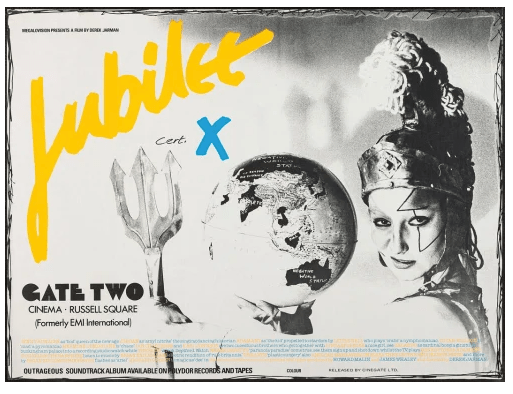
Queen Elizabeth I (Jenny Runacre, Son of Dracula, The Witches) asks her occultist John Dee (Richard O’Brien of Rocky Horror fame) — an advocate of British imperialism that spent the last thirty years of his life learning the secret language of angels — and Ariel from Shakespeare’s The Tempest (David Brandon, Delirium, Stagefright) to show her the future.
That future? The no future of the punk rock era, a place where Queen Elizabeth II was killed in a mugging and a gang of punk rock survivors, including Amyl Nitrate (Jordan, the model who was of the creators of W10 London punk look), Bod (Runacre in a second role), Chaos (French singer, writer and tightrope walker Hermine Demoriane), Mad (singer Toyah Willcox) and Crabs (Little Nell from Rocky Horror, who even gets in the line “Don’t dream it, be it.”). When they’re not talking about boys or music, they’re talking about how history can be manipulated. And then Amyl Nitrite says that her heroine has always been Myra Hindley (Hindley and Ian Brady were responsible for the Moors Murders, which occurred in and around Manchester between mid-1963 and late-1965, claiming five child victims and inspiring the song “Suffer Little Children” by The Smiths).
Things making too much sense? There’s also Borgia Ginz, who shares a house with Hitler, runs the world and has transformed Buckingham Palace into a recording studio and Westminster Cathedral into a disco where Jesus performs.
Beyond the nihilism and lack of hope in this film, there’s also plenty of punk rock stars, like Adam Ant and Wayne County along for the ride and gamely performing songs, as well as blink and you miss it moments for Siouxsie and the Banshees and the Slits. And hey — the music is by Ol’ Sourpuss himself, Brian Eno.
Director Derek Jarman may have based this movie in punk rock, but he was against the scene’s fascism fetish, as well as its love of stupidity and violence. Many punks weren’t pleased with the film, such as fashion designer Vivienne Westwood, who created an open letter T-shirt that denounced the film because of how she felt it misrepresented punk.
Jubilee is definitely a time capsule of Thatcher-era England. It’s loud, obnoxious and strange, which are all wonderful things to be. I’m glad that I didn’t watch something easy like Cy-Warrior and chose this movie.
Thanks to the British Film Institute, there’s a list of films that played Scala. To celebrate the release of Severin’s new documentary, I’ll share a few of these movies every day. You can see the whole list on Letterboxd.
Despite breaking up in 1971, The Monkees remained in syndication throughout the decade, and that’s when I discovered them. Despite being a band created for a TV show—a burst of comedy, silliness and catchy songs—The Monkees instantly appealed to me.
Initially formed in Los Angeles in 1965 by Bob Rafelson and Bert Schneider, the band was Micky Dolenz, Michael Nesmith, Peter Tork and Davy Jones. Producer Don Kirshner initially supervised the band’s music, with songs written by the songwriting duo of Tommy Boyce and Bobby Hart. The four band members were on set filming for nearly twelve hours a day, so session musicians originally played most of their tunes (that said, Nesmith did compose and produce some songs, with Tork playing guitar and all four contributing vocals).
By the TV show’s second season, The Monkees had won the right to create their own music, marking a significant shift in their artistic journey. They effectively became musicians, singers, songwriters, and producers. This growth was further evident in their fourth album, Pisces, Aquarius, Capricorn & Jones Ltd., where the band collaborated with respected session and star talents like the Wrecking Crew, Glen Campbell, members of the Byrds and the Association, drummer ‘Fast’ Eddie Hoh, Stephen Stills and Neil Young. This artistic growth is a testament to their determination and talent.
However, the Monkees continually battled against the notion that they were a manufactured band. Sure, that’s how things started, but they weren’t that way anymore. While their TV show remained successful, they were bored with its conventional format. They proposed making the show a variety program, a format that would allow them to showcase their musical talents and experiment with different styles and genres. But NBC objected, and by then, most of the band wasn’t getting along anyway.
The film’s title, Head, is a nod to the band’s desire to break free from their manufactured image and the constraints of their success. It’s a reference to the phrase ‘to get your head ‘, meaning to understand or grasp something, which reflects the band’s journey of self-discovery and artistic expression. After The Monkees was canceled in February 1968, Rafelson co-wrote and directed this film with Schneider as executive producer. Jack Nicholson, the other writer — a virtual unknown at the time — worked with the band and Rafelson in a jam session weekend with plenty of weed on hand. Later, under the influence of LSD, Nicholson would rewrite the stream-of-consciousness tapes into the script.
When the band learned they would not be allowed to direct themselves or receive screenwriting credit, every Monkee except Peter Tork had a one-day walkout. The studio agreed to a larger share of the film’s profits if the band returned, which ended the professional relationship between the band and their creators.
The filming of Head resulted in a movie that completely alienated their fanbase. Both Nesmith and Tork felt that this movie was a betrayal, a murder of the band by its creators, who seemed to have their eyes on bigger goals. This sense of disillusionment is palpable in their reactions, adding a layer of disappointment to the narrative.
At the dedication of the Gerald Desmond Bridge, an old man politician struggles with his speech. Suddenly, The Monkees appear, racing through the officials and creating chaos. Micky jumps off the bridge to the water below as we hear the words of “Porpoise Song. ” The lyrics intone, “A face, a voice, an overdub has no choice, an image cannot rejoice.” He floats under the waves until mermaids find him and bring him back to life.
After a kissing contest with all four Monkees being called “even” by Lady Pleasure (Mireille Machu, Nicholson’s girlfriend at the time), they launch into a distorted version of the TV show’s theme song:
“Hey, hey, we are The Monkees
You know we love to please
A manufactured image
With no philosophies.
You say we’re manufactured.
To that, we all agree.
So make your choice, and we’ll rejoice
in never being free!
Hey, hey, we are The Monkees
We’ve said it all before
The money’s in, we’re made of tin
We’re here to give you more!
The money’s in, we’re made of tin
We’re here to give you…”
BAM! A gunshot interrupts the proceedings, with the famous footage of the execution of Viet Cong operative Nguyen Van Lem by Chief of National Police Nguyen Ngoc Loan being shown. Head has no interest in being subtle.
From here, the movie becomes a kaleidoscope of ideas and pastiches as each Monkee gains a moment in the spotlight, yet none of them are thrilled with their situation, and each feels trapped. Any escape attempt — whether it’s through dance (Davy has a great scene with Toni Basil, who choreographed Head more than a decade before her hit song “Mickey”), punching waitresses, blowing up Coke machines with tanks, attending a strange birthday party (shot on one of the sets of Rosemary’s Baby, which was under production at the same time), a swami who claims to have the answer and even a rampage through the movie set itself, the boys can’t escape their prison, which is a large black box.
That box could symbolize the lounge area built for the band during the filming of their television show. When they first started filming, the band would wander the set between takes, bored by the filming speed. They’d often get lost, so Screen Gems built a special room where they were forced to remain, smoking cigarettes, playing music and studying their scripts. Whenever a band member was needed on the stage, a colored light corresponding to that member would inform them.
Throughout the film, the band runs into a massive cast of characters, with everyone from Mickey Mouse Club star Annette Funicello, Carol Doda (considered the first public topless dancer), Sonny Liston, Frank Zappa, Teri Garr, Victor Mature and Dennis Hopper.
After evading the box and all of their enemies in the desert, The Monkees run back to the film’s beginning and all leap from the bridge, this time to the triumphant return of “Porpoise Song.” But it’s all another sham: as they swim away, we see that they’re stuck in an aquarium, another big box, and taken away on a truck.
Unyielding sadness. It seems a far cry from “Hey, hey we’re The Monkees and people say we monkey around.”
Head bombed hard on release, bringing back only $16,000 on its $750,000 budget. It may be the ad campaign. While trailers say the “most extraordinary adventure, western, comedy, love story, mystery, drama, musical, documentary satire ever made (And that’s putting it mildly),” none of the band would appear in the ads.
The Monkees were trapped by another fact: younger and more mainstream audiences rejected the more serious side of the band, along with their new sound. While critics agreed that this was the band’s best music ever recorded — Carole King and Harry Nilsson co-wrote much of the music — serious hippies wanted nothing to do with a band they perceived as plastic and pre-manufactured.
Nesmith said, “By the time Head came out, The Monkees were a pariah. There was no confusion about this. We were on the cosine of the line of approbation, from acceptance to rejection…and it was over. Head was a swan song.”
At the end of the film, a still shot of a stylized Columbia Pictures logo appears before the movie skips frames, gets tangled and melts as we hear the soundtrack continue and the laugh of Lady Pleasure. Maybe some joy has escaped the box that The Monkees are trapped in. I want to think so, as Head may have been a failure upon release, but when viewed more than fifty years later, it transcends the divide between real and fake, manufactured and created, commerce and art.










 B&S About Movies
You must be logged in to post a comment.