Murder, She Wrote pilot episode: The Murder of Sherlock Holmes (1984)

Created by Peter S. Fischer, William Link and Richard Levinson — the latter two were also the creators of Columbo — this show was originally going to star Jean Stapleton, who turned it down. Angela Lansbury, who had played Ms. Marple in several movies, was the perfect choice to play Jessica MacGill Fletcher, a woman from a small coastal New England town who goes on to become a famous author and mystery solver, if not a serial killer with all of the people who die around her.

If you’re wondering, where is Cabot Cove? It’s Mendocino, CA and Noyo Harbor in Fort Bragg, CA.

I’m obsessed by this show. The fact that it has so many murders around one woman, the fact that all kinds of exploitation actors show up in it and the fact that so many white-haired dudes are vying to pound it out with Jessica. I watch the Murder, She Wrote Pluto and Roku channels constantly, jumping into episodes and knowing exactly where they are, because I’ve watched them so often. My wife and I own the gigantic early DVD box sets, even the TV movies.

Why should I keep this all to myself? I should share my Jessica Fletcher mania with you.

Pilot episode: The Murder of Sherlock Holmes (September 30, 1984)

Tonight on Murder, She Wrote

In the episode that kicks off the entire show, Jessica Fletcher travels to New York City to celebrate the release of her debut novel — just in time for someone to get killed at a costume party.

Who’s in it, outside of Angela Lansbury and were they in any exploitation movies?

Peter Brill is played by Bert Convy, who, in addition to being in two episodes of Murder, She Wrote, also shows up in Jennifer and A Bucket of Blood.

Herb Edelman appears and would later be NYPD Lieutenant Artie Gelber, a role he’d play seven times on the show. He also is in the Hong Kong action film Wheels On Meals.

As Rocky Horror tells us, Anne Francis stars in Forbidden Planet. She was also in the supernatural TV movie Haunts of the Very Rich and three episodes of this show, starting with this episode as Louise McCallum.

Michael Horton makes his first Murder, She Wrote appearance as one of my most hated characters. Grady Fletcher. He’d be on the show twelve times, always screwing things up and needing his aunt Jessica to come in and save him. Since the show, he’s appeared in several Star Trek shows and films.

Dennis Patrick, who played Dexter Baxendale in this episode, has appeared in several roles on Dark Shadows and played rich man Bill Compton in the early Cannon movie Joe. He’s also appeared in Nightmare HoneymoonThe Time Travelers and many other TV roles.

The doctor in this episode was played by Raymond St. Jacques, a street preacher in They Live, Claude in the John Russo adaptation Voodoo Dawn, opposite Bronson in The Evil That Men Do and also shows up in Cotton Comes to Harlem.

This episode, as you can tell, is packed with stars. Ned Beatty may be the biggest, appearing as Chief Roy Gunderson. He has 163 roles in his career, most of them in major Hollywood productions. Still, we can count 21st Century’s Captain AmericaRepossessedPurple People EaterThe UnholyRolling Vengeance and Exorcist II: The Heretic as exploitation in my book.

Arthur Hill, who plays Preston Giles, Jessica’s first publisher, in two episodes of this series, also narrates Something Wicked This Way Comes, is the vice president in Murder In Space and appears in Revenge of the Stepford WivesFutureworld and The Andromeda Strain.

Brian Keith was an actor with 169 roles, including Uncle Ben in the 90s Spider-Man cartoon, Papa in Sharky’s Machine, Dr. Dubov in Meteor and the Dad in The Parent Trap.

Paddi Edwards, Lois Hoey was a secretary in Halloween III! Sure, she’s Flotsam and Jetsam in the Disney cartoons, but this is the role I’m happy for.

The radio show host, Danny Welles, is Luigi from the TV show Super Mario Supershow!

Marvin is played by Stanley Brock, Weird Al’s uncle in UHF.

In the minor roles — there are no minor roles! — we have Johnny Venokur (Savage StreetsEvil Laugh) as a tough, Andy Garcia (!) as his co-tough, Mama Fratelli herself Anne Ramsey as a bag lady, Paula Victor (The Entity), Billie Hayes (Witchiepoo!), Beau Star (Sheriff Meeker from Halloween 4 and 5) as a cop, KTLA anchor Larry McCormick and Sallee Young (Home Sweet HomeDemented and Pandemonium).

What happens?

Jessica Fletcher is a widower and schoolteacher from Cabot Cova, Maine—yes, I know we all know this, but it’s the first episode—whose hobby is writing mysteries. Her excoriable nephew Grady sends one of those stories to publisher Preston Giles, who buys it. Now Jessica has to come to New York City and hates every second. Giles begs for her to stay on for his costume party.

She meets composer Peter Brill, Grady’s boss, Captain Caleb McCallum, his wife Louise and the rich Ashley Vickers. Up until the murder- it’s right there in the title- everything is fun, and people are super into Jessica dressing like Cinderlla’s fairy godmother until Dexter Baxendale, a detective, is caught looking around. And oh yeah, Caleb is getting killed, dressed as Sherlock Holmes, to explain that this episode’s title wasn’t lying. Shot in the head, left floating face down in a pool, but then it’s discovered that Caleb is alive, and that’s Baxendale’s body.

Jessica is shocked that, of all people, Grady gets arrested for the murder. Stick around for 12 seasons and see how surprised you will be that Grady gets into some shenanigans. Jessica must solve the case and potentially fall in love with Giles. Except that, well…

Who did it?

Giles is the killer, as he used to work with the detective, and his past crimes would be revealed to him. It looks like Jessica has to get a new publisher.

Who made it?

Corey Allan directed, and he is a veteran of TV shows and an actor who was in Rebel Without a Cause. Fischer, Levinson and Link, who created the show, wrote the story, which Fischer turned into a script.

Mario Di Leo, the cinematographer on The Evil and a still photographer for the berserk Italian movie Top Line, shot this. That last fact is blowing my mind.

Some facts…

Jessica is introduced just like Miss Marple in The Mirror Crack’d, a movie adaptation starring Lansbury. She also types her books on a 1940s Royal typewriter, the same one that Ellery Queen used on the series from the same producers.

How many people live in Cabot Cove? 3,560. Well, for now. By the end of the series, many of them are dead.

Does Jessica get some?

This is a significant point of debate for me with every episode of Murder, She Wrote. Jessica is supposedly in her early 50s, just like me, so she’s still a woman with wants and needs. It seems like many older gentlemen in this show would love to dig up some sand crabs with our heroine, and I say we should champion this.

Preston Giles is one of the few of her would-be men who kisses her full on the lips. Seeing how he comes back to woo her again in season 7, I will say that he could not get enough once he had a taste of her New England baking. So yes, I will say that they at least engaged in heavy petting and perhaps Jessica rubbed up against him. She’s a lady, however, and I don’t think she went into the pants or gave him an Old Fashioned at this early stage of their relationship.

But this dialogue!

Preston Giles: I’m so sorry. I should have told you. For tonight’s party, we’re coming dressed as our favorite fictional character. I know, I know. You haven’t got a thing to wear.

Jessica Fletcher: Well, I could always come as Lady Godiva.

This is cut footage of Jessica directly after they spoke…

Does Jessica dress up and act stupid?

Yes and no. She does wear an outfit, but it’s for a costume party. This gets her off the hook, but as the show continues, look for Jessica to put on costumes and act drunk more than the Harts.

Was it any good?

There’s some math to do here. Any episode with Grady in it can’t be a perfect ten, as his presence angers me to madness. However, this has a solid mystery, even if it’s cribbed from Agatha Christie’s “The Affair At The Victory Ball.” It’s also a two-parter with a pretty decent plot that sets up all the show’s beats. So I’d say yes. No secret spinoff or Jessica is being wasted, things that ruin later episodes.

Give me a reasonable quote:

“You know, back in Cabot Cove, the only thing we have with claws are lobsters, and we eat ’em.”

Got a TV Guide ad?

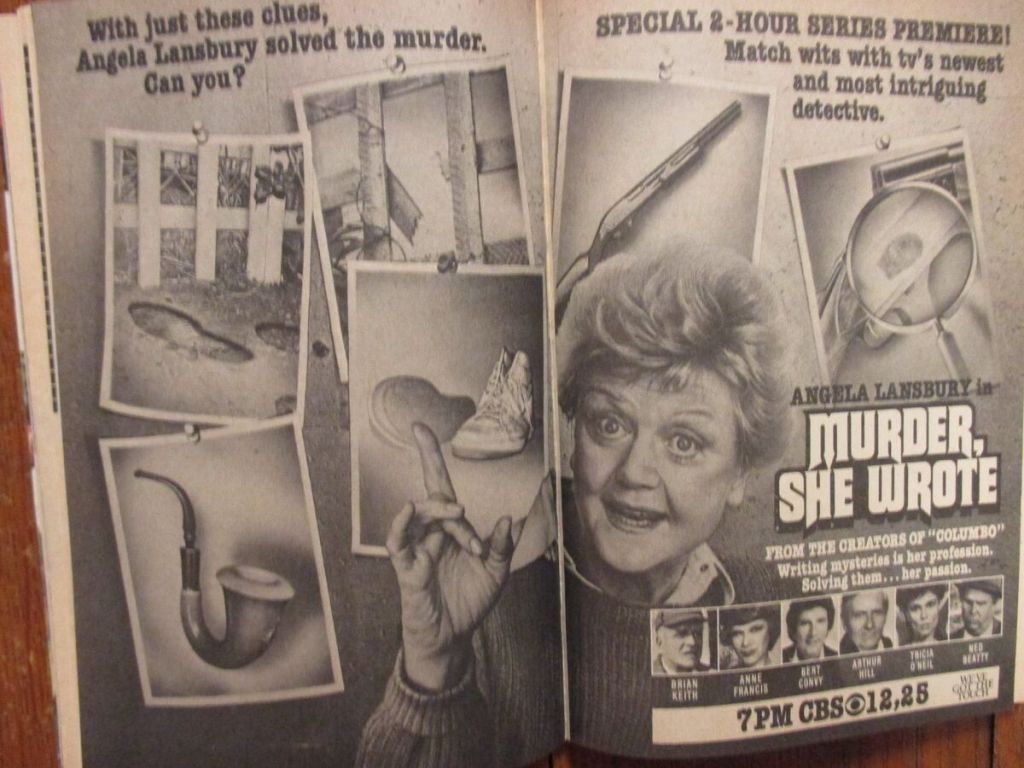
CBS really wanted this to be a success because there’s a double-page ad!
What’s next?

In “Deadly Lady,” a visitor who has stopped at Jessica’s house turns up dead, swept away in a hurricane before Jessica even meets him. Get ready to meet Captain Ethan Cragg and Sheriff Amos Tupper, two lawmen I think both slept with Jessica. At the same time? Let’s discuss.
JESS FRANCO MONTH: Wicked Memoirs of Eugenie (1980)

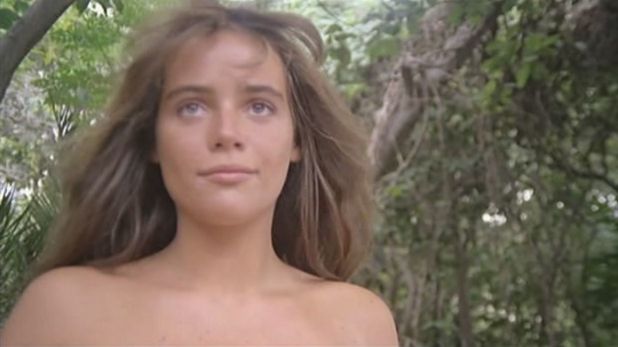
No, this is not Eugenie (AKA  Philosophy in the Bedroom). It’s also not Eugénie de Sade (AKA DeSade 2000). This is 1980’s Eugenie (Historia de una perversión), but yes, it’s another Jess Franco movie. It is a remake of the 1970 movie listed above and is also known as Erotismo. Franco danced with this subject many times, also making How to Seduce a Virgin.

Alberto de Rosa (Antonio Mayans, a Franco stock member) wants the young Eugenie (Katja Bienert, El tesoro de la diosa blanca), so he gets his sister Alba (Mabel Escano) to help by seducing her father and talking him into letting brother and sister take his daughter for, well, you can only guess.

Bienert is fine in this, but she’s also dealing with Maria Rohm and Soledad Miranda to live up to in Franco’s first two attempts. That’s not fair to her to be compared to them. She was also underage when this was made, which is something that would never happen today or at least we’d like to believe that.

This also has Lina Romay barking and behaving like a dog, so there’s that.

In Germany, most of the plot and character pieces are thrown away to make way for inserts from Triangle of Venus. For these Teutonic perverts, Jess Franco was simply not dirty enough.

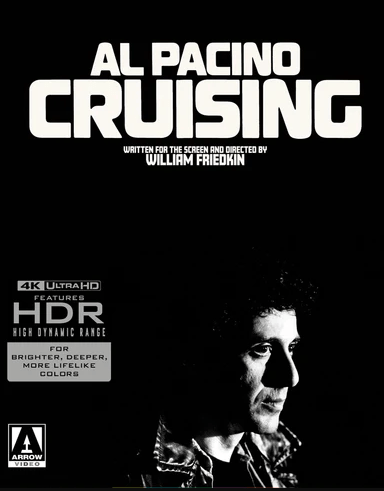
ARROW 4K UHD RELEASE: Cruising (1980)

Despite being approached several times with New York Times reporter Gerald Walker’s 1970 novel Cruising, William Friedkin (The Exorcist, Sorcerer and perhaps not as successfully, Jade) wasn’t interested. He changed his mind after an unsolved series of murders in New York’s leather bars.

Articles by Village Voice journalist Arthur Bell and NYPD officer Randy Jurgensen helped inform this film. The latter went into the same deep cover as this film’s protagonist, Steve Burns. Then, Friedkin learned that Paul Bateson, a doctor’s assistant who appeared in The Exorcist, had been implicated in the crimes while serving a sentence for another murder.

Friedkin did some of his research for the film by attending gay bars dressed in only a jockstrap, but by the time the movie began filming, he had been barred from two of the most oversized bars, the Mine Shaft and Eagle’s Nest, due to the controversy surrounding the movie.

Much like The New York Ripper and God Told Me To, this movie feels like one set at the end of the world — New York City near the close of the 20th century. Someone is picking up gay men, murdering them and leaving their body parts in the Hudson.

Officer Steve Burns (Al Pacino)—exactly the type of man the killer has been after—is on the case. Captain Edelson (Paul Sorvino) has assigned him to infiltrate the foreign world of S&M and leather bars. However, as the case progresses, he loses himself and his relationship with Nancy (Karen Allen).

Soon, he learns of just how brutal the NYPD is to gay men — even if they’re just suspects. And he finds himself growing closer to his neighbor Ted (Don Scardino, Squirm).

By the end, nothing is truly clear. While the killer may be Stuart Richards, a schizophrenic who attacks Burns with a knife in Morningside Park, it could also be Ted’s angry boyfriend Gregory (James Remar). After all, Ted’s mutilated body is discovered while Stuart is in custody. Or the real killer is still out there — perhaps he’s even a patrol cop (Joe Spinell). The truth is never told.

Spinell is incredible in this, which is no surprise. He used his real life for inspiration, as there’s a line about his wife, Jean Jennings, leaving him and moving to Florida with his daughter. His wife had just done exactly that before this movie was shot.

The actual version of this movie may never be released. Friedkin claims it took fifty rounds to get the MPAA to award the film an R rating. Over 40 minutes of footage was cut, which consisted of time spent in gay bars. The director claims that these scenes showed “the most graphic homosexuality with Pacino watching and with the intimation that he may have been participating.”

This footage also creates another suspect — Burns himself may have become a killer.

When Friedkin sought to restore the missing footage for the film’s DVD release, he discovered that United Artists no longer had it and may have even destroyed all the cut footage.

In 2013, James Franco and Travis Mathews released Interior. Leather Bar is a metafictionalized account of the two filmmakers’ attempts to recreate the lost 40 minutes of Cruising.

There’s a disclaimer at the start that says, “This film is not intended as an indictment of the homosexual world. It is set in one small segment of that world, which is not meant to be representative of the whole.” Years later, Friedkin would claim that MPAA and United Artists required this, hoping that it would absolve them of the controversy that had been all over this production.

That’s because protests had started at the urging of gay journalist Arthur Bell, the aforementioned Village Voice writer whose series of articles on the Doodler’s killing of gay men inspired this movie. There were numerous disruptions to the filming, as protesters blasted music and loud noises at all filming locations, leading to hours of ADR to fix the ruined dialogue.

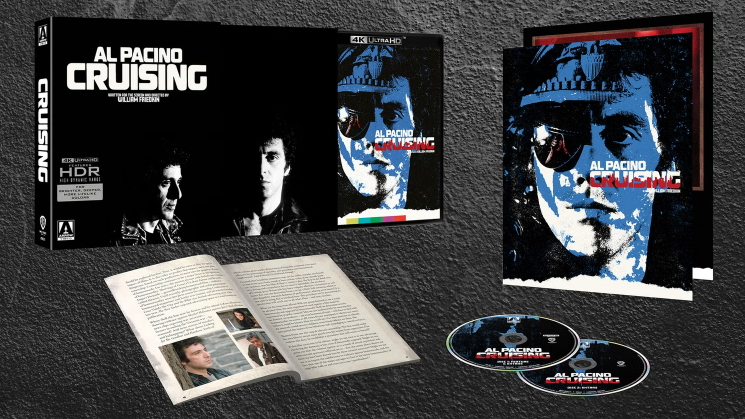
The Arrow Video 4K UHD release of Cruising features a brand-new restoration from a 4K scan of the original camera negative, supervised and approved by writer-director William Friedkin. It also includes a Friedkin-approved newly remastered 5.1 DTS-HD Master Audio mix of the film. The release also includes archival featurettes and two commentaries by Friedkin.

There’s also new commentary featuring the original musicians involved with the soundtrack; Heavy Leather, an alternate musical score by Pentagram Home Video; deleted scenes and alternative footage; on-set audio featuring the club scenes and protest coverage; censored material reels; a theatrical trailer, teasers and TV commercials; interviews with Karen Allen, film consultant and former police detective Randy Jurgensen, editor Bud S. Smith, Jay Acovone, Mike Starr, Mark Zecca and Wally Wallace, former manager of the Mineshaft; Breaking the Codes, a visual essay surrounding the hanky-codes featuring actor and writer David McGillivray; Stop the Movie, a short film by Jim Hubbard capturing the Cruising protests; archival featurettes; William Friedkin’s BeyondFest 2022 Q&A at the American Cinematheque and an extensive image gallery featuring international promotional material, on-set sketches, and more.

It also has a 120-page perfect-bound collector’s book featuring articles from The Village Voice and The New York Times, essays from the film’s extras cast, an introduction from William Friedkin and an archive interview with Al Pacino. The set is enclosed in a reversible sleeve featuring original and newly commissioned artwork by Sister Hyde.

You can get it from MVD.

ARROW VIDEO 4K UHD RELEASE: Alice, Sweet Alice (1976)

Alfred Sole was an architect who dreamed of making movies. His first film, 1972’s Deep Sleep, which starred Deep Throat‘s Harry Reems and The Devil In Ms. Jones‘ Georgina Spelvin, was made for only $25,000. However, it was ruled obscene and pulled from theaters. His second film — the one we’re about to cover — may not have done well at first thanks to spotty distribution, but thanks to Brooke Shields’ popularity and multiple re-releases under multiple titles, like Holy TerrorCommunion and The Mask Murders.

Sole wrote the film with his neighbor Rosemary Ritvo, an English professor with whom he often discussed films. A Catholic herself, they would talk at length about the church in between discussing theater and horror films. Nicolas Roeg’s Don’t Look Now was a huge influence, as is evident by the yellow raincoat worn by the film’s villain.

The film is set in 1961 in Paterson, New Jersey, the director’s hometown; as such, much of it was based on his childhood. In fact, Mrs. Tredoni is directly based on a woman who lived next door to his grandmother, who would look after the priests.

While Sole claims he had never seen any Giallo before he made this, Alice, Sweet Alice is perhaps the most giallo of all American films before DePalma would make Dressed to Kill.

The film begins with Catherine Spages (Linda Miller, the daughter of Jackie Gleason and the mother of Jason Patric) visiting Father Tom with her two daughters, nine-year-old Karen (Shields) and twelve-year-old Alice (the astounding Paula Sheppard), who are students of St. Michael’s Parish Girls’ School. Father Tom gives Karen his mother’s crucifix as a gift for her first communion, making Alice jealous.

Alice is a wild child, her hair barely tied back, constantly in trouble for all manner of mischief. Is she a bad girl or just a misunderstood little girl dealing with the specter of her parent’s divorce in 1961, a time when this rarely happened and in a heavily Catholic neighborhood where this would indeed be judged? Her antics include wearing a clear mask and repeatedly frightening and threatening her sister.

This all ends on the day of Karen’s first communion, when someone in the same school raincoat and mask as Alice kidnaps the young girl, strangles her, rips the crucifix from her neck and then sets her body on fire inside a church pew. This is insanely brutal and lets the viewer know that this movie is unprepared to take it easy on you.

At the same time, Alice enters the room and attempts to receive communion while wearing her sister’s veil. It’s never really established where she found it or whether or not she knew it belonged to her sister. There are no easy answers here.

Catherine’s ex-husband Dominick (Niles McMaster, Bloodsucking Freaks) returns for the funeral and fulfills the Giallo role of a stranger pushed into becoming the detective. Furthering the giallo narrative, the ineffective Detective Spina takes over the case, pursuing the lead that Alice is the killer thanks to Catherine’s sister Annie’s suspicions. This lead seems even more apparent after the killer attacks Annie, and Alice is found at the scene, wearing the same clothes.

Alice is sent to a psychiatric institution where it’s revealed that she’s been in trouble numerous times in school, a fact that Father Tom has concealed as he believed he could solve her problems.

The killer tightens her noose around Alice’s neck by luring her father to an abandoned building,g where she gets the jump on him, beating him with a brick, binding his body and pushing him off a ledge. Before he dies, he’s able to swallow the crucifix that the killer had stolen from his daughter. That’s also when we learn who the killer is, way before the film is over: it’s Tredoni, who sees Dominick and Catherine — and by extension, their children — as sinners due to their premarital sex and divorce.

Alice may have been eliminated as a person of interest, but the danger remains. On a visit to Father Tom, Catherine learns that Tredoni lost a daughter on the day of her first communion, which taught her that children pay for the sins of their parents. In her grief, she gives herself over to the church. Her feelings about her calling are confirmed when Father Tom misunderstands her confession.

Finally, Alice’s scheme to leave cockroaches all over, frightening landlord Mr. Alphons,o neatly ties into Tredoni sneaking in to kill either her, Catherine or both of them. Alphonso is stabbed, and the mad older woman runs to the church. Father Todd assures the police he can handle her, but even his mercy and the church’s teachings fail in the face of mania.

The end of this movie shocked me out of my theater seat. It’s visceral in its intensity, and the ending—where Alice walks away—is even more harrowing.

It’s rare to find a movie that completely destroys an audience. Alice, Sweet Alice did that when it played here to a packed house as part of a Drive-In Asylum night of film.

In these modern times, Alice takes on a whole new light. Nearly every male in the movie treats her blossoming womanhood as an invitation, from the lie detector operator who says that when he bound her breasts with the machine, it looked like she wanted it to the guard at the children’s home who silently watches her as she meets with her parents. Perhaps even more disquieting is that Sheppard was 19 when this was made. Her only other film appearance is in the equally bizarre Liquid Sky, which is a shame, as she was incredible in both of these equally strange movies.

Alphonso DeNoble, who plays the grotesque Mr. Alphonso, also appeared in Bloodsucking Freaks. While his main career was as a bouncer at a gay bar, as his side hustle, Alphonso would dress up as a priest and hang around cemeteries, where widows would ask for a blessing, and he’d indulge them for a monetary donation.

This film truly lives up to the ninth Satanic Statement: Satan has been the best friend the church has ever had, as He has kept it in business all these years! And the Satanic Sin of Herd Mentality is obvious. From the actual church, “…only fools follow along with the herd, letting an impersonal entity dictate to you.”

Also, Alice posits that even the pre-Vatican II Catholic Church of 1961 was finding itself ill-equipped to understand the modern world and that people—from the old like Tredoni to the young like Alice—would suffer. It’s women who do most of that suffering, constantly propping up the male members yet never able to ascend to the power of the clergy unless they want to be second-best sisters.

Even 43 years after its debut, Alice Sweet Alice has the power to destroy. It’s a near-perfect film that demands introspection and multiple viewings.

BONUS CONTENT:

This article by Bill Van Ryn of Groovy Doom and the horror and exploitation fanzine Drive-In Asylum provides an even better look at this film.

I also had the opportunity to discuss this film with Alfred Sole’s cousin, Dante Tomaselli, the maker of the astounding Desecration.

The Arrow Video 4K UHD release of Alice, Sweet Alice has a brand new 4K restoration by Arrow Films from the original camera negative, as well as three cuts: Communion; Alice, Sweet Alice and Holy Terror. There’s new commentary by Richard Harland Smith and archival commentary by co-writer/director Alfred Sole and editor M. Edward Salier; interviews with composer Stephen Lawrence and actor Niles McMaster; First Communion: Alfred Sole Remembers Alice, Sweet AliceSweet Memories: Dante Tomaselli on Alice, Sweet Alice; a location tour with Michael Gingold; deleted scenes; a split-screen version comparison; a trailer and TV commercial; an image gallery, including the original screenplay; a reversible sleeve featuring original and newly commissioned artwork by Gilles Vranckx and an illustrated collectors booklet featuring new writing on the film by Michael Blyth. You can get it from MVD.

FULL MOON DVD RELEASE: The Primevals (2023)

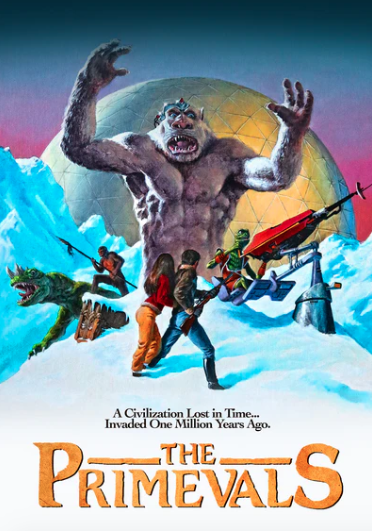
A passion project of stop-motion master David Allen, it was unfinished due to his cancer death. In 2023, Full Moon and former Allen associate Chris Endicott finished the movie, which is filled with “100% hand-rendered, stop-motion special effects.”

This started as Raiders of the Stone Ring, a movie developed more than sixty years ago by Allen, Dennis Muren and Jim Danforth. That was almost bought by Hammer, as was another film the trio wanted to make, Zeppelin vs. Pterodactyl. Years later, Allen wanted to make this with writer Mark McGee as either The Glacial Empire or Primordium: The Arctic World. Settling on the name The Primevals, it was finally bought by Charles Band after special effects artist Steve Neill shared it during the making of Laserblast.

If you ever saw any Empire Pictures coming soon ads, The Primevals were always in them. Then, when Full Moon started, it got filmed, and the hard work of animation began, even as money woes hurt the studio. In 1999, when he died, Allen left Endicott the film elements, storyboards, stop-motion puppets and all of his equipment.

Luckily, this was finally finished in 2023, and now, after a theatrical run, it’s on DVD.

Deep in the Himalayas, a gigantic creature has been killed,d and Dr. Claire Collier (Juliet Mills) thinks that it is a yeti. Wanting to see one of them alive, she goes on an expedition with Matt Connor (Richard Joseph Paul) and big-game hunter Rondo Montana (Leon Russom) to get the truth. That said, this has caused so many wild things to happen — Who operated on the brain of the yeti? What technology is hidden in the mountain? Are those lizard people? — that you’ll love it. Trust me. Get over the fact that stop-motion looks jerky in a world of CGI. Shut your brain off, and enjoy something unironically for once.

I’ve wanted to see this movie since it was always in magazines—Cinefantastique had it on the cover! — and now that it’s in my house, in my collection, and I can watch it at any time? Sometimes life isn’t so bad. Man, those lizard men are great. Where are the toys for this movie?

You can get this from MVD.

MILL CREEK BLU RAY RELEASE: The King of Queens (1998-2007)

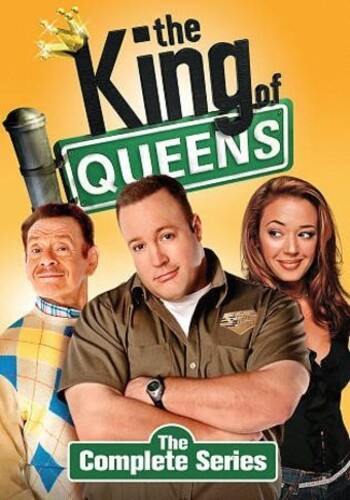
Premiering on CBS on September 21, 1998, The King of Queens was one of those shows that always seemed to be on. I had never watched it, and all I knew about Kevin James was that he was Mick Foley’s high school wrestling teammate. But when I showed the box set on our weekly “What Came In the Mail” segment on the Drive-In Asylum Double Feature, people were excited and told me that I needed to watch it soon.

It’s a simple set-up. Doug (Kevin James) and Carrie Heffernan (Leah Remini) are pretty much The Honeymooners, a middle-class couple living in Queens, except that her father Arthur (Jerry Stiller) has lost his latest, much younger wife and burned his house down, so now he has to live with them. That’s all there is to it, as it’s about them, their weird friend, and Doug’s schemes to get ahead.

There’s Doug’s straight man, Deacon Palmer (Victor Williams), nerdy mommy’s boy Spencer “Spence” Olchin (Patton Oswalt), cousin Daniel Heffernan (Gary Valentine), dog walker Holly Shumpert (Nicole Sullivan) and even Lou Ferrigno, playing himself. Plus, as you know, I love crossovers; there are four with Everyone Loves Raymond.

The leads are fun, everyone knows their role, and this feels like the kind of show you can just put on and veg out to. I love sitcoms and feel like they’re kind of lost art, so it was fun getting into this for a few episodes. I didn’t like the last season, where Doug and Carrie split, but I could see myself watching more of it.

What fascinates me is that when James started his second show, Kevin Can Wait, his wife, Donna Gable, was portrayed by Erinn Hayes. Yet in the second season, she died off camera and was replaced by Vanessa Cellucci (played by Leah Remini), Kevin’s former rival from the police who becomes his partner in life and at a security company, Monkey Fist Security. Donna’s death is off-handedly mentioned by someone saying, “Ye, it’s been over a year since she died.”

This is where it gets meta.

On the AMC TV show Kevin Can F**k Himself, Allison McRoberts (Annie Murphy) has a man-child of a husband, Kevin (Eric Petersen), who sees life as a sitcom while hers is a drama. Kevin becomes so horrible to her that she begins to plan his death. When people find out, she fakes her passing, and he soon gets another girlfriend who looks and acts exactly like Allison.

She’s played by Erinn Hayes.

I’ve always wondered how we got the beautiful, capable wife and immature husband dynamic ingrained in us and how many relationships it has harmed. It makes me think about how I behave. Then again, as I write this, I am in a basement surrounded by movies and action figures. Hmm.

Mill Creek has released every episode in one gigantic box set. It has extras such as James doing commentary on the pilot with show creator Michael Weithorn; a laughs montage; behind the scenes; a writers featurette; a salute to the fans and the 200th episode celebration. You can get it from Deep Discount.

JESS FRANCO MONTH: El mirón y la exhibicionista (1985)

I think about Jess Franco and Lina Romay a lot. I’d like to feel that they had a great relationship — they were together for years — and they lived up to the title of this movie, The Voyeur and the Exhibitionist. Working together on this as co-directors, Lina sits in an apartment, in front of posters of Mick Jagger and Lou Reed, and for 54 minutes, she gets horizontal with Mari Carmen G. Alonso (who performed as Rossy Pussy in this and another Franco movie, Para las nenas, leche calentita) and another man while the exhibitionist watches and makes a mess of himself.

An early Spanish X film — Franco and Romay made ten really fast to get ahead of the censorship ending — this has no real story other than someone likes to watch and someone likes to be watched. Lina says, “Maybe I look like a maniac, but it’s a game that amuses me.” She’s the power bottom, the real one in control, as the male gaze only can see when she performs for it.

This is the magic of Jess Franco, that he can cause people to write long and hopefully poetic write-ups on movies that are really just dirty sex. Do we want them to be more than they are or are they more than they are I can’t answer, but like always, I think about Jess and Lina growing old together, two perverts who found each other’s yum in a world where that rarely happens.

ARROW VIDEO 4K UHD AND BLU RAY RELEASE: American Gigolo (1980)

American Gigolo was always fascinating to me as a kid as my mother wouldn’t let me in the room when it was on. As a result, knowing that it was “dirty” made me want to see it even more.

Directed and written by Paul Schrader, it’s about Julian Kay (Richard Gere), an escort for rich older women. Now, we know this is a fantasy and I’m sure that affluent elderly ladies like to have a man, but I think we all know that most male escorts are for other men. But let’s get over that and explore the movie.

Along the way, he starts to fall for a senator’s wife, Michelle Stratton (Lauren Hutton), but soon finds himself being hired for a job he never does: BDSM sex with Mr. Rheiman’s (Tom Stewart) wife Judy (Patti Carr) while the old man watches. Julian tells fellow sex worker Leon (Bill Duke) that he never wants another call like that; Leon tells him that when he ages, these rich old ladies won’t want him any longer.

Meanwhile, as Julian satisfies Lisa Williams (K Callan), Mrs. Rheiman is murdered. Detective Sunday (Héctor Elizondo) believes that Julian did it, but his alibi — sleeping with another man’s wife — puts his sense of morality to the test. He refuses to say where he was and at each turn, evidence is planted and he starts to realize that he’s being set up.

I love this quote from Schrader: “The character in Taxi Driver was compulsively nonsexual. The character in American Gigolo is compulsively sexual. He is a man who receives his identity by giving sexual pleasure but has no concept of receiving sexual pleasure.” Indeed, one scene — in which Julian is full frontal nude, a rarity even today — he goes on about how being able to please women is the one thing that he knows makes him worthwhile. Schrader would revisit the themes of male sex workers in 2007’s The Walker.

The main reason I wanted to see this as a child was the music. Giorgio Moroder and “Call Me” by Blondie? Amazing. This also set the tone for style for the new decade, as Gere’s Giorgio Armani suits and Hutton’s Aldo Ferrante outfits established the look that so many would emulate.

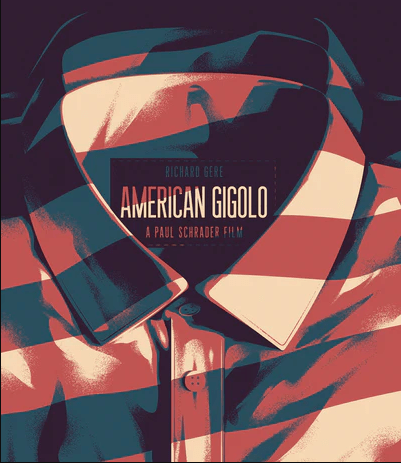
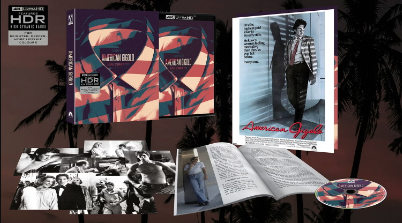
The Arrow Video 4K UHD and Blu-ray release of American Gigolo has a 4K remaster from the original negative by Arrow Films, plus extras such as commentary with film critic Adrian Martin; interviews with Paul Schrader, Héctor Elizondo, Bill Duke, editor Richard Halsey, camera operator King Baggot, music supervisor and KCRW DJ Dan Wilcox and Professor Jennifer Clark; a trailer; an image gallery and a reversible sleeve featuring original and newly commissioned artwork by Tommy Pocket. You can order it from MVD.

ARROW VIDEO 4K UHD RELEASE: Narc (2002)

Detroit narcotics cop Nick Tellis (Jason Patric) is recovering from an undercover operation gone wrong. In the hopes of getting a desk job, he agrees to return to active duty as the partner of Detective Henry Oak (Ray Liotta) as Oak looks into the death of his partner, Michael Calvess. The film goes into what it’s like to be a cop, as the decisions often end up with lives ruined — the cops, the criminals and even the bystanders. That’s why Tellis wants to escape this world, unlike Oak, who wants to destroy the dealers who he feels addicted his friend and partner.

Director and writer Joe Carnahan couldn’t get this sold until Ray Liotta found it and became the star and producer. What a loss that would have been if this just faded away. This totally changed the way that I see Patric, as he’s so powerful in this, working against Liotta, one of the best actors of his era. Nothing in this makes me ever want to be a cop, as it feels like being in the end of the world every single day. Even if you save someone, as Oak did with a child prostitute, you have to protect them every day and even cover up their crimes. Nothing ever works out. No one understands. And the next day, it starts again.

What a powerful and bleak film.


The Arrow Video 4K UHD of Narc has a new filmmaker-approved 4K remaster, immersive Atmos audio and hours of previously unreleased on-set interviews and brand-new bonus features, such as an archival feature commentary with director Joe Carnahan and editor John Gilroy (which is incredible, I watched it with the film and it’s packed with information); a new introduction from Carnahan; interviews with Carnahan, director of photography Alex Nepomniaschy, actor Krista Bridges and costume designer Gersha Phillips; promotional featurettes; press kit interviews with Carnahan, Ray Liotta, Jason Patric, Diane Nabatoff, Alex Nepomniaschy and William Friedkin; a trailer and image gallery.

Plus, you get a reversible sleeve featuring original and newly commissioned artwork by Nathanael Marsh, a double-sided poster featuring original and newly commissioned artwork by Nathanael Marsh and an illustrated collectors’ booklet featuring new writing by Michelle Kisner, a new interview with producer Diane Nabatoff and archival interviews and articles. You can order it from MVD.

ARROW VIDEO BLU RAY RELEASE: Rampo Noir (2005)

Based on the works of Edogawa Ranpo, this anthology film features four different stories told by manga artists and directors. It’s a strange film that looks gorgeous and feels incredibly dense.

“Mars Canal, by Suguru Takeuchi, starts the film. A wordless episode, it has a nude man wandering a wasteland and longing for a lover long gone.

“Mirror Hell” was directed by Akio Jissoji (Tokyo: The Last MegalopolisUltra Q: The Movie) has Ranpo’s Detrective Kogoro Akechi (Tadanobu Asano) trying to solve a mystery, as women are turning up with burned faces and a mirror figures into the solution.

“Caterpillar” was directed by pinky director Hisayasu Satō and has its lead, a war hero, return home deaf and without limbs, dependent on his wife for everything. All he can do is see and her beauty stands in contrast to the way that she treats him.

Manga artist Atsushi Kaneko directed the final story, “Crawling Bugs,” as an actress is kidnapped by her limo driver.

I’ve never seen any of the work of any of the filmmakers in this and they’ve really created something unique. It’s definitely something different and if you love aesthetically pleasing films that also strive to upset you, good news. This one will do the trick.

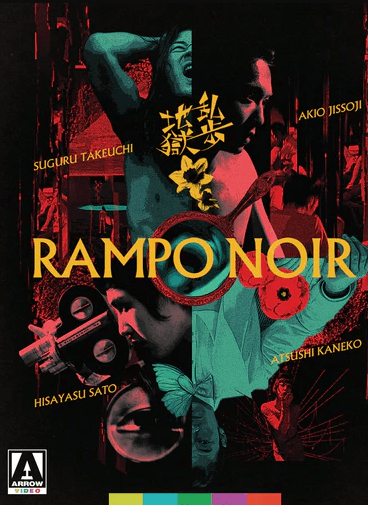
The Arrow Video Blu-ray release of Rampo Noir has new audio commentary by Japanese film experts Jasper Sharp and Alexander Zahlten; new interviews with directors Suguru Takeuchi, Hisayasu Sato and Atsushi Kaneko, cinematographers Masao Nakabori and Akiko Ashizawa and Yumi Yoshiyuki; premiere and making-of features; a reversible sleeve featuring original and newly commissioned artwork by Luke Insect and an illustrated collector’s booklet featuring new writing on the film by Eugene Thacker and Seth Jacobowitz. You can order this from MVD.