Mill Creek Drive-In Classics: That Guy from Harlem (1977)

Tell Big Daddy that nobody fools with The Guy from Harlem, you dig?”
— Let than be a warning to anyone who decides to mess with John Shaft, er, we mean, Al Conners

I’m just talkin’ about . . . Al Connors?

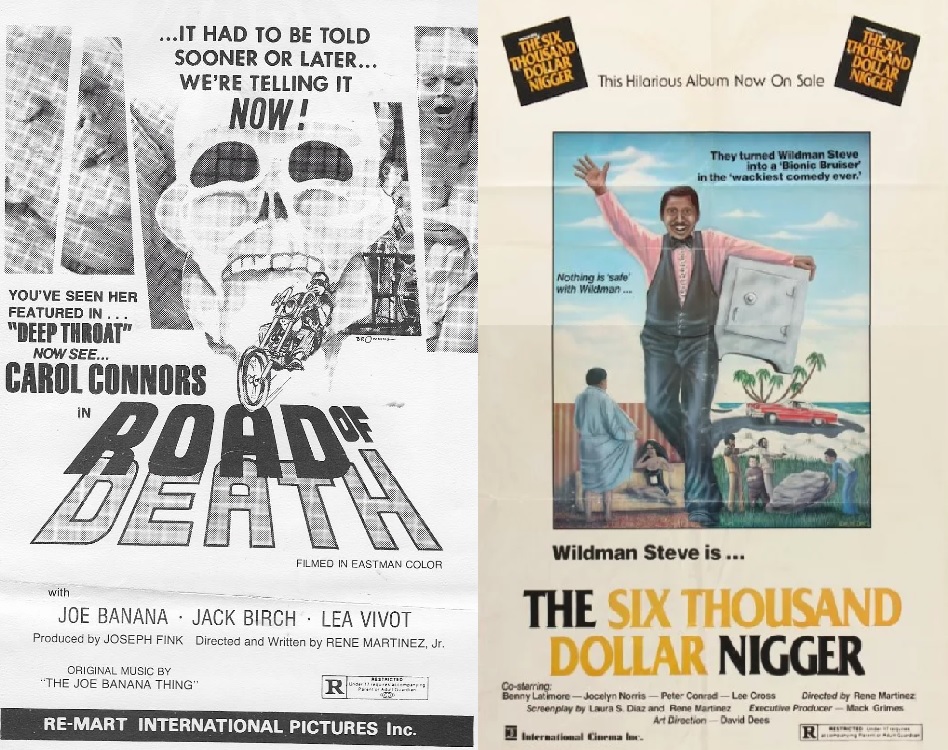
Rene Martinez, Jr. only made three blaxsploitation films, but wow, what a VHS-rental trio they were: his debut, the bike-slanted Road of Death (1973; okay, so that’s not exactly blaxploiting), and his final effort, The Six Thousand Dollar Ni**er (1978) — which aka’d as the less offensive, Super Soul Brother, and even Black Superman. Each are equally inept in all of their flubbed lines, mumbled to staccato-SHOUTED thepsin’, bad sound, exposed mic booms, clumsy soft-core sex, and Rudy Ray Moore-styled fighting awfulness: which is just how we like our blaxploitation romps to roll. You dig?

If an ex-Deep Throat actress . . . and a guy trying to pull a Rudy Ray Moore film and album combo doesn’t inspire you. . . .

In between, Martinez made this Shaft ripoff penned by his wife, Gardenia, concerned with the adventures of a rough n’ tumble, streetwise private eye named Al Connors (Loye Hawkins). Working a case in Miami, Florida, Connors is called back up to Harlem by the CIA to protect an African princess from a kidnapping plot. His assignment leads to the kidnapping of a drug kingpin’s daughter by a rival gang who wants the princess. . . .

At least I think that’s how the two stories intertwined. Yeah, we’ll go with that plot. Sorry, I was blinded by the plaid and pastel-colored suits. Those white patent leather shoes aren’t helping, either. I mean, we are dealing with a story where the CIA can’t handle the protection of a government dignitary — their job description — and contract a fourth-rate private eye. So, forget “logic,” okay?

Eh, Martinez and Loye Hawkins — like Rudy Ray Moore (Petey Wheatstraw) before them — couldn’t write, act, or direct, but they gave it a shot — with whom I think are moonlighting porn actors (especially that curly-haired blonde white guy for the “big fight” finish). Sadly, the excitement of the blaxploitation-era was over and done by the time this Martinez opus hit the drive-ins . . . to later be discovered by an April Wine tee-shirt wearing lad obsessed with ’60s biker flicks and ’70s blaxsploitation films populating the “Action” shelves of his local video emporium. Sure, you have it easier with these Mill Creek sets, but, well . . . I guess you just had to be there . . . for the days when you had to physically leave your house to rent a movie and there were no bargain box sets.

Boris Karloff and Loye Hawkins one-stop shopping!

There’s two ways to enjoy The Guy From Harlem on Tubi: the original version or its Rifftrax version. There’s no freebie streams of Road of Death, but we found a trailer on You Tube — which is all you really need, trust us. There is, however, to our celluloid chagrin, a copy of The Six Thousand Dollar Ni**er on You Tube to torture one’s self by.

More karate-inspired blaxploitation!

About the Author: You can learn more about the writings of R.D Francis on Facebook. He also writes for B&S About Movies.

MILL CREEK DRIVE-IN MOVIE CLASSICS: Blood Mania (1970)

EDITOR’S NOTE: This movie has already appeared two times on our site with entries by Bill Van Ryn on February 13, 2021 and Eric Wrazen on February 15, 2021. Here are both their takes!

First up, Bill…

ABOUT THE AUTHOR: Bill Van Ryn is the creator of Groovy Doom and publisher and editor of Drive-In Asylum. I’m always so happy when he gets the opportunity to write something for us.

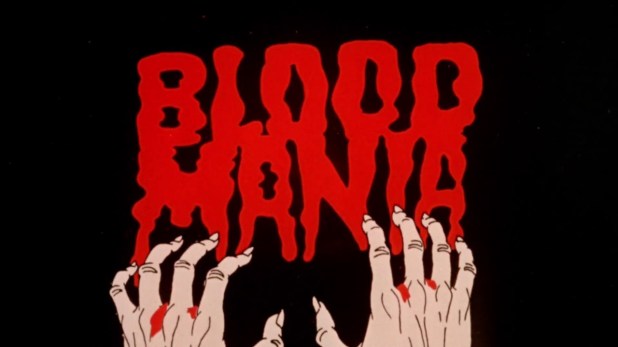
So let’s say you’re a kid in the later 1970s, and you’re really into watching scary movies on late night TV. You can’t get away with that very easily at home, but when you visit your grandparents on the weekend, they go to bed early and don’t really care if you stay up and watch TV. When you’re there, you try and see anything marked “-THRILLER” in the TV Guide. On one dark night Saturday night, you stay up late to watch a movie called Blood Mania. With a title like that, it’s going to be really scary, you just know it. The opening credits are a weird montage containing slow-motion shots of a woman in a nightgown running from some unidentified horror. This is interrupted by an animated piece where the word “BLOOD” – in large, gruesome red letters – is attacked by a pair of cartoon hands, which claw at the letters until they say “BLOOD MANIA”. There is a terrifying scream that makes your hair stand on end. You don’t realize it yet, but this movie has just shown you everything that is possibly of interest to an 8-year-old monster kid, and it won’t be very long before the TV is turned off and you’re asleep.

This may have been the experience of anybody who happened to watch “Blood Mania” as a child, because it’s one of the talkiest things you could hope to see. The shocks in the film are mostly of the daytime drama variety, so kids would probably check out of this movie very early on. This is probably a good thing too, because during the course of the story we are confronted with situations such as cheating on one’s romantic partner, a hopelessly dysfunctional family of estranged people, a woman who is willing to murder her invalid father for a little bit of money, a ruthless blackmail scheme, the use of amyl nitrate for kicks in bed, and repressed trauma linked to incestuous abuse.

Revisiting it as an adult, however, I appreciated it in a totally different way. Director Robert Vincent O’Neil (Angel, Wonder Women) finds an absolutely glacial pace for this movie, but it is such a visually compelling experience that you don’t seem to mind. Back in the days of turntables, sometimes you might have played one of your 45 rpm records on 33 1/3, just to hear what it would sound like slowed down, and “Blood Mania” is the visual equivalent of just that. I’m a sucker for any movie that emulates Bava’s colored lighting, but the set – a Los Angeles mansion that was once the home of Bela Lugosi – is just as wonderful.

Blood Mania was co-written by lead actor Peter Carpenter, one of two films (Point of Terror is the other) that were created by Carpenter with producer Chris Marconi.  Carpenter had been selected by Russ Meyer for a small role in Vixen! after Carpenter’s girlfriend included a photo with him as part of her audition materials. A role alongside Dyanne Thorne in 1970’s softcore drama Love Me Like I Do followed, and this two-film package with Marconi undoubtedly represented a bid for establishing himself as a working actor – a commodity, even. A career never manifested, and Carpenter disappeared. Despite rumors that he vanished because he died, he actually simply left the movie business, although he did pass away at the too-young age of 56.

Carpenter plays a shady doctor named Cooper, who is being blackmailed for providing illegal abortions. The sex-starved daughter of one of his patients offers to help him with his ‘tax problems’, and after he beds down with her to consummate the deal, she kills her father, expecting to inherit his estate. When her younger sister appears for the reading of their father’s will, however, things don’t turn out quite the way Victoria had hoped, and all three of their lives quickly begin to unravel.

Although made in the United States, Blood Mania sure does have the feel of a European film, in part because of its sumptuous look, but also because of its dreamlike atmosphere. Its horror film approach to soap opera material felt like a cheat the first time I saw it, but that’s what actually appealed to me in the long run. Like the Sisters of Mercy doing a Dolly Parton cover version, the result is something a little unexpected and marvelous. Although it does appear on Mill Creek compilations, there is also an incredible 2017 blu ray restoration by Vinegar Syndrome out there that blew my mind when I saw it.

***

Update: July 21, 2021: We’ve also previously reviewed Peter’s work in his forth and final film — which he, as with Blood Mania, wrote and produced — Point of Terror. And, thanks to frequent reader and uber Peter Carpenter fan, librarian Mike Perkins (thus his awesome research), we learned of this new blog entry from B&S About Movies’ friend Mike Justice, on his The Eerie Midnight Night Detective Agency blog regarding Peter Carpenter’s life and all-too-short career. Strap it on, it’s a great read.

And, surf over to this really cool Flickr posting from Mike Perkins, featuring early photos of Peter. And, there’s no stopping Mr. Perkins’s fandom, as he also honored Peter by not only having Peter’s IMDb page updated with correct information, he created an all-new Find A Grave entry for Peter. Did you know that Peter’s real name was Nathaniel Joseph? Or that he was in the Air Force? We do now, thanks to Mike Perkins’s hard work.

Yeah, we love our readers! Thanks for contributing to B&S About Movies, Mr. Perkins! (Yeah, we love you too, Justice.) And we love it when our readers reinforce and uplift our passions in honoring the actors and filmmakers of our youth. You gotta fight for the ’cause!

Now here’s Eric’s take…

ABOUT THE AUTHOR: Eric Wrazen is a Technical Director and Sound Designer for live theatre, specializing in the genre of horror, and is the Technical Director the Festival de la Bête Noire – a horror theatre festival held every February in Montreal, Canada. You can see Eric as an occasional host and performer on Bête Noire’s Screaming Sunday Variety Hour on Facebook live. An avid movie and music fanatic since an early age, this is Eric’s first foray into movie reviewing.

(From Wikipedia) Blood Mania is a 1970 American horror film written by Peter Carpenter and Tony Crechales and directed by Robert Vincent O’Neil, and starring Carpenter, Maria De Aragon, Vicki Peters, Reagan Wilson, Jacqueline Dalya, and Alex Rocco. The film stars Carpenter as a doctor whose mistress, an heiress, murders her terminally ill father to help him pay off a debt.
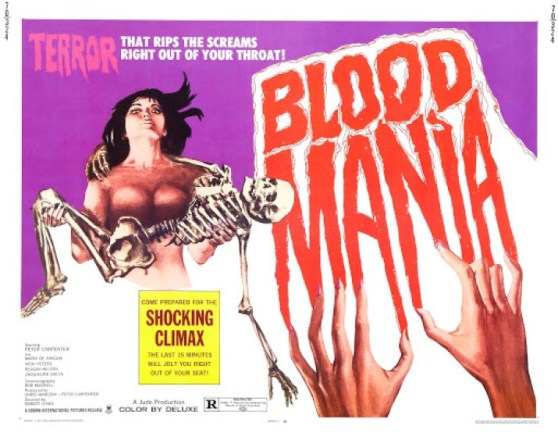
If there is one thing that can be said about Blood Mania, it’s that it’s a movie.

You really have to hand to Mill Creek Entertainment. “Gore House Greats” is an amazing title for a movie collection. Likewise, Blood Mania is an amazing title for a movie. Unfortunately, in the case of Blood Mania, it is neither gory, nor that bloody. There’s a little bit of mania, so I guess they get points for that.
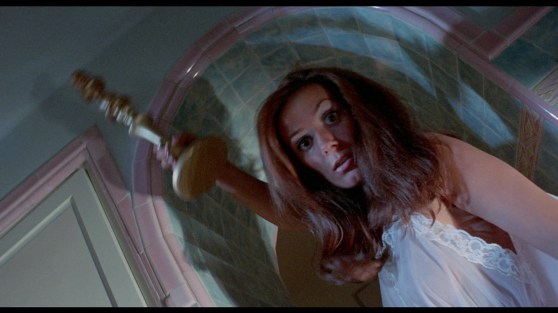
The opening sequence for Blood Mania is a freaky dream sequence depicting the stalking of a hippie babe in a peekaboo nightie over the sounds of a budget version of the Velvet Underground detuning and abusing their instruments. OK. So far so great!

Sadly, the rest of the movie doesn’t come anywhere near this level of freakiness and fun.

A more apt title for Blood Mania would have been “Worlds Dumbest Doctor” or possibly, “Victoria, The Crazy Bitch”. Either of these is a better indicator of the easy, sleazy melodrama you are about to witness.

Briefly (and without spoilers) Bloody Mania follows the sordid tale of Dr. Craig Cooper, one hunky hunk of burning physician as he beds babes of varying levels of wealth in order to bang his way out of a bad debt. Even this synopsis makes Bloody Mania sound more interesting than it actually is. In reality, this movie is closer to a soap opera with a little nudity thrown in to keep things sleazy.
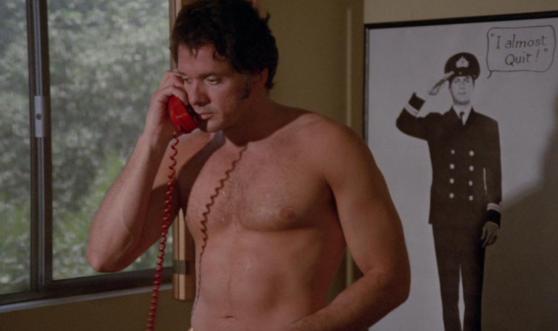
I feel that this movie would have been better pitched as a Russ Meyer or Doris Wishman style sexploitation flick. There’s plenty of sex and it includes a plethora of sexploitation’s favorite tropes like nymphomania, blackmail, abortion, lesbians, and drugs. It also uses a bunch of classic sexploitation tricks used to fill out the running time when there isn’t enough plot to fill 90 minutes. A fair portion of Blood Mania consists of people driving around, frolicking on the beach, or visiting an amusement park. This is the kind of movie that “fast forward” was invented for.

Blood Mania isn’t a good movie, nor is it a “so bad it’s good” movie. But it is a movie. And I guess for Mill Creek Entertainment – that counts for something.

MILL CREEK DRIVE-IN MOVIE CLASSICS: Treasure of Tayopa (1974)

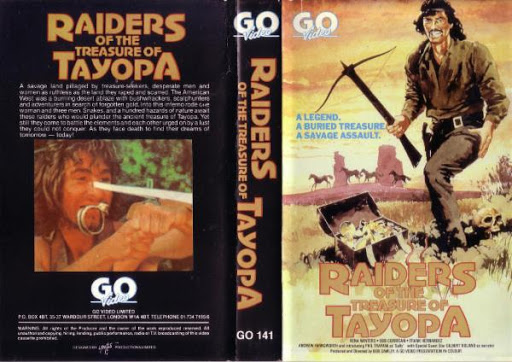
Yeah, nearly a decade after this movie was released in theaters, it came back out as Raiders of the Treasure of Tayopa because sometimes people get confused at the video store.

Writers Robert Mason and Phillip Michel, as well as director Bob Cawley and most of the actors in this movie, all were one and done with this film as their lone attempt at making it.

Well, they didn’t.

Except for Gilvert Roland, the one-time Cisco Kid, is the narrator. Yet two of the charcacters also narrate the film, which is different. So is having a female lead in a Western. But as three people and one psychopath head to Mexico to take seventeen tons of gold back to America.

You may see the beginning — a cockfight — and think, “This is going to be some watchable sleaze.” But it isn’t. It isn’t even sleaze. It’s Treasure of the Sierra Madre without talent, storytelling, visual appeal or Bogart, but it does have a bad guy who is a man named Sally. One assumes that his father named him that because he knew that he wouldn’t be there to help him along, so he gave him that name and said goodbye, and he knew Sally would have to get tough or die.

Can you imagine renting this and expecting movie serial style action? The box art just screams desperation and disappointment and now, this film lies waiting for you amongst 49 other movies.

A wise man once said, “Marion, don’t look at it. Shut your eyes, Marion. Don’t look at it, no matter what happens.”

You should listen to him.

MILL CREEK DRIVE-IN MOVIE CLASSICS: The Lazarus Syndrome (1979)

First off, I’d like to call out the person who posted the American Playhouse episode “Displaced Person” on YouTube and said that it was The Lazarus Syndrome. Obviously, you’re racist and think that Sam “Detective Sapir” Shaw is Louis Gossett Jr. That said, it was the story of a black kid who grew up and thought he was German and the army unit that saved him which included Matt “Max Headroom” Frewer and it won an Emmy.

This is not the made for TV movie that I was looking for.

I mean, a Kurt Vonnegut Jr. novel adaption? I’m awake all night looking for hard video drugs like Mattei WIP movies and Eastern bloc films about spiders copulating with virginal villagers, not things that are going to teach me how to be a better person.

Now I have to watch The Lazarus Syndrome.

The real The Lazarus Syndrome is a 1979 American made-for-television thriller directed by Jerry Thorpe that launched a weekly ABC series that lasted all of four episodes.

Starring E.G. Marshall as Dr. Mendel and Louis Gossett Jr. as Dr. MacArthur St. Clair, this was written by William Blinn, who also developed the TV shows The InternsThe RookiesEight is Enough and Starsky and Hutch. He also wrote Roots for television and Purple Rain, so the guy has a resume and a half, right?

Sadly, it doesn’t show here. The focus is on the then hot news of hospitals becoming big business and nobody wants to be reminded of this today. Man, Mill Creek, you decide to put the weirdest stuff on these sets. Who wanted to see a TV pilot that went nowhere other than me? Am I your target audience?

MILL CREEK DRIVE-IN MOVIE CLASSICS: Rattlers (1976)

EDITOR’S NOTE: We originally watched and logged this on January 7, 2020. Do you have an opinion on this movie? Let us know! You can also see our thoughts on the sequel here.

Harry Novak, welcome back to B&S About Movies!

You brought us The Child. You brought us Wham! Bam! Thank You, Spaceman! You brought us Dr. Frankenstein’s Castle of Freaks, The Sinful Dwarf and Toys Are Not for Children, not to mention Suburban PagansPlease Don’t Eat My Mother! and Indiscreet Stairway.

The Sultan of Sexploitation! The King of Camp! And as H. Hershey, you directed early 80’s hardcore like Moments of Love. You were scum and I say that with the kind of infection I usually reserve for small animals. I wish you were alive so I could hug you.

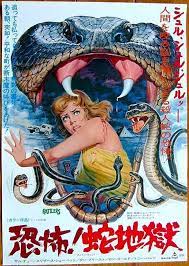
How can you not love any movie that starts with two young boys getting repeatedly bitten and killed by an entire pit of angry rattlesnakes after their parents pretty much ignore them for cans of beer?

Soon, the local sheriff has to call on underpaid college professor and herpetologist Dr. Tom Parkinson to learn why the snakes are just so darn aggressive. Of course, Dr. Tom can barely keep his own cobras in their cages.

Parkinson and war photographer Ann Bradley soon learn that the military base has authorized the disposal of a nerve gas called CT3 and it’s causing all this commotion. Colonel Stroud, the guy behind it all, ends up killing the base’s medical officer before the cops close in and gun him down, too. The snakes, presumably, are still on the loose.

Director John McCauley waited nine years to make another movie, 1985’s Deadly Intruder. The movie also features Darwin Joston, who was Napoleon Wilson in Assault on Precinct 13 and Dr. Phibes in The Fog.

You can watch the Cinematic Titanic riffed version of this movie on Tubi.

MILL CREEK DRIVE-IN MOVIE CLASSICS: Street Sisters (1974)

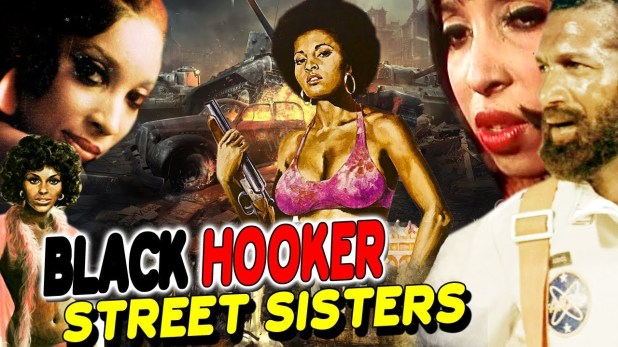
What would you do if your mother was a hooker?

Honestly, I’d be less embarrassed by that fact than I am to admit that I watched this movie.

Arthur Robinson was the auteur of this whole shebang, as he directed, wrote, art directed, production designed and even decorated the sets and wrote the original play that it was based on Don’t Leave Go of My Hand. This is his deal the whole way out and I’m shocked that he didn’t star in it as well.

The main character is the white-passing son of a light-skinned prostitute sent to live with his grandparents and forever stuck between the worlds of black and white. That sounds very sweet, except that Grandpa assaults Young Boy’s girlfriend, which is not the positive life lesson I was hoping for.

Somehow, this was sold as a blacksploitation movie when it’s closer to that chitlin circuit plays you used to see advertised at 4 AM right before Perspectives.

Then again, I’ve never seen a movie that goes from a sepia funeral to the main character choking his mother to death, so there’s that. Spoiler warning for a film I warn you to not watch.

Then I give you the YouTube link.

Mill Creek Drive-In Classics Week: Savage Weekend (1976)

ABOUT THE AUTHOR: Benjamin Merrell lives in Seattle, WA. You can check out his blog at cestnonunblog.com and follow him on Letterboxd.

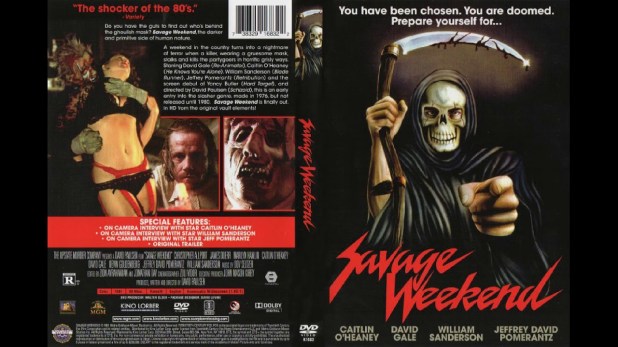
Several Manhattan yuppies escape the city for a nice, relaxing weekend in the hillbilly-infested Appalachian hills of…Upstate New York. Little do they know that their weekend of fun is about to turn deadly…

Recently divorced Marie has a new stockbroker boyfriend who just bought a farmhouse upstate and is in the process of building a boat on the property. So they, along with Marie’s sister and her gay best friend, leave the city to check on the progress of the boat and enjoy a pleasant weekend out in the country. But not long after they arrive at the farmhouse someone puts on the gruesome Halloween mask Marie’s sister bought as a joke and is now killing them all one by one.

The possible suspects are numerous; too many if you ask me. The biggest weakness this movie has is how they handle the mystery of the killer’s identity. The whodunit aspect relies heavily on having way too many red herrings, especially considering there aren’t even that many characters in the movie. They want you to believe that anyone could be the killer, but the overabundance of potential suspects only succeeds in making it more obvious as time goes on who the killer actually is. There’s a scene towards the end where three of the potential suspects are running with weapons through the woods after Marie. They could have built this moment up as a real nail biter of a finale where Marie (and the audience) would have no idea which one of them was the real killer and which was her savior, but unfortunately by that point in the story the killer had already been long revealed, which sapped a good deal of the tension out of what could have been a really great finale set piece for the film.

The two most obvious suspects for the masked killer are Mac, the guy providing lumber for the boat, who is way too comfortable sexually harassing Marie (who, to be fair, hasn’t been doing a particularly great job of showing that she’s not interested) and Otis (played by the always fantastic William Sanderson), whose father was the previous owner of the farmhouse and is currently helping with the construction of the boat. Mac, who gives off his own creeper vibes, tells them a story about how Otis attacked a couple, almost beat the guy to death and then branded his girl with an ‘H’ (for ‘whore’. Otis is not the brightest bulb.) It’s never really clear if there’s any truth to the story or if Mac was just making up the whole story about Otis, but regardless Otis definitely is a creepy motherfucker. Of course, Mac is no saint either. After telling his story he then enjoys the hell out of watching his big city boss step on a fishhook.

They aren’t the only ones the movie casts suspicion on though. Could it be Jay, the gross boat engineer whose hands have been all over Marie’s sister all weekend? Or what about the gay best friend, Nicky? This is the red herring I find the most questionable. Nicky is actually pretty badass at the start of the movie. The first thing he does after they get into town is he tries to order a fancy martini at the local watering hole, much to the confusion of the bartender, who has apparently never heard of a martini before, and the local hicks who don’t take kindly to gay folk in their small backwoods town (despite the fact that they’re both dressed like reject Village People). Nicky has a pretty good grasp of the situation though, and he handily kicks their asses before they get a chance to gang up on him, and he looks pretty cool doing it. But instead of using that to set him up as a character who can take care of himself when the killer eventually shows up, the rest of his character arc quickly becomes a lot more problematic. Some unfortunate gay panic was definitely slipped into the script because from then on he’s portrayed much more like a sexual predator than a potential victim, despite not having really done anything to deserve that portrayal. Everyone in this movie has to be at least a little suspicious though.

Released in the late summer of ‘79 as one of the early proto-Slashers, but shot in 1976, Savage Weekend definitely has more in common with 70’s grindhouse sleaze like The Last House On The Left or Deliverance (both released in 1972) than the more kill-focused slashers of the 80’s. The gore factor might be a little disappointing for an audience raised on 80’s slashers (forget gore, there’s barely any blood), but Savage Weekend actually does a great job of making that violence feel visceral and real, even if they don’t end up showing much. Most of the violence lives, not up on the screen, but in your head long after the scene is over, and much like with Texas Chain Saw Massacre, you’re probably going to walk away from this movie thinking it was a lot gorier than it actually was.

This does make sense, as people were much less obsessed with gore in the mid-70s and much more obsessed with sex, which this movie has in spades. Everyone’s constantly getting naked, or hooking up, or getting naked and hooking up, or watching someone get naked and hooking up. Every aspect of the movie feels constantly sexually charged, which leads you to believe there’s going to be more of a psychosexual aspect to the killer that never really pans out. Horror usually reflects the fears of the era it was produced in and Savage Weekend is no different. Fears of sexual liberation, female empowerment, gay liberation, and divorce all have roots in the themes of this film.

Savage Weekend isn’t perfect. The writing is sloppy and unfocused. It tries to do too much with too little, and the small budget limitations definitely show at times. But it also captures a little magic that not all of its contemporaries can make claim to. There’s a reason Savage Weekend has a cult following. It has a very unique quality to it that’s hard to pin down. It has this odd rhythm to it that really draws you in, so even if the whodunit aspect of it turns out to be a real bust, there’s still a real mystery hanging over its atmosphere that makes this movie a real blast to watch for fans of the genre.

MILL CREEK DRIVE-IN CLASSICS: Savage Weekend (1976)

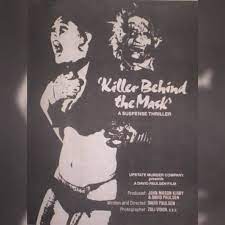
While it wasn’t released until 1979, the movie that became Savage Weekend — also The Killer Behind the Mask — started as The Upstate Murders. That means that it predates most of the commonly accepted “first” slashers like Halloween and Friday the 13th.

It was acquired by the Cannon Group — one of the few slashers they put out along with Silent Night, Bloody Night*X-RayNew Year’s Evil and The Texas Chainsaw Massacre 2, although I can make an argument for CobraHero and the Terror and 10 to Midnight being slashers and I consider Schizoid Americanized giallo — and had a budget of $58,000.

This is a slasher with the most ridiculous of conceits — everyone comes to upstate New York to see a new schooner — but it also has a heroic gay character (Nicky, played by Christopher Allport, who was in both Jack Frost movies and ironically killed in real life by an avalanche) and a woman escaping a bad marriage which seemingly has followed her. Also, since the aspect ratio got screwed up, the boom mic is a frequent co-star.

That said, it has a sewing needle through the head, someone accidentally killed by a bandsaw when the wrong light switch gets turned on, a hanging and an Upstate New York Chainsaw Massacre. It’s not perfect — it’s barely even worthwhile — but at least director/writer got to go on and make the much more interesting Schizoid, which has hot tub therapy sessions, scissor murders, Donna Wilkes being in love with her father Klaus Kinski and a love scene where Kinski has sex with a stripper against a hot water heater.

*I realize that this film is a Dewey-Friedland Cannon release and not Golan-Globus. That said, Golan-Globus distributed Graduation DayDon’t Go Near the Park and The Hills Have Eyes Part 2, but did not make them.

Mill Creek Drive-In Classics: Prime Time (1977), aka American Raspberry (1979)

NBC’s Saturday Night Live, initially known as NBC’s Saturday Night, premiered with its debut host, George Carlin, on October 11, 1975. The show’s taboo, National Lampoon-inspired comedy sketches that parodied contemporary culture and politics, was a late-night ratings blockbuster. So it was inevitable it would inspire a series of low-budget, “sketch anthology” drive-in knock offs.

The best known — and box office successful — of the faux-Not Ready for Prime Time Players ensembles was the The Kentucky Fried Movie (1977) directed by John Landis and written by the ZAZ team of David Zucker, Jim Abrahams and Jerry Zucker (later of Airplane! and The Naked Gun). Prior to SNL making it to air was the equally successful, X-rated The Groove Tube (1974). The writing and directing debut by Ken Shapiro, he would later do the same for the early, Chevy Chase comedy bomb, Modern Problems. You may also remember the better, late-to-the-game Amazon Women on the Moon (1987) featuring segments directed by Joe Dante.

Lost in between the success of those comedic omnibuses are Herschell Gordon Lewis’s trailblazer Miss Nymphet’s Zap-In (1970), The Boob Tube (1975), American Tickler (1978), Coming Attractions, aka Loose Shoes (1978; starring experienced improv-comics Bill Murray and Howard Hesseman), and National Lampoon’s hour-long cable special Disco Beaver from Outer Space (1979).

Join B&S guest writer Robert Freese — also of Videoscope Magazine and Drive-in Asylum — for his “Exploring ’80s Comedies” blowout.

Then there’s this forgotten knockoff directed by Bradley R. Swirnoff and written by the BFS team of John Baskin, Stephen Feinberg, and Roger Shulman. Another similar, forgotten project from the comedic think tank was Tunnel Vision (1976).

As with their previous Tunnel Vision, Prime Time also deals with the nation’s first uncensored television network. This time — instead of the new network being part of a legitimate business venture in the future year of 1985 — all world television transmissions have been interrupted by an “unknown source” broadcasting a lineup of tasteless programs and commercials. Warner Bros. — who got involved hoping to appeal to the “hep” National Lampoon-reading college crowd weened on SNL — bankrolled the film for a mere $30,000 and intended to release it. When they saw the end product and deemed it “unreleasable,” they sold it to Cannon Films, which released it as American Raspberry in 1979. In fact, MGM was also burned (to the tune of $3 million) by Not Ready for Prime Time Players-connected material: the studio pulled SNL’s short film auteur Tom Schiller’s science fiction comedy (also working as a pseudo-anthology comedy), Nothing Last Forever (1984), from release and never screened it, anywhere (it’s now in the copyright vaults of Warners and part of the TCM library; Warners owns the pre-1986 MGM library).

Okay, back to the movie. . . .

As the President of the United States tries to get to bottom of who is responsible the tasteless transmissions, we’re subjected to a series of programs and commercials, aka skits, for 75-minutes of politically incorrect spoofs that would give today’s hashtag warriors a brain aneurysms as set they off on a quest to cancel-culture everyone connected to the project from existence.

There’s abortions and gynecologists. Catholic and midgets. Tampons and (fat) Charlie’s Angels (the series “Manny’s Nymphs”). There’s commercials calling out the tobacco industry and non-profit organizations like Save the Children. There’s spoofs on the then popular, yet annoying, commercials for car batteries (for an Execution organization promoting their “Die Tough Batteries”) and credit cards (“American Excess”). The capper is a commercial — that plays during the sitcom The Shitheads — for Trans Puerto Rico Airlines: its plane filled with goats and chickens as flies buzz around a pot of chili. Oh, wait: that’s topped by “sports coverage” of the Charles Whitman Invitational — as hunters sniper people and animals from a tower perch. And it goes on with a telethon raising funds for transvestites. Adolf Hitler pitching audio cassettes. Erection prevention sprays. Dog food commercials spoofing that funny topic of cannibalism.

And none of it is funny. None.

Well, at least not to me. Eh, the road to Judd Apatow had to start, somewhere. But why here? Oy, this was a chore to sit though. And to think my kid and teen self coveted these “adult comedies” back in the day. Yeah, sure . . . The Kentucky Fried Movie and The Groove Tube are okay, but this is, well, Plfffffffft!

Learn how National Lampoon got its start — in the frames of A Futile and Stupid Gesture.

The B&S About Movies crowd will notice the familiar character actors of Harris Yulin and Royce D. Applegate, along with Harry Shearer (This Is Spinal Tap), Warren Oates (Two-Lane Blacktop), Stephen Furst (Animal House), and an early Joanne Cassidy. And yes, that is Twink Caplan (Bloodspell), who became a successful producer in her own right with the ’90s comedies Curly Sue and Clueless. So, if you’re curious in seeing where those actors of VHS yore got their start, there’s something here to see. All others: hit that button and skip to the next Mill Creek selection.

It’s hard to believe the brains behind it all moved onto bigger and bigger things. But they did.

While Swirnoff and Freinberg left film and returned to the stage work from the improv lands which they came, we were unknowingly entertained by John Baskin and Stephen Feinberg into the late ’80s. The duo became a sought-after writing team for television, with multiple episodes of the hit series Love, American Style, All in the Family, Good Times, The Jeffersons, and Three’s Company, as well as developing the Jack Warden-starring series Crazy Like a Fox.

You can watch the trailer and full film on You Tube . . . or just watch the those “banned” commercials.

Vampires! Comedies! Rutger Hauer action! Shannon Tweed’s breasts!

We’ve since given this film a second look, as part of our two-month “Cannon Month” blow out reviewing and re-reviewing all of the films carrying that iconic logo of ’80s VHS yore.

Oh, and speaking of National Lampoon . . . we’ve been chipping away at those reviews, as well:

National Lampoon’s Animal House (1978)
National Lampoon’s Class Reunion (1982)
National Lampoon’s Movie Madness (1982)
National Lampoon’s Vacation (1983)
National Lampoon’s Joy of Sex (1984) (It’s on the list; we’re getting to it!)
National Lampoon’s European Vacation (1985)
National Lampoon’s Christmas Vacation (1989)
Vegas Vacation (1997) (Yes, it not an “official” NL flick.)

Of course, there is oh, so many more! Duh! Why doubt there’d be a Wikipage listing all of the NL films?

More futile and stupid comedy? You bet, with our “Teen Sex Comedy” and “Slobs vs. Snobs” Drive-In Friday features.

About the Author: You can learn more about the writings of R.D Francis on Facebook. He also writes for B&S About Movies.

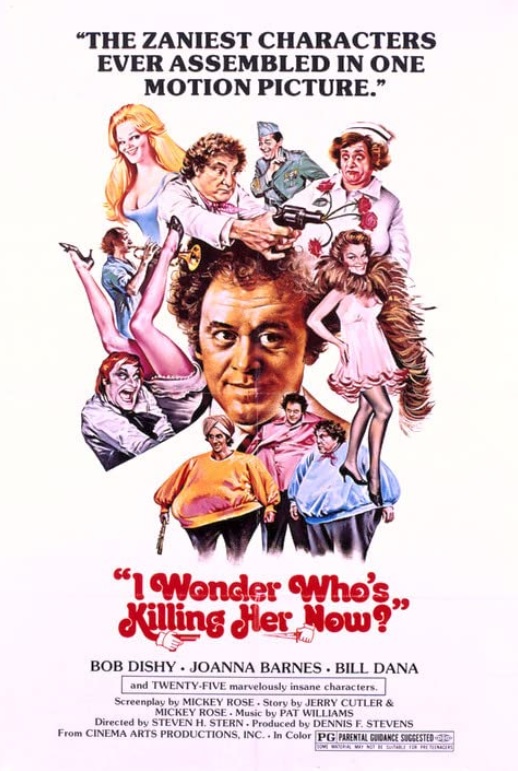
Mill Creek Drive-In Classics: I Wonder Who’s Killing Her Now? (1975)

You’ve heard Sam and myself rave — as result of his incessant, ’70s and ’80s TV movie work — the wares of Canadian filmmaker Steven Hilliard Stern. From his work with Portrait of a Showgirl (Tony Curtis and Rita Moreno!) The Ghost of Flight 401 (Ernest Borgnine!) and This Park Is Mine (Tommy Lee Jones!), Mr. Hilliard rocked our television sets. Then, in one of his rare, later theatrical works, Rolling Vengeance, well . . . a movie where a man reacts to the death of his wife and children by making a monster truck and killing everyone responsible . . . that’s our kinda movie!

Other entries in Stern’s superior TV movie oeuvre (on U.S. TV and cable; in Canada, they ran as theatrical features) are the James Brolin-starring The Ambush Murders (1982), the pre-stardom Tom Hanks-starring Mazes and Monsters (1982), and the Ned Beatty-starring Hostage Flight (1982).

I know. I know. Stop squeezing the Hilliard Stern toiletries. Get on with the review. . . .

Well, by the time of this not-so-comedy featuring second and third tier comedians, Stern was four films into theatrical features: B.S. I Love You (1971; a sexual revolution comedy starring JoAnna “Isis” Cameron), Neither by Day Nor by Night (1972; a war drama starring Zalman “Red Shoe Diaries” King), and Harrad Summer (1974; more “sexual revolution drama” starring Laurie “Eight Is Enough” Walters) — only Harrad Summer was a box office hit (and also a flop, when compared against the hit status/box office of the previous The Harrad Experiment). So off to TV Steven went, with U.S. series such as McCloud, Quincy M.E., and Hawaii Five-O. Remember when they tried to make Al Pacino’s hit cop flick, Serpico, and Logan’s Run, into TV series: Stern helmed them both.

“Ugh, R.D. The movie at hand, please.!”

Get your own copy as part of Mill Creek’s Drive-In Classics box set.

Okay, well, we have to remember Hilliard’s career is still in its infancy, but he did have a sort-of-hit on his hands with Harrad Summer leading to this . . . maybe if Steven was given a cast of better actors and comedians? And if this — being a “sex comedy” — had some actual (implied) sex or nudity? Ugh, Bob Dishy and Bill Dana (name a ’60s TV comedy), and Vito Scotti (name a ’60s comedy series that needed a Bela Lugosi-ham job), and a young Pat Morita just aren’t funny. No, the gag of Severn Darden’s (the Apes franchise) art collector walking around on his knees isn’t funny.

So, do we blame our TV movie god Steven Hilliard Stern for the out-dated, behind-the-times humor?

Nope.

Blame Mickey Rose, the brains behind the early ’60s Sid Caesar Show, as responsible for the comedic faux pas. And let us not forget the abysmal failures to spin off Tim Conway, Dean Martin, and Jonathan Winters into their own, out-of-date-before-they-made-it-to-air, one-season variety series. But wait . . . this is the same Mickey Rose who gave an assist to Woody Allen with What’s Up, Tiger Lily?, Take the Money and Run, and Allen’s first, runaway hit, Bananas (1971)? It is the same Mickey Rose!

So, what happened with Rose’s spoof of ’40s mafia films: one that plays, not as a film of the ’70s, but as a zany, madcap ’60s comedy, à la 1963’s It’s a Mad, Mad, Mad, Mad World? But perhaps that was Rose’s scripting — and Stern’s — retro-intent? But who — in the post Vietnam ’70s — wants a zany, madcap ’60s throwback?

Was nothing learned from the failed Conway, Martin, and Winters TV series? Well, this sure as hell ain’t a Mel Brooks joint by any stretch of imaginary hopes. Maybe if Peter Sellers — who had to bow out due to a medical issue with his heart — remained as our hen-pecked, embezzler-cum-assassin?

So . . . Jordon Oliver (the awful Bob Dishy in the planned Sellers role) has been fired from his job for embezzlement. His wife wants a divorce. Now, Jordon decides on a insurance scam: take out a million dollar policy and bump off his rich wife (the never-hard-to-gaze-at Joanna Barnes of Spartacus and The Parent Trap). But that means she needs a medical examine — on the q.t. — so Jordon contracts a shady (and offensively-troped) doctor (a young Pat Morita) on the scam. Then, Jordon hires a hitman (Bill “Jose Jimenez” Dana, who, as with Tim Conway, leaves no wonder as to why he was stuck on TV for the remainder of his career). The comedy ensues as our lazy, inept hitman contracted another hitman. And its just goes on and on . . . and it gets sillier and sillier . . . and more groan-inducing with, what seems, the ad-libbed dopiness of desperate, no-longer-relevant comedians calling attention to themselves in an attempt to outdo the other . . . as the celluloid frames creak through the analog sprockets.

I mean, come on: one assassination attempt is by a-shark-in-the-swimming pool — complete with an “Acme Shark Rentals” truck at the curbside. And that’s after Dishy wears a chicken suit. And that’s after Dishy’s fakes a piano recital by way of a backstage dwarf (disguised as a daisy) on a mini-piano peckin’ off the classics. And Dishy’s awful, ongoing “Bogart” impression jokes. And on and on and on it goes . . . where it stops, nobody knows. Even at a meager one hour twenty-seven minutes, it’s still too long. No way Peter Sellers could have made this work. Never.

Ugh. Argh! What I do for you, Steven. What I do for you.

So, yeah. Cue the T.L.P Swicegood “Wah-Wah-waaaahhhhhhs” trombones from The Undertaker and his Pals, then file this madcap farce on the not-funny-words-on-a-dusty-shelf next to the analogous box office failures of Angel, Angel Down We Go, Myra Breckinridge, and Skidoo — as a celluloid curiosity to pick at on a lazy Sunday afternoon.

Eh, well . . . at least Mickey Rose wrote and directed the original slasher spoof, Student Bodies. So, without ol’ Mickey, we’d have no ’90s Scream spoofs, so there’s that to ponder. And you can ponder it all — for free — on You Tube. Sure, it’s over on Amazon Prime, EPIX, and Paramount +, but do you really want to waste your hard-earned dollars on this? Do ya’ really? No, do you?

About the Author: You can learn more about the writings of R.D Francis on Facebook. He also writes for B&S About Movies.