Nick Wauters wrote for shows like The 4400 and Medium before he created this show, which begins at the end of World War II. A UAP crashes in the Brooks Range of northern Alaska, filled with humanoid aliens whose DNA is 99% human but who age much slower than Earth people. Ninety-seven of them are kept in Mount Inostranka by the U.S. government while the Sleepers are aliens that escaped the landing and have become part of society.
When he assumes his office, U.S. President Elias Martinez (Blair Underwood) releases the imprisoned survivors and reveals their existence to the world. That is, he would have if someone didn’t try to assassinate him. Now, the CIA unleashes a plan to hunt down the Sleepers, except the director in charge is an alien.
Sean Walker (Jason Ritter) gets involved when his girlfriend Leila Buchanan (Sarah Roemer) gets kidnapped while they are on vacation as she’s the daughter of one of the aliens.
For the first part of the show, it was told by flashback to three different timelines, while many of the characters had Twitter accounts and there was a blog — truthseeker5314.com — that revealed plot points. This was all too confusing to viewers, so the second half of the episodes was a traditional narrative.
As engaging as the show is, it started with big ratings and then lost them midway through its run. The hiatus — November to February — only caused viewers to forget about the show and it was gone — after some huge hype — after one season.
You can still celebrate what could have been by rewatching the episodes. There’s a good cast, including Laura Innes as the leader of the aliens, Ian Dale as an alien CIA agent, Hal Holbrook as a businessman covering up the aliens, Clea DuVall as a killer ET and D.B. Sweeney as an assassin.
The show felt like Lost, which just ended the same season. Maybe audiences were tired of a show that kept so many secrets. Regardless, I liked the show.
The Mill Creek blu ray box set release of The Event includes making of features, an alternate story for Dr. Dempsey, deleted scenes, episodes commentaries with cast, crew and creators, podcasts, photo galleries and more. You can get it from Deep Discount.
Jeff Corey mostly worked as an actor but also directed several TV series, including nine episodes of Night Gallery. Here, he’s working from a script by Robert Malcolm Young (Starflight: The Plane That Couldn’t Land ) based on a story by Kurt van Elting.
Tom Oglivy (Stuart Whitman) and his wife Leona (Barbara Anderson) have moved into the home of Tom’s dead cousin Zachariah Ogilvy (Alan Napier). But something is wrong with the home, something so off that even the maid, Miss Patience(Ellen Corby), won’t stay after dark.
There’s also a warning. No one is to move the trunk.
Leona dreams that a man is in her bed. Crickets stop and start with no warning. And Tom’s latest novel has a Satanic prayer typed into the middle of it. Yes, this house is strange and Halloween is getting closer, the night that the dead can return. Return for their trunk!
The Oglivy house in this episode was the Bates house from Psycho. That’s about the best thing one can say about this entry, which lives up to what Universal wanted from the show. It seems scary but has no lasting terror. It’s fun horror and not deep darkness.
“I hated “Fright Night,”” said Corey to Scott Skelton and Jim Benson for their book Rod Serling’s Night Gallery: An After Hours Tour. “…I didn’t understand the goddamn story. It was a terrible script. You see, the others I did were Rod’s and really made sense.”
Ah well. This season had been two for two before this. Hopefully next week will improve the average.
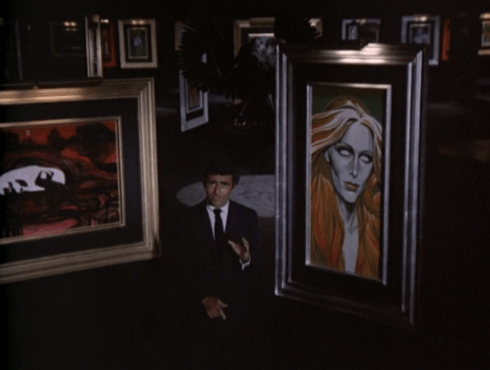
Directed by John Badham (Bird On a Wire, Short Circuit, WarGames) and written by Robert Malcolm Young (Escape to Witch Mountain) from a Fritz Leiber story, this trip to the Night Gallery has photographer David Faulkner (James Farentino, Dead and Buried) becoming slowly obsessed with his new model. She has no name. Just eyes that want something. That’s where this gets its title, “The Girl With the Hungry Eyes.”
The Girl is played by Joanna Pettet, making this episode her fourth Night Gallery role. She’s also in The Evil which also makes use of her ethereal beauty as she plays a vampire who haunts every man that sees her. Helping her exactly that are the photos taken by Harry Langdon Jr., a legendary Hollywood photographer.
Pettet
told authors Scott Skelton and Jim Benson in Rod Serling’s Night Gallery An After Hours Tour, “Doing “The Girl With the Hungry Eyes” was just a total ego trip! I walked onto the set and there were floor-to-ceiling huge blowups of me! I looked out the window and they had literally made a huge billboard out of me, sipping beer, and erected it on a building across the street. And it was probably the best I ever looked in my life. We all go through our periods — “the look,” you know? It was just perfect. And for the rest of my career I got to use these incredible shots from Harry Langdon. When would I ever have had a chance to get an entire day with somebody like that?”
Plus, you get Night Gallery regular John Astin as a beer company owner desperate to meet The Girl and a script as packed with eroticism as 1972 network television will allow. Badham argued with Jack Laird for more money and more time, even going way over to capture the final scenes inferno which got him fired until, as he said, “the next time they needed somebody.” And they did just a few days later, working on an episode of Ozzie and Harriet.
As for the life-sized photos of Pettet, she wanted one for her own. By the time she asked for one, the crew had taken all of them. Somewhere in garages and dens across Hollywood, appreciative men were now staring at their very own girl with the hungry eyes.
Directed by Lamberto Bava and written by Dardano Sacchetti (nearly every Italian movie that you love), Roberto Gandus (Macabre, Madhouse) and Giorgio Stegani (Cannibal Holocaust), School of Fear is part of the second series of TV movies that Bava was hired to make.
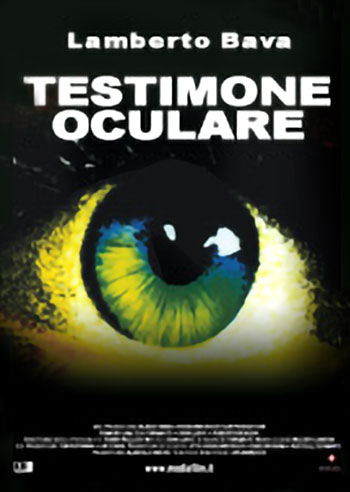
Known as Alta Tensione (High Tension), the other movies in this series are The Prince of Terror, The Man Who Didn’t Want to Die and Eyewitness. For TV movies, they have decent production values and allow Bava to explore some rather mature themes.
If you have children, let me remind you to never allow them to attend European educational facilities like the Swiss Richard Wagner Academy for Girls, the Tanz Akademie or the Giacomo Stuz private school. I mean, a child drowns at the beginning of this and that’s moments into this movie.
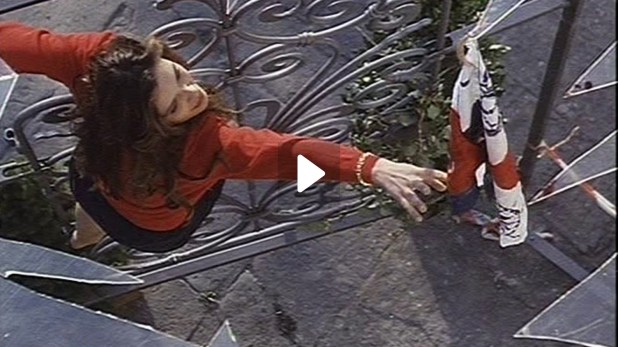
Diana Berti (Alessandra Acciai) arrives at the school and instantly runs into problems. There’s a deformed child in the shadows, her skirts are too short for the school’s leader (Dario Nicolodi) and oh yeah, she has past traumas that the school keeps bringing to the fore. You know what isn’t helping? The last teacher in her role died by going through a plate glass window and they’re never fixed all that broken glass.
The real problem, as always, is the children. They play some secret game that the last teacher — the one who took a header through a closed window — was already worried about after she learned just how frightening that it can be from one of her students.
This game takes them into the abandoned parts of the school, places that are haunting for adults much less little ones. These kids, however, are borderline monsters, able to hack into video signals, showing an image of her impaled on the front gate just like the last teacher and using Diana’s past sexual assault to remind her that no one will ever believe her when she tries to expose how horrible they behave.
They’re right.
The children are from the upper crust, the school has too good of a reputation and after all, look how sweet these young men and women are as they sing in the choir. Surely they couldn’t have done all this. Even her police inspector love interest, Mark Anselmi (Jean Hebert), thinks she’s being ridiculous about it all.
This movie is absolutely wild, as it has a classroom of kids tear to pieces the morality and art of Pier Paolo Pasolini while a child who looks like a dwarf in a red jacket runs wild on the grounds.
I have no idea why neither of Bava’s sets of TV movies are available in better quality in the U.S. Here’s hoping with Vinegar Syndrome releasing A Blade In the Dark that they go deeper into the movies that he made as his career took him to the small screen.
On March 24, 1990, NBC aired the final episode of Alf.
The main character on the show was, well, ALF (Alien Life Form). No one used his real name, Gordon Shumway. He came from the exploded world of Melmac to Earth, smashing into the garage of the suburban middle-class Tanner family who are made up of Willie (Max Wright), Kate (Anne Schedeen), Lynn (Andrea Elson), Brian (Benji Gregory), cat Lucky and later baby Eric.
ALF was such a big deal that there were stuffed toys at Burger King and a cartoon series, which was infamous for one episode supposedly having a subliminal message.
For four seasons, the family dealt with the completely rude and often hilarious being and kept him safe from the Alien Task Force. And Alf also made plenty of friends, including Willie’s brother Neal (Jim J. Bullock), a psychologist named Larry (Bill Daily) and Jody (Andrea Covell), a blind woman who falls in love with him.
ALF was incredibly difficult to make, so much so that in a People article in 2000, everyone admitted that people were constantly freaking out on the set. Max Wright hated every minute of it, losing most of the laugh lines to a puppet. He supposedly even physically attacked ALF once. That said, in the same article, he was more open-minded about the show, saying “It doesn’t matter what I felt or what the days were like, ALF brought people a lot of joy.”
Yet after the final episode, “Consider Me Gone,” Anne Schedeen said that after the final take, “there was one take and Max walked off the set, went to his dressing room, got his bags, went to his car and disappeared… There were no goodbyes.”
I always wondered why the show ended, but now that I know more, I feel for the cast. Schedeen also reported that “It’s astonishing that ALF really was wonderful and that word never got out what a mess our set really was.”
One example is her TV daughter Andrea Elson. After suffering from bulimia during the show, she admitted that if the show went one more year, everyone would have really lost their minds.
That said, ALF was in tenth place in season 2 and never went below 39th place. The kind of ratings it got back then would be a huge success today. By season 4, NBC was on the bubble, so the show did a cliffhanger. Then they got a verbal commitment from NBC. But then the show never came back.
Imagine being a child when the true worry of the show finally came true. ALF was taken by the government to be dissected after he missed aliens from New Melmac coming to rescue him. It said “To be continued,” but it never was. NBC executive Brandon Tartikoff would years later tell puppeteer Fusco “It was a big mistake that we canceled your show, because you guys had at least one or two more seasons left.”
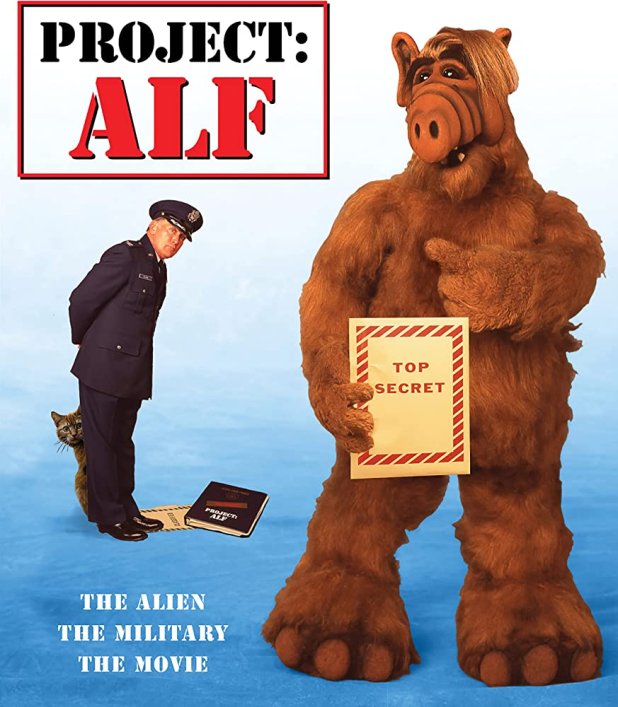
ABC would finally resolve the cliffhanger six years later with Project:ALF.
Project: Alf is one strange movie. On one hand, it has plenty of the humor of the original show. But it comes off as gallows humor, as ALF is detained at Edmonds Air Force Base and constantly being threatened by Colonel Gilbert Milfoil (Martin Sheen). He’s finally had enough and plans to incinerate the creature, despite how beloved he is by the base. Of course, ALF has taken advantage of everyone, creating a black market out of a hangar and continually winning money playing poker.
As for the Tanner family, they used the Witness Protection Program to go to Iceland.
Two of the scientists, Major Melissa Hill (Jensen Daggett, Friday the 13th Part VIII: Jason Takes Manhattan) and Captain Rick Mullican (William O’Leary, who was on Home Improvement playing the husband of his co-star Daggett) kidnap ALF and take him on the run where he meets Ray Walston — once My Favorite Martian — as a motel clerk and goes to the Kitty Kat Lounge, which he thinks is a buffet but ends up being filled with exotic dancers.
He finally ends up in the orbit of Dexter Moyers (Miguel Ferrer), who was nearly one of the men on the moon ad has now been discredited by the government. He’s going on a Piers Morgan-esque show where he will publicly show ALF to the world but Minfoil wants to exterminate Gordon Shumway before that can happen.
There’s a wild cast in this. Beyond Sheen and Ferrer, there’s John Schuck, Ed Begley, Jr., Charlie Robinson (Mac from Night Court), Beverly Archer (who was Mrs. Byrd on the original show), Ahmet Zappa and even a robot that seems to be set up to be the Higgins for ALF if this ever became a series.
The movie was directed by Dick Lowry (Smokey and the Bandit Part 3, Archie: To Riverdale and Back Again, In the Line of Duty: The F.B.I. Murders, The Gambler, The Jayne Mansfield Story) and written by Tom Patchett, who was one of the creators of ALF along with Paul Fusco, who returns to play ALF. Patchett also created the shows Buffalo Bill and The Tony Randall Show, as well as writing Up the Academy, The Great Muppet Caper and Muppets Take Manhattan.
I really enjoyed this, as it brought back happy memories from my late teen years. I think you’ll feel the same way.
Project Alf is now available on blu ray from Liberation Hall, who have been releasing some interesting TV movies lately. It has a photo gallery, a trailer and an interview with creator Paul Fusco. You can get it from MVD.
The “Skull Monster” Red King — Reddo Kingu phonetically in Japanese — has been a fan favorite since he was introduced back in a live stage show that went in-between Ultra-Q and Ultraman. It had the Ultra Q monsters — Garamon, Kanegon and M1 — destroying a lab and being joined by Antlar, Alien Baltan, Chandlar and their leader, Red King, joining in. Only Ultraman could stop them, joined by a chorus of children singing, “The mark in his chest is a meteor / He beats down the enemies proudly with his jet / From the Land of Light for the sake of us / Here he comes, our hero Ultraman.”
Designed by Tohi Narita, Red King was sculpted and built by Ryosaku Takayama. He’s always been blue topped with gold, except in Ultraman: The Ultimate Hero, in which he finally was red. His roar, which is written as Shparr!” — is a combination of Gaira from War of the Gargantuas and Godzilla.
First showing up in the eighth episode of Ultraman, appeared along with Magular, Chandlar and Pigmon, one of the few monsters — maybe because he’s small — that is nice to humans. In that episode, Red King uses his strength — he has no other powers — to rip off Chandlar’s arm and wing, then kill Pigmon under a pile of rocks. Yes, Ultraman was pretty rough but kids back in 1966 were pretty tough.
The Ultraman series were masters of recycling. The Red King suit was later used to make Aboras, then reused when Red King returned to fight Ultraman again in episode 25. The arms were then used for Zetton. These days, however, all the kaiju of Ultraman are their own unique costumers (and they’re much better as costumes and not CGI). Red King Jr. fought Ultraman Taro in episode 40 and would come back as one of the spirits of defeated kaiju that would make the ultimate monster Tyrant. Red King Jr. would become the legs while the other parts were made from Alien Icarus, King Crab, Hanzagiran, Bemstar, Seagorath and Baraba.
From 2005’s Ultraman Max to today, there’s pretty much always been a Red King variant to challenge the Ultras and humans that help them.
You can check them all out in this set from Mill Creek, including the two Red Kings from the original series, Red King III from Ultraman 80, the armored Red King from Ultraman Max and the red Ex Red King from Ultra Galaxy Mega Monster Battle — Never Ending Odyssey.
Other battles between Ultras and Red King on this set include him battling Ultraman Joneus in the animated The Ultraman, Ultraman 80 in Ultraman 80, three battles against DASH and Ultraman Max, a fight against Ultraman Mebius, one fight from Ultraman Galaxy Mega Monster Battle, three appearances against the ZAP SPACY, Gomora and Litra in Ultra Galaxy Mega Monster Battle — Never Ending Odyssey (in which he even kind of becomes good), as a spark doll in Ultraman Ginga and Ultraman Ginga S, and “the most violent Red King of all time” even defeats Ultraman Rosso Aqua and Ultraman Blu Flame in Ultraman R/B.
If you already have all of the Mill Creek sets, you have all of these fights, but it’s a gorgeous package and all of the fights look wonderful on blu ray. I’m so excited to look at it amongst the many Ultraverse movies on my shelf.
Elisa (Barbara Cupisti) and Karl (Giuseppe Pianviti) are in a department store at closing time, waiting until no one is watching so that she can steal a shirt. She’s stuck there alone as Karl runs out to get their car and while the store is closed, she sees a secretary get killed by her manager (Alessio Orano)
Or, well, she doesn’t.
Because Elisa is blind.
Directed by Lambero Bava with a script by Giorgio Stegani and Massimo De Rita, this is a made for TV giallo in which police commissioner Marra (Stefano Davanzati) investigates the suspects, which includes the secretary’s lover (Francesco Casale), as well as Elisa and Karl. At the same time, the manager thinks that Elisa knows who he is because he believes that she can sense him.
There are moments here — when it isn’t trying to be Wait Until Dark — when the film aspires toward the giallo of the past. I love the idea of a rehabilitation center for people with disabilities that tries to get them to expand their abilities. And of course the manager tracks down Elisa in the hopes of killing her in a scene that has echoes of Tenebre and “Blind Alleys” from Tales from the Crypt mixed with some incredible POV shots and great editing.
Unlike most giallo, we know the killer from the beginning. But that’s fine. The tension here comes from how close the killer gets to our heroine. And yes, as always, the cops are the absolute worst. Defund the giallo police, I always say.
“Jenifer” is based on a ten-page black-and-white story — written by Bruce Jones and illustrated by Berni Wrightson — that originally appeared in Creepy 63.
Directed — for Showtime in America no less — by Dario Argento and written by star Steven Weber, this is the story of Frank Spivey (Weber) and Jenifer (Carrie Fleming). They first meet when he saves her from a man who is trying to kill her with a meat cleaver. As a cop, Spivey tries to save her as the man says, “You don’t know what she is.” He kills the man before he can kill Jenifer. And when he sees her face, it doesn’t match her luscious body. Instead, it looks quite a bit like the child in Phenomena.
That night, while making love to his wife Ruby (Brenda James), all he can think about is Jenifer. Whatever it is about her makes him grow violent and Ruby shoves him off. It turns out that no one will take her, so he brings Jenifer home, which disgusts his wife and son Pete (Harris Allen). Yet at night, he keeps dreaming of making love to her.
Ruby tells him that he must get rid of the girl, so he drives around, trying to find somewhere to leave her. Instead, she seduces him, eats the family cat and then murders a young neighbor named Amy (Jasmine Chan). Realizing that all hope is lost, Frank leaves town with her, looking for a hidden town somewhere that they can hide out in.
Frank starts to work at a general store and begins to lose his fascination with Jenifer as he’s starting to have feelings for the store’s owner. Jenifer retaliates by finding that woman’s son, seducing him and, well, eating his penis while the teen screams in pain. Frank then tries to kill her and just like Spellbinder, the cycle starts all over again when a man saves her from a murderous Frank.
Of all the Masters of Horror episodes in the first season, this was the first to be censored with oral sex taken out and Jenifer literally castrating the young man on screen. Another story, Takeshi Miike’s “Imprint,” was outright rejected by Showtime.
There’s also a great score by Claudio Simonetti and plenty of gruesome sights from KNB. Sure, Argento’s filming here looks like a TV movie because that’s what it is. He is following a lot of the panels of the comic book, though. He would return for the second season to make “Pelts.”
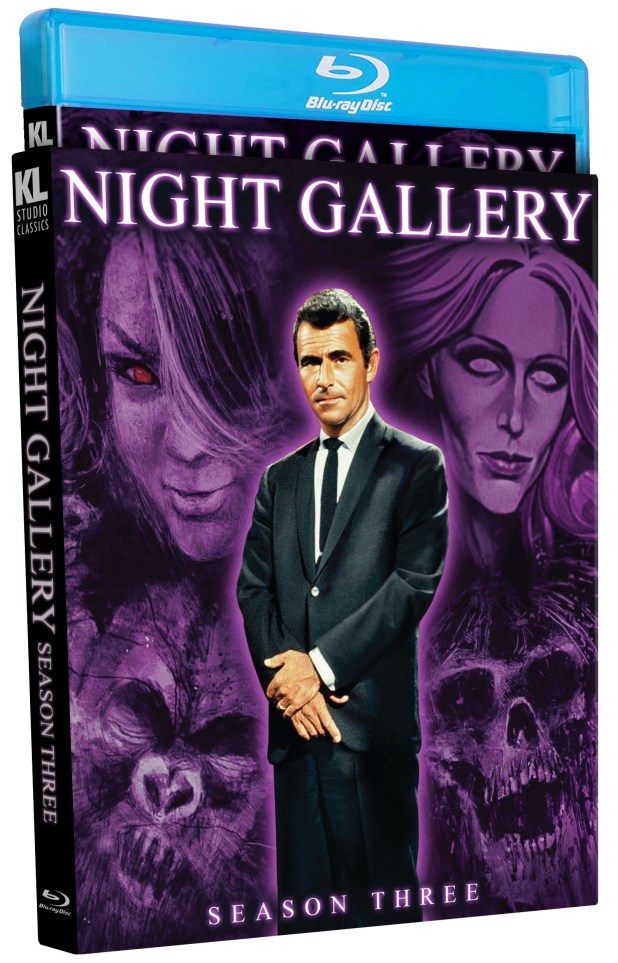
With season 3 of Night Gallery, the show moved to half an hour and often only had one story per episode, which allows some of the better tales to breathe. Or so you’d think, until you realize they had only 24 minutes for each story.
Sadly, this is the last season of the show, but we’ll try not to be too broken up about it. But when you read about how this show was treated going into season 3, that gets a bit difficult.
According to Rod Serling’s Night Gallery: An After-Hours Tour by Scott Skelton and Jim Benson, NBC wanted some changes with the show, as it kept coming in second place to CBS’s Mannix. Beyond the half an hour format, they also made the show more action and suspense instead of outright horror. And they moved it from Wednesday nights to Sundays, a night usually reserved for family viewing.
Serling was not pleased.
“I’m fucking furious. These people are taking what could have been a good series and are so commercializing it,” he told actress Tisha Sterling.
Instead of a battle between Laird and Serling, now he was facing Universal, who wanted to keep NBC happy so the show could be picked up for syndication and make them money. And NBC wanted “an action-packed horrorfest.”
After one of his scripts, “A View of Whatever” was rejected, Serling even wrote a resignation letter in May of 1972 and asked for his name to be taken off the show. However, he had a contract with Universal and he was stuck.
Now that there was one story per week, the creative budgeting that allowed for multiple stories to be shot all in the same larger budget went away. And Jeannot Szwarc said that the scripts weren’t the same quality because once the network stopped caring, everyone else seemed to. “The ratings were good enough, the demographics were sensational, but NBC never understood that show,” he said. “All those guys are heavily into control and there was something a little bit chaotic and anarchistic about Night Gallery that NBC didn’t like.”
CBS responded to the move by sending Mannix to Sundays and ABC had their Sunday Night Movie, which always got big numbers.
The funeral for Night Gallery started before the season did.
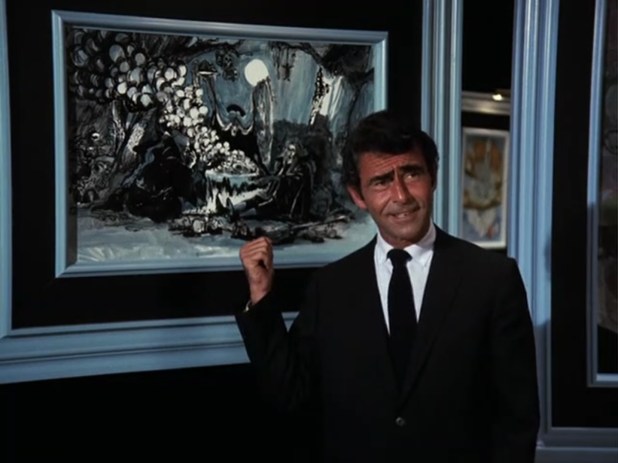
Directed by Jeannot Szwarc and written by Halsted Welles from a story by Clark Ashton Smith, “The Return of the Sorcerer” finds Noel Evans (Bill Bixby) answering a want ad for an interpreter. He’s to work for John Carnby (Vincent Price), a sorcerer who is studying the Latin Necronomicon but has found a new Arabic book of spells. The last two men he hired have quit and he threatens Noel’s life to keep him on task.
Meanwhile, Carnby’s assistant Fern (Tisha Sterling, The Coming) has dinner with Noel. joined by her Carnaby’s goat father. There, he learns that the warlock has already killed and dismembered his twin. But more importantly, Fern wants him. She wants him bad.
The translation of the Arabic book frightens Carnaby more than Noel, as it discusses that some magic users can keep their power. Even after death. Even after dismemberment. He cries of his brother, “I hated him because his magic was stronger. But Fern — she caused it! She wanted to be stronger than both of us.”
What follows is a Black Mass — on a Sunday night on NBC no less — where the two brothers are reunited and, one assumes, Fern finally has the power she craves. Now, spider to the fly, she wants to lead Noel to her bed.
What a wild story to start this season off with. The sets were designed by Joseph Alves, who worked with Szwarc on Jaws 2and ended up directing Jaws 3, as well as building the model New York City for Escape from New York and many other production design miracles. Szwarc showed him the art of William Blake and Aleister Crowley, which led Alves to Dennis Moore and Babetta Lanzilli, the witch owner of the Sorcerer’s Shop in Hollywood.
The Black Mass in the show really does have the names off Astototh, Asmodeus, Baal, Belial and more. It was all too much for Serling, who said “I believed those words we were saying were really powerful and meaningful, and one shouldn’t conjure up that kind of energy. It frightened me. I felt I was giving myself over to some dark. horrible force.”
Again, in 1972, this could air on prime time. At the start of the next decade, the Satanic Panic would be in full bloom.
Despite how dour season 3 will get, this is a great start filled with talent. Let’s see how things progress.
June 8: Junesploitation’s topic of the day — as suggested by F This Movie— is Cannon! We’re excited to tackle a different genre every day, so check back and see what’s next.
And two hundred and fifty plus movies that Cannon released on their various home video labels like Cannon / MGM/UA Home Video, HBO/Cannon Video, Cannon Video, Cannon / Guild Home Video, Cannon / Rank Video, Cannon Screen Entertainment Limited, Cannon Classics, Cannon / Warner Home Video, Cannon/VMP, Cannon Screen Entertainment, Scotia/Cannon, Cannon International, Cannon/ ECV, Cannon / Showtime, Cannon / United Film, Cannon / Isabod, Cannon / Mayco and so many more.
That’s where Girls of the White Orchid AKA Death Ride to Osaka comes in.
This was based on a report by ABC’s 20/20 about women who go to Japan to work as entertainers but end up becoming sex workers for the Yakuza. NBC wanted producer Leonard Hill to use Melinda Culea from The A-Team but he wanted Jennifer Jason Leigh. He did use two actors who were currently on NBC shows, Ann Jillian (who was on Jennifer Slept Here at the time this was made) and Thomas Byrd (who was on the show Boone).
Director Jonathan Kaplan started his directing career making New World movies like Night Call Nurses and The Student Nurses and ended up making more socially acceptable stuff like The Accused. This would be in the middle of all that and unites the exploitation and the art and makes a TV movie out of it.
Jennifer Jason Lee is Carol Heath, a waitress who has come to Japan to be a new wave singer and, well, you can imagine how that worked out. Ann Jillian plays Marilyn, who made the same journey years ago and stuck around, and Carolyn Seymour plays the woman who runs the hostess bar, Madame Mori. Yes, this is pretty much a Mr. Mom reunion with those two actresses. Plus, Mako and Soon-Tek Oh show up. They take Carol’s passport, the U.S. embassy refuses to help and perhaps only her American ex-boyfriend Don (Thomas Byrd) can save her.
Brad Fieder did a pretty fun synth score for this and wow, Steve Miller’s “Abracadabra”” pops up and you forget this was a TV movie. You know, unless you watched the international cut of this which has a few moments of nudity and sex. The Tubi edition has them, as does the Fun City Editions Primetime Panic box set.










 B&S About Movies
You must be logged in to post a comment.