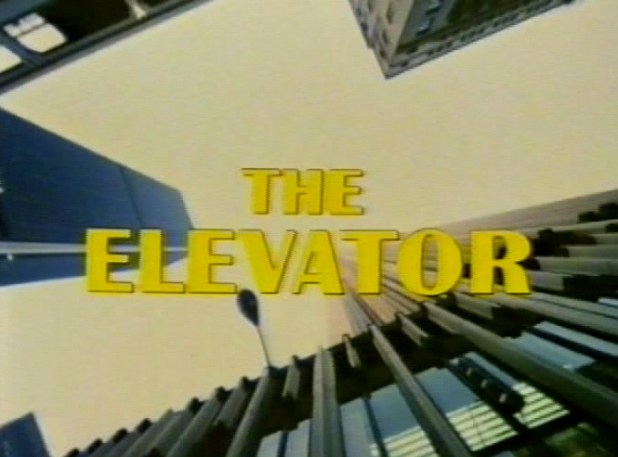
CBS LATE MOVIE: The Elevator (1974)

EDITOR’S NOTE: Originally airing on February 9, 1974 as an ABC Suspense Movie of the Week, The Elevator was on the CBS Late Movie on February 24 and October 27, 1975.

Directed by Jerry Jameson (Trapped on the 37th FloorHotlineSecret Night Caller) and written by David Ketchum (Agent 13 from Get Smart; he also wrote ten episodes of Happy Days and The Curious Case of the Campus Corpse) Rhonda Blecker and Bruce Sheeley, The Elevator is a unique film that finds an elevator stuck with the entire cast inside.

The Elevator features a stellar cast, including Eddie Holcomb (James Farentino, Dead and Buried), a hitman on the run from his last contract; Marvin Ellis (Roddy McDowall, always perfect), the building’s leasing agent; Dr. Reynolds (Craig Stevens, The Deadly Mantis) and his wife Edith (Teresa Wright, Shadow of a Doubt) and his mistress, Wendy Thompson (Arlene Golonka, who played characters named Millie on The Andy Griffith Show and Mayberry R.F.D.); Amanda Kenyon (old Hollywood represented by Myrna Loy) and young rich kid Robert Peters (Barry Livingston, Ernie Douglas himself), all trapped inside the tiny elevator that could drop at any minute.

While Eddie’s claustrophobia gets to him, Pete Howarth (Don Stroud, Bloody Mama) and Irene Turner (Carol Lynley, The Poseidon Adventure) wait outside in the getaway car. It all gets tense — I mean, would you like to be inside an elevator for a few hours? — and it is sort of a mini-disaster movie.

You can watch this on YouTube.

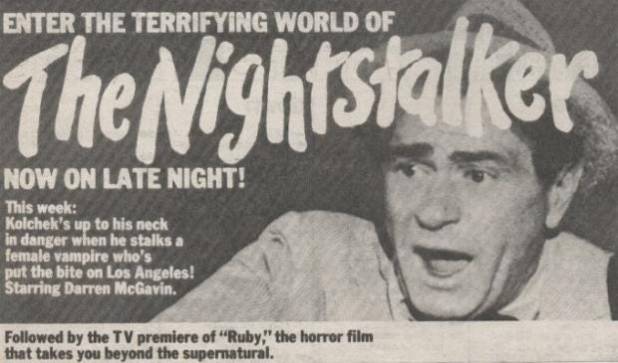
CBS LATE MOVIE MONTH: Kolchak: The Night Stalker: Vampire (1974)

EDITOR’S NOTE: This episode of Kolchak: The Night Stalker was on the CBS Late Movie on May 25, 1979; November 30, 1981; September 25, 1987 and January 1, 1988.

Directed by Don Weis (who did tons of TV work, like 22 episodes of Fantasy Island, 16 episodes of M*A*S*H* and 57 episodes of Ironside) and written by David Chase (The Sopranos) and Bill Stratton, “Vampire” brings Carl Kolchak to Los Angeles to interview a transcendental New Age leader. Still, the real reason he’s left Chicago is that his old friend James “Swede” Brightowsky (Larry Storch) tells him that there’s been a new series of vampire-like murders in Las Vegas.

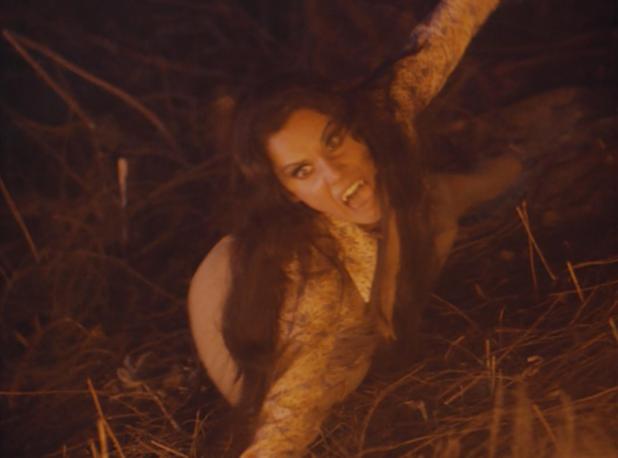
Catherine Rawlins (Suanne Charny) was once a Las Vegas showgirl before being turned by Janos Skorzeny, the vampire from the original film that started it all, The Night Stalker. As a vampire, she’s learned how to handle even gigantic men and is now hiding out in the Hollywood hills, seeking victims when the night falls.

So, while real estate agent Fay Krueger (Kathleen Nolan) does the interview for Carl, who is in Los Angeles, he starts investigating and drawing the ire of the police, as always. Lt. Mateo (William Daniels, the voice of K.I.T.T.) dislikes Kolchak instantly, as our reporter hero tells him that the killings are all the doings of a vampire.

This episode was originally written to have Kolchak come to New York City when he heard that Skorzeny was still alive. The idea that there could be more of his conquests living in Las Vegas is a much better one, and Charny plays a frightening vampire, defeated by Carl, when he burns a cross in her front yard and stakes her through the heart.

Carl gets arrested, but it doesn’t stick. He explains why: “They booked me for murder just like I thought they would, but then after 12 hours they let me go. They never said they did say why, but while I was sitting in Lt. Matteo’s office waiting for execution. I happen to see a coroner’s report on Catherine Rawlins. I quote the coroner: “The tissue structure of the individual appeared to be that of a female, species human, who had been dead at least three years. This is a medical conundrum for which I have no explanation. Three years!”

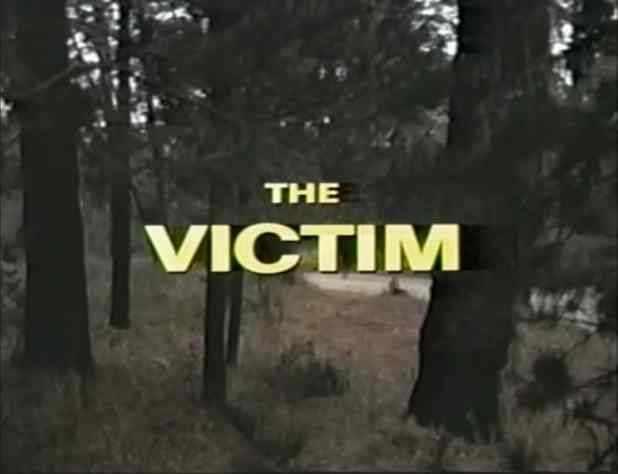
CBS LATE MOVIE MONTH: The Victim (1972)

EDITOR’S NOTE: The Victim was on the CBS Late Movie on September 9, 1974; October 6, 1975 and September 8, 1977.

If you ever wonder why I love my wife so much, I watched this movie, and she walked into the room, sat on the couch and excitedly remarked, “That’s Eileen Heckart!” Yes, Becca loves The Bad Seed, a classic psychological thriller where Heckart’s performance as the mother of a sociopathic child is unforgettable. And she isn’t shy about it.

Director Herschel Daugherty’s directorial efforts run the gamut of TV classics, from Star Trek to Alfred Hitchcock PresentsThriller and The Six Million Dollar Man. He was even the dialogue director for Mildred Pierce!

Kate Wainwright (Elizabeth Montogomery, who you may know from Bewitched, but around here we celebrate her for her role in The Legend of Lizzie Borden) is coming to visit her sister, but unbeknownst to her, her sister is already dead. She has to deal with the increasingly crazy attention of her sister’s maid, Mrs. Hawkes (Heckart), power outages, and an increasingly frightening storm. We soon learn that her sister already fired the maid and plans to divorce her husband, Ben.

While the film opens with the murder of the sister, the identity of the killer remains a mystery. As we witness Kate’s growing fear, Montgomery’s performance is nothing short of superb, keeping us on the edge of our seats.

The McKnight Malmar story this was based on was first filmed for a 1962 episode of Boris Karloff’s Thriller, ‘The Storm,’ also directed by Herschel Daugherty. The Victim was rewritten by Merwin Gerard and doesn’t stick as close to the original story, but it retains the core elements of the original, including the intense psychological suspense and the theme of a woman in peril.

The ending of this movie is bound to stir up some strong emotions. It might leave you feeling frustrated, or you might find it enjoyable, as it maintains a consistent level of suspense and creepiness throughout.

CBS LATE MOVIE MONTH: Kolchak: The Night Stalker: They Have Been, They Are, They Will Be…(1974)

EDITOR’S NOTE: This episode of Kolchak: The Night Stalker was on the CBS Late Movie on June 15, 1979; June 12, 1981; October 16, 1987 and February 19, 1988.

Directed by Allen Baron, who did four episodes of Kolchak: The Night Stalker, and written by Rudolph Borchert, who wrote five episodes of the series, and Dennis Lynton Clark, who started his career in Hollywood as a costume designer on A Man Called Horse and Man In the Wilderness, the title of this episode comes from a line in H.P. Lovecraft’s The Dunwich Horror: “The Old Ones were, the Old Ones are and the Old Ones shall be. Not in the spaces we know, but between them; they walk serene and primal, undimensioned and to us unseen.”

A killing force unseen has blown into the Windy City with hurricane strength. It kills by creating an electromagnetic field that sucks the bone marrow from both humans and animals. And, oh yeah, it steals lead and electrical equipment.

Sounds like a story for Carl Kolchak.

Carl’s nemesis, Ron Updyke, has been selected as the temporary sports editor. And he owes Carl, who saved his life from an angry roller derby player a few weeks ago. He promised Carl a World Series ticket and the chance to see the Chicago Cubs play in the biggest baseball game, the first time in nearly thirty years, but he forgot. And now Carl will either get his ticket or a piece of Updyke.

But Vicenzo has worked for him. Today, a cheetah died in the zoo. Carl corrects him and says that it was yesterday and it was a panther. Vicenzo double-corrects him. Two dead jungle predators in two days. Forget the World Series; Carl smells a story.

Carl learns that the police are at an electronic company and arrives just in time to watch a wall explode and a bunch of lead disappear into thin air. Captain Quill (James Gregory) pulls him away, but not before saluting some very important military people. Now, Carl is practically dying to figure out this story.

Keen-reporting instincts lead Carl to the zoo. As he studies where the animals were killed, he can see that the bars are bent, there’s a black goo everywhere, and zoologist Dr. Bess Weinstock (Mary Wickes, Sister Mary Lazarus in the Sister Act movies) informs Carl that a leopard and a panda have also been killed and their deaths appear to be heart attacks. This matches an angry talk radio caller that Kolchak hears complaining about black tar all over Mariposa Way.

After getting a sample of the black substance—and who said this show wasn’t an influence on The X-Files—and getting Weinstock to work with him, Cark learns that it’s a mix of hydrochloric acid, acetone, and bone marrow. As all of the animals killed at the zoo had puncture marks at the major bone joints to drain the marrow, the zoologist theorizes that whatever was doing the killing ate the marrow and then puked.

At the morgue — to discover what happened at the factory explosion — Gordy the Ghoul is willing to talk for a price. Carl’s shocked to learn that Gordy’s boss, Stanley Wedemeyer (Rudy Challenger), tells him that the one dead person from the factory died from a simple heart attack. But Gordy sneakily reveals the truth to Carl and passes him a cassette tape.

The actual cause of death: All of the bone marrow was sucked out of his body.

Carl busts into a press conference and asks questions that get him kicked out of nearly every press conference he ever attends. He grills Captain Quill on what exactly happened at Raydyne Electronics, why everyone’s watches have stopped at the exact time, how the lead bars disappeared and how the animals and humans who have been killed all died from having their bone marrow removed.

When Vicenzo tells Carl to drop the whole mess — saying, “We don’t need another UFO story” — that only spurs him on. After all, he never said UFO. Who said UFO? Carl definitely finds the thing, a small metal ship, after an attack on an observatory and is nearly killed by the force when it comes back. Only the whine of his camera can protect him.

As always, no evidence remains.

This is one of the first times Carl has been threatened that someone much worse than the police will be taking care of him.

Also, there’s a moment where the zoologist explains to Carl that pandas are raccoons, not bears. Believe it or not, there was a significant debate over this. Only when DNA technology was advanced enough to be used did we discover that pandas are actually bears.

CBS LATE MOVIE MONTH: The Horror at 37,000 Feet (1973)

EDITOR’S NOTE: The Horror At 37,000 Feet was on the CBS Late Movie on October 31, 1975 and October 29, 1976.

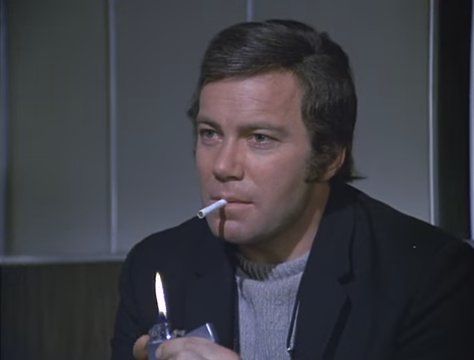
Someday, scholars will speak in awe of the post-Star Trek Satanic twosome of Shatner films, which would be this movie and The Devil’s Rain! Until then, maniacs like me will yell into the uncaring silence and tell you that for a shining moment — or literally two — the once and future Kirk would die twice (spoilers be damned, again literally) while facing off with the Lord of the Flies.

Originally airing on CBS on February 13, 1973, I first learned of this movie in a TV Guide Book of Lists that featured Anton LaVey discussing the most Satanic TV moments of the last decade. This movie has it all: Mario Bava lighting, a cursed altar, Shatner drunk and railing against humanity, and finally, a bunch of Old Hollywood actors daring to sacrifice a young child to the Left Hand Path.

Sure, the flight from London to New York is supposed to be mainly cargo — that druid altar I hinted at before — but the plane still has plenty of talent on board. There’s Captain Ernie Slade (Chuck Connors), as well as an architect (Roy Thinnes, who would enter this territory again in The Norliss Tapes) and his wife (Jane Merrow, Hands of the Ripper) who have placed said altar on board. There’s also Paul Kovalik (Shatner), a priest who has lost his way, and super-rich Glenn Farlee (Buddy Ebsen, who makes it extraordinary as it’s basically Jed Clampett and Barnaby Jones against Satan). You also get Tammy Grimes — whose daughter Amanda Plummer looks just like her — as well as Lynn Loring (also in the occultist Black Noon), Paul Winfield, France Nuyen (Code Name: Diamond Head), Will Hutchins, Darleen Carr (she’s in the TV remake of Piranha), Russell Johnson (The Professor!) and H. M. Wynant (Hangar 18).

Some people have the wrong idea that this movie, shot on the sound stages at CBS Studio Center, is one of Shatner’s worst films. They’re wrong. This movie is everything. Near the end, my wife looked at me and said, “This is pretty intense for TV.” I told her that life was cheap in 1973.

Director David Lowell Rich also made Satan’s School for GirlsSST Death Flight and The Concorde … Airport ’79, all movies that some people would make fun of. Not me—this is my bread and butter. It tastes delicious.

You can watch this on YouTube:

CBS LATE MOVIE MONTH: Kolchak: The Night Stalker: Zombie (1974)

EDITOR’S NOTE: This episode of Kolchak: The Night Stalker was on the CBS Late Movie on June 8, 1979; June 5, 1981; October 9, 1987 and January 15, 1988.

Directed by Alexander Grasshoff (The Last Dinosaur) and written by Zekial Marko and David Chase (the creator of The Sopranos), this episode starts with a gangland slaying committed by a gigantic and unstoppable man and then an even more unbelievable happening. And that’s Vincenzo being friendly to Kolchak, all to ensure that he takes young reporter Monique Marmelstein (Carol Anne Susi) under his wing. She’s important because her uncle is a company bigwig.

Carl saves her from a police shootout with the Russo brothers and then heads to the morgue where his informant, Gordy the Ghoul (John Fiedler), is making bets and selling information. Kolchak learns that all the gang-related deaths have had multiple blunt force traumas to their dead bodies and that one of the other dead people was filled with bullet holes and chicken blood.

It all points to the death of a Haitian named François Edmonds, and the investigation even takes Carl to a voodoo shop owned by Uncle Filemon (Scatman Crothers), which is soon crawling with organized crime figures. He soon meets up with “Mamalois” Marie Juliette Edmonds (Paulene Myers), the mother of the dead man and, as we soon learn, now the undead killer who she can command by writing the names of his victims on tiny coffins. And now Kolchak’s name is on one of them!

This episode has one of my favorite endings. Carl enters a junkyard and has to fill the sleeping zombie’s mouth with salt and sew it shut. It gets wild when the zombie awakens mid-stitch and chases our intrepid reporter through the maze of crushed cars. Sure, Carl stops him, but he does it at the expense of another Rollei 16 film camera.

The zombie is played by defensive lineman Earl “Tree” Faison of the San Diego Chargers, who, at 6′ 5″ and 260 pounds, looks absolutely monstrous next to the much smaller McGavin. Antonio Fargas also appears in this one.

The monsters on Kolchak: The Night Stalker sure do like throwing people through the air, huh?

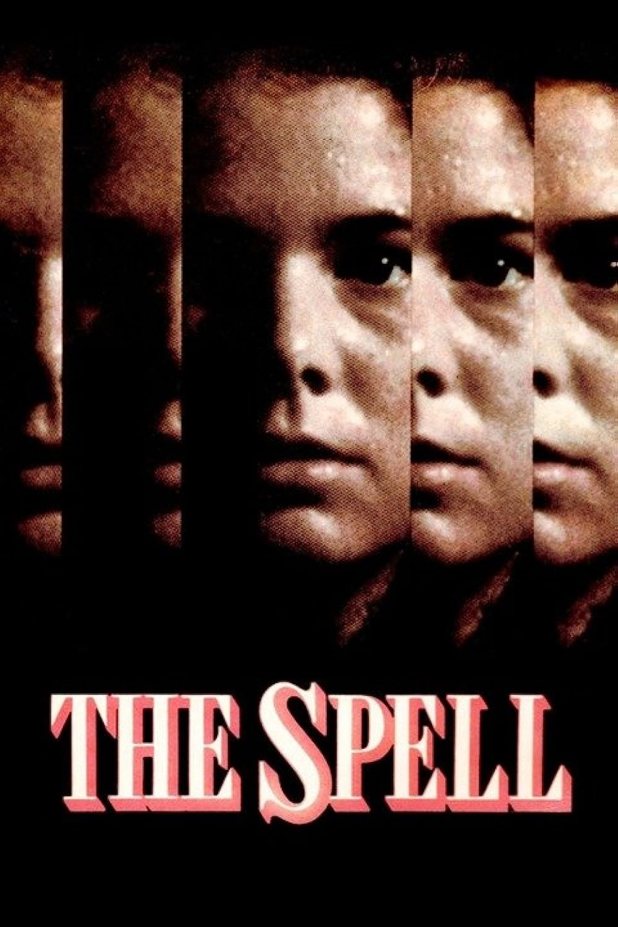
CBS LATE MOVIE MONTH: The Spell (1977)

EDITOR’S NOTE: The Spell was on the CBS Late Movie on November 22, 1978 and May 15, 1979.

This Brian Taggert (Visiting HoursPoltergeist III and Omen IV: The Awakening) film was originally aired on NBC on February 20, 1977. It was supposedly written before Stephen King’s Carrie. Although it was supposed to be a theatrical film, it was relegated to movie of the week because De Palma’s filmed version got on screen first.

Rita Matchett, a shy, overweight 15-year-old girl, is the central character who, like Carrie, is subjected to bullying. However, her powers manifest much quicker. In a shocking turn of events, as one of the mean girls climbs the rope in gym class, Rita uses her powers to make her fall to her death, setting the stage for a unique and unexpected plot twist.

While Rita comes from a wealthy family, she isn’t close with her sister (Helen Hunt) or her father (James Olson, Father Adamsky from Amityville II: The Possession). Her mother (Lee Grant, who reviewers said deserved better than this movie, but I love this kind of ridiculous TV movie, occult magic, so screw those people) tries to understand her, but once she starts speaking in tongues, all bets are off.

This is the kind of movie where an old woman spontaneously combusts, where the gym teacher (Lelia Goldoni, who, if I was artistic, I’d tell you that she was in Cassavetes’ Shadows, but we all know that she was in the 70’s Invasion of the Body Snatchers and The Unseen) teaches sad teens how to find Satan and the mom ends up having powers too, throwing knives at her daughter in a scene that again has nothing to do with Carrie at all.

Jack Colvin, who plagued David Bruce Banner on the TV version of The Incredible Hulk, and Wright King (Invasion of the Bee Girls) show up. So do some audio cues from the classic Star Trek.

Directed by Lee Phillips, known for his work on The Girl Most Likely to…, this film may be derivative, but it’s a lot of fun.

This is one of the few made-for-TV movies that have come out on DVD. Thank Shout! Factory for that and beg them to release more!

CBS LATE MOVIE MONTH: Kolchak: The Night Stalker: The Ripper (1974)

EDITOR’S NOTE: This episode of Kolchak: The Night Stalker was on the CBS Late Movie on June 1 and December 7, 1979; May 29, 1981; October 2, 1987 and January 8, 1988.

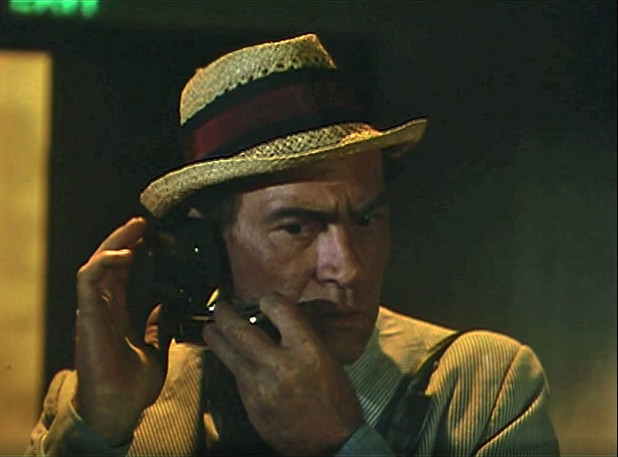
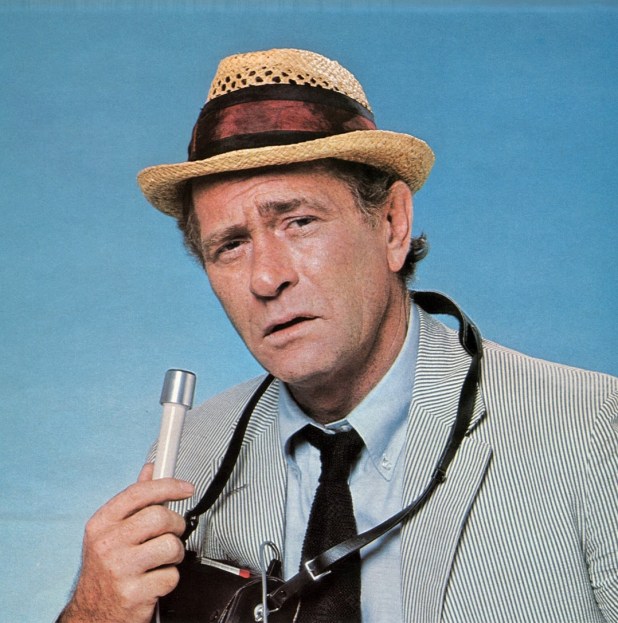
Carl Kolchak, a character I can’t even explain how important he was to two-year-old me. My parents even bought me a straw hat and toy camera so that I could hunt down the monsters in my small Western Pennsylvania hometown. I may never have found any, but I discovered a love for the supernatural that has lasted my entire life. Kolchak, a Las Vegas reporter with a penchant for getting into trouble, was a hero to me. His relentless pursuit of the truth, even when it led him into danger, was inspiring. And his unorthodox methods, like pretending to be the commissioner, stealing a car, and placing several people under citizen’s arrest, were always entertaining.

The character started in Jeff Rice’s unpublished novel The Kolchak Papers — which told the story of the Las Vegas reporter discovering real-life vampire Janos Skorzeny — which was optioned as a movie by ABC in 1972. The Night Stalker is even today one of the best TV movies ever filmed with a dream team of director John Llewellyn Moxey, writer Richard Matheson, producer Dan Curtis and star Darren McGavin.On its first airing, it had a 33.2 rating and a 54 share, which means that 33% of possible viewers were watching it, and 54% of all TVs turned on were tuned to ABC. Those are the kinds of numbers that we will never see again outside of the Superbowl, and perhaps not even then.

A year later, Curtis directed and wrote The Night Strangler, which was written by Matheson. This time, Kolchak had been run out of Vegas and was working in Seattle when he ran into a serial killer who had stayed alive for nearly a hundred years thanks to the blood of his victims. The movie also did well in the ratings, so well that instead of a third movie in which Kolchak would investigate android duplicates—The Night Killers—ABC ordered a weekly series.

The series cannot live up to the movies, but there are some great episodes.

The show aired in the worst time slot, Friday nights at 10 p.m., and then moved to 8 p.m. Before the last four reruns aired on Saturday at 8 p.m., McGavin worked as an executive producer with no credit or pay to try and keep the show’s quality, which exhausted him. He hated that each week there was a new monster, and finally fed up, he asked for his release with two episodes unfilmed. Despite the challenging time slot, the show developed a dedicated fan base who would stay up late or rearrange their schedules to watch it.

For several years, that was it. No more Kolchak.

Then, on May 25, 1979, The CBS Late Movie resurrected Kolchak!

Sure, they started with episode four, but it was back. And then it was gone! The ratings were so strong that CBS decided to save it until the fall. The series played in 1979, 1981 and from 1987 to 1988, missing only four episodes.

That’s because ABC packaged “Demon In Lace” and “Legacy of Terror” as The Demon and the Mummy and “Firefall” and “The Energy Eater” as Crackle of Death. Until 1990, these episodes were kept from the original rotation. They made their return to the series when SciFi aired the show.

Now, let’s journey back to 11:30 p.m., when the rest of America was asleep or about to fall asleep watching Carson and getting into “The Ripper.”

Directed by Allen Baron (who also made the noir classic Blast of Silence) and written by Rudolph Borchert, the story begins with an exotic dancer (Denise Dillaway, The Cheerleaders) being attacked by a man in a cape with a sword cane who is somehow strong enough to throw human beings through the air.

We cut from this to a scene that will become familiar to show fans: Carl’s boss, Tony Vincenzo (Simon Oakland), is now with him in Chicago, screaming at him yet again for the reporter’s latest screw-up. This time, he pretended to be the commissioner, stole a car and placed several people under citizen’s arrest as he was looking into a robbery. As punishment, Carl must write an advice column as Miss Emily.

That’s not where our reporter friend wants to be. His police scanner alerts him to another attack by the man people are calling The Ripper. There, Carl watches the man shrug off several point-blank gunshots, a four-story leap off a building and fighting multiple police officers. Carl would be fired if it wasn’t for the fact that his fellow reporter Updyke (Jack Grinnage) got sick when he even heard about the crimes.

At a press conference, Captain Warren (Ken Lynch) refuses to answer any of Kolchak’s questions but does reveal that The Ripper has sent a letter to another reporter, Jane Plumm (Beatrice Colen). She and Carl compare their research, and he learns that the letter says, “And now a pretty girl will die, so Jack can have his kidney pie.” As he digs deeper into the case, he discovers that there have been murders like this all over the world for decades.

Another crime, another poem — “Jack is resting. Be reborn. To finish up on Wednesday morn.” — and Carl learns something else the police didn’t. A couple hit a man with their car who just walked away. Kolchak saves a scrap of fabric from the accident. Jane is taking things even further, meeting men who claim to be The Ripper.

The cops want Carl out of the way, but The Ripper attacks the squad car he’s in the back of, and even though he’s caught after being stunned by an electric fence, the serial killer tears a jail cell door off its hinges and escapes. Carl figures out that he’s in a house in Wilton Park. There, he finds Jane’s corpse and barely survives when The Ripper attacks him. Luckily, Carl thought ahead and brought electrical gear to disintegrate the killer. Unfortunately, it also burns the Musnter’s house on the Universal backlot he’s been hiding in down to the ground, destroying all the evidence.

Carl closes, ruminating over how he got here all over again, saying, “And here’s the postscript: when they drained that pond, they found nothing – nothing, but some old clothes. For some reason, the police suddenly decided they wanted those and my head. I don’t know how Vincenzo will handle the charges of arson and malicious mischief lodged against me by Captain Warren, but that fire was a big one – a six-alarmer. A blast furnace couldn’t have done a better job: everything gone. The house. My story. The evidence. Like they say: ashes to ashes. One thing survived the inferno, however. There’s enough of it left to read the maker: “Peel’s Footwear, London, Southwest 1.” They’re still there, of course, but they don’t make this style shoe anymore. It was discontinued over seventy years ago. Seventy. Years. Ago.”

Realizing that no one will believe a word he’s written, he pulls the paper from his typewriter and throws it in the trash.

“The Ripper” is a decent first episode that introduces Carl to anyone who hasn’t seen the first two movies and the show’s theme. I’m excited to revisit these, as they are some of my fondest childhood memories.
CBS LATE MOVIE MONTH: Go Ask Alice (1973)

EDITOR’S NOTE: Go Ask Alice was on the CBS Late Movie on April 26 and July 27, 1976.

Originally airing on January 24, 1973, Go Ask Alice is an adaptation of the 1971 book. The film, much like the book, delves into the personal struggles of a troubled teenager, a theme that resonates with many of us. While the book is more of a diary and is written by Anonymous, most people believe that therapist and author Beatrice Sparks wrote it. She’d go on to write several similar books that were also supposed to be the actual diaries of troubled teenagers.

Jamie Smith Jackson portrays Alice, a teenager striving to blend in at her new school, as she confides in her diary. Her quest for acceptance leads her to experiment with LSD at parties, plunging her into a world of substance abuse and family discord. The portrayal of her parents, played by William Shatner and Julie Adams, reflects the societal attitudes towards youth in the 1970s.

Mackenzie Phillips — who would later have drug problems of her own — shows up, and Andy Griffith (the film’s best part), Robert Carradine and Ruth Roman (from The Baby!) all make appearances. Their performances, especially those of Andy Griffith, add depth and intrigue to the film. It’s pretty schmaltzy in parts, but it’s a preachy 1973 TV movie. You kind of expect those kinds of things.

Bonus: You can listen to Becca and I discuss this on our podcast.

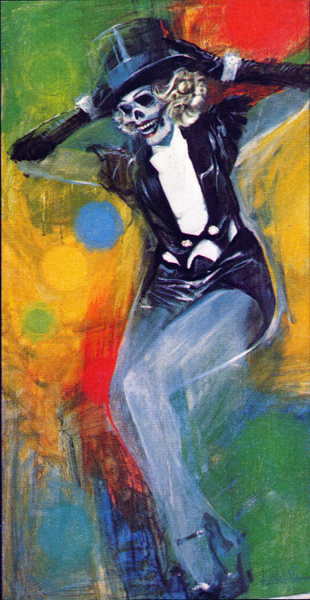
Night Gallery Season 3 Episode 5: Specter In Tap Shoes (1972)

After her twin sister Marian hangs herself, Millicent (Sandra Dee) returns home, only to hear Marian – a dancer – tapping across the floor upstairs, footsteps rapping in the room where she left this world.

“Specter In Tap Shoes” was directed by Jeannot Szwarc and written by Gene R. Kearney from a story by Jack Laird. After the death of her twin, Millicent is sure that Marian is still here, as she doesn’t just hear her; she smells the smoke from her cigarettes.

Maybe she should just leave. That’s what William Jason (Dane Clark), a property developer who is a mutual friend of Millicent’s pal Sam (Christopher Connelly, soon to depart for Italy), thinks would be best. She’d get closure and away from all the memories.

Millicent keeps hearing her sister’s voice, urging her to hang herself as well. She stops at the last minute and finds William in her sister’s studio. He demands letters that Marion wrote to him, letters that she somehow can discover immediately. She also finds a revolver that she uses to shoot him.

The logical explanation is that the entire house was wired so William could gaslight Millicent just like he did Marion. But then, how did she know where the letters were?

This is a decent enough episode, but as always, Serling writes the better Night Gallery stories. Szwarc does a good job of making the story mean more than it does.