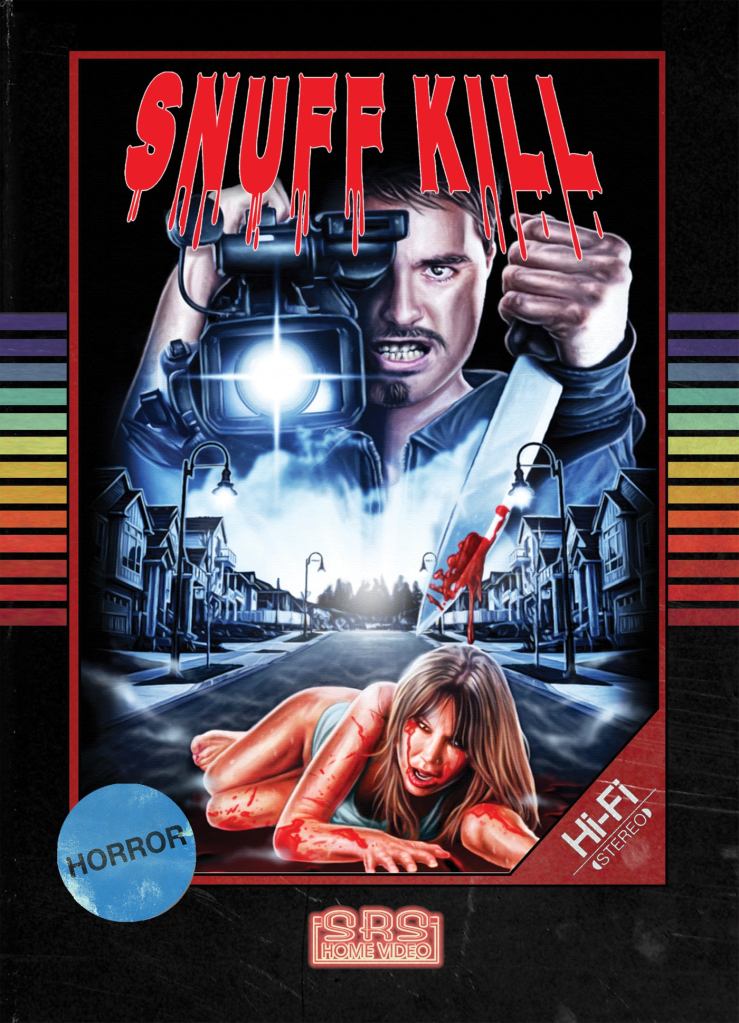
Announcement: On October 20, 2020, SRC Cinema — the reissues studio that gives you “Awesome underground movies you need to see, now!” — announced their acquiring Snuff Kill from Doug Ulrich for a Blu-ray release, complete in an all-new capture from the original SVHS master that’s also filled with new extras. First rolling out in a limited-edition, the Blu went into a wider release in later-2021. You can read the press release on their site.You can also visit the studio on Facebook.
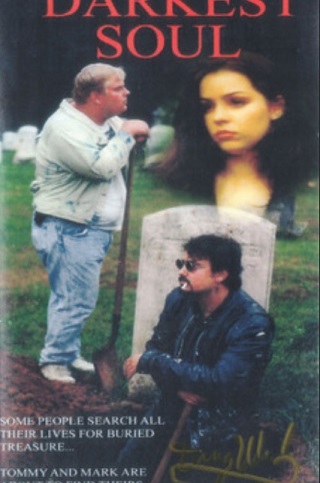
Don’t forget: American Genre Film Archive released Darkest Soul on Blu-ray in 2020 as part of their Blu-ray release of Scary Tales.
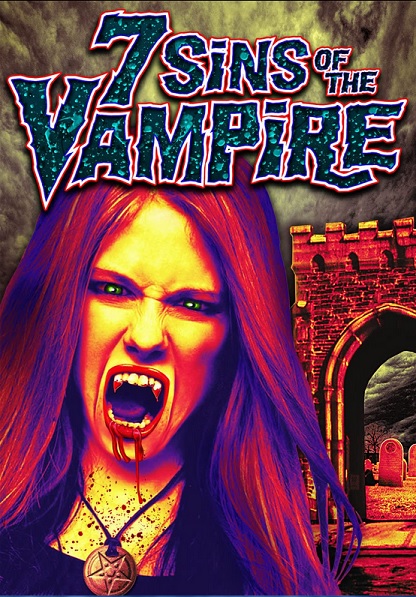
Meanwhile: Vinegar Syndrome issued their own Blu-ray of Scary Tales. There are no Blus — but we are hopeful — for Ulrich’s 7 Sins of the Vampire, but DVDs of that title abound at Amazon and Walmart — yes, at Wallyworld! — for the taking.
So, once again — as with Calamity of Snakes, Delirium, and UFO: Target Earth — we review a bygone and forgotten VHS oddity just for the hell of it — and we come to discover its receiving a hard digital reissue.We really need to keep ourselves in the loop, more.
This is the one time when the grainy, washed-out, 3/4″ tape production values of SOV films works to the advantage of its subject matter, in this case: a grimy, underground snuff film. And this film wastes no time in getting to the “snuff”: a woman tied and blindfolded to a chair has a knife’s tip navigate her body — then she’s repeatly stabbed. And we haven’t even got to the hung-by-the-ankles head explosion, the torso-leg separation by chainsaw, and the not-so-garden variety decapitation. This isn’t a film for the weak: it’s bloody, the nudity is bountiful, and the psychobabble as to the “why” is plot piffle. (And, as I recall, there’s a bit of coprophilia involved; if not in this film, it was one of the Shock-o-Rama banner’s other titles. So, you’ve been warned.)
Yeah, Snuff Kill has already exceeded the sleaze and gore shock content of the Holy Grail of the SOV/Big Box plains, Spine, which was made with the sole purpose of taking John Carpenter’s Halloween to its next grimy, logical step — and failed.
But not Snuff Kill, baby.
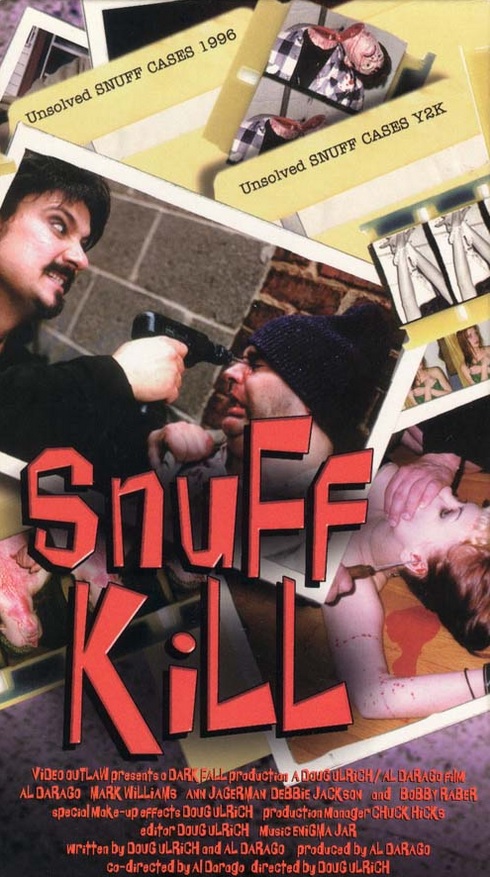
The original VHS cover I remember.
It’s dark. It’s mean. This film tricks you — courtesy of its lack of the usual SOV camp — into believing you’re watching “real kills” and not Karo-n-food colored special effects. Are there acting and production faux pas? Are some of the SFXs a bit off-the-mark? Sure. This is a zero-budgeted SOV, after all. But for what is, essentially, a bunch of high school friends getting together on the weekends to make a movie, it’s a commendable effort.
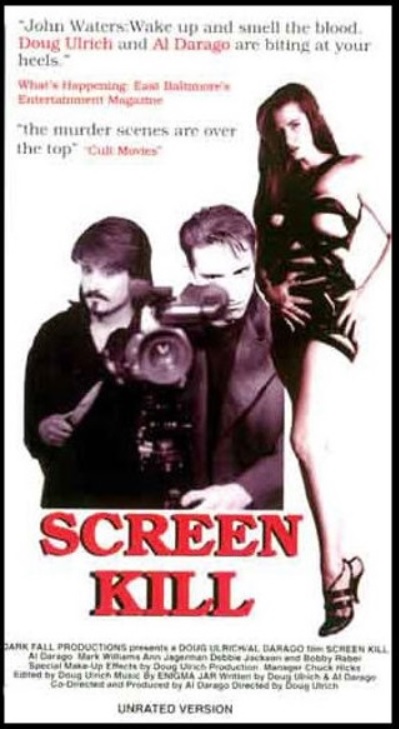
The “uncut” VHS reissue I don’t remember. Kevin Smith’s Clerks, anyone?
The noirish tailspin of Doug, a struggling filmmaker who settles as a struggling wedding videographer, begins when, instead of going to the movies to see a horror flick, his squeeze decides they should go to metal concert. And Doug, loving both horror flicks and metal, does as his lady doth request (you know, just another pussy-whipped, bloody-metal lover like myself and Sam, the B&S Movies boss).
Doug comes to realize that the band he and his wife just watched — its members adorned in monk habits who slit their throats on stage — is fronted by his old high school buddy, Ralis (writer-director Al Dargo). And Ralis enlists his old camera-totin’ friend to make the ultimate gore flick scored with the music of his band. Doug (the not bad Mark Williams in his only film role) is, at first, fascinated by the “realistic” gore that Ralis creates; he soon comes to realize the “kills” are real. Of course, as with any film noir protagonist, Doug is repulsed and fascinated his friend’s exploits and becomes his reluctant, murdering accomplice.
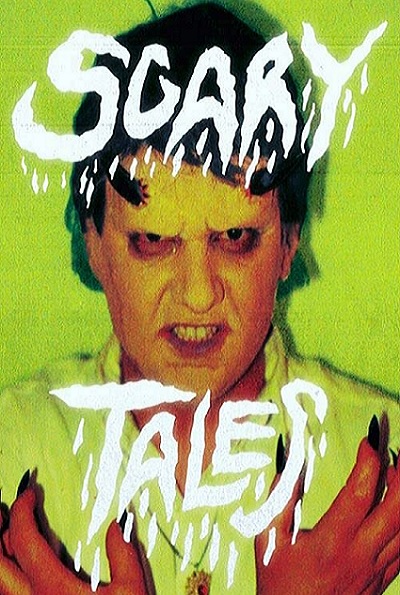
Sigh. Thanks for the memories of the good ‘ol days of hitting the ol’ mom-and-pop video store sandwiched between a quickie market and Punjabi eatery with a gym on the corner bay next door to an insurance agency; a dinky-cheesy outlet stocked with way too many titles under the Shock-O-Rama banner (the owner was stocking the shelves more for himself than his clientele, obviously). The label also distributed Doug Ulrich and Al Dargo’s first two SOV entries: the even harder-to-find (than Snuff Kill) Scary Tales (1993) and Darkest Souls (1994) (as of October 2021, we’ve since reviewed both).The music of the film is provided by (very cool-named) Thee Enigma Jar and Doug and Al’s band Surefire.
Yeah! There’s an age-restricted, sign-in upload on You Tube for Snuff Kill! And bless the analog lords, ye uploader loves their SOV horror! There’s several SOV titles on the Letterboxd Funtime TY page that will interest you, along with Doug Ulrich and Al Dargo’s debut feature, Scary Tales. Yes! This is going to be one awesome October, baby!
Trailers/Clips for Screen Kill: we found two, HERE and HERE.
From the I Did Not Know that Files: Doug and Al returned in 2013 with another SOV blood-boiler, 7 Sins of the Vampire, copies of which you can purchase through Amazon and Best Buy (here’s a clip).
Need more SOVs? During the last two weeks of January 2023, we rolled out another, all “SOV Week” of reviews. Be sure to click through on the SOV tag at the end of this review to populate our ever-growing catalog of SOV films (including a second take on the Screen Kill version). You’ll also discover other SOVs namedropped within our other Ulrich-Dargo reviews via these clickable images, below.
About the Author: You can learn more about the writings of R.D Francis on Facebook.He also writes for B&S About Movies.
“Necessity or chance approach not me; and what I will is fate.” — poet-philosopher John Milton
A “classic” is in ye eye of the beholder; it’s a subjective adjective that’s slash n’ swung much around these ‘ere wilds of Allegheny County with these old, emulsion-scratched outdoor ditties we hail under the big white screen’s twilight’s last gleaming. And, as with most of those “classics” reviewed at B&S About Movies—such as Eyes of Fire, Brotherhood of Satan, and Messiah of Evil—those films, even after B&S About Movies’ Chief Cook and Bottle Washer, Samuel, spins the reels and fingers the keys to ’em, they’re so f-in’ friggin’ good that they need to be reviewed a second time (Sam’s The Redeemer review) to implore upon ye, the B&S surfer-reader, of the majesty of the work.
Make no mistake, ye B&S’er: This lone directing effort by Constantine S. Gochis and lone writing effort by William Vernick is a ‘70s horror classic that (for this lowly reviewer) ranks right alongside Herk Harvey’s Carnival of Souls, John Hancock’s* Let’s Scare Jessica to Death, and Don Coscarelli’s Phantasm. And while Harvey’s lone opus discovered its posthumous popularity among horror aficionados in the digital wilds of the public domain, and Coscarelli scored one of the biggest drive-in and theatre horror hits of 1979, Gochis-Vernick’s equally phantasmagoric feast of the senses found itself lost somewhere between the space gate and the red planet of the dwarfs.
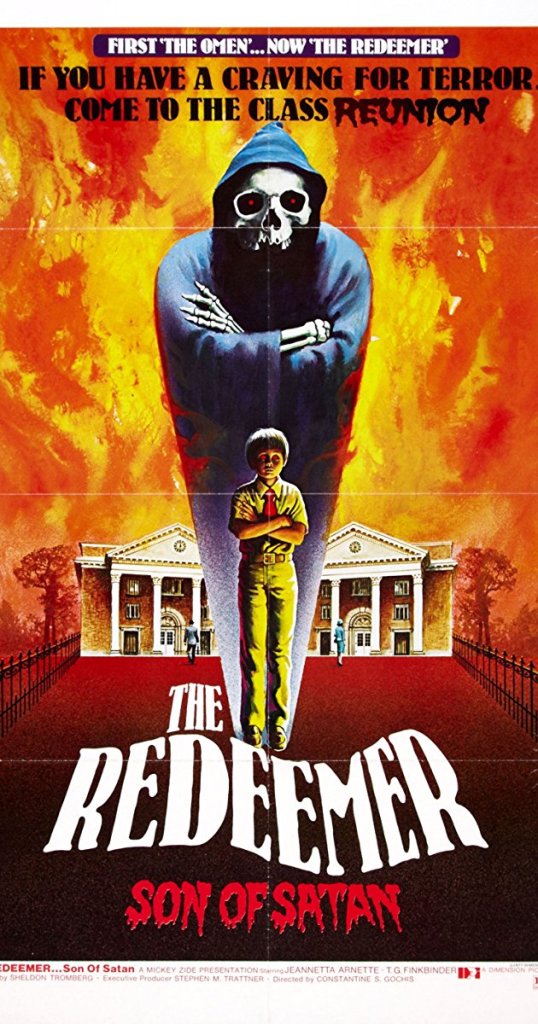
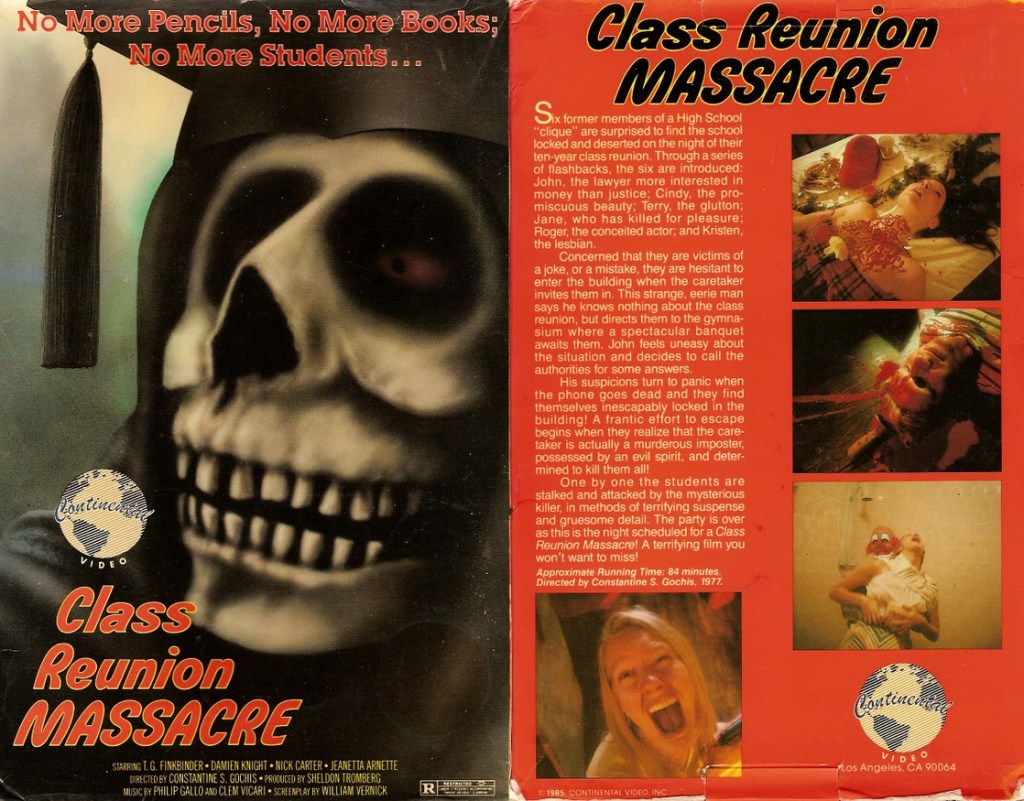
I’ve watched this film several times over the years: it was one of those go-to films you rented every October from the local mom-and-pop VHS repository—under its mid-‘80s shelf life as Class Reunion Massacre. Oh, how I remember those pulpy, black and white ads and newsprint reviews in my cherished movie mags of yore that featured that skull and cowl-faced grim reaper pressed against the diamond pattern of a wrought-iron gate. I can’t recall an October that I didn’t watch The Redeemer, Phantasm, Sam Raimi’s Evil Dead (sorry, forget part deux; the original does it for me), and Rocktober Blood in a same-day marathon or within the same Hollows’ Eve week; they just warm the ol’ VCR’s electronics so well!
Sadly, while the analogously weird Phantasm was blessed with a well-financed advertising campaign that came complete with radio and TV ads (that I remember hearing and seeing on my local rock stations and UHF stations), The Redeemer, aka The Redeemer, Son of Satan, didn’t become known to a mass audience as result of its poor drive-in and (select) theatre distribution—and I envy those who had the opportunity to encounter The Redeemer in 1978 on the big screen. (These ‘ol bastard who claim that they did, you’d fill a 50 K football stadium; so I doubt they did. It’s like all of those people who “saw” U2 at the Hope and Anchor in Islington, England, in December 1979—when only nine people were in attendance (about the same number of people at The Crucifixion). It’s like all of these fire n’ brimstone preachers hawkin’ splinters of Christ’s Cross as your donation “gift”—there’d be enough wood spinters to manufacture a thousand crosses. So, how that’s tap “holy water” vial workin’ for ye? Have thou been “redeemed,” dear child?)
Anyway . . . when we look back at all of the mindless, post-John Carpenter Giallos**-twice-removed body parts n’ plasma slop making bank in the slasher ‘80s, how in the Sam Hill did this intelligently-written WTF*˟-is-going-on slice of brilliance die on the overgrown crypt vines?
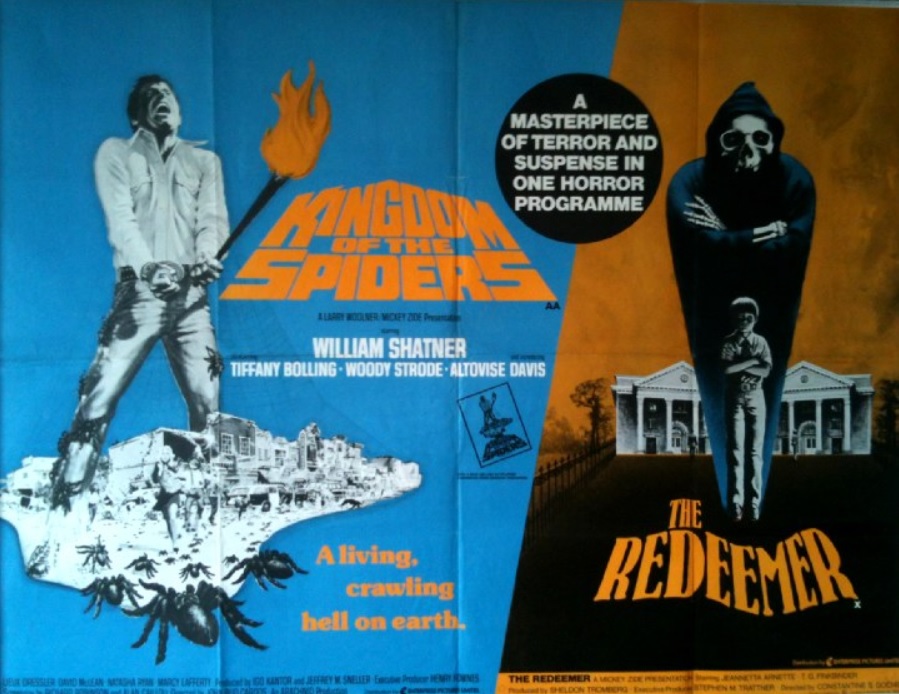
Double-billed with John “Bud” Cardos’s Kingdom of the Spiders.
Ah, but ye must not be duped by Continental Video’s seven-years later 1985 VHS release under the title Class Reunion Massacre—for this Virginia-shot slasher we-don’t-know-what-the-f-it-is, is not a post-In the Year of Our Carpenter, A.D. production: The Redeemer began production in 1975, filmed for six weeks in the summer of 1976, completed reshoots in January 1977, and completed its three-month post-production between April 1977 and July 1977.
And here’s the film noir-cum-giallo plot twist: Halloween completed its twenty-day shoot over a four-week period in May 1978—The Redeemer was in the can, first. And the yellowed-cover turns again: expectations were low for John Carpenter’s˟* follow up to Assault on Precinct13; aimed primarily at secondary markets (duplex theatres) and drive-ins, it quietly opened in Kansas City October 25, 1978. Meanwhile, halfway across the country in Los Angeles, The Redeemer opened—on October 25, 1978. During its drive-in run, ironically, The Redeemer played on the bottom half of double bills with Damien: Omen II (1978). (Phantasm premiered June 1, 1979.)
“Thy is the common fate of all; Into each life some rain must fall.” — Henry Wadsworth Longfellow
Sadly, everyone remembers the madcap hijinks of ol’ Crospy in The Burning(1981) and Madman Marz in Madman (1982), (sorry, both are craptastica slices of crapola, even though they’re based on the Cropsey urban legend; Sam delves into the NYC legend in his reviews)—and no one remembers the lake-unleashed exploits of “The Redeemer” (a very good T.G. Finkbinder in his only acting role). It wasn’t until Johnny C. reinvented the admittedly dying horror genre with Halloween (ol’ Carps was the “Nirvana” of horror world, if you will)—and some confounded contraption called the VCR appeared on retail shelves—did the (retitled) The Redeemer finally find an audience courtesy of the hungry-for-product home video market.
So, what gives with that lame title VHS title?
Ah, the “Big Box” slip cover I remember.
Well, retro-peruse those brick-and-mortar VHS shelves, ye dear reader—look at all of those films with the word “Class,” “Reunion,” and “Massacre” in the title—and all of the horror films centered around a bunch of dopey high school kids-cum-asshole adults meeting their comeuppance years later. New title x new shelf life √ new audience = we can finally make bank on our cursed movie.
This is one of those films where—and we’ve discussed this several times in the reviews of truly oddball movies (such as Harry Hope’s Smokey and the Judge and Harry Hurwitz’s Nocturna, Granddaughter of Dracula)—it seems, the producers didn’t have a locked script and made it up as they went along. Or they had a couple of unfinished scripts and/or movies and spliced them together into a feature. (God Bless, Dr. Shagetz from 1974 becomes 1977’s Evil Town, aka also a 1985/1987 VHS; the unfinished films Scream Your Head Off and The Dark Side to Love (1984), and Cataclysm (1980), becomes the 1985 John Phillip Law-starring Night Train to Terror, comes to immediate mind.) Or they just went “female” and changed their minds for no godly-earthly, logical reason. (Wow, now that’s really sexist; Sam, pencil that transgression alongside my file’s other faux pas. I’ll see you at the bi-annual review.)
Seriously . . . how else can we explain the majesty of this Felliniesque, surrealistic horror?
First, we have a fully-clothed kid, his fist-raised in some sort of afterworld Heil Hitler-salute rising from the primordial stew of a rocky cliff-locked lake. And he hops a ride on church bus. Okay, so . . . we’re getting a crazy kid of The Omen variety, you know, like theatrical one-sheet tease. But wait . . . the kid’s fellow church choir mates are picking on him. Okay, so we’re getting a Prom Night knock off with a little kid extracting adult hood revenge. But wait . . . what’s the deal-e-o with this fire and brimstone preacher with two thumbs on one hand? Okay, so we have a troubled priest of the Jason Miller from The Exorcist variety, and the priest sidelines as child molester . . . and he goes “Jason Vorhees” after services have concluded . . . is he a clerical collared Freddy Kruger? And who’s the building inspector that kills the abandoned high school’s caretaker and makes a mask of his face to masquerade as the caretaker? And how did he decorate that basketball auditorium—complete with catering—all by his lonesome? Not to mention the gothic, “death trap” stage production complete with a graveyard and a giant clown marionette that’s hosted by a stovepipe-hatted magician spouting gothic poetry? Who is the poetry-quoting, camping duck hunter who just blew away one of the ne’er-do-well adults who escaped into the woods? Why the clowns? Why the masks? Why a different costume change of the The Abominable Dr. Phibes-inspired variety for each of the deadly sins-themed death trap-kills that reminds of David Fincher’s later SE7EN (1995)? Why this school? Why are these six, unrelated people sucked into this FUBAR’d version of Agatha Christie’s And Then There Were None, aka The Little Indians (see Stallone’s D-Tox)? And there’s seven deadly sins, so is the Priest suffering one of the sins? Is the kid Satan himself, who contracted the Priest to kill these people to atone for his own sin—and his occult-driven double-thumb deformed hand is his retribution, and it “vanished” because he was “atoned” for his sins?
What in the Lords of Kobol frack is going on here?
Who’s the kid and what’s his relation to the priest? Who’s “The Redeemer,” the kid or the priest? Is priest the adult version of kid and we’re in a twisted afterlife where the past and present exist as one? Was the priest part of the same graduating class as The Redeemer’s victims? Is this his revenge? Why did his double-thumb suddenly vanish and appear on the kid’s hand! We need to know!
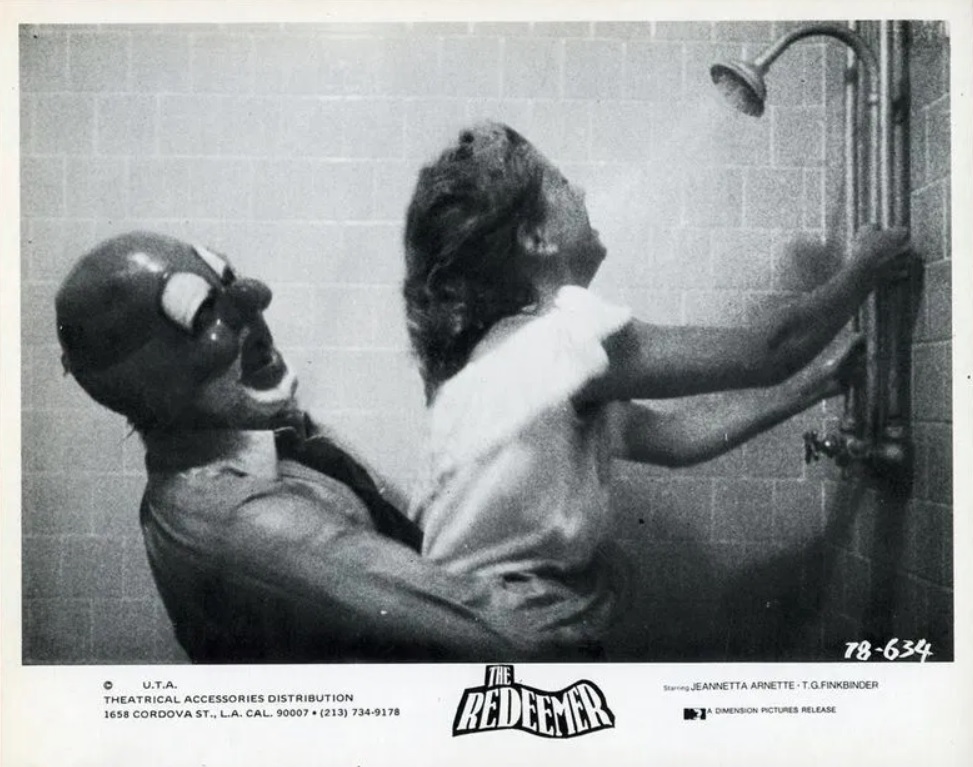
Now, do you see why the Phantasm analogy; for this more Coscarelli than Carpenter. Like J.H Hood from Ghoul Inc Productions—who once swore to himself that he’d never, ever watch The Redeemer again (for Bill Van Ryn of Drive-In Asylum is the true “Redeemer”)—pointed out during the September 5 Drive-In Asylum Double Feature Watch Party (Beyond the Door and The Redeemer): You go into this thinking . . . okay, this is another pseudo-slasher, light parody like Slaughter High (1986) . . . and you end up with a flame thrower totin’ clown roasting a guy’s meat and two veggies, and, as Sammy Panico pointed out: a sink drowning (that couldn’t have been Jeannetta Arnette; it had to be a body double-stunt actress) that goes on way, way, way too long. In the end, you can’t get a handle on where it’s all is going—and there’s not even a space gate or Tallman morphing into the Lady in Lavender or flying Chinese cuisinart harmony balls to leave you scratching your head.
My Kobol Lords, this movie is Galactica-tastic!
So graphic a scene, you’ll flinch.
You can watch it with-ads on Tubi Tv or ad-free on You Tube. If you want it in the library: Copies of the 1985 VHS original released by Continental Video and the VHS re-issues via Victory Media in 1995 are can be found in the online marketplace. There are two versions of the DVD out there: Code Red’s October 2010 release (also as a Blu) as The Redeemer and Desert Island Films put it back into the marketplace under the old VHS Class Reunion Massacre title in 2012.
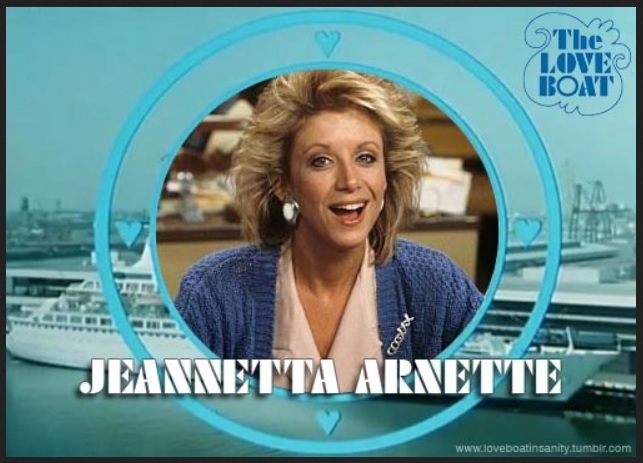
The Where Are They Now Post-Script: The Redeemer is one of those movie where, not only the writer and director dropped off the face of the earth, all of the actors disappeared from the business, sans one: Washington D.C.-born Jeannetta Arnette, who made her acting debut in producers Sheldon Tromberg and Stephen M. Trattner’s feature film debut, 1977’s Washington, D.C.-shot Teenage Graffiti (VHS image via Paul Zamarelli’s VHS Collector site; theatrical one-sheet image via IMDb; trailer via You Tube). Marketed as a soft core porn movie to get those speakers hangin’ off the car windows, it’s really just another one of those light-weight, drive-in T&A’ers about a Midwestern teenager dealing with the problems of growing up and deciding what he wants to do with his life (you know, like American Graffiti, only pseudo-pornier). Stephen Trattner actually gives some insight to the film via the You Tube’d trailer’s comment threads—and, good luck finding a copy: he doesn’t even have one. Screenwriter William Vernick, who got his start as a film editor for TV, transitioned into the unheralded world of script doctoring, for both horror and mainstream films, which he does to this day.
Makin’ it! Whow, whow, whow! (Do I have to explain the David Naughton in-joke?)
As for Jeannetta Arnette, she became a go-to guest star in the network TV series Three’s Company, Laverne and Shirley, St. Elsewhere, and The Fall Guy, which culminated with her 114 episode co-starring role as Bernadette Meara in the 1986 to 1991 run of Head of the Class. You want to see real acting: seek out her role as Sarah Jean Dawes in “Ride the Lightning,” a 2006 episode of CBS-TV Criminal Minds (outstanding, Jennetta!). You also know her theatrical co-starring roles alongside Rodney Dangerfield in Ladybugs (1992), the Oscar-winning Boys Don’t Cry (1999), Snow Angels with Sam Rockwell (2007), and James Franco’s˟˟ PineappleExpress (2008). Her latest work, Walking Up Dead, is currently in production.
** We had a huge Giallo blowout in June 2019, which we recapped and explored with our “Exploring: Giallo” featurette. So, get to hyperlink-a-clickin’, ye have lots of reviews to read!
*˟ There’s more WTF flicks to be had with our “Ten WTF Movies” featurette.
As I write this, Boston’s iconic, trendsetting alternative rock station, WFNX 101.7 FM, is no more.
When the station went on the air in 1947 as WLYN, it broadcast a programming palate of simulcasting its sister AM station with the same callsign on AM 1360, then originated its own programming at night after the AM went off the air at sundown (an AM-FM combo broadcast standard until the mid-70s). Upon the convergence-birth of Los Angeles’ alternative rock station KROQ (the home of Rodney Bingenheimer; his career chronicled in The Mayor of the Sunset Strip) and MTV in the early ’80s, the station came to drop its variety-ethnic programming in 1981 and began experimenting with new wave music in the evenings.
By 1982, WLYN became known as “Y-102,” one of the first full-time new-wave rock stations in the country; a station sale in 1983 resulted in the format remaining, but birthing a new set of call letters — WFNX — until another station sale in 2012 to Clear Channel Communications (now iHeartMedia) resulted in an automated format flip to an “Adult Hits” and a new set of call letters: WBWL (a common practice — live to automation — in these digital times).
The first song WFNX played under its new, full-time alt-rock format was the Cure’s “Let’s Go to Bed.” In August of 1991, with buzz on the group in full effect, DJ Kurt St. Thomas gave the then commercially unknown Nirvana their world broadcast premiere of their new album, Nevermind, from start to finish — and we all know how that album turned out.
At that point, WFNX became a trendsetter of the alt-rock community, giving the first national airplay to the top-selling bands The Darkness, Franz Ferdinand, Florence and the Machine, Hawthorne Heights, and Jet, just to name a few. When the station when off the air in 2012, they went off with the song that started it all: the Cure’s “Let’s Go to Bed.” Nirvana’s first major, mainstream concert appearance beyond the college-rock club scene was for WFNX’s annual anniversary party in August 28, 1991.
To call St. Thomas — as do Beatles historians with New York DJ Murray the K as “The Fifth Beatle” — the “fourth Nirvana member” (or fifth, if you count the late addition of Pat Smear of the Germs as a second guitarist during the In Utero years), is no understatement.
VHS image courtesy of sweesus-smasher/Paul Zamerelli of VHS Collector.com
By 1996 Kurt St. Thomas transitioned into filmmaking. Along with fellow WFNX DJ Mike Gioscia, they made the 1999 black and white film noir Captive Audience. The film dealt with the odd, symbiotic relationship between an overnight DJ and a gun-toting intruder at the station. Winning several international and domestic film awards, St. Thomas and Gioscia were encouraged to shoot a more adventurous feature production.
Recruiting John Doe of X (Border Radio) as their star, The Red Right Hand is a horror film that begins in 1963 as it follows five high school friends forced to relive a terrifying secret at their 15th high school reunion in 1978. Also released to video under the titles Above and Below and Jon’s Good Wife, the original title was taken from a Nick Cave song.
As with most of the Troma Entertainment catalog, don’t let the logos from The Asylum deter you from spinning the DVD, as the studio only distributed the film; they were not involved in its production.
Is it “The Creepiest movie since Rosemary Baby!” as the DVD box claims? No. And The Asylum marketing department has a lot of balls making us thing we’re getting a film that matches the majesty of Roman Polanski. However, St. Thomas and Mike Gioscia have crafted a solid mystery drama rife with blackmail, murder, private demons, and rattling bones: all the plot points you expect in a noir.
St. Thomas would later work at the KROQ, the L.A. rock station responsible for birthing WFNX; while there, he came to produce the long-running specialty show “Jonesy Jukebox” for Steve Jones of the Sex Pistols (The Great Rock ‘n’ Roll Swindle). He and John Doe are currently in post-production stages on their latest effort — and St. Thomas third feature film overall — D.O.A: The Movie, with co-star Lucinda Jenney, who we last saw in Rob Zombie’s 3 from Hell. A noir homage, it concerns Frank Bigelow (John Doe), a Florida private detective hired to follow the ne’er-do-well husband of a St. Augustine socialite. The spiraling double-crosses ensue.
Even though The Asylum made the VHS and DVD widely available in the marketplace — I’ve seen it numerous times on rental and retail shelves, cut-out bins and second hand stores — they’ve opted not to offer it as an online stream. There’s not even an online trailer or clips to share. But if you Google it, you’ll readily find VHS and DVD copies in the online marketplace.
About the Author: You can learn more about the writings of R.D Francis on Facebook.He also writes for B&S About Movies.
We’ve since done a “John Doe Week” tribute in December! You can visit this recap/round up for those film reviews.
Yep! It’s time for more screeching horns n’ strings and shaky, washed out, black and white images (and va-voom, Wanda McKay!) in another dark and stormy night murder mystery.
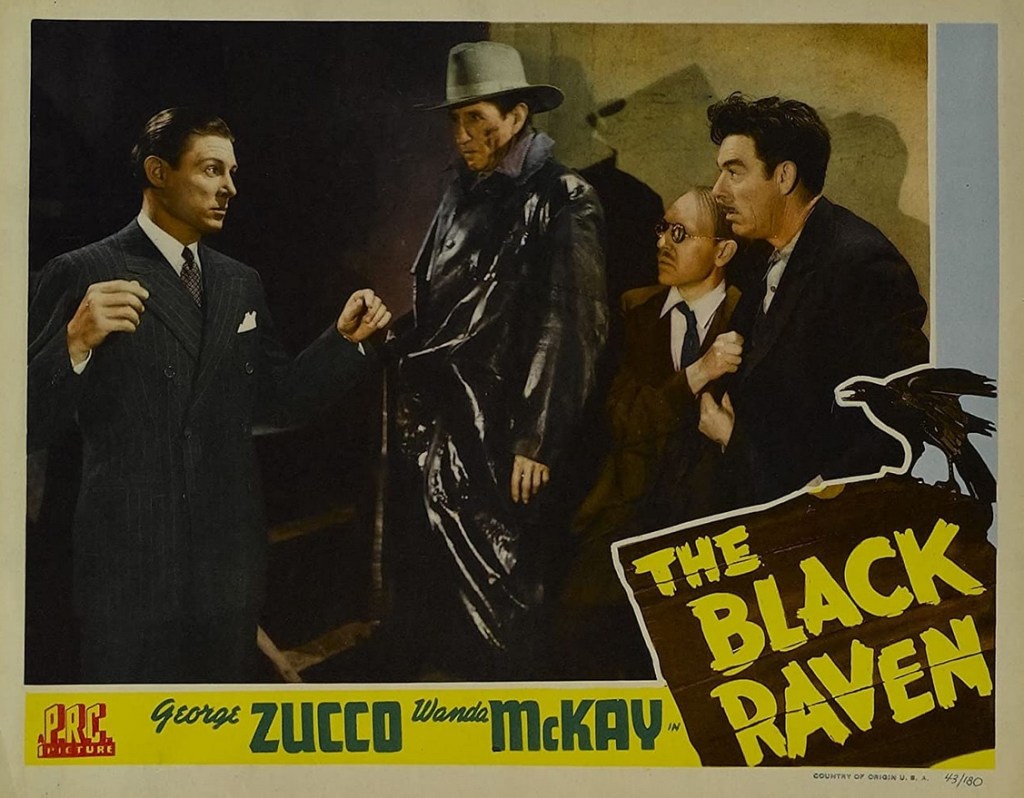
The last time, we were at the Rogues’ Tavern, then the haunted Fal Vale Junction train station, courtesy of our reviews for The Rogues’ Tavern and The Ghost Train. Yep, it’s another group of weary 1930s-to-1940s travelers stranded after a bad storm (Dig those plastic trees swayin’ in the high winds! Don’t slam the door too hard, you’re shaking the set’s walls!) that washed out a nearby bridge and they have to hold up at the Black Raven Inn. Two people are murdered and the hunt is on for $50,000 in quick succession because, even when trapped and facing death, everyone still feels the need for greed.
You may know Wanda McKay from her appearance in 1942’s Bowery at Midnight with Bela Lugosi; another horror notable is 1944’s The Monster Maker; but none of us remember (do you?) her for being the Chesterfield Cigarettes girl, which was a pretty sweet gig back in the day. If you watch an old “poverty row” PRC or Monogram Pictures B-Movie from the 1940’s, chances are (sigh) Wanda was in it.
As for the big man, George Zucco. Wow. We’ll rattle off a few: Madame X (1937), The Cat and the Canary (1939), The Mummy’s Hand (1940), House of Frankenstein (1944), and Scared to Death (1947) — great, creaky films all.
Yeah, just another great public domain ditty saved by the likes of You Tube.
About the Author: You can learn more about the writings of R.D Francis on Facebook.He also writes for B&S About Movies.
Okay, so I’ve absconded with this end of the month throwaway week for some celluloid odd n’ sods and turned into an unofficial “Good Life TV Network” week. Yep, it’s more “good life” memories of watching old movies with good ‘ol pop.
This, like The Rogues’ Tavern we previously reviewed this week, is another dark n’ stormy night type of movie: one that’s part murder mystery and part comedy; one that alternately gives you the frights and the chuckles.
This movie is the punch line to the joke: Did you hear the one about Tommy Gander, (a very corny, ugh-inducing) vaudeville comedian, blonde bombshell Jackie Winthrop, the hot-for-Jackie Teddy, and Jackie’s stuffy snob hubby Richard Winthrop ending up in abandoned train station?
The quartet gets off at Fal Vale Junction in the remote, English countryside, along with Herbert and his fiancée Edna, spinster Miss Bourne, and the (lovable) boozing Dr. Sterling, for a train transfer — which they miss.
Together, with the nearest town four miles away and no cabs available and a storm approaching, they hunker down in the train station — against the conductor’s warnings: warnings of the station being haunted by a “phantom train” and its passengers.
I can’t believe this hasn’t ended up on a Mill Creek Box set. Maybe it has and we just haven’t reviewed that particular box — and we’re on our 10th box, this November 2022! Oh, and might I suggest you pair this one up with Murder by Television (1935) for an evening of retro viewing? Toss The Black Raven (1943) on the VHS fires, as well.
Just another one of those fun, public domain ditties that survives courtesy of You Tube.
About the Author: You can learn more about the writings of R.D Francis on Facebook.He also writes for B&S About Movies.
You’ll need to cut me a lot of slack with this movie, due to its nostalgia value of watching this on the defunct Good Life TV Network with my dad — where we also watched the 1981 war epic Inchon, which was produced by the Reverend Sun Myung Moon, the head of the controversial Unification Church, who also owned the cable channel.
This is just a good ‘ol fashioned murder mystery concerning a soon-to-be-married pair of detectives (he’s a “real detective”; she’s just a “store detective”) who stopover at Red Rock Tavern on a bleak and windy night.
As they settle in and mingle with their other guests — a wild dog breaks in through an open window and attacks and kills two of the guests. The sleuthin’ is on as detectives Jimmy Kelly (Wallace Ford) and Marjorie Burns (Barbara Pepper) discover that the dog isn’t the real killer. Then all of the guests discover they’re trapped inside the tavern by locked doors and windows.
Like I said, this is just a good ‘ol fashioned murder mystery the way the used to make ’em and the way they don’t know how to make ’em anymore.
See, Pop? Making me watch those old flicks wasn’t for naught.
Oh, there’s a twist here: Barbara Pepper, a notable, flashy Hollywood “blonde dame” of the 1930s and 1940s Golden Era of cinema, became better known to us younger folks as Doris Ziffel on TV’s Green Acres and Petticoat Junction. You . . . maybe . . . might remember (I do) Wallace Ford starring as Marshal Herk Lamson in The Deputy, just one of those (many) short-lived TV westerns that didn’t live to up the likes of Bonanza and Gunsmoke.
I can’t believe this hasn’t ended up on a Mill Creek Box set. Maybe it has and we just haven’t reviewed that particular box — and we’re on our 10th box, this November 2022! Oh, and might I suggest you pair this one up with Murder by Television (1935) for an evening of retro viewing? Toss The Black Raven (1943) and The Ghost Train (1941) on the VHS fires, as well. Good stuff!
You can watch this in the public domain on You Tube.
About the Author: You can learn more about the writings of R.D Francis on Facebook.He also writes for B&S About Movies.
Back in July, we held our first “Rock ‘n’ Roll Week” with over 50 film reviews. Then we came back, as the rock ‘n’ roll could not be contained in just one week of reviews. So, this past week — from Sunday, September 20th to Saturday the 26th — we rolled out another 50-plus films concerned with all things rock ‘n’ roll on the big screen.
About the Author: You can learn more about the writings of R.D Francis on Facebook.He also writes for B&S About Moviesand publishes short stories and music reviews on Medium.
In 2002, long time L.A. rocker Cheri Lovedog found critical acclaim for her stage play Prey for Rock & Roll which had a successful run at New York’s famed rock club CBGBs. This caught the attention of film producer and music consultant Alex Steyermark (Hedwig and the Angry Itch), who was searching for a film to break him as a first time director. Lovedog’s self-professed “rock n’ roll love letter” to the L.A. club scene stars Gina Gershon (who got her start in Girls Just Want To Have Fun with Helen Hunt, found acclaim in Bound, and while great in it, deserves better than Showgirls) as a 40-year-old tattoo artist and rocker deep in a mid-life crisis, wondering how much longer she can deal with the struggles of keeping her band together.
Starring as the Clam Dandies (since it’s an all-girl band, read into it) are Drea Dematteo (HBO’s TheSapranos) as terminally-stoned bassist Tracy, Laura Petty (Tank Girl) as Faith, and (the awesome; yeah he’s from Pittsburgh, baby) Marc Blucas (TV’s Buffy) as “Animal” the roadie. Shelly Cole (Madeline Lynn from TV’s Gilmore Girls) impresses with her drum skills; she hits all the right notes as one of the best “film” drummers out there. Petty fakes it well, while Dematteo knows her way around the neck and Gershon, who didn’t play a note before the film, blows the doors off with her power chords. The soundtrack composed by Cheri Lovedog — and sung by Gina Gershon — features an alternative-rock super group of the Lunachick’s guitarist Gina Volpe, bassist Sara Lee of Gang of Four, and later of the B-52s, and Hole drummer Samantha Maloney.
To promote the picture on the festival circuit, Gina took to the road with the Washington D.C. punk outfit Girls vs. Boys (aka GvsB, they provided “Kill the Sex Player” to Kevin’s Smith’s Clerks) as her backing band, which was chronicled in the IFC Cable Series Gina Gerhson: Rocked. Cheri Lovedog compiled the feature documentary Hollywood Trash & Tinsel on the making of the film. Musician Stephen Trask, who also worked on Hedwig and the Angry Itch alongside Alex Steyermark, produced the soundtrack.
Astute viewers will notice the footage of X in the film’s opening refrains originates from The Decline of Western Civilization. Fans of the Lunachick’s can watch Gina Volpe’s bandmate Theo Kagan in Live Freaky, Die Freaky (a seriously f’d up animated puppet movie where, in a distant future, a cult forms around the Manson Family and Charles Manson is mistaken as a Jesus-messiah; the film also stars the voices of the members of Green Day and the Go-Gos). Lovedog’s other films include 2010’s All American Gender Outlaw and Go Hard or Go Home, a 2012 document on the indie band Devil Dolls MC. Alex Steyermark made another rock n’ roll flick, the indie ’80s rock tale, Losers Take All, which, despite Kevin Smith’s involvement, failed at the box office and VHS shelves.
During the film’s initial stages, Joan Jett was involved in the soundtrack’s production, but left early on due to the usual “artistic differences”; Linda Perry of Pink and 4 Non Blondes (“What Going On?”; their cover of Van Halen’s “I’m the One” appears in Airheads) stepped in (it is also said Jett was to star in the Gershone role, but had issues with the script). However, as you can see from Gina Gershon’s look and tone, Joan definitely left her mark on the film — in many ways Gershon’s Jacki harkens Jett’s own Patti Rasnick in 1987’s Light of Day.
As with any rock flick that isn’t a splashy, A-List bioflick of the Jim Morrison, Johnny Cash, or Ray Charles variety, the critical — both professional and general movie goer — response was, as with Light of Day, lukewarm. Many reviews, while praising the costuming and set design, and calling out Gershon’s dead-on portrayal of a failed, disillusioned rocker, dropped the word “soap opera” in their reviews in regards to the endless stream of bad luck befallen the band (e.g., a band member’s rape; another’s death by car accident; a recording deal falling through because Jacki didn’t “put out” for the record executive) that came across as “phony.”
As someone who experienced this life as radio jock dealing with local bands, as a roadie for said bands, and bassist myself, I can attest that Alex Steyermark’s directorial debut is a commendable first effort that ranks up there with Paul Schrader’s Light of Day as one of the most accurate portrayals of a struggling rock band; Steyermark pulls back the curtain on a musician’s love of rock ‘n’ roll clashing with their family and relationship obligations. Yes, most struggling musician’s lives are a hot mess — just like in this movie.
The film’s soundtrack has also taken its share of critical hits; many critiqued the music as “awful.” Personally, I enjoyed Lovedog’s music for the film, which serves as a sort of “greatest hits/best of” compilation of her life’s work. Not to say that the music was purposefully composed as “bad” for dramatic effect or that Lovedog can’t write — but isn’t that the point? It is one thing to love music: it’s another thing to be able to write it . . . and yet another to write it successfully. So, if you’re watching the film for the first time, and you think the music “sucks,” it should only lend to your appreciation of the film as a whole and in your understanding of why many, many local bands — no matter how hard they try — never make it.
This film is a must watch. The soundtrack is a must listen. Do it. And stick around for the band flyer-inspired end credits. The film — as well as the soundtrack — is readily and easily available in the online marketplace with VOD streams on a wide variety of platforms. Vignettes from the film and its music abound on You Tube to enjoy.
About the Author: You can learn more about the writings of R.D Francis on Facebook.He also writes for B&S About Movies.
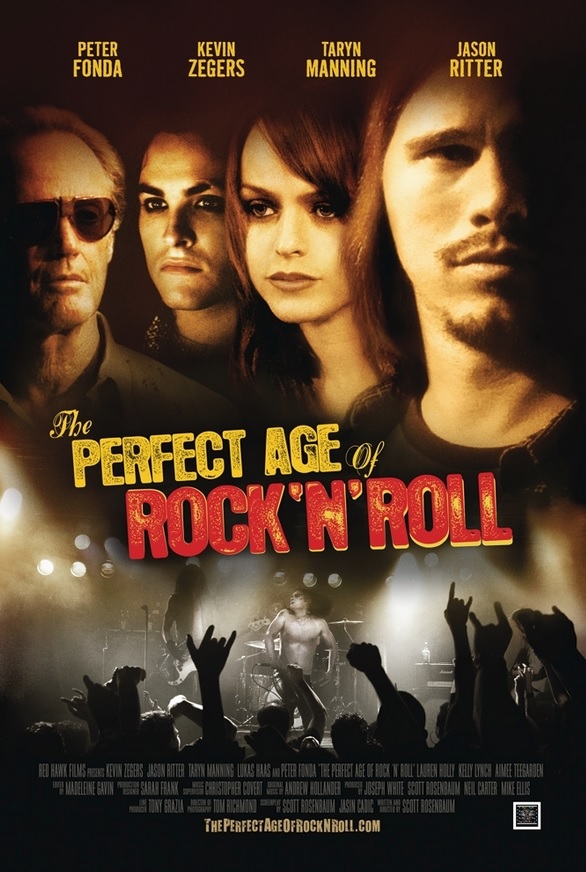
We briefly touched upon this feature film writing and directing debut by Scott D. Rosenbaum during our tribute week of reviews to the works of Mark L. Lester and his 2010 rock flick, Groupie.
The connection came courtesy of Tayrn Manning, who stars in this indie rock flick alongside the always awesome Peter Fonda (of Easy Rider; here, he is the wise ex-rocker, natch), along with Jason Ritter (the son of Three’s Company John, as the troubled rocker) and Lucas Haas (of Last Days, here as the intrepid journalist).
The inclusion of Fonda is no accident: This is a “road movie” where the legends of the “27 Club” meets Eddie and the Cruisers — only with a dramatic arc and production quality that rises it to the level of Almost Famous (based on the downfall of Humble Pie) and British-made Still Crazy (based on the ’80s Animals reunion) — in tale about a a gothic-rocker (with a heavy Cobain influence) whose sophomore album for his band The Lost Soulz flops; he returns to his hometown to make amends (i.e., suck up) with the incognito-music teacher responsible for writing the songs for the first album.
Lead actors Kevin Zegers (Damian Daalgard in TV’s Gossip Girl and Mel in AMC’s Fear of the Walking Dead) and Jason Ritter star and provide the vocals to the original songs “Turn Me On,” “Sweet Rock Candy,” “Without You,” and “Lonely Planet Boy.” The soundtrack also features atmospheric songs by Nirvana, Aerosmith, Violent Femmes, and Jane’s Addiction. Both are stunning in their dual-duties.
The script displays Rosenbaum’s keen knowledge of the Grateful Dead: Lukas Haas portrays a rock journalist named “Clifton Hanger,” which was the name late Grateful Dead keyboardist Brent Myland used when checking into hotels. Peter Fonda appears as road manager “August West,” which is a character in the Grateful Dead song, “Wharf Rat.” Making his acting debut: blues great Pinetop Perkins.
You can also find this in the overseas marketplace under the title, Coda, which also serves as the title for the 2005 short film in which this is based. Sorry, no freebies on this one, kids. You can check it out as a VOD on Amazon Prime (where it pulls 4 to 5 stars and a 91% approval), Apple iTunes, Google Play, Vudu, and You Tube Movies.
Great stuff. Watch it.
About the Author: You can learn more about the writings of R.D Francis on Facebook.He also writes for B&S About Movies.
Was it worth waiting a few years before finding a copy of this poorly-distributed VHS in a cut-out bin at an old Sound Warehouse?
Oh, yeah.
Fans of the cult film existentialism of Easy Rider, Vanishing Point, and Two-Lane Blacktop — or any art film that finds a reissue on the Criterion Collection — will enjoy this grim, black and white film noir homage (shot on Super 16mm) to the French new-wave films of old; to that end, the film employs a disjointed, non-linear narrative. Do you enjoy the films of Jim Jarmusch’s Stranger Than Paradise (1984), Down by Law (1986), and Mystery Train (1989)? Did you enjoy the later Clerks (1994) by Kevin Smith? Do the “mood pieces” of Italian filmmaker Michelangelo Antonioni — such as 1975’s The Passenger — appeal to you?
Then you’ll enjoy Border Radio — although this UCLA student film by Allison Anders and Kurt Voss (Down and Out with the Dolls) doesn’t possess the “slickness” of those films, as you can see from the trailer.
Border Radio is a noirish tale of three southern California punk rockers — two musicians and a roadie (Chris D. and John Doe) — who decided a club stiffed them on a gig, so they rob the club. Chris D. subsequently abandons his rock journalist wife and crosses the border into Mexico with his split of the caper, leaving her holding the bag in repaying the debt of their robbery; she sends John Doe into Mexico to find him.
The caveat of Border Radio: this is not a punk film.
U.S.-issued VHS by Michael Nesmith’s Pacific Arts Video courtesy of 112 Video/Paul Zamarelli of VHS Collector.com.
There are punk rockers cast in the film as actors, but the music and punk aesthetic is void from its frames. The film’s stars, Chris D. of the Flesh Eaters and the Divine Horsemen, and John Doe of X, do not perform any of their music in the film. At the time Allison Anders (1992’s Gas Food Lodging, 1999’s Sugar Town, 2001’s Things Behind the Sun) completed the four-years-shot film begun in 1983, L.A.’s punk scene — with the musicians she cast as actors — was over.
The Flesh Eaters disbanded and the Divine Horsemen (lead singer Julie Christensen stars in the film) were set to release their first recordings; Billy Zoom left X; Phil and Dave Alvin (Dave co-stars in the film) disbanded the Blasters, and Texacala Jones (who also appears in du-Beat-eo) split from Tex and the Horseheads. Green on Red (they appear on stage at the Hong Kong Cafe), who got their start on Slash Records with Gravity Talks (1983) and wrote the soundtrack for Anders’s Gas Food Lodging (1985), also folded up the tents after their three, pre-grunge albums for Mercury: The Killer Inside Me (1987), Here Come the Snakes (1988), and This Time Around (1989) failed to expand beyond college rock airplay and connect with the burgeoning, commercial alternative rock scene. The film’s theme song, “Border Radio,” is performed by The Tonys, aka L.A.’s the Dils, aka Rank n’ File, led by Chip and Tony Kinman; by the time of the film’s release, they formed the synth-based Blackbird project.
You can learn more about the out-of-print Enigma Records soundtrack on Discogs.com. The film is not currently available on PPV and VOD platforms, but DVDs can be purchased direct from Criterion. Here’s the trailer and the full soundtrack to enjoy.
About the Author: You can learn more about the writings of R.D Francis on Facebook.He also writes for B&S About Movies.
Hey, you want to write for us? We have a “John Doe Week” coming up in December. You can get all the deets, HERE.









 B&S About Movies
You must be logged in to post a comment.