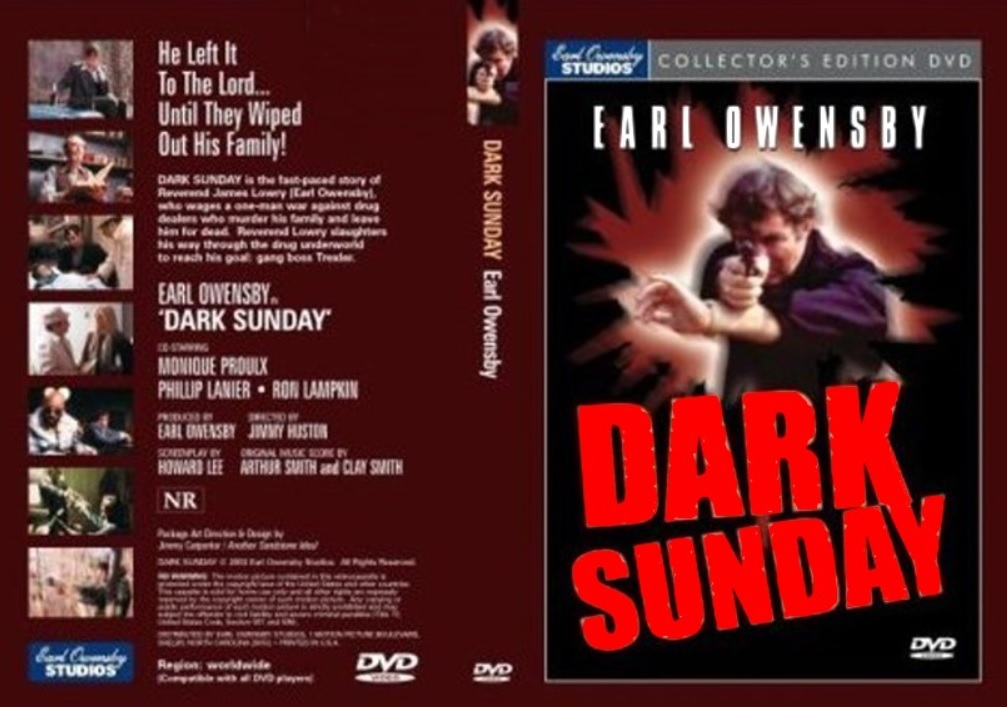
Grindhouse and drive-in purveyor Earl Owensby, who made his producing-acting debut with the 1974 one-two punch of a Walking Tall (1973) ripoff called Challenge and its sequel, The Brass Ring, tossed a clergy collar on his ersatz Buford Pusser — and changed his name to the Reverend James Lowery — for this, his third movie: a Death Wish (1974) rip off. Since the film has a priest dolling out the justice, Dark Sunday ends up as a weird, obscure sidebar on many a Christploitation, aka Godsploitation, lists.
Regardless of Dark Sunday ending up on those critical lists, Earl Owensby will always be known best for his fifth film, Buckstone County Prison (1978), a film which crossed the chain-gang classic Cool Hand Luke with the biker-karate-Indian actioner Billy Jack. There’s fourteen more films to chose from Owensby’s vanity-producing resume — of which he acted in eleven. Sure, none of them have a lick of originally between them, but Owensby is always committed to his leading man role and his films are never not entertaining. And, most importantly, they always made bank in the big city, sticky-floored in-doors and backwater drive-ins — Buckstone being the most successful of the bunch.
The Maltese Falcon? Uh. . . . Well, WRPL, aka “Ripple Radio” was a real station in Charlotte, North Carolina, so if that’s what Lloyd Rose saw,an ersatz Sam Spade, it is.
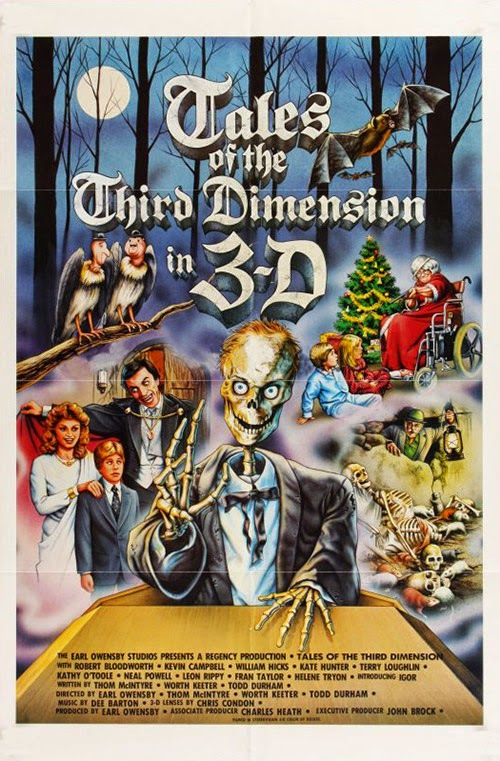
You need need a ripoff of Burt Reynolds’s Hooper when that’s missing from the rental shelf? Earl’s got one: Death Driver (1977). Smokey and the Bandit rented out? Pick up a copy of Hit the Road Running (1987). Need a wolfman flick? Check out as Earl as the cursed Colin Glasgow in Wolfman (1979; co-starring R.C. Nanney, aka North Carolina-famed disc jockey “Curly Lee,” also of 1979’s Knobby the Belwood Wampus Cat). In the mood for a killer dog flick? Check out Earl as a backwater sheriff fighting off government-bred mutts in Dogs of Hell (1983). Need another Cool Hand Luke rip to fill the void of Clint Eastwood’s Escape from Alcatraz being rented out? Grab a copy of Chain Gang (1984). Heck, Owensby has done it all: even portraying (a faux) Elvis — with a Roy Orbison vocal assist — in Living Legend: The King of Rock and Roll (1980). Yeah, Earl also jumped on the slasher bandwagons to the lands of Carpenter with Day of Judgement. You need a retro-horror omibus, well, a “3-D” bandwagoner? Earl’s got one: Tales of the Third Dimension in 3-D (and both are also very “Godsploitation” and Christ exploity).
Okay, enough with the Earl Owensby love. Let’s unpack Dark Sunday.
Reverend James Lowery is a skid row reverend helping young junkies to a better life through his homegrown flophouse and rehab center. Needless to say: a cured and Chirst-saved junkie is one less customer for “the Candyman,” a local drug dealer. So ol’ Candy sends his goons after the good minister for cutting in on his action — and they blow away the Reverend’s wife and kids at a riverside picnic. His wife and son, Eric, are dead. His son Jody, survives. And the Rev is left mute with a bullet-shattered voice box.
Let thou the seven seals of revenge be broken.
As with Death Wish (1974), as well as Dirty Harry (1971) and Magnum Force (1973), inspiring the Italian film industry with a series of gritty, brutal revenge films, aka Poliziotteschi, this Jimmy Huston-directed and Early Owensby-produced Bronson-Eastwood amalgamate — due to its way over-the-top violence — actually pinches from the Italian knockoffs. In fact, due to its ultraviolence, the revenge proceedings play as a “white” version of a blaxploitation actioner.
Yeah, sure, while well-shot and edited, everything about this against-the-budgeter from the Owensby House of Flicks is cheap and ripped off from other, better known movies. But Earl Owensby is an engaging, passionate actor on screen and he keeps you watching. And you can’t not stick around to see how much more violent this southern-baked grindhouser can get: for that “NR” rating on the DVD sleeve just ain’t whistlin’ dixie, Cletus.
After four films with Owensby — Dark Sunday being his debut, along with The Brass Ring, Death Driver and Buckstone County Prison — Jimmy Huston went off on his own. As with Owensby, Huston ripped off everyone, as well, starting with the (very) Carpenter-inspired Final Exam (1981), and the ’80s de rigueur vamp-comedy, My Best Friend Is a Vampire (1987). The last time we heard from Huston in the director’s chair was the Lou Diamond Phillips and Judge Reinhold-starrer, The Wharf Rat (1995). His greatest success was writing the Lethal Weapon variant Running Scared (1986) starring Gregory Hines and Billy Crystal.
If you love the grindhouse and drive-in cinema of old, make a point of watching at least one of Earl Owensby’s films in your travels — but more than one, if you can. You can watch Dark Sunday on You Tube. You’ll be glad you did.
You can learn more about the still-active Earl Owensby Studios (James Cameron’s The Abyss was shot there) and purchase Earl’s films direct from the studio’s website. There’s also a nicely written Wikipage on Earl’s accomplishments. In 1997, longtime Owensby associate Noel T. Manning produced a touching, feature-length documentary, Earl Owensby: The Man, the Myth, which is legally available on You Tube via Manning’s personal page.
About the Author: You can learn more about the writings of R.D Francis on Facebook.He also writes forB&S About Movies.
Scotsman Serge Chekov (Stelvio Rosi, of Luchino Visconti’s incredible The Leopard, 1963) inherits his uncle’s estate that overlooks a small Balkans village, only to discover that Professor Droilia (Gerald Tichy, of Mario Bava’s Hatchet for the Honeymoon), has taken residence in the basement. As Chekov investigates, he leans the professor is a mad scientist who has perfected the reanimation of the dead — with the help of Igor (Sir Paul Naschy), a necrophiliac grave robber.
Chekov, as is the case with most of the Counts in these films, gives Peter Carpenter (Point of Terror) lessons in how to improperly treat n’ bed the ladies. Meanwhile, the professor’s put-upon wife, Doris (the heart-melting Dyanik Zurakowska), is exactly the distressed damsel we pay to see — gowns, nighties, and improper designer footwear, in check. Naschy, as usual, no matter the star or support player — amid the horny witches, the necrophilia, the zombies, the graveyards, and the Satanic coven-foolery — excels in his character’s kinked weirdness. And yes, we do get the ol’ Drolia’s creations rising in league against him amid the dumb detectives without the skill to fish the herring o’ red.
Oy! I love this film. It has everything I come to expect in a Spanish horror film subsidized by — and copying — the Italians.
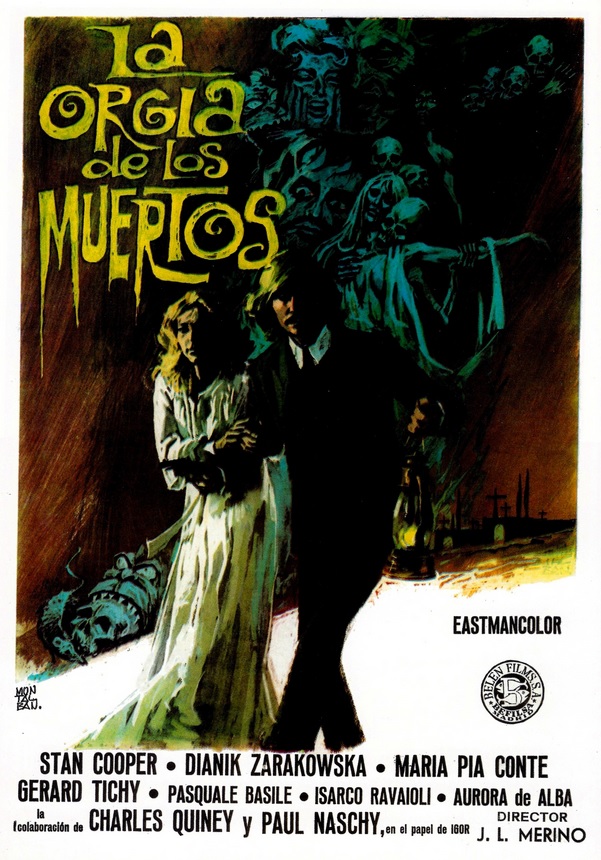
The European theatrical one-sheet.
Directed by José Luis Merino as La orgía de los muertos, which translates as Orgy of the Dead (a great title), this Paul Naschy-starrer became known as The Hanging Woman during its initial U.S. theatrical release (as result of our Scottish lad, upon arrival, finding his cousin hanging from a graveyard tree). Over the years, it has been released to VHS and DVD under the titles of Beyond the Living Dead, Return of the Zombies and Terror of the Living Dead. What really twists the sprockets is this Paul Naschy curio is also known in some quarters as Zombi 3 — which also serves as an alternate title for Burial Ground, Let Sleeping Corpses Lie, Nightmare City, and Marino’s stomach-churner, Zombie Holocaust, aka Doctor Butcher, M.D.
Some critics have opined this was directed by Naschy associate León Klimovsky (of the excellent The Vampires Night Orgy), as result of some prints of the film — for reasons unknown — instead crediting writer-director Jose Luis Merino as “Leo Klimovsky,” while other prints anglicize the Spanish-born director as John Davidson. The “Jack Daniels” on those prints is actually Merino’s co-writer, Erico Colombo (Scream of the Demon Lover, 1970).
Usually, when it comes to Naschy — at least when he’s in the writer’s and director’s chairs — we get a film rife with Universal homages. Here, under the pens n’ lens of Jose Luis Merino, we have an effective, Italian-Spanish variant on the atmospheric-purposeful, “historical” Gothic dramas of old: to that end: if you’ve burnt out on your repeated views of ’50s and ’60s Hammer flicks (moi), you’ll have a fresh, homage-watch to the British horrors of old.
The overall effectiveness of this obscurity in the Spanish horror realms is Merino’s artful juxtaposition of the beauty of the (nineteenth-century) Spanish countryside with the bizarre-cum-sinister, red herring-rife noir dealings. Naschy, again, while only in a support role, relishes the tastelessness of his necro-creep and, as result, this slides nicely amid my Naschy-quartet favorites of Horror Rises from the Tomb, Panic Beats, Inquisition, and The People Who Own the Dark.
You can watch this as a with-ads stream — via Charles Band’s Full Moon Studio — on Tubi. For an ad-free experience, Full Moon offers it on their Amazon Prime page. The Tubi-version runs at one hour thirty-eight minutes; Full Moon’s at thirty-four.
The 2009 DVD reissue by Troma (just seeing their logo makes me ill) includes an audio commentary with Jose Luis Merino and an interview with Paul Naschy. As result of the common denominator of Dyanik Zurakowska, the DVD also features her work in Sid Pink’s The Sweet Sound of Death (1965), directed by Spain’s Javier Seto (best known to U.S audiences for the 1963 sword-and-sandals flick, The Castilian). Emptor the caveats: While the transfer stinks, Troma (claims) their DVD presents the long, uncut version; complete with nudity, it runs at one hour thirty-one minutes. However, how Troma’s is the “Definite Cut” (as advertised on the box), when it’s shorter than the Tubi/Amazon versions, is anyone’s guess.
About the Author: You can learn more about the writings of R.D Francis on Facebook. He also writes for B&S About Movies.
First, it’s confused with German director Eberhard Schröder’s Die Klosterschülerinnen, aka The Convent Students, which also made the rounds as Sex Life in a Convent, but is also known as . . . Girls in Trouble.
Second, that film, and this Sybil Danning vehicle (well, not really) is not only co-directed by Schröder: both star German glamour model and Euro-sex kitten Doris Arden (1968’s So Much Naked Tenderness and 1972’s Nurse Report).
Third, while it’s a softcore skinflick (uh, not really), it ends up on “Christploitation” lists due to its anti-abortion and pro-life slant in its chronicle of several pregnant women on their way to get abortions.
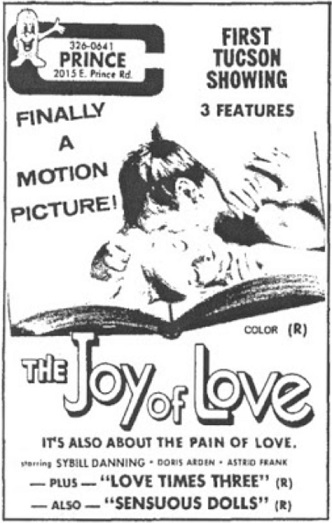
Finally, while it played across Europe in 1971, it finally made it to America during the height of the “Golden Age of Porn”* on U.S. shores as The Joy of Love.
But this ain’t no porn . . . or the least bit golden. And there’s no joy in watching it. And it’s not a Christian flick . . . or the least bit saving. Everybody got duped with this one. No one was entertained by it and everybody hated it. But what else would you expect from a film that markets both the porn and God-believing markets?
Lacking a fluid narrative, the film actually plays as a series of documentary-styled vignettes. So what we really have here is an omnibus films of seven tales on the dangers and horrors of abortion. And now you see why it ends up on Christploitation lists.
In the first tale, two women are in court over a botched kitchen-abortion. Then, we meet a kidnapped and raped 13-year old girl forced to keep her baby because the law doesn’t allow abortions. In the third tale, a knocked up young lady has a miscarriage forced upon her. Then, we’re inside a mobile — and illegal — abortion clinic. Then a secretary is raped by her boss, who then send her to the U.K. for an abortion. We also meet a woman who visits an abortion doctor who drugs her and takes porn-pictures of her to make some pocket change. And in the final, seventh tale, a young, pregnant girl begs a doctor for an abortion; he calls in priest to read her the riot act.
So, what happened back in that opening court room scene?
Well, the old bag with the kitchen knife who almost murdered the young woman, gets three years. The girl — who was almost murdered, mind you — gets six months in jail because, well, she’s a “slut” that already had a child previously that she gave up for adoption.
As you can see, this West Germany ditty is far from being a skin flick. And it’s just one of those oddball flicks you spotted behind the green curtain* during the video store ’80s because Sybil Danning’s presence sells the tape — then you discover she’s only the wife of the judge from the first segment, she’s not an aborter or abortee, and she shows us no skin. And the whole movie is actually pretty disgusting and you start to wonder what the big deal was about you finally aging-in to get behind the green curtain.
Obviously, there’s no trailer to show you or links to stream it online. But make no mistake: this offensive lesson in tedium that would give Ed Wood pause, exists. Sybil Danning fans can skip this — we implore you, skip this — and go directly to Malibu Express or They’re Playing with Fire.
Oh, and beware of Eberhard Schröder skin flick rabbit holes. It’s a sexually twisted filmography you’d rather not know about. Trust us. Don’t do it. (But you know you will.)
* We delve into the “Golden Age of Porn” and “Behind the Green Curtain” eras with our joint review of Forced Entry (1973) and The Last Victim (1975), along with Spine (1986) from our “SOV Week” of reviews.
About the Author: You can learn more about the writings of R.D Francis on Facebook.He also writes for B&S About Movies.
DAY 25 — SLEEPLESS IN SEATTLE*: Sleep deprived and still alive . . . for now. (*Does not have to be set in Seattle . . . so Belgium, works!)
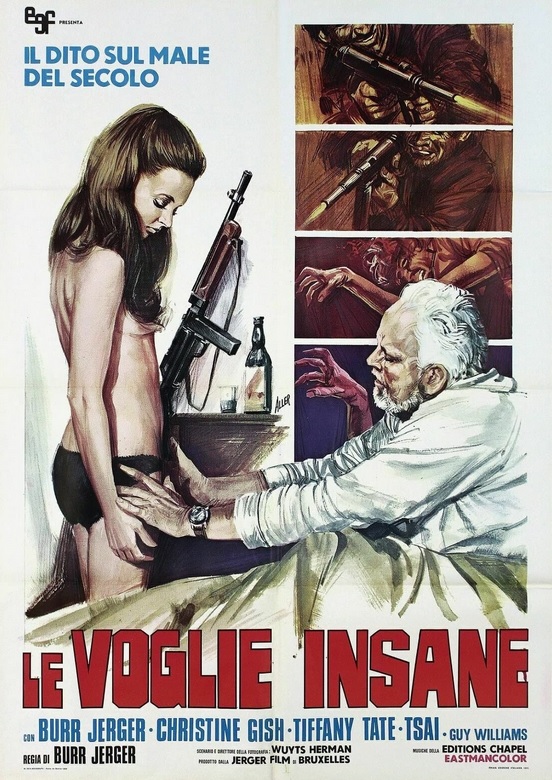
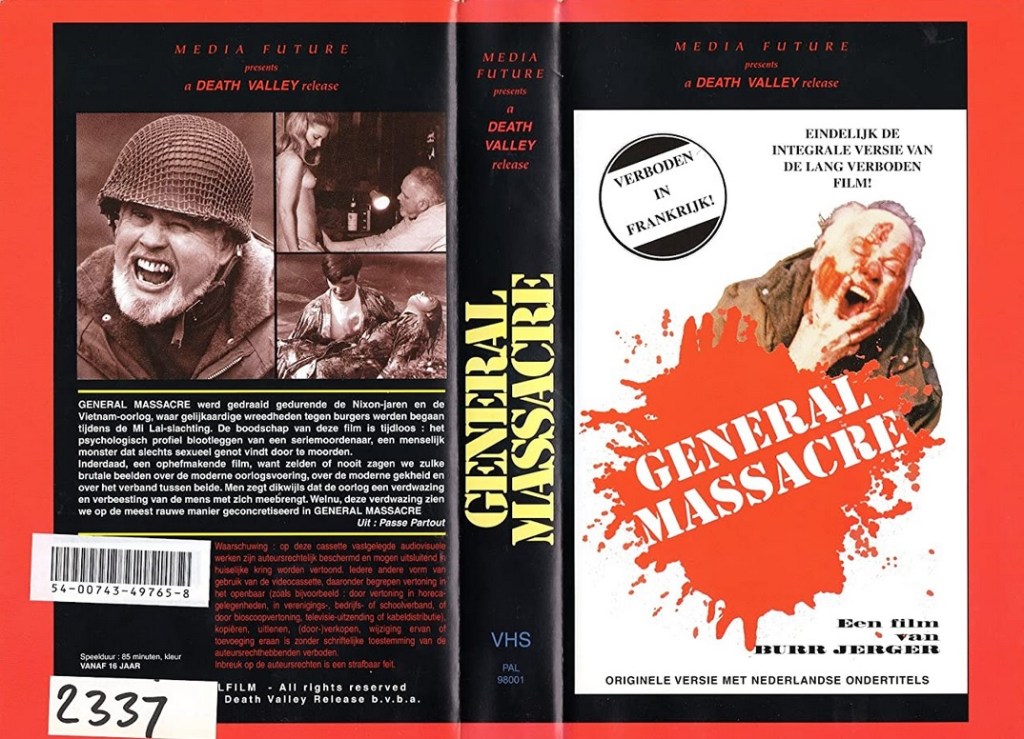
Just so you know what you’re getting into with this very odd, badly acted and poorly scripted tale about a deranged (our “sleep deprived” lad) American brigadier general (our auteur, Burr Jerger) living in Belgium as he awaits trial for his atrocities committed in Vietnam: General Massacre was deemed “unacceptable” by the American Humane Association for “animals killed during filming” (a cow and a couple of ducks), upon its release in 1976 on U.S. shores. The backlash so damaging to the film, Burr Jerger, the film’s director, writer, producer, and lead actor, sued the U.S. government for “conspiracy” against this film, which he described as a “cinematic protest against war.”
Okay. Well enough, Burr. But you still harmed, maimed and killed animals to make your anti-war statement. And those “auteur” excuses didn’t fly with Ruggero Deodato butchering squirrel monkeys and river turtles to make his “statement” film, either.
Animals were killed during the making of this movie.
Anyway, when Wilbur “Burr” Jerger filed suit in 1975 in the Los Angeles federal courts, he claimed the FBI and CIA maintained an illegal dossier on him for his “political activities.” Jerger also alleged in the lawsuit, after a conspiracy born out of those files, caused the release of General Massacre to be irreparably damaged and he lost $100,000.
Who is this Burr Jerger?
Well, the West German auteur also resides in those weird, hazy frames of celluloid resided by Peter Carpenter: a vanity auteur that went all out on his masterpiece, with Jerger managing one quadruple-threat to Carpenter’s two of Blood Mania and Point of Terror. And both vanished from the business after four films when their master works, failed. And, like Carpenter, Jerger passed through the Russ Meyer turnstiles. But unlike Carpenter, Burr also passed through Jean Rollin’s turnstiles. (For another lost soul of the celluloid turnstiles, check out our overview of Gene O’Shane’s career in our review of The Velvet Vampire.)
Jerger actually stuck around for more than four films as an actor: he made five: he appeared in Captain Sindbad (1963; a West German film edited into Quentin Tarantino’s Natural Born Killers), No Survivors, Please (1964; a black and white alien invasion tale), and an uncredited appearance (thus the four-to-five snafu) in Fanny Hill (1964) for Russ Meyer. Jerger made his final acting bow in Jean Rollin’s The Demoniacs (1974; a sexploitation, haunted island/pirate romp).
Jerger initially came to Europe in 1961 as a free-lance-reporter for Show Business Illustrate, Ebony and Globe Photos. That led to his making his cinematography and directing bones as the set photographer on Escape from East Berlin (1962), as well as working as a production assistant on A Cold Wind in August (1961), and as an assistant director on the French-made films Madame Sans-Gene (1961) by Christian Jague, and Cartouche (1962) by Philippe De Broca.
However, while Burr worked on all of those films in East Germany and France, he was actually born and raised in Chicago, Illinois. Married to Lieva Lone, his co-star in The Demoniacs, he died on May 12, 1982. It was after his failures in film, that he relocated from Belgium, to Paris, and back to the United States, working as he began: a freelance writer and photographer. He would go on to write an (unnecessary) novel based on General Massacre, as well as The Saga of April 6th, and a storybook, Four Letter Words.
The Review
As with all early ’70s drive-in flicks: it made it to ’80s video.
“Politics are the extension of war.” “Civilians are as much the enemy as men in uniform.” — the ravings of a warmonger
We learn of those ravings via a non-linear, flashback story as our U.S. WW II and Korean War veteran awaits his trial for the atrocities he committed in Vietnam. But what’s his excuse for killing his wife (whom he met-raped during a Nazi Germany tank raid) for cheating on him (he chases her into the forest around his estate and shoots her)? And killing his daughter — whom he has the incestual hots for — when he catches her with his hospital orderly?
In between, our General goes nuts on his Antwerp estate, where he “commands” his troops and straps on his weapons and hunkers down in the woods — woods now haunted by his wife on ghostly horseback. Oh, and our General has “recruited” his old Vietnam lackey, Corporal Tsai, to film his “war games,” his hateful and racist insights on the world, and his animal murders . . . which are graphic, ugly, and down right cruel as the camera lingers as the life leaves the cow. Then, to make matters worse: there’s the close up of the duck’s eyes as its life leaves the body.
Oh, yes, for there is a “statement” in the murder of cows and ducks . . . but the proceedings are just so clumsy across all of the inept disciplines that Burr Jerger kept for himself — on top of the art house pretensions deploying every sweeping and zooming camera trick in the book known to cinematography — as we flash to and fro from 1945 Nazi Germany to our fair General’s freakout in the Antwerp wood, the “anti-war” message Jerger intended, is lost.
Yes, Burr. War is awful. But your movie, even more so. And animals died for it. Certainly not one of the proudest moments of my little ol’ VHS home library.
There’s no freebie streams or trailers to share, but you can get DVDs from DVD Planet, if you must.
About the Author: You can learn more about the writings of R.D Francis on Facebook.He also writes for B&S About Movies.
DAY24 — 2 CLOSE 4 COMFORT: A main character suffers from claustrophobia(and was Clint Eastwood “too close for comfort” in that editing suite with Jack Ging?).
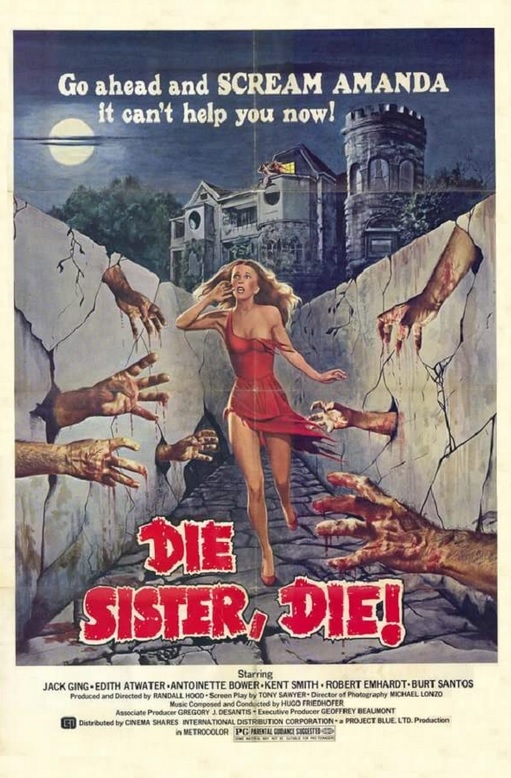
If only there was an olive-skinned Italian beauty adorned in a graveyard-appropriate mini dress and heels escaping a phalanx of zombie arms in an errant set piece from Paul Naschy’s Horror Rises from the Tomb and Panic Beats.
Well, actually . . . as the plot unfolds, our faux-Naschy Giallo babe, here, is British-American bombshell TV actress (from the late ’50s to the late ’80s) Antoinette Bower (Superbeast, Blood Song, Prom Night, Time Walker), so, it’s not a total loss. Well, yes it is: For as the beauty of Annie blinds us, instead, we get a “Hagsploitation” romp with a down-and-out Edith Atwater (our “Day 24” shut-in, here) — as our “screaming Amanda.” And, come to think of it, even though she was still stunning, the way Hollyweird objectifies women, even at youthful 39, our divine Ms. Bower — who never ends up in a red dress and heels nor is on the run — is on the cosine of appropriation of hagsploition.
So, goodbye pseudo Paul Naschy Giallo ripoff. Hello, psychobiddy riot.
Warning: This scene does not occur in the actual film.And where’s Clint’s credit?
Yes, the old hag in this exploiter, Edith Atwater, you know best from Boris Karloff and Bela Lugosi’s The Body Snatcher (1945), which was her third feature film; she also appeared in Strait-Jacket (1964) with Joan Crawford (herself a “hag” actress with the likes of Berserk! and Trog), then fell into a lot of TV work for the remainder of her career into the mid-’80s to pay the bills.
Atwater was just one of the many, ’40s startlets finding work in the hagploitation, aka psychobiddy, sub-genre where old, crusty women either terrorize “sinning” young women or simply are jealous of their youth, so they “gaslight” them into insanity (and sometimes string ’em up in cellars or dungeons or attics). In line behind Joan Crawford was Tallulah Bankhead with Die! Die! My Darling! (1965), studio starlet Veronica Lake, who took her final bow with Flesh Feast (1970), Wanda Hendrix (thumpy-whumpy goes my heart) closing out her career at the age of 44 with the Gothic, Civil War tale, the really fine The Oval Portrait (1972), and ex-20th Century Fox studio-starlet Jeanne Crain (skyrockets . . . rainbows . . . unicorns) attempted an early ’70s comeback with The Night God Screamed (1971). And let’s not forget Agnes Moorehead in Dear Dead Delilah (1972). Oh, toss Cult of the Damned, the aka’d “horror version” of Angel, Angel Down We Go (Let’s rock ‘n’ roll, Jen, baby!) that starred 1944 “Best Actress” Oscar Winner Jennifer Jones (The Song of Bernadette) on the hag stacks.
The Review
The plot of Die Sister, Die! concerns the greed of Edward (Jack Ging; our “Clint” connection): he tires of the “allowance” granted him by his sister Amanda (Edith Atwater) as he becomes impatient for her death and his inheritance. To hasten her demise, or at least stop her suicides (twice in one year) from being thwarted, Edward hires Esther Harper (Antoinette Bower), an employment-desperate, discredited ex-nurse to watch over her. The $25,000 deal: When Amanda tries for her third suicide attempt, let her succeed — if a heart attack isn’t induced, first. To Edward’s dismay, Esther and Amanda take a shine to one another; now Esther is less than enthusiastic about killing the old woman (e.g., induce a heart attack) — instead becoming more curious about the secrets held in the house, especially as to the whereabouts of a mysterious third sibling, Nell. (Two shut-ins! Where’s my “bonus points,” Scarecrow Video folks?) Nell, of course, either took the money and ran off to Europe, or Amanda killed her, or Nell killed pop, and so on, etc.
So, yeah, sorry. No zombies. Just a lot of Henry James-screw turning mixed with some Hitchcockian-hallucinations amid the twisted Edward and Esther romance.
Yes, this was, in fact, a Hitchcockian “passion project” by producer and director Randall Hood, who got his start working with the horror maestro on The Alfred Hitchcock Hour in the mid-’60s. His other two films: The children’s film The Two Little Bears (1961), which starred Eddie Albert, later of Green Acres TV fame . . . and vaudevillian slapsticker Soupy Sales, if that tells you anything. Then something called The Touching and the Not Touching (1965), which sounds like a soft-porn-cum-sexploitation flick . . . only it stars Robert Walker, Jr. (Charlie X from Star Trek: TOS) with Asian actors — never heard of it in all my UHF or VHS years.
As you can see by the dual years in our review’s title, Die Sister, Die! was a beleaguered production. While its pseudo-Gothic proceedings look like it was shot sometime in the Hammer-Edgar Allan Poe-inspired ’60s, it was actually shot in 1972. Randall Hood ran into production problems and the completed, but unedited film, languished on the shelf. Then, on August 16, 1976, at the age 48, Hood, died of cancer.
In steps the film’s star, Jack Ging.
Now, for your ’80s TV kiddies, you’ll remember Jack Ging in his most famous role as the recurring General Harlan “Bull” Fulbright on NBC-TV’s The A-Team. If you’re a B&S About Movies frequent visitor, you know he got his start in Ghost of Dragstrip Hollow (1959). Then there’s you spaghetti western fans who know Ging for his working alongside his longtime pal, Clint Eastwood, in Hang ‘Em High (1968) and High Plains Drifter (1973). Jing also starred in Eastwood’s Play Misty for Me (1971), as well as Sssssss (1973), and the TV air disaster romps Terror in the Sky (1971) and The Disappearance of Flight 412 (1974).
As you can see by the credits — of which we barely scratched the surface — Jack Ging was never the “star” or leading man, but he was always a solid, stock support player. Which is why completing Die, Sister Die! was so important to him: it was his lone, leading man role where his name led on the marquee.
So, back to Jack Ging’s longtime friendship with Clint Eastwood: Opinions vary, but it is believed that, as a favor to his friend, Clint ghost-edited the film. Randall Hood’s longtime friend, the 206-plus credited composer Hugo Friedhoffer (Sergeant York and Casablanca are two of them), who retired after working on Airport (1970), signed on to score the film as a favor to Hood. So distraught by the death, Friedhoffer never scored another film.
Also supporting in this Gothic take on Roman Polanski’s Repulsion (1965) — which made the UHF-TV ’80s rounds as The Companion — is Kent Smith, who goes all the way back to the classic, Cat People (1942), and Robert Emhardt, who I’ll always remember in my pop’s cherished 3:10 to Yuma (1957). Thanks to the cast — especially the effectively sinister Jack Ging — this somewhat dry, TV movie-paced mystery thriller is worth a watch. Freidhoffer’s all-original score is, of course, excellent.
Eastwood assist or not, the film is also expertly edited, but no editor is without a solid cinematographer providing the frames. To that end, Michael Lonzo, a respected camera man who has provided commentary tracks and supplements to DVD reissues of classic films, such as Love Is a Many-Splendored Thing (1955), Doctor Zhivago (1965), and Meet Me in St. Louis (1944), delivers a well-lit, well-shot film. So bravo to Jack Ging for seeing it through, six years after the fact. Die Sister, Die! is a well-made, solidly acted, good watch of a film filled with my own, drive-in undercard and UHF-TV memories.
The Remake?
Die Sister, Die! also has its fans, one of which is the prolific Dustin Ferguson (110-plus films strong since 2007, with eight films in various states of production) who completed a 2013 (cheesier, over the top) remake starring Brinke Stevens in the gaslighted, Edith Atwater role.
We supply links to watch for all of those films in the reviews — most on Tubi or You Tube. As for Die Sister, Die!, you can watch it as a free-with-ads stream on Tubi. Oh, and here’s the trailer.
About the Author: You can learn more about the writings of R.D Francis on Facebook. He also writes for B&S About Movies.
DAY 23 — DEPT. OF INDUSTRY & LABOR: A story based on doing a job. Speaking of jobs, your psycho-gig ain’t finished yet, there’s still 8 days to go!
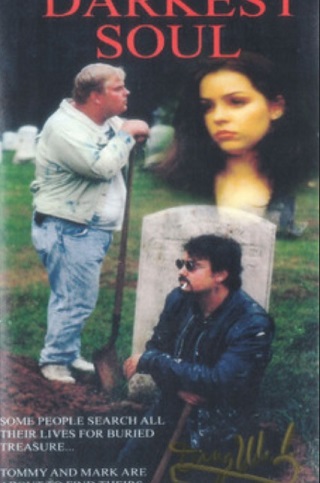
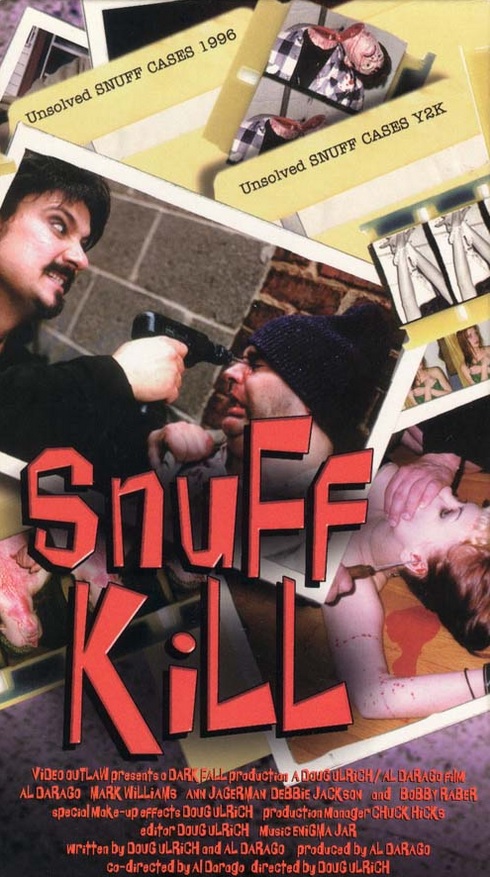
How obscure and hard-to-find is this second SOV entry on the joint resume of Doug Ulrich and Al Darago: this is the only image of the original VHS we could find — our thanks to the Letterboxd user who uploaded and preserved it.
Yes. The uploaded image we found is cut n’ cropped as seen — and we are grateful to have it.
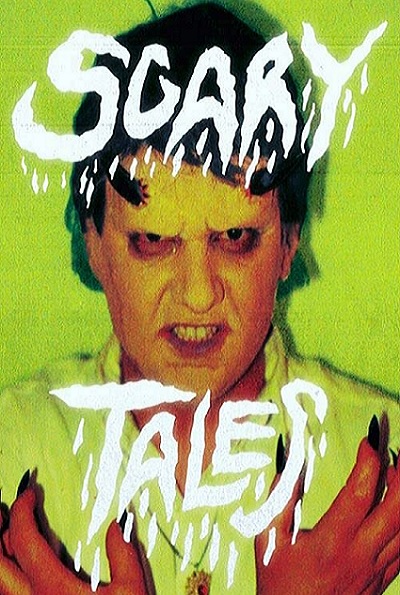
Sigh . . the memories are flooding back . . . hitting the ol’ mom-and-pop video store (one of many that I member-haunted) sandwiched between a quickie market and Punjabi eatery with a gym on the corner bay next door to an insurance agency; a dinky-cheesy outlet stocked (an SOV honeyhole!) with way too many titles under the Shock-O-Rama banner, as the owner was stocking the shelves more for himself — god bless him — than his clientele, obviously. That store also carried Doug Ulrich and Al Darago’s first SOV entry, Scary Tales (1993), Snuff Kill (1997), and this, their second effort, Darkest Souls.
If you haven’t guessed from the cover: we’re dealing with grave robbing. Tommy and Mark are your typical slacker-losers who want the riches without the work. So they’re fired from gigs and job-hoping a lot, to finally bottom-out — literally — as grave diggers. As they come to realize they’re digging holes for rich people dripping in jewels, they resort to grave robbing. And like the tagline says: they find their “treasure.”
So, if I had to rate them: Snuff Kill is the best of the trio; as I said in my review of that film: it has the best acting and the film’s lead, Mark Williams, is effective. Then Scary Tales. Then Darkest Soul, which isn’t as O.T.T as Snuff Kill — and what film is — but it’s a well-written film that’s only undone by the script playing against-a-budget and has a nice Coscarelli-Morningside vibe. Then, again: I’m a guy who does tombstone rubbings and road tripped graveyards in my carefree days, so I dig stories about grave diggers. I enjoy the progression of the Doug Ulrich and Al Darago trilogy, as you watch them grow as filmmakers. Thus, Snuff Kill became their tour de force as result of all the things they learned from Scary Tales and Darkest Soul: Snuff Kill has the gooey gore of Scary Tales and the fleshed out story of Darkest Soul.
I have to admit that I lost touch with my inner SOV as I aged-out of the ’90s and home video outlets became gift shops and insurance offices — and even 501c3 bible-bangin’ outlets. Thus, I wasn’t aware that Doug and Al made a comeback of sorts with 7 Sins of the Vampire (2013), a film I discovered as I gathered my thoughts for my last October review of Snuff Kill.
The AGFA – American Genre Film Archive has released Darkest Soul on Blu-ray in 2020 as part of their Blu-ray release of Scary Tales. I’m a purest: I’ll always go for the VHS before a DVD or Blu. But it’s near impossible to find VHS copies — outside of grey or retro-repacks — of the original tapes. I still have Snuff Kill, lost Scary Tales to the blue screen of death, and only rented-and-watched Darkest Soul a few times — and never came across an errant cut-out-bin copy. So, thanks to the AFGA, you can get, not only Darkest Soul, but also Scary Tales, on one convenient disc. And it’s great to go home again — even if it’s a digital cheat, so for that AFGA and Vinegar Syndrome, we bow before your pseudo-VCR altars in eternal thanks.
Now, how about a Doug Ulrich and Al Darago four-pack? And — reissue-shingle executives — can I write the liner notes? Hey, I always go the shameless groveling route.
About the Author: You can learn more about the writings of R.D Francis on Facebook.He also writes for B&S About Movies.
DAY 22 — BEASTS OF BURDEN: One where a horse/donkey/mule/ox, etc. (or a jungle cat?), is doing some serious work.
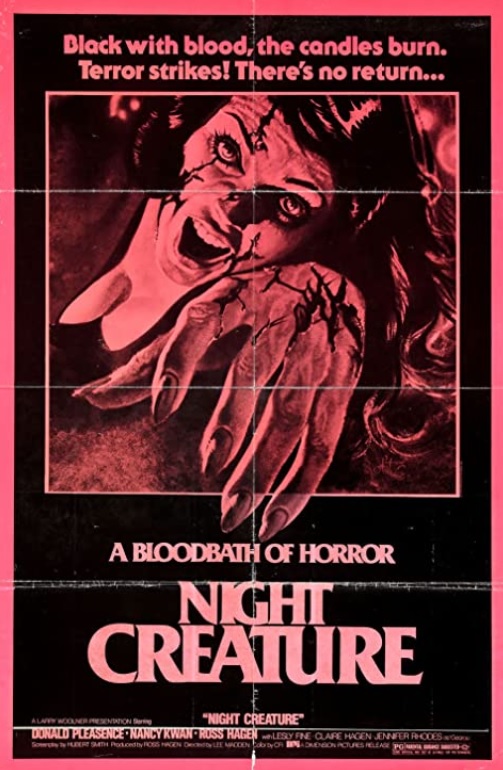
Sam, the head honcho at B&S About Movies, speaks a lot of celluloid truths: one of them is that Donald Pleasence really will take anything for a paycheck. Now, Ross Hagan, we know that he always takes everything offered. But wow . . . why is the stunning Nancy Kwan, here? Well, when times are tough and a buck is a buck, you sign on the dotted line for a ripoff of The Most Dangerous Game* — only set on a hunter’s private island. To that end: Donnie is our big-game hunter (and entrepreneur, race car driver, archeological temple restorer, etc.) who brings a killer leopard to his private island, turns it loose, and starts his hunt. Oops! Don’s daughter, played by Nancy Kwan, with her Texan squeeze, played by Ross Hagan, show up for an unexpected visit. Or something or other. . . .
Yeah, in the tradition of William Girdler’s Grizzly, we sort have a Jaws ripoff, here, or as we like to say, a “Bastard Pups of Jaws,” with a killer leopard on the loose, gnawing its way through its cast . . . like one of those killer dog flicks (which we explore in full, with our “Ten Horror Movie Dogs” feature) starring Joe Don Baker, David McCallum, and Richard Crenna. Yep. Just like a William Girdler flick — be it Grizzly . . . or Abby or Project: Kill or Day of the Animals or, hell, The Manitou, which, even though it’s based on a best-selling novel, is still a cash-in on The Omen — Night Creature, aka the poor leopard who was captured by ol’ Donnie and dumped here, doesn’t have an original spot on its hide.
But wait . . . it’s an all black leopard.
Eh, all I know is that Lee Madden, he of my beloved biker romps Hell’s Angels ’69 (1969) and Angel Unchained (1970), is knocking out his second horror film of the triple-threat that takes Charles Manson, washed-up studio contract players, aka “Hags,” and Jesus Christ to exploitation task with The Night God Screamed (1971).
Sadly, even with my fandom for those entries in Madden’s resume, I’ve never made the effort to seek out his sexploitation-action romp about three girls running their own brothel with The Manhanders (1974), which is an oversight that only a Mill Creek public domain box set can correct. I will not, however, ever . . . never, subject myself to Mr. Madden’s final film, Ghost Fever, for I have no desire to see a movie with TV’s George Jefferson as its star. (Besides, Madden knew a real dog when he scratches the fleas: he took the Alan Smithee credit.) Anyway, after Angel Unchained, this is Madden’s second and final writing credit, which, again, serves as his second and final horror film after — IMO — his best film, The Night God Screamed.
Speaking of movie wisdoms: Bill Van Ryn of Drive-In Asylum loves films — such as Prey — where nothing happens. But I don’t even think the Ryn can handle these maddening Madden reels of nothingness. Thankfully, someone took the time to cut this meandering, 83-minute snore fest into a 13-minute edit. Yeah, its like that: 70-plus minutes of this film isn’t necessary to get to the point of it all.
However, I’d be remiss if I didn’t tell you something about the film.
Well, it’s not — in spite of the “Donald Pleasence of Halloween” plug — a horror film: this is pure a thriller . . . with no thrills nor suspense. And the leopard is just a regular, run-of-the-mill leopard: it’s not possessed by Satan or injected with any manipulated DNA strands. The poor leopard is just sacred — after it’s capture from its jungle home in Thailand — and dumped into a foreign habitat. Wouldn’t you be pissed off after being drugged and caged and dumped in a foreign wood? Man encroaches on the animals’ environment, but the animal is the “monster.” So either kill it or capture it, for the tourism trade can’t suffer.
And suffer the animal does.
We are in the middle of Thailand and shooting on the sly, so PETA wasn’t on site, and it’s 1978 pre-CGI, so yes: We have ourselves a vile-as-fuck Ruggero Deodato joint of the who-gives-a-fuck-about-spider monkeys-and-river turtles variety, for we need the cat to do what we need it to do before we loose “the Golden Hour.”
Then there’s the not so “magical” cinematography.
Here we are, in the middle of one of the most exotic lands on the friggin’ planet, and yet, Lee Madden managed to make Thailand look like a shot-through-cheese cloth fucking mess. Even the Nancy Kwan, Jennifer Rhodes, and Russ Hagan (as our resident Texan-styled tour guide, natch) sub-plotted love triangle is an utter bore. Oh, but out-sucking the lover’s plot is the POV-cat stalking, which is out-sucked by the voice over narration required to thread the travel log footage into non-coherency.
Everything in this movie sucks. Shame on Lee Madden for snookering a film studio for a free Thailand vacation as a poor leopard suffered for it.
Don’t pay a time for this offense to cinema. Watch it for free on You Tube — if only to scratch another Donald Pleasence flick off that must-watch-everything-Donnie-ever-did watch list.
* We run down the “human death sport” genre in our review of Elio Petri’s sci-if pop art’er, The 10th Victim.
About the Author: You can learn more about the writings of R.D Francis on Facebook.He also writes forB&S About Movies.
“You know what sells films, sweetie: tits and cheap lighting. What in the hell is this artsy-fartsy brass bed in the middle of the desert crap? How in the hell am I suppose to recycle this into another film? And we’re calling it ‘Cemetery Girls,’ got it?” — Roger Corman schools Stephanie Rothman on the fine art of exploitation filmmaking (not really, we are trying — and failing — at being funny)
This is the type of review I enjoying writing for B&S About Movies, as it was born out of chatting about film with our loyal readers whom reach out to us via review comments, our feedback form, or social media.
The review begins when I had chats with Mike Perkins, professional librarian extraordinaire, who, in working with B&S About Movies’ friend and contributor, Mike Justice of The Eerie Midnight Detective Agency site, solved the mystery of the short-lived career of ’70s actor Peter Carpenter (which we discuss within a two-fer review of Peter’s work in Vixen! and Love Me Like I Do).
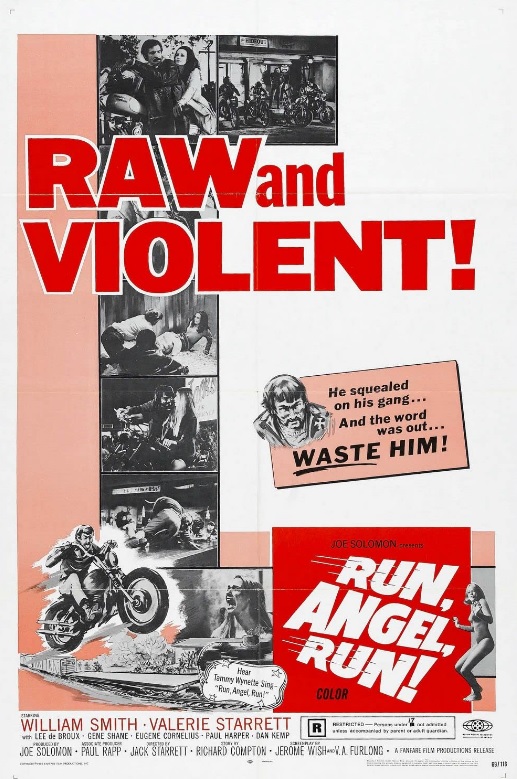
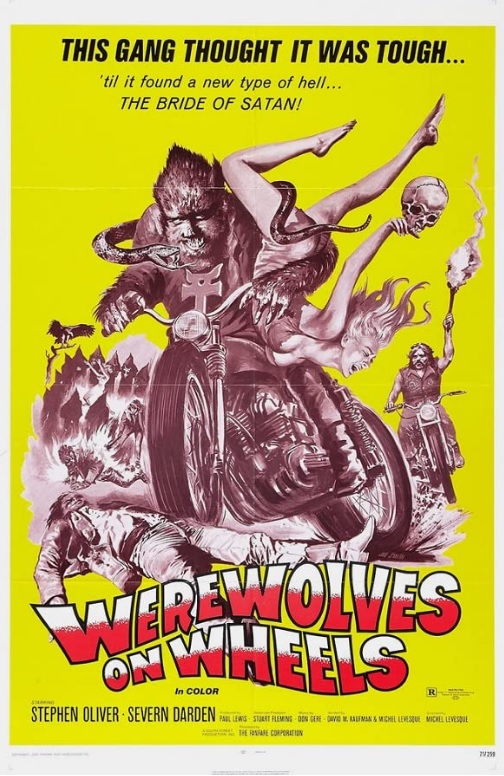
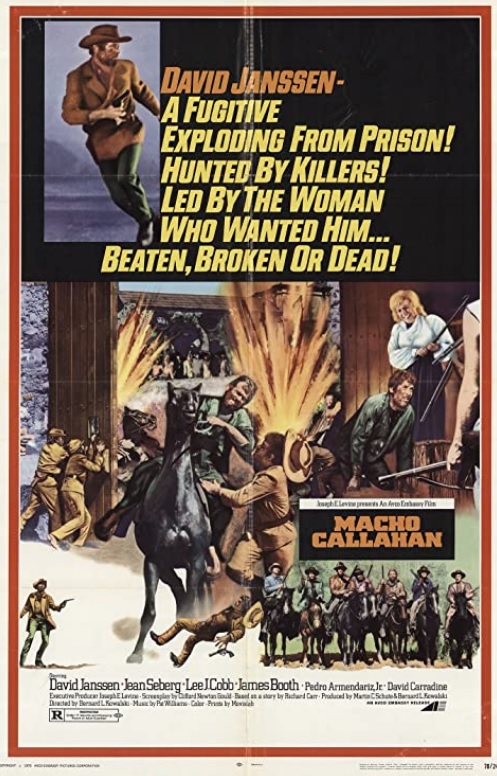
Then Mike Perkins and I got to talking about Peter Carpenter’s he-was-there-then-he-was-gone doppelganger in actor Gene Shane . . . and, as with Pete, there’s little-to-nothing known about Gene’s life after he wrapped up career his with The Velvet Vampire. As with Pete: Gene only did four films: the others are Run, Angel, Run! (1969), the lost Bernard L. Kowalksi* flick with David Janssen, Macho Callahan (1970), and Werewolves on Wheels (1971). Unlike Pete: Gene branched off into legit TV series, with the ratings-toppers The High Chaparral and Bonanza (1969), but he got his start in the short-lived, forgotten series The Guns of Will Sonnett and The Outcasts (1968).
And so ends the resume of Gene Shane . . . well . . . if we believe the Digital Content Managers of the IMDb, which list Gene starring as “Jesus” — of all characters — in the 2004 Larry Buchanan quasi-documentary, The Copper Scroll of Mary Magdalene (see his Jim Morrison romp Down On Us, aka Beyond the Doors, for more on the ‘Buch’s paranoia-docs lifespan). Ah, but ye DCM’ers of the IMDb, busted again, ye are: that film is actually The Rebel Jesus shot in the ’70s and shelved. Buchanan finally got around to editing it for its 2004 release — when he died. (Oh, get this: the film also stars Garth Pillsbury from Peter Carpenter’s Vixen! — so there’s that to mull over.)
So, what does that mean?
Well, Gene Shane, aka Duece Berry in Werewolves on Wheels, if you’re keeping track, like Peter Carpenter before him — vanished from the face of the Earth after four films, with The Velvet Vampire, in fact, as is his last work (plot spoiler: or is it?).
Cue Mike Perkins to the B&S About Movies cubicle farm: he’s already on The Case of Gene Shane. So stayed tuned . . . for the ‘Perk will find out, and when he knows, you’ll know, right here on the pages of B&S About Movies.
Alrighty, then. Let’s unpack The Velvet Vampire.
Finally . . . The Review!
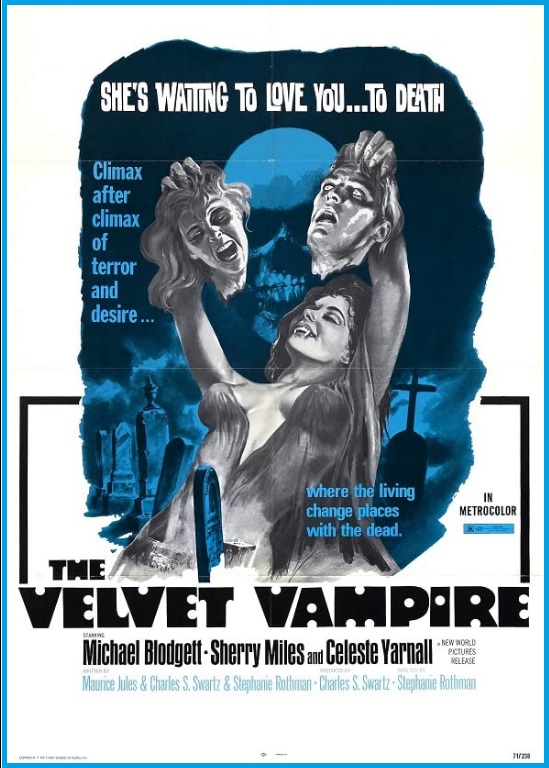
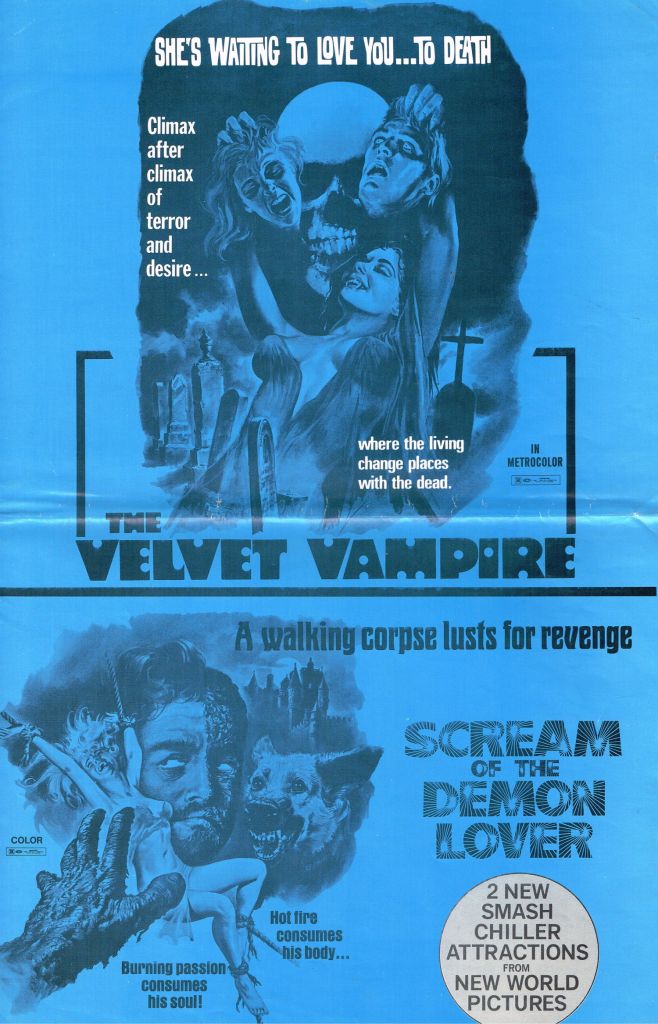
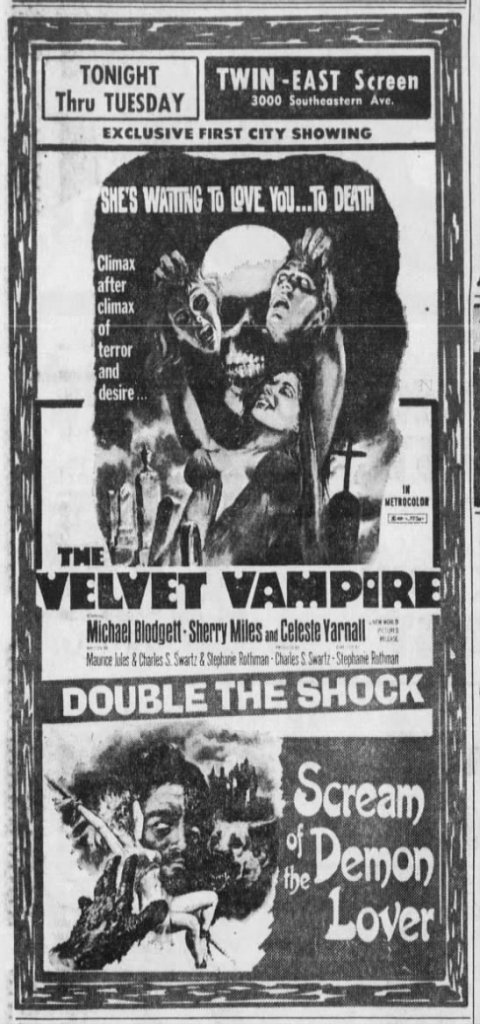
So, yeah, Roger Corman, who bankrolled this through his New World Pictures shingle, didn’t like the end product — so he dumped The Velvet Vampire into Drive-Ins on a double-bill with Jose Luis Merino’s (awesome!) Spanish-Italian co-production Scream of the Demon Lover (1970). Meanwhile, USC trained writer and director Stephanie Rothman — who previously served in both capacities on The Student Nurses for Corman — was disappointed on how Corman handled the movie, as well as its box-office reception. Mind you, this response is from the guy who rips off Star Wars by way of The Magnificent Seven — then recycles Battle Beyond the Stars over and over again in (the even worse) Space Raiders and Forbidden World, but in the cooler Galaxy of Terror and not so bad Android.
Rothman roots with Corman run deep: It was after a viewing of The Seventh Seal that she decided to become a filmmaker. And she reached her goal: She was the first woman to be awarded the Directors Guild of America fellowship. So Corman gave her a job . . . directing It’s a Bikini World, then she worked on Gas-s-s-s and The Student Nurses. But she wasn’t interested in making a sequel to The Student Nursesor making The Big Doll House . . . she pitched The Velvet Vampire.
So Rothman left New World for Dimension Pictures, where she . . . well, for you Eddie Romero fans: she wrote his 1973 Philippines-shot ditty, Beyond Atlantis (Patrick Wayne! John Ashley!), then directed Terminal Island, The Working Girls and Group Marriage. Oh, and by 1978, she wrote — and had her name removed from — Starhops, which shouldn’t be confused with Gas Pump Girls or Lunch Wagon, but is of the T&A Van Nuys Blvd. variety.
In an interview, “Feminism, Fantasy and Violence: An Interview with Stephanie Rothman,” in the Journal of Popular Film & Television, Rothman spoke of The Velvet Vampire: “It’s not a traditional horror film nor a hard-core exploitation movie. In some places it was booked into art theatres. In others it had [a] one week saturation release in drive-ins and hard-top theatres. There was no consistent distribution pattern for it because people responded differently to it and I think that may be part of the [film’s failure].
Stephanie, screw Roger. We friggin’ love this movie!
Oh, and let’s not forget: Bram Stoker isn’t behind the implied soft-core shenanigans, here. Stoker’s Dracula came out in 1897. Sheridan Le Fanu’s novella Carmilla came out 26 years prior, in 1872; it was reprinted for its best-known and accessible distribution as part of Le Fanu’s short-story collection In a Glass Darkly (1872). Another great female vampire tale rife with (implied) sex and lesbianism that draws from Le Fanu’s works is French director and screenwriter Roger Vadim’s And Die of Pleasure, aka Blood and Roses; another is the early ‘70s “fleshy” variations of The Vampire Lovers, Lust for a Vampire, and Twins of Evil, aka “The Carnstein Trilogy” from Hammer Studios. . . .
Oops, back to the film at hand . . . er, that is, neck.
Roger Corman’s New World Pictures imported the Spanish-Italian co-production of Il castello dalle porte di fuoco for a double bill with The Velvet Vampire.
I love how The Velvet Vampire starts: We have the eyeball-melting Celeste Yarnall (my heart is weeping, again; sigh, Celeste) walking alone across a city-at-sleep: she’s decked out in a mod-red dress. And a ubiquitous biker tough (the always-welcomed character awesomeness of Robert Tessier in an early, pre-The Longest Yard roll) tries to mug-rape her. (Yeah, right, Robert, that’ll work.) Next thing you know: Diane LeFanu (yeah, know your Sheridan LeFanu and “Carmilla” from In a Glass Darkly) causally washes her hands in a park fountain.
Then Mr. LaFanu heads on over to an art gallery (run by Gene Shane as Carl Stoker; who’s part of the plot twist; yep, “Hi, Bram!”) filled with erotic wares — as real-life blues artist Johnny Shines preforms his song, “Evil-Hearted Woman.”
All this in the first five minutes? I’m hooked.
We haven’t even gotten to the dune buggy-innuendos. Or the (simply stunning) phantasmal, desert-surrealism scenes. Or the woman-on-woman sucking-snake-venom-out-the-leg (thigh, but no triangle-of-death shot) scene. Or the hints of cannibalism and necrophilia. Or the subtle, implied lesbianism.
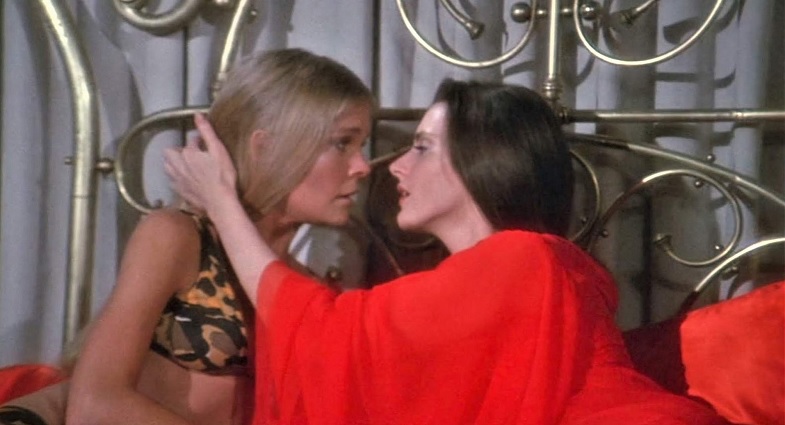
So . . . our vamp, the divine Ms. LaFanu, picks up Lee Ritter (Eric Stolz-lookalike Michael Blodgett from Beyond the Valley of the Dolls and Disco Fever), a sex-swingin’ married guy at the gallery and invites him and his put-upon (very hot blonde) hippy wife, Susan (more heart-weeping for Sherry Miles-DeBoer of The Phynx), to her secluded desert estate — conveniently located near an abandoned mine and an old graveyard (filled with the long, mysteriously-dead miners). Sharon’s attended to by her slave: Juan (Jerry Daniels; some U.S. TV, but Lee Majors’s The Norseman).
Gulp!
What raises Stephanie Rothman’s vamp-fest above most of the cliche vampress romps of the ’70s — and puts it, for me, on level with my beloved Hammer’s “Carnstein Trilogy,” as well as the great Count Yorga and greater Lemora, Lady Dracula — is that Rothman eschews the conventions of yore: Ms. LaFanu lives in the desert and embraces the sun, she’s a voyeur (as the couple has sex), has a reflection, sucks down raw chicken livers, and jumps into her hubby’s grave and pines for him as she cries on top of his pine box. And she may not even be a vampire: just a psycho with a blood fetish/illness. And, unlike those Hammer-Euro vamp-babes of old: she’s bisexual and blood is blood, after all.
What the frack, Rog? I have no idea what you didn’t like, here, desert brass beds and the sexuality of snakes, be damned.
Oh, this friggin’ epic movie!
Rothman does a wonderful job symbolism-editing Ms. Ritter’s desert snake bite moment with Ms. LaFanu sinking her fangs into Mr. Rothman. Meanwhile, Rothman’s cinematographer, Daniel Lacambre, really knows how to work a lens under the baking sun, inside mine shafts, and empty mansions — and the later L.A. train station chase. The love scenes between Yarnall and Blodgett couldn’t be more artful, tasteful, and exotically shot — without degrading into Russ Meyer-removed sleaze. (Which is probably why Corman hated it: too arty and not “exploitative” enough. Whatever, Rog. Don’t you have some unimaginative stock footage to recycle?) Again, the desert-surrealism of the Ritters in bed in the middle of the desert wasteland: don’t tell me Don Coscarelli wasn’t inspired by Rothman’s frames. That’d be like saying Sam Raimi wasn’t inspired, i.e., ripped off, Equinox to make Evil Dead.
Critics, both pro (Frack you, Kevin Thomas of the Los Angeles Times) and just-run-of-the-mill codgers, slag the acting — especially Blodgett’s. Granted, no one, besides Celeste Yarnall, is jumpin’ on the A-List (well, maybe so; Yarnall retired for a spell from acting after working with Burt Lancaster in ’73’s Scorpio; but did a LOT of U.S. television, prior), but everyone’s thespin’ fine. And I distinctly remember — because I had a mad-as-hell boy-crush on her — Sherry Miles in reruns of The Beverly Hillbillies, Adam-12, The Partridge Family, and Police Woman. You don’t book all of those jobs by not being good at your job. (I was supposed to be married to Sherry by now — and playing second guitar for the Monkees. Sigh, childhood dreams.)
And that’s what this not-really-a-lesbian-vamp-flick is: a dream. I love this movie . . . and a bag o’ chips. Thank god Corman didn’t wrestle it away from Stephanie Rothman to add more boobs and lesbian-love to screw up a perfect horror film.
Yes. Perfect. Don’t debate me on this point.
You can free-with-ads stream The Velvet Vampire on Tubi TV. There’s also a non-commercial rip on Daily Motion. As you can see from the trailer, you can purchase the restored DVD from Scream Factory, as well as other imprints.
Stephanie, Sherry, and Gene, Oh, My!
Did you know Sherry booked — then lost — the role of Bobbie in Mike Nichols’s Carnal Knowledge to Ann-Margret (Viva Las Vegas). So, yeah, Sherry thespian-rocked it. No worries, though. Sherry ended up in Your Three Minutes Are Up with Beau Bridges, Harrad Summer for Steven Hilliard Stern (This Park Is Mine), and The Pack with Joe Don Baker for Robert Clouse (The Ultimate Warrior), great films, all.
If you’re keeping track, and a Stephanie Rothman completist: She also wrote and directed Blood Bath (1966), It’s a Bikini World (1967), something called Group Marriage (1973) (which we never heard of), the Escape from New York precursor, Terminal Island (1974) (which we’re absolutely convinced John Carpenter ripped; inspired by Watergate, my ass, John), and the soft-sexer The Working Girls (1974).
Stephanie also wrote our much-loved Patrick Wayne-Sid Haig adventure-cheapy Beyond Atlantis (1973), and the late-’70s T&A’er (see William Sachs’s Van Nuys Blvd. for the breakdown on that genre) Starhops (1978). Oh, and before Corman gave her the reins, between ’65 and ’66, she served as a producer on Voyage to the Prehistoric Planet, Beach Ball, and Queen of Blood. You’ll also see her production-credited on Corman’s Gas! Or It Became Necessary to Destroy the World in Order to Save It. Be sure to check our the extensive Wikipedia page dedicated to Stephanie’s life and insights; it’s a story of hard luck and bad knocks. She deserved so — as you’ll see from The Velvet Vampire — much more. What a movie!
Speaking of Wikipedia: Yes, there will be an all-new Wikipedia page created for Gene Shane — as well as Peter Carpenter. That’s Mike Perkins-money-in-the-bank . . . and a bag o’ chips.
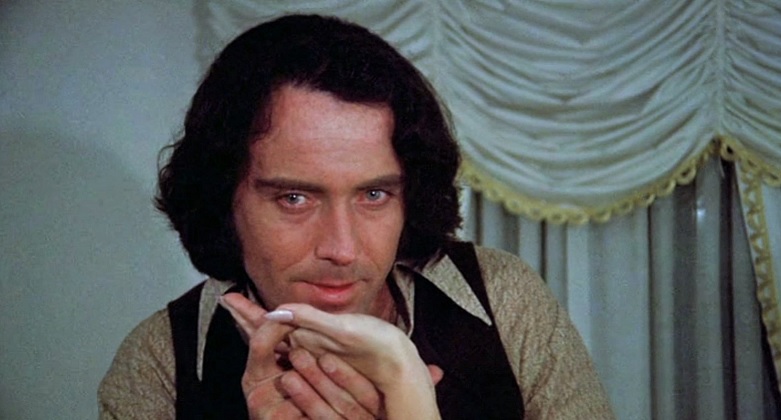
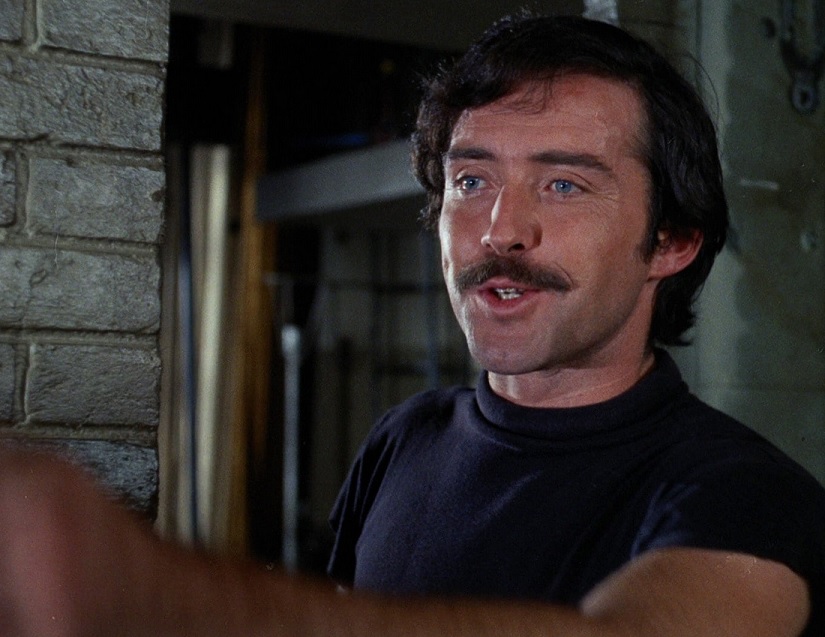
There’s also an actor known as Gene Otis Shayne, often credited Gene Otis Shane or Gene O’Shane (1936 – 2017). An Al Adamson stock player, he made his feature film debut in Uncle Al’s own vamp-romp (woefully inferior to The Velvet Vampire), Blood of Dracula’s Castle (1969), and a biker-romp, Hell’s Bloody Devils (1970).
I never gave it much thought, until now. Outside of the brown vs. blue eyes, they look like the same guy, to me. The plot thickens . . . but I’ll leave this in Mike Perkins’s capable hands. I am still coming down from blowing my brain cells with three back-to-back Robert Rundle** film reviews (long story). I can’t handle the information download of Gene Shane-Duece Berry-Gene Otis Shayne-Gene Otis Shane-Gene O’Shane as being the same person, not after the tales of Rundle.
We’ll keep you posted on . . . The Case of the Two Gene Shanes. (Dah-da-dun!)
Update February 2024: Never Say Never, meho. Once it worms into our brains . . . we finally rolled out our many-times-threatened Roger Corman tribute with a month of reviews released by his New World Pictures shingle. Yeah, if you enjoyed our two-month Cannon Films blow-out, you know we won’t let any canister of celluloid unturned on ‘ol Rog’s oeuvre. Clicking through the link will populate all of those months’ reviews, which includes a second take on The Velvet Vampire, as it additionally name checks several other female vampers to enjoy.
About the Author: You can learn more about the writings of R.D Francis on Facebook.He also writes for B&S About Movies.
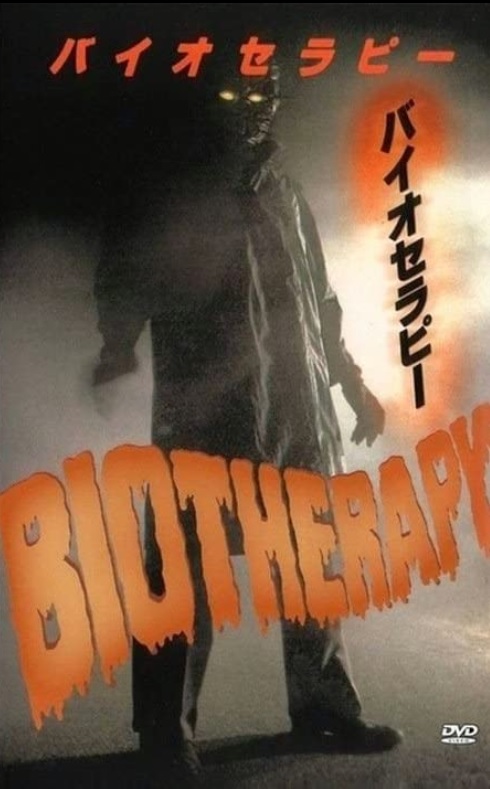
Oh, the memories of hearing about this from my fellow comic book, heavy-metal lovin’ horror nerds, “Dude, you’ve got to check out Biotherapy! The comic store just got a new shipment of tapes!”
Fifteen miles (one way) and a $5.99 rental fee, later — I’m in a VHS, analog-drunken stupor. I have no fucking idea what’s going on (no subtitles), but I just watched a woman scientist turned into a fountain by way of broken test tubes jammed into her body. Hey, look! There’s even an eye ball ripping! Yes! A disemboweling! This Japan-curio is out Karo-reddin’ a Sam Raimi cabin-in-the-woods romp!
So, is this a slasher film? Yes.
Is this a rip on John Carpenter’s, not Halloween, but The Thing, but, uh, our resident alien is Jasonesque? Yes.
Never has a movie packed so much in so little time, in this case: 36 minutes. There’s no plot. There’s no characters. It’s just a relentless barrage of in-camera practical effects. In other words: it’s the prefect film that brings on the gore.
Nasty to the extreme, Biothearpy is a story about a group of Japanese scientists working on a food growth hormone (today, courtesy of subtitles: we now know it as “GT Medicine,” not that it matters). Cue the errant meteor shower that brings forth a blue-glowing man adorned in a fedora and trench coat, à la Ben Grimm, aka the other “Thing,” who begins stalking and butchering the scientists for the formula. And check out those Giger-choppers on our time-traveling alien! Nice.
Yeah, nothing beats the good ol’ brick and mortar days of those Japanese grey imports at your local comic emporium. Consider yourselves spoiled, B&S movie youngins, as you can stream this online for free these days; take note that back in those “grey days,” we watched this without subtitles, unlike today’s digital days. Not that you need the subtitles, as this is well-made, effectively-paced and easy to follow.
Why Biotherapy wasn’t expanded into a feature-length film — as was the totally awesome Korean horror romp, Dumplings — is anyone’s guess. What’s really great about Biotherapy is its worldwide distribution. Who hasn’t seen this movie the world over? You can watch Biotherapy on You Tube with optional English subtitles or on You Tube with embedded English subtitles.
For another take, check out guest writer Herbert P. Caine’s review.
About the Author: You can learn more about the writings of R.D Francis on Facebook. He also writes for B&S About Movies.
DAY 19 — CAN’T YOU HEAR ME KNOCKIN’?: When you let an unexpected guest in, you may be in for a long night.
Editor’s Note: While we’ve included this — controversial — film as part of our Christploitation genre cataloging, we’ll also briefly delve into the Hagsploitation genre, turn you on to a few “hippie flicks,” as well as discuss other, analogouslylost, U.S. made Drive-In horrorsreleased around the time of this film.
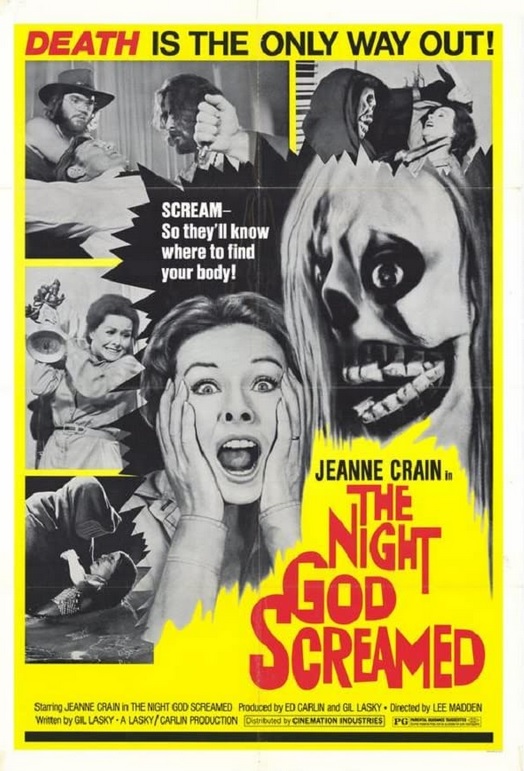
Christ, Hags, Manson, and rubber skull masks, oh, my!
I know. I know. Why is an exploration of ’70s Christian Cinema including a crime-horror romp that advises “death is the only way out,” courtesy of Cinemation Industry — the Drive-In shingle that gave us the likes of Teenage Mother (1967), Female Animal (1970), The Man from O.R.G.Y (1970), I Eat Your Skin (1971), Teenage Sex Report (1971), Son of Dracula (1973), Dynamite Brothers (1974), and an X-rated cartoon in the form of Fritz the Cat (1972).
Hey, this ain’t no trope-laden site ensuing with cliched, generalized lazy thinking, buddy pal-o-mine: this is freakin’ B&S About Movies in Pittsburgh, baby: we don’t write for stinkin’ food or for reissue DVD/Blu swag. We choose our God-Christploitation reviews the fracked up way because we dig the film at hand: no reissue promo-campaigning required.
Besides, it can’t always be about Estus Pirkle and Ron Ormond (The Second Coming will get you there, brother), which, if they kept making movies together, a proto-slasher about a serial killer twistin’ the Good Book probably would have been the next, logical celluloid-Pirkle step. Don’t forget: he’s the guy who jammed sharpened bamboo sticks into children’s ear canals. And when he’s not inducing them to puke, he cuts them down from hanging trees onto a field of buried pitchforks, then tosses them in mass graves. (no, really; we’re not making it up). The folks at Mondo Stumpo summed Pirkle’s psychotronic years, brilliantly: Christian Gore.
So, yeah. Estus Pirkle vs. Lee Madden. No contest. Pirkle wins. Hands down.
The Pirks’ celluloid triad If Footmen Tire You, What Will Horses Do?, The Burning Hell, and Believer’s Heaven (well, it’s a little bit more positive; but kids are still being tossed in mass graves) are still more gag-inducing and horrifyingly sick than this faux-Manson ditty brought to you by Cinemation — again, the studio that gave you the likes of the not-even-close, exploitative bile-inducer, I Eat Your Skin. As Sam the Bossman has opined in his Pirkle-Ormond opuses: all three films are stuck in our collective minds way longer than any blockbuster — or Christian film or horror film — we will see this year. Or any other year. Digital streaming or hard-copy reissues. Period.
Eh, well. Maybe not.
Madden really scraped the offensive bottom of — and broke through the rusted bottom of — the Christploitation barrel. And people lost their minds over The Exorcist and The Omen? I mean, a Catholic Priest crucified on his own cross? Top that, Mr. Friedkin and Mr. Donner. Well, actually — in terms of quality — you did.
Anyway, long before you youngins were exposed to Charles Manson by way of Quentin Tarantino’s Once Upon a Time . . . in Hollywood, there was a mini-cottage industry of “hippie flicks” that borrowed from the Manson myth — courtesy of instilling the idea that all of Haight-Asbury’s flowery-denizens were blood-thirsty killers. So, we got the likes of the hippie-crime romps Psych-Out (1968), the double bill to I Eat Your Skin with I Drink Your Blood (1970), The Cult (1971), The Love-Thrill Murders (1971), the document/reenactmentary of The Other Side of Madness (1971), the Andrew Prine with a goat insanity of Simon, King of the Witches (1971), the really fine Deathmaster (1972), Thumb Tripping (1972), the “Manson as a filmmaker” with Snuff (1976), and, of course, the incredible Steve Railsback as Manson in the exquisite TV movie, Helter Skelter (1976).
Yeah, there’s a “Exploring: Charles Manson on Film” feature to be had . . . someday.
Now, back to the Godsploitation, aka Christploitation, portion of today’s programming: a weird genre to begin with, depending on the critical whims of the writer (in the case, Sam Panico and yours truly), the films included, can be controversial choices. Even B&S contributor Bill Van Ryn of Drive-In Asylum questioned today’s movie choice. And when BVR furrows his brow, well, you’ve just hit celluloid pay dirt. And only God knows what the dude who hates it when we use the word “trope” in our reviews (and takes a moment from his day to let us know), will think. . . . The night the critic screamed, indeed.
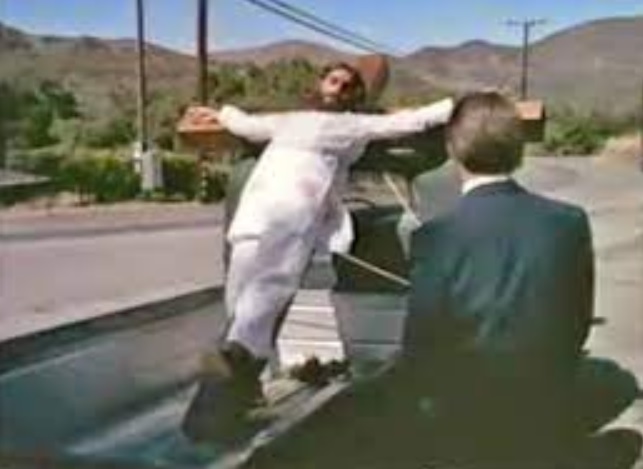
Offensive:When a priest purchases a cruciform for his church, transports that sign of Christ in the back of a pick up truck, stops at a gas station, and a white-robbed hippie takes a siesta on said cruciform, you’ve just exploited the Holy Savior.
Now, one would never consider a British horror film starring Christopher Lee as a “Christploitation” piece: but when your film is based upon the works of occultist author, paranormalist, and “secret society” founder Dennis Wheatley — himself a friend and collaborator of fellow occultist and Thelema religion founder Anton LeVey — the movie based on his book, The Devil Rides Out (1969), a book in which the big guy of the underworld, Baphomet, and his buddy, the Angel of Death, shows up — both ultimately defeated by the power of Christianity — the film ends up on the (my) list.
The same could be said for Die! Die! My Darling! (1965). Although it’s part of the psychobiddy sub-genre (i.e, old, crusty women terrorizing “sinning” young women, aka “hagsploitation”), when you have Tallulah Bankhead in crazed, full-on religious hysteria exorcising a corrupt Stephanie Powers, that films ends up on the stone immaculate perimeters of Christ/Godsploitation (my) lists. And our speaking of Tallulah Bankhead attempting to reignite her career in a horror film brings us to — gulp — Jeanne Crain, the star of The Night God Screamed.
Remember how the Smithereens’ Pat DiNizio lamented about British model Jeannie Shrimpton in the lyrics of “Behind the Wall of Sleep”; how he’d gleefully commit a murder if she so purred the request? Yeah, for me, it’s like that with the Academy Award for Best Actress-nominated Jeanne Crain — for her title role in 1949’s Pinky.
Yeah, I had it bad for Jeanne Crain. Sigh. Remember how Superman time-travel willed himself back to the past to hook up with Jane Seymour in Somewhere in Time (1980): Calling Dr. Gerard Finney, time-hypnotize me to a Jeanne Crain romance.
As with Veronica Lake making her final bow with Flesh Feast (1970), Joan Crawford appearing in Berserk! (1967) and Trog (1970), and Wanda Hendrix (zoinks!) closing out her career at the age of 44 with a Gothic, Civil War tale, the really fine The Oval Portrait (1972), ex-20th Century Fox studio-starlet Jeanne Crain attempted an early ’70s comeback — her last film was Hot Rods to Hell (1966) — with a horror film: inspired by Charles Manson. Sadly, it was not meant to be. When her “big horror move” failed to spark interest, the divine Ms. Crain called it a day after working with — fifth-billed, mind you — Charlton Heston in Skyjacked (1972).
So, with Alex Nicol — an actor/director in The Screaming Skull (1958) and director for Peter Carpenter’s Point of Terror (1971) — thespin’ it up with an early James Sikking (Outland, Star Trek III: The Search for Spock) — Jean Crain stars as family matriarch Fanny Pierce in a tale directed by Lee Madden.
Wait? Not Lee Madden of the biker flicks Hell’s Angels ’69 (1969) and Angel Unchained (1970), and the hunter-on-private island romp Night Creature (1978).
Oh, hell, yes. Strap on the popcorn buckets. Let’s unpack The Night God Screamed.
Lee Madden’s second — and final — horror film, which he also wrote, during his all-too-short, six-film career. His others were the sexploiter The Manhandlers (1974) and, get this: the abysmal horror-comedy, Ghost Fever (1986), with Sherman “George Jefferson” Hemsley.
The reason this offensive, yet stunning movie failed: it’s a slow-burn, psychological thriller that, instead of the shocking gore and violence you’d expect from a Manson-inspired film, it’s all about the atmosphere. Another reason: due to its provocative title, small town and rural communities with theaters refused to carry the film; they acquiesce to the alternative title of Scream. The third reason: Jerry Gross was against-the-sprokets and Cinemation was going under . . . while barely releasing it in 1971, the film stumbled around as a second-biller until 1974, never to find its well-deserved audience. The same marketing snafus happened to the youth-seeking devil worshipers romp, Brotherhood of Satan (1971), the exquisite gaslighter, Let’s Scare Jessica to Death (1971), the dreamy The Velvet Vampire (1971), William Girdler’s debut Asylum of Satan (1972), the weirdly, Clint Eastwood-connected and released-stalled Die Sister, Die! (1972), the toy-making Devil worshiping of Necromancy (1972), Jean-Marie Pélissié’s art house-beauty, The Bride (1973), the utterly bonkers and also questionably-rated, The Baby (1973), the stellar post-Romero craze of Messiah of Evil (1973), and the flawed but captivating Warlock Moon (1973).*
Eh, so what else is new in the puritanical bread baskets of America?
So, rightoff the bat, the Fundamentalists are loosing their nuts: we open with a monk-hooded figure dragging a six-foot tall cruciform through the woods. And our faceless monk looks down from a hill upon a lakeside baptismal ceremony conducted by our ersatz Jesus, aka our ersatz Charles Manson, i.e, “Billy Joe,” as he complains to God about “the man” coming down on his faux-Chuckness because they dig Jesus, and do dope only to “turn on to” Jesus, and that they’re not a phony, money-grabbing ministry, lying and stealing from their flock. . . .
Oh, and the dude in the robe: he’s The Atoner. And the baptism? The Atoner drowns you, the “Judas,” into the afterlife.
So, with that bit of Christ exploiting out of the way; we finally get to this review’s raison d’étre: Jeanne Crain is Fanny, the put-upon wife of Pastor Willis Pierce (Alex Nicol) who oversees a small chapel and soup kitchen in a rundown, crime-ridden neighborhood.
The prim n’ snobby Fanny hates her life and wants out. And I want her to move in with me.
Anyway, the “path” to the way out leads the Pierces to run afoul of Billy Joe and his sidekick, The Atoner. And yes, they crucify Pastor Willis to a cross inside his church because, well, God has advised Billy Joe that the Pastor is a false prophet.
So, a year passes: Fanny is PTSD’d (I’d still put up with her; I’ve cohabited with far worse), hearing her husband’s and Billy Joe’s voices — even though hubby’s dead and our faux-Manson is in prison.
Then, taking cues from Charles Manson seeking revenge on Beach Boys associate Terry Melcher for reneging on a “deal” to record his music**, Billy Joe’s clan descends on the convicting Judge Coogan’s house to extract revenge: instead, they find Fanny, who came to work as a housekeeper and assistant to the judge, his wife and four teen (well, casting older-than-teens, natch) children.
Well, not really. Do we really have to explain “gaslighting” to you?
My poor, dear Jeanne really goes through the ringer in her final, leading role. Put your head on my shoulder, let me whisper in your ear, baby.
While not exactly graphic-bloody in A Bay of Blood (1971) sense, The Night God Screamed is, never the less, like The Baby before it, still a pretty brutal and intense movie — filled with religious imagery — for a PG-rated film. The trailer isn’t doing the film justice. As for “exploitation” critical descriptors, aside: Jeanne Crain is still a friggin’ hotter-than-hell MILF. Paging Dr. Gerard Finney, R.D Francis is seeing rainbows and skyrockets, again.
It’s hard to believe that, in a ’70s UHF-TV world that played A Bell from Hell (1973) — a movie with human-sized puppets playing pianos and women hanging upside down in an abattoir — The Night God Screamed never playing on TV is a crime against the ultra-high frequencies that white-noised my brains with the Drive-In delights that I was too young to see back in the day. Thank god for the VHS ’80s.
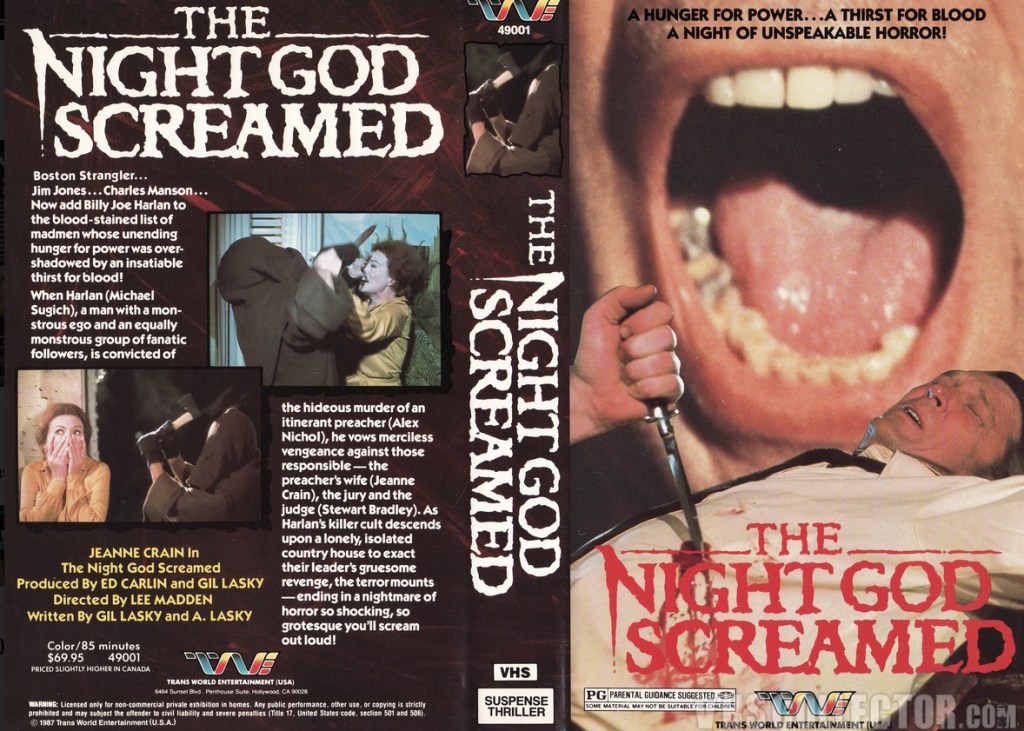
Although there’s earlier issues,the Trans World Entertainment 1987 VHS reissue was the best-distributed/courtesy of Paul Z at VHS Collector.com.
Sorry, kiddies. There’s no freebies or with-ads streams to share. But the DVDs are all over the online marketplace, VHSs are out there, for the ever-the-analog purist. And if there’s one, pure ’70s horror DVD to add to your collection, The Night God Screamed comes highly recommended. Do it.
* Other early-70s, poorly-distributed and lost, U.S. Drive-In horrors to venture — each with their own, special bit of crazy — are Touch of Satan (1971), Legacy of Satan (1974), and Satan’s Children (1975).
** That’s finally been all squared away with Tom O’Dell’s stellar, 2019 documentary, Manson: Music From an Unsound Mind (Tubi).









 B&S About Movies
You must be logged in to post a comment.