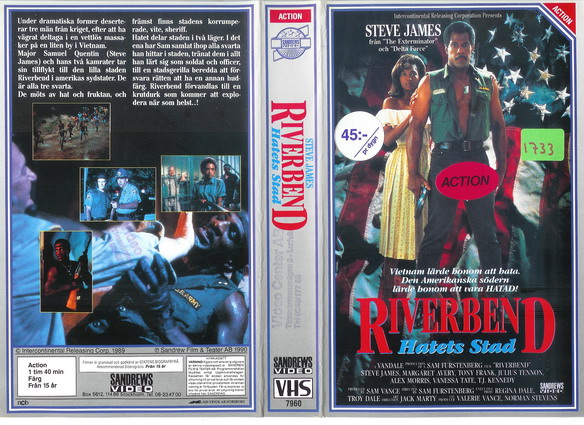
Riverbend (1989)

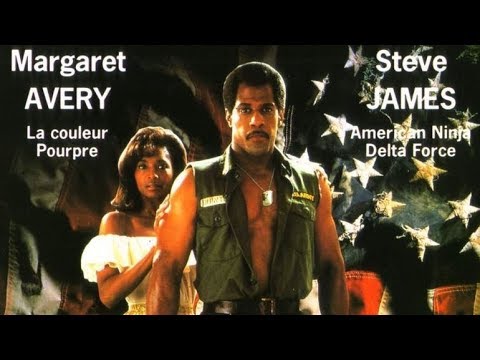
In a promotional image for Riverbend, one side has Margaret Avery, letting you know that she was in The Color Purple (it omits that she was also in Terror House). On the other side, Steve James, star of American Ninja and Delta Force.

This allows you to know what world you are from.

If you’re like me, any movie with Steve James means so much more than any Oscar-winning cultural force.

Made in the post-Cannon world by Sam Firstenberg — this was for Prism Entertainment Corporation — this movie has a completely ludicrous and therefore awesome conceit: Three rebellious African-American army officers — Maj. Samuel Quentin (James), Sgt. Tony Marks (Julius Tennon) and Lt. Butch Turner (Alex Morris) — refuse to enact a Mai Lei-style massacre and kill innocents. They’re due for a court martial and sent to Georgia. Being black men in the white man’s army, they know that there’s no way things are going to be fair, so they escape.

They end up by total luck in Riverbend, finding a home with sympathetic widow Bell Coleman (Avery).  She says she can only keep them for a few days, but Quentin is a man of justice that realizes that the town is in the grip of racist cops like Sheriff Jake (Tony Frank). Jake drops n bombs as casually as I discuss Jess Franco, which is all the time, and also is the man who shot Bell’s husband in the back in broad daylight when he tried to formally complain about how the cops treat black people in Riverbend. This film also wonders if that’s enough and decides that it has to somehow make a white Southern racist murdering coward cop even worse and has her assault a young girl named Pauline (Vennessa Tate).

Instead of leaving town, the army men are talked into staying around and training the black side of town to take over, which they do, and put every single white person either in jail or in a building with a bomb in it, all to bring the media to Riverbend where they’ll learn of the racism. And oh yeah, why Quentin and his men left Vietnam.

This movie is exactly why — if you’re a Cannon fan especially — that you love both James and Firstenberg. James rarely got the chance to be the lead — this and Street Hunter are about it before his untimely death — and he commands the screen. He gets to do action, drama, some shirtless time for the ladies and even a love scene, which man, the stages of grief in Rivertown are short when the widow Coleman is already sleeping with another man days after her husband gets gunned down. Then again, if I died tragically due to a racist cop and my wife was keeping Steve James in our place, I’d look up from Hell or through the dimensions from Limbo or whatever is in the next world and give my blessing, because look, Steve James is such an upgrade from me it’s the very definition of upgrade.

As for Firstenberg, he’s pre-Tarantino rewriting history with a black town following the “by any means necessary” pledge and taking over their own town by force. Amazingly, it works, as at the end, every black person is not dead but instead meeting their white neighbors in the street and warmly hugging and shaking hands just minutes after releasing them from a kidnapping and bomb threat. One and done scriptwriter Samuel Vance somehow made a science fiction movie here, because in the real world, the National Guard would be dropping bombs on this town.

You also have to adore any movie set in 1966 that has a synth driven basic training montage.

And man, Tony Frank. The guy was in a movie with a huge black cast and is just out there spitting the most coarse racism in their faces. I know sticks and stones, but this feels like the roughest way to get emotion and he’s acting the hell out of his role, somehow becoming worse than every single white Mr. Big in every blacksploitation movie put together.

This movie has Billy Jack and Walking Tall energy and I mean that as the biggest compliment. This totally knocked me out and was so unexpected; I had no clue it existed much less how powerful — and strange — it is.

You can watch this on YouTube.
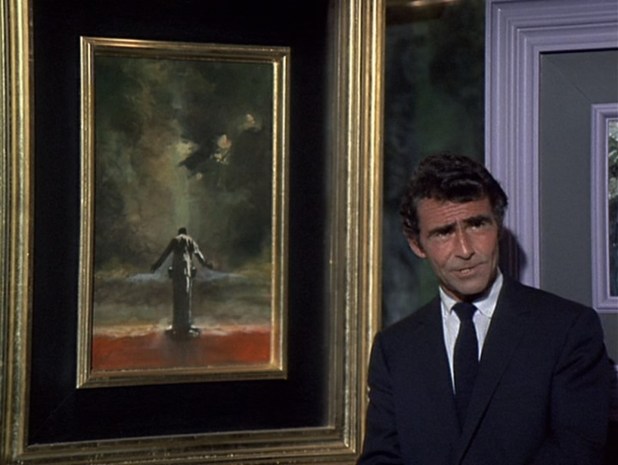
Night Gallery season 2 episode 17: The Miracle at Camafeo/The Ghost of Sorworth Place

As always, I enjoy when Night Gallery only has two stories and room to stretch out to better tell them. But are these tales worthy of the longer time they’ve been given?

“The Miracle at Camafeo” was directed by Ralph Senensky and written by Rod Serling from a story by C. B. Gilford. The holy shrine of the Nuestra Senora de Camafeo is supposed to be able to cure any damage to the human body. That’s why Joe (Ray Danton) and Gay (Julie Adams!) Melcor have come here. However, Charlie Rogan (Harry Guardino) thinks this is all part of a half-million-dollar insurance fraud.

Of course, he’s right. And he’s angry, because actually sick and infirm true believers come to this shrine every day, praying for intercession, and here comes Melcor, using it to be able to act like he can walk. Thing, as they often do in the Night Gallery, have a way of working out.

If this story is familiar, it was also used in an episode of Alfred Hitchcock Presents and was titled “Strange Miracle.”

Senesky directed both stories tonight. “The Ghost of Sorworth Place” was written by Alvin Sapinsley and inspired by the story “Sorworth Place” by Russell Kirk. Ralph Burke (Richard Kiley) gets lost in the Scottish countryside and finds an old home in the middle of nowhere. Looking for lodging, he’s turned away by the maid, Mrs. Ducker (Mavis Neal Palmer), but the house’s owner, Ann Loring (Jill Ireland!) directs him to a local inn.

She invites him to tea, but not before he learns that she’s a widow. Her philandering husband had a weakness for alcohol — and “the evil” — and Ralph wonders why she stayed in this small town. That’s when this gets weird — and wild — as Ann tells him that she can’t enjoy physical love after her abusive marriage, but needs a man who will protect her from her husband’s ghost. And he’s coming…tonight.

This is a tense episode with an ending that lives up to the build.

The director has a blog and man, it has some great insights into this episode, including an admission that he sees it in a better light today: “In December, 1971 at age 48 I thought THE GHOST OF SORWORTH PLACE was a failure. Now in March, 2020 at age 96 I’m not as sure.”

This story was filmed back to back — with two days break — with the first story in this episode. And those steps that cause the end of this tale, well, they’re the same steps from last episode’s tumble for Mr. Peddington.

Wow! An episode that I have no complaints about. What a magical time!

HorrorVision (2001)

Also known as FEAR.comHorrorVision is The Matrix from Full Moon, which means you get Brinke Stevens and Len Cordova as people named Toni and Dez whose job is getting more porn on the internet, which in 2001 wasn’t what it is in 2023. But after Toni and his girlfriend Dazzy (Maggie Rose Fleck) both go missing thanks to a creature born of the inherent negativity of the web, well…

Yes, the couple at the center of this movie is comprised of two people named Dez and Dazzy.

Anyways, Dez gets help from the wise Bradbury (James Black), who has to help Dez learn how to fight and how to get over his loss of creativity, as he gave up screenwriting for creating on-demand pornography.

Don’t be fooled. This is not a movie about a cool looking monster, although it has that. It’s really about endless drives to God Lives Underwater-sounding generic post-NIN music, a long trip to the goth store and lots of desert. So much desert that I’m shocked that Kyuss doesn’t show up to play a song.

This ends with no resolution and it feels like there’s about half the movie left but no. That’s all you get.

Charles Band intended to direct this, then J.R. Bookwalter and finally Danny Draven, who made the remake of Death Bed in 2002 and also was the guy who directed Cryptz. 2000s Full Moon is…rough.

There is a pretty rad cyborg demon who is downloading people onto CDs and you know, I would watch that dude for the entire length of this movie instead of what I saw.

You can watch this on Tubi.

Liberty and Bash (1989)

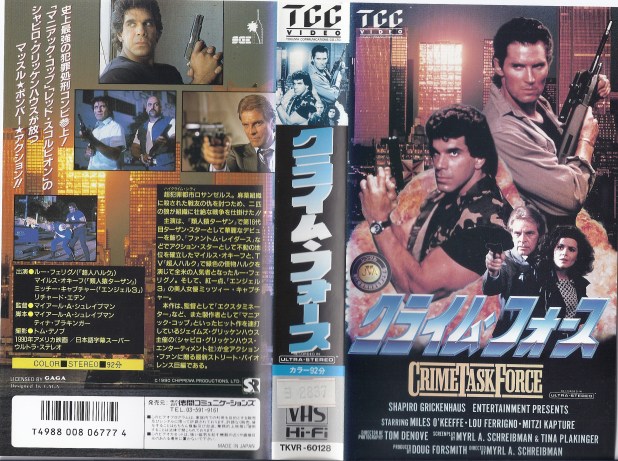
Liberty (Mile O’Keefe)  and Bash (Lou Ferrigno) once were in the service and fought in Central America along with Jesse (Richard Eden). They’re trying to keep young people out of the drug trade and off the streets, but they can’t even keep Jesse from getting all mixed up and killed. That means it’s time for a new war. A war on the streets of America.

Reading this paragraph and thinking that Ator and Hercules are teaming up, well, you might think that this movie is going to be awesome.

I wish I could report that it was.

This is the second time that Myrl A. Schreibman has done this to me. His film Angel of H.E.A.T. figured out a way to make a spy movie with Marilyn Chambers and Mary Woronov boring.

The people that wrote it came from such disparate roles in the movie business. Monica Clemens produced two other movies, The Last Ride and Cop-Out; Douglas Forsmith was in the art department for films like CommandoCobraSt. Elmo’s FireMemorial Valley Massacre and Hunter’s Blood and also worked as the assistant property master on Exorcist II: The Heretic; and Tina Plackinger appeared in roles that called for athletic women, such as health club woman #1 in Armed and Dangerous, working out in The BodySculpture System and as the harem mistress in Wizards of the Demon Sword.

Liberty also has a girlfriend who barely likes him, Sarah (Mitzi Kapture, Silk Stalkings) and when she gets pregnant, they spend a lot of the movie talking about abortion.

I wanted to see Miles and Lou beating up perps not a long talk about choice.

I mean, you have two guys who are more known for action than acting and you make them act.

Myrl A. Schreibman, you have done it again. And by it, I mean fuck it up.

You can watch this on YouTube.
Blood Symbol (1991)

Alright, I started this movie because I thought it was shot on video, only to learn that over the seven years it took to make (1984 to 1991), it went from 8mm to 16mm, giving it a distorted feeling as stock doesn’t always match. This actually took so long that there’s a BLOOD SYMBOL 1984-1991 REST IN PEACE credit at the end. The sound isn’t synched either, as it was shot without audio and the script changes were never tracked, so they had to guess what everyone was saying. It only adds to how strange this all appears, along with the fact that creative differences caused lead actress Micheline Richard to leave in the middle of filming, leaving all of her remaining scenes to be shot far away with a double whose face is never clear.

This Canadian microbudget film by co-directors and writers Maurice Devereaux and Tony Morello (who went on to make Slashers), this has a simple story: an undead monk named Olam (Richard Labelle) can remain immortal if he drinks the blood of college student Tracy Walker (Micheline Richard).

Where it gets beyond expectations is in the way it was shot: strobing moments, strong and confident handheld camera work, point of view stalking right out of Carpenter and incredible editing. It’s beyond a movie started in high school and sure, the plot is thin, but the work to make it happen is rich. There’s even a hint of giallo as Olam stalks his prey complete with black gloves, overcoat and fedora.

There’s also tons of footage of Tracy just doing things like going to class and playing softball, yet that “you are there” style of shooting makes this feel so much different than any other slasher. Sure, it’s creators were learning as they go, but they were definitely on to something.

You can watch this on YouTube.
I Was a Zombie for the F.B.I. (1982)

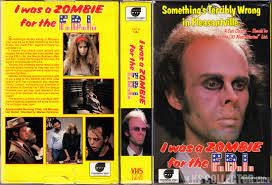
Directed by Marius Penczner and filmed by students from Memphis State University, now known as the University of Memphis, this has a very familiar looking stop motion creature in it. If you were watching music videos in 1983, you saw ZZ Top’s “TV Dinners.” Well, that same monster appears in both, as that video was also directed by Penczner.

After landing in Pleasantville, United States, aliens convince two criminals to help them rule the world by using Uni-Cola, the most popular soft drink around. In addition to that monster, the aliens can put people into a zombie-like form, which gives this movie its title.

Made for just $27,000, most people of a certain age saw this paired with Attack of the Killer Tomatoes on USA’s Night Flight. Once it came out on DVD, it got ed-edited — 33 minutes less! — and what remains is a really fun film that feels as if it really was made in the 50s.

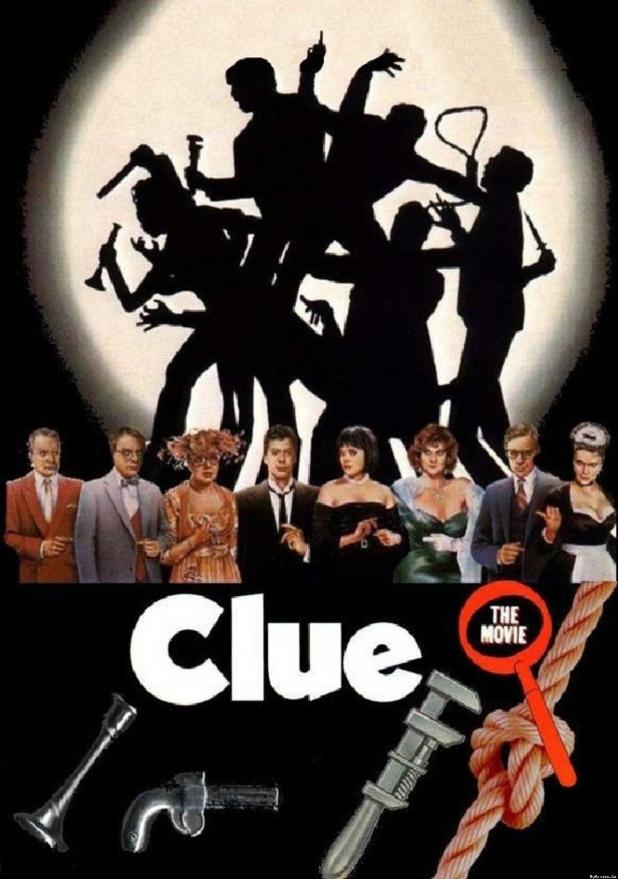
Clue (1985)

Jonathan Lynn directed Nuns on the Run, My Cousin Vinny and The Whole Nine Yards, as well as co-creating and co-writing  the television series Yes Minister. He also made Sgt. Bilko and I probably should forget to say that.

He also directed this movie, which he co-wrote this with John Landis, so he can do no wrong. That’s because whenever I’m down, this is the movie that gets me laughing.

You’ve played as Colonel Mustard (Martin Mull, a childhood superstar in my life), Mrs. White (Madeline Kahn, who explains every crush I ever had), Mrs. Peacock (Eileen Brennan), Mr. Green (Michael McKean), Professor Plum (Christopher Lloyd) and Miss Scarlet (Lesley Anne Warren) before, but to see them come to life in a movie that has Lee Ving from FEAR as a dead body, Colleen Camp as a maid, Tim Curry as the butler and even my favorite Go-Go Jane Wiedlin as a singing telegram, well, this is what joy looks like.

How good is the set? Well, after the movie was done, it was bought by the producers of Dynasty and turned into The Carlton hotel. The rooms even connect exactly like the game.

I’m a sucker for the idea of movies with multiple endings. Other than the three endings here, the only other film I can think of that did it — which is all BS, William Castle never filmed the other ending — was Mr. Sardonicus.

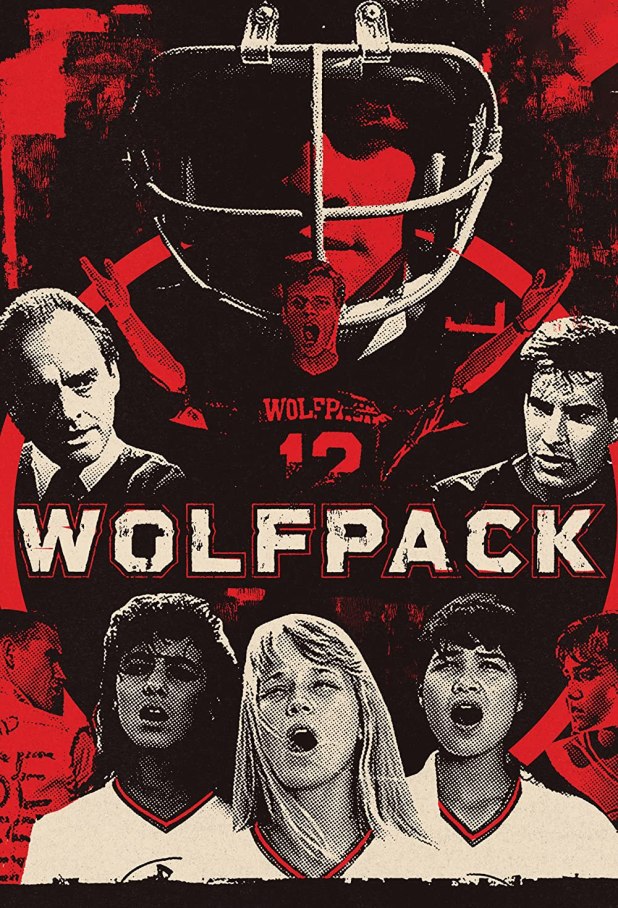
Wolfpack (1987)

Sam Adams (Jim Abel) has just moved to a new house in an all-American town. Everything seems perfect and he has a chance to get a scholarship thanks to his performance on the football team. But man, that team. Everyone in school loves them, but they might love them too much, especially Jack “Boot” Butkowski (Tony Carlin). In fact, one could say that the team are pretty much forming a new Third Reich inside the school and even the town itself.

Director Bill Milling produced NightmareCaged FurySavage Dawn and Silent Madness, but is probably best known for directing adult movies like A Scent of HeatherThe Vixens of Kung Fu and Oriental Blue.

This feels so much like my high school that it started triggering flashbacks. That said, there weren’t as many thirty-year-old teenagers in the unhallowed halls of Lincoln High School.

That said, this movie is more nuanced than you think it would be, highlighting the dangers of mob mentality and why we can never let what happened in Germany happen here except, you know, it’s happening all over the place now.

That’s right. It’s the most well-intentioned and thought out anti-fascist movie made by a porn director.

You can get this from Vinegar Syndrome.

When Michael Calls (1972)

Helen Connelly (Elizabeth Ashley) is going through a change in life, finally leaving her husband Doremus (Ben Gazarra). But maybe she misses him. And maybe she’s losing her mind, as she keeps getting phone calls from her fifteen years dead nephew Michael. And maybe it’s the supernatural because with each call, someone dies.

Before it’s all over, Michael’s brother Craig (Michael Douglas), a psychiatrist at a school for disturbed children, reveals that yes, that’s Michael’s voice; then no small manner of deaths happen, like a police officer’s body falling out of a tree in front of kids and someone murdered by bees.

When the movie moves from its ghost story origins in the latter half, it loses a bit. But it’s a fun TV movie that doesn’t ask much of you and delivers some small screen chills (and kills).

Based on the book by John Farris (who wrote the screenplays for The Fury and Dear Dead Delilah),  this is directed by Philip Leacock (Baffled, Dying Room Onlyten episodes of Gunsmoke) and written by James Bridges (he directed and wrote The Paper Chase and The China Syndrome).

For some reason, in the VHS era, this was re-released as Shattered Silence.

Blazing Saddles (1974)

I’m certain as soon as I post this that I’ll get comments like “They could never make that movie today,” in a very smug way, but the point is, they already made it, you can still find it and no one is trying to take it from you. I kind of love that for all the profanity, flatulence and racist words thrown around in this movie, execs were just as upset that a horse gets punched.

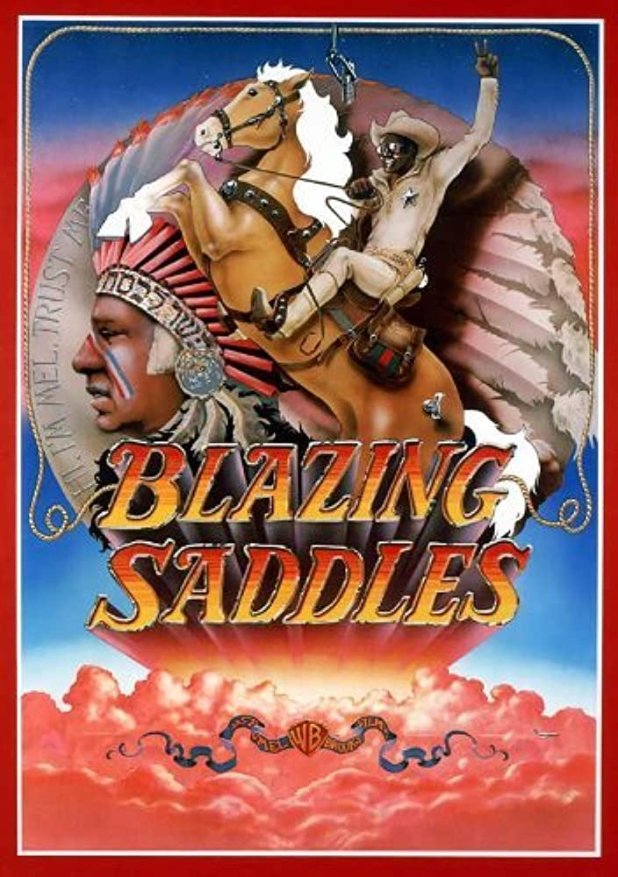
The idea for Blazing Saddles came from Tex-X, a script that Andrew Bergman (Big TroubleStriptease) planned on writing himself, with Alan Arkin directing and James Earl Jones as the sheriff. Mel Brooks bought it and despire not working with other writers since Your Show of Shows created a writer’s room with himself, Bergman, Richard Pryor, Alan Unger and Norman Steinberg. They worked under a sign that said, “Please do not write a polite script.”

The plot starts just like any Western you’ve seen: a new railroad will be redirected through Rock Ridge, making the town finally worth something, so territorial attorney general Hedley Lamarr (Harvey Korman) sends his men, led by Taggart (Slim Pickens) to force the residents out. He starts by shooting the sheriff and Governor William J. Le Petomane (Mel Brooks in one of many roles in this) is coerced by Lamarr to hire a sheriff named Bart (Cleavon Little) in the hopes that the town won’t have anything to do with a black man. Yet Bart was about to be killed for beating up Taggart, so maybe Lamarr is hastening his own defeat.

With help from the Waco Kid (Gene Wilder), he soon wins over the town — future Higgins John Hillerman is one of them — and defeats the super strong Mongo (Alex Karras) and charms his would-be seducer Lili Von Shtupp (Madeline Kahn). Actually, he’s such a good person that he lets those two villains join him.

Of course everything works out well, but the idea that somehow the movie is on a lot next to Buddy Bizarre’s (Dom DeLuise) musical and the movies turn into a fistfight that ends when Lamarr runs into Mann’s Chinese Theater to see the end of his own movie. It’s an audacious close to a movie that’s equally willing to be incredibly smart and wonderfully stupid.

Casting was a big problem. Pryor was Brooks’ original Sheriff Bart, but the studio worried about his drug use and wouldn’t approve him as he was uninsurable. Brooks also wanted John Wayne for the Waco Kid, but the Western star turned down the movie for being too blue and his replacement, Gig Young, passed out from alcohol withdrawl.

A television pilot titled Black Bart was produced for CBS based on Bergman’s original story with Louis Gossett Jr. as Bart and Steve Landesberg as sidekick Reb Jordan. Bergman was listed as the sole creator and the show was made just to ensure that Warner Bros. had the movie rights to make sequels. It only aired one contractually obligated time on April 4, 1975.

As for the troublesome moments, Burton Gilliam. who played a henchman named Lyle, couldn’t say the word to Little, who pulled him aside and said, “If I thought you would say those words to me in any other situation we’d go to fist city, but this is all fun. Don’t worry about it.” And Brooks has said that he wrote the movie to fight back at “white corruption, racism and Bible-thumping bigotry.” The same people who argue that you couldn’t make this today are the same ones that saw Joe as the hero of that movie and were cheering on Archie Bunker.