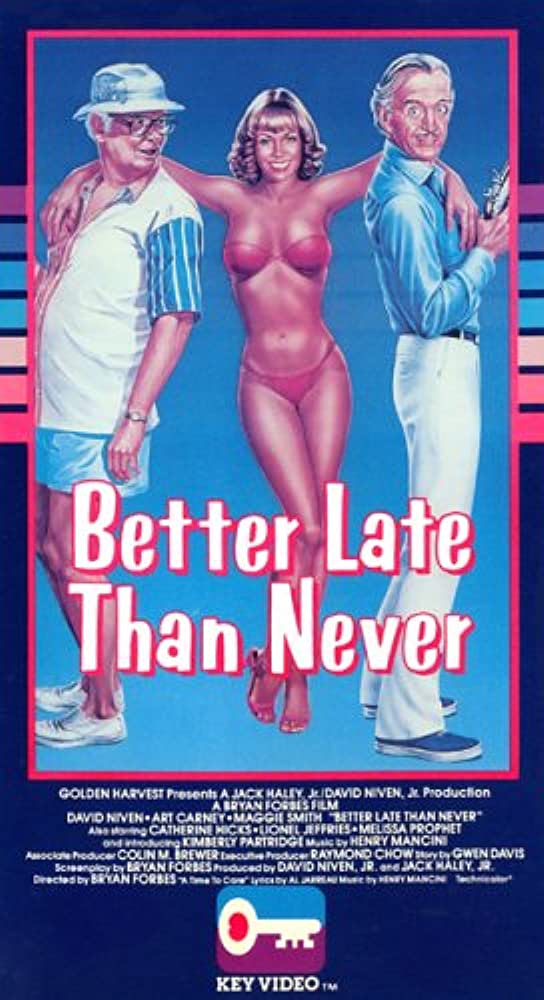
VIDEO ARCHIVES WEEK: Better Late Than Never (1983)

VIDEO ARCHIVES NOTES: This movie was discussed on the February 21, 2023 episode of the Video Archives podcast and can be found on their site here.

I have to tell you, the hunt for this movie felt like the old days of trying to find a movie and for the return of that feeling, something that’s hard to come by in the days of streaming and instant gratification.

Bridget (Kimberley Partridge) is all that’s left of the romance that her grandmother had between Nick (David Niven) or Charley (Art Carney). Yes, even all those years ago, people didn’t know who the father was. Her daughter died, she adopted Bridget but now that she’s gone, the executor of her estate finds both men and they lived much richer lives when she loved them.

Nick is struggling through the twilight of a never was entertainment career and Charley is a photographer who never had the success that he felt he was owed. Into these two flawed old men comes a young girl who must choose which one is her grandfather and which will get the fortune in her grandmother’s will.

Maggie Smith is quite good in this as the girl’s governess Miss Anderson and Catherine Hicks (Child’s Play) is also fun as Sable, a way too young for the older boys girl.

Directed by Bryan Forbes (he also directed The Naked Face for Cannon and, of course, The Stepford Wives), who co-wrote it with Pittsburgh native Gwen Davis, this movie paid off my weeks of looking for it with the kind of charm you expect from a Saturday late afternoon basic cable watch in the winter, the kind where you have the blankets just so and don’t feel like getting off the couch just yet. Credit for that goes to Niven and Carney, two masters of comedic timing who fit together perfectly.

What’s amazing is that this is a Golden Harvest production. Yes, the same people who made One Armed BoxerEnter the DragonThe Man from Hong KongGame of DeathMegaforceDeadly Eyes, Mr. Vampire and Teenage Mutant Ninja Turtles, as well as hundreds of other great films.

This was made in Monte Carlo, not far from Niven’s house La Fleur du Cap Mansion. Due to his failing health — he had just started to show the first signs of Motor Neuron Disease — it was best they stayed near his home.

Better Late Than Never has always been hard to see. It had difficulty getting a theatrical release and never played theaters in Britain. It eventually aired on TV on Christmas Day 1983.

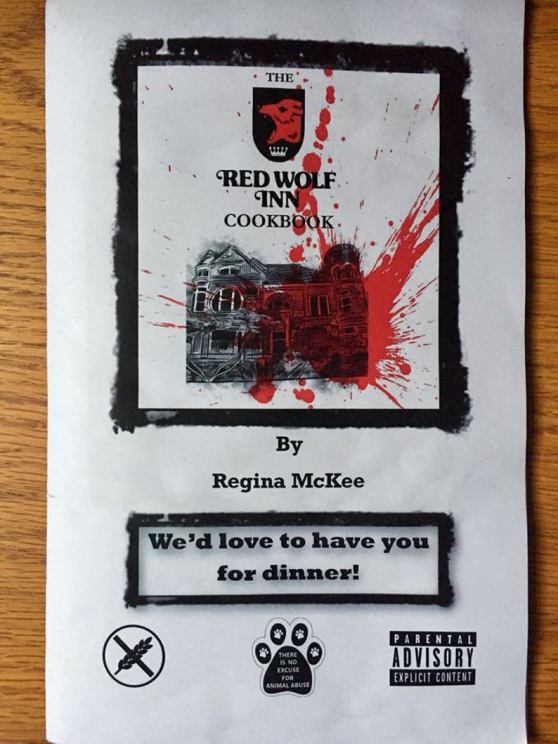
DRIVE-IN ASYLUM audio commentary: The Folks at Red Wolf Inn

Check out the second commentary track (following Messiah of Evil) that we’ve posted just for fun — The Folks at Red Wolf Inn AKA Terror House. Starring Linda Gillen, John Nielson, Mary Jackson, Arthur Space, Margaret Avery, Janet Wood and Michael MacReady, directed by Bud Townsend and originally released September 1972, I think it comes out as Bill and I speak on this film that it’s one of our favorite movies.

If you want to learn even more about this film, I heartily recommend the zine Drive-in Asylum. In issue eight, there’s an interview with Linda Gillen that goes in-depth into every facet of the film and its production, as well as a great article by Terry Thome that dissects the film’s mixture of romance, horror and comedy. In fact, if you check out the Drive-In Asylum etsy store, you’ll find everything from signed VHS copies of the film, promotional photos and even a cookbook inspired by the film! I’m proud to say that I illustrated this unique souvenir of this film, which as a real honor (and I even have one signed by Linda).

BONUS: We spent two full episodes of our podcast discussing this movie, which will give you even more insight into the sheer craziness at the heart of this film.

We also had Linda Gillen on our Drive-In Asylum Double Feature show.


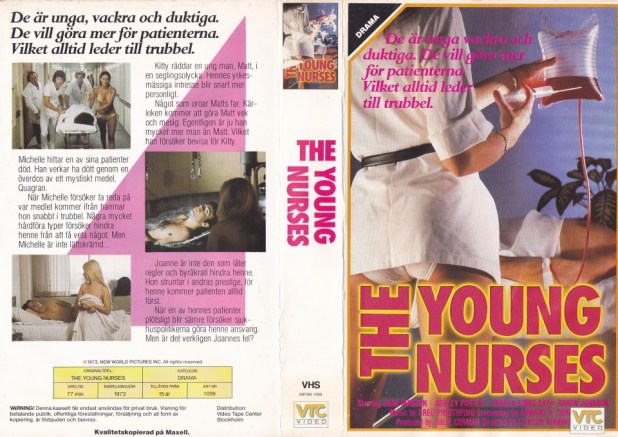
VIDEO ARCHIVES WEEK: The Young Nurses (1973)

VIDEO ARCHIVES NOTES: This movie was discussed on the January 31, 2023 episode of the Video Archives podcast and can be found on their site here.

The fourth of the five movie New World Pictures nurse cycle — preceded by The Student NursesPrivate Duty Nurses and Night Call Nurses and followed by Candy Stripe Nurses — this was directed by Clint Kimbrough, who played Dr. Bramlett in Night Call Nurses, and written by Howard R. Cohen, whose awesome output includes Unholy RollersCover Girl ModelsVampire HookersFighting MadSaturday the 14thSpace RaidersStrykerDeathstalkerBarbarian Queen, Deathstalker and the Warriors from HellBarbarian Queen 2Deathstalker IV and Lords of the Deep. He also directed Saturday the 14th, Space RaidersSaturday the 14th Strikes BackTime TrackersDeathstalker IV and Space Case.

As usual, there are three nurses: Kitty (Jeane Manson, Terror Circus10 to Midnight), Joanne (Ashley Porter, who other than an uncredited role in The Student Nurses was never in another movie) and Michelle (Angela Elayne Gibbs, Cleopatra JonesParty Line).

They all have their own storylines. Kitty falls in love with a boat racer named Donahue (Zach Taylor), even though there’s never a moment where he seems charming or even likable. Plus, his father who pushes him to be a sailing man seems like too much to deal with. Joanne is sick of the doctors failing at their jobs and hurting patients, so she starts to do their work for them. And Michelle discovers that patients are overdosing on bad drugs and investigates for herself.

Beyond these dramatic moments, this film is filled with cameos, with Sally Kirkland, Dick Miller, Mantan Moreland and Samuel Fuller all showing up.

My favorite part of this entire movie is when Joanne is dealing with probably losing her job as a nurse by tearing her clothes off on a beach and diving into the ocean. It’s just so out of nowhere and an excuse to get a gorgeous young actress nude, which you know, is kind of everything Roger Corman was about.

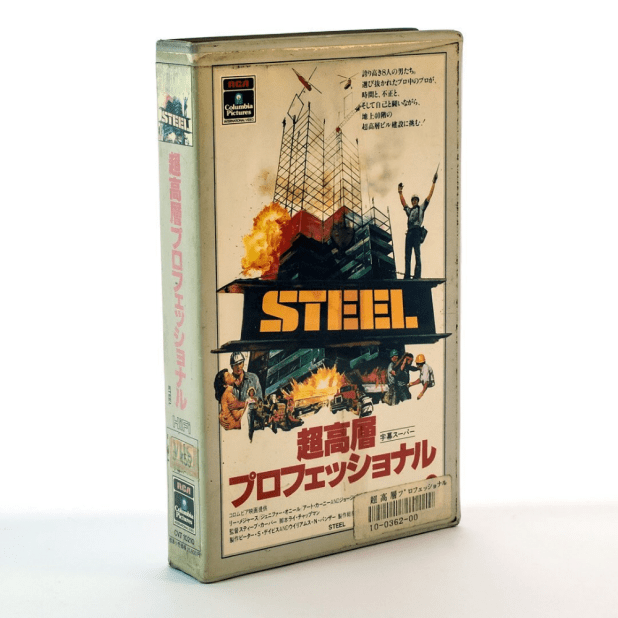
VIDEO ARCHIVES WEEK: Steel (1979)

VIDEO ARCHIVES NOTES: This movie was discussed on the April 15, 2023 episode of the Video Archives podcast and can be found on their site here. There’s another take on this movie here.

I seem to really enjoy the movies of Steve Carver, which are all over the place when it comes to genre, like the peplum The Arena, the gangster films Big Bad Mama and Capone, his two Chuck Norris movies An Eye for an Eye and Lone Wolf McQuade and most definitely this movie. He knows how to make a movie that entertains.

Steel starts off by introducing us to Lew “Big Lew” Cassidy (Goerge Kennedy), a real man’s man, the kind of business owner that goes up on the skyscraper when it’s being built just like his men. What’s shocking is that he’s dead five minutes into the movie, falling when things go wrong thanks to substandard equipment. The rest of the film is literally an attempt to live up to the standards that he set.

Sadly, on September 21, 1978, stuntman A.J. Bakunas died in this scene. Not only does it set up the danger of these heights in the movie, it also set them for the creation of Steel. The saddest thing about that is that the scene had already been shot safely. Then Dar Robinson beat the record for highest fall that Bakunas set on the movie Hooper, so the stuntman asked to reshoot the fall. He fell perfectly on to the airbag. The airbag split and that cost him his life. That’s why the credits say “This film is dedicated to A. J. Bakunis, a man whose zest for life was admired by all who knew him.”

That fall is the one in the movie. A.J.’s dad, who was with him on set, told them to use it.

His daughter Cass (Jennifer O’Neill, the best dressed woman in genre cinema) decides she’s going to do thingsher fatther’s way, no matter what her uncle Eddie (Harris Yulin) has to say about it. But to live up to the deal her father made, she’s going to need the kind of leader that can get men to do impossible things. That would be Mike Catton (Lee Majors), a guy who lost his nerve on his last job and has taken to being a trucker. She meets him on the road and convinces him that he needs to get back up in the sky.

It’s impossible to explain just what a big deal Lee Majors was in the mid 70s. Sadly, by 1978, the show that made him a success — to be fair, he was already a star from The Big Valley — The Six Million Dollar Man was cancelled. In the three years between that show and finding another hit in 1981 with The Fall Guy, Majors made a few movies like The NorsemanAgency and Killer Fish. And yes, this movie, which puts him in the lead of the Dirty Dozen of steel. His crew is made up of Pignose Morgan (Art Carney), Valentino (Terry Kiser, not yet dead), Lionel (Roger E. Mosley, not yet TC ), Surfer (Hunter von Leer, not yet a Haddonfield cop), Tank (Albert Salmi, not yet a cop investigating ghosts), The Kid (Ben Marley, not yet battling Jaws), Cherokee (Robert Tessier, not chasing Charles Bronson in this movie) and Dancer (Richard Lynch, not a villain in this, amazingly). Oh yeah — this also has great parts for R.G. Armstrong and Redmond Gleeson.

This might be the most manly movie that I’ve ever had on this site, a film that starts with Kennedy saying,   “The sight of a tall building still gives me a hard-on” and ends up with an American flag being lifted high above the streets below. You’ll want to celebrate with the rest of the crew, feeling like you’re part of them. This movie is a success for me and it’s just as much the guys on screen as it is the script by Leigh Chapman (Truck Turner, Dirty Mary, Crazy Larry) from a story by Peter S. Davis, Rob Ewing and William N. Panzer.

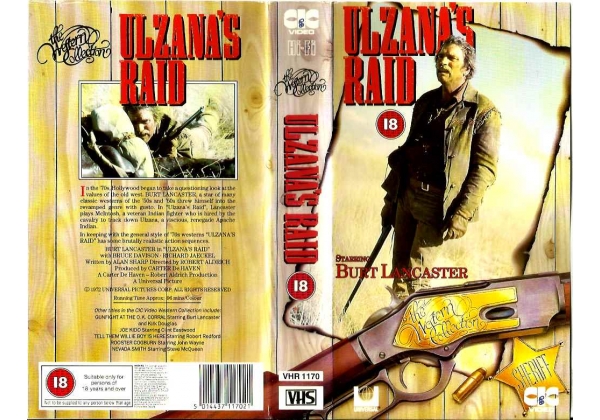
VIDEO ARCHIVES WEEK: Ulzana’s Raid (1972)

VIDEO ARCHIVES NOTES: This movie was discussed on the April 15, 2023 episode of the Video Archives podcast and can be found on their site here.

The Video Archives podcast really hit a lot of Roger Aldrich movies this season. The director told Film Comment, “From the time we started to the time we finished the picture, I’d say fifty, sixty percent of it was changed. Alan Sharp, the writer, was very amenable and terribly helpful. And terribly prolific. He can write twenty-five pages a day. He couldn’t agree more with my political viewpoint—so that was no problem. And fortunately, Lancaster and I felt pretty much the same about the picture. It was good that I had support from Sharp and Lancaster, because I don’t have the highest regard for Carter DeHaven, the producer.”

The first time Aldrich and Burt Lancaster worked together since Vera Cruz, this was a Western released after Italy had its way with the genre, which gave birth to the American revisionist Western.

It’s a definite Tarantino favorite, who said in a New Beverly blog article said that it was “hands down Aldrich’s best film of the seventies, as well as being one of the greatest westerns of the seventies. One of the things that makes the movie so remarkable is it isn’t just a western; it combines the two genres that Aldrich was most known for, westerns and war films.”

That’s because it’s just as much a movie about Vietnam as it is the West.

Ulzana (Joaquin Martinez) has taken a Chiricahua war party and escaped captivity. This puts the fear of, well, Native American vengeance into most of the army that faces them, as one even kills himself and the woman he is escorting than face them. The unlucky man to try and stop him is McIntosh (Burt Lancaster). Near the end of his service, he only has a few dozen men to win this skirmish, including Apache scout — and Ulzana’s brother-in-law Ke-Ni-Tay (Jorge Luke) and a way too young soldier named Garnett DeBuin (Bruce Davidson).

Where this becomes Vietnam, obviously, is because the Native Americans have known this land for hundreds of years and the better armed Americans aren’t better trained. They just have nicer guns. DeBuin isn’t ready for the way that war will change him and McIntosh is just ready to die by the end of the film. Even Ke-Ni-Tay lays down his weapons, knowing he’s done, but he’s changed each and every person who has faced him.

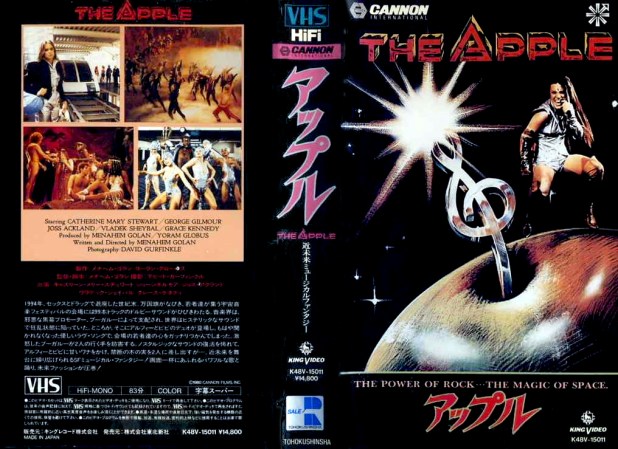
VIDEO ARCHIVES WEEK: The Apple (1980)

VIDEO ARCHIVES NOTES: This movie was discussed on the May 2, 2023 episode of the Video Archives podcast and can be found on their site here.

The first time I saw The Apple, I was in the throes of losing my job and starting a new company and feeling lost. This is the movie that not only made me feel like I could go on, but inspired me to start writing more about films and why they mattered to me.

You know how everyone thinks Cannon put out some completely crazy movies? If you haven’t seen The Apple (also known as Star Rock), you haven’t seen their full power. Directed by Menahem Golan, this slice of sheer madness is a movie I use to test the resolve of anyone brave enough to watch movies with me.

The genesis of this film begins in 1975. Israeli rock producer Coby Recht was signed to Barclay Records and began to feel distrustful of show business. He worked it into a story with his wife Iris Yotvat and brought it to the attention of his longtime friend Menahem. After hearing the demos for the songs, the producer/director instructed Recht to go to Los Angeles immediately. They were making the movie.

Yotvat said, “That was marvelous. That was just fantastic to think that it was going to be a movie all of the sudden. It was just amazing.”

It wasn’t going to stay that way.

Recht and Yotvat lived in a villa that Menahem provided, writing six screenplay drafts in three weeks. As those drafts progressed, the story became more comical and less Orwellian. Soon, things were getting corny, out of touch and out of date. If you’ve seen any of the movies that Golan was involved in, you can see how that might be true.

After auditioning thousands of hopefuls, Recht settled on Catherine Marie Stewart for the lead role of Bibi. Who is a singer. Not a dancer, like Stewart. He figured she could learn, but the producers decided to have her voice dubbed.

Tensions only got worse once filming began, as what started as a $4 million dollar movie turned into $10 million and then more. Editor Alain Jakubowicz claimed that Golan shot around a million feet of footage, with six cameras of coverage for every dance number, ending up with a four-hour rough cut.

The movie got way bigger than its scriptwriters intended. Shooting in West Berlin lasted forever, with a five-day shoot for the opening number, the song “Speed” being filmed at the Metropol nightclub (which held the world record for biggest indoor laser show) and some scenes were actually shot inside a gas chamber that had killed people during World War II.

Nigel Lythgoe, who later was a big part of American Idol, choreographed the film, saying that some days were “really, really depressing” and others “very, very stressful.” The cast and crew hated the script, but here they were, making the film.

Menahem and Recht’s battles soon got worse. The writer felt he should be in London mixing the songs (the sessions had more than 200 artists involved), but Menahem demanded that he show up at the shoot. The first day he was there, he witnessed the uncut version “Paradise Day” which featured fifteen dinosaurs and a tiger that broke free and escaped. This scene also contained elephants getting their trunks stuck in the set, actors collapsing while wearing a too hot brontosaurus costume and a set that made it near impossible for people to dance on and cameras to move around. Removing this scene makes the Biblical end of the movie come out of nowhere. That’s right. None of this is in the film.

Catherine Marie Stewart has stated that none of this rattled Menahem. In fact, he was convinced that The Apple was going to be embraced: “Menahem was very passionate about what he was doing. He had very lofty ideas about the project. He thought this was going to break him into the American film industry. It had, you know, all the elements that he thought were necessary at that time. It was the early eighties and there were a lot of musicals. And Menahem thought that was his ticket into the American film industry.”

So what happened?

The plot is basically Adam and Eve meets Faust. Bibi (Stewart) and Alphie (George Gilmour) are contestants in the 1994 Worldvision Song Festival. They’re talented but easily defeated by the machinations of Mr. Boogalow (Vladek Sheybal, Kronsteen in From Russian With Love) and BIM (Boogalow International Music).

The evil leader soon signs the duo but they soon fall victim to the darkness of show business. Bibi is caught up in the drugs and sex and glamour, while Alphie is beaten by cops and nearly dies to save her. He also lives with a woman who is either his mother or lover or landlady and no one ever explains it to us.

Eventually, they escape and live as hippies, having a child. Mr. Boogalow finds them and claims that Bibi owes him $10 million dollars, but soon God, known here as Mr. Topps (Joss Ackland, The House That Dripped BloodBill & Ted’s Bogus Journey) takes them away in his Rolls Royce and the Rapture occurs.

There are numerous scenes where people put stickers, called BIM Marks, all over their faces. Everyone has camel toe. And the movie is nearly 100% disco.

The movie premiered at the 1980 Montreal World Film Festival. To say it did not go well is an understatement.

Attendees hated the film so much that they launched giveaway records of the soundtrack at the screen. Menahem was so devastated that he almost jumped off his hotel balcony before being saved by his business partner, Yoram Globus. A similar scene happened at its second premiere at the Paramount Theater in Hollywood.

The director said, “It’s impossible that I’m so wrong about it. I cannot be that wrong about the movie. They just don’t understand what I was trying to do.”

I get it, Menahem. You were just trying to get people to understand the power of love and music and being hippies a full decade after any of that mattered. You didn’t care if anyone else got it. You had a vision. And we’re not talking about any of those critics today. No, we’re talking about you. We’re talking about The Apple.

This is a movie that wears its heart messily all over its spandex crotch. The songs are ridiculous. The dancing is, at times, poor. The story makes no sense at all. You’re lucky to sit and witness it. I can’t even tell you how many times I’ve watched it!

BONUS! You can hear Becca and me talk all about The Apple on our podcast.

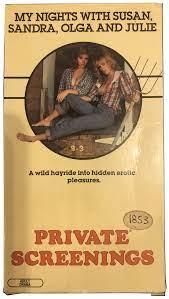
VIDEO ARCHIVES WEEK: My Nights With Susan, Sandra, Olga and Julie (1975)

VIDEO ARCHIVES NOTES: This movie was discussed on the January 31, 2023 episode of the Video Archives podcast and can be found on their site here.

Wim Verstappen and Pim de la Parra were the Wim and Pim of Scorpio Films. They made Blue Movie, which led to the end of the Dutch film rating system for adults. They also made Sylvia Kristel’s first movie, Frank en Eva.

Written by Pim along with Carel Donck, Charles Gormley (who directed the TV movie adaption of the comic book The Bogey Man), David Kaufman and Harry Kümel (the director of Daughters of Darkness), this is the story of the four women in the title. But the driving force — at first — is Susan (Willeke Van Ammelrooy), a model who has grown tired of the fast life and moved to the country. As the title tells you, she lives with Sandra (Marja de Heer), Olga (Franulka Heyermans) and Julie (Marieke van Leeuwen), who always seems to be asleep.

Then Anton (Hans van der Gragt) comes to lure Susan back and things get weird.

I mean, they were weird before. After all, Sandra and Olga just killed an American tourist and buried his body in a lake where it was found by the somehow even stranger Piet (Nelly Frijda) who has taken the body to her shack and started treating it as if it were alive.

Susan and Anton start to fall for one another while Sandra and Olga conspire to get between them and get with Anton.

Oh yeah. Albert (Serge-Henri Valcke) is living inside the walls watching everything.

Pim de la Parra made Obsessions, which was written by Martin Scorcese and scored by Bernard Hermann, so he knows how to do suspense. This is, well, Eurosleaze and I say that in the kindest of ways. It’s a movie about getting the actresses nude and then also having them conspire to commit all sorts of murder.

What I didn’t expect was the use of Stevie Wonder’s “Don’t You Worry ‘Bout a Thing.” Where did that come from?

This was also the final movie that Elisabeth Lutyens would score. She also worked on The SkullThe PsychopathDr. Terror’s House of Horror and Never Take Candy from a Stranger.

None of this makes sense and I wouldn’t have it any other way. How many movies are there were a bunch of worked up women live inside the twists and turns of a maze-like farmhouse and continually taunt the weird lady that lives in the woods while a guy watches them, Bad Ronald style? It is a genre of one.

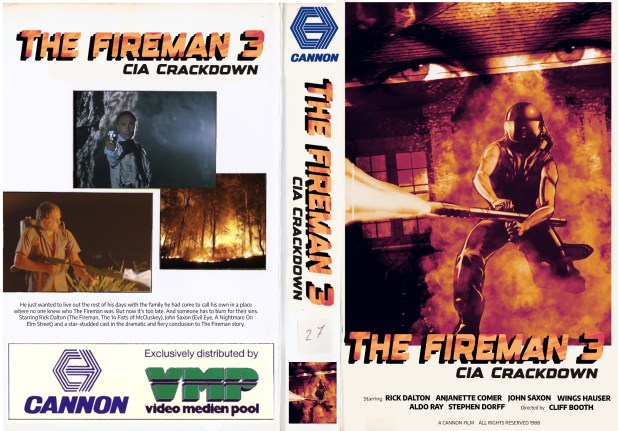
VIDEO ARCHIVES PODCAST: The Fireman 3: CIA Crackdown (1986)

VIDEO ARCHIVES NOTES: This movie was discussed on the May 23, 2023 episode of the Video Archives podcast.

Cannon had a great strategy back when they were making $5 million on a movie just based on the video, TV and foreign sales. It meant that as long as a movie cost around $2 million, they made money. It didn’t even matter if the films did well, as long as they played theaters for a week or two.

That said, they did have some success stories, mostly involving the movies of the two Chucks: Norris and Bronson.

Starting with Death Wish 2, a sequel to a movie made in the previous decade that it seemed like no one — except the fans of Bronson — wanted to make. But when Michael Winner and Bronson teamed up again, it was big box office. Cannon sold the distribution rights to Filmways in the U.S., the company that had just bought American-International Pictures, and figured that a Bronson revengeomatic sequel fit right in with their existing lineup of exploitation classics. Columbia Pictures bought it for international sales — it made $29 million worldwide — and Paramount bought the domestic TV. When the movie came out in February of 1982, it was number one for its opening week and made $16 million in the U.S.

Cannon cashed in.

They also were smart to sign up Chuck Norris after Missing In Action — actually, the second one comes before the first, but that’s a whole different story — became such a hit for them.

These were critic proof movies, ones where it didn’t matter what Pauline Kael said or if Siskel and Ebert picked it as a dog of the week. Bronson and Norris fans would come out and watch their films, rent them when they hit video and watch them again and again on cable.

And for four movies, the two Chucks had another member of the team.

Throughout the 70s, Rick Dalton would mostly show up as a special guest start on shows like Cade’s County and Banacek. Sure, he’s in The Deadly Trackers with William Smith and is amazing as Don Stober in Grizzly. But by and large, his days as a leading man seemed to be over. I remember thinking that he was just a friend of Johnny Carson who would randomly show up on The Tonight Show and make Ed heartily chortle with his stories until my uncle told me all about his cowboy roles.

Yet when Rick got to the 80s, he was able to reinvent himself yet again, combining the nostalgic tough guy act of Bronson and the hard working appeal to the common man of Norris when he made The Fireman for AVCO Embassy 1981. As a Vietnam vet turned cop who learns just how corrupt the NYPD is — but not before they kill his partner, Washington (an impossible young Samuel Jackson) — he decides to go from law enforcement to first responder of sorts, donning a flamethrower and getting revenge by setting most of New York City ablaze. And he’s the good guy in a movie that seems so scuzzy you’d swear Rick was someone who made movies like Ms. 45 and Don’t Go In the House instead of your mom’s first. crush.

It works, though, mostly because the public never forgot that once pulled his actual working flamethrower from The 14 Fists of McCluskey out of his garage to defend his home from some hippies, an act that got the lifelong Democrat a first class trip to visit the Nixon White House. Seeing him use a very similar weapon of death in this has the kind of exploitation edge that makes movie weirdos like me salivate.

Rick believed in this project because it gave him a chance to work with stuntman Cliff Booth, who had doubled for him for years. Rick produced and directed this movie with Cliff handling what he knew best, the action.

You know who loves this movie? You guessed it. Quentin Tarantino. He said, “Cliff Booth in 1979 or ’80, wrote a vigilante exploitation movie for Rick … Rick read it and goes, “We can do this better,” so Rick rewrites it and the two of them are going to produce it, they get the money, and it’s a vigilante movie called The Fireman. The lead character was in the Vietnam War — it’s very similar to The Exterminator  — he became a cop and then he started seeing this whole group of bad apple cops that are killing guys and are completely corrupt. And they end up killing his partner, played by a very young Samuel L. Jackson. The film becomes a real big hit, and that makes Rick, he gets a third career, going into the ’80s, as a straight to video action star.”

Imagine Rick’s surprise when Cannon Films came calling to make another one. Especially because they’d already made a movie that pissed him off, 1984’s Exterminator 2. It felt a bit too close to the movie he. made with Cliff for his taste, so he barely wanted to take a call from two Israelis in tracksuits. Imagine how he felt when the lunch meeting wasn’t at Musso and Franks or Taylor’s Steak House, but instead a hoagie and a bag of chips in their office.

Yet when they told him they could give him $4 million — and that they’d buy the rights to his movie from AVCO Embassy on top of that — he just had to laugh at Menahem’s fast talking ways, not to mention the fact that he drew out a contract on the greasy bag from a local sub shop.

That wasn’t the story he told on Johnny, however. Self-deprecating to a fault, he told the King of Late Night that he saw the Cannon name at the front of Bolero and figured they’d be interested in his movie, saying “I figure if they made that dog turd, they’d make my dog turd.”

Ed McMahon fell off the couch.

At this point, Rick and Cliff were excited to get the sequel signed off and started looking for talent so they could make the movie that they didn’t have the budget to make when they made The Fireman. At first, they went after bigger names with that $4 million budget. If you’re going to make an Arthur Hill action movie, get Arthur Hill, you know? They talked to him, Richard Fleischer (who did Red Sonja instead, to his chagrin), Richard Donner (shoot big) and George Bowers, but then what always happened with Cannon happened. They were flush with Missing In Action and Breakin’ cash when Rick signed his deal, but their next slate of movies wasn’t doing as well.

Who could do the film for less?

Menahem suggested former Bond director Peter Hunt and J. Lee Thompson, but out of respect for Bronson, Rick laughed off the latter suggestion. And he confided in Menahem that if Cliff was forced to work with Michael Winner, he’d probably kill him. It didn’t sound like a joke the way he said it. Sam Firstenberg and Rick had a great meeting, but he walked away telling him, “Why do you want me to make your movie when I’m just going to follow what Cliff did in your first one? You already have your director.”

And that’s how Cliff Booth, once a stuntman, then a second unit guy for exactly one movie ended up directing and writing The Fireman 2. While some fans love the first one more, I love that this seamlessly starts five minutes later — yeah, I bought that bootleg on a Facebook fan group where someone edited both movies together for one long The Fireman experience — and doesn’t lose an ounce of its edge when it moves the action from New York to Texas. And yeah, Donald Pleasence rarely said no to a movie, but this was the kind of movie where he shines (the Halloween influence is all over this; Rick considered Rick Rosenthal as a director until the Halloween II director confessed his intention to make a sequel to The Birds; Rick laughed about that until the movie actually played on Showtime and he just stared, pointing at the screen, beer growing warm in his hand).

And come on. Joe Don Baker hadn’t been that good in a movie since Golden Needles.

Just like Bronson and Norris, Rick took Hollywood by surprise. The Fireman 2 did well for a few weeks in theaters and drive-ins, but was a blockbuster on cable and in the home video market. But for Cannon, well, it was as big a deal as anything they’d made. Golan and Globus called Rick the Saturday after the movie opened, laughing — but perhaps also being serious — as they asked “Can you start shooting on Monday?”

The Fireman 3: CIA Crackdown wouldn’t happen that quickly. Rick wanted the kind of movie that would pay off the series while adding a bit more drama. Sure, it was the third movie, but he didn’t want to make the same movie over and over again.

It was worth the wait.

With Rick writing and starring, as well as an even more confident Cliff behind the camera, the third film throws you a curveball. Eddie Karpinski isn’t using that name anymore. He’s gone into hiding and is now living the kind of existence you could never have predicted after the first two films. Instead of POV shots of him burning muggers, the movie starts with the domestic bliss he’s found with Marisa (Anjanette Comer), a widow with a teenage son named Kirk (Stephen Dorff, a year after The Gate) and a dementia-addled father, Butch (Aldo Ray). They’re living in a fixer-upper on the outskirts of the suburbs and it seems like new developments are being built all around them.

Regency Realty, run by the company’s third-generation scion Dwight Regency (Wings Hauser), keeps making offers for the low middle class homes on our hero’s street. At first, they seem like any other real estate developer. But seeing how their agents are played by Michael Ironside, Robert Davi and Tracey Walter, you pretty quickly figure out that they’re not on the up and up.

Our hero finds out way too late, as his modest home — his reward for two movies of blasting bad guys like Richard Lynch and Billy Drago with napalm — goes up in flames. The cops say it was an accident, the insurance tries to pay it all off and everything is supposed to go away. But with his adopted son trapped in painful rehab, his wife ash and Butch dying a slow death — but not before an emotional scene where he grips The Fireman’s hand and says in his gravely voice, “I always knew who you were. But you were good enough for my Marisa. Now, I want you to be bad enough for her.” — it’s only a matter of time before the flamethrower comes out of its hiding space and the entire subdivison goes up in smoke.

But wait, you might ask. Where does the CIA part of the film’s title come in? It turns out that an agent near retirement named Carmine Bassi (John Saxon, as always, the perfect person for the role; he made this right before he directed the only movie he’d ever direct, Zombie Death House) is sent on a wild goose chase to bring in Karpinski. When he starts to notice that a Salt Lake City suburb is dealing with a rash of arson-based crimes and sightings of a man wielding an M2 flamethrower, he comes running. But by the end of the film, he starts to see no small part of himself in Eddie.

I’m not one of those people who write, “For a Cannon movie, this is pretty dramatic.” After all, it’s the same studio that made Maria’s LoversRunaway Train and gave Cassavetes a good budget to make Love Streams. It’s better than it has any right to be, to be perfectly frank, and it sends off The Fireman to the kind of retirement — and retribution — that he so rightly deserved.

That’s not saying that if Dalton had wanted to make one or two more of these I wouldn’t have bought a ticket, rented the movie and taped it off of HBO, however.

I was talking with Austin Trunick, writer of The Cannon Film Guide Volume I and The Cannon Film Guide Volume IIand as usual with all things Cannon, he blew my mind with an untold story.

“I wanted to send you a quick note to let you know that there was almost more to this saga. There was an ad for The Fireman 4: New Fire in the 21st Century Film Corp spread in Weekly Variety‘s AFM 1991 issue. Well, maybe “ad” is too strong a description — it’s just a title treatment, nothing more, no talent listed, with a dubious note that it was “In Pre-Production – Ready for Delivery Christmas ’91.” That’s all I’ve ever come across for that particular project, and I honestly have no clue if Dalton was involved at all or if Menahem even had the sequel rights at that point. I wouldn’t be shocked in the least if it was one of his typical “let’s announce it now and figure out the details later” sort of deals. Considering the ad didn’t use Dalton’s name to drum up foreign sales, that probably was the case.”

When do we get to see that movie?
Makeup trailer

When two people are brought together from completely different walks of life, it can make for awkward circumstances, especially when they both have their secrets. Sacha (André), an introverted French ex-chef, moves to London to begin his new life as a food critic. Moving into a rented room in a house belonging to Dan (Masheter), a well-respected London stockbroker, the pair are forced into an unlikely friendship. As time goes on and events unfold, Dan attempts to hide his aspirations of becoming a burlesque dancer from the people who perceive him as an alpha male. Despite their differences, can Sacha and Dan become pillars of support in each other’s lives?

Look for Makeup available June 27.

TUBI ORIGINAL: Hidden Exposure (2023)

Sabina Geshem (Liana Liberato, Scream VI) is a dance teacher who once had her own dreams of dancing on Broadway. But that was before the injury and before she got serious with Ramsay Stranger (Jordan Rodrigues), whose business is struggling and who seems like absolutely the worst person for her to pin her hopes and dreams on. When she brings up that he opened another credit card in her name, just as she’s paid off the last one, he makes it her fault.

He assures her that if he can just have a good meeting with Randall Abbott (Richard Kind, who seems like a big star for a Tubi original), all their problems will disappear.

No, that’s exactly where they’ll start.

Randall could care less about Ramsay’s virus solution. Yet their meeting ends up introducing him to the businessman’s daughter Alvy (Rumer Willis) and yes, Ramsay has a type: pale redheads. He starts spending time with his new love interest while continually demoralizing his old one.

There may be hope yet. An old dancing friend named Celine (Stef Dawson, Annie Cresta from The Hunger Games series) who is just getting past cancer learns that Eva Graf Schierling (Lara Wolf) is taking over as the director of dance and she’s been asking where Sabina has been. The opportunity for her to become a dancer on the biggest stage there is still exists.

Ramsay responds to this by telling her that she keeps making the same mistakes, that she’s setting herself up to be a failure and that he wants nothing to do with her any longer. He disappears from her life, which allows her to put her energy into dancing and finally concentrate on herself.

That is, until Celina takes her to a party and she runs into Ramsay, who easily gets her back for a night.

He laughs when she thinks they’re getting back together and explains that he has a whole new life. She decides to see what that life is all about in upstate New York. It’s gorgeous. The people are kind. And no one is kinder to her than Alvy, who is nothing like the thieving force of evil that she expected.

The real problem? Alvy is pregnant. And so is Sabina.

Directed by Todd Bogin, who wrote the screenplay with Omali Jeffers and Frederic J.A. Richter, I really appreciated that this movie strayed from the psycho ex-girlfriend formula to present an ending that is tragic and quite sad. The film looks great, thanks to cinematographer Barbie Leung, who finds great lighting, deep colors and intriguing angles that keep the otherwise seen it before story seeming fresh and vital.

You can watch this on Tubi.