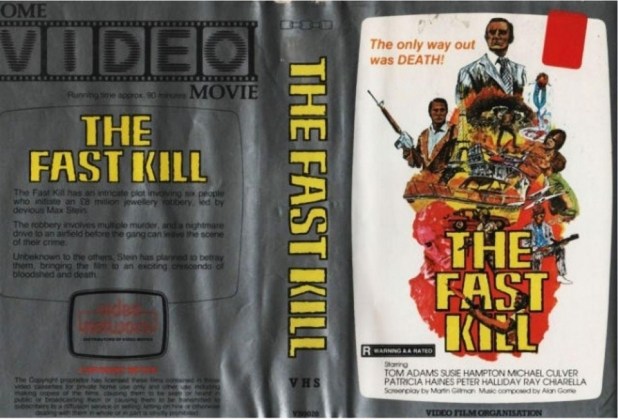
VIDEO ARCHIVES WEEK: The Fast Kill (1972)

VIDEO ARCHIVES NOTES: This movie was discussed on the April 11, 2023 episode of the Video Archives podcast and can be found on their site here.

There are several phases to the career of Lindsay Shonteff. He started making cheap horror like Devil Doll and Voodoo Blood Death before making two Eurospy films — The Second Best Secret Agent In the World and The Million Eyes of Sumaru — a genre he would return to several time, making Spy Story, Undercover LoverNo. 1 of the Secret Service and Number One Gun, usually going back to his Bond character Charles Bind every few years or so. He even had a Shot On Video period, in which he kind of remade Night, After Night, After Night as Lipstick and Blood as well as a post-nuke wandering in the boredom movie called The Killing Edge. Oh yeah! He also made Permissive and The Yes Girls, two sexploitation movies about groupies. And I forgot Big Zapper and the sequel, The Swordsman, which are about the adventures of Harriest Zapper.

Max Stein (Tom Adams) is a ruthless criminal who has put together the perfect team to pull off the perfect crime, which happens in the early part of this movie. What follows is Stein killing off the team as they all fall out from one another. Jeremy Dryden (Michael Culver) is the only member of the gang that might have something close to a soul, but that won’t help you in this dark world of stealing  and selling one another out.

Supposedly, Ingrid Pitt was going to be in this, but her husband George Pinches told her she wasn’t permitted.

Stealing 4 million pounds worth of diamonds was supposed to be the hardest part of this heist. Trust me, that was the easy part.

I would say that Shonteff does well with a small budget, but I don’t think he ever had a decent one to work with.

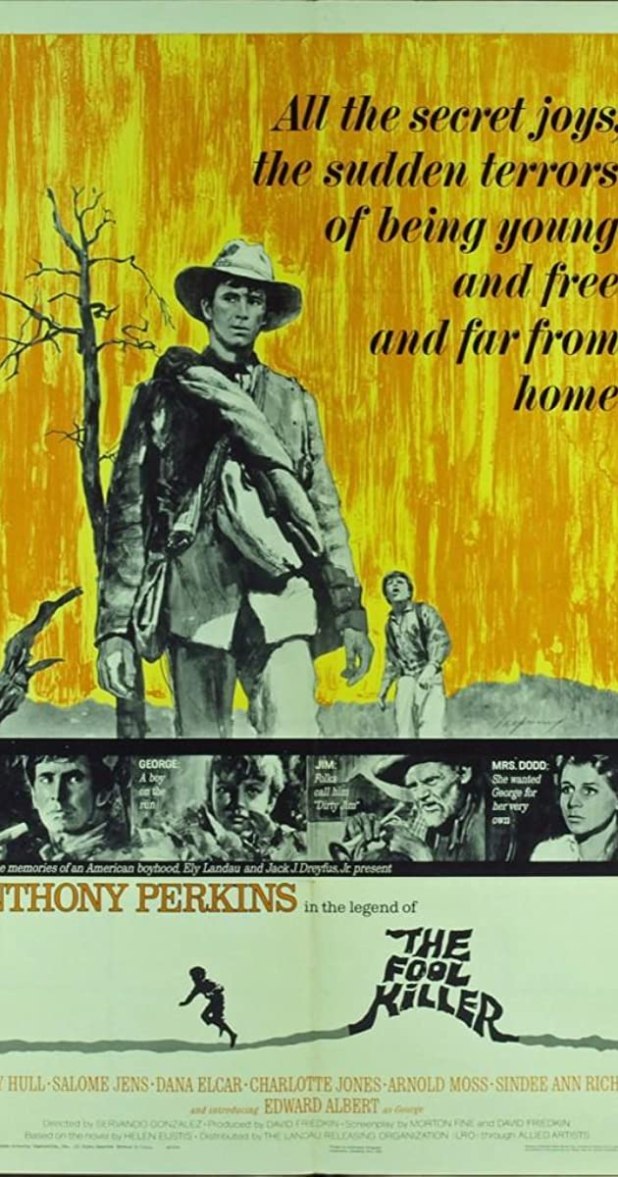
VIDEO ARCHIVES WEEK: The Foolkiller (1965)

VIDEO ARCHIVES NOTES: This movie was discussed on the January 31, 2023 episode of the Video Archives podcast and can be found on their site here.

Servando González directed one of the wildest films I’ve ever seen, El Escapulario, which somehow unites multiple genres and countries of cinema, as well as being folk horror by way of Mexican Catholicism.

Here, somehow, he’s in America and making an adaption of the novel of the same name by Helen Eustis. And, to quote Joe Dante, he’s making the most Night of the Hunter movie that is not Night of the Hunter.

Working from a script by Morton S. Fine (who wrote a lot of TV, as well as The Greek Tycoon) and David Friedkin (who worked with Fine on the show Frontier), González leads George Mellish (Edward Albert) through the desolate post-Civil War landscape of America. After being beat — again — by his foster parents, George has taken for the open dusty road, a place where he meets Dirty Jim (Henry Hull). Jim tells him of a gigantic axe-carrying killer called The Foolkiller who just may be Milo (Anthony Perkins), a man that he meets as he wanders Tennessee.

George thinks he deserves all the slaps and strikes his foster parents have given him. After all, they quote the Bible the whole time. But after hearing that his foolishness — playing with dandelions is nearly a capital offense — is so strong, he wonders if he’s destined to be a victim of the Foolkiller’s blade.

As our protagonist and Milo travel, we see that they both have scars from the figurative and literal wars they’ve fought. There’s also a tent revival which is awe-inspiring in its ferocity, as Reverend Spotts (Arnold Moss) snarls, spits and nearly explodes as he convinces George to make the altar call and drop to his knees before the Lord to stay out of the pits of Hell.

Mexican directors never got the chance to make American movies, but this is much closer to a regional film, shot in Knoxville, that somehow got Tony Perkins on board and gave González the opportunity to make a dark fairy tale of childhood, pain and belief.

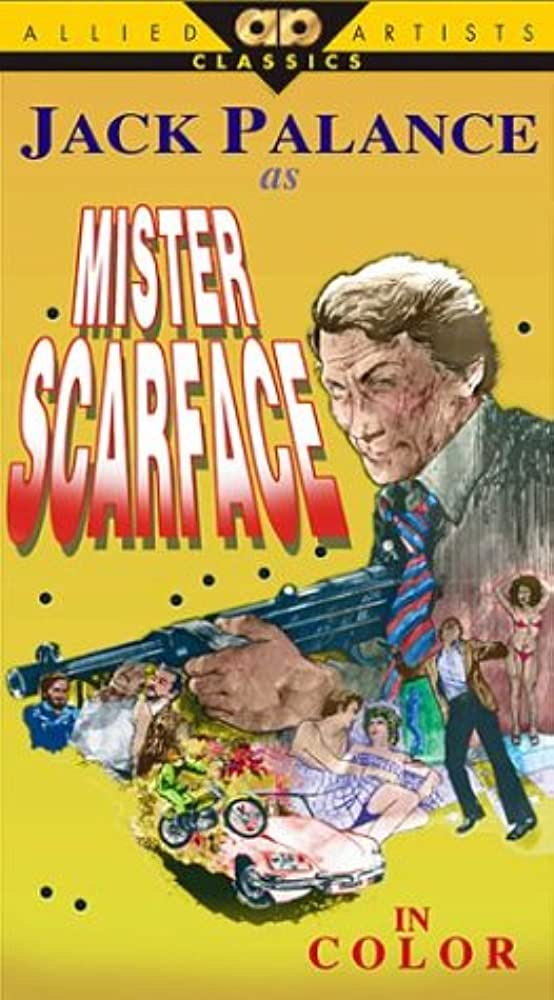
VIDEO ARCHIVES WEEK: Mr. Scarface (1976)

VIDEO ARCHIVES NOTES: This movie was discussed on the January 17, 2023 episode of the Video Archives podcast and can be found on their site here.

Also known as Rulers of the CityThe Big Boss and Blood and Bullets, this was directed by Fernando Di Leo. He started his career mainly being known for his writing, including A Fistful of DollarsFor a Few Dollars MoreMassacre TimeLive Like a Cop, Die Like a Man and so many more. He co-wrote it with Peter Berling, who was often in Kalus Kinski movies before writing a series of conspiracy novels about the Priory of Sion.

Tony (Henry Baer) works as a money collector for Cherico (Edmund Purdom) but he dreams of leaving his life of crime behind and settling on the beaches of Brazil. He decides to fast forward all the hard work of being a henchman by working with Rick (Al Cliver) and Napoli (Vittorio Caprioli) to rob the biggest boss of all, Scarface Manzari (Jack Palance).

It takes its time getting there, with Tony mostly cracking wise, cracking schools and, well, cracking smiles at the many ladies he sees during his days and nights of collecting blood money. He would have never even considered going after Scarface if he didn’t kill Cherico instead of repaying his debt. By the end, our hero has tracked his enemy — actually, his lifelong enemy, even if we don’t get that knowledge for some time — to a slaughterhouse where he wipes out the entire family.

Added bonus: Gisela Hahn (Devil HunterWhite Pop JesusDisco Fieber) is in the cast. And man, Jack Palance is so macho that he even makes a cigarette holder look manly. Like, the same kind of long effete cigarette holder that, let’s say, Cruella de Vil would use.

VIDEO ARCHIVES WEEK: Sonny and Jed (1972)

VIDEO ARCHIVES NOTES: This movie was discussed on the January 17, 2023 and January 24, 2023 episodes of the Video Archives podcast and can be found on their site here.

Quentin Tarantino has referred to Sergio Corbucci as the second-best director of Italian westerns, but he didn’t choose to remake any of Leone’s movies, you know?

Corbucci was joined by a veritable posse of writers for this movie, including Sabatino Ciuffini (Super FuzzThe Fourth Victim), Mario Amendola (Cannon’s AladdinThe Great Silence), Adriano Bolzoni (Your Vice Is a Locked Room and Only I Have the KeySilver Saddle), José María Forqué and Ángel Pageo.

Jed (Thomas Milian) robs from the rich, gives to the poor and treats the woman who loves him, Sonny (Susan George), like dirt. She dreams of him marrying her, which he does, but still abuses her. Anyways, he’s on the run from Sheriff Franciscus (Telly Savalas) when he isn’t trying to woo Linda (Rosanna Yanni, Frankenstein’s Bloody Terror) the wife of land baron Don Garcia (Eduardo Fajardo), who has what he really wants: more money.

Look, I get that Rosanna Yanni is buxom and gorgeous, but the idea that Susan George is seen as an ugly duckling quite frankly makes this movie into science fiction.

Actually, it’s difficult to like Jed, because he started his relationship by assaulting Sonny and now he demands that she always stays three feet behind him and even kneel in subjugation to him. She falls in love and cries every time he treats her horribly and you just want to scream at the screen. And this is the hero!

How often can you hear someone call a woman lower than a dog before you start to wish that Telly Savalas blows his brains out?

I mean, this is the movie that George made after Straw Dogs, Did every casting director say, “This movie has a ton of rape in it. Call Susan George?”

That said, the Morricone soundtrack is great and I’m always fascinated by K-Tel Records starting a studio and distributing movies. They started by selling greatest hits albums and products like the Record Selector, the Veg-O-Matic and the Miracle Brush. In 1970, they started bringing foreign films to North America, including Mr. SuperinvisibleShowdown In Little Tokyo and A Reason to Live, a Reason to Die. K-Tel still exists today, but instead of TV sold products, they make their money by outright owning songs like “What I Like About You” by The Romantics, “Tutti Frutti” by Little Richard and “Surfin’ Bird” by The Trashmen.

VIDEO ARCHIVES WEEK: Haunted Honeymoon (1986)

VIDEO ARCHIVES NOTES: This movie was discussed on the January 10, 2023 episode of the Video Archives podcast and can be found on their site here.

Haunted Honeymoon was directed and written by star Gene Wilder, who joins his wife Gilda Radner to play Larry Abbot and Vickie Pearle, two radio actors who decide to get married in the castle that was Larry’s childhood home, one filled with the strange members of his family such as aunt Kate (Dom DeLuise), his uncles Dr. Paul (Paul Smith) and Francis (Peter Vaughan) and his cousins Charles (Sir Jonathan Pryce), Nora (Julann Griffin), Susan (Jo Ross) and the cross-dressing Francis Jr. (Roger Ashton-Griffiths).

Dr. Paul has the idea of solving Larry’s on-air panic attacks with shock therapy that will knock them out by basically frightening him to death. He clues everyone — including Susan’s husband Montego the Magnificent (Jim Carter), the butler Pfister (Bryan Pringle), Pfister’s wife Rachel (Ann Way) and even Larry’s ex-girlfriend Sylvia (Eve Ferett) who is now dating Charles.

Then there’s a werewolf!

Wilder wrote this movie the whole way back on the set of Silver Streak and was inspired by The Old Dark HouseThe Cat and the Canary, The Black Cat and the Inner Sanctum radio show. Shot in London at Elstree Studios, Wilder saw this as an attempt to “make a 1930s movie for 1986.”

It went over about as well as you’d think. As Radner struggled with the ovarian cancer that would take her life — she and Wilder would only be married for four years before her sad early end — she wrote “On July 26, Haunted Honeymoon opened nationwide. It was a bomb. One month of publicity and the movie was only in the theaters for a week — a box-office disaster.”

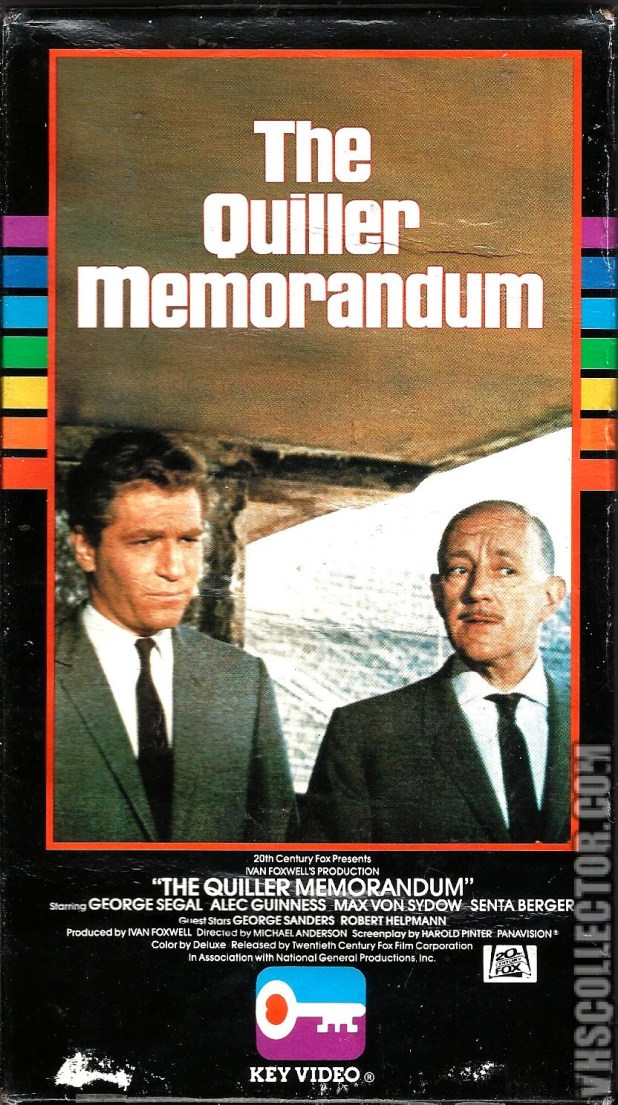
VIDEO ARCHIVES WEEK: The Quiller Memorandum (1966)

VIDEO ARCHIVES NOTES: This movie was discussed on the May 9, 2023 episode of the Video Archives podcast and can be found on their site here.

How we see actors based on our own experience with them is strange.

George Segal is, to me, one of the stars of the sitcom Just Shoot Me!

That’s who I see him as. I realize the tremendous blind spot — which I have been filling — I have by skipping so much of his career.

But wow, it’s a leap to experience him playing a secret agent.

Based on the novel The Berlin Memorandum by Elleston Trevor, this film was directed by Michael Anderson (OrcaDoc Savage: The Man of BronzeLogan’s Run) and written by Harold Pinter.

Two agents have already died as they investigate the neo-Nazi group Phoenix — led by Oktober (Max Von Sydow) — in Berlin. Quiller (Segal) is brought in by his handler Pol (Alec Guinness).

It may have a John Barry score, but this isn’t a Eurospy movie. Yes, it’s a spy movie, but so much of it is spent in the coded conversation about cigarettes that feel more like secretive men finding one another in the park than anything resembling James Bond.

What Eurospy element is in this movie? Senta Berger, Quiller’s perhaps enemy and definitely love interest. She was also in Bang! Bang! You’re Dead!, The Poppy Is Also a Flower and The Ambushers.

As for George Sanders being in this film, his role was so small that his co-stars claimed that they never even saw him on the set.

The major difference between this and nearly every other spy movie of its time is that in those movies, you wanted to be an agent. Watching this, it just seems exhausting. In no way do I want to have to endure the life of Quiller.

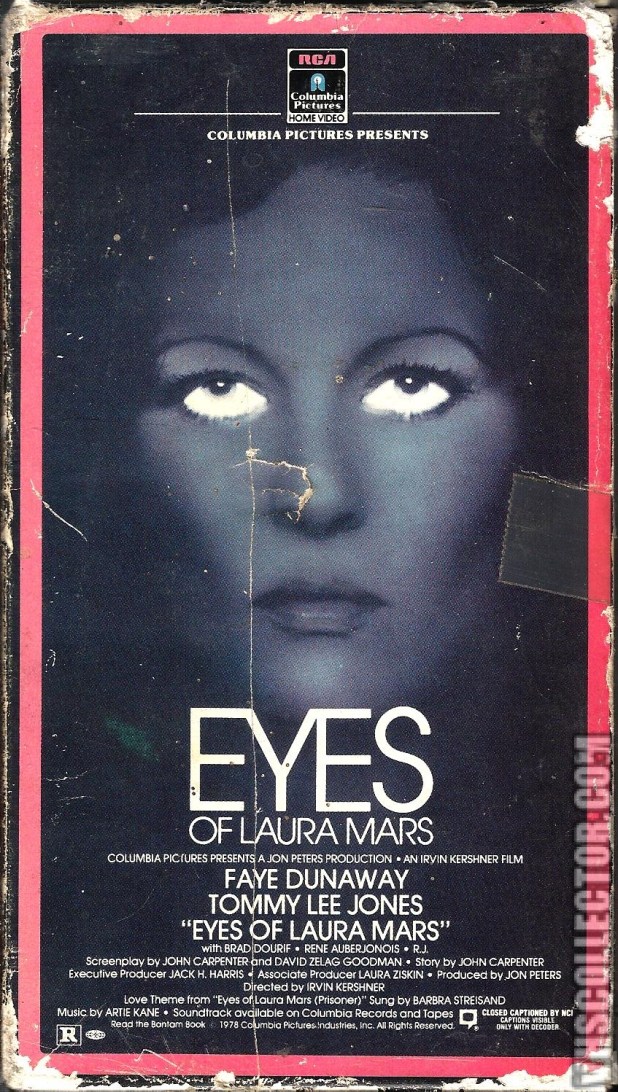
VIDEO ARCHIVES WEEK: The Eyes of Laura Mars (1978)

VIDEO ARCHIVES NOTES: This movie was discussed on the October 11, 2022 episode of the Video Archives podcast and can be found on their site here.

Never say never, but I think this will be the only movie we ever feature on this site that has a love theme by Barbara Streisand in it. I could be wrong, but I just get the feeling that there aren’t going to be many more crossovers quite like this one.

Eyes of Laura Mars was adapted from a spec script titled Eyes, written by John Carpenter; making this Carpenter’s first major studio film. Producer Jon Peters, the beau of Barbra Streisand in this era, bought the screenplay as a vehicle for her, but Babs felt that it was too “kinky” and passed. However, she felt that “Prisoner,” the song that she lent to the film, would be a great single. She wasn’t wrong — it peaked at #21 on the Billboard Hot 100.

Instead of Ms. Streisand, we get Faye Dunaway, who had just won an Oscar for Network and had not yet become Mommie Dearest. She plays Laura Mars, a fashion photographer whose Chris Von Wangenheim by way of Helmut Newton-style photos (Newton and Rebecca Blake supplied the actual photos for the film) glamorize violence. As she’s due to release the first coffee table collection of her work, she begins seeing the murders of her friends and co-workers through the eyes of the killer. I love how until now, she’s only been detached and seen things through the eye of a camera.

John Neville (Tommy Lee Jones) is the cop in charge. After she rushes to a murder scene exclaiming that she saw who did it blocks away, the cops keep her in custody, showing her numerous unpublished crime scene photos that match her new fashion photos perfectly. Throughout the film, Larua and Neville fall in love as her visions — and the murders — increase in intensity and violence.

This is a great example of an American giallo filled with the twists, turns and red herrings of the genre. It’s done with a much higher budget and way better locations than you’re used to. And it gets closer to the psychosexual elements, but as great a director as Irvin Kershner is, he isn’t a maniac like Argento and his ilk. It’s also packed with talent, like Raul Julia, Battle Beyond the Stars Darlanne Fluegel, Rene Auberjonois and Chucky himself, Brad Dourif.

The Eyes of Laura Mars would be parodied as The Eyes of Lurid Mess in MAD Magazine #206, with art by Angelo Torres. As was often the case with R rated movies when I was six years old, I first experienced this movie through the black and white ink lens of MAD.

When seen through the lens of the giallo form, The Eyes of Laura Mars reminds me of post-Deep Red era Argento — taking the basics of the detective form and grafting on one supernatural element. Here, it’s the fact that Laura Mars (Faye Dunaway), a high glam fashion photographer, can see the violent deaths of people as she takes photos. The images that they inspire lead her to great success and controversy, creating an intriguing narrative of the violent and at times bloody battle of inspiration for artists. I’m also struck by how detached Mars is from the art and fashion world in which she lives, until she’s in the midst of shooting. Then, she finally opens not just herself up, but her posture. She spreads low to the ground, sexualizing herself when she’s often covered by clothing throughout the film that hides her body from the world.

Going from an independent picture produced by Jack H. Harris to big studio affair by Jon Peters (who dreamed of then-girlfriend Barbara Streisand in the lead), The Eyes of Laura Mars struggled with a new writer being brought in to adjust John Carpenter’s script (the auteur said “The original script was very good, I thought. But it got shat upon.”) and the production lasted 7 long months, including a 4 day shoot in the middle of New York City to capture a major fashion shoot with models, wrecked cars and fire everywhere.

It has assured direction by Irvin Kershner, which led to him being hired for The Empire Strikes Back. After watching so much giallo, I’ve noticed that the America versions of the form are very much like Laura Mars herself: detached, cold and not all that interested in the murder as art that native Italian creators like the aforementioned Argento immerse themselves in. This film is made in hues of black and white when their world is neon and always the most red possible.

Upon a new view of this film, I was also struck by just how great the cast is. Tommy Lee Jones is perfectly cast, with his final speech near-perfect. In truth, he wrote that ending monologue, but credited it to Tommy Lee Jones actually wrote his own monologue, crediting it to Kershner, unbeknownst to the Writers’ Guild. Brad Dourif is routinely amazing in movies and his small role here is still a stand-out, as is the acting of Rene Auberjonois and Raul Julia.

This movie also features one of my favorite settings: New York City at the end of the 1970’s, which I feel is the closest place to Hell on Earth that has ever existed. As a child, I watched WOR Channel 9 news from the safety of being a few hundred miles away in Pittsburgh and wondered who would ever want to live in this city. You can almost smell the garbage and desperation in the air here, which is in sharp contrast to the cold, metallic and not so real world of fashion and art.
VIDEO ARCHIVES WEEK: Little Darlings (1980)

VIDEO ARCHIVES NOTES: This movie was discussed on the January 3, 2023 episode of the Video Archives podcast and can be found on their site here.

One of the most popular posts on the site is about Ten movies that were never even released on DVD.

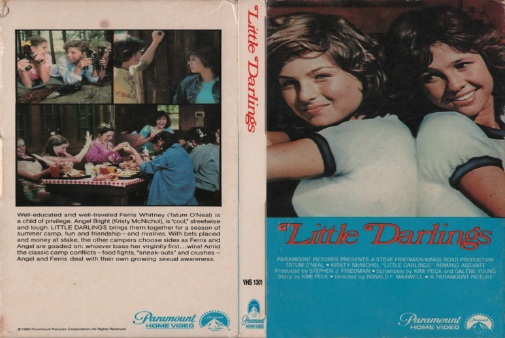
Little Darlings is one of those movies, one that has completely skipped disc home media. It’s been on TV hundreds of times and the original VHS release had all of the songs. That said, the second VHS release replaces John Lennon’s “Oh My Love,” Supertramp’s “School” and The Bellamy Brothers’ “Let Your Love Flow” with cover versions. Little Darlings sometimes shows up on iTunes and Amazon, but then goes down just as fast. Interestingly, Lionsgate announced that they would be releasing this on DVD and then canceled it.

Directed by Ronald F. Maxwell — who went from this movie, Kidco and The Parent Trap II to Gettysburg — and written by Kimi Peck and Dalene Young, this movie was an HBO favorite in my preteen days. It felt wrong, like I was too young to learn that girls wanted sex just as much as the boys.

The main girls in question are tough as nails poor girl Angel Bright (Kristy McNichol) — guess who my favorite is, of course) and romantic rich girl Ferris Whitney (Tatum O’Neal). Angel has her eyes on Randy (Matt Dillon), while Ferris wants older man Gary (Armand Assante). They make a bet to see who loses their virginity first over the summer.

As you can imagine from an 80s teen comedy, the girls have a lot to learn. Mostly, they learn from their differences, as well as what love and sex is all about. I always felt like this movie was more real, if you will, than the other teen sex comedies I was sneaking in at the time.

If you saw this on broadcast television, you saw a heavily edited version. All the sex is taken out and the bet is over which girl can make a guy fall in love with her. This was all done in editing and the director had nothing to do with it.

There was also a TV movie — written by Peck and Young, but directed by Joel Zwick — that had Pamela Adlon from Grease 2 as Angel and Tammy Lauren (Wishmaster) as Ferris.

VIDEO ARCHIVES WEEK: Busting (1974)

VIDEO ARCHIVES NOTES: This movie was discussed on the January 3, 2023 episode of the Video Archives podcast and can be found on their site here.

Sometimes, you just don’t get why people like some movies.

And that’s OK.

Video Archives featured two movies directed by Peter Hyams this reason, The Relic and Busting.

I just don’t see the love they’ve bestowed on Hyams. Maybe I’m not the right age, maybe I haven’t seen the right films, but none of it works for me.

And again, that’s fine.

Maybe you’ll find something to like in this movie.

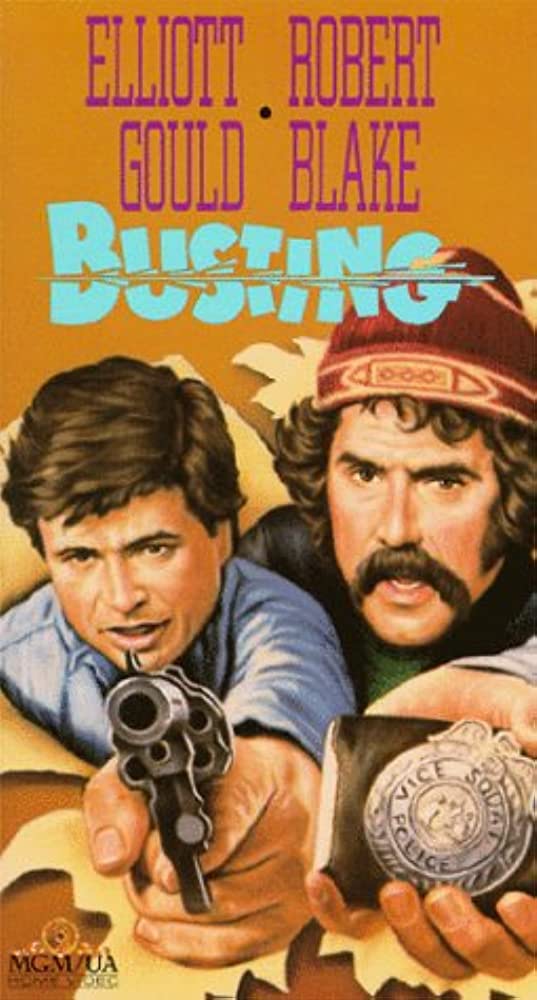
Detectives Michael Keneely (Elliott Gould) and Patrick Farrell (Robert Blake) are cops that excel on the LAPD vice squad. Yet for all the arrests they bring in, they can’t get to the real person behind all the law breaking, Carl Rizzo (Allen Garfield). They still keep after him, but he has his men beat them into oblivion. Yet they keep coming back, even chasing their enemy into the hospital — and out — and finally have a chase between ambulances.

Even when this came out in 1974, the gay bar scenes were called out for homophobic they are. You can imagine how poorly they’ve aged since that time.

The one good thing I can say is that the massage parlor girl that they try to bust was Erin O’Reilly, who played the babysitter who, for some reason, decides to allow The Baby to nurse her. Actually, I really liked Gould and Blake in this. They work well as two cops who realize that life would be simpler if they just didn’t care or even took advantage of their knowledge of the law. But they’re too good to make that change.

I’m not giving up. I’m going to keep on watching movies by Hyams — I love Sudden Death, but I am from Pittsburgh — and hopefully one day I’ll understand.

VIDEO ARCHIVES WEEK: Cry for Me Billy (1972)

VIDEO ARCHIVES NOTES: This movie was discussed on the December 20, 2022 and December 27, 2022 episodes of the Video Archives podcast and can be found on their site here.

It’s hard to be a gunslinger who gets tired of violence.

Billy (Cliff Potts) is that person.

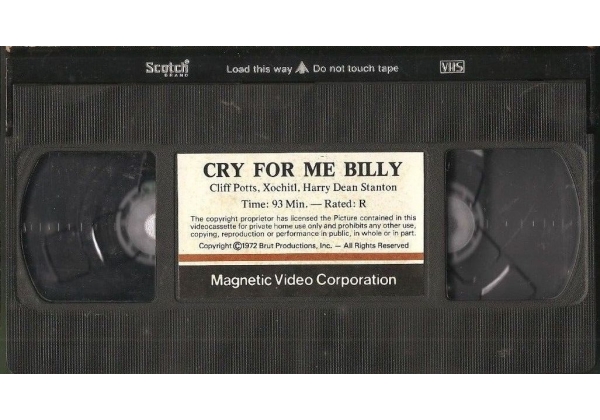
After meeting a group of Apache prisoners being held by a racist U.S. Army sergeant (Don Wilbanks) and his troops, Billy tries to get far away. Then he learns that all of the men were killed and the only survivor, Little Sparrow (Maria Potts), is saved as a sex slave. He rescues her and they run across the plains, riding on one horse until Billy domesticates a wild one for her. They still meet horrible people, like the owner of a cabin who tries to kill them and then tries to have sex with Flower.

This being a 70s Western, you know that the army catches up to our protagonists. She gets assaulted, he gets beat up and restrained and when she unties him later, she kills herself. That sends him on a path of revenge and then out of town, only to be shot by that same cabin owner from earlier in the movie.

Director William A. Graham made some quality TV movies like Beyond the Bermuda Triangle and Death of a Cheerleader. The script was by David Markson.

It looks gorgeous, Harry Dean Stanton is awesome in his short role and man is it bleak. 1972 Westerns were all about just pain for everyone.