EDITOR’S NOTE: This originally ran in Drive-In Asylum #23. Buy it now.
One of my obsessions is the memory of not knowing. Now, so many of my movie-watching choices are planned in advance. Yet as I grew up in the 70s, we had the opportunity to be surprised by movies on a daily basis. Sure, you could go through the latest issue of TV Guide and highlight every science fiction and horror movie, planning your viewing habits. Yet just as often, the movies listed would not air and you’d have no idea what was coming next.
It wasn’t until I was much older that I realized that horror hosts were playing movies that came in packages. There’s a reason why all those old Universal Monsters got big again at the dawn of the UHF era; those films were in Screen Gems Shock And Son of Shock syndicated packages.
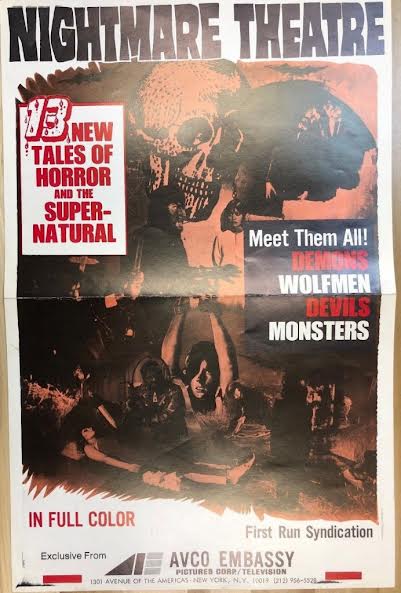
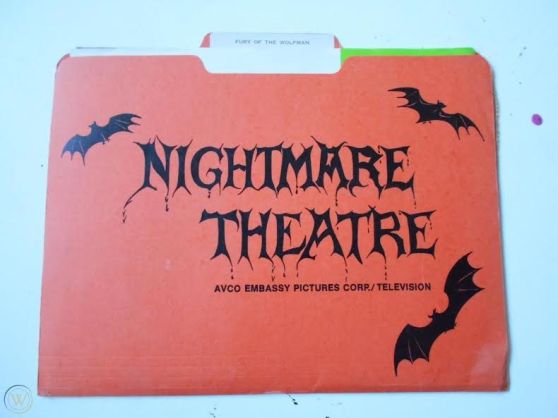
Perhaps the most interesting syndicated package is AVCO Embassy’s Nightmare Theater. Years before they got into the John Carpenter business, this collection of films may have made money for its distributor, but it’s rather astounding that these movies played TV before theaters, although there are some theories* that some played Spanish-speaking grindhouses on the West Coast before being sold to low power UHF stations and horror hosts played them to what had to be somewhat baffled kids.
Nearly every movie that is contained in this collection is delightfully off in the very best of ways. And I have the sneaking suspicion that not much was cut from these films, as some listings – particularly KCOP-13 in Los Angeles — went out of their way to inform younger viewers that these films had some mature content.
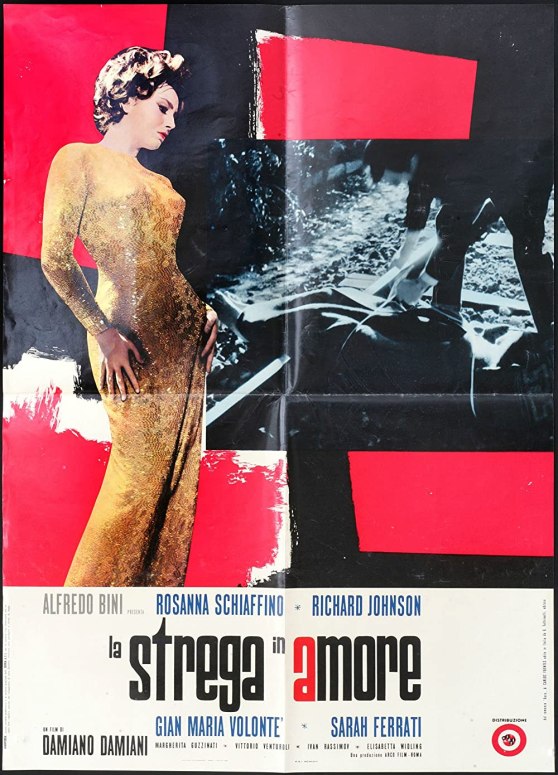
Also known as The Witch In Love and Strange Obsession, this movie was based on Carlos Fuentes’ novel Aura. It has two standouts of Italian genre cinema, Richard Johnson and Ivan Rassimov, in the cast and concerns a historian being asked to translate some ancient erotic texts within a haunted library. It had a release in the U.S. by G.G. Productions in August of 1969.
Rarely mentioned amongst the normally cited Bava classics, yet it’s one of my favorites, a film in which Bava even metatexturally references his past work, as the cops are thrown off the case when a scream is explained as a TV playing Black Sunday. Somehow combining elements of the giallo, a nascent slasher, a fashion film and even a mannequin movie, it deserves to be talked about way more often by way more people.
Marta (1971, directed by José Antonio Nieves Conde)
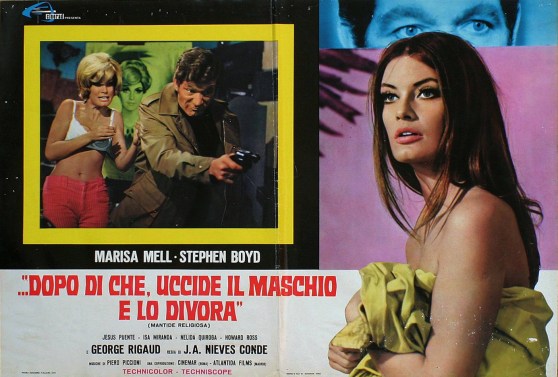
I can’t even imagine how exciting it would have been to catch this film and not be ready for it. Marisa Mell — who was so possessed by the mystical and sexual desire she felt for her co-star and lover Stephen Boyd that they had a real-life exorcism — plays a woman who enters a home dominated by a potentially dead mother and a definitely murdered last wife who looks just like her. Also known as …After That, It Kills the Male and Devours It, which may be the best title ever.
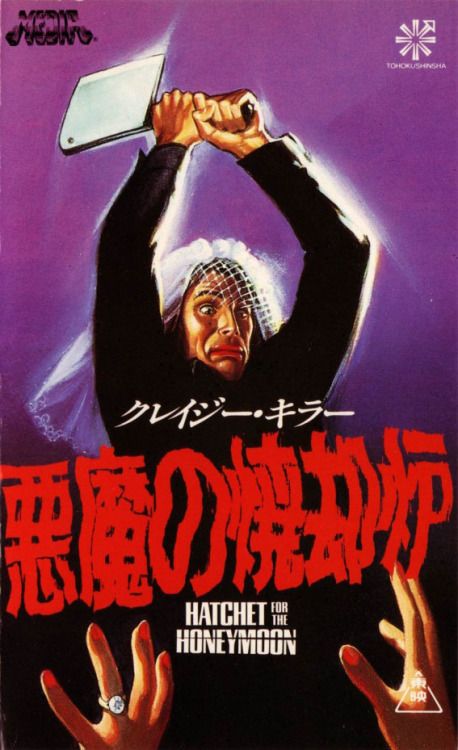
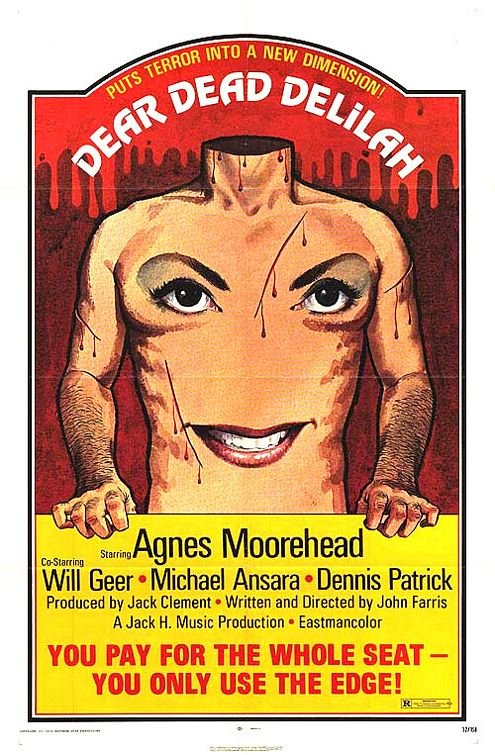
The only domestic film in the package, this was produced by AVCO and concerns a murderer running loose within a mansion, lopping off the heads of those seeking the half-million dollars worth of money hidden within the house. And oh yeah — Agnes Moorehead and a shockingly gory shotgun murder.
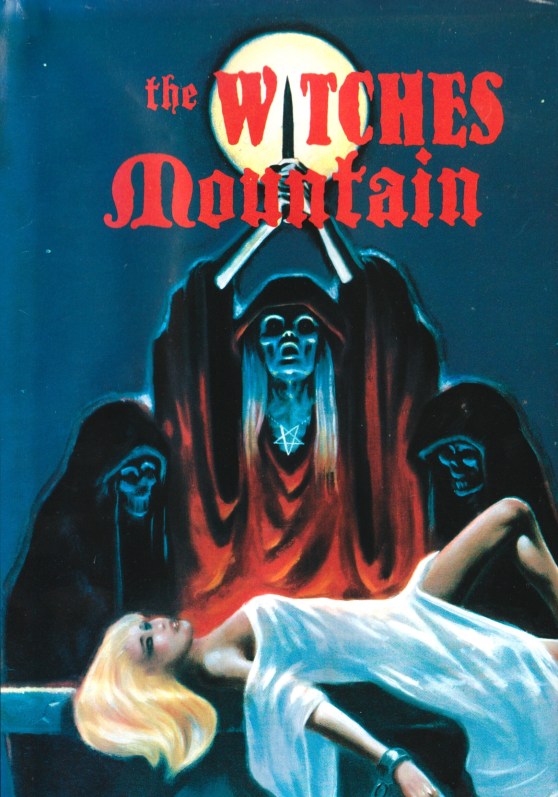
This movie opens with Cathy’s Curse level insanity: our lead walks around her house and finds a knife stuck in a wig, a voodoo doll and finally, a bloody cat in her bed. That’s when a little girl appears out of nowhere to inform her that she took care of the stupid cat before running away. Carla follows her to the garage, throws gasoline all over the place and sets everything — including the little girl — on fire. Somehow, the movie tries to follow that, as that woman’s boyfriend dumps her and heads off to a castle!
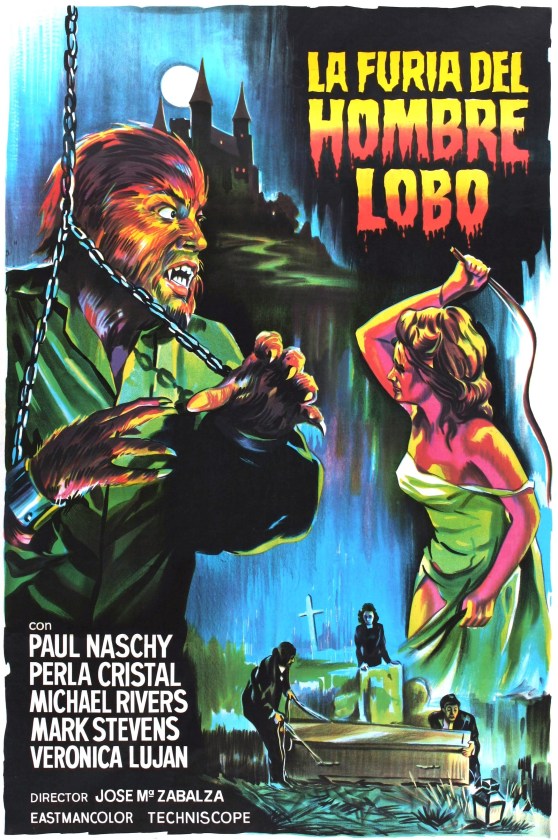
Sure, it’s nice that you can call up any movie at any time via the internet, but just imagine being a pre-teen at two in the morning in 1977 and being confronted by Paul Naschy becoming El Hombre Lobo after being bit by a yeti, killing himself, being revived by the evil Dr. Ilona Ellmann who also brings back our hero’s ex-wife from the dead and turns her into a werewolf.
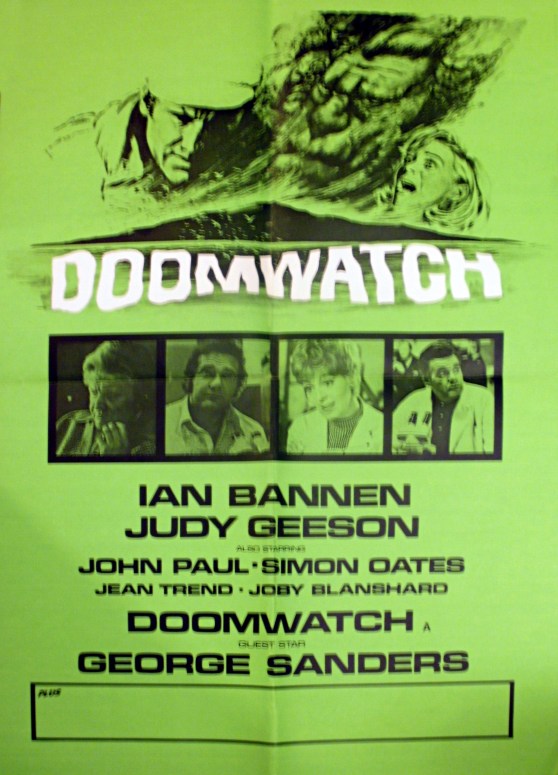
This Tigon offering was a remake of a recently ended TV series that was created by several Dr. Who alums. A chemical spill leads to people eating contaminated fish and treating any outsider with the type of British contempt that gets city folk trapped inside burning effigies.
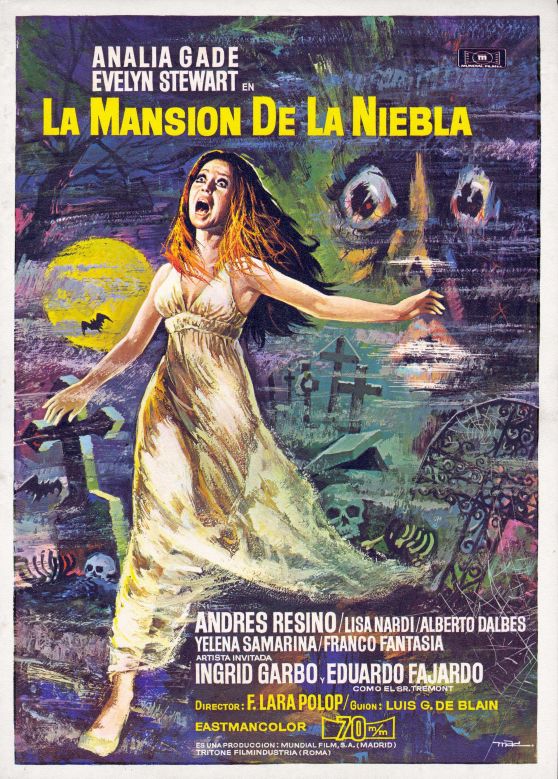
Originally released as La Mansion de la Niebla (The Mansion in the Fog), that title makes plenty of sense, as this is about a group of people all drawn to, well, a foggy mansion. It’s a pretty interesting mix of the gothic Eurohorror of the 60s with 70s giallo.
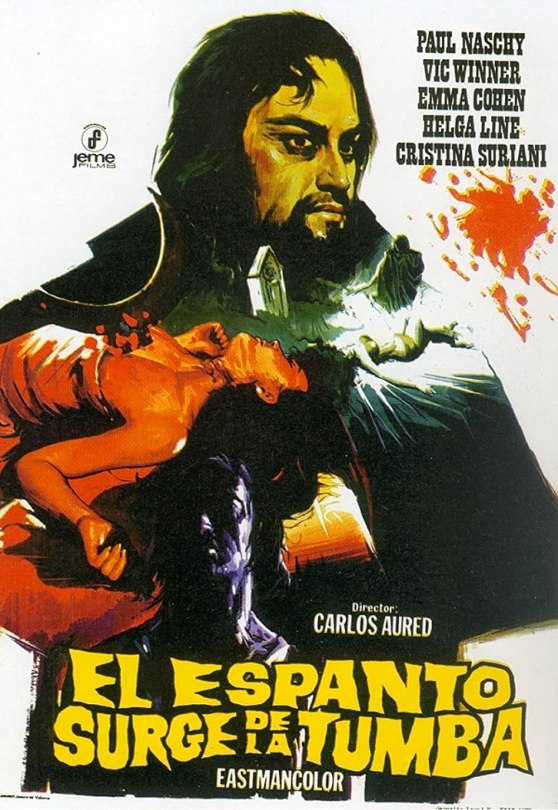
Sometimes, I get lost in thought and wonder, “Did people seek out Naschy films in the 70s?” I’d like to think they did and were excited that they could potentially see two of them on their local monster shows. This one introduces Alaric de Marnac, a beheaded warlock who returns to life centuries later to get revenge (and star in a sequel, Panic Beats).
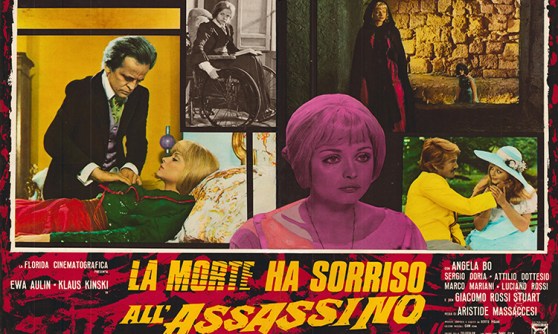
Somehow, this aired uncut on Pittsburgh’s beloved Chiller Theater (July 7, 1979 and December 26, 1981), giving everyone in the City of Bridges the opportunity to watch Klaus Kinski push a needle into a girl’s eyeball. Throw in some Ewa Aulin and a trippy vibe and the fact that D’Amato was so happy with the film — his hopes were dashed, sending him on a lifelong quest to just make money instead of art — that he used his real name in the credits: Aristide Massaccesi.
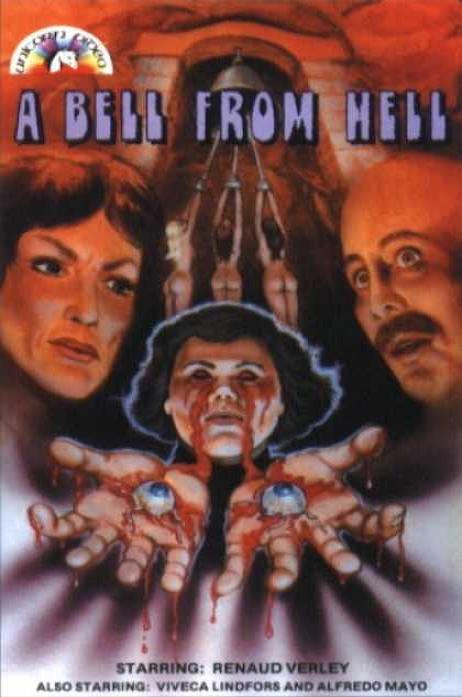
Director Guerín fell — or jumped — from the tower housing the titular bell on the last day of shooting and died. The film was completed by Juan Antonio Bardem. One assumes that Bardem did the best job he could to combine all the many parts that Guerín into some whole. What remains is a movie that is at times brutal and alternatively feels like a dream.Viveca Lindfors name was used often in the ads for this movie, as she was at one time pushed as the new Garbo.
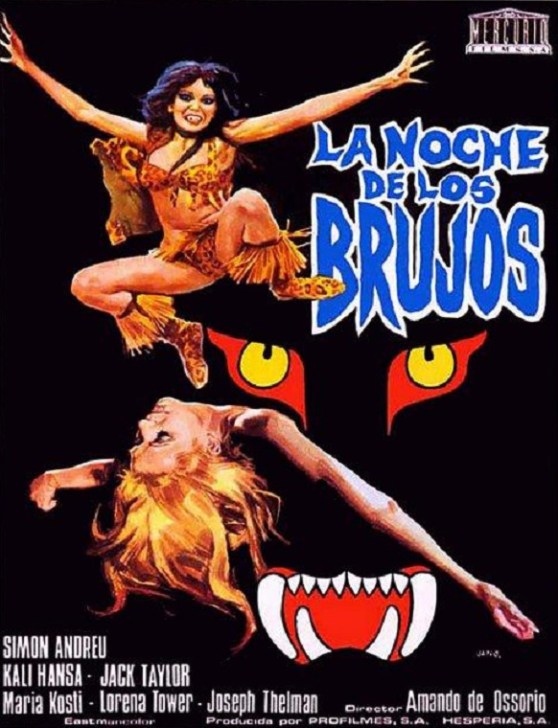
At some point in the mid 70s, some kid in his pajamas had to confront the slow-motion magic of de Ossorio as the director let flow leopard bikini-wearing women with fangs running wild through day for night jungle drinking the blood of their victims when they aren’t being whipped until their clothes fall off.
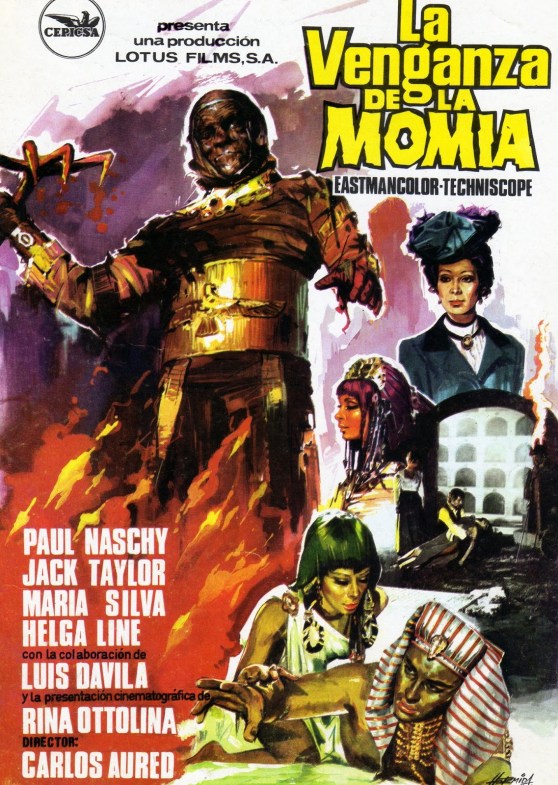
Paul Naschy plays the mummy and the priest who brings him back to life in Victorian London, teaming with Helga Liné to kidnap, murder and harvest virgin blood. Look — if Naschy wasn’t around for Universal and couldn’t get in a Hammer movie, he was just going to make his own.
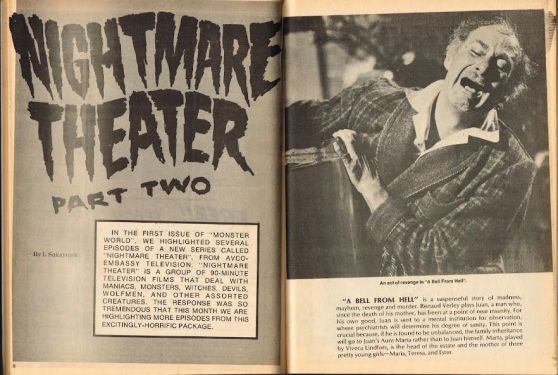
There was even a pressbook for this package and three issues of Monster World (March, May and July of 1975) featured extensive coverage of the movies.
My young years were spent watching hours upon hours of movies, not unlike today. The difference then was I had no responsibility outside of making sure I was on time for Superhost on WUAB-43 then ready for Chilly Billy later that night, staying up watching movies until my eyes shut, then waking up for an Abbott and Costello movie. The syndicated movies would give way by the late 80s, due to infomercials actually paying for air time. And by then, just like free TV would ruin movies, video rental stores were decried by Joe Bob because drive-ins were closing. And just a few years later, Blockbuster pushed out the mom and pop stores, then they were gone too.
Today’s high tech world is great. Don’t get me wrong. But the Nightmare Theater package is an amazing moment in genre history, a time when many got to see their first lurid glimpses at Eurohorror.
Information and images in this article were sourced from Mike Mariano, a poster to The Latarnia Forums. The information and images from Monster World come from Zombo’s Closet (www.zomboscloset.com).
While he was making Piranha II: The Spawning, James Cameron was sick and had one of those weird dreams — this one was about a metal torso holding knives dragging itself from an explosion — and was inspired to make a horror movie. His agent didn’t like that genre. Cameron fired that agent.
Gale Anne Hurd, who had worked at New World Pictures as Roger Corman’s assistant, bought the rights to produce the movie for one dollar with the promise that she would produce it only if Cameron was to direct it.
The money came from John Daly, chairman and president of Hemdale Film Corporation, and the presentation had Lance Henriksen in a leather jacket with wounds on his face kicking open the door for Cameron.
As for where the idea really came from, well…
Writer Harlan Ellison “loved the movie, was just blown away by it,” but that was because it was a cocktail of two of his stories, “Soldier” and “Demon With a Glass Hand.” Orion Pictures, who put out the movie, settled with Ellison for an undisclosed amount of money and an acknowledgment credit in later prints of the film. Cameron was against Orion’s decision, yet he was told that if he did not agree with the settlement, he would have to pay any damages if Orion lost the lawsuit.
Regardless of where the movie came from, it was an instant hit.
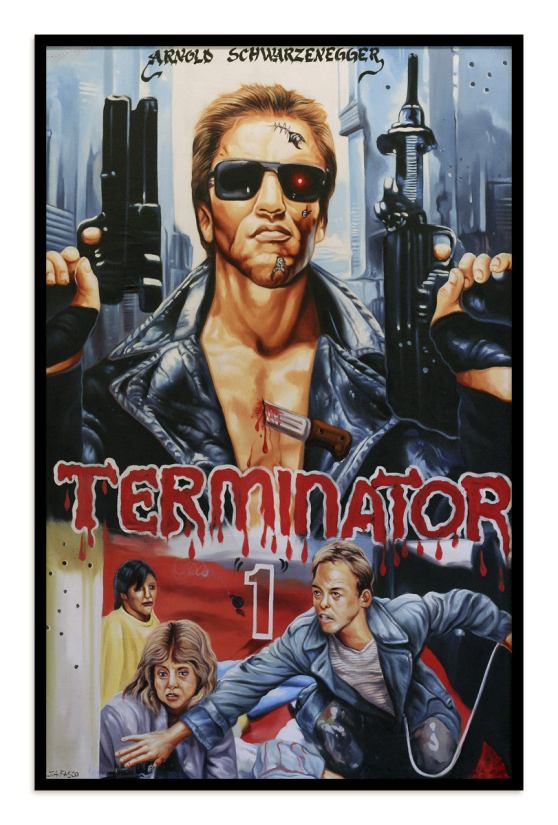
The Terminator (1984): This movie made $78.3 million against a modest $6.4 million budget. It also made both director Cameron and star Schwarzenegger as entertainment superstars.
The Terminator (Schwarzenegger) has come to our time hunting a woman named Sarah Connor (Linda Hamilton), while Kyle Reese (Michael Biehn) has come back as well to ensure that she gives birth to man’s last hope, her son John.
That sounds like such a simple story but this is the very definition of well-told, as Cameron obsessed over the movie, delivering what could be one of the most perfect science fiction movies ever made. The scene while Arnold’s face is torn away to reveal the metal skull underneath is sheer movie magic thanks to the skill of Stan Winston and the mind of Cameron, whose sketch after his dream was used to bring the T-800 to cinematic existence.
Cameron and Herd’s experience working for Corman came in handy, as the final scene of Sarah driving away was shot without a permit. They told a cop that tried to ticket them that they were making a student film for UCLA.
T2: Judgment Day (1991): How do you think anyone making action movies felt after seeing this movie? Truly, nearly everything had been done by the end of it, a film that not only had tons of incredible stuntwork and special effects, but also a true heart behind it.
I often tell the story of my grandfather, who I saw get caught inside a burning car and not even flinch when all of the skin on his back was burned, who worked day and night inside a blast furnace, who rarely got emotional breaking down into tears at the end of this movie, making all of us leave the room so he could cry all by himself when Arnold’s T-800 melted itself down.
At more than one hundred million dollars, this was the most expensive movie ever made at the time, but it brought back five times that investment, owning the summer of 1991.
That budget was big before the movie ever started.
Back when James Cameron just wanted to get The Terminator made, he’d surrendered 50% of his rights to the film to the Hemdale Film Corporation. Things had not gone well, as Hemdale co-founder John Daly had attempted to change the ending of that movie and Cameron almost physically assaulted him. Also by 1990, Cameron, Arnold Schwarzenegger, Gale-Anne Hurd and special-effects artist Stan Winston were all suing Hemdale for money they never saw for a movie that made nearly ten times its budget.
Complicating matters further was the fact that Cameron and Hurd had gotten divorced, with him selling the other half of the movie that he owned to her for $1 following their split.
Hemdale was experiencing financial difficulties and would eventually be forced to sell the rights to The Terminator, so Arnold worked with Carolco Pictures to purchase the rights. One of Carolco’s owners, Mario Kassar, said that the deal was the most he’d ever conducted, as Daly wanted $10 million for the rights, a number he believed was made up just to scare off anyone who wanted to buy it. Hurd was much easier to deal with, only requiring $5 million, but before filming had even begun, they were already in double digits of millions of dollars spent.
Kassar explained to Cameron that to make back this investment, the film would proceed with or without him; Cameron took $6million to be involved and write the script. Caroloco nearly followed the Cannon model of pre-selling this movie as well as using tax breaks to make it happen.
After writing the script, Arnold didn’t understand why the T-800 had become good or why he’d stop killing humans. But he trusted Cameron and just had one request: “Just make me cool.”
As for the new enemy, the T-1000, it would be a mix of digital art and the physicality of Robert Patrick, who was a sleek predator compared to the bull in a China shop that was Arnold. And of course, Linda Hamilton would have to return as Sarah. She put herself through what she described as hell physically preparing for the role, as her character had been off the grid preparing for the end of the world. She summed up the movie’s emotional hook so well: “The T-800 is a better human than I am, and I’m a better Terminator than he is.”
In fact, that’s the most important lesson in this. If a machine can learn to value life, so can human beings. I’ve often thought of the mantra that film imparts at the end, “no fate but what we make” and its rejection of predestination for the truth of free will. That’s a big concept to include within a summer blockbuster, but hey, there it is.
Sadly, Caroloco would not survive the success of this movie. They finished 1991 with a net loss of $265.1 million, which was caused by the financial problems of its other films and subsidiaries. Four years later, they would file for bankruptcy and sell all of the assets, including this film, to Canal Plus for $58 million dollars.
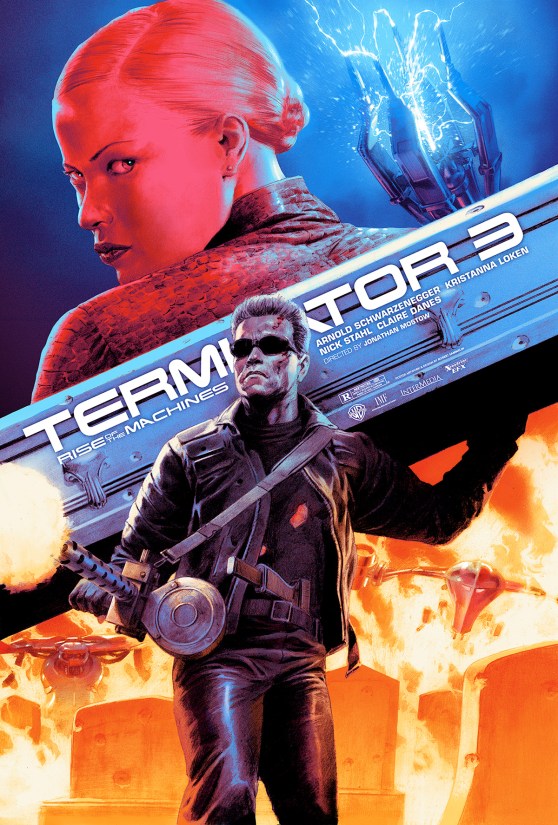
Terminator 3: Rise of the Machines (2003): James Cameron was interested in directing this movie, but ultimately didn’t work on it. Sadly, he had some ideas while making Terminator 2 3-D: Battle Across Time, seeing that theme park experience as the next step toward a third fim.
He no longer had any financia stake, as Andrew G. Vajna and Mario Kassar, who had produced Terminator 2: Judgment Day through Carolco Pictures, obtained the rights for the franchise as a result of Carolco’s liquidation auction and negotiations with producer Gale Ann Hurd. Yes, somehow they made money on the bankuptcy of Kassar’s company.
Director Jonathan Mostow made Breakdown and U-571 before this. Talk about an unenviable position, following James Cameron on a franchise that was universally loved.
Writers John Brancato and Michael Ferris met while at college, where both were editors of The Harvard Lampoon. Until their professional relationsip ended in 2015, they made plenty of movies, from small budget films like The Unborn, Severed Ties and Mindwarp (all made with the fake name Henry Dominic) to Femme Fatale, The Net, The Game and, well, Catwoman.
Arnold Schwarzenegger was conflicted about doing the movie without Cameron. However, the director told him, “If they can come up with a good script and they pay you a lot of money, don’t think twice.” The script part is questionable, but Arnold made $30 million off this movie.
Nick Stahl replaced Edward Furlong as John Connor, Sarah was now dead and he was constantly on the run from Skynet, which now sent the T-X (Kristanna Loken), its most advanced machine ever, to kill all of Connor’s future soldiers back in the past.
Claire Danes plays Kate Brewster, who is destined to be the wife of John in the future, but now, her military father Lieutenant General Robert Brewster (David Andrews) has acquired all of Cyberdyne Systems’ remaining assets, so the future that was stopped in the last film can still happen, as of course the military boots up SkyNet, which wastes no time at all starting Judgement Day.
If T2 was never made, this movie would be much better considered. It’s up against an absolute classic, so if you can enjoy it on its own merits, then it’s not a bad movie.
Terminator: Salvation (2009): In addition to Terminator 3, producers Andrew G. Vajna and Mario Kassar were already developing Terminator 4, which would finally be about the war between Skynet and humanity. Nick Stahl and Claire Danes were to return as John Connor and Kate Brewster, as director Jonathan Mostow was already on board.
But by 2007, that obviously wasn’t happening. And by this point, Caroloco was falling apart and Vajna and Kassar were no longer speaking. Entertainment Weekly interviewed Vajna, who said “After Rambo, we were trying to become a major studio. I felt that was the wrong direction,” Vajna told Entertainment Weekly. “After Rambo, we were trying to become a major studio. I felt that was the wrong direction. My feelings were very negative and it caused a lot of friction between Mario, myself and Peter Hoffman, who was by then Mario’s right hand. I disagreed with where they wanted to go and Peter played our egos against each other. He wanted to be a partner.” Vajna was paid approximately $100 million for his share in the company and within a few years, Hoffman and Kassar were at odds over how much money Kassar gambled on movies and how much he gave to his actors, like the $17 million dollar jet that was given to Schwarzenegger.
The Halcyon Company bought the intellectual property of Terminator and that’s when more lawsuits happened, as they went nearly bankrupt thanks to funding from the Pacificor hedge fund as well as a lawsuit between MGM and Halcyon subsidiary T Asset, as MGM had an exclusive window of 30 days to negotiate for distribution of the Terminator films and Halcyon turned down their original offer. At the end of the day — in court — Warner Bros. paid $60 million to distribute the movie and Sony threw in over $100 million to acquire the international rights.
There was another lawsuit after the movie played theaters, as producer Moritz Borman — who arranged the rights of Terminator going to Halycon — sued the company for $160 million, claiming that the company’s two managers, Derek Anderson and Victor Kubicek, had pushed their way into taking over the production and even worse, wouldn’t pay his $2.5 million share of the production.
The script may have been even messier, as Brancato and Ferris wrote the initial draft, which was rewritten by Paul Haggis, then rewritten again by Shawn Ryan three weeks before filming started. Until a writer’s strike, Jonathan Nolan was doing rewrites on set, as did Anthony E. Zuiker. The script changed so much that Alan Dean Foster rewrote the entire novelization after submitting it to his publisher after he saw the shooting script and realized that there was no way his book would match.
That said, McG was always the director. He went so far as to meet with James Cameron, who didn’t bless or damn the project, but told McG that he was in the same shoes that he had been in once when he made Aliens.
Death row inmate Marcus Wright (Sam Worthington) was used by Cyberdyne as part of a trial to create living tissue for their robots, just as Judgement Day begins — moved from August 29, 1997 to July 25, 2003.
15 years later, John Connor (Christian Bale) learns that Skynet is trying to erase Kyle Reese (Anton Yelchin) before he can go back in time to become his father. He soon meets Marcus, who he believes is a Terminator sent to kill him until Marcus saves his life. Together, they will enter Skynet’s headquarters and rescue the captured Kyle.
Of course, Skynet’s plan was to use Marcus to get John into their base but as we’ve learned by now, fate is up to the individual. This was one of the first movies that were altered when the script leaked online. In that version, John would have been killed and his skin put onto Marcus’ body before he killed the entire cast. Talk about a dark fate, huh?
There’s an R-rated cut of this that is supposedly way better than what was in theaters. I’d love to see it.
Terminator: Savation was also the film where Bale flipped out on director of photography Shane Hurlbut for walking onto the set during a scene. I don’t take that as diva behavior; I love a celebrity meltdown.
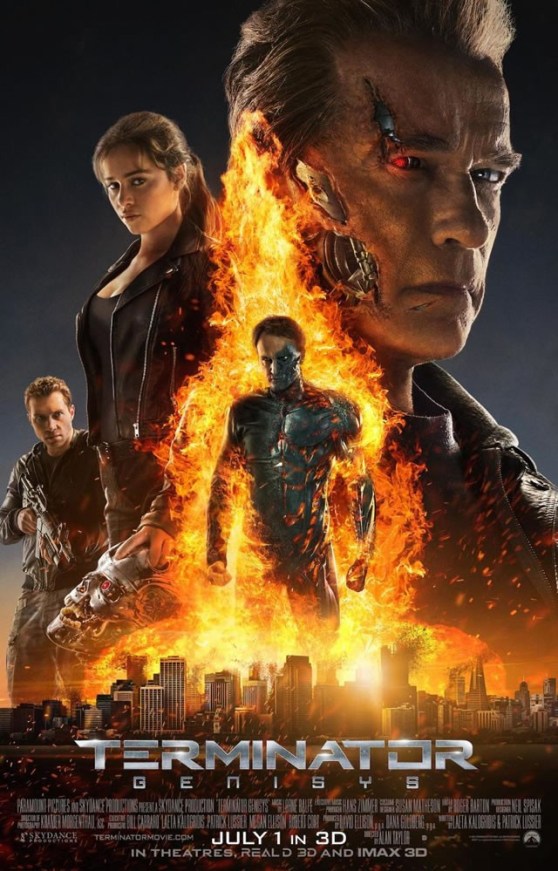
Terminator: Genisys (2015): Directed by Alan Taylor (Thor: The Dark World) and written by Kaeta Kalogridis and Patrick Lussier, this film came so much later because The Halcyon Company faced legal issues and filed for bankruptcy, leading to Annapurna Pictures getting the franchise rights. And while they consulted James Cameron, nobody seems happy with this movie.
Amongst all the multiple timelines of the series, a Skynet of one universe that has already been defeated in several timelines gets smart and sends the T-5000 to defeat the humans by taking their best weapon: John Connor.
Now, Emilia Clarke is Sarah Connor, Jai Courtney is the time-displaced Kyle Reese, Arnold is “Pops,” a T-800 and Jason Clarke is John Connor, now a T-3000 after being attacked by the T-5000 as he traveled through time.
As for how Skynet gets launched, it’s through an Apple-like cell phone network known as Genisys. Yes, you thought your phone listening to you and giving you advertising was bad. Just imagine when it wants to kill you.
Set across seven different time periods this movie seems like it wants to confuse its audience, one that may have enjoyed the time travel in the original movie but really just like the simplicty of an unkillable soldier trying to wipe out a future enemy in the past.
Clarke was happy that there were no sequels, saying of the director Alan Taylor, “He was eaten and chewed up on Terminator. He was not the director I remembered. He didn’t have a good time. No one had a good time.” The double pain of doing this and a Thor movie no one liked led to Tayor saying that he “lost the will to make movies and to live as a director.”
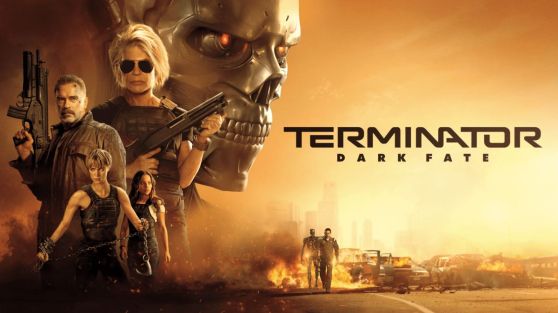
Terminator: Dark Fate (2019): James Cameron came back to write the story of this film and produce it, but would anyone care after the numerous stumbles in the story of Terminator?
With a total of five writers — Cameron, Charles Eglee, Josh Friedman, David Goyer, Justin Rhodes — and Tim Miller following up Deadpool, it seemed like a can’t miss movie. So why does hardly anyone discuss it just three years later?
Even though this made $261.1 million at the box office, this movie still lost $122.6 million, making it one of the biggest box-office bombs of all time. Maybe audiences didn’t want to see Terminator 2 invalidated by a film that begins with John Connor being killed by a T-800, not after all we’d loved in that first film.
In the years after John’s death, Sarah (Linda Hamilton, returning to basically be the star of this movie) was given advanced warning of any Terminators as well as how to destroy Skynet, which never went live. Instead, another AI named Legion has come to the same conclusion that Skynet would have. Humans tried to nuke it, but that just ended up creating an unlivable world and now the future has sent a cybernetic soldier named Grace (Mackenzie Davis) to protect another future leader named Dani (Natalia Reyes) from Rev-9 (Gabriel Luna).
The messages that Sarah has been receiving come from Carl (Arnold Schwarzenegger), the T-800 who murdered her son and has spent the time since trying to atone for its sins while starting a human family and a drapery business. Yes, the Terminator puts in blinds and curtains.
Cameron offered tons of suggestions throughout the edit and because of this — and the lack of final edit and control — Miller said he would likely not work with Cameron again. He also said, “Terminator’s an interesting movie to explore, but maybe we’ve explored it enough. I went in with the rock hard nerd belief that if I made a good movie that I wanted to see, it would do well. And I was wrong.” He also said that the goal was to never make a better movie than Terminator 2, but if that’s the goal, why even make the movie?
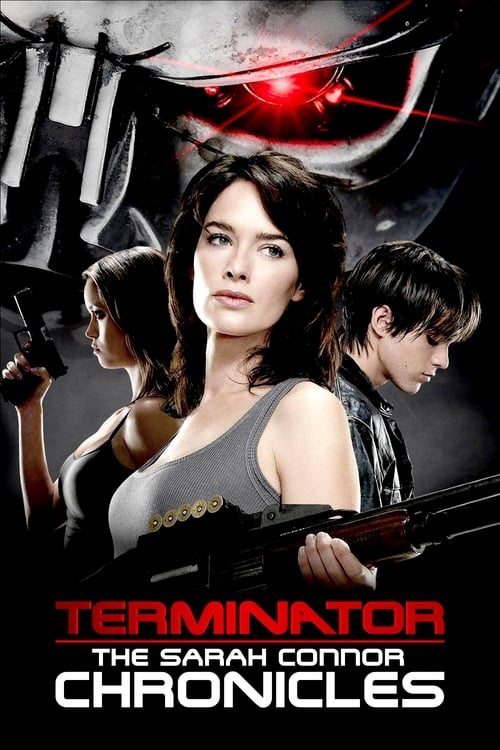
Terminator: The Sarah Connor Chronicles: Lasting 31 episodes and 2 seasons, this Fox series ignored Terminator 3: Rise of the Machines and instead takes place after Terminator 2: Judgment Day.
Sarah (Lena Headey), John (Thomas Dekker) and female Terminator Cameron (Summer Glau), spend the series being chased by a T-888 Terminator named Cromartie (Garret Dillahunt) and FBI agent James Ellison (Richard T. Jones) who believes that Sarah is a criminal.
Over the course of the series, they would learn that Skynet had sent numerous Terminators back in time, including a T-1000 who uses the human name Catherine Weaver and is played by Garbage singer Shirley Manson.
Unfortunately, Fox was unhappy with the ratings, despite the show being critically acclaimed and fans writing in to try and save it. Creator Josh Friedman refuses to share what would have happened next.
T2-3D: Battle Across Time (2001): James Cameron made one other sequel to Terminator and it could only be seen at three places: Universal Studios Japan, Hollywood and Orlando. Presented in two parts, it starts as a tour of Cyberdyne Systems before a 3D film allows riders to interact with T-800 (Arnold Schwarzenegger), Sarah Connor (Linda Hamilton), John Connor (Edward Furlong) and T-1000 (Robert Patrick). There’s even the T-1000000, a giant liquid-metal spider that attacks the heroes.
The project was created by Gary Goddard (Masters of the Universe) and Landmark Entertainment. Universal wanted a stunt show, but Goddard thought that 3D theater show would be even more exciting. After a year-and-a-half of development, James Cameron’s Lightstorm Entertainment was approached for approval and while Cameron was originally against the idea of turning the movie series into a ride, he loved the storyboards and concept. He would come on board to actually direct the battle between the Connors and T-800 against the T-70s, T-1000 and T-1000000.
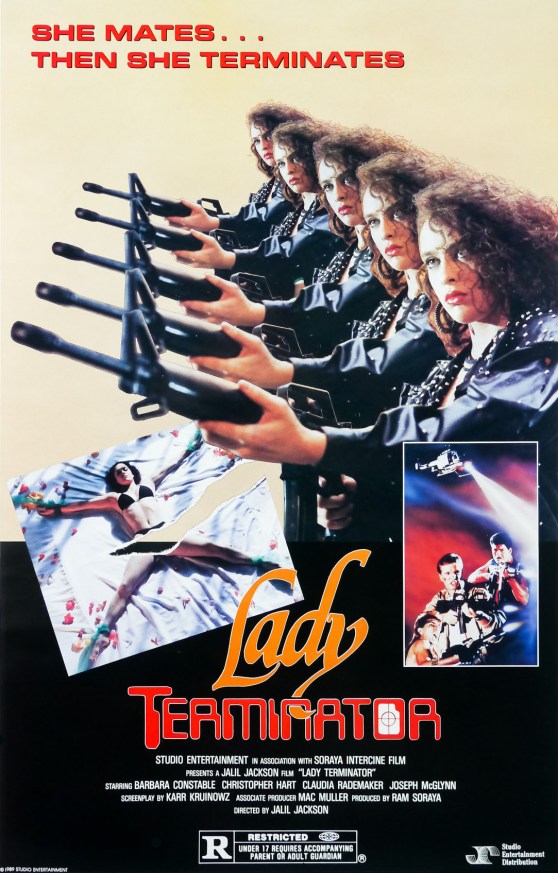
Lady Terminator(1988): If you’re bored with all these machines and time travel, this Indonesian remix, ripoff and remake presents some of the same scenes from the original James Cameron effort but with a decidedly more occult — and way lower budget — feel. It’s also scummy as it gets, with its female killing machine literally removing men’s members through her murdering lady parts.
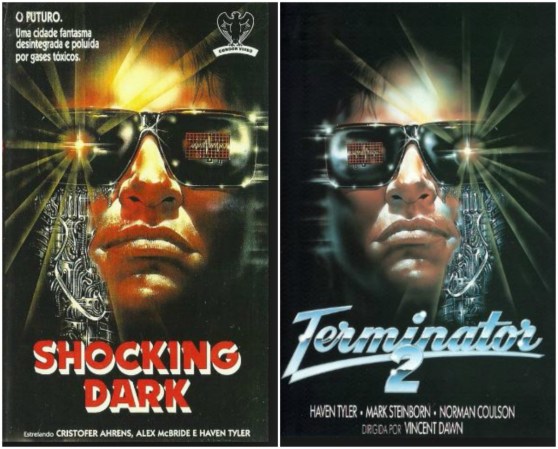
Shocking Dark (1989): Bruno Mattei, Claudio Fragasso and Rossella Drudi somehow were able to not only steal from Aliens, but also Terminator to create this movie which was sold as Terminator 2. Robert Patrick does not look pleased.
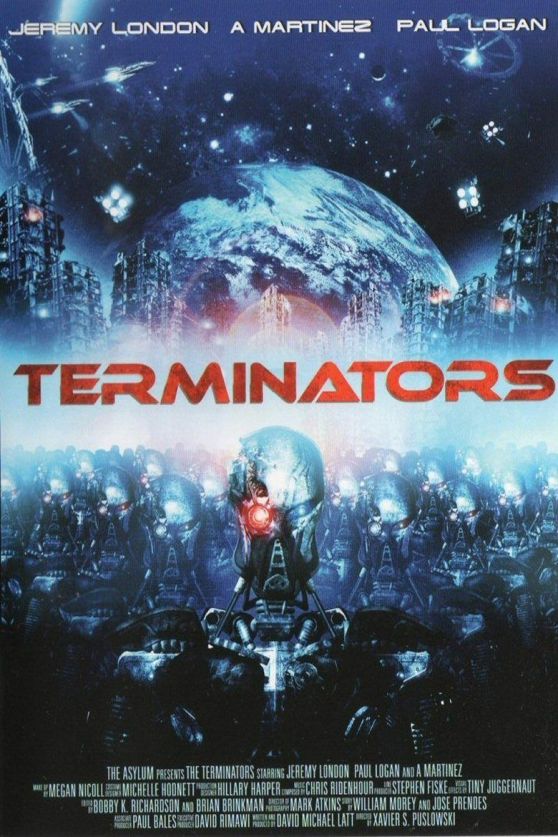
The Terminators (2009): The Asylum are the masters of “We have Terminator already at home.” I haven’t seen this but now I feel as if I have to.
It’d take a whole other article to get into all of the pop culture that Terminator created, but I just want to tease that by reminding you that at one point, we got a RoboCop vs. Terminator comic book and video game. Come on, Hollywood. Give us the real thing.
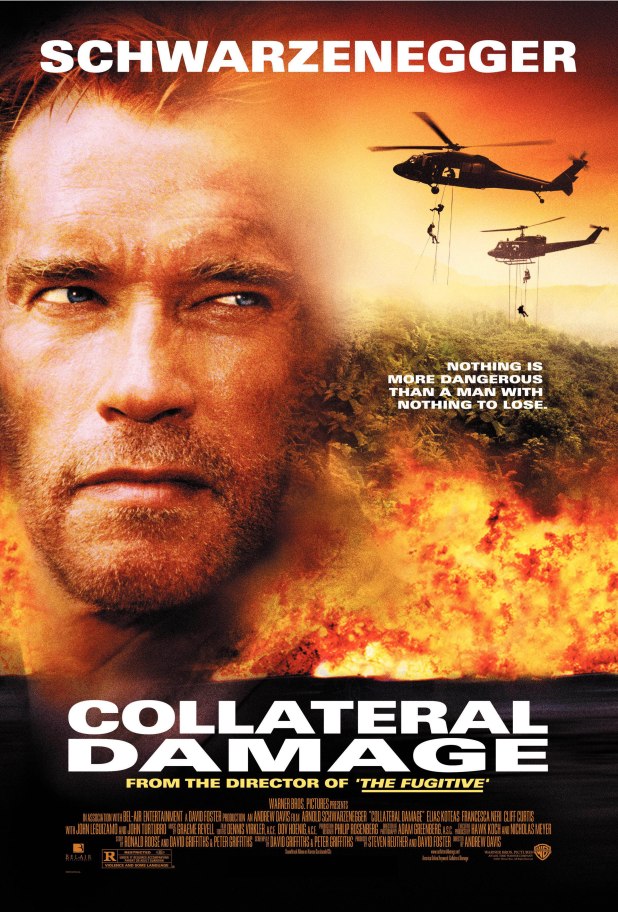
This film about terrorism was originally scheduled to be released on October 5, 2001, but it was obviously postponed after 9/11 and released on February 8, 2002. The original cut had Sofía Vergara hijack an airplane; this was also cut from the film.
Arnold Schwarzenegger as Captain Gordon Brewer, a firefighter hunting down the Colombian terrorists who killed his wife Anne and son Matt when a bomb blows up in the plaza of the Colombian Consulate building in Los Angeles.
Claudio “El Lobo” Perrini (Cliff Curtis) is the man behind the bomb attack and even his wife Selena (Francesca Neri, yes, the daughter of Rosalba) is starting to see that perhaps her husband is just as into killing Americans as he is making a political message. Or so it seems…
Brewer is now in Colombia making his own improvised bomb strikes, much to the displeasure of Peter Brandt (Elias Koteas), the head of the CIA in the country. Can Brewer get the revenge he needs so badly? Or is he part of the problem? When is too much enough?
Directed by Andrew Davis (Under Siege, The Fugitive) and written by Ronald Roose (who edited Easy Money, My Demon Lover and House Arrest) and David and Petter Griffiths, this casts Arnold as an everyman when we want Arnold to be Arnold. It takes almost the entire movie to get there, but when he electrocutes terrorists, bites off ears and dispatches a villain with an axe, you’ll be pleased while wondering why we didn’t get this from the beginning.
Roger Spottiswoode has an interesting career as a director, making everything from Terror Train and The Pursuit of D. B. Cooper to Air America, And the Band PlayedOn, Stop! Or My Mom Will Shoot, Tomorrow Never Dies and this Arnold Schwarzenegger film.
Written by Cormac and Marianne Wibberley (the National Treasure movies, I Spy, Charlie’s Angels: Full Throttle), Arnold plays helicopter pilot Adam Gibson in this story of cloning. After his friend Hank (Michael Rappaport) dies along with cloning innovator Michael Drucker while snowboarding, Arnold discovers that a clone of himself is at home with his family. He’s soon kidnapped by abducted by Marshall (Michael Rooker), the head of security for Drucker’s company Replacement Technologies and must escape and prove to his family and the authorities that he’s been replaced.
There are a lot of clones in this, as Drucker is not dead and he keeps on cloning nearly everyone he kills. Eventually, the two Adams work together to stop all of this, which leads to a wild scene where Arnold swims through an entire fluid bath filled with clones hanging form umbilical cords.
In the ads for this movie, Arnold refused to be shown with a gun, saying “If people say movies lead to violence, we should make a concession.”
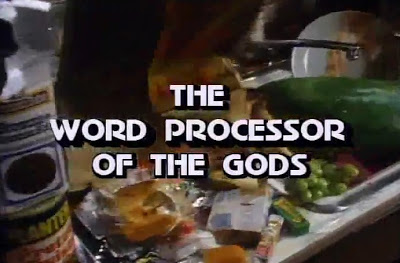
Based on the story by Stephen King and adapted by Michael McDowell (Beetlejuice, The Nightmare Before Christmas), this Michael Gornick-directed episode has Bruce Davison as Richard Hagstrom, a man who has just inherited an upgraded computer from his nephew Jonathan. This computer is quite unique, as it has the power to grant wishes.
Richard’s life is rough. He has no real love for his wife Lina or son Seth Robert. The love of his life, Belinda, is married to his brother Robert, an alcoholic. And I should say was married, as Robert has driven their car off a cliff and killed everyone, including Jonathan, one of the few people who Richard likes.
This is one of the better Tales from the Darkside stories, a near-perfect adaption of King’s story on a small budget. Somehow, Richard is able to take this gift and use it to find a happy ending, something that rarely — if ever — happens with wishes.
He once said, “O. J. Simpson was in Capricorn One and Robert Blake was in Busting. I’ve said many times: Some people have AFI Lifetime Achievement awards, some people have multiple Oscars, my bit of trivia is that I’ve made films with two leading men who were subsequently tried for the first-degree murder of their wives.”
He’s also made plenty of decent movies with not much fanfare, like Outland, 2010, Running Scared, Timecop, Stay Tuned and Sudden Death.
1979: The Pope sends a priest on a mission to protect a newborn baby named Christine York, who will be the one to give birth to Satan’s child after a comet goes over the moon in full view of the Vatican, all while the Vatican knights try to kill her.
1999: Satan has possessed an investment banker (Gabriel Byrne) under the protection of Jericho Cane (Schwarzenegger) and Bobby Chicago (Kevin Pollak). Father Thomas Aquinas (Derrick O’Connor), a tongue-less priest, tries to kill the banker before being arrested.
Between his old boss Marge Francis (CCH Pounder) and Father Kovak (Rod Steiger), Cane starts to realize that something isn’t right with his boss, what with him crucifying Aquinas to the ceiling of his apartment.
Can a man who has given up on God after the death of his wie and daughter find the strength to protect York (Robin Tunney) from the Vatican knights and demons, including his dead partner reanimated after making a deal with Satan? Will the devil crucify Arnold? Do grenades work on Satan?
This movie also has Udo Keir and Marc Lawrence, somehow appearing yet again in a movie where Satan wants a woman, much like The Nightmare Never Ends but with a much larger budget.
End of Days was Arnold’s first movie since Batman & Robin and a series of heart issues. Studios were anxious about whether or not they could insure him. The insurance people and executives from Universal came to the set just to watch him for the first week of shooting, but Arnold had returned to peak condition.
EDITOR’S MONTH: This was one of the first movies on this site, posted on June 30, 2017. For some reason, I think about this movie all the time and quote Arnold’s lines.
It’s hard to find a movie as critically reviled and universally despised as Batman and Robin. But I was going into this with an open mind. I hadn’t seen the film in twenty years, since seeing it on opening night. I must have blocked the film out of my mind with some PTSD-like fight or flight response. It worked — I’ve filed so much of this movie away in a “DO NOT OPEN” file.
But it can’t be that bad, can it? Keep an open mind, I said. It’s been twenty years. Maybe it improved with age.
That open mind lasted around twenty seconds of enduring fetish-like, slow motion crawls up the rubberized bodies of Batman and Robin. Pomp and circumstance and flexing abounded, punctuated only by the plaintive voice of Robin, who must be in his twenties, begging for the Batmobile, because “chicks dig the car.” Batman’s response, “This is why Superman works alone,” can either be seen as a horribly throwaway joke. Or it can be an admission that the DC multiverse exists within this film.
But let’s rewind. There once was a time, back when the phone rang and you had no idea who was on the other line, when there were no comic book movies. You had to hunt for them — sure, there was Superman, but even Marvel’s best heroes barely registered anything more than a Saturday morning cartoon or a bad cover version, like the CBS Spider-Man, Dr. Strange and Captain America(starring Yor, Hunter from the Future’s Reb Brown!) movies. In fact, 1988 had just one comic book movie made: TV movie The Incredible Hulk Returns. As a good friend of mine has commented many times, we had to take what we could get.
In 1989, we finally got something we could call our own: Tim Burton’s Batman. But not everyone was happy. I was a regular subscriber to the Comics Buyer’s Guide, and the outcry over Michael Keaton being cast was a cacophony. If Twitter had existed then, I doubt the movie would have ever been made. Luckily, audiences were wowed by a Batman that wasn’t the 1960s pop art Adam West they had known before. Batman was dark, moody and dangerous — in effect, he was everything that comic book fans loved.
Looking back, there’s a lot to poke holes at in the first Burton Bat films. Batman takes his mask off at the drop of a hat, generally in front of his greatest enemies. Jack Nicholson is the real star of the show. And how did we ever allow Batdance to happen? That said — there’s a lot to love, too. The second film. Batman Returns, expands Batman’s rogue’s gallery while also having him take his mask off in front of an enemy. But again — good to great film, with nothing to be embarrassed about.
1995’s Batman Forever exchanged Keaton for Val Kilmer and Tim Burton turned the director’s chair over to Joel Schumacher to not-so-satisfying results, thanks to a muddled plot, too many villains, Jim Carrey’s incessant and inane mugging for the camera and after setting up Billy Dee Williams as Harvey Dent, Two-Face ended up being played by Tommy Lee Jones (who, to his credit, once told Carry, “I hate you. I really don’t like you … I cannot sanction your buffoonery.”). But hey — “A Kiss from a Rose” is in it! And H.R. Giger designed a Batmobile for it that was never used — but it would have improved the film a hundredfold!
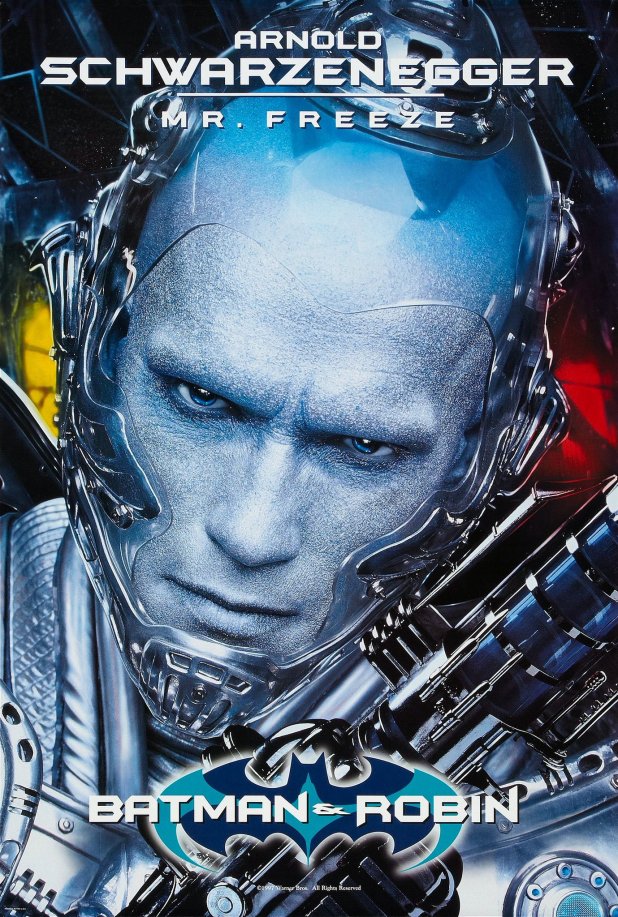
That brings us full circle back to Batman and Robin. This is a movie that clubs you over the head with subtext. Before we even leave the cave, we know that Robin and Batman have issues and Alfred doesn’t just have a cold…the man is dying! But there’s no time for that — there’s a new villain in town named Mr. Freeze, who is Arnold Schwarzenegger painted blue and wearing armor. If you happened to love Arnold’s one-liners in other films, good news! Every single line from him in this movie is a one-liner, screamed and snarled, shouted and smiled. It’s all peaks and no valleys, like a Slayer album with no lyrics or drums, just atonal guitar solos. Someone on IMDB was kind enough to count how many ice-related puns Arnold makes in the film — 27 to be exact.
There are no fight scenes in this film. Oh, there are moments that seem like fights. But no one really fights, they just slide toward one another and dance around and even play hockey. Yes, for some reason, Batman and Robin have ice skates in their costumes. The film feels like a series of Rob Liefeld panels brought to terrifying life — cocks in your face, muscles pulsating, teeth gritting. The big fight between Batman and Mr. Freeze is as simple as Batman flying at Freeze’s vehicle, SMASH CUT, Batman’s cape is lifted to reveal a knocked out Freeze. Perhaps we’d have liked to have seen this battle!
There’s no dialogue in Akiva Goldsman’s script — merely diatribes and camp asides — and his is from the man who won an Oscar in 2001 for A Beautiful Mind. This points at one of the most upsetting things about this film — it felt like we, as comic book fans, had clawed our way into the multiplexes and wanted people to know that the books we loved weren’t just filled with bright colors and words like POW, ZAP and BAM! There were three-dimensional characters on the flat page that we lived and died with. Only Burton had gotten close and now, we were slip sliding back into camp.
To wit — Bane, in the pages of DC Comics had broken Bruce Wayne’s back and given him one of his few lasting defeats. In the comics, Bane was raised in a prison, serving the sentences his father died too soon to serve. He’s as smart as Batman, yet a stronger, more cunning and better fighter. In this film, he’s a scrawny prisoner who is transformed by a drug called Venom into a gigantic brain damaged buffoon, played by pro wrestler Jeep Swensen (who would go on to be called The Ultimate Solution in WCW, one of the most ill-advised nicknames, well, ever).
There’s also no shortage of characters to try and take in. There’s Uma Thurman’s Poison Ivy, who looks great, but is the Mae West of supervillains in the film. She takes particular delight in playing Batman against Robin, who argue as if they were a couple and not father and adoptive son (according to George Clooney, this was no accident). There’s Alicia Silverstone, who shows up in one of her Aerosmith video costumes. She becomes Batgirl, getting a skintight, rubber butted costume of her very own. And oh yeah Alfred is dying, remember? There’s also Vivica A. Fox as Ms. B. Haven in just one scene that makes no sense! There’s a Jesse Ventura cameo! Oh! There’s Gremlins 2’s John Glover as Dr. Jason Woodrue (who comic fans would know as The Floronic Man) for about two seconds! It’s an onslaught of characters that do nothing but shout at you!
I’m not one to pooh pooh day glo comic book fun — Flash Gordon and Danger: Diabolik are two of my favorite films of all time. But they had heart and artistry beating beneath their multi-hued surfaces. This film is a paean to Happy Meals and toy tie-ins (I had the Mr. Freeze, which looked nothing like Arnold). I can apply the same insult to this film that I gave to the cinematic turd known as Sucker Punch: it’s about as much fun as watching one of your friends beat a video game.
As this was being filmed, Warner Brothers was so impressed with what they saw, they started thinking about a fourth installment, Batman Unchained. The plot was to have featured the Scarecrow (Howard Stern was rumored to be cast in the role) bringing Jack Nicholson’s Joker back to life, at least inside Batman’s brain. Harley Quinn, now the Joker’s daughter, was also to be in this film. There was even talk of a Nightwing spinoff. But critical savaging and poor returns scuttled any sequels or spinoffs, as well as other attempts at adapting Batman Beyond, Frank Miller’s The Dark Knight Returns and Batman: Year One (Darren Aronofsky was to direct).
It wasn’t until Chris Nolan came on board that Batman would finally return to Hollywood. This is the movie that, to quote Clooney himself, “killed the franchise.” It did more than that. It killed comic book movies, until Blade and X-Men showed that serious comic films could draw a mainstream audience. This is a film that will leave you with so many questions: What kind of God would make life so simple — and painful at the same time — by giving Alfred the same disease that struck Mr. Freeze’s wife and sent that icy bad guy on the path to evil? Why is Elle Macpherson in this movie (most of her scenes were cut, including her being killed by Poison Ivy)? Did Arnold really get $25 million to just laugh his ass off and smoke a cigar while wearing blueface? Will we see more of those Batnipples? How awesome of a song is R. Kelly’s “Gotham City?” Where the fuck did Batman get a Bat Credit Card from? Why is there a scene packed with gangs ala The Warriors, including a bunch of droogs and Coolio of all people (and Corey Haim as a biker)? And most importantly, how much time is left in the film, because it seems like every minute is an hour and every hour is a decade?
This film also held back the careers of Alicia Silverstone and Chris O’Donnell, nearly making the latter disappear. It also hurt Joel Schumacher — but that’s just justice, Gotham style — who didn’t direct another film until 1999’s 8MM.
I wish that I could find some joy in this film beyond making fun of it. But the best allegory I can find for it is a very true story. It took forever to take off the complicated Batman suit, so George Clooney would just piss inside it — on more than one occasion. That says just about all you can say about Batman and Robin.
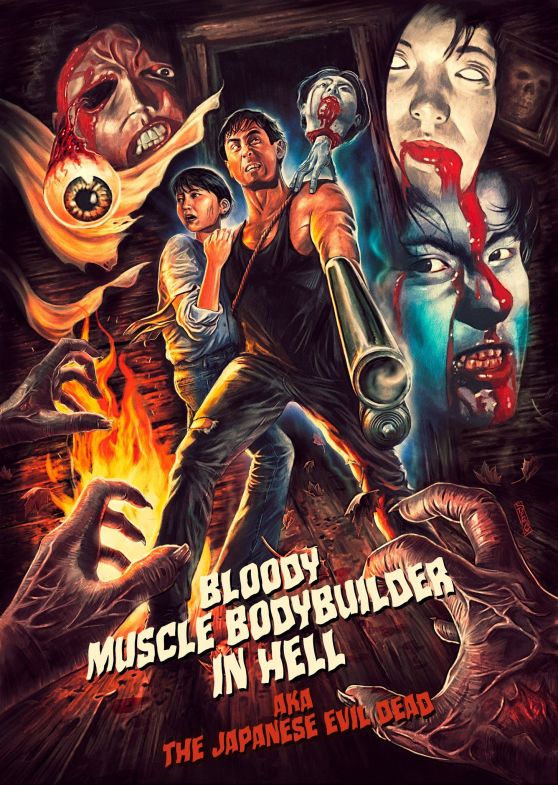
If you haven’t ordered this from Video Vengeance’s new line of SOV blu rays, good news. You can get a sneak preview at this movie right now. Why do I love it? Well, it’s dedicated to Joe D’Amato. And it has huge dicked demon zombies, abundant nudity and, yes, a flying baby that sings most of his dialogue. It’s completely unhinged in a way that movies that people say are completely unhinged are afraid of.
The second release of Video Vengeance’s new line of SOV blu rays — also known as Japanese Evil Dead — is also up on the service. It lives up to its crazy name, trust me.
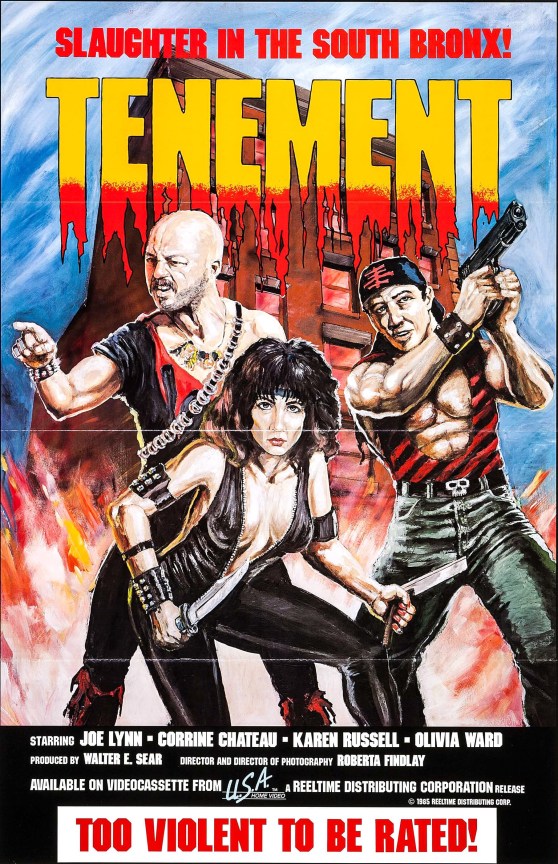
As you watch this movie, which seems like it was set right down the street from Death Wish 3 and Vigilante, you can feel safer in your home, as director Roberta Findlay claims that this is based on her childhood.
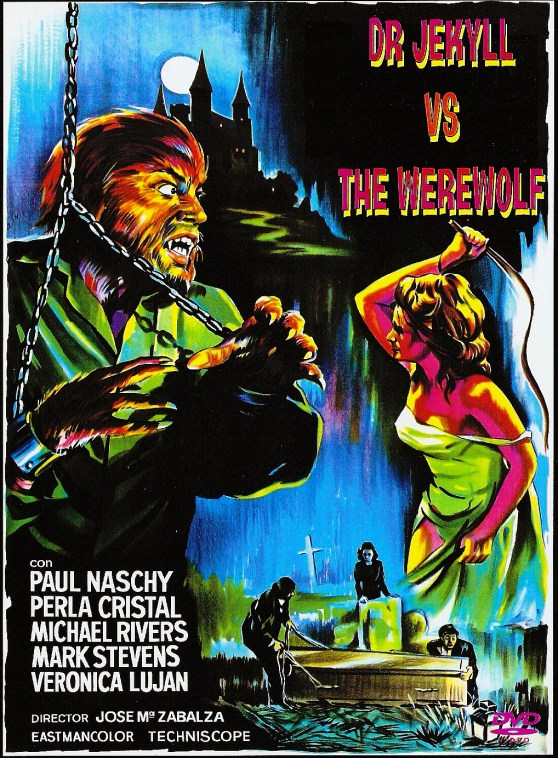
No matter how many werewolf movies Paul Naschy makes, I will watch them all, again and again. This time, El Hombre Lobo is up against another perhaps even more sinister monster this time. Long may he howl.
Part of the All the Haunts Be Ours box set from Severin, this Australian folk horror film had a low budget and big ideas, which is really all you need in this world. I’m pretty fascinated with it and hope you take the time to watch it.
I think the problem with the world is too many kids aren’t watching enough TV movies. This one will teach you that even Kevin Arnold can do anabolic steroids and murder D.J. Tanner in a fit of white hot rage. From the director of Las Vegas Lady, Noel Nosseck.
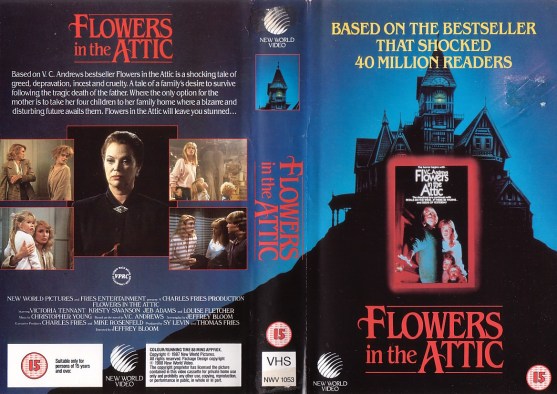
Just one look at the cover art for this book in the 70s was enough to send me into paroxysms of panic-stricken terror. I’ve somewhat overcome those feelings and absolutely love this movie. Sure, it’s been made again, but when the world is on fire, sometimes you need to hide in the original attic.
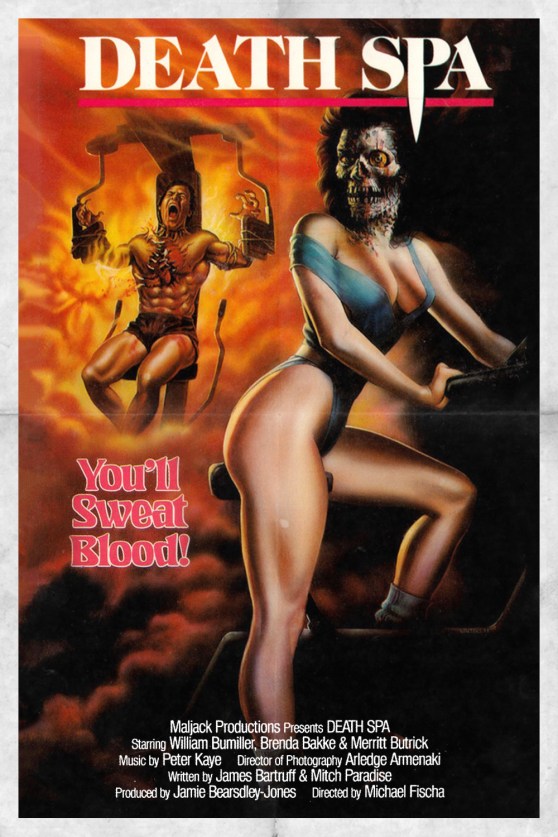
Murderous fish! A killer blender! An asparagus-filled lovemaking scene! Oh man, Death Spa redefines horrible yet I love it so. It’s also known by an even better title: Witch Bitch.
If you didn’t know, I love all things Joe D’Amato. I mean, I wrote an entire breakdown of this film series, as well as a deep dive into Filmirage, D’Amato’s releasing company. To try and understand my feelings — or maybe not — watch this barbarian movie. I hope you find something you love just as much.
Warning! Certain scenes could be too shocking for those of you who are not true believers in the Devil. Man, this movie. God bless Samantha Eggar for screaming her head off and providing her own clothes. God bless Stuart Whitman for being a boxing priest. God bless Russ Meyer girl Haji for being in this. God bless Alfredo Zacarías for making absolute pieces of shit like this and The Bees. God bless you for reading all of this. God bless God.
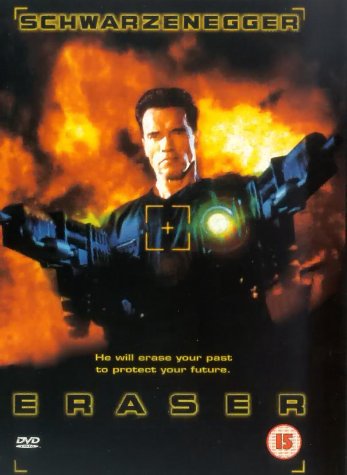
For some reason, I never watched Eraser. And let me tell you, fifty-year-old me loved it so much that I kept yelling “You’ve been erased” for days after watching it. Maybe that’s because Chuck Russell, who made The Bloband A Nightmare on Elm Street 3: Dream Warriors directed it.
Arnold Schwarzenegger is John Kruger, a U.S. Marshal for the Witness Security Protection Program charged with helping to erase people from the public record so that they can be safe once they testify in important court cases. After erasing mob witness Johnny Casteleone (Robert Pastorelli) before he turns rat on the mob, he’s given his next job by WITSEC Chief Arthur Beller (James Coburn): protect Lee Cullen (Vanessa Williams), a senior executive whose defense contractor place of employment, the Cyrez Corporation, has created a handheld rail gun and plans on selling it on the open market instead of to the U.S. military that’s already paid for it.
When she confronts her boss William Donohue (James Cromwell), he threatens her before killing himself. Upset that she was in danger despite promises that she’d be safe, Lee refuses to be part of witness protection. It turns out she’s really going to need it because the Cyrez conspiracy goes deep. In fact, it’s so deep that even Kruger’s superiors like his mentor Robert DeGuerin (James Caan) are masterminding it.
While this was written by Walon Green and Michael S. Chernuchin. extensive and uncredited rewrites were made by Frank Darabont and William Wisher Jr., as well as John Milius who did his punchups as a favor for Schwarzenegger. This was originally offered to Stallone, who turned it down to make Cop Land.
This is a great action film — I mean, Arnold has a battle inside a zoo with alligators everywhere — and it’s livened up by the interplay between him and Caan. Sure, it’s ridiculous, with Arnold using two railguns at once at the end, but isn’t that what we want out of an action film? Bonus points for Pastorelli getting all of his old organized crime friends together to guard the docks and battle the Russian goons.
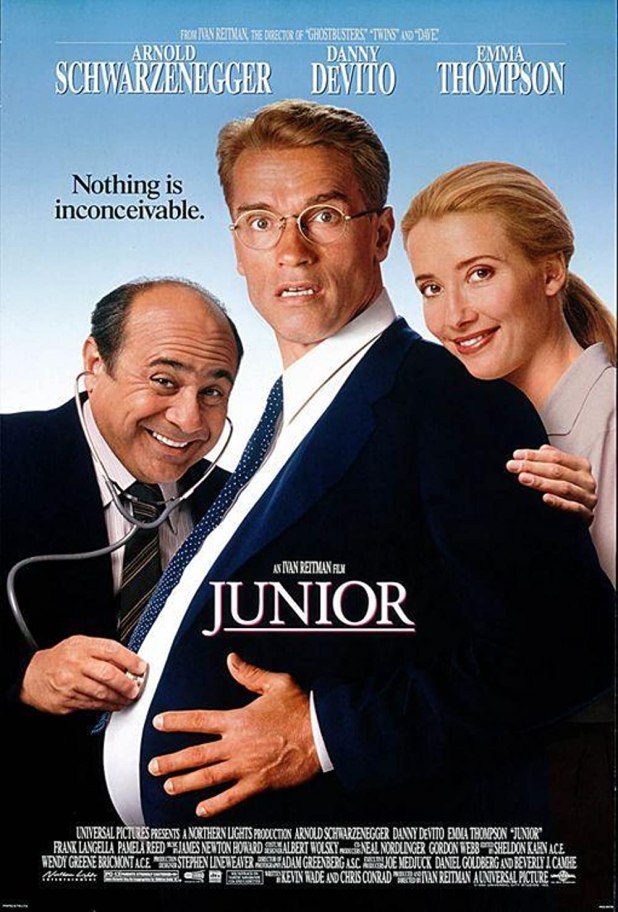
It’s just a decade or so between Arnold Schwarzenegger being a Terminator and him being the world’s first pregnant man, so never let it be said that the man has no range. Teaming with Ivan Reitman again after Twins and Kindergarten Cop, this may not have had the same magic as those films, but it has some moments of fun in it nonetheless.
Research geneticist Dr. Alex Hesse (Schwarzenegger) and Dr. Larry Arbogast (Danny DeVito, teaming again with Arnold) have invented Expectane, a fertility drug that reduces miscarriages. Until the FDA approves it, they can’t test it, so Hesse loses his job and geneticist Dr. Diana Reddin (Emma Thompson) comes on board, which convinces Hesse to try the experiment on himself, using the egg named Junior which unbeknowst to him has been stole from Reddin by Arbogast.
Meanwhile, Arbogast’s ex-wife Angela (Pamela Reed) is having a baby — a member of Aerosmith’s touring company is the father — at the same time as Hesse, who keeps pushing the experiment until he starts showing. The doctor team has to keep their boss Dr. Noah Banes (Frank Langella) from taking the credit for the first male baby, which if it were a thing, there’d be all sorts of birth rights.
Out of the three movies that Arnold made with Reitman, this is his favorite. Or that’s what IMDB says, because I’ve heard the same thing about Kindergarten Cop.












 B&S About Movies
You must be logged in to post a comment.