After everyone took the Mill Creek picks that they wanted, I jumped in and picked up the stragglers, the survivors, the movies no one else wanted to watch.
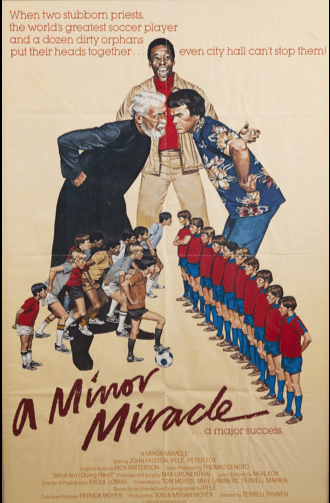
A movie with a bunch of orphans who turn to John Huston as a kindly priest and the game of soccer to save their orphanage? Why would anyone have picked anything else? And an appearance by Pele? What is wrong with all the other writers on this site?
Director Terrell Tannen edited The Boogeyman and The Boogeyman II, which was really like only directing one movie if you’ve seen the second one. He also produced, edited and second unit directed Olivia, which is one of the strangest movies I’ve ever seen. I have no idea how this prepared him to make a religious soccer movie.
Between this and Victory, I have now seen two soccer movies with Pele in them. And John Huston too, now that I think about it.
EDITOR’S NOTE: Welcome to Mill Creek Month! As you know, we love our Mill Creek box sets, so we’re doing an entire month of these films. The first set we got into was their B-Movie Blast 50-Film pack, then their Gorehouse Greats 12-Pack. And as with those sets — as is par for the course with these bricks of films, with their mashups of movie mayhem —their Excellent Eighties 50-Movie set is no different, with its crazy mix of drive-in ditties and lost network TV movies across all genres. So, to start our unpacking of this set . . . here’s our first review!
Oh, boy, Sam . . . when this was first assigned to me as “Second Sight” — without romantic the suffix — I thought I’d have to fly off the top ropes of the Civic Arena and whoop-ass Shirley Doe (my boss’s wrestling altar ego) for stickin’ it to me with that friggin’ John Larroquette monstrosity from 1989, you know, from back in the day when Bronson Pinchot was a “thing,” poised as the next Robin Williams . . . Bess Armstrong’s heart-weeping cuteness (Jaws 3-D) in the film, be damned. . . .
Sorry, Sam.
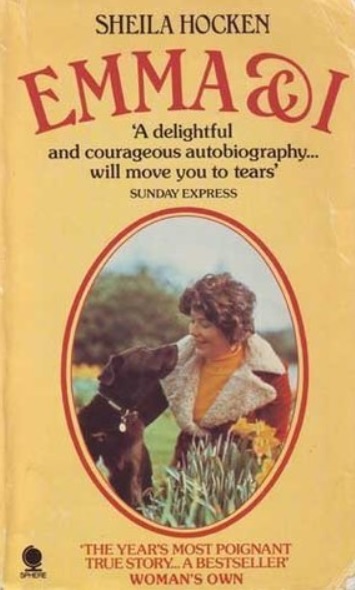
As it turns out, this debut entry on this Mill Creek set is an ’80s CBS-TV movie based on the best-selling romance novel Emma and I by Sheila Hocken. The “Emma” in this case, is a dog.
What? Why are you snickering? What gives with the eye rolls?
I’m not a totally heartless B-Movie slob. I can be romantic! Just not Hallmark Channel-romantic . . . only old “Big Three Network” romantic. And I’ll take a romantic dog-chick flick over a psychic-infused Balki Bartokomous flick any day of the week — and twice on Sundays.
How obscure and lost is this film: it’s easier to find a clean image of the book than the TV adverts or DVDs.
TV movie powerhouse Elizabeth Montgomery shines (as always) as Alexandra McKay, a woman who has been blind for nearly 20 years. Fearful that people will take advantage of her condition, she’s staunchly independent, living a sheltered, private life — a world where she only trusts her best friend: her always dependable guide dog, Emma. She allows love to enter her life when she meets Richard Chapman, an art dealer. And it’s great to see Barry Newman — of Vanishing Point fame — as said art dealer, allowed to stretch his thespian wings in a dramatic-cum-romantic role.
Now, we know . . . ugh, romance . . . chick flicks . . . argh! So, we’ll play the John Korty card to get you to watch.
John’s career dates back to directing numerous episodes of PBS-TV’s Sesame Street, while his theatrical and TV movie efforts date to the early ’60s. If you grew up in the ’70s, you know John put his previous skills as a documentarian to good use in the TV rating juggernaut Who Are the DeBolts? and Where Did They Get Nineteen Kids? that was hosted by Henry “The Fonz” Winkler (The Lords of Flatbush). Korty also wrote and directed Oliver’s Story (1978), the not-as-successful-and-critically-lambasted sequel to the early ’70s standard for maudlin-romance flicks: Love Story (1970). Another one of Korty’s biggies was the civil rights-drama The Autobiography of Miss Jane Pittman (1974).
But wait, hey you! Star Wars fan: John Korty directed the Lucasian knockoff, The Ewok Adventure (1984).
All in all, this is great stuff. This is why we have Mill Creek sets: to preserve well-made, forgotten films . . . and not just Crown International, B-Movie schlock. Bravo, Mill Creek!
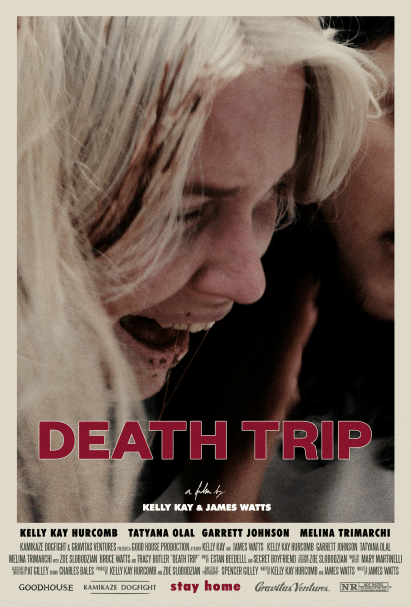
The first film of director, co-writer and editor (he also is in the movie) James Watts, Death Trip is the story of four friends — including co-writer Kelly Kay — has pretensions of art and feels improvised, but the most planned scenes strike the hardest. There’s a great slasher here, but sadly, it takes forever to get through some of this to see what could be.
Getting out of the city, Kelly and her friends soon learn some dark things about the townies, but to get there, you’ve going to have to watch them smoke weed, drink and have long conversations that descend into mumblecore instead of driving the plot forward.
That said, the scenes at the party and the awkwardness of the situation — I once stayed in a destroyed motel with an ex-girlfriend on a roadtrip and some guy passed her a note about wanting to party, which frightened her so badly that she slept holding a knife, so this scene felt like that — is the best part of the whole movie. I know that this film can do that, so sitting through everything else to get through that isn’t a slow burn or a build. It’s dross and boredom.
That said, the film looks great and has moments of true dread. I loved the quick burses of the mayhem and gore that was coming interspersed throughout the film. And I think that Watts and Kay are both quite talented. I hope that they learn from this movie — and hey, films are subjective so you may love it — and make something even better.
Death Trip is available demand from Gravitas Ventures and Kamikaze Dogfight.
And the Mill Creek sets keep on rockin’ our DVD decks! Another 12 movies put to rest. Previously, we jammed on Mill Creek’s B-Movie Blast 50-Film Pack. And we’re not done yet! We unpacking another 50 films to close out the month with Mill Creek’s The Excellent Eights 50-Film Pack.
Every November — to whet our appetites for Halloween — we tackle a Mill Creek box of fifty movies. We started with the Chilling Classics set in 2018 and also did the Pure Terror set in 2019. For 2020, we jammed on the Sci-Fi Invasionset. And Mill Creek’s 12-Packs always come in handy for our theme weeks, such as our recent “Fast and Furious Week,” when we a lot of films, quickly. To that end: the Savage Cinema set did the job. And, back in March, we were so giddy with glee that we finally got our own copy of 9 Deaths of the Ninja courtesy of the Explosive Cinema 12-pack, we paid it forward to Mill Creek and reviewed all of the films in the pack.
Many thanks to Rob Brown, Herbert P. Caine, Dustin Fallon, Robert Freese, Sean Mitus, Bill Van Ryn, Jennifer Upton, and Melody Vera for chipping in with their reviews for our month-long Mill Creek project!
Somehow, the Excellent Eighties set has taken a break from showing us the best, the worst and the somewhere in between of Crown International Pictures to take us back to the days of made for TV movies, a place that this site knows all too well.
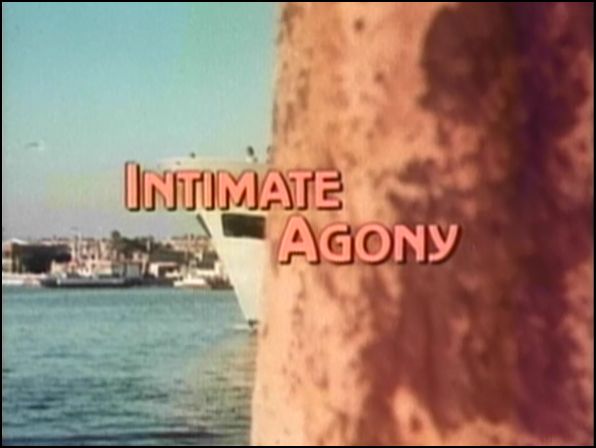
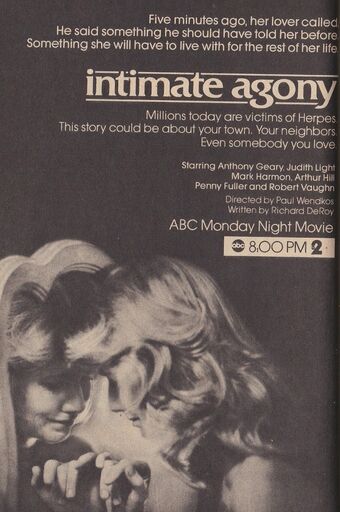
Originally airing March 21, 1983 and also known as the sexier title Doctor In Paradise, this is all about a young doctor named Dr. Kyle Richards(Anthony Geary) who is managing a doctor’s office in the Hamptons.
That sexy title is not so appropriate because this is a movie all about the heartbreak of herpes, which was the worst thing that could happen in 1983. Dr. Kyle decides to go public with the news that this town is getting more than just cold sores.
Most of the fun of this movie comes from spotting the stars amongst the cast, like Who’s the Boss star Judith Light, NCIS protagonist Mark Harmon, Robert Vaughn and Shawn Schepps, who went on to write Encino Man, Son In Law and Drumline. Did you know they made a TV movie sequel to Encino Man called Encino Woman? Yep. They sure did.
You know who taught me about herpes? Paul Bartel. I think I did OK.
Editor’s Note: Well, we polished off Mill Creek’s B-Movie Blast and Gorehouse Greats movie sets! So, 62 films down and 50 more to go. Here’s our first review as we crack open Mill Creek’s Excellent Eighties 50-Film Pack for the rest of February. We’ll round up that set with all the links at the end of the month.
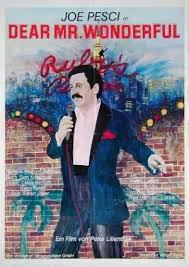
Joe Pesci gets an opportunity to sing in this movie, which is pretty much what I think he’s always wanted to do. By the age of ten, he was already At age 10, a regular on a TV show called Startime Kids with Connie Francis and then, he introduced his friends Frankie Valli and Tommy DeVito to singer and songwriter Bob Gaudio, leading to the forming of The Four Seasons.
While attempting to break into a music career, he worked as a barber. In 1968, his album “Little Joe Sure Can Sing!” came out, in which he sang cover songs before he started a comedy act with Frank Vincent, doing Abbott and Costello mixed with Don Rickles jokes.
While living above and worked at Amici’s Restaurant, Pesci started acting, appearing in The Death Collector alongside with his partner Vincent. Four years after that movie, Martin Scorsese and Robert De Niro remembered his ability and called him to be in Raging Bull. After that, Pesci worked consistently — even if it was in small movies like this and Easy Money — before becoming a star.
He’s still singing. He just put out an album in 2019.
Ruby Dennis (Pesci) is a small-time lounge singer and bowling alley owner who is — like the man playing him — just trying to be a big star. When his sister abandons her son, he struggles to keep him away from a life of crime and has something of a spiritual awakening.
This movie was directed by a German director, Peter Lilienthal, which is odd for a movie so Italian in nature. It’s a dark little film, one on which Pesci’s character has the heart to make it, if not the talent.
Vincent, who is often in films with Pesci, is in this, as is Ed O’Ross (Itchy from Dick Tracy), Richard S. Castellano (Clemenza from The Godfather), Larry Rapp (who was also in Pesci’s short-lived TV series Half Nelson), Paul Herman (Heat), Evan Handler (Harry from Sex and the City) and Tony Martin (the husband of Cyd Charisse).
Most strangely, the character of Ben was played by Ben Dova, the stage name for actor, comedian and acrobat Joseph Spah. Spah not only lived through the crash of the Hindenburg but was a suspect in its destruction. That’s because during the flight, he was granted access to the interior of the zeppelin so he could feed and walk his trained dog Ulla. As the cargo room was not far from the spot in the portion of the ship where the fire started, two different books on the disaster claim that Spah was behind the explosion.
The FBI investigated Spah and cleared him. Sadly, Ulla did not survive.
“That right! You’re just a horny, little bitch!” — Let the desert hair-pullin’ chick fight games begin
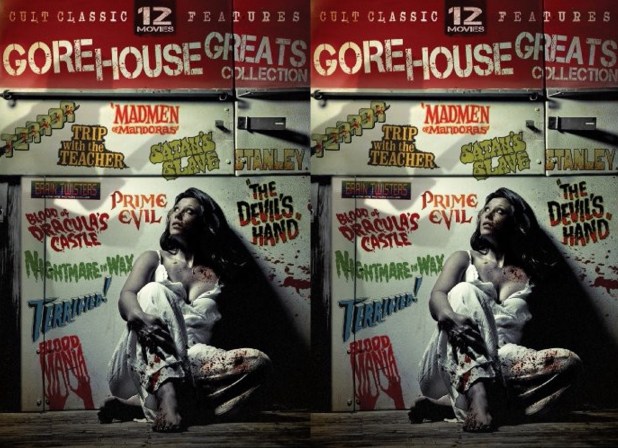
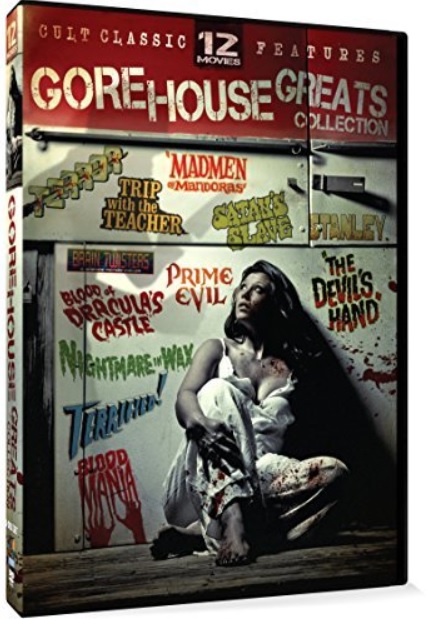
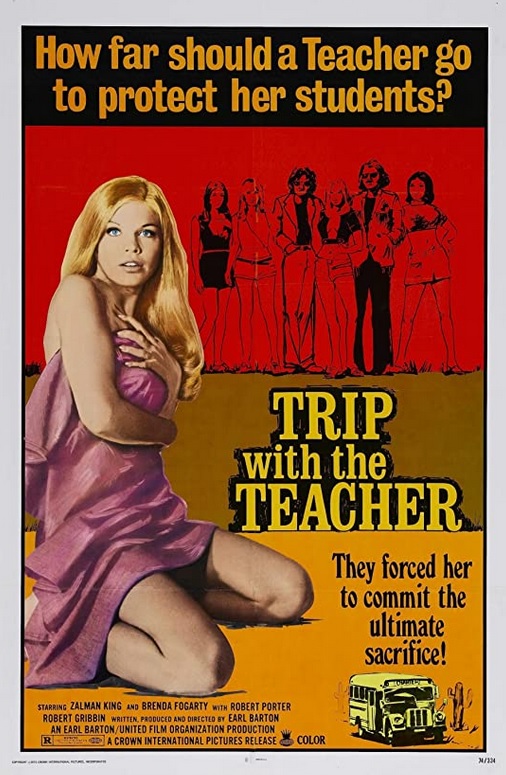
Now, unlike The Young Graduates, which is included on Mill Creek’s B-Movie Blast 50-Film Pack (which we also unpacked this month), this entry on their Gorehouse Greats 12-Film Pack may sound like a softcore T&A romp, but it really is a sexploitation frolic (that’s also out in the wilds of the public domain as Deadly Field Trip). And if that title doesn’t clue you in: this is more horror than sexploitation (thus the reason for it being packed under a “Gorehouse” moniker by Mill Creek). But, knowing Mill Creek, this will eventually pop up on a “Biker Flick” set, as we have psycho bikers in our midst. And truth be told: there’s more bikers than blood here, more hippie than horror.
In the end, this is just another sleazy, ’70s drive-in take-a-shower-after flick (that reminds of 1973’s The Candy Snatchers, less that film’s ultra-violence) with more slobbering idiots livin’ it up by kidnapping, raping, and terrorizing (four) teenage girls. (One of the bad-girl students — in yummy, yellow shorty-shorts and matching halter top, natch — is Dina Ousley, later of the mainstream sex romp Shampoo with Warren Beatty and American Hot Wax; you’ve seen her spray-painted go-go girls make-up work in the Austin Powers movies.)
As usual, the girl’s bus driven by their teacher, Miss Tenny (Brenda Fogarty), breaks down in the desert on their way to Los Angeles; a trio of bikers (lead by B-Movie stalwart Zalman King of Galaxy of Terror fame) decides to harass them. Of course, these bikers are like the hear-see-speak-no-evil monkeys: one good, one bad, and one that is a confused mess of good and bad, because of his bad, bullying brother (King).
There’s a reason why this sleaze bag of a Russ Meyer-wannabe celluloid programmer was choreographer Earl Barton’s only directing effort — and ended up in public domain. Barton also acted in the requisite, ’50s rock ‘n’ roll flick, Rock Around the Clock, with Bill Haley and the Comets, a film which he also choreographed. Star Fogarty’s biggest claim to fame was starring in the sex comedy Chesty Anderson: U.S. Navy — and that’s a movie that must be seen to be believed.
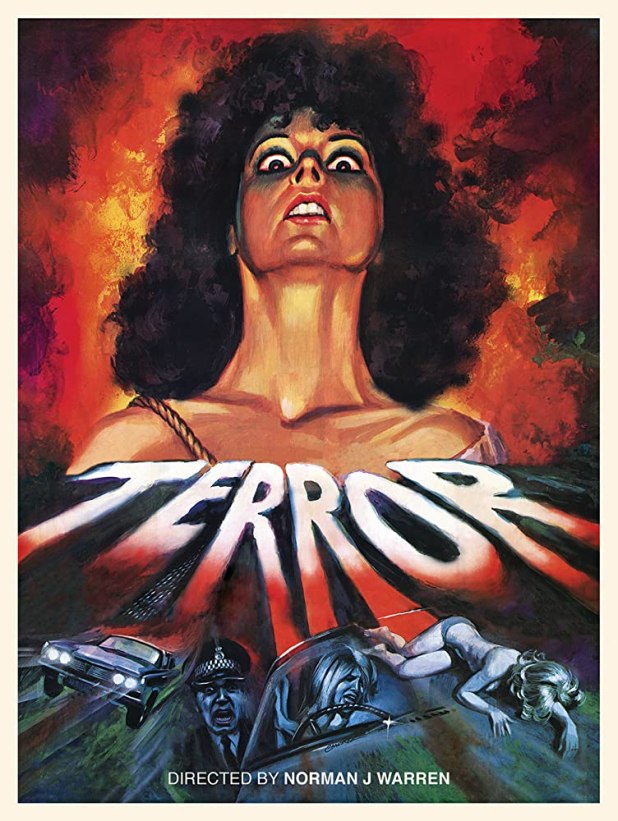
Norman J. Warren is the kind of director that knows exactly what you want. You aren’t coming to one of his movies to learn some kind of life lesson or to go out to a salon and debate afterward. No, you’re here for all the reasons that you watch horror and exploitation movies. You want to be shocked, scared and stimulated.
What makes this one even better is that the script comes from David McGillivray, who also wrote Satan’s Slave for Warren and Frightmare, House of Whipcord, House of Mortal Sin and Schizo for Pete Walker. He is, to quote British writer Matthew Sweet, “the Truffaut of Smut.”
Also, if you’re watching this and are thinking, “Hey, Warren must have just seen Suspiria when he made this,” then yes, that’s exactly what happened.
The movie starts three hundred years ago, as we watch a witch named Mad Dolly about to be burned at the stake under the orders of Lord Garrick. She then calls on Satan to free her, setting an executioner on fire, a disembodied arm to kill Garrick and for her to rush through the Garrick house with a sword, which she uses to chop the head off his wife before cursing their descendants.
Like I said, Warren knows exactly what you want. That beginning pretty much has everything I watch movies for.
What we’ve just seen is a movie made by director James Garrick — yes, a descendent who lives in the very same house that we’ve seen and for some reason has decided to own the sword of Mad Dolly — and he’s previewing it for his friends and his cousin, Ann. Of course, he also has a mesmerist put her under a spell and she nearly kills him.
This being a Warren movie, of course Ann works at a strip club. And certainly she’s going to be stalked by all manner of ruffians, including Peter Mayhem outside of his Chewbacca costume.
This unleashes a wave of artful violence, including panes of glass chopping off heads, stabbings in the woods, perverts dropped onto spikes, lamps crushing directors and so much more. And the end, well, it’s absolutely bonkers, with levitating cars, more impalings and Mad Dolly’s sword getting used to its fullest power.
As for the Argento inspiration, Warren has claimed that he saw that movie as something freeing, telling Sense of Cinema, “It was just liberating in that you could suddenly get away with doing whatever you liked.”
Since making Bloody New Year, Warren has been promising a sequel to this movie that would be about music and dancers. I hope it happens, because I kind of love this ridiculous movie.
“Alice Fades Away is a progressive take on a classic tale. It is about patriarchy, legacy and death but more importantly it’s about perseverance and strength in the face of fear and power by someone who’s not allowed to have her own identity.” — Director Ryan Bliss on his feature film debut
In the overcrowded streaming-verse with so many movies vying for the hope that we hit the big red streaming button on their film, the casting is the thing. And if you’ve spent any amount of time at B&S About Movies, you know how we champion certain actors in our little ol’ cubicle farm. So, yeah. We’ve watched more than our fair share of Eric Roberts-is-on-the box movies, even if he’s not the “star” of the film, because Eric rocks our analog and digital decks.
The “Eric Roberts” of this feature film writing and directing debut by Ryan Bliss (although he’s here more than the usual Eric Roberts appearance) is character actor William Sadler, whom you’ve most recently seen in Bill and Ted Face the Music, but you know Sadler best via the perpetual cable TV replays of Die Hard 2 and The Shawshank Redemption, as well as the earliest seasons of TV’s Roseanne. However, the greatest aspect of this beautifully shot and acted film is that Sadler’s presence exposes us to the start of a great leading lady career with new-to-the-scene Ashley Shelton(ABC-TV’s Army Wives; made her feature film, leading-lady debut in 2014’s Something, Anything), as well as Paxton Singleton (got his start in the 2018 The Haunting of Hill House mini-series), and the return of Blanche Baker, who you remember as the older sister bride-to-be in Sixteen Candles.
A period-drama thriller, Alice Sullivan is a troubled woman on the run who finds refuge on her uncle’s farm that now serves as a home to WWII PSTD-afflicted survivors. The refuge of the idyllic, isolated farmhouse — which is revealed to be haunted by strange voices in its rooms and surrounding woods — is soon upended by the powerful and mysterious James Sullivan (William Sadler), the wealthy family’s patriarch. He hires Holden (Timothy Sekk; a recent guest star on NBC TV’s The Blacklist) to retrieve his only surviving relative: Logan (Paxton Singleton), his grandson — and Alice’s son. And, in addition to bringing back his grandson, James Sullivan wants Alice to “disappear.” Will Alice’s new found family of the PTSD-afflicted fight to protect Logan and the increasingly paranoid Alice against the violent motives of Holden?
Edited to a suspenseful, tight 80-minutes, Alice Fades Away is a film that can — after it completes its streaming-platform run — increase its well-deserved wider exposure as an also-ran commercial cable TV movie (while it’s above the quality of most of the channel’s films, it would work well on Lifetime). While it’s not as graphic in its violence or as mysterious (i.e., “confusing” in some quarters) as most twisted, British Gothic thrillers or Spanish Giallos (my thoughts drifted to Jose Ramon Larraz’s Symptoms from 1974), Bliss’s choice to dispense with the shock-scares to keep the flashback-driven narrative restrained and subtle, is appreciated. This is a quiet film that paces its mystery and thrills. As with Larraz’s Symptoms, we ask the question: What’s “wrong” at this remote forest estate. Are the voices real. Are the voices figments of the home’s PSTD war heroes. Is that “smell” of war; the rotting flesh of the dead (the resident’s damaged souls), really back?
1091 Pictures will release Alice Fades Away on digital platforms in the USA and Canada on Tuesday, February 16th, 2021. Look for it on Amazon, FandangoNOW, Google Play, iTunes/AppleTV, Microsoft, Vudu, and all cable system VOD platforms. You can also visit 1091 Pictures on Facebook for more information regarding their releases, such as the recently released, the low-budget sci-fi film, Space.
Disclaimer: We received a screener from the studio’s P.R. firm. That has no bearing on our review.
About the Author: You can learn more about the writings of R.D Francis on Facebook.He also writes for B&S About Moviesand publishes short stories and music reviews on Medium.
“There is no good or evil in science, but it can be used for good or evil purposes.”
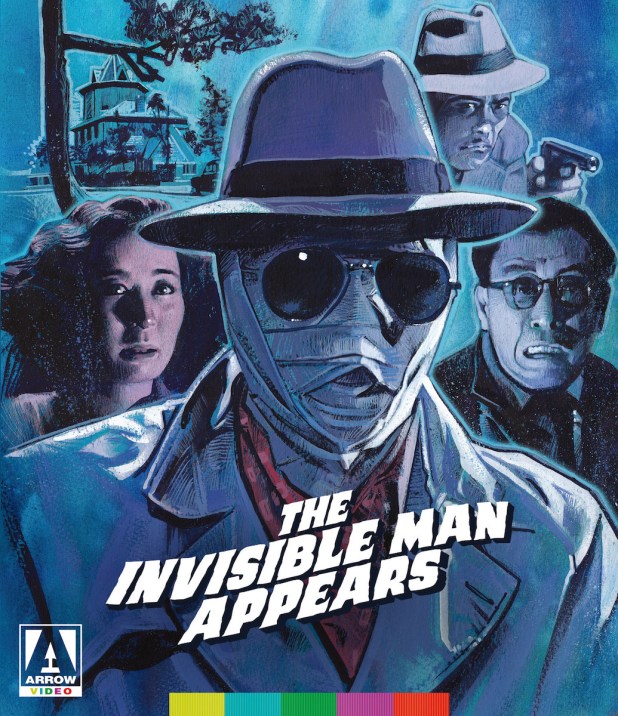
Five years before he did the effects for Godzilla, Eiji Tsuburaya worked on this film, one of the earliest science fiction movies to be made in Japan. Much in the same way that Toho continued the Hammer look in movies like Lake of Dracula, this movie continues the look and feel of the Universal Invisible Man films.
Shunji Kurokawa and Kyosuke Sugi were both working under Professor Kenzo Nakazato to figure out a way to make objects invisible. The two became rivals and the professor said that he would reward whoever came up with the solution; the guys think that it may be for the right to marry their mentor’s daughter Machiko.
Nakazato, however, has had an invisibility serum for a decade, but couldn’t find anyone willing to test it. As if that wasn’t a big enough plot twist, diamond thief Ichiro Kawabe has kidnapped the professor and will only release him if someone steals the Amour Teams, a diamond necklace, for him. Kurokawa comes to his senpai’s aid and ingests the formula, which soon makes him mad with anger. Things get much worse when he catches his rival proposing to the woman they both love.
The madness that overtakes the Invisible Man — who hides in bandages just like Claude Rains (and later Vincent Price) — he continually tries to steal the necklace and even strangles Machiko when she gives them to him, yelling that if she can’t be his, he would rather she be dead. He soon learns that there is no cure for his invisibility and the ensuing mania, which ends with him battling the police in a battle that he cannot win.
I didn’t even know these movies existed until Arrow announced them as their March 2021 releases. Now that I have them, I’m beyond excited by them. Both of the Japanese Invisible Man films feature new transfers and English subtitles and look great for the roughness of the original materials that were available.
This is a piece of film history that you can own now. It’s definitely recommended.
You can get this with The Invisible Man vs. the Human Fly on a new double blu ray from Arrow Video.



 B&S About Movies
You must be logged in to post a comment.