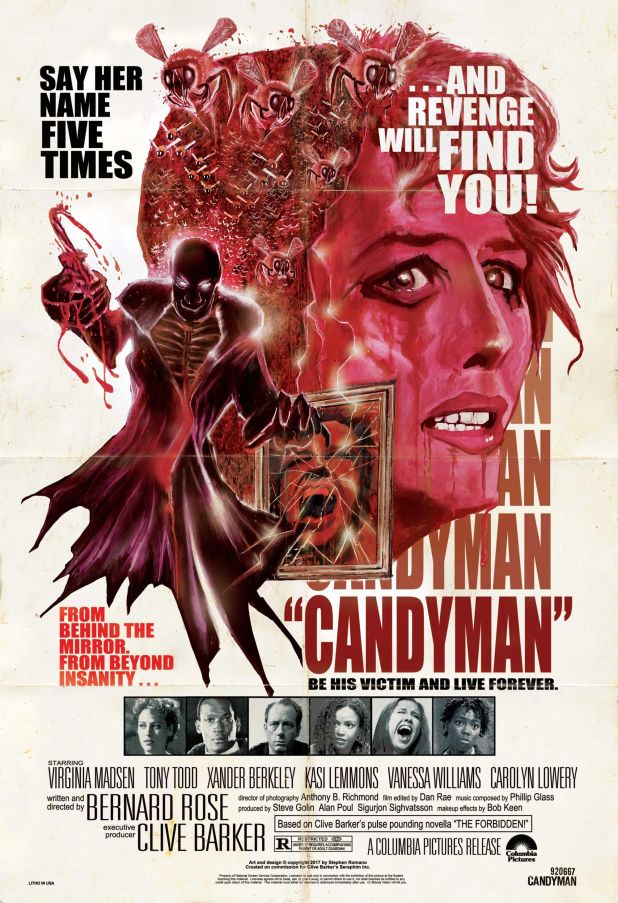
2019 Scarecrow Psychotronic Challenge Day 25: Candyman (1992)

DAY 25. VANISHING CITIES: One with gentrification or real estate development as the setting.

I was just discussing slasher movies and their lack of blackness with one of my friends last week and we struggled to come up with many movies where there was a black killer. Sure, there’s Snoop Dogg’s turn in Bones, which is pretty much a remix of J.D.’s Revenge. Then we remembered — Candyman.

Bernard Rose has directed some really interesting films, like 1988’s dark fantasy of growing up Paperhouse. He was also behind the videos for Frankie Goes to Hollywood’s “Relax” and “Welcome to the Pleasuredome” before he met with Clive Barker, expressing interest in adapting the story “The Forbidden.”

While the original story is more of an examination of the Birtish class system, Rose moved his story to the inner city of Chicago, where he could better focus on the racial, social and cultural divides of America. Some of its story was inspired by journalist Steve Bogira’s articles about the murder of Ruthie Mae McCoy in Chicago’s Abbot Homes housing project. In particular, the detail that she was murdered by someone who entered her apartment through the opening behind her medicine cabinet becomes an integral part of this story.

Amazingly, Eddie Murphy was the original choice for the titular role, but he was too expensive for the production. Enter Tony Todd. He told IGN that despite fears of being typecast, “I’ve always wanted to find my own personal Phantom of the Opera.” As he was concerned about the threat of being stung by the numerous bees he would contend with, he negotiated a bonus of $1,000 for every sting he suffered during filming. He’s a smart man — he ended up earning an extra $23,000.

Not to name drop, but I had the honor of working with Todd when he came to Pittsburgh to inaugurate the Pittsburgh Public Theater with a performance of August Wilson’s King Hedley II. I’d written a radio commercial promoting it and instead of struggling with a casting agency to discover the right voice, I inquired if Todd would be willing to do the recording session. He was happy to promote the play, as he’d acted in the same play on Broadway. However, the PPT had one condition.

I was told, “No matter what, please do not mention that horror movie he was in.”

I replied, “Do you mean The Crow or the remake of Night of the Living Dead?” Nobody got the joke.

So cut to me standing on the sidewalk of Liberty Avenue, waiting outside Todd’s hotel. Talk about nerve wracking. Suddenly, he was ten feet away from me, his six foot five inch frame even more imposing in person.

“Do we have time for a salad? I’m dying for a salad.”

Not the first thing you’d expect to come out of Candyman’s mouth.

Literally we were ten feet down the street, on the way to a restaurant, when someone jumped in his way and started yelling “Candyman! Candyman! Candyman!” He laughed a jovial chuckle, signed a quick autograph and I said, “They told me you hated that movie and I shouldn’t mention it.”

He smiled and said, “Look, the first one is great. The second one isn’t bad. The third one? You gotta put your kids’ in college. I’m always happy to talk about a movie that let me live the life I live today.”

Of all the moments in my professional career, there is truly nothing quite like closing your eyes and hearing Tony Todd’s deep voice intone your words.

Thanks for indulging me. Back to Candyman.

Helen Lyle (Virginia Madsen) is a Chicago graduate student researching urban legends. She learns of the Candyman, a demon that appears whenever you say his name five times into a mirror, at which point he’ll stab you with the hook where his right hand once was. This tale is remarkably similar to the story of Mary Black from my rural hometown of Ellwood City, PA.

She begins to investigate the murder of Ruthie Jean, a resident of the Cabrini-Green housing project who two cleaning ladies believe was killed by the Candyman. She’s not alone — 25 other people have been killed in similar fashion.

That night, Helen and her friend Bernadette Walsh (Kasi Lemmons, who was in Silence of the Lambs and would go on to direct The Caveman’s Valentine) do the ritual, saying Candyman’s name into a mirror. Nothing happens.

As Helen begins her thesis: Candyman is a way to cope with the despair that Chicago’s  African-Americans feel as they struggle to survive in the projects. A professor shares the story of Candyman’s origins, which begin with him as the son of a slave who would soon become free and known for mass-producing shoes. He grew up free and became an artist of some fame before marrying a white woman in 1890; however, her racist father hired a lynch mob that cut off his artistic hand, replaced it with a hook and smeared him with honey. The stings of bees nearly killed him before he was burned alive and his ashes scattered across he fields where the Cabrini-Green now exists.

As part of her study of the legend, Helen meets Anne-Marie McCoy (Vanessa A. Williams, Melrose Place) and a young boy named Jake, who tells her the story of a young boy who was castrated by the Candyman. Helen is attacked by someone when she visits the scene of the crime but her attacker is human. He’s arrested based on her testimony and the world thinks Candyman is gone.

That night, as Helen is getting into her car, the real Candyman appears. She’s made people think his legend isn’t true and now innocent blood must be spilled so that he may survive. Helen wakes up in Anne-Marie’s apartment, covered in blood. The dog has been beheaded and her son is missing, so she attacks Helen, who is arrested by the police.

At each turn, Candyman comes closer and closer to ending Helen’s life as he snuffs out the existence of everyone around her. After she’s committed for a month, a psychologist interviews her to see if she’s fit for trial as she’s suspected in the death of her best friend Bernadette. She offers to summon Candyman to the unbelieving doctor who is soon dead at the hands of the so-called urban legend. I love this scene, as the formerly disbeliving protagonist of this tale has willingly given in to the unreality that her world has become. As for her husband Trevor, he doesn’t care at all — he’s taken up with one of his students in her abscence.

Helen runs to Cabrini-Green where she discovers murals depicting the lynching of the human being who would become the Candyman. He appears and tells her to surrender to save the life of the child, offering her immortality as he opens his jacket, revealing an open ribcage filled with bees. He believes that Helen is truly his lover Caroline Sullivan, reincarnated and ready to become immortal at his side.

Candyman promises to release the child if Helen helps him incite more fear, but he decides that instead, he will set the entire projects on fire. She saves Anthony by shoving the monster into the flames of a bonfire before it takes her life too. The residents of the apartment building all attend her funeral, throwing numerous flowers and finally Candyman’s hook into her grave.

At the end, Trevor must face both grief and guilt in the mirror, where he says her name five times. As he turns, his wife has appeared, along with Candyman’s hook. As we return to the projects, the graffiti of Candyman has been replaced by a woman with her hair on fire. Helen has now become part of the immortal world of folklore. 

The music for this film comes from minimalist composer Philip Glass, who was upset that the film came off as a low budget slasher. However, he told Variety in 2014, “It has become a classic, so I still make money from that score, get checks every year.”

Madsen is really amazing in this film and used hypnosis and a trigger word to make her even more frightened for her scenes with Todd. However, this process was too much for her so she didn’t use it for the entire movie. The two actors also took ballroom dancing classes together to create an element of romance between their characters.

There’s a new Candyman film coming from Jordan Peele, which will be a spiritual sequel set in the gentrified neighborhood that has replaced the Cabrini-Green projects. Lakeith Stanfield of the movie Sorry to Bother You will star as the now-adult Anthony, a visual artist who begins to study the legend of Candyman. Thankfully, Todd will return, as who else can play this role? The film is currently untitled, but the working name has been Say My Name.

Until that film comes out, you should grab the original and give it another watch. You can get the Shout! Factory blu ray, which is filled with extras and features a new 2K scan, or the Arrow UK blu ray, which requires a region free player. The fine folks at Diabolik DVD have it waiting for you.
Wake Up Heavy starts new slasher series

Wake Up Heavy — which has featured Sam on the show before and contributed this top ten slasher list to our site — has started a new series called “Why I Hate Slashers” that everyone who loves this site will enjoy. The first episode is all about Pieces, which as you probably know is a major favorite.

I really enjoyed this episode — Mark always has engaging content — if I have a few thoughts on it. I love the fact that the reason why he never watched the movie was because it seemed too hardcore and lurid, because well, that’s exactly what it’s all about.

The one issue I have is that Mark said that other than a few people, there isn’t anyone famous in this. He forgot Edmund Purdom, who is in a ton of films like Absurd2019: After the Fall of New YorkDon’t Open Till ChristmasThe Fifth Cord and contributed voiceover work to a ton of films, including one of my new obsessions, the European X-rated version of Witchcraft ’70 called Angeli bianchi… angeli neri.

It’s a small thing to pick out on an otherwise great episode. You can listen to it on the embedded link below.


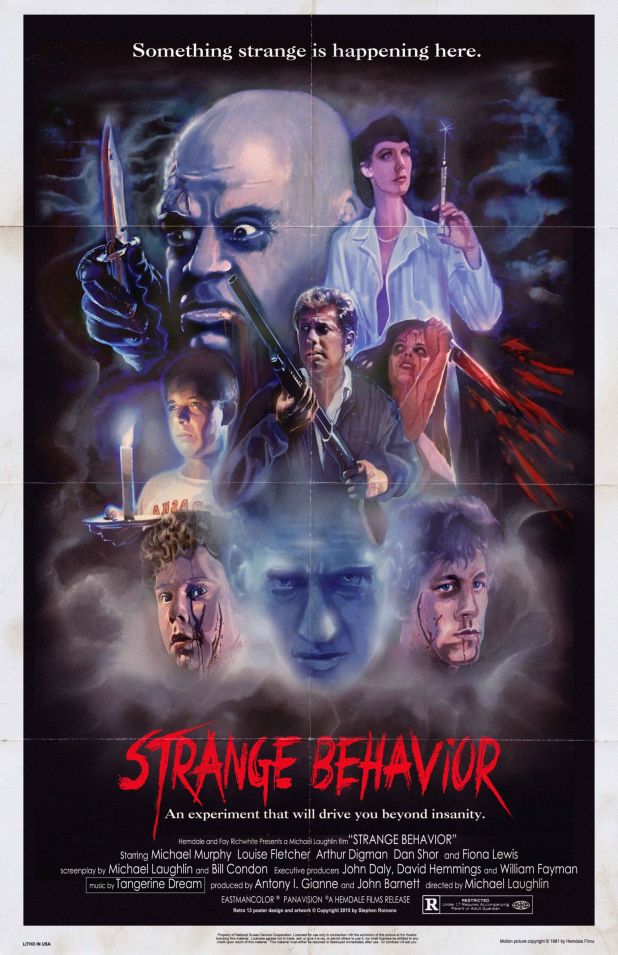
Strange Behavior (1981)

Also known by its much more in your face title Dead KidsStrange Behavior holds a place in New Zealand film history as the first horror movie made in the country. A homage to American horror films of the 1950s, it was intended to be part of a trilogy. However, after this movie and Strange Invaders underperformed at the box office, that was not to be.

It was relased in the UK as Small Town Massacre and ran afoul of the video nasty controversy, ending up on the Section 3 list of films.

This — and Strange Invaders — were both directed by Michael Laughlin (Two-Lane Blacktop), who co-wrote the film with Bill Condon, who would go on to direct Candyman 2: Farewell to the Flesh, both parts Twilight: Breaking Dawn and write 2002’s Chicago and The Greatest Showman.

Speaking of the word strange, perhaps the strangest thing in this movie is that while it’s supposedly based in Galesburg, Illinois, it couldn’t be geographically further from America if it tried. That’s because the movie was lensed in Auckland, New Zealand.

It all starts with the murder of Bryan (co-writer Condon), which ends with his body getting stuffed into a scarecrow.

Local cop John Brady (Michael Murphy, who has been in plenty of Robert Altman’s films) is on the case. And his son Pete (Dan Shor, who was in Wise Blood) and his friend Oliver (Marc McClure, who you’d know as 1970’s Jimmy Olsen) are learning all about the work of Dr. Le Sange from Professor Parkinson (Fiona Lewis, who was in plenty of films, but around here, we celebrate her for her work in the seminal — and semenal, really — Tintorera…Tiger Shark). Oh yeah — his dead mom (and John’s lost wife) once worked for Le Sange.

Pete wants to go to college and doesn’t have the money to apply, so he signs up to be part of the professor’s experiments. After all, Oliver did it and it wasn’t a big deal.

Or was it? Because later that night, a maniac in a Tor Johnson mask attacks and kills a boy at a party before being unmasked as — you got it — Oliver. He can’t remember anything, not even the bizarre surgical cuts that he did near his victim’s eye. That said — whoever killed Bryan and the kid at the party couldn’t have been the same person.

Despite all that, Pete stil undergoes one of the professor’s tests, swallowing pills and repeating key phrases. He also begins a romance with Caroline (Dey Young, Kate Rambeau from Rock ‘n’ Roll High School), a fellow student.

The murders only ramp up in intensity, with one woman finding her son chopped to bits in the bathroom before her throat is slashed. John, being a good cop, starts to feel that perhaps the professor has something to do with all of this, questioning her while being unaware that she’s about to inject his son in the eyeball with a concoction of mind-altering drugs.

That’s when we get the exposition — during John’s date with his girlfriend Barbara (Louise Fletcher, who everyone else will tell you was in One Flew Over the Cuckoo’s Nest, but I’ll confide that she was Dr. Gene Tuskin in Exorcist II: The Heretic) — where we learn that everyone who has died — including his wife — was tied to the unethical experiments of Le Sange. Even worse, Le Sange is probably still alive, because when the lovey-dovey twosome break into his crypt — talk about a romantic date! — his casket is empty.

The end of this movie is a mix of mind control madness, a mistaken case of paternity, doctors ordering their patients to kill themselves and even a happy close. It all lives up to the title — strange — in the best of ways.

You have to love when a movie totally stops to give you a synchronized dance scene, like a slasher film variant of the same kind of stuff that used to happen in 1950’s films like I Was a Teenage Werewolf. That song — Lou Christie’s “Lightnin’ Strikes” — was also covered by Klaus Nomi.

Speaking of music, Strange Behavior also benefits from a score by Tangerine Dream. I really need to get on to writing a list of movies that thier music made even better. They rival Goblin for how many cult films they scored.

You can still grab this under its alternate title Dead Kids at Vinegar Syndrome, who have the out of print Severin blu ray. Or watch it on Shudder.

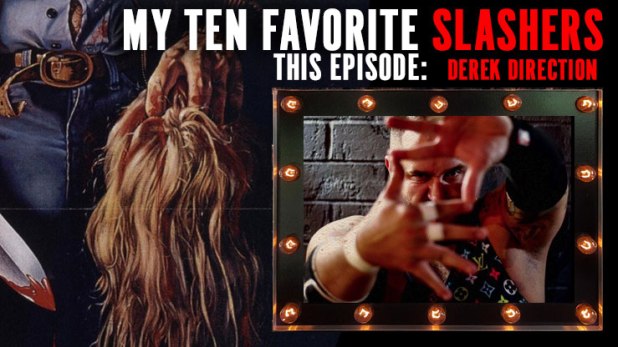
Slasher Top Tens: Derek Direction

ABOUT THE AUTHOR: In my other life as a professional wrestler, I’ve been lucky to team with Derek Direction over the last year as The Grindhouse — along with Meg Meyers, Christian Noir and Beastman. Derek and I got along right away as we have a shared love of movies and a similar outlook on wrestling. He’s also part of The Production in AIW, a tag team that exploits everyone else, acting as the director, the “Neon Tarantino” and the “King of the Casting Couch.” You can follow him on Twitter, Instagram and Facebook. You can also buy his shirts at Pro Wrestling Tees — one even looks like Demons!

Ultimately I’m trying to pick different movies, but legitimately movies I like. I don’t want to name all the Friday the 13th films. FRIDAY THE 13TH: THE FINAL CHAPTER is my favorite.

1. Maniac (1980): “Fancy girls in their fancy dresses and lip stick.” Frankly, Maniac is my favorite 80’s slasher film still to this day. Everything I love. Even the SFX legend Tom Savini! This movies is great, you have a psychopath running loose in NY in the 80s WHAT’S NOT to love. I i love this movie so much I referenced it multiple times throughout my wrestling career.

2. My Bloody Valentine (1981): If Maniac wasn’t my favorite movie it would be this one. I love both My Bloody Valentines. The 1981 one though — in my opinion — is way better probably because I’m a sucker for old horror. And the weapon is so bad ass.

3.) My Bloody Valentine 3D (2009): With the change in times; obviously the gore is upped up a bit. It’s a fun movie that will keep you on your toes. I legit love both of these movies.

4. Slaughter High (1986): Not the best executed movie. There could have been a little bit more “slaughtering” but I really did like the thought process of getting your life long revenge at the dreaded HS reunion. Plus there’s full frontal male nudity.

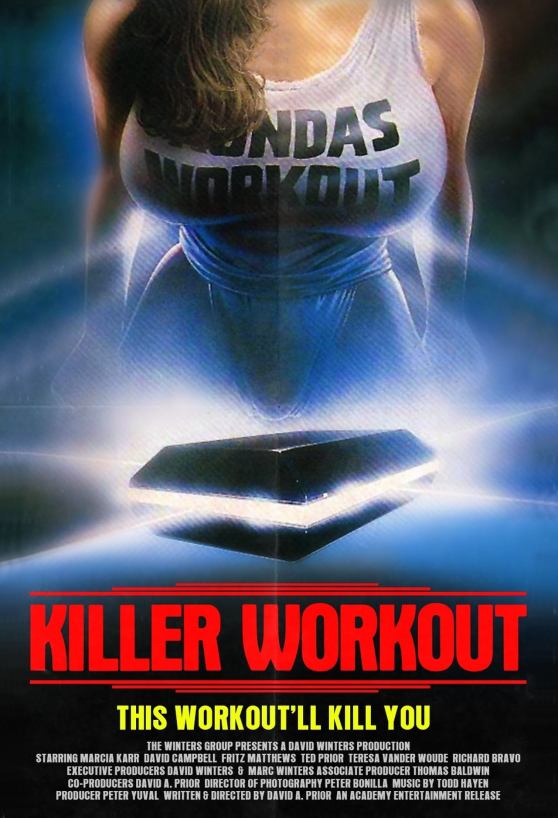
5. Killer Workout (1986): When I was a little kid at the local video store I always wanted to watch this… i mean the video cover was just tits. My mom would never let me… I liked the soundtrack… and it tells a good comeback story… Soooo much tight clothing 🤤🤤🤤🤤🤤.

6. The Slumber Party Massacre (1982): Not to be confused with the show I wrestled on; that could still be our be purchased on FITE TV under the AIW Catalog. 🤣😂🤣. The Slumber Party Massacre is a true ’80s slasher classic. Refreshingly, the film doesn’t pretend to be something it’s not. So many people are murdered. What more could you ask for, a giant drill, boobs, butts and some cheesy humor!?

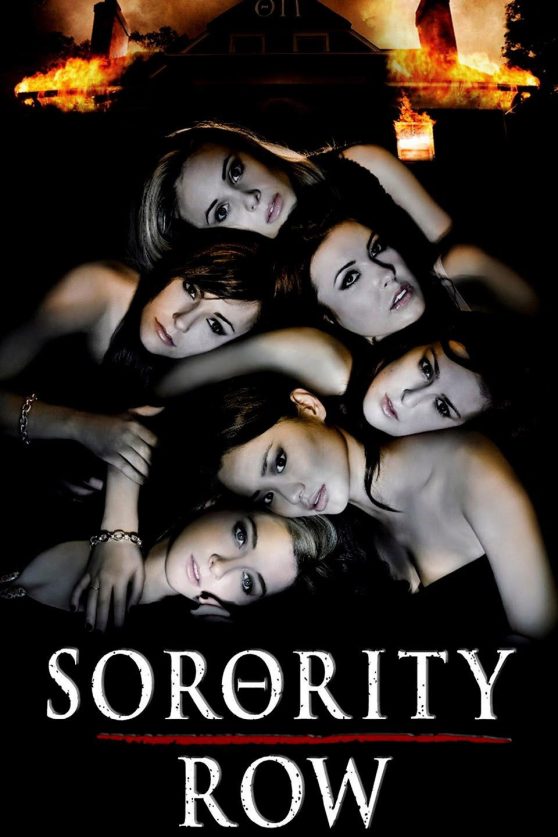
7. Sorority Row (2009): I remember seeing the trailer for this and immediately telling myself I needed to see it. Obviously the trailer made it seem like a straight forward slasher. I saw this before The House on Sorority Row. Even though this movie is a cross between Mean Girls and Scream it kept me guessing.

8. The Roommate (2011): This may not be considered a “slasher” but thinking of Sorority Row made me think of this. And it reminded me of Leighton Meester’s character Rebecca. I love the character Rebecca, she’s obsessive and does a whole bunch of messed up stuff to get what she wants. Legit putting this movie right on as soon as I finish this.

9. Sleepaway Camp (1983): In my opinion; this movie is better than Friday the 13th. Sleepaway Camp is one of my favorite films of all time for the interesting characters, a setting where killing is unexpected, the killer’s revelation and motivation at the end, and just because I find it kind of scary at the same time!

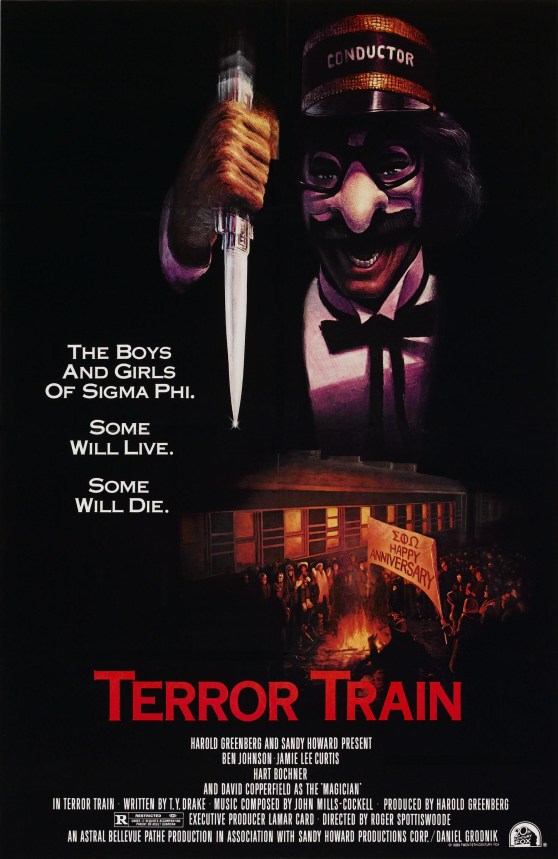
10. Terror Train (1980): “Some will live; Some will die” it’s pretty straight to the point if you ask me. When I first saw this film I thought it was going to be Halloween on a train, and boy was I wrong. This film statistically came out after Halloween but it was one of the first films that got me thinking. The ending is very clever and the plot is very simple: “Psycho comes aboard to exact revenge.”

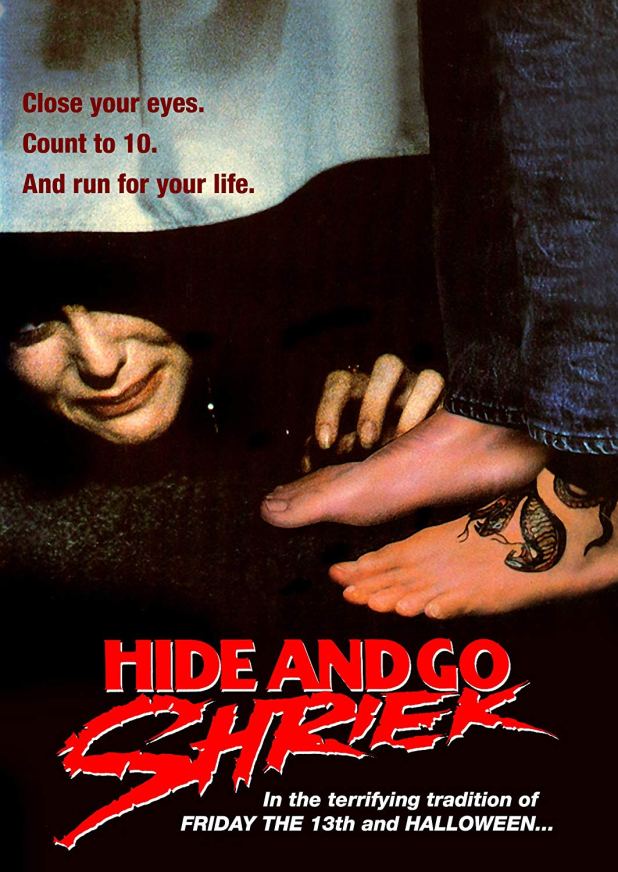
Hide and Go Shriek (1988)

The poster for this says it all: In the tradition of Friday the 13th and Halloween

Notice: It doesn’t say from the makers of. Or from the people who brought you.

Also known as Close Your Eyes and Pray in the U.K., this movie is all about a bunch of teens having a graduation party in a furniture store before they’re stalked and slashed by a cross-dressing killer. Obviously, the movie Chopping Mall doesn’t exist in this universe, because I’d never celebrate in a furniture store after that one.

After the murder of a hooker, we get right into the story, as four couples all gather in the aforementioned furniture store without realizing that an ex-con is living in the basement.

A game of hide and go seek turns into two different sexual situations that are broken up by the cross-dressing killer, who uses a trident to kill the first two of many. And of course, despite those two being missing, the gang continues its carnal lock-in and just goes to sleep.

This is yet another continuation of the trope of sex equals death. There is, however, an amazing kill in this one where an elevator completely severs the heads of one of these teens.

It also has an amazing reveal at the end: the killer ends up being Fred’s gay prison lover, who feels like the kids were coming between them. Yes, Fred was dating all of the kids. That makes sense, Zack. Yes, Zack is the killer’s name. Have you ever heard of a frightening killer named Zack?

Director Skip Schoolnik also edited Halloween 2 — the original — so he should know a thing about a good slasher.

You can get this from RoninFlix.

2019 Scarecrow Psychotronic Challenge: Day 24: Pink Plastic Flamingos (2017) and Project Skyborn (2014)

Day 24 Short Attention Span Theatre: Watch some shorts or anthology things

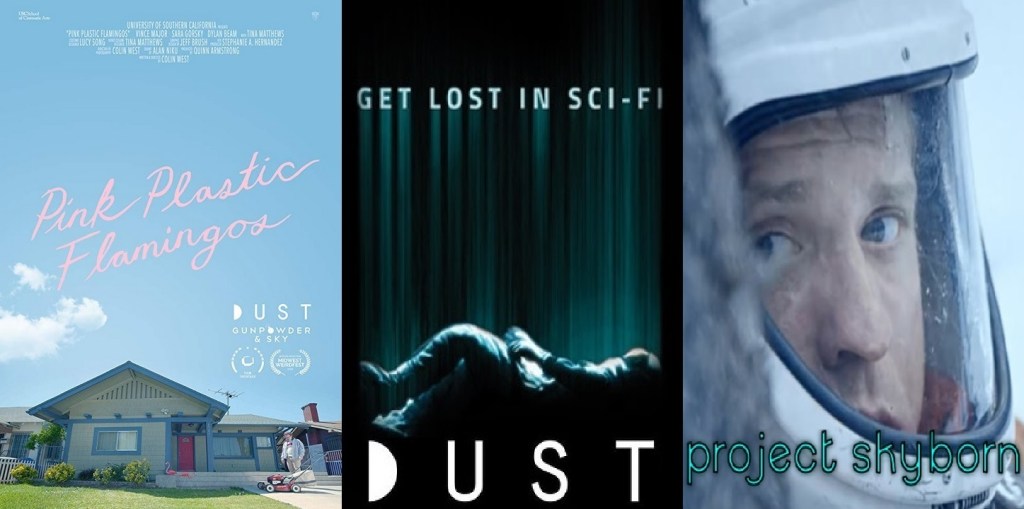
This 24th day of Scarecrow Video of Seattle’s Psychotronic October Scarecrow Challenge of 31 movies in 31 days is tailor made for the binge-watchable sci-fi films at DUST (make your own anthology film!). Their portal features science fiction shorts from emerging filmmakers obsessed with aliens, robots, space exploration, technology, and the human experience in space.

There are so many great films that rival the imagination and budgets of most bloated Hollywood productions to be enjoyed on DUST. But I chose to review two films that eschew dialog. Films that successfully use subtext over dialog is an art form not easily mastered. And these two films are magna cum laude.

Writer/directors Colin West, of Pink Plastic Flamingos, and Marko Slavanic, of Project Skyborn, understand the pitfalls of including more dialogue than is necessary to convey a story. They understand that films conveying a tale with images and not words make for a more lasting impact.

Think about the perpetual jaw-drop you experienced with 2001: A Space Odyssey (1968). Or being mesmerized by Albert Lamorisse’s The Red Balloon (1956) and Jean-Jacques Annaud’s Quest for Fire (1981) and The Bear (1988). Or the captivation experienced with Kim Ki-duk’s 3 Iron (2004) and Moebius (2013).

Such are these two films.

Pink Plastic Flamingos

In my September 2019 “Post Apoc Month” reviews for the European dystopian dramas Kamikaze ’89 (1982) and Docteur M (1990), we discussed the detriment of technological controls against humanity.

That human-technological dependence on our phones and its related apps—that we use to complete the mundane tasks of ordering food, deciding what food we need to restock the fridge, or cleaning our floors (an iRobot Roomba makes an appearance in the film)—is addressed with Colin West’s sixth film. West, however, goes deeper with his technological statement: it’s also a satire on the drudgery of the domesticated housewife and the human-emotional disconnect.

Pink Plastic Flamingos is comedic tale about a man, his family . . . and his robot. George (Vince Major) hates daily chores. He hates mowing the lawn. Even making sure his daughter, Emma (Dylan Beam), is safe and secure in the car gets on his nerves. He hates any social obligation, even to his own wife, Marilyn (Sara Gorsky).

And how dare she leave a note for him to do the dishes. Then, with the foot bump of a Roomba (that speaks the film’s only “dialog”: a foretelling, “Caution”), George has an “aha” moment to rid him of these bothersome tasks.

So with a lawn mower, a computer, and car parts from his garage out steps a Futurama-by-way-of-Tony-Stark solution to all of his problems. Now he can relax in a lawn chair with a Styro-cooler and lounge at the pool.

And all is well until the robot takes over his life. And he loses is wife and daughter to the more attentive robot.

Technology: Be careful what you wish for.

Project Skyborn

The purpose of film is to suspend your disbelief and engage your mind. Such a film is the sci-fi actioner, Project Skyborn. As with Anton Doiron’s inventive, sci-fi-on-a-budget space pleasure cruise that is Space Trucker Bruce, Project Skyborn is a case of giving a filmmaker an easily eBay-acquired flight suit, a few feet of 25mm flexible electrical conduit, some hose-band clamps, and two Thermos flasks and you get a film that rivals any Matt Damon or Brad Pitt astroromp.

In this Oblivion meets Hunger Games mind bender, Astronaut 42 (William Buchanan, U.S TV’s NCIS “Devil’s Triad”) wakes up in a snowy, wooded landscape—possibly a moon of a distant planet. He’s been airdropped into a virtual reality game zone, equipped with a technologically-advanced rifle and a photograph. And the rifle’s on-display timer is counting down. And he’s just been acquired in a mysterious opponent’s crosshairs. Then an electronic voice advises how much “breathable oxygen” his suit has left. The first shot rings out. . . .

You can visit with Colin West and Marko Slavanic at their respective websites for more information about their films.

DUST is always looking for content. The future awaits at Facebook, Watch Dust, and DUST You Tube for science fiction filmmakers with fully completed, ready to watch films.

And speaking of anthologies: DUST edited an hour long “anthology” with a collection of recent sci-fi shorts from their library: Time is a Place, Telepathy, Atoms of Uncontrollable Silence, Falling Apart, Again, and The Two of Us.

Cockpit: The Rule of Engagement

Sara Gorsky of Pink Plastic Flamingos will soon star alongside Ronnie Cox (1972’s Deliverance, In the Line of Duty: The F.B.I Murders) in Demon Star, the feature film that grew from the award-winning short, Cockpit: The Rule of Engagement. You can learn more about the films of writer/director Jesse Griffith at Griffith Pictures You Tube.

 About the Author: You can read the music and film reviews of R.D Francis on Medium and learn more about his works on Facebook. He also writes for B&S Movies.


Banner Image by R.D Francis. Pink Plastic Flamingos image courtesy of Colin West. Center image courtesy Facebook DUST; manipulated by R.D Francis. Project Skyborn image is not an official poster; manipulation by R.D Francis based from still courtesy of Marko Slavanic; text courtesy of PicFont.

2019 Scarecrow Psychotronic Challenge: Day 24: Ugetsu (1953) and Kwaidan (1964)

Day 24 Short Attention Span Theatre: Watch some shorts or anthology things (two-fers allowed)

My Dr. Jekyll promised that my celluloid Mr. Hyde would not spree a master thesis portmanteau for this Scarecrow Challenge with an embarrassing display of my obsessions for the British anthology oeuvre of Milton Subtosky and Freddie Francis. And my nostalgia for celluloid with Amicus and Hammer title cards. And of my indifference to most any modern horror omnibus patch-hack jobs lost in the shadows cast by Dead of Night (1945). And that I would not lecture you on the literary-influence minutiae of the Gothic short-fiction and anthologies of Ambrose Bierce, Sherdian Le Fanu, Nikolai Gogol, Gaston LeRoux and Guy de Mausspaunt, along with the psychological-fictions of Johann Wolfgang von Goethe.

Yes, Goethe and Gogol were right: I’ll never be satisfied. I’ll never be satiated by any modern anthology of psychological, slasher, or British horror-cloned short stories patched together with an asthmatic-weak—or eschewing all together, a strong and crucial—linking device to hypnotically float the viewer through five chilling stories. Or short-sell me with three stories. Or arduously torture me with seven stories. We know that it’s cheaper to film three stories instead of five and it’s special effects-economical to shorten your tales and create seven stories. You can’t fool us.

If you’re a frequent visitor to B&S Movies, you know your anthology flicks. And that’s what makes it so difficult to meet this Scarecrow challenge. To do this right: I need to dig deeper into the crypts than Asylum, Bizarre, Dr. Terror’s House of Terror, Tales from the Crypt, Tales That Witness Madness, Torture Garden, The Vault of Horror, and From Beyond the Grave, and the films in this Ten Horror Anthologies recap.

Ugetsu

An jidaigeki or “period drama,” this Japanese ghost tale is based Ugetsu Monogatari (Tales of Moonlight and Rain), an Edo-period 1776 collection of nine supernatural tales by the Japanese author Udea Akinari, itself based on supernatural tales from the Ming Dynasty (1300 to 1600s).

Unlike most anthologies working with a patchwork of three to five tales with no colligative narrative outside of a loose wrapping device, director Kenji Mizoguchi (you know his 1941 film The 47 Ronin via the 1994 Japanese and 2013 American remakes) chose to work with two segments from his literary inspiration: “House Amid the Thicket” and “Lust of the White Serpent.” He binds them as one fluid story—not two separate tales lacking a narrative-relationship beyond an antagonistic storyteller serving a comeuppance to the morally defective.

“Lust of the White Serpent,” with its tale about a succubus as an incognito princess who takes advantage of a man’s lustful desires and disloyalty, serves as the tale’s prologue, while “The House Amid the Thicket,” deals with a man who returns after a long absence on his greedy quest, only to meet the ghost of his dead wife. In addition to Udea’s book, Kenji wove Guy de Maupassant’s 1883 short-narrative Décoré!, a tale about a man who greedily sacrifices his family with his obsession to become a great, honored warrior: he does; and in “payment” his neglected wife becomes a prostitute.

Set in the 16th century, Genjūrō, a poor potter with greedy dreams, takes his wares into the city with his friend, Tōbei, who dreams of leaving his humble farming community to become a samurai. A sage warns Miyagi, Genjūrō’s wife, on the dangers of her husband’s greed and that he must work with the village to prepare for an attack. Genjūrō and dismisses the warning and instead works long hours to finish a pottery lot.

As predicted: the army destroys the village. Not even the aftermath of the attack that uprooted Genjūrō and Tōbei’s families squelches Genjūrō’s greed; he continues obsessing over achieving wealth through his wares. This takes the two families on a supernatural journey, as they first encounter a boat-stranded ghost across a fog-shrouded lake that warned them to go back to their homes; instead Genjūrō and Tōbei return their wives to shore and abandon them as they continue onward to sell the pottery. After taking his share of the profits, Tōbei buys samurai wares and becomes part of a clan. Meanwhile, his wife, Ohama, is raped by soldiers.

Not only greed envelops Genjūrō, but lust appears in the personification of a noblewoman and her female servant. They order several pieces of pottery on behalf of Lady Wakasa, as the cursed Kutsuki mansion that was attacked by soldiers that murdered all who live there, is being rebuilt. Lady Wakasa seduces Genjūrō; assuming his wife and child, in the midst of the upheaval in his land, are dead: he marries her. However, Miyagi and her son are, in fact, alive: she too is attacked by starving soldiers on the quest for food and she’s murdered with her son abandoned (and adopted by others).

The cowardly Tōbei, so desperate for fame, steals the severed head of a general to present to his commander. When he returns home to show his wife he achieved his goals, he discovers that, in order to survive in his absence, she became a prostitute.

Genjūrō meets his comeuppance as well. A priest tells him that the noblewoman is a ghost and Genjūrō discovers that his new wife, Lady Wakasa, and her servant are ghosts—and the Kutsuki mansion burned to the ground months prior. A broken man, he returns home to search for his wife, and he finds her, but comes to discover that, she too, is a ghost. She whispers to him, “I am always with you,” and he continues to make his wares, trapped by the outcome of his greed.

Ugetsu became available for the first time as Region 1 DVD in a two-disc DVD through The Criterion Collection (2005). For the horror fans across the pond: Eureka Entertainment issued a Region 2 DVD as part of their Masters of Cinema series (2008; 2012 Blu-ray). There’s a rip of the Criterion version on Daily Motion. VHS purists can search the aftermarket for the subtitled tape issued by Home Vision Entertainment.

Kwaidan

You usually do not hear critics drop the words “beautiful” and “stunning” in the dark realms of horror anthologies (not even for the ’70 Amicus ones), but those other films aren’t Masaki Kobayashi’s hauntingly lush, 160-minute supernatural tale. He breaks away from the omnipresent five-story tales (and the cheap jack three-story tales) with an ingenious “nature” metaphor: he tells four stories set during a different season of the year. This celluloid feast for the senses of Japanese Edo-period horror tales (“Kwaidan” translates as Ghost Tales or Ghost Stories) are adapted from Kwaidan: Stories and Studies of Strange Things (1903) by Greek short-story purveyor Lafacadio Hearn, who has a propensity for writing stories based on his love of the orient and his adopted home of New Orleans, Louisiana.

While many U.S horror fans, as with Ugetsu, have not heard of Kwaidan, Hollywood’s directors sure have: déjà vu is in full effect with these tales of Kobayashi’s masterpiece, which inspired many post-witch and vampire tales in its mists. In particular: Tales from the Darkside: The Movie (1990; the production team is also responsible for the EC Comics omnibus Creepshow 2) lifts Kwaidan’s second story (that’s missing from the 125 minute-chopped DVD reissue) for its own third story, which gooey-trashes Kobayashi’s ethereal vampire tale with a head-tearing incubus-gargoyle.

So caveat emptor ye consumer-shelf stuffers of physical media: While Kwaidan’s two hour forty minute run time grossly violates the Scarecrow Video “short attention span” edict for this 24th day of this Psychotronic Halloween celebration, avoid the 125-minute prints at all costs and stick with the original 160-minute version. Ah, but double caveat: the 1964 original, 183-minute edit is now commercially available.

The seasonal-supernatural linked tales begin—and harkens the earlier fate of Genjūrō and Miyagi in Ugetsu: In “The Black Hair”: A man leaves his faithful wife for his own adulterous pursuits, when he returns to her years later; he discovers she is a ghost.

In the next season, it’s the tale of “The Woman of the Snow” (the story that’s missing from the 125-minute print): A weary traveler who, as did Genjūrō, encounters his own “Lady Wakasa”; he’ll survive his encounter with the alluring vampire if he promises to never speak of her existence.

As the seasons change, we learn of the fate of “Hoichi the Earless”: A traveling madrigal doesn’t get what he expects when he covers his body in magical symbols to protect himself from evil spirits.

Finally, the seasons comes full circle “In a Cup of Tea”: A samurai quenches his thirst, only to discover he’s now possessed by a warrior’s ghost cast inside the teacup.

Janus Film’s The Criterion Collection completed a 2K restoration of Kwaidan (DVD and Blu-ray) of the original, three-hour Japanese version that was initially cut to 160 minutes for its 1965 U.S premiere. It’s the first time the 183-minute version has been commercially available. You can watch this restored version via the official You Tube page of Janus Films VOD and purchase direct from The Criterion Collection.

And while we’re talking Edo-period Japanese ghost-horror stories (but it’s not an anthology): I’d like to suggest Onibaba (1964; Demon Hag) as a companion watch to Ugetsu and Kwaidan. I will give you no plot spoilers on this masterpiece of horror. You can watch the trailer and the subtitled DVD rip on You Tube. Another masterpiece written and directed by Kaneto Shindo is the equally creepy Kuroneko (1968; The Black Cat). There’s no online rip, but you can watch the trailer on You Tube. You can learn more about Shindo and his two films with this 15 minute documentary on You Tube.

* Sadly, the embedded trailers and clips from the films are continuously deleted. Search for them on your preferred video hosting portal.

About the Author: You can read the music and film reviews of R.D Francis on Medium and learn more about his work on Facebook.

2019 Scarecrow Psychotronic Challenge: Day 24: From A Whisper To a Scream (1987)

DAY 24: Short Attention Span Theater: Watch some shorts or anthology things.

Jeff Burr and fellow director Kevin Meyer dropped out of USC to finish their American civil war drama Divided We Fall. Bur would follow that up with this film, which somehow got Vincent Price on board.

So how’d that happen? Burr would tell Michael Varatti, “The producer and I got his address from a celebrity address service, and we went up to his door with the script and a bottle of wine in hand.”

Amazingly, they weren’t shown the door. In fact, Price himself answered it. “He had every reason to ignore us, and even if it was on a polite level, he could have said, “Okay boys, contact my agent,” but he was just so gracious. He invited us in, sat and talked with us for about 15 minutes, took the script, and that’s how it all started.”

Other than Dead Heat, this would be Price’s last horror role.

As for Burr, he’d go on to direct Stepfather II, The Texas Chainsaw Massacre III, Puppet Master 4 and 5: The Final Chapter, Pumpkinhead II: Blood Wings and many more.

After watching an execution, reporter Beth Chandler travels to the small  Tennessee town of Oldfield, where historian Julian White (Price) tells her four stories about the sinister past and present of the town.

First, a grocery clerk (Clu Gulager!) tries to win over his boss and all hell breaks loose. This segment may be why this movie was retitled The Offspring for its U.S. theatrical run.

Then, a wounded man (Terry Kiser, Bernie from Weekend At Bernie’s) learns the mysterious secret of eternal life.

In the third story — and perhaps the most intense — a glass eater falls for an innocent young girl and pays for it, thanks to his previous relationship with the carnival’s snake woman (Rosalind Cash, The Omega Man).

Finally, after a Civil War battle, Union Sgt. Gallen (Cameron Mitchell!) and his men discover that the town of Oldfield is populated by war orphans who they don’t take as seriously as they should.

Two-time Bond girl Martine Beswick — and Sister Hyde from Dr. Jekyll and Sister Hyde — shows up, as does Lawrence Tierney and Miriam Byrd Nethery (who would play Mama Sawyer in Burr’s Chainsaw film. It’s also the final role for Angelo Rossitto, who was Master in Mad Max Beyond Thunderdome, along with roles in FreaksGalaxinaThe Trip, Al Adamson’s Dracula vs. Frankenstein and so many more films.

While not as solid as an Amicus portmanteau, this certainly has its merits. You can check it out yourself on Vudu or order the blu ray from Shout! Factory.

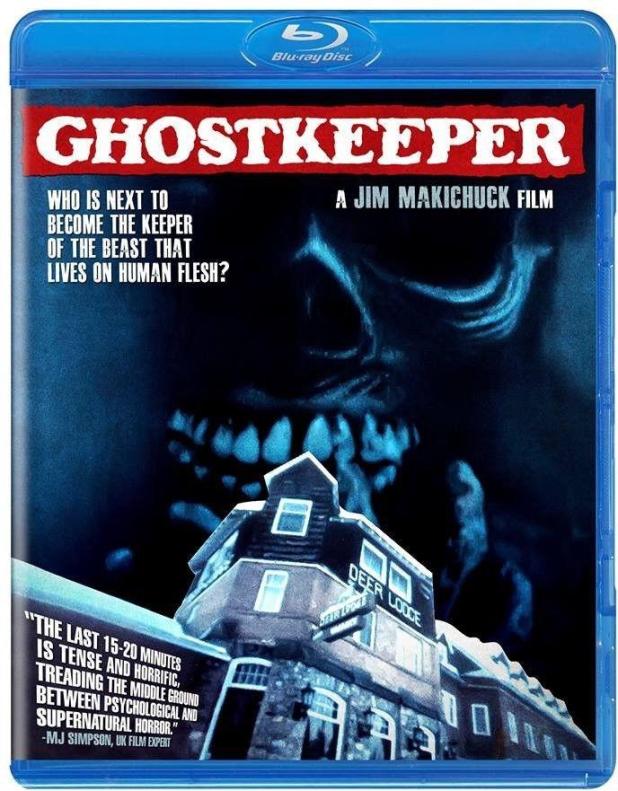
Ghostkeeper (1981)

Filmed in Banff, Alberta and using the Canadian tax shelter rules that have produced so many of our favorite films, Ghostkeeper rises above its unstable finances and near-unseen theatrical run to become a fun piece of somewhat forgotten slasher fun.

This one is all about the Wendigo, even if it spells the monster’s name Windigo. It’s a monster that lives off human flesh and is one of Canada’s few unique monsters, but the movie doesn’t spend all that much time discussing it.

Basically — if you wanted another snowmobile slasher after The Chill Factor, here it is.

Jenny, Marty, and Chrissy spend New Year’s Eve in the Rocky Mountains but end up seeking shelter from a blizzard in an abandoned hotel. There’s an older woman who claims to live there with her two sons.

Of course, one of the sons named Danny ends up drowning Chrissy, slitting her throat and putting her in a freezer. That’s also where the Wendigo lives in the body of her other son.

By the end, Jenny has shotgun blasted the old woman and assumed her mantle of the Ghostkeeper, which takes hours to happen and plenty of darkness to wade through. But the end is really effective, so if you have the patience to take it this far, the movie is totally going to reward you.

The music for this comes from Paul Zaza, who also composed music for My Bloody Valentine, Curtains and Prom Night. In fact, most of the music in that Jamie Lee Curtis disco dancing slasher was recycled from this film.

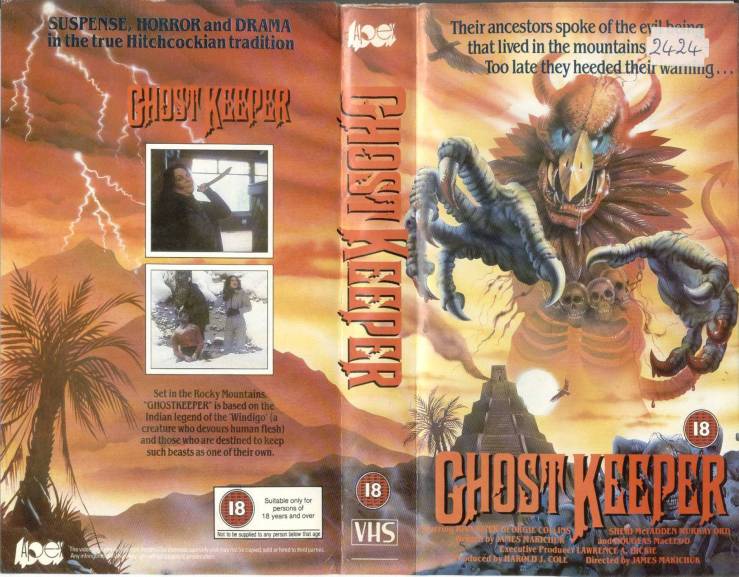
I just want someone to explain to me why the UK VHS of this movie has a mutant chicken rising from an Incan temple under the hot sun. Because…I kind of want to watch that movie, too.

You can watch this for free on Tubi or order it from RoninFlix.

Slasher Top Tens: Roger Braden

ABOUT THE AUTHOR: Roger Braden runs the Facebook group Valley Nightmares, which is all about the history of the films that played at the drive-ins and theaters in his home state of Kentucky. Besides that, he loves metal as much as I do and brings kick ass moonshine to the drive-in, which gains my eternal friendship. Normally, I’ve had everyone do their fave slashers, but Roger hit his ten fave horror films and I loved his list!

First a disclaimer about this particular list.  I have made several Top 10 lists over the years, by genre, decade and overall.  This is my Top 10 Horror films based on Flickchart.com where I’ve been ranking movies for a little over 5 years now.  This has a few different movies than my “official” list, but I’m alright with that, hope you all dig my list.

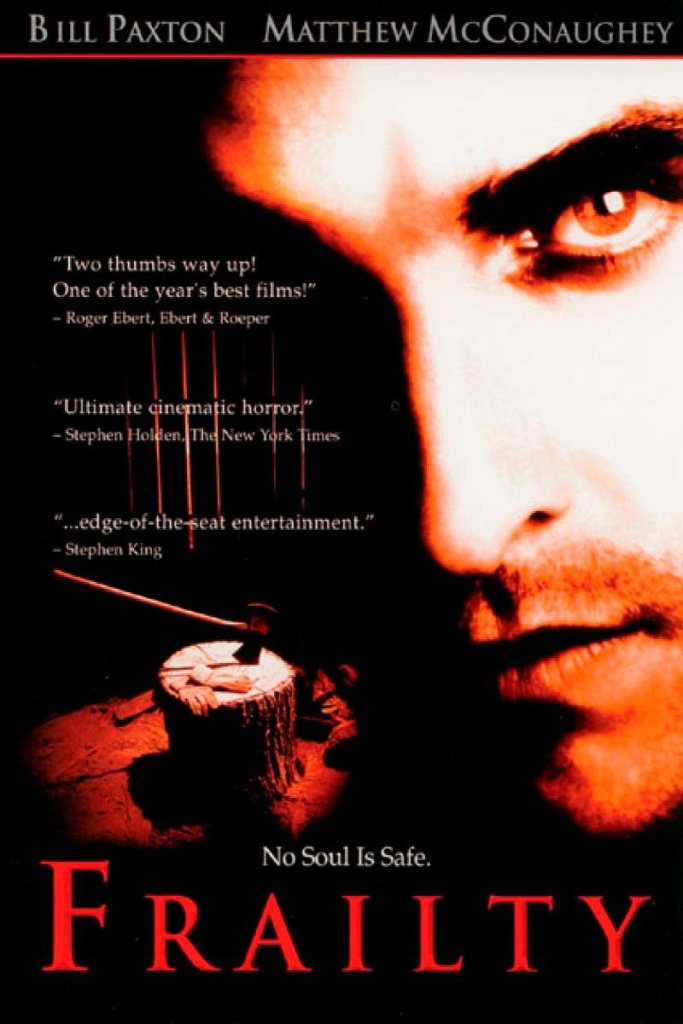
10. Frailty (2001): When the “God’s Hand Killer” returns to a small Texas town after many years, a man shows up at the office of an FBI agent convinced he knows who the killer is. But before he can tell the agent who the killer is he has to tell him about his childhood with his religious father, who “saw demons” and made his young sons become his “demon-slaying” helpers.

A fantastic cast helps make this a thriller that will keep you guessing just what the fuck is going on as the story unfolds.  And then you find out and it’s a shocker! Non-stop suspense, shocking violence, that sometimes involves children and a great storyline makes this really well made Horror film one you’ll want to discuss immediately after watching.

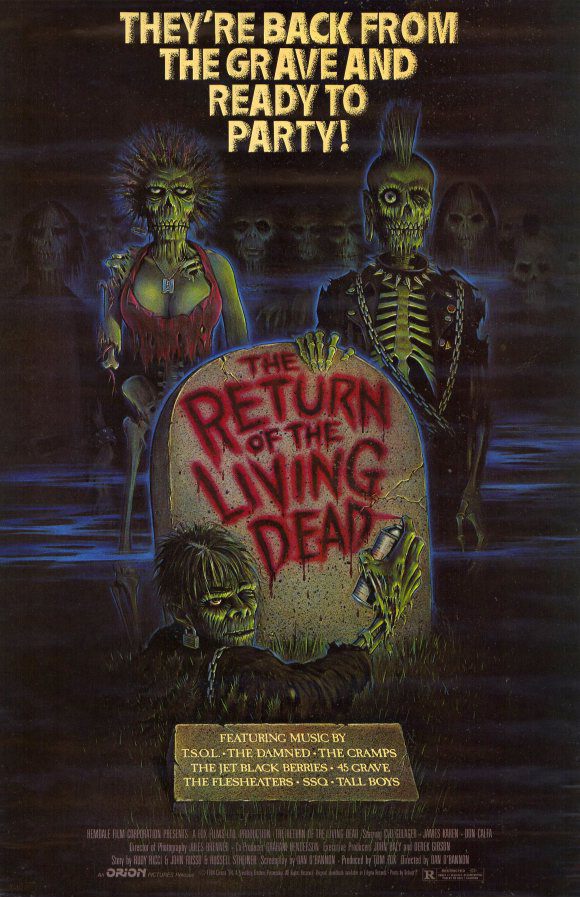
9. The Return of the Living Dead (1985): When toxic gas is accidentally released at a medical supply building everything dead in the building comes back to life. Disposing of the infected items in a nearby crematorium proves to be an even bigger mistake.

I love everything about this movie.  The story, characters, music, gore, humor, whatever is in this movie I love it.  Yeah, it changed the rules for a traditional zombie film and for me it’s all the better for it.  These zombies run, think, talk and attack all because they want to eat your brains because it “hurts to be dead” and brains relieve the pain.  I live in Louisville, KY and saw this opening night in a mostly full theater, the reveal at the end made us gasp and clap. After the end credits rolled we gave it a standing ovation.  For me it’s a perfect mix of horror and humor with a fantastic soundtrack that I still watch 2-3 times a year.

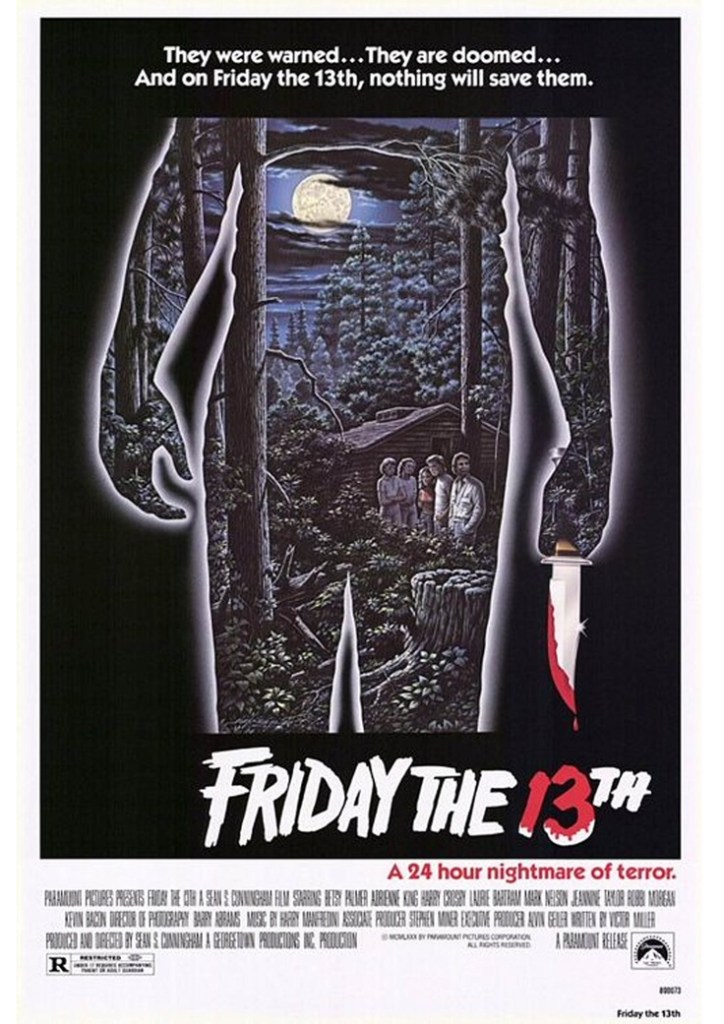
8. Friday the 13th (1980): 

Camp counselor’s opening a long closed summer camp with a bad history discover that they should have left the place closed.

A film that just felt like it was really happening as you watched it, and for me still does.  The POV and “hidden” camers put you in the movie, and it’s a violent one from the start. The whole finale wore you out when you first watched it, how the Hell could you guess all that was going to happen?!  Solid flick that helped fuel the entire slasher era.

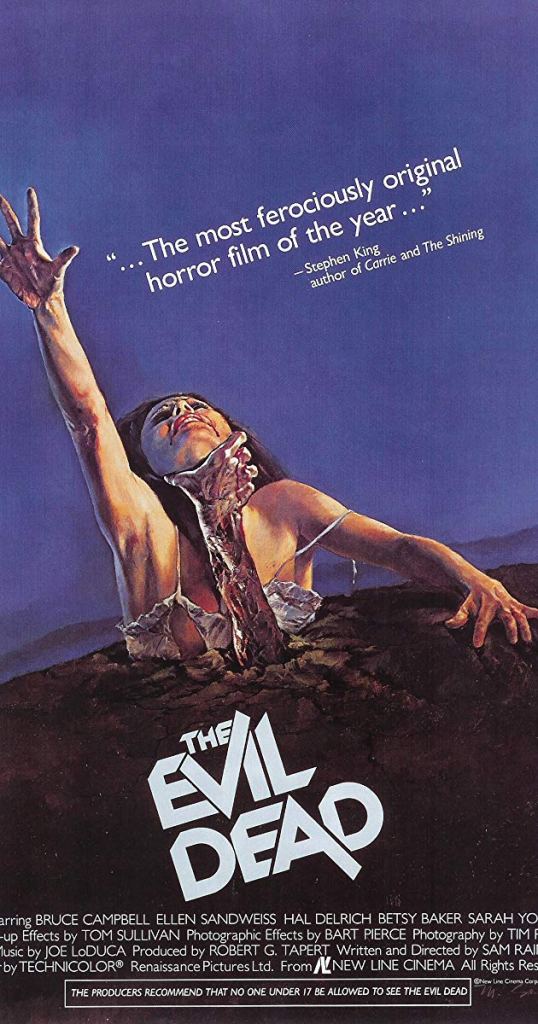
7. The Evil Dead (1981):  While vacationing in an isolated cabin in the Tennessee woods, five friends discover and read from an ancient book that unleashes pure evil.

Low budget film that set out to shock, and shock it does.  Violent, nasty and mean (pencil scene anyone?), this changed how we looked at Demonic possession films.  The camerawork keeps you off balance and helped create a whole new way of filmmaking. And our hero Ash, was unlike any hero we had met before.

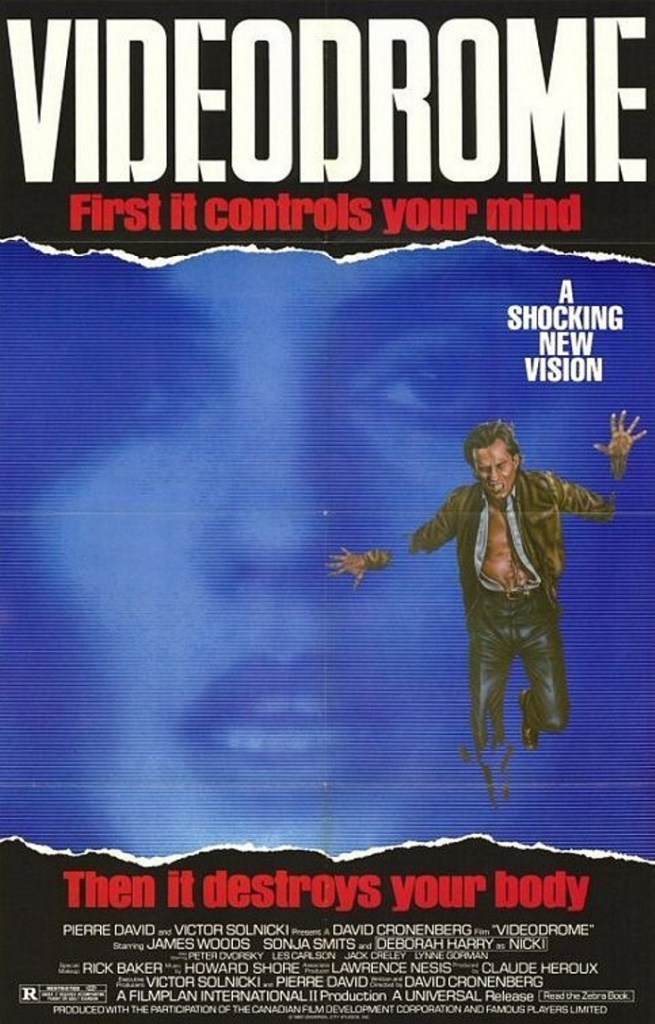
6. Videodrome (1983): Low budget TV president Max Renn loves to shock the airwaves with his alternate programming.  But when a show, “Videodrome”, is brought to his attention he might have found a show that is all to real.

First saw this as a VHS rental and I knew it was going to get multiple viewings.  The story and it’s meaning are deep and all but the most avid Horror fans embraced it at the time, Hell it only played here for one week. But getting to watch it as a rental, and on cable TV, numerous times and realizing it’s message was a warning of what we were becoming.  And it’s something we continue to stumble towards. My favorite Cronenberg film.  

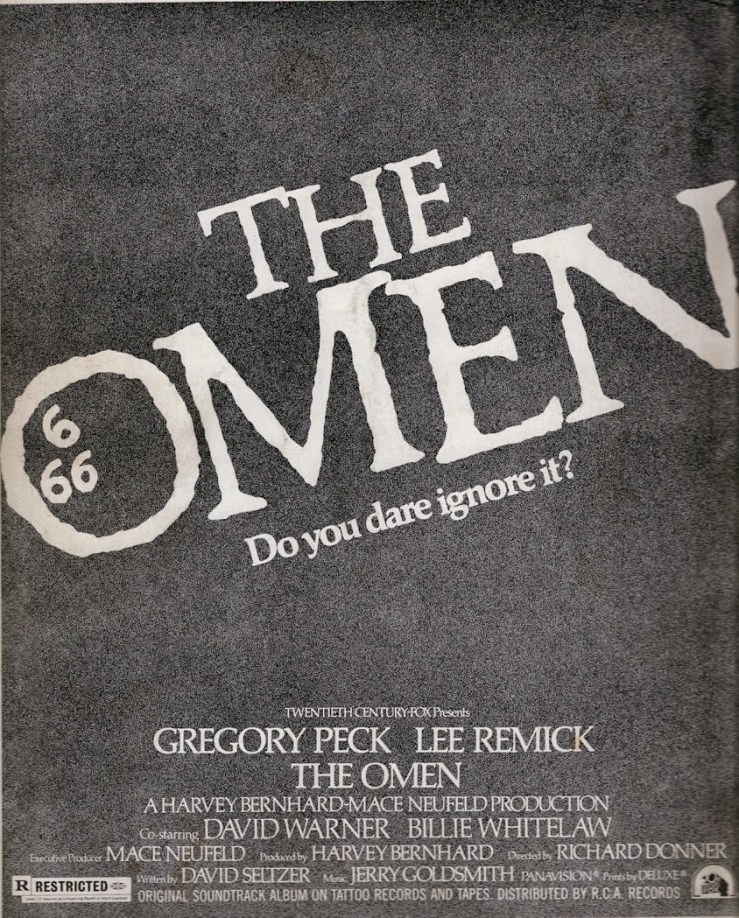
5. The Omen (1976): When a U.S. ambassador’s son dies during childbirth, he’s offered another newborn boy whos mother died giving birth.  But as the child gets older, strange events, death and a Priest’s warning indicate that the child might actually be the Anti-Christ.

The build up to this film was everywhere it seemed.  Print, TV, trailers, billboards all warned you to look for the warning signs of Biblical prophecy and that this film was going to show you what was coming.  And it more than delivered with it’s story and scares. Solid casting, locations, an amazing musical score and numerous gruesome deaths all drive this movie.  but it’s little Damien, with his black eyes and mostly emotionless demeanor who sells the film. That evil little bastard is terrifying.

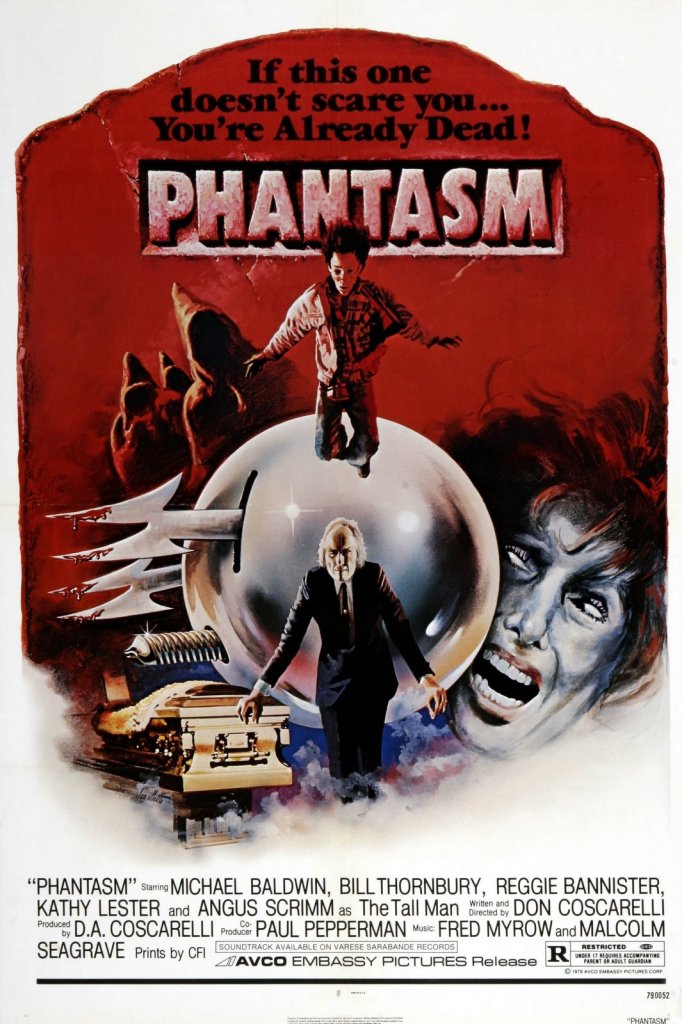
4. Phantasm (1979): A teenage boy tries to convince his brother and his friend that the local funeral home is occupied by a human looking monster who is raiding the cemetary for his own evil plans.

This movie feels like you’re watching a nightmare.  Hooded dwarves roaming the the night, lethal flying spheres, a blind fortuneteller, a nasty bug born of “blood”, and one of the best Horror icons ever, The Tall Man.  Music and a colorful filming style just add to it’s story that works way better than it should. And that’s due to an extremely talented writer/director who’s cast bought into his vision and helped deliver a low budget classic.

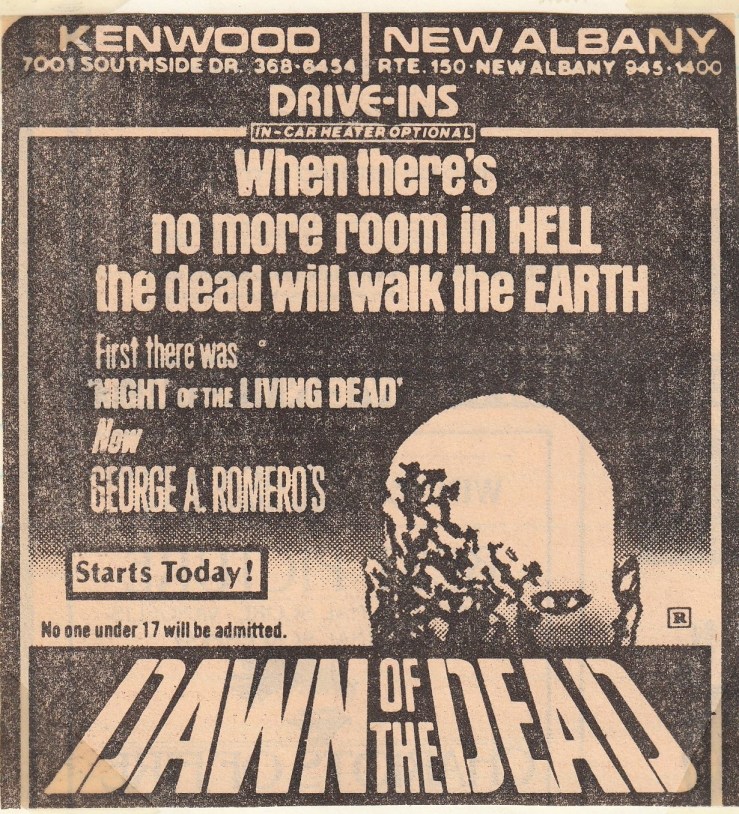
3. Dawn of the Dead (1978-79 US): In this sequel to “Night of the Living Dead” the zombie plague is growing fast and major cities are falling.  Can a traffic reporter, his TV exec girlfriend and 2 SWAT members escape, find refuge and work together to survive the Dead and other bands of survivors?

As much as “NOTLD” changed the zombie film, “Dawn…” re-invented it again.  First saw this at a midnight showing in 1979. Getting dropped into the story as it’s happening is great, it pulls you in and adds to the shocks as the Dead attack and tear bloody chunks out of people.  The gore effects were (still are) incredible, characters that you care about, visual style and a story with a deep message all add up to a movie you can’t help but love. My favorite George A. Romero, and zombie movie.

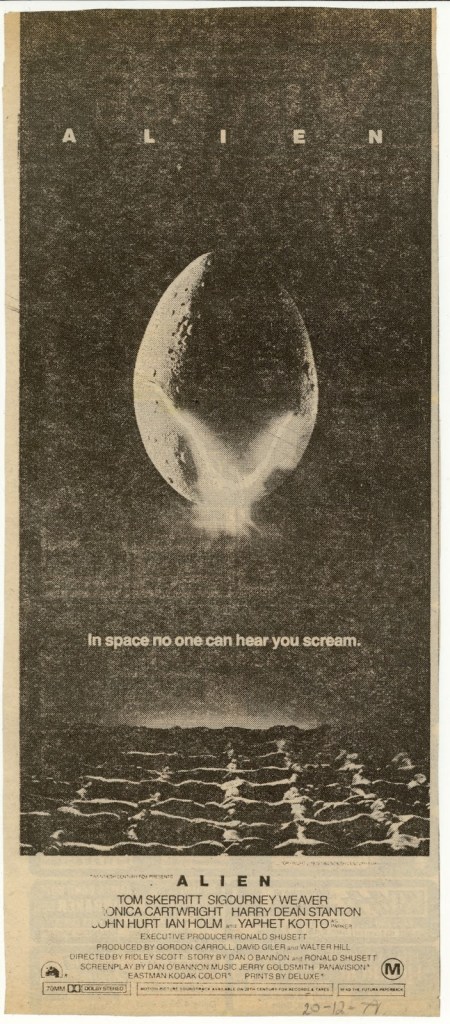
2. Alien (1979): The crew of a spaceship investigate a distress signal from a nearby moon.  After landing, a crewmember is attacked by a facehugging parasite. Soon the crew find out that the parasite is an ever evolving creature, and it’s stalking them.

Another “freak out” movie that felt like you were part of the story.  This big budget sci Fi/jorror flick is so damn claustrophobic despite being set in a giant spaceship, and it’s just darkly filmed enough that you can’t quite see what’s around the next corner. Every part of the movie is top notch and it’s one that still delivers shock after well placed shock.  The ever evolving Xenomorph is horrifying in every growth stage and is my favorite movie creature.

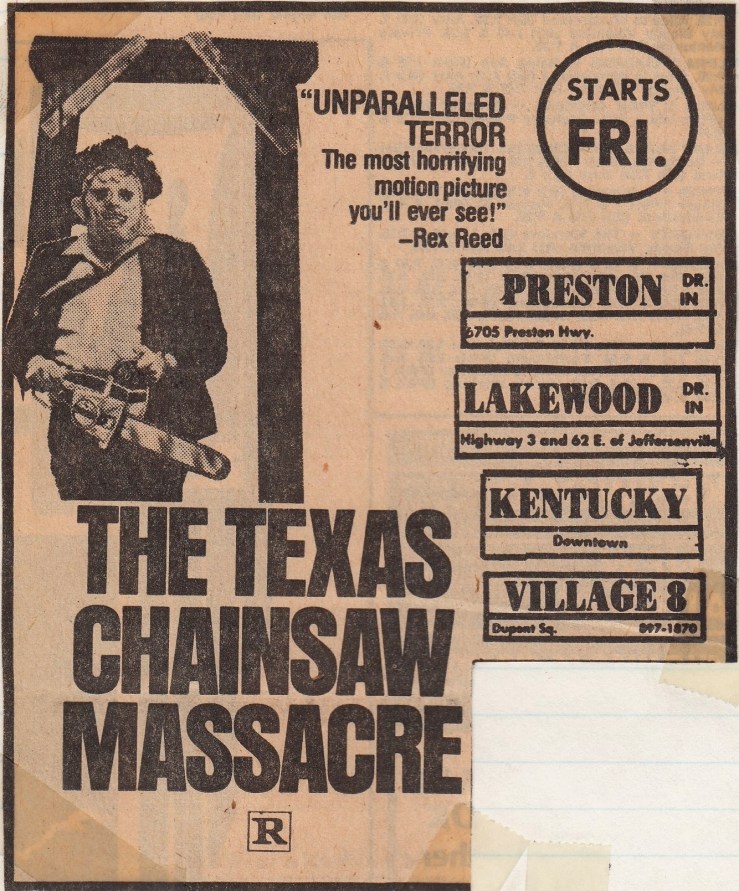
1. The Texas Chain Saw Massacre (1974): A brother and sister travel to Texas to check on their grandfathers grave and visit the old family homestead.

You know you’re in for something special when this one starts.  The opening narration as the words roll up the screen telling of impending death for our characters. Then the credits start rolling with flashes of long dead bodies and weird grating music playing.  Then you drop into the van, traveling across the hot Texas landscape. And you don’t want to be in this movie, bad shit is going to happen, they just told you! Besides that you know that van stank inside. Franklin looked like he could clear a room all by himself.  That so much of the movie takes place during the daytime is another testament to just how solid of a Horror movie this is. Once the violence starts it’s shocking, brutal and it hurts. And you see next to no gore, the film doesn’t need it, your brain imagines that you are seeing so much more than you actually do.  Look, once “Leatherface” makes his explosive appearance you just want the movie to be over… and there’s so much more horrible things that are going to happen. An excellent piece of low budget filmmaking that introduced us to another Horror icon, and his demented family.

No Top 10 is complete without a few honorable mentions, so here are more than a few that I love that could be on the list above as well.

The Thing, The Exorcist, Halloween, Shock Waves, [REC], The Blair Witch Project, Tarantula, Psycho, 28 Days Later, and A Nightmare on Elm Street are all excellent films and deserve their due.

Many thanks to Sam and bandsaboutmovies.com for starting this conversation and having me be a part of it!