CHILLING CLASSICS MONTH: Devil Times Five (1974)

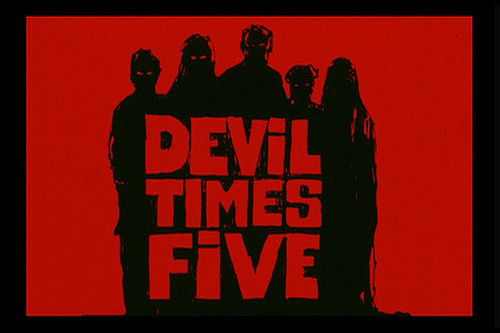
I’ve been obsessed for years with the trailer and artwork for this movie. Throw in the fact that it has 70’s teen idol Leif Garrett amongst its cast of pint-sized psychopaths and it seems like a recipe for my kind of movie insanity. However, I just never found the time to sit down and watch it. With so many movies on our shelves and streaming online, my to watch list is constantly bulging with films all screaming to be enjoyed. Thanks to Chilling Classics Month, I finally got the chance to spend some time with this film and it lives up to what I hoped it would be.

Five children have survived a van accident on a snowy road and unbeknownst to everyone they encounter for the rest of the film, they were on their way to a mental institution for criminally insane young folks. They make their way to the secluded mountain home of Papa Doc, a rich businessman, who has all manner of guests staying with him, like his sex-starved wife Lovely (Carolyn Stellar, who beyond being Leif Garrett and Dawn Lynn’s mother, would go on to design the costumes for the 1978’s utterly brutal Sgt. Pepper’s Lonely Heart’s Club Band), his daughter and her boyfriend, plus Dr. Harvey Beckman (Sorrell Booke, Boss Hogg from TV’s The Dukes of Hazzard) and his wife, Ruth (Shelley Morrison, Rosario from TV’s Will and Grace). Oh yeah, there’s also the dim witted handyman, Ralph (original screenwriter John Durren).

Soon, the power is out, the phones are cut and the kids are killing people left and right. Little actor and budding crossdresser David (Garrett), army lover Brian, Susan the pyro, Moe (Dawn Lynn, who played Dawna in the Walking Tall films) with her plush fish and usage of piranha and last but not least, albino nun Sister Hannah will find their way into your heart, then cut it out and show it to you. Imagine The Bad Seed times five, with none of the great story or acting.

This movie is also known as Peopletoys, Tantrums and The Horrible House on the Hill. Of course, that last title has a Last House on the Left ripoff poster to go along with the similar title.
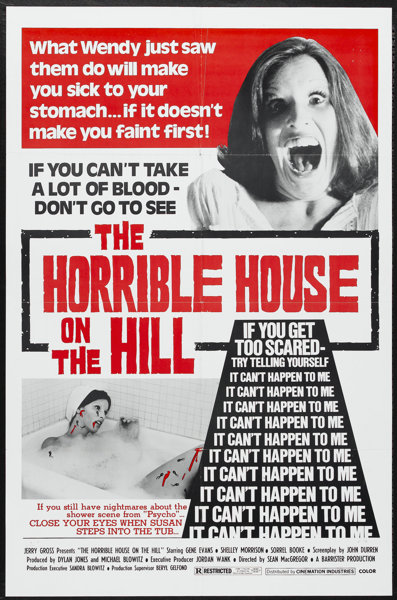
Devil Times Five was distributed by Jerry Gross’ Cinemation Industries, which also brought Son of DraculaTeenage Mother (“She’s nine months of trouble!”), The Black Six and Idaho Transfer to audiences that had to be absolutely bewildered by their level of pure strangeness.

Original director Sean MacGregor was fired from the production after his footage was unusable and David Sheldon finished the film (you can tell that they switched interior locations because there’s no continuity in the backgrounds). By the time those reshoots happened, Leif Garrett had cut his hair, so he wears a wig that you can easily point out several times.

Even stranger, MacGregor was in a psychiatric ward after leaving this movie and also was dating Gail Smale, who played Sister Hannah. That last bit doesn’t seem all that interesting, until you realize that she was underage and that she was given a nun costume and rose-colored glasses to hide the fact that she was so young and a legitimate albino.

Seriously — how crazy is a movie where Leif Garrett watches as his real-life mom is nude and being murdered by carnivorous fish in the bathtub? This had to be a strange thing for people to watch, as Garrett was already well-known as Oscar’s son on TV’s Odd Couple and his sister was on My Three Sons.

If you’re looking for a movie where children annihilate adults that isn’t The ChlldrenVillage of the Damned or Who Can Kill a Child?, then I guess you should watch Devil Times Five. Actually, I kid. This is a goofy little film that is pretty much the horror version of Home Alone. I enjoyed it, but you know, I also have no taste whatsoever.

You can find this on the Chilling Classics set — obviously! — and you can also watch it on Amazon Prime. Want a much better looking version Code Red.
CHILLING CLASSICS MONTH: A Passenger to Bali (1950)

Why would Mill Creek include this on their Chilling Classics set — a made for TV production for CBS’ Westinghouse Studio One that originally aired on March 27, 1950? Who knows — Mill Creek does what Mill Creek wants.

This tale began as a novel, published in 1936 and written by Ellis St. Joseph. It was adapted into a radio play by Orson Welles’ on his Mercury Theater On Air, airing on November 13, 1938, as well as a stage play in 1940 that was directed by John Huston.

The story starts in Shanghai, where the Roundabout freighter picks up a man named <r. Walkes, who claims to be a Dutch missionary headed toward Bali, looking to deliver Bibles and religion. Soon, the truth is discovered — Walkes is a drunken lout, given to speeches and starting fights between the British officers on board and the crew of the ship. And even worse, no port will allow the man off the ship. Now, the Roustabout has become a Flying Dutchman, complete with an evil passenger who can never leave as they endlessly travel from port to port.

Mr. Walkes is played by Berry Kroeger, who was a veteran of numerous genre films like Demon SeedThe Mephisto WaltzThe Incredible 2-Headed Transplant and Raphael Nussbaum’s piece of 1973 strangeness Pets. He’s doing his best Orson Welles here.

The best part of this being on the set is that they didn’t edit out any of the Westinghouse commercials, so you get a great idea of what 1950 TV looked like. Again, I have no idea why this was included, but I still watched it. I’m a completist. And hey — we have an entire month to cover this set.

If you want to see what this movie is like for yourself, it’s streaming for free on the Internet Archive.

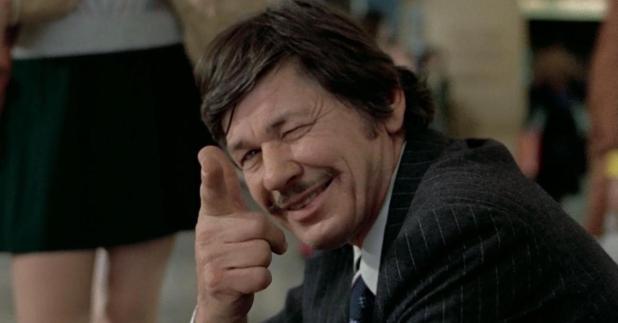
DEATH WISH WEEK: Epilogue

Thanks for staying with us for an entire week of Death Wish. They really are fascinating films, all products of the climate of the years that they were made in and well worth investigating.

Here are a few Death Wish movies and media appearances that I didn’t get to mention:

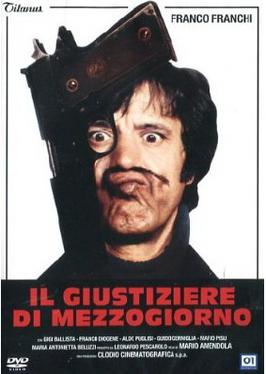
1974’s Il Giustiziere di Mezzogiorno (The Noonday Executioner, which takes its name from Death Wish‘s Italian title Il Giustiziere Della Notte, or The Executioner of the Night) is a parody film where surveyor Franco Gabbian is abandoned by his wife and daughter and takes revenge against dishonest policemen and politicians.

Paul Kersey is inspiring people all over the world, obviously. Take Turkey, for example, where 1975’s The Executioner was a shot for shot remake — in 80 minutes — of Death Wish. Here, architect Orhan becomes a vigilante after his wife and sister are menaced by a trio of street toughs. Just by watching the trailer, I can tell you that I’m hunting this one down with all the tenacity of Bronson going after a ring of drug dealers.

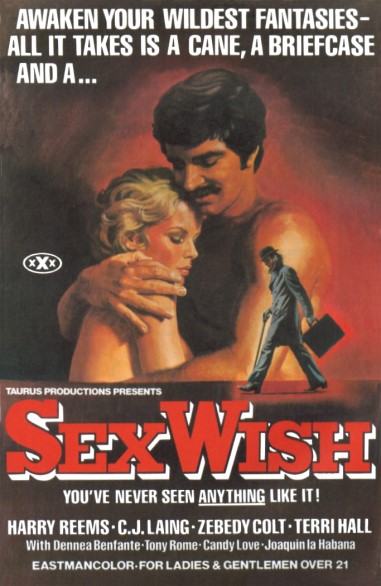
1976 also brought the adult version of Death Wish, called Sex Wish. I’m certain there could have been a more intelligent title. Actually, I’m a little letdown. At least C.J. Laing is in this one. And please keep in mind, it’s for ladies and gentlemen over 21, so please have some decorum.

Cellat was made in 1975 and is about Orhan — the Turkish Paul Kersey — and his wife Filiz, who along with his sister Sevgi and her boyfriend Jahit, have just come back to Istanbul from an escape to the country. Moments after that peaceful time ends, some drugged-up bad guys assault the women, killing Filiz and leaving Sevgi in a coma, much like Paul’s daughter Carol in the original. The police won’t be able to help outside of taking statements. Now, it’s up to Orhan to get the revenge that no one else will for him.

Sokakların Kanunu is a shot on video film from 1986 starring (and co-directed and co-written by) Cüneyt Arkin. It mostly follows the beats of Death Wish 2 while being unafraid to steal music from all over the place.

Mohra was the second highest grossing Indian film of 1994 and it’s an uncredited ripoff of Death Wish 4: The Crackdown.

While not a true sequel, 2007’s Death Sentence is loosely based on the novel Brian Garfield wrote in response to the first movie. It stars Kevin Bacon as a man who takes the law into his own hands when his son is killed by a gang.

Thanks for spending all of Death Wish week with us. Here’s hoping you’ve learned something new or had the chance to discover these films for the first time!

DEATH WISH WEEK: Death Kiss (2018)

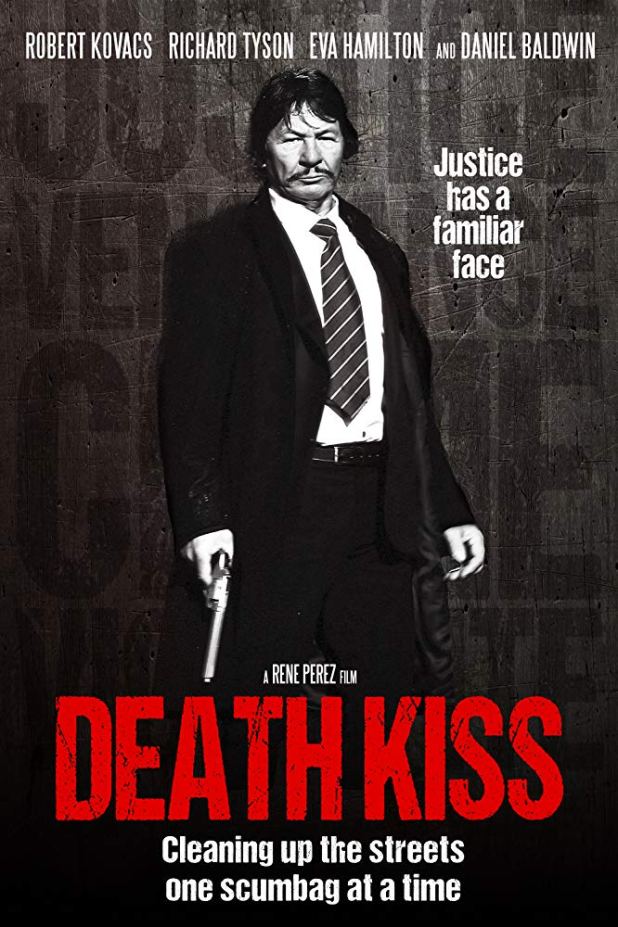
A vigilante with a mysterious past. A city under assault by crime. A young mother and her child that need saving. Sounds like a Charles Bronson movie. And thanks to actor Robert Bronzi, who looks pretty much exactly like the Bronson we know, love and miss, it looks like we get the chance to enjoy one more chance to enjoy one of his films. At least that’s the idea.

Bronzi previously appeared in From Hell to the Wild West, which was also directed by the same director as this movie, Rene Perez. Here, he plays The Stranger, a man who may or may not be Paul Kersey, who wanders the United States looking for wrongs to right. One of those wrongs happened when Ana’s (Eva Hamilton, Ruin Me) daughter was hit by a bullet and handicapped. Since then, he’s left her money to help out of a sense of obligation.

This could be a Death Wish film with all the violence, gunplay, rape and mayhem, thanks to Richard Tyson as Tyrell. One look at Tyson’s IMDB page reminds you he was in Kindergarten Cop, but also shows you that he’s a working actor with double digit roles currently in production.

The part that doesn’t feel like a Death Wish movie is that The Stranger isn’t constantly reminded by an unfeeling God just how much He hates His creation, killing everyone that Paul Kersey loves. Well that and it’s missing any real motivation or actual gravitas behind why The Stranger does what he does. It’s like they wanted to fast forward to the crazy scenes of Death Wish 3 without the hard work and pain that it took for the character to get there. Basically, it’s a video game with no gun scenes, just gunplay.

Director/writer Perez also plays all of the film’s music as The Darkest Machines and the 80’s style synth works pretty well. The special effects feature plenty of exit wounds that spray geysers of blood like a Japanese samurai film, but as they’re often CGI, then feel a little less organic than they should.

Daniel Baldwin also shows up as a right wing DJ that we hear throughout the movie. It seems like he and The Stranger have some kind of relationship where they help one another to get their missions accomplished.

Plenty of reviews have stated that there’s really no story here and that it’s mostly a series of action pieces. Basically, I hope that no one is coming into this movie expecting the emotional weight of Death Wish. That said, I may have an opinion on this film that’s not the highest, but Bronson did say: “We don’t make movies for the critics, since they don’t pay to see them anyhow.”

Disclaimer: I was sent this movie by its PR team, but as you know, that has no bearing on my review.

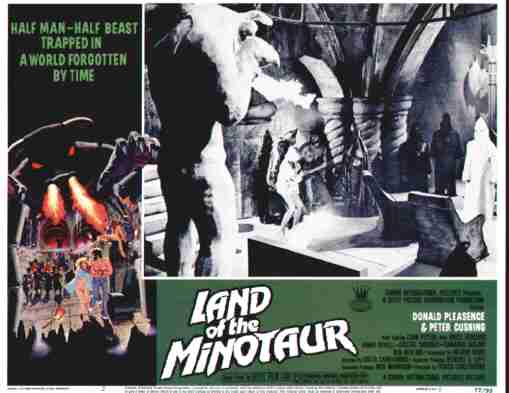
CHILLING CLASSICS MONTH: Land of the Minotaur (1976)

I watch a lot of bad movies. Often, you have to take a part of the movie that you like and use it to get through a film. This one is a case in point. There’s a lot of this movie that would kill the spirit of an average movie watcher. Not me. Not when there are so many hilarious and amazing parts. It’s like giving feedback to an employee: let’s start with a little sugar, some things we like before we really start hammering them with everything they’ve done wrong.

Otherwise known as The Devil’s Men, the first two things you’ll notice good about this film are its two stars; Donald Pleasence and Peter Cushing. This is yet another in the long list of roles that Mr. Pleasence did not turn down. In fact, I wonder what it would have taken for him to refuse to act in a film. True fact: he didn’t even turn down acting roles when he was a prisoner of war in the German camp Stalag Luft I. The longer the film went on, the more things I yelled out at the screen in Pleasence’s trademark shout.

Peter Cushing is so far above this film that it makes you sad to watch his dignified face as he conducts a rather ridiculous ritual to a concrete bull god/minotaur. I can only imagine that his stiff upper lip was sorely tested and he could not wait to get back home to paint his wargaming miniatures and sit at his table at the Tudor Team Rooms in Whitstable. He would never complain, however. It would be beneath him.

The actual movie itself is just a trifle — a cult led by Cushing is kidnapping hippie tourists as they work on a Greek archeological site and Pleasence is an Irish priest who is a friend to the youngsters that joins forces with a private detective to save the kids, growing more and more irritated as time goes on.

Perhaps the most mindblowing thing about Land of the Minotaur is that Brian Eno, of all people, did the music for it. Maybe that, as well as Cushing exploding when Pleasence holds up a glowing crucifix, is enough to say that this movie isn’t a complete waste of time.

CHILLING CLASSICS MONTH: Bad Taste (1987)

Today’s Chilling Classics entry comes from Blake Lynch, who not only knows plenty about movies, but knows plenty of people connected with creating them. I’m really happy that he chose to talk the early career of Peter Jackson. We share a love of Meet the Feebles.

Bad Taste (1987) by Blake Lynch

Preface

Out of all the winners of the Best Picture at the Academy Awards, Peter Jackson may very well be able to claim the strangest directorial debut. The man who would go on to direct greatly nuanced films like Heavenly Creatures in 1994, The Lovely Bones in 2009, and the Lord of the Rings trilogy, began his career by directing the x-rated puppet film Meet the Feebles in 1989 and Bad Taste in 1987.

What’s Bad Taste about? Well, it’s a low budget film set in New Zealand about aliens who want to kill humans for their fast food franchise. It’s the sort of film that isn’t that terribly compelling based on the tagline alone. The film, though, is a wonderfully experimental, bizarre, at times grotesque independent picture that reveals Peter Jackson’s love of trying out new things with the special effects budget.

Production History

Bad Taste began as a 20-minute short film. Eventually, the film turned into a feature and was shot on weekends over a period of four years in Jackson’s home of Pukerua Bay, New Zealand.

The production lasted so long that one of the film’s characters died and another actor’s voice had to be dubbed in during post-production. Another character got married during the production of the film and had to be written out of Bad Taste because of his religious wife’s objections.

There are only four actors visible in the entire film with many other actors hiding behind alien costumes, which were made in Peter Jackson’s mother’s oven. Peter Jackson plays one of the roles and three others roles are played by Jackson’s friends.

Jackson funded the film by himself until the very end when the New Zealand Film Commission awarded Jackson money. The budget was so tight that the production couldn’t afford guns for the characters, camera mounts, a steady-cam device, and many other film essentials.

Drive-In Totals

  • 68 total deaths or .74 kills a minute

  • 1 death by mallet

  • 2 alien kills while a gun is lodged in another person

  • 1 disemboweled seagull

  • 1 alien who has his brain eaten out of his head

  • 1 alien who has his head pulled off and used like a soccer ball

  • 1 death from a balcony fall

  • 1 alien cut in half due to a car collision

  • 5 aliens, 1 house, and 1 sheep destroyed by rocket launcher

  • 2 aliens split in half by a chainsaw

  • 1 house that turns into a spaceship

Plot

There are some ways in which it isn’t very helpful to approach Bad Taste. For one, viewers shouldn’t read much into the dialogue in Bad Taste. There are great stretches of the film that don’t have many words spoken, while other scenes spend way too much time on exposition and unimportant details.

Likewise, it’s not helpful to look for a meaningful story in the film. There isn’t one. The only momentum between the film are changes in location: the cliffs, the house, the car, the spaceship.

I’m not saying Bad Taste is a bad film because it lacks these details. The film is definitely worth watching, if nothing for the glimpse of the genius that would become Peter Jackson. Instead, I’m trying to say that Bad Taste has all of the trappings of a no-budget independent film.

The film begins with the Astro Investigation and Defence Services sending Derek, Frank, Ozzy, and Barry to determine why a whole New Zealand town is now empty. While the streetwise Barry (Peter O’Herne) fends off alien attacks, Derek (Peter Jackson) attempts to look for signs of life in the town.

Immediately after contacting Frank (Minke Minett) and Ozzy (Terry Potter), we encounter by far the strangest scene in the film. Derek tortures an alien named Robert. That’s a neat scene, you might think. It might even remind you a bit about a similar sequence in George Romero’s Day of the Dead. But, what’s completely baffling about this bit of the film is that Peter Jackson plays both the alien who is being tortured as well as the person who is doing the tortured. You wouldn’t be wrong in saying the scene depicts Peter Jackson torturing himself.

Ever the masochist, Peter Jackson then films another character injury scene when Derek falls down a cliff while being chased by aliens. When he wakes up in a seagull’s nest, Derek discovers that his brain is leaking from his head. To keep his brain from leaking out of the back of his head, Derek throughout the film relies on hats and belts. I am fairly certain that this is not appropriate medical treatment to be followed in the case of such an event. I watched Bad Taste over a decade ago and this is visual of strapping your brains into your head with a belt is the only thing that I remembered about Bad Taste.

Around this time in the film, we encounter Giles (Craig Smith), a charity collector who ends up trying to run from aliens but ends up stuck in a pot for alien stew. Giles turns out to not be the only one that the aliens have attempted to turn into food. Instead, the aliens turn out to have turned all of the residents from the now empty town into alien fast food. In what is probably the second most viscerally disturbing thing in the film, Robert vomits into a bowl that is eaten by the aliens. Legend has it the vomit was actually just a combination of yogurt and muesli, but one glimpse at the greenish blue concoction is enough to make most people sick to their stomach.

At this point, the film turns into an effort by Frank, Ozzy, and Derek to rescue Giles from Lord Crumb (acted by Doug Wren, voiced by Peter Vere-Jones) and the aliens. It’s at this point, we enter into an action-filled sequence that leads to the conclusion of the film. I won’t discuss what happens here for several reasons. For one, there’s not really any type of plot development. Instead, this sequence is all about a series of action sequence after sequence. Two, I’ve already hinted at what you’ll see in my drive-in totals. And three, there’s actually a bit of a surprise with how Bad Taste ends that I won’t reveal.

Do I like this film? I struggle alot with independent films like this. I know the legacy. I know it has a huge cult following. I know that Peter Jackson went on to win Academy Awards, work with Spielberg, and do all sorts of wonderful creative projects. There’s glimpses of a creative mind in this film that are worth watching. If it comes to early Peter Jackson, though, I’m a Feebles man through and through.

Legacy

Bad Taste was approved by the New Zealand Film Commission, but was later banned by the Queensland Film Board in Australia. Because the Australian Film Commission viewed the Queensland Board’s decision to break up the film as unprofessional, the Queensland Film Board was broken up as a result of Bad Taste.

After a screening of the film in 1988 at the Cannes Film Festival, Jackson managed to sell the picture. Jackson’s subsequent film, Meet the Feebles, was filmed with financial support from Japanese investors as well as assistance from the New Zealand Film Commission.  The film did not, however, receive much recognition at the 1989 New Zealand Film and Television awards.

The film has a devout cult following. While the band Flesh Grinder named an album after the film, the band Kaihoro took its name from the town in the movie and the band Skinny Puppy used clips from Bad Taste in one of the band’s music videos.

In 1993, Peter Jackson approached the New Zealand Film Commission with plans to make a Bad Taste 2 and 3 for $7 million in which Derek would be rescued from the alien planet and the aliens seek revenge. As of November 2018, these films have still not entered production.

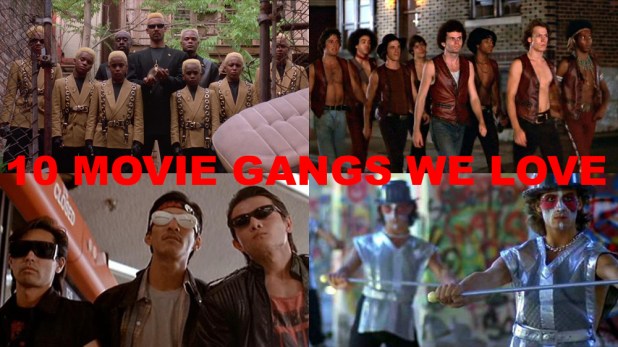
Ten movie gangs we love

There’s nothing like a street gang in a movie. The more colorful, the more insane, the better. Here are some of our favorites. What are yours?

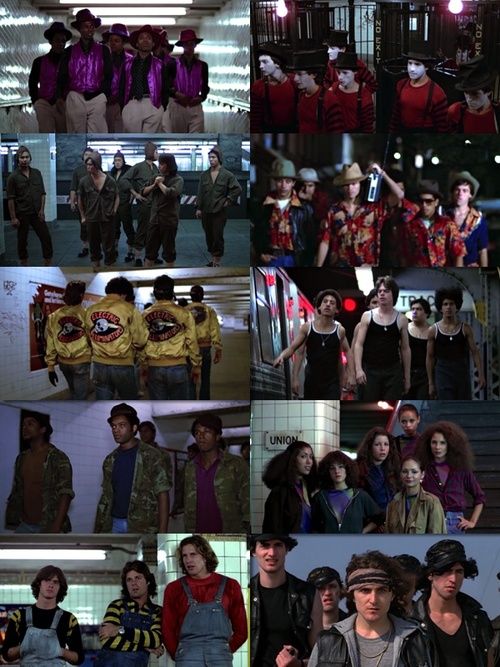
  1. Every gang in The Warriors: The Warriors spend just about the entire running time on the run, pardon the pun, from gangs like the Gramercy Riffs, the Lizzies, the Punks, the Boppers, the Satan’s Mothers and everyone’s favorites, the Baseball Furies. If you’re going to fill your movie with gangs, fill them with ones that will influence every single other movie on the list.

    2. The gangs of 1990: The Bronx Warriors and Escape the Bronx: I’ll never pass up an opportunity to talk about Enzo G. Castellari’s magical world of post-apocalyptic mayhem. The Riders, led by Trash, team up with The Tigers, led by Fred Williamson and his Freddy Krueger claw wearing girlfriend Witch, as they go to war with everyone from the rollerskating Zombies, a gang of show tune dancers (I’m not making that up) and the evil Manhattan Corporation.


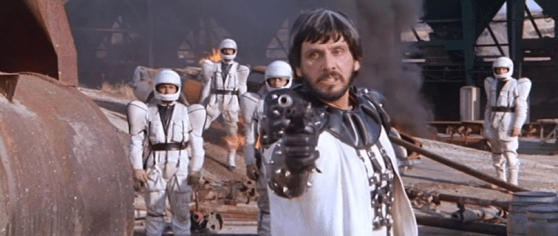
    3. The Templars from Warriors of the Wasteland: I’m not above listing two post-apocalyptic movies in a row. And the Templars, an all gay gang of punk rockers in all white body armor that are out to purge the world of all life are an amazing gang. Actually, this entire movie is beyond belief. I want more people to watch it so that it can be part of everyone’s casual conversation.


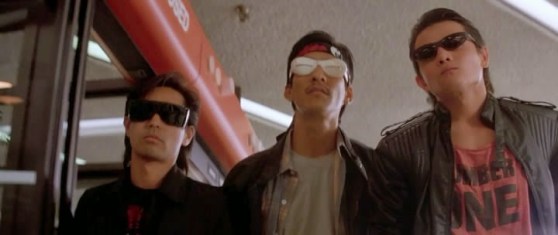
    4. The Lords of Death from Big Trouble in Little China: In the middle of the sorcery and mysticism in this film, there’s a very dangerous gang wearing 80s sunglasses that have no issues with kidnapping wives right in the middle of crowded airports.
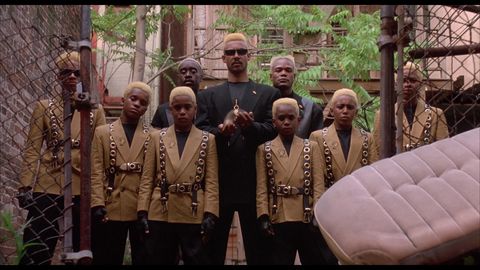

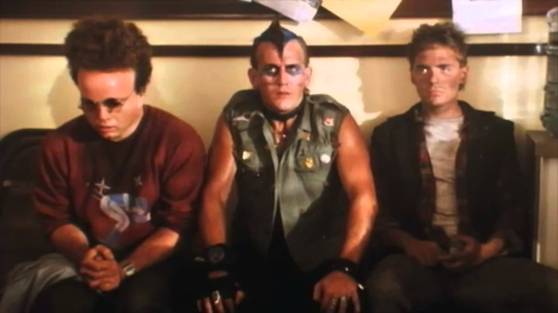
    5. The Golden Lords and The Junior Lords from Meteor Man: When TV’s Riddler (Frank Gorshin) and Simon Caine are your leaders and you have Don Cheadle, Big Daddy Kane and Another Bad Creation in your gang, you’re tough enough to battle the Bloods (Naughty by Nature), the Crips (Cypress Hill) and your neighborhood’s new superhero.


    6. The Lords of Hell in Adventures in Babysitting: Sure, they may get smacked down by a teenage babysitter and a little girl dressed as Thor (his first movie appearance and man, were Marvel fans dying for any crumb back in the day), but they’ve got a great name.


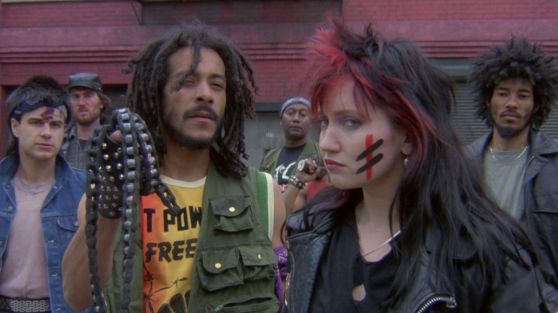
    7. The Street Punk Gang from Death Wish 3: As we learned this week, this gang may not be well organized, but they cause plenty of problems. Manny Fraker. Hermosa. The Giggler. Their names are forever etched in bad movie infamy and love. And you will know them by the trail of the dead…and the black lines with two red lines drawn through it that they each have painted on their faces.


    8. Packard Walsh’s gang from The Wraith: Is there anything better to do in the town that this movie takes place in than to steal people’s cars in illegal drag races? Well, if you ask Skank and Gutterboy, drinking gasoline is up there. Bonus points to any gang that will allow Clint Howard to join up.


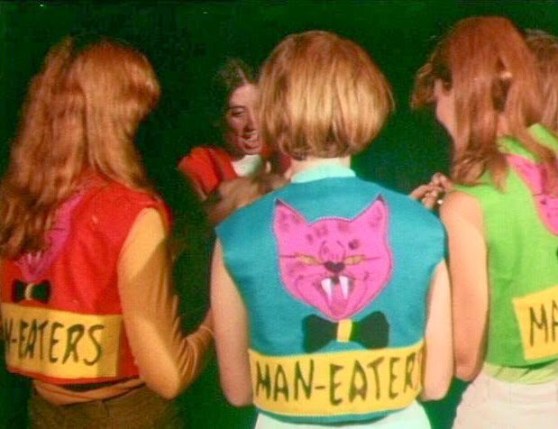
    9. The Man-Eaters from She-Devils on Wheels: This movie exists in an alternative universe where a female biker gang is strong enough to destroy a police force, a rival gang and an entire town. “All men are mothers!” they yell as they roar off. You have our hearts, ladies. Be careful with them.


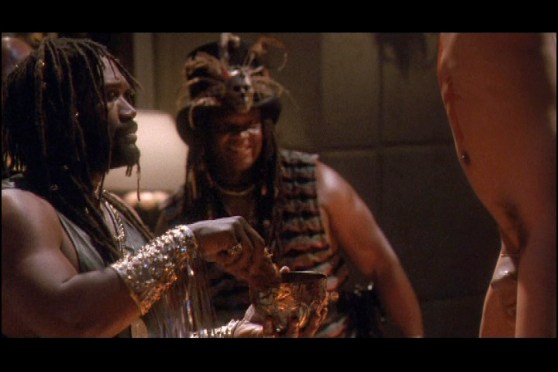
    10. The Voodoo Posse from Predator 2: We wouldn’t have such an awesome Ice Cube sample if it wasn’t for their leader, King Willie, who says, ““There’s no stopping what can’t be stopped. No killing what can’t be killed.” after smoking what I can only imagine is all of the weed in Los Angeles.

Honorable mention goes to Tarzan’s gang from Intrepidos Punks and La Venganza de los Punks, the Foot Clan from the Teenage Mutant Ninja Turtles movies, the gang in Return of the Living Dead, The Living Dead from Psychomania, the Scars and the Satins from Savage Streets, the Bombers from Streets of Fire and the Boddicker gang from RoboCop.

DEATH WISH WEEK: Death Wish (2018)

Written by Joe Carnahan (writer and director of Smokin’ Aces and the movie version of The A-Team, as well as a member of the Creative Council of Represent.Us, a nonpartisan anti-corruption organization) and directed by Eli Roth (Cabin FeverThe Green Inferno), Death Wish was a movie delayed several times by the rampant mass shootings in our country. It arrives at a time when the debate over guns has reached a fever pitch. That said, one viewing of The Killing of America, made way back in 1982, shows that that argument has been going on almost the entire way back to the original Death Wish series.

Do we need another Death Wish? After all, there were five different movies already. Is there something new that the film can speak to? This one attempts to, with numerous blips of info from various media sources as diverse as Chicago DJ Mancow, memes and the site mediatakeout to hip hop’s Sway in the Morning.

Paul Kersey (Willis) and his wife (Elisabeth Shue) are getting ready to say goodbye to their daughter Jordan before she goes to college. After lunch at a restaurant, a valet looks up their home address on their car after hearing they’ll all be out that night. However, Paul gets called into his job as a trauma surgeon — instead of an architect — leaving his family alone at home. This being Death Wish, I’m certain we can all guess what happens next.

Police Detective Kevin Raines (Dean Norris, Starship Troopers) and Detective Leonore Jackson are the cops in charge of the case, but they aren’t getting anywhere. Jordan remains in a coma while Paul grieves for his dead wife, including trying to stop a mugging which ends up with him being beaten. He debates buying a gun but realizes he’ll have to register it and be videotaped (the film wavers here between gun ownership being too easy and providing the right info).

A patient drops a Glock 17 while Paul tries to save his life and thanks to online videos, Paul learns how to use it. Soon, he’s stopping carjackings and killing drug dealers and has been dubbed the Grim Reaper by the media.

When Paul recognizes his stolen watch on a man’s wrist, he uses that man’s phone to get closer to the men who destroyed his family. One by one, he eliminates them before realizing that his actions have brought his family — daughter Jordan, who has emerged from her coma, and brother Frank (Vincent D’Onofrio) — into the killer’s sights.

Paul then uses his legally purchased weapons to defend his home, the police come after its all over and our hero easily explains that he’s not the Grim Reaper. Free of consequence, he’s able to take his daughter to college in New York City. There, he sees a mugging and stares right at the criminals, making the same finger pistol mannerism that Bronson used at the end of the first Death Wish. Interestingly enough, this is an inversion of the original film’s ending, where Kersey moves from New York City to Chicago.

Seeing as how director Eli Roth loves exploitation films, there are plenty of references, such as Paul telling a criminal that he’s torturing that he’s about. to put them into “the most pain a human can endure before going into cardiac arrest,” a fact discovered by scientists of Unit 731 and chronicled by the movie Men Behind the Sun. That scene also uses the Sorcery song “Sacrifice,” which comes from the film Stunt Rock (Sorcery also played the band Headmistress in Rocktober Blood). And a trivia note just for my wife: the last movie that Elisabeth Shue and Vincent D’Onofrio appeared in together was Adventures in Babysitting, which also takes place in Chicago.

This isn’t a bad film. But there’s no real reason for it to exist as it says nothing new other than being a serviceable action film. It’s been criticized as alt right and racist, but I think any Death Wish film is going to be branded the same way. I thought it was pretty even in its depiction and had plenty of different voices throughout.

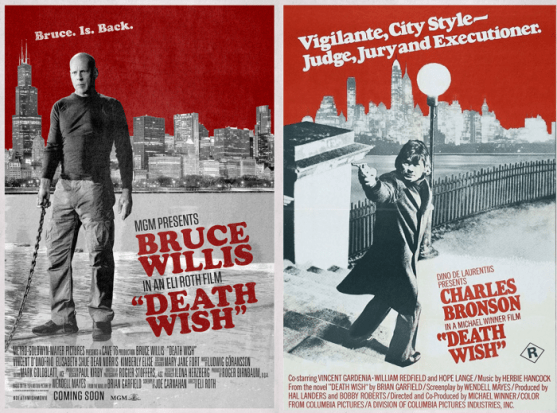
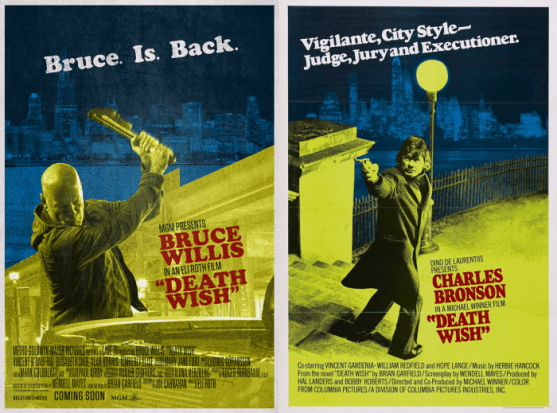
No matter what you feel about the movie, at least these posters are pretty nice.

CHILLING CLASSICS MONTH: Deep Red (1975)

Deep Red is one of the few Argento movies that I’ve seen in a theater. I’m not sure what the audience expected, as it was on what was presented as a grindhouse night. I think they wanted something like the modern interpretation of the term, all fast moving action and laughs. I don’t think that many of them were happy with what they got from this film — a movie that started with a 500-page script that even Dario Argento’s family felt was too cryptic and continues with not just one, but two references to American painter Edward Hopper. This isn’t just a movie about murder. This is a movie that transforms murder into art.

The movie begins at Christmas, as two shadowy figures battle until one of them stabs the other. Screams ring out as a knife drops at the feer of a child.

Fast forward to Rome, as a medium named Helga Ulmann is conducting a lecture about her psychic powers. Within moments, she senses that one of the people in the theater is a killer. Later that night, that killer kicks in her front door and murders her with a meat cleaver (which is probably why this movie got the boring American title of The Hatchet Murders).

British musician Marcus Daly (David Hemmings, BarbarellaBlowup, Harlequin), who fits the giallo mold of the stranger in a strange land thrust into the middle of a series of murders that he must solve, is returning home from drinking with his gay best friend Carlo (Gabriele Lavia, Beyond the DoorInferno) when he sees the murder that we’ve just witnessed from the street. He runs to save Helga, but she’s thrust through the window and her neck is pierced by the broken glass of her window in a kill that has become Argento’s trademark.

As he tells the police what has happened, he notices that a painting on Helga’s wall is gone. That’s when Gianna Brezzzi (Argento’s wife at the time, Dario Nicolodi, who met him during the filming of this movie) takes his photo, which ends up on the cover of the newspaper the very next day.

Unlike most giallo women, Gianna is presented as more competent and even stronger than our hero — she sits high above him in her Fiat 500 and continually bests Marcus every time they arm wrestle.

Marcus isn’t your typical hero, though. When the killer attacks him, he doesn’t stop them by daring or skill. He locks himself in his study to escape them. He does remember the song the killer played — we also have heard it when Helga is murdered — that psychiatrist (and Helga’s boyfriend) Professor Giordani believes is related to some trauma that motivates the killer.

Feeling guilty that she’s caused the killer to come after Marcus, Gianna relates an urban legend of a haunted house where the sounds of a singing child and screams of murder can be heard. The truth lies in House of the Screaming Child, a book written by Amanda Righetti, which tells the truth of the long-forgotten murder. Marcus and Gianna would learn even more, but the killer beats them to her house and drowns her in a bathtub of scalding hot water (directly influencing the murder of Karen Bailey in Halloween 2). As she dies, the writer leaves a message behind on the wall, which our heroes find. They’ve already assumed the investigation — again, in the giallo tradition — and think the police will assume that Marcus is the murderer, so they don’t report the crime.

Marcus follows the trail of the killer from a picture in the book to the real house, which has been abandoned since 1963. As he searches the home, he uncovers a child’s drawing of a murdered man and a Christmas tree, echoing the flashback that starts the film. Yet when he leaves the room, we see more plaster fall away, revealing a third figure.

Marcus tells his friend Carlos all that he’s learned, but his friend reacts in anger, telling him to stop questioning things and to just leave town with his new girlfriend. At this point, you can start to question Marcus’ ability as a hero — he misses vital clues, he hides instead of fighting and he can’t even tell that someone is in love with him.

Professor Giordani steams up the Righetti murder scene and sees part of the message that she left on the wall. That night, a mechanical doll is set loose in his office as the killer breaks in, smashing his teeth on the mantle and stabbing him in the neck.

Meanwhile, Marcus and Gianna realize that the house has a secret room, with Marcus using a pickaxe to knock down the walls, only to discover a skeleton and Christmas tree. An unseen person knocks our hero out and sets the house on fire, but Gianna is able to save him. As they wait for the police, Marcus sees that the caretaker’s daughter has drawn the little boy with the bloody knife. The little girl explains that she had seen this before at her school.

Marcus finds the painting at the young girl’s school and learns that Carlo painted it. Within moments, his friend turns up, stabs Gianna and holds him at gunpoint. The police arrive and Carlo flees, only to be dragged down the street and his head messily run over by a car.

With Gianna in the hospital and his best friend obviously the murder, Marcus then has the Argento-esque moment of remembering critical evidence: there’s no way Carlo could have killed the psychic, as they were together when they heard her screams. The portrait that he thought was missing from the apartment was a mirror and the image was the killer — who now appears in front of him.

The real killer is Martha (Clara Calamai, who came out of retirement for this role, an actress famous for her telefoni bianchi comedy roles), who killed Carlo’s father in the flashback we’ve seen numerous times after he tried to commit her. She chases Marcus with a meat cleaver, striking him in the shoulder, but he kicks her and her long necklace becomes caught in an elevator which beheads her. The film ends with the reflection of Marcus in the pool of the killer’s blood.

While this film feels long, it has moments of great shock and surprise, such as the two graphic murders that end the film and the clockwork doll. The original cut was even longer, as most US versions remove 22 minutes of footage, including the most graphic violence, any attempts at humor, any romantic scenes between David Hemmings and Daria Nicolodi, and some of the screaming child investigation.

This is also the first film where Argento would work with Goblin. After having scored Argento’s The Five Days — a rare comedy —  Giorgio Gaslini was to provide music for the film. Argento didn’t like what he did and attempted to convince Pink Floyd to be part of the soundtrack. After failing to get them to be part of Deep Red, Goblin leader Claudio Simonetti impressed the director by producing two songs in one night. They’d go on to not only write the music for this film, but also for plenty of future Argento projects.

A trivia note: Argento’s horror film museum and gift shop, Profondo Rosso, is named after the Italian title to this movie.

Deep Red is the bridge between Argento’s animal-themed giallo and supernatural based films. While its pace may seem glacial to modern audiences, it still packs plenty of moments of mayhem that approaches high art.

Want to see it for yourself? Sure, it’s on the Chilling Classics set, but for the best possible home experience, get the Arrow Video blu ray. You can also stream Deep Red on Shudder and Amazon Prime for free with your membership.

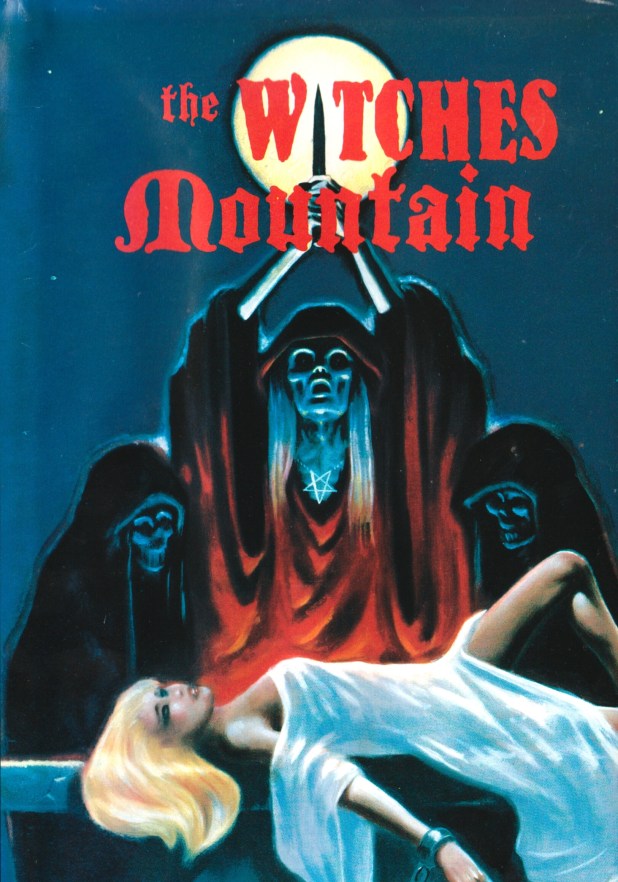
CHILLING CLASSICS MONTH: The Witches Mountain (1972)

Known in Spain as El Monte de las Brujas, this 1972 effort comes to us from director Raúl Artigot, who was the cinematographer on The Ghost Galleon (released in the U.S. as Horror of the Zombies) and The Erotic Rites of Frankenstein.

The opening of this movie is Cathy’s Curse level insanity: Carla walks around her house and finds a knife stuck in a wig, a voodoo doll and finally, a bloody cat in her bed. That’s when a little girl appears and tells her that she took care of the stupid cat before running away to look for another animal. Carla follows her to the garage, throws gasoline all over the place and sets everything — including the little girl — on fire.

That’s just the start of this movie. The next scene has nothing to do with any of that, as photojournalist Mario (Cihangir Gaffari, Jess Franco’s The Demons) breaks up with Carla and decides to not go on vacation with her, instead calling his office and begging for an assignment. Soon, he’s on his way to the Pyrenees Mountains in northern Spain. Soon, he meets freelance writer Delia (Patty Shepard, who not only appeared in numerous Paul Naschy movies like La Noche de Walpurgis (The Werewolf vs. The Vampire Woman) and Los Monstruos del Terror (Assignment: Terror) as well as Hannah, Queen of the Vampires and Slugs), who joins him on his trip.

They decide to stop at an ancient hotel that’s staffed by a man who sounds like every bad Igor impression. And then they learn of a mountain that’s haunted by a coven of witches, so they decide to go check it out.

Keep in mind that the beginning of this movie has nothing to do with things until the end, that Mario is a horrible hero and that you will hear chanting ala The Exorcist and The Omen for the entire running time of this movie. Do you want a shock ending, too? Of course, we can get that for you!

Avco Embassy included this movie as part of their Nightmare Theater package that was syndicated for television in 1975. The others are Marta, Death Smiles on a Murderer, A Bell from HellManiac MansionNight of the SorcerersFury of the Wolfman, Hatchet for the HoneymooonHorror Rises from the TombDear Dead DelilahDoomwatchMummy’s Revenge and The Witch.