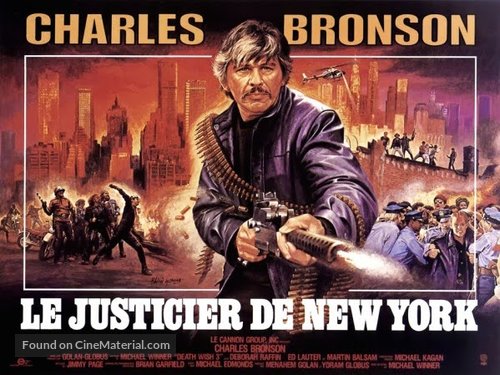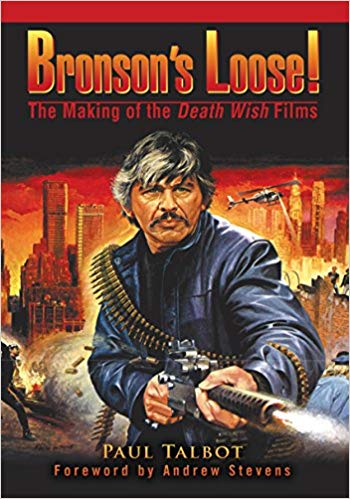
DEATH WISH WEEK: An interview with Paul Talbot, author of Bronson’s Loose!: the Making of the Death Wish films

As I wrote this week worth of Death Wish, Paul Talbot’s Bronson’s Loose!: The Making of the Death Wish Films was an amazing resource. It’s packed with stories and anecdotes from director Michael Winner, actor Kevyn Major Howard, novelist Brian Garfield, and interviews and articles from when the films were originally released. There’s also a sequel, Bronson’s Loose Again! On the Set with Charles Bronson, that I’ll be grabbing.

I had the opportunity to conduct an interview with Paul about the films and am so excited to share it with you.

B&S: How did you come to be such a fan of not only Death Wish, but Charles Bronson?

PAUL TALBOT: When I was a little boy in the 1970s, I’d watch a lot of Elvis Presley movies on TV with my mom. One weekend we watched Kid Galahad in which Elvis plays a boxer and Bronson played his trainer. It was the first time I saw Bronson and I was fascinated by him.A few days later, I watched The Great Escape on TV with my dad. It was his favorite movie. And I was fascinated by Bronson in that.

The mid-70s was the era of Bronsonmania when he was hot at the box office and his older movies and TV episodes were constantly on TV. This was way before cable TV and way, way before VHS and you had to find older movies and TV episodes on obscure local channels called UHF channels. I used to always look at the movie ads in the newspaper and I was intrigued by the image of Bronson at the bottom of the stairs and I was disturbed by a review that described the plot. In elementary school, one of best friend’s dad took him to the drive-in to see it and my friend described the images to me. But I was way too young to see it then.

I grew up in Beverly MA, which is a suburb of Boston. There was a local theater called the Cabot and they showed 2nd run movies (i.e. movies that had already played the big cities). I would walk there a lot to see matinees. In the fall of 1975, a friend and I went to see Breakout. It was the first Bronson movie I saw at a theater and I loved it. I saw Hard Times at the same theater a few months later. From then on, I saw almost every movie Bronson made at a theater until his last feature Death Wish 5. I didn’t get to see the original Death Wish until around 1981 when I saw it late-night on a cable station. (I think the station was a Washington, DC station.)

I loved Death Wish and I thought it was very disturbing. I did see Death Wish 2 thru 5 on their first theatrical run.

B&S: We’re from a town not far where Bronson was born, and some restaurants here still have his photo up on their walls and bars (I always request said tables). How much do you think his hardscrabble beginnings created his personality?

PT: That’s cool about the restaurants. He came from a dirt poor background and I think that had a lot to do with his stoic persona. He didn’t really trust people. He had a strong work ethic.

B&S: There are a lot of legends about the actor — Andrew Stevens shares one in the intro, after all. What are a few of your favorites?

PT: I interviewed dozens of Bronson’s coworkers for my two Bronson books and I collected lots of good stories. One of my favorite anecdotes involves Bronson’s mysterious oldest brother. Bronson wouldn’t see him for years and then the brother would show up on movie set. The brother lived on the streets and he would only accept small amounts of money from Bronson whenever they would meet. The brother ultimately ended up dead in a sleazy hotel in the Skid Row area of Los Angeles.

B&S: Do you have a favorite of the five movies? A least favorite?

PT: The original Death Wish is a flawless masterpiece and one of the best films of the 1970s. It is not an action film, it is a gritty, dark psychological drama. The sequels became progressively more absurd and more cartoonish, much like the James Bond and Dirty Harry movies did. But the sequels work on their own level as efficient comic book programmers. My least favorite is Part 2 because of the horrifying rape scenes and because it is a disappointment coming from Michael Winner.

B&S: What I find interesting about the films is that they each reflect the changing climates of the times they are made, going from introspective analysis of what it would take to make a man a vigilante to out and out high action epics. How do you feel about the shifting narrative tone of the films?

PT: The original Death Wish was shot in early 1974 when crime was rampant in the major U.S. cities—especially in New York. I remember that some of my classmates’ parents didn’t allow their kids to go on field trips into NYC. Death Wish audiences, particularly those in New York and especially those who had been victims of crimes themselves, screamed and applauded with delight as Paul Kersey responded on screen the way they wished they could have in real life. DWII was released in 1982 during the Reagan era when Americans were in a right wing, eye-for-an-eye mood. By the time DW3 went into production in 1985, every action film was copying the Stallone’s epic First Blood and Kersey was turned into a Rambo-like character with unlimited firepower. DW4 was released in 1987 during the heyday of the VHS boom when young men stayed home and watched an endless supply of action epics. DW5 hit video shelves during the last gasp of the video rental craze.

B&S: My theory is that all the films are in the same universe, unlike today’s films that often move in and out of canon with reimagining. That means that Paul is the most Jobian hero ever, constantly facing more misery than perhaps any fictional character ever. How does he keep going?

PT: My theory is slightly different. I see Kersey as only the same character in the first two movies. I see DW3 as being set in a bizarre alternate universe that bears no resemblance to Earth. That movie is totally insane and is like no other. DW4 and 5 I see as not sequels to DW but as sequels to The Mechanic with a retired skilled hit man assuming the name Kersey.

B&S: I love that! Have you seen any of the films inspired by Death Wish, like Il Giustiziere di Mezzogiorno, Mohra, the 1975 Turkish shot for shot remake The Executioner or Sex Wish?

PT: I’ve seen parts of the first, second and fourth movies on that list. I didn’t want to finish them.

B&S: I’m sure you’ve been asked this a ton of times, but please indulge me. What are your feelings on the Eli Roth remake?

PT: I have not seen it nor do I intend to. I read the script a few years before the film went into production and I thought it was not good. It had nothing to do with the novel or the original film. It was just another vigilante story but it was commissioned by the studio that owned the rights so the character was called “Paul Kersey.” I did try to watch the trailer but I couldn’t get through the first 2 seconds.

B&S: So much of the press for it was very reactionary — articles that said, “There’s no good time for a remake of Death Wish.” What are your feelings?

PT: A better phrase is “There’s no good time for a remake starring Bruce Willis or one directed by Eli Roth.” A remake should be set in the era of social media. Kersey’s teenage daughter gets bullied on Facebook and she commits suicide. Kersey goes after the kids that bullied her and breaks their fingers so they can’t type on their phones anymore.

B&S: Have you ever been in a personal situation like the film? Does that inform how you feel about the movies?

PT: I don’t want to go into the details. But, yes, I have been mugged and I have been a victim of crime on several other occasions and I got no help from law enforcement or the (in)justice system. I certainly understand Kersey’s rage in the first film. But I never suffered as bad as he did.

B&S: What inspired you to write the book?

PT: The first Bronson’s Loose! book came about when I re-watched the original Death Wish in the early 2000s. I hadn’t seen it in many years and I was shocked at how great it was. I then decided to revisit the sequels. This was before any of them were on DVD, and I had to go to several mom and pop video stores to find VHS copies of each sequel. I re-watched all of the sequels in one marathon weekend viewing. I thought, “How did we get from the original masterpiece to these bizarre sequels, especially since the first three were directed by the same man?” I decided to write an article on the first three movies. I did a lot of research on the first three and then I tracked down an address for Michael Winner and wrote him a letter. His assistant sent me an email with a time to call for an interview. He lived in London and I had to do the interview at around five a.m., my time. We talked for about an hour, and Winner told me some great stories. He was hilarious. I wrote an article on the first three movies, included Winner’s quotes, and sent a query to numerous movie magazine. I got no response. No magazine editors wanted to read the article. I then decided to track down more people from the series, do more research on the sequels, and write a book.

B&S: So how did the sequel to the book come up?

PT: I hadn’t done any extensive Bronson research in awhile. But around 2013, I did an interview with The Evil That Men Do screenwriter John Crowther and wrote an article on that film. I couldn’t find any magazines that were interested in even reading that article. But, that research got me thinking about a sequel to Bronson’s Loose! and I decided to try and interview as many living actors and crew members who worked with Bronson as I could. So over the course of two and a half years, I interviewed over three dozen actors, directors, producers, and writers and I put the book Bronson’s Loose Again! together. That book came out in 2016. Many of the people I’ve interviewed have since passed on and I’m grateful that I was able to capture and document their Bronson stories.

B&S: Thanks for answering our questions. I learned so much more about the films (and had already learned so much from the first book)!

PT: Thanks for talking to me, Sam. If people want to learn more about Bronson, they may want to read my books Bronson’s Loose: The Making of the Death Wish Films and Bronson’s Loose Again: On the Set with Charles Bronson.  I’ve done commentary tracks for the Blu rays of the Bronson movies Death Wish 2, 4 and 5 and Mr. MajestykCabo Blanco and The Stone Killer and I just recorded two more this month that will be out in early 2019.
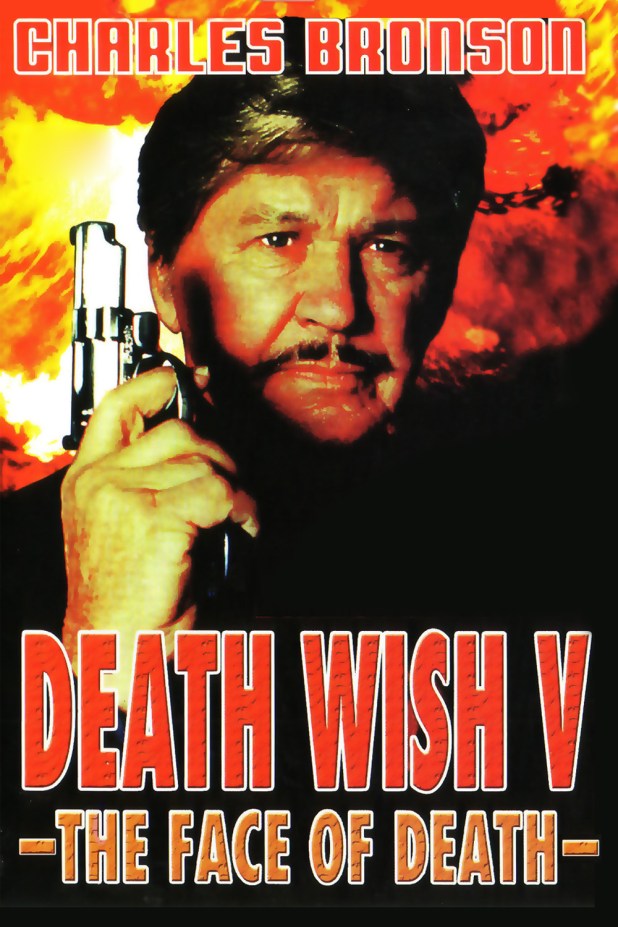
DEATH WISH WEEK: Death Wish 5: The Face of Death (1994)

You think Paul Kersey has learned his lesson about love and loss? No way, pal. Now back in New York City in the witness protection program and going by Paul Stewart, he’s keeping a low profile by going to fashion shows with his super hot girlfriend (Lesley-Anne Down) who also has a young daughter named Chelsea who is surely doomed. Come on, everyone. We’ve made it this far. We may as well watch Death Wish 5: The Face of Death.

It turns out that Olivia has been paying protection money to her evil mobster ex-husband Tommy O’Shea, who is Michael Parks! Paul confronts the guy at the fashion show, but one of the villain’s goons shows him his revolver. He tries to do the right thing and brings in a District Attorney.

Paul again proves he has no short or long-term memory by proposing to Olivia, who doesn’t understand what we all have accepted: God hates Paul Kersey like He has never hated another of His creations. Excusing herself to the powder room to piddle in absolute joy after being asked to be the life partner of a man who has personally murdered thousands of scumwads, one of Tommy’s men named Flakes (Robert Joy, Lizard from The Hills Have Eyes and, as my wife would exclaim loudly, Jim from Desperately Seeking Susan) shoves her face so hard into a mirror that she’s disfigured for life. Even surgery won’t fix her face. Such is the life of a woman who gets involved with Paul Kersey.

After meeting two cops, Mickey King (Windom Earle from Twin Peaks!) and Janice Omori, the female cop dies in the very next scene. She must have gotten a little too close to Paul. In the hospital, King tells Kersey not to go back to his old ways. King tells him that he’s been on this case for 16 years. “16 years? That’s a long time to be failing,” replies Kersey.

Even after getting out of the hospital, Olivia still has to deal with the life she’s chosen as more henchmen come after Paul, shooting her in the back and finally ending her suffering. Well, it turns out that Tommy runs all of the police and has taken his daughter back, so Paul goes full on 007 by killing one goon with poisoned canoli and another with a remote-controlled soccer ball! At this point, this film has gone from boring to right where I want it to be.

What follows is exactly what we want to see: a slasher movie with the righteous Paul going old man nutzoid on every crook there is left, shooting them into sewing machines, slashing their faces with broken bottles and shotgun blasting them into acid baths. At the end, he walks away with his dead fiancee’s daughter, yelling to the cop who couldn’t keep up, “Hey Lieutenant, if you need any help, give me a call.”

After the last three movies coming from Cannon Films, which was in Chapter 11 bankruptcy and under investigation by the U.S. Securities and Exchange Commission, this one comes from Menahem Golan’s new 21st Century Film Corporation. They were having trouble making money and figured that a new Death Wish was going to be a sure-fire hit. Incredibly, for reasons no one is sure about, Bronson and Golan weren’t speaking during the filming, so they’d only communicate through Allan A. Goldstein.

Sadly, the film failed at the box office (but it did fine on home video). Golan planned to continue the film series without Bronson (!) and was planing Death Wish 6: The New Vigilante before 21st Century Film Corporation went bankrupt. This would be Bronson’s last theatrical film, as he was 71 years old as this was being filmed.

You can watch this with your Amazon Prime subscription.

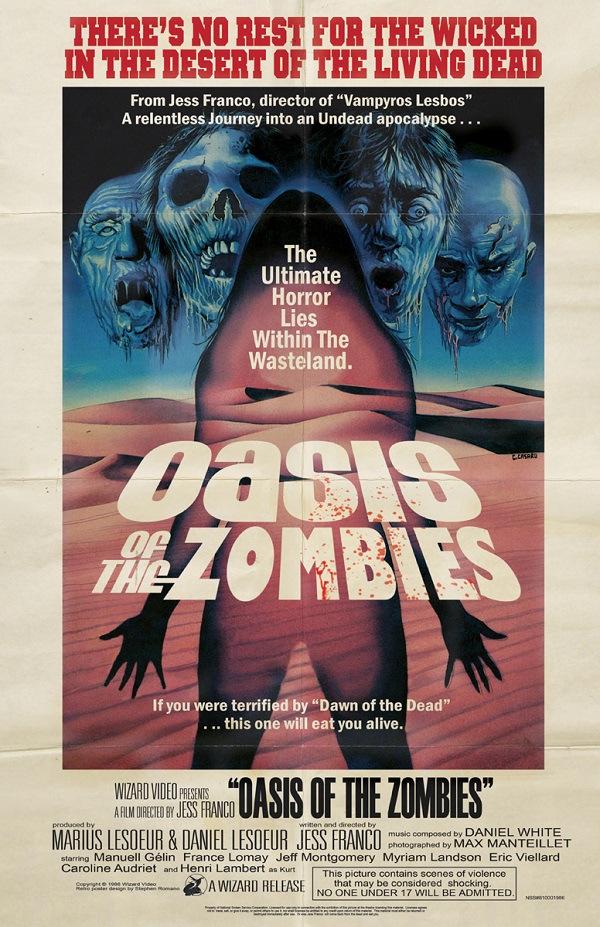
CHILLING CLASSICS MONTH: Oasis of the Zombies (1981)

Today’s movie comes to us from Roger Braden, whose Facebook group Valley Nightmares is all about the history of the films that played at the drive-ins and theaters in his home state of Kentucky. He also writes from Drive-In Asylum and likes The Car as much as I do! Thanks for helping out, Roger!

During World War II a Nazi squadron transporting gold across the North African desert are ambushed by the Allied Army and everyone is killed except one man, Captain Robert. Years later Capt. Robert tells his story to German fortune hunter Kurt who reveals that he trained that German squad and murders Capt. Robert so that he can find the gold. Nazi Bastard! After hearing of his father’s death, Capt. Robert’s son discovers his Dad’s diary’s about the battle and the gold and decides to try and find the gold himself. Both men ignoring the legend of ghosts that haunt the oasis where the battle happened.

Looks and sounds like a decent movie to watch, right? You couldn’t be more fucking wrong. Other than the pre-credit opening of two young women stumbling across the seemingly “unfindable” oasis being attacked, there are no more “zombies” until almost halfway through the film. Instead we get story, and we get story flashbacks with scenes from other movies spliced into it. And we get narration of story during some really bad “battle” scenes while some jazzy cymbals play in the background. But Captain Robert is a true badass in these scenes, only using a pistol during the battle despite the Nazi’s having machine guns, grenades and having 5 times the manpower as the Allies.

When the zombies finally make their appearance they are some of the worst looking creatures you’ll ever see. Honestly, the two “main zombies” are fucking hilarious. One is apparently just a concrete head with an eye stuck to it. The other at least walks around, with 2 giant wet bug eyes. How he kept those giant eyes wet despite being buried in the sand is beyond me.

And they are S-L-O-W zombies too. More than a few people, despite seeing the zombies moving towards them like a glacier, wait to the last second to move, and then run right into the pack and get eaten. The gore in this is poorly done, and there’s not as much as one would expect. There is also one incredibly lame “sex” scene. “Day for night” scenes where sometimes its broad daylight when it’s supposed to be dark. The same footage being repeated throughout the film, this is one of the worst movies I’ve ever seen. Trust me, I watched this turd 3 times (!) in October alone. First to refresh my memory from seeing it (for the 2nd time) probably 15 years ago with my sons. The other two times were trying to figure out how to write about it. I can still only name about 3 characters in this entire movie, that’s how forgettable it is. Legendary low budget filmmaker Jess Franco can take full credit for this, despite his many aliases in the credits, as he was the co-editor, co-writer and co-musical score, wrote the screenplay and Directed it. Hell, he even played one of the fucking zombies.

Yeah, we love this so much, we reviewed it again, as we blew through a bunch of Jess Franco stuff in 2020.

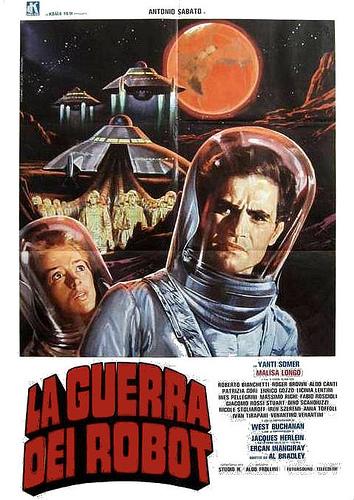
CHILLING CLASSICS MONTH: War of the Robots (1978)

Paul Andolina, whose writes the site Wrestling with Film, is in charge today. Beyond loving wrestling, he also knows a ton about Russian and lucha films (and he even speaks pretty good Spanish, so we hear!).

War of the Robots — originally titled La Guerra dei Robot — is an Italian science fiction film released in 1978 most likely to cash in on the franchises of both Star Trek and Star Wars. I’d like to imagine this film came about when Alfonso Brecia and Aldo Crudo were as high as cucuzzi (Italian squash) are long which just so happens to be extremely.

I could not ask for a more crazy colored sci-fi romp than what this film offers. Female scientist Lois and male professor Carr are on the cusp of something extraordinary; they soon will be able to create any creature they want and make the first immortal man! However, their plans are cut short when a mysterious group of gold-clad humanoids attack and abduct them. It’s up to Lois’ lover Captain Boyd and crew to rescue them from their captors.

War of the Robots has a lot of twists and turns during its hour and thirty-nine minute runtime. There also is a cut of the film that is four minutes longer but the cut included on the Chilling Classics set is the shorter one.

When the crew finally gets to Lois and Dr. Carr it turns out nothing is what it seems at all. Louis is now an empress and Carr is mad with power over the gold-clad humanoids who turn out to be androids. The inhabitants of the planet Louis and Carr are taken to also happen to be wrinkly old monster folks. The latter half of the movie turns into a whole scale war. Battle is waged in caves, palaces, command decks and even in starship space battles.

This movie has a bit of everything; it’s got phasers, it’s got laser swords, it’s got mutants who live on irradiated asteroids but most importantly it has West Buchanan! West Buchanan is an American actor who starred in his fair share of Italian genre films. It just so happens that West Buchanan looks like he could be Harley Race’s twin brother. Harley Race is a wrestler who has worked for NWA, WWE, and WCW. I was really surprised how similar they look. Now the reason I bring that up is that I’m a collector and avid watcher of films that star professional wrestlers. That’s not the sole reason I enjoy this film so much it’s not the greatest film by any means but those who like campy science fiction films should find plenty to enjoy. I think most folks will especially like the scenes where androids are sliced in half by laser swords.

I must also point out the amazing score is by Marcello Giombini who also scored some of the Emmanuelle films, Sabata and even Antropophagus. If you have the chance to watch this I do recommend it. Apparently it is part of a series of science fiction films by director Alfonso Brecia, The films that precede it are War of the Planets, Battle of the Stars and it is followed by Star Odyssey. I hope I stumble across the other films as I truly did enjoy this film.

You can watch this one of the many uploads of War of the Robots on You Tube.


Don’t forget: We also reviewed Brescia’s Star Odyssey as part of our month-long tribute to the release of Star Wars: Episode IX – The Rise of Skywalker. You can catch up with all of those reviews with our “Exploring: After Star Wars” featurette. And we way over thought Brescia’s “Star Wars” movies with one of our weekly “Drive-In Friday” featurettes: “Pasta Wars with Alfonso Brescia.”

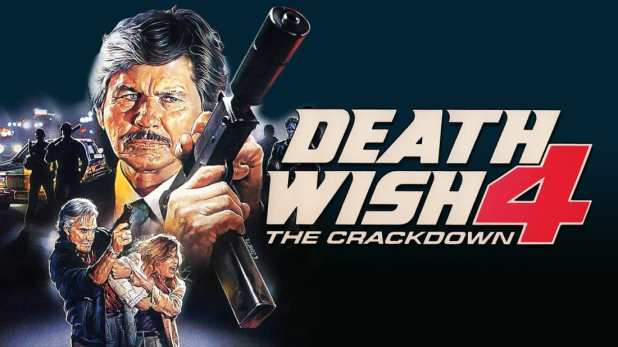
DEATH WISH WEEK: Death Wish 4: The Crackdown (1987)

Where do you go after the utter lunacy that is Death Wish 3? Well, you replace Michael Winner with J. Lee Thompson, who was the director for The Guns of Navarone, the original Cape Fear, the slashtastic Happy Birthday to Me and The Reincarnation of Peter Proud amongst many other films. He’d already worked with Bronson on 10 to Midnight, Murphy’s Law and The Evil That Men Do and would also direct Bronson in Messenger of Death and Kinjite: Forbidden Subjects after this movie wrapped. In fact, counting St. Ives, The White Buffalo and Caboblanco, they’d work on seven movies together.

Paul Kersey hasn’t learned anything from the last three movies. He has a new girlfriend, Karen Sheldon (Kay Lenz, The Initiation of SarahHouse) with a teenage daughter named Erica (Dana Barron, the original Audrey from National Lampoon’s Vacation) that you shouldn’t get to know all that well. That’s because — surprise! — she overdoses thanks to her boyfriend and her getting into crack cocaine and doing it an arcade. If you’re shocked that a Death Wish movie would prey upon the worst fears of America’s middle class, then you may have watched the last three films too.

Paul loved that girl like his own daughter, probably because she wanted to be an architect like him and also possibly because he hasn’t yet learned that the moment that he says something like that, tragedy is right around the corner. Honestly, the main message of the Death Wish films is that God hates Paul Kersey, will not allow him to die and will wait until he finds happiness again before visiting upon him great suffering, only for the cycle to repeat.

The night she died, Paul saw Erica smoke a joint with her boyfriend and was already suspecting the young dude, so he follows him back to the arcade the next night. That boyfriend confronts Jojo and Jesse (Tim Russ, Commander Tuvok himself!), two of the dealers who sold them the crack cocaine, and threatens to go to the police. This being a Death Wish film, they kill him pretty much in public. That murder unlocks the ability for Paul to start killing again, so he shoots Jojo and launches his body on to the top of bumper cars, where he’s electrocuted. No one dies in Death Wish without a flourish.

Meanwhile, Paul gets a call from tabloid publisher Nathan White (John P. Ryan from It’s Alive), who knows that he’s the vigilante. His daughter had also become addicted to drugs and died, so he knows what Paul is going through. The storyline becomes pretty much like The Punisher’s first mini-series where The Trust paid for him to wipe out crime, as White funds Paul’s one man war against drugs while his girlfriend starts writing an expose on the two rival gangs in town.

One of those gangs is led by Ed Zacharias (Perry Lopez, Creature from the Black Lagoon) and the other is commanded by Jack and Tony Romero. Two LAPD officers, Sid Reiner and Phil Nozaki are also on the case, trying to figure out who killed the drug dealers at the arcade.

This is the first Death Wish film where Paul feels more like an urban James Bond than a fed up war vet. Trust me, he gets even more gadgets in the next one. Here, he uses his skills as a master of disguise — he has none — to dress as a waiter and serve a party at Zacharias’ house. The birthday cake is…man, let me just show you the birthday cake.

After witnessing the drug lord kill one of his guys who stole some cocaine, he’s ordered to help carry out the body. Soon, he’s killing all of that drug dealer’s men, including three guys in an Italian restaurant with a bomb shaped like a wine bottle. Look for a really young Danny Trejo in this scene!

After all that mayhem, Paul also starts wiping out the Romero gang one by one, including breaking onto a drug front and blowing it up with a bomb. Yet Nozaki ends up being on the take for Zacharias and tries to kill our hero and you know how well that works out. Now Paul looks like a cop killer, too.

In the stuntman piece de resistance of this one, the two drug lords are lured into an oil field shootout where Paul kills Zacharius with a high-powered rifle, instigating the fireworks. Nathan comes out to congratulate Paul, but sets him up with a car bomb. It turns out that the Nathan that Paul has met is a third drug lord (!) who set him up to take out all the competition. Then, two fake cops arrest Paul and take him downtown, but they’re really just trying to kill our hero. Again, you know how well that works.

The film ends with Detective Reiner searching for Paul out of revenge for his partner’s murder, the third drug lord kidnapping Paul’s woman and everything coming together in a parking lot and a roller rink where Paul uses an M16 with an equipped M203 grenade launcher to unleash holy hell.

Only the drug lord survives, holding Karen. She tried to escape and gets shot numerous times with a MAC 10 submachine gun. He tries to kill Paul but he’s out of bullets. Paul may be, but he still has a grenade, which he uses to blow the villain up real good.

The film closes with Reiner coming and ordering Paul to surrender and threatening to kill him if he walks away. “Do whatever you have to,” says the old gunfighter as he walks into the sunset.

For all the mayhem and madness throughout this film — keep in mind our hero just used an explosive device to decimate another bad guy just seconds before — this is a poignant ending. But of course, Paul — whether he wanted to use the new last name Kimble he came up with in this film or Kersey — would be back one more time.

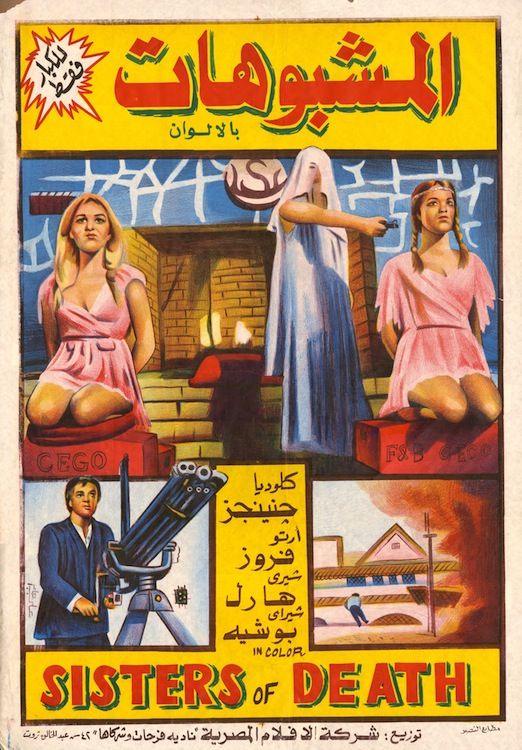
CHILLING CLASSICS MONTH: Sisters of Death (1976)

This movie starts in the most awesome way. During an all-girl secret society college initiation, The Sisters kneel as they hide behind shrouds and place a loaded pistol to each pledge’s head. The first girl, that goes well, as all we hear is a click and she survives. The next one, well, it doesn’t go so well. This time, we hear a loud gunshot and see the results, with blood everywhere.

Years later, there’s a reunion of the Sisters, set up by envelopes all containing $500. The first to get one is Judy (the gorgeous, yet doomed exploitation queen Claudia Jennings, Unholy Rollers) and all of the Sisters suspect one another of sending these invites, which threaten to spill the secret murder they’ve all kept to themselves.

Soon, the five surviving Sisters are gathered at a lavish estate that just so happens to be owned by the father of the Sister who died. That’s when this movie becomes a kind of, sort of slasher, ending with a 70’s twist downer ending. It’s pretty PG, with the deaths occurring off camera and Jennings staying clothed, so if you’re looking to be shocked and titillated, I can suggest several other films for you.

This was shot in 1972 and sat unreleased for a few years. It feels like a made for TV remake of Ten Little Indians, but it isn’t. It has a few familiar faces in it, like Joe E. Tata, who played Peach Pit owner Nat Bussichio on Beverly Hills, 90210 and former Mouseketeer Sherry Alberoni (NIghtmare Circus).

Sisters of Death doesn’t get much better than its first ten minutes. That’s the beauty of the Chilling Classics set. There are so many films here, you can always find something else.

CHILLING CLASSICS MONTH: Snowbeast (1977)

This entry was written by Bill Van Ryn, the man behind the always stupendous Groovy Doom and Drive-In Asylum. Bill knows more about movies than almost anyone I’ve ever met and is always there with an answer to my questions, no matter how trivial or dumb they may be.

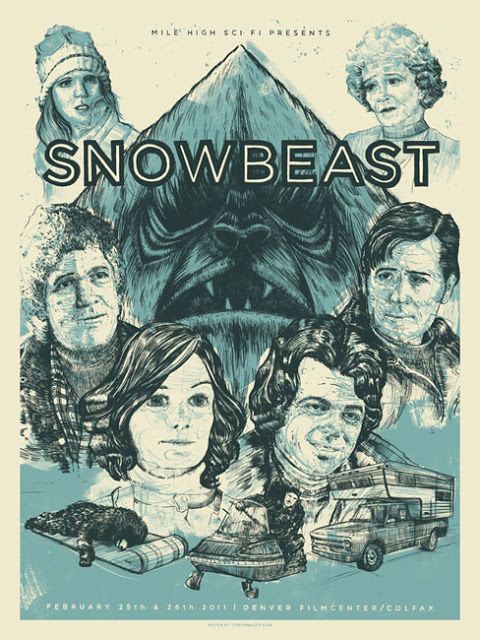
A popular vacation spot, desperate for tourist dollars, is suddenly beset by a beast that kills people. This coincides with the big breadwinning season of the vacation spot, leading the people in charge to hush up the deaths and avoid spooking the tourists into bolting. In the post-Jaws 1970s, there was no limit to the number of movies that came along with this exact same plot. One of the most successful imitators was William Girdler’s 1976 flick Grizzly, which placed the action in a park and substituted a bear for a shark. 1977 TV movies Snowbeast distills this formula even further, making the park a Colorado ski resort and changing the grizzly to a bigfoot monster.  

Robert Logan and Sylvia Sidney play a grandson and grandmother who find their winter carnival interrupted by a monster that starts attacking and eating isolated people on the slopes — at one point, Logan says he can identify a victim’s body by looking at her face, and another character says “She doesn’t have it anymore.”  Sidney, of course, doesn’t want to admit that there is a problem at all, and advises Logan to keep it a secret. Bo Svenson is a former Olympic ski champion who has fallen on hard times and picks the wrong time to come to his old friend Logan for a job; I’m pretty sure entering into combat with a murderous bigfoot was not what he signed on for. Svenson’s wife, played by Yvette Mimieux, happens to be a former flame of Logan’s adding a love triangle to the story. Anyone who read the novel Jaws knows there was a love triangle in that story too, although it was not retained for the film version, so maybe nobody realized at the time just how deeply the screenwriter Joseph Stefano plunder the depths of Peter Benchley’s story. 

Although the violence is subdued enough for a TV movie, there are some moments of dread to be found here, like when one character is trapped in a wrecked RV and can’t escape the oncoming monster, which just comes right for him and slaughters him immediately. There’s also a very silly moment when the creature shows up to interrupt a rehearsal for a pageant. It smashes a window, causes a little hysterical panic (including a hilarious reaction shot from Sylvia Sidney), and then proceeds back to where it came, stopping along the way to kill a helpless parent who was just waiting to pick up her daughter from the rehearsal. 

Ultimately, camp is king in Snowbeast, and there is enough of that on hand to entertain this jaded viewer. Also, I enjoyed the outdoor photography, including some impressive tracking shots of characters skiing. 

CHILLING CLASSICS MONTH – another take on Driller Killer (1979)

John S Berry says that he’s a pretty low key guy. He has a few articles on the Rupert Pupkin Speaks site. I asked him to tell me a little more about himself and he replied that he loves bargain bin horror movies, his cat Walter, Terry Gordy and most people.

One of my favorite themes in any version of storytelling is the duality of man. Nothing is absolute, Tony Soprano was a charming guy but he was also the same guy that killed a guy on his daughter’s college scouting trip. I love that feeling when you can spend years, seasons or most of a movie hating a character then you feel sympathy and compassion for this at times awful person. I felt absolute heartbreak in the UK office when David Brent says, “please don’t make me redundant.” After so many episodes of cringing and total jack ass behavior I suddenly felt for this jerk. Similar feelings came into play for me with Reno in The Driller Killer.

Ironically, after writing this opening paragraph I just blew up myself. I am usually calm (I think but wait did Reno think the same?) but after a nine-hour day and four hours of commuting I just snapped at everyone in the house. Of course, I usually cool off after a walk and it is not a walk where anyone is murdered by a drill (and I said my apologies just not in painting form).

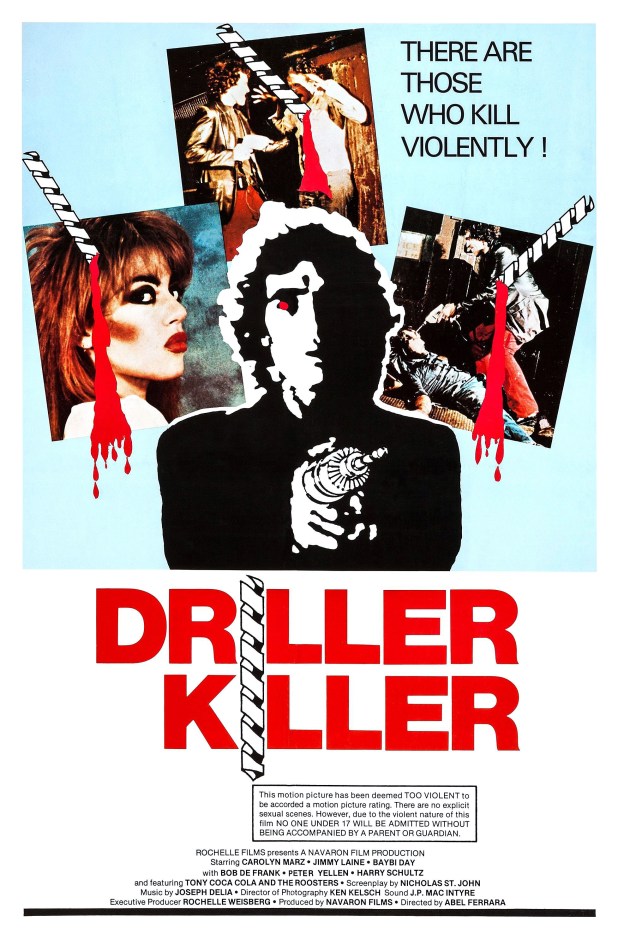
Reno is a struggling, stressed out artist played by Abel Ferrera living with Carol and her girlfriend who seems to be strung out. Carol seems to be slumming or pretending to be outrageous when actually she is an ex-airline stewardess who has a milquetoast of an ex-husband that she knows will take her back unconditionally. Bills are due and the pressure seems to be on Reno who is trying to create his masterpiece which involves a bloody buffalo.

Watching Ferrera as Reno Miller I wish he would have acted in more films as he has a very interesting presence and jawline. I waffle between thinking he is funny to kind of scary (the dream lighting of him shaking the blood out of his hair is amazing)to a narcissistic asshole back to funny.

On the surface this film seems to be a straightforward plot; boy has girls, tries to make a masterpiece, loses mind and kills bums with a drill. But a little bit of research (not too much ruins the magic) the story has more depth to it and it kind of richens the experience of the movie.

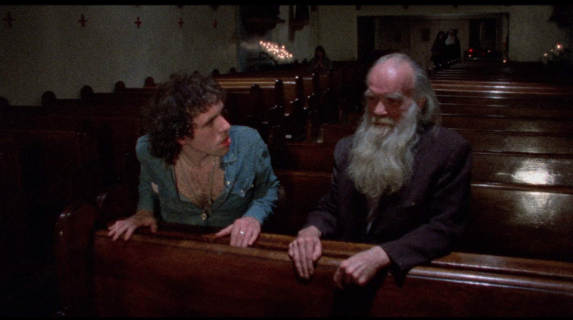
The old man at the church in the beginning is supposed to be Reno’s derelict dad that is why he had Reno’s name and number on a slip of paper. Reno bails on the family reunion but is shaken by it and perhaps this encounter started the journey into his madness. Further odd research I found the actor who played the old man in the church was James O’Hara who was in Gunsmoke and The Quiet Man. I am not sure if he is a super method actor or he had really fallen on hard times but he certainly looked the part of wino deluxe.

Watching this film, you are treated to two types of ghosts; those images of the surely dead by now winos and what Union Square once looked like. This movie is a great example of we don’t need no stinking permits and mixes in shots of actual bums and crew members stunting as bums. They do a remarkable job, especially the bum at the bus stop (Ferrera friend/actor) and it is often hard to tell who is legit.

Reno at times shows an odd sense of compassion to the bums in his neighborhood early in the film. He has an almost pep talk about his dad with one passed out wino. The scene that Ferrara really kind of made me shift back into he is not that bad of a guy mode was when talking with a bum on the street asking him about his old lady and my favorite line: “How come you are on the street and not with the people that love you man?” He further shows some heart as he hides with the wino as another bum runs by being chased by hoodlums. Sadly, for Skid Row Reno’s attitude and approach would change soon.

The pressure of it all starts to get to Reno and his new neighbors The Roosters do not help his mental stage. The character of Tony Coca Cola again is another case of no way is that guy an actor. He really seems like a Dead Boy/ Stiv kind of guy. But fooled again he is an actor (and writer, director etc.) One great realistic moment is when Reno is struggling with his vision painting and he says not in an angry way “Come on guys it’s 2 in the morning.”

Reno continues to work on his masterpiece and tries getting an advance from an art dealer who is a total pompous creep. Tony blows up several times and lashes out at Carol only to later apologize in crude painting form. He keeps promising once this painting is done we are set, well…

Reno starts to go on his rampage when he finally reaches his breaking point at a Roosters show where they are playing songs he has already heard in every stage already numerous times. There is not a ton of context as to why he was so drawn to the power drill belt commercial but hey it is a cool title and look. But I suppose the rapid killing spree helps with inspiration and soon he is finishing his buffalo AND a Tony Coca Cola portrait (it’s rumored that the buffalo is in a museum in New Mexico, wonder where Tony’s ended up?)

The painting is finally done and Reno is ready to get paid. The dirtbag art dealer comes to see this masterpiece and poor Reno sitting there with a blank look and a tie take a verbal beating and you can just feel the sadness in the air. We just watched this guy brutally murder people and now I feel bad for this guy who has really worked and given his all to his vision only to have someone disrespect it.

Then Carol has decided she has had enough of this artist lifestyle and splits on Reno. In a sad scene Reno chases after her and pleads with her to stay. Reno has anger but then goes sad sack as he is sitting there with her suitcase calling after her (“Come back man. You need your stuff”).

This pushes the switch in Reno over there is no looking back. Sure, he probably is not going to end up like his old man in the streets drinking rotgut but that would have been a better path. There is a lot to process in the last act and I appreciate the fact that not everything is tied up with an absolute outcome (just watch and make up your own story I say).

The good folks at Arrow just recently put out a suped up version of the film, but I really think the first time to view should be with all the scratches, grainy picture and red boxes. It just feels right that it is on the Chilling Classics compilation (and about a million other bargain bin compilations that I love). The Driller Killer is tribute and homage to the old scary, gross New York City and the sleazy good old days.

Summer of 84 (2018)

I was 12 years old in 1984. It was the year of GhostbustersIndiana Jones and the Temple of DoomA Nightmare on Elm StreetTerminatorStreets of FireThis is Spinal TapC.H.U.D.The Adventures of Buckaroo Banzai Across the 8th DimensionPurple Rain, GremlinsNight of the Comet and so many more cultural touchstones that will be endlessly watched again and again until humanity no longer has eyes.

Today’s culture — while offering endless platforms for experiencing it — is limited by comparison. Sure, you could argue that we’re living in a golden age of television and horror movies are finally hot at the box office again, but are there many things made in 2018 that you’ll feel like watching in 2052?

A major reason could be that we’re trapped in a loop of 1980’s nostalgia. It’s one thing to love the films of that era more than anything made today (I’m guilty of that), but it’s quite another to make new culture that endlessly refers backward to this past decade. I get it — when I was growing up, everyone wanted it to be the 1950’s again, thanks to GreaseHappy Days and Sha-Na-Na.

In defense of Summer of 84, this film was made before Stranger Things and the remake of It, so you can slightly forgive its reliance on the Spielbergian kids-on-bikes trope. The filmmakers even stated in an interview that they deleted a Dungeons & Dragons scene so people didn’t think they were ripping off the kids from Hawkins.

This entire movie reminds me of this John Mulaney quote: “I had no supervision when I was a kid. We were free to do what we wanted. But also, with that, no one cared about kids. I grew up before children were special. I did. Very early ’80s, right before children became special. Like, I remember when milk carton kids became a thing. When they were like, “Hey, we should start looking for some of these guys. I don’t think they’re just blowing off steam.””

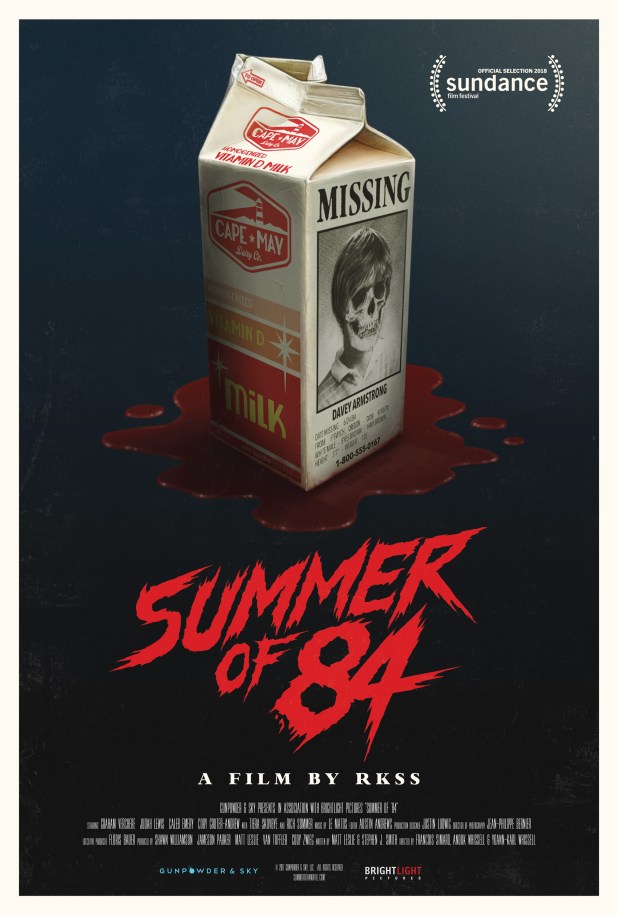
Davey Armstrong is fifteen and starts the film by explaining how the bad stuff really happens in the suburbs. He should know — in the last decade, 13 boys have gone missing from his hometown of Ipswitch, Oregon.

Sure, Davey is a believer in urban legends and conspiracy theories — just a scan of the World Wide Journal headlines in his room read “Cannibal society in sewer system?” a reference to C.H.U.D., “2 years left before Haley’s Comey hits Earth”  for Night of the Comet, “Cursed fog terrorizes small town!” for The Fog, as well as stories about Hitler clones, a conspiracy in the Vatican, a crying Virgin Mary and werewolves — but now he feels that Wayne Mackey, his police officer neighbor, is a serial killer.

He talks his friends Curtis Farraday, Dale “Woody” Woodworth and Tommy “Eats” Eaton into helping him uncover whether or not Mackey is the Cape May Slayer. My major gripe with the film is that these characters aren’t really people but instead archetypes of what we expect from a 1980’s teen cast. We have the nerdy Curtis, the rebellious John Bender clone Eats and Woody, the token chubby friend. Perhaps the lone surprise here is that Woody and Eats haven’t flip-flopped their names.

You can see Davey as any manner of 1980’s hero — he’s the boy yearning to be a man yet still full of innocence that is struggling to find the truth. You could also see him as a giallo archetype — thanks to puberty, he has become a stranger in a strange land, ill-equipped for the investigation that he is about to undertake, surrounded by ineffective cops and red herrings, while romancing a stylish and sexy woman — his next door neighbor Nikki — who he has a past history with. The only reason I don’t feel this is a giallo is that the kids drink MacReady’s Whiskey (a reference to Kurt Russell’s character in The Thing) instead of J&B Scotch Whiskey.

Speaking of inside jokes, there are plenty of them in Summer of 84, such as a Polybius machine (see our article on Sequence Break for more on that urban legend) in the arcade, G.I. Joe walkie-talkies and a MOBAT tank, a toybox contains a Turbo Kid figure (RKSS Films also made that throwback movie) and even the Bananarama song “Cruel Summer” is used with the exact same framing as Daniel-San riding his bike in 1984’s The Karate Kid. The kids even read Boudoir, the same fictional porn magazines from the beginning of The Goonies.

Even when Mackey finds the killer, Davey won’t give up. He’s come too far and reason won’t stop him now. After all, he’s found a bloody t-shirt that matches a boy he saw in his neighbor’s window. Who buys that much dirt and sodium hydroxide? And why would he have a hidden VW Bug, the same car that Ted Bundy drove?

Davey finally convinces Woody and Nikki to take his dad’s TV station camera into Mackey’s basement, where they find a room made to look like a childhood bedroom, a dead body and a still living kidnapped boy.

Here’s where this movie owes so much to the giallo, with perhaps the dumbest cops this side of Stagefright: after convincing his parents and the police, which leads to Mackey’s home being raided, no one places the boys in protective custody. Instead, they are easy prey for Mackey to abduct and bring to an isolated place where he hunts them down.

The boys have been playing a game called Manhunt their entire lives, but the real world is much more brutal than a child’s game. This is where Summer of 84 careens unsteadily from a junior giallo into a straight up slasher, with Woody’s throat graphically slit open and Davey cornered in the red Bava light. Instead of killing him, Mackey tells him that he’ll come back for him someday, a day that the fifteen-year-old may fear for the rest of his days. That’s honestly the best part of the film — a chilling reminder that adults are more messed up than the dreams of any kid.

As Davey returns to normalcy — or what passes for it — we retrace the paperboy route that started the film. But now, there are holes left behind — the abandoned home of one of the missing boys; his lost friendship with Curtis and Eats, who are cleaning the debris of another parental battle; and finally Mackey’s home, still covered with police tape. The final moment of horror comes with an act as simple as opening the newspaper to reveal the headline: the Cape May Slayer is still at large.

One of my best friends absolutely hated this movie, feeling that this was a story better told before, that there was nothing new here and no reason to care about the characters. My wife absolutely loved it, happy that a movie made in 2018 had an actual beginning, middle and end, as well as some surprises along the way. And I came out somewhere in the middle. I liked the look and feel of the film. And hey — it has a really nice logo.

Decide for yourself. It’s currently streaming exclusively on Shudder.

DEATH WISH WEEK: Death Wish 3 (1985)

Paul Kersey is back in New York City, despite being kicked out at the end of the first Death Wish. His Korean War buddy Charley has invited him to ask for help as his East New York apartment building has been under attack by a gang. Paul gets there just in time for his friend to die in his arms and the police arrest him for the murder. Inspector Richard Shriker recognizes him as the vigilante from back in the first movie, so he throws him into a holding cell with the leader of the gang, Manny Fraker (Gavan O’Herlihy, son of Halloween 3: Season of the Witch bad guy par excellence Dan O’Herlihy). After a fistfight ensues, the villain gets released before Paul. If you think that’s the end of all of this, you haven’t been reading our website this week.

Shriker offers our hero a deal: kill all the punks you want, but inform him of any activity so that he can get a big bust and make the news. With that, we’re off and to the races in what is not only the craziest of the Death Wish movies, but perhaps the most bonkers movie you’ll ever see.

Paul moves into his dead friend’s apartment and into a warzone. He makes friends with the other tenants, including World War II vet Bennett Cross (Martin Balsam from Psycho), a kindly old Jewish couple named Mr. and Mrs. Kaprov, a young Hispanic couple named Rodriguez and Maria (a pre-Star Trek: The Next Generation Marina Sirtis who in real life is a Greek girl born in London). There’s even a young kid who continually walks into the path of gunfire. Obviously, this is a neighborhood made for Paul Kersey. It is, as my wife pointed out, Sesame Street where people die horribly.

Paul uses a car as bait for the gang, killing two who break into it. And he saves Maria twice, but the third time, the gang takes her and she soon dies in the hospital, not knowing the most important rule of Death Wish: if you are a woman, stay away from Paul Kersey.

That’s when Paul orders a .475 caliber Wildey Magnum, a gun that has the same muzzle velocity as a .44 Magnum at 1000 yards. This big bore handgun, as Danny Vermin once said, “shoots through schools.” He traps The Giggler by putting his new camera where he knows the criminal can steal it, then he blows him into another dimension with his gigantic handcannon. “I can’t believe they got The Giggler, man,” laments the punk rock gang.

Why this gun?  Well, it was Bronson’s personal handgun in real life. According to the gun’s inventor and the film’s technical consultant, Wildey Moore, sales for the Wildey Magnum increase whenever this film airs on TV.

You know who else didn’t get that memo about dating Paul? Public defender Kathryn Davis (Deborah Raffin, The Sentinel), who dates our hero long enough for him to joke that he likes opera and for mohawked punk gang leader Manny to shove the car she is waiting for Paul in toward oncoming traffic, where it explodes in a giant fireball.

Shriker decides that enough is enough and he puts Paul into protective custody. But after the gang blows up Bennett’s taxi garage, the old man tries to use the ancient Browning .30 machine gun that Charley brought back from the war. Sadly, the ancient detective from Psycho is no Roadblock from G.I. Joe and he’s quickly beaten into near death by the gang. Paul is allowed to visit him at the hospital and quickly makes a break to defend his new friends once and for all.

There’s another big machine gun, so Paul and Rodriguez use it to kill every single gangbanger they can before they run out of ammo, just as their neighbors finally come to arms to help them. What follows is what can only be described as sheer orgasmic violence, as hundreds of stunts all happen at the same time. Grenades are thrown from motorcycles. Handgun blasts send people flying through glass windows. Fire is everywhere. And there’s Paul Kersey, walking cooly and doing what he does best: killing punk rock criminals of all colors, races and creeds, including a very young Alex Winter.

Finally, Manny almost kills Paul, but he’s saved by Shriker, who is wounded by the punker but succeeds in shooting him. Kersey calls for an ambulance just as Manny rises, showing his bulletproof vest. In a moment that will live in my mind forever, Paul shoots him dead in the chest with an M72 LAW rocket and sends him flying through the side of the building as his girlfriend (Barbie Wilde, the female Cenobite from Hellraiser) screams in pain, their psychic link obviously broken like Cyclops and Jean Grey on the dark side of the moon. The gang realizes they’re beaten as the cops show up in force, with Kersey simply walking away.

Death Wish 3 is many things, but none of them are subtle. It’s a sledgehammer blow to your sensibilities, a veritable tour of depravity and sadism. It’s also entertaining as hell. Bronson hated  Don Jakoby’s (Invaders from MarsLifeforce and a frequent collaborator of Dan O’Bannon, with whom he wrote an unproduced script called Pinocchio the Robot that would have featured Lee Marvin as Geppetto!) script and the fact that they turned Paul Kersey into Rambo, but he got $1.5 million for starring in this movie. Frequent rewrites led to Jakoby taking his name off the film and he’s listed as Michael Edmonds.

All told, 74 people die in Death Wish 3, as detailed in this completely amazing article. They are stabbed, shot, run over, set on fire and more. They fall from tall buildings. They are thrown from tall buildings. And there’s a gang that combines all races and creeds — except old people — including white supremacists, punk rockers and lovers of reggae. It is the rainbow coalition of death. There was also a video game that lives up to the violence on screen.

The film also includes a rape scene with the victim played by Sandy Grizzle, who was the girlfriend of director Michael Winner. After they broke up, she reported to London tabloids that this was part of him treating her as a sex slave. Winner sued the News of the World tabloid and won.

Before you scoff at this notion, keep in mind that Winner spent six days filming the rape scene in Death Wish 2, a movie that took from May to July of 1981 to shoot. Also, following the allegations made against Harvey Weinstein in 2017, Winner was accused by three women of demanding they expose their breasts to him. Seeing as how he’s not around to refute the charges, let’s just move on.

Beyond these rumors, Winner was the kind of special individual that almost died from eating dinner — twice. He got the bacterial infection vibrio vulnificus from eating an oyster in Barbados, nearly losing his leg and his life. Then, years later, he’d almost die from food poisoning after eating steak tartare four days in a row. He died in 2013 at the age of 77.

Let’s ignore the gossip on Michael Winner and concentrate on how awesome Death Wish 3 is. Because wow, they literally can’t, don’t — and some folks would say probably shouldn’t — make them like this anymore.