There’s nothing quite like watching an actor or musician reaching the top of their profession to relish the schadenfreude of their ego crash, burning down their career — regardless of the fact this received three Primetime Emmys (in technical fields). Such a project is this early ’70s Christian Cinema oddball inspired by The Holy Bible tales of Adam and Eve and the parable of Noah and the Flood.
Yes, step right up!
Menahem Golan’s rock ‘n’ roll take on Eve and that damned apple with The Apple has nothing on this hour-long prime time special written by Jack Good (the Monkees’ equally off-the-hut 33-1/3 Revolutions Per Minute and Patrick McGoohan’s rock ‘n’ roll inversion of Othello with 1974’s Catch My Soul) and co-directed by TV’s Jamie Rogers and Gene McAvoy (Sonny & Cher).
Does The Devil singing the Rolling Stones’ “Sympathy for the Devil” — in full cabaret regalia — interest you? Does Ben Vereen (Gas-s-s-s in 1970, later Will Smith’s deadbeat dad in The Fresh Prince of Bel-Air) in a skin-tight red jump suit, his chest exposed, as he jumps around like David Lee Roth during his Van Halen-prime to the tune of “Ball of Confusion” by the Temptations do it for you? No? Perhaps Ms. Moore taking a crack at Cat Stevens’s “Morning Has Broken” — during the Noah’s Flood sequence, while she floats on God’s plaster of Paris hand — floats your boat?
Yeah, didn’t think so. But I implore you, it should.
For watching Moore decimate the carte blanche gained from The Dick Van Dyke Show in the 1960s and The Mary Tyler Moore Show in the 1970s, with this disco-ballet-musical knockoff of The Wizard of Oz — with Ms. Moore as an angelic, Eve-Dorothy amalgamate — is a whole lot of fun. More fun that should be humanly allowed. As fun as Jesus returning during the disco-era to take on the Mafia in White Pop Jesus (1980)? Hey, it’s your thirty pieces of silver to spend however you want.
For a wee lad, a leggy Mary was a heartbreak/courtesy of Moviefone.
In her 1995 memoir, After All, Mary Tyler Moore explained that this special was originally going to be titled Mary Tyler Moore Explains the History of the World (Mel Brooks, of course, would do it so much better in 1981 with History of the World: Part I). Mary’s “version of the world” went down in history on Mary’s home channel, CBS-TV — and bombed — on January 22, 1976, taking Ben Vereen (who doubles as Noah and the Devil, in his TV acting debut) and lauded cajun-county fiddler Doug Kershaw (he appeared on Arlo Guthrie’s “Alice’s Rock and Roll Restaurant” and records by Grand Funk Railroad; in the stoner western,Zachariah, and concert doc Medicine Ball Caravan; here, he doubles as Adam and the Devil), acclaimed Boston Pops maestro Arthur Fiedler (as God), and the Manhattan Transfer (angles, devils, and everything else) (who were always annoying, yet very hot before this, and not so much after this), down with the Ark.
Oh, the vanity of Ms. Moore tapping, dancing, and singing her way across the stage to a mixture of rock, pop, and classical tunes (even a good ol’ country Hair-inspired “washboard” number) in a tale about man’s creation, fall, and rebirth. Oh, but it’s not really happening . . . for it is all Mary Tyler Moore’s “dream.”
The “dream” is Mary drifting off to sleep . . . then being whisked away to the Pearly Gates — where Heaven is a giant, Westinghouse Radio (the kind Grandma kept on top of the refrigerator) to meet God (Arthur Fiedler conducting an angelic choir), the Manhattan Transfer show up with several (awful) numbers of musical wisdom, and Ben Vereen in that green tuxedo with a “666” on it, well, not since Jim Carrey in that awful Batman movie.
Does Mary become a cave girl to pull out a Flintstone-sytled bone microphone? Does a giant, plaster-cast “hand of God” save Vereen and Mary’s Mr. and Mrs. Noah from the flood, set to the backing of a Planet of the Apes-styled, waist-deep Statue of Liberty? Does Mary and a cast of Nazi dancers sport some green-glilter, Nazisplotation SS-uniforms for a softshoe? Is that stock film footage of Richard Nixon and Henry Kissinger making a timely political statement?
Yes to all! Yes. Yes. And, oh, my God. YES! This is Sgt. Pepper’s Lonely Hearts Club Band on acid with a speedball chaser. No, it’s not a dream. Mary Tyler Moore in this ersatz collision of Hair tangled with Godspell and Jesus Christ Superstar really happened . . . just like those musical variety nightmares of the late ’70s starring the washed-up cast of The Brady Bunch that left our parents snickering and us wee lads and lassies scratching our heads.
Courtesy of the folks at Mod Cinema, we learn the “why” of this ungodly musical: Moore decided that the next season of The Mary Tyler Moore Show (which morphed into the dramatic Lou Grant with Ed Asner) would be the last, as she was developing a variety show as her next project. And this “incredible dream” served as the (failed) pilot.
Yeah, uh, no more weekly variety show for Ms. Moore.
Well, not, not really.
During 1978 – 1979 TV season, Moore, once again, attempted the musical-variety genre by starring in two more, unsuccessful CBS variety series. The first was Mary*, which featured a pre-stardom David Letterman, Michael Keaton, Swoosie Kurtz and Dick Shawn in the supporting cast. Making its debut on September 24, 1978, it ran for a total of three, low-rated episodes (its highest ranking was 64th out of 114 shows), until its cancellation on October 8, 1978.
Then, in March 1979, a mere five months after the cancellation of Mary, the network brought Moore back in a new, retooled version called The Mary Tyler Moore Hour**. Described as a groundbreaking “sit-var” (part situation comedy/part variety series), Moore portrayed a TV star putting on a variety show. The show-within-a-show format, which starred the likable and dependable Joyce Van Patten (Bad News Bears, 1976), Ron Rifkin (Silent Running), and a returning Micheal Keaton was cancelled in June 1979 after eleven episodes. Not even guest appearances by Lucille Ball, Dick Van Dyke, and Gene Kelly — starring as themselves and appearing on the “show” within the show — could save it.
Yes, dear reader, Mary’s Incredible Dream is incredibly, epically delicious. If there’s ever a time where you NEED to waste 51-minutes of your life — at least you’re not losing 9-minutes on commercials — this is it. Watch it on You Tube . . . but I have a feeling this two minute opening of Mary adorned in a flowing, pink chiffon nightie fly upward into the heavens just may be all you need to decide if you want to spend another 51-minutes with this, well, train wreck that gives the teachings of Jesus a bad name.
Oh, by the way . . . if you need to know more (we know you don’t, but anyway) about Mary Tyler Moore, there’s an hour-long Reelz-exclusive documentary (well, 44-minutes, since the TV commercials are cut) Behind the Smile on Tubi.
* Mary Tyler Moore has rabid fans, so yes, you can find episodes and clips of Mary on You Tube.
** Yeah, The Mary Tyler Moore Hour is on You Tube, so take your pick of the clips or episodes.
About the Author: You can read the music and film reviews of R.D Francis on Medium and learn more about his work on Facebook.
In the world of retail, “Christmas in July” is a promotional gimmick enticing mall shoppers to stock up on decorating supplies, as well as stocking up on discounted gifts. At B&S About Movies: we celebrate “Christmas in Summer” by spreadsheeting a six-months out “Christian Cinema Week” for the first week of December: we’re weird that way.
As this week unfolds, you’ll notice we’re concentrating primarily on the films of the ’70s, which we’ll round up (at 8 PM, Saturday the 4th) with one of our patented “Exploring” featurettes; this one entitled “Christian Cinema of the ’70s” that features a plethora of mini-reviews of even more films. And it seems Santa checked off those efforts in the B&S About Movies “nice column”: he gifted us with an early, July present: a never-heard-of-it-before Christsploitation flick.
It was a lazy July weekend, as I browsed the aisles of a second-hand store. Of course, the first section I always hit is the VHS/DVD section: it’s how I scored my copy of the Richard Lynch apoc romp, Ground Rules (1997); it’s also how I got this copy of a Christian apoc romp starring Richard Herd (our ersatz Caesar/King Herod) who, if you’re keeping track, was in the secular, French apoc romp, The Survivor (1998). Also encouraging our watch, and helping us swallow the low-budget exploitness of it all: the 230-plus television-and-film-credited Jeff Corey (our ersatz Pontius Pilate), as well as iconic daytime actor and prime-time character actor, Gerald Gordon (a government assassin, aka thief, nailed on a Calvary cross, next to Jesus). Needless to say, they are, in spite of the material and the other non-thespians stumbling around them, excellent.
Regardless of its additional lack of narrative quality, discovering The Judas Project for the very first time, 28 years after its initial release, is a blessing: considering when one compiles a week of Christian Cinema films and a film named The Judas Project — tossed willy-nilly between a copy Sandra Bullock’s Murder By Numbers and James Spader’s Supernova — calls out to you. It also becomes a double-blessing when you just rewatched the production-tragic Christian rock-apoc romp Raging Angels (1995) in the same week — specifically to review it for “Christian Cinema Week.”
The Judas Project: The Review
Jesus and helicopters: load and roll the tape!
The Holy Bible is rife with parables, but not with the moral or spiritual lesson of Tommy Wiseau (The Room) and fellow, self-proclaimed auteur Neil Breen (Neil Breen’s Movie Magic) discovering Jesus and deciding to proclaim their new-found faith by making a movie together, but not just any movie: a sci-fi Jesus movie.
The “message” here is the same ol’ salvation trope: Humanity is in peril, so God sends forth his son in the form of a man named Jesus Jesse to save mankind from the impending terror that is to destroy the Earth. The plot-twist in this fictionalized retelling of the story of Jesus Jesse: it’s told as if The Holy Savior arrived in the late 20th century.
No, we are not making this up: this movie is real.
As the film spins, one notices that, while the VHS sleeve indicates the year of release as 1993, the copyright on the film stock indicates the production began in 1990; as such, the film is woefully dated in its attempt to emulate-update the “Jesus in present times” progenitors Godspell, Jesus Christ Superstar, Pilate and Others, and Jesus of Montreal. The clue the proceedings are outdated: it makes reference to the “evil Russians” by calling out the USSR, which fell on December 26, 1991 — two years prior to its direct-to-video release.
Needless to say, as with all Christ-based films: none of the films are “bad”; reviewers in the Christian press loved The Judas Project, praising its action, acting, and even the (woeful, not-so-special) special effects (The lightning! The lightning!). The less-discriminating, secular reviewers, honestly — and isn’t that what Jesus taught us: to be honest and not deceive others — pounced on the movie: for all the same reasons the preaching-to-the-choir Christians praised the film.
Uh, no. I am not breaking the Eighth Commandment for a film review.
For this promoted, “made entirely apart from Hollywood” (in Savannah, Georgia) modernization of the “Greatest Story Ever Told” is actually the “Most Abysmal Story Ever Committed to Film”: a community theater-level production that should have closed on the same day it opened — and certainly never committed to celluloid.
We meet our “Jesus” in this updated version of the first-coming of Christ, in the form of Jesse (underdog ’80s AOR musician John O’Banion): he’s a new-and-improved, radical social revolutionist savior in this Passion Play — as he speaks to a beach-wondering multitude searching for a missing boy. Tired, stressed, and hungry, he comforts the downtrodden with wisdom — then feeds their bellies with an endless supply of bread and cheese.
Yes. Not fishes. Cheese.
Jesse eventually recruits twelve disciples, all white, natch, which goes against the grain of today’s multi-racial society in which the film is set. Why, yes: Judas shows up (daytime and prime-time actor Ramy Zada) — rollin’ in a fancy car with “Money 66” license plates. Why, yes: as is the case with any Christian apoc flick from the ’70s through the ’90s: people are crucified on crosses by threat of machine guns (to get its “point” across — and it is gruesome, natch). Why, yes, the film is anti-Semitic: Jesse’s chief antagonist is a powerful Jewish religious leader, determined to kill the Christ.
Look, I get it.
Writer-director-and everything else — also composing the companion soundtrack’s all-original CCM rock opera — James H. Barden is passion-trying with the same vigor as Mel Gibson with The Passion of the Christ (2004) — more so, if you consider the soundtrack. Barden’s “What If” question of an Earth that never knew Jesus Christ 2,000-plus years ago — only to have him arrive for the first time during the planet’s sci-fi apocalypse meltdown — is an intriguing concept. Barden’s detracting from the Revelation’s Antichrist trope proliferating most of the apocalyptic Christian films of the ’90s obsessed with the Mark of the Beast (Left Behind, Jerusalem Countdown, Megiddo: The Omega Code 2, Six: The MarkUnleashed — to name a few), instead placing the actual Christ into the same context via the synoptic gospels of Matthew, Mark, Luke, and John is, in fact, appreciated.
However, if you know your post-’80s Italian, and their even-worse Philippine (Stryker), apoc knockoffs (sans the superior Endgame or 2019: After the Fall of New York)*, Christian apoc flicks rarely pull off their honorable, against-the-budget intentions. Check your roster of Cloud Ten Productions apoc’ers fronted by David A.R White, accordingly: then file next to The Judas Project. Maybe if this was made in the early ’70s by 20th Century Fox, Metro-Goldwyn-Mayer, or Warner Bros. with an apoc-rugged Charlton Heston** as the “New Christ,” possibly George Peppard** as “Jesus” with a 12-wheeled amphibious battle truck*˟, we have something, here. . . .
To think protestors took to the theater sidewalks over Mel Gibson’s and Martin Scorsese’s takes on the life of Jesus. The Last Temptation of Christ (1988) is the film you praise for its quality and ability to get its subtext across. The Judas Project is, by far, the far more offensive picture, courtesy of its all-white apostle brigade, women are misogynistic victims, stereotyped as promiscuous, controlling Jezebels, with Jews as the “evil” responsible for the murder of the Christ, and anyone born in the lands of Mother Russia are inherently diabolical. Can we get a little philogyny and Semitic joy up in this here church? It’s not like the Russians are Estus Pirkle’in sharpened bamboo into the ears of children . . . will someone please spin Sting’s “Russians” and let the world know they love their children, too? An entire nation of peoples goes to Hell, just because they were born there?
Ugh, Christian cinema: just. please. stop.
Enough with the bogus, “faith-based” sci-fi shilled by the likes of Loophole (about a Judas Iscariot “violence gene”), The Judas Project, Raging Angels and a David A.R. White end-of-the-world production. Please take your production cues from Alex Kendrick and his Sherwood Pictures shingle (in Albany, Georgia, by the way). Stay out of the beyond-the-low budget-indie lands of apoc-futures and stick to present-day car lots (the really fine Flywheel), football fields (the finer Facing the Giants), and spiritually-conflicted firemen and police officers (the better-than-you-think Fireproof and Courageous). Mixing Apaches with The Holy Savior sends us running away from the “Romans Road,” not towards it.
Maybe if the wise, disembodied stone head of Zardozwas quoting the gospel and commanding the Apache helicopters, we’d hit the celluloid trail to Damascus. . . .
The Life of John O’Banion
Honestly, if not for this film’s obscure rock musician angle presenting an opportunity to honor a career, we wouldn’t have gotten this far.
Radio disc jockey, TV host, and one-time lead vocalist in American jazz trumpeter Doc Serverinsen’s Today’s Children (he, once the leader of Johnny Carson’s ’70s late-night band), John O’Banion made five appearances on Johnny Carson’s show as a solo artist, as well as multiple Merv Griffin and Mike Douglas daytime talk show episodes. O’Banion also appeared on American Bandstand, Solid Gold, and Star Search (hosted by Carson sidekick, Ed McMahon; big shock: O’Banion was the ultimate winner that season).
The Star Search “win” led to his single, “Love You Like I Never Loved Before,” charting in the Top 50 in the U.S., Australia, and Canada. His biggest chart hit was Crystal Gayle’s cover of “I Don’t Want to Lose Your Love,” which reached #2 on the U.S. country charts in 1983. Signed to Elektra Records, O’Banion released several snyth-pop albums: John O’Banion (1981; his highest charter, known as Golden Love Song in the overseas markets), Close Up (1982), and Danger (1982). Finding a more receptive audience in Europe and Japan, he released the German-made White Light (1985), and appears on the Elektra-produced soundtrack with two songs for the film Legend of the Eight Samurai (1983). The Asian film led to his recording Satomi Hakken-Den (1983) and Hearts (1995) for the Pacific Rim market, where he had his greatest chart success.
During his tenure with Elektra Records, O’Banion attempted to launch an acting career with a minor-support role in Charles Bronson’s Borderline (1980), and a larger supporting role the TV movie Courage (1986) starring Billie Dee Williams (Alien Intruder) and Sophia Loren. He closed out his acting career as the Christ in The Judas Project. He died in 2007 at the age of 59 in Los Angeles from complications after being stuck by a car while on tour in New Orleans.
There’s no free or pay streams to share. There is, however, a still active website where you can purchase streams. During its initial roll out, The Judas Project aired on the Christian cable network TBN – The Trinity Broadcasting Network throughout the ’90s. The network would later finance their own Christian-inspired apoc’er with the aforementioned, Six: The MarkUnleashed (2004).
This movie needs more helicopter . . . and cowbell.
* You can enjoy more ’80s apoc films with our two-part “The Atomic Dust Bin: 10 Post-Apocalyptic Films You Never Heard Of” featurette — Part 1 and Part 2. To see even more of our post-apocalyptic reviews, check out our complete Letterboxd list.
Editor’s Note: Sam Panico previously reviewed this Christian post-apocalyptic film as part of our January 2019 “Tabloid Week” chronicling sensationalistic documentaries. As we fill out our ever-expanding database of reviews with some of the “Christian Cinema” films from the ’70s we’ve missed, we brought this prophetic classic back for another look. To say Sam and I are obsessed by this film is an understatement.And you should be, as well.And, one day: I’ll finally sell Sam onJonathan Livingston Seagull.
Who better than family nature film purveyor Pacific International (Challenge to be Free, Mountain Family Robinson, and The Adventures of the Wildness Family) to give us a good ol’ biblical prophecy gloom n’ doomer to scare the little ones into believing in Jesus? Hey, like the film tells us: 70 percent of The Holy Bible‘s predictions by the prophets of old have come true. So, if those predictions did, it follows the other 30 percent will happen in our lifetime.
Are you rejoicing in the light, yet?
Prior to the film breaking box office records, the 1970 book of the same title, penned by eschatologist (a theology concerned with the final events of history as told in The Bible) Hal Lindsay, competed for the title as one of the decade’s bestsellers (and with his first book!) against Erich von Däniken’s 1968 tome, Chariots of the Gods?, itself turned into a 1970 film. By the early ’90s, The Late Great Planet Earth sold 30 millions copies.
Initially, the book was produced as a prime-time documentary special in 1975. The ratings response was so favorable, a new, theatrical version narrated by Orson Welles was rushed into theaters. In addition to Welles’s voiceovers and occasional pop-ins on camera, Lindsey appears to weave his theories about the Earth’s future based on the prophets Jeremiah and Isaiah, Ezekiel and Amos in foretelling the arrival of Jesus as the Messiah.
While many of Lindsey’s projections — both in book and on film — are dated, and some proven wrong in our modern world, credit is due to Lindsey’s non-fire and brimstone approach (say, as opposed to Pastor Estus Pirkle’s approach in a series of Ron Ormond films, starting with If Footmen Tire You, What Will Horses Do?) in speaking calmly and reasonably correlating The Bible in a realistic, contemporary content — such as reasoning the weird creatures spoken of in biblical prophecies to modern-day war craft.
That is until those scenes . . . of a computer analysis calculating if Jimmy Carter, Ted Kennedy, or Ronald Reagan (the whole “666” thing), is the Antichrist . . . wow. That’s a hard swallow. Then there’s our “final judgement” by way of a 10-nation confederacy (i.e., Daniel’s 10-horned beast), which Lindsey sees as the European Common Market, going into battle with Russia (aka, The Bible‘s Magog), which will happen in 1988. But not before the gravitational pull of “The Jupiter Effect” in 1982 stirs up the sun and scores the Earth as warm up for the end times. And, if all else fails, another educated talking head tells us that man will never make it past the year 2000.
Believe it not, as goofy as it all may sound, before Lindsey brought a soupçon of common sense to the discussion, the pastors and preachers I dealt with in my youth actually believed in literal, “wild and mysterious creatures of multiple heads and multiple horns with tails of scorpions,” cooked up by Satan himself, would run loose on the Earth. Pure insanity. And we believed it. And it scared us stiff.
Whatever. As you can see, we’re still here.
Sure, we can scoff now, but this flick scared the shite out of us wee lads, leaving us a paranoid mess ripe for a “Friday Night Activity” evening at the local Baptist indoctrination center. I mean, come on, what little kid wants to not be called up in the Rapture and left to suffer on Earth, then go to Hell, afterwards? Seriously. Talk about child abuse. Youth pastors telling you Communist minions will force you to watch your mom and dad being executed. That you’ll be beheaded if you don’t allow yourself be “marked” by a red-hot “666” branding iron.
Anyway, Lindsey has since written 14 more books. When his fifth book, 1983’s The 1980s: Countdown to Armageddon became a runaway best-seller, luckily, it wasn’t made into a sequel film. Once again, he predicted the Rapture would happen at the end of the ’80s. And we are still waiting for Russia to attack Iran to gain control of the oil supply, with China not letting Russia get away with that nonsense — and all hell, literally, breaks loose — sans the multi-head and horned beasts (we hope).
Oddly enough: No predictions about a cyberattack on U.S. oil pipelines. Nothing about bat-born viruses cooked up in labs. Nada about social-media backed CHOP and CHAZ warriors overthrowing whole police precincts and running Walgreen’s out of business and out of San Francisco — none of that reality made it to either of Lindsay’s books or the film. And so it goes, as the prophetic wheels of fate, spin. . . .
You can watch The Late Great Planet Earth on the Internet Archive.org. You say you want your own copy? See, we told you an obsession for it would happen. The fine folks at Scorpion Releasing issued the film on Blu-ray available at Diabolik DVD.
You need more “Jupiter Effect” in your films, you say? Well, then, you need to check out our review for The Spirits of Jupiter. More predicted destruction of the Nostradamus variety? Then check out Japan’s inversion of an Irwin Allen flick with 1974’s Nosutoradamusu no daiyogen.
Editor’s Note: Sam Panico previously reviewed this Christian-leaning extensional film as part of our February 2020 “Box Office Failures” theme week of reviews. As we fill out our ever-expanding database of reviews of “Christian Cinema” films from the ’70s that we’ve missed, we brought this film back for another look.
Sam and I are split on this film. But he hasn’t outcast me, as was Jonathan, from the B&S flock. For we are still united in our love of Godfrey Ho and Bruno Mattei films.And there will always be The Astrologer, right Sam?
And what does this all have to do with the “Jesus Rock” movement of the late ’60s and early ’70s? Read on, brother.
The September 17, 1981, cover of Rolling Stone #352, with a picture of Jim Morrison emblazoned on the cover, proclaimed: He’s Hot, He’s Sexy and Dead. In the early ’70s, the same could be said about Jesus Christ, for the Son of God ruled the airwaves and theater screens.
To set up the “why” of this tale of existential seagulls (as well as the “hippie Jesus” romps Godspell and Jesus Christ Superstar), we need to look back to the positive message of the “Jesus Rock” movement born out of the disillusioned “Summer of Love” of the late ’60s.
At the time, as Sam Pacino pointed out in his review of the Christian apoc-documentary The Late Great Planet Earth*, the hippie occult generation’s dreams flamed out at Altamont and was annihilated on Cielo Drive. I have to add that, the hippies, whether they accepted it or not, were long since assimilated by Madison Avenue. There was still money to be made at the expense of the “Summer of Love,” for it was no longer an ideal, but a marketing campaign.
Enter Brother J. to breath new life into a down-the-tubes advertising crusade.
The short-lived “Jesus Rock” genre (for a contemporary context: think of the 36-month run of the Nirvana-driven Grunge era) hit its peak in 1972 when the Doobie Brothers scored a Top 40 hit with “Jesus Is Just Alright.” Other bands topping the Billboard charts were the Stephen Stills-led “supergroup” Manassass (with Chris Hillman of the Byrds) and “Jesus Gave Love Away For Free” (1972) (remembering the Byrds started the genre with their 1969-version of the Doobies’ later hit), the folk-rocking “Now Be Thankful” by Fairport Convention (1970), “Jesus is a Soul Man” by Lawrence Reynolds (1970), Norman Greenbaum’s “Spirit in the the Sky” (1970), Charlie Allen and his band Pacific Gas & Electric with “Are You Ready” (1971), Sweathog with “Hallelujah,” “Put Your Hand in the Hand” (1971) by the Canadian band Ocean, “Joy to the World” (1971) by Three Dog Night, and “If You Wanna Get to Heaven” by Ozark Mountain Daredevils (1974). Pop music fans forget that Top 40-meister Tommy James of the Shondells followed up his early, playful hits of “Hanky Panky,” “I Think We’re Alone Now,” and “Mony, Mony” with an album that professed his faith, his second album, Christian of the World (1971); that “Jesus Rock” entry scored two U.S. Top 40 hits with the songs “Draggin’ the Line” and “I’m Coming Home.” (No, the prior song isn’t about cocaine use (“doing lines”), but about the futility of man’s efforts under God.)
Myrrh Records, a leading Christian music label, had their catalog distributed via A&M Records, which brought Petra (a Southern/Country Rock concern) to a national stage. Ohio’s Glass Harp (friends with the Eagles’ Joe Walsh, then of the James Gang), signed with Decca, and the Resurrection Band broke new ground with their Zeppelin/Sabbath “heavy blues” take on the genre. The smash hit, Broadway “Rock Operas” Jesus Christ Superstar and Godspell were adapted into films; their respective cast albums and soundtracks topped the charts, with singles from each becoming Top 40 hits for Murray Head, Yvonne Elliman, Helen Ready, and even Deep Purple’s Ian Gillan.
So, with Columbia and Universal releasing their competing films versions of Godspell and Jesus Christ Superstar in 1973 (in March and August, respectively), the odd-studio out, Paramount, wasn’t missing the “Jesus Rock” boat. So they optioned writer Richard Bach’s 1970 best-selling novella, Jonathan Livingston Seagull. And since the book — as did the two stage-to-films that inspired its production — didn’t come with a soundtrack, Paramount, through Columbia Records (his label), contracted Neil Diamond to write a companion piece to the book/film. Yes, Neil Diamond, the bane of many’s musical existence (not me), made a “Jesus Rock” album — and topped the album and singles charts.
Jonathan (aka Jesus Christ, voiced by James Francisus) tires of the boring life in his sea-gull clan. So he experiments with new, always more daring flying techniques (putting way the flesh and finding his spiritual side). Since his spiritual quest goes against the communal grains, the flock’s elders (Hal Holbrook) expel him from the clan (as was, if you know your Bible, Jesus). So Jonathan sets out upon the Earth to discover wisdom, find disciples, and a higher reason for being.
Needless to say, the general public had a hard enough time comprehending spiritually conflicted, sentient computers and alien interpretations of heaven as an all white-luxury hotel suite, as an astronaut traveled his “inner space” in 2001: A Space Odyssey. So, most — film critic Roger Ebert infamously walked out of the film — weren’t going for intelligent seagulls backed by a Neil Diamond soundtrack.
The seagulls, of course, do not actually talk; you’re hearing their “thoughts,” as it were, courtesy of a voice cast rounded out by Juliet Mills and Richard Crenna. You have to give Hall Bartlett credit, who, without the benefits of CGI or animation, somehow managed to film seagulls and frame it with dialog to give us an impression the gulls, in fact, talk.
If Roma Downey and her husband/producing cohort Mark Burnett (who found great success with their The Bible miniseries and 2014’s Son of God) remade this, courtesy of technology, the gulls — as do all of the animals in today’s films and television commercials, would actually, “talk.”
But let’s let this one be.
If you enjoyed the book — which many (criminally) dismissed as metaphysical drivel and thus, hated the movie — you’ll love the movie, a movie that is of its time and place: a time when seagulls could talk and Jesus was, in fact, “hot, sexy and dead.”
You can enjoy the soundtrack, in its entirety, on You Tube. The film is easily found on multiple PPV streaming platforms.
There is no better film to start off our “Christian Cinema/Christploitation Week” of film reviews than this faith-based trailblazer distributed, in part, by 20th Century Fox. Its success resulted in a shift for Christian and faith-based films that took their battered, film-canistered reels off the roadshow circuit, out of church auditoriums and revival tents, and into mainstream, secular theaters*. The gambit paid off, as the once beleaguered production was not only a box-office success in the states, but a hit in over 150 countries where the film was translated into 30 languages.
The original theatrical one-sheet. The film was produced by Billy Graham associate Rick Ross and written and directed by actor Don Murray.
Not bad for a paperback copy of a book catching the corner of Pat Boone’s eye at an airport newsstand on the way to Mexico City. In interviews, Boone stated he was immediately engrossed in the life story of Pentecostal pastor David Wilkerson, which he called “a modern day sequel to the New Testament’s Acts of the Apostles.” So he optioned the book to transform it into a movie. . . .
Easier said than done.
Less than a dollar for a best-selling book that sold four million copies by 1968; by 1975, adapted into 30 languages, the sales blossomed to six million.
Boone said in interviews at the time of the film’s release that all the major studios passed, with the opinion that “religion is poison at the box office.”** So began Pat Boone’s five-year journey to get the film made.
Luckily, Rick Ross, who made films for fifteen years with the Billy Graham Organization, and with the help of the Pennsylvania-based American Baptist Convention, production began on location in Harlem in October 1969. The script was penned and directed by actor Don Murray. Murray had already penned two, long forgotten, faith-based films: The Hoodlum Priest (1961), in which he starred in the true story of street minister Friar Charles Clark, and Confessions of Tom Harris (1969), in which he starred with Linda Evans in the true story of Tom Harris, an alcoholic ex-GI and loan shark debt collector who experienced a religious conversion and became a drug counselor (Harris was also a Golden Gloves boxer and future Hollywood stuntman).
Image left: Murray penned as screenwriter Don Deer. Image right: Also known under the titles Tale of the Cock and Childish Things.
Christian and secular audiences responded positively to The Cross and the Switchblade, making it a modest box office hit against its slight budget. The film’s detractors, of course, didn’t take the film’s production values to task nor its script or directing by actor Don Murray: their main rub was that Pat Boone starred — and was “unconvincing” in the role.
Ugh. Whatever, you uppity-degree, English literature critics who failed as screenwriters. Hey, are you by any chance related to the studio executives that said the film would never be a hit?
Also adapted into a comic book by iconic artist Al Hartley, the story begins as Assemblies of God pastor David Wilkerson reads a 1958 issue of Life magazine about the lives of seven Brooklyn teenagers who are members of a criminal gang. From that, Wilkerson receives a calling to minister to the city’s gangs — and steps into the middle of a gang war between the Mau Maus — led by Nicky Cruz (a fine Eric Estrada, forget the critics) — and the Bishops. And both gangs scoff at the pastor’s plans to hold a youth rally to invite all of the gangs and drug addicts in New York.
At first, Cruz conspires to get “rid of the preacher man” by using Rosa, his heroin-addicted girlfriend in his plans. In time, the pastor, though Christ, melts the gang leader’s heart — and he brings a truce among the gangs. Nicky Cruz then becomes an ordained minister and, with David Wilkerson, they start a teen center, Teen Challenge, to help other, trouble youths.
Sound hokey? Well it’s all true. It happened. Sometimes, real life — and the best things in life — are corny.
Al Hartley, who worked for Stan Lee and Marvel comics drawing Spiderman, The Hulk and Ironman, received Christ as His Lord and Savior in 1967.
Al Hartley now has many of his secular and faith-based titles — including his Archie-verse — available as Kindle Digitals through Amazon.
A sequel, which concentrated on the post-salvation life of Nicky Cruz and his own ministry, was to be produced by the team behind Erik Estrada’s second Christian-based film, The Ballad of Billie Blue (1972). Sadly, that film was never realized, and Estrada’s chance to have his name, alone, on the top of a marquee, was lost. He’d go on to co-star with George C. Scott and Stacy Keach in The New Centurions (1973), Airport 1975 (1974), and Midway (1976). He then booked his iconic role on NBC-TV’s CHiPs (1977 – 1983): a blessing that made him a star, but derailed his theatrical potential.
You can enjoy this simply wonderful movie courtesy of the Vision Video You Tube portal; it’s an ad-supported steam with the ability to skip through the ads. The studio shingle also offers the film as a 50th anniversary DVD via their website. You can also watch it on Christian Cinema auteur David A.R. White’s (whose name you’ll see mentioned, often, this week) PureFlix platform. You can sample the trailer on You Tube.
The Cross and the Switchblade is a stellar, inspirational film filled with a lot of heart. Boone and Estrada are fine, and Don Murray’s script and direction — considering the budget and the long journey to the get the film made — is an engaging, entertaining watch.
So watch it.
* One of those later, well-received, mainstreamed faith films was 1978’s Born Again, Frank Capra, Jr.’s biographical film on the life of Richard M. Nixon’s Special Counsel and Watergate co-conspirator, Charles Colson. Colson converted to Christianity while in prison and came to incorporate the Prison Fellowship Ministries.
** In 1955, screenwriter and director Henry Koster, who achieved critical and box office acclaim with his 1953 biblical epic, The Robe, met with equal acclaim for A Man Called Peter. A chronicle on the life of preacher Peter Marshall, who came to serve as Chaplain of the United States Senate, was adapted from a 1951 best-selling biography written by his wife, Catherine. Another of Catherine Marshall’s best sellers, 1967’s Christy, based on the life of her mother, a school teacher who taught impoverished Appalachian children, was adapted into a 1994 CBS-TV movie and television series.
About the Author: You can learn more about the writings of R.D Francis on Facebook.He also writes forB&S About Movies.
Author’s Note: Due to the controversial, Christian-religious nature of this film, please note this is a film review that addresses the creative art of filmmaking only, most importantly: what constitutes a “bad film,” why actors pursue “passion projects” (aka “vanity projects”), and the struggles of unknown filmmakers and actors wanting to leave a mark in Hollywood. This review also analogizes similarly-themed films, so as to reach an understanding regarding the creative development of the subject-film and its creator; it also examines the basis as to why streamers give ultra-to-low-budget indie films bad reviews based on said film’s narrative content and not craft in creating the film, itself. This review is not a sociopolitical dissertation intended to incense any reader regarding religious, social or free speech/opinion issues and was written in this site’s ongoing support of independent film.
Thank you for your time and understanding.
After stumbling into-watching the brotherly, Christian apoc sci-fi’er Mayflower II — concerned with a starship ferrying Earth-persecuted Christians to Mars — I decided to give this newly-released (November 2021), Tubi rabbit hole discovery a stream: a stream released, it seems, with no fanfare or promotion (the sign of a true, grass roots, self-produced/distributed indie) as, at the time of this writing: there are no reviews (at least via the popular IMDb and Letterbox’d links) or articles regarding the production or its makers. So we are going into this, so to speak, like the blind man from Bethsaida — with the first (we think) official review of the film, even though it’s been out for a year on pay platforms. (This happens often at B&S with new indies that we strive to support; everyone gets a fair shake, here; thus, we are usually the first reviewer.)
This time, the concern of the anointed sci-fi is the government using a pandemic — in this case, the corona virus — to instill the Revelations-foretold, new world order. Both of these films — Mayflower and 2025 — bring interesting (ultra-to-low-budget) concepts to my streaming platform. Both films — with this one, the debut release by the unknown brothers Joshua and Simon Wesely — are passion-swinging for the fences. As a film reviewer: I’m slipping on the glove to shag the team-Wesely fly at the 410’er inside PNC Park. Since we’ve never heard of them or the film . . . let’s see what this Tubi left-fielder has to offer.
While we discovered 2025 almost a year after its low-key, January 2021 streaming-release, B&S About Movies seems to be the first online critic to review the film proper.
The world is five years into the Corona virus outbreak of 2020 and politicians used the outbreak to instill a new world government. Christianity is outlawed. Constitutions no longer exist. Internet and cellphone communications are strictly monitored. Traveling is illegal. Gathering in social groups is prohibited. And many question if the virus is, in fact, a hoax created to control the masses. Dissident executions are the norm.
In Germany (where this was shot by Deutschlanders), a resistance group of young believers, led by a brother and sister (Joshua Wesely, Antonia Joy Speer), ban to start a revolution: to unite Christians around the world to overthrow the totalitarian regime. Part of the modus operandi is to symbolize the resistance (Does anyone remember the old Timothy Hutton film where he kept spraying “Turk 182” all over New York?) by spraying painting ichthys (Jesus fish) across the German landscape (since it’s on a budget and on-the-sly sans film permits, not effectively; but the viewer gets the “point”; more on that, later). Eventually, as the resistance grows, an ex-Marine helps the resistance fighters escape the authorities. A hacker-savvy government worker also joins the cause. But she may be the unknowing leak — or spy — that brings down the resistance before it begins.
Now, while the brothers’ debut doesn’t possess the scope of, we are reminded of the teen and twenty-somethings “rising up” exploits of the ’80s “Brat Pack” post-apoc’er, Red Dawn, as well as the glut of post-2000-era Young Adult post-apocalyptic films, such as The Hunger Games and Insurgent franchises (and Red Dawn, itself adapted into a box-office failed, Young Adult format in 2012).
Sadly, the many who streamed 2025 back in January were blinded by the mote in their secular, critical eye: the fact that this ultra-to-low-budget science fiction apoc’er is a “Christian” film — one with a deeper, spiritual message regarding faith and how far one will push the envelope preserve one’s faith. So, yeah, this isn’t your usual, A-List summer tent pole filled with Bayos, Bayhems, and perfectly-shed glycerine tears by the doe-eyed offspring of ’70s rock stars pushed to foreground — while narrative content rests in the background: a land where character development and plot logic are of no consequence.
If you’ve surfed around our little ol’ slice of the web for a time, you know us QWERTY-bangin’ farmers of the B&S About Movies cubicle farm in good ol’ Allegheny County love our regional and SOV filmmakers of the ’80s* — of which Dallas and Greg Lammiman (Mayflower II) and Joshua and Simon Wesely are the eventual, digital offspring of that VHS-era.
Scoff as one may at inventive (and secular), against-the-budget indie filmmakers**, such as Philip Cook, who produced Beyond the Rising Moon (1987) for $8,000, and William J. Murray with his shot-in-New Jersey, Blade Runner-cum-Alien-inspired Primal Scream (1988) for 10 Gs, but it’s a fascinating experience to watch young filmmakers tackle the hard-to-tackle-on-nickles-and-dimes science fiction genre. Other passionate, later-day, low-budget auteurs — working equally effectively and passionately — are Robert Goodrich with Ares 11 (2019), Anton Doiron’s $10,000 charming-wonder, Space Trucker Bruce (2014), and Monty Light’s recent, stellar-offering, Space, made from $11,000 in game show winnings.
And I welcome the Wesely brothers to the Salmon P. Chase club: for they made their felicitous feature film debut for a mere $10,000.
Let me say that, again, to the point that was lost on this film’s many negative commenters: this film was shot for $10,000, aka just over 17,700 German Deutsche Marks (since this is a German indie-production).
Ah, but this is a faith-based media endeavor, and disdain for all filmsor books based in religion is the rule. For Christianity = White Supremacy = Christians are inherently racist: all must be Fahrenheit451‘d out of existence — along with any statues, if you got ’em.
Ironically, while streamers call out the film as “Christian persecution paranoia,” those streamers, in turn, justify that very “paranoia” by attacking the Wesely brothers for the very points the auteur duo makes in their film. In addition, those reviewers haven’t advanced beyond their first paragraph of their review to discuss the acting, screenwriter, or cinematography, all the while failing to address the Weselys imaginatively — and quickly — working our today’s pandemic fears into a science fiction film context. Hey, they’re Christians, after all: let’s put on our “racial injustice” blinders and just hate the Weselys for hate’s sake and slag their movie to ensure the ultimate, justified “right” is served.
Makes sense to me.
But that’s okay. For as much I praised the above referenced, ultra-to-low-budgeted sci-fi’ers — so as to give you an idea of the spunk we are dealing with in the frames, here — that’s how much others disliked those films and one, tossed the critical trope: “it was the worst-released film in over 25 years.”
Obviously, those purveyors tripping the cinema light fantastique have never partaken of an Alfonzo Brescia (Star Odyssey, if you’re wondering), Cirio H. Santiago (Stryker, if you care), or Bruno Mattei (Shocking Dark, if you dare) film — films made for considerable more money than any of the other films we’ve talked about in this review. One may not appreciate an uplifting, faith-based message mixed with their sci-fi in the frames, but there’s no denying this film — again, shot for $10,000 — looks great for a film shot for $10,000. This is not a “modern day” Manos: The Hands of Fate — which really is an awful film — by a long shot (and we’ve seen even worse than Manos).
An issue many have taken: the Wesely brothers shot their debut film on Smartphones *˟. (“I can to better on my own phone!” So . . . be like Tommy Wiseau, and “Do It,” then, already.) However, we’re not dealing with a bugged-eyed, saliva-spraying, red-cheeked, apoplectic TikTok-indignancy rant about Corona and Republicans that goes viral for humoresque jabs on a nightly talking heads cable not-news program. The Wesely brothers debut film is well-lit and properly framed: it’s obvious Joshua and Simon Wesely have an understanding of cinematography. That’s evident in the film’s opening car chase sequence — complete with gun fire — when we meet Roy (Joshua Wesely), our revolutionary-protagonist, soon captured by government forces. Again, for a car chase sequence captured on iPhones, it’s extremely impressive. The set-up of that chase, by the way, since we’re navigating a non-linear script, and flashing back, natch, returns at the end of the film, for some more, impressive iPhone-shot action.
That’s not to say there’s not some cinematic faux-pas in the Smartphone’d frames: most of the edits are solid, yet, some are awkward; the same for the camera movement: some shots are solid, even majestic (Roy’s inspirational speech in the middle of farmland, away from listening ears), while other movements are unfocused. The same fauxs apply for some of the acting; either the actors were simply not well-rehearsed or the Weselys painted broad, improv strokes and allowed their actors to free range scenes; so there are those awkward, benefit-of-the-doubt, thespian moments. Of course, when you’re working with only $10,000, everyone is volunteering in front of and back of the cameras the best they can. (And set designing government and military offices the best they can.)
After the initial, promising chase sequence, the action in the film falls flat and becomes expositional-heavy to forward the plot (if I had a nickle for every time an ultra-to-low-budget film shot-on-tape, iPhone, 16-mm, or 35-mm drowned in exposition). Also, at an hour thirty minutes, we experience a bit of narrative drag; a cutting down to a more streaming-acceptable hour twenty minutes (80 minutes), would be appreciated (or, even better: an extended-short format ˟*). There are, however, a couple of nice touches of computer graphics, and the against-the-budget soldiers and military officers decently-outfitted enough.
There’s a lot of great concepts at play, here, but those concepts may have been a bit too lofty to capture on a $10,000 iPhone budget (i.e., the spray painting of Jesus fish symbols that lacks the “scope” to pull the intent). But the brothers Wesely are certainly not incompetent filmmakers. Weak actors, sure, but they’re passion-trying their hearts out — and they’re mighty fine behind the lens (well, phone screen).
So, I’m hopefully the brothers Wesely raise even more funds, so as to allow them to secure the services of more self-assured actors for the next production. And when their next film hits the steaming platforms, I’ll hit that big red streaming button. The Wesely brothers are a pair of passionate filmmakers to watch. Make another film, guys. Like Tommy Wiseau says, “Do it.”*˟*
You can watch 2025: The World Enslaved by a Virus as a free-with-ads stream on Tubi. If you prefer an ad-free streaming experience, you can purchase streams via Amazon Prime, Vimeo, and the Christian Cinema platform via the film’s official website.
Here’s a list of more, inventive, against-the-low-budget science fiction films to enjoy.
* Be sure to surf around our reviews of SOV Films.
** There’s more against-the-low-budget science fiction to enjoy from our recent “Post Apoc” and “Ancient Future” weeks, in addition to these charming spotlights:
There are movies that pleasantly surprise you. Then there’s this third feature film by the Lammiman brothers, Dallas and Greg: Greg’s the writer; Dallas is the director. The “surprise” behind the film: it eschews the usual apocalypse trappings of man battling the prophesied Beast of Revelations.
Instead — with an influence of such Young Adult Films as The Hunger Games and Divergent franchises, but with the scrappy-inventivness of a Roger Corman ’80s space opera, e.g., Battle Beyond the Stars — we get a science fiction updating of the tale of the Mayflower. That fabled vessel and its passengers left England in 1620 to separate themselves from the Church of England, so as to find religious freedom; they eventually ended up in a “new Promised Land” in America, where they established the Plymouth Colony on the coast of Massachusetts.
The first Mayflower carried persecuted believers to the new world. The second Mayflower carries them to space.
Now, the new Mayflower II will transport persecuted Christians to an established utopian colony on Mars. However, as with most secular science fiction films dealing with “utopias” — for me, since I recently reviewed it, the Italian sci-horror import, Crucified (2021), comes to mind — that “promised land” is more corrupt and oppressive than the land the downtrodden left behind: this one overlorded by a defacto-styled Antichrist named Nero.
The questions the film ponders: As a believer, where do you stand with God? Faced with persecution for your beliefs, will you chose to follow the authority of man or rise up in revolt and remain faithful to God? Which is the greater fear in your life: God or man?
The Lammiman’s “Christian Sci-Fi” production from 2012, set in the future of 2050.
Needless to say, we are up against-the-budget, here, so, as with most Christian films: the main goal is to spread the world of the Lord, while providing wholesome, alternative entertainment for those off-put by secular science fiction films. As such, and referring back to films such as the Kendrick brothers’ (of Sherwood Pictures fame) really fine Flywheel: we’re dealing with a lot of first time actors and crew members, some professional; others volunteers, so the acting is rough in spots; some thespin’ better than others.
There’s very little in the way of shot-in-camera practical effects (what film today really has them), and what practical effects there are, well . . . the weapons look like (expertly) retrofitted Nerf rifles and pistols — and probably are (the lightning-bolt disruptor rays are decent, as are the holograms and touch screen controls; the surveillance drones are production-solid). There’s not much in the “futuristic” costuming department, but what little there is — in the way of the old, retrofitted hockey-motocross geared-up soldiers gag, and the off-the-Nutcracker-costume-rack military dresses — it looks just as good as any VHS’er of the video shelf ’80s or the Syfy Channel (before the double “y”) direct-to-DVD romps of the ’90s. The space ship interiors aren’t as effective as an old Roger Corman ’80s space opera, but certainly better than, and not as goofy-chinzy as, an Alfonzo Brescia ’80s Star Wars rip (Star Odyssey). The CGI work, however, while not exactly Star Trek: The Next Generation — but wants to be — is (very) effectively close to the style of that series.
As for the story . . . well, if you’re into secular science fiction, and appreciate obscure, low-budget productions (such as my recent “Outer Space Week” reviews of Hyper Space and Space Chase, for example), you may be willing to watch. But even I have to agree: the woe-is-me, Christians-are-perpetually-persecuted plotting is a bit hokey-to-swallow. But we are dealing with the tale of the Mayflower meets the prophecies of Revelations, and, as far as Christian believers are concerned: that future threat is real and they’re committed to that belief. And you have to respect that spiritual focus.
And this film from the Lammiman brothers is an equally committed film. And a commendable one at that. And I appreciate their focus on creating wholesome, yet relevant, entertainment. I am glad I discovered Mayflower II, by accident, as I descended down a Tubi rabbit hole. I enjoyed watching it and I await the Lammiman brothers’ next, ambitious production.
You can watch Mayflower II on the Christian Movies You Tube portal or on Tubi. You can also stream it ad-free on Amazon Prime’s Dove portal. We love it when those who worked on the film find our heart-felt reviews and enjoy them — and clear up the bad web-Intel. Thanks, Lyndall!
About the Author: You can learn more about the writings of R.D Francis on Facebook.He also writes for B&S About Movies.
“Between the worlds and music, something evil was tearing them apart.” — Vidmark’s alternate, copywriter hornswogglin’
As the televangelist-inspiring carnival barkers of old once said, “Step right up! You ain’t seen nothin’ yet!”
So, if you are keeping track of your rock ‘n’ roll flicks, and we know you are, you know that Michael Paré (Moon 44) and Sean Patrick Flanery (Boondock Saints, forever!) each made two of them: Sean Patrick Flanery made this, and the even more obscure grunge chronicle, Girl (2000), while Michael Paré made this, and Eddie and the Cruisers.
In Girl, Flanery was an ersatz-Cobain who becomes the love interest of a wayward, college-bound high school girl. In Eddie and the Cruisers, Paré was an ersatz-Jim Morrison who faked his death.
Here, Flanery’s aspiring, oh-so-not-metal rocker (which a film of this genre needs: metal) runs afoul of Paré’s, well, faux-Tom Cruise — if his Stacee Jaxx from the abysmal Rock of Ages was running Scientology and brainwashing teens into hard rock zombies, like Damian in Black Roses. Oh, only if this film were as cool as that last sentence. . . . If this film was as cool as American Satan.
Of the many foreign and domestic VHS and DVD sleeves issued. The original, disembodied floating-head design trope, wins . . . at least this time.
I just don’t know how to describe Raging Angels . . . this political sci-fi rock n’ roll heavy metal horror romantic musical (Phew!). I don’t know how to assume the “Christian” intent of the film, if any . . . what was its spiritual inspiration? And with five screenwriters (well, two on “story” and three scribes) — and with our fair director taking an “Alan Smithee” credit (plot spoiler: It’s Asian actress Hisako Tsukuba aka’ing on the writing front as Chako van Leeuwen; this is a “Chako Film International Production,” after all) — there’s no way to know whom is wholly responsible for this biblical-plot plethora pathos of analog schadenfreude. (One of the scribes taking a pass on it was Kevin Rock, who worked on sequels to The Howling, Warlock, and The Philadelphia Experiment, as well as Roger Corman’s rights-holding tax shelter, The Fantastic Four.)
Imagine Menahem Golan’s biblical tale of the Book of Genesis‘ Adam and Eve colliding with Johann Wolfgang von Goethe’s Faust in The Apple, with its subplot regarding the power of love and music . . . and you thought producer Richard Zanuck greenlighting Russ Meyer, an independent X-rated filmmmaker, and Roger Ebert, a first time, inexperienced screenwriter, for a 20th Century Fox “sequel” with Beyond the Valley of the Dolls was a weird picture, with its cautionary tale of innocent hopefuls chewed up and shat out by the Tinseltown music industry.
I just don’t know. . . .
No matter how you pack it . . . see what we mean?
Did the tape of Jon Mikl Thor’s Rock ‘n’ Roll Nightmare end up inside the VHS sleeve of Sam Raimi’s The Evil Dead on Hisako Tsukuba’s personal home video shelf? Perhaps, after watching Keanu Reeves in The Devil’s Advocate — and taking into consideration his work as a metal head and musician River’s Edge and Bill and Ted’s Excellent Adventure — Tsukuba decided to re-imagine Al Pacino’s Lucifer-as-a-lawyer as a cult-leading rock star? Perhaps it was one too many spins of the likes of ’80s Christian (aka “White Metal”) bands Stryper, Believer, Deliverance, Holy Solider, Messiah Prophet, Whitecross, Trouble (okay, settle, they’re “Doom Metal”), and X-Sinner? (If only I just rattled off the soundtrack listing with that sentence, but alas, I have not.)
Oh, the majesty of it all, with this film’s pinches from Brian De Palma’s Phantom of the Paradise (Gramercy’s concert hall headquarters; the concert assassination), They Live (recruiting the wayward homeless to boost their ranks), and John Frankenheimer’s The Manchurian Candidate (conspiracy, subversion, and government overthrow).
The beauty of Raging Angels is that it is inherently meta: The filmmakers (well, again, Asian actress Hisako Tsukuba, who co-produced Joe Dante’s Piranha, as well as ALL of its sequel/remakes) are using film to push what is best described as a (Tsukuba’s) socialism viewpoint; that a united, one-world welfare state under a supreme leader is the only way for the world to succeed in perpetual peace — which is the very message pushed by the film’s rock star-cum-celebrity spokesperson, Tom Cruise, er, Colin Gramercy (Paré). Ah, it turns out, Gramercy (in a plot twist), isn’t Satan-as-a rocker; he’s been brainwashed by Satan (a George Soros-styled billionaire philanthropist) as the chief advocate for a dopey, 501 c3 tax-evading pseudo-religion masquerading as a “self-help” book and tape-schilling amalgamate.
Like Daddy Rich pimpin’ his prosperity theology says: “There’s a good place in this world for money, and it’s right here in my pocket.”
Yes, praise Green Jesus! By watching this film . . . you will see the light! For watching Raging Angels will quell the “raging angels” within. This film will lead to your spiritual enlightenment . . . as you will learn how to be “your own god.” Yes you can! Just like “prosperity gospel” (i.e., “money gospel”) megachurch overseers Joel Olsteen and Creflo Dollar whom “God tells” to pick the pockets of the flock to buy the Houston Astrodome (to turn into a church; get those flood victims out of here: this ain’t no horse stable with mangers) and private 747s (fitted in real gold-plated fixtures, natch) to “spread the good word.” Hey, God can’t live or fly in junk, dear flockster. Hey, there, Lamor “Brooklyn Bishop of Bling” Whitehead (finally caught by the F.B.I). So, forget that utility bill and tithe to Gramercy: for “God” will provide the water, light, and curb-side pick-ups. The Coalition for World Unity will provide the room and board and you’ll never have to work again . . . as long as you “obey” the word. OBEY!
Eh, sorry, Ol’ Scratch, for I’ve stopped believing. Your attempt to brainwash me into socialism via a bad movie . . . you created a recruitment video for atheism. Besides, your film doesn’t even have backmasking? How can you make a movie with this subject matter and not have someone playing records backwards!
Anyway . . . our not-so-metal-warrior, Chris D’Amico (Flanery), is an arrogant, temperamental rocker on the way up who believes in his hype; and with his alcohol abuse out of control, his band sacks him. And the band he fronts is . . . none other that the aforementioned Holy Solider — ripping through Ronnie James Dio-era Rainbow with “Gates of Babylon” (on screen; here’s the clip), which is this film’s lone high mark (on the soundtrack we also hear their original, “The Pain Inside of Me“). And Chris ends up like Pete Best and Chad Channing (know your Nirvana heritage), as Holy Soldier nets a deal and achieves great success . . . as a metal band . . . during the height of the grunge era (put a pin in that, for more, later).
So, our now penniless rocker, who has beat the bottle and stowed the cockiness, needs a gig. He and his musician-girlfriend, Lila Ridgeway (ex-daytime TV actress Monet H. Mazur, in her feature film debut), audition for gigs in Colin Gramercy’s new, worldwide satellite-cable concert (Paré, unlike in his star-making turn as Eddie, actually sings here, with “The Hunger”). And Colin wants Lila as a back up singer, who quickly falls under the cult-rocker leader’s spell (for all good televangelists have that enclave of chicks to help work through those sermons), but not Chris.
Uh, oh . . . but Lila is changing. She’s not the same girl, anymore. And the drinking didn’t make Chris wreck his car, it was Satan (literally; a ghostly image appears in the windshield). But Lila ain’t buying the excuses, anymore. She dumps him on Gramercy’s word.
Cue Chris’s Grandma Ruth (Shelley Winters!), who, thanks to her horrific dreams and visions (that screws up his new band’s audition), starts with the nagging warnings that “Chris is in danger.” Well, the demons won’t have any of that. Let the demon attack begin. But not before our dead Grandma recruits the eccentric, religious-psychic-preacher Sister Kate (Diane Ladd!) to save Chris and Lila’s souls from eternal damnation. The demeaning of Jesus Christ down to evil-warding, biblical-verse spells and religious trinkets, ensues.
Eh, on the upside: everyone is trying. Grandma Shelly and Aunt Diane are going at it with gusto, and Sean Patrick and Paré always sell the drama — no matter how awful it usually is, as is the case with most of their films.
Finally!
Yes, the final good vs. evil showdown we’ve been waiting for at Colin’s global, subliminal worldwide satellite concert, is here — the concert that will transform the citizens of Earth to the Coalition for World Unity way-of-life once and for all! Well . . . I think it’s best you watch the clip of the final battle, for the rest of the story.
(Sorry video embed elves, not this time; we’re hyperlinkin’ the final battle clip.)
See what we mean . . . did you click through?
Where’s Jon Mikl Thor when we need his bare-chested, bad-ass metal warrior self? Where’s Billy Eye Harper, Lynn Starling and Headmistress with the epic concert show closer? Ah, now I see why the CWU needs to subliminal message their concert: because the concert, with their screeching Christian symphonic rocker signing, Mozart (“One World”), and Colin Gramercy’s “life changing” epic, “The Hunger,” is — as is any Christian “rock concert” held in a church’s chapel-cum-gymcafeditorium that I’ve been too — absolutely, utterly awful (and when you realize the music sucks, they “kidnap” you by blocking the door and will not let you leave before the show’s over . . . and not even then. Screw you, One Bad Pig. Your Red Hot Chilli Peppers-for-Jesus schtick, sucked. At least Ronnie James Dio didn’t abduct me and force me to listen and indoctrinate me).
And that is what is ultimately missing from Raging Angels, the one thing that would have taken this Satan-steals-souls-with-rock-music mess over the top: a soundtrack on the level of the “No False Metal” classic Black Roses. For Raging Angels needs the likes of Lillian Axe, Lizzy Borden, and Carmine Appice’s King Kobra masquerading as the faux bands of the film. This film needed Metal Blade Records’ Brian Slagel as its music consultant to transcend it as the “No False Metal” classic it so wants to be . . . and utterly fails to be.
Granted, Sean Patrick Flanery impresses here (yes that is him singing, with “Come In My Mind“; in fact, here he is belting “One Step Forward” in Girl), but for as much as I enjoy any film with the ‘Flan, his character and the related songs are a bit too — through no fault of his own — douchy to pull off the demonic side of the proceedings. The rest of the soundtrack’s mostly B-Side castoffs — faux-Led Zeppelin’ers Kingdom Come (“What Love Can Be”), Golden Earring (?) (“Twilight Zone”), Boston (“Livin’ for You”), The Mission U.K (“Wasteland”), and well, what do you know, the aforementioned Stryper (“To Hell with the Devil”), and Sweden’s “dance rockers” Army of Lovers (“Supernatural”) (a big deal in Europe, but not in the U.S.) — just aren’t lathing the grooves on my vinyl. And, yes, shockingly, that snippet of “Arrow” by a band called Candlebox is the very same, we-relocated-the-band-to-Seattle-to-be-a-grunge-band, Candlebox. (Odette Springer, who scored Cirio H. Santiago’s Mad Max-rips Dune Warriors and Raiders of the Sun, scores here, as well as co-writing, with Hisako Tsukuba, Monet Mazur’s character’s vocal showcase, “I’m Crying Out for You.”)
And if the lack of metal in this Satanic music flick ain’t cuttin’ it, then, chances are, neither are the not-so-special effects.
When was this made? Well, based on the dated-soundtrack, certainly not during the post-1990 grunge-era. Raging Angels reeks as a film shot at some point during the hair metal ’80s — courtesy of its à la Rock ‘n’ Roll Nightmare, practical-sfx rubbery monsters (taking into account that film’s epic “Plan 9 from Outer Space” Satan vs. Angel battle) and burgeoning-technology CGI. Yeah, the dank n’ moldy aromas of years-languishing on the shelf — as most “Alan Smithee” films do — to then be thou looseth on the shelves of oneth’s local Blockbuster Video, permeates.
In the end, what we ultimately have in the frames of Raging Angels isn’t a errant, “No False Metal” heavy-metal horror film: we have an evangelical Christian Cinema precursor to the rash of low-budget, direct-to-video evangelical Revelation/Apocalypse films triggered by Christian author Tim LaHaye’s mid-’90s end-of-the-world Left Behind novel series. Those best-sellers were, of course, produced into a tetraology franchise by Canadian’s Paul and Peter LaLonde Christian-based Cloud Ten Pictures, which specializes in end-times films.
So, forget about the Black Roses and Rock ‘n’ Roll Nightmare analogies. The true spiritual cousins to Raging Angels are those proselytizing flicks starring past-their prime actors, such as the Apocalypse tetraology (1998 – 2001) with Gary Busey, Corbin Bernsen, Jeff Fahey, Margot Kidder, Mr. T, and Nick Mancuso, Six: The Mark Unleashed (2004), with Eric Roberts and Stephen Baldwin, David A.R White’s dopey Rapture-flicks, such as The Moment After (which rip off Schwarzenegger’s End of Days to lesser-and-lesser effect), and the biggie of the bunch: The Omega Code starring Casper Van Dien and Michael York. Raging Angels is all of those premillennialist flicks — only with a Satan-recruits-with-music plot device, and worse production values.
Eh, whatever, ye leaders of the CWU. If douchy music from tapered haircut and scruffy soul-patched dudes is the way to global peace, then give thee chaos. At least Satan has better music to-be-brainwash-by. At least I learned that the way to rock is to sling my axe behind my back and wear glittery tank tops.
Here’s the trailer to check out. As for the VHS tapes: they’re out there, but watch out for those DVDs, they’re grey DVD-r rips. And while they look really good, I am still not jammin’ on those Euro Region 2 copies, either. Emptor the caveats and know your regions before you go hard digital, kids.
In all of my years coveting this film for the VHS collection, I never found a copy. Sure, I could easily buy a copy online these days, but, well . . . it’s just not the same as discovering a copy in a video store’s cut out bin — or at today’s library book drives or second hand stores, is it? For the joy is the thrill of the analog chase and the celluloid discovery . . . and then having your expectations deflated as you struggle to get through the movie, and then apologize to your VCR.
Eh, I’ll just free-with-ads stream it on Tubi with ya’ll.
See the light with Christian Cinema!
Don’t fear Satan! Hail Sammy Curr!
All of the Italian and Spanish Omen ripoffs you can handle.
There’s no breaking of the Ninth Commandment, allowed. Not this time.
We know you’ve never seen or heard of this beautiful collision of a Christploitation flick and an ’80s SOV’er for the most epic, greatest SOV in the horror realms committed to video tape. And yes, video store owners, who had no friggin’ idea of what was distributed to them (see the great Spine shelving snafu), gandered at the words of “Heaven’s Gates” and “Hell’s Flames” and, instead of placing the tape in the “Family/Children’s” section (and this is not child appropriate in the least) where it belonged, they tossed it on the horror section shelves.
And there it was for me to score: in the horror section of the video store, a store sandwiched between a Falafel joint and an accident-attorney office. Yes, those hour-long “Christian Scare” documentaries you would see during the sleepless overnights and lazy weekends as you channel surfed past TBN – The Trinity Broadcasting Network* in the ’80s ended up on VHS for distribution on your home video shelves.
Yes, I was a truly blessed, metal-head and VHS lovin’ youth that day of yore . . . courtesy of Paul and Jan Crouch.
So . . . this 50-minute Canuck Christploiter made in St. Catharine’s, Ontario by Reality Outreach Ministries portrays people of various ages and walks of life who die in a variety of unexpected ways (e.g., drug abuse, the bottle, car accidents, muggings-gone-bad, steel girders falling). The way they lived on Earth determines where they will spend eternity: Heaven or Hell.
Oh, and a warning: this is a stage play produced by the ministry and committed to tape.
BUT IT IS STILL EPIC! ROLL THE TAPE!
Thanks, Paul Z, at VHS Collector for the clear image.
Dude . . . when this play’s depiction of Heaven kicks in, it is right out the Estus Pirkle playbook — but HGHF has nothing on The Believer’s Heaven and beats it by a few clouds. Then, when Hell kicks in — complete with a bastardized Gene Simmons-meets-King Diamond-cackling Satan — it holds no candle to Jose Majica Marins’s Coffin Joe depictions of Hell in This Night I’ll Possess Your Corpse. Oh, ye reader, forget about Estus Pirkle’s multi-colored Rubic’s Cube face-painted Satan in Ron Ormond’s The Burning Hell, for Reality Outreach Ministries has just blessed you with the Satan you always wanted in your nightmares.
Oh, yeah. The rest of the plot.
Well, it’s a bunch of vignettes, as “actors” do “scenes” that warn, you, on the various horrors awaiting those who do not accept Jesus Christ. For example: We have a young couple on a nice, romantic evening in the park (two folding chairs on stage, natch). She speaks about “her psychic said romance is in the air” as her Christian boyfriend warns her on the dangers of “deceptive physics.” Then, a mugger shows up, steals her purse, and shoots both. Dead.
For reals. I am not making this up.
Now, we’re at the “Pearly Gates” and the boyfriend gets in. The girlfriend says, “Wait, why am I here? I’m supposed to be reincarnated!”
Cue King Diamond.
The King and two of his minions grab Blondie and drag her into the red-cellophane fires. Meanwhile, the best part, is the boyfriend pulls the ol’ I-told-you-so gag — with a glean in his eye. Why? Because Christians get off on the ol’ I-told-you-so-and-seeing-you-go-to-Hell gag.
Next vignette.
Two construction worker-buds are on top of a high building (again, folding chairs on the stage). The saved worker witnesses to his troubled work-bro and turns him to Christ. Suddenly . . . a girder (actors, awfully, selling the drama) falls. Both die. Both go to Heaven. But, since the one guy just got saved . . . there’s a paperwork snafu, since there wasn’t time to write his name down in the Book of Life. But don’t worry. Jesus shows up to set the Angel in charge of the book, straight.
For reals. I am not making this up.
Okay, just one more. . . .
A little girl begs her busy, career-driven and charity-committed mom to go to church. “Next, week, Sweetie,” mom brushes her off. Suddenly . . . a car (again, actors — awfully — selling the drama), hits them. Mom and daughter are dead.
Then, mom gets the shock of her life: being a good parent, a loyal wife, and doing good deeds, alone, won’t get her into Heaven. But since the daughter went to church, she goes to Heaven. So, to Hell mom goes. Why? Because working with the homeless and the handicap wasn’t good enough for God — and you turned your back on His son. Yes, King Diamond shows up and takes away mom — to the girl’s screams and cries, begging Jesus to save her mom. Seconds later, Jesus shows up and touches the girl. All is well. The girl skips up the silver and gold staircase.
For reals. I am not making this up. It’s not a fever dream. It’s real.
And you thought Estus Pirkle’s sharpened bamboo into the ear canals of children was sick. We told you this tops a Pirkle joint six days a week and twice on Sundays. It’s pure insanity — stage production, be damned — so how can you not want to watch this? Okay, so it’s not as bonkers as Pastor Kenneth Okonkwo’s two-part, papier-mâché production, 666: Beware, the End is at Hand, but what zero-budget soul-saving epic, is?
“I want the boy! Throw him to the pits of Hell!“
“Forget about your mommy, little girl. She’s mine, now!Ooh, it’s cold gin time again!”
“To Hell with him!Bring the black box to the altar!”
“Like father, like son!For my real name is Kim Bendix Petersen!”
Anyway, it goes on and on and on like this for a glorious 50-minutes, well, near 75-minutes, since the festivities are front and backended with a Pastor’s service. But name your sin: Abortion. Drugs. Sex. Not going to church. Reincarnation. Fortune tellers. The dangers of every and any sins, are depicted, here. Lovers and families are torn apart. People hug Jesus and go to Heaven without a tear or care of their loved one being dragged to Hell.
Yes. Jesus greets you, personally, each and everyone, with a hug . . . as you walk through a literal door, aka gate, under the Angel that’s perched on top of a golden pedestal, on top of the silver and gold staircase — you know, the Angel who makes sure you’re in the Book of Life, sans any paperwork snafus where you died two-second later, after just “being saved” by a buddy.
Now, hear me out for a second: Wouldn’t it be the “Christian thing” to do, that, when your loved one is about to be dragged to Hell by faux-Gene Simmons, that your “Christian Heart” would make the ultimate sacrifice and take your loved one’s place, so they can enter Heaven?
Oops. Sorry for allowing logic into the plot. Never pick at the plot holes. Especially not in Christian Cinema.
Look, it’s a fun and frolicking “SOV Week” at B&S About Movies, so we can poke (sorry) a little fun, here. However, honestly, for a stage play, the production values are pretty decent. The stage is one, single dressing. A simple lighting change is all it takes to transform the silver and gold of Heaven into the red and orange fires of Hell. Sure, it’s not an Oscars-level production, but still, for a church auditorium-cum-chapel gig, it leaves you impressed. Yeah, credit where credit is do: the stage manager, or audio visuals manager for Reality Outreach Ministries, really makes this all work, brilliantly. I wonder if he ever did a film, proper? I’d rent that movie.
However, what is not impressing, are the “actors,” who we assume are volunteering for the cause. The way they jump around, screaming and “rejoicing” on stage with their “I’m in Heaven. Woooo! This is awesome. Angel, is my name in the Book of Life? Yes, I’m in. I’m going to Heaven!” would be a flailing, arms-akimbo thespian tragedy if it wasn’t so gosh darned funny.
Oh, hell yeah, pardon the vernacular, it’s on You Tube and You Tube.
The caveat: The uploads are of two, different productions of the same play. In my opinion, the first version (with faux-King Diamond) — the one I watched on tape all those years ago, is the stronger production of the two. The second version (with Gene Simmons; the second still, above) — which I didn’t know existed until this review — runs a bit longer at 90 minutes, due to it having more Pastor preaching than the first.
Both are still epic. Watch ’em both! Hell, yeah! Also watch this. . . .
* We also discuss the “Christian Scare” era within our review of the Paul and Jan Crouch-produced Six: The Mark Unleashed and its metal music-is-evil component with the fictional film, Raging Angels.
About the Author: You can learn more about the writings of R.D Francis on Facebook.He also writes forB&S About Movies.
Editor’s Note: On June 26, 2021, we had a “Ron Ormond Day” in tribute to his films. You’ll find the links to the reviews from that day of films — and others — within this review.
This is the one Ron Ormond film that eludes the staff of B&S About Movies. Sure, Sam and I are familiar with the film, as our religious schooling and church youth group years exposed us to all of Ron Ormond’s films — including this lost, final film of the Ormond’s from, as we like to call it, their “Damascus Years.”
Out of the Ormond’s six Fundamentalist films — seven, if one includes their also-lost, hour-long “travelogue/documentary” feature, The Land Where Jesus Walked (1975) — this is the one film (two, including Land) that is not available as a vintage-resale VHS or reissues DVD. As with all of Ron Ormond’s post-salvation catalogue, The Second Coming did not play in rural Drive-Ins or indoor theaters: it was “rented out” (in this case: $100 a showing, as per the one-sheet) as a “roadshow feature” in churches and tent revivals.
Courtesy of Letterboxd; the only online copy.
The Second Coming served as the directing debut of Ron’s son, Tim. Starting out as an actor in his father’s films: he starred in the family’s secular works Girl from Tobacco Row, White Lightin’ Road, and The Exotic Ones, then the Christian films If Footmen Tire You, The Burning Hell, The Grim Reaper, The Believer’s Heaven, and 39 Stripes. Tim matured to serve as an editor, cinematographer, writer (39 Stripes, The Second Coming), and director (the lost The Second Coming) on several Ormond family productions, which also included wife and mom, June Carr, on the production staff. Tim came to his directing debut through sadness: Ron Ormond died during the pre-production of The Second Coming — in 1981 at the age of 70s — leaving Tim and Ron’s widow to finish the film. June’s other films — under her maiden, professional name in the producer’s chair and as a Second Unit or Assistant Director include not only the above films, but Forty Acre Feud, The Monster and the Stripper, Please Don’t Touch Me, and the lost “jukebox musicals” Square Dance Jubilee and Kentucky Jubilee.
During our analog excavations to find an online stream or trailer to share (we were unsuccessful), we discovered an extensive, November 2007 interview with Tim Ormond, courtesy of Mondo Stumpo: an interview that assisted us in our additional documentation of The Second Coming. (We enjoyed the staff of Mondo Stumpo referring to the genre as “Christian Gore”; if you’re familiar with the Ormond’s “Pirkle” years, you know that’s a perfect analysis.)
We’d also extend our thanks to B. Earl Sink, Jr. — the son of Earl “Snake” Richards — in assisting us in our preserving of The Second Coming. As we’ve discussed in our previous reviews, Richards starred in two of Ron Ormond’s secular films: Girl From Tobacco Row (1966) and White Lightin’ Road (1967). Richards also starred in the non-Ormond “Jukebox Musical,” That Tennessee Beat (1966), by way of producer Robert L. Lippert, who produced many of the Ormond family’s works. It was during the course of that third film review, in which we came to speak with Earl Jr., who tipped us that he (regardless of the IMBb’s incomplete credits; they also have his mother’s credits split as “Carr” and “Ormond”) also acted in The Second Coming. And, as you read on, you’ll come to learn that four generations of the Sinks appeared in or crewed on Ormond productions.
In addition to writing and directing The Second Coming, Tim Ormond directed a documentary on long-time family friend, Lash LaRue, wrote 39 Stripes, and wrote the Jim Varney-starring Blood, Friends and Money.
If you’re familiar with the contemporary, Christian-apocalyptic oeuvre of Cloud Ten Pictures, with their B-star-studded Apocalypse series and their better known Left Behind series, as well as the films of David A.R. White’s PureFlix shingle (Jerusalem Countdown), or the ’70s Bible-apoc progenitors of Donald W. Thompson (A Thief in the Night), then you’re up-to-speed on the end-times tale in the frames of The Second Coming. But this is an Ormond film. And it is so much better for it: for Christian-based Ormond films come from the heart and, ironically, none are the least bit exploitative, although they appear on critical lists, i.e., “Christploitation,” as such.
As in the Ormond’s previous Estus Pirkle production, The Burning Hell: we have a similar, wayward youth in love with the world coming to find salvation through dreams, i.e., visions. This time, our scoffing youth, who dismisses his God-fearing mother and the family’s pastor, dreams of missing out on The Rapture. As with any Fundamentalist Ormond production — even the ones void of the crazed “Christian Gore” tutelage of Estus Pirkle — the imaginative creativity of the images presented in the frames is the always thing: God smites a Babylonian statue with a mighty rock (in repetitive, slow motion), dead saints of the past rise up out of their earthen graves, and new saints — the proclaimed 144,000 — vanish on the spot in an eye’s twinkle; then, in a grand, stunning piece of against-the-budget filmmaking (which we’ll get into detail, later): Jesus Christ returns with a phalanx of saints on white horses in the clouds.
Of course, our wayward lad returns to Jesus. As he should: Remember, Estus Pirkle warned us that communist invaders from Cuba would ram sharpened bamboo shoots through our brains via the ear canal, then dump our bodies in freshly bulldozed mass graves. Why would anyone want to stick around for those horrors?
As with the Pirkle trilogy — and the non-Pirkle The Grim Reaper — pastors show up, of course — six, in fact — amid the narrative with words of wisdom. Of course, while guys like Jack Van Impe and Jerry Falwell are committed and honorable in the word, it’s just not the same as having Estus ranting with his statistical analysis on the exact percentages of how many people end up in Hell, daily.
Hey, we can joke about the Pirkle trilogy, but the pastor, however off-putting he may be to secularists, he was committed to the cause. The Ormond family, on the other hand, created honorable, truthful films with a lighter touch. Fans of the Ormond’s Pirkle years may miss the “craze” of those films, here, and dismiss The Second Coming as less effective. We, the cubicle warriors of the B&S About Movies digital divide, do not: we adore all of Ron Ormond’s films.
Tim Ormond with mother June at a post-2000 convention signing/image courtesy of Dennis Dermody of Original Cinemanaic.
The Insights of Tim Ormond on the Making of The Second Coming
“After my dad died, I came to the final scene, which was the — and the way we got around things in general — was, someone would say, ‘That’s not the way it’s gonna be,’ and I’d say, ‘Well, this happened as kind of the way this person imagined it or dreamed it: like Daniel would have this dream.’ So that’s the way we would alibi things, [just] in case a theologian would say ‘Well that’s not the way it’s supposed to happen.’
“Anyway, this particular character in The Second Coming was visualizing Christ returning on white horses; wielding the sword, His face aglow. Well, I had to stage this scene. This was, of course, before computer graphics were like they are today. And even so, the cost would be prohibitive. So, I went to Hollywood, along with my Mom, and we looked up old friends; we found the wrangler who did Little House on the Prairie [for NBC-TV], as well as some old friends of my dad who’d worked on the Westerns [with Lash LaRue and Tex Ritter]. And I began to put together a crew and a shoot in Hollywood for staging this last [Christ in the clouds] scene.
“[While this was going on], I made a phone call to my friend in Nashville, Eddie King, who had played my brother in The Grim Reaper, and asked him if he could try to put together the same shoot in Nashville, because it would be much less expensive. So, I guess, just a few days before we were ready to go into production in Hollywood — and I’m just talking about on that one scene — I talked to Eddie, and he had put it together in Nashville. So we came back to Nashville to shoot it, merely from a cost standpoint.
“So, on that particular night, we gathered at the Riverwood Riding Academy, which was a great big field out near a park, not too far from my house, and people began to gather with the horses. We had a searchlight come in from Huntsville, which could basically shine this very bright, illuminating beam of light on Christ’s face: He was wearing a reflective surface so it would reflect the light back as bright as possible. He was dressed in the red robe, all the horses were white and groomed, all of his angels were riding alongside of him wearing white robes, we had fog on the ground, we had lights, we had big blowers running to move the fog. . . .
“And the funniest thing is, right exactly next door — I’m talking about a hundred yards away, but across a fence — was the park patrol. Just sitting there in the dark watching what was going on. And we didn’t know this. They didn’t bother us, but they were talking on their scanner. And one of my crew — actually the wife of the director of photography — was listening to them, and one guy said, ‘Come on, you’ve got to come over and see this! They’re doing a commercial for the Ku Klux Klan!’ So that was kind of a funny incident. But when it was done, it turned out very well. Of course, the ground was fairly dark on purpose, and there was a layer of fog. We superimposed that over the clouds, and it does appear like Christ returning triumphantly in the clouds. Which is a pretty graphical representation of the way it reads in the Bible. So that’s that one little scene.”
Earl and Rita Faye Sinks/courtesy of B. Earl Sinks, Jr. Facebook.
The Insights of B. Earl Sinks, Jr. on the Making of The Second Coming
“Ron [Ormond] wanted me to be in the film, as he wanted a 4th generation of our family to be in the film. Of course, my mother and grandparents were in Ormond films from back in California during the Lash LaRue days, as well as Square Dance Jubilee. My mom and grandparents also appeared in Girl From Tobacco Row, while my mom also did makeups for a few of the movies, like Burning Hell, and so on.
“So, Ron had my part written for me prior to his passing. Then Tim took over [as director]. I remember staying with Tim and June, his mom, rehearsing for the role along with Rev. Martin; he was in the movie 39 Stripes, which, as you know, was the story of his life. The reverend was such a Christ-like man that, to this day, I still think of him as such a sweet soul. When we finally got to the day of shooting, I recall when a cloud would pass over, or something wasn’t right, I would hear Tim call ‘CUT’ to end the scene. So, when we were shooting another scene, and I saw a cloud passing, I shouted, ‘CUT!’ like he did. Tim was tickled by that and let me know, jokingly, that he was the only one to say ‘CUT’ to end a scene. We all laughed.
“At the debut of the opening of the film, there was a man who thought my role, my acting, was good enough, so he asked me to read for a stage [production] of On Golden Pond. However, since it conflicted with school, my parents said ‘no’ to my audition. I also has a walk-on part in Tim’s Blood, Friends and Money with Jim Varney [but not as his character Ernest P. Worrell]; as I recall, my scene ended up on the cutting room floor.”
Bottom Right: Earl Sinks — aka Earl “Snake” Richards, the star of the Ormond’s Girl from Tobacco Row and White Lightin’ Road, as well as That Tennessee Beat — with the Crickets.
When you follow the links to our other Ron and Tim Ormond film reviews, you’ll understand the staff of B&S About Movies are fans, not only of the Ormonds’ secular films, but their Christian films, as well. We are doing our part to expose their films to our readers and preserve the Ormonds’ films for others to discover and enjoy — many for the first time.
To that end: We extend our thanks to Letterbox’d — and the anonymous uploader — who discovered a copy of the theatrical one-sheet of The Second Coming (the only copy of the theatrical one-sheet online). We also appreciate the film journalism efforts of Mondo Stumpo (still active, but ceased publishing in June 2012) and Original Cinemaniac for their previous efforts in preserving this lost Ron Ormond film.
And a special thanks to B. Earl Sinks, Jr. for taking the time to speak with B&S About Movies.
Learn more about the Ormonds in the pages of Filmfax, Issue 27 (1991), preserved on The Internet Archive. (The extensive article begins on Page 40.)
Update: July 14. 2021: Courtesy of film documentarian Brian Rosenquist — who’s currently working on a feature documentary concerning the joint exploitation films of Ron Ormond and Estus Pirkle, and who was involved in securing the original camera elements for Estus Pirkle’s three films, for Nicolas Winding Refn (Only God Forgives, The Neon Demon) to complete restorations — we’ve since learned The Second Coming was, in fact, released to DVD ten years ago on a double-DVD with The Grim Reaper. You can watch an online streaming version of The Second Coming on a Ron Ormond tribute page located at the Internet Archive.
In addition to streaming the only online copy of The Second Coming, the page also offers a copy of The Burning Hell, as well as the once lost “Jukebox Musical” Kentucky Jubilee, and Ormond’s pre-Christian film, Mesa of Lost Women.
You can learn more about the restorations of the Ormond-Pirkle trilogy with the Radio NWR podcast Estus Pirkle: A Celebration.


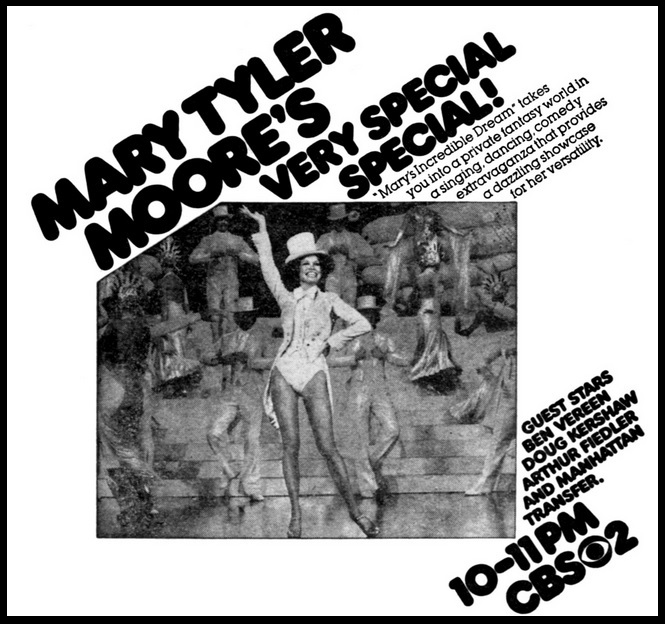


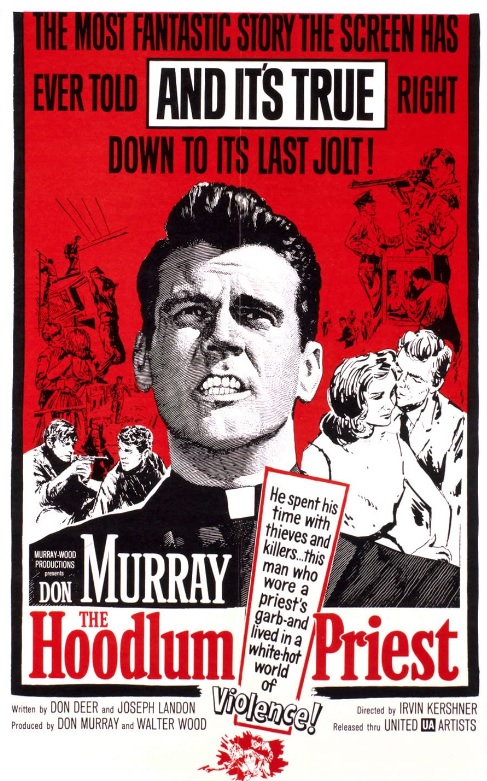
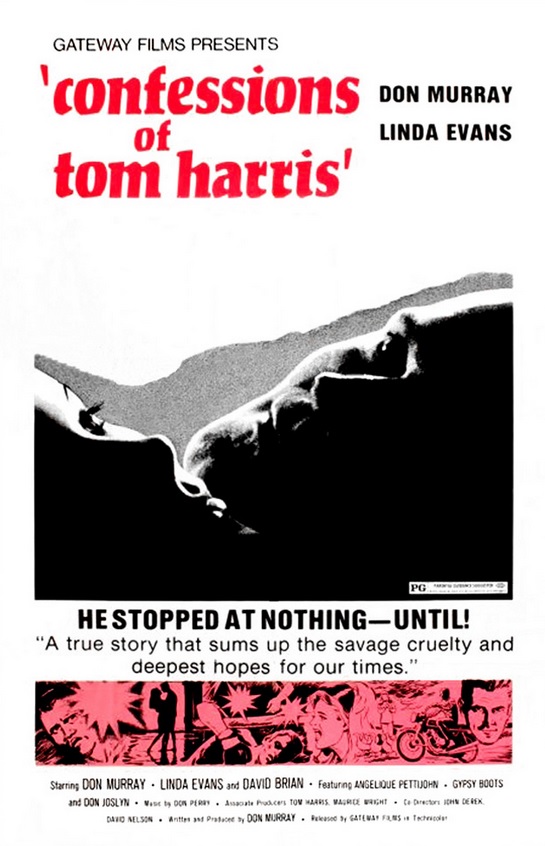




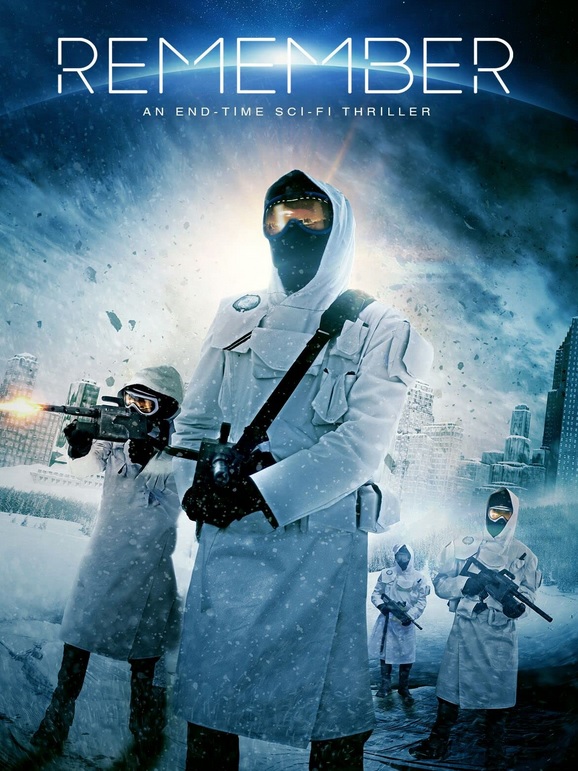

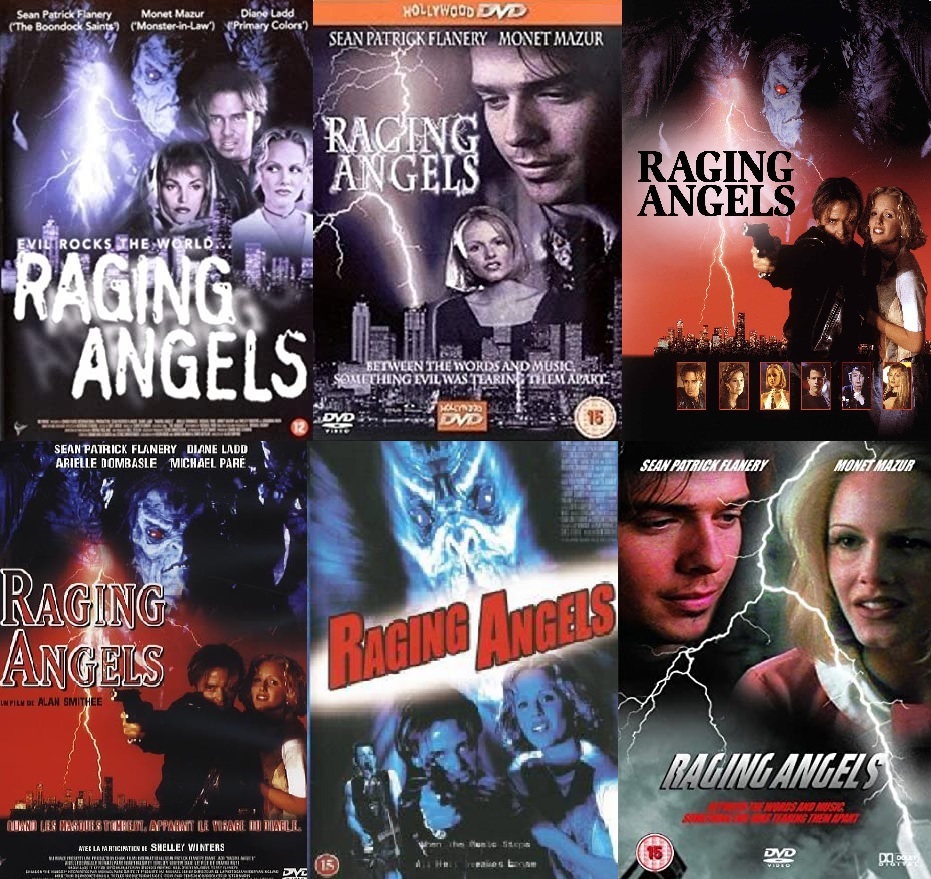



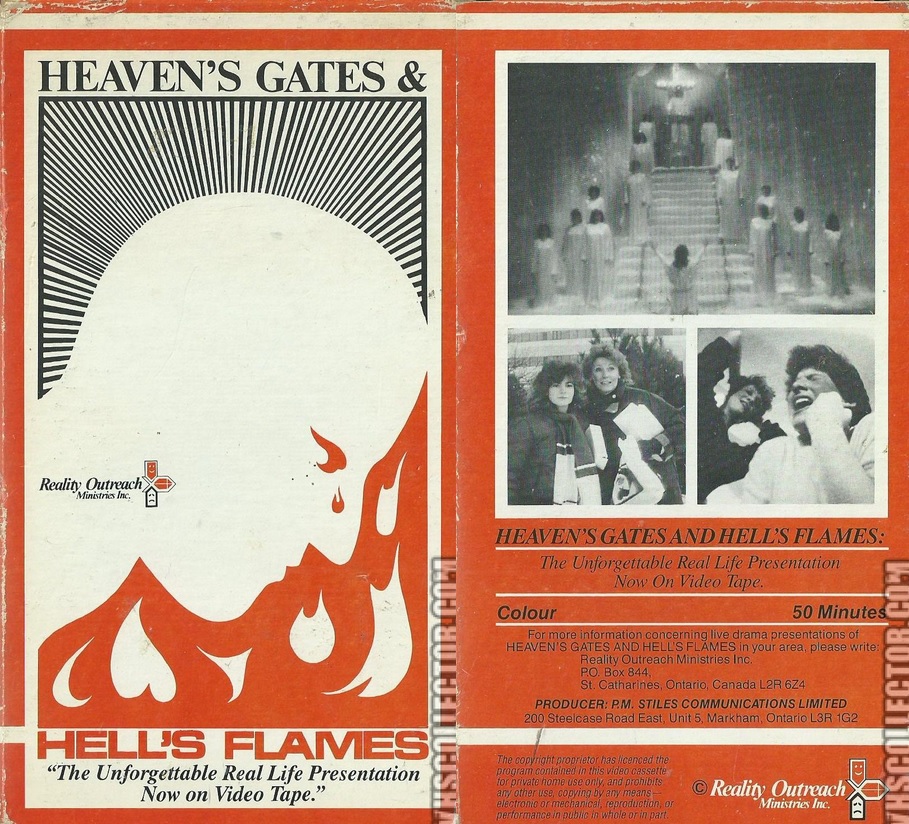
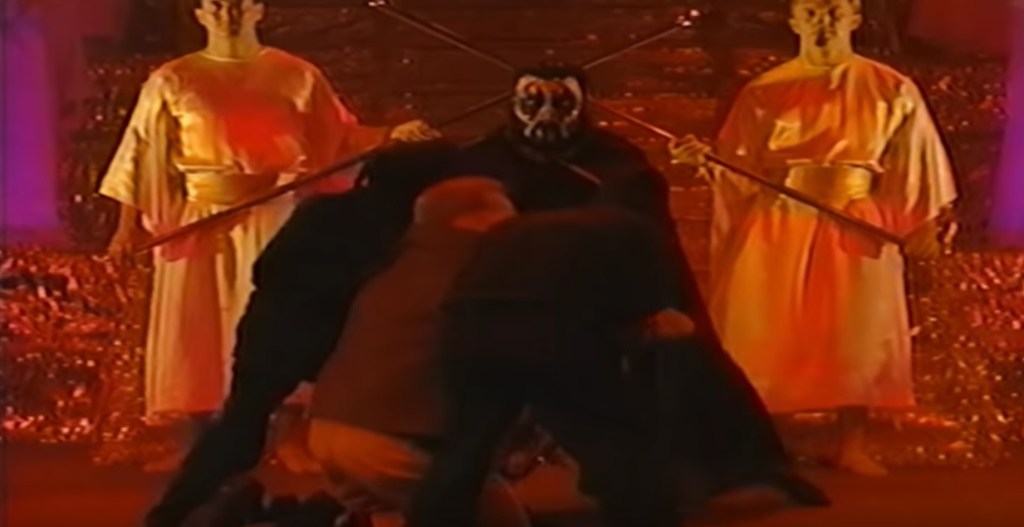


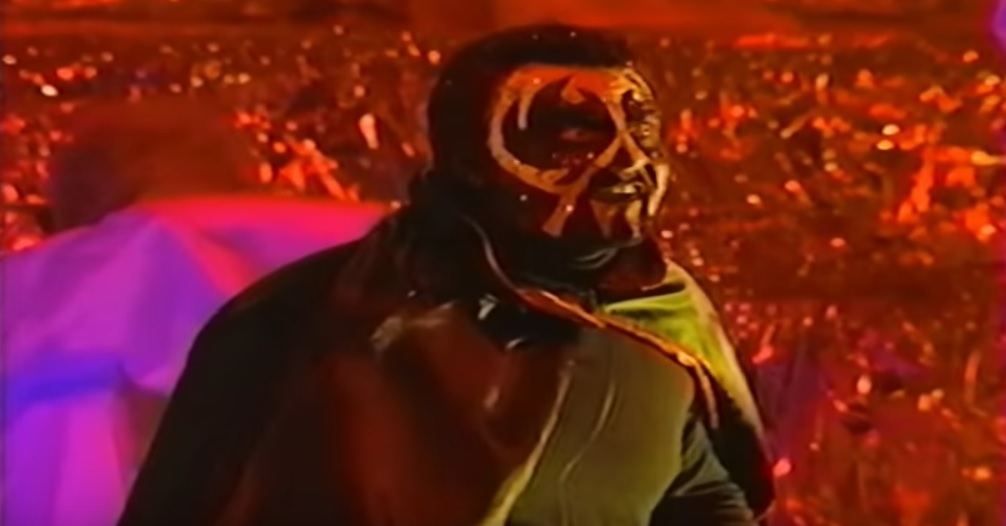
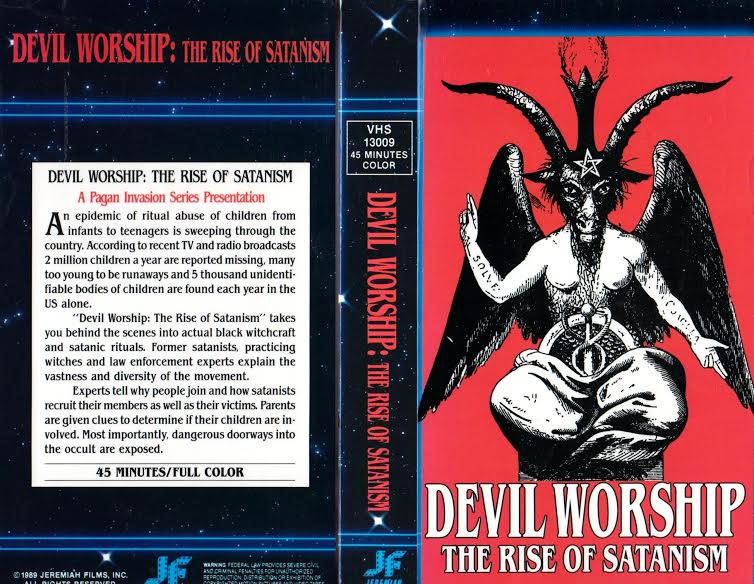
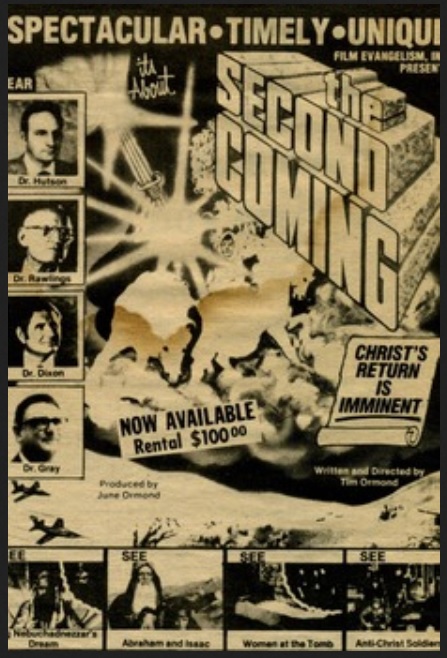

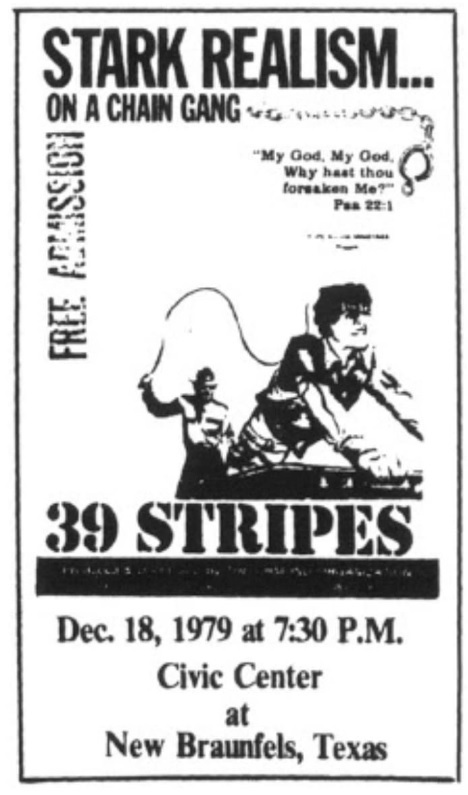


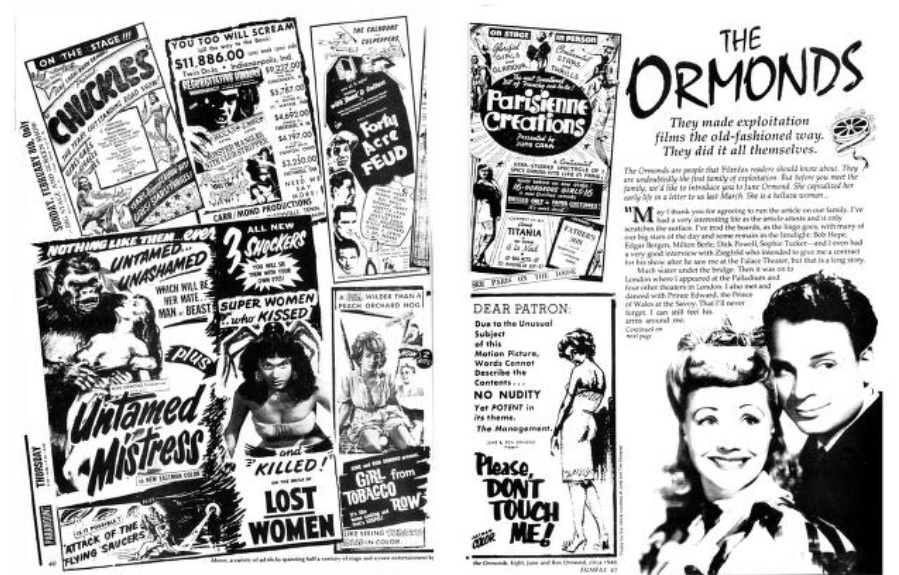
 B&S About Movies
You must be logged in to post a comment.