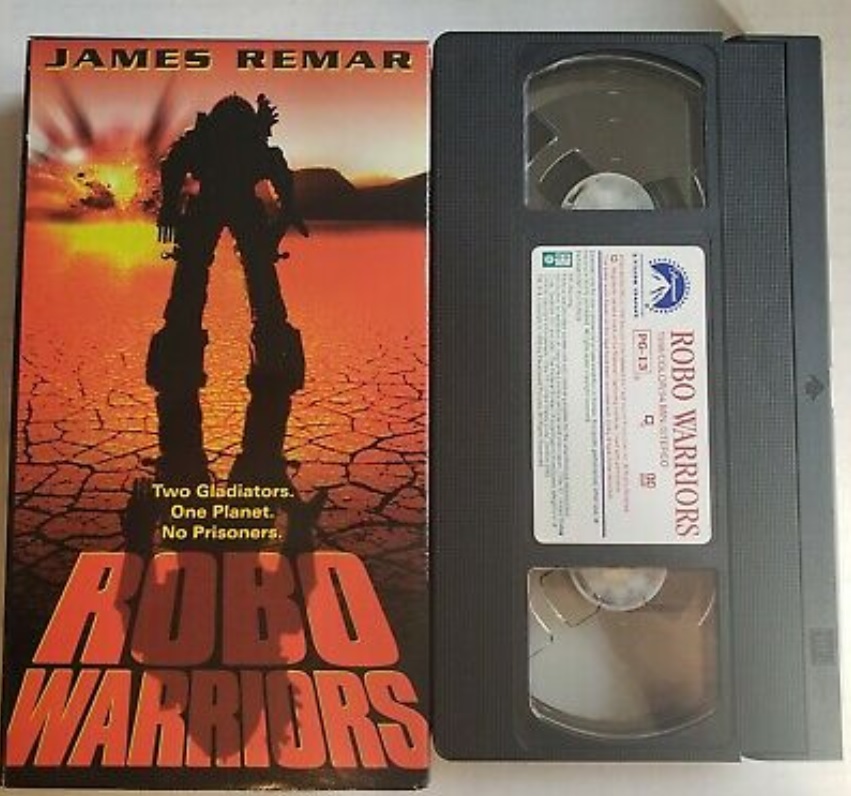
Robot Wars (1993)

Charles Band is one to never keep a good robot down — not when he laid out several million bucks to create his first robot-verse romp in 1989. So the anime-inspired mechs that we know and love are back, along with an all-new, never-seen-before mech: the Lucasian-inspired AT-AT that is MRAS-2, which resembles a mechanized scorpion.

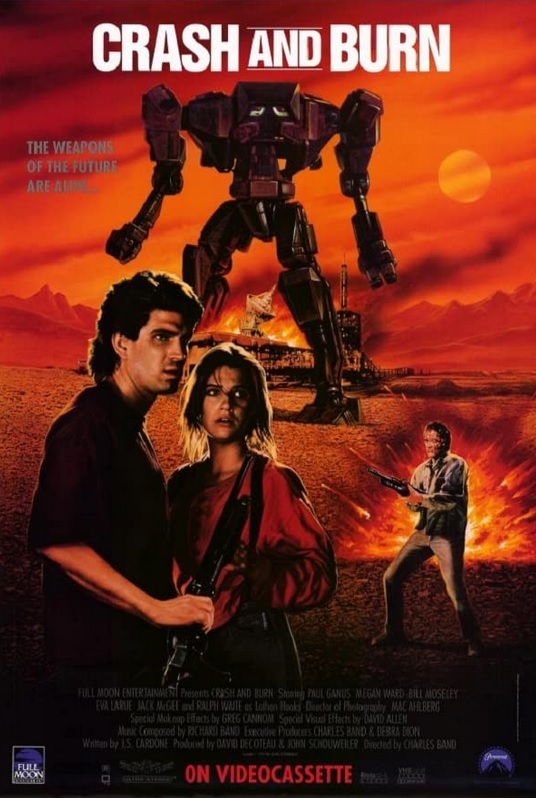
Now, if you read our reviews for the they’re-not-sequels Robot Jox and Crash and Burn (both reviewed this week), then you’re up to speed on the all-over-the-place timeline of the Band-verse that our poly-carbon alloy friends operate in. Adding to the confusion: In the overseas markets, courtesy of the U.S. home video promotional one-sheets touting the tagline: “First, there was Robot Jox . . . ,” this third installment of Band’s live action anime-mechs is known in the overseas markets as Robot Jox 2: Robot Wars. Yeah, we know. Crash and Burn was Robot Jox 2: Crash and Burn in the overseas markets. So, why not suffix Robot Wars with a 3?

Oh, ye poor B&S reader. Why are you overthinking a movie with a giant scorpion robot?

And speaking of overthinking: While Robot Wars takes place eleven years after (in 2041) the events in Crash and Burn (set in the year 2030), this isn’t the future-continuation of that timeline. In fact, the world — instead of being devastated by a nuclear war as depicted in Robot Jox, and the world economic collapse due to man’s dependence on technology ballyhooed in Crash and Burn: now the North American continent was devastated by “the great toxic gas scare of 1993” that’s left large parts of the former United States a barren, desert wasteland. (You know, the same desert wasteland Parsifal, Bronx and Ratchet drove across on motorcycles to the Eurac-backed Big Apple, aka Arizona, U.S.A.) Oh, and let’s not forget the great robot ban of 2015 that decommissioned all the battlebots. (Uh, oh. Are we pinching from Damnation Alley, here? Remember that ’70s post-apoc’er had giant scorpions raised on radioactive fallout.)

And Band changed the sociopolitical backstory, yet again. Gone are the U.S.-led Common Market and the Russian-bred Confederation. And it seems the Independent Liberty Union foiled the tech-oppressive Unicom Corporation. Now, the New World Order is known as North Hemi, which assimilated the United States. The opposing side is the Eastern Alliance. And, at one time, the Hemis and the Alliancers had at it out with their now extinct 120-foot mechs we know and love, hence the great robot ban of 2015. (Uh, oh. Are we pinching from Francis Ford Coppola’s Battle Beyond the Sun? Remember that Corman-hatchet job of the superior Russian space epic Nebo Zovyot (1959) was rewritten by Frank, set in the year 1997 with a world divided into North and South Hemi governments.)

Sadly, all that is left of the once ubiquitous war machine mega-robots is the MRAS-2 scorpion-styled robot, now reduced to being tourist attraction that transports civilians across the wasteland — but still carries a full weapons complement, complete with a laser-tipped tail. Ah, but this isn’t just another wasteland tour: Wa-Lee, an Eastern Alliance dignitary is on board, on his way to negotiate a trade agreement with the North Hemis to manufacture a new line of “mini-megs” for the Eastern Alliance. (Although Danny Kamekona is the only actor from the franchise to act in two of the three Robo flicks, he’s a different character in each.)

That trade agreement is jeopardized when it is discovered the terrorist-based Centros, desert bandits who attack North Hemi transports, are now backed by Eastern Alliance sympathizers. As the story develops, it’s learned that Wa-Lee, and Drake, our Plissken-styled MRAS-2 pilot (Don Michael Paul; he’s since written and directed sequels in the Jarhead, Sniper, Tremors, and Death Race franchises) were once friends, but now enemies. Their animosity boils over when Wa-Lee, with the support of the Centros, hijacks the MRAS-2 and holds its passengers hostage. And with that, Drake faces his fears and climbs back into the cockpit of a reactivated MEGA-1 for some battlebot action. Oh, and a pretty cool, double-turret laser tank (right off the cover of David Drake’s 1979 paperback Hammer’s Slammers) shows up. However, also showing up along the yellow-plotted road is the Bogie and Bacall-styled romantic bickering between Don Michael Paul’s Han Solo-esque scoundrel and Barbara Crampton’s (Re-Animator) Leia-inspired archeologist who helps him resurrect the thought lost MegaRobot — that digs itself out of its subterranean grave in an impressively executed effect.

Yeah, but just a little too late with the effects there, Chuck.

Charles Band was really onto something special with Stuart Gordon’s Robot Jox. Then he fumbled the ball with his two they’re-not-sequels and got ass-smoked by Toho Studios’ hell-of-a-lot-more fun, GUNHED (1989). And team Band (Charles produced while pop Albert directed) most likely realized that fact, as their fourth not-a-sequel, Battle Jox — featuring giant dinosaur-styled robots — was cancelled. (Thank the Lords of Kobol for saving us from that feldercarb. In what logic-verse would man build dinobots, except for some lame-ass toyline for kids 9 and under.)

Dave Allen and Jim Danforth really knocked it out of the park with the newly-added Scorpion robot. Double for the special effects team of Greg Aronowitz and Rob Sherwood who designed the robot cockpits. The plate work is also top notch in depicting the rocking of the passenger cabin/cockpit against the landscapes as the scorpion walks. (The VHS has a great documentary vignette — void from the later DVD presses — that explains/demonstrates the plate processes of the film.) It’s when the proceedings get outside of the cockpit — with the Paul-Crampton romancing, Lisa Rinna’s journalist investigating the nefarious goings in the metropolis of Crystal Vista (aka old Los Angeles), and the sociopolitical rambling — that it all goes to feldercarb. Is the third act here, yet? Can we please just get to the robot battle we came for in the first place?

While you’ll notice the Full Moon prop and costume department raiding throughout the film (that looks like leftovers from Spacehunter: Adventures in the Forbidden Zone and Metalstorm: The Destruction of Jared-Syn to me; reviews coming for both, look for them), the proceedings are of the oh-so Buck Rogers plastic-verse variety to the point you’re wondering when a (bitchy-Season 1) Erin Grey or (pudgy-Season 2) Gil Gerard will show up. But we’re grateful for iconic Asian actors Danny Kamekona and Yugi Okimoto bringing their A-Game and selling the silliness with gusto. (They both appeared together in The Karate Kid Part II (1986); along with Don Michael Paul, they also appeared in Aloha Summer (1988).)

As with its sister films, VHS copies are bountiful in the online marketplace, with the first DVDs issued in 2007 as part of the Full Moon Classics: Volume Two disc set, and then the Full Moon Features: The Archive Collection, with 17 other Full Moon titles. Robot Wars is also double-featured with Crash and Burn on a Shout! Factory DVD issued in 2011. Blu-ray’ers can pick the Full Moon single-movie version issued in 2017. Question is: When are we going to get a three-pack set proper — complete with the VHS documentaries restored?

You can enjoy Robot Wars as a free-with-ads stream on Tubi. Here’s the TV promo spot to get you started.
What this? A fourth Robo flick? You better believe it

About the Author: You can learn more about the writings of R.D Francis on Facebook. He also writes for B&S About Movies.

Heroic Trio 2: Executioners (1993)

Honestly, they could have made hundreds of movies in the Heroic Trio series and I would have watched every single one of them. The Wonder Woman (Anita Mui), The Invisible Girl (Michelle Yeoh) and The Thief Catcher (Maggie Cheung) have returned, but the city around them has been decimated from a nuclear attack.

Unlike most superhero films, each of the characters has made major growth in their lives. Wonder Woman is now a mother, hiding her powers to become a better provider. Invisible Girl works to atone for being evil and even trains her former master’s hunchbacked henchman Kau to be a hero. And Thief Catcher may try to steal everything, but she now realizes that she is part of something bigger than herself.

Director Siu-Tung Ching also made the A Chinese Ghost Story series and he directed this with original Heroic Trio maker Johnnie To.

I often obsess about how sequels never change up the game. This movie decided to take a colorful comic book romp and make it a violent and bleak post-apocalyptic movie about the lack of water at the end of the world and the changing roles of women. Hong Kong, you always have so many surprises.

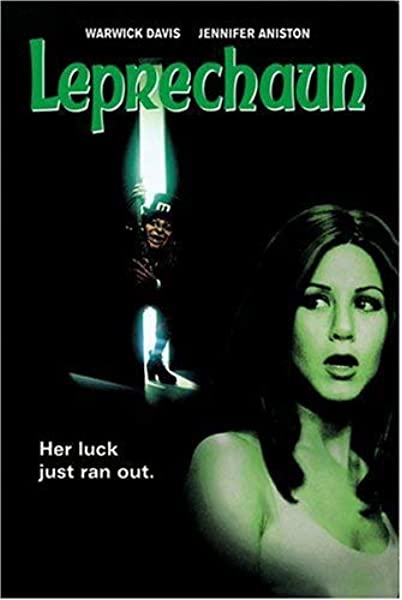
Leprechaun (1993)

EDITOR’S NOTE: Paul Andolina already covered this film way back on March 17, 2019 but now we’re doing a whole week of these movies. 

Leprechaun was supposed to be a straight horror film, but what made it work was Warwick David bringing more humor to his role and lots and lots of gore. In fact, I would argue that more blood and guts can improve almost every movie.

Ten years before this movie starts, Dan O’Grady has come back from Ireland with a stolen pot of gold, which he buries just in time for leprechaun to kill his wife and try to murder him, too. He uses a four-leaf clover to stop him, traps the evil mini-monster — whose name is Lubdan — in a crate and then promptly has a stroke.

Later, J.D. Redding and his kids — yep, that’s a very young Jennifer Aniston — move into the farmhouse and, is the way that horror films work, free the leprechaun, who promptly going wild to get his gold back.

Writer and director Mark Jones was influenced by the small monsters in Critters and a Lucky Charms commercial to make this movie. Well, it worked. It worked so well we’re doing every one of the seven sequels on the site this week.

There are some interesting thanks in the credits. George Lucas is one of them, as he let Davis make the movie despite having him under contract. And Dan Quayle sped up a working visa for Davis.

Leprechaun was Trimark’s first homemade movie and 1993’s first movie release. They went all out hyping it, with everything from having Davis ring the American Stock Exchange opening bell* to NBA teams having Leprechaun Nights and even bypassing Domino’s Pizza and Subway corporate to reach out directly to their franchises to sell the movie. It worked, because this low budget film was the number one movie of the week when it premiered.

*Lucky Charms cereal ripped this off, which has to sting. They had allowed a scene with their cereal in the movie until they saw it, which is why the line “Fuck you, Lucky Charms!” is in this.

Herencia Diabólica (1993)

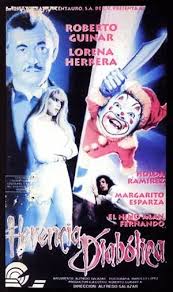
Alfredo Salazar wrote some pretty great movies, like Las Mujeres PanterasThe Batwoman, the Aztec Mummy films and some Santo movies. He only directed ten movies, with this one being his last. And oh man, what a way to go out.

Tony (Roberto Guinar, who must have a thing for weird dolls, because he also directed the absolutely nightmarish Muerte Infernal) and his wife Annie (Holda Ramírez) have returned to Mexico due to Tony’s aunt dying and giving him her mansion. While he’s working, Annie finds plenty of black magic implements and a clown doll. He explains it like, “Yeah of course she did a lot of witchcraft. No big deal.” And Annie is fine with it. So fine that they cerdo hormiguero and nine months later Tony’s a dad. Well…not before the clown kills his wife and his son Roy is safely born in the hospital.

Fast forward a few years and Roy (Alan Fernando) has become obsessed with the clown, whose name is Payasito. He then gets a new mommy — Tony’s secretary Doris (Lorena Herrera) — who soon realizes that the doll is evil and has to go.

There are long stretches of this movie where nothing happens. These are important because they will make you forget the little person named Margarito Esparza Nevare playing Payasito. He is absolutely terrifying every single moment that he appears in this movie, whether he’s stabbing someone, lynching the maid, assaulting someone and sometimes just standing there. He’s one of the most frightening visuals I have ever seen in any movie I’ve ever seen. Just imagine how bad that gets.

You can watch this on YouTube.

In the Shadows, Someone’s Watching (1993)

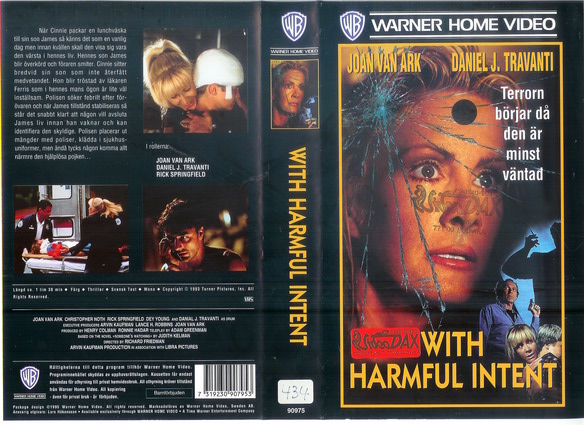
Also known as With Harmful Intent, this 1993 Richard Friedman (Doom AsylumPhantom of the Mall: Eric’s RevengeScared Stiff) made for TV movie has Rick Springfield and Joan Van Ark as parents headed for a divorce when a mystery man beats up their kid. Yes, if you’re the kind of person who says, “Kids never get hurt in movies,” then get ready for this movie, where kids are routinely abused throughout.

Based on the Judith Kelman novel, this giallo-esque film is all about a man — I’m not spoiling it for you — who was abused by the other kids and his mother, while only protected by his sister, but is now out to be the bully to the children of the ones who abused him. It also has an astounding scene where the witness to one of those killings is an elderly man who can’t speak due to a stroke and he keeps trying to tell everyone that they are in the presence of a murderer.

What a cast! Beyond the leads, you have Chris Noth, Daniel J. Travanti, Dey Young (who has been geeky yet loveable Kate Rambeau in Rock ‘n Roll High School as well as the snooty saleswoman in Pretty Woman) and Michael Patrick Carter as the child in danger. You may have seen him in Milk Money and as the kid in the Good Guys commercial in the original Child’s Play.

Man, once major networks stopped making movies like this, the world became a much less bright place.

You can watch this on YouTube.

Mercy Mission: The Rescue of Flight 771 (1993)

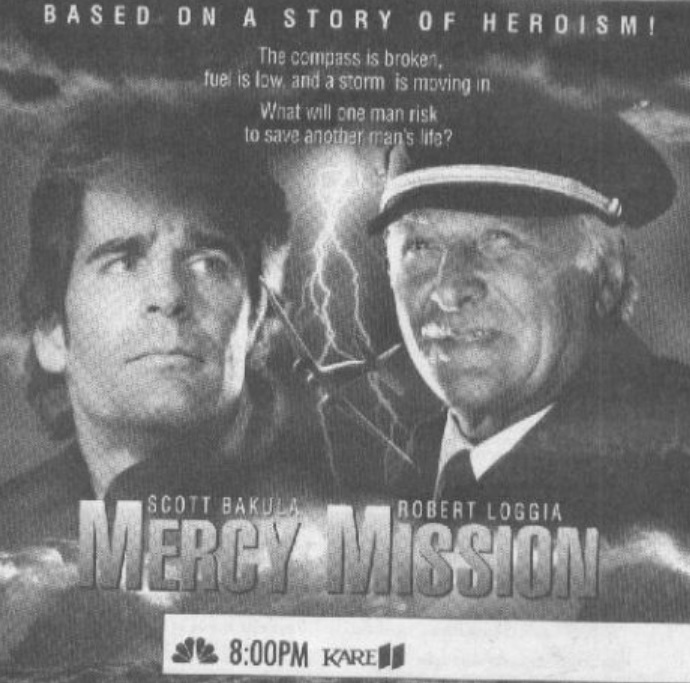
NBC-TV is back with another airline disaster flick, this one directed by TV movie warhorse Roger Young. I’ll always remember Young for his debut tearjerker, Something for Joey, a highly-rated TV movie sports drama starring Marc Singer, that aired on CBS-TV in 1977. In the theatrical realms, Young directed the 1987 Micheal Keaton box-office bomb (less than $3 million in tickets against $20 million) The Squeeze. Then Keaton was cast as you know who.

So that takes care of the Batman minutiae to amaze your friends in the DC Universe. Now let’s unpack this flick.

Courtesy of Fly Leaping Terminal/Angelfire (Quantum Leap Fan Site)

Yep. Thanks to Scott Bakula on the marquee, this TV movie made bank courtesy of its additional income as a successful overseas theatrical feature — known as Flight from Hell. And, yes. Like most other TV movie airline disasters, the special effects are mostly stock and not very special, and — according to airline buffs — the against-the-budget film is rife with technical flubs and details about the Australian airline industry. And even if this isn’t a good as most of the classic, Big Three network TV flicks of the ’70s, we have still have Scott Bakula and he never-ever-sucks-in-anything Robert Loggia selling the goods, so who cares about flubs and glitches?

Film on location in Australia, it tells of the real-life, 1978 rescue of a distressed Cessna pilot (Bakula), lost and low on fuel somewhere in the Tasman Sea between Oz and New Zealand. Loggia, as a commercial airline pilot on his last flight, leads the by-air search and rescue.

You can watch this on You Tube HERE and HERE.

About the Author: You can read the music and film reviews of R.D Francis on Medium and learn more about his work on Facebook. He also writes for B&S Movies.

Drive-In Friday: Dennis Devine Night

We’ve already taken a look at Double D’s best-promoted and best-known film — via the back of pulpy, ’80s monster mags — Dead Girls, and his latest, 30th film, Camp Blood 8 — each part of our respective “Rock ‘n’ Roll Week II” and October “All Slasher Month” tributes. And, the best part: Dennis is a D-Town brother: he was born and raised in Detroit and graduated from Eastern Michigan University before heading to Los Angeles, graduating from Loyola Marymount University’s film school, and forming DJD Productions.

So, for this Drive-In Friday, lets load the projector with four more of Dennis Devine films. And not all of them are the horror films you expect them to be.

Movie 1: Fatal Images (1989)

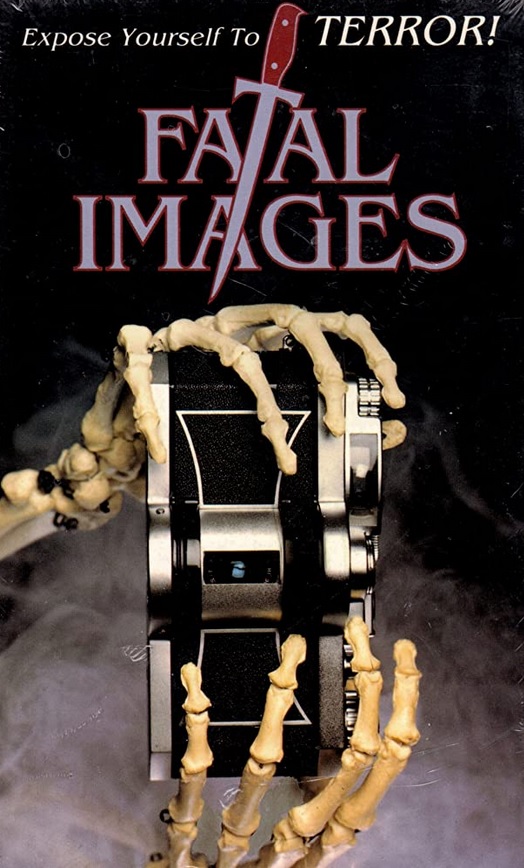
Next to Dear Girls, this debut feature — produced for $10,000 and shot-on-Beta with Dead Girls’ Steve Jarvis — is my favorite of the Devine canons and the Cinematrix imprint.

Starring Kay Schaber, Angela Eads, and Brian Chin from the later Dead Girls, they’re three of several people victimized by a Satanist-worshipping photographer-cum-serial killer who — instead of sealing his body in a doll, ala Chucky in Child’s Play (1988; 2019), Devine’s writing cohort, Mike Bowler (Hell Spa, Things, Things II, Club Dead, Amazon Warrior, Chain of Souls, Haunted), who spins an inventive change-up to the spiritual hocus pocus — commits suicide before the police can catch him, and seals his body inside a camera.

Years later, Amy Stuart (Lane Coyle who, in typical Devine fashion, never appeared in another film), an aspiring photographer who works for the town’s newspaper, purchases the vintage camera from a pawn shop staffed with a creepy, ulterior motive shopkeep — and everyone she photographs is tracked down and murdered by the killer’s spirit.

What helps this along is the effects that come courtesy of the iconic Gabe Bartalos, who worked on Dead Girls, as well as Frankenhooker, Spookies, Brain Damage, and the Fright Night, Basket Case, Leprechaun, and Texas Chainsaw Massacre, Gremlins and Watchers series. And don’t forget: Gabe’s in the directing business with Skinned Deep (2004) and Saint Bernard (2013).

You can watch Fatal Images as a free stream on You Tube. Do you need a more expansive, second look? Then check out Sam’s review of Fatal Images. It’s true! We love this film and Mr. Devine.

Movie 2: Things (1993)

“A horrific and sexy romp in the dark.”
— Joe Bob Briggs

Now, if that tag from the guru of Drive-In fodder on the VHS “big-box” doesn’t make you want to mail order this third effort from Dennis Devine, then nothing will. And yes . . . multiple titles alert . . . here are two movies carrying the “Things” title: the first is the infamous Canuxploitation-North of the Border Horror, Things (1989). And the three sequels from 1998 and 2017 to Devine’s film have nothing to do with the Canux one — or with each other — for that matter.

This “Things” is an anthology-portmanteau film in three parts: “The Box” directed and written by Devine,” “Thing in a Jar” written by Steve Jarvis and directed by Jay Woelfel, and the wrap-around/linking segment written by Mike Bowler and directed by Eugene James. All are film school friends and DJD cohorts, natch.

The segments come together as a woman kidnaps her husband’s mistress and tells the mistress two horror stories involving “evil things” — that’s all converged in a related, twist ending. And unlike the classic Amicus and Hammer omnibus flicks it homages, Things dispenses with the atmospheric-gothic angle of its Brit forefathers and goes straight for — the bountiful — guts n’ gore. The first tale concerns hookers who meet their fate to a cursed creature kept in a box; the second is about a woman haunted by is-it-real-or-nightmares “things” concerning her abusive husband.

You can watch Things on TubiTV. There’s no online copies of 2 or 3 (aka Deadly Tales, aka, Old Things) currently streaming online, but you can watch Things 4 on TubiTV. And again, DO NOT confuse this with the “North of the Border Horror” Things from 1989 . . . as that is a whole other “thing” to watch.

Uh, oh. As we rolled out another “SOV Week,” well, two, during the last two weeks of January 2023, we reviewed Dennis’s sequel, Things II.

INTERMISSION: Short Film Time!

The Things about Things Sidebar: Battlestar Galactica fans know Jay Woelfel as the director of Richard Hatch’s failed 1999 BSG theatrical reboot with the short “pitch film” Battlestar Galactica: The Second Coming that Universal rejected in lieu of the eventual SyFy Channel series. You can watch Hatch and Woelfel’s vision on You Tube. As you’ll see the, concept of “evolved Cylons” and the new Raiders design for the series was pinched from this version — and the most popular characters and actors returned. Woelfel is still at it: he recently edited Art of the Dead (2019). We also reviewed his debut effort, Beyond Death’s Door, as part of our “Regional Horror Week.”

And back to the show . . .

Movie 3: Curse of Pirate Death (2006)

It’s more goofy, ne’er-do-well college kids of the Scooby Doo variety heading off — not into the Norwegian Slasher Wood (as in Camp Blood 8) — but the ocean, Pirate’s Point in particular, as they research the myth of a centuries old killer, Abraham LeVoy, aka Pirate Death. And if they find his legendary treasure along the way, all the better for Shaggy and the Mystery Machine gang.

You’ve got — even though some are cut-a-ways or off-camera (ugh, damn budget) — a high kill count and lots of zombie-ghost pirate fighting that reminds of the great Amando de Ossorio’s third entry in his “Blind Dead” series, The Ghost Galleon (1974; the one with the living corpses of the Satan-worshiping Knights Templar hunting for human victims trapped on a 16th century galleon), but it’s definitely not as good as a de Ossorio flick (and what film is). Yeah, this one’s suffering from its ultra-low-budget that lends to sketchy cinematography and strained acting in places, but this has the usual Devine heart n’ soul with a mix of dark humor and horror that lends to its fun, snappy pace. Bottom line: If you want to see porn-provocateur Ron Jeremy (Boondock Saints/Overnight; also of Devine’s Night of the Dead from 2012) get a (cut-a-way) sword in the gut, this is your movie. If you want to see girls dressed as a sexy cop and German Beer Wench (Get that Bud Light chick outta ‘ere, I want a St. Pauli Girl!) stranded on an island dispatched by a dead pirate with guacamole smeared on his face, this is you movie.

One of the few Devine movies available through the service, you can rental-stream Curse of Pirate Death for a $1.99 on Amazon Prime. The DVD has a director-actor commentary track, along with a making of, gag reel, and meet the cast vignettes. The Amazon Prime stream offers a clip sample and You Tube offers a trailer via the film’s distributor, Brain Damage Films.

Movie 4: Get the Girl (2009)

Dennis Devine makes the jump from the pulpy lands of back-of-a-monster magazine-mail order SOVs to the streaming world of Netflix in this pretty obvious Judd Apatow-influencer. It concerns a geek (Adam Salandra of Devine’s Don’t Look in the Cellar) who masters Guitar Master (aka a chintzy Guitar Hero knock-off) to impress a sexy-brainless co-worker, much to the chagrin of his dowdy, co-worker gal pal. Guess which girl he gets. (Yeah, I’d want to “get the girl” with the ponytail and eye glasses, too.)

You can watch Get the Girl as a free-with-ads stream on TubiTV. Other films in the Devine comedy canons include Kid Racer (2010; yep, go-carts), Dewitt & Maria (2010; a rom-com), Fat Planet (2013; aliens into food), and Baker & Dunn (2017; that also works as mystery thriller).


For you Devineites (Or is that Devineheads?) check out his TubiTV page to watch the horrors Don’t Look in the Cellar (2008), The Haunting of La Llorona (2019), and the comedy Fat Planet (2013).

We wanted to do Devine’s Vampires of Sorority Row (1999), Vampires on Sorority Row II (2000), and his campy-vamp comedy Vamps in the City (2010) for our recent “Vampire Week,” but were unable to locate online streaming copies for you to enjoy — free or otherwise. The same goes for the Reggie “Phantasm” Bannister-starring Sawblade (2010) for our “Rock ‘n’ Roll Week II,” about an extreme-metal band a trapped-in-a-haunted house-for-a-video shoot tale (i.e., Blood Tracks and Monster Dog).

You need more Dennis Devine? Check out this Spotify podcast (that streams on all apps, and browser PCs and Laps) courtesy of Inside Movies Galore in promotion of Devine’s latest film, Camp Blood 8. You can also catch the podcast on streaming provider, Anchor.

About the Author: You can learn more about the writings of R.D Francis on Facebook. He also writes for B&S About Movies and publishes on Medium.

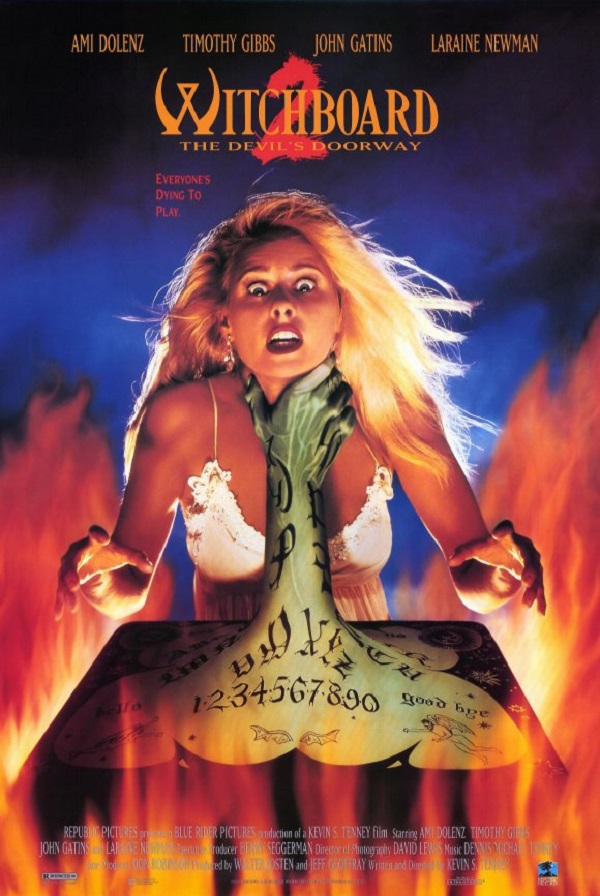
SLASHER MONTH: Witchboard 2: The Devils Doorway (1993)

Ami Dolenz — yes, the daughter of Mickey — takes over for Tawney Kitaen here as the Ouija-based mayhem continues. Writer/director Kevin Tenney is also back to tell the tale of Paige, who is becoming possessed through the board, discovering the spirit of the woman who once lived in her new apartment.

Who was Susan Sidney, the woman obsessing her heroine, keeping her locked inside to paint numerous images of her? An innocent? An exotic dancer prostituting herself? And what happened to her? Well, it’s a good thing Mickey dates a cop!

Tenney actually did research into progressive entrapment, where the spirits contacted by the Ouija board would slowly take over the lives of those who came in contact with them. While he didn’t believe in the veracity of the occult, he did say that the whole thing seemed creepy.

It was pretty cool seeing horror fan and SNL alumnus Laraine Newman show up in this.

This is the only Witchboard movie to not be packed with nudity. That’s because Dolenz had a no-nudity clause. However, Republic Pictures’ foreign sales department — yep, that old excuse that international markets need nudity — pressures Tenney into pushing for her to disrobe. The director and thinks this is why they tried to keep him out of the third movie in the series.

Hey — a dude gets killed by a boiler room. That’s worth your time, right?

Words

Fire In the Sky (1993)

If you have ever had a nightmare of being abducted by aliens, maybe avoid this movie. It’s harrowing and has one of the most brutal alien encounters scenes I’ve ever seen in a film.

Based on Travis Walton’s book The Walton Experience, which describes a “this really happened” extraterrestrial encounter, this movie features D.B. Sweeney as the author and Robert Patrick plays his brother-in-law. It also may be the second time Henry Thomas met an alien, but trust me, this one doesn’t go as well.

November 5, 1975. Snowflake, Arizona,. Loggers Travis Walton (Sweeney), Mike Rogers (Patrick), Allan Dallis (Craig Sheffer, One Tree Hill), David Whitlock (Peter Berg, Very Bad Things), Greg Hayes (Thomas) and Bobby Cogdill (Bradley Gregg, Class of 1999) are out in the woods when a UFO blasts Walton away to, well, somewhere and the other men are accused of murder by Sheriff Blake Davis (Noble Willingham) and Lieutenant Frank Watters (James Garner).

However, Walton shows up alive days later, suffering from flashbacks to the nightmare that he has survived, one that no one believes. However, the filmmakers thought the real Walton’s story was boring, so they embellished. And by embellished, I mean they went into nightmare crazy world and made a movie that still scares me every time I watch it.

You can watch this on Tubi.

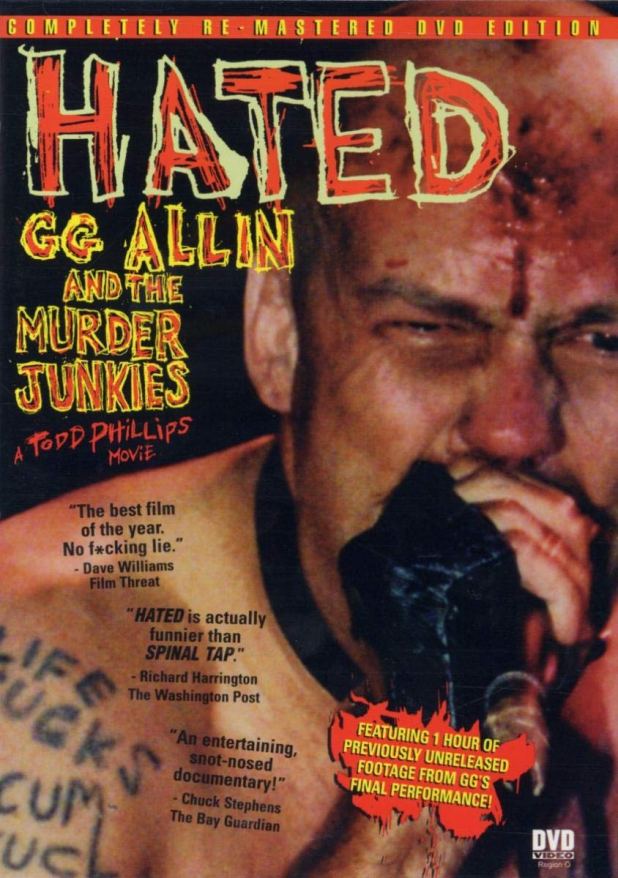
Hated: GG Allin and the Murder Junkies (1993)

1993 was a weird time. I mean, 2020 is a weird time too, but I’ve often discussed the pre-millennial tension that the world was suffering from, as well as the pre-WWW explosion of zines and the output of Feral House, whose Apocalypse Culture was a bible for the many behaviors and trends of the coming end of the world. Little did we know we’d all be sitting in our houses watching TV and wearing paper masks. The armageddon that James Shelby Downard was leading to seemed a lot cooler, to be honest.

Jesus Christ Allin was given that named because his mother claimed that the Son of God visited her and said that he would be a great man. His brother Merle couldn’t pronounce that name, but could say it phonetically. Hence, GG Allin.

The boys’ father was, to be charitable, a maniac and an abusive religious nut who continually promised to kill them, even digging a grave for the family in the cellar. This makes more sense when you think of all the times that GG promised that he would kill himself on stage.

Oh man. I’m writing this in a bubble thinking that everyone knows who he is. And then I realize that Allin died 27 years ago, in a time where there was no true-crime culture and only weirdos were obsessed with John Wayne Gacy.

This is an oversimplification, but Allin’s stage shows were mainly him attempting a song and then terrorizing the audience. Sometimes that involved baiting them with words or threats of violence. Other times, he’d shit all over the stage, put the microphone up his ass and throw feces at people.

You know. Rock and roll.

Somehow, Todd Phillips — yes, the man who directed Joker — made this at NYU before a career that includes Old SchoolStarsky & Hutch and three The Hangover movies. I don’t say that in an elitist way. It’s just interesting to go from GG bloody and scat-strewn on stage screaming to yuks.

There’s no real point of view in this, but you’re either going in knowing who Allin was, or as a fan, or as someone with preconceived notions of whether or not what he was doing was art. In today’s culture, the lyrics and actions of Allin wouldn’t have made him the underground counterculture force that he was. He’d have been canceled long before. Yet for a time, there he was, literally screaming, pissing and shitting into the wind.

You can watch this on Tubi.