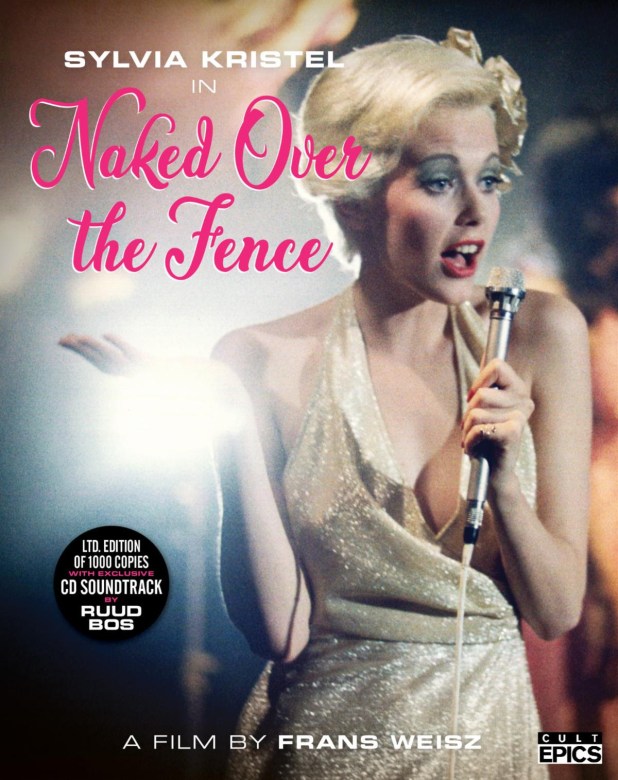
Naakt over de schutting was the film that Sylvia Kristel made before becoming a worldwide star in Emmanuelle. She’s a small — but important — part of this crime movie, in which pinball arcade owner Rick Lemming (Rijk de Gooyer) becomes part of the drama surrounding singer Lilly Marischka (Kristel), who is dating his karate champ friend Ed Svaan (Dutch martial artist Jon Bluming, the first non-Japanese in being awarded the 6 dan in karate from Masutatsu Oyama and eventually reaching the rank of 10 dan; his students included Chris Dolman, Willem Ruska, Semmy Schilit and Gilbert Yvel).
All Rick wants to do is hang out with his pidgeons and manage his pinball games, but he keeps getting pulled into all sorts of crime and murder. He’s also renting a room to a young teacher named Penny (Jennifer Willems) who knows more than a little about karate.
Lilly has asked Ed to be in an art film with him that ends up being an adult movie; she runs from the set but afterward, nearly everyone involved is murdered and Kristel is injured in an accident while singing at a TV studio, which is a place filled with all manner of villains.
This movie is somehow a comedy, a murder mystery, a musical, a sexy film, a drama and a martial arts movie starring a legitimate martial artist who was such a controversial figure — the Japanese were upset that a foreigner had been given such a high rank — that his master made a challenge to all Asian martial artists to fight him and if Bluming lost, he’d be stripped of his black belt. In the only challenge he had to fight, against Kwan Mo Gun, Bluming won quickly with an open-handed strike.
Naked Over the Fence is definitely worth seeing as a curiousity as it has a very young Kristel singing in English and just being charming. I also really liked the sarcastic way that Rijk de Gooyer played his character; he was also in Herzog’s Nosferatu the Vampyre and played the Dutch version of Archie Bunker.
Cult Epics blu ray of Naked Over the Fence includes a new 4K HD restoration from the original negative, audio commentary by biographer Harry Hosman, behind the scenes features, an interview with director Frans Weisz, B-Movie Orchestra and interview with composer Ruud Bos, a promotional gallery, several trailers for other Sylvia Kristel movies and the limited edition of 1000 blu rays will include an exclusive bonus CD with soundtrack by Ruud Bos & Slipcase. You can order Naked Over the Fence from blu ray and DVD from MVD and on blu ray from Diabolik DVD.
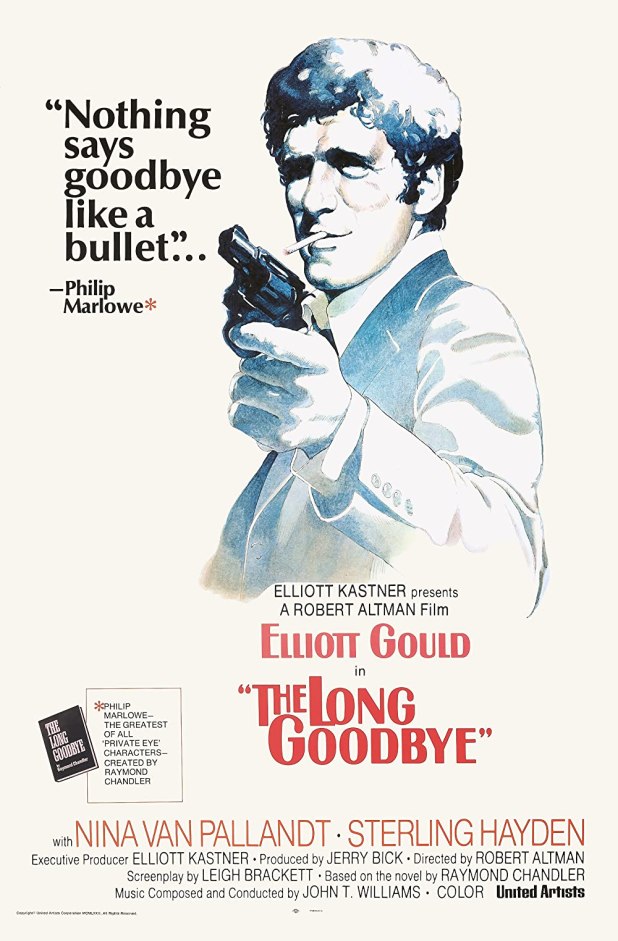
Directed by Robert Altman and based on Raymond Chandler’s 1953 novel, with a script by Leigh Brackett (who co-wrote the screenplay for Chandler’s The Big Sleep), who said that United Artists demanded that “either you take Elliott Gould or you don’t make the film. Elliott Gould was not exactly my idea of Philip Marlowe, but anyway there we were.” — The Long Goodbye was revised to move the story to the 70s.
As for Gould, he hadn’t worked in two years, ever since battling with Kim Darby and director Anthony Harvey on A Glimpse of Tiger. He had to take a psychological examination before United Artists would sign him to be the lead.
Marlowe (Gould) is asked by his friend Terry Lennox (baseball player and author of Ball Four Jim Bouton) to take him to the border at Tijuana. When he gets home, the cops bring him in and question him about Lennox killing his wife Sylvia. After three days in jail — and refusing to help the police — Marlowe learns that Lennox is said to have committed suicide. He refuses to believe that story.
Marlowe is hired by Eileen Wade (Nina van Pallandt, who dated Hughes diary forger Clifford Irving and sings “Do You Know How Christmas Trees Are Grown?” in On Her Majesty’s Secret Service) to find her missing husband Roger (Sterling Hayden, who was drunk and stoned for most of the movie; he’s still great), which takes the detective — who never stops smoking — into the health and fitness world of well-off Californians. And of course, the Wade and the Lennox couples knew one another, as Eileen confesses that Roger was sleeping with Sylvia, and might have killed her, right after Roger walks into the sea and drowns. Oh yeah — there’s also the matter of mob boss Marty Augustine (Mark Rydell) who has some money owed to him by Terry.
All paths lead back to Mexico, where Marlowe soon realizes that he’s been played for a fool. However, he plans on having the last laugh. Altman referred to his character as Rip Van Marlowe, as he saw him as a man trapped in the 50s and “trying to invoke the morals of a previous era.”
The cast also includes David Arkin, Pancho Córdova, Amityville 2 and Mommie Dearest star Rutanya Alda, Jack Riley, David Carradine, Morris the Cat and a non-speaking role for an impossibly young Arnold Schwarzenegger.
Critics savaged this on initial release with Jay Cocks from Time saying, “It is a curious spectacle to see Altman mocking a level of achievement to which, at his best, he could only aspire.” Chris Champlin of the Los Angeles Times summed up what so many thought of Gould as Chandler’s hard boiled detective hero by writing, “He is not Chandler’s Marlowe, or mine, and I can’t find him interesting, sympathetic or amusing, and I can’t be sure who will.”
As for the actor, he has said that as ong as he is physically able, he holds out hopes that he will reprise the role. He has a screenplay entitled It’s Always Now based on the Chandler story “The Curtain.” The Chandler estate sold him the rights for $1.
With an always moving camera and the pastel cinematography of Vilmos Zsigmond, this movie still looks wonderful and has stood the test of its time, a time when it was not as well considered.
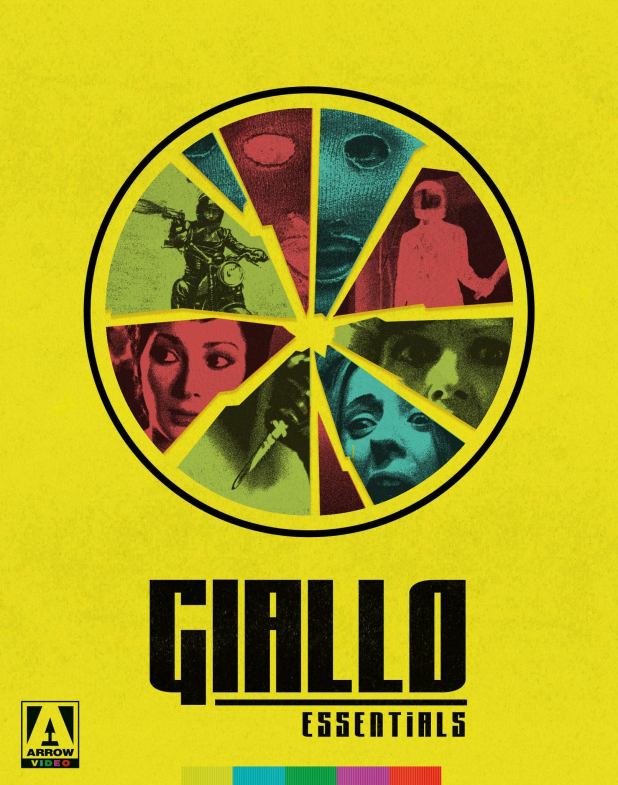
Arrow Video continues its exploration of Italian cult cinema with a second volume of Giallo Essentials that has three fashion, murder and psychosexual madness-filled films.
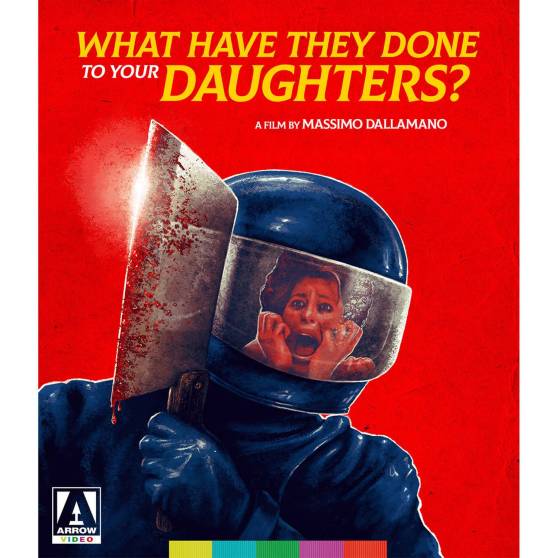
What Have They Done to Your Daughters? (1974): By 1974, the giallo was waning and the poliziottesco was starting to win over the Italian box office. This offering is a hybrid of both — unlike many giallo, the police are not presented as ineffectual or non-essential. Instead, they’re followed for most of the film.
Massimo Dallamano (The Night Child) made What Have You Done to Solange?, a giallo that exists outside of the Argento archetype. He’d follow it with this rougher and much darker — somehow that’s possible! — semi-sequel.
Deputy Attorney Vittoria Stori (Giovanna Ralli, The Mercenary, Sex with a Smile) is a rarity in giallo. She’s a woman in command of the police and never presented as a victim. She’s in charge of the murder investigation of Sylvia Polvesi (Sherry Buchanan, Dr. Butcher M.D.).
Found hanging in an attic, her suicide is anything but, as Inspectors Silvestri (Claudio Casinelli, Murder Rock, Hercules) and Valentini (Mario Adorf, Short Night of Glass Dolls) soon discover. And oh yeah — there’s soon a leather jacketed biker using a meat cleaver to gorily off his or her victims. And a peeping tom, too! And teenage prostitution! And Farley Granger, showing up to class up the proceedings!
Obviously, the look of the killer in this movie would influence a movie that has no interest in classing up the giallo — Strip Nude for Your Killer — and an American movie that gets so close to a giallo but is missing the murderous set pieces — Night School.
It’s a shame that Dallamano died in a car accident at the somewhat young age of 59. As the cinematographer for Leone’s A Fistful of Dollars and For a Few Dollars More, he certainly had an eye for action and movement, as evidenced by the hallway chase scene in this film that seems as steady as, well, a Steadi-Cam shot (it isn’t!).
The Giallo Files site compared this movie to an episode of Law and Order. That’s an apt comparison. It’s a good movie to introduce someone to the genre with, as while it has some twists and turns, it doesn’t descend into plot hole jumping or an abundance of red herrings as some films of this genre.
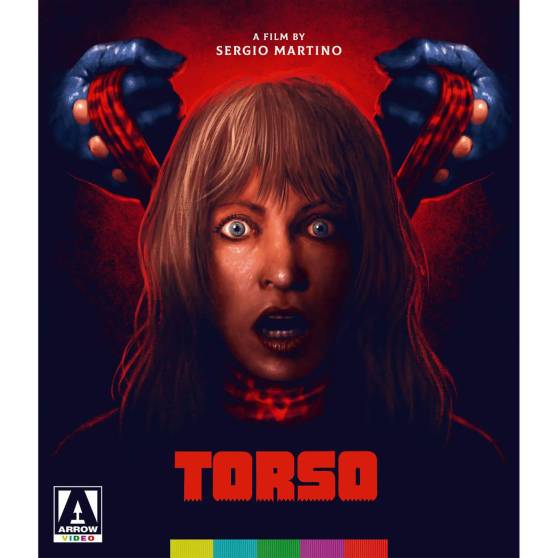
Torso (1973): Torso is such a simple title. I’d rather call this film by its Italian name: I Corpi Presentano Tracce di Violenza Carnale, or The Bodies Bear Traces of Carnal Violence. Either way, it was directed by Sergio Martino and features none of the cast that he had come to use in his past films like George Hilton, Ivan Rassimov or Edwige Fenech.
It does, however, star Brtish actress Suzy Kendall, who played the lead role of Julia in Dario Argento’s seminal The Bird with the Crystal Plumage. She’s so associated with giallo that she appeared as the main character’s mother in 2012’s ode to the genre, Berberian Sound Studio.
This is a film that wastes no time being strange. Or salacious. A photographer is shooting a soft focus lovemaking session between three women amongst creepy, eyeless baby dolls. By the time we register what is happening, we’re now in a classroom, where swooping pans and zooms refer us to the main cast of the film as we overhear a lecture and later a discussion about Pietro Perugino’s painting of Saint Sebastian. Did he believe in God? Or was he just trying to sell sentimentality? Could an atheist find himself able to translate religion to those with faith?
We cut to a couple making out in a car as a figure stalks them through the eye of the camera, making us complicit in the act of the killer. Quick cuts reveal the white-masked face of this maniac. The man runs after him while the girl doesn’t even care that they had a voyeur watching. As she waits for him to return to the car, but grows impatient. The headlights of the car cast her shadow large across the columns of a bridge. And their light is quickly extinguished by black-gloved hands. The camerawork here is really striking, keeping us watching for the killer, as we’re no longer behind his eyes. His attack is swift and ruthless, juxtaposed against the images of fingers penetrating the eyes of a doll.
The art professor (John Richardson, Black Sunday, The Church) and Jane (Kendall) meet by chance at a church where she challenges him to change his views on Perugino. As she returns from their somewhat romantic afternoon, Jane spies her friend Carol arguing in the car with a man who she believes is married.
Meanwhile, ladies of the evening walk the street, ending up with Stefano, a student who has been stalking Julie. He has trouble performing and the prostitute he’s with tells him that all the men with hang-ups always come her way. That said — even if he’s queer, he better pay the money. He flips out and attacks her, but she makes her escape.
We’re then taken to a hippy party that looks like it’s taking place inside Edward Lionheart’s Theater of Blood. There’s weed, there are acoustic guitars, there are bongos, there are dudes with neckerchiefs, there are motorcycles. Truly, there’s something for everyone. But after leading on two men, Carol just walks out into the mud. They try and chase her, but she makes her escape into the foggy night. We hear her footsteps through the swamp as she walks, exhausted and covered in mud. What better time for our white-masked killer to return? We see glimpses of him through the fog and then he is gone. Whereas in past films Martino ignored the murder scenes instead of story, here the violence is extended, placing the killer and his actions in full view. After killing the girl, he rubs mud all over her body before stabbing her eyes — again intercut with the baby doll imagery. Her blood leaks into the mud as the score dies down.
This scene really feels like what the first two Friday the 13th movies were trying to achieve, but of course several years before they were made.
A police detective is in front of the art class, showing images not of art, but of the crime scene. A piece of cloth has been found under the fingernails of one of the murdered students, Flo. And that same scarf was found on Carol’s body. It’s their duty to report seeing anyone who wore this scarf to the police, who want to cooperate with the students who normally riot and throw rocks at them.
Two of the men in the class — Peter and George — were the last two people to be seen with Carol, the ones who she turned down at the party. Meanwhile, Stefano continues to stalk Jane. The music in this film is so forward-leaning — tones play when the killer shows or during moments of tension.
A man calls Daniela and tells her that if she ever tells where she saw the red and black scarf, she’s dead. Fearing for her life, she tells her uncle, who lends his country home to her and her friends so that they can get away from the city while the killer is at large.
Oh yeah — I forgot the pervy scarf salesman, who the police are leaning on. Right after talking to the police inspector, he calls someone and asks for money to buy his silence. Whoever it is, they bought the scarf from him and wouldn’t want anyone else to know. They’ll also get out of town and head to the country. Coincidence? I think not!
Stefano is all over Dani, telling her that he needs her. She wants nothing to do with him. When she stares at him, she remembers seeing him wear the red scarf. She escapes — slamming the door in his face. She tells Jane that she remembers seeing him wear the scarf — and never again — the day Flo died. The whole time, the creepy uncle is watching the two girls. Jane offers to speak to Stefano, then meet the girls at the vacation home.
The street vendor is flush with cash, creeping along in the dark. A car starts to follow him. We see the black-gloved hands again as the car hits its victim again and again, bright red gore pouring all over the screen.
Jane goes to speak to Stefano, finding only strange baby dolls and letters to Dani asking her to love him and remember the promise that she made as a little girl. Jane is surprised by Stefano’s grandmother, who tells her that he left town.
The other girls are asleep on the train as someone watches them. A strange man enters their train car and sits down.
The camerawork in this movie feels as predatory as the perverts and killers that exist within it. Speaking of pervs, when the girls arrive in the countryside, the local men pretty much lose their minds, particularly over Ursula (Carla Brait, the man wrestling dancer from The Case of the Bloody Iris). She and Katia make out as a peeping tom watches, only for the killer to show up and off the leering man. There’s an amazing scene of the killer dumping the pervert into a well, shot underwater and staring upward as the body falls toward the lens.
Man, every man in this movie is scum. They’re either frightened boys or perverts wanting one chance to knock up a woman or scarred from past sexual encounters. None of them are positive, as even the uncle who gives Dani the villa seems way too interested in her. Every man is a predator at worst and a leering pervert at best.
Jane hurts her ankle when she gets overly excited about breakfast. A doctor arrives — the mysterious man from the train — and he gives her a pill, which knocks her out.
The girls go sunbathing while Jane recovers. Dani thinks she sees Stefano — complete with the red scarf — watching them. They return home and drink champagne, which Jane uses to wash down her sleeping pills.
A few minutes later, the door rings. It’s Stefano — the girls all scream — but he’s dead — the girls scream again — and the killer is behind him, holding the red scarf — now scream even louder! Instead of showing us the murders, Martino switches form, cutting to a ringing bell and Stefano being buried.
Jane wakes up, asking where her breakfast is. She’s obviously slept late as a result of the pills. She walks around the apartment, looking for Dani, Ursula and Katia, only to find a mess. Tossed chairs, bottles of beer and every single one of her friends murdered. Suzy Kendall is amazing in this scene, caught between fear and nausea. Unlike so many wooden giallo performances, she’s actually believable.
She hides as the killer comes back, forced to stay quiet and watch as he saws her friends into pieces. Even the ordinary world routine of the milkman arriving cannot stop the butchering of her friends, with her trapped just feet away.
This final act is completely unexpected, as up until now, the film had played by the rules of the giallo, the large number of victims versus a large number of red herrings.
In fact, this film is so packed with red herrings, even the cast had no idea who the killer was. Martino wouldn’t tell them who it was, so each of the actresses had her own theory as to who the killer was. And in the original script, the killer survived.
Now, instead of that traditional giallo structure as I mentioned above, it is the last survivor — a near prototype for the final girl — against a killer. Throw in that Julie can’t move well due to her leg and Martino has set up quite the suspenseful coda.
Trapped in the house, Julie tries to signal with a mirror, using Morse code. But it totally misses the heroic doctor’s sight. He places a call, but it doesn’t seem like it’s to Julie. She looks out the window and sees the killer coming back.
It turns out that the killer was the professor, who saw a childhood friend die trying to reach for a doll. He compares the other kills to dolls, with only Julie as a flesh and blood person. Everyone else was a bitch or played games with him or blackmailed him. He hacked Ursula and Katia to pieces like dolls as a result. Dani saw him. Carol may have seen him. And he killed Stefano when he saw him in the village. Death, he says, is the best keeper of secrets and then he sees Julie as a doll and tries to hang her. She’s saved at the last second by the doctor.
They battle into a farmhouse, across the yard and to a similar rock where we saw the younger professor watch his friend die. We hear a screen and have no idea who has been killed — but luckily for Jane, the doctor survives. He discusses that whether fate or providence had kept him in town, where he could save her. Perhaps it was written in the stars. Julie replies that Franz, the professor, would have been a realist and called it a necessity. Franz is dead and the dreamers live on.
The more times that I’ve watched this film, the more that I appreciate it and how it flips the genre conventions on their head and moves toward more of a slasher, with many of the giallo elements feeling tacked on somewhat to stay within the expected pieces of the form. A real clue that it’s really a slasher? The killings are more important than who the killer is.
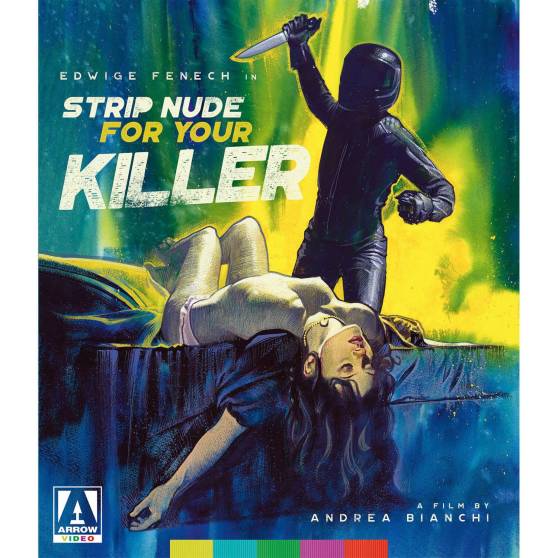
Strip Nude for Your Killer(1975): When a movie starts with a fashion model dying during a back alley abortion and it being covered up as a drowning, all before the opening credits, you know that you’re in for something demented. When you realize that the film was written and directed by Andrea Bianchi, who brought us Burial Ground, then you’re either going to run screaming or sit down and pay attention.
The doctor who performed the operation is killed by a motorcycle suit wearing maniac, but nobody at the Albatross Modeling Agency cares. All Carlo, the head photographer, cares about is using his modeling connections to pick up women. That’s how he meets Lucia (Femi Benussi, Hatchet for the Honeymoon), who he takes from the steam room to the modeling agency.
Magda (Edwige Fenech looking better than I’ve ever seen her look in any movie ever) is jealous, so she surprises Carlo with some black lace and they begin an affair. We then see a photo of the main agency members, like Mario, Magda, Carlo, Stefano, Dorris, Maurizio and his wife, and the owner of the studio Gisella. There’s one other person in the photo — Evelyn, who we saw die in the beginning.
Mario heads home and the killer shows up. When their helmet is removed, Mario knows the killer. But it’s too late. He’s dead now. The killer takes the photo so that he or she has a checklist of who to kill.
So then there’s Mauirizio, who is cheating on his wife with a prostitute. He takes her on a crazy ride through the streets and then takes her back to his place, when he begs and threatens her life before she suddenly wants to have sex with him — because you know, that’s how things worked in the 1970s — before he lasts all of a minute and starts embracing his blow up doll. Honestly, what the fuck? Of course, he’s killed right afterward. Good riddance.
Carlo later witnesses Gisella being murdered and even photographs the attack, but he’s hurt in a hit and run accident. While he’s recovering, Magda develops the film but the killer ruins the negatives.
After killing Doris and Stefano, the murder tries to kill Carlo and Magda, but the killer is knocked down the stairs. So who is it? New model Patrizia — Evelyn’s sister — who blames him for her sister’s death. However, she dies before she can tell the police of his involvement.
The movie ends with Carlo playing around by mock choking Magda before initiating anal sex with her, as she tells him not to, in a scene meant as comedy but lost in translation and the fact that forty plus-year-old giallo could never anticipate the #metoo movement.
Seriously, the title of this film pretty much says it all. It’s the most nudity I’ve ever seen in a movie. And it’s pretty much one of the most lurid I’ve seen, too. I have no idea if Bianchi intended this as a comedy, but it certainly feels like one.
It’s almost amazing that a movie with this much nudity and mayhem moves at such a glacial pace. It felt like the first hour of the film was the entire running time! Even worse, this movie is pretty much wall to wall misogyny. I know, I know, that’s the majority of giallo, but here it feels so overwhelming and so alien when seen with today’s eyes. I mean, should I be shocked that a movie called Strip Nude for Your Killer is so sexist?
Arrow Video’s Giallo Essentials: Yellow Edition has 2K restorations from the original negatives for all three films, as well as rigid box packaging with new artwork by Haunt Love in windowed Giallo Essentials slipcover.
What Have They Done to Your Daughters? has commentary by giallo expert Troy Howarth, a video essay by Kat Ellinger, interviews with Stelvio Cipriani and Antonio Siciliano, unused footage, alternate English opening titles, the Italian theatrical trailer and an image gallery.
Torso has two versions of the film, the original 94-minute Italian cut and the 90-minute English cut. It also has commentary critic by Kat Ellinger, interviews with Sergio Martino, Luc Merenda, Mikel J. Koven, Ernesto Gastaldi and Federica Martino, daughter of Sergio Martino. There’s also an option to view the film with the alternate US opening title sequence, as well as the Italian and English theatrical trailers.
Strip Nude for Your Killer has commentary by Adrian J. Smith and David Flint, a video essay by Kat Ellinger on Edwige Fenech, interviews with Nino Castelnuevo, Erna Schurer, Daniele Sangiorgi and Tino Polenghi, two versions of the opening scene, the original Italian and English theatrical trailers and an image gallery.
EDITOR’S NOTE: Here’s another take on this film but for this week of José Ramón Larraz, I wanted to cover each of his movies myself.
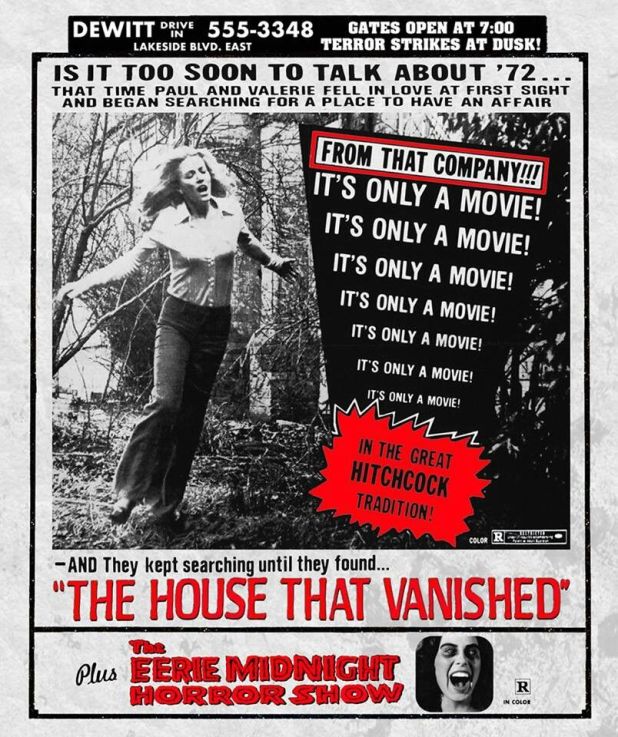
Also known as Scream… and Die!, Please! Don’t Go in the Bedroom and Psycho Sex Fiend, this José Ramón Larraz movie has some amazing taglines like “Are You Planning an Affair? We Can Give You 7 Good Reasons Not to Have Your Next Affair at The House That Vanished And They’re All DEAD!! 1. George 2. Marsha 3. Ted 4. Linda 5. Ronnie 6. Alice 7. Larry” and “Is it too soon to talk about ’72…that time Paul and Valerie fell in love at first sight and began searching for a place to have an affair — and they kept searching until they found…The House That Vanished.” I mean, they did tell us that it was “In the Great HITCHCOCK Tradition!”
Picked up by American-International Pictures in the U.S., trimmed by 15 minutes and given a really similar campaign – actually, it’s the exact same — as The Last House On the Left, this find Larraz playing with his favorite toys: fashionable women in danger, pervy photographers, houses in the London countryside, sexual menace and murder. He kept going back to this well for a bit before throwing Satanism into the stew and, if anything, increasing the sheer levels of filth in his movies. And we were all the better for it.
Valerie Jennings (Andrea Allan) is one of those gorgeous women continually threatened by nearly every frame of this movie, starting when she and her photographer boyfriend Terry (Alex Leppard) travel to a shuttrered hovel of a home deep in the London woods, a place that’s empty save for a room filled with womens’ passports. As they hide in a closet when a new couple arrives, they don’t get to enjoy watching them make love; instead the male dispatches the female with a switchblade. She runs and Terry does too but she never finds him, narrowly escaping to the safety of the big city.
She does find Terry’s car and a modeling portfolio with the images of one girl missing. She asks her friends Mike (Lawrence Keane) and Stella (Annabella Wood) what to do next, but they tell her that she and Terry have committed a crime and need to not tell the police. Meanwhile, Mike introduces her to Paul (Karl Lanchbury, a Larraz villain in numerous entries), a mask maker who invites her to dinner with his aunt Susanna (Maggie Walker). If you’ve seen enough Larraz movies by now, you know that aunt and nephew are soon to engage in the act of darkness.
Life starts falling apart, as Terry’s car keeps disappearing and reappearing; Valerie’s roommate Lorna (Judy Matheson) — who also sleeps nude with her pet monkey — is assaulted and killed, an old man with pigeons moves in downstairs and when she heads out of town to meet with Paul again, she realizes that his house is the same abandoned house she’s been in before thanks to the strange taxidermy inside. Seriously, if you go on a date and someone has a lot of taxidermy, please run.
There, she finds the bodies of those missing and Paul’s aunt appears and demands that he kill Valerie. He responds by stabbing her as our heroine runs outside screaming, directly into the police, while Paul just sits in the void.
Larraz comes from Spain to England to make movies that seem like they’re from Italy that have their origins in Germany and England. If that doesn’t make you look movies, then I have no hope for you.
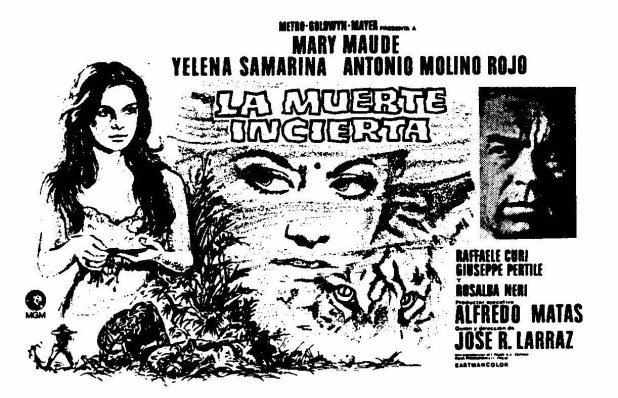
Clive Dawson (Antonio Molino Rojo) returns to India with his new bride Brenda (Mary Maude, who also is in The House That Screamed and Terror) which upsets his old lover Shaheen (Rosalba Neri, Lady Frankenstein, Amuck, The Devil’s Wedding Night, The Girl in Room 2A, 99 Women) to the point that she kills herself, but not before placing a curse on the new marriage. This being the 70s — not the 30s as the flashbacks claim — incest rears its head as Brenda and Clive’s son Rupert soon find themselves realizing that they’re young, Clive is old and that he thinks he’s being chased by his ghost ex in the form of a tiger, so they should just have rough sex.
“I’ve satisfied all your desires. You’ve taken advantage of me,” says Shaheen, but the real mystery of this movie is why would any man leave Rosalba Neri. Outside of perhaps only Edwige Fenech, no one in this genre — maybe this world in 1973 — offers such a smoldering presence that is as much frightening in its intensity as it is arousing.
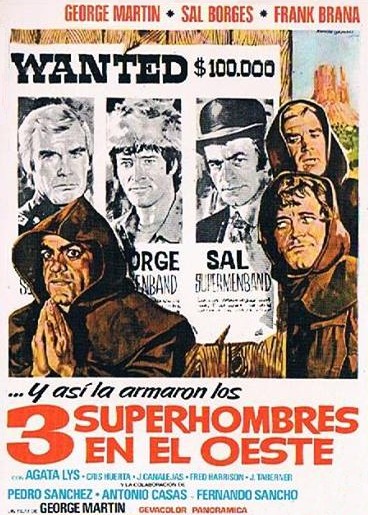
The Three Supermen — George (Jorge Martin), Sal (Sal Borgese) and Brad (Frank Braña) — accidentally use Prof. Aristide Panzarotti’s (Luigi Bonos) time machine and find themselves in the American West.
Directed, produced and co-written with Anthony Blod and Martin by Italo Martinenghi (who made the Cüneyt Arkin-starring Three Supermen Against the Godfatherand that movie’s sequels Three Supermen at the Olympic Games and Three Supermen in Santo Domingo; he also produced The Three Fantastic Supermen and 1970’s Supermen), this starts with a time travel to see the dinosaurs and Pompeii erupt which has to be footage taken from other movies.
Working for the FBI, the Supermen have been tasked with taking the time machine for the U.S. government. Of course, they screw up and end up using it to take them through time, finally ending up in the west where they decide to stay after meeting Agata (Ágata Lys, Sexy… amor y fantasía).
The time machine also shows up in Three Supermen Against the Godfather.
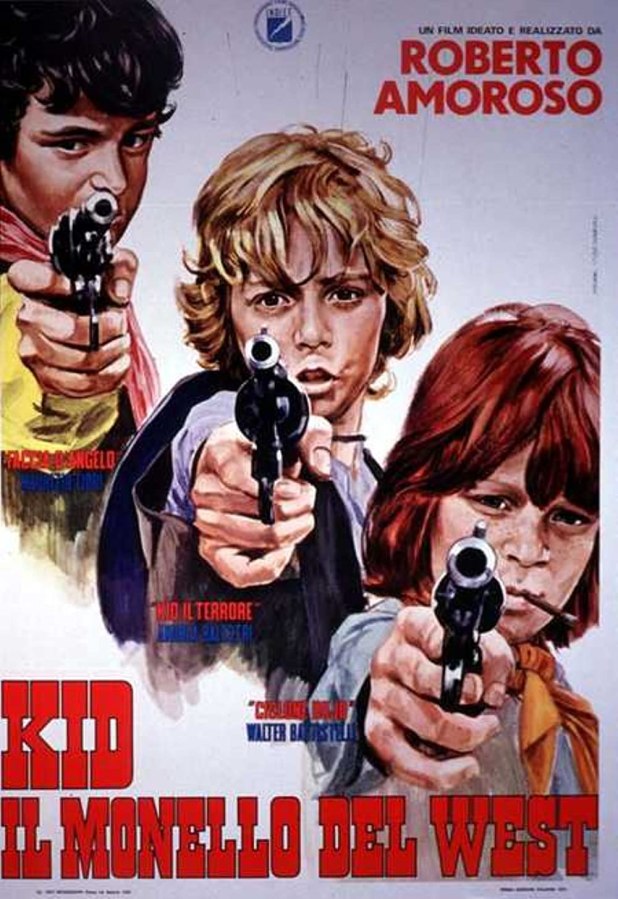
Obviously by 1973 there had been so many Italian westerns that the genre needed fresh ideas or, more to the point of how the Italian exploitation industry made movies — weirder ones. That’s how we get Bad Kids of the West, a movie in which most of the cast are under the age of ten, foremost amongst them Kid Terror O’Hara (Andrea Balestri), the leader of the group of kids who actually do something constructive with their afternoons and create their own town within the abandoned buildings of Torque.
When Kid hears that criminals are about to rob the bank of River City, they get their first — I mean, their plan has a child smuggling into a suitcase, so it can’t help but succeed — but they probably didn’t figure on the gang hunting them down for the cash.
Seeing as how this is an Italian comedy, you know that at one point that one of the kids will urinate in a mug and it will be served as beer to the outlaws. You may not figure that one of the boys is called Lollipop and plays with gender all the way back in 1973. That said, the chubby kid is nicknamed Butterball because he eats butter sandwiches covered in butter and farts constantly (I see so much of myself in him; a hero) so it’s not all — actually not at all — politically correct.
There’s also a young kickboxer, because by this point, martial arts films were getting big worldwide. So yes, an entire Children of the Corn— but positive and nice — in the Italian west with the son of a sheriff and the son of a gunfighter as the heroes.
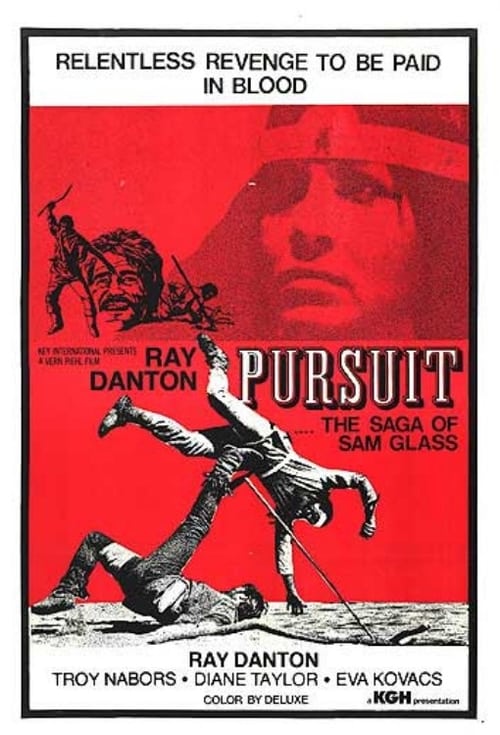
Not an Italian western — no matter how many YouTube channels tell you so — this movie was also released as Pursuit and A Man Called She. It stars Ray Danton, once the husband of Julie Adams and the narrator of Psychic Killer, as Yellow Shirt.
Shot under the title Sh’e ee Clit Soak (The Man Who Wore the Yellow Shirt in Apache), Yellow Shirt seeks revenge against the U.S. Calvary who killed most of his people.
Some sites report this as being directed by Tom Quillen, who could also be Vern Piehl or Vincent Powers. Vern Piehl was also the producer of this movie. They could be the same person. Or Quillen could be a stage director associated with the Arizona Repertory Theater and the Phoenix Musical Theater Guild. It was written by Dewitt and Jack Lee, who also wrote The Legend of Jedediah Carver.
Honestly, the question of who directed this is way more interesting than what they directed.
We’ll get to Death Game later today, but what’s amazing is that that film has been made so many times, including this movie, which came out years before Death Game itself.
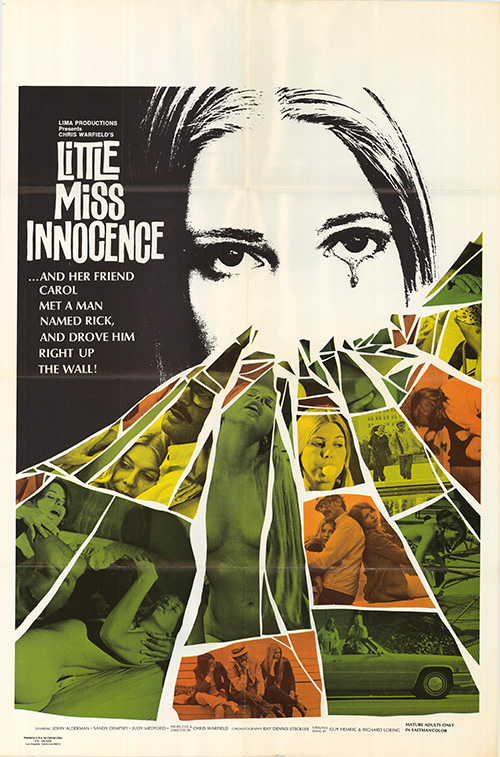
Little Miss Innocent (1973): Directed by Pittsburgh native Chris Warfield and written by E.E. Patchen — potentially from a draft of Death Game that was making the rounds at that time — Little Miss Innocent begins when Carol (Sandy Dempsey, who appeared in more than sixty adult films and used just as many names; there’s a theory that she died in a boating accident at the age of 26 that has never been proved correct) and Judy (Terri Johnson, who was also inFlesh Gordon) are picked up by record producer Rick (John Alderman, Superstition) in his fancy convertible.
Judy is a virgin, a fact that Rick didn’t know. Seconds after he takes her, Carol shows up and makes love to him. It’s nearly any straight man’s fantasy, except that the girls are insatiable and while that may make a great title for a Marilyn Chambers movie, it’s another thing for a man in his late 40s to live up to.
Rick expects the girls to leave but they end up moving right in, which seems fine if strange at first, but Carol also has a mean streak that starts showing up. All Rick wants to do is sleep on the couch, his Penthouse Forum letter seemingly out of control as the biological humor of men being out of their prime as they age being displayed throughout. The girls’ carnal needs have sapped him of his ability to work and even stay awake, almost vampiric in their need for continual gratification.
With camera work by Ray Dennis Steckler and second unit direction by George “Buck” Flower, this is a curiosity that goes beyond just being IMDB trivia fodder. Despite the girls blackmailing him and claiming to be underaged, Rick is suffering under the male delusion that he is the alpha in this situation, continually bedding two attractive women. Yet again, what should be a dream is shown to be a nightmare, as that very alpha nature is sapped. Every orgasm needs a refractory period that takes longer and longer for him, an issue the girls never need to deal with. Performing under the pressure of being arrested can’t be good for the libido either.
Warfield didn’t fall out of love with this story. In 1987, he’d remake the film under the same title, keep the same song and much of the script, only going all out with the hardcore — and then some for some straight and uptight men — with Eric Edwards playing Rick, Summer Rose as Judy and Sheri St. Claire as Carol.
Originally released by Vinegar Syndrome, Little Miss Innocent is also available as an extra feature on the new release of Death Game from Grindhouse Releasing.
Little Miss Innocent (1987): Writer Chris Warfield believed in his pre-Death Game remake — yes, somehow that’s possible, theories abound that he knew of that film’s synopsis and made his first — that he made a second version of it, this time an all-out adult version with actual sex.
Judy (Summer Rose, who was active from 1984 to 1994 under the names Vicki Drake, Heather Martin, Heather Dawn and Goldie) is a runaway new to Los Angeles that meets up with Carol (Sheri St. Claire, an AVN Hall of Famer who now grooms dogs) to visit the home of Rick (Eric Edwards, a graduate of the American Academy of Dramatic Arts in New York who was handed his degree by Helen Hayes; he acted in adult from the 60s through the 90s starting in stag loops and making his way through the VHS era), a musician who lives in the Hollywood Hills. After one night of passion during which Rick deflowers Judy, then makes love to Carol, then both and then, just like in the original Little Miss Innocence, he loses the battle of the sexes.
Where the original film only hinted at the debauchery the girls put him through — Carol says to Judy that they have already gone through all the things that men and women can do with one another — this goes so far to have Carol peg Rick, an act that many in the mid 80s — even today — would see as emasculating and sissifying. It certainly takes the domination the two girls unleash upon him to another level.
This was directed by David DeCoteau the same year he made Creepozoids and Dreamaniaca year before he’d almost exclusively move from adult to mainstream horror. Unlike so many adult remakes, this is not played for laughs or simply sex — although all three performers are quite adept — but instead it tackles the very same themes as the source film and uses the langauge of pornography to further establish the exhaustion and destruction of its male character.
EDITOR’S NOTE: This review originally appeared on the site on February 3, 2022 as part of a review for the Mill Creek Through the Decades: 1970s Collection. You can get that set from Deep Discount.
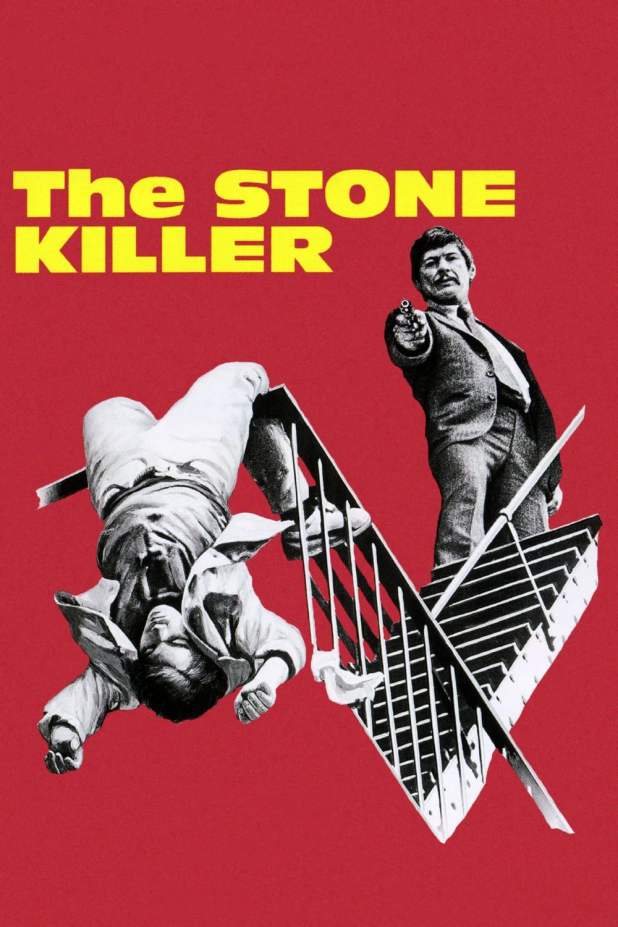
Between The Mechanic, this movie and Death Wish, Michael Winner and Charles Bronson were firing on all cylinders in the early 70s*. Based on A Complete State of Death by John Gardner — a book with a message that was, of course, made into a Michael Winner movie — there are so many car crashes at the end of the film that Hertz Rental came back in a huff to reclaim their cars, met by an angry Winner who yelled, “You should be glad we’re crashing your fucking awful cars. You’ll be able to write them off completely and get nice new ones.”
I love the reviews for this movie, which mostly say things like, “I don’t want to admit that I like a Michael Winner movie.”
Back in 1931, an event called The Night of Sicilian Vespers saw the murder of several mob leaders and Al Vescari (Martin Balsam) hasn’t forgotten. He sets up a plan to get revenge forty years or more later by killing off every Italian and Jewish leader across the country by using “stone killers,” or non-mob-affiliated hitmen. His plan? Hire Vietnam vets to do the work.
Detective Lou Torrey (Bronson) is a New York cop who figures out that the killing was an inside job after taking a witness to Los Angeles and having him killed nearly on arrival. He starts to look deeper and begins to discover exactly what’s going on, but is it too late to stop the plan?
Released in the wake of Dirty Harry, this was sold with the tagline “Take away his badge and he’d top the Ten Most Wanted list!” I’ve said it before and I’ll say it again. I worry about the militarization of our police force and the issues of police brutality, but when it comes to movies, I’m all about cops breaking the rules and getting the job done. That said, Bronson’s character is incredibly open about the “white walls” of society arebukesing racism on the force.
This has a great supporting cast, including David Sheiner (Oscar’s accountant and poker buddy in The Odd Couple), Norman Fell (as the leader of the police force; he’d reunite with one of the younger cops in this, John Ritter, on Three’s Company), Ralph Waite (who was John Walton Sr. on The Waltons and ran against Sonny Bono once and his wife twice for a seat in the California senate), Paul Koslo (who told Shock Cinema “My first day on the set, I sat in his (Bronson’s) chair. The first joke I ever told him was “Hey, Charlie, did you hear the one about the Polish actor?” He said, “No, what?” I said, “Charles Buchinsky!” “Do you think that’s funny?!” Being Polish myself, I thought it was hilarious, but it went over like a lead balloon with Charlie. He’s really Polish, that guy!”), Stuart Margolin (The Rockford Files) and Jack Colvin (who would go on to be one of my most hated characters ever, Jack MgGee, the man who ruined Dr. David Bruce Banner’s life on The Incredible Hulk).
If you’re someone that’s only seen movies from this century and need a warning on your movies, here’s one: this is a Michael Winner movie. Go in with that knowledge.


 B&S About Movies
You must be logged in to post a comment.