Apache Blood (1973)

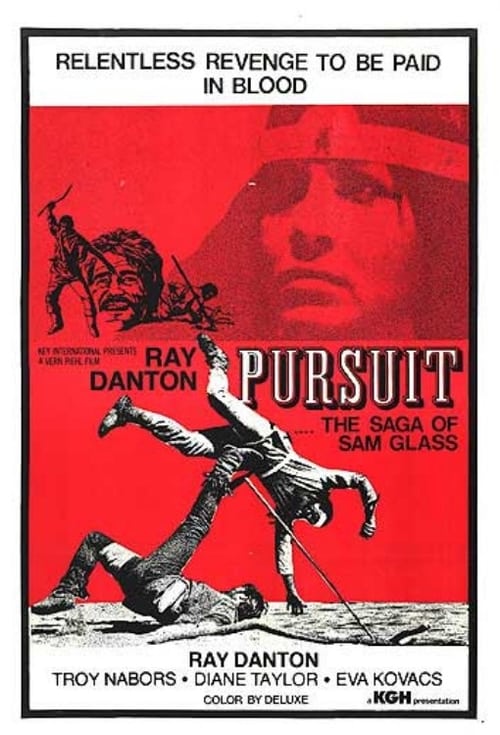
Not an Italian western — no matter how many YouTube channels tell you so — this movie was also released as Pursuit and A Man Called She. It stars Ray Danton, once the husband of Julie Adams and the narrator of Psychic Killer, as Yellow Shirt.

Shot under the title Sh’e ee Clit Soak (The Man Who Wore the Yellow Shirt in Apache), Yellow Shirt seeks revenge against the U.S. Calvary who killed most of his people.

Some sites report this as being directed by Tom Quillen, who could also be Vern Piehl or Vincent Powers. Vern Piehl was also the producer of this movie. They could be the same person. Or Quillen could be a stage director associated with the Arizona Repertory Theater and the Phoenix Musical Theater Guild. It was written by Dewitt and Jack Lee, who also wrote The Legend of Jedediah Carver.

Honestly, the question of who directed this is way more interesting than what they directed.

You can watch this on Tubi.

DEATH GAME: Little Miss Innocent (1973, 1987)

We’ll get to Death Game later today, but what’s amazing is that that film has been made so many times, including this movie, which came out years before Death Game itself.

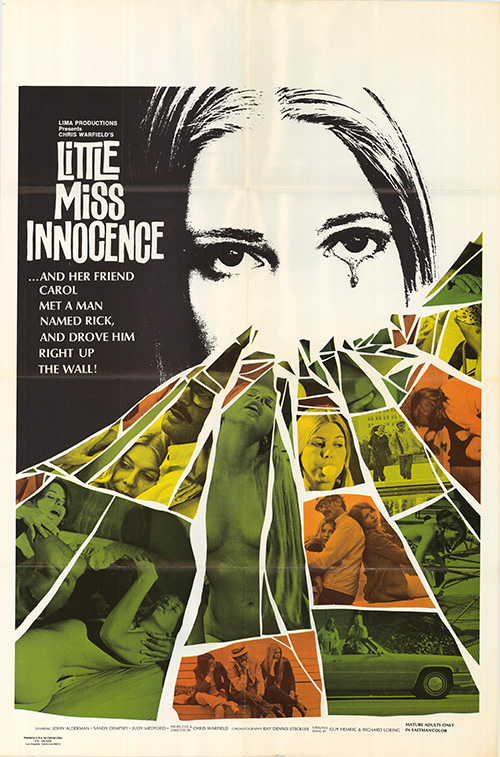
Little Miss Innocent (1973): Directed by Pittsburgh native Chris Warfield and written by E.E. Patchen — potentially from a draft of Death Game that was making the rounds at that time — Little Miss Innocent begins when Carol (Sandy Dempsey, who appeared in more than sixty adult films and used just as many names; there’s a theory that she died in a boating accident at the age of 26 that has never been proved correct) and Judy (Terri Johnson, who was also in Flesh Gordon) are picked up by record producer Rick (John Alderman, Superstition) in his fancy convertible.

Judy is a virgin, a fact that Rick didn’t know. Seconds after he takes her, Carol shows up and makes love to him. It’s nearly any straight man’s fantasy, except that the girls are insatiable and while that may make a great title for a Marilyn Chambers movie, it’s another thing for a man in his late 40s to live up to.

Rick expects the girls to leave but they end up moving right in, which seems fine if strange at first, but Carol also has a mean streak that starts showing up. All Rick wants to do is sleep on the couch, his Penthouse Forum letter seemingly out of control as the biological humor of men being out of their prime as they age being displayed throughout. The girls’ carnal needs have sapped him of his ability to work and even stay awake, almost vampiric in their need for continual gratification.

With camera work by Ray Dennis Steckler and second unit direction by George “Buck” Flower, this is a curiosity that goes beyond just being IMDB trivia fodder. Despite the girls blackmailing him and claiming to be underaged, Rick is suffering under the male delusion that he is the alpha in this situation, continually bedding two attractive women. Yet again, what should be a dream is shown to be a nightmare, as that very alpha nature is sapped. Every orgasm needs a refractory period that takes longer and longer for him, an issue the girls never need to deal with. Performing under the pressure of being arrested can’t be good for the libido either.

Warfield didn’t fall out of love with this story. In 1987, he’d remake the film under the same title, keep the same song and much of the script, only going all out with the hardcore — and then some for some straight and uptight men — with Eric Edwards playing Rick, Summer Rose as Judy and Sheri St. Claire as Carol.

Originally released by Vinegar Syndrome, Little Miss Innocent is also available as an extra feature on the new release of Death Game from Grindhouse Releasing.

Little Miss Innocent (1987): Writer Chris Warfield believed in his pre-Death Game remake — yes, somehow that’s possible, theories abound that he knew of that film’s synopsis and made his first — that he made a second version of it, this time an all-out adult version with actual sex.

Judy (Summer Rose, who was active from 1984 to 1994 under the names Vicki Drake, Heather Martin, Heather Dawn and Goldie) is a runaway new to Los Angeles that meets up with Carol (Sheri St. Claire, an AVN Hall of Famer who now grooms dogs) to visit the home of Rick (Eric Edwards, a graduate of the American Academy of Dramatic Arts in New York who was handed his degree by Helen Hayes; he acted in adult from the 60s through the 90s starting in stag loops and making his way through the VHS era), a musician who lives in the Hollywood Hills. After one night of passion during which Rick deflowers Judy, then makes love to Carol, then both and then, just like in the original Little Miss Innocence, he loses the battle of the sexes.

Where the original film only hinted at the debauchery the girls put him through — Carol says to Judy that they have already gone through all the things that men and women can do with one another — this goes so far to have Carol peg Rick, an act that many in the mid 80s — even today — would see as emasculating and sissifying. It certainly takes the domination the two girls unleash upon him to another level.

This was directed by David DeCoteau the same year he made Creepozoids and Dreamaniac a year before he’d almost exclusively move from adult to mainstream horror. Unlike so many adult remakes, this is not played for laughs or simply sex — although all three performers are quite adept — but instead it tackles the very same themes as the source film and uses the langauge of pornography to further establish the exhaustion and destruction of its male character.

The Stone Killer (1973)

EDITOR’S NOTE: This review originally appeared on the site on February 3, 2022 as part of a review for the Mill Creek Through the Decades: 1970s Collection. You can get that set from Deep Discount.

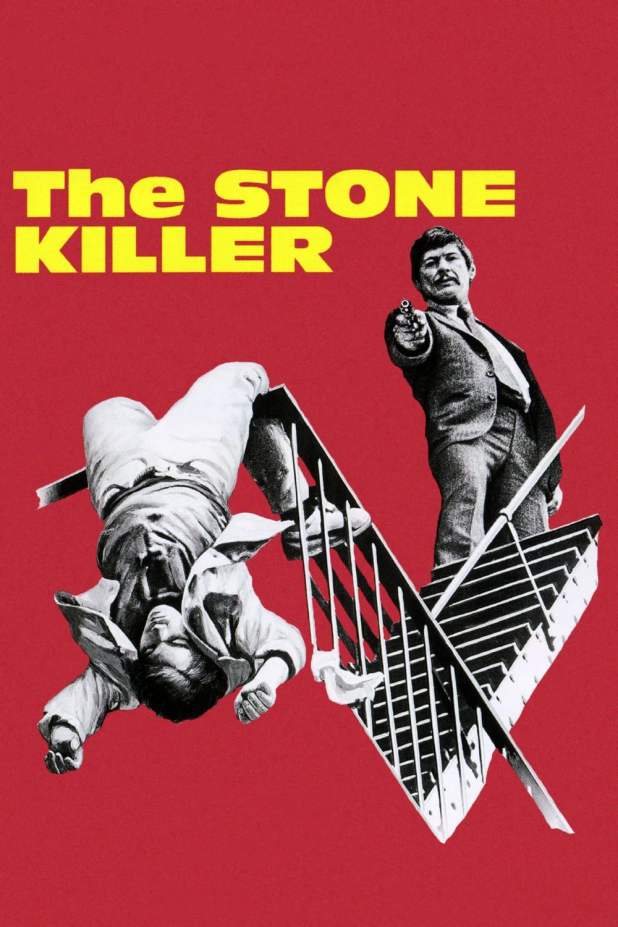
Between The Mechanic, this movie and Death Wish, Michael Winner and Charles Bronson were firing on all cylinders in the early 70s*. Based on A Complete State of Death by John Gardner — a book with a message that was, of course, made into a Michael Winner movie — there are so many car crashes at the end of the film that Hertz Rental came back in a huff to reclaim their cars, met by an angry Winner who yelled, “You should be glad we’re crashing your fucking awful cars. You’ll be able to write them off completely and get nice new ones.”

I love the reviews for this movie, which mostly say things like, “I don’t want to admit that I like a Michael Winner movie.”

Back in 1931, an event called The Night of Sicilian Vespers saw the murder of several mob leaders and Al Vescari (Martin Balsam) hasn’t forgotten. He sets up a plan to get revenge forty years or more later by killing off every Italian and Jewish leader across the country by using “stone killers,” or non-mob-affiliated hitmen. His plan? Hire Vietnam vets to do the work.

Detective Lou Torrey (Bronson) is a New York cop who figures out that the killing was an inside job after taking a witness to Los Angeles and having him killed nearly on arrival. He starts to look deeper and begins to discover exactly what’s going on, but is it too late to stop the plan?

Released in the wake of Dirty Harry, this was sold with the tagline “Take away his badge and he’d top the Ten Most Wanted list!” I’ve said it before and I’ll say it again. I worry about the militarization of our police force and the issues of police brutality, but when it comes to movies, I’m all about cops breaking the rules and getting the job done. That said, Bronson’s character is incredibly open about the “white walls” of society arebukesing racism on the force.

This has a great supporting cast, including David Sheiner (Oscar’s accountant and poker buddy in The Odd Couple), Norman Fell (as the leader of the police force; he’d reunite with one of the younger cops in this, John Ritter, on Three’s Company), Ralph Waite (who was John Walton Sr. on The Waltons and ran against Sonny Bono once and his wife twice for a seat in the California senate), Paul Koslo (who told Shock Cinema “My first day on the set, I sat in his (Bronson’s) chair. The first joke I ever told him was “Hey, Charlie, did you hear the one about the Polish actor?” He said, “No, what?” I said, “Charles Buchinsky!” “Do you think that’s funny?!” Being Polish myself, I thought it was hilarious, but it went over like a lead balloon with Charlie. He’s really Polish, that guy!”), Stuart Margolin (The Rockford Files) and Jack Colvin (who would go on to be one of my most hated characters ever, Jack MgGee, the man who ruined Dr. David Bruce Banner’s life on The Incredible Hulk).

If you’re someone that’s only seen movies from this century and need a warning on your movies, here’s one: this is a Michael Winner movie. Go in with that knowledge.

*Before this, they’d make Chato’s Land and also made Death Wish 2 and Death Wish 3 together.

Circle of Fear episode 21: The Ghost of Potter’s Field

The last episode of Circle of Fear, “The Ghost of Potter’s Field” was directed by Don McDougall (the TV movies that made up Farewell to the Planet of the ApesForgotten City of the Planet of the ApesSpider-Man: The Dragon’s Challenge and two Kolchak episodes, “The Youth Killer” and “Legacy of Terror” and written by Bill S. Ballinger (The Strangler and episodes of Mike Hammer and Alfred Hitchcock Presents) and Richard Matheson.

While researching a story at Potter’s Field cemetery, Bob Herrick (Tab Hunter) sees his own ghost, which follows him home. The only person that believes him is his girlfriend Nisa King (Louise Sorel) as the demonic doppelganger begins to cut him off from his friends and life.

While Ghost Story/Circle of Fear only had one season, it somehow had two doppelganger episodes, the other one being “Alter-Ego,” which is a much stronger story (and that episode also boasted Helen Hayes). At least the guest stars here include Pat Harrington Jr. (Schnieder from One Day at a Time), Gary Conway (who would go on to write Over the Top and American Ninja 2 and 3), Robert Mandan (Chester Tate from Soap), ventriloquist and voice of Tigger Paul Winchell, Myron Healey (The Incredible Melting Man) and Darwin Joston (The FogAssault on Precinct 13).

I’m kind of sad to see this series end.

Circle of Fear episode 20: Spare Parts

Dr. Phillip Pritchard has died and his widow Ellen (Susan Oliver, Zita from the Star Trek episode “The Menagerie”) has given away his larnyx, eyes and hands to three people who he will lead from the beyond to force a confession from his wife, a woman who finally snapped from years of being trapped in a loveless marriage.

Directed by Charles S. Dubin (Death In Space) and written by Seeleg Lester (who wrote episodes of The Outer LimitsPerry Mason, Hawaii Five-O and many more shows), Paul Mason (who produced Better Off DeadTeen Witch and Killer Klowns from Outer Space) and Jimmy Sangster, this episode plays off that old horror tale of body parts having a life of their own.

Look for Christopher Connelley (Atlantis Interceptors1990: The Bronx WarriorsManhattan Baby), Meg Foster (Masters of the Universe) and Alex Rocco, which is pretty much what I call a great cast.

You can watch this on YouTube.

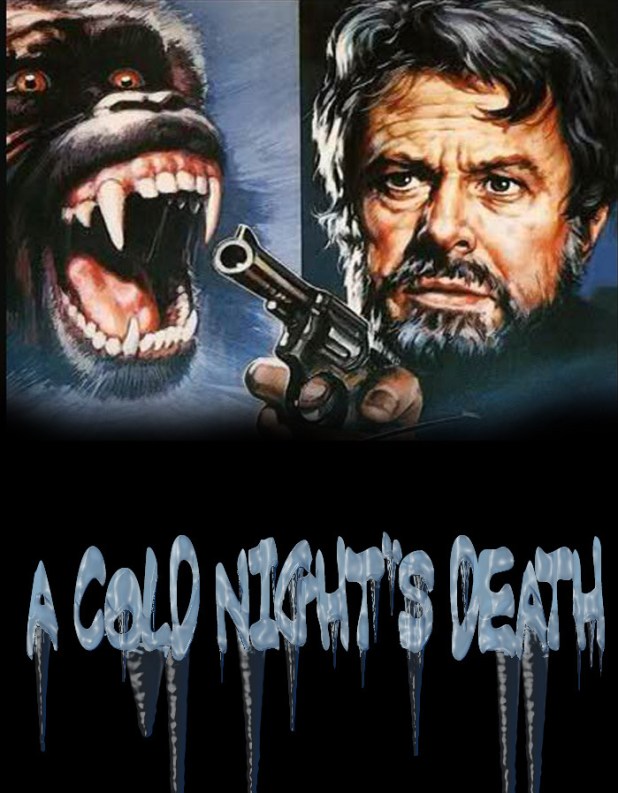
A Cold Night’s Death (1973)

Airing on January 30, 1973 on ABC, A Cold Night’s Death has a great if small cast — Robert Culp, Michael C. Gwynne and Eli Wallach — and a voiceover by Vic Perrin, the Control Voice from The Outer Limits.

Culp is Robert Jones and Wallach is Frank Enari, two scientists who have been assigned to the Tower Mountain Research Station as replacements for Dr. Vogel, who hasn’t been heard from in five days, with his final messages being near manic. Taking along a chimpanzee named Geronimo, the two only find a destroyed research station and no doctor.

As much The Lighthouse as The ThingA Cold Night’s Death reminds us that in the early 70s, TV movies rivaled drive-ins for frightening films made on a budget.

Director Jerrold Freedman also made Kansas City Bomber and The Boy Who Drank Too Much. The story comes from 20 Million Miles to Earth writer Christopher Knopf.

Il fiore dai petali d’acciaio (1973)

Carroll Baker got to be in plenty of giallo films — Knife of IceA Quiet Place to Kill, Orgasmo, So Sweet, So Perverse — and it reminds me of a conversation that I had with Mike Justice about how the globalization of mass media has led to a world where out of favor actresses could go to Italy and make some horror or giallo movies. Sharon Stone? You would be perfect right now instead of being a weird head on the end of a finger in a gambling app commercial.

Dr. Andrea Valenti (Gianni Garko, who was in a ton of films, like several Sartana sequels, as well as The Psychic, Devilfish and so many others ) is a surgeon who everyone loves, other than his lover Daniella (Paola Senatore, Emanuelle in AmericaRicco the Mean Machine). After a fight, we’re led to believe that Andrea has killed her, cut her up and dumped the remains in a sewage plant. That’s when Baker, playing Evelyn, who is not only one of Andrea’s past lovers, but also the current lesbian love of Daniella as well as her half-sister because this is an Italy movie.

She goes to the police and tries to convince Detective Garrano (Ivano Staccioli, So Sweet, So Dead) that Valenti killed her sister, which seems like it could be true. After all, didn’t Valenti put his rich wife into a mental hospital after they had sex on their wedding night? What the hell is that about? Is he that amazing in bed? Is she so innocent that she was shocked by his member? Really, this is amazing.

But I digress.

The first wife is now sane and has left the asylum, yet no one knows where she is. As for the doctor, he’s already moved on to his secretary Elaina (Pilar Velázquez, A White Dress for Marialé). And then he starts getting blackmailed as someone has the photos of the murder. Or maybe accident is more the term, as whomever it was tripped and fell on the metal flower artwork in his house.

While Argento wouldn’t have art outright murder someone until Tenebre, this movie borrows a lot from him. The metal flower seems like something out of The Bird With the Crystal Plumage and the tunnel of baby doll heads with a body at the end is straight out of Dario.

Director Gianfranco Piccioli produced lots of movies but only directed two other films: The Hokey-Pokey Gang and Double by Half.

By 1973, the giallo was starting to not be as popular as it once was. Then again, rumors of its demise were the same as disco, as the name of the genre may have shifted — erotic thriller — but the stories are the same. They’re still getting made today. Yet when this was made, it was definitely created to fit the exact format that everyone expected with a gloved and masked scalpal slashing killer.

All things being said, I have never seen another giallo that has an underwater scuba lesbian scene, so that’s perhaps one audacious reason to watch The Flower With the Petals of Steel.

Circle of Fear episode 19: “Graveyard Shift”

Fred Colby (John Astin) used to be a star but now he’s just a security guard at the same studio that he used to perform at, which is set to close in a few weeks. However, he seems pretty happy and he and his wife Linda (Astin’s wife at the time, Patty Duke) are expecting a child. The only problem he seems to have is the gang of kids that keeps breaking in.

Well, that seems to be it until a dark force within the studio threatens everything that he loves about his life.

There are plenty of horror film references here — the monsters don’t want the studio to close — and Dracula, Frankenstein’s monster, the mummy, the wolfman and the ape man are all characters that Fred once was on screen. And finally, after nineteen episodes, producer William Castle shows up.

I always associate Astin with Night Gallery — he directed “The House,” “A Fear of Spiders” and “The Dark Boy” episodes — so it was kind of interesting to see him show up within another horror anthology.

You can watch this on YouTube.

Mia moglie, un corpo per l’amore (1973)

My Wife, A Body to Love gets at one of the major issues of the May and September romance. Paolo (Silvano Tranquilli, Castle of Blood) is married to the much younger Simona (Antonella Murgia) and when his stamina isn’t enough, she’s cheating on him with Marco (Peter Lee Lawrence, who was mostly in Italian westerns). The strange thing is, Paolo thinks life is a game and decides to just let this one act itself out. In fact, he even permits her to have sex with Marco but not fall in love.

Or does he? As all three go on a beach vacation, he suddenly starts thinking differently about his wife. He keeps telling her how he’ll stay in control of her and allow her to have sex with men of his choice. You get the idea that — look, the sex scenes are pretty chaste, so don’t get too excited — that he savors making love with his wife after the men she sleeps with and gets off when she tells him how much better they were than him.

But he’s in control, he keeps telling her.

Maybe he’s telling himself.

Go figure — the fantasies of men are impotent when faced with the reality of a woman who finds agency and discovers she can do well enough by making her own way.

Mario Imperoli died young — he was only 46 when he expired in 1977 — and he made a great crime movie, Like Rabid Dogs, as well as the sex comedies Blue JeansThe Sweet Aunts and Monika, the crime films Canne mozze (written by George Eastman) and Sawed Off Shotgun, as well as the incest drama Quella strana voglia d’amare (also written by Eastman).

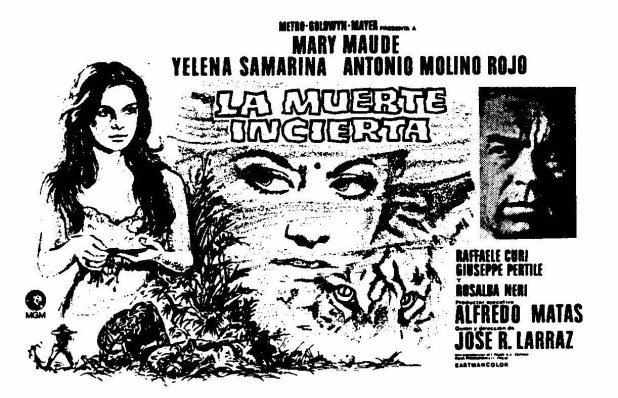
La muerte incierta (1973)

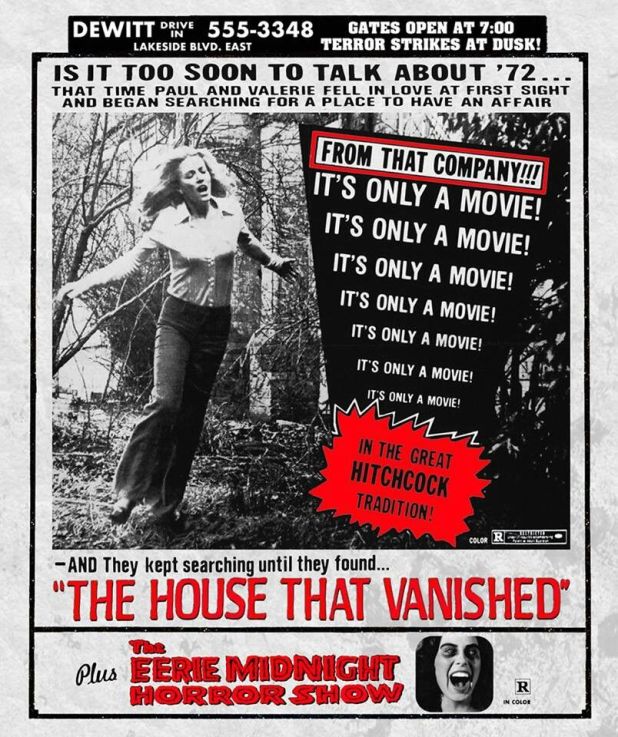
José Ramón Larraz may be best known for SymptomsVampyresThe House That VanishedThe Coming of SinBlack CandlesRest In PiecesEdge of the Axe and Deadly Manor, but he also made this giallo.

Clive Dawson (Antonio Molino Rojo) returns to India with his new bride Brenda (Mary Maude, who also is in The House That Screamed and Terror) which upsets his old lover Shaheen (Rosalba Neri, Lady FrankensteinAmuckThe Devil’s Wedding NightThe Girl in Room 2A99 Women) to the point that she kills herself, but not before placing a curse on the new marriage. This being the 70s — not the 30s as the flashbacks claim — incest rears its head as Brenda and Clive’s son Rupert soon find themselves realizing that they’re young, Clive is old and that he thinks he’s being chased by his ghost ex in the form of a tiger, so they should just have rough sex.

“I’ve satisfied all your desires. You’ve taken advantage of me,” says Shaheen, but the real mystery of this movie is why would any man leave Rosalba Neri. Outside of perhaps only Edwige Fenech, no one in this genre — maybe this world in 1973 — offers such a smoldering presence that is as much frightening in its intensity as it is arousing.