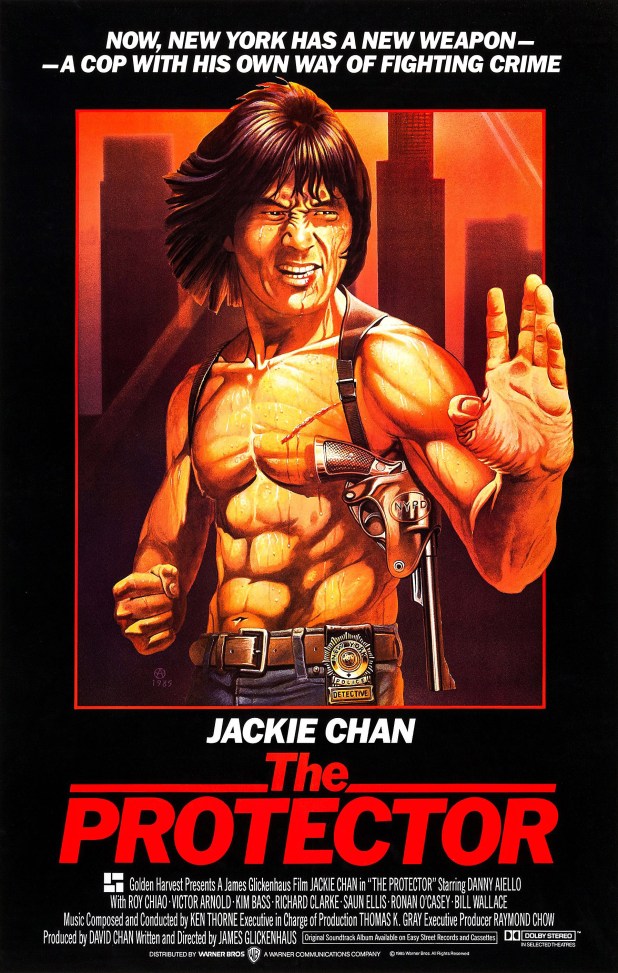
April 7: Jackie Day — Celebrate Jackie Chan’s birthday!
The Protector was a troubled creation. Initially, it would be written by Robert Clouse for Christmas 1982, but that got. However, that version was delayed after Project Awent over schedule. After some retooling, James Glickenhaus came on to direct, which led to this movie being sold as “When the no. 1 action director meets the no. 1 action star… Watch out!”
Guess what? They didn’t get along. Chan learned that no one in America cared about taking the time to do fight choreography. In Hong Kong, he’d get a month to do one. In America? Two days.
This meant there were two versions, one for the U.S. and the other for Hong Kong. In both, Jackie plays Billy Wong, an NYPD cop who gets a new partner, Danny Garoni (Danny Aiello), and heads to Hong Kong to stop a kidnapping and a drug deal. Even though the goal was to make Jackie into Clint Eastwood — had no one learned that they tried to make him into Bruce Lee and it didn’t work until he was himself? — but at least he fights Bill “Superfoot” Wallace. The Hong Kong version adds a dancer — May-Fong Ho (Sally Yeh) — whose father was killed by gangsters.
Wrestling fans may be surprised to see Big John Studd show up in the beginning. There’s no extended battle between him and Jackie, who shoots him. Studd, who was born in Saxonburg, PA, is also in Double Agent, The Marrying Man, Harley Davidson and the Marloboro Man, Hyper Space, Caged In Paradiso and Micki & Maude. He also appeared in episodes of The A-Team, Hunter and Beauty and the Beast.
After this, Jackie made the movie he wanted with Police Story. He wouldn’t be a star in the U.S. until Rumble In the Bronx. As for the Robert Crouse script that he didn’t make, it would be filmed as China O’Brien with another Golden Harvest star, Cynthia Rothrock.
ABOUT THE AUTHOR: Exploitation-film historian A.C. Nicholas, who has a sketchy background and hails from parts unknown in Western Pennsylvania, was once a drive-in theater projectionist and disk jockey. In addition to being a writer, editor, podcaster, and voice-over artist, he’s a regular guest co-host on the streaming Drive-In Asylum Double Feature and has been a guest on the Making Tarantino podcast. He also contributes to the Drive-In Asylum fanzine. His essay, “Of Punks and Stains and Student Films: A Tribute to Night Flight, the 80s Late-Night Cult Sensation,” appeared in Drive-In Asylum #26.
As I logged another film in my Letterboxd list, a list that is now approaching 5,000 films, I paused a moment to reflect. I’ve been a film buff all my life, well over 50 years, and I appreciate how difficult it is to make a film on a small budget. Back in the day, even as a pre-teen, I recognized that Hammer Film’s The Gorgon, with my childhood heroes Peter Cushing and Christopher Lee, was a good horror film, despite some shaky sets and special effects (hey, look at the wobbly sets and the phony snakes in the Gorgon’s hair!). Unlike haughty film snobs, I’ve always tried to temper my expectations and not dismiss a film simply because the filmmakers had limited resources. With the advent of affordable technology, now anyone can make a film. Most efforts, however, turn out as you’d expect: unwatchable amateur hours, filled with boneheaded dialogue, sub-community-theater acting, badly composed shots with terrible lighting, mismatched edits, and poorly recorded sound. I’ve spent many soul-crushing hours with my eyes glazing over watching things where the only positive comments I could make were that “it’s a film,” though just barely, and congratulate the filmmakers for a successful sale to some streaming service. But once in a while, when folks with brains, talent, and big hearts make a micro-budget film, you get something special. This brings us to Left One Alive, the new film from Columbia, South Carolina filmmaker David Axe. And special it is.
Left One Alive ponders the implications of what happens when horror movies end, particularly those horror movies where the final girl vanquishes the monsters and walks out of the woods into the sunlight just before the final credits roll. Axe’s intelligent screenplay tells us what’s next. Sarah (Cailyn Sam) is the final girl. She has survived after having witnessed the mass slaughter of all her camping friends by weird forest creatures. Until that horrific event, she’d led a normal, mundane life living with her sister in some part of small-town America. We don’t explicitly learn a lot about what that life was like, but economical writing allows us to connect the dots. Then her life changes forever. If you thought for a minute how it would, you’d ask yourself: Will there be post-traumatic stress disorder? Of course. Survivor’s guilt? Yep. A film based on her tragic experience? Sure. The scenes depicting the ridiculous Hollywood version of what happened are hilarious and reminded me of The Man Who Killed Hitler and Then the Bigfoot, a wonderful small film also about some serious existential issues, though with a substantially bigger budget, indie great John Sayles and special-effects legend Douglas Trumball as executive producers, and Sam Elliott in a career-best performance.
These are things that you won’t find in your mine-run horror film, and I was delighted by where this film took me. It doesn’t have a lot of violence, there’s no nudity, and I think I could count on one hand the number of obscenities spoken. It’s a slow, steadily paced, always engaging film, which straddles the line between exploitation and art film, though leaning hard toward the art-film side. While it’s a small film, it’s ambitious. Acting is serviceable or better, with star Cailyn Sam giving a particularly nice performance. Writer/producer/director Axe, abetted by producer/cinematographer/editor Sarah Massey, accomplished what most micro-budget filmmakers only dream of achieving: a film with good cinematography, some modest—yet effective—sound design, and an on-point score. Or as Variety used to say when I read it as a teenager, “Tech credits are pro.” There’s one amazing aerial shot of the forest that was not done with a drone. I’d thought the production, like Herschell Gordon Lewis for 2000 Maniacs over 60 years ago, had secured the use of a bucket truck for a day. That was until I saw behind-the-scenes photos of the plucky Massey in a sling being hoisted high into the air. This can-do spirit forms the film’s DNA and demonstrates what’s possible, even on a budget of $50,000.
At the end of Left One Alive, the forest creatures referred to in winking fashion by the name of a popular, albeit weird, children’s TV show return to complete Sarah’s character arc. They’re hokey, yet charming, which made me love the film even more. So when the end credits came up, featuring shots from the film done in a style that would feel at home in a $200 million Marvel film, I was left to ponder what happens next. And that, my friends, leads me to tell Axe and company what I hope happens next: they make more films.
Left One Alive is currently streaming on several platforms.
A popular nightclub hypnotist is discovered murdered during a private press conference.
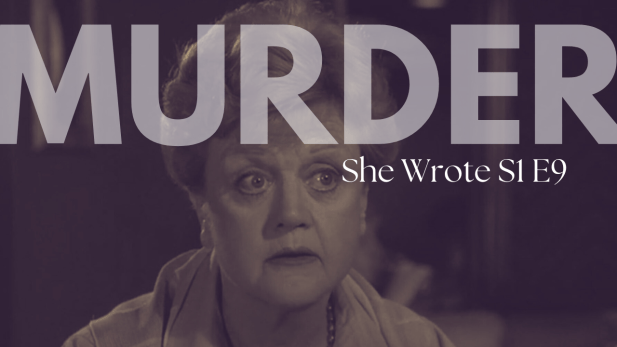
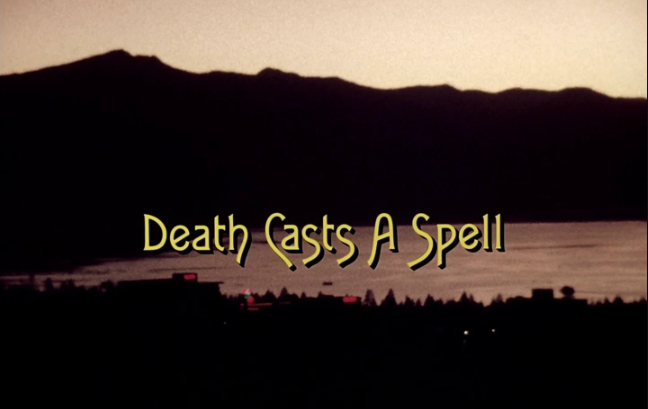
Season 1, Episode 9: Death Casts a Spell (December 30, 1984)
Tonight on Murder, She Wrote…
Hypnotist Cagliastro gets fired from the casino/hotel for sleeping with the owner’s wife. Then, he has an interview with six journalists, claiming that he can hypnotize any of them, but is killed, leaving them in a trance.
Who’s in it, outside of Angela Lansbury, and were they in any exploitation movies?
Joan, Jessica’s assistant, is Diana Canova. She was on Soap and in The First Nudie Musical. She’d play two other roles on the show, but not the same character.
The law in this, Lt. Bergkamp, is Robert Hogan, a vet of 158 roles, including three other Murder, She Wrote appearances.
Dr. Yambert is Conrad Janis, who directed and starred in the 2012 horror movie Bad Blood.
Elaine Joyce plays Sheri Diamond. She has quite the horror resume, showing up in Trick or Treat, Motel Hell and one sort of exploitation movie, The Christine Jorgensen Story.
Andy Townsend is played by Brian Kerwin, a TV vet who also shows up in King Kong Lives.
Joe Kellijian plays the owner of the hotel/casino, Robert Loggia. If I need to tell you who he is, you’re reading the wrong site.
Michelle Phillips plays his wife, Regina. Yes, from The Mamas and the Papas and Knots Landing. She’s also in some absolute junk that I love, including Bloodline, The Last Movie, and No One Would Tell, in which Fred Savage gets on steroids and abuses Candace Cameron.
In the smaller roles, we have Elvia Allman as “elderly lady,” Rance Howard as Fillmore, Ritchie Montgomery as a busboy, Alex Rebar — THE INCREDIBLE MELTING MANHIMSELF, as well as the writer of Demented, Terror On Tourand To All a Goodnight— as a hypnotist, Dianne Travis as Helsema, Marylou Kenworthy as Liz, Lee Duncan as a policeman, Kathy Karges, Gay Hagen, Joy Ellison, Hartley Silver, Bill Shick and Robert Balderson as hypnotized people and Bob Tzudiker as a clerk.
What happens?
Jessica is in Lake Tahoe, which is Vegas Lite. That’s where The Amazing Cagliostro performs, commanding audience members to act like animals. As he performs, we see Bud and Andy, two reporters, who bet the hypnotist is a phoney. Meanwhile, Joe, the hotel owner, is fighting with his wife, Regina, who is having an affair with Cagliostro, but claims that it’s because he’s using his powers on her. He fires Cagliostro, who still gets a million dollars. And then Joan pitches Jessica the idea of using the cucking wizard in her next book.
As Jessica sits in the bar and turns this down, Cagliostro gets into a fight with the reporters and sets up a demonstration of his abilities in his room. As he hypnotizes everyone, he reveals his past, just in time for him to get stabbed and leave everyone stuck in a hypnotized state.
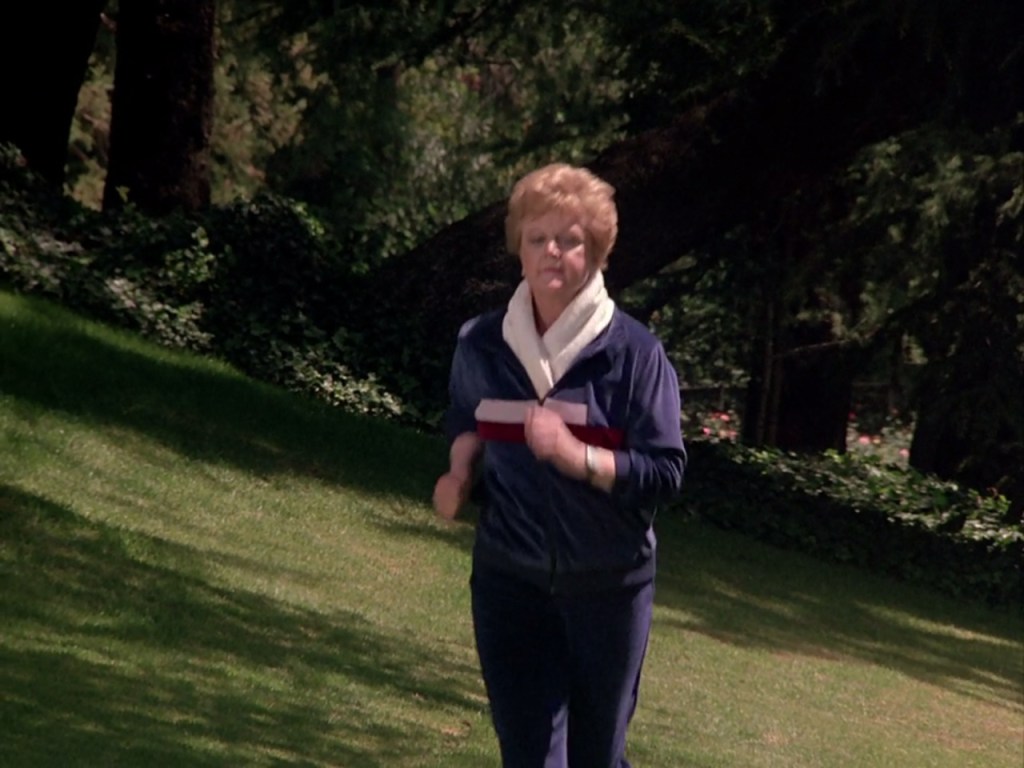
They figure out that a tape of one of his shows will bring them back, and Jessica deals with all of this as only she can. She puts on her jogging suit and starts shuffling around. Also: a towel around her neck as if she were Bobby “The Brain” Heenan.
Nearly anyone could have killed the magician, as he was blackmailing everyone, even his assistant, who started her career as a naked trapeze star, which I did not know was a thing.
Who did it?
There’s a red herring that was the assistant, but then we learn that Andy had earplugs and wasn’t hypnotized. An article his father wrote about Cagliostro ruined his career, his dad killed himself, and now, he got his revenge.
Who made it?
Allen Reisner directed, and Steven Hensley and J. Miyoko Hensley wrote the screenplay. They also wrote the Remo Williams TV pilot.
The story of this episode comes from a 1937 Bela Lugosi movie, The Thirteenth Chair.
Does Jessica get some?
No. I’m as upset as you.
Does Jessica dress up and act stupid?
Jessica also gets hypnotized and does impressions of Bette Davis and Mae West. Also, there’s no way Angela Lansberry is on the back of that motorcycle.
Was it any good?
Two shows with death in the name in a row, but hey — Jessica is a friend of the Grim Reaper.
Give me a reasonable quote:
Cagliostro: Ladies and gentlemen, observe the power of hypnosis! Now, volunteers, when I clap my hands, you will each become your favorite animal.
What’s next?
Jessica becomes a member of Congress. Yes. I wrote it. It happens.
April 6: Independent-International: Write about a movie from Sam Sherman. Here’s a list.
Vicki Mason (Karen Corrado) is trying to change the world — or at least her small town — by trying out as a kicker on the football team. Her boyfriend Brian Caldwell (Max Goff, Cheerleaders Beach Party) isn’t impressed, but she’s sick of him cheating on her, so she dumps him and goes all in on the team even if they don’t want her.
Director Steven Jacobson edited Nurse Sherriand shot the extra footage in Naked Evil, but otherwise, that was it for his career. The script comes from Jennifer Lawson, who went on to be the CEO of a public broadcasting station, and Sam Sherman, the man who brought so much to us through Independent-International.
This feels as much like a Corman nurse cycle movie as it does an Animal House cash-in. It’s worth watching for James Spader’s and Estelle Getty’s first roles. He was 18, and she was just a spry 55.
Four years later, this was re-released as Young Gangs at Wildwood High — Sam Sherman knew how to cash-in on stuff like Fast Times at Ridgemont High — and you have to admire the balls to do that. Thanks, Temple of Schlock, for always having facts like this. It’s worth noting that this film had two campaigns as Team-Mates and another in 1980 as Young Gangs, hoping that people looking for The Warriors at the drive-in could be confused into seeing this movie that has nothing to do with gangs and so much more to do with football.
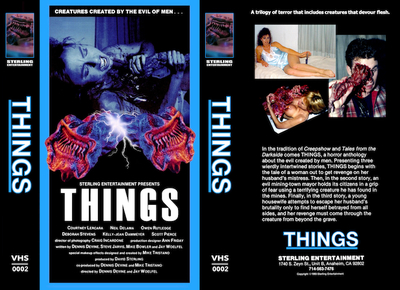
This Things has had so many sequels — I watched Things II before it — and it’s an anthology film of two stories and a wraparound which is directed by Eugene James (Sorority House Vampires) and written by Mike Bowler (Hell Spa, Fatal Images). A woman (Kinder Hunt) catches her husband Jack (in a hotel room, sleeping with his mistress Jane (Maegen). She ties her to a chair and decides that she’s going to tell her two stories before she kills her, but ends up keeping her in a garage with all of the other old mistresses. Some are alive, and many are dead, and how do they keep them all fed?
The first of those stories is “The Box,” directed and written by Dennis Devine (Dead Girls). It’s the story of a small town run by a mayor and his corrupt officials, who are upset that women are moving there to start a den of sin and sleeping with the menfolk. There’s also a slug creature who lives in a box, and many of the area’s men are obsessed with one of the girls, Tulip (Kathleen O’Donnel).
Woefel said, “Things was my first feature as a director in LA (about half of a feature). I didn’t know that part of my job was to help re-unite a group of people who had started to make a film and then stopped. As the new kid on the project, I was someone who could excite the rest to finish what had seemingly ended badly.
My episode in the anthology is about a woman who has really violent dreams in which her seemingly lovely husband does increasingly horrible things to her. My marching orders from producer Dave Sterling were to include some nudity and make it really violent.
The film’s structure is a largely comical wraparound story and two actual stories within that. It seems like a workable anthology structure that could be used more.
It was a wild film in many ways, including the monster in my episode, which is a melted-together slimy hodgepodge of eyes, hands, and teeth. But not in the way that meant it was shot on film; this time, it was videotaped. This seemingly modest film was re-released several times and spawned two sequels.
Julia (Courtney Lercara) is in a horrible marriage with Leon (Owen Rutledge) — he tells her that all she has to do in her life is “eat, sleep and fuck” — and learns that he wants her dead. This gets gory as it goes on and feels like an EC Comics story, along with plenty of SOV gore and all the sound problems you expect from the genre. If it bothers you, you’re watching the wrong movies.
Keep an eye out for Jeff Burr (director of Puppet Master 4 and 5) and special effects artist Mike Tristano in this.
Things isn’t as delirious as the Canadian one, but it’s filled with video-era charms. It’s short, sweet and filled with so much grue—and bad accents—that you can’t help but love it.
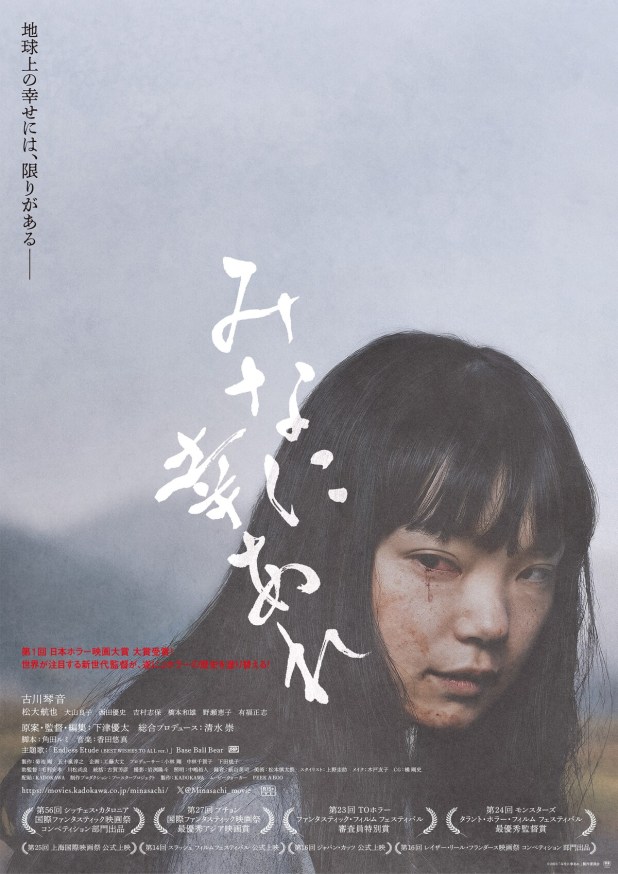
A young nurse (Kotone Furukawa) goes to visit her grandparents (Masashi Arifuku and Yoshiko Inuyama), who live in the countryside that surrounds the more urban places in Japan, and learns the hard way how they have stayed so jovial into their old age.
Director Yûta Shimotsu’s first movie — this is based on his short film Dreaming to Accept Reality and was produced by Takashi Shimizu (Tomie: Re-birth) — it has sell copy that promises that this “unsettling debut draws from classics like Audition and The Wicker Man to create a wholly unique vision.”
Take this advice anywhere you live: Never go back home. Nothing good happens there. The place where you grew up is much more sinister than how you remember it. Now it is a place of random violence, people asking you to save them and you’ll be trapped in either a ghost story or a J-horror film. Stay where you are. The world is a big enough nightmare without you messing around. You don’t need to find your grandparents oinking like pigs and touching their eyeballs or need to meet the strange beings that are staying inside their home.
I’m used to Japan influencing Western movies, not looking to make Midsommarup north.
The 2025 Overlook Film Festival takes place April 3 to 6. To learn more, click here.
In 1998, the Disney Channel Original Movie Halloweentown was filmed in St. Helens, Oregon. Since then, it has seen 50,000 visitors every October, even 25 years later. Yet, just like the town in the series of Disney films—Halloweentown II: Kalabar’s Revenge, Halloweentown Highand Return to Halloweentown—the locals believe that there are real hauntings. And beyond that, like any small town, there’s plenty of gossip to listen to.
Directed by Bradford Thomason and Brett Whitcomb, this film feels like a real-life Waiting for Guffman. A zombie dance is choreographed by a girl who had to drop out of dance and wants to reconnect with her father. A newcomer to the town has bought a favorite restaurant, the Klondike Tavern, and his social media mistake causes his entire staff to mutiny. A woman claims to the town council that she is being attacked in her dreams and that the town is becoming possessed by demons. A team of paranormal investigators is also investigating the hauntings they claim are real.
This film never makes fun of its subjects, instead allowing them to tell their stories. I absolutely loved this and have been raving about it to everyone I can, as it’s a perfect non-spooky way to get yourself ready for the Halloween season. Here’s hoping it finds a streaming home soon so more people can enjoy this fun hangout in a town that has embraced its history as a spooky location.
The 2025 Overlook Film Festival takes place April 3 to 6. To learn more, click here.
April 5: Visual Vengeance Day — Write about a movie released by Visual Vengeance. Here’s a list to help you find a movie.
Directed and written by Les Sekely (Vampire Time Travelers), this is similar to that film and this quote that I used to describe that one is even more accurate: “This movie feels less like a narrative movie and more like someone made a Dark Brothers or Rinse Dream adult movie mainstream, giving it constant blasts of words and images…” If I say Party Doll-A-Go-Go and you get it, you’re a pervert, and we should be friends, and you’ll know exactly what kind of strange editing and barrage of sound effects and dumb jokes that entails.
Years ago, students destroyed the life of their teacher. Most of them got over it, but only one still feels some empathy and wonders what happened to her, perhaps because his girlfriend is also a teacher. Yes, you now get that this is not a rip-off of I Know What You Did Last Summer, except for being close to the title.
I can see that as a movie that would anger many viewers, as it doesn’t even let up with being silly, even when it’s trying to be heartfelt. The sound effects, if anything, get louder and more repetitive, kind of like Max Headroom repeating himself. It was something in the way 90s and 00s movies could be edited and doesn’t seem to have survived until today. Yet here’s this film, rescued by Visual Vengeance, a little shot in Lakewood, OH effort about demons, classroom hijinks and the regret of growing up, mixed with male gaze rear-end shots and a Troma-like sensibility without nudity. I haven’t seen many movies like it, so you should try it at least.
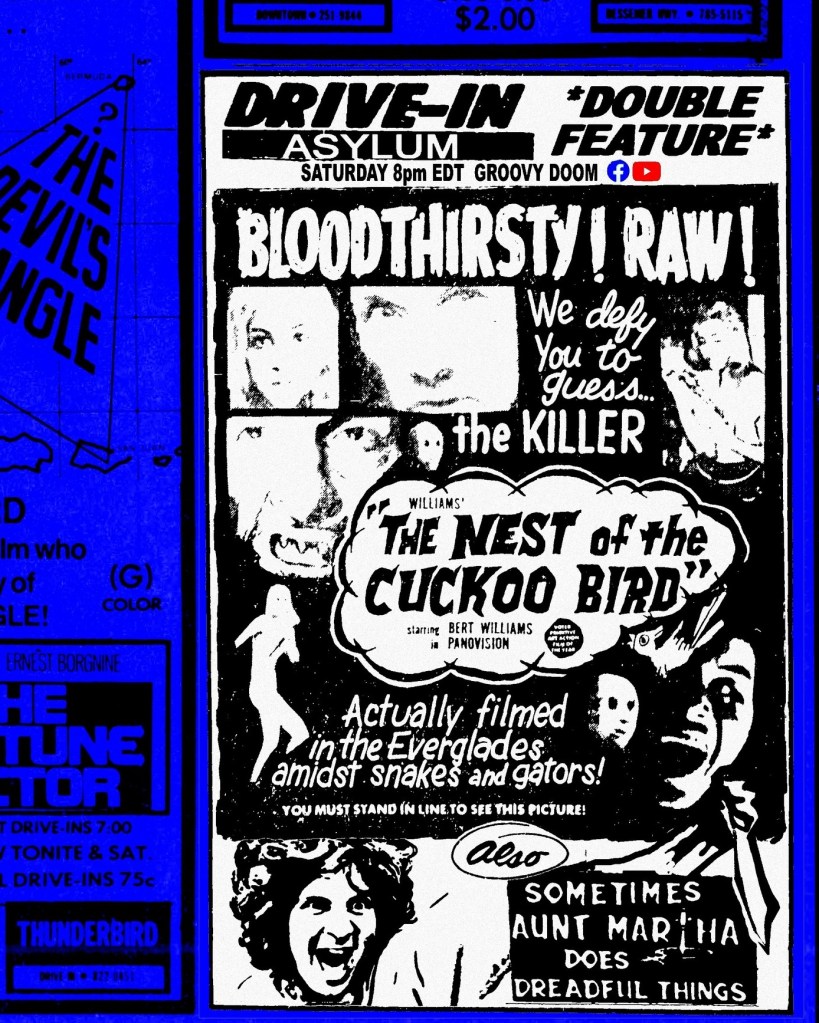
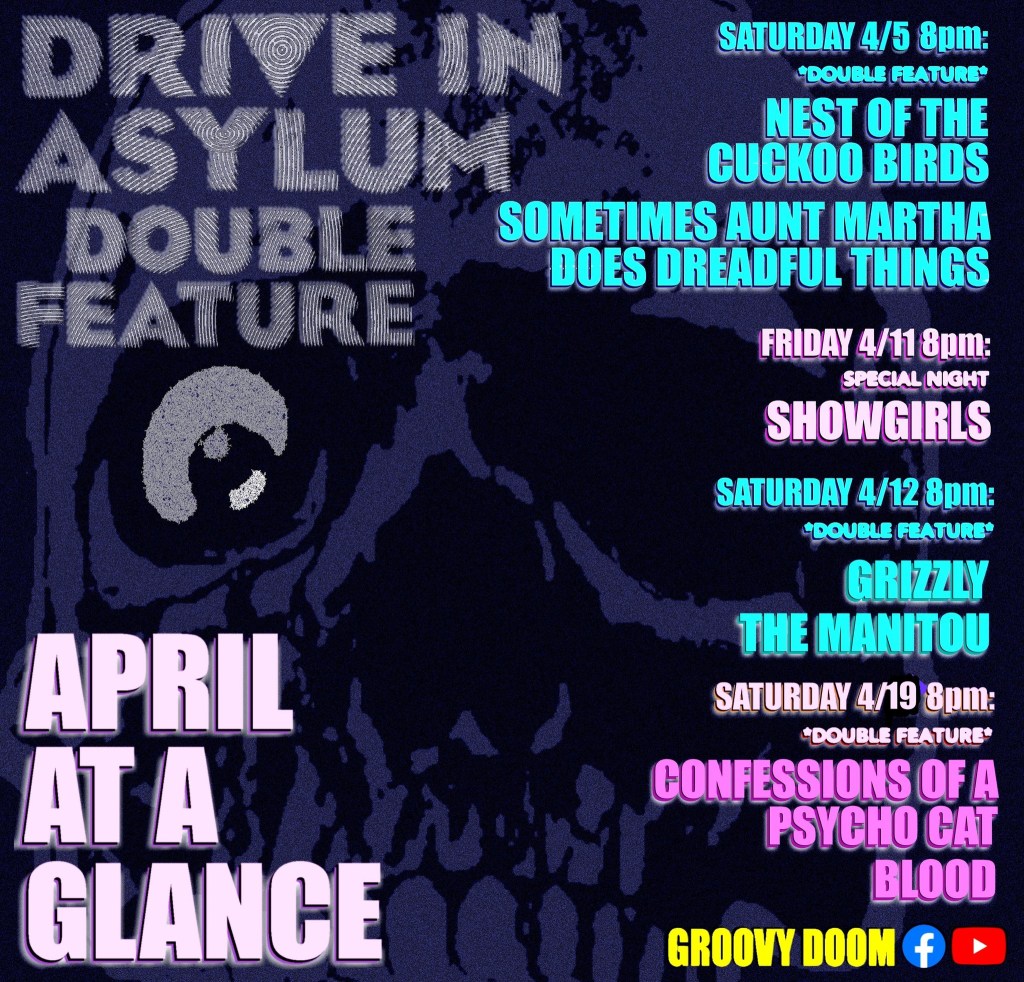
Up first — The Nest of the Cuckoo Birds, a 1965 freak-out about liquor control board agents, swamps, showgirls, the Cuckoo Bird Inn, the Chapel of the Dead and so much more. You can find it at the Internet Archive.
Every show, we watch movies, discuss them, look at their ad campaigns, and also have two themed cocktails. Here’s the first recipe:
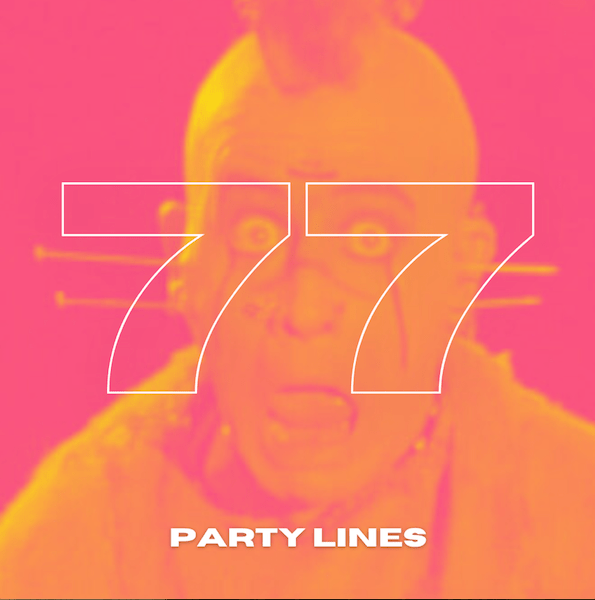
Three movies that obsess me, from a time when we had no internet and had to use phones to connect and fall in lust — as well as a teen sex comedy that makes no sense — are on the show this week. Get ready to hear me go on and on about Lovelines, The Party Animal and Party Line.





 B&S About Movies
You must be logged in to post a comment.