SEVERIN BLU RAY RELEASE: Scala!!! shorts disc one (1968. 1971, 1978, 1984, 1986, 1989, 1991)

On the bonus discs of Severin’s new Scala!!! Or, the Incredibly Strange Rise and Fall of the World’s Wildest Cinema and How It Influenced a Mixed-up Generation of Weirdos and Misfits release, you’ll find examples of several shorts that played at the theater. You can buy this from Severin.
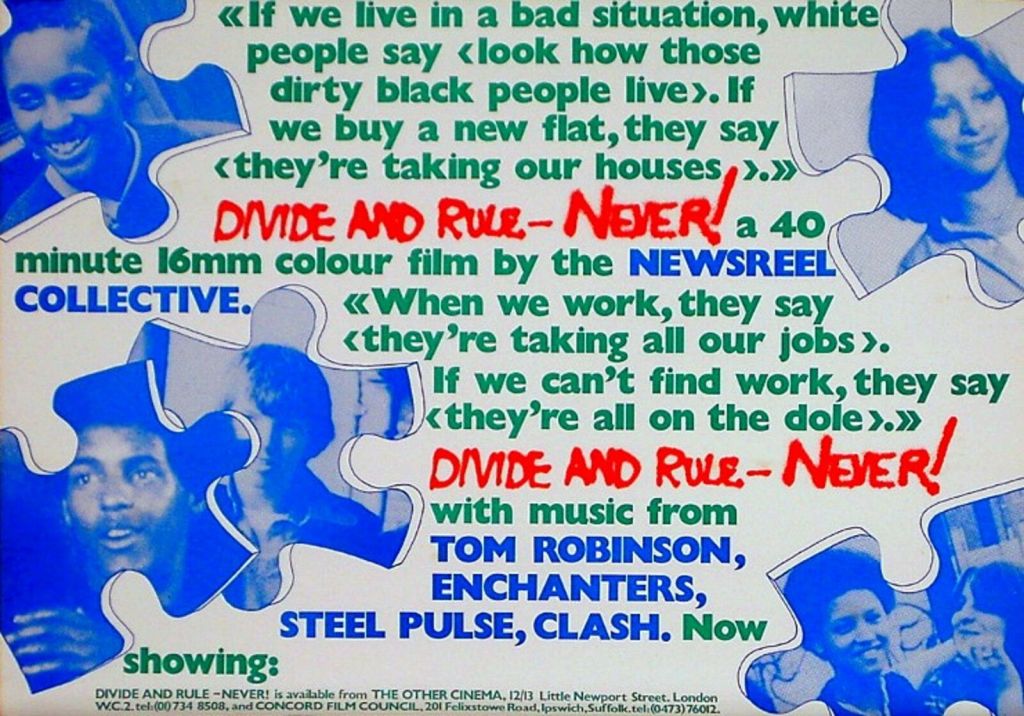
Divide and Rule – Never! (1978): Made for and by young people, this forty-minute or so film looks at race and how it is viewed in school, at work and by the law. There are also some historic sequences of British imperialism and a discussion of how Germany got to the point that it was pre-World War II, plus plenty of punk rock and reggae. This has many sides represented, from Black and Asian immigrants to ex-National Front members.

Divide and Rule — Never! was distributed by The Other Cinema, a non-profit-making, independent film distribution company in London.

Sadly, so much of this movie — made 45 years ago — are just as relevant today in America. This is movie that doesn’t shy away from incendiary material, but that’s what makes it so powerful. In addition to the interviews, it has some interesting animation and a soundtrack with Steel Pulse, TRB, X-Ray Specs and The Clash.
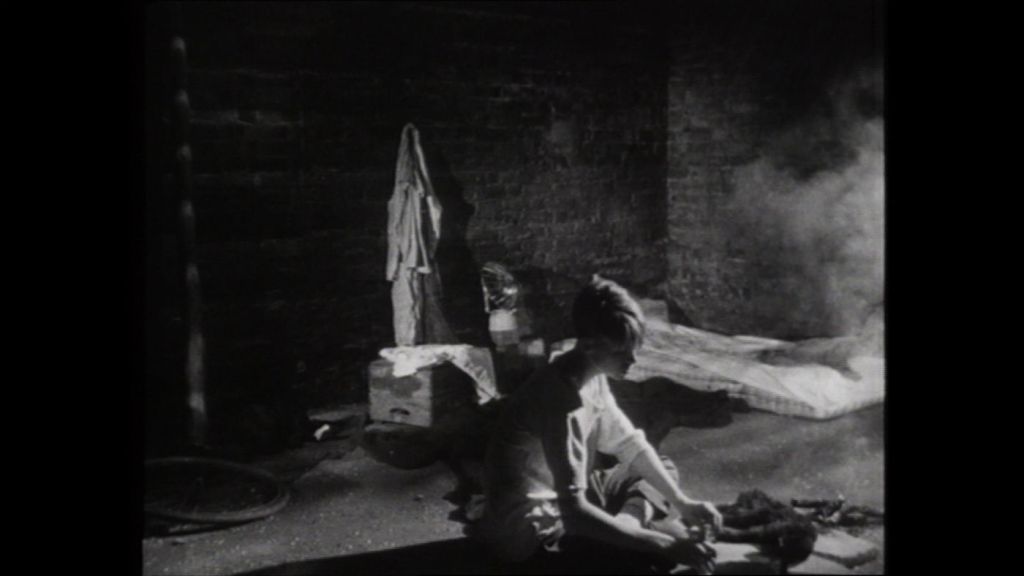
Dead Cat (1989): Directed and written by Davis Lewis, this has Genesis P-Orridge in the cast and a soundtrack by Psychic TV, which has been released as Kondole/Dead Cat.

A boy (Nick Patrick) has a cat that dies and his grief deposits him into a psychosexual nightmare, including a medicine man (Derek Jarman) and several unhoused people (P-Orridge, Andrew Tiernan).

This was shown at only a few theaters the year it was release — including Scala Cinema — before fading away and almost being lost before Lewis found it. In the program for this film, Scala said “The torture that occurs at the transition of sexuality.” If you liked videos for bands liek Skinny Puppy and Nine Inch Nails, this feels like the inspiration.
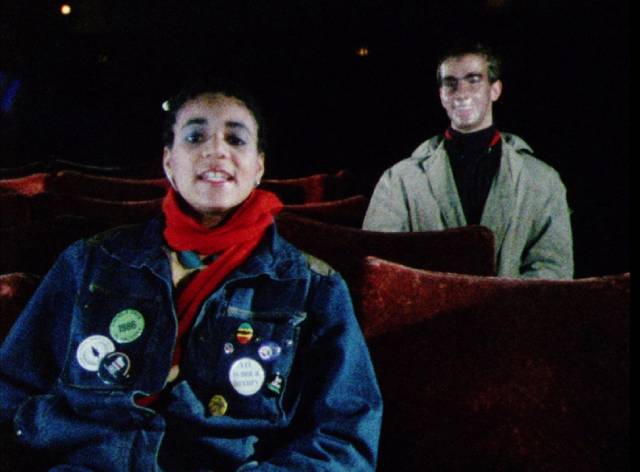
The Mark of Lilith (1986): Directed by Bruna Fionda, Polly Gladwin and Zachary Nataf as a project at The London College of Printing, this is all about Zena (Pamela Lofton), who is researching monstrous women. She meets Lillia (Susan Franklyn) a vampire, at a horror movie and the two start a relationship. 

Liliana, trapped with an abusive male partner by the name of Luke (Jeremy Peters) who is what vampires probably would be, scavengers who feed on the weak, dreams of movies in which she is the victim of just such a vampire. She’s often fed on human beings, but has been careful not to be caught or make a mess, unlike her partner. As for Zena, she’s been studying how female gods were once worshipped but now only appear in horror fiction as monstrous creatures.

So much of this movie is as right on now as when it was made, like the speech that Zena gives when Liliana tracks her down: “Have you noticed that horror can be the most progressive popular genre? It brings up everything that our society represses, how the oppressed are turned into a source of fear and anxiety. The horror genre dramatizes the repressed as “the other” in the figure of the monster and normal life is threatened by the monster, by the return of the repressed consciously perceived as ugly, terrible, obscene.”

Her argument is that we can subvert the very notions of horror, making the monsters into heroes that destroy the rules that hold us down.

However, this being a student film, it’s very overly earnest and instead of working these ideas into the narrative as subtext, they take over the entire movie. If you’re willing to overlook this, it’s a pretty fascinating effort.
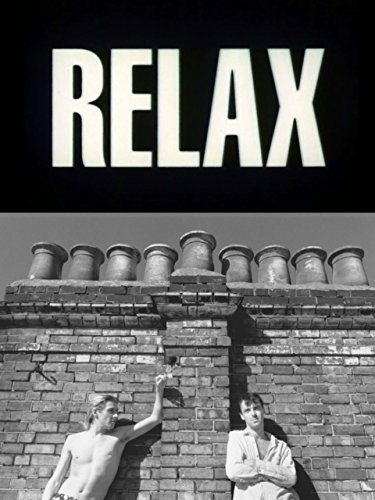
Relax (1991):  Steve (Philip Rosch) lives with his lover Ned (Grant Oatley), but as he starts to engage in a more domestic relationship, he starts to worry about all of the partners he’s had. After all, the AIDS crisis is happening and he’s never been tested. Ned tells him to relax, but there’s no way that he can.

The wait for the test is just five days but it may as well be forever. This also makes a tie between sex and death, as Steve strips for both Ned and his doctor. And in the middle of this endless period of limbo, he dreams of death and fights with Ned, who just smiles and keeps telling him to relax. But how could anyone during the time of AIDS?

I remember my first blood test and the doctor lecturing me after he gave it, telling me that I should have been a virgin until I married and whatever happened, I brought it on myself. The funny thing was, I had been a virgin, I thought I was getting married and I had no knowledge that my fiance was unfaithful to a level you only see in films. That night, my parents came to visit, leaving their small town to come to the big city and my mother asked, “What is that bandage on your arm?” I could have lied, but I told her it was for a blood test, and I dealt with yet someone else upset with me. My problems were miniscule in the face of the recriminations that gay people had to deal with, a time of Silence=Death, a place seemingly forgotten today other than by the ones who fought the war.

Directed and written by Chris Newby, this is a stark reminder of that time.
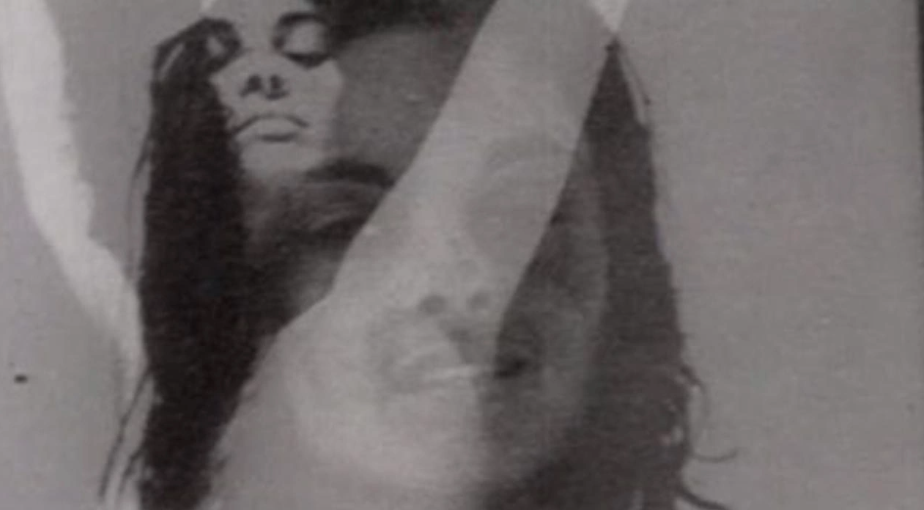
Boobs a Lot (1968): Directed by Aggy Read, this is quite simple: many shots of female breasts, all set to The Fugs’ song of the same name. Banned in Australia, this has around three thousand sets of mammaries all in three minutes, the male gaze presented over and over and, yes, over again until it goes past just being sophomoric and becomes mesmerizing in the way that breasts are when you’re starting puberty. I’m ascribing artistic meaning to this but really, at the end of the day, it’s just a lot of sweater meat. Fun bags. Cans, dirty pillows, babylons, what have you. My wife is always amazed at how many dumb names I can come up with for anatomy and I blame years of John Waters and reading Hustler as a kid and yeah, I’m not as proud of the latter than the former. That said, there are a lot of headlights in this one.

Kama Sutra Rides Again (1971): Stanley (Bob Godfrey, who also directed and write this) and Ethel are a married couple looking to keep their love life interesting, so they have been trying out new positions. Things start somewhat simple, but by the end, Ethel is being dropped through trap doors and out of an airplane onto her husband. A trapeze love making attempt ends in injury, leading Ethel to chase Stanley while all wrapped up.

Stanley Kubrick personally selected this film to play before A Clockwork Orange in theaters in the UK. I wonder if this played at Scala before the screening that shut down the theater. More than just a dirty cartoon, this was nominated for an Oscar. Despite being about lovemaking, it’s all rather innocent and remains funny years after it was made.
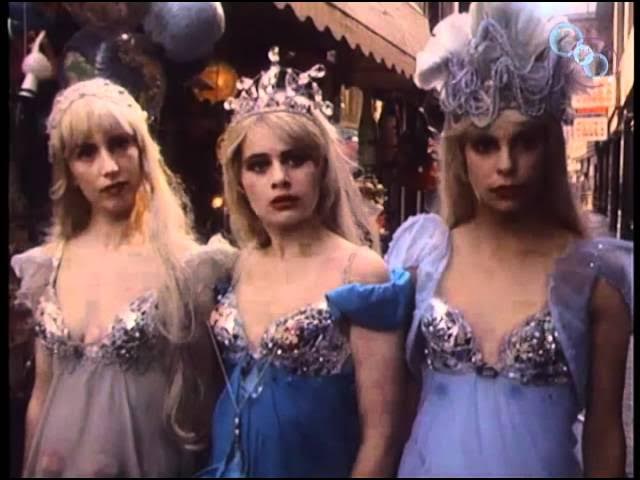
Coping With Cupid (1991): Directed and co-written by former Slits guitarist Viv Albertine, this finds three blonde alien women — played by Yolande Brener, Fiona Dennison and Melissa Milo — who have come to Earth to learn what love is, under the command of Captain Trulove (the voice of Lorelei King). They meet a man named Peter (Sean Pertwee), who hasn’t found anyone, as well as interview people on the street to try and learn exactly how one person can become enamored of another.

Richard Jobson from Skids and Don Letts from Big Audio Dynamite appear, as does feminist sexologist Shere Hite, at least on a TV set. I love that the three aliens are the ideal of male perfection yet they are lonely, trying to figure out what it takes to make the heart beat. It’s kind of like so many other films that I adore where space women try to understand men, a genre that really needs a better title. See Cat-Women of the Moon, Missile to the Moon, Queen of Outer Space, Fire Maidens from Outer SpaceAmazon Women On the Moon, Abbott and Costello Go to Mars, El Planeta De Las Mujeres Invasoras and Uçan Daireler Istanbulda.

On Guard (1984): Sydney: Four women — Diana (Jan Cornall), Amelia (Liddy Clark),  Adrienne (Kerry Dwyer) and Georgia (Mystery Carnage) — juggle their lives, careers and even families to destroy the research of the company Utero, who are creating new ways of reproductive engineering. Or, as the sales material says, “Not only are the protagonists politically active women, but the frank depiction of their sexual and emotional lives and the complexity of their domestic responsibilities add new dimensions to the thriller format. The film also raises as a central issue the ethical debate over biotechnology as a potential threat to women and their rights to self-determination.”

One of the women loses the diary that has all of the information on their mission, which leads to everyone getting tense over what they’re about to do. Directed by Susan Lambert, who wrote it with Sarah Gibson, this allows the women to be heroes and not someone to be saved. I like that the advertising promised that this was “A Girls’ Own Adventure” and a heist film, hiding the fact that it has plenty of big ideas inside it.

Today, in vitro fertilisation (IVF) is an accepted way of having children, yet here, it’s presented as something that will take away one of the primary roles of women. Juxtapose that with IVF being one of the women-centric voting topics of the last U.S. election.
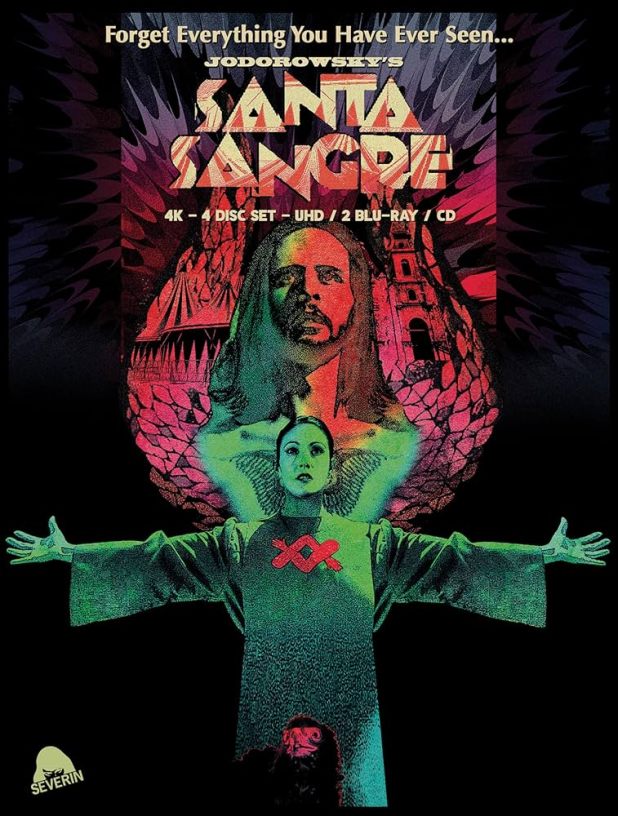
MOVIES THAT PLAYED SCALA: Santa Sangre (1989)

Thanks to the British Film Institute, there’s a list of films that played Scala. To celebrate the release of Severin’s new documentary, I’ll share a few of these movies every day. You can see the whole list on Letterboxd.

I first encountered Sante Sangre at Prime Time Video in Ellwood City, the video store of my childhood. For some reason, it was stocked in the horror section. I have no idea where I’d put the film myself, but it felt like horror was often the catchall for the films that were not understood. And, of course, as I grew up in a very small town between Pittsburgh and Youngstown, no one was going to rent anything out of a foreign section. As such, amongst the gorehounds of home, Sante Sangre was a film that was too odd, too strange and ultimately not violent enough to appease our needs. I’d never rented it and now, an old man who worships at the foot of The Holy Mountain, I find myself wishing that I could send a message back to my younger self and tell him to seek this film out.

Interestingly enough, this film was written by Roberto Leoni, who had worked in the library of a psychiatric hospital which inspired this film. Leoni also wrote My Dear KillerCasablanca Express and one of the oddest movies I’ve ever seen, Sergio Martino’s American Rickshaw.

He brought the script to Claudio Argento, who felt that Alejandro Jodorowsky was the only director who could make this movie. However, after Dune ended due to money issues and Tusk was considered a failure, Jodorowsky had disappeared. The director would only meet Leoni, telling him that the angel of stories had passed over Paris and taken this story to Italy, but it was meant for him to tell.

After all, Jodorowsky had had a chance meeting in the alley outside a bar with Gregorio Cardenas Hernandez, the famed Estrangulador de Tacuba who had emerged after nearly thirty years in prison able to play the piano, write poetry, practice law and with a wife and four children. He was pardoned of his crimes and led a normal, if famous, life until his death in 1999.

Fenix, played at different times by Jodorowsky’s sons Axel and Adan, has grown up in the circus, the child of Orgo the knife-thrower and Concha the trapeze artist. His mother is also the leader of a cult that worships a dead child who was raped and had her arms cut off by two brothers. As the Catholic church and the government destroy their place of worship, Orgo is making love to the tattooed woman who he performs alongside. Concha catches him, but is hypnotized and raped as well.

As if that isn’t bad enough, the beloved elephant dies despite Fenix’s prayers. He watches as scavengers tear it apart in the city dump and all his father can do is carve up his chest with a tattoo to try to stop his tears and make him a man.

That night, Concha finally rises up against Orgo, burning his privates with acid. He retaliates by cutting off her arms before slicing his own throat, unable to live without his sexual member. The tattooed woman takes the mute Alma — who Fenix already loves — and runs off into the bloody night.

We move back to the present, where the film began with Fenix in a mental institution. A chance outing reveals to him that the tattooed woman is still alive and trying to introduce Alma to a life of selling her body. That night, a strange woman kills the older inked female, but we can’t see who it is.

We soon learn that Concha is forcing Fenix to be her arms — not just in their knife throwing act, which forces him to become a strange substitute for his father — but in a series of murders. Alma tries to get Fenix to leave this all behind, but his mother demands that he kills the only woman he has ever loved. He responds by stabbing her, yet she does not die.

That’s when we learn the truth. Concha has been dead since the night Orgo took her arms all those years ago and an armless mannequin has been the one that our hero — such as it is — has been listening to. Along with the help of more imaginary friends, Fenix destroys the past and surrenders to the police, amazed that he has regained control of his arms once again.

As the elephant dies in this film, inspiration was born. In Eddie Murphy’s song “Whazupwitu,” everything begins with the words of the clown: “The elephant is dying.” This is not the last time Murphy would mention the director’s work, as he often brought him up while he did press for Dolemite Is My Name.

I am also amused that beyond Argento’s brother producing this — and by osmosis some of the murder scenes feeling as if they are inspired by Dario — Rene Cardona Jr. (yes, the director of Tintorera) was also a producer.

Even after several watches of this film, I am still astounded by its rich palette of colors, the way it synthesizes references from Universal’s Invisible Man to the lucha movies of Mexico’s past and how the hero is the villain while also being pure of heart, despite the many murders he has committed.

Perhaps in my teenage years, I was not yet ready for the psychomagic cocktail that a teacher like Jodorowsky was shaking up with this film. Yet today, I can definitely tell you that it has my highest recommendation. Please watch it. I’d love to discuss it with you.

You can watch this on Tubi.

MOVIES THAT PLAYED SCALA: Beyond the Valley of the Dolls (1970)

Thanks to the British Film Institute, there’s a list of films that played Scala. To celebrate the release of Severin’s new documentary, I’ll share a few of these movies every day. You can see the whole list on Letterboxd.

A few things amaze me about this movie:

  1. That it was intended as a sequel to 1967’s Valley of the Dolls, a veritable smorgasbord of sleaze and stupidity that I adore with all my heart, but which was a sizeable mainstream success.
  2. That 20th Century Fox would hire Russ Meyer and Roger Ebert to make it. Ebert himself says that it wasn’t until after making the film that he realized how unusual it all was: “…in hindsight, I can recognize that the conditions of its making were almost miraculous. An independent X-rated filmmaker and an inexperienced screenwriter were brought into a major studio and given carte blanche to turn out a satire of one of the studio’s own hits.” When Fox producer Richard Zanuck greenlit the script, Meyer said, “I felt like I had pulled off the biggest caper in the world.”
  3. That anybody has ever made a movie afterward, because this is the literal ultimate film of all ultimate films, a movie awash in overwrought pathos, exploitation and you can’t believe they went there insanity, blows my mind.

Neither Meyer nor Ebert read the novel Valley of the Dolls, but they knew what the film was all about — young innocent girls get chewed up and spit out by the hard and violent world of Hollywood and not all of them find redemption.

Ebert said that the duo wanted to take that ever further: “We would include some of the sensational elements of the original story- homosexuality, crippling diseases, characters based on “real” people, events out of recent headlines…heavily overlaid with such shocking violence that some critics didn’t know whether the movie knew it was a comedy.”

Meyer wanted to appeal to all audiences under thirty with something for everyone: mod fashion, hip music, soap opera romance, amazing set design, lesbians, orgies, drugs, transgender characters, Nazis, comedy, serious drama, plenty of skin, violent exploitation and an ending that had a moral — the so-called square-up reel.

They changed some characters — Susan Lake and Baxter Wolfe are really Anne Welles and Lyon Burke from Valley of the Dolls — but some are real people, like Ronnie “Z-Man” Barzell being based on Phil Spector decades before he became a killer. Randy Black is Muhammed Ali. And the end of the movie was based on the Tate-LaBianca Murders, claiming the life of Valleystar Sharon Tate at the hands of the Manson Family.

Complicating the movie — for the actors — is that Meyer wouldn’t let on if the movie was really serious or comedic. Some decisions — SPOILER WARNING like Z-Man being Z-Woman SPOILER WARNING — were made on the spot, despite it having nothing to do with the rest of the film.

Roger Ebert said, “It’s an anthology of stock situations, characters, dialogue, clichés and stereotypes, set to music and manipulated to work as exposition and satire at the same time; it’s cause and effect, a wind-up machine to generate emotions, pure movie without message.”

While Zanuck had asked for an R rated to pushed the boundaries toward X, the film did receive an X rating. So Meyer responded by deciding that he wanted to insert even more sex and nudity into the film.

So what’s it all about? Glad you asked.

Kelly MacNamara (Dolly Martin, Playboy Playmate of the Month for May 1966), Casey Anderson (Cynthia Myers, Playboy Playmate of the Month for December 1968, and a woman whose nude photo was taken to the moon by the crew of Apollo 12) and Petronella “Pet” Danforth are The Kelly Affair. Kelly’s man, Harris Allsworth manages them and they decide to travel to Hollywood to meet up with Kelly’s aunt Susan Lake, who stands to inherit a big fortune.

Her financial advisor Porter Hall thinks they’re just hippies out to get her money, but she doesn’t care what that old man thinks. Instead, she introduces them to Ronnie “Z-Man” Barzell. He’s played by John LaZar, who is also in Deathstalker II, so it’s kind of ironic that he’s in the sequel to a movie that stars Lana Clarkson, the woman killed by the person he’s really playing here, Phil Spector. Woah.

To top it off, Kelly is wearing one of Sharon Tate’s outfits from the original in this scene. Dolly Read nearly couldn’t do the scene as she was in tears when she learned that the outfit had belonged to the dead actress. The publicity for the film — the famous three on a bed shot of the band — also has them wearing clothes from that movie.

He becomes their manager, enraging Harris, and renames them The Carrie Nations. Kelly soon falls for Lance Rocke (Michael Blodgett, who after acting in movies like Disco Fever and The Velvet Vampire, would write Rent-A-Cop and Hero and the Terror) while her ex-boyfriend ends up in bed with pornstar Ashley St. Ives (Meyer’s wife, Edy Williams). But soon, Harris can’t perform because he’s all tied into the booze and the dolls, baby. The dolls! The one time he can get it up, he knocks up Casey, his ex-girl’s best girlfriend who then has a lesbian affair with Roxanne (Erica Gavin, the star of Meyer’s Vixen), who asks her to get an abortion. Whew! So much happens so fast in this movie you really gotta keep up.

Meanwhile, Petronella has a storybook romance with Emerson Thorne (Harrison Page, Carnosaur) that ends in a brutal fistfight and near vehicular homicide when he catches her in bed with champion boxer Randy Black (James Iglehart, Angels Hard As They Come). Susan gets back with her old fiancee Baxter Wolfe (Charles Napier!) while drugs and touring beat up The Carrie Nations, until one show Harris leaps to his, well, not death, but he loses the use of his legs. Kelly falls back in love for him after his stupid fall. Emerson and Petronella get back together. Casey and Roxanne have lots of sex. If it seems like it’s all going to end up fine, Meyer is here to play with your mind.

Z-Man invites Lance, Casey and Roxanne (the latter two wearing real outfits from the 1960’s Batman TV show) to another of his drug-fuelled parties. After Lance turns him down, he reveals that he’s been a woman all along before going off — beheading Lance to the 20th Century Fox theme before stabbing his servant and getting Casey to fellate his gun before murdering her and her lover (this is teased in the film’s opening). Kelly, Harris, Pet, and Emerson arrive too late to save them, but they kill Z-Man and Harris starts to move his feet again.

While an overly preachy voiceover squares us all up, like we’re watching Mom and Dad or something, we watch Kelly and Harris, who is limping on crutches, enjoy nature before all three surviving couples get married at the courthouse.

Between this movie and Myra Breckinridge, Zanuck lost his job at Fox. That said — despite an X rating and a meager $900,000 budget (Meyer came in $100,000 under) — it ended up earning more than $40 million dollars. Of course, they also had to pay out Valley author Jacqueline Susann’s estate for damages, which meant that the movie starts with this disclaimer:

THE FILM YOU ARE ABOUT TO SEE IS NOT A SEQUEL TO “VALLEY OF THE DOLLS.” IT IS WHOLLY ORIGINAL AND BEARS NO RELATIONSHIP TO REAL PERSONS, LIVING OR DEAD. IT DOES, LIKE “VALLEY OF THE DOLLS” DEAL WITH THE OFT-TIMES NIGHTMARE WORLD OF SHOW BUSINESS BUT IN A DIFFERENT TIME AND CONTEXT.

Needless to say, this is in my top films ever. If you ever visit and you’d like to watch while I scream the songs at the screen and jump up and down, you’re invited.

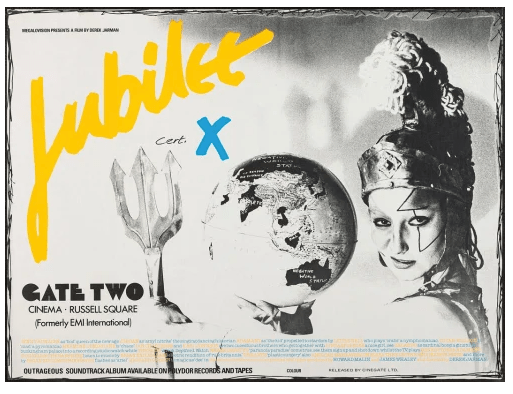
MOVIES THAT PLAYED SCALA: Jubilee (1978)

Thanks to the British Film Institute, there’s a list of films that played Scala. To celebrate the release of Severin’s new documentary, I’ll share a few of these movies every day. You can see the whole list on Letterboxd

Queen Elizabeth I (Jenny Runacre, Son of DraculaThe Witches) asks her occultist John Dee (Richard O’Brien of Rocky Horror fame) — an advocate of British imperialism that spent the last thirty years of his life learning the secret language of angels — and Ariel from Shakespeare’s The Tempest (David Brandon, DeliriumStagefright) to show her the future.

That future? The no future of the punk rock era, a place where Queen Elizabeth II was killed in a mugging and a gang of punk rock survivors, including Amyl Nitrate (Jordan, the model who was of the creators of W10 London punk look), Bod (Runacre in a second role), Chaos (French singer, writer and tightrope walker Hermine Demoriane), Mad (singer Toyah Willcox) and Crabs (Little Nell from Rocky Horror, who even gets in the line “Don’t dream it, be it.”). When they’re not talking about boys or music, they’re talking about how history can be manipulated. And then Amyl Nitrite says that her heroine has always been Myra Hindley (Hindley and Ian Brady were responsible for the Moors Murders, which occurred in and around Manchester between mid-1963 and late-1965, claiming five child victims and inspiring the song “Suffer Little Children” by The Smiths).

Things making too much sense? There’s also Borgia Ginz, who shares a house with Hitler, runs the world and has transformed Buckingham Palace into a recording studio and Westminster Cathedral into a disco where Jesus performs.

Beyond the nihilism and lack of hope in this film, there’s also plenty of punk rock stars, like Adam Ant and Wayne County along for the ride and gamely performing songs, as well as blink and you miss it moments for Siouxsie and the Banshees and the Slits. And hey — the music is by Ol’ Sourpuss himself, Brian Eno.

Director Derek Jarman may have based this movie in punk rock, but he was against the scene’s fascism fetish, as well as its love of stupidity and violence. Many punks weren’t pleased with the film, such as fashion designer Vivienne Westwood, who created an open letter T-shirt that denounced the film because of how she felt it misrepresented punk.

Jubilee is definitely a time capsule of Thatcher-era England. It’s loud, obnoxious and strange, which are all wonderful things to be. I’m glad that I didn’t watch something easy like Cy-Warrior and chose this movie.

MOVIES THAT PLAYED SCALA: Head (1968)

Thanks to the British Film Institute, there’s a list of films that played Scala. To celebrate the release of Severin’s new documentary, I’ll share a few of these movies every day. You can see the whole list on Letterboxd

Despite breaking up in 1971, The Monkees remained in syndication throughout the decade, and that’s when I discovered them. Despite being a band created for a TV show—a burst of comedy, silliness and catchy songs—The Monkees instantly appealed to me.

Initially formed in Los Angeles in 1965 by Bob Rafelson and Bert Schneider, the band was Micky Dolenz, Michael Nesmith, Peter Tork and Davy Jones. Producer Don Kirshner initially supervised the band’s music, with songs written by the songwriting duo of Tommy Boyce and Bobby Hart. The four band members were on set filming for nearly twelve hours a day, so session musicians originally played most of their tunes (that said, Nesmith did compose and produce some songs, with Tork playing guitar and all four contributing vocals).

By the TV show’s second season, The Monkees had won the right to create their own music, marking a significant shift in their artistic journey. They effectively became musicians, singers, songwriters, and producers. This growth was further evident in their fourth album, Pisces, Aquarius, Capricorn & Jones Ltd., where the band collaborated with respected session and star talents like the Wrecking Crew, Glen Campbell, members of the Byrds and the Association, drummer ‘Fast’ Eddie Hoh, Stephen Stills and Neil Young. This artistic growth is a testament to their determination and talent.

However, the Monkees continually battled against the notion that they were a manufactured band. Sure, that’s how things started, but they weren’t that way anymore. While their TV show remained successful, they were bored with its conventional format. They proposed making the show a variety program, a format that would allow them to showcase their musical talents and experiment with different styles and genres. But NBC objected, and by then, most of the band wasn’t getting along anyway.

The film’s title, Head, is a nod to the band’s desire to break free from their manufactured image and the constraints of their success. It’s a reference to the phrase ‘to get your head ‘, meaning to understand or grasp something, which reflects the band’s journey of self-discovery and artistic expression. After The Monkees was canceled in February 1968, Rafelson co-wrote and directed this film with Schneider as executive producer. Jack Nicholson, the other writer — a virtual unknown at the time — worked with the band and Rafelson in a jam session weekend with plenty of weed on hand. Later, under the influence of LSD, Nicholson would rewrite the stream-of-consciousness tapes into the script.

When the band learned they would not be allowed to direct themselves or receive screenwriting credit, every Monkee except Peter Tork had a one-day walkout. The studio agreed to a larger share of the film’s profits if the band returned, which ended the professional relationship between the band and their creators.

The filming of Head resulted in a movie that completely alienated their fanbase. Both Nesmith and Tork felt that this movie was a betrayal, a murder of the band by its creators, who seemed to have their eyes on bigger goals. This sense of disillusionment is palpable in their reactions, adding a layer of disappointment to the narrative.

At the dedication of the Gerald Desmond Bridge, an old man politician struggles with his speech. Suddenly, The Monkees appear, racing through the officials and creating chaos. Micky jumps off the bridge to the water below as we hear the words of “Porpoise Song. ” The lyrics intone, “A face, a voice, an overdub has no choice, an image cannot rejoice.” He floats under the waves until mermaids find him and bring him back to life.

After a kissing contest with all four Monkees being called “even” by Lady Pleasure (Mireille Machu, Nicholson’s girlfriend at the time), they launch into a distorted version of the TV show’s theme song:

“Hey, hey, we are The Monkees

You know we love to please

A manufactured image

With no philosophies.

You say we’re manufactured.

To that, we all agree.

So make your choice, and we’ll rejoice

in never being free!

Hey, hey, we are The Monkees

We’ve said it all before

The money’s in, we’re made of tin

We’re here to give you more!

The money’s in, we’re made of tin

We’re here to give you…”

BAM! A gunshot interrupts the proceedings, with the famous footage of the execution of Viet Cong operative Nguyen Van Lem by Chief of National Police Nguyen Ngoc Loan being shown. Head has no interest in being subtle.

From here, the movie becomes a kaleidoscope of ideas and pastiches as each Monkee gains a moment in the spotlight, yet none of them are thrilled with their situation, and each feels trapped. Any escape attempt — whether it’s through dance (Davy has a great scene with Toni Basil, who choreographed Head more than a decade before her hit song “Mickey”), punching waitresses, blowing up Coke machines with tanks, attending a strange birthday party (shot on one of the sets of Rosemary’s Baby, which was under production at the same time), a swami who claims to have the answer and even a rampage through the movie set itself, the boys can’t escape their prison, which is a large black box.

That box could symbolize the lounge area built for the band during the filming of their television show. When they first started filming, the band would wander the set between takes, bored by the filming speed. They’d often get lost, so Screen Gems built a special room where they were forced to remain, smoking cigarettes, playing music and studying their scripts. Whenever a band member was needed on the stage, a colored light corresponding to that member would inform them.

Throughout the film, the band runs into a massive cast of characters, with everyone from Mickey Mouse Club star Annette Funicello, Carol Doda (considered the first public topless dancer), Sonny Liston, Frank Zappa, Teri Garr, Victor Mature and Dennis Hopper.

After evading the box and all of their enemies in the desert, The Monkees run back to the film’s beginning and all leap from the bridge, this time to the triumphant return of “Porpoise Song.” But it’s all another sham: as they swim away, we see that they’re stuck in an aquarium, another big box, and taken away on a truck.

Unyielding sadness. It seems a far cry from “Hey, hey we’re The Monkees and people say we monkey around.”

Head bombed hard on release, bringing back only $16,000 on its $750,000 budget. It may be the ad campaign. While trailers say the “most extraordinary adventure, western, comedy, love story, mystery, drama, musical, documentary satire ever made (And that’s putting it mildly),” none of the band would appear in the ads.

The Monkees were trapped by another fact: younger and more mainstream audiences rejected the more serious side of the band, along with their new sound. While critics agreed that this was the band’s best music ever recorded — Carole King and Harry Nilsson co-wrote much of the music — serious hippies wanted nothing to do with a band they perceived as plastic and pre-manufactured.

Nesmith said, “By the time Head came out, The Monkees were a pariah. There was no confusion about this. We were on the cosine of the line of approbation, from acceptance to rejection…and it was over. Head was a swan song.”

At the end of the film, a still shot of a stylized Columbia Pictures logo appears before the movie skips frames, gets tangled and melts as we hear the soundtrack continue and the laugh of Lady Pleasure. Maybe some joy has escaped the box that The Monkees are trapped in. I want to think so, as Head may have been a failure upon release, but when viewed more than fifty years later, it transcends the divide between real and fake, manufactured and created, commerce and art.

25 DAYS OF CHRISTMAS CHALLENGE: Hot Frosty (2024)

Director Jerry Ciccoritti started his career with Psycho Girls and Graveyard Shift AKA Central Park Drifter, so how wild is it that he just made this viral movie? Written by Russell Hainline, this has Kathy Barrett (Lacey Chabert) runs a diner in Hope Springs, New York, but everything is falling apart after the death of her husband. To cheer her up, her friends  Theo (Dan Lett) and Mel (Sherry Miller) buy her a red scarf. Later, she takes that scarf and puts it on a muscular ice sculpture and, well, have you seen or heard Frosty the Snowman?

Jack Snowman (Dustin Milligan) comes into her life and ends up enchanting everyone in town except for conspiracy obsessed Sheriff Nathaniel Hunter (Craig Robinson). This succeeds through its casting, as it also has Lauren Holly, Katy Mixon Greer from Eastbound & Down and Joe Lo Truglio from The State, all talents that elevate anything that they appear in.

I love this term: “born sexy yesterday” which comes from Pop Culture Detective. How can Kathy find anything sexually interesting in a baby in human form, even if he has nice abs? Is he a project, a blank slate, like a snowman, that one can project their dreams on as easily as insert a carrot for a nose?

Why am I thinking so hard about this movie?

That said, Hainline is on Letterboxd and seems to have a sense of humor, saying “in 2021, I started pitching to my friends, in my best Norm Macdonald-esque delivery, “what if, when Frosty the Snowman came to life… he was a super-hot dude?” then I’d hit them with “it’s called HOT FROSTY.” and it always got a laugh… but over time, it also burrowed under my skin. for whatever reason, I couldn’t let this idea go. I had to write this movie.”

Look, someone has to fuck that snowman. It may as well be one of the Mean Girls. At least this has some fun callbacks to other Netflix holiday movies and her past acting roles. If it was a female snow woman, however, I feel like people would get angry.

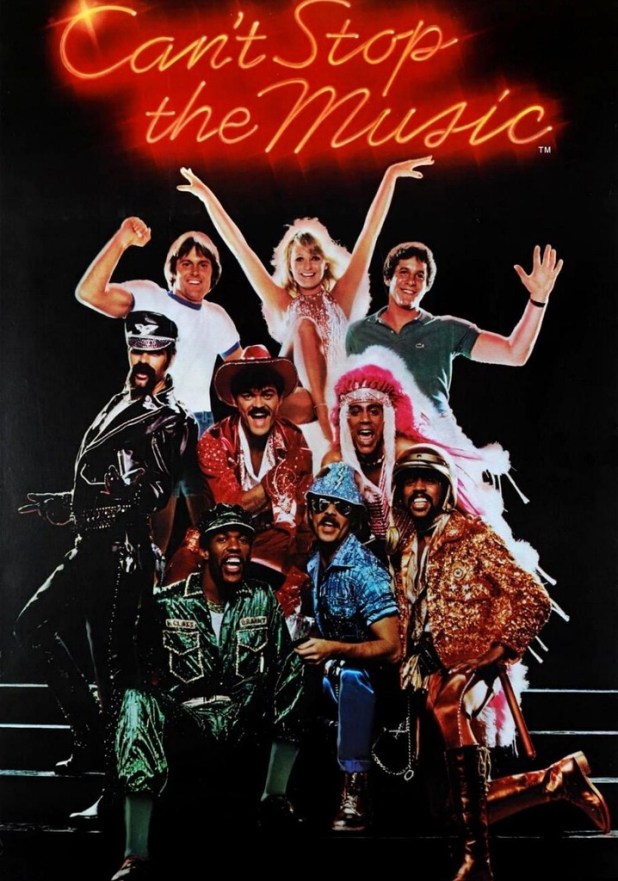
MOVIES THAT PLAYED SCALA: Can’t Stop the Music (1980)

Thanks to the British Film Institute, there’s a list of films that played Scala. To celebrate the release of Severin’s new documentary, I’ll share a few of these movies every day. You can see the whole list on Letterboxd

This movie — and Xanadu — are why the Razzies exist, awards that celebrate the worst in movies. But what do they know?

This is the only movie that Nancy Walker — Rhoda’s mom and the Bounty paper towel lady — ever directed. It’s Bruce Jenner’s film debut. And I don’t care what anyone says, I love it in spite of everything bad you can say about it.

You can see why the movie happened. Producer Allan Carr was riding high off the success of Grease. Disco had finally hit the mainstream with Saturday Night Fever. And there was probably so much coke going around that everyone had a constant nasal drip. The time was ripe for what people had been clamoring for: the origin story of the Village People.

Wait — what?

The Village People — you probably know the words to “YMCA” — were created by Jacques Morali and Henri Belolo. While in New York, Morali attended a costume ball at the Greenwich Village gay disco “Les Mouches.” There, he was taken by all of the macho male stereotypes that he saw in the room and thought — this could be a music act, with each member being a different gay fantasy. Soon, they were signed to Casablanca Records, where their songs “San Francisco (You Got Me),” “Macho Man” and “In the Navy” played in clubs all over the world.

The truth is that the Village People were all one person at first: Victor Willis. Once the album became a hit, Morali and Belolo quickly put out an ad that said: “Macho Types Wanted: Must Dance And Have A Moustache.” From that big success to the time this movie was ready to come out, disco was just about dead, a fact that Carr had foreseen, changing the title from the original Discoland–Where The Music Never Ends! 

So what’s it really all about? Jack Morell (Steve Guttenberg, Police Academy) — named for Jacques Morali, of course — wants to be a composer. But for now, he’s DJing at Saddle Tramps, a disco. His roommate, Samantha Simpson (Valerie Perrine, Superman) is a newly retired supermodel. He writes her a song and everyone loves it, so she uses all of her connections to get him a deal. Her ex-boyfriend Steve Waits of Marrakech Records — get it, Casablanca Records? — wants her back, so he agrees to listen to a demo.

However, Jack’s vocals pretty much suck. So she recruits all of her fabulous friends, like waiter Felipe Rose — the Indian! And model David “Scar” Hodo — the Construction Worker! Randy Jones needs dinner, so he joins up as the Cowboy! We almost have formed Voltron…I mean, the Village People!

We’re treated to a solo song by David the Construction Worker called “I Love You to Death” where he fantasizes about all of the women who will be chasing him once he’s popular. When this scene played in San Francisco, supposedly movie screens were decimated with eggs.

Meanwhile, Samantha’s former agent (Tammy Grimes, who is one of the commercial stars in The Stuff) wants her back in the modeling business and orders her secretary Lulu to make it happen. Somehow, Ron White (Jenner), a tax lawyer, gets mugged on his way to delivering a cake to Sam’s sister, but then Lulu gives Jack drugs, then Ray Simpson — the Cop! — shows up and the four sing the song “Magic Night.” It’s all too much for Ron, who runs away.

The next day, Ron and Sam get back together and hook up. Now that he has a reason to help, he offers his office for further auditions, where we meet Glenn Hughes — the Leatherman! — and Alex Briley — the G.I.! — who finally form the full version of the group. Blink and you’ll miss W.A.S.P. frontman Blackie Lawless trying out! Finally, Ron’s boss Richard says (Russell Nype, who is also in The Stuff) that their company shouldn’t have anything to do with the group, so Ron quits the firm.

The band then goes to the YMCA to rehearse, which leads to a musical number for the song of the same name. If you’re looking to see plenty of naked men in a PG movie, well, here you go! I won’t judge! Marrakech offers too little money for their contract, so the gang decides to throw a party to raise some funds.

Seriously: this is the most raw dong I have ever seen in a non-porno movie.

Samantha agrees to model again for a milk commercial, as long as the Village People can be there, too. The TV spot — with six small boys dressed as the band — starts with Samantha pouring them milk and turning into the song “Milkshake.” Of course, the milk company balks at this. I’ve been in advertising for some time. I can only imagine the meeting where they showed this video to them and the blank stares turning into faces filled with pure rage.

Norma White (Barbara Rush, It Came From Outer Space) decides to help and invites the guys to be part of her fundraiser. Sam lures Steve to the show by suggesting they can canoodle, so Ron dumps her. Meanwhile, on Steve’s jet, Jack and his mother Helen (June Havoc, sister of Gypsy Rose Lee!) win the record company owner over and the Village People are signed!

Everything works out just fine. Ron and Sam get back together. He gets his old job offered back. And following a song by Morali’s other band The Richie Family, the Village People finally unite for “Can’t Stop the Music.”

If only reality had been so kind. After all, the infamous Disco Demolition Night in Chicago, the evening most people claim was the death knell for disco in the United States, happened two weeks into filming.

Even with a TV special — Allan Carr’s Magic Night — featuring Hugh Hefner and Cher, along with a new Village People song “Ready for the 80’s!” that was cut from the film, it was to prime America for a movie that by the time it was filmed no one really wanted to see.

Oh man, the lyrics to that song:

I’m ready for the eighties things look positive
I’m ready and I’ve got a lot of love to give
There’s hope in every heart and love on ev’ey face
The eighties promise everything is just gonna be great

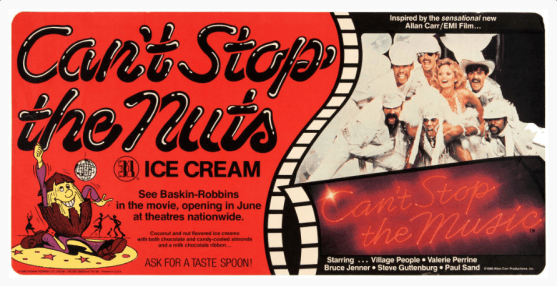
But hey — Baskin Robbins had a flavor made for the film. Can’t Stop the Nuts was offered for the whole summer of 1980. Think I made this up? Nope. I have evidence.

It’s also one of the first appearances of Ray Simpson as the Policeman. The previously mentioned Victor Willis, the original lead singer, quit the group during pre-production. Turns out he wanted to let everyone know he was the straight man of the group and had insisted that his wife, the soon to be divorced and renamed Phylicia Rashad, be written into the film as his girlfriend. Her role in the film ended up being played by Sammy Davis Jr.’s wife Altovise Davis.

Even crazier was that filming in New York was constantly delayed by protestors who were upset about the film Cruising. Many of them thought that this film was that film, so they protested against the wrong movie!

The film failed. Disco died. But why are we talking about this all thirty-some years later? Simple: disco never really went away. And neither did the Village People. Victor Willis is even back in the group, after years of fighting. Sure, there are two different Village People bands touring. But people love them. They’re a part of our culture, even if this movie is pretty much forgotten (outside of Australia, where it’s a New Year’s Eve tradition).

I also want to inform you for some reason this movie is 2 hours and 3 minutes long. I have no idea why it has to be so long. Plan your evening accordingly.

SEVERIN BLU RAY RELEASE: Scala!!! Or, the Incredibly Strange Rise and Fall of the World’s Wildest Cinema and How It Influenced a Mixed-up Generation of Weirdos and Misfits (2024)

Between 1978-1993, more than a million people attended movies at the Scala Cinema in London, whether they were coming to see arthouse or grindhouse, kung fu or groundbreaking LGBTQ+ films. Out of that era, many members of those audiences became today’s filmmakers, musicians, writers, actors, activists and artists.

This documentary, directed and written by Ali Catterall and Jane Giles, this features John Waters, Mary Harron, Graham Humphreys, Alan Jones, Kim Newman Ben Wheatley, Ralph Brown, Beeban Kidron and so many more, all united in their memories of the theater and the life-changing films and moments they enjoyed there.

Whether people came to see movies like Thundercrack or Eraserhead, the movies of Russ Meyer or John Waters, Laurel and Hardy or Sam Raimi, they knew that the Scala was where they would get to have their minds blown.

Based on Giles’ 2018 book Scala Cinema 1978-1993, this is a movie for movie lovers, plain and simple. The Scala got around so many issues because it was a members only club — the Severin set comes with a membership card of your own, as well as a poster — yet despite all of the drug use in the theaters, at least two reported deaths and showing tons of movies that couldn’t have been shown in England, Scala was closed because they showed A Clockwork Orange and Stanley Kubrick had ordered the film to not be shown in the UK. This led to a lawsuit by Warner Brothers and the theater ended.

The memories, however, could not go away. I’ve never had the opportunity to have a theater like the Scala but I wish that I had. I can live through this. This is a documentary and a set for those that live through movies, that dream of them, that want them to mean as much to others as they do to us.

All this week, we’ll go through the many extras that are in the Severin set as well as several of the movies that screened at Scala, which you can find on this Letterboxd list.

Here’s a list of the extras you get with this release: audio commentary with Jane Giles And Ali Catterall; an introduction from the UK premiere; the documentary Scala by Michael Clifford with commentary, a short Scala Cinema; featurettes on the theater and programs; Davey Jones’ cartoons; outtakes of the interviews and a trailer.

The second disc has several shorts that played at Scala, such as Divide and Rule — Never!Dead CatThe Mark of LilithRelaxBoobs A LotKama Sutra Rides AgainCoping With Cupid and On Guard.

The third disc has the Kier-La Janisse documentary The Art of the CalendarSplatterfest Exhumed, which is all about the seminal horror festival at Scala; Maniac 2: Mr. Robbie, the Buddy Giovinazzo-directed proof of concept for the sequel that never happened, as well as commentary by Giovinazzo; Horrorshow with commentary by director Paul Hart-Wilden; Josh Becker’s Cleveland Smith: Bounty Hunter, which stars Bruce Campbell and Sam Raimi, as well as a commentary by Scott Spiegel; Mongolitos with commentary by director Stéphane Ambiel and a featurette on H.G. Lewis coming to Scala in 1989.

You can buy this from Severin.

MOVIES THAT PLAYED SCALA: Barbarella (1968)

Thanks to the British Film Institute, there’s a list of films that played Scala. To celebrate the release of Severin’s new documentary, I’ll share a few of these movies every day. You can see the whole list on Letterboxd.

Shot directly after Mario Bava’s Danger: Diabolik, this Roger Vadim-directed movie is based on the comic book of the same name by Jean-Claude Forest. The film stars Vadim’s then-wife Jane Fonda as Barbarella, a United Earth agent sent to find scientist Durand Durand, who has created a weapon that could destroy humanity.

Vadim was hired to direct this film after producer Dino De Laurentiis purchased the rights. This led to Vadim looking to cast several actresses in the title role, including Virna Lisi, Brigitte Bardot (that’s who the character was originally based on) and Sophia Loren before ending up picking his wife.

In case you’re wondering why this movie is such a mess, Charles B. Griffith was the last writer to work on it, saying that he had done uncredited work on the script after fifteen other writers — including Terry Southern — worked on the movie.

This film is packed with fashion, amazing sets — you can credit Bava’s film for some of that, and great characters, like John Phillip Law (who used the break in shooting to be in the aforementioned Danger: Diabolik) as Pygar the angel, Anita Pallenberg (Performance) as the Black Queen, Milo O’Shea as Durand-Durand, Marcel Marceau in a rare speaking role as Professor Ping, David Hemmings (Deep Red) as Dildano and even cameos from Fabio Testi and Antonio Sabato (who was originally to play the role that Hemmings ended up doing).

So yeah. This is a gorgeous film that makes no sense whatsoever. Is that such a bad thing? I first watched this as a child on HBO and I think when the part came in which the birds tear apart Barbarella’s clothes, my parents decided that it was time for me to go to bed. I was hooked on movies that were seen as being wrong for me to watch and Italian-shot films.

A sequel was planned with producer Robert Evans called Barbarella Goes Down, but it never happened. Nor did a 1990 remake, a Robert Rodriguez idea or a potential project with Nicolas Winding Refn, who moved on to other projects, saying, “…certain things are better left untouched. You don’t need to remake everything.”

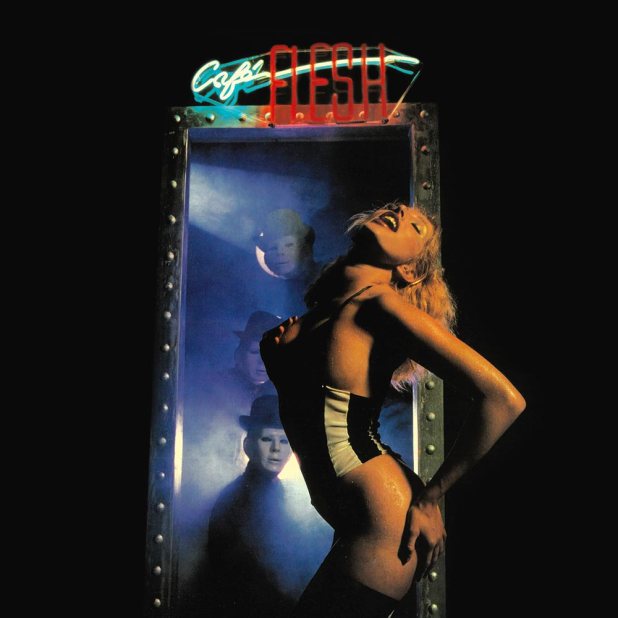
MOVIES THAT PLAYED SCALA: Café Flesh (1982)

Thanks to the British Film Institute, there’s a list of films that played Scala. To celebrate the release of Severin’s new documentary, I’ll share a few of these movies every day. You can see the whole list on Letterboxd

The story of X may have been three years early, but the video revolution — driven, as all technology is, by sex — changed the world of pornography, moving it from the fleshpots of 42nd Street and dirty book stores into suburban living rooms. In 1982, there was still the glimmer of hope that the Golden Age of Porn — that starts with Bill Osco’s Mona and ends sometime around 1984 or so with The Dark Brothers’ 1984 mind-twisting New Wave Hookers — would find new life, better budgets and a more appreciative audience.

Yet videotape would open up adult for everyone and by the 90s, few films had a storyline, instead given to gonzo explorations of “can you top this” madness with few exceptions, such as the output of John Stagliano (who may have popularized gonzo, but could also create a coherent and interesting narrative film like Buda), the glossy Michael Ninn glamour movies, Andrew Blake’s Night Trips, Phillip Mond’s Zazel, John Leslie’s Chameleons and Curse of the Cat Woman, the aforementioned Dark Brothers and ridiculous parodies of existing films.

Yet in 1982, a movie could be made that transcends its adult origins and uses them to make you as the viewer complicit in the action on screen.

Stephen Sayadian only made seven adult films (this film, as well as two sequels to Nightdreams, two Untamed Cowgirls of the Wild West and two Party Doll-a-Go-Go films which take the staccato editing and weird dialogue to its absurd limit on sets that had to cost absolutely nothing yet with a cast of all-stars such as Raven, Madison Stone, Patricia Kennedy, Bionca, Jeanna Fine, Nikki Wilde and Tianna Collins and yes, I wrote that from memory) as well as the somewhat spiritual sequel — or at least next steo — to this movie, the mainstream — yet still delightfully insane — Dr. Caligari. A veteran of advertising and design — he worked on the posters for The Fog, The Funhouse, Ms. 45 and Dressed To Kill which took inspiration from the iconic The Graduate poser — Sayadian used the alter ego of Rinse Dream to make his films, much as Gregory Dark would adopt a new name for his porn changing efforts.

The script — yes, adult movies can have a script — was written by Herbert W. Day, who is really Pittsburgh native Jerry Stahl, the son of a coal miner who later became Pennsylvania attorney general and a federal judge. He found that he had a talent for writing short stories, was the humor editor for Hustler and also discovered a love of hardcore drugs. To fuel that, he started writing for TV shows like MoonlightingTwin PeaksThirtysomethingNorthern Exposure and, perhaps most intriguingly, ALF. He’s also written ten episodes of CSI which have been the most aberrant examples of that show to middle America, which is wild as he introduced viewers of the grandparent network CBS to furries, infantilism, a measured story about transgendered people and introduced Lady Heather, the potential bad girl love interest of lead Gil Grissom, who was played by Return of the Living Dead III star Melinda Clarke. His autobiographical novel Permanent Midnight was a success and made into a movie starring Ben Stiller.

Years after a nuclear war, nearly every survivor is a Negative, often shambling zombie-like humans who become vomitous if they attempt to copulate. To attempt any hope at remembering what human contact was like, they come to Café Flesh, a place where Positives make love while they watch, often engaging in surrealist scenes that defy the ability of the viewer to become titillated.

That’s the point. Where the goal of nearly all pornography is to get the viewer off, Cafe Flésh casts you as a Negative, stuck at home with no one next to you, as far from true warmth and, well, flesh as the puking crowd — Richard Beltzer is one of them — gathered to watch and watch and watch.

It also feels like the vaudevillian stage of the men’s club gone to Hell, as Max Melodramatic (Andy Nichols, who also played the doctor in Nightdreams) introduces live sex acts with people dressed as rats or milkmen surrounded by men dressed as demonic babies. Even the typical jerk-off scenario of a female oil tycoon lies with a gigantic pencil while her secretary repeatedly intones, “Do you want me to type a memo?”

Is the film making light of the fact that male performers had often become interchangeable, their faces are obscured for most of the movie?

Angel (Marie Sharp) came from Wyoming, where they found that she was Positive and she’s been forced into the slavery of the club, performing with each man that they bring on stage. However, one of the audience members, Lana (Michele Bauer, using her Pia Snow name here before she would go on to appear in so many horror movies like DemonwarpEvil ToonsSorority Babes in the Slimeball Bowl-O-Rama and Jess Franco’s Lust for Frankenstein and Mari-Cookie and the Killer Tarantula In Eight Legs to Love You) has been keeping have Positive diagnosis a secret as she doesn’t want to hurt her boyfriend Nick. Yet as she watches the famous Positive Johnny Rico (Kevin James, who speaking of nuclear war is also in the porn parody Dr. Strange Sex) — someone liked Robert Heinlein — go through his motions with Angel,  her frustrations take hold and she takes the stage.

Screen Slate has an amazing article that details the music of this movie, which Sayadian describes as “…like an Elmer Bernstein score from the ’50s, only played with the most modern synthesizers available at the time. I thought: old vibe, new technology.” There’s a lot to learn about composer Mitchell Froom — and the rest of the film’s creators — at that site.

By the way — Sayadian didn’t direct Rockwell’s “Someone’s Watching Me” video. That would be  Francis Delia, who directed Nightdreams as F.X. Pope. Seeing as how Stahl and Sayadian wrote that movie, I can see how some may make the mistake. Delia was a producer on this film as well as the director of photography.

Café Flesh isn’t for someone who is looking to get off. I can’t even imagine those that were confronted by it in adult theaters, as it punches you in the face with its AIDS allegory while daring you to find a single erotic thing in it. Strangely enough, I’d always heard that an R-rated edit was made so that mainstream audiences would see it at midnight shows, but Sayadian stated — in the above linked Screen Slate piece — that the movie was an “R-rated movie, funded by X-rated people” and that he was forced to add the sex scenes by the money men behind the budget.

He said, “I got financing from three guys — two were hardcore producers and one was a Harvard business grad who somehow got lost in the porno world.” After adding in the adult scenes, he told Froom, “I want you to extend some of these pieces because we may have to put porn in there. And all I can say is, I want the music to be as disturbing as possible. I don’t want it to be hot or sexy or anything like that.”

That said, the moans of joy that came from this movie show up in a place that many have heard them, White Zombie’s Blade Runner quoting song  — “Yeah I am the nexus one I want more life” — “More Human than Human.”