Watchmen (2009)

I saw Watchmen in the first row of a packed theater, my face feeling like it was shoved against the screen, as the sound was so loud that it felt like it had crawled inside my brain and was screaming inside my skull.

Watchmen probably should have never been made. The graphic novel by writer Alan Moore and artist Dave Gibbons is so far-reaching, filled with so many nuances and a necessary understanding of the history of American comic books that at times, it can feel obtuse. How do you make it into a two-hour blockbuster? Directors Terry Gilliam, David Hayter, Darren Aronofsky and Paul Greengrass all were going to make the movie but no one could agree on a budget.

Enter Zack Snyder, who had made another comic book movie, 300, and was able to get this made. Yet even when you watch the ultimate cut, which adds the Tales of the Black Freighter into the narrative as it was in the original graphic novel, making this 3 hours and 35 minutes long, it still feels like it’s missing something. That it’s all rather loud sound and fury and you wonder not “Who watches the Watchmen?” but “Why am I watching the Watchmen?”

Snyder misses a lot of the small moments of the comic. One of them is a drunken Comedian telling members of President for Life Richard Nixon’s staff that he had killed Bob Woodward and Carl Bernstein before they could write about Watergate and been the gunman who committed the assassination of John F. Kennedy on Nixon’s orders. That said, in that scene, it’s left up to the reader to determine if the Comedian is either wasted, literally being a comedian and telling a dark joke that only he finds humorous or trying to look like he means something when confronted by the god that is Dr. Manhattan and his possible daughter, Silk Spectre II. In Snyder’s film, during the credits, we see the Comedian (Jeffrey Dean Morgan) with a smoking gun standing on the grassy knoll as Dylan’s “The Time’s They Are A-Changin'” blares on the soundtrack, less needledrop than sledgehammer.

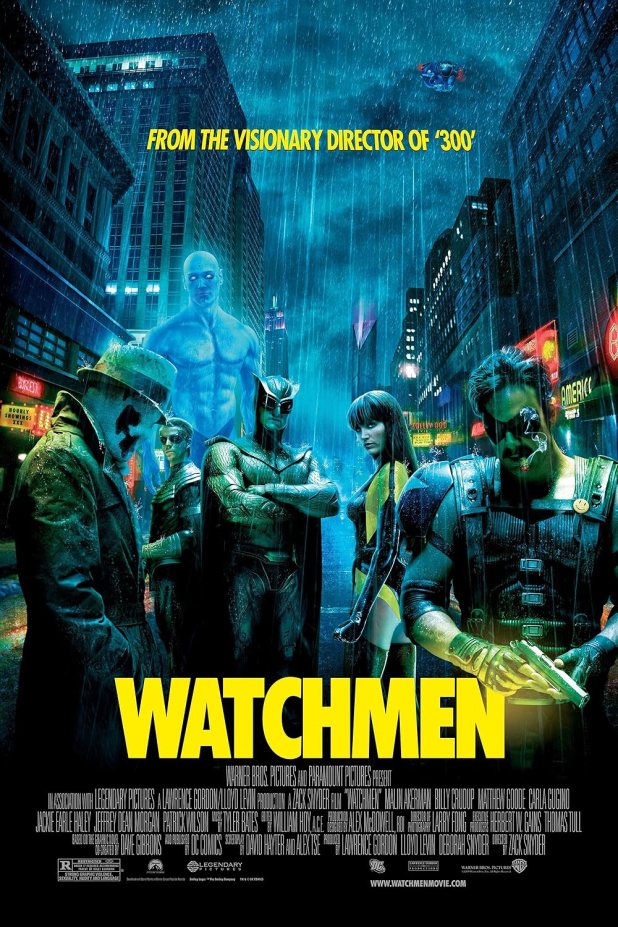
The film starts, like the comic, with the Comedian being attacked in his apartment and thrown to the street below. Again, as in the inspiration, the hero Rorschach (Jackie Earle Haley, one of the bright spots in this movie) begins to investigate the murder, which leads him to other heroes, such as the omnipotent Dr. Manhattan (Billy Crudup), Silk Spectre II (Malin Åkerman), Ozymandias (Matthew Goode) and Nit  Owl II (Patrick Wilson). Seeing as how this was 12 issues of a graphic novel as well as back-up features that expanded the universe — and revealed key secrets when explored — those are enough characters to get into without also going into the past, The Minutemen, who are Silk Spectre (Carla Gugino), the aforementioned Comedian, Nite Owl (Stephen McHattie), Dollar Bill (Dan Payne), Mothman (Niall Matter), The Silhouette (Apollonia Vanova), Hooded Justice (Glenn Ennis) and Captain Metropolis (Darryl Scheelar).

Meanwhile, at the funeral for the Comedian, Edgar Jacobi (Matt Frewer, also great) is there. A former villain, he’s interrogated by Rorschach and reveals that The Comedian came to him one night, obsessed with an island he’d found and a list of people connected to Dr. Manhattan with Jacobi’s name on it. At the same time, that list is revealed on a talk show with the god that is Dr. Manhattan, who escapes Earth and reflects on his origin on Mars.

This allows Silk Spectre II — aka Laurie Jupiter — and Nite Owl II — Daniel Dreiberg — to connect. Laurie has been the government-kept lover of Manhattan but now with him gone, she’s expendable. They start to wear their masks again, ending up as lovers and breaking Nite Owl II’s former partner Rorschach from prison with a mission: to investigate Ozymandias. At the same time, Manhattan teleports Laurie to Mars, where she argues for mankind being worth saving. He’s swayed when he learns that the Comedian is her father, despite the fact that he sexually assaulted her mother, the original Silk Spectre, who remains in love with him all these years later.

When they confront the former superhero turned CEO Adrian Veidt, he reveals his plan: to stop war by making Dr. Manhattan the enemy of humanity, killing 15 million people by setting off the nuclear reactors that he and Manhattan have built together. This ruse will stop nuclear war, so everyone agrees, other than Rorschach, who says “Never compromise. Not even in the face of Armageddon.” He’s blasted to atoms by Dr. Manhattan, who leaves for another galaxy, the heroes all complicit in a lie that will do more to save the world than wearing a mask and punching a bad guy.

Dave Gibbons became an adviser but cranky Alan Moore has refused to have his name attached to any film adaptations of his work, saying “There are things that we did with Watchmen that could only work in a comic, and were indeed designed to show off things that other media can’t.”

I’ll say something nice for this movie. Writer David Hayter came up with a cleaner ending that doesn’t rip off “The Architects of Fear” from The Outer Limits. That said, there’s no reason now for the Black Freighter or the pirate comics to be important, or the island, as everyone sent there was creating the squid monster that Veidt teleported to New York City in the comic and…see, this is too big to fit into a movie. The fact that Moore took this ending caused editor Len Wein to quit the comic, saying “I kept telling him, “Be more original, Alan, you’ve got the capability, do something different, not something that’s already been done!” And he didn’t seem to care enough to do that.”

So is the fact that this is commenting on the changes within the American comic book industry. DC had purchased the 1960s Charlton Comics characters. At the same time, Moore wanted to reimagine another older comic, as he had done with Miracleman. MLJ Comics’ — the publisher of ArchieMighty Crusaders seemed like a good fit, so he wrote a murder mystery that started with the dead body of The Shield. He wanted to play with the concept of four color heroes, so it would have the shock and surprise value when you saw what the reality of these characters was.”

Moore learned of the Charlton purchase and sent a pitch, Who Killed the Peacemaker? to DC managing editor Dick Giordano. After the acquisition of Charlton’s Action Hero line, DC intended to use their upcoming Crisis on Infinite Earths series to introduce the Charlton heroes to their mainline universe. As Moore would say, “DC realized their expensive characters would end up either dead or dysfunctional.”

Giordano convinced him to make his own versions, so Nightshade became Silk Spectre, The Question would be Rorschach, Peacemaker now The Comedian, Blue Beetle became Nite Owl, Captain Atom transformed into Dr. Manhattan and Peter Cannon Thunderbolt was now Ozymandias. They have gone from the happy adventuring days of comics to the grim and gritty graphic novels and been changed by the experience, something that never comes through in Snyder’s film. Sure, it look cool, but a lot of it is slow motion masturbatory super hero music video, exactly the opposite of the work that it is based on.
Superman/Batman: Apocalypse (2010)

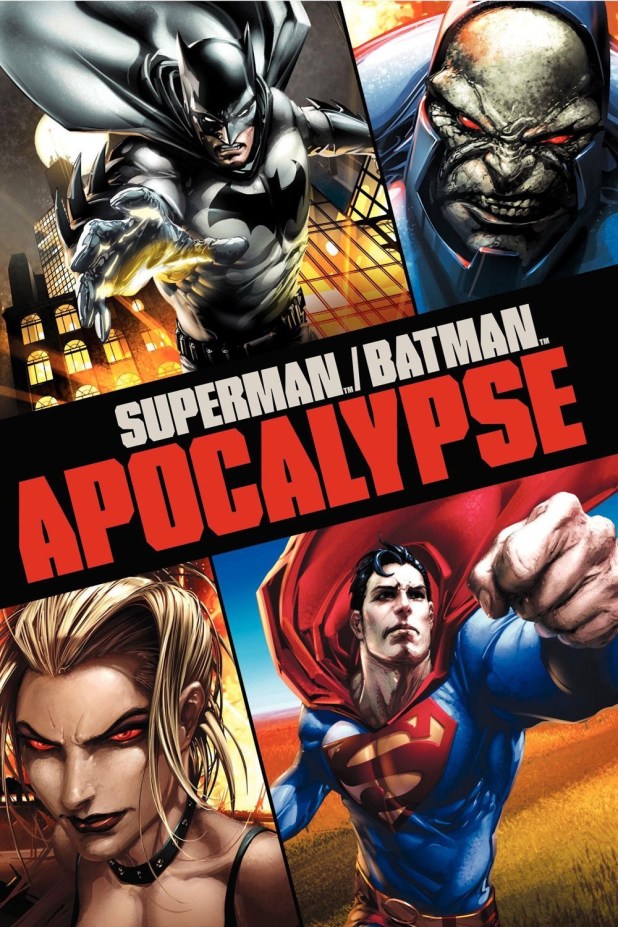
Based on the “The Supergirl from Krypton” issues of Superman/Batman, this is the sequel to Superman/Batman: Public Enemies and has an art style based on the late Michael Turner. Directed by Lauren Montgomery and written by Tab Murphy, this is the story of Kara Zoe-El (Summer Glau), the heroine who will become Supergirl and how Superman (Tim Daly), Batman (Kevin Conroy), Wonder Woman (Susan Eisenberg) and other heroes like Habringer (Rachel Quaintance) and Artemis (also Rachel Quaintance) help to train her.

Soon, she’s attacked by Granny Goodness’ (Ed Asner) Female Furies — Gilotina (Salli Saffioti), Mad Harriet (also Salli Saffioti), Stompa (Andrea Romano) and Lashina (Tara Strong) — who Darkseid (Andre Braugher) wants to lead them. Superman and Batman turn to the last person who had this title, Big Barda (Julianne Grossman), to go to Apokolips and save the Kryptonian youngster.

This is a fast moving film unafraid to have death and violence in it, so if you have a child who loves superheroes, you should watch it with them and discuss it afterward. It’s very close to the comic, where writer Jeph Loeb has no issues killing off characters, which always surprises me, like Lyla, who was the Harbinger of original Crisis On Infinite Earths.

You can watch this on Tubi.

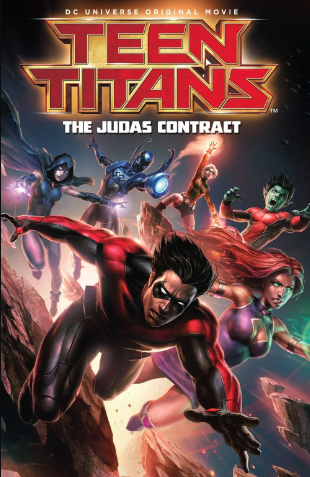
Teen Titans: The Judas Contract (2017)

Directed by Sam Liu and written by Ernie Altbacker, this is based on The Judas Contract, a long-running storyline — Tales of the Teen Titans #42-44, and Teen Titans Annual #3  — by writer Marv Wolfman and artist George Pérez. It somehow tries to combine Young Justice with Teen Titans and hopefully the original comics as well.

Robin (Sean Maher), Speedy (Crispin Freeman), Kid Flash (Jason Spisak), Beast Boy (Brandon Soo Hoo) and Bumblebee (Masasa Moyo) were once youngsters, saving Starfire (Kari Wahlgren) from Tamaran soldiers as she escaped to Earth. This is the opening from Teen Titans #1 and soon, we move into the story of Brother Blood (Gregg Henry) and Mother Mayhem (Meg Foster), who have started a cult that takes the powers of heroes, using Deathstroke (Miguel Ferrer) to fight the Titans, who has a double agent named Terra (Christina Ricci) who becomes a member of the team and Beast Boy’s girlfriend, only to betray them.

This also has the newest Blue Beetle (Jake T. Austin), Raven (Taissa Farmiga) and the new Robin, Damian Wayne (Stuart Allea), as well as Kevin Smith showing up to interview Beast Boy. It’s one of the darkest stories of the Titans, one with love and loss, but it seems strange to get through it so quickly, as this story felt like years of my life in my teens.

You can watch this on Tubi.

The Wizard of Space and Time (1979, 1987)

Mike Jittlov was a math major at UCLA, but taking an animation course to satisfy his art requirement led to two movies, The Leap and Good Grief, which made it into the professional finals for Academy Award nomination.  With a 16mm camera and a multiplane animation system he built for $200, he became an animator.

By 1978, Jittlov was part of Disney’s Mickey’s 50, with his short film Mouse Mania. It was the first stop-motion Mickey Mouse cartoon, as Jittlov created more than a thousand Disney toys marching around a psychiatrist’s office. His short The Wizard of Speed and Time was shown on another Disney special, Major Effects.

When I was a kid in the early 80s, Jittlov’s ads in Starlog for The Wizard of Speed and Time were in every issue. This was before the internet, in a time and place where I wouldn’t be able to see them. Today, years later, I’m old and I can see them at any time.

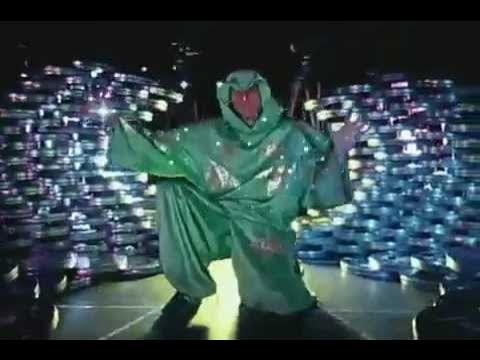
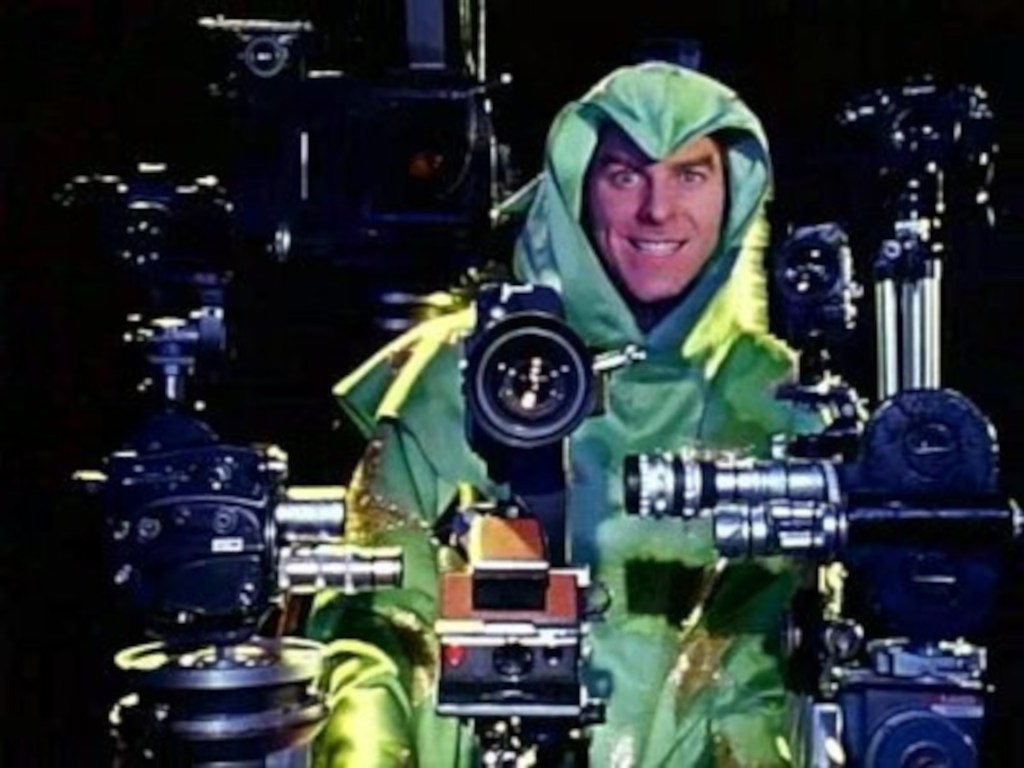
The Wizard of Speed and Time (1979): In just over two minutes, The Wizard of Speed and Time (Mike Jittlov) runs through Hollywood — running at high speed, The Wizard gives a hitchhiking woman (Toni Handcock) a ride, then gives golden stars to others — before crash landing into a studio that comes to life with walking cameras and dancing clapboards. This is pretty amazing because so much of it is stop motion and other sections use zooms and simple camera tricks to give the illusion of movement. Even though this is a short, just watching this you can tell that it took forever to make. This is pre-CGI, all magic and something that I have waited to see for decades.

This was $110 when I was a kid if I wanted to buy it. I kept trying to save up and never made it. Now I wish that I had.

The Wizard of Speed and Time (1988): Combining the original short, along with Time Tripper and Animato, two other early movies he made, Mike Jittlov took the story of The Wizard to new heights with this, a movie he spent fourteen years trying to make and three years filming.

Director Lucky Straeker (Steve Brodie) and  producer Harvey Bookman (Richard Kaye) make a bet if special effects artist Jittlov can actually complete his first effects assignment. Bookman does everything in his power to thwart Jittlov, even firing his friends. The script by Jittlov, Kaye and Deven Chierighino is filled with so many jokes, even including thousands of subliminal messages in the effects and poster.

It’s also overstuffed with cameos from Forrest J. Ackerman, Angelique Pettyjohn, Ward Kimball and Will Ryan, plus cops named Mickey (Philip Michael Thomas) and Minnie (Lynda Aldon), as well as their dog Pluto, who in some shops is just Jittlov covered by a brown jacket and using puppeting himself.

Why doesn’t Jittlov shake hands? He’s telepathic.

I waited too long to see this. Don’t make the same mistake that I did.

You can watch this on YouTube.

ARROW VIDEO 4K UHD AND BLU RAY RELEASE: Incubus (1966)

Created by ophthalmologist L. L. Zamenhof in 1887, Esperanto is supposed to be a universal second language for international communication. In English, the name means one who hopes and it’s the largest constructed international auxiliary language with a few thousand speakers.

Zamenhof had some big dreams that go past making an easy and flexible language. He thought that this new way of speaking would lead to world peace.

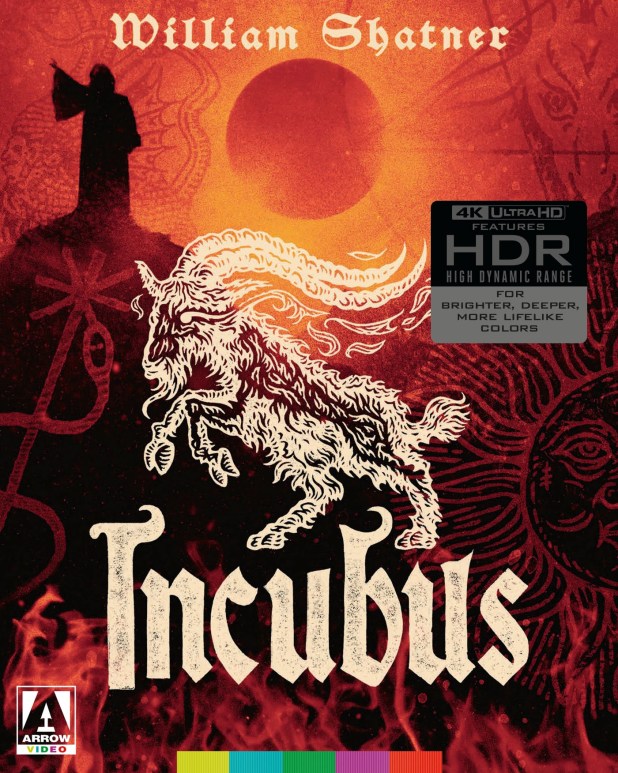
Incubus is the second film to be made in the language, following Angoroj. This was directed and written by The Outer Limits creator Leslie Stevens, who used the cancellation of that show to make an art house movie with that show’s cinematographer Conrad L. Hall and composer Dominic Frontiere.

This is the story of a spring in Nomen Tuum that heals the sick and makes ugly people ravishing and oh yes, there are many succubus and incubus there to lure humans to Hell.

Kia (Allyson Ames) wants a pure man to be her perfect target, but her sister Amael (Eloise Hardt) tries to tell her that if she falls in love, she will lose so much. Then she goes after Marc (Shatner), a soldier here to heal his wounds of battle. He’s with his sister Arndis (Ann Atmar) who is so dumb that she loses her sight by staring at the sun.

This gets wild, as Marc’s purity defiles the demons, who call upon an incubus (Milos Milos, whose life is insane; he was the bodyguard for Alain Delon and a friend of Stevan Marković, who died owning sexually explicit photos of Claude Pompidou, wife of French President Georges Pompidou, causing a big scandal and an unsolved crime; Milos went to America where he married Cynthia Bouron, who had a paternity case against Cary Grant, and was beaten to death and found in the trunk of her car outside a grocery store. As for Milos Milos, he was dating Barbara Ann Thomason, the wife of Mickey Rooney, at the same time he was married to Cynthia Bouron, and they died in a murder suicide that many believed that Rooney engineered) to kill Marc and defile and murder his sister.

This was thought to be a lost film, shown only at the San Francisco Film Festival — where Esperanto speakers laughed at how bad the actors spoke — and in France. Between the language and the scandal over Milo killing his girlfriend and himself, the movie was kind of dead. It was found in 2001 when it was reassembled from existing materials.

The Arrow Video release of this movie has it restored in 4K from the last known surviving 35mm print. Extras include commentary by writer and genre historian David J. Schow, author of The Outer Limits: The Official Companion, a second commentary by William Shatner and a third by producer Anthony Taylor, cinematographer Conrad L. Hall and camera operator William Fraker; an alternate 1.37:1 presentation of the film; Words and Worlds: Incubus and Esperanto in Cinema, a newly filmed interview with genre historian Stephen Bissette; Internacia Lingvo: A History of Esperanto, a newly filmed interview with Esther Schor, author of Bridge of Words: Esperanto and the Dream of a Universal Language; An Interview with the Makers of Incubus, an archive interview by Schow with Taylor, Hall and Fraker; a trailer; a reversible sleeve featuring newly commissioned artwork by Richard Wells and an illustrated collector’s booklet featuring new writing on the film by Frank Collins and Jason Kruppa.

You can get the 4K UHD and blu ray from MVD.

Deathstroke: Knights & Dragons (2020)

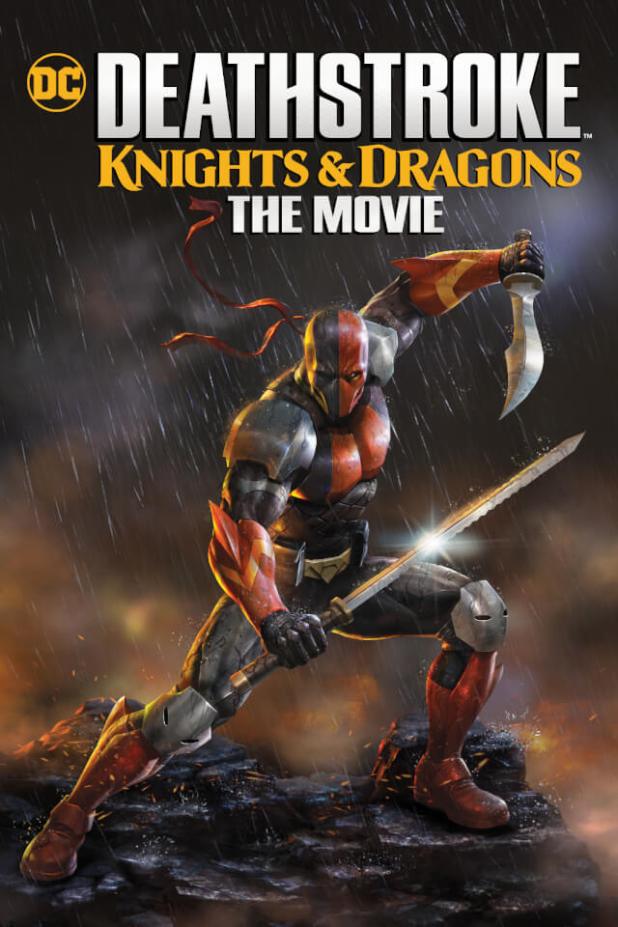
Deathstroke: Knights & Dragons started as an animated web series on CW Seed. Once the first episode aired, the series was repurposed into a direct-to-video animated film. Written by J.M. DeMatteis and directed by Sung Jin Ahn, it attempts to make a hero out of Slade Wilson, the villain known as Deathstroke.

Michael Chiklis is the voice of Wilson, a soldier who volunteers for an experimental drug that gives him super strength, enhanced agility and regeneration. He doesn’t tell his lover Adeline “Addie” Kane (Sasha Alexander) that he has become a costumed killer with the help of William Wintergreen (Colin Salmon). When one of his missions takes him to Cambodia, he falls in love with a woman named Lilith who has his child, Rose (Faye Mata) after he leaves. She soon dies in a hit and run accident and he never knows that he has a daughter, as he comes home to marry Addie and they have a son, Joe (Griffin Puatu).

However, in revenge for destroying most of H.I.V.E. (Hierarchy of International Vengeance and Extermination), their leader Jackal (Chris Jai Alex) kidnaps his son. Fighting through his troops, he takes the arm of Bronze Tiger (Delbert Hunt) — this is obviously tied into the New 52 version of these characters, who were friends that served in the Dead Bastards mercenary group together and Deathstroke having to save Bronze Tiger from Slade’s father Odysseus; Lady Shiva (Panta Mosleh), who is also in this story, is another character in this New 52 version of the characters — and saves Joe, but not without his son’s throat being cut, costing him his voice.

Now, ten years after losing his wife and son, Deathstroke must learn about his family and work with Addie to save them. Despite being shot numerous times and even blown to pieces, he keeps surviving. This is an R-rated cartoon, so know that before the kids watch, but they may find it strange that Wilson is treated as a good guy after all he’s done to the Teen Titans.

You can watch this on Tubi.

Spy Shadow (1967-1968)

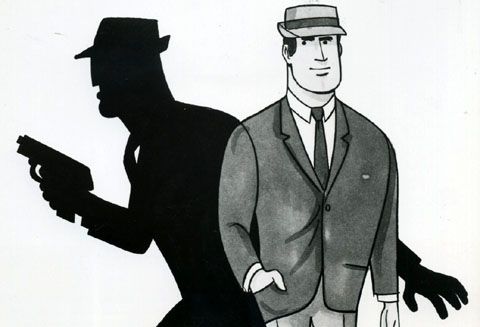
As part of the show Super President, which had two adventures per episode, one part of the show was where we learned of Spy Shadow, an agent of Interspy named Richard Vance (Ted Cassidy) who learned — somewhere in the mysterious Far East, just like Lamont Cranston, here said to be in Tibet with mystics who taught him the power of concentration — how to command his shadow to become another person. He’d need that power as he fought S.P.I.D.E.R. (Society for Plunder, International Disorder, Espionage and Racketeering) in Eurospy-style adventures.

Created by DePatie-Freleng Enterprises, formed by David H. DePatie and Friz Freleng, this is a footnote in TV superheroics, but may have been a bigger character had it not been placed with Super President, a show that people still seem to hate sixty years after it first aired.

I wonder if the makers of this show had been reading Doom Patrol, as Spy Shadow’s powers are a lot like Negative Man from that team. At least Spy Shadow doesn’t have to be wrapped up in bandages like Larry Trainor.

You can watch all of the episodes of this show on YouTube.

Batgirl (1967)

Detective Comics #359, the first issue of January 1967, featured “The Million Dollar Debut of Batgirl!” They were getting Batgirl into fan’s minds before she would debut on the show, even if there had already been another Batgirl, Bette Kane, who first showed up in Batman #139. Post-Crisis, her name would be changed to Flamebird.

The show was suffering from lower ratings, but producer William Dozier felt that if they introduced a younger female, it would do two things: introduce some new blood and refute any worries that Batman and Robin were gay.

ABC executives needed to be convinced that Yvonne Craig was the right person for the role, so this pilot — where she would fight Killer Moth (Tim Herbert), same as the first time she showed up in comics — was ordered. She also meets Batman (Adam West) and Robin (Burt Ward), setting up the next season of the show.

You can also spot future Peach Pit owner Joe E. Tata as one of the henchmen, as well as TV vet Guy Way and stuntman Al Wyatt Sr.

In an interview, Craig said, “…while Batgirl is an active type, she is also very feminine. None of that smacking people low with karate and kung-fu. In my opinion, three karate chops, and you’ve lost your femininity. If a girl goes on a date and a fellow gets fresh, she can’t very well give him a karate chop for a good-night. But if she ducks, she’s simply adept and feminine. Batgirl will be aiding and assisting Batman and Robin, not constantly rescuing then. I like that, too.” That’s because Batgirl wasn’t allowed to throw punches, as TV executives thought that the show Honey West got bad ratings because all of her brawling made her less feminine.

In spite of adding the sexier Batgirl, as well as Eartha Kitt taking over from Julie Newmar as Catwoman and female villains like Marsha, Queen of Diamonds (Carolyn Jones), Olga, Queen of Cossacks (Anne Baxter), Nora Clavicle (Barbara Rush), Minerva (Zsa Zsa Gabor) and Lorelei Circe (Joan Collins), the show fell out of favor, ending in the third season.

You can watch this on Daily Motion.

SEVERIN BLU RAY RELEASE: Russ Meyer’s Vixen (1968)

Give Russ Meyer $70,000 and he will give you everything.

Take it from Roger Ebert: “Meyer’s ability to keep his movies light and farcical took the edge off the sex for people seeing their first skin-flick. By the time he made Vixen, Meyer had developed a directing style so open, direct and good-humored that it dominated his material. He was willing to use dialogue so ridiculous… situations so obviously tongue-in-cheek, characters so incredibly stereotyped and larger than life, that even his most torrid scenes usually managed to get outside themselves. Vixen was not only a good skin-flick, but a merciless satire on the whole genre.”

It was also the first movie to get an X-rating for its sex scenes, which I’d consider a compliment because, after all, it’s softcore.

Vixen Palmer (Erica Gavin, who danced at The Losers, the same topless bar where Meyer women Haji and Tura Satana also once bewitched men; she’s also in Beyond the Valley of the Dolls, Caged HeatErika’s Hot Summer — a Gary Graver film which was once another movie and then edited around her after this movie became a box office success — and Godmonster of Indian Flats) lives with her husband Tom (Garth Pillsbury, who also shows up in If You Don’t Stop It… You’ll Go Blind!!!Can I Do It ‘Till I Need Glasses?Malibu High and The Loch Ness Horror) up in the woods of British Columbia, running a tourist resort.

She’s quite literally always on the make — the tagline “Is she woman…or animal?” is more than lived up to — as she seduces a Mountie (Peter Carpenter) the moment her husband flies out to pick up the next couple staying with them for a fishing vacation. Days — maybe hours — after they arrive, she sleeps with the husband, Dave (Robert Aiken, speaking of Gary Graver, Aiken wrote his movie Moon In Scorpio) and then his wife, Janet (Vincene Wallace, what does it say about me that I instantly knew she was in the Harry Novak produced The Secret Sex Lives of Romeo and Juliet?) just as quickly. Hell, give her time and she’ll even sleep with her brother Judd (Jon Evans), despite his protest “We decided to stop doing this when we were 12.”

The only man or woman she won’t touch seems to be Niles (Harrison Page, Beyond the Valley of the Dolls), an African American Vietnam War deserter who is friends with Judd. He’s in Canada hiding from the draft, as he sees the war as a racist endeavor. Mr. O’Bannion (Michael Donovan O’Donnell) wants to pay to fly him to back to America, but he soon tries to hijack the plane and force everyone to Cuba. Luckily, Tom and Niles stop this and get away from the authorities, too, which means that Vixen has to get over her racist feelings toward Niles.

Meyer started this without a leading lady, which some would think is a bad idea. He told Ebert in Film Comment, “Bravely I went up to the location for Vixen without a leading lady and left a couple of my henchmen to try to find somebody. It’s always difficult. But Erica had a curious quality about her. She didn’t have the greatest body, you know. She didn’t have the up-thrust breasts like the others.”

Side note: Of course Russ Meyer would think that such a gorgeous woman was lacking in the breast department. Then again, I’ve said for years that I never notice breasts and nearly every long term relationship I’ve had has been with women who were blessed with curves like a Russ actress, so maybe I have watched too many of his movies. I also don’t see that as a bad thing. I agree with Gavin as to why Meyer’s movies just work: “His films came from a different direction than porno. Basically he was not looking through a camera; he was looking through a peephole. I think that’s why his films were so good. He was a true voyeur.”

In the book that would be my early quite to psychotronic films, Incredibly Strange Films, Meyer was able to see that Gavin was one of the main reasons why this was a success. He thought that the scene between her and Judd was one of the best he ever shot, saying that it “…was the best of them all. She really displayed an animal quality that I’ve never been able to achieve before – the way she grunted and hung in there and did her lines. It was a really remarkable job… I’ve done a lot of jokey screwing but there’s something about Erica and her brother that was just remarkable… it really represents the way I like to screw.”

It had to terrify people upon watching this just how much Vixen is a non-stop engine of passion. I always laugh when people say that they want a woman like her yet they’d probably be mentally unable — not to mention physically challenged — to keep her. By the end, the title “The end?” suggests that she’ll never be able to stop seducing. And who would want her to?

Well…maybe some folks in Ohio.

Thanks to Charles Keating, who was busted in the savings and loan scandal of the late 1980s, this movie is still banned in Cincinnati. The financial expert obtained an injunction preventing it being shown on the grounds that it was obscene and the cops seized the print the first day itw as shown. It didn’t get to play in Ohio and cost Meyer $250,000 to defend the movie.

Keating said Meyer had done more to undermine morals in the nation than anyone else.

Meyer responded, “I was glad to do it.”

After watching this movie on VHS for years, the Severin blu ray is a revelation. The colors, muted in the past, are now a memory, replaced by a lush rainbow of joy. Things are sharper, no long fuzzy, looking as they would in my dreams. I don’t know how to say thank you enough to everyone who worked on this.

Extras including an archival audio commentary by director/co-writer/producer/cinematographer/co-Editor Russ Meyer; the Censor Prologue from the 1981 theatrical re-release); an audio commentary by Gavin; archival interviews with Gavin And Harrison Page; David Del Valle’s The Sinister Image with guests Russ Meyer and Yvette Vickers; Entertainment… Or Obscenity? – Marc Edward Heuck on the film’s historic Cincinnati censorship battles and a trailer.

You can get this from Severin.

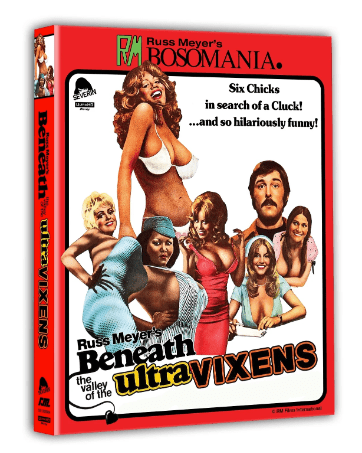
SEVERIN 4K UHD RELEASE: Russ Meyer’s Beneath the Valley of the Ultravixens (1979)

The original elements for this film gad been stored in less-than-optimal conditions. As a culture and, well, let’s get hyperbolic and say as a people, we’re so blessed that Severin Films devoted months to the painstaking restoration of its weather-damaged negative before scanning it in 4K and compiling over two hours of new and archival footage, all with the blessing and cooperation of The Russ Meyer Trust.

Every Russ Meyer movie I haven’t seen before becomes my favorite of his movies.

Co-written by Roger Ebert, this feels like Our Town but with so much sex.

Except, unlike that play, we meet everyone in this small town clothed and unclothed.

There’s radio evangelist Eufaula Roop (Ann Marie, who was in the last Meyer movie that became my favorite, Supervixens), who is first shown mounting Martin Bormann (Henry Rowland, Otto from Beyond the Valley of the Dolls and also Bormann in Supervixens; I find it amusing that Meyer both shot war footage as part of the 166th Signal Photographic Company, the official photo unit in General Patton’s Third Army during the Second World War*, and named a major character in his movies — twice — after the private secretary to Adolf Hitler) inside a coffin. We also see a salesman going door to door, making love to every wife in town, starting with one played by Candy Samples (she’s listed in the credits as The Very Big Blonde and lives up to that; her adult career lasted from 1970 to 1989). And oh yes, there’s Junkyard Sal (June Mack), who sleeps with the men she orders around in her scrap heap.

Our hero, if there is one, is Lamar Shedd (Ken Kerr, who not only was Fred in Up!, but was the assistant director on Roar and a grip on Eaten Alive; that isn’t a pun), who is on again and off again with his wife Lavonia (Kitten Natividad, a former maid for Stella Stevens and the star of many an adult film up until 2011; she’s also in Airplane and The Tomb). Either she’s trying to get in his pants while he’s trying to study or he’s trying to go into the tradesman’s entrance. Congratulations! If you didn’t have to look that up, you’re also a pervert.

Lamar goes to work at the junkyard, while his wife nearly drowns and sexually assaults a fourteen-year-old boy named Rhett (Steve Tracy, whose career and short life found him in eleven episodes of Little House On the Prairie, as well as the Tom DeSimone-directed gay porn movie Heavy Equipment). Then, she finds that salesman and balls him too.

Note: In 2025, my goal is that more people use ball as a verb in sentences. Please help me make this dream a real thing.

As for Lamar, he’s trapped by his boss and forced to please her while his co-workers watch from outside. He’s desperate, as he’s trying to better himself with an education. It ends up with everyone being fired and Lamar heading for a strip club where he’s slipped a mickey by Mexican exotic dancer — meter algo en la bebida de loc — Lola Langusta, who ends up being his wife.  They fight again, she sleeps with a truck driver and he returns home in time to fight the guy. She saves him by burning his ballsack with a lightbulb. Yes, really.

In an attempt to make things work, the couple visits dentist/marriage counselor Asa Lavender (Robert Pearson, Claws). It ends up with Lamar sleeping with nurse Flovilla Hatch (Pittsburgh adoptee Sharon Hill, who was an actual nurse in town before playing one of the lead zombies in Dawn of the Dead; she also appears in Knightriders and has done location casting for lots of Steel City shot films, like Rappin’Gung Ho and Lady Beware), the nurse sleeping with Lavonia and the dentist trying to have his way with Lamar. After this, Lamar decides to find God, which means that Eufaula Roop  baptizes him and nearly drowns him as she mounts him. Lamar leaves, finds the truck driver Mr. Peterbuilt (Patrick Wright, who was also a truck driver in Graduation Day) in bed with his wife again, knocks him out and finally makes love to his bride.

Meanwhile, Zebulon (DeForest Covan) crushes everyone in the junkyard and takes it over, Eufaula makes love to Rhett, who goes home and makes love to his father Martin Bormann’s wife SuperSoul. Yes, Uschi Digard, playing the same role she had in Supervixens. As narrator Stuart Lancaster closes his words, we see Russ Meyer filming in the distance and Digard’s lovemaking powers cause an earthquake.

This was Meyer’s last movie until he would return in the 2000s to make Russ Meyer’s Pandora Peaks and the Playboy video Voluptuous Vixens II.

By the 80s, breasts could be surgically made to create the woman that Meyer loved most. Hardcore pornography had taken over for softcore. And so Meyer retired a wealthy man. He owned the rights to nearly all of his films and made millions reselling them on home video, working out of his home. If you called the phone number in ads to buy one, you were probably talking to him.

His grave says, “King of the nudies. I was glad to do it.”

*Meyer was given to carny flimflam — which is the best kind — and claimed to have seen soldiers in a stockade being trained for a suicide mission during the war, then told  E. M. Nathanson who wrote The Dirty Dozen, which Meyer was given 10% of. He was also part of a team that planned on assassinating Hitler and Jospeh Goebbels, with Meyer supposedly shooting the evidence of the leader’s death. He also lost his virginity to a girl named Babette — I imagine she had the kind of breasts that eclipse the sky — that was paid for by Ernest Hemingway. I’ve also heard Meyer shot the flag raising at Iwo Jima, but there’s no way all of these things can be true.

Actually, yeah. It’s Russ Meyer. They can all be true.

The Severin release of Russ Meyer’s Beneath the Valley of the Ultravixens has an archival commentary by director, co-writer, producer, cinematographer and editor Russ Meyer; an interview with “Latin Brünhilde” Kitten Natividad; Talk It Over, a Tucson talk show where Ellen Adelstein interviews Meyer and a new interview with the host and a trailer.

You can get this from Severin.