The lesson of this box office failure: Don’t hire a psychic as a consultant and don’t allow a church to finance your film. Did John Travolta learn nothing from this film before embarking on Battlefield Earth?
The Sun Myung Moon, the head of the controversial Unification Church, and one of the church’s members, known as “Moonies,” Japanese newspaper magnate Mitsuharu Ishii, wanted to get into the film business.
At first, they wanted to shoot a biopic on Jesus or Elvis Presley. (Jesus or Elvis??) They also wanted make a war movie depicting the Battle of Inchon, a decisive 1950 battle that shifted the Korean War in favor of U.N/U.S backed forces.
What film did they choose?
Thanks to one of the twentieth century’s best known, self-proclaimed psychics and astrologers, Jeanne Dixon, who served as consultant on the film, the “spirit” of General MacArthur “endorsed” the production of the film. And, the spirit guides told Dixon that Moon should hire director Terence Young, best known for the James Bond films Dr. No, Thunderball, and From Russia with Love. (Hey, be sure to join us for our “James Bond Week,” coming in April.)
Now, if you’re an executive at MGM Studios and you’re told a film that you’re going to distribute is financed by a controversial religious leader and consulted by a psychic, what do you do?
You sign on the dotted line. Amen, brother! Or is that Amen, MacArthur?
It’s unknown if the spirit guides suggested his hiring, but Robert Lowell, Jr., who wrote 1968’s The Green Berets for John Wayne and William Friedkin’s 1971 blockbuster The French Connection, penned the screenplay. (Friedkin has his own “Box Office Failure,” Sorcerer*, which we reviewed this week.) And Sir Laurence Olivier was paid $1 million to portray General Douglas McArthur. His roughly $50,000 a day salary was augmented with a weekly $2,500 Per Diem.
The film’s total production cost: $46 million.
The film’s total box office: $2 million in the U.S with a worldwide take of $5.2 million.
The film’s total loss: $41 million.
Where’s Enzo G. Castellari, when you need ’em? Right. Inchon makes his (excellent!) The Inglorious Bastards look like an Oscar winner.
Thanks to required extensive reshoots—and with no funds to shoot the scenes properly—scenes featured cardboard cut-outs of fighter planes held up with string. Another critical gaffe in the film features a digital watch—a technology that would not be invented until 25 years after the film’s timeline. Ironically, the spirit guides never warned Jeanne Dixon that star Jacqueline Bissett would develop laryngitis and require extensive dubbing. Or that co-star David Janssen would die during production and all of his scenes would have to be reshot.
Inchon—a 140 minute (almost 2 ½ hours) behemoth—is not only cited as the biggest box office bomb of 1982, it is also ranked as one of the worst movies of all time. Released in September of 1982 in the U.S and Canada, the film was quickly pulled from release due to its poor performance. While it was never shown again in theatres, it did appear on U.S cable television on the defunct Goodlife Television Network that, ironically, the Unification Church owned. While the film was never released on video, VHS grey market bootlegs taped from the TV broadcast circulate on the web.
The film swept the awards—the Razzie Awards. It won the awards for Worst Picture, Worst Director, Worst Screenplay, and Worst Actor for Sir Laurence. Ben Gazzara (The Neptune Factor; Brad Wesley from Roadhouse) was nominated for his supporting actor gig. Our beloved Richard Roundtree (Q: The Winged Serpent; Shaft) came out of it unscathed, almost: then he went and did Theordore Rex. Why Richard? Why?
You can watch a rip of the VHS Goodlife TV bootleg on You Tube. I’m going to watch it and relish the memories of seeing this at the local twin cinema back in the day.
The Sebastian’s National Greyhound Foundation operated by Beverly has the distribution rights to their film library via Panama/HIS Movies — and funding from those films’ reissues has helped the foundation rescue and save the lives of over 15,000 retired racing greyhounds.
Ferd, through his still operating 2JESUS.org healing ministry, has helped reach and save hundreds of thousands of souls worldwide.
Ms. Sebastian is currently writing an auto-biography of her life with Ferd, Living with a Man of God: From Hollywood to Heaven — itself the companion book to Ferd’s own Walk with Jesus memoir. You can now purchase the eBook for free via the link.
Now, here’s what we had to kibitz in February 2020 regarding the continuing adventures of the coolest faux-heavy metal rocker ever committed to film: Mr. William “Eye” Harper.
It could have been the best If you had it correctly made But just like all the rest Of the bogus grey market rips It wound up in a grave
When you least expect it Your DVD/Blu, it will arrive And when it does You’re screwed
Get ready for a fascinating fiasco for the most expensive film (well, direct-to-video) never made.
In April of 2016 The Screamcast podcast broke the story that an IndieGoGo online campaign was launched to raise funds for a proposed sequel to the 1984 heavy-metal slasher flick Rocktober Blood. There was even a You Tube-posted trailer that featured outtakes from the original film creatively edited with new footage featuring new actors.
And those sequel plans quickly crumbled in the midst of a fan-controversial DVD/Blue-ray reissue of Rocktober Blood.
Through that crowd-funding campaign and a website, rocktoberblood2.com, Panama Films, the film company/reissues arm of the movie’s producers, Ferd and Beverly Sebastian, were offering a $50 Blu-ray (and $30 DVD) restored and remastered from the film’s original 35mm negative. The pack would also include the first ever CD copy of the film’s out-of-print vinyl-only soundtrack. Another perk: Billy Eye Harper himself, actor Trey Loren, aka Tracy Loren Sebastian, the son of the film’s writers and directors Ferd and Beverly, would personally autography the discs.
I made this!*
From their official social media press release:
“Fans of the original cult classic will be able to help with the sequel even before the launch with an “Early Bird Special,” which includes a Special Limited Edition Blu-ray (or DVD) of ROCKTOBER BLOOD! The Blu-ray will be a new master of the 35mm print. In addition, you’ll receive a mini-poster of the original theatrical art, a t-shirt, and the original soundtrack! Your Blu-ray/DVD can either be signed or signed with a personalized message from Billy Eye, himself!”
Needless to say, fans of the video fringe were weary from the start because Panama Films’ (operated by their son Benjamin) previous digital reissues of the Sebastians’s oeuvre, with films such as ‘Gator Bait and Flash and the Firecat, were imported from the 1-inch video tape masters (but really just rips from an old VHS tape; no “masters” were used).
At the time, the Rocktober Blood-reboot had a Facebook page and fans inquired if this new reissue would be legitimate, pressed Blus and DVDs, or are they going to be BD-r and DVD-rs like the old Panama version. The page, run by Tracy Sebastian, said: “They are legitimate Blu-rays!”
Panama Films’ early-2000 DVD-r reissue sold directly through their website.
(Factoid: Legit replicators require a minimum of 1000 copies be pressed before they can take an order. Is there really 1000 fans in the whole world clamoring for Blus or DVDs of such an obscure slasher film?)
Then the Rocktober Blood social media platforms stated that, in honor and recognition of the Sebastians’s filmmaking throughout the years, and to give something back to them, all net proceeds (100%) from the special edition director’s cut DVD and Blu will go to support their charities—the National Greyhound Foundation, a 501 c3 non-profit organization.
Uh, what?
I thought this reissue was intended to fund the production of the sequel Rocktober Blood 2: Billy’s Revenge. How can you fund the movie with the sales if all of the proceeds are going to a non-profit animal rights organization?
Then another statement was issued that the upcoming IndieGoGo campaign will fund the sequel. The advanced “Early Bird” orders through the Rocktober Blood 2 website will all go—100%—to the Greyhound charity. And the few fans that decided to take the plunge were receiving credit card statements with the notation of “lovepettraining.org” and their order confirmation emails were sent from the “The National Greyhound Foundation.”
The original film’s original title and one of its many overseas titles.
So, it seemed, the film reissue was going through and processed directly by the charity. And since everything looked on the up-and-up and it was supporting a charity, other rock ‘n’ roll flick and bad horror movies fans took the bait. I mean, who doesn’t want to help unwanted and abused dogs?
And the fans waited. And they waited. Their Blus/DVDs-CD combos never arrived as promised. So fans began requesting credit card and Paypal refunds.
Then another official statement via the Rocktober Blood 2 Facebook page was issued with an apology for the shipping delays and that they (Tracy, aka Billy/Panama) were waiting for the discs to be shipped to them. And as soon as those discs are received, they’ll ship out the next day. And the discs did ship out, as fans spoke of their postal tracking indicating that their purchases shipped from Homosassa, Florida (outside of Tampa on Florida’s west coast where Tracy/Billy ran a southern BBQ joint, Smokin’ Ts).
Then their purchase arrived.
Not only were the DVDs and Blus direct-to-disc recordables—they weren’t correlated from a 35mm negative. They weren’t even burned from a 1-inch tape master. They were ripped from an old VHS tape. Adding insult to injury: the CDs were direct-to-disc recordables, ripped from an old vinyl album. More salt in the wound: Yes, the cases were signed “Keep Rockin, Billy” on the plastic dust cover, but not directly on the artwork itself. Once the disc was handled a few times, the signature rubbed off.
So everyone paid $50 bucks—$60 with shipping; overseas fans shelled out $70 because of international shipping fees; in Canada, the final cost was almost $100—for Blus and DVDs (knock off $20 bucks for the DVDs) sourced from a VHS tape and CDs from a vinyl album. Then there were the shipping discrepancies. At $10 domestic shipping in the U.S., the packages could have/should have been sent “Priority.” Instead they were sent “First Class,” which roughly costs $3.00. So, as several rightfully irate U.S. fans posted on the Rocktober Blood 2 Facebook page, horror film, and DVD/Blu-ray blogs—and as Paul Zamarelli publically pointed out via his Analog Archivist platform—where did the other $7.00 go?
Johnny J. (R.I.P, my brother), the ex-boyfriend of my ex, ex-girlfriend, who I male-bonded with over our “love” of the same woman, horror films, and all things Saxon (“Crusader!” was our in-joke greeting) bought one. Wow. Holy grammatical errors and typos, Batman! And the CD of the soundtrack, loaded into two CD players, a car deck, two PCs and a laptop would not play. It was nothing more than a Billy Eye Harper frisbee.
Where’s Arrow Video, Kino Lorber, or Shout Factory when you need ‘em?
Hey, why not? Kiss and Alice had their own frisbees.
Then the question was raised: The original 1984 VHS of Rocktober Blood was released on Vestron Video. Why didn’t Lionsgate, who did a Vestron Blu-ray line, release it? Answer: Vestron’s distribution rights expired somewhere between February 1996 and April 1998 upon the formation of the Artisan Entertainment imprint and all rights reverted back to the Sebastian family—and they refuse any outside companies to reissue their films (thus their formation of Panama Films and Lunaris Records, which created those VHS-ripped DVD-Rs and vinyl-ripped CDs).
Then the complaints, the request for refunds, and fans filing “charge backs” with their credit card companies, ensued. And when Panama Films snapped back at the complaints and disputed the refunds and charge backs, fans started flaming the Rocktober Blood 2, Tracy Sebastian, and Smokin’ T’s Facebook pages.
“Why take a negative to an expensive lab, when I can have it scanned locally at a photo place?” said one of the acidic statements to the fans’ disgust. (Thus admitting the discs were rips and not official presses.)
No more Rocktober Blood 2: Billy’s Revenge.
“Hey, wait a minute. There is no Billy. John, the twin brother of Billy, murdered Billy and pretended to be Billy. No, wait . . . John murdered all those people and framed Billy, right? And Billy was excuted. Then Lynn Starling and Chris dug up Billy’s grave and he was a pile of bones, right? So, uh, wouldn’t ‘John’s Revenge’ be the correct subtitle?”
Yeah, I hear ya, brotherman. That was just one of the many problems with this proposed sequel.
There’s no way of knowing how many of the Blu/DVD CD packs were manufactured, how many were sold and, most importantly, how many refunds were issued. Then there are the printing costs for all of those purported mini-posters and t-shirts sold through the website. All of the social media platforms, the sequel’s website, and the site for Panama Films connected to the project were all shut down shortly after the fiasco came to light. And there was the eBay store used to procure additional film financing that was shut down.
With claims they had a “warehouse full” of the original 1984 theatrical one-sheets and soundtracks, the Sebastians began posting Tracy-as-Billy autographed copies for bid-only. Fair enough. The vintage copies were legit; they weren’t reprints and everyone was satisfied with those purchases. (It wasn’t like when Charles Band sold reprinted Wizard Video big-boxes he purported to be 30-year old ’80s originals; you can watch a two-part Analog Archivist investigation on the Wizard video fiasco here.)
Then the Sebastians started posting other “film memorabilia,” such as “Billy’s actual knife from the film” and “his microphone-sword stand from the film.” Of course, astute horror fans (including myself) compared the posted items to the actual ones from the film and noticed they didn’t resemble each other. And that lead to more complaints and more social media flaming. And, with that, the Ebay store was closed.
To paraphrase Pvt. Hudson from Aliens: “Film over, man! Film over!”
Think fast! Heads Up! Eyes open! Billy Eye Frisbee comin’ at ya!*
Upon the learning of the July 31, 2019, death of Nigel Benjamin, B&S About Movies reviewed Nigel’s music career and took a second look at Rocktober Blood. You can also enjoy a more in-depth investigation—along with photos—on the production history of Rocktober Blood and Nigel Benjamin’s career with the Medium article, “Billy “Eye” Harper: The Rock ’n’ Roll Frankenstein of Nigel Benjamin and Trey Loren.” You can also watch the back catalog of the Sebastians’s drive-in classics at their Sebastian Films LTD You Tube page.
The coolest ’80s rock n’ horror banner, ever, courtesyof Collider.com.
Update: October 30, 2021: As far as we can tell, B&S About Movies was the only site that researched and cobbled all of the message boards, Facebook posts, and You Tube comments, etc. to piece together a timeline of this never-made sequel. To that end, we extend our gratitude to Collider.com/Spencer Whitworthfor crediting us as part of their review of Rocktober Blood — part of their “7 Rock ‘n’ Roll Horror Movies That Crank Cheesiness to Overdrive” feature in celebration of Halloween. It’s a great read!
Update: April 2022: Now it makes sense! The reason for the recent flurry of hits on this review is the official streaming release of Rocktober Blood on Shudder and its simultaneous, limited-edition VHS reissue by Culture Shock Releasing. Grazie, to the fine folks at Lo-Fi Video for the heads up. There’s also an online event screening — courtesy of Nightmare Junkhead — of Rocktober Blood and Black Roses as a “double featrue” via Shudder on April 30th to enjoy with your fellow “No False Metal” fans.
* The mock theatrical one-sheet/VHS cover and Frisbee for this review was created by R.D Francis with typefaces courtesy of PicFont.com and image crop of ImageOnline.com. Kiss Frisbee courtesy of Metal Odyssey and Alice Cooper of HeavySpender eBay.
Ferd Sebastian July 25, 1933 — March 27, 2022 Obituary
About the Author: You can read the music and film reviews of R.D Francis on Medium and learn more about his work on Facebook. He also writes for B&S About Movies.
Jonathan R. Betuel—who made his screenwriting debut with the critical and box office successful The Last Starfighter(1984) and his writing and directing debut with My Science Project(1985) and worked as a supervising producer on the 22-episode run of the syndicated TV Series Freddy’s Nightmares (an anthology sequel to A Nightmare on Elm Street with Robert Englund hosting as Freddy)—struck a deal in with New Line Cinema for his next writing-directing effort: a buddy cop science-fiction family film . . . set in an alternate futuristic society where humans and anthropomorphic dinosaurs co-exist.
Mmm. The buddy cop film 48 Hours (1982) meets The Flintstones (1994). And the Last Starfighter and My Science Project were reasonably decent films. And it has a touch of Alien Nation (1988). This could work.
Uh, no it won’t.
Whoopi Goldberg—who won a Golden Globe for Best Actress in a Motion Picture for 1985’s The Color Purple—was nominated for Worst Actress at the 1996 Golden Raspberry Awards.
And it gets worse: World renowned German actor Armin Mueller-Stahl starred in this—and Shine, for which he was nominated for an Academy Award for Best Supporting Actor—in the same year. And what in the hell is Stephen McHattie from the BBC’s Orphan Black doing here? Richard Roundtree? Dude, you’re our favorite, ’80s ass-kicking Euro-action star of all time! What are you doing here? Why, Richard? Why? Yeah, I know you ended up in Inchon(1982) too, but still. Why?
Don’t worry. We won’t call him Barney. We’ll call him something else.
This futuristic comedy concerns the exploits of Katie Coltraine, a hard-ass police detective that’s partnered with a humanesque, upright-walking Tyrannosaurus Rex dinosaur named Theodore Rex (voiced by George Newbern, a series regular on the TV shows Scandal and Law and Order: SVU) to track down a killer of human-dinosaurs. The investigation leads the cop buddies to the lair of an evil billionaire who plans to kill off mankind by plundering the Earth into an Ice Age Armageddon. (And if this all sounds a lot like that 2018 Melissa McCarthy stinkfest The Happytime Murders, only with dinosaurs instead of Sesame Street puppets, then it probably is.)
For reasons unknown, Whoopi Goldberg signed onto the project—via a verbal agreement. Then, in October 1992, she wised up and attempted to back out of the production. And she was hit with a $20 million breach-of-contract lawsuit. When the dust settled, she got her $5 million dollar paycheck bumped up to $7 million. In a 2015 interview with the Brazilian newspaper Folha de S.Paulo, Goldberg stated Theodore Rex was the only film she regretted doing.
Seriously, Whoopi? You have no regrets doing Jumpin’ Jack Flash, Bugular, Fatal Beauty, The Telephone, and Homer and Eddie . . . after earning an Oscar nod and earning a Golden Globe back in 1985?
Remember our joke about “Hell’s Video” in our review of the 2006 “Box Office Failure” Zyzzyx Road? Whoopi’s post-Color Purple and pre-Ghost oeuvre graces those shelves as well—right next to those copies of Breakin’ 2: Electric Boogaloo and Corky Ramono. (Man, I HATE that f’in film, just by Chris Kattan’s mugging smirk on the video box alone. It makes me want to punch Chris in the nuts and make him cry. Double for Pete Davidson. A double nut-punch for vous.)
But hey, don’t cry for Whoopi. She had a pretty good payday for starring in a 33.5 million dollar bomb that holds the distinction as the most expensive direct-to-video flick ever produced and the only direct-to-video movie—in a long list of far worse direct-to-video stinkers—to earn a Razzie nomination.
The studio’s original plans for the film’s roll out was to release it theatrically in the U.S. to coincide with Goldberg’s hosting gig at the 68th Academy Awards that year (1996). Then the film failed in four test screenings in Nevada, Tennessee, Maine, and Rhode Island (in otherwords: they knew they had a stinker on their hands and kept it out of the major test screening markets). Yes, kids—who the film was meant for in the first place—hated it. This wasn’t our beloved Sigmond and the Sea Monsters (sorry, you youngins, for the obscure ’70s TV reference)—not by a longshot. It wasn’t even The Flintstones: Yaba dabba . . . it sucks.
By 1994 the use of CGI filmmaking began to flourish and another dinosaur, well, dragon movie came out in 1996: the Dennis Quaid-starring Dragonheart, which featured Sean Connery as the voice of the dragon. All of the effects for Theodore Rex were shot-in-camera animatronics with puppeteers.
Yep. Theodore Rex was screwed.
Knowing they had a pterodactyl-sized turkey on their hands, it was decided to send the film direct-to-video in the states and Canada. However, not all hope was lost: New Line, as is a typical practice in the film world, was able to pre-sell the film overseas based on Betuel’s track record and Goldberg’s starpower. So if you have friends or family overseas—anywhere but Italy—they went to see Whoopi “walk the dinosaur.”
Uh, no they didn’t.
And you’re better off watching this Was (Not Was) video than Whoopi whoopin’ it up with talking dinosaurs.
If you absolutely must, you can watch the film for free on You Tube. Now, you know me: Any film (outside of Star Wars) that starts off with a text scrawl and/or voice over to cover up a film’s plot issues, it’s an instant pass. I barely made it through the trailer without somehow blaming it on Chris Kattan so I had an excuse to nut punch him. (And Pete Davidson.)
You can learn more about the film’s crazed production snafus with an interview (and transcription) from the How Did this Get Made? podcast featuring director Jonathan R. Betuel and producer Richard Abramson.
Betuel hasn’t made a movie since. And that’s sucks because we love The Last Starfighter and My Science Project here at B&S About Movies.
About the Author: You can read the music and film reviews of R.D Francis on Medium and learn more about his work on Facebook.
Editor’s Desk: Upon the news of his medical hardships, we’ve seen an uptick in our reviews of Tom Sizemore films, which is no way for anyone to discover an actor’s films. Regrettably, Tom—whose credits included the major studio films A Matter of Degrees, Natural Born Killers, True Romance, and Black Hawk Down—has died at the age of 61 after having been been hospitalized in a coma for two weeks as result of a brain aneurysm brought on by a stroke.
If not mentioning Tom in passing in another review, we’ve reviewed many of Tom’s films, which you can easily discover at B&S About Movies.
Tom Sizemore November 29, 1961 —March 3, 2023
Here’s what we had to say back in 2020 of this lost film on Tom’s resume, as part of our “Box Office Failures Week” feature.A once-lost interview from 2007 with filmmaker Leo Grillocloses out our review.
June 2023 Update: As result of its 2023 free-with-ads stream debut on Smart TV platforms, we updated this post on June 22 with our full review of the production-confused Zzyzx, also released in 2006.
Three aspiring actors have a dream to take Hollywood by storm and become movie stars.
One of those actors was named Billy Bob Thornton.
He made a vanity-starring projected called Slingblade. If you don’t know how that movie turned out, you deserve to be banished to Hell’s Video where you’ll check out copies of Breakin’ 2: Electric Boogaloo and Corky Ramano—and all other SNL-bred movies—for all eternity. (“Eh, sorry, sir. All of the copies of John Travolta’s Gotti are rented at the moment. Can I interest you in a copy of The Fanatic? Perhaps Ben Affleck in Gigli? Oh, and welcome to video hell.”)
The second actor was Tommy Wiseau.
He made a vanity-starring projected called The Room. In spite of its critical panning, it became a worldwide hit that is still playing in theaters around the world to this day. The film’s production was chronicled in a New York Times best-selling book that was adapted into a critically-acclaimed film: The Disaster Artist.
Then there’s the fate of Leo Grillo.
He’s an actor who knocked around the industry since his 1977 film debut with a bit part in Between the Lines, a little seen film that featured the pre-stardom bound John Heard and Jeff Goldblum. On TV, Grillo made his debut with a bit role in George Peppard’s Banacek (NBC-TV, 1972-1974).
Oh, it’s “dead ahead” alright.
And Leo produced a vanity project called Zyzzyx Road—a film that earned the distinction as the lowest-grossing movie of all time*, earning a measly $20 dollars in domestic box office against its $1.2 million budget. Adding insult to injury: It would have made $30, but Grillo personally refunded $10 bucks to a crew member who purchased two tickets. Adding more salt in the wound: Grillo had to pay a $1000 week-long theater rental fee for the screening (at Highland Park Village Theater in Dallas, Texas), in order to comply with the Screen Actors Guild’s release-distribution regulations regarding low-budget movies (shot for under $2.5 million).
Huh? But why was the film premiere held over 1,400 miles away from Los Angeles, where it should have debuted?
To hear Grillo tell it all these years later, Zyzzyx Road was never intended to be released theatrically.
It’s a dark side of the film industry: Low budget productions sign the dotted line on SAG’s low-budget agreements with the nefarious purpose of low-balling their actors—and “legally” not have to pay them the full SAG rates. Then, once the production fulfills the agreement by showing the film in at least one theater, once a day for one week—they issue their film on DVD**. Those DVDs were released later that year in 23 countries across Eurasia, South America, and Indonesia and cleared just under $400,000 in sales—still a long “road” to recouping its original production cost (and the cost of the DVD production). Inspired by its mildly successful overseas showing, four years after its (purposeful) failed theatrical release, Zyzzyx Road was issued on video for the first time as a 2010 DVD in the U.S., while the first online streams appeared stateside in 2012. (The DVDs are currently out-of-print and the streams are no longer commercially available. You can find used DVDs in the online marketplace.)
It almost makes the film’s bad luck and unwanted attention as the lowest-grossing movie of all time more deserving, doesn’t it?
That bad luck for the film that was to be Leo Grillo’s industry calling card began in the summer of 2005 (as a writer-producer-actor, Grillo gave it one more, final-go with Magic, a 2010 film about angels and talking dogs). During the course of its 20-day shoot in the Mojave Desert, lead actor Tom Sizemore and his friend/personal assistant Peter Walton were arrested for failing drug tests while on probation. Fortunately, Sizemore was able to make bail (out of his own pocket or the film’s production budget?) to complete filming. Walton’s bail was revoked when police discovered he had a warrant out for his arrest—for child pornography*˟ (keep this factoid handy for the later, production irony, coming up).
According to Grillo’s promotional materials, Zyzzyx Road is a Tarantinoesque road where Death of a Salesman meets Lolita—he being the “Willie Loman” and Katherine Heigl being the “Lolita.” In reality: Zzyzx Road (yes, that’s another unfortunate problem with the film: they misspelled the name of the road that’s the title of their own movie!) is a mostly dirt, rural collector road in the Mojave Desert that runs just over 4 miles long—and has an infamous, creepy reputation for its use by various criminal elements to dispose of bodies.
What a great place to dump this movie.
The real road sign . . . with the correct spelling. Courtesy of Wikipedia. It’s pronounced “Zizzix” (Zzz-icks; rhymes with Issac’s), by the way.
It’s along this road were we meet Grant (Leo Grillo), a philandering accountant with a young daughter who’s stuck in a bad marriage. While on a road trip to service his clients, he starts a torrid affair with Marissa (Hegyl): a constantly sucking, candy-flavored baby pacifier-loving femme fatale he meets in a Las Vegas casino. When Marissa’s violent ex-boyfriend Joey (Sizemore) shows up to kill the lovers, Grant ends up killing Joey in self-defense—and Marissa convinces him to drive into the Southern California desert to bury Joey. Of course, Joey isn’t dead. . . . Er, I don’t know about you, but a chick that knows about a dumping ground in the desert . . . no “boink” can be that good!
The post-Hegyl stardom overseas DVD version—with the much better title— that kicks Grillo and Sizemore in the ass. Ouch. Zyzzyx Road’s overseas titles are, in their respective languages, Road of the Death, Dead Road, Side by Side Lies, A Corpse in the Desert, and Road to the End of the World.
Granted, the biggest “star” of the film enticing a rental or Goodwill salvage is Katherine Hegyl (of 2001’s Valentine) who, shortly after filming Zyzzyx Road, found herself cast in a lead role on ABC-TV’s Grey’s Anatomy. Then she found A-List stardom on the big screen with 2007’s Knocked Up.
Ah, but the real reason I picked up Zyzzyx Road at Goodwill for a buck (along with Ground Rules, starring another one of my favorite actors, Richard Lynch): Tom Sizemore. Tom always delivers the goods in films such as Bruce Willis’s Striking Distance and Sly Stallone’s Lock Up. By the time of Zyzzyx Road’s production: Tom was five-years down from the A-List, Ridley Scott-directed and Jerry Bruckheimer-produced hit, Black Hawk Down (2001); his last, major studio film was the Mel Gibson-produced flop, Paparazzi (2004). These days Tom specializes in direct-to-video features and is currently working on his 226th film, Circle of 3s. He most recently starred in 2019’s Abstruse and The Pining.
Oh, and get this: Rickey Medlocke—from ’70s southern-rockers Blackfoot and Lynyrd Skynyrd˟*—stars as a crazed desert meth dealer who doesn’t take to kindly to those city folk poking around his lab. (And we wished there was more Medlocke and less Grillo.)
“Okay, so much for the backstory,” you say. “Is the movie any good?”
Well, the trailer pretty much sums up the whole movie. And since there’s no online streams available for the film (at least until 2023!) it’s all you really need.
Well, let me put it another way: In the various articles written about Zyzzyx Road over the years: Heigl and Sizemore refuse to comment on the film—and they didn’t show up for its Dallas premiere.
And yet another way: Have you ever read one of those reviews that inserts an actor’s name into the phase: “For ____________ completists only? This is one of those films. And in this case, it’s Tom Sizemore’s name that completes the sentence. His deciding to go deliciously hammy and overboard as the villain is this film’s only saving grace (well, that, and Ricky Medlocke showing up), but it’s also Grillo’s demise. Against Sizemore, Grillo’s dry and woefully out of his element. It’s not that he’s incompetent. He’s not “Neil Breen” bad, as some have said. Grillo would do well with an under-five bit part on say, a Law and Order or Blue Bloods—but not as a lead actor carrying a feature film.
“Hey, what about the ‘irony’ regarding child pornography you mentioned earlier?”
Oh, right.
So, throughout the film it’s implied that Hegyl’s character is underage (under 18, that is, carrying multiple I.Ds in a purse where she keeps her supply of candy-nipples), which means that Sizemore’s and Grillo’s characters (again, Grillo’s a father with a young daughter) are both pedophiles—and rapists by definition.
Ick.
We’ve seen Hegyl’s work before and we know what she can do on screen. Sadly, at the time of the production, Hegyl was already 27 years old—and she’s unconvincing as an evil, high schooled-age seductress (and, again, her baby nipple-sucking “character development,” in lieu of the usual chain-smoking cliche, is annoying). What the film needed was a Christina Ricci (who excels in that type of chain-smoking, film noir vixen role; see her Dedee Truitt in 1997’s The Opposite of Sex) or a Thora Birch (of Ghost World fame; Thora was initially offered the role—and turned it down).
Is Zyzzyx Road Really That Bad?
No, it’s not.
For all the bad press heaped upon Zyzzyx Road from various online critics: professional journalist and bloggers both, their QWERTY-bashing is based on the film’s box-office notoriety and not the film’s production quality, itself. Thus: bad box office means inept film. No, not always.
Sure, the one can name drop the fellow box-office failures of Heaven’s Gate, Ishtar and Plan 9 From Outer Space in a sentence alongside Zyzzyx Road, but writer-director John Penney is no Tommy Wiseau in either department and Leo Grillo is no Neil Breen in the thespin’ arena.
As Jeffrey Ressner accurately opined in his February 2007 review on the digitized pages of Time-CNN, Zyzzyx Road aspires as a noirish road picture in the vein of Red Rock West (a stellar, 1993 John Dahl film starring Nic Cage) or U-Turn (a not-as-stellar Sean Penn-starrer directed by Oliver Stone).
What rises Zyzzyx Road to that Dahl-Stone comparison (at least in its visual quality): Director John Penney hired Kevin Smith’s go-to cinematographer, David Klein, who framed Clerks, Chasing Amy, Cop Out and Red State (he’s since moved on to multiple episodes of HBO’s True Blood and Disney’s The Mandalorian). (The “Kevin Smith” connection of the film also carried through to the film’s casting: Tom Sizemore’s role was initially offered to Smith’s go-to actor, Jason Lee.) Together, with production designer Dorian Vernacchio (Hellraiser: Bloodline and TV’s Babylon 5), they effectively capture the remote, Mojave parcels, making great use of an existing desert dumping site and its abandoned buildings, as well as an old mine left over from the days when the lands past Zzyzx Road was a hick town-mining community. Shooting in the desert—under direct sunlight, where lens-flares are the norm—the proceedings are far from amateur.
John Penney’s script—while far from being an Arthur Miller-inspired “Greek Tragedy” it wants to be—deploys a non-linear approach and begins In medias res—and probably inspired by the likes of Humphrey Bogart’s Dead Reckoning (1947) and the William Holden-starring Sunset Blvd. (1950)—and, of course, more so: the film adaption, Death of a Salesman (1951). Structurally, Penney’s debut rises not to neither of those classics; for it unspools as a extended, ’60s episode of The Twilight Zone (or HBO’s ’80s mystery-horror variant, The Hitchhiker) that leaves the proceedings not as noir cut-and-dry as most reviewers lead us to believe. Yeah, this would have worked much better as a 20-minute anthology segment (rife with sub-text) than a full-length feature film.
And to say more would be plot spoiling.
So,Who’s John Penney?
Director John Penney’s writing and directing resume—Zyzzyx Road was his debut—includes 2011’s Hellgate, which stars William Hurt (Altered States) and Cary Elwes (Saw, Kiss the Girls), 1993’s Return of the Living Dead III, and a baker’s dozen of direct-to-video flicks, such as 1996’s Past Perfect starring Eric Roberts. As a film editor, Penney worked on the U.K “video nasty” The Dorm that Dripped Blood and Return of the Living Dead. His early co-scripting credits include the production-related The Kindred and The Power.
His casting director, Valerie McCaffrey, worked on 1998’s American History X and 1999’s Detroit Rock City, and made her own directing debut with 2001’s Wish You Were Dead.
Zzyzx (2006)
What’s this, pray tell? Is this an alternate DVD reissue—with the correct spelling of the road?
Did this movie—as did Leo Grillo’s passion project—bomb, as well? Eh, without digging into it: we’ll guess it probably did, since we never heard of it until reviewing Grillo’s film. It’s doubtful that it even “broken even” against its million dollar budget—and it’s still swimming in red ink. The only reason it’s remembered: it’s confused with Zyzzyx Road.
Also known under its alternative title of Burned, it turns out Zzyzx is an unrelated, low-budget romp about more desert-bred greed and corruption—one that stars Kenny Johnson of the FX Channel’s popular series, The Shield. It’s directed by Richard Halpern, whose most recent film (at the time of this writing) is the 2019 Lifetime-styled thriller, Suburban Nightmare.
According to this 2007 article at the Sun Chronicle, Zzyzx, shot in nine days, is the first feature-length film to eschew a conventional theater premiere or DVD distribution that’s accessible-only as a paid-Internet download.
The confusion between Penney’s and Halpern’s films are comically chronicled at CHUD.com with the 2007 articles “CRISIS ON INFINITE ZYZZYX ROADS,” “FURTHER DOWN ZYZZYX ROAD,” and “AMERICA HAS ZYZZYX FEVER!” by Devin Faraci (he’s the online journalist who first reported on the film’s misfortunes . . . and other, major media outlets, such as Variety, pinched without credit).
We Finally Watched Zzyzx(with plot-spoilers)
As a result of not attending the third-string festivals where Zzyzx initially screened, then being unaware of its landmark, Internet-only pay-to-play download-release via the film’s now defunct website: I never watched this movie. During this film’s sixteen year digital trek—from its 2007 download release, to its Amazon Prime debut, to its 2023 free-with-ads stream debut on the Tubi and Plex platforms—in a world where all low-budget flicks of no-name actors, major studio flops (how many copies of Matthew McConaughey’s The Beach Bum are there?), and direct-to-DVD flotsam (starring Bruce Willis, Eric Roberts . . . and Tom Sizemore!) go to die on the shelves of the Big Lots and Dollar Tree discount chains and Walmart’s $5.00 electronics department barrels (speaking of “video hell”)—I never came across the 2009 DVD-version issued by the boutique documentary shingle Passion River. In the overseas markets, one of the alternate DVD titles is Estrada sem Volta: Road of No Return—though I have no idea why a foreign market would be interested in an American film with a no-name director and cast; at least the other one had a director with a track record and a Heigl and a Sizemore as a marketing gimmick—its later, “lowest-box office, ever” tagline, be damned. Well, I do: team Zzyzx can complain about the mix-up, but they played off the confusion of being the film with “the lowest-box office, ever,” so as to hornswoggle, you the consumer, into buying their DVD.
So, was it worth the sixteen-year wait to see Zzyzx on Tubi?
Well . . . it’s better than I expected . . . and exactly what I expected. It streamed neither with a bang nor a whimper . . . but with a shrug. Movies that market themselves as “starring” actors who portrayed minor characters in “hit” TV series and films—that most people aren’t aware of in the first place (who went to see the Wes Anderson’s 2004 bomb The Life Aquatic with Steve Zissou . . . to even know who Robyn Cohen is?)—have that shoulder-twitch and nose-crinkle way about them.
Zzyzx and Zyzzyx Road are essentially the same desert-based neo-noir sparsely populated by humans enchanted or possessed by the arid landscapes fracturing their psyche, inspiring them to indulge their darkest desires based in revenge and deceit, sex and blood. The former is the more graphic, The Hills Have Eyes-inspired of the duo (right down to the motor home). Both have small casts of three main characters: two men (one macho, one wimpy) and one femme fatale. And someone—in the middle of the desert where there’s no traffic or pedestrians—still manages to get hit by a car. And both center on schmucks hittin’ it big in Vegas—and scoring an ulterior-motives babe, natch.
In Zyzzyx Road: As its non-linear shenanigans unfurls, Leo Grillo’s character spirals as result of a guilt-based breakdown . . . or a haunting by Tom Sizemore’s ghost-boyfriend of Heigl’s Marissa . . . or Sizemore is Grillo’s serial killer-split personality . . . or Heigl’s femme fatale is an otherworldly succubus that ensnares men making the Bonzai Run from Los Angeles-to-Las Vegas. (Did you know there’s another desert movie that deals with that? It’s 1987’s Bonzai Runner starring Dean Stockwell.)
In Zzyzx: As its non-linear monkeyshines unspool, Kenny Johnson’s Lou is a macho, already-tweaked Gulf War veteran (the war flashbacks are toy-store inaccurate-cheap) in a The Grapes of Wrath-styled relationship with his “Lennie Small” (okay, 1988’s Rainman): Ryan (who Lou demeans as “Mitch” because it rhymes with “bitch”), a wimpy (possibly gay) computer store clerk enamored with the “Blair Witch” web-based mysteries surrounding Zzyzx: a deserted town on the southwestern edge of the Mojave Desert. A Mansonesque cult leader (who we never meet) resides out there, Spahn Ranch-style, broadcasting static-filled sermons from a remote radio station (who we never hear, except for garbled static)—which leads us to believe a possible “supernatural comeuppance” awaits. (The “legend” of Zzyzx told in the film—by text-on-screen, no less—is a fugazi; there is no “mystery” about the town (we provide links to articles and videos at the end of this review with the true story); the shooting style reminds of that Daniel Myrick low-budget blockbuster; he, and this film’s director, Richard Halpern, have worked together on four films.)
Traveling down Zzyzx Road, Lou and Ryan bicker behind the wheel; they hit Manny: a heavy-set Native American man stumbling in a drunken stupor along the roadside; Candice, our femme fatale appears: she’s looking for her newlywed husband who went to get help, as their RV is stuck in the sand. And Lou hatches a plan—and harangues Mitch the Bitch—to cover up Manny’s death.
Is our Candice (Lou classifies her as “hot”) just another desert succubus: a desert siren leading men to their doom? Is she just another cold, greedy bitch—with a couple of ice-cold six packs and psychedelic mushrooms in the fridge and a coke-filled Altoids tin?
The film opens with a creative, opening title cards sequence: as Lou and Ryan travel out of Los Angeles toward the Mojave, credits appear on road signs and billboards amid their dialog. In a Letterboxd review, a user calls out Richard Halpern’s directing credit appearing on a truck’s bumper sticker: “How’s My Directing? Call ###-###-####.” As a gag: they called the number. Not only did the number pick up, you could leave a message . . . and Halpern called them back!
While many critiqued the cinematography as “amateur,” “shot on a phone,” and “too Blair Witchy” I was surprised to see—via the IMDb—that I wasn’t the only one who thought the camera work reminded of the V-Cinema style of Takashi Miike (Gozu)—itself rooted in the ‘70s “Golden Age of Porn” migrating to the ‘80s SOV format (that gave us “Big Box” films such as John Howard’s porn-slasher hybrid, Spine—which Zzyzx visually resembles).
I agree with the 2023 opines at The Land of Obscusion blog: The soft-focus cinematography’s “gritty, rough and hazy images” are an artistic choice—not technical ignorance—that work hand-in-hand with the hot, dusty environs; the handheld shakiness of the camera lends to the film’s disjointed, surreal vibe. Art D’Alessandro’s scripting—in conjunction with director Richard Halpern’s editing—develops an interesting visual style in structuring the film’s drug-fueled flashbacks (by all three characters) as a rewinding VHS tape—complete with washouts, squeals and scratches (reminding of Christopher Nolan’s 2000 noir, Memento). How was this shot: film or video? Did cinematographer Jean Senelier break out an old Bell & Howell 16mm camera to achieve the guerrilla-documentary-style of the film, à la 1972’s The Last House on the Left?
While the proceedings aren’t as “abysmal” as others have stated, proclaiming Amazon Prime needs “quality control” when programming films, Zzyzx is, unfortunately, another never-heard-of low-budgeter suffering credibility issues as result of the filmmakers (cast, crew, studio; friends and relatives of all) stacking the IMDb decks with 9s and 10s—from accounts that have reviewed one movie in the past sixteen years: this movie. The online hater-volleys between Leo Grillo and Richard Halpern—using CHUD.com, the blog that broke the whole Zyzzyx Road boondoggle in the first place, as their defacto mediator—acting as their respective indies were destined as the next Napoleon Dynamite, swings those low-budget forgiving critical meters more toward the Razzies than the Oscars. Films that are more desert-analogous to the supernatural folk horror of 1966’s Manos: The Hand of Fate than the Internet ‘90s The Blair Witch Project tend to have that shoulder-twitch and nose-crinkle way about them.
Zzyzx is certainly not the “Best Indie Film Seen in a Decade”—as proclaimed by one of those one-and-done bogus IMDb reviews. It’s just not the worst indie film seen in a decade. And now, in the year 2023 of our Lord, you can stream both online for the first time—and decide which side of Zzyzx Road you’re on.
Leo Grillo Interview(with plot spoilers)
On June 10, 2006, the now-defunct Katherine Heigl Online fan website published a six-page interview with filmmaker Leo Grillo. As we all know: the Internet is fickle; articles, pages and sites vanish into the 404-verse without warning. While this interview has since been preserved by The Internet Archive Wayback Machine, depending on the browser used and the hyperlink accessed, the subsequent pages of the full interview may not be accessible. We’ve opted to repost the interview, in full, as one-complete read to offer our readers the opportunity to learn more about the film.
Prior to filming Grey’s Anatomy, Katherine took a leading role in the independent film Zyzzyx Rd. portraying a beautiful seductress named Marissa.
Zyzzyx Rd. was produced by Leo Grillo, who also had a starring role in the film as Grant, a married accountant who falls for Marissa’s charms.
We called Leo to chat about the movie, take a peek behind the scenes, and to discuss Katie’s involvement in the film—which also features Tom Sizemore.
How would you describe Zyzzyx Rd. to our readers?
It is a suspenseful and twist-filled thriller that begins after a married accountant (Leo Grillo) is caught in a roadside motel having an affair with a beautiful seductress named Marissa (Katherine Heigl) that he met in a Vegas casino. When her enraged boyfriend (Tom Sizemore) busts in on them, he is forced into hand to hand combat and inadvertently kills him. Faced with the harsh reality of betrayal and murder they are forced into the desert to dispose of the body. He needs to make a conscious decision, and does . . . with ultimate consequences in an unpredictable story that will keep you guessing all the way to the end.
How did you become involved with the film?
I was interviewing John Penney (the writer) to commission him to write a script, which incidentally he has written and we are shooting in another week, called Magic. As an afterthought, I asked him what he was working on and he jumped out of his chair and he told me that he was working on this film called Zyzzyx Road—three people in the desert—and I thought, “Wow, what could it cost? That’d be great!” So I read the treatment and said, “Okay, let’s make yours.” So we went ahead and made Zyzzyx Road and, of course, it’s so creative, and cost a lot more than I thought, because three people in the desert means you have to do a lot of interesting stuff to keep people’s attention. It is a scary thriller.
Your involvement in the film was both in front and behind the camera—as an actor and the executive producer. Was it difficult to combine both roles and which did you find most challenging?
Yes, and I’m getting better at it, because that is my combination: an executive producer and actor. I made one mistake on that movie: I signed the checks. So even though I tried to pretend I was only an actor during the shoot, everybody came to me with problems because it was my name on the checks. So, in a week, when we start shooting our next movie, Magic, my name is not on the checks and nobody is going to know that I’m anything other than an actor. But yeah, it was challenging. Fortunately, when I go out there when they say “action,” I’m in character and I can do it, but it’s not as pleasant as it is to the other actors who are just focusing on their acting. On the business side there’s constantly problems, so yeah, that is a challenge.
Was both acting in and producing the same project a new experience for you?
No, I did a movie before that when I was an actor and producer, and when I was in college I had a theater company: I was producer, actor and sometimes director. So I’m very used to being a producer to create projects for me to act in. That’s what the stars do and that’s kind of a natural thing that just comes to me.
What attracted you to John Penney’s script?
It was exciting: 3 people in the desert! How much could it cost?!
The majority of the film is set in semi-desert type locations with barren terrain and desolate roads. Was it difficult to film in those conditions?
It’s not a “semi” desert, it IS the desert: the Mojave Desert. It’s a mining community, they were very active in the ’20s and ’30s; they mined silver and gold and it was the “Silver Queen Mine,” which has became the “Golden Queen Mine,” and when I got the location, it was because I knew we had everything there. We shot entirely on location, including in an active mine and abandoned mines. It was incredible.
What were the challenges that you faced?
It was hot, about 110-degrees outside and then when we went in the mines it was freezing, it was in the 40s. Rattlesnakes were a constant problem: we had to have constant rattlesnake awareness, we had a rattlesnake wrangler on the set to collect them and release them in another area on the property. The heat was difficult for some people, but you do get used it in a few days. But I love the desert so ultimately it was fine.
When and where was the film shot? What was the duration of the shoot?
It was a three week shoot, an 18-day shoot, with two insert days, with a combination of one day out on location and one day on an insert stage. It was shot last year in Mojave, California, at the “Golden Queen Mine” during the summer.
When did the casting process take place for the film and how did Katherine get involved with the project?
You have to sell a film with names that will be recognized out of the United States. So you get lists of names and when I saw Katherine Heigl’s name I remembered her from Prince Valiant (1997), because when I saw her she was fabulous as this warrior queen or princess and I thought “who is she?” I forced myself to remember her name for future reference.
When her name came up on a casting list, frankly, I just said, “get Katherine Heigl.” Nobody knew who she was except one manager friend of mine, and he said, “you’re getting Katie?” He worked with her before and he said, “this is going to be great . . . you and Katie Heigl, this is going to be great, I can’t wait to see this!” He knew the chemistry would be there.
What was it like working with Katherine? How did you find her as a person?
Katherine and her mother and her sister were on the set a lot together. When Katherine was not working, she was in her trailer with her sister. She is very professional. She comes out, does her thing, and then goes back and prepares for her next scene.
Her mother Nancy and I struck up a friendship because we both have daughters, so we talked quite a bit. I like her mother a lot. Her mother had been a guardian to her in the business when she was a child actor, so her mother is very familiar with the business and shooting. She is a very pleasant lady. We had many conversations about Katherine, about professional stuff and about personal stuff.
I think Katherine is very solid, very rooted, she has a very solid family. She’s real. She’s not affected. There’s no pretense, she’s not all hung up on herself, she does not have a huge ego, she’s very solid, she’s a professional. She’s good stuff. Katherine spent the first week in her Lolita outfit which was very skimpy lingerie, so for a third of the movie, she was running around a very scary desert with cacti, Joshua trees, black widows, tarantulas and rattlesnakes. When she is given a job to do, she fearlessly gets it done! She is courageous and she really is a great sport.
Would you like to work with her again in the future?
Oh, in a heartbeat, sure. Katherine is a doll!
Could you tell us about your experiences shooting the film?
Do you want an anecdote? I worked with Tom Sizemore, and [PLOT SPOILER #1] he is my alter ego in the film. Tom and I would go to very strange places in the script. What we ended up having on camera, was not necessarily what the director had in mind. We experimented a lot. Something happens between actors sometimes and you get an actor like Sizemore and an actor like myself and we both like to discover what the scene is about and create. And if he throws a snowball at me, I’m going to duck and pick one up and throw one at him, and he’s going to pick one up and throw one back . . . so when actors do that, anything that happens is unexpected and exciting. So that was a wonderful experience going to strange places with Tom Sizemore. He had fun, I had fun. We want to work together again.
Was the filming process an enjoyable one?
All filming is enjoyable. Anyone who says it’s not is just simply not a real actor, they’re just collecting their paycheck, and wanting to move on to the next project. All acting is enjoyable, therefore all of the film process is enjoyable. The behind the scenes and the filming process of producing, is people management and you’re dealing with people with talent so you’re dealing with an unusual mix. You’re having to find out that you’re dealing with something that is not measurable on paper, you’re having to find out who really has talent, and who to get rid of and who you need to replace. They’re always mixing and firing and coming up with new people and then, ultimately, you come up with the best people that you’re ever going to get by the time you start shooting. And if you had another month, you’d probably fire them and bring in someone even better. I like the whole process very much. It’s a collaborative effort to tell a story and exciting when all the minds come together and get excited about the characters and what the movie is about and everyone gets behind it.
Any behind-the-scenes stories you would like to share?
That was really my shotgun in the movie. Props brought a shotgun and it was ugly and terrible and fake so I brought my real one. I shoot a lot, so I did a safety exercise for everybody every time we went to use the shotgun. I opened the chamber, put my finger up the barrel, to show everyone that it was empty before we used it, which is not only courtesy, it’s safety, so that no actor is going to get hurt.
Without giving too much away [PLOT SPOILER #2]: Katherine effectively has two roles to play in the film. She seemed to have a lot of fun portraying the Lolita-esque Marissa. Did you enjoy the contrasts in her portrayal?
Between the two, it was, of course, much more fun working with the Lolita-esque Marissa, because here’s this very beautiful, adult woman, playing this teenager doing the teen thing and it was fun dealing with Katherine as a teenager.
We had one scene where Katherine plants a kiss on me as part of the scene. We’re both one or two-take actors so we move right along really quickly. There’s no rehearsing, she’s a pro and I’m a pro and we just do it. When you get your head spun around by a Katie Heigl kiss, you kind of wish you were a method actor and had to do the thing twenty times!
The contrast in her portrayal, well, let me share a behind the scenes anecdote—and tell you the level of her commitment. Both Katie and I did a lot of our own stunts. In the last scene of the movie, when Katie is crossing the road, she trips and falls into the sandbank on the side of the highway, and of course they had to film her falling into the bank three or four different ways; they had to do the scene several times because of all the action that was happening, so Katie did her own stunt and fell into the side of the road. And every time she did, her forearm would break her fall, and she picked up little tiny cactus hairs from the cactus that was in the ground. When the scene was over, back at her trailer, she had a million little cactus things stuck in her arm and little red bumps. I taped her arm and stripped it off like a wax job. She was in pain, but she just kept doing the fall over and over again because that was what we needed. That’s the kind of girl you want in your movie.
Similarly, as the film evolves, the viewer sees personality changes in your character Grant and the whole perspective of the film switches several times. As an actor was it challenging to show those differences?
Whatever that mechanism inside of you is that makes you an actor and lets the people see who the character is through you, you just trust that that is going to work. The interesting thing was to know where we were in the film at any one time. As you know: a film is shot out of sequence. If you read this film in sequence, it was difficult enough to figure out what the hell was going on in the script, but to then to shoot it out of sequence, many times even the director would come up to me and say, “Okay, now what are you doing in this scene again?”
That was very challenging. But as long as Grant knew what was going on, I could trust Grant and Grant would tell me what was going on. Challenging, but nothing insurmountable, it all worked out quite well. There were some things that people questioned . . . they’d say, “Ummm, what happened there?” and I’d tell them to just trust, because I knew it was true, and even though it looked wrong to them, I knew it was true, therefore it was right. And later in editing, they knew it was right.
For instance: there’s a moment when Marissa’s hysterical, she’s totally flipped out in the car, she was so scared because she thought she was almost just killed, and Grant comes back in the car and just holds her and gives her a “There, there, everything is going to be fine.” It was so weird that he was not empathizing with her on a different level and was very detached from her. And people watching the scene wanted to know why it just went flat like that, and I told them to just trust it. Later, you learn of course why he did what he did and what he was responding to, and it makes sense. Yeah, following this kind of thriller out of sequence is a challenge.
Did working with a small cast make it easier or more difficult to film?
Easier to film with a small cast because you fly right along and you have a comradery. You cover each other and without getting specific, there are times when actors are generous enough to cover their partner. If something happens that throws something off and it’s not as good as it should be, or something definitely interfered with the performance, even if the director thinks it’s fine, you can read it and pick up on it, and sometimes you tell the director, “Oh, I don’t know if you saw that but I slipped and the camera picked up my ‘whatever’.” So they do it again. You’re really into each others head. It’s a dance. It’s better with smaller cast, I think.
What did you learn from making this film?
I learned to take my name off the checks so nobody knows I’m a producer when I’m on the set and I can focus on acting only. I learned that when I disagree with a Director of Photography, yet again, that I’m right, because even though they have the title, I know a lot about the equipment and the photography. So when I catch mistakes and they deny it, we find out later I was right, so I trust me over them. I suppose we all learned a lot.
I learned that with an 18-day schedule, and a motivated director, you can deliver a saleable film that you’re proud of; you have to have a non-prima donna in the director’s chair, someone who wants to get it done and wants to get it right and fast and not sit there trying to get it better and better—and running over schedule. I learned that the little engine can really climb the mountain.
Will a DVD of the film be available in the future? If so, do you have any news on a release date?
Yes, it will. It is being sold foreign right now. It’s in Spain, France . . . they will show it on TV first, and then do whatever else they want with it, which includes going to DVD.
You have a production company, Leo Grillo Productions. How did you get involved in production?
I make my own product. I formed my own theater company. I was in video tape when it was on reels. I’ve always wanted to make my own stuff. I’m smart enough to know that I’m not God’s gift to filmmaking in all departments, and that I would bring in a camera operator to frame better, bring in a DP to light better, a director to direct better. I bring in a writer to write better, but when it comes to acting and producing, I am on very solid ground. The producer is the conductor who brings the whole orchestra together.
Tell us about your business and some of your upcoming projects.
Magic begins shooting mid-June. It’s about a ten-year-old girl who must protect a very special dog from a malevolent research scientist as she journeys to reunite with her long lost mother. We have a documentary this summer and a couple of other feature film projects to follow, as well.
END
The Real Zzyzx Road
So what’s really down the infamous Southern California road?
You’d rather watch than read? Okay, this 15-minute documentary on You Tube sorts out the mystery and history of that paved road to Vegas.
References and Additional Reading
Zyzzyx Road CHUD.com/January 2007 interview with Leo Grillo by Devin Faraci Entertainment Weekly/February 2007 article by Rob Brunn Time Magazine-CNN/February 2007 interview with John Penney by Jefferey Ressner Variety/January 2007 article by Dade Hayes The Land of Obscusion/April 2023 “B-Side: Zzyzx vs. Zyzzyz Road”
Katherine Heigl’s Netflix Comeback Giant Freakin’ Robot/February 2023 article by Rick Gonzales Nicki Swift/February 2023 article by Dianne Gebauer Far Out Magazine/June 2023 article by Arun Starkey
Box OfficeFailures Mental Floss/September 2013 “11 Movies That Made Less Than $400 at the U.S. Box Office” by Jennifer M. Wood Pajiba/September 2013 “10 Movies That Debuted With Less Than $1000 at the Box Office in 2013” by Dustin Rowles Screen Rant/May 2017 “25 Lowest-Grossing Movies of All Time” by Mike McGranaghan
Where to Watch!
As of January 2023, you can watch a rip of Zyzzyx Road on the Internet Archive, and as of April, watch Zzyzx on Tubi and Plex. Proceed into the Mojave, if you dare.
Footnotes
* Indiana-based writer-director-actor Glenn Berggoetz proclaims in the online press that his vanity project, The Worst Movie Ever! (2011)—which made $11.00 in U.S. domestic box office by selling one ticket (and that “sale” is in question by online film critics)—is, in fact, now the “lowest-grossing movie” of all time. A dubious distinction, indeed, as Neil Breen and Tommy Wiseau—as well as Joe Penney, or Ed Wood, or modern-day low-budget auteurs Stephen Groo and Cybela Clare, for that matter—did not strive to earn a “worst movie” or “lowest box office” distinction; those filmmakers were sincere in their efforts. Coleman Francis (The Skydivers) also tried; he didn’t set out to become a “cult filmmaker” or create a film “worse than Ed Wood”—although, all these later, critics classify him as such. John Penney and Leo Grillo never asked for their notoriety. On the other hand, Berggoetz, it seems, blatantly created a Breenesque film that would fail, so as to achieve a Wiseauean “cult status” tagline; for audiences create “cult movies,” not filmmakers.
Ironically, another of Berggoetz’s films, The Room-ripoffesque “dramatic thriller,” Evil Intent (2013), also appears on critical “lowest-grossing films” lists—as result of making a measly $205.00 during its brief U.S. box office run (which was, most likely, a pay-to-play “four-wall” vanity release by the filmmaker); for studio shingle boondoggles and contractual snafus create “low box office” results, not filmmakers.
** Other films suffering this box office failures fate include Christian Slater’s Playback and the Jason Patric-fronted The Beast. As part of his July 2023 Screen Rant piece on Zyzzyx Road, writer Bill Dubiel notes two, additional films that made less than $100.00 in U.S. Box Office: Daniel Myrick’s sci-fi/horror The Objective (2008), which cleared $95.00, and the British-made Storage 24 (2012), which made $72.00—each as result of low-budget distribution SAG-agreements.
*˟ This dark factoid to the film regarding Peter Walton’s proclivities has since been scrubbed from references, such as Wikipedia: the film’s page had a major update in June 2023; the reference still appears as part of a 2016 Newstalk.com review and at TV Tropes.com; the accusation becomes even more uncomfortable, when considering Tom Sizemore had his own molestation charges, as chronicled in a 2017 Daily Beast article.
˟* We reviewed Artimus Pyle’s 2020 bio-film about his band, Street Survivors.
We, the music and film loving dorks at B&S About Movies, remember Sorcerer for Tangerine Dream’s accompanying soundtrack*, which served as the Krautrocker’s first Hollywood film score and ninth album overall. The law-degree carrying Hollywood bean counters remember Sorcerer as a $22 million picture that made $15 million during its initial release and ended up losing the studio $42 million in production costs.
While William Friedkin’s instant classics The French Connection (1971) and The Exorcist (1973) raked in the cash and the critical raves, Sorcerer gained mixed to negative reviews on the worldwide critical front. Today, while it is critically lauded as one of Freidkin’s finest, and considered an amicable follow up to his influential hit, The Exorcist**, it bombed at the box office as result of Universal and Paramount underestimating the potential of 20th Century Fox’s new science fiction-fantasy that was released one month prior: Star Wars, George Lucas’s follow up to his own 1973 hit, American Graffiti.
Luckily, for Tangerine Dream the film’s poor critical showing didn’t trickle down to their soundtrack work. The album reached the U.S Top 200, a domestic-retail milestone for the band. In the U.K the album went to #25 on the charts and became their third highest-charting album. The critical and sales plateaus reached by the band with their soundtrack debut so impressed Hollywood, it led to the band’s fruitful career of soundtrack work.
As for William Friedkin: he bounced back with the Al Pacino-starring Cruising.
Sorcerer, in addition to poor scheduling, also suffered from bad casting choices. Reflecting on the film in the pages of Easy Riders, Raging Bulls: How the Sex-Drugs-and-Rock ‘N’ Roll Generation Saved Hollywood (a highly recommended read for you movie lovers), Friedkin believes he shouldn’t have done Sorcerer at all, once plans with Steve McQueen fell through, as the film’s leading role was written specifically for the Bullitt star. The fallout was the result of McQueen wanting his new wife, Ali McGraw (Convoy), to be either cast in the film or hired as an associate producer. Friedkin said no and McQueen left the project. While Roy Scheider recently came off the back-to-back hits of 1975’s Jaws*** and 1976’s Marathon Man (where he was only a co-star and not a lead), it wasn’t enough to entice ticket buyers, considering the rest of the cast were international names unknown to U.S domestic audiences.
Don’t be title and director duped: it’s not a horror movie, as this TRAILER, shows.
While Friedkin disagrees with the assessment, this second adaptation of Georges Arnaud’s French novel Le Salaire de la peur (1950) carries the majority of critical opinion that Sorcerer is not so much a Friedkin reimaging of the novel than it is a straight remake of Wages of Fear (1953), the first film based on the novel. Initially conceived as a $15 million project, the film’s Dominican Republic shoot went “Heaven’s Gate,” near doubling its budget and required the resources of two studios—Universal and Paramount—to complete it.
Both of the Arnaud-inspired films are concerned with four unfortunate outcasts of varied backgrounds from around the globe running from their individual demons. They come to work together when they find mutual employment transporting cargoes of unstable, aged stocks of “nitroglycerin sweating” dynamite across a treacherous South American jungle. Sorcerer, as with Werner Herzog’s (excellent!) similar jungle romps Aguirre, the Wrath of God and Fitzcaraldo, is an intelligent thriller—beyond the usual Hollywood action tripe—that ponders the questions of man’s control over his own fate and the absurd situations one can find themselves cast as result of their poor life choices. It’s certainly an apropos lesson, considering this film’s fate and the effects it had on Friedkin’s post-Exorcist career.
While we look upon Sorcerer today as a forgotten masterpiece, it came at a price beyond the financial: In an Esquire magazine interview about the film, Freidkin stated he contracted malaria in the Dominican Republic jungles and fifty crew members had to be replaced for contracting gangrene and other various jungle-based diseases.
About the Author: You can read the music and film reviews of R.D Francis on Medium and learn more about his work on Facebook. He also writes for B&S Movies.
If you ever wondered: Is there a film with an almost $20 million dollar price tag that the acting and technical unions had to shut down because none of the actors or crew were paid? Is there a film that still hasn’t been released—thirteen years after it completed production? More importantly: Is there a film where Lee Majors goes “Six Million Dollar Man” on Dan Conner’s ass? Is there a film where Lee Majors makes prank phone calls looking for “Phil McCracken” with Johnny Brennan of The Jerky Boys?
And that movie is this reported “remake” of director Sean S. Cunningham’s second post-Friday the 13th project, the 1983 teen comedy, Spring Break (here’s that film’s theme song by Cheap Trick). The story is a familiar one: a group of four friends who were bullied in high school decide to seek revenge against those now college freshman bullies during a Florida Spring Break in 1983. Shot in outside of Baton Rouge, Louisiana, the film was produced by Big Sky Motion Pictures, the production company of the film’s writer and director, Mars Callahan, who’s best known for the acclaimed Poohall Junkies starring Chazz Palminteri and Christopher Walken (and the little seen What Love Is starring Cuba Gooding, Jr.).
While the title makes you think this is a direct-to-DVD knockoff of a Judd Apatow sex-joke fest, you’d be wrong. Spring Break ’83, co-directed by Sam Raimi associate Scott Spiegel (Intruder, co-writer of Evil Dead II: Dead by Dawn), carries an $18 million dollar price tag and was intended as a theatrical release.
And look at that cast. The talent we love here at B&S About Movies is everywhere you look! It’s a B-Movie fan’s dream wet dream with Robert Davi (Maniac Cop II), Erik Estrada (Do or Die, the Hallmark Channel’s Dead Over Diamonds), Morgan Fairchild (American Horror House), John Goodman (C.H.U.D), Lee Majors (The Norseman), Joe Pantoliano (The Final Terror) Joe Piscopo (Dead Heat), Richard Portnow (Howard Stern’s dad in Private Parts), and Adrian Zmed (The Final Terror, William Shatner ‘80s TV series TJ Hooker). Fans of cable television’s Hannah Montana, iZombie, and Henry Danger (and its spin-off, Danger Force) will notice Andrew Caldwell in one of his earliest theatrical roles as “Mouth”; he’s also appeared in Tenacious D and the Pick of Destiny, Drillbit Taylor, and the latest Matrix installment, Revolutions (2021).
It’s been reported the film screened at the Sundance Film Festival in January 2009. However, it actually didn’t screen at the festival: the film was shown at an (unnamed) venue in Park City, Utah, at the same time Sundance was taking place. Piggybacking the film onto the festival did nothing to help the film find a distributor. The film’s once official website now leads to a 404 error and the legal disputes over who owns the film’s negative still continues. . . .
Be sure to enjoy all of our reviews for “Box Office Failures Week,” as there might be some you know . . . and some you don’t.
About the Author: You can read the music and film criticisms of R.D Francis on Medium and learn more about his work on Facebook.He’s also a staff writer at B&S About Movies.
After covering the opening exhibit of a priceless art collection, professional photographer Allie Adams (Alexa Vega from the early 2000’s Spy Kids franchise, all grown up and married as PenaVega) finds herself thrust into the mystery surrounding the theft of a priceless necklace. As with all of the spunky amateur sleuths of the Hallmark variety, her unorthodox detective work uncovers a murder. Romance—of course—blossoms when she starts to work the case with the Willow Haven police department’s newest detective, Sam Acosta (her real life husband Carlos PenaVega from the boyband/TV series Big Time Rush). Helping out on the case is Sam’s Uncle Luis, himself a retired detective.
“Hey, wait a minute. What the hell, dude. Why is B&S About Movies going lame and reviewing Hallmark chick flicks?!?”
Hey . . . Dude. This one stars Ponch. So, chill, bro. He’s Uncle Luis in this one.
“Frank Poncherello? I thought he was dead. You know, like Snake Plissken?”
Nope. Ponch is still very much alive and still thespin’ for the cameras.
An actor’s gotta eat: Ponch goes Hallmark.
Since this is B&S About Movies, we should probably be reviewing Erik Estrada’s acting debut as a New York street gang member in actor Don Murray’s (Governor Breck in Conquest of the Planet of the Apes, Scorpion) writing and directing debut, The Cross and the Switchblade, the starring ‘50s crooner Pat Boone.
In fact, what we really need to do at B&S About Movies is to seriously dig in our heels and show Erik the love—beyond his work in Andy Sidaris’s Do or Die and Guns. Erik, like our beloved Eric Roberts and Nicolas Cage, reached incredible career highs—in Erik’s case, his six season run from 1977 to 1983 on CHIPs—and has settled into a successful niche career working on a plethora of direct-to-video films in the sci-fi, horror, and action . . . and now, romance genres.
Director Ron Oliver’s prolific, 80-plus films resume includes about a half dozen Christmas movies. So you know what that means: we want an Erik Estrada Christmas movie in 2020, Ron. Make it happen!
Dead Over Diamonds, this second installment in the Hallmark Network’s new “Picture Perfect Mystery” franchise—the first was 2019’s Newlywed and Dead—debuts on Sunday, February 16 at 9 p.m EST. You can learn more about the movie at Hallmark Movies and Mysteries and watch the trailer.
For those of you who, even for Erik Estrada, are not going to do a “chick flick,” you can watch Light Blast and Hour of the Assassin on You Tube. Amazon had Spirits, but stopped streaming it and there are no online uploads.
Update: I’m not a Hallmark Channel kind of guy, but of course I watched this . . . so casting Erik Estrada* worked on me. It was great to see him on the screen again, especially beyond the sci-fi and horror films he usually does. I would have liked for Erik to have been it in more, and he doesn’t do much here, but the film, overall, is a well-shot, affable effort from Ron Oliver and writer Marcy Holland (of the SyFy Channel’s retro-fun, nature-run-amok romps Mississippi River Sharks, Ozark Sharks, and Trailer Park Shark). It’s also cool to see Alexa and Carlos beat the kid-actor-singer curse and transition into adult roles.
I’ve since found three of Ron Oliver’s older flicks for free on TubiTv—Chasing Christmas (with Tom Arnold, who’s pretty cool in the stuff he does, so I’ll check it out), Dark Skies (aka Black Rain, with Leslie Hope, again, a solid TV actress herself), and Something Evil Comes.
I just finished watching Something Evil; it’s a pretty decent Lifetime channel-styled killer-home invasion-during-a-thunderstorm thriller and Margot “Lois Lane” Kidder (Black Christmas, Amityville Horror) is really good in it. And I also watched Dark Skies, a sci-fi thriller about a scientist unleashing a biological agent—in the form of a toxic rain storm—and ransoming a city for profit. For a low-budget cable TV movie, it’s has a nice ’70s Drive-In B-Movie vibe.
*We’ve recently posted a review of the never-released Spring Break ’83 starring Erik Estrada as part of our “Box Office Failures Week” at B&S About Movies.
About the Author: You can read the music and film criticisms of R.D Francis on Medium and learn more about his work on Facebook.
If you aren’t an uberfan of Metallica, chances are you never heard of Hesher—the film. And what exactly is the plotting of a film featuring the music of Metallica? Heath Ledger’s The Joker sums up Hesher, the man, best with these words of wisdom:
“Do I really look like a guy with a plan? You know what I am? I’m a dog chasing cars. I wouldn’t know what to do with one if I caught it! You know, I just ‘do’ things. Introduce a little anarchy. Upset the established order, and everything becomes chaos. I’m an agent of chaos.”
That’s Hesher: an anarchy-inducing car chaser. Hesher has no why. Hesher is just Hesher.
This is Hesher.
“Jump in the Fi-yah!”
The reason uber-Metallica fans know about Hesher is because—after rebuffing numerous requests by Hollywood’s music consultants to use the thrash metal pioneer’s music on film soundtracks—Hesher became the first movie to feature their music (outside of the band’s own films: Metallica: Some Kind of Monster (2004) and Metallica Through the Never (2013), of course). To the ex-bullied, black-clothed thrash metal heads: Hesher was our youth (as is the juvenile misanthrope doppelganger, River’s Edge).
The adventures of Hesher (Joseph Gordon-Levitt), and his young charge, T.J, is a simple, yet dynamic tale. Hesher—the film—is Alan Ormsby (Children Shouldn’t Play with Dead Things) and Tony Bill’s (The Sting) teen comedy My Bodyguard on a cocaine-heroin speedball. Hesher would kill and cook Matt Dillon’s bully Melvin Moody for lunch. And, unlike bodyguard Ricky Linderman, Hesher probably has killed people. And Matt Dillon’s Ritchie White in Over the Edge probably, eventually would—if not for a crazed Officer Doberman and an unloaded gun.
Hesher is the bodyguard from hell that would have burnt New Granada, Colorado to the ground: he introduces anarchy and causes chaos in high school freshman T.J’s life, then comes to the scrawny dweeb’s rescue. Ah, but as with The Joker, Hesher “isn’t a monster, he’s just ahead of the curve.” Hesher sees his younger self in T.J—and he’s going to toughen up his “Robin” and get him ahead of the curve.
T.J is a young boy who fell into a state of depression following his mother’s death in a car accident, which caused his father’s descent into a self-loathing, passive pill-popping state. They lost everything and have resorted to living with T.J’s grandmother. And if life doesn’t suck enough, he’s the victim of bullies: the put-your-head-in-the-urinal kind of bullies. This lost boy needs a savior: even a pyromaniac-loving angel of death from below.
One day, out of a state of frustration from his latest attack from the resident school bully, T.J tosses a rock through the window of a house at an abandoned construction development—and meets the house’s resident squatter: a tattooed, heavy-metal loving malcontent that goes by the singular: Hesher.
And with that: Hesher finds a new place to squat. He hooks up T.J’s family with cable porn channels with the snip of a wire cutter. He takes T.J’s bully to task. He becomes more of a grandson to T.J’s grandmother than T.J. He steals the heart (among other things) of the mousey, timid grocery checkout girl (an amazing against type Natalie Portman) of T.J’s dreams. He’s a dick and a guru at the same time. He’s Hesher.
Hesher is the feature film writing and director debut Spencer Susser, a noted music video producer for Jennifer Lopez, Lana Del Ray, Gwen Stefani, and The Vines. Sadly, Susser’s opening directing salvo may be his last feature film (he hasn’t made another film since): the worldwide gross of Hesher was less than $500,000 against a budget of $7 million.
And that’s a damn shame. Film goers constantly complain about the endless stream of sequels, reboots, and comic book franchises; that we want something fresh and original. Then, when that very film comes along, we ignore it—both professional industry critics and filmgoers alike.
If Hesher had become an indie-critical darling—like Damien Chazelle’s (First Man, La La Land) bullied jazz drummer-odyssey, Whiplash—Joseph Gordon-Levitt would have walked away with Golden Globe and Oscar nods. Yes, Levitt is that good in Hesher: he’s as mesmerizing as Heath Ledger’s portrayal of The Joker in The Dark Knight.
But alas, this is a movie connected to Metallica, not Batman, and the mainstream isn’t having any of that Satan loving, thrash metal non-sense in the 90210 zip code.
So raise that middle finger and watch Hesher. Hesher is raw, it’s real and it’s available for free on TubiTV and Vudu. If you’d rather not watch the whole film, then check out the “funeral speech” that sums up Hesher’s philosophy. Hesher’s wiser than any PhD.
And what’s this, pray tell? Another Metallica movie?
Jump in the crap-o!
Nope. Don’t be duped: This is a bogus, 1987 repack of Alfonso Brescia’s 1979 Star Wars rip-off, Star Odyssey.
About the Author: You can read the music and film criticisms of R.D Francis on Medium and learn more about his work on Facebook. He also writes for B&S Movies.
If you’re a frequent visitor to B&S About Movies, you know we hold director Fred Olen Ray in high regard. Fred Olen Ray: Ye king of all of things boobs, blades, and blood in the ’80s and ’90s. Of aliens, bikinis, world disasters and Jean-Claude Van Damme knockoffs. He of our VHS-rental favorites The Brain Leeches, The Alien Dead, and Biohazard. The celluoid god who put scantily-clad women in a space prison with Star Slammer, plopped Heather Locklear from T.J Hooker on a high-tech motorcycle in Cyclone, and wrangled my beloved Ann Turkel into Deep Space (1988). The man who gave us Evil Spawn, Hollywood Chainsaw Hookers, Dinosaur Island, Wizards of the Demon Sword, Evil Toons, and Beverly Hills Vamp. The man who is currently eleven films deep into a career of Christmas TV movies — check out his holiday resume in our review of his most recent film, A Christmas Princess — in a resume that is currently at 158 films and counting.
But long before Meghan Markle became Meghan, the Duchess of Sussex and decided to tell the Queen to “sod off,” and became the narrative inspiration behind A Christmas Princess, Fred Olen Ray, who was always up to the challenge of producing a low-budget knockoff to a successful Hollywood movie, made his version of James Cameron’s The Terminator. (Not that it has any importance to this film review, but Meghan was nine years old when Alienator was released.)
Well, if you’ve ever wondered what Ross Hagan has been up to since 1975’s Supercock (hey, dirty mind, it’s about fighting birds), what John Phillip Law has been up to since Space Mutiny, where P.J Soles disappeared to after Rock ‘n’ Roll High School and Stripes, how far Robert Quarry had fallen after Count Yorga, Vampire, Dr. Phibes Rises Again , and Madhouse, and how quickly — and far — Jan-Michael Vincent had fallen after the 1986 cancellation of CBS-TV’s/USA Network’s Airwolf — Alienator is your movie.
If you need a movie where alien astronauts simply “exit” their spaceships by walking out from behind a cinematic processsing plate (image overlay-camera trick) of a space ship — Alienator is your movie
In a Battlestar Galacatica — wait, it’s not that good — a Buck Rogers in the 25th Century (I hate the friggin’ show!) episode gone bad — on mothballed sets and excised expositional techobabble dialogue excerpts from 2019: After the Fall of New York (i.e., techs mindlessly pressing and monitoring flashing lights as they say things like “we closed off sector A-6 and G-3,” “we have to stop them,” and “you’ll pay for your incompetence with your life”) — we have a movie about a female (?) — oh yeah, the metal bra gives it away — gynoid retrival unit out to fetch a space criminal who escaped to Earth.
“Hey, wait a minute. Are you confusing this movie with 1987’s The Hidden and 1990’s I Come in Peace?“
Nope.
When Kol (Russ Hagan) is sent to the electric chair laser chair for execution by Warden Jan-Michael Vincent, he — regardless of the plethora of highly-trained, lazer pistol and rifle-packing guards (even more useless than Star Trek: TOS “red shirts”) — breaks out of the run down and abandoned dairy processing factory (in 2019: After the Fall of New York, Eurac headquarters was, in fact, an abandoned, Rome yogurt factor) and steals a spaceship (models shot in-camera that are the most impressive aspect of the movie) that subsequently crashlands on Earth via cost-effective plate-process shots.
And that’s when the set P.A notes today’s call sheet tells him John Phillip Law arrives on set. John is Ward Armstrong, the local forest ranger who springs into action to protect a gaggle of actors from the Ed Wood Institute of Washed Up Porn Actors (there’s no proof any of them did actual porn flicks, but by the “skill” of their “acting” . . . ) who are the obligatory-obnoxious college kids (these idiots are “law students”?) who ran over Kol with their camping RV.
“Hey, wait a minute. Isn’t that what happened in 1987’s The Falling?” (Its available on a Shout! Factory Blu-ray under its alternate Alien Predator title.)
Uh, sort of. But you’re right: that had college kids in a camper running afoul of an alien.
Anyway, that’s when the set P.A notes today’s call sheet tells him American bodybuilder Teegan Clive (the post-apoc romp Interzone) arrives on set. She’s the Amazonian Terminator “Alienator” that silently starts blasting away with her arm laser and will retrieve Kol — who (plot twist) is not a criminal, but a political prisoner — at any cost.
Oh, yeah. P.J Soles and Robert Quarry: PJ is Tara, a ditsy, uh . . . space secretary (?) (dig that chest-revealing uniform against all the males in baggy overall flight suits) to Michael Vincent’s warden that can’t seem to push the right button to excute a prisoner. Quarry is an alcoholic doctor who’s never too drunk to violate his hypocratic oath of protecting any errant alien convicts who fall to Earth.
Woo-hoo! This one is on DVD and Blu-ray!
The fine folkes at Shout! Factory released Alienator on DVD as part of their 2013-issued 4-film “Action-Packed Movie Marathon” and on their 2017 Blu-ray — complete with a commentary track by Fred Olen Ray.
On the Blu’s commentary, Fred tells us that Alienator was his “semi-remake” of the 1957 film The Astounding She-Monster (I never got around to seeing that one), which starred Robert Clarke (TV’s Dragnet; pick a ’60s or ’70s TV series). The Clarke films we do remember seeing, via old UHF-TV viewings, are his sole writing and directing effort, 1958’s The Hideous Sun Demon, and 1960’s Beyond the Time Barrier, which he produced (and starred in both). Clarke stars in Alienator as Lund, the robed, drippy-hippy leader of a space religion-political party who defies Michael Vincent’s “barbaric” execution initiative.
And for you video-fringe purists: Ebay and Amazon have plenty of Prism Entertainment’s 1990 VHS for your collection.
What?! There’s no English language VHS rips online, anywhere? Not even on You Tube? Bogus! Denied! So you’ll have to channel surf over to the retro-UHF cable channel COMET, which is featuring Alienator all this month. Or, if you’re cool with dropping six bucks, you can rent it on Amazon Prime.
About the Author: You can read the music and film reviews of R.D Francis on Medium and learn more about his work on Facebook. He also writes for B&S Movies.
Holy Stendal déjà vu, Batman! Does Chip Mayer star in this? I’m going to faint.
No, but Richard Moll’s Kragg from 1987’s Survivoris back again . . . no, wait . . . he’s Kyla this time . . . in this Puerto Rican-produced jungle-apoc romp for France’s Interlight Pictures (action flicks with Marc Dacascos, Christopher Lambert, Mickey Rourke, and Steven Seagal) that reminds of a (lower budget) Oblivion and After Earth (both from 2013 and not even made yet!) colliding with Escape from New York. The experienced apoc connoisseur will also spidey-sense Ray Liotta’s 1994 future-jungle prison romp, No Escape, and 1971’s uber-obscure TV Movie space station tale, Earth II, along with the Euro-produced — and U.S theatrically-released Escape apoc rips — Doomsday (2008) and Lockout (2012).
Snake? Is that you? You got a tan, grew your hair — and your eye!
After a World War and ecological collapse, mankind has relocated into massive space station colonies — and converted Earth into a “prison planet” (a sort of Liberty Island plus). When a ship transporting the “President of Space” (familiar character actor Richard Herd; “Wilhelm” from U.S TV’s Seinfeld) crashlands on Earth on the way to a political conference to stop an inter-solar system war, he’s captured by The Duke of New York . . . I mean, Kragg . . . oops, I mean, Kyla, with the intent of leading a “break out.”
Those plans are complicated by the recently exiled (they launch your pinball-ass in a canister down a gravity tunnel back to earth!) Snake Pliss . . . I mean, Tarkin (no, not the Grand Moff one), who finds the President’s little grandson among the wreckage of a second escape pod — and he springs into action to save the President. Well, it’s not all about the kid: it helps that the President’s hot assistant, Devin (well played by the late Lisa Robin Kelly, aka Laurie Forman from U.S TV’s That ’70s Show), gives Tarkin some extra ass-kicking incentive. But Kelly kicks some pretty mean ass herself, all with the makings of a potential action star brimming with that Sharon Stone-era King Solomon’s Mines sass (making her 2013 death even more disheartening).
And that clock must tick . . . so the President’s ill and needs his medicine or in 24 hours, he’s dead. And he’s been separated from his tracker. And if he doesn’t make it to the conference . . . well, it won’t matter, because when the war breaks out, we’ll all be dead. (I’m feeling woozy!)
Hey, don’t knock it. The Survivor is actually a fun watch for us apoc rats. Watch the trailer and see for yourself. . . .
As you can see, there’s a lot going on with this French-financed apoc-romp and it’s wrong to shrug it off as some low-budget direct-to-video fodder. Granted, it may be derivative in places — but so were the 20 and 30 million-budgeted Doomsday (2008) and Lockout (2012) — but The Survivor has sharp production values, as well as great makeups and costumes for the various Earth-ravaged tribe-societies. Those production values are courtesy of a noted art director and visual effects artist whose work you’ve enjoyed many, many times on some of mainstream Hollywood’s biggest science fiction, fantasy, and comic book films, such as Batman Forever, Batman & Robin, and The Dark Knight, along with the Harry Potter series, Clash/Wrath of the Titans, and Tom Cruise’s Edge of Tomorrow: Nick Davis (in his only directing effort, thus far).
The script — with a story that moves with a solid pace and knows its Greek and Roman Empire war histories — is smartly penned by the writing team of Cary Solomon and Chuck Konzelman.
Now every writer in Tinseltown has to start somewhere and write for “one for them” (see David Mickey Evans with Open House as an example) before said writer can move onto their passion projects. In the case of Solomon and Konzelman, that meant before they could achieved their greatest success in the Christian marketplace with the spiritual films What If…, God’s Not Dead, and Do You Believe?, they had to make their bones with the action flicks T.N.T (1997; with Oliver Gruner) and Point Blank (1998; with Mickey Rourke). Were Solomon and Konzelman going for an ’80s Italian apoc-tribute here? It sure feels like it to me: The Survivalist is everything that Michael Sopkiw’s After the Fall of New York could have been if it had the budget that backed Nick Davis. It could have been Parisfal’s continuing adventures. I’ve returned to Sergio Martino’s vision of New York many times* — and Nick Davis will see me again. It feels like (a post-nuked) home.
As for The Survivor falling under the U.S direct-to-video marketplace radar is that it was shot with the French-Euro marketplace in mind — as a vehicle for that country’s Martial Arts star, Xavier Declie, who’s a cross between Italian ‘80s B-action star Mark Gregory (we did a whole week about him at B&S!) and Xavier’s fellow Martial Arts-acting countryman, Jean-Claude Van Damme (yep, we did a week long tribute to JCVD as well!). Today, Xavier is a highly-sought after, Los Angeles-based personal trainer.
Oh, we’re not done yet. There’s another déjà vu production twist.
Richard Moll — while playing pretty much the same (excellent!) post-apoc sociopath in Survivor (1987) and The Survivor (1998) — also plays a post-apoc sociopath in the Nick Davis-penned Galaxis(1995), an entertaining The Terminator meets The Empire Strikes Back panache starring Brigitte Nielsen . . . where Moll plays . . . “Kyla”? (Huh, what’s going on here, my VHS Stendal is kicking in . . . there’s too many apoc flicks lining the walls.)
Damn, Snake. Awesome sex change. Va-va-voom!
Now, to give Galaxis a new VHS shelf life, it carried the alternate title: Terminal Force. Then, after its own theatrical run and when it hit the video shelves, The Survivor became . . . Terminal Force 2 (?). So, while it’s technically not a sequel, but because of Moll playing roughly the same character (but different) in both films, with the same name, The Survivor and Galaxis were both issued on the “Terminal Force” two-pack DVD. But . . . Galaxis was also alternately retitled as Starforce and Star Crystal — and there’s another Alien rip out there called, Star Crystal. (My head is really spinning. I think I am going to throw up.)
The same, but different. Damn, Brigitte. Just damn.
You can watch the full version of The Survivor for free on You Tube. You won’t be disappointed.
If you missed our month-long September rally of post-apoc film reviews, you can catch up with a complete listing featured in our “Atomic Dustbin” recaps, Part 1 and Part 2.
*As the apoc-year of 2019 A.D came to a close, I took a second look — in counterpoint to Sam’s previous review — at 2019: After the Fall of New York.
About the Author: You can read the music and film criticisms of R.D Francis on Medium and learn more about his work on Facebook. He also writes for B&S Movies.
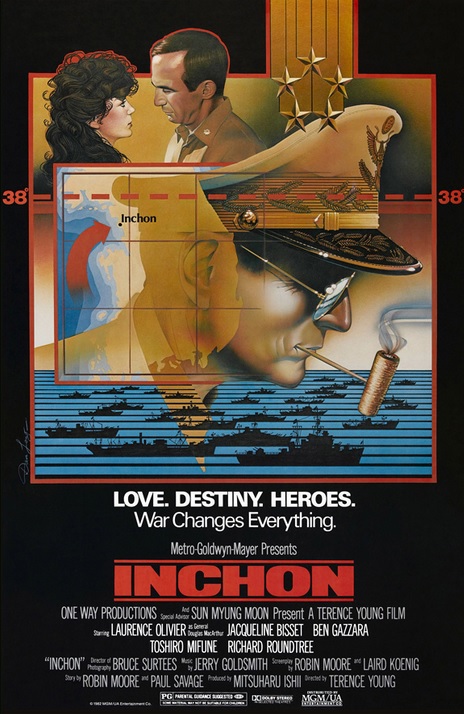
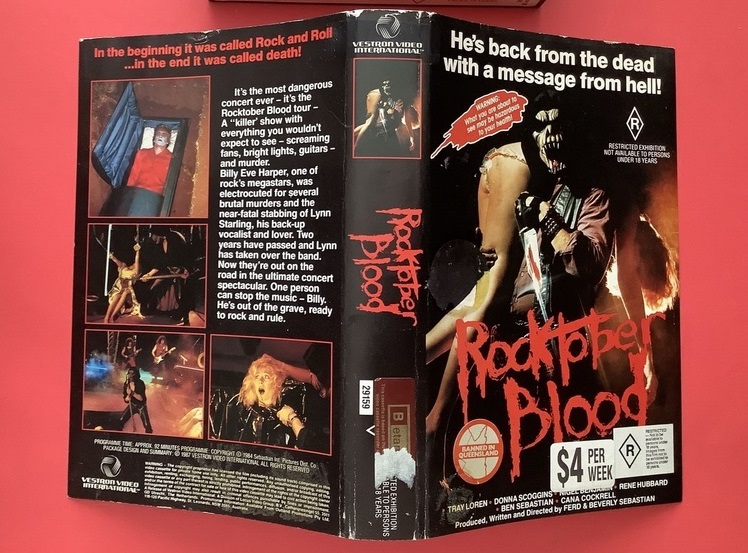

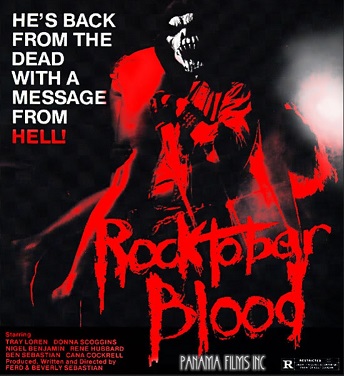




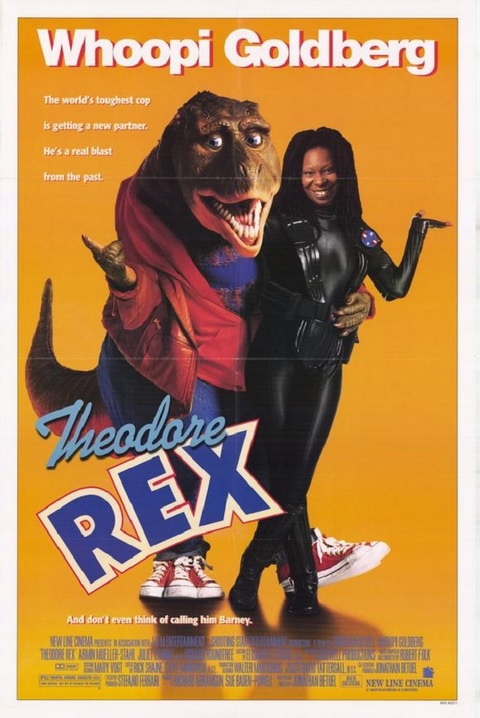
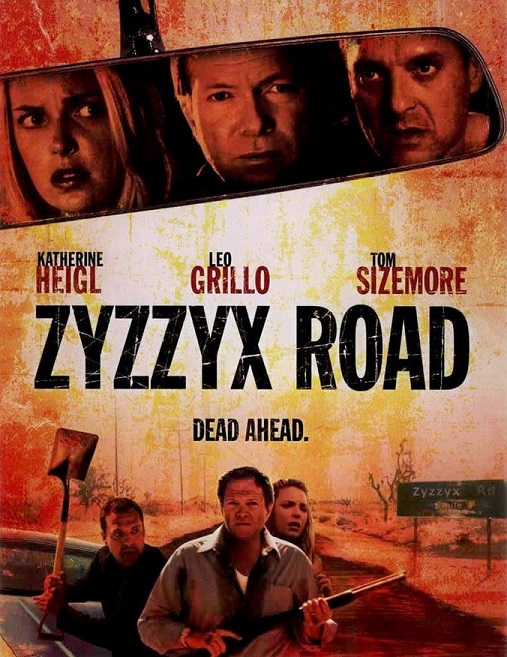
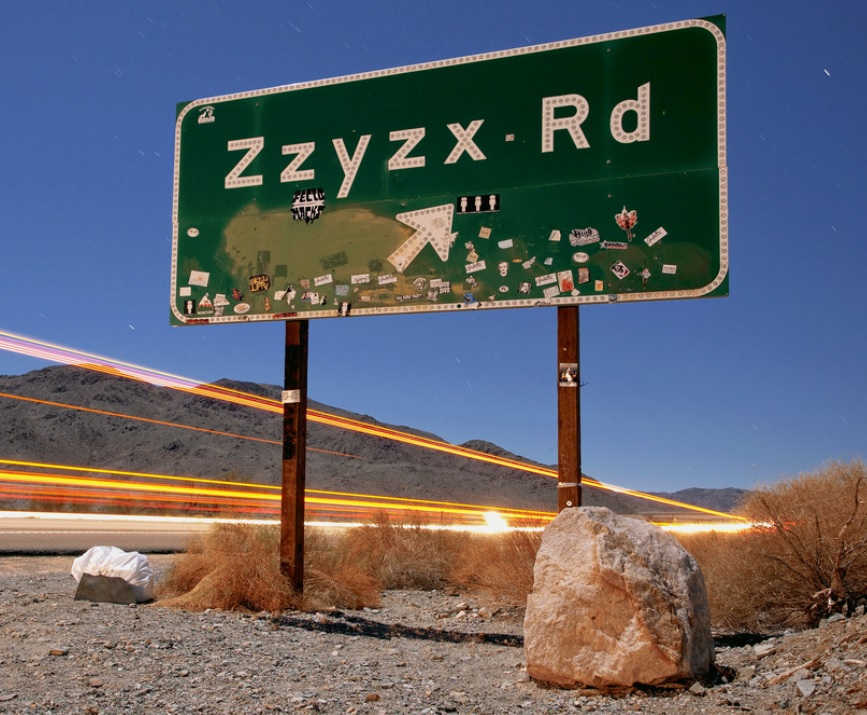

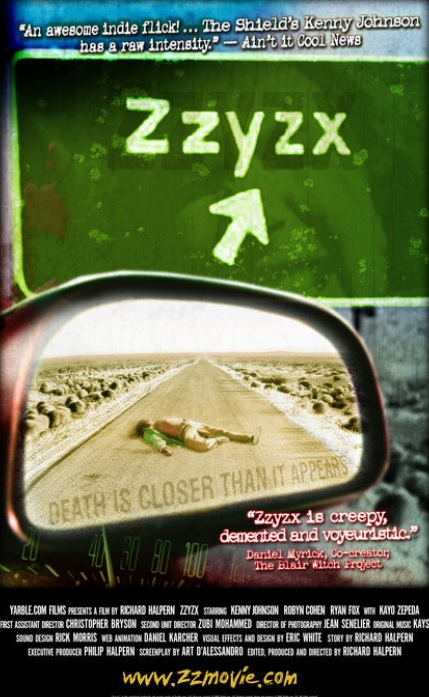

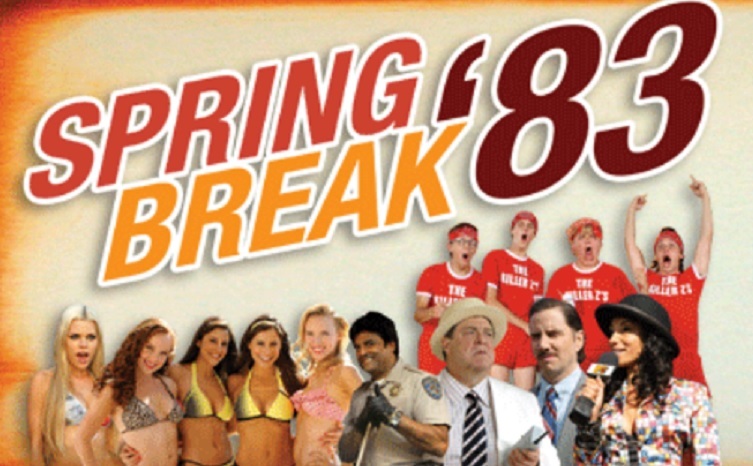

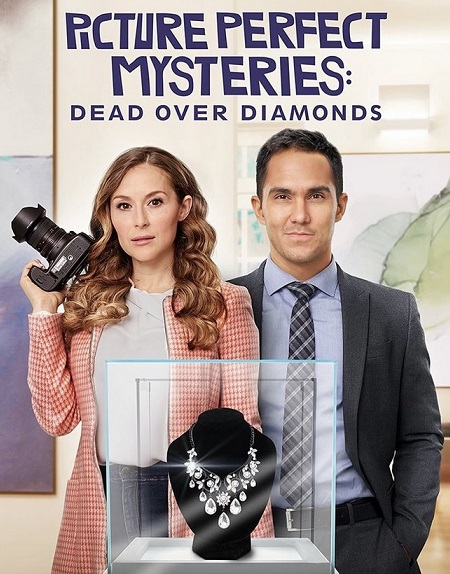
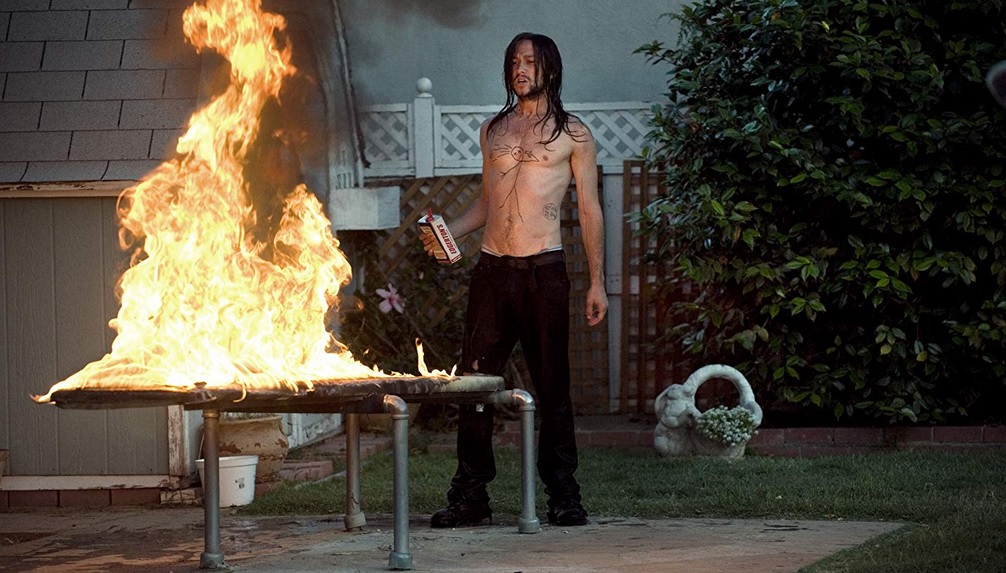



 B&S About Movies

You must be logged in to post a comment.