Zombie Lake (1981)

Do you want to watch a boring underwater Nazi zombie movie? Then, by all means, watch Zombie Lake. All others skip it and slosh on over to Ken Wiederhorn’s far superior Shock Waves (1977). How this test in zom-tedium ended up as one of the 82 films on the U.K.’s “Section 3” Video Nasties list is dumbfounding.

It all started with Jesús Franco. Then the testosterone started splashin’ around between Franco and the producers. Enter Jean Rollin — with less than a week before production was to begin. Yes, Jean Rollin, the director who never met a film he couldn’t thrust into boredom. Yes, Mr. Rollin (and Mr. Franco, for that matter): I do need more than just nudity and triangle-of-death shots to move me. Yes: I need my zombies to have more than green paint smeared on their puss. Another problem: Two editors worked on the film: one for the French and International version and one for the Spanish version. Yes, a film where Jess Franco quits and Jean Rollin signs on . . . well, you’ve been warned. Needless to say: the poster’s great, but the plot is a mess.

Watch the age-restricted sign-in trailer.

Mind you: A bulk of this film takes place twenty years after the end of World War II, so 1965 — but it looks like forty years later, aka 1985. Anyway: A group of nubile ladies take a (skinny) dip in the village’s small lake — a lake referred to by the locals as “the lake of the damned.” And it’s know as such because it was used for witchcraft ceremonies. And the “lake” swallows them whole. So, with fresh human blood in their bellies and energized, the green-faced and grey-uniformed zom troopers take their revenge on the town. The revenge stems — we come to learn — from a WW II Nazi soldier and a local French girl falling in love and having a child. The villagers, members of the French resistance, murdered the soldier’s platoon and dumped their bodies into the lake. And the “witchcraft” of the lake kicks in. We think.

Of course, the town mayor is behind the murders of the soldiers and a cover up is in order — that errant on-the-road all-girls basketball team traveling through France who decide to take a restful (skinny) dip in that same small town lake, be damned. Of course, the fact that the lake offers us the scuzziest, most uninviting swim in the history of Zagat’s Euroguides is of no consequence to none of the young ladies that happen up on Lake COVID. Are the ladies “hypnotized” and drawn by unseen forces, aka the witches, to feed the zombie? Uh, this is a Jess Franco-rejected-Jean Rollin production. Don’t ask questions.

I can’t help but think Jess Franco penned this as a homage to Amando de Ossorio’s second entry in his “Blind Dead” series: Return of the Blind Dead (1973), as that film also had a town mayor more concerned with his town’s annual festival and his personal reputation than the rise and return of the Templars. Of course, de Ossorio got his pinch off Roger Vadim’s And Die of Pleasure (1960). In addition to the story pillaging, there’s the stock footage pinching: Zombie Lake‘s WW II war footage comes from Jess Franco’s Nazisploitation romp The Depraved Third Reich, aka Convoy of Girls, aka East of Berlin (1978)*. Now, was that the original intent: for Franco to pinch Franco? Or did Rollin pinch Franco on his own? Who cares, a pinch is a pinch is a rip and this movie sucks scuzzy, quaint French pond scum.

When it comes to “bad” Euro zombie films, I err to the side of Bruno Mattei with his New Guinea laboratory romp Hell of the Living Dead (1980) and Andrea Bianchi’s cursed mansion romp Burial Ground (1981). While Zombie Lake is not an ’80s SOV film, boy, oh, boy it certainly plays like one — and makes ’80s SOVs look good. At least SOV’ers are first time filmmakers figuring it out as they go along with camcorders. But when you’re Jean Rollin and at the game since the late 1950s with hundreds of films on your resume . . . this should be so much better. There’s just no excuse. At least I only paid a buck on the 5-5-5 home video store plan. Euro-audiences paid the full theatrical freight. I’d be Solo: A Star Wars Story-pissed.

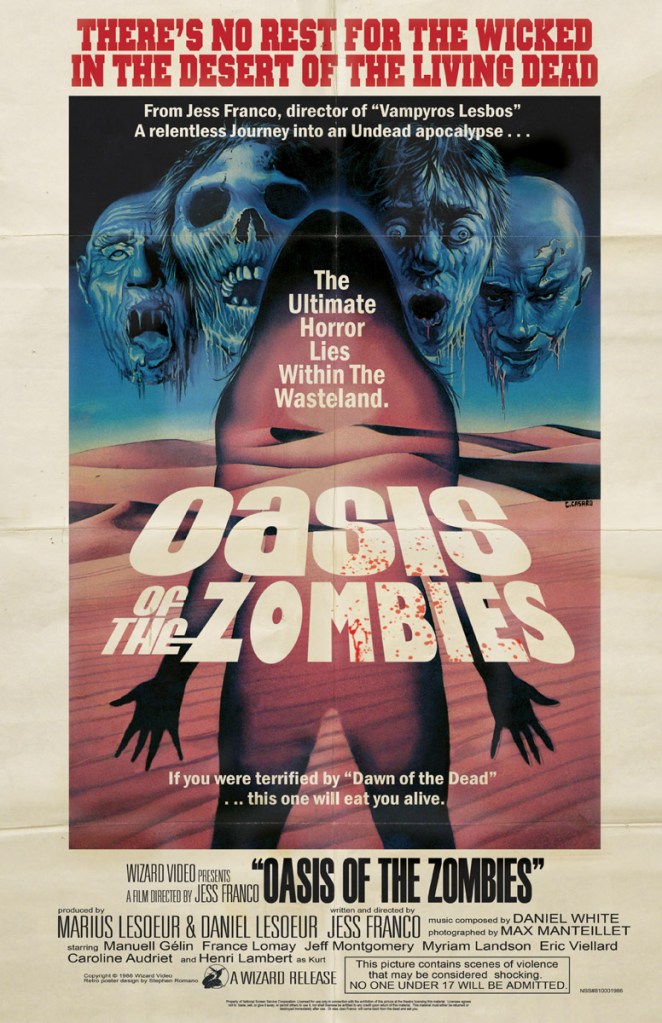
As for Jess Franco: He and the producer behind Zombie Lake, Eurocine (we’ve reviewed quite a few Eurocine films), made nice and did the Nazi Zoms thing again — only ditching the lake for the desert in Oasis of the Zombies. Did he fair any better? Oh, hell no. But that doesn’t mean we don’t dig it, for B&S reviewed it twice: Roger Braden and Sam the Boss offer their takes. As for my bottom line: Zombie Lake just isn’t all that nasty. Now, if the U.K. had a “Video Boring” list, those tea-taxin’ Red Coats would be onto something.

To quote Sam in his review of Burial Ground: “This movie is a real piece of shit. But you know, it’s an entertaining piece of shit. It’s the kind of film you can say, ‘But yeah, did you see Burial Ground? That one is totally insane.'”

Sadly, the same can not be said for Zombie Lake.
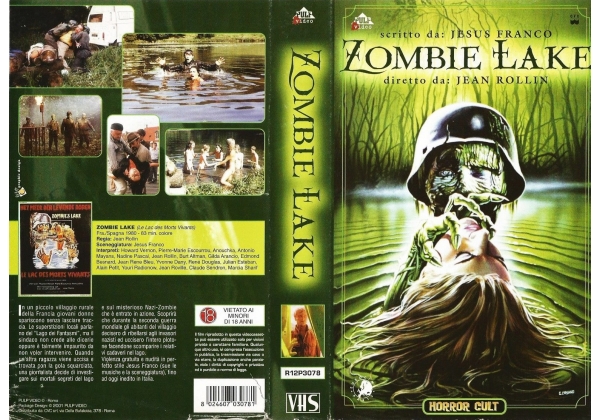
You can get Zombie Lake from Diabolik DVD. It’s also on the Euro Shock Collection issued by Imagine Entertainment (2001), as well as Arrow Films (2004), and Kino reissued it as a Blu-ray (2013). But you know us: we found you a freebie on You Tube.

Stay with us all this week, as we still have two and a half more days of U.K. video nasties from their three “Section” lists to review.

* You can learn more about the Nazisploitation genre with our recent review for the 2020 documentary Fascism on a Thread: The Strange Story of Nazisploitation Cinema.

One of the many re-titles and covers to Franco’s Convoi de filles.

Update: In January 2023 we rolled out our Jean Rollin-uary month of reviews. If you’re not familiar with Rollin’s works, click through and check them out. We gave Zombie Lake a new take because, well . . . you never can never watch enough Jean Rollin flicks!

Oh, yes! If you do a month of Jean Rollin, you must do a month of Jess Franco! February 2023 was our “Jess Franco Month.”

About the Author: You can learn more about the writings of R.D Francis on Facebook. He also writes for B&S About Movies.
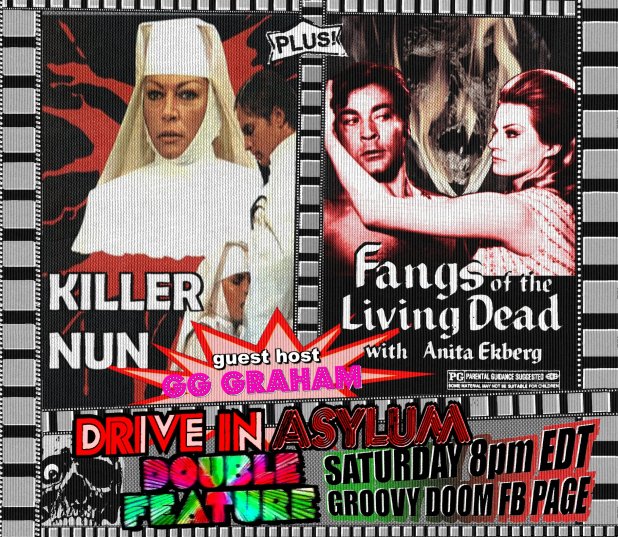
IT’S THE GG GRAHAM BIRTHDAY EDITION OF THE DIA DOUBLE-FEATURE!

That’s right, GG has picked two movies for her birthday and we’re pulling the ads, mixing the drinks and indulging her wish to have people watch Anita Ekberg movies. Yes, you can join us us at 8 PM EST on the Groovy Doom Facebook page.

Up first is Killer Nun, a movie that you can watch on Tubi or Daily Motion.

Every show, we prepare two drinks to drink with the movies. Here’s the first one!

Sister Gertrude’s Little Helper (taken from this recipe)

  • 4 oz. orange juice
  • 1.5 oz. Campari
  • 1 oz. vodka
  • .5 oz. lemon juice
  • .5 oz. simple syrup
  • 1 egg white
  1. Add all of your ingredients to a shaker without ice and shake for 15 seconds, then add ice and shake for another 15 seconds.
  2. Pour over ice and enjoy.

Up next is Fangs of the Living Dead which you can watch on Tubi or Daily Motion.

Here’s the drink for this film!

The Ghostini of Count Walbrooke (taken from this recipe)

  • 2 oz. vodka
  • .5 oz. Midori
  • Maraschino cherry
  1. Shake vodka and Midori with ice, then strain into a glass.
  2. Top with a cherry and wait out your curse inside the castle.

See you Satuday!

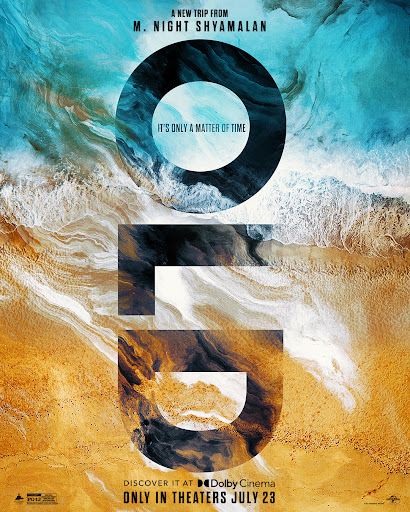
Old (2021)

There was a time that people wanted to give M. Night Shyamalan the title of our generation’s Rod Serling, but as time goes on, his films have gone from Twilight Zone to Outer Limits to Tales from the Darkside in quality and now, they hover somewhere around stories that even shows like Monsters would say, “Well, that seems pretty bad.” Actually, I really like Monsters and feel bad associating that show with Shyamalan’s output. Maybe a better example would be to imagine if Night Gallery was only the Jack Laird comedy bits and The Sixth Sense with none of Serling’s contributions.

To be even more honest, I feel bad dunking on Old and the works of Shyamalan, which get worse with each release and his hamfisted attempts at being a modern William Castle, like when he got SyFy to air a documentary that claimed that he died as a child and could therefore speak to the dead, suffer from a lack of aesthetics and none of the wonderful hullaballoo that Castle exhibited.

So yeah — Old is not good. What did you expect? Each of his films is the very definition of something I usually love, the hijinks ensue film. Get a great concept: an island makes people prematurely age and then…hijinks ensue. But the hijinks here are pretty predictable. And while the director said that he wanted to explore the way his father saw the world through his dementia — dude, I’m dealing with that in my family right now and I don’t really want to wade through it in my entertainment — I think this movie would be best experienced if you had no way of comprehending just as shallow and pointless it all is and just enjoyed the pretty pictures.

The most entertaining thing about this movie would be the director’s statement, which claims that this was influenced by Australian New Wave films like Walkabout and Picnic at Hanging Rock, along with The Exterminating Angel, which actually made me giggle and then get really mad. Also, throwing out Ran, Rashomon and other Japanese films is a desperate stab at “hey I’m an artist!” while saying you’re influenced by Twilight Zone and Jaws is like saying that you enjoy drinking fluids and eating food.

This story was based on the graphic novel Sandcastle which gives no answers as to why the island rapidly ages people. Of course, we needed the twist to explain it. You know, the real twist would be the director not having a twist in his next film and trying to push himself beyond the hackneyed. Here’s to hoping.

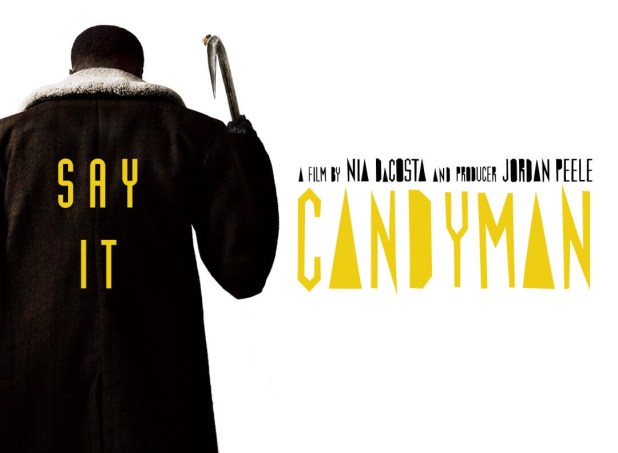
Candyman (2021)

Someone on my social feeds posted the other day that they still couldn’t get this movie out of their mind days after watching it and I wondered, “Where did they get the version of this film that I so desperately wanted to see?”

Because after what feels like years of delays, this film finally was released and I’m struggling, quite honestly, to remember much of it. And what I do recall isn’t that good. It felt unfocused at best, scattered and boring at worst.

Which is a shame, because Candyman is one of the most unexpected and near-perfect horror films I’ve ever seen, a movie that effortlessly combined menace, terror, social commentary and reflected the world outside, all things that this movie shoots for and watches the ball circle the rim without ever scoring.

But hey — what do I know? It made $68 million worldwide against a $25 million budget.

The story of the first film has become exactly what the Candyman promised it would be, as Helen Lyle is now a legend and the unrelenting blight of the Cabrini-Green housing project has been cleaned up and gentrified, which is mirrored by how Anthony McCoy takes the stories of where he grew up and sells them as art.

Yet the story of who Candyman is moves his origins to 1977 and a man accused of placing a razor blade in a child’s candy, which takes away from the power of the true origins of the character.  The Sherman Fields version of the character takes away from the story until we finally get back to the Daniel Robitaille character and then gets further diluted by the concept that there is a hive of Candyman which discovers a new host every few years.

A bee’s sting and the push of a man named Billy Burke push McCoy toward becoming the next version of the urban legend, even as the kills that surround his story seem pulled from the worst Platinum Dunes-style 90s and 00s remakes of past horror films, particularly a scene in a girl’s bathroom that seems tonally at odds with some of the wonderful moments of this film, like the animated origins that punctuate the narrative.

I like so much of what director and writer Nia DaCosta — along with producers and co-writers Win Rosenfeld and Jordan Peele — are trying here, but the exact moment that the movie seems to be ready to mean something — as McCoy’s girlfriend must bring the avenging power of the Candyman to bear against the uncaring might of a white police force is the end of the film and then seemingly gets to what we really want to see. But by then, it’s too late to do much.

The main problem, at the end, is that the original film remains vital decades after I first saw it. This lost its potency while I was watching it. And that doesn’t make me happy at all, because this was a movie that I was rooting and hoping for, as I feel that the character and mythos remain a vital canvas on which to paint deep lessons upon.

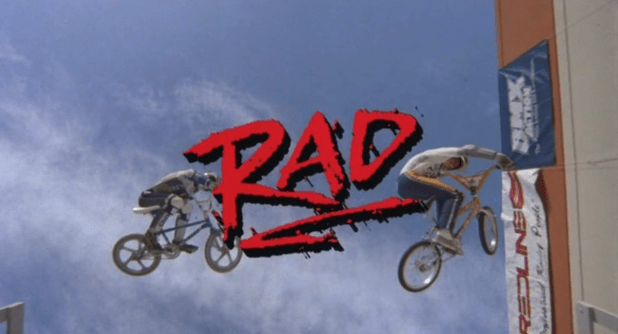
FANTASTIC FEST: Rad (1986)

EDITOR’S NOTE: In celebration of its 35th anniversary, the 1986 BMX racing film Rad will return to movie theaters nationwide on Thursday, October 14 at 7:00 p.m. courtesy of Fathom Events and Utopia. Featuring a new 35th-anniversary restoration, fans will see — for the first time — A Rad Documentary – Inside the BMX Movie That Changed Everything, which has never-before-seen interviews with the cast and crew and behind-the-scenes footage.

Tickets for Rad 35th Anniversary can be purchased online at www.FathomEvents.com or at participating theater box offices beginning September 17. 

There was also a Rad stunt show and premier tonight at Fantastic Fest. While we couldn’t be there in person, we couldn’t resist sharing this review again, which originally ran on December 9, 2020. We’ll see you in the theater on October 14 and on Helltrack!

If there was one movie that was hard to rent at my neighborhood mom and pop video store, this would be it.*

Leonard Maltin gave this movie his dreaded BOMB review, comparing it to 1950’s car race and 1970’s roller disco movie films. Yeah, Leonard. Wondering why everyone liked it so much?

Shot in Alberta, Canada — look for a young Robin Bougie from Cinema Sewer — this movie may have failed in theaters. but like I said above, it was a top rental film for what seems like forever.

Cru Jones has two choices: take the SAT in order to attend college or race Helltrack, which could mean $100,000, a new Chevrolet Corvette and fame. His mom, Talia Shire, whines so much that you wish that Stanley Kubrick would arrive to cause PTSD to take her out of this film, but no, she just cries that he’s throwing away his future. He is, near-fifty-year-old me can tell you, but have you seen Helltrack?

The thing I never understood about this movie was how could Mongoose have allowed themselves to be portrayed in such a negative light? They were such a big BMX company and in nearly every scene, their owner Duke Best is out to get Cru and to push his own rider Bart Taylor.

Before she went to jail for that college scam, Lori Loughlin played the tough tomboy that the hero fell in love with. Here, she’s Christian Hollings and she BMX bike dances with Cru, setting hearts aflutter. For more Laughlin roles like this, see Secret Admirer and Back to the Beach.

The evil Reynolds twins who try and destroy Cru on Helltrack grew up to be Chad and Carey Hayes, the writers of the remake of House of Wax, as well as The Conjuring movies.

Man, this movie still leaves me with so many questions. How could the town raise $50,000 so quick for Cru? How does he have the money to sign up Bart when he gets kicked off the Mongoose team? Why did my grandparents buy me a Schwinn that weighed as much as a Harley when all I wanted was a BMX bike?

This movie wasn’t on DVD or blu ray for years until Vinegar Syndrome did a limited release. It’s streaming now, so you can finally legally watch it.

Also, look for pro wrestler Hard Boiled Haggerty, who yells to our hero, “Go balls out!” before the Helltrack** race. That was the film’s original title.

This was directed by Hal Needham, who also made so many stunt heavy movies like the Smokey and the Bandit films, Stroker AceBody SlamHooperDeath Car on the Freeway and, of course, Megaforce.

*Other movies that fit this bill are Thashin’The Dirt Bike Kid and The Toxic Avenger.

**None of the stunt racers could complete a lap of Helltrack, with major worries about the giant hill that starts the race. The entire scene took two weeks to film.

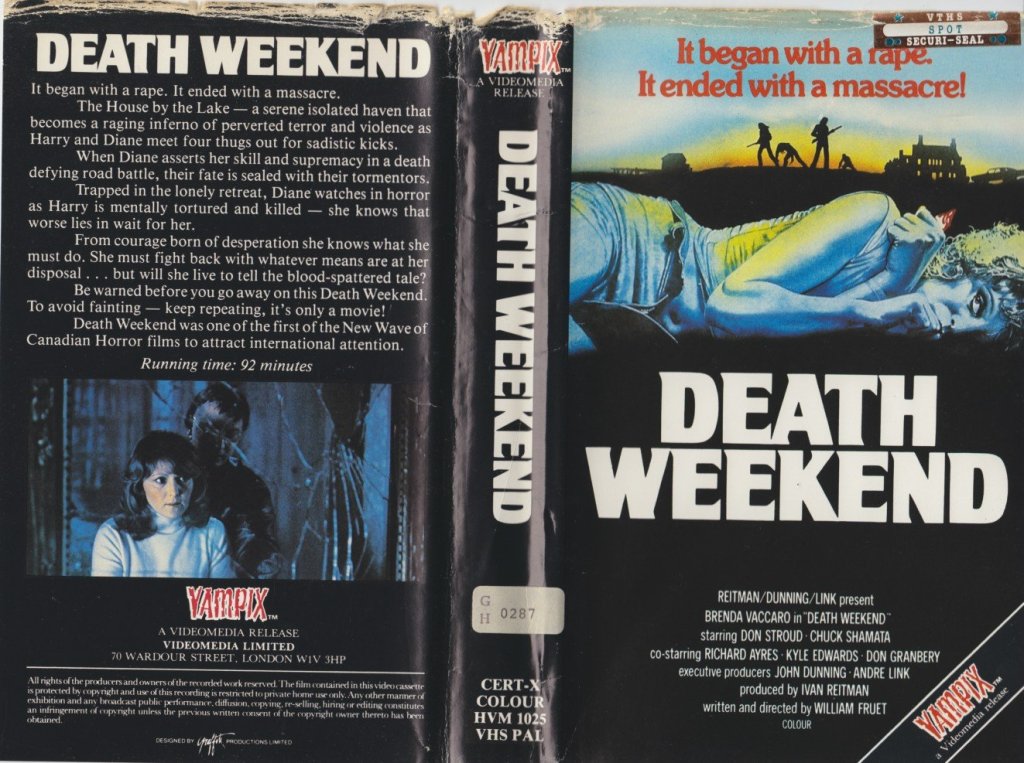
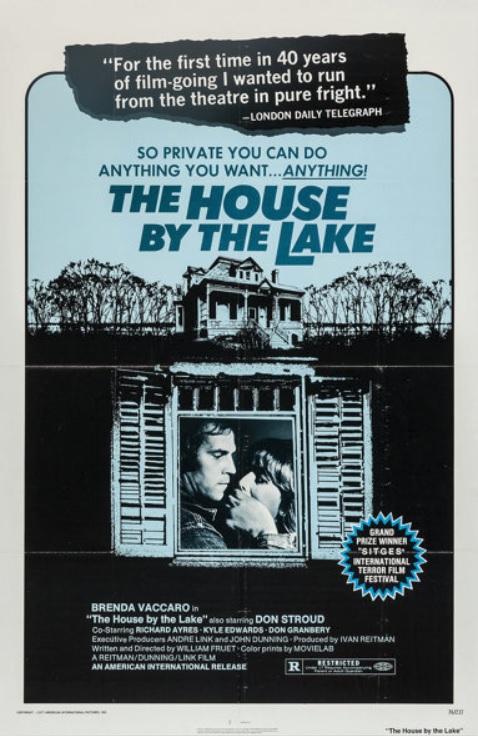
Death Weekend (1976)

Here’s the U.K. Section 3 “video nasty” in the man-against-the-wilderness genre that began with Sam Peckinpaw’s Straw Dogs (1971) from 20th Century Fox and solidified with John Boorman’s Deliverance (1972) from Warner Bros. Produced for a little over $2 million, Straw Dogs stumbled with $8 million in U.S. box office. Produced for $2 million, Deliverance raked-in over $46 million in U.S. box office: thus, we remember and credit Boorman’s work for kickstarting the genre — as well as the revenge-rape sub-genre.

Watch the trailer.

The revenge-rape sub-genre quantified with Wes Craven’s The Last House on the Left (1972), which was a sloppy n’ scuzzy, grindhouse remake of Ingmar Bergman’s tasteful-superior The Virgin Spring (1960). The sub-genre only got worse with the likes of the bogus, faux “sequels” in Roger Watkin’s Last House on a Dead End Street (1977) and Francesco Prosperi’s The Last House on the Beach (1978). Then there’s Charles Kaufman’s black comedic take on the genre — courtesy of the joint thespian tour de force by the actors behind Mother and her hicksploitation-bent sons Ike and Addley — with Mother’s Day (1980). Even Aldo Lado, he of the (brutal) Dario Argento rips Short Night of Glass Dolls (1971) and Who Saw Her Die? (1972), got on board the “Last House” caboose with Last Stop on the Night Train (1975), which — amid its Hallmark Releasing title myriads for drive-in and home video — was known as The New House on The Left, Second House on The Left, and Last House Part II.

While James Dickey’s screenplay was based on his novel Deliverance — which takes the Ingmar Bergman highroad — was graphic in nature, the violence was merely a delivery system of an underlying social statement about America’s class structure asking the questions: Who is stronger in a battle of wills between primitive man vs. civilized man. How deep into one’s base instincts will a civilized man delve for self-preservation?

So when you have a film produced for a couple million bucks pulling down mid-double digit millions at the box office, you know what that means: here comes the cash-in knockoffs.

Originally released as Death Weekend in its native Canada, then released as House by the Lake during its U.S. Drive-In run, it returned to the Death Weekend title on home video via a number of imprints, but Vestron Video in the U.S.

All of the subsequent man-against-the-wilderness tales produced in the Deliverance/Straw Dogs backwash threw away plots (that were cookie cutter boiler plates, anyway), character development and underlying themes, and amped the violence — even more so in a post-John Carpenter Halloween world of the faux-Giallo variety. Macon County Line (1974), Death Weekend (1976), Jackson County Jail (1976), Rituals (1977), Just Before Dawn (1981), and Walter Hill’s Southern Comfort (1981) each own their debt to Boorman’s backwoods-terror vision. The home invasion and rape-revenge genre went off the graphic rails with the likes of Sergio Martino’s Torso (1973), only to get cheaper and shoddier with the likes of Linda Blair’s Grotesque (1988), then more “artful” with the likes of Gaspar Noe’s Irreversible (2002) and Takashi’s Ishii’s Freeze Me (2000). The most infamously scuzzy of the bunch is Meir Zarchi’s I Spit on Your Grave (1978). And the genre continues as streaming fodder with the classy Australian change-up, Rage (2021).

Released to Drive-Ins as The House by the Lake, and then bestowed the Death Weekend title for home video, this low-grade Canadian inversion of the genre produced for a half million dollars was written and directed by William Fruet for American-International Pictures. The film caused quite the stir as result of the intensity — more so that what we watched in Straw Dogs and Deliverance — for its drudgery in violence and rape for the sake of violence and rape. While Brenda Vaccaro and Don Stroud are stellar in their roles, the “message” was tossed out to tumble down the main road and leaves us with a movie that makes us wanting to take a shower after watching. It’s no wonder the VHS was seized and confiscated in the U.K. under “Section 3” of the Obscene Publications Act of 1959 during the “Video Nasty” panic of the ’80s.

The U.S. and English-Canada VHS released by Vestron as Death Weekend is sans three scenes: an additional shot of Don Stroud’s Lep on top of Brenda Vaccaro’s Diane as he attempts to rape her, a more graphic shot of Diane slashing Richard Ayers’s Runt’s throat, and a longer shot of Don Granberry’s Stanley burning to death. However, French Canadian and Spanish home video renters were allowed to watch those scenes, intact. Death Weekend has yet to receive a domestic U.S. DVD release; it was released in Sweden as an uncut DVD in 2017 by Studio S Entertainment; in 2019, Death Weekend was released on Blu-ray in Germany. Once offered as an a U.S. VOD stream by Amazon, the film is no longer available. Diabolic DVD has copies of the Swedish all-region Blu-ray, but are currently out-of-stock (keep checking back with them for re-stocking information).

Writer and director William Fruet is a name we speak of often amid the digitized pages of B&S About Movies, as we’ve enjoyed his oft-HBO-ran works Search and Destroy (1979), Funeral Home (1980), Spasms (1983), Bedroom Eyes (1984), Killer Party (1986), and his Alien-inspired AIDS cautionary tale Blue Monkey (1987). And we particular enjoyed his long-not-seen radio DJ drama that he wrote, but did not direct, Slipstream (1973).

Fruet revisited the ‘ol fish-out-of-water backwoods shenanigans (with a unique hick-impaled-by-TV antenna scene and an unstoppable Henry Silva thespin’ it up while doused in hot tar) with Baker County, U.S.A. That film’s script came courtesy of ‘80s slasher-scribe John Beaird, who penned the entertaining My Bloody Valentine and Happy Birthday to Me. Shot for $2 million by Fruet, affectionately referred to as the “Roger Corman of Canada,” Baker County, U.S.A is basically the canuxploitation-version of the later-shot Hunter’s Blood (1986), itself a retread of John Boorman’s 1972 hicksploitation trendsetter.

While Fruet already proved his skills as a director on his first feature film, Wedding in White (1972), a film starring Donald Pleasence and Carol Kane that he also wrote, he fell out of favor with the theatrical industry to find work in television. An opportunity to get back into theatrical film work came courtesy of Ivan Retiman (later the director of Meatballs (1979), Stripes (1981) and Ghostbusters (1984)) and Don Carmody, who successfully produced David Cronenberg’s Shivers (1975) through Cinepix Films. They wanted another horror film: Fruet gave them Death Weekend. When the film was acquired by A.I.P – American International Pictures for U.S. Drive-Ins, the distributor changed the title to the House by the Lake for an all-female revenge double-bill with Wes Craven’s The Last House on the Left, which raked in the dough during its run.

Is there a statement here as to the way socially maladjusted men view women as “meat,” with Brenda Vacarro’s Diane dually serving as nothing more than an objectified outlet for Don Stroud (and his repulsive backwoods buddies) to channel his mental impotence-born violence (everything be “the bitches” fault), while her weekend-fling dentist playboy (who enjoys snapping pictures through two-way mirrors) sees women as disposable play toys? Is there a statement that, regardless of education and social standing, “men are men,” that is, pigs slopping in the same trough, when it comes down to gratifying their base desires?

No.

When Varcaro’s Diane, who accepts a “weekend at my lake house” invitation from a successful dental surgeon, are we supposed to look at her as an opportunistic “gold digger” that deserves the terror of torture and rape? When she takes the wheel of her weekend fling’s shiny Corvette and gets involved in a faux-drag-cum-road race and runs Lep (Stroud) off the road, does she deserve a comeuppance for not knowing her place?

No.

Sure, William Freut put everything together well enough, and Brenda Vaccaro and Don Stroud are, again, stellar, but personally, I can’t rank this alongside Sam Peckinpaw’s Straw Dogs and John Boorman’s Deliverance. There’s a reason why, beyond clever marketing, Freut’s home invasion-cum-rape-revenge was paired with Wes Craven’s The Last House on the Left and it found itself on the U.K.’s video nasty list. Fruet’s work possesses none of the class of Ingmar Bergman’s The Virgin Spring; it’s pure Meir Zarchi’s I Spit on Your Grave (1978) and Jim Sotos The Last Victim (1975) objectifying sleaze of the exploitation variety.

But you may like it. And if it’s your jam, stream on, my retro-analog brother. As Shirley Doe has come off the top ropes and told us may times: “films are funny that way.”

About the Author: You can learn more about the writings of R.D Francis on Facebook. He also writes for B&S About Movies.
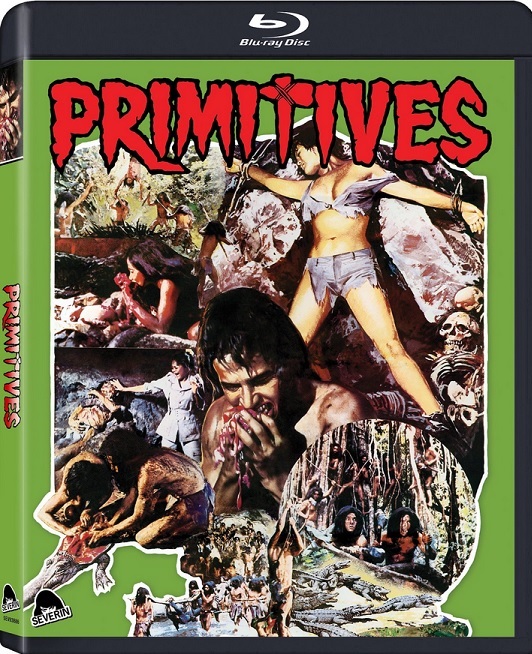
Primitives, aka Savage Terror (1980)

This is a true adventure. Filmed on location in the jungle where the events portrayed actually took place. The production thanks the Indonesian Government for allowing this story to be brought to the screen.”
— Opening title card with a claim we’ve heard many times before

So, are you in the mood for a bizarre mix of repugnant gore wrapped in a blatant lack of common sense?

Well, then, wee video pup, you’re in the mood for an Indonesian cannibal movie: Strap ye not the popcorn bucket on thou chin, get the puke bucket. And ditch the Dr. Pepper for the Pepto-Bismol.

We’re not kidding.

The VHS clamshell slipcover we remember that was part of the U.K.’s “Section 3 Video Nasties” list.

Yes, India did, in fact, jump on the Italian-made cannibal zombie sub-genre puke wagon . . . and upped the genre’s already stomach content-inducing cruelty and brain-burning weirdness. Well, what could we possibly expect from director Sisworo Gautama Putra?

You know Putra as the Indonesia horror purveyor who later gave us the whacked-o-rama (lifted from Phantasm) that was Satan’s Slave (1982). Primitives, aka Savage Terror in its home video shelf life, which served as Putra’s big screen debut, was inspired by his fandom of the successful Italian cannibal movies Sacrifice! (1972), Jungle Holocaust (1977), and Slave of the Cannibal God (1978). Putra’s — and his longtime screenwriting and producing partners Imam Tantowi’s and Gope T. Samtani’s — famdom were so great, that they lifted — okay, it’s a “homage” — scenes wholesale from those films. If you’re a fan of Cannibal Ferox and Cannibal Holocaust, you’ll see the homages (severed) afoot.

As with all films from the copyright-lawless tundras of India and Turkey . . . if ripping off Ruggero Deodato isn’t enough, and if the animal-on-animal wildlife stock footage violence isn’t enough, you’ll also hear “(We Are) The Robots” by Kraftwork, John Williams’s main theme from Star Wars, and James Last’s “The Lonely Shepherd” on its soundtrack.

Yeah, we’ve been here before: When three anthropology students, along with their guides, go in search of a lost primitive tribe — and have a rafting accident — they spiral into a nightmare of bloody rituals, torture . . . and the consumption of their own flesh, as they’re hunted down one-by-one by the very tribe they came to explore.

Martial Arts fans will find additional interest in the film as it stars Humbertus Knoch, aka Barry Prima for English-speaking audiences, in his feature film debut. Prima’s best known for his work in The Warrior (1981), The Warrior and the Blind Swordsman (1983), The Devil’s Sword (1984), and The Warrior and the Ninja (1985). He’s currently in production on his 75th project, Garuda 7.

You can get this Italian-styled cannibal slopper from Cult Action under its alternate title of Primitif, while the fine folks at Severin have it out under the Primitives title on Blu-ray and DVD. Severin’s reissue includes the extra-purchase incentives of bonus interview vignettes with writer Imam Tantowi and producer Gope T. Samtaini; it also includes an alternate opening title sequence, while the film is scanned in high-definition from the Jakarta Studio’s vault negative.

However, we found you a free-with-ads stream to watch on Tubi — and you can triple feature it with Eaten Alive! and Mountain of the Cannibal God via Tubi. You can also learn more about the Italian cannibal sub-genre of zombie films with our recent review of Naomi Holwill’s documentary Me Me Lai Bites Back (2020), as well as her producing partner Calum Waddel’s Eaten Alive! The Rise and Fall of the Italian Cannibal Film (2015).

Screenwriter Imam Tantowi and producer Gope T. Samtani also gave us their take on Indiana Jones with The Devil’s Sword (1984) and John Rambo with Daredevil Commandos (1986). But before those less-graphic ripoffs, they followed Primitives with Blazing Battle (1983). That film is an Italian cannibal-styled rip reset during the Japanese occupation of Indonesia during WW II. More than worthy of a U.K. “video nasty” albatross — if it only made it to the U.K. shores — the faux martial arts-marketed flick features equal, sloppy helpings of over-the-top depictions of rape, along with torture scenes of impaling, eye gouging, and so on. Regardless of its marketing on the video fringe as a (comical) martial arts movie, Blazing Battle is anything but. Your caveat has been served.

Warning: No joke. Primitives is graphic to the extreme — more so than its Italian inspirations — and the blatant animal cruelty may disturb you.

Ugh. Another trailer/clip bites the dust.
You’re on your . . . peril to find one.

Be sure to surf over to our three part “Video Nasties” exploration that lists all of the films on the U.K.’s Section 1, Section 2, and Section 3 lists, as well as our “Mangiati Vivi Week” tribute to Italian cannibal films.

About the Author: You can read the music and film reviews of R.D Francis on Medium and learn more about his work on Facebook.

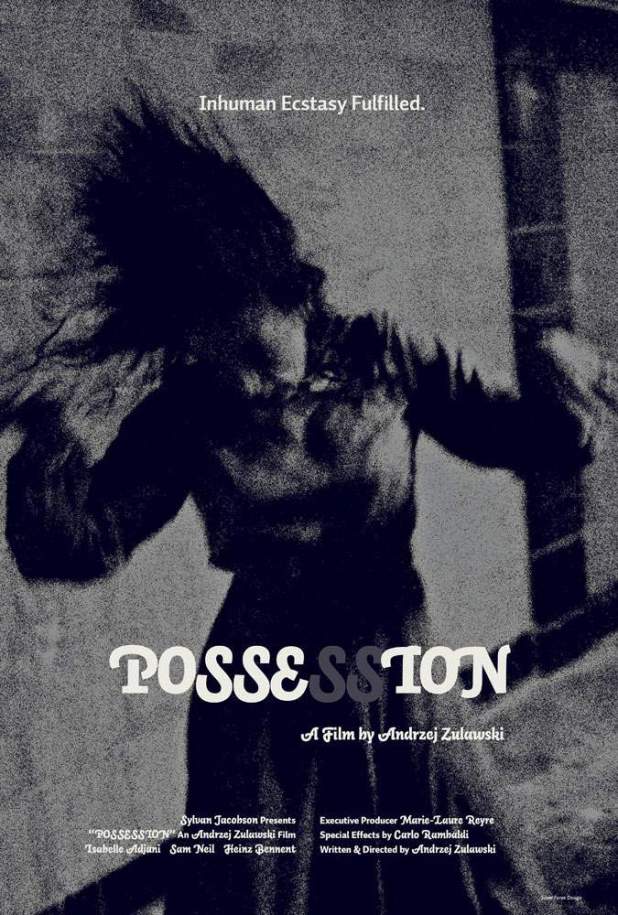
FANTASTIC FEST: Possession (1981)

Director and co-writer Andrzej Żuławski’s only English language film, Possession is the only section 2 video nasty that has a lead actress, Isabelle Adjani, who won the Best Actress award at the Cannes Film Festival.

I often think, “Man, it would be awesome to act in a movie or be part of one,” but at no moment during this movie did I wish that I could be on the other side of the lens. Written during the painful divorce of Zulawski with actress Malgorzata Braunek, this is the very definition of a rough watch.

So what the hell is going on here? Is Anna going insane? Is Mark (Sam Neill) unable to escape their breakup? Are they both dealing with things their own way, and by that, I mean Mark replacing his wife with a subservient drone of a woman (also Adjani) while Anna grows her own Mark in a jar? Is this all happening in a dream? Or are all the dead bodies, grocery throwing freakouts and electric knife mutual self-mutilation sessions really happening? Is it really about Zulawski divorcing himself from Poland? Or maybe as it was made in a still-divided Berlin, is it hopeful about the destruction and rebirth that will come from the tearing down of the Wall?

Zulawski went into this movie wanting to kill himself, as his wife had left him (the scene where the child is left alone for hours and the husband comes home to discover his son naked and covered in jelly is autobiographical) while the strains that Adjani put herself through left her in the throes of massive depression and suicidal thoughts, which the director confirms that she acted upon but survived.

Neill would later say, “I call it the most extreme film I’ve ever made, in every possible respect, and he asked of us things I wouldn’t and couldn’t go to now. And I think I only just escaped that film with my sanity barely intact.”

Mark is a spy home from the cold, yet he returns to a wife who no longer wants to be part of this relationship. She can’t tell him why – it’s not a new lover – but she doesn’t want him any longer. He wants out of the espionage life, even if his handlers seemingly refuse to allow him that choice. Yet she does have a lover – Heinrich – who is not only cucking Mark but easily bests him in a punchup. He in turn attacks his soon-to-be ex-wife and then they take turns attacking one another and themselves with the aforementioned carving knife.

Anna also has a second apartment and another life, a tentacled creature that lives with her, and a room full of destroyed body parts, which soon include the detective that Mark has hired to follow her and that detective’s lover.

Before long, the love that exists – or doesn’t – between the married couple consumes everyone, sometimes in fire, sometimes in bullets, sometimes in knife wounds, sometimes just one another on the kitchen floor.

That tentacle thing – credit goes to Carlo Rambaldi. You know, I just saw A Lizard In a Woman’s Skin at a crowded drive-in and even horror-hardened viewers audibly gasped when his creation of still alive dogs torn apart flashed across the screen. Between that, Alien, Deep Red, A Bay of Blood and so many more, I find it rather life-affirming that the same man who created so many nightmarish visions also had a hand in creating E. T.

At one point, Mark says, “You know, when I’m away from you, I think of you as a monster or a woman possessed, and then I see you again and all this disappears.” This is the most real moment inside a film filled with a cavalcade of fantastic imagery. Tearing apart the life you once had for the promise of something new that may not be as good or may take a tremendous amount of emotional work is the most frightening thing I’ve ever done in my life. Possession gave me flashbacks to those moments where the world felt like it was ending every day, where I felt like a monster and when the only person you could confide in became the person you could never speak to again.

Man, Possession is not an easy watch. Just warning anyone of that going in. But hey – movies should not be just wallpaper. They should attack you. They should change your consciousness. They should take your psyche like a rock tumbler and slam you against the walls over and over until you emerge better.

A new 4K scan of this film will make its U.S. debut during Fantastic Fest on Saturday, September 25, completing the circle of this film from being critically savaged to embraced. It will also play the Beyond Fest, as well as opens theatrically and digitally exclusively at Metrograph October 1 In theaters, then nationwide on October 15.

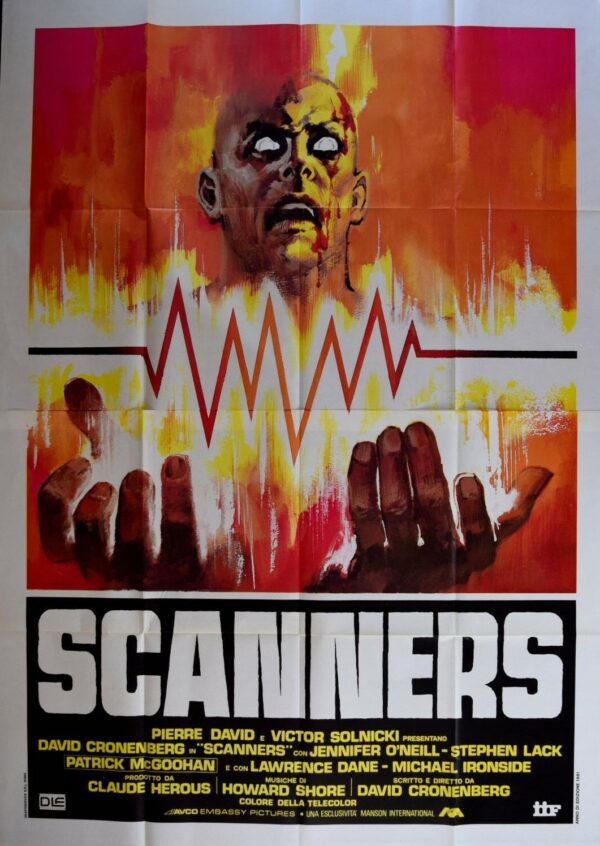
Scanners (1981)

ABOUT THE AUTHOR: Eric Wrazen is a Technical Director and Sound Designer for live theatre, specializing in the genre of horror, and is the Technical Director the Festival de la Bête Noire – a horror theatre festival held every February in Montreal, Canada. You can see Eric as an occasional host and performer on Bête Noire’s Screaming Sunday Variety Hour on Facebook live. An avid movie and music fanatic since an early age, this is Eric’s first foray into movie reviewing.

It’s kind of difficult to review a film like Scanners without restating the common points that have been reviewed and discussed ad nauseum for decades within the horror community.

Its Cronenberg. It’s a classic. It’s a fun, yet flawed film. It starts (and kinda also ends) with an exploding head.

If there is one single aspect of Scanners that got it on the BBFC’s Sh*t list, it was that exploding head scene… which, incidentally, happens within the first 5 minutes of the movie! Scanners was most likely the fastest movie added to the list of nasty films as the reviewer probably only had to see the first 5 minutes before declaring “Blimey! EE’s gone and blown up dat mates ‘Ed, he did!” (Yes, in my mind, the BBFC reviewer has a Liverpool accent) and putting Scanners in the reject pile.

For the fact-focused crowd, Scanners was released in theatres in 1981. Directed by David Cronenberg and featuring some acting talents that SF, action, and horror fans will easily recognise: Michael Ironside as the baddie Darrel Revok, Patrick McGoohan as Dr. Paul Ruth, as well as lesser knowns Stephen Lack as our clueless Scanner hero Cameron Vale, and Jennifer O’Neill as Kim Obrist, another scanner who, is like the leader of a commune of hippie scanners, or something. Fun fact: the exploding head guy was played by Louise Del Grande, who is very familiar to old-timey Canadians, because he was the lead in a really popular “Murder She Wrote-style” mystery show that aired on CBC (Canada’s public TV broadcaster) for years. The show was called “Seeing Things” and Del Grande played… get this…. a crime-solving psychic!

The Scanners production itself was a troubled one. The movie was funded via a Canadian government tax incentive program (as were all of Cronenberg’s early films) and the catch was the film had to be in the can by a specific date in order to get the funding… which resulted in a rushed start to filming – before the final script was even done – which I feel adds to the unhinged and somewhat disjointed flow of Scanners.

Historical side note: Scanners was the first Cronenberg movie I saw in the theatre when it released in 1981! It’s one of the pivotal movies that got me hooked on bizarre, weird sh*t, and I will always love it for that reason. This was my first re-watch of Scanners in 40 years! (PS – f*ck, I am old). 

More useless information: It was filmed in and around Montreal, Canada (my hometown) in locations like a water treatment plant that was 10 minutes from my boyhood home, and “2020 University” – the very groovy 70’s shopping mall featured in the opening scene. 

The film itself is a fun ride if you are willing to accept some glaring flaws, such as: over AND under acting by the entire cast; continuity errors, obvious lack of basic understanding of how computers work, and an evil organization so badly run that the head of security is in cahoots with the guy trying to destroy the company, who is incidentally the son of the company’s head of R&D. 

Regardless, Scanners is a fun film to watch. I viewed the old MGM DVD release and now I’m seriously considering getting the Criterion release to enjoy all the extras.


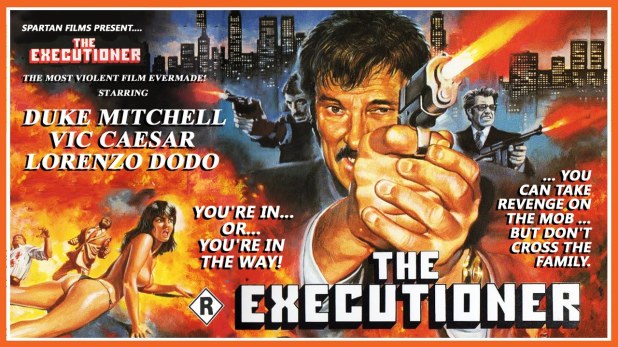
Massacre Mafia Style (1974)

As a well-raised Italian boy, I have watched plenty of mob-related movies, both domestic and foreign, from the expected films like The Godfather and Goodfellas to the poliziotteschi of the country of my origins, but I have to tell you, nobody who acts in those movies — with the exception of perhaps Lenny Montana — so seems like they came directly out of the real world of crime and violence as the man who wrote, produced, self-financed and directed this film, Duke Mitchell.

Supposedly written from all of his real-life run-ins, Mitchell had the kind of career that fascinates me. Born Dominic Salvatore Miceli in Farrell, PA — around twenty minutes from where I grew up — Duke started his career as the Dean Martin to Sammy Petrillo’s Jerry Lewis in a nightclub act that drove Lewis near insane.

One reason was movie producer Jack Broder, who hired the team to star opposite Ramona the Chimp — who was Cheetah for a time in the Tarzan films — and Bela Lugosi in the low-budget high concept Bela Lugosi Meets a Brooklyn Gorilla.

Man — that movie!

Gary Lewis, Jerry’s eldest son, told the New York Times — in Petrillo’s obituary no less — “When Sammy and the other guy played in that gorilla movie, I remember my dad and Dean saying, “We got to sue these guys — this is no good.”

Lewis knew Broder through the Friars Club and attempted to stop the movie from being released before a shouting match needed to be broken up. Paramount Pictures had Martin and Lewis under contract, so another Friars Club contact named Hal B. Wallis attempted to meet with Broder and purchase the negative to the film for no small amount of cash. They never agreed on a price, so instead of destroying the completed film, Broder released it and the two men never spoke again.

After they returned to nightclubs, Mitchell and Petrillo went back to the clubs but found themselves blackballed by Martin and Lewis; they were even blocked from an appearance on the Colgate Comedy Hour, which was hosted by Abbott and Costello. The team would break up briefly and then reteam until they decided to call it quits directly after Martin and Lewis did the same thing.

Petrillo would go on to become head of production for the Network Film Corporation owned by Dick Randall and made Shangri-La, as well as an unfinished superhero movie called Gas Is Best shot in Pittsburgh (!) as well as Keyholes Are for Peeping with Doris Wishman. In the 70s, Sammy also worked as a distributor for the Transcontinental Film Corporation, which allowed him to rekindle his friendship with Duke before settling down in Pittsburgh (!!) where he ran the comedy club The Nut House and also was a host that introduced nearly any adult star who came to the Steel City*.

Let’s get back to Duke (and eventually this movie).

Going solo, Duke played spots like New York, Las Vegas, Seattle, Palm Springs, Chicago and Los Angeles before dubbing himself the King of Palm Springs and popularized Sunday brunch shows in which talent in town would nosh and sing a few tunes or have a conversation with the man himself. People like Liza Minnelli, David Janssen, Cary Grant, Frank Sinatra Sr. and Jr., Lucille Ball, Red Skelton and many more.

Somewhere in here, Duke was also the singing voice of Fred Flintstone.

Before dying of lung cancer in 1981, Mitchell started making his own films. This one and Gone with the Pope are the only two that have survived, thanks in no small part to the efforts of Bob Murawski and Sage Stallone of Grindhouse Releasing, who found that second film as a work print in Mitchell’s son’s garage.

To the words of a Duke song, the movie begins with he and his partner Jolly (Vic Caesar) killing an entire office full of victims (check out the commitment from the guy who gets blasted and dies face first in a scuzzy urinal people!) before a Duke voiceover explains the way of the mob world. This movie is pretty much owned by his long rambling narratives which I think I may record on my phone and Kenny Powers-style listen to for power and inspiration before I have to interact with normal people.

Duke is Mimi Miceli, the son of a high-powered mafia don who has been exiled back to Sicily for his crimes in America and who is raising our hero’s son while he lives his dreams in Hollywood, which mainly consist of killing people, hanging on porn shoots and crucifying pimps that get in his way. And oh yeah — getting to lie in bed next to Cara Peters, which is like the real American dream, as she’s absolutely fabulous in this.

I loved every frame of this movie, filled with shocking violence and made by a man who had the utter balls to send out real wedding invitations for the scene in this movie, then sell the gifts that people brought to raise more money for the making of the rest of the picture.

The world should have more people like Duke Mitchell. And more films like Massacre Mafia Style.

While not prosecuted for obscenity, the film was seized and confiscated in the UK under Section 3 of the Obscene Publications Act 1959 during the video nasty panic. I beyond love the fact that Duke somehow has a movie in the same category as Fulci. But hey — hooks through faces, dead dogs, multiple bullet wounds and even a slow mo Pickinpah ending aren’t going to make this a G rated movie.

You can watch this on Tubi or buy it from Grindhouse Releasing.

*One last Jerry and Sammy story: On October 5, 1982, the Today Show was airing a series of Lewis’ career highlights and the very first one wasn’t Jerry. It was Petrillo. Jerry said, in his usual mock sincerity, “It was Sammy Petrillo, a kid that I found walked on 53rd Street here in New York, and I brought him out to Hollywood to work on a sketch with Dean and I [sic], and then he worked with Eddie Cantor two weeks later.” I bet he was fuming.