I get it. I am not always all that aware of the music of today because I tend to thing everything should sound like Black Sabbath or The Rolling Stones around the time of Some Girls. I may be able to tell you all manner of arcane facts about the music of my youth — don’t get me started on the KLF or any associated bands — but most music today slips in one ear and out the other.
That said, I kind of liked what I heard from Sia. And I really enjoyed the fact that she remained anonymous so often, having actresses play her in videos and rarely showing her face.
So when she made an auteur project — a $16 million dollar movie written, directed and of course featuring her — I was pretty surprised. It’s one thing to not know how to read music, but all of this at once?
Sia said in a BBC interview, “For me, the process was basically, I work out the movie. I’ll act it out, I’ll have the dialogue already in my head… I can’t be bothered to learn Final Draft.”
Oh no, I thought. But part of me was like, oh yes. Because if there’s one thing better than a great movie, it’s a spectacular explosion of a film fueled by ego and hubris.
Some of the issues become apparent when you see how all of the place the process of creation was. The proagnist Zu was going to be Shia LaBeouf, then Jonah Hill, then after seeing Kate Hudson sing, she got the part. Speaking of the casting, most of it was done over social media. And then, after forty days of shooting, it took three years to edit this film.
Sia would tell Rolling Stone, “I couldn’t seem to find the right editor – someone who understood the magic I was trying to make happen.”
I would argue that this editor does not exist.
Maddie Ziegler may have starred in a series of Sia’s videos, but was she meant to play an autistic girl and go full blown like she does here? How about the fact that the movie shows a potentially dangerous physical restraint method called crushing? Or the fact that Leslie Odom Jr.’s character seemingly exists only to help white people get past their issues?
Also, there are flashing lights throughout this movie, so many of the autustic people who it could reach can’t watch it!
I know quite a few autustic people and not a single one of them are infants, despite this movie showing me they can be, as it veers between gritty drama and Bjork video. I take that back. Bjork makes good videos.
For everyone that ever made fun of The Apple or Can’t Stop the Music or Staying Alive or any number of horrible music-themed movies that I can’t help but love, I will use this as the example for what a truly bad movie is. Because man, I can remember songs from Xanadu and Sextette and I promise you that not a single moment of this film except for its endless montages of screaming headphone wearing children will stick with me. This movie has made me hate Sia, hate her music, hate children, hate communities and hate stages with floral arrangements like at the end of this movie.
Honestly, if you told me this was a right wing religious film, it would have made so much more sense to me. Actually, I’ve watched plenty of those and they’re way more entertaining than this.
Also: Sia plays herself and has this scheme where she’s using drug dealers to buy painkillers to send them to needy places in the world, which seems like the same kind of dumb idea as this movie, as if someone could have perhaps not been impulsive and tried to think of a better way to do things.
Somehow, this was nominated for both a Golden Globe for Best Picture and the Razzie Award for Worst Picture, which is the kind of thing only Pia Zadora has accomplished.
Man, this article feels like clubbing seals and shooting fish in a barrel. Realizing that doesn’t mean I’m going to start being nice though. That said, I wish I had seen this movie during its IMAX premiere because I thought no movie could be as loud and face destroying as watching the fecund Zack Snyder Watchmen from the front row and I feel that this is the movie that could erase that from my brain.
It’s like when you get a song stuck in your head and the only way to get it out is to start humming Glenn Frey’s “Smuggler’s Blues.” Because then, you have “Smuggler’s Blues” stuck in your head. And that’s a losing proposition but one you can’t refuse. It’s the politics of contraband. It’s the smuggler’s blues.
Way before Saturday Night Fever and even longer still than Sgt. Pepper’s Lonely Hearts Club Band, the Bee Gees had been around. Brothers Barry, Robin, and Maurice Gibb first started recording in 1958 yet before that, they were a skiffle group out of Manchester called the Rattlesnakes and another act called Wee Johnny Hayes and the Blue Cats.
The family moved to Australia, where they started singing at the Redcliffe Speedway for Bill Goode. That’s where they got their name, which does not stand for Brothers Gibb, but instead because Goode and Barry shared the same initials. Throughout the 60s, they would record their own songs and write for other artists, not really finding much success until in 1967, when Go-Set, Australia’s most popular and influential music newspaper, named “Spicks and Specks” as their best single of the year.
That — and demos sent by their father to Brian Epstein, who passed them to Robert Stigwood — got the brothers signed to Polydor and a campaign that proclaimed them the most significant new musical talent of 1967. They were compared to the Beatles, which worked just fine, because when a white-labeled radio station single of their second release, “New York Mining Disaster 1941” ended up at those stations, it was just assumed to be a new Beatles song and placed into heavy rotation. Their next song, “To Love Somebody,” which was written by Barry for Otis Redding, was a huge success without any subterfuge.
For a time, the three brothers received a Beatles-like reaction from fans and had numerous big hits like “I Started a Joke” and “Words.” Yet by 1969, there were problems. Robin collapsed and fell unconscious, then was sent to a London nursing home for exhaustion; he missed recording sessions in America and felt that Stigwood was pushing for Barry to be the star. After “Lamplight” was put on the b-side of the song “First of May” as a single, he left the band and pursued a solo career. Drummer Colin Petersen also soon left the group and was replaced by Pentangle drummer Terry Cox* — and Gibb sister Lesley — to record the songs for Cucumber Castle.
Sadly, the album was a failure and the Bee Gees broke up.
There was a movie made to promote it and that’s what we’re really here to discuss.
Prince Frederick (Barry Gibb) and his brother Prince Marmaduke (Maurice Gibb) receive an audience from their dying father (Frankie Howerd, who played Mr. Mustard in the Bee Gee’s Beatles cover movie, but is better known as a long-time British comedian) who tells them that he is breaking the kingdom into two kingdoms for his sons. Frederick will be the ruler of Cucumber while Marmaduke will be the king of Jelly. And then he gets better and changes his mind.
While this film is a trifle, it’s worth it to see Lulu — the castle’s cook! — sing “Mrs. Robinson” and a great performance of “Well All Right” by Blind Faith, plus appearances by Ginger Baker, Vincent Price, Spike Milligan, Roger Daltry, Donovan, Marianne Faithful and Mick Jagger. Seriously, this little show had an A-list cast!
Cucumber Castle was oh-so-briefly released in the U.S. in the early days of VHS and Beta by the Video Tape Network, but quickly was quickly pulled due to a licensing issue. It’s been one of the rarest commercial releases ever and has never been officially reissued ever.
It was directed by Hugh Gladwish and Mike Mansfield, who went on to make the music videos “Charlotte Sometimes” for The Cure, “Goody Two Shows,” “Prince Charming,” “Ant Rap,” “Desperate but Not Serious,” “Stand and Deliver,” “Puss ‘n Boots” and “Strip” for Adam Ant, “Bark at the Moon” for Ozzy Osbourne and lots of video work for ELO.
*Peterson played on some of the album tracks and was in the movie, but got edited out after he departed.
A postscript:
After Cucumber Castle stalled, Maurice made an unreleased solo album. Barry did the same and only a single was released. And Robin had a decent hit with Saved by the Bell” and was constantly touring.
Somehow, someway, on August 21, 1970, the three brothers came back together with Barry announcing that the Bee Gees “are there and they will never, ever part again” as well as Maurice publically apologizing for things he’d said about Robin.
Sure, they went through a creative rut, but after adopting a more R&B sound on Mr. Natural, they recorded Main Course in Miami where “Nights on Broadway” and “Jive Talkin'” became monster releases. Their next album, Children of the World, pushed by the single “You Should Be Dancing,” finally made them huge stars in America. And then they did this little disco soundtrack and things worked out pretty well after that…
You can watch this on the incredible White Slaves of Chinatown 3DYouTube channel, which is always full of such amazing video and movie footage.
This is the final segment of our three-part series. We’ve discovered 33 films in the series, with 11 films each over the past three days — at 3 PM — as part of our third “Rock ‘n’ Roll Week” installment.
Nowhere Boy (2009) Imagine This: Growing Up With My Brother John Lennon by Lennon’s half-sister Julia Baird fuels this tale. Sam Taylor-Johnson — who earned a Golden Raspberry nod for Worst Director on her sophomore film, Fifty Shades of Grey (2015) — makes her directorial debut with this examination of John Lennon’s (an excellent Aaron Taylor-Johnson) adolescence, his relationships with his aunt Mimi Smith, and his mother Julia Lennon, and the creation of his first band, the Quarrymen, and its evolution into the Beatles.
Lennon Naked (2010) After watching the early years of Lennon in Nowhere Boy, and one’s left wondering what the final year of Lennon’s life was like in the Beatles, this BBC-TV produced TV movie, which ended up on the U.S. pay cable network Showtime as a first-run movie, answers those questions. Christopher Eccleston as Lennon is excellent throughout; chilling, in fact.
George Harrison: Living in the Material World (2011) Look, Hollywood is too busy mucking up the histories of Elton John, Freddie Mercury, and Nikki Sixx to give “The Quiet Beatle” a bioflick or Netflix mini-series proper. Besides, when Martin Scorsese takes a break from the mobster flicks to pay tribute to the life and times of George Harrison, you break editorial rules and include the documentary on the list.
This is buoyed by Paul and Ringo showing up, along with Harrison’s widow Olivia, and his son Dhani, as well as Tom Petty and Eric Clapton. Not only do we learn about George’s time with the Beatles; the seven-years-in-the-making film delves deeply into his solo career, including his work with the Concert for Bangladesh and the delightful Traveling Wilburys project.
An interesting Harrison side-bar to pair with this documentary is Paul McCartney Really Is Dead: The Last Testament of George Harrison (2010), mockumentarian Joel Gilbert’s (Elvis Found Alive!) speculation on the urban legend that — via secret, rare tapes made by George Harrison, himself — Paul did, in fact, die in a 1966 car crash and was was replaced by a double.
Good Ol’ Freda (2013) The subject matter here is such an out-of-left field twist in the history of Beatles flicks, we had to break editorial policy for a third time to mention this fascinating documentary on the life of Fredy Kelly: a fellow Liverpudlian hired by Brian Epstein as the Beatles Fan Club secretary. What makes this all work is the lack of sensationalism, courtesy of Kelly’s humble soul in respecting the privacies of her world-famous friends, but still telling us many things we did not know.
Danny Collins (2015) In 1971, 21-year old Bristol, England, folk musician Steve Tilston released his critically acclaimed debut album, An Acoustic Confusion, and the 1972 sophomore follow up, Collection.
In a 1971 ZigZag magazine interview, Tilston admitted — inspired by the editor/writer’s accolades for Tilson’s work — that he feared wealth and fame might negatively affect his songwriting.
Inspired, John Lennon wrote to Tilston — in care of ZigZag — to offer the upcoming musician encouragement, “. . . Being rich doesn’t change your experience in the way you think,” Lennon wrote. It was signed, “Love, John and Yoko.” It turned out that, upon receipt of the letter, the magazine’s editor, believing Lennon’s letter “had value,” greedily kept the document; it was never turned over to Tilston.
How wicked the Fates: If the Lennon letter had been turned over to Tilston, would he and Lennon have forged a friendship? Would Lennon’s words have encouraged Tilston not to give up on the music business?
Tilston did not become aware of the letter’s existence until 2005, when a collector contacted him to verify the document’s authenticity. When the story was officially reported in the music trades in August 2010, it inspired this 2015 Al Pacino-starring film.
While the movie has it charms, and Pacino is endearing as a non-folkie, but poppy-ersatz Neil Diamond (check out the great original, “Hey, Baby Doll,” which was purposely crafted as a Diamond soundalike to “Sweet Caroline”), the excitement over a movie with such an obscure Beatles connection quickly fades due to us being treated to a film “based on Steve Tilston’s life” and not about Steve Tilston.
No, we don’t see Lennon or Yoko, either.
The Lennon Report (2016) Pair this Beatles flick with either of the Mark David Chapman flicks to learn of the aftermath of Chapman’s motives. It purports to be the “true story” of the moments after John Lennon was shot. Lennon’s murder is seen through eyes of a young news producer poised to break the biggest story of the year, and the emergency room staff of Roosevelt Hospital realizing the true identity of their “John Doe,” and their race against time to save his life, all the while keeping his identity, private.
Eight Days a Week — The Touring Years (2017) Okay, so we’re doing Ron Howard solid by mentioning his documentary because of his rock flick pedigree with the very cool NBC-TV movie Cotton Candy (1978). Howard explores the Beatles’ touring years and answers the questions as to why they stopped touring in 1966 to focus solely on recording in the studio. It’s expertly assembled, as expected with a Ron Howard production, and well worth the watch — even for those who eschew documentaries of any subject.
Paul Is Dead (2018) Paul McCartney didn’t die in a car crash, as commonly rumored, in this comedic “What If . . .” flick. And he wasn’t murdered by Billy Shears, either. Paul simply died from a drug overdose during an experimental, countryside musical retreat — the drugs were George’s — and replaced by the look-alike, local sheep herder, Billy Shears.
You can learn more about the film and free-stream it on the film’s official website, or watch it on Vimeo. There’s also two, wonderful fiction books that play with the myth of Billy Shears: The Memoirs of Billy Shears (2018) by Thomas E. Uharriet, and Billy Shears: The Secret History of the Beatles (2020) by Bruce “Doctor” Lev. Either book would make for a wonderful feature film.
Scrambled Eggs (2019) Produced as part of the U.K.’s SKY Network’s Emmy Award-nominated series Urban Myths, the installments delve into fictionalized stories about the legends of the acting and music industries. Writer Simon Nye (who also wrote the Season 2/Episode 8 installment, “The Sex Pistols vs. Billy Grundy“) weaves this tale (Season 3/Episode 7) based on interviews Paul McCartney has given over the years about how he developed the melody to “Yesterday.” In comical twist: Paul is so dumbfounded that he came up such a mature melody, he drives everyone crazy over his paranoid that he “stole” the melody from another, popular song.
You can learn more about the Urban Myths series at Sky.com. You can also stream it on U.S shores via Showtime and Hulu. You can also stream the full 20-minute film on You Tube and sample the film with its highlights reel.
Yesterday (2019) So, was it worth shelling $10 million dollars for the rights to the Beatles’ catalog in this Richard Curtis-penned romantic comedy (Love Actually and The Boat that Rocked) directed by Danny Boyle (Oscar-winner Slumdog Millionaire, Trainspotting)?
Yes. We said “romantic comedy.” Yes, by Richard Curtis, who gave us Bridget Jones movies and hooked up the likes of Hugh Grant and Julia Roberts in Notting Hill.
And “the Beatles” . . . well, an actor portraying John Lennon (John Lennon scene/You Tube) shows up. But he’s not the “John Lennon” we know: he lives a quite, non-musical life as an artist (at the age of 78) in a beach side cottage sipping tea. Why? Because we’re in an alternate timeline (caused by a bump on the noggin’ during a worldwide blackout) where the Beatles don’t exist . . . but struggling musician Jack Malik, does. And he records a worldwide smash, debut album comprised of Lennon-McCartney compositions, well Jack Malik compositions. (Oh, and SNL’s hamfisted-and-not-funny Kate McKinnon from those annoying and not funny Tostitos and Verizon commercials is in the mix as the trite and troped “manager” of Jack’s career. You’ve been warned.)
The Beatles: Get Back (2021) Yeah, we know we said “no documentaries.” But after breaking policy for Martin Scorsese and Ron Howard with their high-quality theatrical documents, how can we pass up Lord Peter Jackson restoring and reediting Michael Lindsay-Hogg’s Let It Be (1970) for a reissue under its original work title. And, as it turns out, in Jackson’s cut, the Beatles were getting along better than we were lead to believe.
Seriously, which you would want: the Beatles getting the “Freddie Mercury” or “Elton John” treatment, or a Peter Jackson document on the Beatles?
If only George and John were here to experience it with Paul and Ringo.
Because our reviews to go “12,” Nigel.
The Beatles and India (2022) Yes. We are breaking the “no documentary” rule, yet again. But since that promo MVD Blu-ray of the film came in the mail, we might as well.
Filmed across India at all the sites of the Beatles’ visits — Mumbai, New Delhi, Rishikesh and Dehradun — accompanied with an array of unseen photographs, footage and interviews uncovered in India, The Beatles In India tells how George, John, Paul and Ringo took a break from their lives as the biggest band in the world to travel to a remote Himalayan ashram in search of spiritual enlightenment — and ended up unleashing an entirely new level of creativity from the band.
I don’t know about you: but I’d like to see a narrative film about this phase of the Beatles’ career.
The Lost Weekend: A Love Story (2023) Argh! Another Beatles film?
Yes, it’s been 59 years since Beatlemania captured our hearts. And here we are. Dare we ponder what films will be unleashed on the 60th anniversary in 2024?
As with The Beatles and India, I would enjoy this seeing this documentary expanded upon — when thinking of, to name check a recent film, the transition of Marwencol (2010) to Welcome to Marwin (2018) — produced as a narrative film about this long-forgotten time of John Lennon’s life. When is Apple or Netflix going to produce a long-form streaming series on Lennon’s life? I’d subscribe to either service to see that series.
So, the love story goes that, at the request of Yoko Ono, May Pang, John Lennon’s then 19-year-old assistant at Apple Records, had a whirlwind, 18-month romance with John Lennon in the 1970s during a break in his marriage to Ono.
You can watch the official trailer on You Tube, with articles and reviews abound on the web. The film had its debut at the Tribeca Film Festival in 2022, and will hit theaters in April 2023. We’ll save you the aisle seat. But you buy the Clark Bars. And we love Clark bars as our go-to movie nosh: so hit that ATM.
“Brian and the Beatles” image courtesy of Keystone/Getty Images via the New York Times.
Midas Man (202?) In July 2020, industry trades reported Grammy Award-winning, Swedish music video director Jonas Akerlund (Madonna’s “Ray of Light”; the films Lords of Chaos, the drug-epic debut, Spun, with Jason Schwartzman, the Dennis Quaid-starring thriller Horsemen) was hired as the director of this biographical drama on the Beatles’ manager Brian Epstein. Starting his management of the Beatles at the age of 25, Epstein also oversaw the careers of Gerry and the Pacemakers, Cilla Black, and Billy J. Kramer and the Dakotas — until his death at the age of 32.
By November 2021, it was reported filming, which began in October 2021 in London, shut down in mid-production — with Akerlund either fired or quitting the project. Filming, taking place in London, Liverpool, and New York, after a break, restarted in Los Angeles in January 2022. The film was taken over by director Sara Sugarman (Vinyl); she began her career as an actress in Alex Cox’s Sid and Nancy (1986) and a variety of British television series.
Epstein’s life — and his personal relationship with John Lennon — was previously explored in The Hours and Times (1991).
In My Life (202?) In December 2020, industry trades reported actors Wyatt Oleff (Guardians of the Galaxy and It franchises), Kevin Pollak (Outside Ozona), and SNL’s Janeane Garofalo (Lava) would star in this Beatles-inspired comedy-drama that draws from writer-director Mark Rosman’s (Evolver) personal experiences (his father was a Beverly Hills dermatologist) — with a dash narrative license that weaves true events with fiction.
The story follows Evan, a 16-year old John Lennon fan who discovers the Beatles move in next door to his Beverly Hills home prior to their 1965 date at the Hollywood Bowl. While Rosman never met John Lennon, young Evan does — and helps Lennon fulfill his dream of meeting Elvis Presley.
Reported to start production in Vancouver and Los Angeles in May 2021, the COVID pandemic derailed its production. As of this writing — which was written to commemorate the release of Peter Jackson’s The Beatles: Get Back — the film does not appear on Mark Rosman’s IMDb or Wikipedia pages.
Yellow Submarine (1968) All This and World War II (1976) All You Need is Cash (1978) I Wanna Hold Your Hand (1978) Sgt. Pepper’s Lonely Hearts Club Band (1978) Birth of the Beatles (1979) Beatlemania: The Movie (1981) John and Yoko: A Love Story (1985) Concrete Angels (1987) The Hours and Times (1991) Secrets (1992)
Backbeat (1994) That Thing You Do! (1995) The Linda McCartney Story (2000) Paul Is Dead (2000) Two of Us (2000) I Am Sam (2001) The Rutles 2: Can’t Buy Me Lunch (2002) Across the Universe (2007) Chapter 27 (2007) Walk Hard: The Dewey Cox Story (2007) The Killing of John Lennon (2008)
Part 3
Nowhere Boy (2009) Lennon Naked (2010) George Harrison: Living in the Material World (2011) Good Ol’ Freda (2013) Danny Collins (2015) The Lennon Report (2016) Eight Days a Week— The Touring Years (2017) Paul Is Dead (2018) Scrambled Eggs (2019) Yesterday (2019) The Beatles: Get Back (2021) More films The Beatles and India (2022) The Lost Weekend: A Love Story (2023) Upcoming films Midas Man (202?) In My Life (202?)
Oh, yes. There’s a plethora, a cornucopia of films about Elvis that do not star Elvis.
About the Author: You can learn more about the writings of R.D Francis on Facebook.He also writes forB&S About Moviesand publishes short stories and music journalism pieces on Medium.
So, yeah . . . courtesy of all of the stock footage — and its resulting documentary feel — some are inclined to call this bee-boppin’ lesson in tedium a “mondo movie.”
Well, yeah, if “mondo boring” is a thing.
Any film that feels the need to suffix their film title with “The Motion Picture” — see Hamburger: The Motion Picture and Hot Dog: The Movie, as an examples — you know the film has an array of problems, and then some — obviously of the production variety, but, in the case of this movie, mostly of the legal variety. In fact, the only time the suffix worked was when Star Trek: The Motion Picture was released . . . and even then (with its bald alien chick V’ger non-sense). Bottom Line: “The Motion Picture” movies that feel the need to explain to us what it is, will suck ass steaks — studios and budgets of the mega and non variety, be damned. And California Girls sucks the peroxide right out of the bleach-bottle blonde hair shafts and the decals off the bumpers of the VW hippie-surfer bus.
Look, I get it. Every budding producer and aspiring writer and director has to start somewhere, but this inept radio comedy . . . just wow . . . and I thought Zoo Radio, (Young Hot ‘n Nasty) Teenage Cruisers, and On the Air Live with Captain Midnight (by the Rocktober Blood team) were inept radio comedies. Out of his 16 producer credits, eight of which he directed and four of which he wrote, you, more than likely — courtesy of its connection to all things Battlestar Galactica — known William Webb for one film: Party Line (1988), as result of your celluloid schadenfreude to see how far Richard Hatch had fallen and Leif Garrett (done a few for Webb’s production shingle) will desperately keep trying. Then again, if you’re a fan of Richard Roundtree chompin’ cigars and yelling from behind a desk, that was probably your incentive to watch that bit o’ sleaze noir.
As for California Girls: my incentive of plucking it off the home video shelf was result of its being set inside a radio station. However, if your celluloid schadenfreude runs analog waters deep — like whatever happened to Leigh McCloskey, Robbie Rist, Martin Landau, Robert Forester, Jeff Fahey, Yancy Butler, James Coburn, and Stephen Baldwin deep — perhaps you’ve seen Webb’s mid-’80s to mid-’90s direct-to-video potboilers Dirty Laundry, Delta Fever, The Banker, The Hit List, and Target. Maybe you’re a completist and need to see the past-their-heyday works of Zach Galligan, Catherine Mary Stewart, Michael Nouri, James Brolin, and Meg Foster, so you rented The Psychic and Back Stab.
Hey, at least Webb employs all of the actors we get jazzed about at B&S About Movies. That’s right: Jennifer Aniston and Melissa McCarthy fans need to just keep on surfin’, for there is nothing here for you to see.
And, there’s nothing here for YOU, the loyal B&S About Movies frequent surfer to see, either.
“Extra, Extra!” you’ve been warned.
Extra! Extra! Read all about our cinematic rip off!
But . . . if you want to revisit the glory years of late ’70s and early ’80s T&A drive-in flicks, you’re celluloid schadenfreude mileage, may vary. But hey, when a movie gives you full nude skydiving and topless mud wrestling scenes — that had to be cut by 3 1/2 minutes — for its subsequent video distribution, well, you just gotta pull out the Kleenex and the coco butter hand cream, and believe in the plot.
Well, there is no plot.
Eh, well, if you count the about 10 minutes of “Mad Man Jack,” an L.A disc jockey trapped in the booth of KRZY (they’re “crazy”), a decrepit L.A radio station with sagging ratings that decides to boost their numbers by finding “The Most Exciting California Girl” and award the winner with a $10,000 prize. And you thought the Zoo Radio gang at “94.5 FM KLST K-Lost” were a bunch of this ain’t Animal House or Porky’s losers*.
Wait, if the joint is a dump and the ratings are in the tank, where did they get the prize money? Oh, well, the “stunt” will perk up the potential advertisers’ ears (see the newspaper, above) and they’ll buy spots. Okay, the “mountain comes to Mohamed” approach is not how radio advertising and programming works, but, whatever.
Three spandex-clad girls (one being 1976 Penthouse pet Lindsay Freeman; who also starred in the groundbreaking SOV’er Boardinghouse as the aka’d Alexandra Day, along with Mary McKinley, who is another one of our spandex babes, here) in a cramped apartment decide going fully nude while riding horses, roller skating, and skydiving should be exciting enough to win the prize. And yes, things go full frontal. But don’t go for popcorn during the skydiving stunt or you’ll miss the quickie “triangle of death” shots. (Again, this is the “nasty” 3 1/2-minutes excised from some video prints; the You Tube upload of the film, provided below, is the uncut version.)
And, with that, we spend the next 80-minutes of watching on-the-sly, Los Angeles travelog stock footage — backed by a hip, new wave soundtrack (yes, the music by the bands listed on the poster really appears in the movie) — of girls . . . rolling skating, wind surfing, doing karate, playing softball, navigating water slides, lifting weights, riding mechanical bulls, disco dancing, shopping on Rodeo Drive, pumping gas (and pressing their breasts into the windshield), mud wrestling, riding dolphins, soaking in hot tubs, competing in roller derby tournaments, and (it’s highly unlikely with the NFL authorization) ogling the L.A Rams cheerleader squad on the sidelines. Then our three ne’er-do-well chickies naked skydive-land on the radio station’s roof and net the prize. Then they all hop into Mad Man Jack’s ’65 Ford Mustang and head off to the beach (and he’s fat, hairy, giggling, and disgusting) to frolic in the waters.
Then end.
No. Seriously. That’s the movie. Pick up your empty soda and popcorn containers as you leave. And put away your coco butter.
If you’re looking for a movie with three-plus minutes of endless hang gliding to the tune of 10 CC’s “I’m Not in Love” . . . if you want three minutes of wet tee-shirt bikini boxing to the tune of Kool & the Gang’s “Ladies Night” . . . you’ve found your movie. That’s how this whole movies goes down: DJ mentions ladies “doing something” (e.g., racing dirt bikes) and it cues a song — that plays out in full (in the case of the dirt bikes, it’s Foreigner with “Urgent”), and so on.
Of course, that bit runs thin pretty quick, so Man Man Jack sends out his studio assistant to conduct “man on the street” interviews to ask listeners that burning question: “Who do you consider the most exciting girl?” Then we’re treated to an endless stream of . . . well, it looks like a bunch of down-and-out acting hopefuls auditioning, making clips for their actor’s reels. One even appears as ex-President Richard M. Nixon. And yes, it’s as awful as you think and you hope the hang gliding footage returns.
Now, if duping the NFL by shooting on-the-sly at a football game wasn’t enough . . . how in the world did William Webb afford the rights to the music of Blondie, Devo, the Go-Go’s, Foreigner, Kool & the Gang, Queen, the Pretenders, the Police, Sister Sledge, Rod Stewart, Donna Summer, and 10 CC?
Magic 8-Ball says, no way, Jose. Call the lawyers. And we say that because Rod Stewart is not credited on the theatrical one-sheets, the VHS sleeves, nor credited in the film. Ah, but Hot Rod’s song, “Passion,” does legitimately appear in the Corinne Alphen-starring softcore anthology, New York Nights, aka Shackin’ Up (1984), for those of you needing film with A) a Rod Stewart tune, B) another Penthouse Playmate acting, C) Willem Dafoe making his acting debut, and D) a film to settle the bet that Marilyn Chambers doesn’t star in the movie, but in the 1994 softcore flick New York Nights with fellow softcore actresses Susan Napoli and Julia Parton, which Cinemax’d as Bedtime Stories.**
Hey, at least the radio studio (uncredited in the film) is legit. Too bad the rest of the movie, is not.
And it’s not just B-Sides and studio leftovers, as is the case with most budgetary soundtracks on low-budget films. We are talking about the aforementioned bands’ major hits with the likes of “Heart of Glass” and “Rapture,” “Our Lips Are Sealed,” “Celebration” and “Ladies Night,” “Another Bites the Dust,” “Brass in Pocket,” “De Do Do Do, De Da Da Da,” “Passion,” “All American Girls,” and “Hot Stuff.” Yeah, the California Girls: The Movie soundtrack is almost as cool as the new wave delight that is The Last American Virgin . . . but thank the celluloid overloads there’s no pretentious Bono crooning over a teenage abortion scene amid the Mad Man Jack pattering . . . and you don’t have your nostalgic teen heart ripped out at the end. Hey, back in the day, before you easily accessed porn on the Internet, or were old enough to get behind the beaded curtain of your local video store, or were allowed to pick skin mags off the high racks, you had titillating movies such as California Girls to sooth your tween savage beast.
Not that it helps in watching this mess: The real life Maggie Parker, who has her new wave concert broadcast on the air of KRZY (with the song “My Baby”), is better known as Maggie Mayall, the wife of British blues-rock legend John Mayall (know your Eric Clapton trivia). Their son, Jason, worked as a production assistant on the film.
The doppelganger caveat: Don’t confuse this long-form T&A rock video mess with the year-later released Tawny Kitaen comedy California Girls. As for this California Girls, this movie — and we use the term in the loosest form possible — must be seen to be believed. You can see it (for now, so watch it quick) on You Tube, because, with that soundtrack, this is surely to be pulled and it’s never coming out on a DVD or Blu — and least not in a non-grey variety. The VHS tapes are out there, and they ain’t cheap. Hey, we found this clip “Barney’s Girls” to sample, and here’s the soundtrack (hopefully, by the time you read this, they’ll still uploaded.)
** Update: We since conversed with the film’s uploader and learned they overlaid the Rod Stewart song as result of copyright issues over Blondie preventing the upload. You fooled me, as the Stewart tune fits in perfectly. But still . . . how did this cheapjack flick afford all of those songs? So you still gotta call the lawyers . . . you know, the kinda lawyer that cops a table at Barney’s Beanery and uses the payphone on the corner as the “office” phone.
About the Author: You can read the music and film reviews of R.D Francis on Medium and learn more about his work on Facebook.
Everyone knows Don Kirshner as “The Man With the Golden Ear” who conceived the music of the Monkees and the animated the Archies, as well as managing ’70s prog-rockers Kansas. Moving into television production, Kirshner also created the MTV progenitors In Concert for ABC-TV and the weekly syndicated Don Kirshner’s Rock Concert as a counter programming to NBC-TV’s The Midnight Special. His other musical endeavors include providing/consulting music to The Flintstones, the children’s productions of Sid and Marty Kroffts, and TV projects starring the Harlem Globe Trotters (cartoon) and the Hudson Brothers (live action).
While there’s a wealth of online materials regarding Kirshner’s musical accomplishments, little — outside of The Monkees — is said about his accomplishments as a producer in developing a wealth of series and TV movies.
So get ready for monkees, bees, and beauty queens, along with Wild West hippies, a Newton-John, a Victorian musician’s ghost, a hippie magician, a killer virus, and Ol’ Scratch. Let’s get to exploring!
The Reviews
Head (1968) The Kowboys (1970) Toomorrow (1970) The Rock ‘N’ Fun Magic Show (1975) Song of the Succubus (1975) Rock-a-Die Baby (1975) The Kids from C.A.P.E.R (1976) The Savage Bees (1976) Roxy Page (1976) The Night They Took Miss Beautiful (1977) A Year at the Top (1977) Terror Out of the Sky (1978) The Triangle Factory Fire Scandal (1979)
Hey, hey, we need Don Kirshner!/courtesy of the IMBb.
Okay, settle down. Settle. We are well aware Don Kirshner had no involvement in this box office boondoogle. There’s a method to the monkey business, here. Patience, ye fellow primates.
Beginning its production with the title Changes (later the title of the Monkees ninth album — and final contractual album for Colgems — when they were reduced to the duo of Micky Dolenz and Davy Jones), what ultimately became Head made its debut in Los Angeles in the summer of 1968 under the title Movee Untitled. The already confusing and perpetual Andy Warhol-inspired non-sequitur that bombed in that L.A. test screening was cut down from a 110-minute length — to an even more baffling 86-minute cut (not that the lost 24-minutes said much, either) — that premiered in New York City on November 6, 1968.
The kid and tweens who loved the TV series hated the film. The mature hippies that the Monkees wanted to reach hated the film. So much for mixing pot, mellow yellow, and reel-to-reel tapes with a Beatles clone and a script by ol’ Jack, who previously gave us the drug-drama The Trip (1967) directed by Roger Corman.
While Kirshner was the creative force behind the multiple hits-packed The Monkees (1966) and More of The Monkees (1967), Mike Nesmith’s constant power struggles with Kirshner led to the Monkees having complete control over their next album, Headquarters (1967). Only one problem: Nesmith and Peter Tork — the experienced musicians of the group who had the biggest issues in being a “prefabricated band” — couldn’t pull off an album on their own devices. So they ended up resorting to the very Kirshner model of using outside songwriters and studio musicians that pissed them off in the first place.
Headquarters was released on May 22, 1967, and charted at No. 1 in the U.S.
Then the Beatles released Sgt. Pepper’s Lonely Hearts Club Band on May 26.
Sing it, with me!
Bye, bye, the Monkees It was nice having you around We’re busy too listening to the Beatles And watching the Beatles’ television film Magical Mystery Tour And their animated feature film Yellow Submarine You know, the films you ripped off As your model in making Head So people wouldn’t see you as Beatles clones
Unlike the hit-packed Kirshner-produced albums — and even with the TV series still on the air to promote the music — Headquarters produced no hit singles — with only the curiosities of “Shades of Grey” and “Randy Scouse Git” to show for it. In fact, the music from the troublesome third album was barely promoted via the series. The Monkees Top 40 hits during this period touted by the series was the single “A Little Bit Me, A Little Bit You / The Girl I Knew Somewhere,” which reached #2 and #39, respectively; neither were included on the album, as result of being connected to the Kirshner-era.
By the time of the release of the soundtrack to Head, the TV series was over. And without a TV series to promote the music, the album, as did the movie, bombed. Hard. Harder than a day’s night. The album creaked to #45 on the U.S. chart and its lone single, “Porpoise Song (Theme from Head)” was the first Monkees song not to make the Top 40. Both the album and the single quickly dropped from the charts.
As with his perpetual complaining that lead to Kirshner’s firing from The Monkees TV project, Nesmith, initially, wasn’t happy with the behind-the-scenes business dealings with the film production of Head. And now, instead of Tork backing him, as on Headquarters, Dolenz and Jones towed the Nesmith company line over the fact that they — based on their stoned babbling into a tape recorder — wouldn’t received a screenwriting credit. And that Bob Rafelson — the experienced filmmaker that gave them their careers in the first place (and gave us the influential Easy Rider) — would direct, instead of the Monkees themselves.
Disillusioned egos. You gotta love it. How would this saga turned out if the Dave Clark Five or the Lovin’ Spoonful — who were originally wanted as the band for the series — were cast?
So, the band, sans Tork, staged a walkout. To get the film back on track, the studio allowed themselves to be strong-armed into giving the band a higher percentage rate of the film’s net — which was next to nothing, anyway. Now, in addition to alienating Don Kirshner, Bob Rafelson and Bert Schneider (who co-produced with Rafelson and Nicholson) were pissed. Their relationship with the Monkees was over. So the duo, along with Jack Nicholson, went on to make Five Easy Pieces, The King of Marvin Gardens, and a remake of the noir, The Postman Always Rings Twice to critical and box office acceptance. The Monkees made 33 1⁄3 Revolutions per Monkee, the first in a trio of variety specials for NBC-TV in 1969. And the Monkees — especially Mike Nesmith, big shock — didn’t get along with the program’s writer and director, Jack Good (TV’s musical variety show Shindig!).
Bye, bye, the Monkees. It was nice having you around.
As Sam the Bossman notes in his review of Head, Mike Nesmith said, “By the time Head came out the Monkees were a pariah. There was no confusion about this. We were on the cosine of the line of approbation, from acceptance to rejection . . . and it was basically over. Head was a swan song.”
Cosine of the line of approbation? What the hell, Nesmith? Oh, I get it now: it wasn’t your ego that caused the rejection, it was direction cosines of a line.
The Infinite Rider on the Big Dogma rejection principle.
Z = Don Kirshner, O = Mike Nesmith, X = Headquarters
A = Bob Rafelson (Bert Schneider)
y = Micky Dolenz, α = Davy Jones, β = Peter Tork
Y = Head
Meanwhile, after Don Kirshner formulated the Archies and rode them to #1 with the song “Sugar, Sugar” — a song intended for the Monkees as sung by Davy Jones that sent Nesmith off on one of his rants — he teamed with one of the writers behind one of the Monkees hit singles to formulate his next studio band: the Kowboys.
And you thought Head was a movie out of its mind.
Courtesy of the IMDb.
The Kowboys (1970)
Huh?
The flower power ’60s of the 20th century collides with the post-Civil War Wild West of the late 19th century in this hippie-western parody that served as Don Kirshner’s lone screenwriting credit. Produced by the same production team behind The Monkees, Kirshner and gang — foolishly — hoped for a repeat of that series.
Since you’ve more than likely never heard of this TV movie pilot, guess what happened?
Seriously, who wants to see a weekly series with Jesus Christ Superstar-cum-Hair-inspired hippies battling an evil rancher to save a dusty western town . . . peppered with pop tunes? As with the Australian-bred Toomorrow, this film failed in its bid to manufacture a pop band — one that featured cult actress Joy Bang, who we dig around the B&S About Movies’ cubicles courtesy of her starring in her final feature film, 1973’s Messiah of Evil. (You can learn more about Joy’s career with a great retrospective courtesy of Spectacular Optical.)
The Micheal Martin Murphey heading the cast is the same country-pop musician who wrote the Monkees’ Mike Nesmith-sung hit “What Am I Doing Hangin’ ‘Round,” as well as his own ’70s Top 40 solo hit, “Wildfire.” Murphey, along with fellow cast Kowboys’ cast member Boomer Castleman, fronted the Lewis & Clarke Expedition, which recorded one eponymous album for Colgems, the Kirshner-run label that issued the music of the Monkees.
In addition to the Lewis and Clark expedition scoring a minor ’60s chart hit with “I Feel Good (I Feel Bad),” they starred alongside John Saxon in the teen film For Singles Only (1968) to perform “Destination Unknown” (You Tube clip from the film). L&W bassist John London came to be in Mike Nesmith’s post-Monkees First National Band, which had their own minor chart hit with the country-flavored “Joanne.”
Another of Kirshner’s failed, manufactured bands was the band/TV series The Kids from C.A.P.E.R (1976), but first, there’s was his bid to transform Olivia Newton-John into the latest teen sensation.
And you thought Head and The Kowboys were movies out of their minds.
So, what do you get when you put Harry Saltzman, the producer behind the James Bond franchise, and Don Kirshner, the producer of the Monkees, in a room? You get a three-picture deal that barely made it through the production of their first movie — one starring Olivia Newton-John in a hippie-musical about aliens.
Yes. Aliens and music. And you thought Menahem Golan’s The Apple for Cannon Pictures was off the hinges. Toomorrow must be seen to be believed to prove that it actually exists.
Courtesy of its official reissue to DVD, there’s a ripped copy posted to You Tube, as proof.
The IMBb lists this as a “TV Movie,” but in reality — or in its non-reality, as we shall soon see — this was actually an hour-long pilot conceived as an early evening, family-oriented TV series to join the parents and kids in front of the TV set. Yes, a then hot hippie magician — in this case, Doug Henning — and hippie-inspired bubblegum rock, together on one show, so as to as to bridge the generation gap. Not only did Doug Henning get the big TV push by NBC-TV, ABC-TV, as this article by Television Obscurities investigates, laid down their cards on breaking David Copperfield to television audiences with his own musical variety show.
At the time, variety shows hosted by then hot musical acts, such as Donnie and Marie, Sonny and Cher, and even one-hit wonder groups such as the Starland Vocal Band (of the ’70s the #1 Top 40 hit “Afternoon Delight”), were all the rage. So Kirshner got the idea to to meld rock music, magic, and comedy into a weekly series co-hosted by musician Doug Henning and the Hudson Brothers (who starred the the previous year’s Saturday morning kids series The Hudson Brothers Razzle Dazzle Show from the Kirshner brain trust). The pilot also featured the planned, first roster of rotating guest-star comedians with Bill Cosby (Leonard: Part 6) and Avery Schreiber (Galaxina) and rotating musical guests, in this case, ’50s doo-woopers the Tokens. Yes, the Tokens, as in the “o-wim-o-weh” guys from that annoying “The Lion Sleeps Tonight” song. Again, it’s all about “bridging the generation gap” and turning the kids onto their parent’s music, and vice versa.
Yes, you’d need a nice deep toke to digest the psychedelic inanity of it all. Don’t bogart that joint, Nesmith.
Hey, Sam <passing the roach>, dude. How have the mighty B&S QWERTY warriors not reviewed the Hudson’s Brothers in their feature films Zero to Sixty (1978) and Hysterical (1983) — especially when Darren McGavin starred in the first and and Richard “Jaws” Kiel starred in the latter? We need to pencil those in, post-haste.
“Yeah,” Nesmith takes back the roach. “But not until after you do Gymkata. How much longer will that Robert Clouse-Kurt Thomas challenge, stand, R.D?”
From your suitcase to God’s TV tray, Mike. We’re out of weed, bro. Better call Sunset Sam. And tell Lucy and Ramona to come over. Bill Van Ryn is bringing over his ’70s disco albums and we’re firing up the drink blenders.
After the success of the live action The Monkees and the animated The Archies . . . and the failure to bring Toomorrow and the Kowboys to a worldwide audience, Don Kirshner set out to expose ex-Jeff Beck Group vocalist Kim Milford and his real-life band, Moon, to the world with a pair of TV movies. Both aired as part of ABC’s The Wild World of Mystery, a 90-minute late night mystery and suspense anthology series that ran on the network from 1973 to 1978 and aired in the overnights at 12:30 AM—after Kirshner’s In Concert rock program.
Lone before ersatz-rockers Black Roses, Sammy Curr, Billy Eye Harper and Headmistress, Holy Moses, Sacrifyx, and Tritonz possessed our VCRs with their rock ‘n’ horror tales, there was the forgotten, horrific chronicles of Moon, who, after their rearrangement and recording of an old, discovered song, find themselves stalked by the ghost of the Victorian musician who composed the suite. In the sequel, Rock-a-Die Baby, the psychic premonitions of one of Moon’s fans helps the band solve the mystery behind the deaths of their fans that ties back to the Victorian musician.
As result of these two movies airing back-to-back in consecutive weeks during the summer of 1975, many mistook the adventures of Moon as a quickly cancelled weekly TV series. Nope, it was just a pair of movies that may — nor may not — have been intended as series pilots. (You can learn more about Kim Milford’s music and acting endeavors with the Medium article “Rocky Horror, Jeff Beck, Corvettes and Lasers: The Life and Career of Kim Milford.” He was managed by the guy who guided Kiss, Billy Squire, and Billy Idol. True story!)
So, while Kirshner was musically maturing, vying for the now grown up Monkees fans by cultivating Kim Milford’s career . . . there were still a new bunch of kids and tweens to entertain during the daytime hours. . . .
Yeah, we’re breaking from this “Exploring” feature’s theme remembering the films — and the assumed films — of Don Kirshner for a quick mention of his third, faux Monkees creation after his film-based the Kowboys and Toomorrow. Oft confused as a Sid and Marty Krofft production (who Kirshner worked with on their 1973 Hollywood Bowl TV special), the show was launched as part of an hour-long, early-evening special, The Great NBC Smilin’ Saturday Mornin’ Parade (the fellow WordPress blog Tune In Tonight has a great, 2017 spread on that Freddie Prinze-hosted event).
Intended as “pop culture parody” of current shows and events of the day, our ersatz Monkees meets the Bay City Rollers meets Scooby Doo not only fought crime with a pinch of ’60s spy shows between the cheeks, they also had “hit” (awful) songs, such as “When It Hit Me (The Hurricane Song).” The Monkees connection comes from, not only Don Kirshner, but his long-time producing and directing partner Stanley Z. Cherry, who helped developed the Beatles knockoff.
A simple Google search of the show will unearth a wealth of retro blogs, photos, and songs. The most extensive, dedicated site is kidsfromcaper.com. The show’s thirteen episodes have never been released to video and, to date, never reissued on DVD. As with many U.S.-bred TV series — as well at TV movies — Caper may have been cut into an overseas theatrical feature (see Battlestar Galactica, TV’s Captain American and The Amazing Spiderman as examples), but there’s no evidence to suggest such. (We discovered the show’s opening and theme song on You Tube.)
Eh, in a ratings battle between The Kids from C.A.P.E.R . . . I was always a Hot Hero Sandwich kinda kid, anyway. The fans for this are rabid, as this Google Image search for the show, proves.
Courtesy of the IMDb.
The Savage Bees (1976)
Ah, the feared African Bee craze of the ’70: the little buggers were going to advance to U.S. shores and go all “biblical plague” on our Western asses. Yeah, sure . . . there was the Freddie Francis-directed The Deadly Bees (1966), but that was before the bees craze of the ’70s. So, first, there was the Gloria Swanson-starring TV movie The Killer Bees (1974). And there was the Irwin Allen disaster movie flop for Warner Bros. that was The Swarm (1978). Then there’s Roger Corman’s knockoff of that film for New World Pictures with the John Saxon-starring The Bees (1978). In between was this Don Kirshner-produced tale starring Ben Johnson and Michael Parks — as our requisite sheriff and doctor — battling nature in a New Orleans besieged by killer African bees unleashed from a foreign freighter during Mardi Gras. Why, yes, the “Walter Murphy” credited for the score is the same guy who unleashed that annoying disco-inflected “A Fifth of Beethoven” from Saturday Night Fever up on the world.
You know director Bruce Geller primarily as the writer who developed and executive produced the 1966 – 1973 TV series Mission: Impossible (1966 – 1973). He made his first venture to the theatrical world as the producer of the “Fast and Furious” precursor Corky (1973) starring Robert Blake. In addition to fronting the long-running TV series Mannix (1967 – 1975; Kim Milford starred in an episode as a stalked musician, natch), Geller also produced the failed, late ’70s series pilot adaptations of the successful feature films The Supercops (1974) and Mother, Juggs and Speed (1976). While The Savage Bees proved to be his final feature film as a director (it was a TV movie in the U.S., but a feature film in overseas markets), Geller made his feature directorial debut with the box office hit Harry In Your Pocket (1973) starring James Coburn.
Kirshner’s bee epic proved to not only be a U.S. TV ratings blockbuster, but an overseas box office hit. And you know what that means: a sequel, which we will discuss in a few moments. But first, there’s that Mary Tyler Moore, wait, Marlo Thomas, rip off to check out.
Screen cap via You Tube.
Roxy Page (1976)
How obscure is this series and the short-lived anthology series programming block in which it aired? Our crack team of cubicle farmers were unable to track down a TV Guide or newspaper advert. So all we have is this screen cap from the series’ opening throes that we discovered on You Tube. And if it all looks A LOT like the ’60s series That Girl starring Marlo Thomas (about another actress trying to make it in New York), then it probably is. Why Kirshner didn’t have Roxy written as a musician trying to make it in Los Angeles — which is the sure bet with ol’ Golden Ears — is anyone’s guess, but he solves that issue with another failed TV pilot, which we will soon discuss.
Roxy Page is oft-noted as a TV movie in the Don Kirshner canons by fans, but it was actually a half-hour TV pilot aired as of NBC-TV’s Comedy Theatre programming block that first aired in 1976, then and again in 1979. During the 1976 season, there were a total of 12 pilots aired across six episodes between 8 to 9 PM.
Roxy Page starred daytime TV/soap actress Janice Lynde (The Young and the Restless, Another World, One Life to Live) as an actress who wants to be on Broadway, much to the chagrin of her family. The other series pilot aired during the block was Local 306 starring Eugene Roche (The Ghost of Flight 401) as an Archie Bunker-styled head of the local plumber’s union. You can learn more about NBC-TV’s Comedy Theatre block and other unsold TV pilots at site Television Obscurities.
Uh, Sam? How is it that we’ve never reviewed the divine Miss Lynde in Herb Freed’s Beyond Evil, especially when it stars John Saxon and Lynda Day George for cryin’ out loud! But at least we reviewed Freed’s Graduation Day, Tomboy and Haunts, so Freed’s representin’ at B&S. (Don’t worry, Sam. I’m obsessed now. I am on the Beyond Evil case!)
Courtesy of the IMDb.
The Night They Took Miss Beautiful (1977)
When a movie — be it TV or theatrical — stars Chuck Connors (Virus, Tourist Trap) and tosses in Gary Collins (Hangar 18) along with Stella Stevens (Las Vegas Lady), you do not ask questions and just accept the absurdity of it all. The “absurdity,” in this case, is the logic in transporting a top secret biological organism on the same plane as beauty contestant finalists.
Who came up with this insanity?
Well, the reason — beyond having Chuck, Gary, and Stella helping us swallow the baloney — is TV series and telefilm scribe Robert Michael Lewis in the director’s chair. Lewis made his debut with the much-loved The Astronaut, the even better Prey for the Wildcats, and Flight 90: Disaster on the Potomac. In the theatrical realms, Robert gave us the bonkers-trashy S*H*E – Security Hazards Expert. As for writer George Lefferts, he also penned the TV movie oddball we love that is Alien Lover, which aired as part of ABC’s Wide World of Mystery programming block that also aired Kirshner’s two Kim Milford flicks.
Yes. Paul Shaffer, who we came to know as David Letterman’s longtime musical director and comedic sidekick (1982 – 2015) and as part of the Saturday Night Live‘s house band (1975 – 1980) had the lead in television series. While Shaffer occasionally stepped away from the SNL Band to participate in that show’s occasional skits as a Not Ready For Prime Time Players satellite member, this Don Kirshner project served as Shaffer’s official acting debut. We, of course, came to love Shaffer best for his work as clueless music promoter Artie Fufkin in This Is Spinal Tap. And do we have to mention that Greg Evigan eventually hit series pay dirt with the Smokey and the Bandit-inspired B.J. and the Bear (1978 – 1981)? Well, we just did.
As many of Don Kirshner’s fans recall Kim Milford’s two rock films as a lost “TV series,” just as many recall A Year at the Top as a lost “TV movie” — and it was, to a degree.
Conceived by Norman Lear on the story end and Kirshner on the music end, A Year at the Top began as a one-hour pilot special. So, with commercial spots, it’s a 50-minute short film, if you will, that settled into a half-hour sitcom format. Unlike Lear’s other successful TV series, such as the All in the Family and its spinoff Maude, and that series spinoff, Good Times, A Year at the Top aired for five, low-rated episodes from August 5th to September 2nd, 1977, and was quickly cancelled. The chief writer behind the musical fantasy goings-on was ex-Milton Berle and long time Lear cohort Heywood “Woody” Kling. In addition to writing the late ’60s The Beatles cartoon series, he also wrote for the ’70s animated series Josie and the Pussycats, Speed Buggy, and other Lear and Kirshner productions.
The show followed Greg (Greg Evigan) and Paul (Paul Schaffer) as two struggling musicians from Boise, Idaho, who arrive in Hollywood with the hopes of making it big. They come to meet Frederick J. Hanover (Gabriel Dell, an ex-Dead End Kid and The Bowery Boys; ask your dad or granddad about it), the head of the world famous Paragon Records, who has made many a musician famous. The catch: Hanover is the devil’s son. And D. Jr. duped Greg and Paul into signing their souls away to be famous for one year. And they spend the rest of the series being famous and getting out of the contract.
Yes. This is a comedy. Maybe it’s “comedy” in the ’50s with Danny Kaye (again, ask pop or grand-poppa) as the ne’er-do-well musician and Milton Berle (the old crusty dude in those RATT videos) as ol’ Bub, but not in the ’70s with a guy from the SNL house band and a grown-up Dead End Kid.
Keep your eyes open for Mickey Rooney and Robert Alda (Lisa and the Devil) in the cast, as well as Nerda Volz, who was the replacement housekeeper on TV’s Diff’rent Strokes, and Julie Cobb, who was the mom (I think, or replacement mom, but who cares) on TV’s Charles in Charge. You may also remember Gabriel Dell for his work as Sal, the agent for Richard Roundtree’s motorcycle stuntman in the ’70s proto-disaster film, Earthquake.
Outside of the few photos on the show’s IMDb page, all that exists of A Year at the Top is the TV promotional ad we’ve included, and this TV spot promo posted on You Tube.
The bees from The Savage Bees are back! Only with a whole new cast headed by Efrem Zimbalist Jr. and Dan Haggerty (The Chilling). Also appearing are TV series and telefilm mainstay Tovah Fedshuh (The Idolmaker with Ray Sharkey, TV’s Law and Order franchise), and Efrem’s daughter Stephanie (The Babysitter), who also starred in Kirshner’s next project, The Triangle Factory Fire Scandal. Be sure to keep your eyes open for always welcomed TV actors Richard Herd (Hey, Sam, it’s Wilhelm from Seinfeld!) and Charles Hallahan (the guy from John Carpenter’s The Thing whose head sprouted spider legs and ran away).
This time out, Efrem is Dr. David Martin, the head of the National Bee Center (eye roll; was there, is there, such a place) who has discovered a new queen bee that’s repopulated a new, more deadlier strain. Along with his assistant and ex-wife (Tovah), and her new lover (Haggerty), they head off to California for the ultimate man vs. nature battle.
Why does this all sound a lot like Twister from 1996 — only with tornadoes instead of bees?
Courtesy of the IMDb.
The Triangle Factory Fire Scandal (1979)
It’s wild to see a review by a French critic on the IMDb for this American TV film, but that how it was with U.S. TV movies released during the ’70s through the ’90s: what was a television film in the states became a theatrical feature in the overseas markets.
While Kirshner’s previous executive produced films were fiction pieces that bordered on the enjoyable-ridiculous with killer bees and beauty queens battling a deadly virus, this time he drew from the tragic, true story about New York’s first “9-11” embodied in the notorious, 1911 Triangle Shirt Mfg. Co. factory fire. The tragedy saw over a hundred people, most of them young immigrant girls, perish — most by jumping from the building to their deaths. The ensuing investigation revealed the company’s disregard for its worker safety in pursuit of increased production and profits, and resulted in the passage of new worker safety laws and the formation of the International Ladies Garment Workers Union.
As with any TV movie based in fact, those “facts” were skewed for dramatic effect, but this is still one of the best TV movies based in fact produced during the ’70s. And that quality comes courtesy of the always reliable — and familiar faces of — Tom Bosley and Charlotte Rae (Mr. Cunningham! Ms. Babbit!) starring alongside Ted Wass (TV’s Soap in the ’70s, Blossom in the ’80s, and his failed theatrical attempt, Sheena — with Tanya Roberts! — in between) and Stephanie Zimbalist. And it doesn’t hurt having Mel Stuart, of Willy Wonka and the Chocolate Factory fame, in the director’s chair. The daytime soap opera writing team behind the tale is Mel and Ethel Brez, who also developed and penned Roxy Page for Kirshner.
A company by the name of SOFA Entertainment & Historical Films recently acquired the rights to ABC-TV’s Rock Concert from the late-Kirshner’s estate for a box-set release on DVD. Hopefully, SOFA purchased not only Rock Concert, but Kirshner’s entire TV program catalog, which includes The Savage Bees (1976; You Tube film), The Night They Took Miss Beautiful (1977; film), Terror Out of the Sky (1978; film), and The Triangle Factory Fire Scandal (1979; film). As we discussed in this expose on Kirshner’s film production career, each appeared as theatrical features in overseas markets, as well as on the U.S. VHS home-video market and low-powered UHF television replays. As result, you can find those films on a wide variety of imprints — especially as grey market DVD rips of the initial ’80s VHS issues and UHF replays of those films.
About the Author: You can learn more about the writings of R.D Francis on Facebook.He also writes for B&S About Movies.
Satan is a lustful lesbian rock chick out to seduce satanic rock star Belcebu — who asks his fans to kill themselves for him — with the promise of eternal life.
Sounds good? Well, Troma distributed this and I was ready to just shut the whole thing off, but as you may notice in other reviews, the last five minutes deliver the kind of Satanic orgy that you don’t often see outside of a Tim Vigil comic book.
IMDB lists this as a TV movie, but I have no idea how this played on TV with that ending that’s filled with crucifixions, blood, demon bats, a monstrous beast having doggy style sex while blazing with the hand cannons, an impalement and things blowing up real good.
There’s a lot to get through to get there, like I said, like the hard scrabble tale of Belcebu’s sex worker ex. Look, if you’re going to call your movie I’m Your Whore from Hell just get to that big blowoff quickly.
Man, Richard Fleischer. Your career was all over the place. There are highs such as Soylent Green, Fantastic Voyage, See No Evil and 20,000 Leagues Under the Sea as well as lows like Amityville 3-D, Doctor Dolittle and Che! as well as movies that can be described as interesting like Mr. Majestyk, Conan the Destroyer, Red Sonja, Mandingo and his last film, Million Dollar Mystery, which was a promotional tie-in with Glad-Lock garbage bags that had a million dollar prize for anyone that could guess where the money was.
The idea for this remake of the 1952 movie — which was a remake of the 1927 movie — came from producer Jerry Leider, who believed that star Neil Diamond could be the same kind of star as Elvis. Or at least Barbara Streisand.
Metro-Goldwyn-Mayer started making this movie but dropped the project when they felt that it was too Jewish, in case you think you know who runs the media. Sometime after, Diamond had back surgery and invoked a clause in his contract that allowed him to finish the original music before filming began, which kept the producers from changing the lead role to Barry Mannilow.
Most importantly at this time, Sir Laurence Olivier was cast as Diamond’s character’s father Cantor Rabinovitch, for a $1 million, ten-week contract. Sidney J. Furie was set to direct — yes, the Iron Eagle director — but he had creative differences and that meant scriptwriting duties shifted from Stephen H. Foreman to Herbert Baker, who rewrote the film and then, well, Furie was fired while the movie was being filmed and Fleisher finished the movie.
Combined with the fact that Neil Diamond could command the stage and reach huge audiences but struggled with acting and you have a movie that was a ticking bomb.
Actually, for everyone who believes that this movie failed, it actually didn’t. It made over $27 million on a budget of $13 million, mostly thanks to being presold to television. The soundtrack, however, was beyond a massive big deal, becoming Neil Diamond’s biggest selling album in the United States by selling more than 5 million copies and reaching #3 on the pop albums chart. The singles “Love on the Rocks,” “Hello Again” and “America” reached #2, #6 and #8 on the charts.
This is not the first time a Neil Diamond soundtrack was a hit and the film failed. The other would be Jonathan Livingston Seagull.
But what of the movie?
Yussel Rabinovitch is a young — Diamond was 39 when this came out — fifth-generation Jewish cantor performing at the synagogue of his father. His life is a mix of trying to sing rock and roll and being tied to the teaching of his faith, as well as his marriage to his childhood friend Rivka (Catlin Adams, who took Nathan Johnson’s innocence in The Jerk). Don’t get attached to her, because once Yussel heads to Hollywood, she’s old news.
Somehow, maybe to tie this into the Al Jolson story that the original was all about, Diamond performs with his friend Bubba (Franklyn Ajaye) and his band the Four Brothers, showing up in blackface which trust me was still wrong in 1980. Someone notices that he has white hands, a brawl happens and Yussel’s father has to bail him out and learns that he’s changed his name to Jess Robin. Father and son have a screaming match and trust me, you would be shocked that this is Sir Laurence Olivier, who should be elevating Diamond and instead is trapped within the black hole that is Neil’s acting.
After the movie was finished, Sir Laurence Olivier was overheard at a dinner telling his friends, when asked about this movie, “This piss is shit.” A reporter was nearby and the news was all over the place, leading to the actor writing a ten-page letter to Fleischer, not only apologizing but also admitting that he was in movies — and so many of them — for the money now. The lawsuits that were being written up were torn up.
Despite disagreements with the singer he’s been hired to write songs for, Yussel wins over his future manager — and wife — Molly Bell (Lucia Arnez, literally the one bright shining light in this entire movie).
Man, this entire movie. I’ve always read how bad it is and I was not prepared for how truly awful it is, which means that I loved every single moment of it. Beyond the shouting matches over Jewish tradition, there’s also the fact that our hero is basically a jerk and that he takes it out on everyone around him but we’re supposed to love him not because of who he is in the movie but more because he’s Neil Diamond.
Roger Ebert summed up why this movie makes no sense so well: “The 1925 play spoke to the generation of immigrant children who wanted to break away from the tradition of their parents. But 55 years later, when America’s ethnic groups are rediscovering their traditions, we don’t accept Jess’ career move as easily. Frankly, we see his religious tradition as having much more value than the plastic Hollywood pop music world he yearns to inhabit.”
Diamond was nominated for both a Golden Globe Award for Best Actor and a Golden Raspberry Award for Worst Actor for this movie. There’s only two other people who’ve done that. That would be James Coco and Pia Zadroa, who won both awards too.
You know how ridiculous it is when Neil breaks into the Pledge of Allegiance during “America,” but you’re like, man that song is so goofy that you have to love it? That’s this whole movie.
“His story will make you cry. His music will make you sing. His triumph will make you cheer.” I mean, unless you’re everyone else who has to deal with him.
ABOUT THE AUTHOR: Jennifer Upton is an American (non-werewolf) writer/editor in London.A member of the Society of Authors, she currently works as a ghostwriter of personal memoirs for Story Terrace London and writes for several blogs on topics as diverse as film history, punk rock, women’s issues, and international politics.
An underappreciated gem of a film that plays almost like a documentary, Ladies and Gentlemen the Fabulous Stains stars a very young Diane Lane as Corrine “Third-Degree Burns”, Marin Kanter as Tracy and Laura Dern as Jessica. Three disenfranchised working-class American teenagers who start an all-girl punk band to escape their bleak, futureless lives in rural Pennsylvania. They quickly find themselves on tour with a past their sell-date English band The Metal Corpses and English punk support band The Looters, composed of real-life punk legends Paul Simonon (bassist for The Clash), Paul Cook and Steve Jones (drummer and guitarist from The Sex Pistols) and baby-faced Ray Winstone, who convincingly plays illiterate vocalist Billy in one of his earliest roles.
The performances and scenarios are pitch-perfect in every way, accurately representing both how punk quickly overtook their over-produced metal predecessors and how management manipulation, and the potential to earn large sums of money caused bands like The Sex Pistols to self-implode. One of the film’s best characters–Lawn Boy, the Rastafarian bus driver played by Barry Ford. He represents not only conviction in the face of success, but the often-overlooked (by Americans, anyway) connection between Reggae and punk in its infancy in the UK. Kudos to director Lou Adler for doing his homework. The fashions (with help of consultant Caroline Coon) are as spot-on as are the nihilistic attitudes of the main three characters, who learn to navigate the perils of a rock ‘n roll lifestyle while gaining a cult teen-girl following. The band’s fans enthusiastically embrace their feminist message, “We don’t put out,” only to abandon them when it looks like they’ve been conned into buying a manufactured product.
The film’s finale, where we see the Stains transform into something akin to the Go-Go’s (a band whose career followed a strikingly similar trajectory) was added two years after filming wrapped, giving it a happier ending than was originally intended. It’s a powerhouse of music and performances for a cast so young. More than worthy of its current cult status, the film holds up as a perfect fictional rendering of a true-life short time period that gave us some of the best music ever made.
This is the second installment in our three-part series. We are discovering 33 films in the series, with 11 films each over the next three days— at 3 PM — as part of our third “Rock ‘n’ Roll Week” installment.
The films are listed by year of release.
“Rubber Soul” image with logo courtesy of 60s Girl Deviant Art/banner design by R.D Francis
Backbeat (1994) Ian Softley (Hackers) makes his feature film writing and directing debut in this chronicle on the early days of the Beatles in Hamburg, Germany — the relationship between Stuart Sutcliffe (Stephen Dorff, S.F.W.), John Lennon (Ian Hart, again), and Sutcliffe’s German girlfriend Astrid Kirchherr (Sheryl Lee, U.S. TV’s Twin Peaks), in particular.
While the movie’s production values are stellar and the accents are spot-on (well done, Mr. Dorff) — and it’s based on interviews conducted by screenwriter Stephen Ward with Astrid Kirchherr — the real gem of the film is the Backbeat “alt-rock supergroup” on the soundtrack. The band is comprised of Dave Pirner of the Soul Asylum (as Paul McCartney), Greg Dulli of the Afghan Wigs (as John Lennon), along with Thurston Moore of Sonic Youth and Don Flemming of Gumball on guitars (Moore and Fleming also worked in a “supergroup” capacity on Velvet Goldmine), Mike Mills of R.E.M on bass, Nirvana’s Dave Grohl on drums. On lead vocals for Dorff’s Sutcliffe: Black Flag and the Rollins Band’s Henry Rollins.
Steven Dorff lip syncing Henry Rollins? Awesome.
That Thing You Do! (1995) Okay, so the Beatles’ personas or music doesn’t show up (but they’re mentioned several times) in this writing and directing debut love letter to the Beatles and the Beatlemania-inspiring “one-hit wonder” craze of the 1960s. Our “Fab Four,” here, are Erie, Pennsylvania’s the Wonders — who shoot to the top of the charts with their ersatz-British Invasion rave-up, “That Thing You Do.” The film works its wonders (sorry) courtesy of its spot-on production design in conjunction with a brilliant soundtrack composed by bassist Adam Schlesinger of the alt-rock bands Fountains of Wayne (with their own “one hit wonder’ in 2003’s “Stacy’s Mom”) and Ivy (whose music appears in There’s Something About Mary; they also scored Shallow Hal). Mike Viola of Sony Records’ the Candy Butchers (later of Panic! at The Disco and Fall Out Boy) provides the vocals for the Wonders.
Sadly, we lost Adam Schlesinger on April 1, 2020, due to COVID compilations. Listen to this soundtrack — and anything from Fountains of Wayne — for great, goes-down-like-gumdrops tunes.
The Linda McCartney Story (2000) Armand Mastroianni — yes, the one and the same who made his debut with the ’80s slasher He Knows You’re Alone (yep, the acting debut of Tom Hanks!) — directs this adaptation of the best-selling book Linda McCartney: The Biography that dispels of the Beatles — even Paul’s solo career — instead centering on Linda’s life with Paul.
The soundtrack, featuring the Beatles’ originals “I Wanna Hold Your Hand” and “Please Please Me,” along with the Beatles’ covers “Kansas City,” “Yeh Yeh,” and Willie Dixon’s “Back Door Man,” are interpreted by acclaimed Southern California-based Beatles tribute band, the Fab Four.
Paul Is Dead (2000) The Google rabbit hole that opens for the “Paul Is Dead” legend is twisted and deep, so search with caution — or least do it on your day off, because you’ll be instantly hooked and surfin’ until sunset.
If you know your basic Beatles trivia: The band left “clues” in the 1968 John Lennon-composition “Glass Onion,” on the cover of Abbey Road, and in the backmasked grooves of “Revolution 9,” all which fueled the urban legend that Paul McCartney died on November 9, 1966, in car crash. To spare the public from grief, the Beatles replaced Paul with a lookalike, alternately known as William Campbell and the more widely accepted, Billy Shears. While the rumors got off and running in 1967, it really took off on Detroit radio stations in 1969 (which also birthed the “Jim Is Alive” urban legend in 1974 — and that Morrison recorded albums as “The Circuit Rider” and “The Phantom”), then spread via U.S. college newspapers.
In this German-shot/language film, Tobias, our young Beatles fan in an early 1980s German town, describes (in the scene, below) his conspiracy theory about how Paul McCartney died in the 1960s and was replaced his murderer.
The tale, while with its share of against-the-budget faux pas, is intelligently written and enjoyable, with imaginative plot twists: Paul is not only dead and replaced by Billy Shears, Shears murdered Paul; Shears — still alive — arrives in town driving a yellow, ’60s VW Beetle with the license plate “LMW 281F” — the car from the cover of Abbey Road.
While this impressive movie plays as a mystery-drama, the urban legend returns in a comedic take in 2018.
Two of Us (2000) This Beatles “What If” comes courtesy of MTV’s softer sister station, VH-1, back in the days when the music channel produced original movies to a meandering-shrug effect. (However, their Def Leppard bioflick, Hysteria, is pretty good; Daydream Believers, their take on the Monkees, is also decent enough.) In this, the channel’s third film, the smart bet was placed on hiring Michael Lindsay-Hogg, the director of the Beatle-chronicle Let It Be (1970). What makes this all work: Jared Harris and Aiden Quinn as Lennon and McCartney are excellent in their roles — especially Harris, the son of the great Richard Harris (Ravagers). No, we do not see them sing, well, lip sync, in the film.
As with 1978’s I Wanna Hold Your Hand using the Beatles’ 1964 New York television appearance, and 1987’s Concrete Angels using the historical folklore regarding the Fab Four’s first Toronto concert appearance that same year, this time, the folklore concerns the mid-’70s public demand for a Beatles reunion show. One of those offers came from Saturday Night Live producer Lorne Michaels on April 24, 1976, who made an on-air offer of $3,000.
The script is based on a 1980 interview with John Lennon in the pages of Playboy, in which Paul McCartney, then on the road with his Wings Over America tour (promoting 1975’s Venus and Mars and 1976’s Wings at the Speed of Sound), visited with John Lennon at the Dakota when Michaels made the offer. And they almost took up the offer. . . .
VH-1 was unable to obtain the rights to the Beatles’ catalog, so none of their songs appear in the film. And the ghost of Let It Be is coming back a little later in another film.
I Am Sam (2001) If you’re searching for a primer to help you swallow Across the Universe, the later-produced “film based on the Beatles’ songs,” and if All This and World War II wasn’t enough to send you reeling back to your VHS copies of Sgt. Pepper’s Lonely Hearts Club Band, this overwrought, saccharine hokum, is it.
Sean Penn’s performance (Tell it, Sgt. Osiris!) as a Beatles-obsessed, mentally-challenged man fighting for the custody of his bright, young daughter is outweighed by the Beatles tunes expertly covered by alt-artists such as Nick Cave, Ben Folds (of the Ben Folds Five), Heather Nova, Paul Westerberg (of the Replacements), and Pearl Jam’s Eddie Vedder. Not the same as the original verison-Beatles, but what is?
Writer-director Jessie Nelson, she, the force behind 1994’s incredible Corrina, Corrina (her daughter is Molly Gordon, of Booksmart), later produces a tale based on ’70s folk musician Steve Tilson almost meeting John Lennon. . . .
The Rutles 2: Can’t Buy Me Lunch (2002) Is there such a thing as Rutlemania? Well, not in the U.S. where the 1978 original, All You Need Is Cash, bombed with the lowest ratings of any show on U.S. prime time television that week. However, in the U.K., the film’s intended audience, the mania led to Eric Idle and the Python troupe to embark on tours and recording full-lengths albums as their mock-Beatles.
As with Spinal Tap diluting the brilliant joke with an ABC-TV spoof concert special, The Return of Spinal Tap (1992), this Rutles sequel also dilutes the once brilliant gag — and it’s nothing more than a new edit of All You Need Is Cash, presented in the same chronological order, with a few new interviews, a couple faux celebrity insights (SNL’er Jimmy Fallon and Steve Martin show up; even Tom Hanks of That Thing You Do!), and a couple scenes cut from the first movie, as the Rutles embark on a reunion tour of America.
Across the Universe (2007) As Robert Stigwood’s debacle based on Sgt. Pepper’s Lonely Hearts Club Band wasn’t enough . . . and with Sean Penn’s Oscar-bait still wormed in your brain . . . we get another musical drama written “around the music” of the Beatles. As with the later “alternate universe” romp, Yesterday . . . the Beatles “don’t exist” in this film’s verse: a “jukebox musical” that features 33 Beatles songs to weave the tale of two lovers, Jude and Lucy.
While it had a tumultuous studio vs. creative post-production process over the film’s length (it was intended to be longer), the film none the less won over Paul McCartney, Yoko Ono, and George Harrison’s widow Olivia.
Still no word on what Ringo thinks.
Chapter 27 (2007) Jared Leto gives a bravo performance as Lennon assassin Mark David Chapman in this adaptation of the best-seller Let Me Take You Down (1992). While the book pinches its title from the Beatles’ “Strawberry Fields Forever,” the film’s title references J.D Salinger’s 1951 novel The Catcher in the Rye, which has 26 chapters — with the film’s title suggesting a “continuation” of the book, which was an obsessive favorite of Chapman’s. Another Lennon fan is portrayed by Lindsay Lohan — and she’s actually good, here, for you Lohan detractors.
Chapman’s psyche is also explored in 2006’s The Killing of John Lennon — but we didn’t see it U.S. theaters until after the release of Chapter 27.
Walk Hard: The Dewey Cox Story (2007) “Spinal Tap” does not strike twice in this Judd Apatow-backed mockumentary concerning an ersatz-hybrid of Johnny Cash and Bob Dylan. The film barely cleared $20 million against is $35 million budget.
The Beatles appear in the form of Paul Rudd as John Lennon, Jack Black as Paul McCartney, Justin Long as George Harrison, and Jason Schwartzman as Ringo Starr. Sadly, their time is brief . . . and we wished the producers realized what they had, ditched John C. Reilly (an acquired taste that inspires more passes than watches), and just gave us a “What If” Beatles flick about the band moving on after the death of Paul McCartney . . . of which there is one. . . .
The Killing of John Lennon (2008) While this was completed first, and released first in the U.K. and overseas markets in 2006, it was released in the U.S. in 2008 — after the 2007 release of the (much) better and better known, Chapter 27. Lennon, Harrison, McCartney, and Starr appear as themselves via 1960s archive news footage, but actors Richard Sherman and Tom J. Raider dually portray John Lennon against Jonas Ball’s Mark David Chapman.
Wow! This movie has it all! It’s an American International Pictures release! Cheapjack drive-in copycat Larry Buchanan! Beach flick purveyor Maury Dexter! Still livin’ the dream ex-’60s teen idol Fabian! And a connection to Jim Morrison?
Strap on the popcorn bucket!
In 1967, Warner Bros. hit a $70 million payday on a $2.5 million investment with the Warren Beatty-produced and Arthur Penn*-directed (1969’s Alice’s Restaurant and 1970’s Little Big Man) Bonnie and Clyde. The film not only instigated a slew of “(criminal) lovers on the run” films, such as the Martin Sheen-starring Badlands (1973) and the Peter Fonda-starring Dirty Mary, Crazy Larry (1974), it also set off the production of more traditional gangster films, such as Roger Corman’s The St. Valentine’s Day Massacre (1967) — who never seen a hit film he couldn’t knockoff — and Dick Clark’s written and produced Killers Three (1968), a knockoff for — coincidentally, as was A Bullet for Pretty Boy — American International Pictures. Then there’s Roger Corman’s backed Bloody Mama (1970) (not to be confused with New World Pictures’ similar female-gangster romp from 1975, Crazy Mama) starring Shelley Winters and a young Robert De Niro and, thanks to director Martin Scorsese (on his second film), Roger Corman’s superior Boxcar Bertha (1972) starring David Carradine and Barbara Hershey. As with Scorcese, another superior (but fictional-based on a late ’30s novel) gangster flick was the Robert Aldrich-produced and directed (but a box office flop) The Grissom Gang (1971).
Of course, the notorious career of this film’s subject, Charles Arthur “Pretty Boy” Floyd, was covered in the poverty-row production Pretty Boy Floyd (1960). You know that film’s German-American actor, John Ericson, for the sci-fi cheapy The Bamboo Saucer (1969), the early Charles Band-directed hicksploitation’er Crash! (1977), and Oklahoma-shot, poverty horror anthology House of the Dead (1978). And yes, Ericson, as most ’60s and ’70s B-Movie actors at the end of their careers, worked for Cirio H. Santiago (we love you, Uncle C!) in one of our beloved Philippine war romps, Final Mission (1984).
Now, we gave you that little bit of back story on the admittedly dashing — and a pretty decent thespian, natch — on John Ericson, in that, this time, Pretty Boy Floyd is now portrayed by . . . you guessed it, teen idol Fabian, who started using his last name, Forte, on his works. He was, certainly, looking for this “grown up” gangster romp as a role that would bury the teen-memories of his lightweight beach romp Ride the Wild Surf (1964) and the process-shot racing rallies of Fireball 500 (1966), Thunder Alley (1967), and The Wild Racers (1968). Oh, and let’s not forget Fabian’s work in the James Bond-cum-beach knockoff Dr. Goldfoot and the Bikini Machine and Mario Bava’s sequel, Dr. Goldfoot and the Girl Bombs (1966).
Then the reviews for A Bullet for Pretty Boy came in.
The New York Times accused Larry Buchanan of making “a murderous gangster movie full of mostly nice guys which looks a little as if they had taken the members of the cast of, say, Beach Blanket Bingo and put them in costume and given them old cars to drive and told them to play it for real.”
The Los Angeles Times opined the film was “surprisingly free from gratuitous gore, but was still another very pale carbon of Bonnie and Clyde, in which Fabian handles himself in competent fashion amidst a host of amateurs.”
The film did, however, prove to be a box office hit, grossing over a million dollars in drive-in receipts; however, even though he was called out for the quality of his thespian turn across the board by critics, the film was not the critical and commercial breakthrough Fabian had hoped.
At that point, Fabian diddled in some guest television roles of no consequence, eventually returning to the big screen alongside Karen Black in, ironically, another based-in-fact gangster film — for Crown International Pictures, no less — Little Laura and Big John (1973) — that film concerned with the 1910s and 1920s-era Ashley gang. (The only film directed by art director Luke Moberly, it was made in 1969 as a failed/shelved Bonnie and Clyde cash-in.) Then Fabian gave us the trashy one-two punch that we so cherish here at B&S About Movies: Soul Hustler (1973) and Jukebox, aka Disco Fever (1978) — again, two “grown up” films rejected by the mainstream box office hoards. Fabian’s career then wound down (but not to the Cirio H. Santiago depths, thank god) after his working in the ’80s slasher genre with Kiss Daddy Goodbye (1981) and a bit-support role in the rock comedy Get Crazy (1983). (Hey, how did we miss his work in the George Peppard-starring airline disaster flick Crisis in Mid-Air (1979) for our “Airline Disaster TV Movie Week” feature?)
In typical A.I.P fashion, the against-the-low-budget and bargain-basement talents (the acting, outside of Fabian, is pretty abysmal) behind the film, in front of and behind the cameras, made the production a troubled one. The studio, while fronting Larry Buchanan a $350,000 budget, the largest the writer-director every worked with — and Fabian ever worked on — the studio, well, mostly studio head James H. Nicholson, grew concerned Buchanan (who gave us the likes of Mistress of the Apes and “It’s Alive!”) would fail to bring the film on budget and schedule with “some level of quality.” So A.I.P replaced Buchanan with Maury Dexter — in his final directing effort. While Dexter and the studio were ultimately impressed with what Buchanan shot, it was considered “too slow and talky.” So Dexter took a small pick-up crew, along with stunt doubles and the lead actors, to shoot action sequences to splice into the film.
Shot and produced in five months betwen June to October 1969, Buchanan’s story was inspired by Woody Guthrie’s folk-tune “The Ballad of Pretty Boy Floyd,” while TV series scribe Henry Rosenbaum (1970’s pretty cool budgeted-horror The Dunwich Horror and the aforementioned Get Crazy) whipped the concept into shape. And yes, it’s the same Henry Rosenbaum who penned Sly Stallone’s Lock Up (1989).
Needless to say, if you’re tempted to stream a Larry Buchanan-with-Maury Dexter-on-the-assist gangster flick, just know you’re not getting a gritty gangster romp on the level of the superior, John Milus-directed Dillinger (1973) starring Warren Oates: you’re getting a Roger Corman-backed New World Pictures-exploiting ’30-era gangster romp in the vein of his Big Bad Mama (1974) and The Lady in Red, aka Guns, Sin and Bathtub Gin (1979). Actually, the proceedings are closer to Buchanan’s own — long forgotten and of no consequence — take on the Bonnie and Clyde legend with The Other Side of Bonnie and Clyde (1968), which is the reason why he got the green light on his Pretty Boy Floyd project, in the first place.
Buchanan’s gangster chronicle — like the recently (some quarters) critically derided bio-flicks Bohemian Rhapsody, The Dirt, and Hidden Figures — plays it very loose with the facts. And, instead of documenting Floyd for the violent criminal that he was, Buchanan transforms the bane of Bureau of Investigations’ (the BOI was the precursor to the FBI) agent Melvin Purvis as a romanticized, misunderstood product of the Great Depression (that swept across 1930s American) by casting Floyd as a Robin Hoodesque folk-hero for the people.
Sure, Floyd gained his “hero” (well, anti-hero) status for burning mortgage documents, which effectively wiped-out people from their debts (but is not based in fact and believed to be folklore myth), but Floyd was still, first and foremost, a bank robber — who not only robbed “evil” banks, but also terrorized citizens by robbing company payrolls and committing numerous highway robberies. In reality, the newspaper-reading public who considered Floyd a “folk hero” of the downtrodden, was a multiple murder behind the killings of two police officers, one federal agent, and two, rival hood-cum rum runners who crossed his path. Then there was the Kansas City Massacre of July 1933 that resulted in the death of four law enforcement officers (though Floyd’s involvement is disputed, in some authoritative circles).
Whatever, Larry.
Charles Arthur Floyd wasn’t a hero, anti or otherwise. He was a thug who struck fear and dread in people, aka a terrorist. His exploits were so feared, officially, in July 1934, the newly formed F.B.I ranked Floyd as “Public Enemy No. 1” — and yet, the citizens of Oklahoma and Texas still helped him evade capture.
As you can see, the tale of Floyd is heavy material. And you can see why Fabian lobbied for the role.
Of course, keeping in mind Roger Corman backed the gangster romps Bloody Mama (1970) and Boxcar Bertha (1972) — themselves recycling off the A.I.P prop house from The St. Valentine’s Day Massacre (1967) — Buchanan easily pulled together a film that, while not fictionally accurate, is at least historically accurate in its set and costuming (we’ll forgive those few 1940’s model cars). And, if you know Larry Buchanan’s filmography, a resume rife with one, cheesy science fiction, inept horror, and conspiracy flick after the another, this gangster flick is one of his better, if not the best, films on his resume — thanks, in part, to Maury Dexter injecting those action set pieces.
Of particular interest in the cast department, especially to uber fan Bill Van Ryn of the Groovy Doom and Drive-In Asylum collective: Fabian’s supporting cast of Annabelle Weenick, Camilla Carr, Hugh Feagin, and Gene Ross appeared in the films of the all-too-short resume of S.F Brownrigg, he of the films Don’t Look in the Basement (1973), Don’t Hang Up (1974), Scum of the Earth (1974), and Keep My Grave Open (1977). And, why yes, Brownrigg does connect back to Larry Buchanan: Brownrigg worked as an editor and sound engineer on Buchanan’s ’60s flicks The Naked Witch, High Yellow, and the sci-fi epics Zontar: The Thing from Venus and Attack of the Eye Creatures.
Oh, and lets not forget Fabian’s co-starring moll was Jocelyn Lane, an Elvis flick vet co-star in Tickle Me (1965). An admittedly smokin’ hot, but (very) marginal actress, who certainly hoped for more from the film, as did Fabian, left the business after the crushing reviews for A Bullet for Pretty Boy. Also look for Fabian’s criminal side kick portrayed by ’60s B-Movie leading man Adam Roake (who appeared in the aforementioned Dirty Marty, Crazy Larry), and character actor extraordinaire and Buchanan stock player Bill Thurman (‘Gator Bait, Creature from Black Lake). Those who look really hard will see Morgan Fairchild (The Initiation of Sarah, Shattered Illusions) in her uncredited, feature extra debut.
“Hey, wait a minute, R.D! What about the ‘Jim Morrison connection,’ you teased?”
Read on, ye reader!
The Soundtrack by Richard Bowen and the Source
An August 8, 1970, Billboard Magazine advertisement for the soundtrack that served as the debut album for The Source.
Record images courtesy of Discogs.com and 45 Cat.com/soundtrack embedded below.
American International Pictures started their recording branch, American International Records, distributed by MGM Records, on March 19, 1959. Early on, AIR’s catalog was mostly 45-rpm singles, with rock and roll selections from their horror films, most notably, The Ghost of Dragstrip Hollow (1959). Later, AIR’s catalog featured long-play soundtrack releases, such as A Bullet for Pretty Boy. A decade later, in 1969, AIR and another company, Together Records (also distributed by MGM Records), went into business together — and shared the (sometimes confusing) sequence of catalog numbers on their releases. One of the label’s coveted records is “(Oooh, I’m Scared of the) Horrors of the Black Museum” b/w “The Headless Ghost” by The Nightmares (1959). (The Nightmares were fronted by Jimmie Maddin, who also appeared and performs in The Ghost of Dragstrip Hollow with the tune, “Tongue Tied.” He also cut “Roadracers” for the 1959 film of the same name.)
The soundtrack for A Bullet for Pretty Boy was produced by Harley Hatcher. B-Movie fans of all things Roger Corman know Hatcher for his scoring, penning and singing songs for the biker and rock flicks The Glory Stompers (1967), Wild in the Streets (1967), and The Hard Ride (1971). His other contributions are the Peter Fonda biker classic The Wild Angels (1966), several songs to Satan’s Sadists (1969), and Fabian’s Christsploiter, Soul Hustler (1973). Hatcher, who also served as the singing voice of actor Christopher Jones’s rock star Max Frost in Wild in the Streets, went on to become a top executive at Curb Records**. (Angel, Angel, Down We Go, another of AIR’s film soundtracks (1969), served as an A-Side album showcase for actor-singer Jordon Christopher, formerly of The Wild Ones.*˟)
Richard Bowen and the Source
And that brings us to Richard Bowen, the lead vocalist of the L.A. band the Source, who serves as the “Jim Morrison connection” teased at the beginning of this film review.
Richard Bowen and the Source never released an official album through AIR; none of the label’s artists did. Their “debut album” was the A-Side of A Bullet for Pretty Boy, in which the B-Side features Harley Hatcher’s film score. Of the six songs by the Source produced by Hatcher, he wrote three: “”It’s Me I’m Running From,” “I’m Gonna Love You (‘Til I Die),” and “Got Nowhere to Go,” with the former paired for single release with “Gone Tomorrow” penned by Richard Bowen. Bowen wrote the remaining songs “Ruby Ruby” and “Ballad of Charles Arthur Floyd.”
And we fast forward to the early ’80s.
Buchanan was fully committed to his faux-biographical drama format — mixed with his ubiquitous speculations and conspiracy theories — a format that dated to his “exposés” on the Kennedy assassination with The Trail of Lee Harvey Oswald (1964), the gangster chronicles The Other Side of Bonnie and Clyde and A Bullet for Pretty Boy, and the “romance” between billionaire Howard Hughes and actress Jean Harlow in Hughes and Harlow: Angels in Hell (1977). Buchanan twice explored the life of Marilyn Monroe with his same theories-vigor in Goodbye, Norma Jean (1976) and Goodnight, Sweet Marilyn (1989). Not even folklore dinosaurs were immune from the depths of Buchanan’s conspiracies: he made the speculative-drama The Loch Ness Horror (1982).
Then, with Jim Morrison mania sweeping the world in the wake of Jerry Hopkins and Danny Sugerman’s runaway best seller — and the first biography on the Doors’ lead vocalist, No One Here Gets Out Alive (1980) — Buchanan concocted Down on Us. Finally seeing release in 1984, it wasn’t a Jim bio-flick as Oliver Stone’s later The Doors (1991) — it was a “What If” tale about the deaths behind Jimi Hendrix, Jim Morrison, and Janis Joplin. Remembering the Morrisonesque qualities of Richard Bowen’s voice, Larry Buchanan brought Bowen on the project to be “Jim Morrison’s” vocals. So Bowen took an old 1970 tune, “Phantom in the Rain” (the image of the original 45-rpm single, seen above), that never appeared in an American International Pictures production, and retooled it as a faux-live cut for the film.
Upon the 1984 release of the Down on Us — and Bowen’s eerie Morrison qualities on the songs “Phantom in the Rain” and “Knock So Hard” (it’s unknown if the second song was an old ’70s song by the Source or a newly-penned tune for the film) — for a time, before the early-’90s rise of Internet, it was believed — amid assumptions it was Iggy Pop and the Doors, or an ad-hock group of Detroit musicians, or Capitol Records’ SRC with a new lead vocalist — that the infamous, post-death “Jim Morrison solo album” known as Phantom’s Divine Comedy: Part 1 (1974) was recorded by Richard Bowen and the Source.
Of course, when CEMA, Capitol’s digital reissues arm, released the first-ever compact disc version of the album in 1993 — and the truth, every so slowly and inaccurately, came out across blogs and music sharing sites — it was learned the faux Jim Morrison solo album was the lone release by Detroit musician Arthur Pendragon and his band, Walpurgis, a group managed by and recorded for Ed “Punch” Andrews’s Hideout Records and Palladium Productions that also oversaw the career of Bob Seger (Seger’s Gear Publishing published the album’s songs). (The 1974 studio version of Phantom’s Divine Comedy is also available on You Tube.)
Buffaloes, Grass Roots, and Eagles, Oh, My!
In addition to his catalog with American International Records, Richard Bowen penned the song “Trivial Sum” with Terry Furlong of the Grass Roots (the ’60s hits “Temptation Eyes” and “Midnight Confessions”) for the band, Blue Mountain Eagle.
Blue Mountain Eagle, hailing from Texas, was a quintet assembled in 1968 by Dewey Martin, who served as the original drummer in the Buffalo Springfield, and Randy Fuller, brother of the late Bobby Fuller of the Bobby Fuller Four (his brother Bobby, another celebrity murder mystery like TV’s Bob Crane and Iron Butterfly bassist Philip Taylor Kramer), to tour as “The New Buffalo Springfield.” When Stephen Stills and Neil Young took legal action to prevent Martin from using the “Buffalo Springfield” name, the band became Blue Mountain Eagle and recorded one album for Atco in 1970.
The group toured extensively, opening for Santana, Jimi Hendrix, Love, and Pink Floyd before their demise. Dewey Martin was eventually sacked; he formed Medicine Ball with Randy Fuller, while the rest of the band — Bob Jones, also formerly of Buffalo Springfield, along with David Johnson, formed Sweathog with the one-named sticksman Frosty from Lee Michaels (the early ’70s hit, “Do You Know What I Mean?”). Prior to the band’s formation, BME’s guitarist and vocalist, David Price, through his old Texas friend Micheal Nesmith, came to be Davy Jones’s stand-in on The Monkees TV series.
* We discussion the career of Arthur Penn’s son — and later, production partner on the Law & Order television franchise — in our review of the lost rock flick Rock ‘N’ Roll Hotel.
** You can learn more about the career of Harley Hatcher at his official website.
*˟ You can learn more about American International Records’ complete roster of releases at Both Sides Now Publications.
Oh, by the way . . . we are deep into our third “Rock ‘n’ Roll Week” blowout. Yes, we’ve done this twice before, and you can catch up with our “Rock ‘n’ Roll Week” Round-Ups 1 and 2 with their full listings of all the rock flicks we’ve watched.
All the ’90s mobsters you can handle . . . with a few more Pretty Boy Floyd portrayals.
About the Author: You can learn more about the writings of R.D Francis on Facebook.He also writes for B&S About Moviesand publishes short stories and music reviews on Medium.
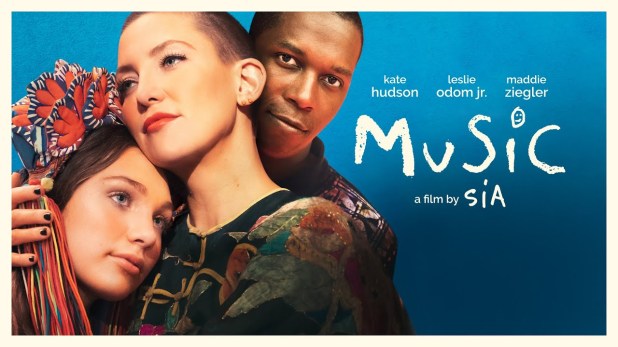
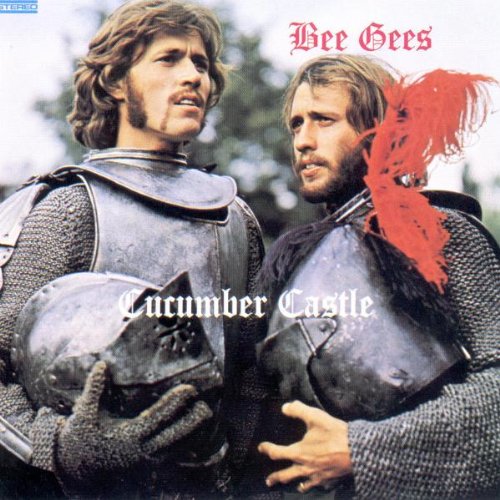



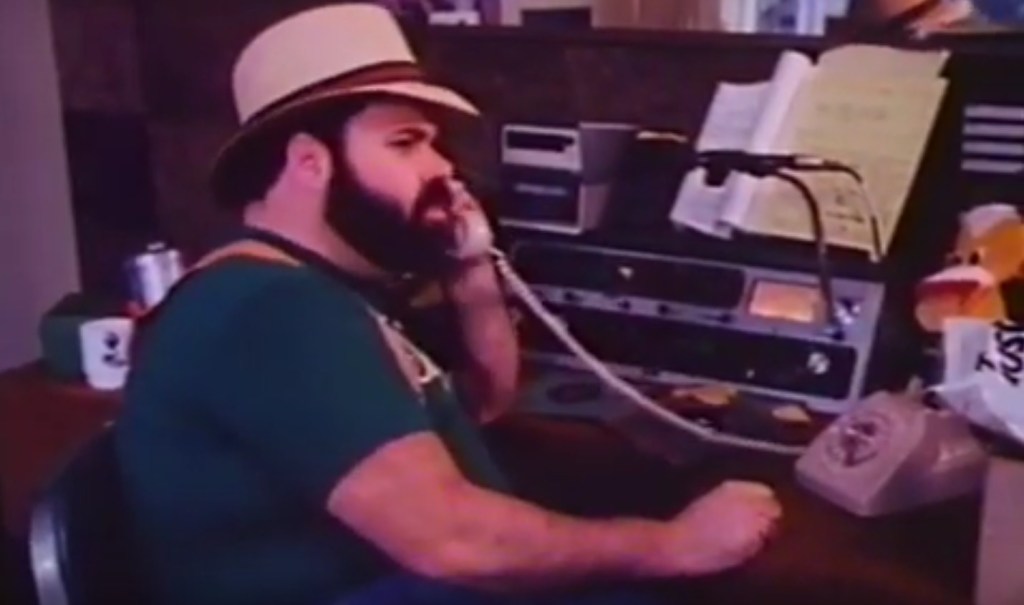
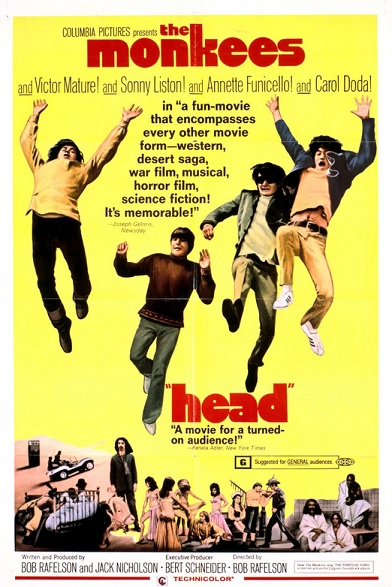
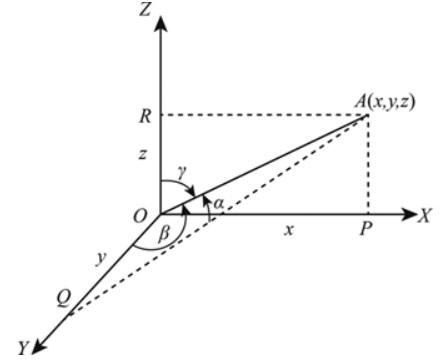


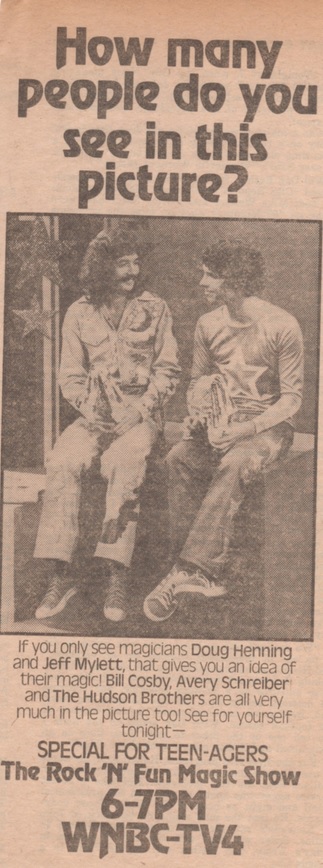


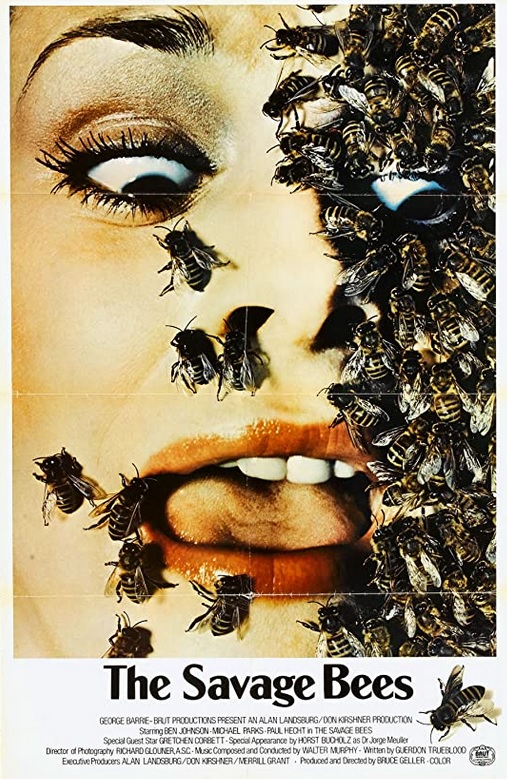

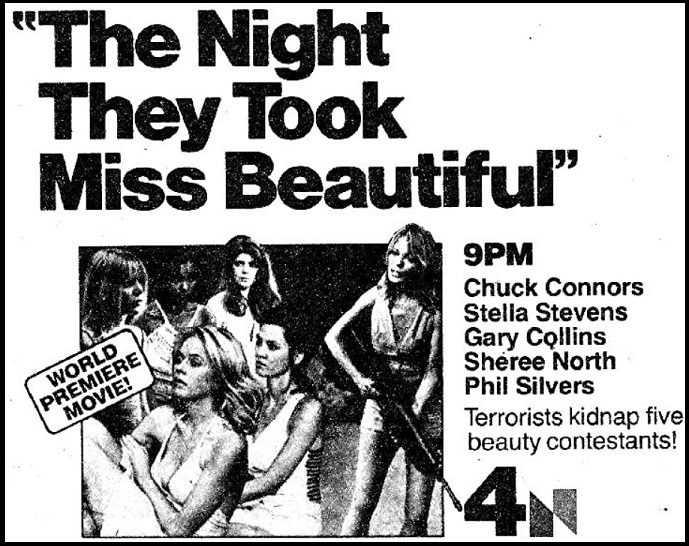


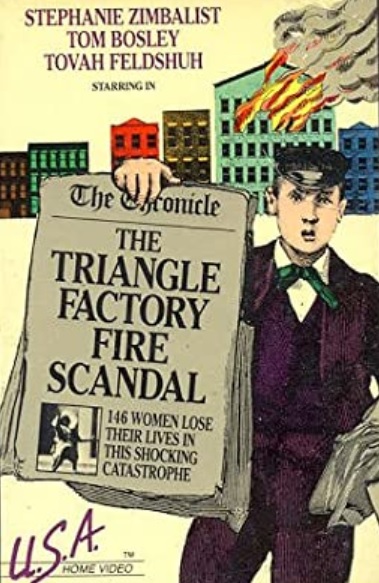


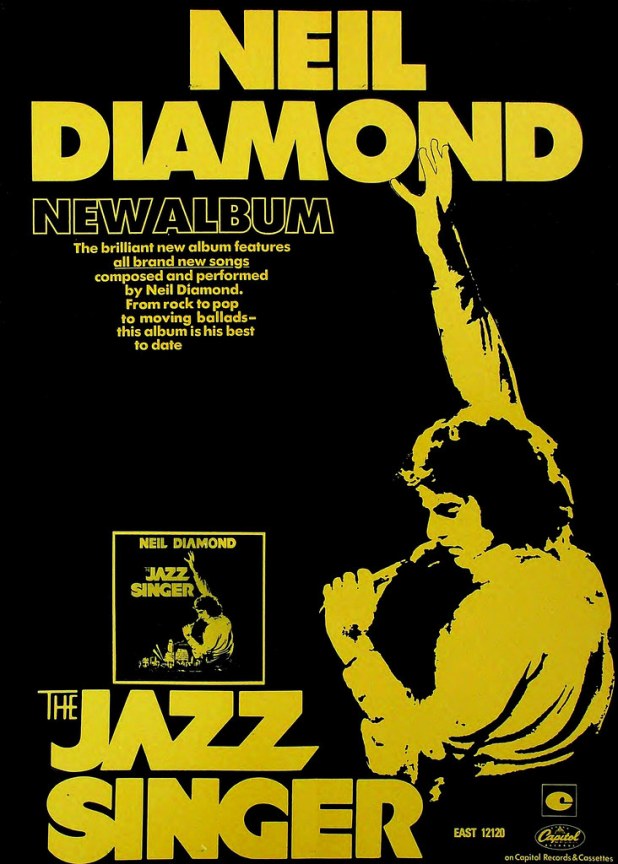
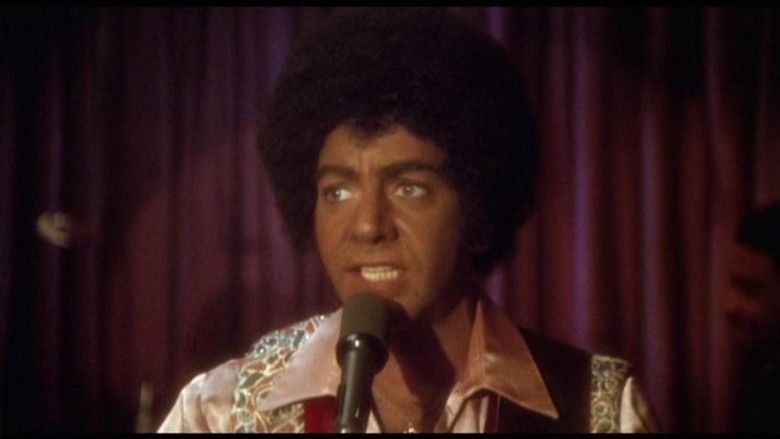
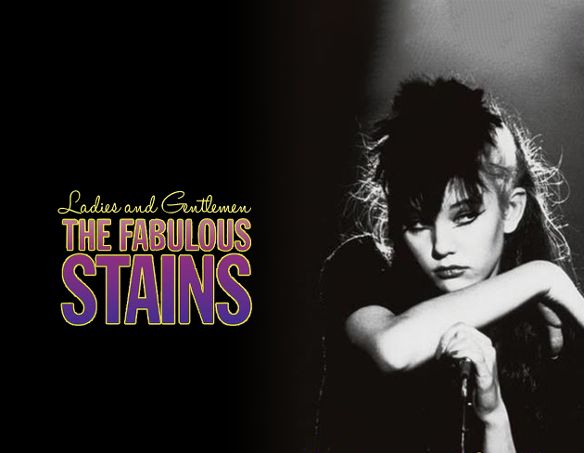


 B&S About Movies

You must be logged in to post a comment.