Two films nullified the ’50s productions values of sci-fi films: 20th Century Fox’s Planet of the Apes and MGM’s 2001: A Space Odyssey, both released in April 1968, respectively. To a lesser extent: there was the Robert Altman-directed Warner Bros. production of Countdown, released a month later, in May. And to an even lesser extent: there was Hammer Films — in conjunction with Warners — with their failed “space western” Moon Zero Two, which made it to screens in October 1969. Then, in November 1969, Columbia threw their hat into the space race ring with Marooned, directed by — of all people — John Sturges of The Magnificent Seven (1960) and The Great Escape (1963) fame. (If you haven’t seen them: Countdown and Marooned, while accurate, realistic space race dramas, are bone-dry; Moon Zero Two is best described as a goofy, swingin’-mod version of 2001.)
An ’80s VHS reissue.
But no one told television director Nicholas Webster that the sci-fi times had changed (and a couple other directors, as you’ll soon see). Then there’s Webster’s less-prestigious pedigree: his first forays into theatrical features was with the crazed Christmastime movie (and his third film) Santa Claus Conquers the Martians (we love this 1964 movie so much, we’ve reviewed it, not once, but twice).
Also released the same year in the U.S. was Italian pirate and western purveyor Primo Zeglio’s woefully already-behind-the-times sci-fi’er Mission Stardust — a film that is closer-in-style to Antonio Margheriti’s early ’60s “mods in space” romps Assignment: Outer Space and Battle of the Worlds, along with Margheriti’s four mid-’60s “Italian Space Movies” produced for direct syndication on American UHF television stations: Known as the Gamma One series, the films included Wild, Wild Planet, War of the Planets, War Between the Planets, and Snow Devils in America (each carry alternate titles). A fifth film in the Gamma series — backed by MGM (!?) with Margheriti co-directing with revered Japanese director Kinji Fukasaku (Tora! Tora! Tora!) — was another woefully out-of-date space flick in 1968: The Green Slime. Each of these films are pure fantasy and lack in any realism triggered by 2001 and the Apes. Can we mention the weirder-to-worse, celluloid cousin to Mission Stardust, 2+5 Mission Hydra, which bounced around the world marketplace from 1966 to 1968? Sure, why not.
If you are familiar with 2+5 Mission Hydra, wrap your head around this for a moment: While Stanley Kubrick was in production on 2001, Pietro Francisci was making his space epic — which itself had Planet of the Apes-inspired apes — in production at the same time. Crazy, right?
However, despite 2001’s ability to transcend its spiritual-and-psychological-confusing themes about a man’s journey through his “inner space” and find box-office success, the major studios held steadfast to their belief: science fiction was a low-budget genre lacking an analogues audience appeal to the westerns and war movies churned out by the majors (which is why Countdown and Marooned are bogged down with more “western” style drama-bickering instead of amazing sci-fi imagery). And it’s true: There was the more inept Missile to the Moon (1958) and Mission Mars (1968) flicks produced than there were Forbidden Planet (1956) and It! The Terror from Beyond Space (1958) styled flicks on the big screen in the ’50s and ’60s. Then there were the Earth-bound ones, such as Beginning of the End(1957) — starring a giant, back-projected grasshopper invasion over photographs of Chicago. So goes sci-fi in the ’50s and ’60s.
The plot-similar Countdown (both with Cold War-era space race, fretting wives, bickering military and astronaut drama), which was adapted from Hank Searls’s best-selling 1964 novel The Pilgrim Project, benefited from Searls’s reputation as a respected military and aviation-themed novelist and screenwriter, as well as realism afforded by NASA renting out their facilities in Cocoa Beach, Florida. And from having a score composed by Leonard Rosenman (the Apes and Star Trek film franchises).
Meanwhile: Mission Mars had a Decca Records-tie in with a theme song (that had nothing to do with the film) “No More Tears” by the Queens, New York, garage-psych group, The Forum Quroum (Discogs / Rockasteria). It is truly the ultimate of end credit theme songs (well, at least until Star Crystal was released). Just why? Well, there’s a subplot about the astronaut’s wives having foreshadowing-nightmares about their hubbies not coming back, so there’s the “tears,” we guess, to warrant the songs. And you may get “tears” from the “futuristic” ’60s-style jazzy electric keyboard noodling heard throughout the film: I’m picking up “bad vibrations, indeed.
Webster’s film was produced by Sagittarius Productions as the first film produced at Studio City, a scrappy facility cobbled together in Miami, in a failed, hodgepodge effort by Florida to become the “Hollywood of the South.” (One of Trump’s failed pre-President ’90s deals was to build a film studio in Homestead, Florida, back before the state rescinded its film production tax incentives program later in the decade.) And instead of being based on a best-selling novel, like its three celluloid brethren, Mission Mars was co-penned by Micheal St. Clair and Aubrey Wisberg, who collectively gave us The Body Stealers (1969) and The Man from Planet X (1951) — two films so obscure, the B&S team never encountered either film on UHF-TV, VHS home video, or a Mill Creek box set. (The second and final film produced at Studio City in Miami was William Grefe’s The Wild Rebels. Gus Pardalis from The Forum Quorum also composed the soundtrack — the band also provided songs from their lone album to the film — on Sagittarius’ third feature, 1969’s The Candy Man.)
Do you see where this is going?
Mattel’s Major Matt Mason ’60s toy set courtesy of SyFy Wire. Robert Zemeckis and Tom Hanks have been trying for years to get a feature film madebased on the toys.
While the films Nicolas Webster (who returned to television, never to make another feature film — and, in addition, stayed away from science fiction) was attempting to copy benefited from location shoots, along with sets and costumes made from scratch — Webster heavily relied on clumsy NASA stock footage. And Webster”reversed” his space footage — two effects for the price of one effects shot — for the Mars launching/landings. And he built his first “Mars” outside: then a tornado ripped through the Liberty City neighborhood and destroyed it. Then shooting was delayed when a dump trunk delivering sand to recreate the Martian set indoors, fell through the sound stage floor. The crew’s spacesuits were a hodgepodge of motorcycle helmets and white-rubber scuba suits. (It seems Sagittarius was unable to rent out authentic Air Force pressure suits and helmets, unlike its more inept cheapie-brethren, 1960’s 12 to the Moon.) Their blue, red-and-white shoulder-striped astronaut mission tee-shirts were actually popular off-the-rack ’60s wares that lasted into the ’70s (Bobby Brady even wore one!) — only with name tags and American flags sewn on the chest and sleeves. (There’s a great, 2011 anecdote from Lance Webster, the director’s son, then 24 and just out of college, threaded on the IMDb regarding the production.)
Do you see where this is going: Mission Mars is more Primo Zeglio and Antonio Margheriti — who coped Roger Vadim’s “mods in space” romp Barbarella — than Arthur P. Jacobs and Stanley Kurbrick. And with a lesser budget.
As with The Green Smile: of course we get goofy aliens. But in Webster’s verse: they’re spindly, one-red-eyed Martians (that look like — and are — dolls shot in close up and inspired by the far superior War of the Worlds aliens) firing up their red eye to either brainwash or fry the Earthlings to a cinder. And there’s the big, rocky-silver orb that splits open to suck in the astronauts. But there are a few nice touches: Mission Commander Darren McGavin (Yep, Kolchak, The Night Stalkler and Old Man Parker from A Christmas Story) and soon-to-die third wheel George De Vries (Deathdream) drop yellow pills and a shot of water into metal steamers to make eggs. And their elevator-platformed capsule is pretty convincing. And the frozen cosmonaut they find — and defrost — is a decent enough effect. The launching of “marker” balloons to find their way back to the ship, is smart. And the alien orb, while a clumsy, in-camera effect, brings a nice what-the-hell-is-that alien mystery to the proceedings that reminds of director Sidney W. Pink and writer Ib Melchoir’s (superior) Journey to the Seventh Planet (1962), with its mystero aliens illusion-duping the stupid Earthmen with fake women and lush landscapes on Uranus.
While watching Mission Mars all these years later, it certainly stirs the ol’ UHF ventricles and VHS cockles, but there’s no denying the cheesiness and low-tech tomfoolery of it of it all, with its same old space ship interiors of Bulova clocks and reel-to-reel tape players on the walls. Yes, this is a film of Motorcycle helmets and wet suits as astronauts strap in to massage tables instead of Lap-Z-Boy recliners like other films of its low-budgeted, ’50s ilk. In fact, if Mission Mars was shot in black and white, instead of color, you’d have a ’50s-era film that ranks right up there with Project Moonbase (1953), King Dinosaur (1955), Destination Space (1959) and Space Probe Taurus (1965). And, if there was a woman on the ship, we could have had another well-intention but Bechdel test failure like The Angry Red Planet (1959) (a personal favorite, courtesy of Ib Melchoir), but me thinks that film’s funky red-filtering and film tinting photo-trickery was beyond Mission Mars’ budget — more so after having to build Mars, twice, and crane a dump truck out of a hole in a sound stage floor.
Okay, well, maybe Mission Mars isn’t as bad as King Dinosaur (at least they didn’t nuke Mars). However, while the always likable McGavin keeps us watching (he returned to Mars twelve years later in NBC-TV’s The Martian Chronicles), it’s easy to see why Nick Adams (in his last-released film before his death) was never able to consolidate his “Best Supporting Actor” Oscar nod for Twilight of Honor (1963) to reach the career hires of his old roommate, James Dean, and close friend, Elvis Presley, only to ended up doing low-rent sci-fi for Toho Studios (Frankenstein Conquers the World, Monster Zero) to pay off his divorce and child custody bills. (It’s said that Presley’s manager, Col. Tom Parker, concerned of Nick’s friendship with Elvis, was behind the undermining/bad mouthing of Nick’s career as a troubled “bad boy” and homosexual.)
You can watch Mission Mars — unripped by MST3K — with a very clean DVD rip on You Tube. If you’re a kid of the ’80s and remember your Saturday afternoons with Commander USA’s Groovy Movies, that version — complete with commercial and Commander vignettes, is also on You Tube. Of course, if you just want the “sci-fi Mars” parts, then you can burn through the movie in eleven-minutes, with the highlights reel, embedded above. Oh, and here’s “No More Tears” as a standalone track on You Tube.
About the Author: You can learn more about the writings of R.D Francis on Facebook. He also writes for B&S About Movies.
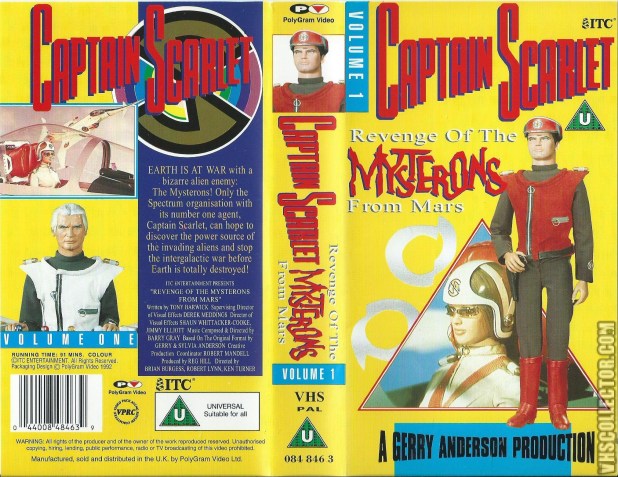
Along with 1980’s Captain Scarlet vs. the Mysterons, this film collects episodes of the 1967 series — “Shadow of Fear”, “Lunarville 7”, “Crater 101” and “Dangerous Rendezvous.” It wasn’t well-received by fans of the series and by anyone that hasn’t seen a Supermarionation series — in which Gerry Anderson filmed puppets and made them appear human — it may seem completely deranged.
In 2068, Earth has been at war with the Mysterons, who have a horrific way of dealing with their enemies: they kill them and replace them with clones under their control. Earth’s top military organization Spectrum had an agent named Captain Spectrum who was treated in just such a way, but he was so unstoppable that even his clone broke free from the Mysterons and came back to Earth.
On November 24, 1988, this movie aired as the second episode of Mystery Science Theater 3000 on KTMA. This would be the very first Turkey Day that fans of the show — well, it was only on one UHF channel at the time — would enjoy. The first episode was also shown that day, with Invaders from the Deep, another Gerry Anderson film, was riffed.
Three brothers, Masaichi, Masaru and Masao*, struggle to be popular and get girlfriends. That’s the basic thread of this movie, which has 21 segments that may or may not make any sense to the overall narrative. Sometimes, the movie is content to be a science-fiction comedy and others, it just turns into dance battles and a tribute to Cronenberg’s eXistenZ where a girl plugs a wire for her stomach to a TV, at which point an open anus appears and another character shoves his fist into it, pulling out a miniature sushi chef.
The best way I can explain this movie is through some of the narration, which sounds like it came straight out of Prince of Darkness: “Only appearing in your dream. Distorting every sound to create a world like to other. This is what they live for; jumping from one person’s dream to another. Once you have been chosen, you will lose all control of your dreams.”
Co-written and co-directed by Katsuhito Ishii (The Taste of Tea, the animated parts of Kill Bill, Redline), Hajime Ishimine and Shunichiro Miki, I would describe this movie as watching five TV shows all constantly shifting channels while multiple people scream in your face. So yeah, I loved it.
*One brother is Guitar Brother, the other is constantly aroused and the third is a chubby American child. No, none of this is ever explained.
Originally titled The Girl from 5000 A.D., this movie had a great tagline: “From Time Unborn … A Hideous She-Thing!”
Playing on American-International Pictures double features with The Screaming Skull or The Brain Eaters, Terror from the Year 5000 was shot in Dade County, Florida and presents a world where scientists attempt to communicate with the future by sending their fraternity keys through time and getting statues and coins in return. One of the scientists, Victor, grows insane attempting to communicate with the future and pays for it with his life. There’s also a mutant cat cadaver, in case you’re into that kind of thing.
The poster for this movie is, quite frankly, way more interesting than the movie its selling. Which, come to think if it, is how posters should work, right?
Dede Allen, who would one day edit The Hustler, Wonder Boys, Bonnie and Clyde, Dog Day Afternoon and Reds, started her editing career on this movie.
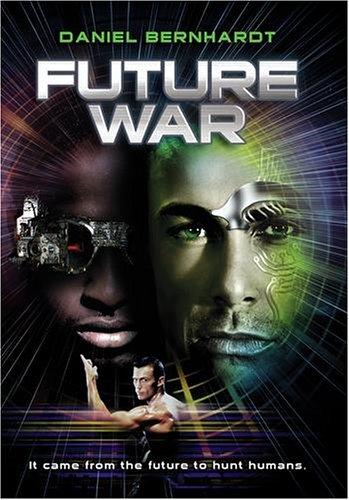
Future War was the directorial debut of Anthony Doublin, who has created special effects and miniatures for movies like Re-Animator, Bride of Re-Animator, From Beyond, The Blob remake, Scanner Cop, Willy’s Wonderland and more. He’d go on to make Manhater, Voodoo Dolly and Slaughtered, but his career nearly ended here, as after seeing the first rough cut, he walked away.
Even during the shooting of the movie, the crew joked that it would end up on Mystery Science Theater 3000. Well, they were right.
The Runaway (Daniel Bernhardt, Bloodsport 2-4, Bone Breaker in Logan) is a human slave kidnapped from some past time, pushed into the future and now hunted by Robert Z’Dar, Mel Novak and dinosaurs. He thinks Earth is Heaven itself, so he has that going for him, plus he knows kickboxing.
So yeah, somehow he gets to our Earth and gets involved in a street gang and a nun who used to be Angel, pretty much. The fact that I know that the actress who plays Sister Ann, Travis Brooks Stewart, was also in Bikini Hotel proves that I have watched way too many USA Up All NIght movies (she was also the art director and set dresser of that movie).
In the original ending, Sister Ann abandoned her training as a nun to join Runaway and her former gang friends to battle cyborgs. One of the film’s backers was upset by this ending, as he felt it was disrespectful to the Catholic Church. So they had to shoot an entirely new ending where Sister Ann takes her vows and Z’Dar battles the Runaway one more time and then our hero becomes a counselor for runaways, because, yeah. He’s the Runaway.
In 1981 Australia, the idea of the future that we live in today was one dominated by magazines. Those magazines would enforce the social order and the only violence and sex that anyone would see would be in those pages. So yeah, maybe they didn’t get the internet part down, but I guess some of this movie rings true. That said, if you’re expecting an Australian soft core movie to explain 2021, you’re drongo, mate.
Also, in the Australia of Centrespread, a movie that disappeared from theaters and most peoples’ memories until Umbrella re-released it, social castes are enforced and only by finding a new girl for the magazine will our protagonist keep moving up the social ladder. Yet when he meets and falls for Niki, he sees that life can mean something more. However, she gets an offer to be a big star.
Director Tony Paterson was an editor on Mad Max, Fantasm, Fantasm Comes Again and Death Games before getting behind the camera for the only film he’d direct.
This movie feels like something great is happening within it. It really is the difference between art and exploitation, because if you told someone this was a French film that only played small festivals, people would lose their mind. Tell them it played double bills with Felicity in Australia and they think it’s garbage.
Also known as Planet of the Dead and Spaceship Venus Does Not Reply, this is really the East German/Polish film Milcząca Gwiazda / Der Schweigende Stern, which would mean The Silent Star in English. It’s based on Stanislaw Lew’s 1951 novel The Astronauts. The author — who also was the man behind Solaris — was critical of the final film, saying, “It practically delivered speeches about the struggle for peace. Trashy screenplay was painted; tar was bubbling, which would not scare even a child.”
So how did it make it to America? Out old friends at Crown International Pictures, who In 1962 released a cut-down and American-friendly dub of the movie — along with two other cuts under the aforementioned Planet of the Dead and Spaceship Venus Does Not Reply titles. Domestic audiences wouldn’t see the original, uncut version of the film until it was re-released by the DEFA Film Library of the University of Massachusetts Amherst as The Silent Star.
Scientists discover that the Tunguska explosion of 1908 was caused by an alien craft and not a meteor, which sends them to Venus, where they discover that the inhabitants of that planet want to irradiate the Earth and take it over. More precisely, they would have, had they not nuked themselves into oblivion.
If you watched this and thought, “Have I seen this movie somewhere else?” that would be because it’s the movie within a movie in Galaxina. If you listened to it and felt the same way, that’s because it liberally borrows — steals — music from Destination Moon, This Island Earth and The Wolf Man.
You can watch the Mystery Science Theater 3000 version of this movie on Tubi or the original on YouTube:
Quinn Martin was the king of TV for two decades. His QM productions produced a string of successful television series — he had at least one television series running in prime time every year for 21 straight years — that includes Twelve O’Clock High, Dan August,Tales of the Unexpected, The F.B.I., The Invaders, The Fugutive, The Streets of San Francisco, Cannon and Barnaby Jones. He also produced sixteen TV movies, The Force of Evil, Code Name: Diamond Head, Attack on Terror: The FBI vs. the Ku Klux Klan and his lone theatrical movie, The Mephisto Waltz.
This was one of his last productions, other than four Dan August TV movies. This movie has a great pedigree, however, as it’s directed by Harvey Hart, who also directed The Pyx, and was written by Robert W. Lenski, who wrote Who is the Black Dahlia?, Mafia Princess and Farewell to the Planet of the Apes.
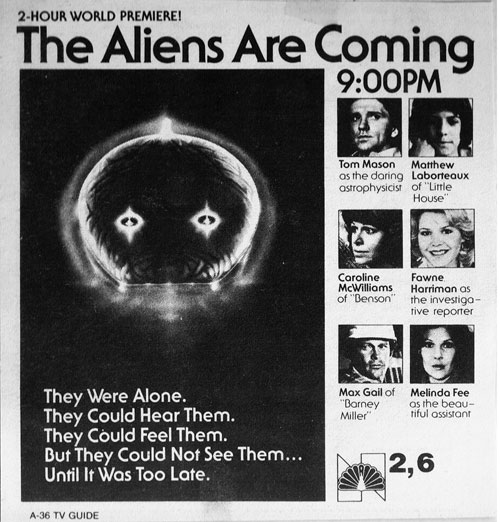
The Aliens are Coming was obviously a pilot that never got picked up. It’s a lot like The Invaders, as aliens are looking to possess humans. Sadly, the budget isn’t what it should be, so a lot of the inside of their ships just look like light shows.
I was quite possibly the only eight-year-old Max Gail fan when this came out, so I know we definitely watched the premiere on NBC. I would have had no idea who Matthew Labyorteaux was at this point in my life because I hated going to anyone’s house who had the gall to make me watch Little House on the Prarie.
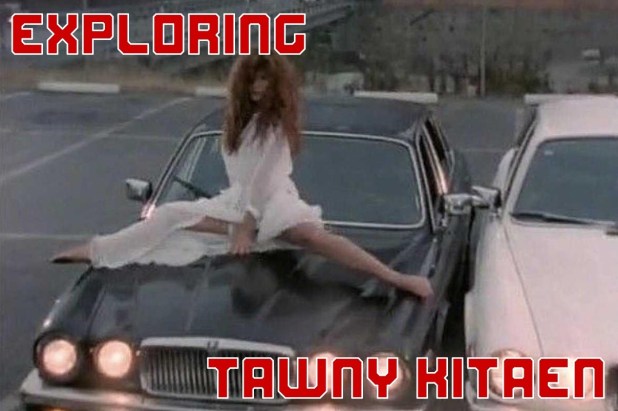
When one mentions the name Tawny Kitaen (born Julie), the first image that pops into another’s head are the MTV memories of an enchanting “video vixen” oozing alongside David Coverdale in the videos for Whitesnake’s 1987 hits “Still of the Night,” “Is This Love,” and “Here I Go Again,” and then “Fool for Your Loving” and “The Deeper the Love” from their 1989 follow up album, Slip of the Tongue. But everyone seems to forget that, before her dating and eventual 1989 to 1991 marriage to David Coverdale, she got her start in rock videos with Ratt.
She started dating Ratt’s future guitarist Robbin Crosby in high school in their mutual hometown of San Diego, then traveled with the remnants of Mickey Ratt to Los Angeles. She came to appear as the cover model (that’s her rat covered legs) on the band’s self-titled EP (1983) and their debut album, Out of the Cellar (1984). Both album’s featured versions of “Back for More” and the subsequent video not only starred Tawny, but Nikki Sixx and Tommy Lee, who starred as two abusive cops. (The model on the cover, and in the video single “Lay It Down,” for Ratt’s sophomore album, Invasion of your Privacy (1985), was Playboy model Marianne Gravatte. She was the Playmate of the Month in October 1982 and Playmate of the Year in 1983.) With those Ratt covers and one rock video on her resume, as well as appearing in commercials for exercise guru Jack LaLanne’s European Health Spas, Tawny began her acting career.
She made her debut in a minor support role in the ABC-TV nighttime mini-series, Malibu (1983), alongside Susan Day and James Coburn (both also starred in Looker), and ubiquitous character actor William Atherton (Die Hard). She later returned to daytime serial television in the CBS-TV drama, Capitol (during its 1986 – 1987 final season), as the recurring Meredith Ross, then as Lisa DiNapoli during the 1989 season of NBC-TV’s Santa Barbara.
Nope. Not Ben Affleck. That’s Brent Huff!
Gwendoline, aka The Perils of Gwendoline in the Land of the Yik-Yak(1984) Ah, yes. After catching our eye in Ratt’s “Back for More,” we, the dateless wee teen pups of the analog ’80s got our first major dose of Tawny Kitaen in her feature film debut — a softcore nudie ripoff of Raiders of the Lost Ark that, although it failed theatrically, found a home as an “after hours” programmer on HBO and Cinemax.
Look, if you want a film where Tawny’s captured and sold into white slavery, only to be rescued by Brent “Nine Deaths of the Ninja” Huff, then this is your picture. Oh, and like Sam said in his review: If you want all of the softcore shenanigans (yes, Tawny’s tied up along the way; this is based on the bondage-themed comics of John Willie, after all), you want the 105 minute European cut vs. the 87 minute U.S theatrical cut. Yes, since this movie isn’t all that great (IMO; it fared better with Sam), you do need those extra 28 minutes to hold your interest — even though it’s all courtesy of the French dude who gave us the successful soft-core romps Emmanuelle and Lady Chatterly’s Lover with Sylvia Kristel.
Bachelor Party (1984) So, back in the day — before his Oscar years — Tom Hanks, who made his acting debut in He Knows You’re Alone, became a pretty big deal courtesy of his starring role on the ABC-TV sitcom Busom Buddies and finding box office gold with Ron Howard’s Splash. So, in the wake of the success of Police Academy, Hanks hooked up with Broadway producer Bob Isreal for his brother Neil’s celluloid preservation of the wild bachelor party thrown by producer Ron Moler for Bob.
The plot, such as it is, concerns Tom Hanks’s Rick Gassko, a ne’er-do-well party animal who — to the dismay of his friends — is shanghaied by Tawny Kitaen’s Debbie Thompson. So, Rick’s best bud, Jay (Adrian Zmed), throws an epic bachelor party — with a bet Rick can’t remain faithful to Debbie. Complicating matters is the ‘ol evil, future father-in-law who recruits Debbie’s ex-fiancé to sabotage the nuptials. Light comedy of the non-Judd Apatow gross-out variety, as we say to wrap up a review, ensues (because we are, in fact, lazy, trope-laden, brain dead lazy journalists in the ol’ B&S cubicle farm).
As with Tawny’s debut film featuring a future action star in Brett Huff, one of Tom’s best-buddies, here, is soon-to-be-go-to-Cannon-action star Michael Dudikoff (Musketeers Forever) in one of his rare, non-action roles. And, if Tawny doesn’t get you through the turnstile, then the presence of the always welcomed Wendie Jo Sperber, surely will (she also starred in Neil Isreal’s next Police Academy-inspired romp, Moving Violations).
A well-deserved box office hit ($40 million against $7 million), Bachelor Party was buoyed with a great, new wave soundtrack tie-in featuring music by The Fleshtones, Oingo Boingo, Jools Holland and his Millionaires, and The Alarm (Vinyl). In the film, but not on the soundtrack was the first appearance of Wang Chung’s “Dance Hall Days.”
You can easily stream this on Amazon and Netflix.
California Girls (1984) In 1965, the Beach Boys rose to the top of the charts with the song “California Girls.” Then David Lee Roth ditched Van Halen (check out our Exploring: Eddie Van Halen on Film tribute) to start his solo career with a hit cover of the song, which was first released on December 19, 1984 (the EP Crazy from the Heat was issued in January 1985). In between, ABC Circle Films, which released this Robby Benson (The Death of Richie) starrer as an overseas theatrical, issued it stateside as an ABC-TV movie in March 1985.
Also starring Martin Mull (FM) and Ernie Hudson (Ghostbusters) alongside Tawny, it’s a lighthearted drama concerned with Benson’s immature-to-dreaming New Jersey auto mechanic who ditches his girlfriend and heads to California to find the girl who stars in the California Girl cosmetics commercial (Tawny). And Robby’s mom is Doris Roberts from CBS-TV’s Everybody Loves Raymond. Does this all play a little bit like Saturday Night Fever — only without the disco and innocuous-suitable for the under 18-crowd? Yeah, a little bit.
Turner Classic Movies owns the rights, so no luck on any online streams — free or pay. And it’s never been released to DVD or Blu, either, but the VHS tapes are out there for the taking. We did, however, find the opening 10 minutes of the film on You Tube. Oh, and don’t confuse this with the 1983, new wave-inspired T&A comedy of the same name, about a sex-up T&A lovin’ disc jockey. And don’t confuse this film’s alternate title of California Dreams with the superior California Dreaming (1979), which stars Dennis Christopher alongside Glynnis O’Connor — who starred alongside Robby Benson in Ode to Billy Joe (1976).
Crystal Heart (1986) If you’ve seen John Travolta in The Boy in the Plastic Bubble (how have we not reviewed that one), then you’re up to speed on this film’s musical slant of that same material — with Tawny’s rock star Alley Daniels falling in love with a songwriter afflicted with auto-immune deficiency syndrome (Lee Curreri of TV’s Fame) forced to live inside a plastic bubble, aka a crystal room, aka “heart,” as it were. It’s directed by TV series purveyor Gil Bettman (The Fall Guy, Knight Rider, and Automan), who directed one more feature with the James Bond spoof Never Too Young to Die, which starred soap heartthrob John “Uncle Jessie” Stamos (but we only cared that it starred Gene Simmons of KISS as the villain).
Not that it matters to your interest-cum-enjoyment of the film: If you’re into the six-degrees of film trivia: Glynnis O’Connor, who starred with Benson in Ode to Billy Joe, starred alongside John Travolta in The Boy in the Plastic Bubble. So, there’s that to mull over. Another mull to mull: Linda Shayne, who wrote this, also gave us two entries in the Canadian-made Screwball series and somehow turned and old Sheb Wooley song into a movie: Purple People Eater.
You can watch this oft-HBO programmer as a free stream on You Tube.
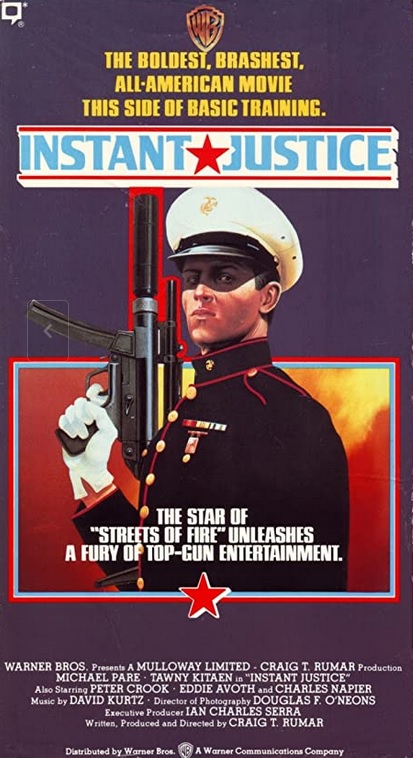
Instant Justice, aka Marine Issue, aka Madrid Connection (1986) Tawny goes . . . Semper Doh! in this Michael Paré (Moon 44) vehicle shot in the British overseas territory of Gibraltar on Spain’s southern coast — and the film is noted as the first feature film shot on the location.
Now, we love Michael (who’s into Eric Roberts-mode these days with 30-plus films in various states of pre-production, filming, and post-production), but in this ’80s action pastiche of First Blood, Commando, and Missing in Action . . . Paré is no Stallone, Arnie, or Norris, which is this film’s raison d’être. To put it bluntly: Paré is the pits, here. “Top Gun Entertainment,” indeed, Mr. Copywriter. Indeed.
While he’s certainly been better on camera (Streets of Fire), and Tawny’s not showing us any of the skin we came for (and tries — woefully — to “act”), the blame for this inert action mess is solely on the shoulders Craig T. Rumar, who (if we believe the digital content warriors of the IMDb, came to manage the early careers of . . . Stallone, Arnie, and Fred “Hunter” Dryer) broke away from his managerial and producer duties to scribe this, his lone screenplay. And don’t go looking for the other works of director Denis Amar, whose resume is comprised of French-language films and TV series that never made it to the international marketplace. And with good reason.
Michael Paré is Sgt. Scott Youngblood, a rogue U.S. Marine who travels to Spain to find those who murdered his long-estranged sister — a victim of the evil (of course) drug runners who kidnapped her as part of their modeling agency that fronts as a prostitution/white slavery ring. He comes to rescue their latest victim (Kitaen) and takes a scored earth vigilante approach to revenge — with Kitaen stappin’ it on — to the cheesy, Z-Grade AOR ’80s stylings of Lea Hart with “Danger in the Streets.”
Not that it matters to your interest-cum-enjoyment of the film: Lea Hart, who got his start as a guitarist in Joan Jett’s band during her Bad Reputation to pre-Light of Day years, came to replace Dave King in (then washed up) Fastway — yes, the band that portrayed Sammi Curr in Trick or Treat. So, there’s that to mull over.
There’s no online streams, but here’s the overseas trailer on You Tube.
Happy Hour, aka Sour Grapes (1986) So, you say you only know writer-director John De Bello for his Killer Tomatoes franchise (with movies in 1978, 1988, and 1992)?
Well, amid those one-joke veggie rants — made to less and lesser and lesser effect — here’s De Bello’s attempt at an ’80s T&A comedy, in a tale about a beer company chemist whose latest — and accidental — brew works like that ol’ Larry Cohen desert treat in The Stuff. Yep, anyone who drinks this strange brew becomes addicted. But since this is an ’80s comedy, they also become horny. (Where have I heard this chemical-makes-guys-horny plot before? I’m too lazy to look it up.)
Anyway, along the way, Tawny meets the down on their luck and slummin’ Rich Little (a HUGE ’70s impressionist noted for his frequent Johnny Carson appearances), as our “James Bond,” and Jamie Farr, as our master villain (who wished M.A.S.H never left the air). Wow. Even for an Eddie Deezen (Beverly Hills Vamp) flick, this is pretty bad . . . so bad that it gives the term “mugging for the camera” a bad name. Yeah, never a film — with Tawny sportin’ a Glock 9mm tucked in her bikini bottom — could be so bad. Sour Grapes, indeed.
You can enjoy this oft-run HBO ditty on You Tube, if you must.
Witchboard (1986) Well, when it comes Tawny’s resume, this is really the whole enchilada, ain’t it? Next to Bachelor Party, this is her most successful and best-known film (one that cleared $8 million on a $2 million budget).
Well, okay, we, the wee dateless pups also loved Tawny for her works in the oft HBO and Cinemax-run Crystal Heart and Gwendoline, but when a studio casts her in a faux The Exorcist redux — complete with a Ouija board, before that now Hasbro-owned “toy” became a film franchise — everybody is going to see that movie — Tawny’s presence, be damned.
So, between the romantic triangle shenanigans of Tawny and actors Stephen Nichols (Patch from TV’s daytime drama Days of Our Lives) and Todd Allen (too many TV series to mention), they like to play with Ouijas and summon lost and lonely ten-year-old boy ghosts. And the ghost wants Tawny for a mommy. And Kathleen Wilhoite, aka Carol Ann the waitress from Road House, as a punk rock psychic, takes a header out a window for an impalement-by-sundial.
See, there’s something for everyone.
Yeah, this is — thanks to Kevin S. Tenney of Night of the Demons and Brain Dead fame — the best movie Tawny ever made. And you can watch it on Tubi.
Glory Years (1987) Imagine a film that stunt casts championship boxer Larry Holmes, ’70s pop crooner Engelbert Humperdink, ’50s sex kitten Mamie Van Doren, ’70s comedian Avery Schreiber, and washed up ’60s comedian Joey Bishop — and then tosses in B&S About Movies beloved character actors George Dzundza, Tim Thomerson, Archie Hahn, Beau Starr, and Chazz Palmineri, along with Franklyn Ajaye, Donna Pescow, and Tawny Kitaen. Well, wait a minute . . . this isn’t a TV movie . . . this is a long-forgotten and short-lived HBO series that aired in 1987 and later compiled into a whopping two and a half-hour programmer for the home video market.
The series followed the Las Vegas exploits of three reunion-bound high school buddies (Dzundza, Thomerson, Hahn) who, in trying to increase their school’s alumni fund to create a bigger bash, loses it on the crap tables; they spend the rest of the series trying to win the money back — as comedy, again as we say to get it over with, ensues.
White Hot, aka Crack in the Mirror (1988) Remember, in the wake of Quentin Tarantino making a splash with ReservoirDogs (1992), when everyone tried to make their own “Tarantinoesque” knock off? Remember when the Q was then replaced by filmmakers evoking the Coen Brothers’ Fargo (1996) to lesser and lesser effect? Well, before the Q and the Coens, Robert Madero — who gave us Ulli Lommel’s Blank Generation (1980) and Mausoleum (1983) — took his “crack” at it with this . . . crack addiction . . . comedy . . . uh, morality tale . . . er, drama.
Of course, Robby Benson, who seen “something” in Madero’s script, decided this would be perfect fodder for his feature film directing debut. And he called up his old California Girls co-star Tawny Kitaen to be his female lead (complete with the biggest hair, ever). This is a film where you say, “Thank God, Danny Aiello is here,” then you realize Danny’s presence as the ubiquitous, drug-pushing Italian gangster doesn’t help — at all.
As with Tawny’s Gwendoline back in 1984, our exposure to this not-so-erotic thriller was result of it airing nights on Cinemax. Yes. We said “erotic thriller” — one that stars and is directed by by Robby Benson — with Benson and Kitaen expanding their thespin’ skills as a coke-addicted yuppie couple. To finance their dreams of having a family, Benson takes a job with Aiello’s drug kingpin that he’s indebted to, and sees his life fall into a temptation-laden tailspin, one rife with Coen-styled noir double crosses and Tarantinoesque loopy characters.
So . . . somewhere in this thespin’ mess is a morality tale, with characters named The Tin Man and The Wiz (take that subtext as you will), which wants to be a gangster tale of the Goodfellas (1990) variety (and Tony Sirico, aka “Paulie Walnuts” on HBO’s The Sopranos, is here as an Aiello henchman), but fails to . . . well, it fails at everything it attempts to convey. Sorry, but if Tommy Wiseau made a “serious drama” about crack addiction — that subsequently turned into an unintentional “dark comedy” — White Hot would be it. Only without the Wiseau charms, but better acting than a Wiseau joint.
Sorry, no streams. And no DVDs or Blus, either. But the VHS tapes are bountiful in the online marketplace, so go for it, Dorothy.
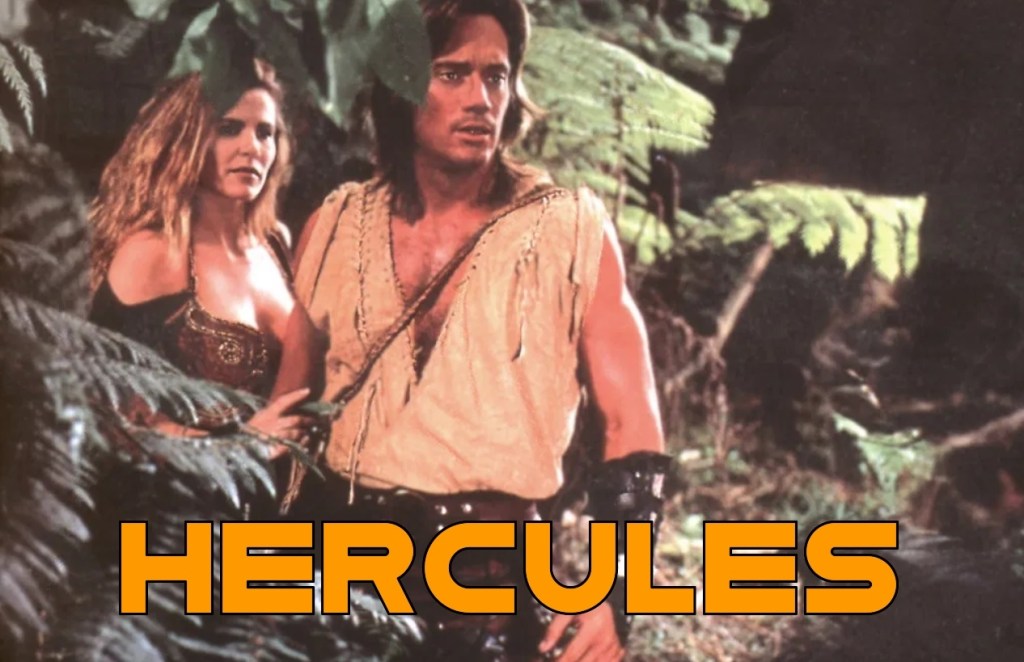
Hercules: And the Circle of Fire/In the Underworld/In the Maze of the Minotaur (1994) Sam Raimi, wearing his producer’s hat, made an excellent choice with his prefect casting of Tawny Kitaen — who is very good, here — as Deianeira, the girl of Zeus’s dreams (played by Anthony Quinn!). Her Herc flicks are three parts of a five-movie miniseries, which takes place before the timeline of the syndicated Hercules: The Legendary Journeys series, which ran from 1995 to 1999. The other two films in the series — parts one and two, sans Tawny — are And the Amazon Women, and And the Lost Kingdom, if you need ’em. And Tawny would also appear in the subsequent series every now and then.
The movies — and series — are easily streamed on numerous digital platforms.
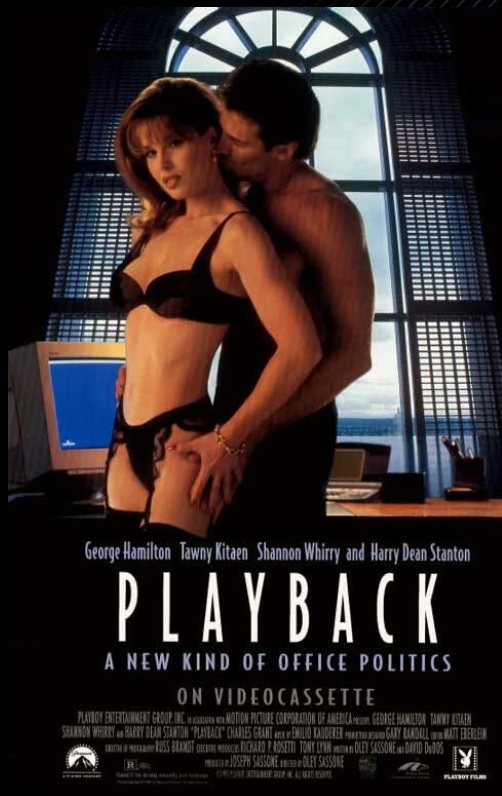
Playback (1996) Nothing says “soft core erotic thriller” more than Shannon Whirry (okay, well Jewel Shepard, too). Shannon, who made her featured film debut alongside Steven Seagal in the mainstream legit Out for Justice (1991), found her niche in a slew of Cinemax “After Dark” programmers with titles such as Body of Influence (1993), Mirror Image II (1993), Animal Instincts II (1994), and Private Obsession (1995). (Be sure to check out our overview of the genre with 1994’s Disclosure and the and the Exploration of the “Erotic Thrillers” of the ’90s featurette.)
So, in keeping with the rock video beginnings of Tawny’s career, the director here is Oley Sassone, who got his start directing mid-to-late ’80s videos for the Romantics, Mr. Mister (oh, frack me; the bane of my existence), Autograph, and Wang Chung (ugh, not them again). Marvel Comics fans know Oley best for his directing the Roger Corman tax shelter-cum-rights holding first stab at The Fantastic Four (1994).
So, how in the hell did George Hamilton and Harry Dean Stanton end up in a film produced by Playboy? Well, that’s not why we’re here, remember? We are here for Tawny Kitean — who kills the trope that women who wear glasses aren’t sexy . . . and makes us loose it when she shows up in a push-up bra. (For the record: Tawny goes full nude, but that’s probably a body double; meanwhile Shannon, who we expect to give us a peek, never drops a thread.)
As is the case with these Cinemax romps, the Z-Grade noir is the thing, so we get the usual web of lies, deception, and sex club-made sex tapes ready-for-blackmail, and, in this case, corporate espionage, but wow . . . for a Playboy-financed production made for after hours pay cable spins, where’s the sex scenes? And what man (Charles Grant of Chuck Norris’s The Delta Force and David Carradine’s P.O.W the Escape), regardless of his executive stresses in organizing a major telecom merger and having Harry Dean’s private dick on his tail (employed by slimy CEO George Hamilton, natch), would reject the likes of Tawny Kitaen, only to go to strip clubs with his work buddies — and even consider the seductive advances of femme fatale executive Shannon Whirry?
Eh, it’s all put together well enough, but this is truly for Tawny completists only. Nope, sorry. There’s no free or pay online streams on this one — at least not on sites I’d trust clicking though. But the VHS tapes abound on Amazon and eBay.
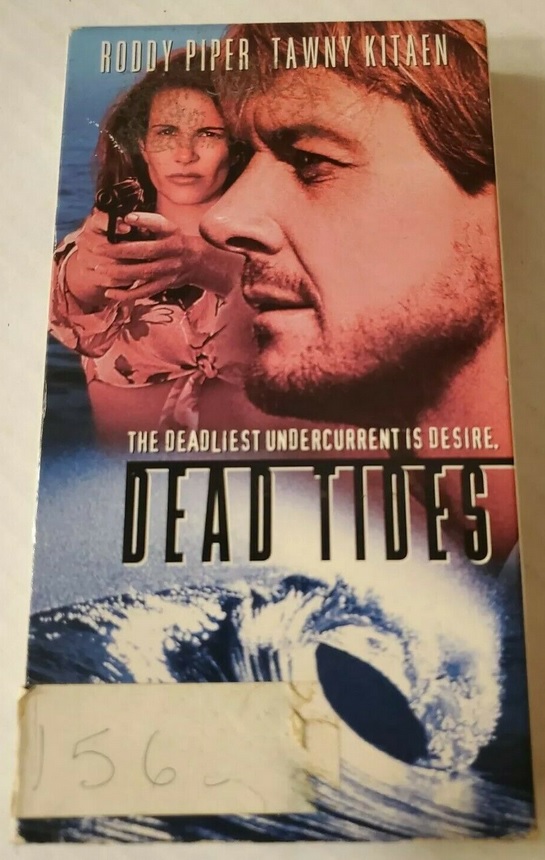
Dead Tides, aka White Tides, aka Swept Away (1996) Sure, Roddy Piper was acting to lesser and lesser effect after the highs of Hell Comes to Frogtown and John Carpenter’s They Live, with such C-Grade action fodder as Resort to Kill (1992), Back in Action (1993), and No Contest (1994), but I kept on renting them: for I love Roddy.
Such is the case with his role as Mick Leddy, a down-and-out ex-Navy Seal who takes a captain’s seat on a pleasure cruiser for a crime lord (the always fine, ubiquitously crazy Juan Fernandez) — and falls down a noir spiral by way of the deceptive charms of the lord’s wife, played by Tawny. The wrath of the drug lord’s minions and the DEA, as we say to just get it over with, ensues.
Next to Bachelor Party and Witchboard, this is my next favorite of Tawny’s flicks. And that’s thanks to the fact that, regardless of Roddy’s presence, Dead Tides isn’t a balls out action flick, with Roddy pulling it back (and trying) to play the role of a noirish, water rat schlemiel — only not as spineless as the usual noirish, land lubbin’ loser (like Fred MacMurray in Double Indemnity, for example).
Now, that’s not saying this Kitaen entry is any good, it ain’t, as your own nostalgic miles for all things WWE — and ex-rock video babes — may vary. But writer and director Serge Rednunsky, an ex-associate of Russian ballet dancer Mikail Baryshnikov, must be doing something right, as he’s made 40-plus adult noir-cum-erotic thrillers and his productions have never lost a dime. And he’s still making them.
No streams for Dead Tides, but we found the trailer on You Tube.
After Midnight (2014) Hell, yeah! Two movies with Tawny tuckin’ Glocks down the bikini line. We ain’t hatin’. And, well, you know us and Fred Olen Ray (search our database; we’ve reviewed a lot of his works) around the ol’ B&S About Movie cubicles: this is an instant watch. And when you get Richard Grieco in the “erotic thriller” bargain, what’s not to like? Well, everything, but Olen Ray and the ol’ Grieco (Inhumanoid, The Journey: Absolution) get wide berths in the Three Rivers’ confluence.
Yeah, sure, the minute one says “strippers,” another thinks of the stripper pole noirs Showgirls (1995) from Paul Verhoeven and Striptease (1996) starring Demi Moore. And as with those adult T&A romps, murder and mystery is adrift in a sea of red herrings as a TV newscaster (Catherine Annette) goes undercover in the erotic worlds of adult entertainment to investigate the murder of her ne’er-do-well stripping sister. However, considering Olen Ray has made more than his share of Lifetime thrillers, while the directing is solid enough against the budget, this is all pretty lightweight with less gratuitous T&A that we expect from a direct-to-video thriller.
No free streams, kiddies, but you can watch it on You Tube for a fee, which also carries the trailer.
Come Simi (2015) While this is, without a doubt, the least-seen film of Tawny Kitaen’s career (I never heard of it until being assigned this “Exploring” feature), it’s also the best-made of her career — courtesy of writer-director Jenica Bergere in her feature film debut. Bergere certainly isn’t a household name (and an acquired taste; thus the vanity of this project), but once you’ve seen her face, you’ll recognize her from her numerous (comedic to dark comedic) network and cable television acting gigs since the mid-’90s, on shows such as Grey’s Anatomy and Shameless, as well as the surprise low-budget sci-fi indie hit, Safety Not Guaranteed (2012).
However, since this is a vanity-cum-industry showcase to better thespin’ things for our writer-director: Bergere also stars (as a loose version of herself) as a neurotic, pregnant actress on a quest to reunite her estranged, dysfunctional family before the birth of her first child. So she packs up her terminal and wheelchair-bound, Alzheimer-stricken mother for a road trip to Simi Valley to visit her mother’s obnoxious sister. Tawny — with obvious, visible plastic surgery work by this point — stars as Dee-Dee, Bergere’s aging porn star sister.
Hey, it’s pretty cool to see Tawny in a sweet, sentimental indie dramedy — and you can stream for free on Tubi, so what’s to hate, when it’s free? Come on, do it for Tawny, will ya? She’s actually very good here, IMO, and nails the porn actress role — and gives it some nice, non-trope (damn it, used the “t” word, again) layers. You can watch the trailer on You Tube. (Oh, and if you’re keeping count, we used the “e” word, aka “ensues,” six times. Doh!)
Julie E. “Tawny” Kitaen August 5, 1961 – May 7, 2021
Heaven just got a little bit louder . . . and a whole lot sexier.
And the wolves are howlin’ . . . in the still of the night.
About the Author: You can learn more about the writings of R.D Francis on Facebook.He also writes for B&S About Movies.
Ken Shinsei the Star Wolf and the crew of the Bacchus 3 — drunken Captain Joe, angry Rocky, lovestruck Tammy, Dan and Billy — as they battle Ken’s old planet Valna Star and the forces of the evil emperor who looks nothing like Darth Vader, not at all.
As we mentioned in our review of the original Fugitive Alien, these stories were originally written by Edmond Hamilton, who grew up in the next town over from my childhood home between Youngstown, OH and New Castle, PA. He started his career writing for pulps like Weird Tales, spent 14 years writing for DC Comics and then published several novels. A year before his death, Toei Animation produced an anime of his Captain Future novels that became popular not only in Japan, but also in France, Italy and Germany. The very same year, Tsuburaya Productions adapted Star Wolf into a tokusatsu series and that’s where we get Fugitive Alien.
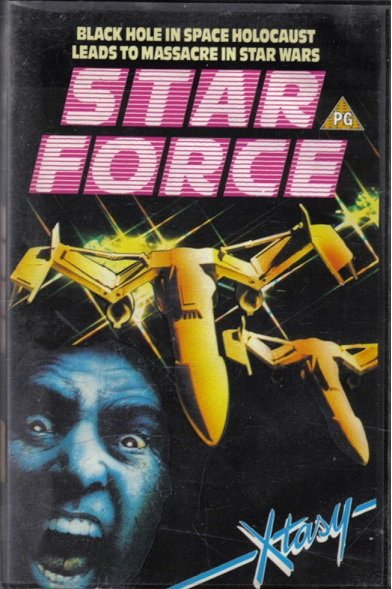
Sure, you could write this off as a Star Wars ripoff, but in truth, it could even be the other way around, as the first Star Wolf book was published in 1967.











 B&S About Movies
You must be logged in to post a comment.