Cotton Candy (1978)

“That’s part of the problem with being a kid actor. When your show’s over, nobody informs you that your career’s over, too.”
— Luke Halpin, aka Sandy Ricks on TV’s Flipper (1964 – 1968)

To become a child actor; a kid star, to paraphrase British modernist poet David Jones: it is both a blessing and a curse.

And for every Leonardo DiCaprio, who got his start as a kid actor on TV’s Growing Pains, receiving the industry’s blessing to transition into adult roles, there’s a Dustin Diamond, from TV’s Saved by the Bell, who’s destined to experience a fateful, Longfellowian rain fall.
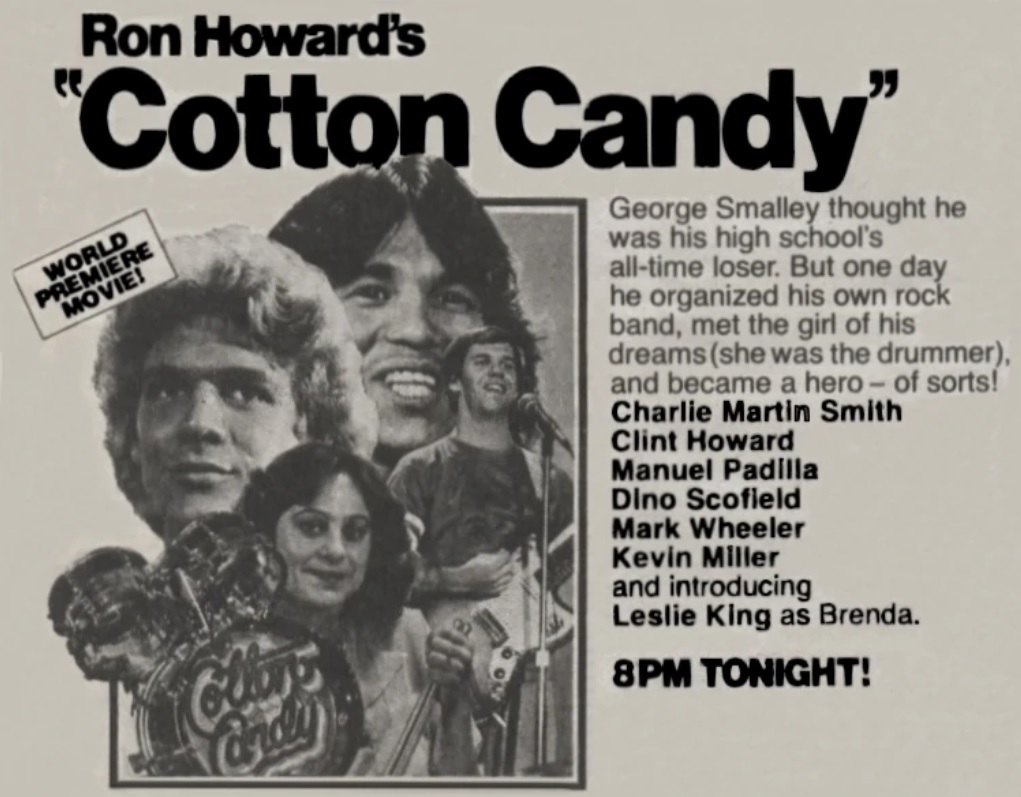
Courtesy of Made for TV Movie Fandom Wiki/You Tube trailer.

And in the case of Luke Halpin (Shock Waves), his successful ‘60s doppelganger would be Ron Howard who, as a kid actor, got his start as Opie Taylor on The Andy Griffith Show (1960 -1968). If only Luke Halpin had been noticed by George Lucas and cast in one of the most profitable films in history, American Graffiti (1973; we’re reviewed the sequel, More American Graffiti), or booked a part on ABC-TV’s Happy Days . . . damn the cackling Clotho, Lachesis, Atropos, that trio of witches weaving the looms of fate.

And the witches saw fit to weave Roger Corman into Ron Howard’s tapestry. And the B-Movie King and the strawberry-mop topped sitcom star made a deal: If Howard would star in New World’s hicksploitation romp Eat My Dust (1975), he would give Howard the opportunity pursue his dream of directing a feature film, which became Grand Theft Auto (1977; its theatrical one-sheet appears in Cotton Candy as George and Brenda go on a date to a movie theater). Both films duplicated the insane box office of American Graffiti: Eat My Dust grossed $5 million against $300,000 and Howard’s directing debut grossed $15 million against $600,000.

So with three box office bonanzas and a hit TV series on his resume, NBC-TV wanted a piece of the Howard action. So they gave Ron an opportunity to direct his second film—his first TV movie (the others were 1980’s Skyward, 1981’s Through the Magic Pyramid, and 1983’s Little Shots)—for his newly formed Major H Productions with his father Rance and brother Clint (Ice Cream Man!!!). The idea that Ron and Clint came up with was Cotton Candy: a TV movie-length pilot for a weekly series concerning the rock ‘n’ romance adventures between the rival high school bands (starring 30-year-old teenagers, as is the case with all teen comedies of the ’70s) Cotton Candy (the underdogs) and Rapid Fire (the chick magnets) making the race for stardom in Dallas, Texas. (The high school in the film was called-out-by-name Lake Highlands High School.)

Tad Painter, Morgan Ferguson, actor Mark Wheeler, Mark Ridlen (also a Dallas radio jock), and John Painter, collectively known as Rapid Fire, aka Dallas local band Quad Pi, formerly known as Lithum X-Mas/image courtesy of Clint Howard via Robert Wilonsky and The Dallas Morning News.

For his leading man, Howard cast his old buddy Charles Martin Smith (Toad from American Graffiti; he later directed the “No False Metal” classic, Trick or Treat!!!). Smith is George Smalley: a geeky high school senior who’s dogged by his mother about dating and girls and a dad (Alvy “Hank Kimble” Moore from Green Acres . . . Ack! Stop right there. This is B&S About Movies, buddy! We remember Alvy from Smokey and the Hotwire Gang, The Witchmaker . . . and The Brotherhood of Satan!!) who wants him to stop wasting his time with the guitar (oh, do I relate). So to get chicks and get dad off his back, he joins the school’s football team, but is quickly cut from the squad.

No matter. George hated football and was only doing it to please dad. What he really wants to do is music. So when one of the guitarists of the school’s hottest band (they do all of the school’s dances, mall concerts, hot parties, and get paid gigs!), Rapid Fire, leaves the group as result of a family move, George decides to ask for an audition after a show. And Torbin Bequette (an excellently dickish Mark Wheeler; portrayed Neil Armstrong for Ron in Apollo 13), the band’s popular singer and big man on campus, humiliates George in front of everyone.

So, together with his best friend (ugh, not another clueless, talentless dork with no musical or legal skills “managing” a band, riding his talented friend’s coattails: this is Ricky from American Satan all over again), Corky MacPherson (Clint Howard), they resolve to form a rock band to perform George’s original tunes and take down Rapid Fire at the big “Battle of the Bands” (Oh, the “Battles” at the local skating rink and the city park’s outdoor stage of the ’70s and ’80s!) competition at the real life, Town East Mall (Oh, those teen years of living at the mall! Orange Julius and Spencer Gifts!!) in East Dallas. Together, George and Corky recruit a set of brothers who play keyboards and guitar, a former gang member on bass guitar (Manuel Padilla, Jr., aka Jai from ‘60s TV Tarzan), and a very cute female drummer (Leslie King, she of the 1979 Drive-In T&A classics Gas Pump Girls and The Great American Girl Robbery; as a screenwriter she penned 1988’s To Die For for Deran Sarafin, yes, he of Jean-Claude Van Damme’s Death Warrant!).
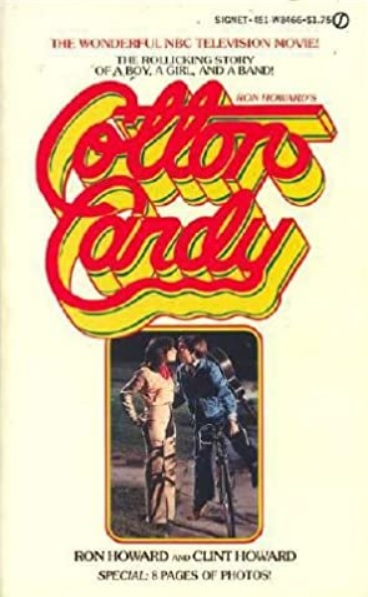
The out-of-print paperback tie-in/courtesy of Amazon (this was the best available image).

So, what about the music, you ask?

It is pure ’70s pop bubblegum. But Cotton Candy ain’t the Knack or Sweet. So instead of “Frustrated” or “Good Girls Don’t,” or “Fox on the Run” and “Love Is Like Oxygen,” we get a rocky-upbeat version of the safe n’ sweet sounds of the Carpenters (girl drummer, hatch), with the George Smalley originals “She Rolls,” “Born Rich,” and “Starship” (damn it: not uploaded to You Tube).

As for Rapid Fire’s catalog: And you thought the Sebastians (of Rocktober Blood fame) securing the right to Rod Stewart’s “Maggie May” and Ted Nugent’s “Sweet Sally” for their pirate radio romp On the Air Live with Captain Midnight (1979) was a rock ‘n’ boondoggle? How in the hell did Ron Howard get the rights to Bob Marley’s “I Shot the Sheriff” via Eric Clapton? How did he get the rights to Billy Preston’s (Hammond organist on the Beatles’ albums) “You are So Beautiful” via Joe Cocker?

Clearly, Cotton Candy, while a bunch of clueless dorks who decide playing strip poker with their female drummer is the mature thing to do, is the more talented band. Sure, Rapid Fire has the slick, silk windbreakers, smoldering good looks and feathered hair . . . and can afford snazzy, three-piece suits and fedoras, you know, to carry through that “gangster” theme to go along with that awesome “Tommy Gun” band logo.

“Rapid Fire’s got to reload . . . we’ll be back in five.”

But Torbin and the boys can’t write music; they can only can butcher jukebox-from-hell covers that ’70s sound-alike budget album distributor Pickwick International would reject for release.

Yeah, it’s all very “Pickwick International” with Rapid Fire. If you went on a Sunday “Swap Swap” excursion with the family at the local Drive-In, you know the label. I got burned by Pickwick’s version of Tommy (You Tube) thinking I was buying the Who’s rock opera. Well, that’s Torbin Bequette and Rapid Fire: all the girls, none of the talent, and it ain’t Clapton or Cocker.

Yeah, this is taking me back to those bag-o-dicks from Mad Sire in their silk band jackets and platform shoes and flared jeans churnin’ out their covers of Rick Derringer’s “Rock ‘n’ Roll Hoochie Coo” and Styx “Renegade” at the school dances . . . and taunting Hot Rats, the underdog Ramones-inspired stalwarts as “Hot Rats . . . more like cold crap,” as we ripped out the originals “Rock ‘n’ Roll Stereo Kids” and “Scene Queen” (which later became “Bitch Queen” as we, pathetically, went “metal”) to a garage audience of five fellow lost souls that were a lot like Sam, my boss at B&S About Movies.

Ack! Tagents and non-sequiturs! Back to the movie. . . .

Because Howard’s TV movie debut tanked in the ratings, and both Ron and Clint expressed embarrassment over the years regarding the project, Ron has publically stated the film will never, ever see (a hard or digital) release. And once Ron’s career took off with the likes of the theatrical features Night Shift, Splash, and Cocoon, he didn’t want anyone to remember Cotton Candy; when the ‘80s video boom hit and stores were hungry for product, the film was never released to VHS.

So how bad is it?

Well, in our review of It’s a Complex World, we spoke of how revered it is among the movers and shakers of Providence, Rhode Island, where it was filmed—ditto for Richmond, Virginia’s denizens who remember the making of the failed Rock N’ Roll Hotel. And the rock denizens of Dallas, rightfully, feel the same way about Cotton Candy. It’s all about nostalgia on this one. If you were in middle or high school in 1978 when Cotton Candy aired, you’ll love it. If you never seen it before and, compare it against Howard’s later works, such as Apollo 13 . . . let’s put it this way: it’s not as bad as Sgt. Pepper’s Lonely Hearts Club Band (is any rock movie?), but the proceedings will not be as cool as Eddie and the Cruisers, and not as awesome as Rock Star with Mark Wahlberg (” . . . stand up and shooout!”). Those who love it (moi): we are loading up our TV-to-VHS-ripped copies of Cotton Candy alongside Ladies and Gentleman: The Fabulous Stains and the Dennis Hopper Elvis-Johnny Rotton punk-tale oddity that is Out of the Blue (we’ve got to review that one!).

Cotton Candy recently had an 40th anniversary screening at the Lake Highland Alamo Drafthouse outside of Dallas, put together by Mark Ridlen of the faux Rapid Fire. But do not let that fool you into thinking a DVD restoration is forthcoming. . . .

The bootlegged VHS-ripped-from-TV (regardless of the flashy slip cases) on this one are impossible to find. Cotton Candy has never been officially released on DVD (by Howard or NBC-TV’s corporate parent, Universal) and hasn’t re-aired on TV since the mid ’80s—so watch out for those grey market TV-to-VHS-to-DVD rips in the marketplace. Yes, there are 1985-dated foreign VHS tapes in the marketplace (an image of the Swedish version recently, post-this-review, posted on the IMDb), but it’s doubtful those are from the original negative. Well, perhaps a PPV or VOD stream, Ron? How about a with-ads stream on TubiTV? That’s unlikely. After Howard’s Imagine Entertainment was acquired by Disney, the negative to Cotton Candy has been buried in their vaults ever since. . . .

So the best we’ve got to enjoy Cotton Candy are ’70s UHF-TV rips uploaded to You Tube. And it seems Ron Howard doesn’t mind, since they’ve been there a while. You have three uploads to choose from HERE, HERE, and HERE. Sadly, the ending of the film sticks on all of them before we can see the songwriting credits behind Cotton Candy’s tunes. Ah, but there’s nothing like a B&S About Movies review obscurity (see Arctic Warriors) to inspire those IMDb page updates. Courtesy of those updates, we now know that Joe Renzetti wrote those nifty Cotton Candy tunes with Charles Martin Smith. The Philadelphia-born Renzetti got his start as a film composer and soundtrack consultant alongside Smith in The Buddy Holly Story, teaching Smith and the rest of the cast to sing and play their instruments—live on camera—the first for a theatrical film. Another of Renzetti’s film gigs was instructing Kurt Russell as “The King of Rock ‘n’ Roll” on John Carpenter’s 1979 TV movie, Elvis.

So, you want more fake bands of the Cotton Candy variety? Then be sure to check out our “Ten Bands Make Up for Movies (and a whole lot more)” featurette.

* Our thanks to Advocate Mag and The Dallas News for preserving this beloved rock flick obscurity with interesting trivia bits in the preparation of this review.

About the Author: You can learn more about the writings of R.D Francis on Facebook. He also writes for B&S About Movies.

Sex & Drugs & Rock & Roll (2010)

As stated in our previous review of Cha Cha starring Herman Brood, Nina Hagen, and Lene Lovich, your enjoyment of this (admittedly) pretentious “art house” flick hinges on your appreciation of the music of Ian Dury (which, I’ll admit, is an acquired taste for U.S ears raised on the commercial, new wave refrains of America’s the Knack and the Cars and the U.K.’s the Police and Gary Numan), the world’s first disabled “rock star.”

If you were lucky enough to have a college radio station in your area or frequented the then trendy, big city new wave clubs of the times, then you’re probably familiar with Ian Dury’s most memorable album hits of “Sweet Gene Vincent” and “Billericay Dickie,” but you’ve surely heard his hit singles “Hit Me with Your Rhythm Stick” and “Reasons to Be Cheerful, Part 3” with the Blockheads in a TV series, film, or video game in recent years. The title of this bioflick is, of course, derived from Dury’s biggest selling and most memorable single, 1977’s “Sex & Drugs & Rock & Roll.” And while MTV ignored Dury’s catalog, the burgeoning video channel embraced the music of ex-Blockheads Chaz Jankel and turned his single “Questionnaire” into a minor U.S radio hit (watch the MTV video link, you’ll remember it).

So, in regards to the “art house” aspects of the film: Don’t go into this expecting a fluid, commercialized Tinsteltown chronicle on Dury’s life, ala Ray (Ray Charles), Walk the Line (Johnny Cash), or What’s Love Got to Do With It (Tina Turner). In lieu of a traditional, chronological narrative (that’s punctuated with animated segments and kinetic editing typical of an arty, indie film), Dury (a fantastic Andy Serkis — who you know as Gollum in the Lord of the Rings trilogy and as Ceasar in the Planet of the Apes reboot series) appears as a colorful, brash carnival barker, telling his own life story from the concert stage via a series of flashback (e.g., his wife gives birth to his child upstairs, while he’s telling his story on a club stage; of how, as a child, he contracted polio from a swimming pool and was bullied for his leg brace; of how he met Jankel backstage at Kilburn and the High Roads (Dury’s band prior to forming the Blockheads with Jankel) gig, etc.).

Dury would go on to become an actor in his own right, with roles with in several British films and television series. Here, in the U.S., you’ve most likely seen Dury in Bob Dylan’s 1987 box office bust Hearts of Fire (hopefully, we’ll get to that one for “Rock ‘n’ Roll Week”), The Cook, the Theif, His Wife & Her Lover (I dragged my date to see that one at an art house theatre because of Dury; she hated it, but of course), but you definitely saw Dury in the sci-fi flicks Split Second with Rutger Hauer (1992), Judge Dredd (1995), and The Crow: City of Angels (1996).

You can watch Sex & Drugs & Rock & Roll as a free-with-ads-stream on TubiTv; if you’d prefer an ad-free experience, it’s available on You Tube Movies. You can also get all of the music of Ian Dury you could possibly need — featuring album tracks, videos, and live performances — over on his official You Tube page. You can also catch Dury at the top of his game with his 1978 appearance on the live German television rock program Rockpalast (aka “Rock Palace,” a Euro-version of U.S TV’s The Midnight Special), also on You Tube.

About the Author: You can learn more about the writings of R.D Francis on Facebook. He also writes for B&S Movies.

The Decline of Western Civilization III (1998)

Penelope Spheeris went back one more time to Los Angeles’ music scene and it changed her life. But for years, she didn’t want to ever revisit the three films that make up The Decline of Western Civilization.

According to The Verge, she wanted her daughter Anna Fox to take over the family business of making movies and managing their rental properties around the city. Fox agreed, on one condition: that her mom finally release a collection of the Decline trilogy. What followed was a year of pure hell, as she’d call it, and the last film proved problematic, as it is so depressing that it serves as a rough close to the otherwise joyous film series.

Using the money from Senseless, a movie that she hated making for the Weinsteins, she funded this movie all on her own. “When I did Decline III, it was totally life changing for me. I had no idea that shit was going on out there. At that point in my career I was really rich from being paid millions of dollars for doing studio movies, and I did not have a sense at all what real life was like. That’s when I went out and got my foster parent license. I had five foster kids to try to help a little bit — we all should, because it’s a fucking mess out there.”

Instead of focusing on bands as much — although Final Conflict, Litmus Green, Naked Aggression, and The Resistance perform and Keith Morris and Flea appear — this installment focuses more on the gutter punks who are roaming the streets of Los Angeles, lost and nearly all alone, save for one another.

This one isn’t as life affirming as the other films and while there are moments of humor, it is few and far between. That said, I still feel that this is an important watch and shows that across three different generations, problems may not have changed all that much, but hopelessness has only grown.

You can watch this on Amazon Prime and Tubi.

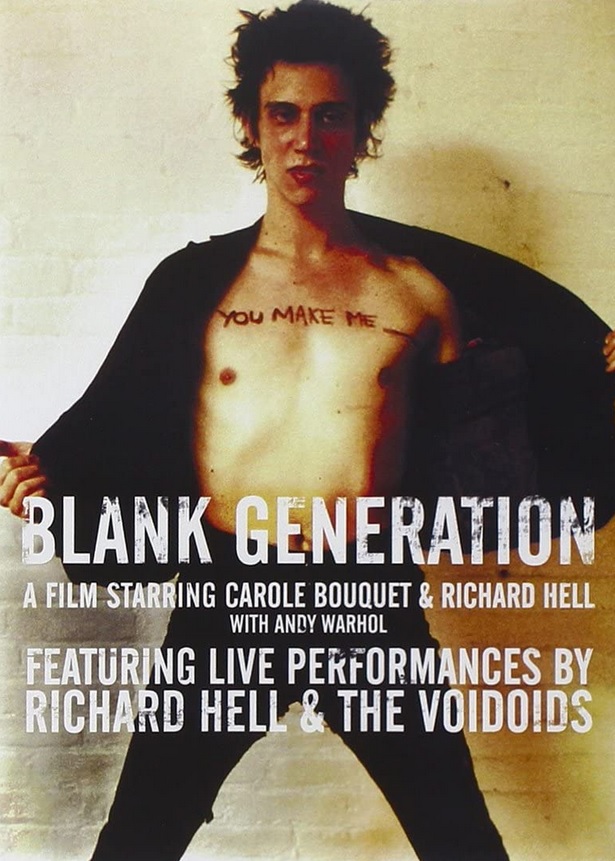
Blank Generation (1980)

Editor’s Update: In October 2021, Dark Force Entertainment announced their Blu-ray reissue of this punk classic. Learn more with their Facebook announcement.

Your willingness to slog through this punk-inspired drama — that is admittedly artsy and boring, rife with a lack of narrative clarity, bad acting, and an overall production incoherency courtesy of its failed Fellini-esque noodling (Warhol’s a great artist, but considered terrible at filmmaking in most quarters) — hinges on your fandom of Richard Hell, the music of the Voidoids, and nostalgia for the ’70s New York East Village punk scene spearheaded by the Bowery-based club CBGB’s.

Or perhaps that willingness hinges on your tolerance for the serial killer-obsessed oeuvre of direct-to-video German horror schlockmeister Ulli Lommel (Tenderness of the Wolves, The Boogey Man, BrainWaves, The Devonsville Terror) and, for the film buffs, Lommel’s connections to the works of Russ Meyer and Rainer Werner Fassbinder.

But as a piece of cultural history for music buffs (especially of punk music), while amateurish in places, this Ulli Lommel and Andy Warhol co-production (they previous worked together on 1979’s Cocaine Cowboys; a tale about a rock band subsidizing their lifestyle via drug running) won’t disappoint. (Here’s Andy’s scene, on You Tube).

Now, before we get started . . .

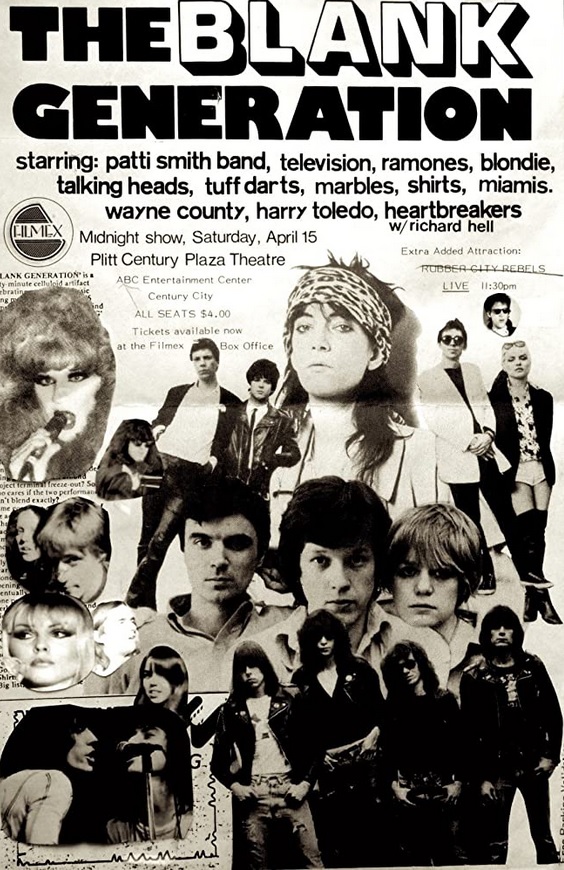
Let’s clear up the fact that there are two films carrying the title of the influential Richard Hell and the Voidoids’ tune (that inspired the Sex Pistols to write “Pretty Vacant”). The First, prefixed with the definite article: we picked up as a VHS bootleg tape set inside a black hard-clamshell case with a Xerox’d cover on the shelf of our local indie punk record store (tucked between a Hallmark gift n’ card store and a falafel joint). The Second: most of us watched it for the first time during an early ’80s late night viewing on the USA Network’s Friday night “Night Flight”* music video programming block (alongside Hell’s other starring role in Susan Seidelman’s 1982 punk chronicle, Smithereens).

That first film, 1976’s The Blank Generation (again, carrying the grammatical article prefix), is a 16-mm black & white DIY documentary co-directed by Lydia Lunch and Patti Smith Group guitarist Ivan Kral and “No Wave” director Amos Poe (who went mainstream with 1984’s Alphabet City; starred Vincent Spano of Over the Edge, Matt Dillon’s first film). That film features grainy, live performances by Patti Smith, Blondie, Television, the Ramones, Talking Heads, the Heartbreakers, the Shirts (fronted by Annie Golden, later of Susan Seidelman’s 1985 Madonna-starring, Desperately Seeking Susan), Wayne County, and the Tuff Darts (featuring soon-gone original lead singer Robert Gordon) on the stage of CBGBs.

Original theatrical one-sheet **

The long since deleted ’80s VHS — copies are out there, if you want them, but run at $150.00

As for the narrative, dramatic version of the second film: Hell stars as Billy, an ascending musician and poet on New York’s local art scene that’s experiencing his first taste of fame across the pond; so Nada (Carole Bouquet, who starred as a “Bond Girl” in 1981’s For Your Eyes Only), a French filmmaker and journalist, comes to the States to interview him. Their journalist-subject relationship quickly progresses into a romantic triangle when Nada’s other lover, Hoffritz (Lommel), comes to New York to interview Andy Warhol (who cameos) — and Billy must choose between his career and love for Nada.

Uh, yeah. It’s a punk-tinged love story that’s more A Star is Born (1976; we reviewed the 2018 one) than a punk-rise-and-fall tale of the Breaking Glass variety. But what other film gives you the Voidoids (Robert Quine, Ivan Julian and Mark “Marky Ramone” Bell; later of Rock ‘n’ Roll High School) at the top of their game searing through “Liars Beware” and their punk anthems “Love Comes in Spurts” (featured in Christian Slater’s Pump Up the Volume) and “Blank Generation” from the stage of CBGBs?

None.

You can stream Blank Generation (1980) for the low, low price of $.99 on Amazon Prime Video, but guess what? We found a free stream over on You Tube, Midnight Pulp, and YuYu TV. As for The Blank Generation (1976): there’s no online streams or DVD reissues (official or grey market) in the online marketplace, but we found a free streaming copy on You Tube to enjoy. Uh, okay, that’s gone: try this one.

* Check out our “Drive-In Friday: USA’s Night Flight Night!” feature on those days of cable yore.

** B&S About Movies’ friend, Mike Delbusso, the proprietor of Michigan’s premiere rock art gallery, The Splatt Gallery, also talks about the film’s backstory and offers an alternate theatrical lobby card with this Facebook post. If you’re a fan of Detroit’s rocking past — or those ’60s and ’70s rocking days yore — spend some time with Mike amid the many wonderful posts at The Splatt Gallery, located in Walled Lake, Michigan.

About the Author: You can learn more about the writings of R.D Francis on Facebook. He also writes for B&S Movies.

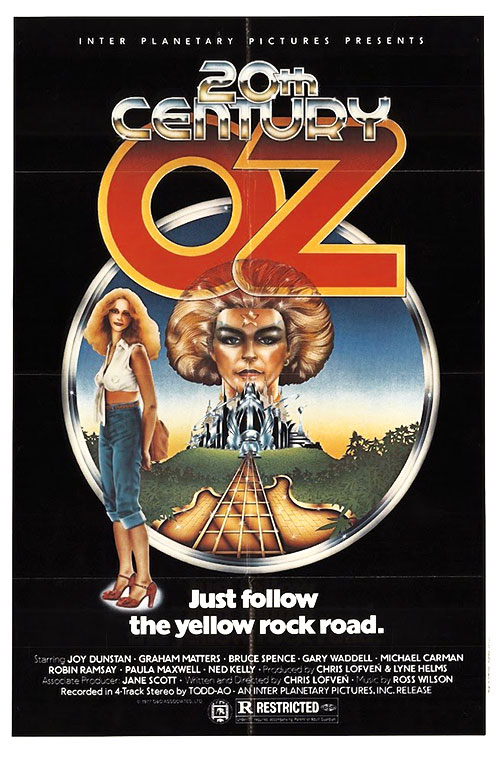
20th Century Oz (1976)

Leave it to Australia — and experimental filmmaker Chris Löfvén — to transform Dorothy into a sixteen-year-old groupie who hits her head when traveling with a rock band. Now, she’s on the road to see the last show of androgynous rock god The Wizard, but a thug — she killed his brother — is chasing her.

The Scarecrow is now Blondie the stoned surfer (Bruce Spence, who was the chopper pilot in The Road Warrior), The Tin Man is a mechanic named Greaseball and The Cowardly Lion is a biker filled with self-hatred named Killer, based on Australian convict Mark Brandon Read, also known as Chopper, who had a movie made about his life in 2000.

While most of the bands on the soundtrack — Jo Jo Zep & The Falcons, Ross Wilson — may be unknown to American audiences, the concert that was used for the close of the film was really one for The Little River Band and AC/DC. In fact, their manager Ned Kelly played one of the bad guys named Truckie.

This film flopped in its native Australia but supposedly did pretty well here. I’d never heard of it, much less knew that a modern musical version of The Wizard of Oz was filmed two years before The Wiz.

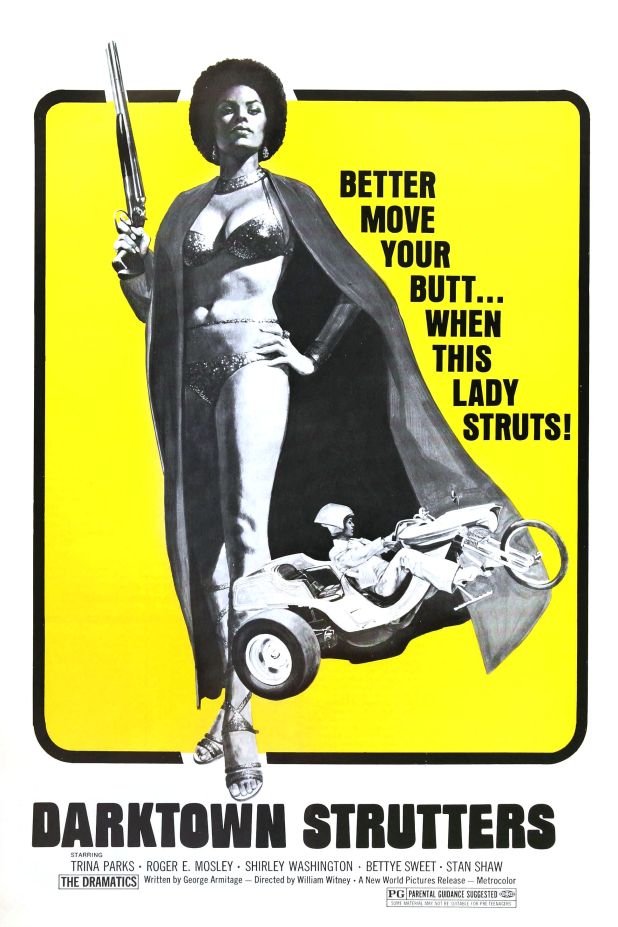
Darktown Strutters (1977)

George Armitage wrote Gas-s-s-sPrivate Duty NursesNight Call Nurses and Vigilante Force before scoring mainstream success with Miami Blues and Grosse Point Blank. He told Film Comment, “I wrote Darktown Strutters in three days, and the script form is all one sentence, the entire script is one sentence.”

While he had wanted to direct this, William Witney ended up making it. Witney was a Hollywood vet, starting all the way back at Republic where he worked n movie serials. He worked a lot with Roy Rogers and at the end of his career, made a few movies with Gene Corman, including I Escaped from Devil’s Island and this movie.

This is less a narrative film and more a collection of hijinks as a gang of black bikers interacts with the police, all until Syreena starts to search for her missing mother, Cinderella. Turns out an evil barbecue chain — with an owner in full Klan regalia — has her.

Trina Parks from Beyond the Valley of the Dolls and Diamonds Are Forever is Syreena, backed up by a cast featuring former Ikette Edna Richardson, Roger E. Mosley (TC from Magnum, P.I.), Stan Shaw (Detective Sapir from The Monster Squad), Alvin Childress (Amos of the Amos ‘n Andy TV show), Zara Cully (Mother Jefferson!) and, this being a Corman family film, Dick Miller.

Get ready for a fairy tale mixed with blaxploitation, basically, with plenty of great tunes from The Dramatics as well as John Gary Williams and The Newcomers.

And remember: “Any similarity between this true life adventure and the story Cinderella … is bullshit.”

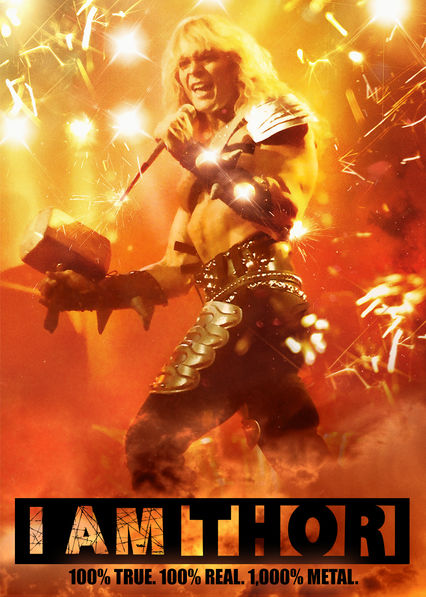
I Am Thor (2015)

Last year, I saw a flyer for Thor, playing a really small bar in Monroeville, not far from my Pittsburgh home. I didn’t go, but after this, I kind of wish that I had.

Jon Mikl Thor was a Mr. USA and Mr. Canada that became a heavy metal vocalist and an actor who appeared in RecruitsZombie Nightmare and Rock ‘n’ Roll Nightmare, a film that begins with a van driving scene that may still be playing somewhere.

The thing I have learned about this movie is that no one cares about or believes in Thor more than Thor himself.

That said, you have to believe in yourself, even when the rest of the world doesn’t. Thor reminds me of several of the old pro wrestlers I’ve been around, assured that they didn’t make it in the big time because no one understood them or they were just too good and no one wanted the competition.

Ryan Wise and Alan Higbee spent fifteen years making this film, getting some truly astounding footage. It feels like they were embedded with the singer, getting footage that anyone other than him would feel was incredibly negative.

That said, I never felt horrible for Thor. He’s doing what he loves and it doesn’t matter if there are ten or a thousand people in the crowd. He’s always going to go full thundergod.

You can learn more at the official site and watch the movie on Tubi.

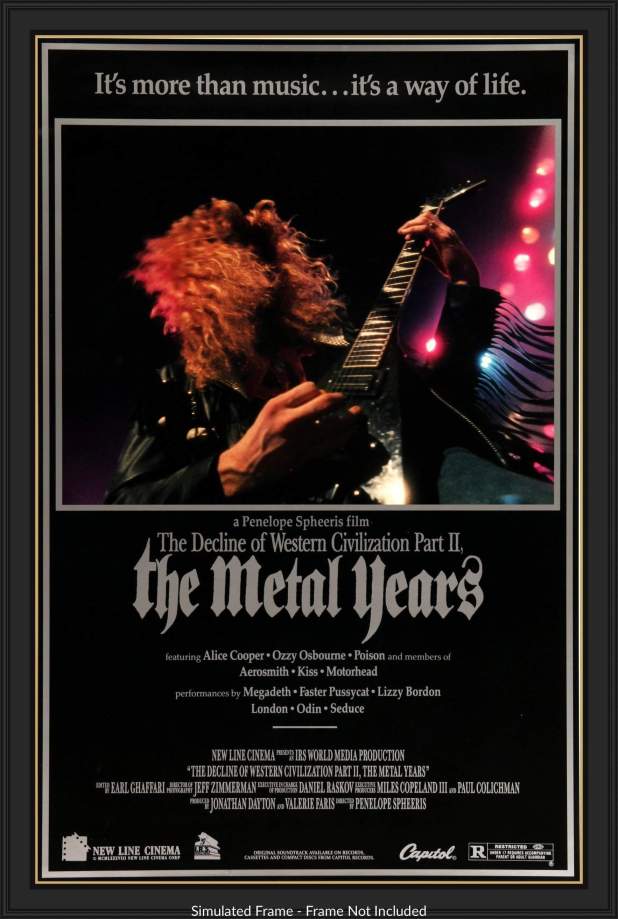
The Decline of Western Civilization Part II: The Metal Years (1988)

As a 16-year-old in 1988, I have to tell you that this was probably the most important movie of my life — all the short time I had spent on Earth — and it made me dream about heading off to the Sunset Strip and taking my singing abilities in the service of bands like Jetboy and the Sea Hags.

And here we are, as I write about this on my couch while working all day on a Sunday afternoon, writing marketing materials for a college somewhere in New York.

If you watched this movie at 16 and didn’t want to be Chris Holmes, what was wrong with you? It’s funny, because as we watched this, my wife asked, “When did he die?” He’s still, improbably, alive.

Before reality TV decimated the Satanic edge of metal, seeing artists like Alice Cooper, Aerosmith, Ozzy Osbourne, Dave Mustaine, Gene Simmons and Paul Stanley discuss their careers rarely happened. I love that each of them gets a background that relates to them — Joe Perry and Steven Tyler are just chilling on a couch while Ozzy is in a bathrobe making eggs and Stanley is covered in models as he talks about the life he leads. By the way, him spilling orange juice never happened and that’s not even his kitchen.

That said, W.A.S.P. bassist Holmes steals the show, mumbling throughout and providing the films one sobering — if totally drunk — take on the fakeness of it all. Just witness the band Odin, who is surrounded by models in a hot tub, discussing how they’ll be bigger than Led Zeppelin or The Doors or commit suicide. Or nightclub owner Bill Gazzarri, who just seems like a character straight out of the hell of a Dark Brothers film.

I kind of love that Lemmy was shot from a distance and asked questions in the hopes that he’d give dumb replies. Lemmy being Lemmy, he seems above it all, despite spending just about every night at the Rainbow, right in the heart of all of 1988’s hairspray.

Detroit band Seduce was added to fill the loss of Guns ‘n Roses, whose management kept them out of this movie. Several have pointed to the excesses in this film as killing off the era of glam and hair metal. If that’s so, bands like Steel Panther have seen this as a map to the world they wish still exists.

Spheeris told Louder Sound, “In a way, you can look at Decline II as the research and then Wayne’s World as the final product.”

The funny thing is, despite Ronnie O’s claims that he’d kill himself — like GG Allin without the punk heart or body covered in feces and gore — the band had already broken up before the film came out, with guitarist Jeff Duncan joining Armored Saint, a band that he’s still in.

Anyways, I’m 47 now. And I can tell you that most of what Chris Holmes was drinking was water. But it doesn’t mean that I don’t dream of 1988 a lot and wonder what it was like to play the Whiskey or the Cathouse.

You can watch this on Amazon Prime and Tubi.

Terminal City Ricochet (1990)

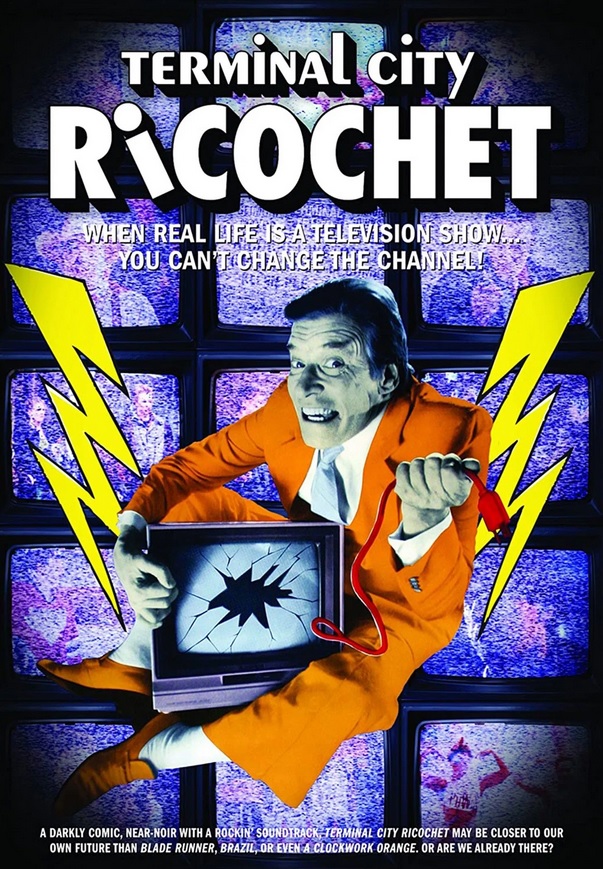
Jello Biafra of the Dead Kennedy’s goes Repo Man in this post-apoc sci-fi romp that reminds of Death Race 2000‘s political-parody intrigue — and it’s backed by the music of DOA, Keith LeBlanc, and Nomeansno, along with Biafra himself fronting DOA and Nomeansno for a pair of tunes.

Oi! I’m sold! Hey, ho! Let’s go!

Watch the official Alternative Tentacles trailer.

Canadian acting mainstay Peter Breck (appeared in a wide array of U.S cop and western dramas in the ’60s and ’70, as well as starring as Nick Barclay in ABC-TV’s The Big Valley; you’ve also seen Breck in 1958’s Thunder Road, 1960’s The Beatniks, and 1963’s Shock Corridor by Samuel Fuller) stars as Ross Glimore, a media entrepreneur who serves as the corrupt, evil mayor of Terminal City, a decaying dystopia that manipulates the masses through television — and bans things such as rock & roll and meat — that renders the citizens addicted to consumerism that financially benefits the government.

When Alex Stevens, a punk-youth newspaper delivery boy, witnesses Glimore commit a hit-and-run accident, Glimore dispatches Bruce Coddle (Biafra, in a pisser of a role), a maniacal agent of Terminal City’s Social Peace Enforcement Unit, and his lackeys (DOA’s Joe Keithley and pro-wrestling legend Gene Kiniski) to silence Stevens until after Glimore steals yet another election.

Terminal City Ricochet was never officially available on VHS and rarely shown outside of its native Canadian TV broadcasts, along with an occasional U.S film festival or art house showing hosted by Biafra himself. Alas, there’s no freebie uploads or PPV streams online — you can, however, listen to the soundtrack on You Tube. (I rented a bootleg rip in the early ’90s from a local comic book store that carried VHS obscurities, such as the previously reviewed Hangin’ Out starring Nena; I also picked up the 1993 documentary Hated: GG Allin and the Murder Junkies and Toshiharu Ikeda’s Evil Dead Trap around the same time.)

Alternative Tentacles first issued the film to DVD in 2010, but as of April 2020, they now offer the film and soundtrack as a DVD/CD combo at the reasonable price of $12.00 via their website. If you loved Allan Arkush’s Get Crazy, Alex Cox’s Repo Man, Penelope Spheeris’s Suburbia, Michael Nesmith’s Tapeheads, and Allan Moyle’s Times Square, then you’ll dig the low-budget indie shenanigans of Terminal City Ricochet.

Get this . . . the scribe behind this, Phil Savath, also wrote the David Cronenberg drag-racing epic Fast Company and . . . the sci-fi horror musical Big Meat Eater. Yeah, really. All this, and the Dead Kennedys, too.

And be sure to join us for our “Phil Savath Night” as part of our weekly Drive-In Friday featurette.

About the Author: You can learn more about the writings of R.D Francis on Facebook. He also writes for B&S About Movies.
Rock, Rock, Rock! (1956)

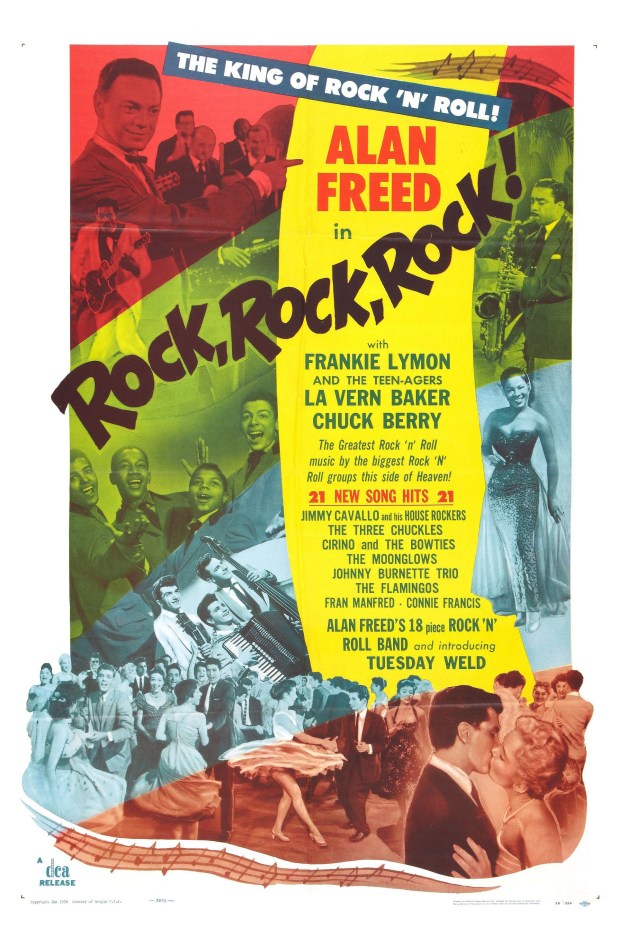
Rock, Rock, Rock! was conceived, co-written and co-produced by Milton Subotsky — he also wrote nine of the songs in the movie — who we all know was half of the team that was known as Amicus (along with Max Rosenberg, who also produced this movie). All hail Amicus! And all hail Sword & Sorcery Productions, Subotsky’s 70’s production team that tried — and sadly failed — to bring Lin Carter’s Thongor in the Valley of Demons and adapations of Creepy and Eerie to the screen. He’d also co-produce Maximum Overdrive, Sometimes They Come Back and The Lawnmower Man.

This is the first rock ‘n roll movie to have its own soundtrack, released on Chess, which features four songs each from three of the label’s artists — Chuck Berry, The Moonglows and The Flamingos — as other bands were signed to different labels, which appear on screen in the credits along with each band at the end. Connie Francis’ songs were released by MGM, for example, and The Teenagers’ songs were on Gee Records.

This film is considered a jukebox musical, where the plot is driven by popular songs. I could give you great stage play versions that everyone in the rest of the world loves, but I’m me, and the examples I give are Nilsson’s Son of Dracula and The Village People’s Can’t Stop the Music.

The story itself is very simple: ori Graham (Tuesday Weld, with Connie Francis’ singing voice) get sinto hijinks as she tries to buy a gown for a big dance. Jack Collins — who was Mr. Brady’s boss — is her dad, who is driven nearly mad by her ridiculousness.

Alan Freed shows up as, well, Alan Freed. He grew up in Salem, Ohio, miles away from my small hometown and his first jobs were on WKBN in Youngstown and WKST in New Castle. He was a rebel, playing mixed raced music and throwing dances that weren’t segregated. He’s perhaps best remembered for popularizing the term rock and roll, describing it in this movie as “a river of music which has absorbed many streams: rhythm and blues, jazz, ragtime, cowboy songs, country songs, folk songs. All have contributed greatly to the big beat.”

His initial big success came in Cleveland, in case you ever wondered what the hell Huey Lewis was singing about and why the Hall of Fame is on East 9th Street. He also started appearing in other movies like this, such as Rock Around the ClockMister Rock and RollDon’t Knock the Rock and Go, Johnny Go!

Freed’s career was destroyed by the payola scandal, which showed that he had accepted money to play certain songs and even songwriting credits on others, ensuring he would get royalties. That said, The Moonglows did confirm that he did co-write the song “Sincerely.”

But the damage was done. He’d bounce from station to station, unable to promote the rock and roll shows that he loved so much. He died in 1965, at the young age of 43, from the damage that alcohol does to the liver.

He was played by Tim McIntire in the movie American Hot Wax (he also played George Jones in Stand By Your Man), which features tons of artists playing themselves, like Jerry Lee Lewis, Screamin’ Jay Hawkins, Chuck Berry and Frankie Ford.

Times were weird in 1956. Tuesday Weld turned 13 while this movie was being made. Her boyfriend in the film, Teddy Randazzo (who wrote “It’s Gonna Take a Miracle”), was 21.

You can watch this on Amazon Prime and Tubi.