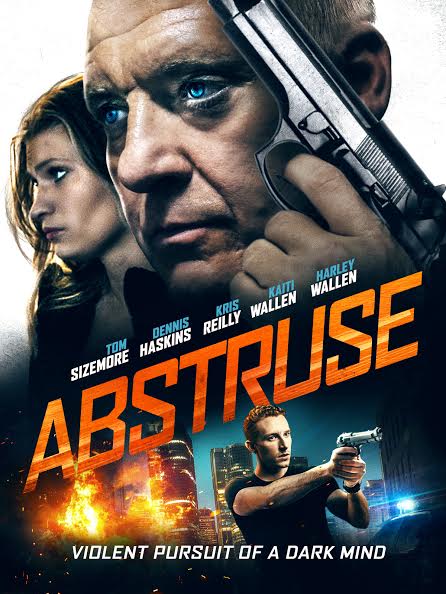
Harley Wallen’s last film, Eternal Code, was recently featured on our site. Now, he’s back with Abstruse, which stars Tom Sizemore (Black Hawk Down) and Dennis Haskins (Saved by the Bell). Yes, that’s right — a man once implicated in the affairs of Heidi Fleiss and Mr. Belding, together at last in the same film. I don’t know what took so long either!
Amanda (Kaiti Wallen, who was also in Eternal Code) Mindy and Jess get themselves into a situation when they make an adult film with two dudes named Justin and Daniel. Well, long story short, Justin chokes out Mindy but goes too far.
Justin’s dad is a Senator (the aforementioned Mr. Haskins), so he gets away with it. Amanda’s dad Max (Sizemore) wants to help her get revenge, but Justin is ready to kill anyone who gets in his way.
Nobody is a hero in this one and everyone has their own agenda. I’m glad to see Sizemore keeps on working, no matter the size of the film.
DISCLAIMER: We were sent this movie by its PR company.
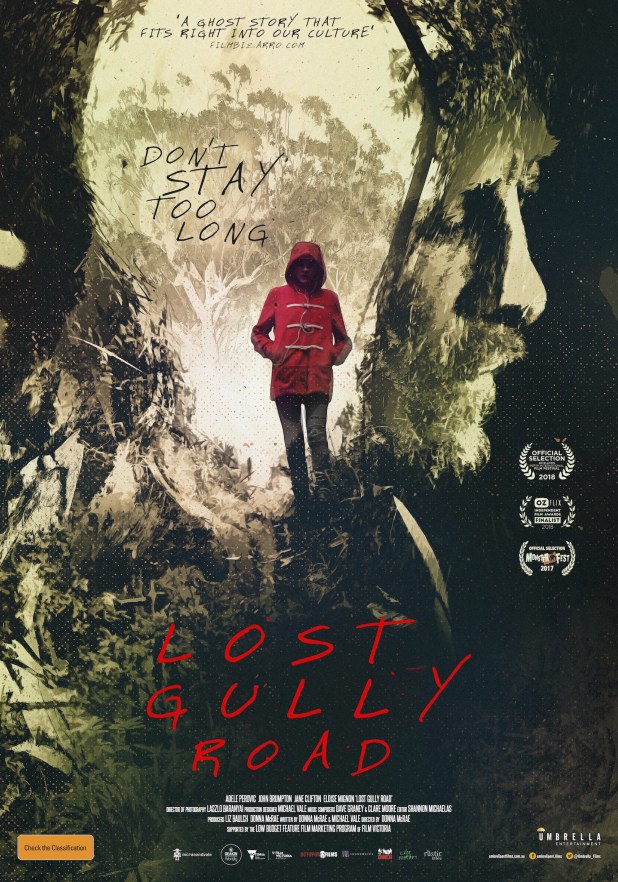
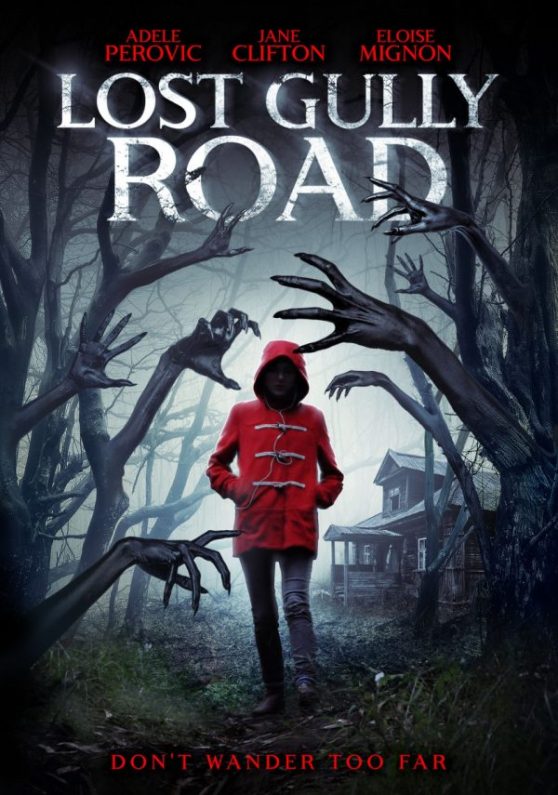
Lost Gully Road tells the story of Lucy, a directionless young woman who travels to a secluded cottage in the forest to wait for her sister. However, time seems to drag on. Cut off from the outside world other than phone calls with her sibling, Lucy turns to drinking to pass the solitary days of waiting…until a potentially sinister presence joins her.
Director Donna McRae, on hero IMDB bio, cites the films of Val Lewton as an influence. I will say that this Australian horror film looks gorgeous and has a definite look and feel, which is a major plus in the streaming horror world, where nearly every movie and concept feels recycled.
This is pretty much a one woman acting show and Adele Perovic does quite well in it. While the story may be slow at times, the talent on display more than makes up for it.
Lost Gully Road is available on demand and on DVD from Wild Eye Releasing. You can learn more at the official site.
DISCLAIMER: We were sent this movie by its PR company.
Following the publication of his 1978 novel Falling Angel, William Hjortsberg began working on turning it into a film. His friend, production designer Richard Sylbert (Dick Tracy, The Cotton Club) took the book to Robert Evans, who was running Paramount and was ready to make the film with John Frankenheimer set to direct and Dustin Hoffman in the lead.
That option expired, as did another attempt to get the movie made with Robert Redford. Years later, producer Elliott Kastner met with Alan Parker (Bugsy Malone, Midnight Express, Fame, Pink Floyd: The Wall, The Commitments) to discuss him writing the screenplay. Parker also helped get the movie funded by Mario Kassar and Andrew G. Vajna as part of Carolco Pictures, as long as he was given creative control.
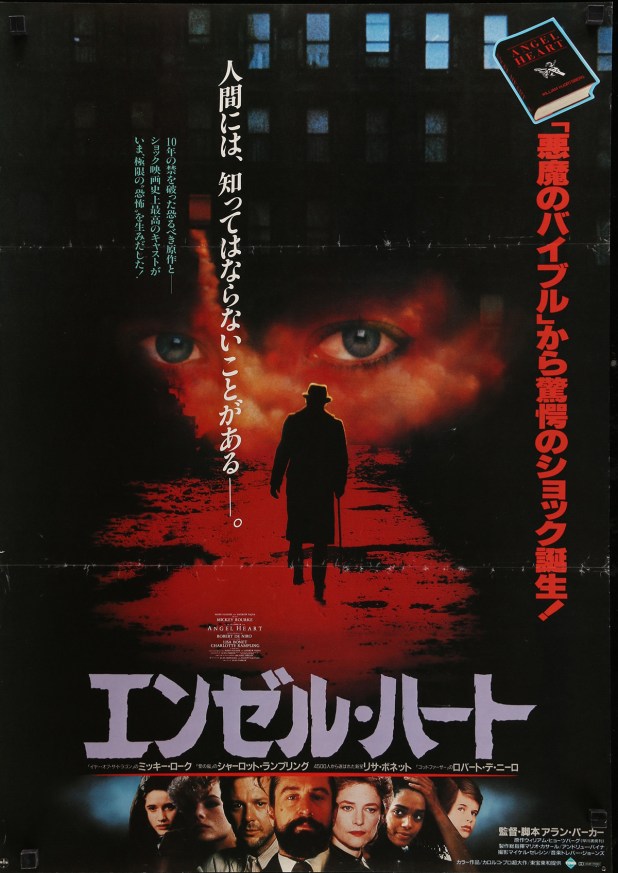
Parker made several changes from the novel, retitling the story Angel Heart, including moving the second half of the tale to New Orleans and moving the time forward four years to 1955, so the story feels like it belongs more to the 40’s than the coming 60’s. He also worked toward making Harry Angel more sympathetic and Louis Cyphre more realistic.
Harry Angel (Mickey Rourke) is a New York City private investigator who has been hired by Louis Cyphre (Robert DeNiro) to track down a singer named Johnny Favorite, who has been dealing with PTSD from World War II. Even the upstate hospital where Favorite was staying can’t find him, as his release was facilitated by two mysterious people and a doctor was convinced to change his records.
Cyphre offers Angel a large sum of money to continue hunting for Favorite. The trail leads him to Favorite’s fiancee Margaret Krusemark (Charlotte Rampling) and the discovery that he had sired a daughter named Epiphany Proudfoot (Lisa Bonet) with an ex-lover.
Everyone that gives Angel info — guitarist Toots Suite (blues musician Brownie McGhee), Margaret, the doctor — dies horribly. This causes Margaret’s father to demand that he leave town, but of course, he goes back to his hotel room and has rough sex with Epiphany while visions of blood drip down the walls.
So — follow me on this — Margaret and her dad were the ones who took Favorite out of the hospital. And the former singer was a sorcerer who sold his soul to the Devil to be famous, but tried to get out of the deal by kidnapping a soldier in Times Square and eating his heart to take the boy’s soul. Now in that soldier’s body, he went overseas and suffering facial injuries and amnesia during some fighting.
If you haven’t realized it yet, our protagonist and Johnny Favorite are the same people and the none-so-cleverly named Louis Cypher is the devil himself. And everyone dead in the movie? Yeah, our so-called hero killed them all and then had sex with his granddaughter. Gulp.
Although initially supportive of Bonet’s decision to make this movie, America’s one-time dad Bill Cosby dismissed the results as “a movie made by white America that cast a black girl, gave her voodoo things to do and have sex”. How did that all work out?
De Niro’s performance as Louis Cyphere is supposed to be based on his friend and frequent collaborator Martin Scorsese. For what it’s worth, it so unnerved Parker that he avoided him during his scenes and let him direct himself.
You know, before The Wrestler, so many people forgot just how good Mickey Rourke can be. You should discover that for yourself by going back and watching this for yourself.
Director Richard Casey made one of the most bonkers movies I’ve ever seen, Horror House on Highway 5. I’m pleased to report that this movie — which melds Faust — no, not that Faust — and the Los Angeles music scene in mix of the first two Decline of Western Civilization films to create a blast of pure strangeness. Imagine if the Dark Brothers (Night Rhythms) or Rinse Dream made one of their films with no pornography, but after doing even more drugs and never sleeping. It’s that good.
Lemmy (Phil Ward, who shows up Horror House on Highway 6, as well as being the art department for Space Mutiny, if you can believe that) is the lead singer of a band that’s not going anywhere until he meets Mr. Tanas — pronounced tannis, like the root or spelled backward like…oh you get it — who offers him fame in exchange for his soul.
That’s the basic story, but this cough syrup drinking, drug abusing, machine guns in the recording studio affair is unlike any movie you’ve watched before.
David Marciano, who plays Mr. Tanas, would go on to appear on the show Homeland. Phil Therrien, who was Dr. Mabuse in the two Highway films, is also in this.
If you’re looking for a movie where a hobo screams “Black Betty,” where a mother looks for her son by killing everyone she comes near, where sound engineers act like jerks to everyone near them, where singers proclaim that they are Satan’s son, a gang shows up called Satan’s Cheerleaders and a cursed establishment is named Bar Sinister, well, look no more.
It’s not great, but it’s awesome. If you understand that sentence, you’re going to love this movie.
If I can chime in, Sam?
Just when I think you’ve reviewed “everything” at B&S About Movies. Why do I doubt my brother-in-VHS arms would not have reviewed the two-movie oeuvre of an ex-rock video director who gave us two of MTV’s most-aired videos: Blue Oyster Cult’s “Burning for You” and Aldo Nova’s “Fantasy.” I remember this SOV-VHS, as well as the bonkers Horror House on Highway 5 (it’s only a matter of time before we get a remake — with a killer in a Donald Trump instead of Richard Nixon mask), and I’d always felt Hellbent was a Satanic, F-up version of Suburbia, which is an excellent punk-era rock flick from Roger Corman directed by Penelope Spheris. But the Decline movies by the divine Ms. Spheris work as well, in comparison. You need another Faustian rock ‘n’ roll tale, be sure to check out the Paul Williams-starring Phantom of the Paradise. And watch Hellbent. You have to. It’s the shite.
Russ Washington (Hunter G. Williams, who is the auteur of this, writing, directed and starring in the film, which begins with an extended shot of him nude; he also broke his neck during filming which put the movie on hold for a year) is a successful businessman on top of the world. However, addiction, secrets and horrible relationships have sent him on a downward spiral that he may never recover from.
I’m trying to think of how much money Lily Tomlin was paid to be in this movie. There has to be some reason for it, because otherwise, her appearance in a film about two producers who do drugs and basically abuse women makes little to no sense. I’m still flabbergastered that she would watch, much less act in this movie.
I love cautionary Hollywood tales, because most of us watching them will never have to decide between falling in love with a prostitute with a heart of gold and making our next movie. No, I’m more concerned if whether or not I have enough in the bank to cover my quarterly business taxes.
If coke-fuelled Eyes Wide Shut sex and Pretty Woman style romance without the comedic edge is what you’re looking for, don’t let me stop you.
DISCLAIMER: This movie was sent to us by its PR company.
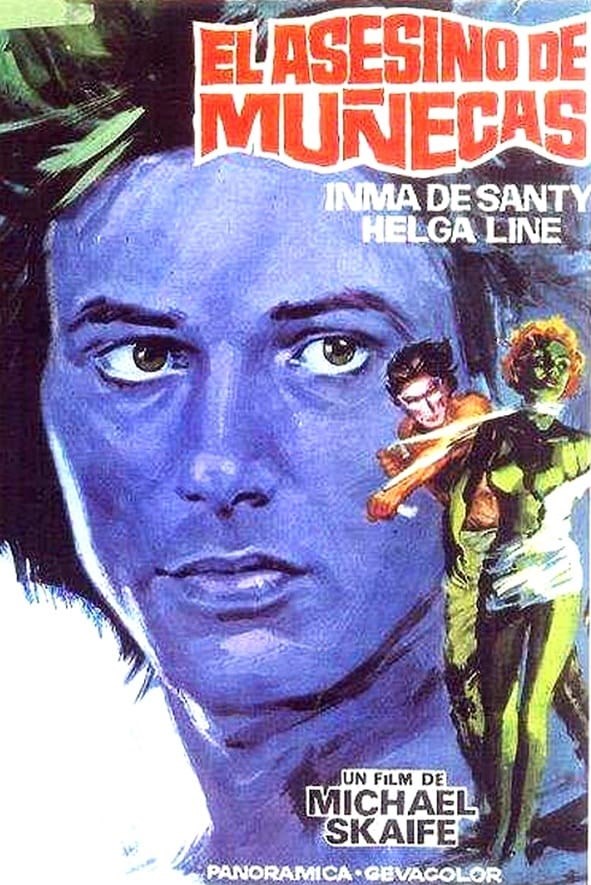
Miguel Madrid — credited here as — only has directed three films: The Butcher of Binbrook, Bacanal en Directo and this completely insane entry. He also wrote The Feast of Satan and Del Amor y de la Muerte. He’s credited as Michael Skaife on this movie, the same name he used on The Butcher of Binbrook, which was released in the U.S. as Graveyard of Horror.
All hail Spanish horror! Your movies make my head hurt and yet I love them so!
David Rocha plays Paul, who was thrown out of medical school because he can’t stand the sight of blood. Now, he’s back home, living on the estate of Countess Olivia (Helga Line, Horror Express, Horror Rises from the Tomb), where his father is a gardener.
To say Paul is mixed up is an understatement. The film attempts to explain it by stating that Pail was raised as a girl after his sister died and has taken on part of her personality. He also likes to perform surgery on his dolls and remove their hearts. And oh yeah — there’s a female-voiced masked killer on the loose wearing a black wig and a white doll mask.
There aren’t many Spanish giallo films — I can point to Blue Eyes of the Broken Doll (AKA House of Psychotic Women), The House That Screamed, Clockwork Terror, Maniac Mansion, The Corruption of Chris Miller, A Dragonfly for Each Corpse, The Killer Is One of Thirteenand Glass Ceiling are some that I can think of. Of course, there’s also Pieces and Bloody Moon, but I feel that those are more slasher than giallo.
The thing about Paul — and this movie — is that instead of comely females writhing around half nude as in most giallo, our protagonist showers all of the time, except for when he’s not killing and dreaming that people in his life are mannequins. Seriously, the dude loves taking showers. He’s also given to going completely bonkers, running in slow motion past seagulls after smashing flowerpots with an axe while screaming “Leave me alone!”
Ah man, I totally loved this movie. It gives up who the killer is way early, unlike most giallo, but it’s so charmingly daffy and out of control. This is a movie that I’d never even heard about before it was sent my way. And man, that little Robert kid who pals around with Paul? That kid seems like a real handful. Why he hangs out with a murderous twenty-something man who identifies as a woman and everyone is cool with it is beyond me, but maybe 1974 was just that crazy.
If you didn’t get the hint, go get this movie now. Like…right now.
You can get this movie from Mondo Macabro, who as always put out some amazing cinema from around the world. Released for the first time ever in the U.S. and the first time on blu ray, it features a brand new 4K restoration from the original negative with Spanish audio and newly created optional English subtitles. Plus, there are new interviews with actor David Rocha and Dr. Antonio Lazaro-Reboll (author of the book The Spanish Horror Film), as well as new commentary tracks, one by Kat Ellinger and the other by Robert Monell and Rodney Barnett. You can grab your copy right here.
DISCLAIMER: This movie was sent to us by Mondo Macabro.
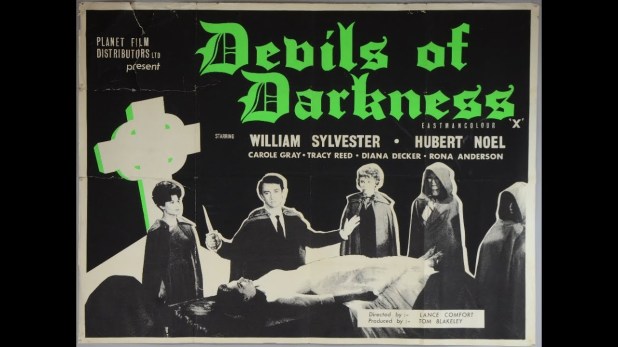
Director Lance Comfort lived on the fringes of British B-movies, with this effort being one of his last films. I found it on one of those old 20th Century Fox Midnite Movies double disks which are always so much fun.
Paul Baxter (William Sylvester, Gorgo) is on vacation with three friends who are all killed by Count Sinistre on All Soul’s Night. So he then does what you or I would — he heads back to England, finds a talisman belonging to the Satanic sucker and gets a whole bunch more of his friends killed.
Look for Tracy Reed (the mistress of General Buck in Dr. Strangelove), Carole Gray (Curse of the Fly), Victor Brooks (Cover Girl Killer) and Marianne Stone (Whoever Slew Auntie Roo? and the Carry On movies).
This is a rare modern vampire movie for the UK, so it has that going for it.
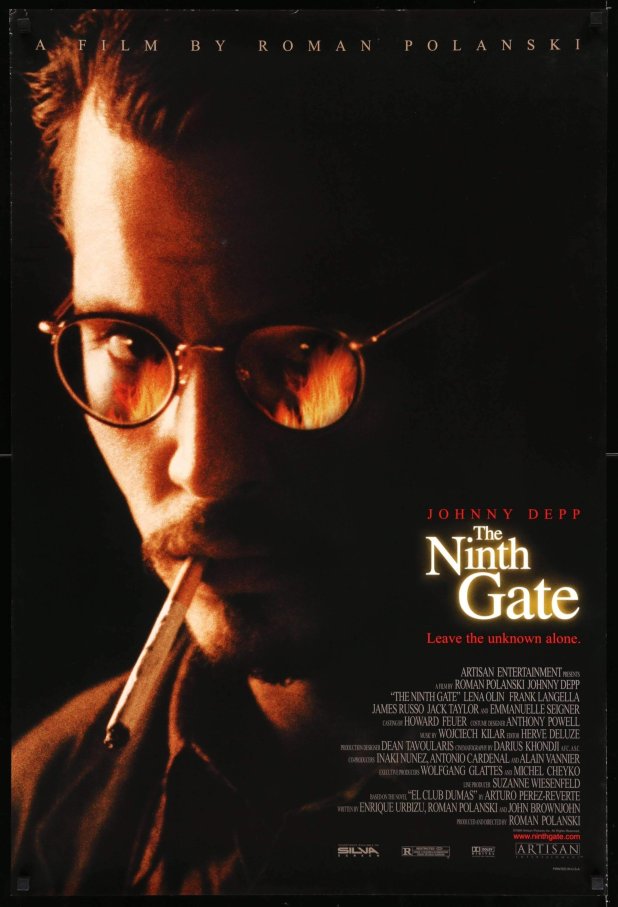
Co-written, directed and produced by Roman Polanski, this film –loosely based upon Arturo Pérez-Reverte’s The Club Dumas — returns its creator to something familiar: no, not being a scumbag who should rot in prison when he’s not being abused by every prisoner. No, I meant the devil.
Polanski approached the subject skeptically, saying, “I don’t believe in the occult. I don’t believe. Period.” Good thing, as there’s a good chance if the afterworld does exist, he’s going to spend a good portion ablaze.
Dean Corso (Johnny Depp) makes his career conning people out of selling him valuable books and then making a profit by reselling them to rich collectors.
One of those collectors is Boris Balkan (Frank Langella), who has recently acquired a copy of The Nine Gates of the Kingdom of Shadows by 17th-century author Aristide Torchia. One of only three copies in print, supposedly the writer cribbed the text from Satan himself and was burnt at the stake. Balkan thinks only one copy is the actual book, so he sends out Corso to verify the other two editions.
Everyone the book has been near has fallen to some cruel fates. Andrew Telfer killed himself after selling Corso the book and now his wife (Lena Olin) wants it back, even if she must seduce Corso. And oh yeah, there are different engravings in every book.
By the end, there are rituals, dudes getting set on fire, multiple murders, Johnny Depp having sex with a mysterious girl in front of a castle, the Whore of Babylon and the Ninth Gate being crossed. Honestly, reading it in these words makes the story sound way more exciting than it is, instead of the movie I watched crawl across my screen.
To top it all off, Artisan Entertainment sued Polanski for taking more than $1 million from the budget, as he kept the refunds of France’s value-added tax instead of giving them to the completion bond company. which would be the guarantee that Artisan had a completed film. Wonderful.
Editor’s Note: Why are we reviewing an A-List sci-fi’er, you ask? That’s not the B&S About Movies jam! Well, we’re blowing out a week of “Nature Run Amok” films and this popped up in conversation. And I drew the short straw. Damn.
Anyway, a full list of the films we’ve reviewed this week appears at the end of the review.
You’re 20th Century Fox Studios and you’re in the throes of a business merger with the Disney Corporation.
In 2017 you completed a film (began filming in March and completed principal photography in May) that stars an actress perpetually bashed on social media for being a “bad actress” and whose star has waned since her smash teen vampire movie from a decade ago—and her starring-reboot of Charlie’s Angels became one of 2019’s biggest box office bombs. Her co-star is an actor who assaulted a pro-Trump Uber driver in 2016, got sucked into the eye of the Weinstein effect in 2017, was arrested on federal bomb threat charges on an Amtrak train in 2018, and then capped off his litany of legal issues with a Silicon Valley (HBO series) work place misconduct allegation.
So what do you do with that $80 million film (other sources say $50) starring Kristen Stewart and TJ Miller? What do you do with a film that received lukewarm responses in its test screenings and runs the risk of pro-Trump and #MeToo protests outside the theatres upon release?
You shelve that film for three years and wait for the Disney merger to finalize and for your male-lead actor’s legal issues to blow over. Then you release the film in January, one of the dreaded winter doldrums “dump months” (the others are February, August, and September) where films with lowered commercial and critical expectations go to die. The fact that your film grossed $7 million in the U.S on its opening weekend, with a worldwide opening-gross of $14 million, gives credence to Hollywood’s lack-of-faith marketing concept. It also doesn’t help that, upon release, Rotten Tomatoes rated your film at 53%, Metacritic scored it 49/100, CinemaScore graded it a “C” on an A+ to F scale, and PostTrack rated it 2/5 stars.
Ouch.
Gulp! Yes. She holds her mouth open throughout the entire film.
Hey, what the hell? James Cameron, what are you doing here, 10,000 meters down in the Pacific Rim? Yeah, I’ve been down this road, uh, Mariana Trench before. And that’s this film’s elevator pitch: James Cameron’s Aliens (1986) (and not Ridley Scott’s Alien) meets James Cameron’s The Abyss (1989).
Yep, for me—maybe not you—it’s just cinematic, aquatic déjà vu.
Now, we, the old codger video fringers of the ‘80s will load-in our cerebral-analog VHS copies of 20th Century Fox’s The Neptune Factor (1973), MGM Studios’ “snakes on a submarine” variant, Fer-de-Lance (1974), and the TV movie “prehistoric eggs on the ocean floor” variant, The Intruder Within, aka, The Lucifer Rig (1981). Then there’s the aquatic crop of The Abyss knockoffs released around 1990: Leviathan (bad Russian vodka monsters), Carolco Pictures’ DeepStar Six (giant anthropoid “sea scorpions” jarred loose-by-drilling), Roger Corman’s Lords of the Deep (psychic aliens and damaged ozone layer horseplay), Wayne Crawford’s (Jake Speed) rip The Evil Below (haunted ocean floor shipwreck baloney), and the R. Lee Emery (always awesome!) starring, The Rift, aka Endless Descent (evil underwater lab conducting DNA experiments). Hey, and let’s not forget Antonio Margheriti’s Italian cheapjack, Aliens from the Deep (1989).
Of course, the younger folks will load their DVD digital copies of Paul W.S Anderson’s 1997’s Event Horizon (yeah, we know that’s about Satan in a black hole . . . or something?), Barry Levinson’s Sphere (about an underwater black hole time-travel mission from the past or future . . . or something?), and 2000’s Walter Hill-disowned Supernova (again, yeah, we know, Satan in space . . . or something?). Then the younger yungins will recall the more recent Life (2017) starring Jake Gyllenhall (yeah, we know that was in space and not water, but work with us here).
And that brings us, well, underwater once again with this latest, grimy and dimly lit, science-fiction slasher fired from the James Cameron canons—with some small arms suppressive fire from Ridley Scott.
But wait. This isn’t the post-Alien late ‘80s. This is the 21st century.
Underwater was produced in the polluted backwash of Al Gore’s An Inconvenient Truth (2006). But Al’s an old codger, like me, and Sam, the illustrious proprietor of B&S About Movies. So Underwater wasn’t made for us, or for the Al Gore youth brigade. Underwater is for those who rally around Alexandria Ocasio-Cortez and support her Green New Deal initiative.
Thus, Underwater isn’t an irresponsible, mean big fish movie for the sake of being an irresponsible, mean big fish movie, say like, The Neptune Factor. Underwater is a responsible story; a story that drives home a “man-bad ocean-good” message. For the greedy and evil, right-wing industrious creatures known as man, with his witchery called “science,” has gone too far. The evil land dwellers above must endure the wrath of Amphitrite. All hail King Neptune!
As one of character reasons amid the mayhem, “We’ve drilled too deep. We’ve taken too much. “Now it’s [the ocean] taking back.”
What the hell? I thought I was supposed to go to movies and have fun; to escape the crap that is our world for an hour and a half. Nope. Welcome to the Greta Thunberg Show (which needs to be cancelled, posthaste), i.e., corporations are sacrificing people for profit . . . the oceans are in danger . . . it’s an earth-crisis event . . . climate change is killing us . . . we have to stop using fossil fuels. HOW DARE YOU!
The real, existential wrath created from global warming: Gretazilla.
Ugh. We get it, Bernie and Elizabeth. We need to stop fracking. And drilling. And eating cows. And driving our cars. We must ride our bikes and sit on piss-stained bus seats to get to our jobs. For man must acquiesce; we must give the world back to the alligators, the apes, the crocodiles, the leeches, the sharks, the slugs, the tarantulas, and the wolves. (It’s why we dedicated the first week of January to “Nature Run Amok” movies* at B&S About Movies.)
But alas, global warming doesn’t have a “physical body” to fear. You need a Jason, or Michael, or a Xenomorph. Weather isn’t an effective antagonist. Even the 2017 man-bad nature-good lesson that was Geostorm had to resort to weather satellite laser bombs . . . or something. So, in the tradition of Ishirō Honda (brilliantly) embodying mans’ err with nuclear power by way of the monster Godzilla, we get the global warming, man-bad nature-good created arthropods of Underwater.
Yes. The creatures of Underwater are meant to represent a pissed off Mother Nature seeking vengeance on greedy humans . . . or something.
Damn you, movie. Now I feel awful. After this movie I vow to eat one of Burger King’s cardboard veggie burgers and make a Joaquin Phoenix Joker-vow to wear the same outfit day-in-and-day-out, you know, so as to support Stella McCartney’s vision of our planet. I will Google search on how to turn my urine into drinkable water, use baking soda as a deodorant, and wash my clothes with rainwater-in-a-barrel.
Anyway, back to the movie.
Kristen Stewart is Norah Price, a cynical (is there any other character type in these “alien” films; must they all be malcontents rife with Prometheus-styled grimace-anxieties?) mechanical engineer on the Kepler 822, a deep-sea mining station. Her crewmates are excavating fossil fuels with the “controversial” Kepler Ocean Drill, seven miles under the sea for the “evil” military-industrial complex, Weyland, uh, Tian Industries.
Then the ubiquitous earthquake hits and damages the ubiquitous, dingy and claustrophobic drilling station. But wait, it’s not an earthquake. It’s that damn creature known as man and their confounded Kepler Drill. They’ve disturbed the warm and cavernous, Mariana Trench-hydrothermal pocket home of a nightmarish, Lovecraftian Cthulhu-like monster and its ravenous, parasitic and symbiotic, anthropomorphic spawns. Yep, H.R Giger-inspired “sea arthropods” with human characteristics—replete with fishy faces and webbed fingers—attacked the station.
And the station springs a leak—with Kristen Stewart tumbling in slow motion for, you know, maximum, suspenseful effect. So between the flood and the oxygen depletion, the crew, headed by Captain Lucien (Vincent Cassel of 2002’s Irreversible, 2007’s Eastern Promises, 2010’s The Black Swan, 2016’s Jason Bourne) suit up in the bulky-heavy Alien ’79-era diving suits and schleps one mile across the ocean floor to an abandoned naval station, Roebuck Station 641, to access its escape pods. That’s if they make it: a pissed-off sea creature is in Jason Vorhees-mode picking them off one-by-one. Once at the station—cue John Carpenter’s The Thing (1982)—they discover a hatchling and a corpse of a sea creature. And that Lucien was previously stationed at Roebuck. Damn you, evil corporation! Damn right they covered it all up, again. Screw the Earth. Profit is king.
Director William Eubank’s first two, under-the-radar films, the low-budget science fiction dramas Love (2011) and The Signal (2014) rightfully received worldwide critical acclaim for their ingenuity on a tight budget. So to hear 20th Century Fox gave the director reins of Underwater to Eubank was a source of excitement for science fiction fans. (Both films are excellent; do seek them out.)
Sadly, with Underwater, Eubank got dealt a bad hand. Not even a director of his ingenuity and vision can overcome corporate media mergers and two publically derided lead actors.
Granted, while Underwater feels derivatively cribbed from other underwater-alien films, and the environmental message is a bit heavy handed, there’s no denying the script co-written by Brian Duffield (Insurgent) and Adam Cozard (Jack Ryan: Shadow Recruit, The Legend of Tarzan) is smartly written. Eubank, Duffield, and Cozard know their sci-fi celluloid predecessors and they know that we, the ticket buyer, have seen at least one of those Alien-ripped antecedents (or, if you’re a film snobby dweeb like me and Sam, you’ve seen all of the aforementioned films in this review). So knowing that we are up to speed, they dispensed with the usual disaster film and monster film, half-hour set-ups of expositional character development before the catastrophe hits. Underwater gets right into the action. And that’s appreciated.
So again, while familiar, Underwater—in spite of Hollywood pariah TJ Miller’s acting-hysterics of playing the same old, smarmy cookie cutter “comic relief” sidekick he did in the Deadpoolfilms—and thanks to gifted TV actor John Gallagher, Jr. (Law and Order: SVU, 2010’s Jonah Hex, 2016’s 10 Cloverfield Lane) killing it alongside France-bred actor Vincent Cassel—is instantly engaging. Critical bashing aside, Underwater clicks along with a nice pace at a very-tight, well-edited 95-minute run time.
William Eubank is the savior of science fiction films and I look forward to what he has to offer with his next film. He’ll be on that Golden Globe and Oscar stage, soon enough.
* Here’s the full list from our January 2020 “Nature Run Amok” week:
And there’s even more “nature run amok” films with our December 2018 shark tribute week, “Bastard Pups of Jaws,” which features everything imaginable—from 1976’s Grizzlyto 1977’s Orca, from 1979’s The Great Alligator all the way out to Renny Harlin’s 1999 shark romp, Deep Blue Sea. Oh, there’s those Alien rips. . . .
These days, it’s up to more than ten!
About the Author:You can read the music and film reviews of R.D Francis on Medium and B&S Movies, and learn more about his work on Facebook.
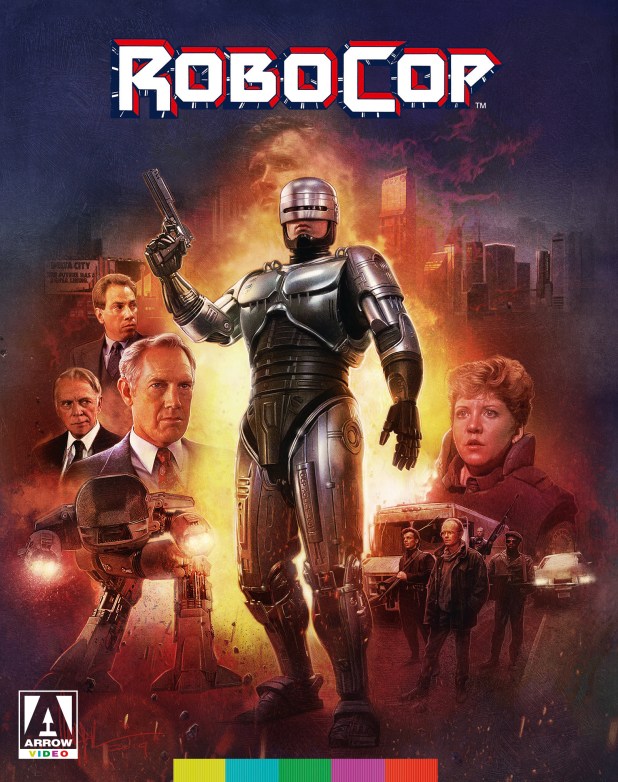
RoboCop was written by Edward Neumeier and Michael Miner, inspired by a poster for the Blade Runner. Neumeier asked a friend what the film was about and was told, “It’s about a cop hunting robots.”
Neumeier was stranded at an airport with a high-ranking film exec and was able to sell him on the project, which took half a decade or more to reach the screen. The first draft, in 1981, was about a robot cop who slowly became human. That script got rejected.
In 1984, Neumeier and Miner met. Miner had been working on a script that he called SuperCop, about a police officer who has been seriously injured and becomes a donor for an experiment to create a cybernetic police officer.
Paul Verhoeven had already made his first American movie, Flesh & Blood, in 1985. The first time he read the script, he threw it away. His wife saved it from the garbage and told him it could be so much more. Other directors who showed interest included Repo Man director Alex Cox and Kenneth Johnson, creator of the television series V.
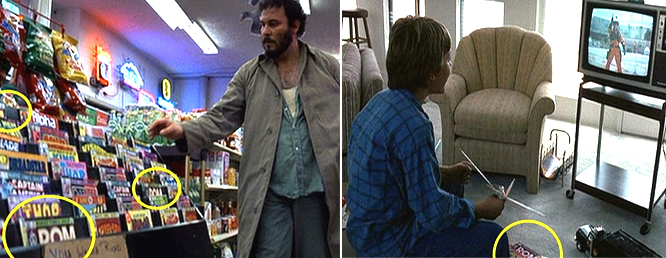
The character of RoboCop itself was inspired by — let’s try and not say directly lifted from — British comic book hero Judge Dredd, as well as the Japanese series Space Sheriff Gavan and the Marvel Comics toy-based superhero Rom the Spaceknight, whose comic shows up throughout the film.
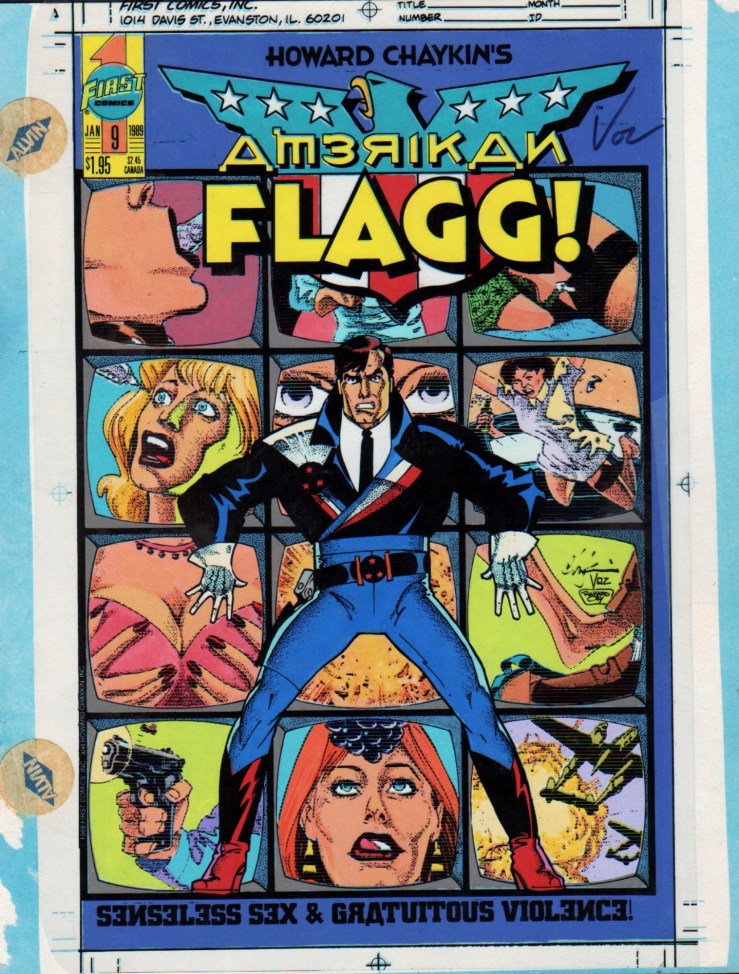
UPDATE: Shout out to Ed Piskor, who reminded me just how much this movie is influenced by Howard Chaykin’s American Flagg!
Honestly, this film is a great mix of individuals who all needed to come together to create something that could only exist by the combination of their strengths. In anyone else’s hands other than Verhoeven, it could have been just an action film. With any other actor other than Peter Weller playing the lead, it wouldn’t have the drama that it evokes. With any other artists than Rob Bottin, The Chiodo Brothers, Craig Hayes and Phil Tippett, the look of the film would be basic.
Its a perfect action movie, though one that’s also an indictment on fascism and the growing disparity between the rich and the lower castes in the United States. In fact, much like Starship Troopers, it’s satire is often lost on some audiences, who believe that it has to be absolutely serious.
RoboCop was rated X eleven different times. That’s how brutal the original versions were. Keep that in mind — the movie remains one of the most anarchic of 1987 and hell, I couldn’t see half this stuff being shown in a movie in 2020.
Detroit is worse in the future than it was in the past, if that’s possible. The cops want to strike. Omni Consumer Products (OCP) runs Detroit’s police department in exchange for letting the company rebuild run-down sections of the city into a high-end utopia. Now, they want to replace flesh and blood cops with robotic peace operatives, like ED-209, which ends up killing nearly everyone in the board room in his initial test.
That’s when the RoboCop plan comes in. It’s going to take a real cop’s brain and put it in a near-indestructible body to protect the city. That cop ends up being Alex Murphy (Weller), who gets killed on pretty much his first few days on the job by Clarence Boddicker (Kurtwood Smith) and his gang, leaving his partner Anne Lewis (Nancy Allen) alone again.
Soon, Murphy’s brains have been retrofitted into a sleek mechanical shell ready to dispense justice by any means necessary, including shooting muggers right in the meat. Before long, he’s recovered his humanity and realizes that OCP, the company that saved him, may have more in common with the criminals that he busts than the public he’s programmed to protect.
It’s a pretty basic tale, enlivened by the way and style in which it is told. Plus, you get some great actors — beyond Weller, Allen and Smith, who are all at the top of their game here. There’s Dan O’Herlihy as the OCP chairman known as only “The Old Man;” Miguel Ferrer as Bob Morton, the exec who gets RoboCop funded before Boddicker offs him during a coke binge (perhaps the most quoted scene in the film); and a gang of baddies that include Ray Wise (Leland Palmer from Twin Peaks), Paul McCrane (Guard Trout from The Shawshank Redemption) and Jesse Goins (Up the Creek). And wow, as always, Ronny Cox plays the best of bad guys, here as OCP exec Dick Jones.
Perhaps the best parts of this movie are the video screens and fake commercials that break it all up. Leeza Gibbons and Mario Machado appear as anchorpeople who take us through the news of the day, allowing for fast exposition and recaps. This technique feels right out of Frank Miller’s 1986 graphic novel The Dark Knight Returns. Plus, the “I’d but that for a dollar” guy is perfect.
In 2013, Neumeier reflected on the fact that his script was quite prophetic, saying “We are now living in the world that I was proposing in RoboCop…how big corporations will take care of us and…how they won’t.”
For what it’s worth, Verhoeven and Bottin fought throughout the production over harsh light revealing too much of the makeup on screen. Once Verhoeven won the argument, the two didn’t speak until the premiere, where they were so impressed by how the film turned out that they forgave one another. Despite vowing to never again work with the director, Bottin worked on the very next film Verhoeven made, Total Recall.
My favorite story about the film is that when he was in full costume, Weller would remain in character between takes, only responding to Verhoeven’s instructions when properly addressed as “Robo.” Verhoeven never took this seriously and refused to do so after just a few weeks. That’s second only to the fact that the producers paid President Richard Nixon $25,000 to promote the VHS release of RoboCop.
We should never forget that RoboCop once saved Sting from the Four Horsemen at WCW Capital Combat.
Arrow Video’s new release of RoboCop is packed with so many features. There’s the Director’s Cut and Theatrical Cut of the film on two 1080p blu ray discs, complete with archive commentary by director Paul Verhoeven, executive producer Jon Davison and co-writer Ed Neumeier (originally recorded for the Theatrical Cut and re-edited in 2014 for the Director’s Cut). Plus, you get two new commentary tracks, one by film historian Paul M. Sammon and the other by fans Christopher Griffiths, Gary Smart and Eastwood Allen.
Like all Arrow releases, this set is packed with documentaries, like The Future of Law Enforcement: Creating RoboCop, a newly filmed interview with co-writer Michael Miner and RoboTalk, a newly filmed conversation between co-writer Ed Neumeier and filmmakers David Birke (writer of Elle) and Nick McCarthy (director of Orion Pictures’ The Prodigy), as well as interviews with Nancy Allen, casting director Julie Selzer and second unit director Mark Goldblatt.
Plus, there’s also a tribute to composer Basil Poledouris featuring film music experts Jeff Bond, Lukas Kendall, Daniel Schweiger and Robert Townson, a tour of Julien Dumont’s collection of original props and memorabilia, three archive features from the 2007 release and a 2012 Q&A with the cast and crew.
Plus there’s even more — four deleted scenes, trailers, TV spots, Director’s Cut production footage and raw dailies, and even an Easter Egg! And wait — there’s more! There’s also an edited-for-television version of the film, featuring alternate dubs, takes and edits of several scenes, a compilation of these alternate scenes and a split-screen comparison of the Theatrical and Director’s Cuts. Whew!
You can get the limited edition blu ray and steelbook of this movie from Arrow Video.








 B&S About Movies
You must be logged in to post a comment.