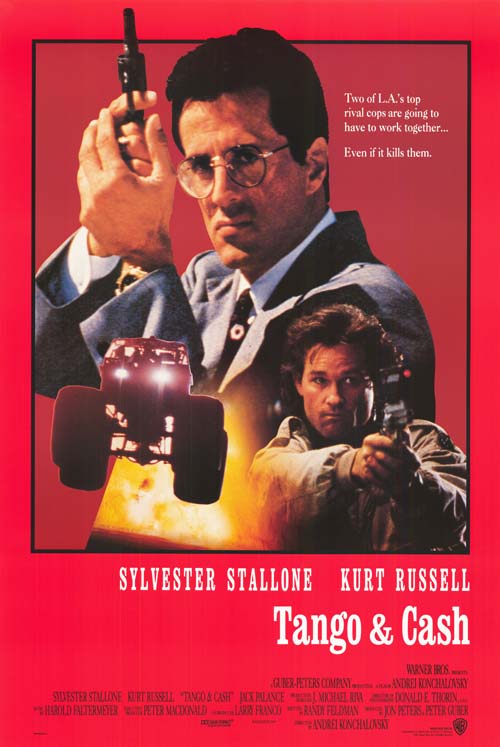
Tango & Cash (1989)

Andrei Konchalovsky directed the 1985 Cannon Film Runaway Train, which was based on a script by Japanese director Akira Kurosawa, as well as a plethora of films that seem more like passion projects than cash grabs. In fact, his last two films, The Postman’s White Nights and Paradise have both won Silver Lions at Cannes.

So how does an artist like Konchalovsky come to direct a buddy cop film with Sylvester Stallone and Kurt Russell?

Well, let me tell you, the entire production of this film was a gigantic mess and is probably way more interesting than what was filmed.

Let’s start with the original cast. Patrick Swayze was the original Cash instead of Kurt Russell, but he dropped out to do Road House instead, which was probably the right move. After all, shooting had already started without a script and Stallone had director of photography Barry Sonnenfeld (The Addams Family, Men In Black and, yes, Wild Wild West) fired.

After three months of filming, Konchalovsky was fired by producer Jon Peters (the former hairdresser and boyfriend of Barbara Streisand) after they fought continually over the direction of the film. Konchalovsky was initially hired to make a buddy cop movie with plenty of humor, but Peters wanted more than that — he wanted a movie that had no seriousness at all. Konchalovsky refused. Essentially, the two men were making two different movies.

Brion James, who plays Requin in the film, said that by the half-way point of the seemingly unending shoot that the director and producer were no longer speaking. The reason for Konchalovsky’s ousting was supposedly the budget. He was given impossible demands and was the scapegoat when things went off the rails.

Meanwhile, Konchalovsky has nothing but praise for Stallone in his 1991 book Elevating Deception. He claims that Sly was the one person who held the project together and was a constant voice of reason on an increasingly chaotic set.

By the end of shooting, Stallone was unofficially the producer, director, writer and star of the film.

Konchalovsky was replaced by executive producer Peter MacDonald, who was also one of the film’s second unit directors. He’d stepped in and done the same duties on Sly’s Rambo III. Albert Magnoli (Purple Rain) then directed the chase scenes and the fights at the end of the film.

There was also a legal battle between Peters and his partner Peter Guber against Warner Brothers, as well as self-censorship that led to jump cuts every time someone gets shot in the film. The prints of the film were completed days before it played theaters. This all led to a great quote by one of the crew members: “This was the worst-organized, most poorly prepared film I’ve ever been on in my life. From the first day we started, no one knew what the hell anyone was doing.”

Beverly Hills LAPD Lieutenant Raymond Tango (Stallone) drives a Cadillac, wears Armandi and starts the film by using a small revolver to take out a semi filled with cocaine. Yes, this stunt is 100% stolen from Jackie Chan’s Police Story, but Jackie would repay the favor by doing an even more out of control version of the zip line stunt from this movie in Police Story 3.

Downtown Los Angeles Lieutenant Gabriel Cash (Russell) drives a Corvette, dresses like a cowboy and has a shotgun in his boots. He beats the hell out of suspects with no respect to the rules.

Surely, these guys are either going to love or hate one another. Or get married. Maybe all three.

There’s one guy who really hates them: Yves Perret (Jack Palance, seemingly choking on every single word he spits out in an amazing performance) is the crime lord of Los Angeles who decides that killing them is too easy. They need to be discredited and humiliated and tortured and then killed. So he uses his vast resources to set them up and send them to jail where they’re trapped with the criminals they themselves had put away.

This is a movie packed with action, sure, but it’s also a movie packed with actors who have amazing stories and work, the kind of small part people that I adore. Sure, Teri Hatcher is in an early role as Tango’s sister Kiki. But in addition to the aforementioned Brion James, we also have:

  • Geoffrey Lewis, the frequent Clint Eastwood collaborator who also appeared in Salem’s Lot, plays Captain Schroeder, Tango’s superior in the LAPD.
  • Edward Bunker, whose career of bank robbery, drug dealing, extortion, armed robbery and forgery made him a felon until 1975 before he became a screenwriter and actor, plays Captain Holmes, Cash’s superior in the LAPD. He wrote Konchalovsky’ss Runaway Train and was Mr. Blue in Reservoir Dogs.
  • James Hong, who will always be the villain of Big Trouble In Little China, Lo Pan, is Quan, the leader of the Triads.
  • Michael J. Pollard, who is in Fulci’s The Four of the ApocalypseBonnie and Clyde and so many others films, appears as Owen, Cash’s weapons creating friend. Why a regular cop needs a special weapons expert is just another reason to love this film.
  • Robert Z’Dar, a man whose face was the best special effect in several films, plays the aptly titled Face, a psychotic convict who has a grudge against Tango. You may know Z’Dar better as the titular character in Maniac Cop.
  • Lewis Arquette, the father of the entire family that pretty much ruled movies through the 1990’s and 2000’s, plays FBI Agent Howard Wyler.
  • Roy Brocksmith, who you’d probably remember as Dr. Edgemar from Total Recall, plays FBI Agent Gerard Davis.
  • Clint Howard, who you know that I love from Evilspeak and The Wraith, plays Slinky, the crazed cellmate of Tango.
  • Finally, we have martial arts legend Benny “The Jet” Urquidez, Tai Bo teacher Billy Blanks and Breakin’ star Adolfo “Shabba-Doo” Quinones.

This is a movie where the two main characters being sent to jail is merely the set up for them to get an armed to the teeth assault vehicle and blowing up the bad guy’s headquarters. Yet despite its wildly varying tone, the movie is presented as a serious movie the entire time.

Well, I say that, but it’s also a film where Stallone’s character remarks how much he hates danish, meaning the pastry, but also meaning Danish women, as he was getting divorced from Brigette Neilsen at the time. And any movie that ends with a fake newspaper headline that looks this silly has earned my adoration.

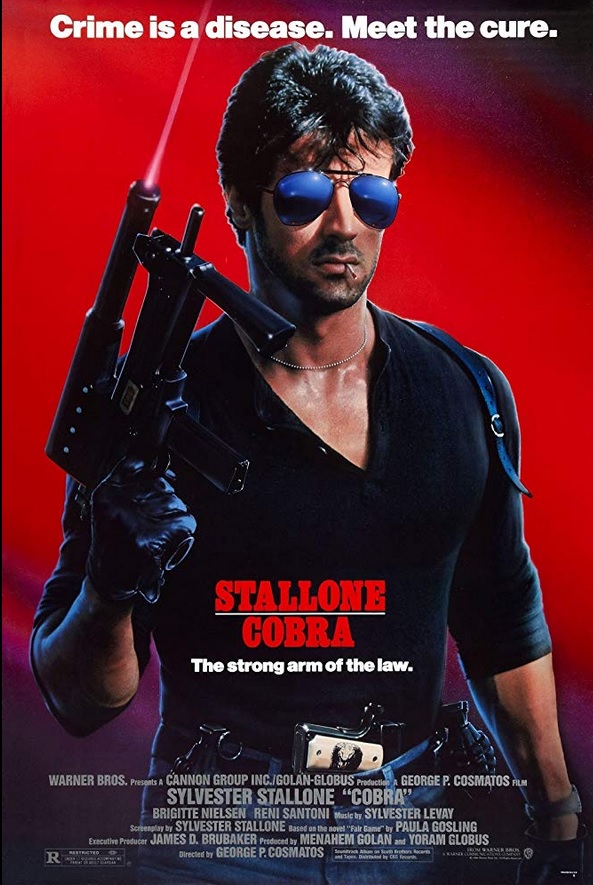
Cobra (1986)

Editor’s Note: This is part of our week-long tribute to the films of Sylvester Stallone. You’ll find links to several more reviews of his films, within. If you don’t see your favorite mentioned, enter the title into the search box to your left; chances are, we reviewed it.

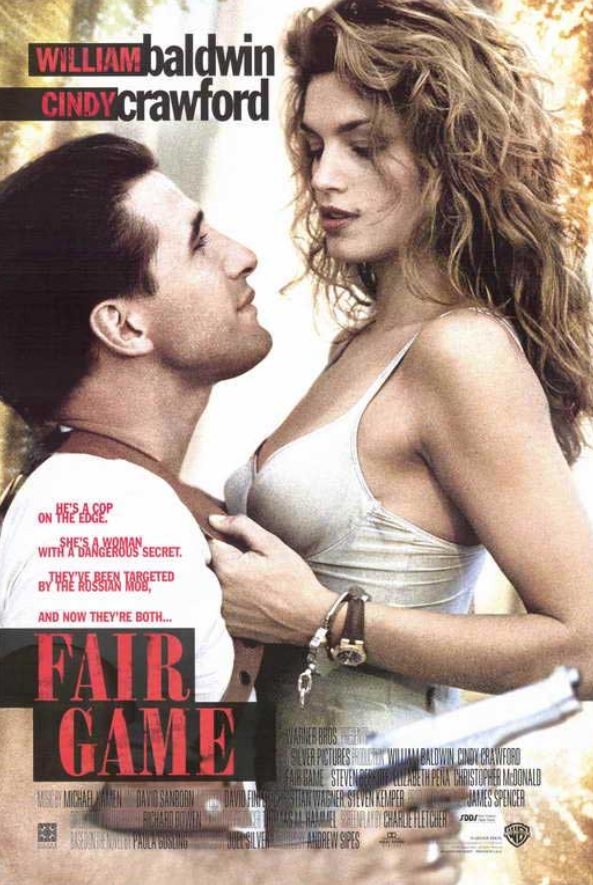
What do Cindy Crawford, Eddie Murphy, and Sylvester Stallone have in common? This movie, by way of a 1978 novel, Fair Game, initially published in 1974 as A Running Duck, written by Detroit born-and-bred writer, Paula Gosling. As result of Stallone’s screenplay rewrite, he wanted a Cobra novel published in 1986 that listed him as a co-author with Gosling. She passed on the offer.

The truth is that the pre-production history on Cobra—and how Gosling’s best seller became part of Stallone’s celluloid catalog—is more interesting than the actual movie itself.

The story goes: When he signed on the dotted line for Beverly Hills Cop, Stallone—as he does in most cases with the films he acts in—rewrote the film, which was initially conceived as a fish-out-of-water action comedy about a cop from the hard streets of East Lost Angeles who transfers to the pampered streets of the Beverly Hills Division.

Before Eddie Murphy and Stallone were attached, Mickey Rourke (The Wrestler, Iron Man 2) signed on for the Alex Foley role, after plans with Al Pacino, Richard Pryor, and James Caan failed. Then, when production problems held up the film, Rourke dropped out due to another film commitment. So Stallone came onboard and renamed the lead character as Axel Cobretti—so he could be nicknamed “Cobra”—and reimaged the film as a straight action piece. And . . . somewhere amid all of this Beverly Hills Cop pre-production hocus pocus, Gosling’s book was brought into the mix to serve as the “source material” for another Stallone Cobra rewrite—with most of the rejected action set-pieces deemed “too violent” and “too expensive to shoot,” such as Cobra playing chicken in his souped-up Mercury with a speeding train, being reused.

So what was the end result?

Beverly Hills Cop became one of the best reviewed and biggest box office successes of 1984; Cobra, in spite of its box office success, was one of worst reviewed films of 1986. Today, while considered a “cult classic,” Cobra is the least remembered film in the Stallone canons. In addition to its nod for Worst Screenplay, Stallone’s “Beverly Hills Cop” was nominated for a total of six Razzie Awards, including Worst Picture, Worst Actor for Sylvester Stallone, along with Worst Actress for Brigitte Nielsen, and Worst Supporting Actor and Worst New Star for (the very cool!) Brian Thompson’s menacing leader of “The New Order”: The Night Slasher.

I remember iconic film reviewers Gene Siskel and Roger Ebert, during an episode of their syndicated At the Movies, really tearing into Cobra. They absolutely hated it. Ebert’s biggest issue was that Stallone’s idea of “character development” was his character picking up a slice of three-day old pizza from a messy kitchen crawling with bugs and cutting the slice with a pair of scissors.

“Okay, but what does this all have to do with model-turned-skin cream magnate Cindy Crawford?” you ask.

Oh, yeah, Cindy. I forgot.

So screenwriter Charlie Fletcher, who scribed a European reimaging of the 1974 Burt Reynolds football comedy-drama, The Longest Yard, as Mean Machine (2001), completed a more faithful-to-the-source-material adaptation of Gosling’s book, with the film, in one of the very rare book-to-screen transition, retained the book’s title.

The eventual 1995 film, unlike Cobra, was a box office bomb with a pitiful $12 million gross against a $50 million budget. It was the beginning—and end—of Cindy Crawford’s career who, if you read the press on the film, didn’t want the role in the first place. And it shows. You think Cobra is bad? Be grateful that Cobra at least had a cool car to hold our interest. And to think Gina Davis, Julianne Moore and Brooke Shields were in the running for the lead. I don’t think even Gina Davis, with her Thelma and Louise wiles, could save it.

Can you imagine a novel producing two movies as diverse: one starring Sly Stallone, while the other stars Cindy Crawford? Wait, actually Cindy is the “Brigitte Nielson” damsel-on-the-run and William Baldwin is the “Cobra” who battles the KGB operatives. And William Baldwin isn’t perpetually adorned in aviator shades expounding cool lines through tooth-picked clenched lips like, “You’re the disease, I’m the cure” and “This is where the law stops, and I start,” either.

The difference between the two films—outside of the amped-up ultraviolence in Stallone’s vision—is his substituting the damsel-in-distress divorce attorney mixed up in KGB-Cuban political intrigue of the Fair Game novel with a runway model on the run from a white supremacist group. (I guess Sly thought his then real-life wife, Brigitte Neilson, wouldn’t pass as divorce attorney?) Oh, and William Baldwin doesn’t drive a bad ass, 1950 Mercury Monterey Coupe with a blower-outfitted Chevy 350 that did zero to sixty in four seconds.

“Okay, so that takes care of Beverly Hills Cop and Fair Game. What’s Cobra about?”

Stallone is Marion Cobretti (I know, from Axel to Marion? It’s a John Wayne nod that everyone missed), a member of “The Zombie Squad,” a rules-don’t-apply-to-us elite division of the LAPD that handles the toughest of cases and criminals, who goes all “Dirty Harry” with a shoot-first-ask-questions later Charles Bronson approach to law enforcement. After foiling a bloody grocery store hostage standoff, he uncovers the beginnings of a plan by a Darwinist-practicing, white supremacist group, “The New World,” that sets out to kill off the weak, leaving the strong to survive and rule a society. And in there, somewhere—most likely amid the reported 40 minutes of cut footage—is a deeper message about our disintegrating society weakened by the media and our rising fascination with violence. According to legend, there is a 130 minute cut of Cobra that initially pulled an X-rating for graphic violence—featuring gory throat slashings, severed hands, beheadings, graphic axe swings, and meat hook hangings.

All these years later, with my expanded knowledge of the Italian Poliziotteschi and Giallo films of the ‘70s, I believe Stallone was going for a hybrid-homage of the two genres that would have likely played well to Euro-audiences. Or at the very least: a ‘70s Bronson-styled Death Wish protagonist clashing with a John Carpenter-inspired ‘80s slasher (see Chuck Norris’s Silent Rage). If that was, in fact, Stallone’s original vision, I’d pay to see that movie. Hopefully, one day Stallone would be encouraged—provided that excised footage still exists—to restore the film to its 130 minute, X-rated format which, in today’s post-Saw universe world, would pull an R.

Sadly, in the end, making movies is about making money—not creating “art” or “genre homages”—Siskel and Ebert be damned. And Cobra did make money. It debuted at #1 at the American box office and several other countries to clear $160 million against its $25 million dollar budget.

And besides: William Baldwin can’t brag about a Commodore 64 video game based on his character from Fair Game.


Be sure to look for my reviews of Avenging Angelo, Cop Land, D-Tox, F.I.S.T., and Paradise Alley.

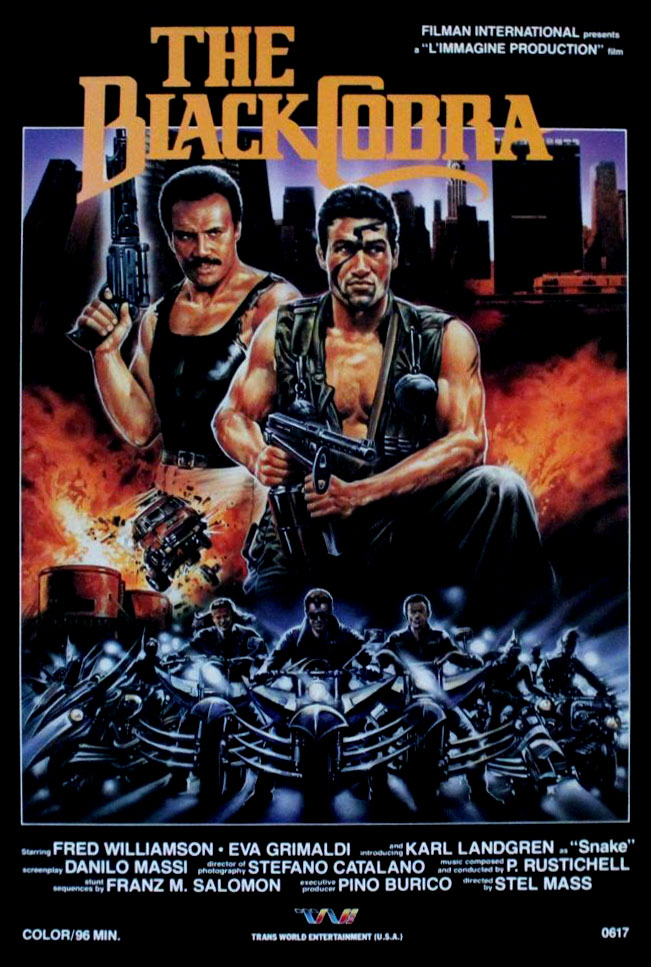
We also took another look at Cobra as result of our “Cannon Month” of film reviews. You can read more about Cannon’s catalog with our five-part interview with Austin Trunick about his film guide on the studio. In fact: Did you ever want that sequel to Cobra that you never got? Well, how’s about a blatant Euro-made ripoff of Cobra? You got one with Black Cobrawhich we rolled out as part of our “April Moviethon II” (2023).

It’s different . . . but the same . . . (and we know we’ve seen those apoc-lookin’ trikes on another Italian swill-fest, but can’t place it)

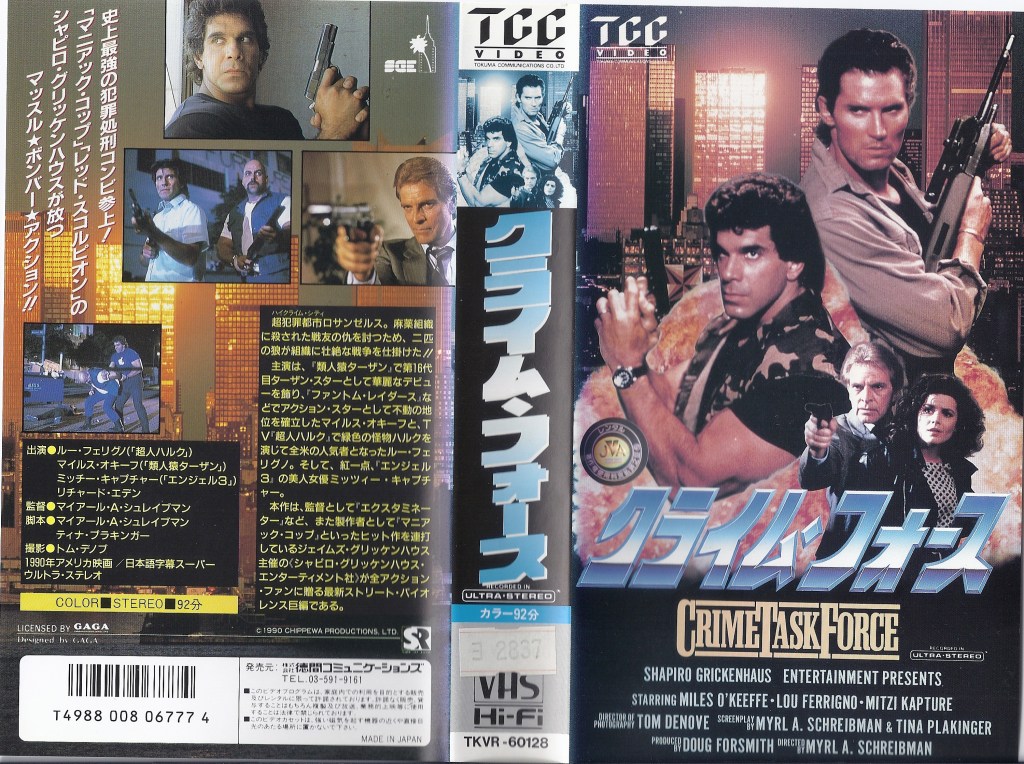
. . . just like this ripoff of Stallone’s Tango and Cash, aka Crime Task Force, aka Liberty and Bash . . .

. . . but not like Clash of the Ninjas from 1986 that Godfrey Ho wished Sly starred, but did not . . . just like Sly did not in . . .

. . . this Godfrey Ho clip joint — Cobra Against Ninja — from 1987 that hoped you’d fall for a faux-Sly battling Ninjas. But you do get more Richard Harrison in the Ho-ripoffery.

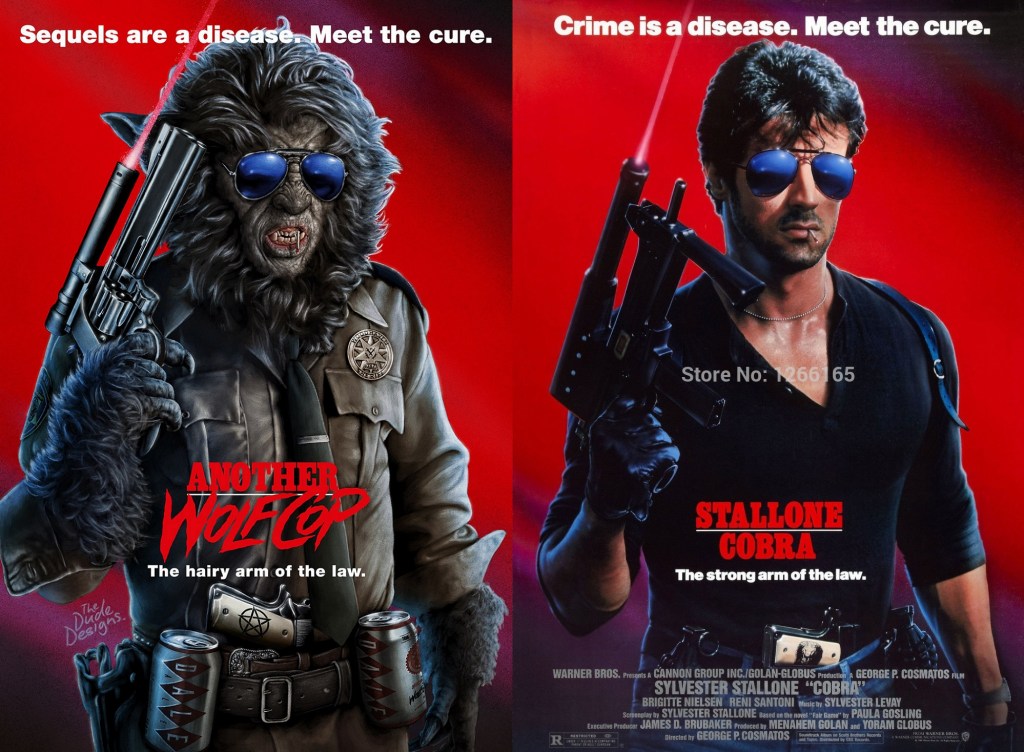
Oh, yes! Our Cobra obsession, continues: 2017’s Another Wolfcop.

Yo!, we dig our Stallone flicks ’round ‘ere.

About the Author: You can read the music and film reviews of R.D Francis on Medium and learn more about his work on Facebook. He also writes for B&S Movies.

An interview with Chuck and Karolina Morrongiello, makers of Amityville Mt. Misery Road

We reviewd Amityville Mt. Misery Road a while back, but we were really excited to get the chance to interview the filmmakers, Chuck and Karolina Morrongiello, to learn more about how the movie got made. Thanks to them for opening up some time in their busy schedule for us!

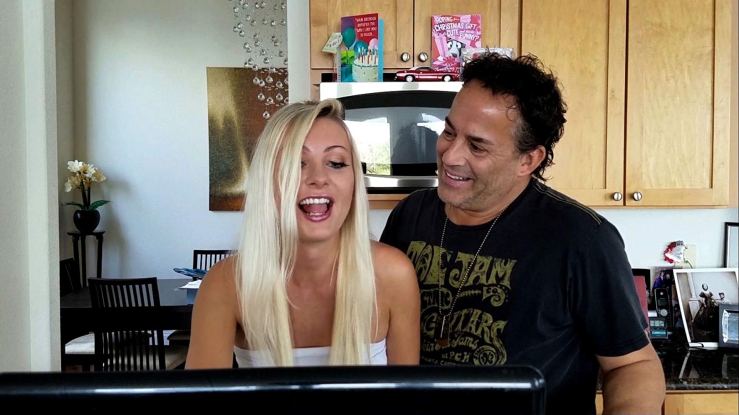
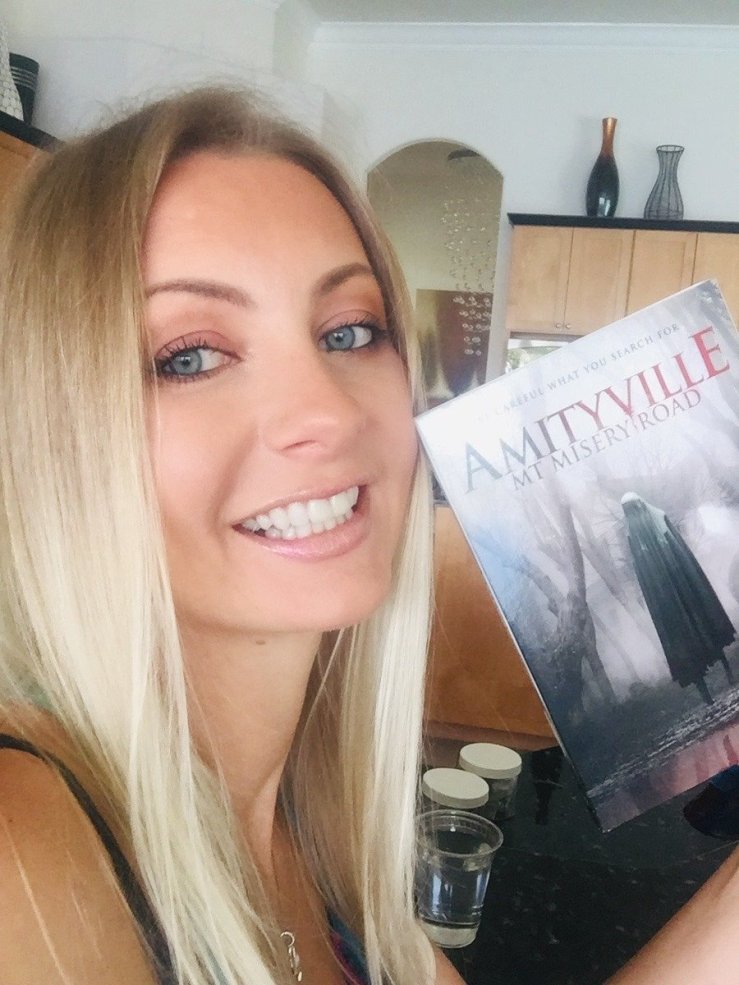
The happy couple in better times before they took a ride down Mt. Misery Road

B&S About Movies: We were really by the distribution the film has.

Chuck Morrongiello: Yeah. We worked hard on that and it ended up being a great deal. When the film is good, that’s what happens.

B&S: What inspired you guys to make this movie?

Chuck: The thing is, my wife is from Poland and I’m from Long Island, New York. We went to Poland and she showed me some historical things like World War II bomb shelters and a lot of other places — ghostly places, haunted places — so when we came back to New York, I wanted to show her some of my old stomping grounds.

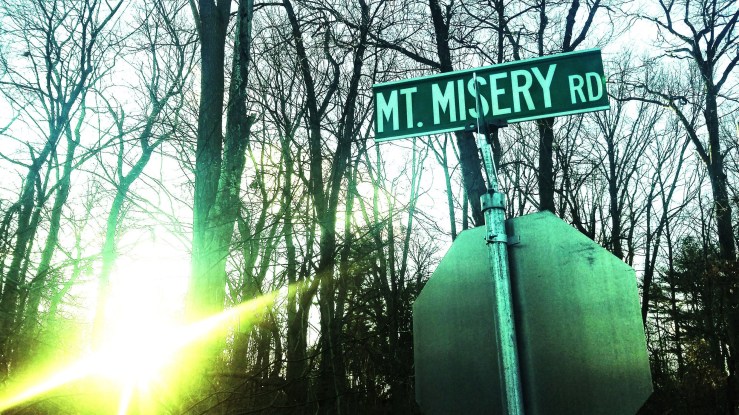
One of the most famous places and it’s considered one of the most haunted roads in the world is Mt. Misery Road. It’s been cursed for centuries and it’s right around the corner from Amityville.

I took her there right before Christmas in 2015 and we walked around in 10-degree weather and I said, “Hey, nobody has ever made a movie about this place and it would make a great story.”

We had about ten days there and I said, “Just start walking in the woods and I’ll start filming.” When we got back to the hotel, we watched it and thought that we were on to something. Within a day or two, we wrote 25 different scenes and it all came together.

We knew the story we wanted to tell, of the asylum that burned down and all the great history and tales of Mt. Misery Road, like the creature with red glowing eyes, a hellhound the haunts the woods and even Mothman, they’ve all been seen there.

Buzi has her copy!

B&S: Was it frightening to be in those places when you shot the film?

Chuck: We had many, many things happen while we were there.

Karolina Morrongiello: Check out our Facebook page!

Chuck: We have ten different testimonials of people that have witnessed the horror there. Plus, I grew up around the corner, so in the 70’s and 80’s we’d go there to get spooked. On Halloween, everyone goes there to find the hellhound.

While we were filming, we had a lot of problems. The camera wasn’t working. We went back another time a year later for more footage and we started hearing noises and seeing ectoplasmic fog and heard laughing sounds and even saw red dots that floated around. All of that is in the film. You can actually hear the granny laughing in the background and we left that in there. We experienced it — people won’t go there because it’s cursed and bad things have happened.

B&S: So you were lucky to escape with the footage you got.

Chuck: Well, we went in there with a mission. We wanted to see if we could really found something and we did. We were blown away when we listened to some of the audio and watched the footage.

When my wife was editing this film, she had nightmares!

B&S: Are there any plans for a sequel?

Chuck: That’s a good question. We’ve been talking about doing Mt. Misery Road 2 because people have been asking us. Everyone in Long Island — you can ask anyone there — they’re proud of having the most haunted road. My grandparents, my mom and dad, they all warned me to stay away from this place since I was a kid!

We put the movie out and it sold out in Long Island. WalMart stores were sold out across the country! You were lucky that you found a copy!

B&S: What are your influences? Did you grow up watching horror movies?

Chuck: We like horror flicks, we like drama and suspense. While we were there, the idea just came to my head though. Nobody ever made a film about this place.

We do watch Lifetime almost every night. Our new movie that we’re working on is very sinister, a blend of The Shining and the movie Misery. We liked A Quiet PlaceTerrifier was great.

Karolina: The Intruder.

Chuck: That was great.

B&S: What else would you tell people about your movie?

Chuck: It’s a b movie. We filmed it on our phones. That movie Tangerine and Unsane, they’ve been filmed on phones too. We made a low budget movie on our terms, with a few actors, and all three were from the area and knew that road. One of them even had their car jolted near the cemetery and had no idea how many people that has happened to! I said, “That was probably Mary!”

Our budget was probably the lowest ever — $2,500 bucks.

Karolina: We should call the Guinness Book of World Records.

Not a place for the easily freaked out!

B&S: It was cool to see that you’re a couple making movies together.

Chuck: We’re always doing things together. We have a passion for this kind of stuff. We have an album right now, I was Marty Balin’s guitar player. I even wrote the whole soundtrack for this movie.

We were inspired! I didn’t see my wife for six months because she was in the next room editing the film!

B&S: Where does your wife’s nickname come from in the film?

Chuck: Her character name is Buzi.

Karolina: (laughs) Buzi means kiss in Polish, so basically when we started dating, I was telling him, “Hey give me a kiss,” but I said, “Give me a buzi.” So he started calling me that instead of Karolina. So we left it in the movie.

The most haunted road in America!

To see Amityville Mt. Misery Road for yourself, you can grab the DVD at WalMart or watch it for free on Tubi. You can also visit official site to learn more.

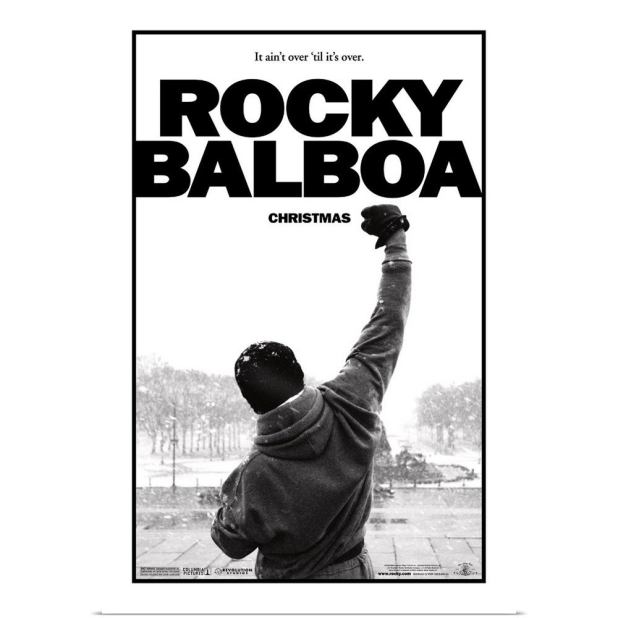
Rocky Balboa (2006)

Sylvester Stallone believed that he was negligent when he made Rocky V, as it left both him and his fans disappointed as the end of the series. So that’s where Rocky Balboa comes from and much like other movies Stallone has made, the storyline mirrors his own struggles and triumphs.

Rocky is still living in the same Philadelphia neighborhood, but now he’s a widower. He runs his own restaurant named Adrian’s named after his ex-wife. Two characters from the past return — Marie, a younger and troubled woman, and Rocky’s first opponent, Spider Rico.

First off, how does Rocky fight again after how bad he was in the fifth movie? Let Sylvester himself tell you: “When Rocky was diagnosed with brain damage, it must be noted that many athletes have a form of brain damage including football players, soccer players, and other individuals in contact sports such as rugby, etc. Rocky never went for a second opinion and yielded to his wife’s wishes to stop. So with the advent of new research techniques into brain damage, Rocky was found to be normal among fighters, and he was suffering the results of a severe concussion. By today’s standards Rocky Balboa would be given a clean bill of health for fighters.”

Rocky does more than fight a new boxer — Mason “The Line” Dixon, played by real boxer Antonio Tarver — he’s also battling grief and to stay in the life of his son Robert (Milo Ventimiglia). Paulie (Burt Young) is still in his life, but he’s dealing with the end of his work life and the guilt he feels over how he treated his sister while she was alive.

One night, Rocky reconnects with a woman named Marie, who he once escorted home when she was in her teens. She has a son named Stephenson who takes to Rocky as well and this helps him through his pain.

But who is Mason Dixon? He’s a boxer that the public has turned on and an ESPN story where Rocky would defeat him in a computer simulation. This reminds him of what his old trainer told him: if he wants to gain respect, he needs to earn it through the right opponent.

This starts Rocky back in the ring, as Dixon’s promoters pitch the idea of holding a charity exhibition bout in Las Vegas. The story is that Rocky is a has been and Dixon may be a never was, but the public falls in love with the story. 

The best part of this movie is when Robert tells Rocky that his father’s shadow has caused him to fail. The hero takes a step and unleashes a speech that I have seen on so many walls: “The world ain’t all sunshine and rainbows. It’s a very mean and nasty place and I don’t care how tough you are it will beat you to your knees and keep you there permanently if you let it. You, me, or nobody is gonna hit as hard as life. But it ain’t about how hard you hit. It’s about how hard you can get hit and keep moving forward. How much you can take and keep moving forward. That’s how winning is done! Now if you know what you’re worth then go out and get what you’re worth. But ya gotta be willing to take the hits, and not pointing fingers saying you ain’t where you wanna be because of him, or her, or anybody! Cowards do that and that ain’t you! You’re better than that!” I can’t even read these words without getting emotional.

At Adrian’s grave, Rocky and Robert come together. Our hero starts training again with Apollo Creed’s old trainer, Duke (Tony Burton), who explains that Rocky can’t win by speed any longer, so he has to increase his power. 

The fight goes the full ten rounds and ends with both men standing. Rocky lands the last punch (and wins the fight in an alternate cut of the film). Rocky thanks an appreciative Dixon for the match, which has given both men exactly what they need. 

The movie closes with Rocky at Adrian’s grave, saying “Yo Adrian, we did it. We did it.”

As disappointing as Rocky V was, Rocky Balboa is perfect. If this was the end of the Rocky saga, it’d be a fine close. However, the character would continue in the Creed movies. This was an emotional watch for me and quite cathartic.

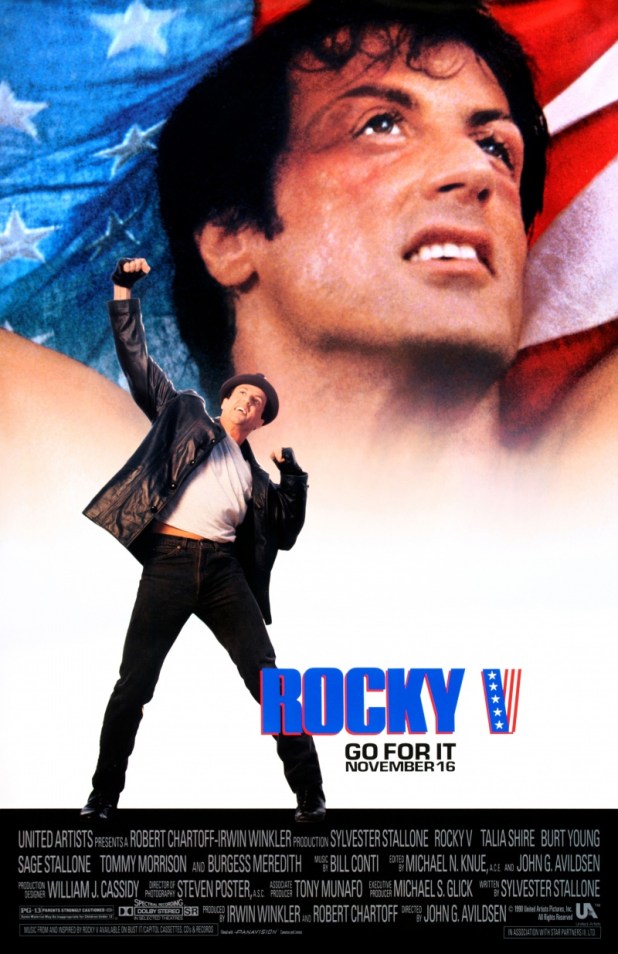
Rocky V (1990)

I’ve avoided this movie for some time, due to its bad reputation and just the general feeling that I had no interest in seeing Rocky slide back into the sad life that he escaped. This week of Stallone movies has given me the opportunity to watch this one, however, and while it’s not my favorite of the films, it’s not as bad as I feared.

Director John G. Avildsen — who directed the original — returns to direct this one, which finds our hero go right back to the same streets that he once trained on. Avildsen clashed with cinematographer Steven Poster during the making of the film, feeling that the realism of the movie was threatened by over-lighting instead of using a single spotlight to create a mood. Poster told Avildsen that the original film “looked like a cheap documentary,” to which the Oscar-winning director replied, “Exactly.”

A week after Rocky defeats Ivan Drago in Rocky IV, he returns to the United States. However, he’s not whole — the fight pretty much has finished him off, leaving him feeling broken inside. As he conducts a press conference, promoter George Washington Duke (Richard Gant), who is pretty much Don King, tries to get Rocky to fight his man Union Cane (pro boxer Mike Williams).

The pain isn’t over for Rocky — not by a long shot. It turns out that thanks to bad advice from Paulie (Burt Young), the boxer gave power of attorney to his accountant, who pulled a Bernie Madoff on him, leaving him with a foreclosed second mortgage and six years of unpaid taxes.

It gets worse, too. Rocky has a brain injury that was further compounded by the blows he endured defeating Drago. Now, he can never fight again, so he must sell his home and all his belongings, moving back to the streets he thought he escaped.

After a night of drinking, Rocky enters his old gym and sees a vision of Mickey (Burgess Meredith) appear to him, telling him a speech much like the one that Cus D’Amato told Mike Tyson after his first fight. This leads to rocky reopening the gym and eventually becoming the manager for Tommy Gunn (boxer Tommy Morrison), a young man from Oklahoma who becomes Rocky’s surrogate son.

But doesn’t Rocky already have a son? He sure does and his kid Robert (Stallone’s real life son Sage, who would one day help form Grindhouse Releasing) must adjust from private school to the tough inner city school, getting his ass kicked every step of the way. Even worse, he has a dad who only wants to get in the ring and train his fighter.

Of course Tommy Gunn is going to give in to the dark side, falling under the sway of Duke. It’s brutal when Rocky watches on TV and Gunn extols the angel on his shoulder that the promoter has become, language specifically used to try and bring the retired champion into the ring. Instead, the two brawl in a brutal street fight that ends with Rocky victorious.

That fight, however, is awesome. That’s probably because pro wrestling legend Terry Funk choreographed it, which explains the German suplex spot. Amazingly, the fight was originally going to end with Rocky dying in Adrian’s arms. Eventually, Stallone decided to rewrite the ending, as he believes that Rocky is all about perseverance and redemption. A death in a street fight? That isn’t how a hero goes out, right?

Michael Williams and Tommy Morrison were scheduled to have an actual boxing match about a month after this was released, hyped as “The Real Cane vs. Gunn Match,” but Williams was injured and could not compete.

Speaking of Morrison, he had a pretty interesting life. His nickname, “The Duke”, comes from a claim that he was either the grand nephew or grandson of John Wayne, which may or may not have been true. He started doing tough man contests at the age of 13 before going into boxing, where he amassed a 202-20 record and won the Gold Medal at the Seoul Olympics. His pro career included wins over George Foreman for the WBO title and a 48-3-1 record.

At one point, Morrison was married to two women at the same time and had two children by the age of 19. Those sons, Trey Lippe Morrison and James McKenzie Morrison, have grown up to be pro boxers themselves.

His life took a sad turn in 1996 when he failed a blood test before a fight. He had HIV, which he said came from his permissive, fast and reckless lifestyle, saying “Wilt Chamberlain had nothing on me. Infidelity was one of my biggest battles in life. I couldn’t overcome it.”

Morrison tested negative for HIV in 2007 and began boxing again, even though some of those fights were supposedly staged. He also dealt with probation issues from past arrests that led to him serving nearly two years in jail.

In August of 2013, Morrison’s mother claimed he had full-blown AIDS, even if the boxer’s mother didn’t agree. Morrison died a month later from cardiac arrest, resulting from multiorgan failure due to septic shock caused by an infection.

In the years following the film’s release, Stallone acknowledged that the brain injury angle was inaccurate. Instead, it’s a mild form of brain damage, such as CTE, and it wouldn’t have prevented Rocky from gaining a license to box or put his life in danger.

When asked to rate all of the Rocky films by British host Johnathan Ross, Stallone gave this one a zero. I kind of love that he also has stated that Tommy Gunn left boxing and become a “third rate pro wrestler” afterward. I’d love to see that movie.

This is the only boxing movie I can think of with MC Hammer and Elton John on the soundtrack. It wasn’t as bad as I feared, but wasn’t as good as I wanted it to be. But man, that last fight is great.

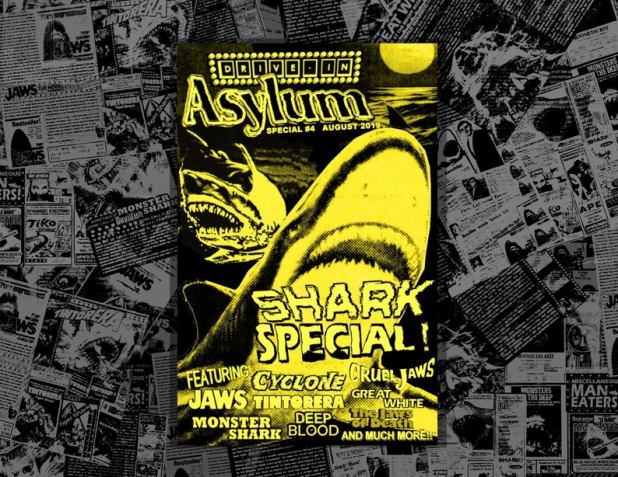
Drive-In Asylum Summer Special is out now!

Get ready for sixty pages of black, white and random color blasts of newspaper ads and articles about your favorite shark movies! All four Jaws movies get covered — I wrote about Jaws 4! Plus, the original novel, Great WhiteThe Jaws of DeathCycloneDeep BloodMonster Shark and Tintorera!

Plus a special Guest List feature this issue from Drive-In Super Monster-Rama organizers George Reis and Gene Caruso, who share with us their favorite entries from this long-running and popular Pittsburgh-area event, which attracts attendees from all over the country.

You can get this right now! Do it!

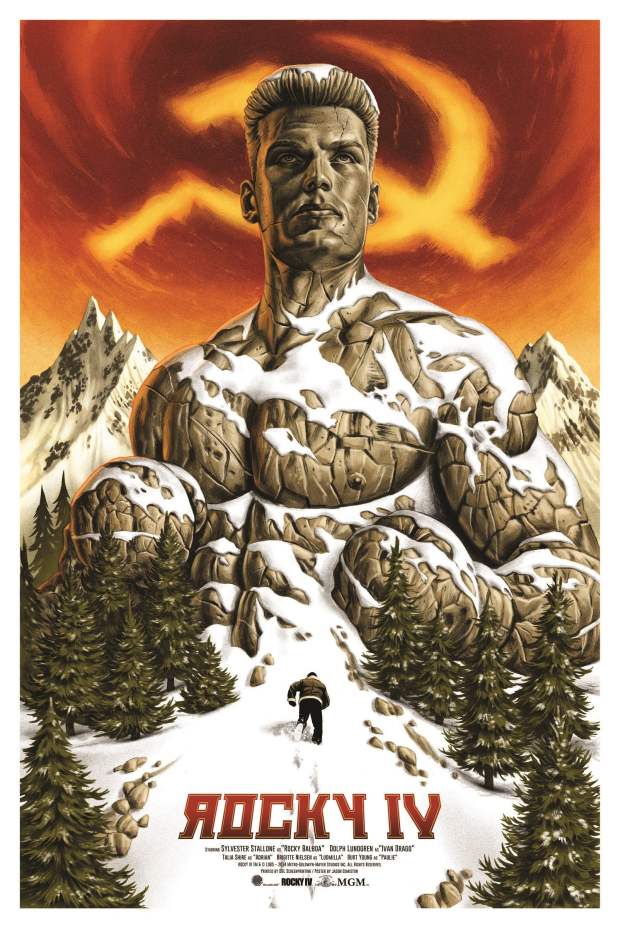
Rocky IV (1985)

Written by, directed by and starring Sylvester Stallone, this movie rode the crest of Reagan era jingoistic fervor to a $300 million dollar box office. The actual story is pretty much non-existent, as it only concerns two boxing matches and several montages. That said, it’s the kind of movie that makes me want to scream my head off and cheer. In spite of how silly it all seems, it does it’s job so very well.

Captain Ivan Drago (Dolph Lundgren) is the perfect Soviet athlete, more killing machine than boxer who has been trained to never lose. Along with a team of trainers, his Olympian swimmer wife Ludmilla (Brigitte Nielsen) and manager Nicolai Koloff (Michael Pataki!), his goal is to prove the supremacy of the Soviet athlete.

To do that, he wants a match with Rocky Balboa, but the champ doesn’t want it. Instead, his former rival and best friend Apollo Creed (Carl Weathers) takes the match, as much to prove to himself he can still fight as his patriotism is threatened by Russia’s boasts.

Their fight is incredible. Drago simply walks to the ring while Apollo has live entrance music from James Brown, who tears through “Living in America” with a team of showgirls. Yet soon, the MGM Grand in Las Vegas is quieted as Drago absolutely tears Apollo apart. Rocky and Apollo’s trainer Duke (Larry Burton, who was in Assault on Precinct 13 and played Larry Durkin, the garage owner in The Shining) beg their friend to throw in the towel, but he tells them to not stop the match no matter what. Drago hits him with one more punch that literally kills him, before he tells the assembled media, “If he dies, he dies.”

Now Rocky wants that match. The Russians agree to an unsanctioned 15-round fight in the Soviet Union on Christmas Day (to protect Drago from the threats of violence he has been getting in the U.S.), so Rocky tells his wife he must leave her behind. Now, it’s all about the fight as he goes to Krasnogourbinsk with Duke and his brother-in-law Paulie (Burt Young, who of course I’ll always love from Amityville II: The Possession).

The montage where Rocky trains in the snow, while Drago works out in a high tech gym, is the kind of thing that never happens in film anymore. It’s completely ridiculous, yet ai love every single minute of it. Drago is getting shot up with steroids while Rocky helps Russian farmers lift their sleds in the snow. It does bring a tear to one’s eye.

Finally, we arrive at the big battle, with Rocky’s wife Adrian (Talia Shire) even coming to Russia. Of course Rocky wins — “He is not human. He is made of iron.” — but you knew that coming in. The end, with Rocky telling a crowd of Russians that he has won over that, “If I can change, and you can change, then everybody can change!” makes me jump up and down nearly thirty-five years after its release.

That fight scene at the end looks so good because, well, it’s real. Or at least Stallone says they are. He wanted realism and Lundgren agreed that they would legitimately spar. One brutal punch to Stallone’s chest later and his heart slammed against his breastbone and swelled up, sending him into intensive care for eight days. Lundgren also punched Carl Weathers so hard that he walked off the set and didn’t return for four days.

While Rocky trained in a cabin (inspiring Olympians Michael Phelps and Ryan Locht), the high-tech equipment Drago uses is real and was around twenty years away from being publically used.

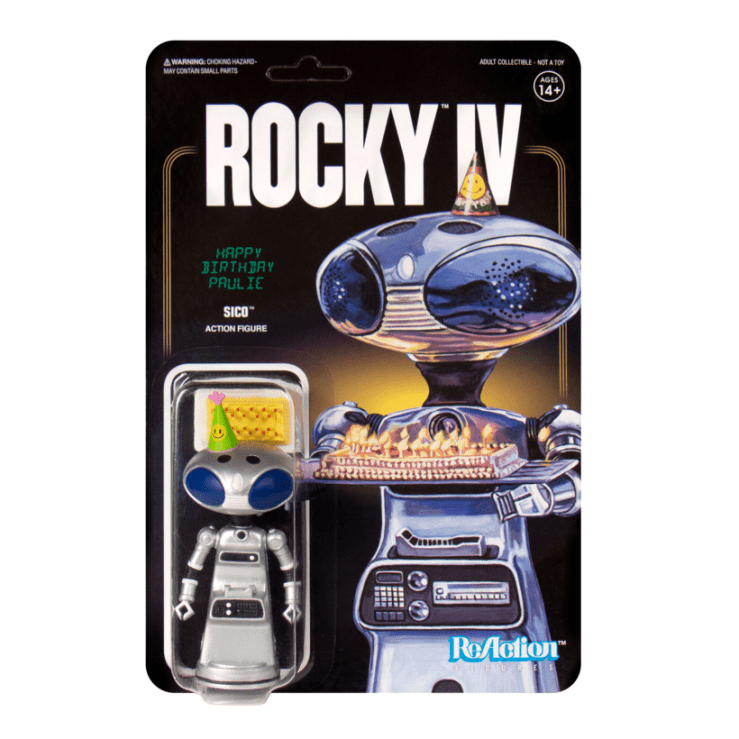
Speaking of high-tech, the real star of the film is SICO, the robot who played Paulie’s gift. That scene — where he sings “Happy birthday Paulie!” — is perhaps one of my top ten moments in all cinema. It’s so at odds with the rest of the movie that I can’t help but love it. It actually is in there for a great reason, the International Robotics Inc. creation — featuring the voice of the company’s CEO Robert Doornick — was written into the movie after it had been used to help treat Stallone’s autistic son, Seargeoh.

Stallone’s original plan was for Rocky V to be about the downward spiral that both Rocky and Drago would travel after this fight, with the Russian returning home in disgrace before becoming addicted to alcohol and steroids, then committing suicide. That never happened, although Creed II is all about the fight between Apollo and Drago’s sons, with Lundgren returning to play his famous role.

The film won five Golden Raspberry Awards, including Worst Actor (Sylvester Stallone), Worst Director (Stallone), Worst Supporting Actress (Brigitte Nielsen), Worst New Star (Nielsen) and Worst Musical Score. It also received nominations for Worst Picture, Worst Supporting Actress (Talia Shire), Worst Supporting Actor (Burt Young) and Worst Screenplay. I’m certain that Stallone wasn’t concerned, what with this being the biggest performing sports film ever — until The Blind Side was released.

This movie was also part of a famous copyright lawsuit, Anderson v. Stallone. Timothy Anderson developed a treatment for Rocky IV on spec. After the studio didn’t purchase it, the movie ended up very close to his treatment. The decision was that Anderson had “prepared an unauthorized derivative work of the characters Stallone had developed in Rocky I through III, and thus he could not enforce his unauthorized story extension against the owner of the character’s copyrights.”

There was even a special trailer made for this film with Drago telling the audience how he would defeat Rocky. If you don’t want to watch this movie after this scene, I have no idea what is wrong with you.

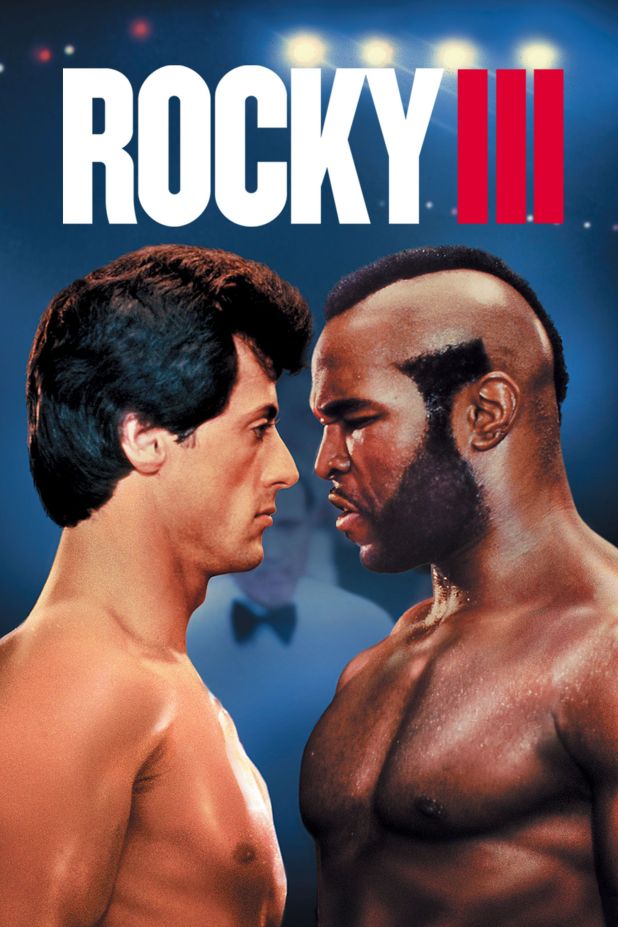
Rocky III (1982)

Rocky III did more than just extend the franchise. It boosted the careers of two nascent superheroic characters, Mr. T and Hulk Hogan, as they made their way into the 1980’s cultural zeitgeist and even a titanic team-up at WrestleMania. Yet here, they’re just enemies for Rocky to gather his wits and eventually defeat. 1,200 people auditioned to be Clubber Lang, but there couldn’t be anyone else but Mr. T in this role.

Stallone went hard to get into shape for this movie, getting his body fat percentage down to his record low of 2.8%. He did that by eating only ten egg whites and a piece of toast a day, with fruit every third day, along with two miles of jogging, two hours of weight training, eighteen rounds of sparring, two more hours of weight training and swimming every single day.

Rocky has held the heavyweight championship for five years and defended it ten times, leading to fame, wealth and celebrity. In fact, he’s even moved into boxing versus wrestling matches against opponents like Thunderlips (Hulk Hogan). But his manager, Mickey (Burgess Meredith) knows that James “Clubber” Lang (Mr. T) is the man who can beat him.

While unveiling a statue of himself, Lang shows up and challenges him to a title match, claiming that Rocky has been hiding from him. That turns out to be true, because unbeknownst to our hero, Mickey has been keeping Rocky away from anyone who would hurt him as badly as Apollo Creed did. He goes on to tell him that Lang is hungry and that Rocky will never last three rounds with him because he’s become civilized and lost the eye of the tiger.

The training montage here shows that Rocky is distracted while Lang has risen from the Chicago streets and is very much like a younger Balboa, save that he’s cocky and brutal. When the two first meet, it erupts into a brawl that causes Mickey to suffer a heart attack before the match even starts. After the fight — a second round KO title win for Lang — Rocky tells his mentor that the fight is over and that it ended in the second round. He doesn’t tell him that he lost and his father figure dies happily.

Rocky slips into a deep depression that is only stopped when Apollo Creed (Carl Weathers), his former arch enemy, offers to train him in exchange for a favor. Along with Tony “Duke” Evers (Tony Burton), Apollo brings Rocky into his Tough Gym, giving him the footwork, style and speed that he lacked, finally becoming the gladiator that he was born to be.

The fight between Lang and Rocky is different the next time — Rocky destroys him in the first round, then allows his opponent to batter him in the second, taunting Land and claiming that he can’t put him away. This is all a ruse, as Rocky defeats him in the third, finally finding, as the song sings, “The Eye of the Tiger.”

Apollo’s favor? One more rematch, this time in private at Mickey’s gym. Now the men have become friends and finally are on the same level as the film ends.

When Mr. T took his mother to the premiere, she angrily walked out, upset at the lurid way that he yelled at Rocky’s wife Adrian (Talia Shire), saying “I did not raise you to talk to a lady like that.”

As always, Stallone knows where his characters ended up. He saw Clubber Lang as later becoming a born-again Christian and a ringside announcer.

This would be the last time that Rocky would battle for the title. Now, it would be time to go to Russia and then back to the streets. Stay tuned.

Rocky II (1979)

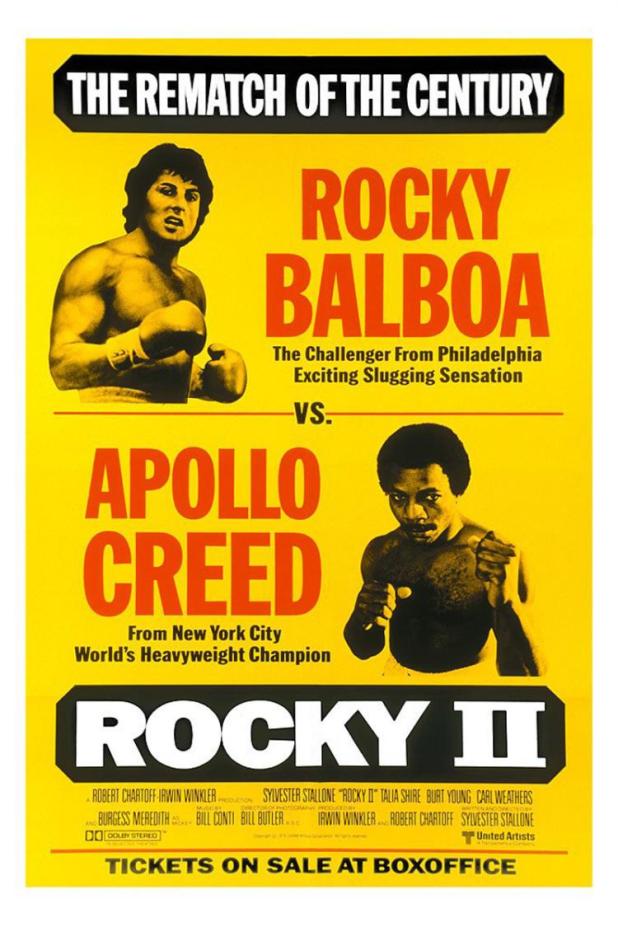
After the success of Rocky, the producers were eager to make a sequel. While Sylvester Stallone would write the script and star again, John G. Avildsen was tied to Saturday Night Fever (a script disagreement led to him being removed from the film three weeks before shooting started; he was replaced by John Badham). Stallone went all out to get the job, just like he did to get the starring role in the original film. Producers Irwin Winkler and Robert Chartoff understood how much of the success of the first film came from Stallone and helped him get the job.

The film begins immediately at the close of the last movie: world heavyweight boxing champion Apollo Creed (Carl Weathers) has defended his title against Rocky Balboa (Stallone), yet his promise of no rematch is rescinded the moment reporters surround the two men. Their private moments are much different then public; when Rocky goes to Apollo’s hospital room, he asks if he gave his all. The champion agrees that he did.

Rocky decides to retire after learning that he has a detached retina and that one punch could blind him. He has a new life now, one of endorsements and agents, but also one of true love as he marries Adrian and they expect a child.

Apollo is on a different path, as he’s now obsessed with a rematch. Rocky is the only mark on his perfect career. Despite everyone close to him telling him to drop it, he demands a rematch, smearing the good name of Rocky even in retirement.

Rocky’s inexperience with money and inability to read basically reduces his life to pure pain. Even a job at a slaughterhouse doesn’t last as the film compounds the boxer’s tragedy, moment by moment. Rocky begs Mickey to take him back and train him, but the older boxer refuses until he sees the way Apollo is taunting him.

Adrian has gone back to working at the pet store and refuses to support Rocky’s need to fight one more time. She goes in labor early and while their child is healthy, she remains in a coma. Rocky blames himself and stops training, but days before the fight, she awakens and tells him to win.

Apollo boasts that he will beat Rocky in no more than two rounds to prove the first match was a joke. Yet Rocky fights right handed instead of left, taking an even more brutal encounter into the fifteenth round, yet Apollo is way ahead on points. Rocky switches back to southpaw — leaving his bad eye open to damage — and takes out the champ with a massive punch that takes both to the canvas. Luckily, he rises in victory. 

According to John G. Avildsen, another reason he didn’t do this film was because he didn’t like the story. He was, however, excited to do the third movie, where Rocky would have been elected mayor, only to be caught in a scandal when Paulie stole from the treasury. Rocky would take the blame and end up back in his old neighborhood. Notably, a similar plot occurs — spoiler warning — in the movie Stallone and Avildsen did collaborate on, Rocky V.

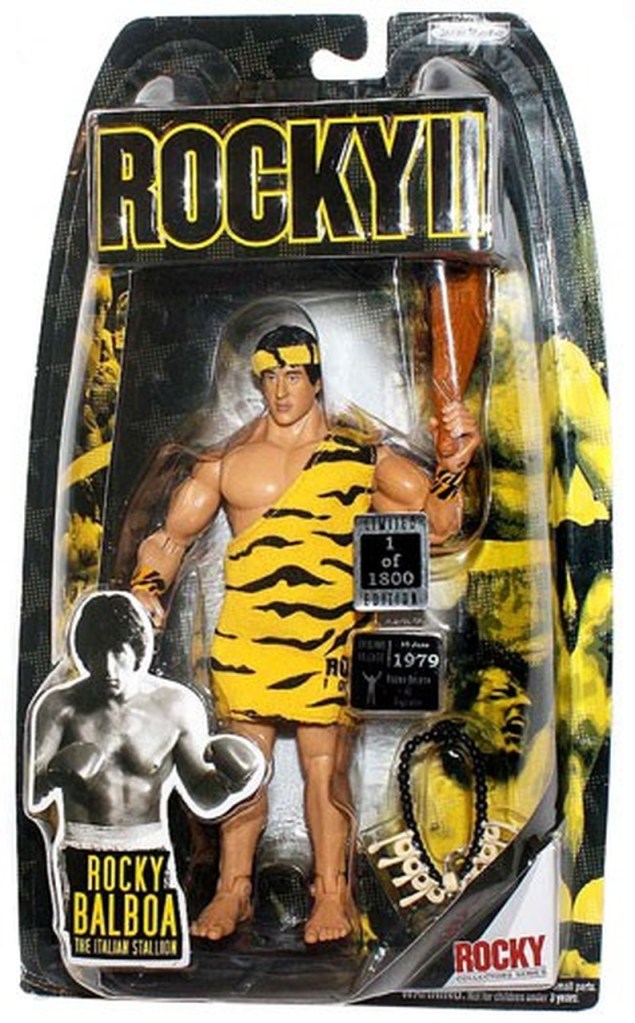
This is one of my dream action figures to own.

Rocky (1976)

Sylvester Stallone wrote the screenplay for Rocky in three and a half days after watching Chuck Wepner take world champion Muhammad Ali to 15 rounds, a feat that no one saw coming. Stallone was also inspired by two boxers named Rocky — Marciano and Graziano, as well as Joe Frazier.

United Artists liked the script as a vehicle for someone like Robert Redford, Ryan O’Neal, Burt Reynolds or James Caan. But Stallone demanded to play the main character himself. This was a smart gambit, as he knew that producers Irwin Winkler and Robert Chartoff’s contract allowed them to greenlight any project with a small enough budget (the final cost was about $1,075,000, with $100,000 spent on producers’ fees and $4.2 million on advertising costs).

To be fair, it was an audacious gambit. Stallone had $106 in the bank, no car, and was trying to sell his dog because he couldn’t afford to feed it. Instead of the $350,000 he could have made just for writing Rocky, Stallone wrote without a free and acted for scale. Don’t feel bad for Stallone’s dog — he ended up playing Butkus in the movie.

The other two main characters — Apollo Creed and Adrian Pennino — were difficult to cast, with boxer Ken Norton and Carrie Snodgress (The FuryTrick or Treats) originally picked for those roles. Finally, Carl Weathers and Talia Shire (the sister of Francis Ford Coppola, mother of Jason Schwartzman and aunt of Nicholas Cage) were picked.

As well as having to pay off Wepner for basically taking his life story, Stallone also took the cattle punching scenes and running up the steps of the Philadelphia Museum of Art directly from Joe Frazier. Luckily, the story was continually worked on throughout filming, as originally, Rocky threw the fight so he wouldn’t have to be part of the scummy world of boxing and Mickey was also incredibly racist.

The movie begins with Apollo Creed announcing a big fight in Philadelphia to celebrate the Bicentennial. Trust me, that holiday was the biggest thing ever back in 1976. He gets some bad news — his opponent is injured and he can’t find another boxer who can draw. So he decides to give a local journeyman a chance — Rocky Balboa.

Rocky’s never boxed on this level before. He has semi-pro matches in small gyms and churches when he’s not working as a collector for loan shark Gazzo (Joe Spinell, who was a close friend of Stallone until the filming of Nighthawks; he was also Sage Stallone’s godfather; you may know him better from roles in movies like Maniac and Starcrash).

Rocky meets with promoter George Jergens (Thayer David, Dark Shadows) thinking that he’s just going to be a sparring partner for Creed, but then learns that he’ll be paid $150,000. Soon, he’s finally caught the eye of former boxer Mickey Goldmill (Burgess Meredith, who is astounding in this film), a man who ignored him for years.

Rocky also falls for Adrian, which means he has to deal with her brother Paulie (Burt Young). Adrian fills the gaps for Rocky, becoming the only person that he can confess that the things people say about him actually hurt and that he doesn’t feel that he has any chance to win. He just wants to go the distance to prove people wrong.

On New Year’s Day, the fight happens. Rocky comes out in an ill-fitting robe with a meat packing logo on the back. Creed is dressed as Uncle Sam and continually makes light of Rocky before he’s knocked down in the first round, the first time that’s ever happened.

The fight is sheer brutality — Rocky needs an eyelid cut open just to see and Apollo has his ribs broken — but the end is indecisive. Creed is obviously the better boxer, but Rocky has more heart. As the final bell rings, Creed tells him there won’t be a rematch and Rocky agrees that he didn’t want one.

The result of the fight — a 8:7, 7:8, 9:6 split decision — doesn’t even matter. All Rocky wants is to see Adrian and tell her that he loves her. He’s achieved his dream and become a winner, even if he didn’t really win. Instead, he’s achieved so much more just by being who he truly is.

The iconic scenes where Rocky jogs through Philadelphia were shot guerrilla-style, which means no permits, equipment or paid extras. In fact, the scene where the grocer throws him an orange was completely improvised. The man had no idea that there was actually a movie being filmed.

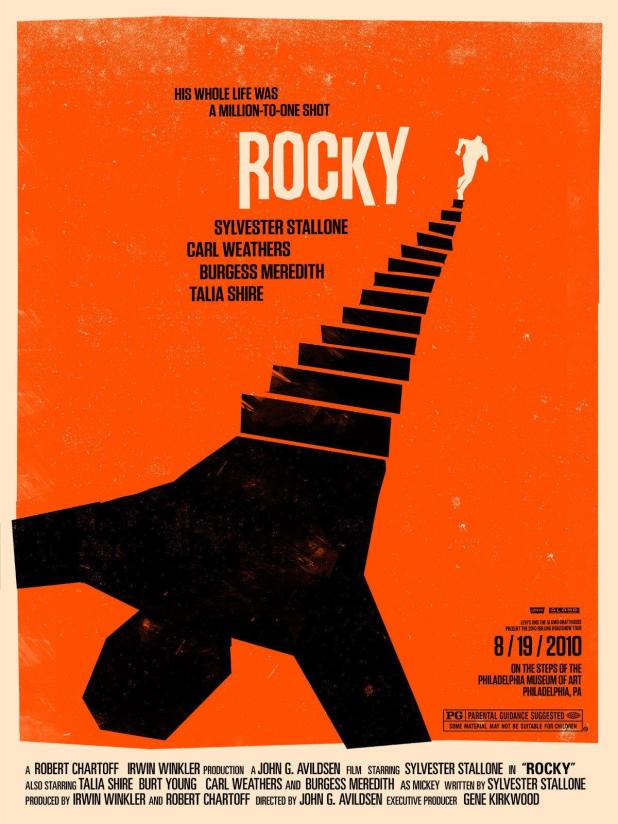
Rocky was only the third film shot with the Steadicam (the other two are Bound for Glory and Marathon Man), which was integral when it came to capturing the aforementioned jogging scenes. In fact, the Philadelphia Art Museum steps came from the test footage Steadicam inventor Garrett Brown shot of his girlfriend running those steps to wow filmmakers. Director John G. Avildsen, who was prepping storyboards for the film, saw the footage and knew it would work.

Stallone and Avildsen disagreed on many parts of the film and nearly came to blows over the film’s ending. Stallone thought Creed had to be the clear winner of the fight to prove that a victory for Rocky doesn’t necessarily have to be in the ring, but Avildsen cut the conclusion to make it more ambiguous. They did agree to reshoot the ending so that Adrian came back into focus with her showing up to watch the final round of the fight. This ended up solving their issues with the final scene, as Stallone got his upbeat ending without really needing to decide who won the match.

Rocky was a major part of my childhood. I grew up in a town split between Eastern European and Italian families, where there’s still plenty of anti-Italian racism even to this day. Having an Italian hero who wasn’t a mobster meant a lot to me, particularly because Rocky was from my home state and not somewhere far away. As I’ve grown older, the story of a man who looks back on his life and sees the time he’s wasted means more and more to me. So I get something new from this film every single time that I see it. It’s pretty amazing that this character has survived eight movie appearances, changing to reflect his age and the time when those new films are made.

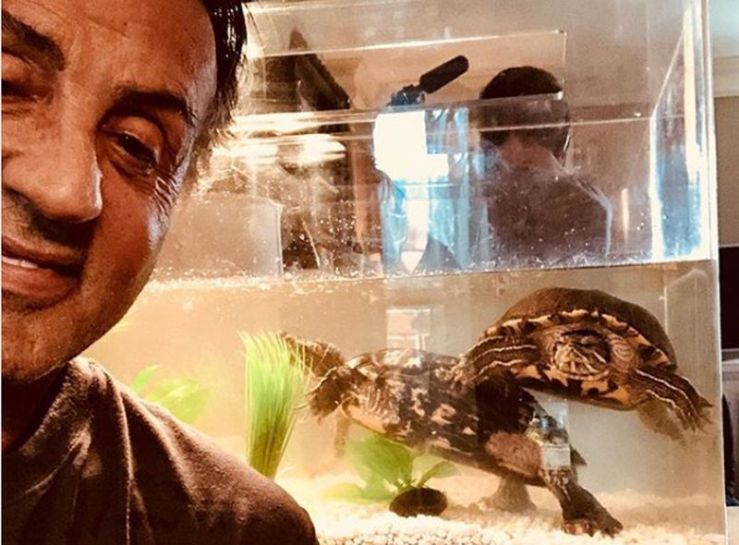
Plus, how cool is it that Stallone still has Cuff and Link, his turtles from this movie? They came back to make an appearance in Creed 2.

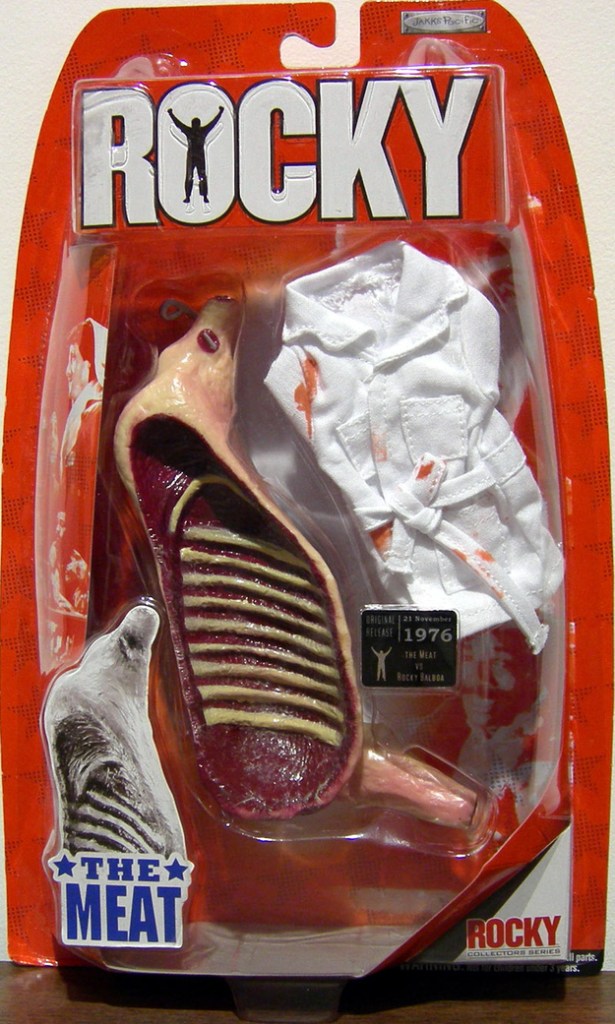
You better believe that I own the Meat figure from the Jakks Pacific Rocky toy line.