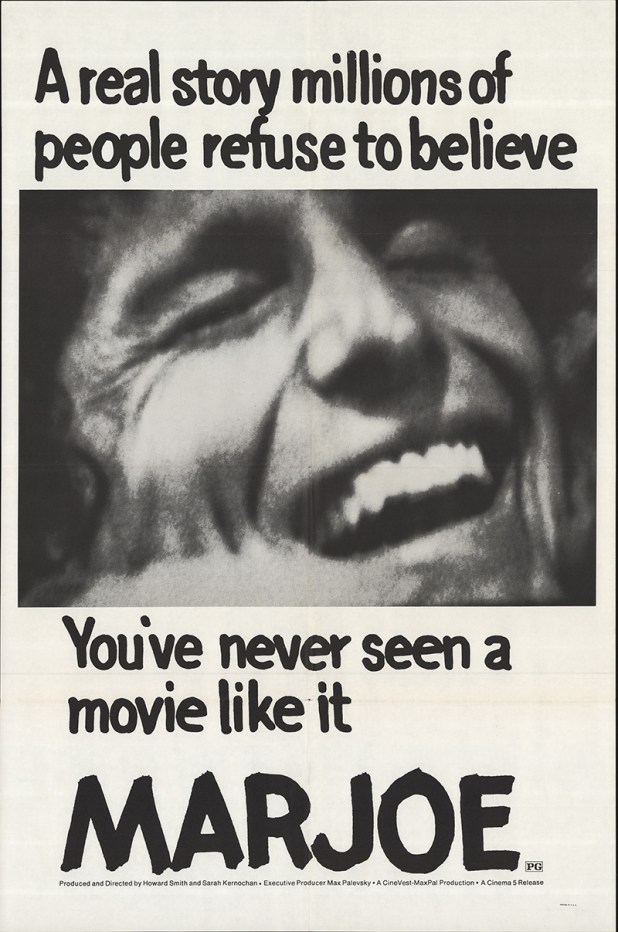
Marjoe (1972)

Hugh Marjoe Ross Gortner first became known — way back in the late 1940’s — as the youngest person to be ordained as a preacher. Just four years old, he possessed an innate ability to speak sermons and lead revival meetings. By the time he was sixteen, the Gortner family had taken around three million dollars from the faithful, money that Marjoe’s father would run away with. From then on, Marjoe was a beatnik until he needed money in his early 20’s and went back to preaching, basing his style on being a rock star like Mick Jagger.

He became famous for a different reason when he starred in this film, a behind-the-scenes documentary about Pentecostal preaching made just as Marjoe planned on leaving the faith for an acting career.

While this won the 1972 Academy Award for Best Documentary Film, it was a lost film for several years. That’s because due to the fears of bad reactions to the film in the Bible Belt, it was not shown widely in theaters any farther south than Des Moines, Iowa.

https://www.dailymotion.com/video/x58m473

The film finds Marjoe in what he claims are his final months of touring the tent revival circuit. That’s why he offered the documentary film crew full and unrestricted access to his 1971 tour. The crew includes Howard Smith, who also directed the documentary Gizmo!, appears as a TV commentator in the original Dawn of the Dead and was also a famous DJ who conducted long-format interviews with stars like John Lennon and Yoko Ono, Lou Reed, Eric Clapton and Jim Morrison; his co-director was Sarah Kernochan, who would go on to write 9 1/2 Weeks and What Lies Beneath.

The film juxtaposes Gortner preaching, praying and even healing people in Los Angeles, Fort Worth, Detroit, and Anaheim while revealing to the crew backstage that he is a non-believer, while also showing them the tricks of the evangelist trade. Even more damning are the moments where preachers pull bills out of buckets, fold them and make huge stacks of the money they’ve taken from those that only want to be saved.

In an interview with Vice, Kernochan said, “I didn’t warm to Marjoe. He was difficult to work with, very paranoid, and mistrustful, and tense. I’m not sure we were very good at relaxing him; maybe nobody could. I was concerned about him being likable. There was no point in making a film about someone who you never heard of that was portrayed as despicable. But when I saw the scrapbook, I realized that as long as people knew about his childhood, they would forgive him for anything because of what was done to him.”

She also added that one of the great ironies of the film was that one of the camera operators, Richard Pearce, objected to how the movie made many of the worshippers look dumb. How is that ironic? Well, he went on to direct Leap of Faith with Steve Martin. She said, “After putting the film down for making religious people look stupid, he ripped off some things…I thought that was really hypocritical.”

There’s also a scene that she said was cut from the film, where an artist asked Marjoe if he was being used by Jesus Christ, even if he didn’t believe in Him. The question disarmed him and twisted his already conflicted feelings.

Did they find any positive religious figures in all the time they filmed? Kernochan confessed, “I wish we had found a preacher that I felt was genuine, but we just never found one. They must be out there. But we didn’t go out of our way to find crooks.”

Even the release of the film only benefitted Marjoe, leading to a career as a rock star and releasing one album called Bad, But Not Evil, as well as being a correspondent for Oui magazine and starting his acting career. He appeared in the pilot for TV’s Kojak, as well as Earthquake, The Food of the Gods and Starcrash.

After appearing on Speak Up, America!, an 80’s reality show and Circus of the Stars, Gortner worked for charity organizations until he retired in 2010. He was married to Candy Clark (Q, the remake of The BlobCat’s Eye and Buffy’s mom in the original Buffy the Vampire Slayer) for about a year in the late 70’s.

In the Nine Satanic Statements, LaVey put forth: “Satan represents undefiled wisdom instead of hypocritical self-deceit!” You can argue that the people at these revivals didn’t know they were being lied to. Or perhaps the lie allows the psychosomatic mind to heal pain. Regardless, Marjoe and the men in this movie are profiting from them. 

That said, Stupidity is at the top of the list of the Nine Satanic Sins. “It’s too bad that stupidity isn’t painful. Ignorance is one thing, but our society thrives increasingly on stupidity. It depends on people going along with whatever they are told. The media promotes a cultivated stupidity as a posture that is not only acceptable but laudable. Satanists must learn to see through the tricks and cannot afford to be stupid.”

I think it’s intriguing that right on the Church’s Bunco Sheet, they encourage members to “develop the cold-reading abilities of a Carney, rather than the naïveté of the mark.” Their biggest warning about getting involved with other groups outrightly states: “When someone claims to have a direct line of communication with Satan, watch out. Selling that kind of mysticism is exactly how Christianity has kept people enslaved in ignorance for centuries. It’s one of the things we’re fighting against.”

You can watch this movie on Tubi or Vudu for free.

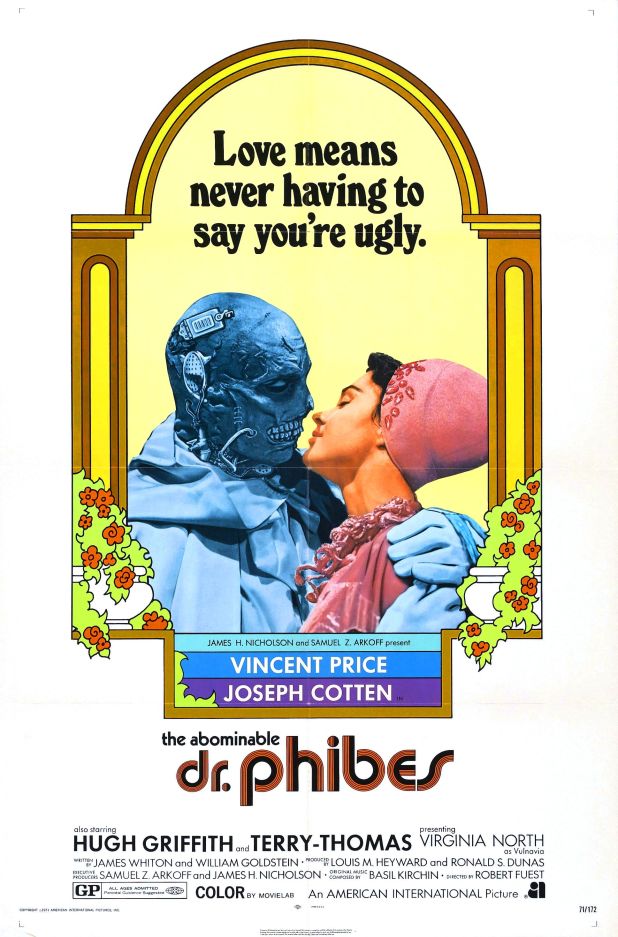
The Abominable Dr. Phibes (1971)

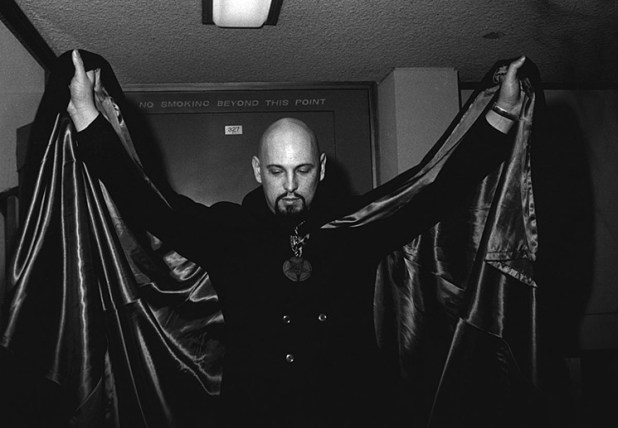
Church of Satan founder Anton Szandor LaVey claimed that the main character in this Vincent Price film was based on him. Well, his name is Dr. Anton Phibes and he’s an organist, researcher, medical doctor, biblical scholar and ex-vaudevillian who has created a clockwork band of robot musicians to play old standards at his whim. Seeing as how nearly all of these things match up with LaVey, I can kind of see his point.

Director Robert Fuest started by designing sets. While working on the TV show The Avengers, he got excited about directing and ended up working on seven episodes of the original series and two of The New Avengers. Soon, he’d be working in film more and more, starting with 1967’s Just Like a Woman. Between the two Phibes films, And Soon the Darkness, The Final Programme and The Devil’s Rain!, he became known for dark-humored fantasy and inventive sets, several of which he designed himself.

This movie is one I can’t be quiet about. It’s one of the strangest and most delightful films I’ve ever seen.

Dr. Anton Phibes died in Switzerland, racing back home upon hearing the news that his beloved bridge Victoria (an uncredited Caroline Munro) had died during surgery. The truth is that Phibes has survived, scarred beyond belief and unable to speak, but alive. He uses all of the skills that he’s mastered to rebuild his face and approximate a human voice. Also, he may or may not be insane.

Phibes believes that the doctors who operated on his wife were incompetent and therefore must pay for their insolence. So he does what anyone else would do: visit the Biblical ten plagues of Egypt on every single one of them.

Phibes is, of course, played by Vincent Price. No one else could handle this role. Or this movie. There’s hardly any dialogue for the first ten minutes of the movie. Instead, there are long musical numbers of Phibes and his clockwork band playing old standards. In fact, Phibes doesn’t speak for the first 32 minutes of the movie. Anyone who asks questions like “Why?” and says things like “This movie makes no sense” will be dealt with accordingly.

After the first few murders, Inspector Trout gets on the case. He becomes Phibes’ main antagonist for this and the following film, trying to prove that all of these murders — the doctors and nurse who had been on the team of Dr. Vesalius (Joseph Cotten!) — are connected. Phibes then stays one step ahead of the police, murdering everyone with bees, snow, a unicorn statue, locusts and rats, sometimes even right next to where the cops have staked him out.

Dr. Phibes is assisted by the lovely Vulnavia. We’re never informed that she’s a robot, but in my opinion, she totally is. Both she and the doctor are the most fashion-forward of all revenge killers I’ve seen outside of Meiko Kaji and Christina Lindberg.

Writer William Goldstein wrote Vulnavia as another clockwork robot with a wind-up key in her neck. Fuest thought that Phibes demanded a more mobile assistant, so he made her human, yet one with a blank face and mechanical body movements. I still like to think that she’s a machine, particularly because she returns in the next film after her demise here. Also — Fuest rewrote nearly the entire script.

After killing off everyone else — sorry Terry-Thomas! — Phibes kidnaps Dr. Vesalius’ son and implants a key inside his heart that will unlock the boy. However, if the doctor doesn’t finish the surgery on his son in six minutes — the same amount of time he had spent trying to save Phibes’ wife — acid will rain down and kill both he and his boy.

Against all odds, Vesalius is successful. Vulnavia, in the middle of destroying Phibes’ clockwork orchestra, is sprayed by the acid and killed while the doctor himself replaces his blood with a special fluid and lies down to eternal sleep with his wife, happy that he has had his revenge.

If you’re interested, the ten plagues Phibes unleashes are:

1. Blood: He drains all of Dr. Longstreet’s blood

2. Frogs: He uses a mechanical frog mask to kill Dr. Hargreaves at a costume party

3. Bats: A more cinematic plague than lice from the Biblical plagues, Phibes uses these airborne rodents to kill Dr. Dunwoody

4. Rats: Again, better than flies, rats overwhelm Dr. Kitaj and cause his plane to crash

5. Pestilence: This one is a leap, but the unicorn head that kills Dr. Whitcombe qualifies

6: Boils: Professor Thornton is stung to death by bees

7. Hail: Dr. Hedgepath is frozen by an ice machine

8. Locusts: The nurse is devoured by them thanks to an ingenious trap

9. Darkness: Phibes joins his wife in eternal rest during a solar eclipse

10. Death of the firstborn: Phibes kidnaps and the son of Dr. Vesalius

I love that this movie appears lost in time. While set in the 1920’s, many of the songs weren’t released until the 1940’s. Also, Phibes has working robots and high technology, despite the era the film is set in.

There’s nothing quite like this movie. I encourage you to take the rest of the day off and savor it.

How does Phibes live up to being a Satanic film? In my opinion, Phibes embodies one of the nine Satanic statements to its utmost: Satan represents vengeance instead of turning the other cheek. The men and woman whose negligence led to the loss of Phibes’ wife were never punished. Phibes had to become their judge, jury and yes, destroyer.

On the other hand — or hoof, as it were — Phibes is the exact antithesis of the ninth Satanic sin, Lack of Aesthetics, which states that “an eye for beauty, for balance, is an essential Satanic tool and must be applied for greatest magical effectiveness. It’s not what’s supposed to be pleasing—it’s what is. Aesthetics is a personal thing, reflective of one’s own nature, but there are universally pleasing and harmonious configurations that should not be denied.” So much of what makes this film is that Phibes’ musical art is just as essential as his demented nature and abilities. Music is the core of his soul, not just revenge.

Another point of view comes from Draconis Blackthorne of the Sinister Screen: “This is an aesthetically-beauteous film, replete with Satanic architecture as well as ideology. Those who know will recognize these subtle and sometimes rather blatant displays. Obviously, to those familiar with the life of our Founder, there are several parallels between the Dr. Anton Phibes character and that of Dr. Anton LaVey – they even share the same first name, and certain propensities.”

This week: The Church of Satan film list

This week on B&S About Movies, we’ll be delving into several of the films on the Church of Satan Film List, originally published in Magistra Blanche Barton’s The Church of Satan as approved by Magus Anton Szandor LaVey.

There are some films there that may not surprise the non-initiated, such as The Car, Evilspeak and It’s Alive. What may shock some are the films that are on the list, such as Steve Martin’s remake of Pennies from Heaven and Willy Wonka and the Chocolate Factory.

I spoke to Magus Peter H. Gilmore, High Priest of the Church of Satan since the Satanic Panic of the 1980’s, for some illumination on the film list.

“We don’t have official Church positions on various artforms, since the basis of our philosophy is individualism and thus our members react to such things based on their own personal hierarchy of values. Understanding our basic philosophy, one can decipher why Anton LaVey added the works he selected for his film list, but of course our members would each have personal rosters that they find define aspects of Satanism and human behavior in a perceptive manner.”

I’ll be featuring some of his — and other members’ — comments on the movies we’ll cover over the next few days. I trust you’ll all enter into this week with an open mind, ready to learn some new things about some movies you may have only seen from one headspace.

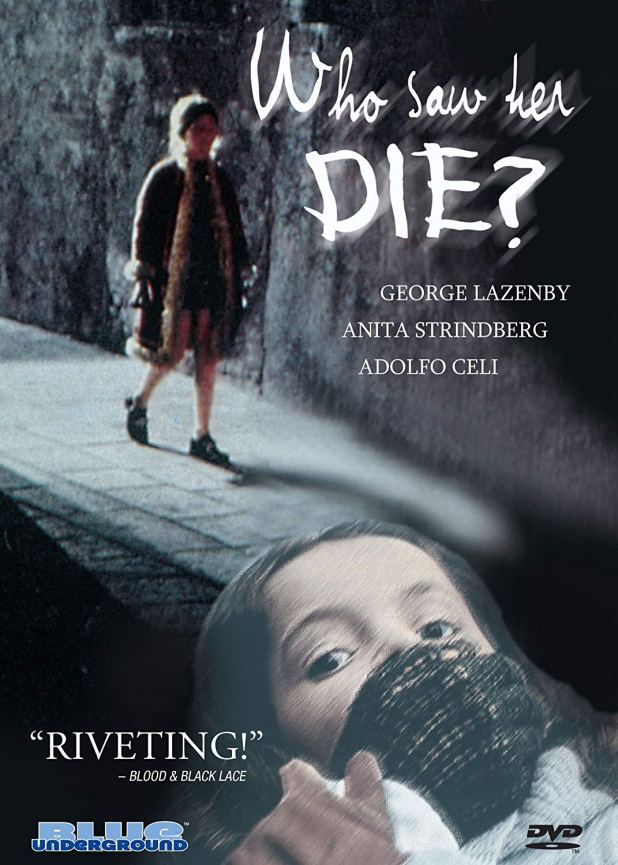
Who Saw Her Die? (1972)

If you see one movie where a father has sex instead of watching his daughter and spends the rest of the movie hunting her killing through the canals of Venice, you should probably watch Don’t Look Now. In fact, you may not even realize there’s another movie with the same plot. Actually, there is and to be honest, it’s really good. And believe it or not, this movie came out a year before Roeg’s. I’ve also heard this film compared to 1978’s The Bloodstained Shadow.

While at a French ski resort, a young girl wanders off and is murdered by a woman in a black veil, who then buries her body in the snow. Years later, the same thing happens in Venice, as Roberta (Nicoletta Elmi, DemonsA Bay of BloodFootprints on the Moon, The Night Child, Deep Red — when you needed a child actor in Italian horror films, she was the one you hired) is abducted and found drowned in the waters of that famous Italy town.

Now, her divorced parents — sculptor Franco (former James Bond George Lazenby) and Elizabeth (Anita Strindberg, The Antichrist) — must work together to discover who killed their daughter. That journey will take them into a world of darkness, sexual depravity and murder. And anyone that learns too much pays for those secrets with death.

The ending of this movie is astounding, with the killer set ablaze — to the apparent delight of Elizabeth — before they are launched out a window. And not to make a horrible pun, but it’s nearly a broken record to say that Morricone’s soundtrack may be the best part of this movie.

Director Aldo Lado is also responsible for Short Night of Glass Dolls and The Humanoid, two other movies well worth your time.

You can watch this movie on Amazon Prime.

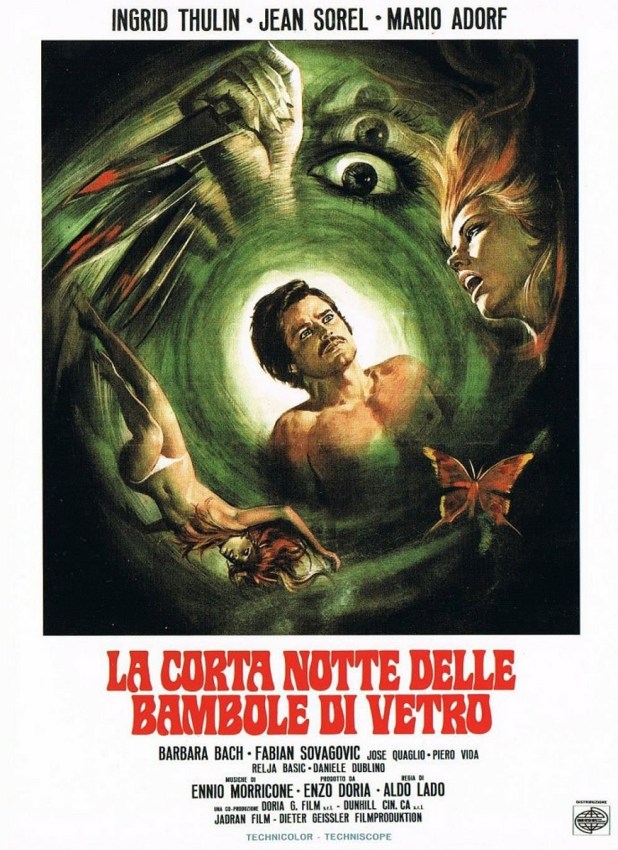
Short Night of Glass Dolls (1971)

Gregory Moore (Jean Sorel, Perversion Story) has a problem. His body has been found in a park in Prague, but the American journalist is anything but dead. His heart is still beating and his mind is still able to replay the sinister events of the last few days, a story that started with the disappearance of his girlfriend Mira (Barbara Bach) and ended even more horribly than he could have imagined.

The debut movie from director Alan Lado, Short Night of Glass Dolls subverts the giallo genre to move slowly into the supernatural. The only other giallo Lado created was Who Saw Her Die?* which, much like this movie, doesn’t seem keen on following the Argento giallo formula like just about everyone else. Lado would also make the baffling Star Wars clone The Humanoid many years later.

Moore resolves to find Mira when the police can’t, so he joins forces with his co-workers Jessica (Ingrid Thulen, Salon Kitty) and Jack (Mario Adorf, The Bird with the Crystal Plumage). Never mind that he’s just had an affair with Jessica.

By the end of the film, we’re left wondering if our paralyzed narrator is really an unreliable one and whether or not he made his own girlfriend disappear. We needn’t feel that way for long. The truth is that she’s fallen into the claws of Klub 99, a black magic group made up of Prague’s social elite that uses the life force of the young and beautiful to stay powerful.

This is one dark giallo that feels like a swirling nightmare that the protagonist can’t wake from. Even when he’s moving and alive, he feels out of place, a man away from not just America, but from reality itself. The scene where he moves behind the audience and red curtain as they watch a man play piano is particularly striking as it separates him from everything else that is going on around him.

There’s only one on-screen murder and Lado really shows that he’s an artist here instead of a slavish follower of giallo convention. It reminds me of a much more downbeat All the Colors of the Dark where the cult is much more powerful. The end scene of the gallery watching the autopsy is a brutal finale.

You can watch this on Amazon Prime.

*I guess you could also consider Last Stop on the Night Train to kind of, sort of be a giallo.

A Blade in the Dark (1983)

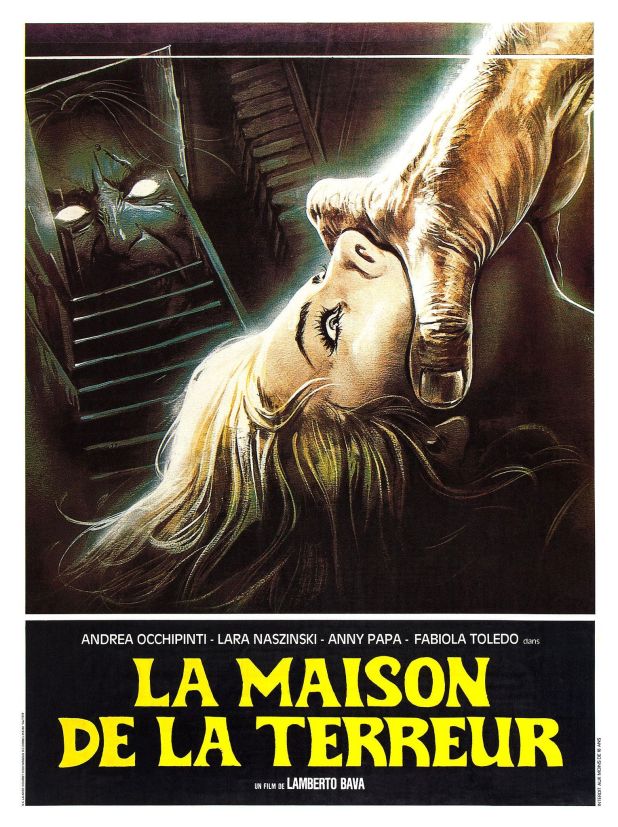
Known in Italy as La Casa con la Scala nel Buio (The House with the Dark Staircase), Lamberto Bava’s A Blade in the Dark was originally intended to be a four-part TV mini-series, with each segment ending with a murder. However, it was too gory for regular audiences, so it was released as a film. It was written by the husband and wife team of Dardano Sacchetti and Elisa Briganti, whose script was often at odds with what Bava wanted to put in his film.

Bruno (Andrea Occhipinti, The New York Ripper) is a composer hired to create the soundtrack for a horror movie. He’s been having trouble concentrating on the job, so he rents a house to sequester himself. He meets two women who used to know his rented villa’s former tenant, but when they disappear, he’s forced to watch the movie he’s scoring closer, as there’s a clue to the razor-wielding killer’s identity hidden within.

Bava worked as Dario Argento’s assistant for the movie Tenebre two years before this movie was made, so that has a big influence on this work. This is a movie unafraid to wallow in gore, feeling closer to the American slasher than the giallo. Then again, Lamberto was an assistant on the movie that predates the slasher, his father’s A Bay of Blood.

For the killer, he had difficulty finding someone who could convincingly appear to be a man and a woman. He turned to his assistant, Michele Soavi, who went on to direct plenty of great horror on his own.

For those that care about these matters like me — Giovanni Frezza, forever Bob from The House by the Cemetery — shows up in the movie within a movie that Bruno is writing the music to. He’s taunted by voices that chant “You are a female! You are a female!”

Also, in the true spirit of giallo and what the word means, every victim — and then the killer him or herself — is called out by the color yellow.

You can watch this movie on Amazon Prime.

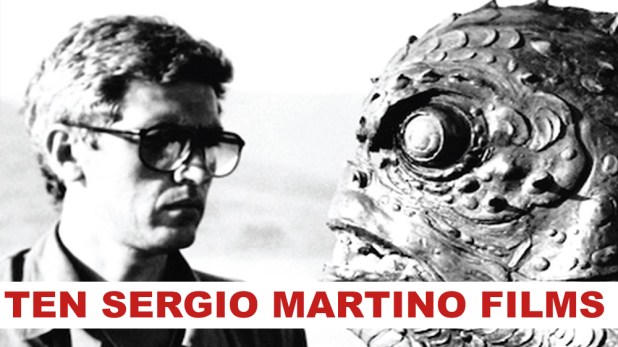
Ten Sergio Martino films

After the Bava and Fulci retrospectives we featured, I felt like Sergio Martino was the next logical choice. Please keep in mind that I don’t feel that I’m an expert, like Kat Ellinger who wrote the all-encompassing All the Colors of Sergio Martino.

Martino is an Italian film director and sometime producer, mainly known for his early 1970’s run of highly influential giallo films. In fact, I’d compare his five-picture run from The Strange Vice of Mrs. Wardh to Torso to any giallo creator there ever is, was or will be.

The grandson of director Gennaro Righelli, Sergio began his career as an assistant to his brother Luciano (who in addition to directing Secret Agent Fireball, producing many of Sergio’s films and writing 94 movies including DeliriumIronmaster and The Whip and the Body somehow found the time to be married to Edwige Fenech, earning my eternal respect and jealousy). He was also the second unit director for the aforementioned Bava film, The Whip and the Body, before making his first film, the mondo Wages of Sin.

Martino often worked with the same actors, such as George Hilton (who was married to his cousin), Ivan Rassimov, Fenech and Claudio Cassinelli. They form a little stable, if you will, for some of his best-known giallo. But that’s not all Sergio created.

He also continued to work with Fenech throughout the 1970’s and early 80’s on several sex comedies. But he also dabbled in other genres, from spaghetti westerns to cannibal films, monster movies, crime stories, post-apocalyptic epics, crowd-pleasing sports affairs and even movies that I have no idea how to classify.

When asked about his films, Martino said, “My movies are like a soft drink — sparkling, unaffected products for mass consumption. A soft drink doesn’t have the prestige of champagne, of course, but I’d rather have a good soda pop than watered-down wine anytime.” You can hear even more from him on the Color My Nightmare feature on Severin’s new reissue of All the Colors of the Dark and on their incredible All the Colors of Giallo set.

Without further ado, let’s get into it — as always, in no particular order.
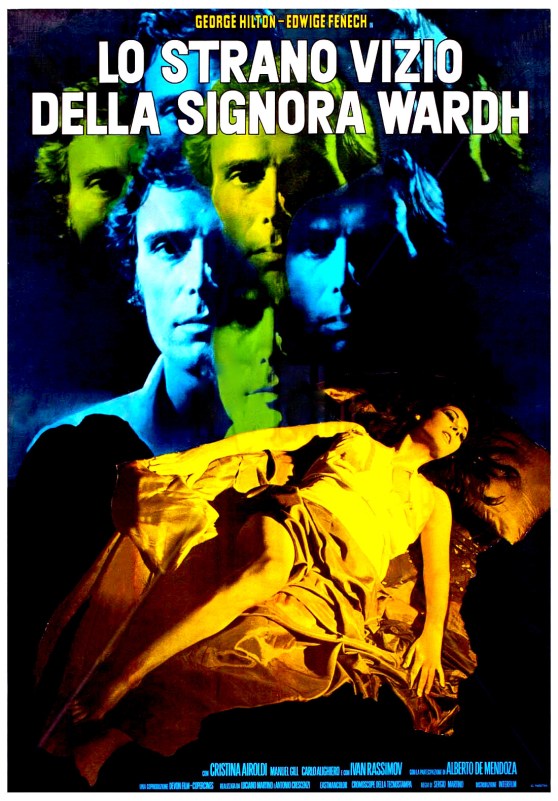
1. The Strange Vice of Mrs. Wardh (1971): The first of Martino’s ensemble giallo films, this one concerns Mrs. Wardh, ably played by Fenech. She must deal with her sexual past and the violent cravings that she yearns for but knows will eventually destroy her. Of course, being a giallo, there’s also plenty of murder, twists and turns. This is the start of where Martino would take giallo and a line from the film, “Your vice is a locked door and only I have the key,” would soon the next movie on our list. Get the Severin blu ray now.
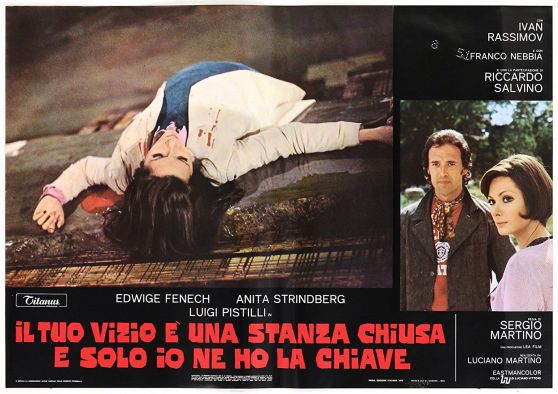
2. Your Vice Is a Locked Room and Only I Have the Key (1972): Has any movie ever had a better title ever? Nope. Taking a cue from Poe’s The Fall of the House of Usher, a rich man treats everyone horribly before running into even more horrible people. There’s also a cat named Satan and Fenech showing up in all manner of amazing outfits. This is perhaps the best example of giallo — to me at least — that I try to share with people interested in the genre. You can watch this on Amazon Prime.

3. All the Colors of the Dark (1972): Martino’s giallo company here starts with Rosemary’s Baby and emerges with a work all its own, as Fenech’s character endures a car crash, the loss of her mother and an unborn child, then learns that her nascent psychic gifts lead to her brain screaming that a vast conspiracy wants to not only murder her, but potentially steal her soul. This movie exists in its own reality, with free love Satanic cults and foggy London atmospheric doom. I strongly recommend purchasing the new Severin re-release of this film, which is packed with extras including the shorter American version, They’re Coming to Get You.
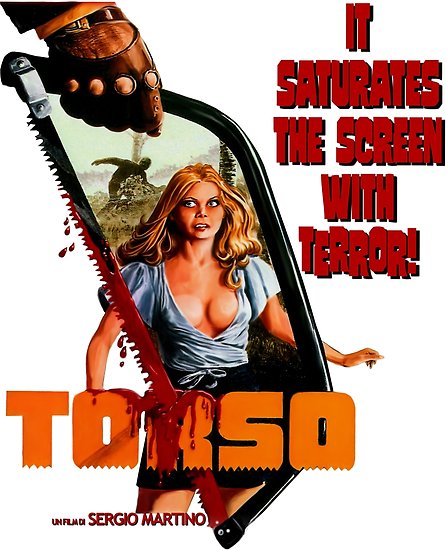
4. Torso (1973): Martino finds an entirely new cast for this giallo that eschews the traditional trappings of the genre and pushes itself toward being proto-slasher. Also known as The Bodies Bear Traces of Carnal Violence, that title alone should clue you in that this movie is salacious and unsavory in all the best of ways. Every man is scum, every woman is gorgeous and the camerawork is as perverted as the killer. And the final act places Suzy Kendall into the most danger a giallo heroine may have ever faced. Get the Arrow Video blu ray at Diabolik DVD.
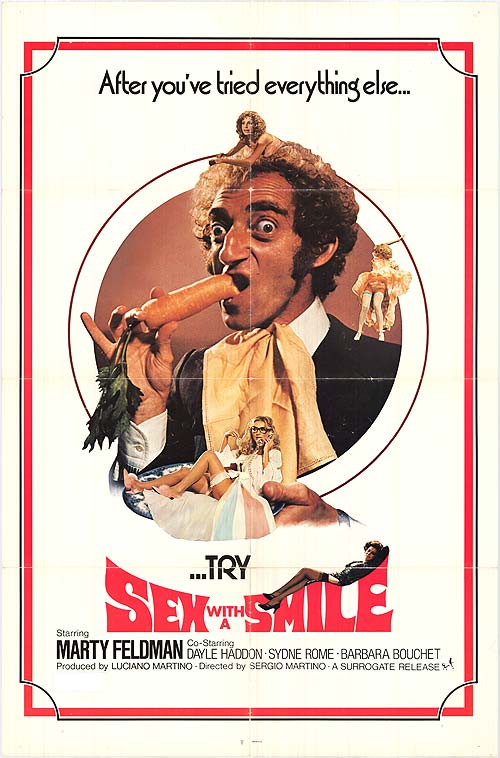
5. Sex with a Smile (1976): Proving that Martino was no giallo only one trick pony — although he’d return to the genre again with 1975’s The Suspicious Death of a Minor and 1982’s horror-filled Scorpion with Two Tails, this movie and its sequel, released the same year, are portmanteau comedy films based around sexual hijinks. While its cast was well-known in Europe — Tomas Milan, Fenech, Barbara Bouchet (who along with Edwige is one of the most well-known women of giallo), Dayle Haddon (once Spermula and today, still a L’Oréal model) and Sydne Rome (the Akron, Ohio born model who became a French aerobics instructor sensation in Italy in the 1980’s) — when the film was released in the U.S., the ads mostly concentrated on Young Frankenstein‘s Marty Feldman’s appearance. I love the Italian title for the film, 40 Gradi All’ombra del Lenzuolo, which after translation and converting Celsius to Fahrenheit would mean 104 Degrees Under the Sheets. Martino would spend most of 1979 to 1981 making similar sexy and silly flicks. This is not yet available in the U.S.
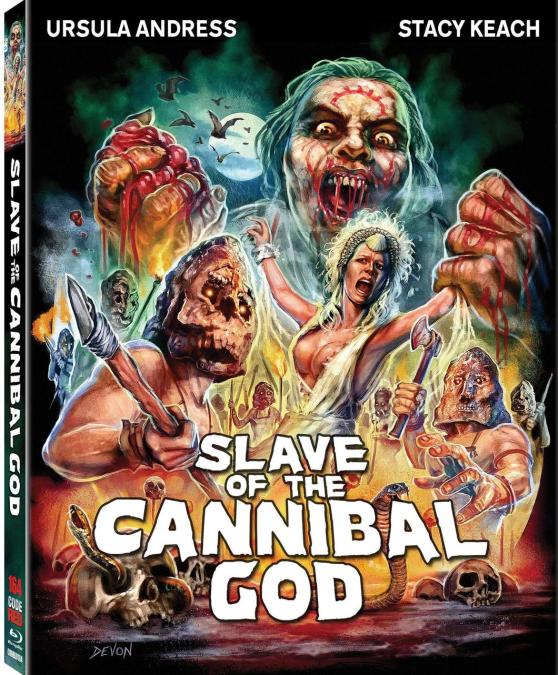
6. The Mountain of the Cannibal God (1978): This movie has big stars like Ursula Andress and Stacy Keach, but it’s Italian cannibal sleaze when means that Ursula is going to get tortured by two female cannibals and smeared with orange honey before being fed her evil brother and Stacy is going to get killed by a giant waterfall. There’s also animal torture, which is sadly de rigueur for the cannibal genre. Grab this on blu ray from Ronin Flix.

7. The Great Alligator (1979): Martino’s genre-hopping abilities — some would call it chasing whatever trend was hot — are in full evidence here, as this Jaws-style film puts Barbara Bach before she married Ringo Starr, Claudio Cassinelli and Mel Ferrer against the tribal god of a resort area that takes the earthly form of a giant alligator. Oh yeah — this was co-written by George Eastman, so you know that it’s going to be ridiculous. The same waterfall that claimed Stacy Keach’s life in the previous film comes back to challenge our heroes in this flick. You can also get this on blu ray from Ronin Flix.
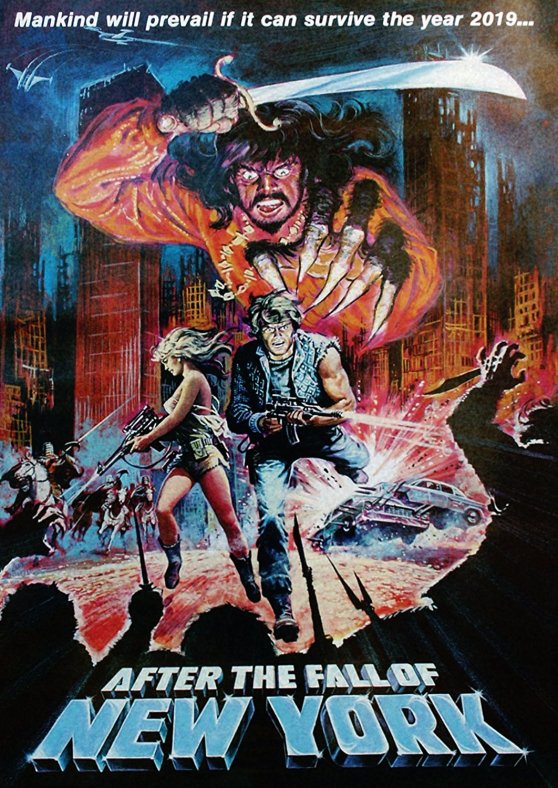
8. 2019: After the Fall of New York (1983): Remember when everyone went crazy over Children of Men? Martino made pretty much the same idea here 23 years earlier. He also had the sense to cast George Eastman as Big Ape of the Hairy Men, which makes this as much a Planet of the Apes pastiche as a Mad Max-inspired film. It’s also packed with non-stop action, little to no sense and a soundtrack by Oliver Onions. I love every minute of this, so much so that I’ve been known to watch this movie several times in a row. Ronin Flix also has this.
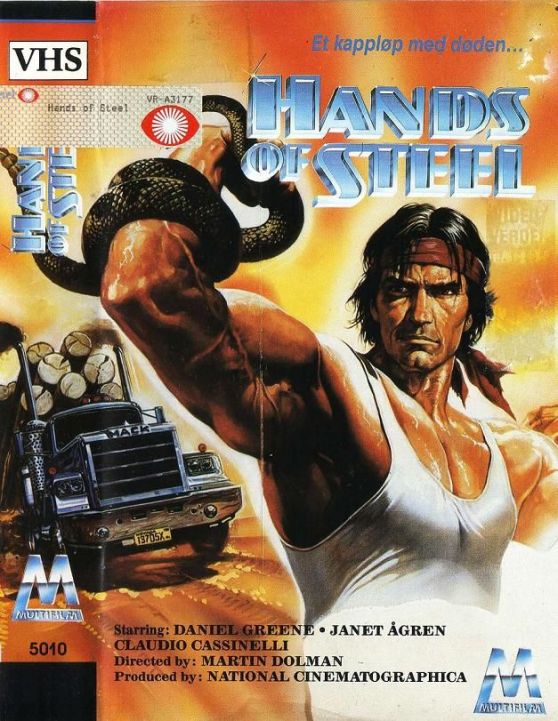
9. Hands of Steel (1986): A more ordinary filmmaker would be satisfied with just making a movie inspired by The Terminator. Perhaps I haven’t truly exalted Martino enough yet. That’s because here, he somehow makes a movie that combines that movie, post-apocalyptic films and the arm wrestling movie, a trend that most think died with Over the Top (not so, as in addition to these two films, there’s also ChampionPulling John and CLAW: The Collective of Lady Arm Wrestlers). It also has John Saxon, Donald O’Brien (Doctor Butcher, M.D. and the M.D. stands for Medical Deviate!), Janet Agren, bikers, punk rockers, George Eastman as an evil trucker, a soundtrack by Claudio Simonetti from Goblin and a hero who is 70% robot and 30% human named Paco Queruak. It’s also sadly the last film of Claudio Cassinelli, who died in a helicopter stunt while making this movie. Guess who has this? Ronin Flix.
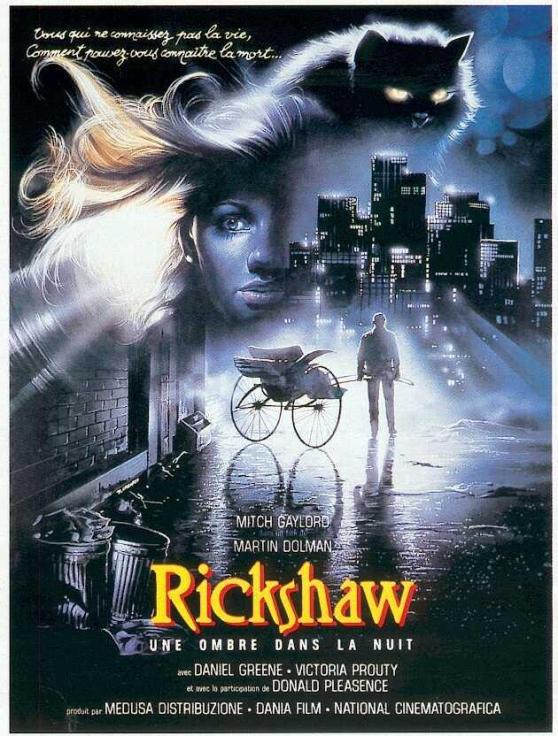
10. American Tiger (1990): Chances are, if you ever talk to me in person about movies, this will be the one I bring up. It’s quite honestly the most insane movie that I’ve watched and that says a lot. To wit: A rickshaw driver in Miami — played by U.S. Olympic Gold Medalist Mitch Gaylord — is protected by an Asian witch as he becomes involved in a conspiracy that gets him in the shower having sex with a hot redhead — with his jeans still on — and the videotape of that event causing the death of the son of a faith-healing televangelist — played by Donald Pleasance — who is also a warthog looking demon. There’s also a magical cat. Yes, this is the movie to top all other movies that make no sense. I’m still shocked that no major company has raced to get this out on blu ray. You can get this from Cauldron Films.

Of course, I’ve skipped plenty of films in my efforts to show Martino’s range. There’s also:

Arizona Colt Returns: This 1970 sequel was Martino’s first time as a director of a non-documentary film. It also has two amazing alternate titles: Arizona Lets Fly and Kill Everybody and If You Gotta Shoot Someone… Bang! Bang! You can watch this for free on Vudu.

The Case of the Scorpion’s Tail: A 1971 giallo all about dead lovers, blackmail, peeping toms, scorpion earrings and plenty of murder. His other giallo are much better, hence it not making the list. You can get this at Diabolik DVD.

Giovannona Long-Thigh: A 1972 sex comedy starring Fenech all about a cheese factory,  a bribed monsignor, a judge who likes to sleep with other’s wives and a virginal-looking prostitute.

The Violent Professionals: A 1973 poliziotteschi about a cop going undercover with the mob so he can finally kill the men who killed his father figure, this was the first of several films that Martino would make with star Luc Merenda, like Gambling City and Silent Action. You can get the Code Red blu ray at Diabolik DVD.

La Bellissima Estate: Martino even made dramas, like this 1974 film that has one lasting thing to remember it by: it’s where the theme for Larry David’s Curb Your Enthusiasm comes from.

The Suspicious Death of a Minor: A 1975 giallo that concerns Claudio Cassinelli falling for a girl he doesn’t know is a prostitute, then descending into a shadow world of depravity to find her killers. You can watch this for free on Amazon Prime or order the Arrow Video blu ray at Diabolik DVD.

Mannaja/A Man Called Blade: I’ve just learned of this spaghetti western that stars several veterans of the Italian crime/action genre in Maurizio Merli, John Steiner and Donald O’Brien. I’ve also heard it’s incredibly stylish and is more horror than western, so I’m really looking forward to seeing this. This is free to watch on Tubi.

Island of the FishmenScreamers: This 1979 movie promised that “you will see a man turned inside out,” Martino has said in interviews that Guillermo del Toro has told him that he’s watched this movie several times. It nearly rivals American Tiger for sheer madness, as there’s so much going on: voodoo, amphibian humans, Atlantis and cannibals. Martino also directed a sequel to the film in 1995 called Queen of the Fishmen. You can watch Screamers on Amazon Prime.

Scorpion with Two Tails: A 1982 horror film that may have a scorpion in its name, but it has nothing to do with Martino’s previous arachnid-related film. This one has John Saxon being killed by an Etruscan cult and his wife dealing with the bloody fallout.

A Bear Named Arthur: In his interview on Severn’s new rerelease of All the Colors of the Dark, Martno refers to this as one of his movies that he knew would lose money. That said, it has some real star power in George Segal and Carol Alt in a tale of a composer and a secret agent.

L’allenatore Nel Pallone: This 1984 comedy film is unlike anything we’d ever have in America. Both it — and its 2008 sequel — feature multiple cameos by major soccer players, coaches and journalists. The closest equivalent I can come up with is Major League. Martino also made The Opponent, a sport comedy film about boxing.

Casablanca Express: If you can’t get Sean Connery and Anthony Quinn to be in your war movie, get their sons. That’s the Martino way. Donald Pleasence and Glenn Ford are also along for the train ride. I got my copy on the Mill Creek Excellent Eighties box set.

Additionally, Martino has worked extensively in the Italian TV industry, creating TV movies and mini-series like 1993’s Private Crimes, which reunited him with Edwige Fenech and also starred Ray Lovelock (The Living Dead at Manchester MorgueMurder Rock), who would work with Martino on two other TV movies.

What did I miss? What’s your favorite Sergio Martino movie?
Seven Blood Stained Orchids (1972)

Umberto Lenzi made the first Italian cannibal film, The Man from Deep River and followed that up with Eaten Alive! and Cannibal Ferox. When he followed a trend, his movies always stand out. Zombies? Lenzi’s Nightmare City outgrosses and out-insanes them all. Horror? He made the utterly bizarre Ghosthouse, which was shot in the same house as The House by the Cemetery. Sword and sorcery? Lenzi made Iron Master, another out there film with George Eastman wearing a lionhead and murdering people left and right.

And when it comes to giallo, Lenzi broke the mold and brought out films like EyeballSpasmo, OrgasmoSo Sweet…So PerverseA Quiet Place to Kill and this movie.

This film comes after Lenzi had tired of the giallo and started to move toward more poliziotteschi or Euro-Crime films.

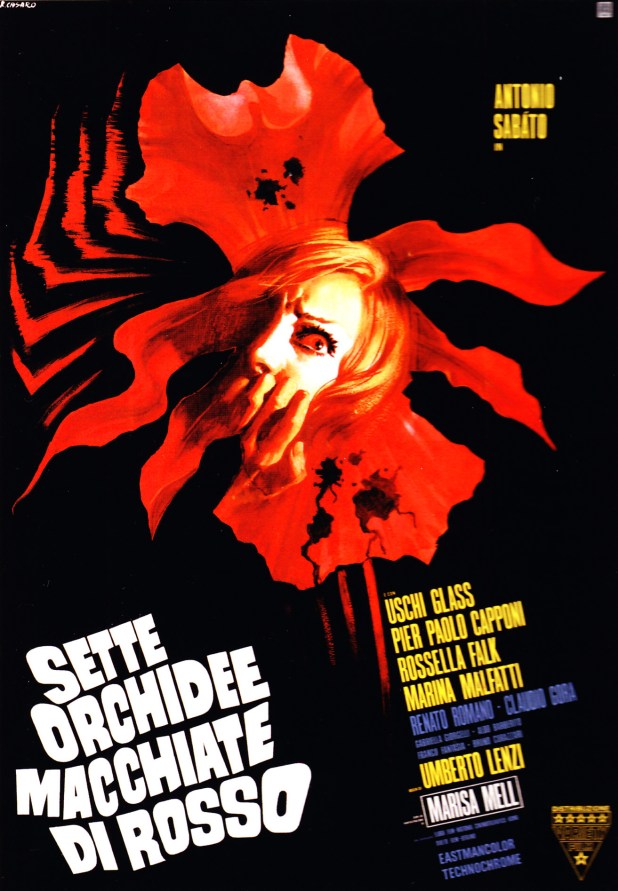
A serial killer is on the loose and he’s only murdering women. One of the potential victims is Giulia, the newly married bride of Mario (Antonio Sabato), on the night of their honeymoon. The killer escapes and the police accuse Mario of being the killer.

To protect his wife, the police decide to act like she’s died. Meanwhile, Mario sets out to prove that he isn’t the killer and attempts to solve the Puzzle of the Silver Half Moons.

Lenzi isn’t afraid to push the violence in this one. The black gloved killer stabs a woman in her bed, bashes in another’s head, strangles another, drowns one more and even uses a power drill in a scene that features nearly neon red blood.

This is more a combination of German-style krimi film with the giallo, but it’s still pretty fun. A good part of that fun comes from the actresses here, like Marisa Mell (Danger: Diabolik‘s Eva Kant) and Uschi Glas, a German actress with the nickname of Schatzchen, or baby, from her first film Zur Sache, Schatzchen or Go for It, Baby.

Lenzi isn’t celebrated in the same way as Argento and Bava, but I’m always entertained by his films. This one was no different.

You can grab this one on blu ray from Kino Lorber.

The Psychic (1977)

Before Fulci became known as the godfather of gore, he made movies in nearly every genre. This is the next to last film he’d make — Silver Saddle follows it in 1978 — before 1979’s Zombie announced to the world that he was here to tear eyeballs, unleash bats and provide dazzling if incomprehensible odes to mayhem.

Fulci is no stranger to the Giallo, with some of his most important films being A Lizard in a Woman’s Skin and Don’t Torture a Duckling and the unappreciated Perversion Story. The title refers to the film’s exploration of the duality of human nature, a theme that Fulci often revisits in his work. Here, he’d team up again with writer Roberto Gianviti and begin his long partnership with writer Dardano Sacchetti, who sought to lend a touch of Argento to the original script’s traditional mystery.

What emerged was a film shrouded in mystery and darkness—a rumination where death is inescapable and always close, a world where doom hangs over every moment, captivating the audience with its enigmatic atmosphere.

The film is set in Dover, England, in 1959, a time of social change and upheaval. A woman commits suicide by literally diving from the Cliffs of Dover. Forgive the harmful effects — Fulci tends to use wooden bodies in his films for some reason, much like the end of Duckling. The main point is that her daughter Virginia may be living in Italy, but she can clearly see her mother’s day.

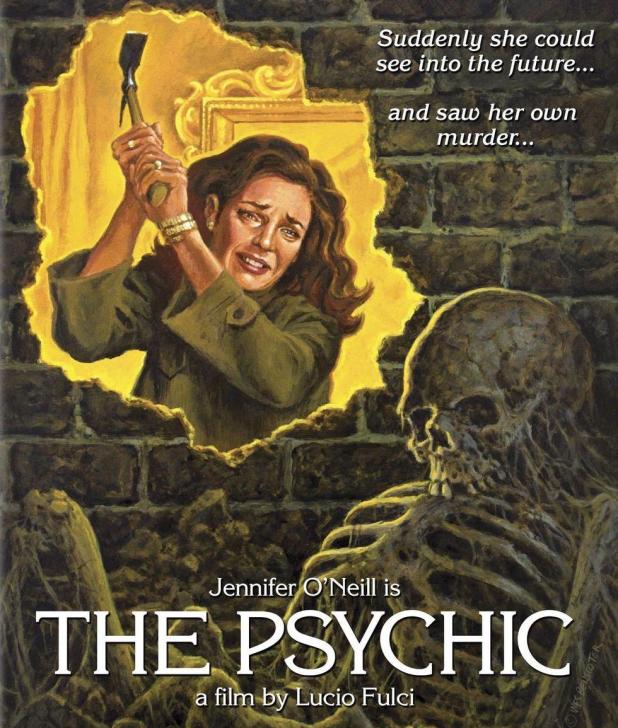
Today, Virginia (Jennifer O’Neill, Scanners) lives in Rome and is married to a wealthy businessman named Francesco (Gianni Garko, Sartana himself!). As she drives him to the airport for his next business trip, she begins to see visions. An older woman is being killed. A wall is torn down. And a letter is under a statue. How strange is it that the house she is beginning to renovate looks precisely like the one in her visions?

When she tears down the wall that looks like the one in her dreams, she finds the skeleton of her husband’s ex-lover and the police want to charge him with the murder. Virginia becomes the detective of the story, obsessed with saving her husband with the help of psychic researcher Luca Fattori. Soon, they believe that the real killer is Emilio Rospini (Gabriele Ferzetti, On Her Majesty’s Secret Service).

So who is the woman? Why was her body in that room, which was once her husband’s bedroom? Why is the woman’s face on the cover of the magazine that Virginia buys? That’s because Virginia’s visions aren’t the past but premonitions of the future.

Meanwhile, she’s given a wristwatch that plays a haunting theme every hour in the house. This eerie soundtrack, composed by Fabio Frizzi, adds a layer of suspense and tension to the film and was reused to incredible effect in Kill Bill. The growing knowledge that the victim isn’t dead yet—and that Virginia may be that victim—darkens every frame of Fulci’s epic.

Quentin Tarantino was so in love with this film that he intended to remake it with Bridget Fonda sometime in the 2000s, but this never happened.

Perhaps just as interesting as the film is the life of its star, Jennifer O’Neill. Possibly best known for her long career as a Cover Girl model, she has been married nine times to eight husbands (she married, divorced, and remarried her sixth husband, Richard Alan Brown). By the age of 17, she’d already attempted suicide so as not to be separated from her dog, had a horse break her neck in three places and married her first husband. She’s also had a horrible history with guns, having accidentally shot herself in 1982 and being on the set of the TV show Cover Up in 1984 when co-star Jon-Erik Hexum accidentally killed himself. While waiting for a delay, he had been playing Russian roulette with a prop gun and was unaware that the discharge could still cause damage. Placing the gun to his temple, he fired and caused so much damage to his brain that he died six days later.

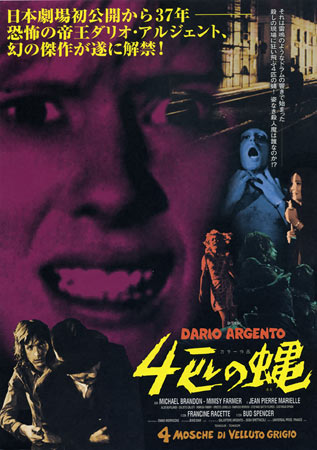
Four Flies On Grey Velvet (1971)

After The Bird with the Crystal Plumage and The Cat o’Nine Tails, Argento had one more movie left in his “Animal Trilogy.” Luigi Cozzi (Starcrash) would both write and assistant direct the film and the results are…interesting. It’s a lot funnier than his other giallo and was considered his swan song to the genre until his movie The Five Days failed at the box office.

Rock drummer Roberto Tobias is being stalked and as he finally catches up to his pursuer, the man pulls a knife. A struggle ensues and Roberto accidentally stabs the man while another masked figure laughs and takes photographs.

The next day, Roberto reads about the man’s death — Carlo Marosi — and gets a letter with a photograph of him murdering the man. He begins having reoccurring dreams that he’s being decapitated. Even worse, he wakes up to a masked man attacking him, who tells him that he won’t kill him because he isn’t finished with him.

Roberto’s wife Nina (Mimsy Farmer, Body CountAutopsy) returns home and he confesses the murder to her and tells her that he can’t go to the police to stop the harassment. He does turn to his artistic friend “God” Godfrey (Bambino from They Call Me Trinity) and a con artist named the Professor (Oreste Lionello, The Case of the Bloody Iris and the Italian voice for Woody Allen) for help.

Whoever is behind Roberto’s stalking and harassment is a troubled soul who had a horrific childhood and spent some time in an insane asylum. Roberto’s maid Amelia knows who it is, but she pays for it with her life, as the killer uses a straight razor to slice her apart.

Later that night, Dalia (Francine Racette, Donald Sutherland’s wife, so well done Donald) comes to stay with Nina and Roberto, despite him wanting her not to be there. It also turns out that our hero never really killed Carlo, who has been working with his blackmailer, who dispatches him with razor wire.

Roberto then hires Arrosio, a flamboyant investigator who has never solved a case, but hopes that this is the one that he will solve. Amelia’s murder has been discovered and the cops are on the case, so Nina says that she’s leaving town, feeling unsafe in her own house.

It turns out that Dalia has always loved Roberto, so they have sex. As you do. Look, it’s a giallo. Other strange things are afoot, like Roberto’s cat getting kidnapped and beheaded, Nina getting an inheritance, strange photos of Nina and Dalia’s family and more nightmares.

That’s when giallo science intrudes: the killer was in a mental institution called Villa Rapidi, where they were considered dangerous until their father died. This knowledge — and discovering the killer’s identity and finally cracking a case — leads to Arrosio’s death.

Dalia then notices that Roberto and someone in a photo with his wife look quite similar. Just as she puts it all together, she’s stabbed and killed.

Ready for more giallo science? The police perform an optographical test that takes a photo of the retina to show the last image that Dalia saw before she died. Even Argento — a man who made a movie about a girl who can physically speak to insects and becomes friends with an orangutan — thought this idea was stupid until Carlo Rambaldi showed him how the special effect would look.

The last image that Dalia saw? Four flies on grey velvet. No one knows what this means.

Roberto waits for the killer to come for him but then Nina arrives. He tries to get her to leave because the killer is coming when he notices her necklace: a fly. As it swings, he sees it: four flies. In true giallo fashion, the killer is someone who we obviously didn’t ever consider.

A fight breaks out and she repeatedly shoots her husband as she explains how she was placed in the asylum by her abusive stepfather — who raised her as a man — and was only cured when the man died. When she met Roberto, what she felt wasn’t love, but the madness that her stepfather caused within her. She finally would get her revenge by using Roberto as the replacement for the man she couldn’t get back at.

Nina runs away as Godfrey arrives to save Roberto, but she rams the back of a truck. She’s decapitated as the car explodes.

Deep Purple almost did this movie (several members of the Beatles were considered for the role of Roberto), but their schedule didn’t allow it to happen. Ennio Morricone, who worked with Argento on The Bird with the Crystal Plumage worked on the film, but had a huge argument with the director about the score. Goblin would come in and work with Argento for the first time here. Morricone and Argento finally reconciled and worked together on The Stendhal Syndrome.

This film wasn’t commercially released for the home market until 2009, other than an incredibly hard-to-find French VHS version. That’s because the rights to this film in America are owned by Paramount Pictures, which had chosen not to release it. Shameless did put out a UK release that is all region a few years back.

This is one strange giallo. The ending car crash took twelve cars to get right and combined with the music in the scene, it’s really unsettling. This is also one of the first movies to use high speed cameras to shoot bullet time, years before Hong Kong movies and The Matrix. I love the killer’s rant at the end of the film, particularly because big chunks of it are still in Italian! This might be hard for you to find, but it’s worth tracking down.