Somehow, this movie came from the same man who made Get Carter, Flash Gordon and Black Rainbow, Mike Hodges. Man, what an all over the place resume of films!
Originally called Illegal Aliens, it later became entitled Morons from Outer Space, which led to Mel Brooks changing the name of his movie Planet Moron to Spaceballs*.
This was written by Griff Rhys Jones and Mel Smith, who created Not the Nine O’Clock News and Alas Smith and Jones. They were never on the same page as Hodges, which is probably why this movie feels so uneven.
Three aliens named Sandra, Desmond and Julian strand another named Bernard (Smith) and head to Earth, where they become instant celebrities with an agent (Jones) getting them all over the media. They offer nothing special yet everyone wants to meet them, while when Bernard comes to Earth, he’s seen as a crazy man.
Somehow, this was the only film that Smith and Jones would ever make. So there’s that.
You have to love that this Mill Creek set has a British science fiction comedy, a Japanese super hero movie, an American TV movie, a German horror movie, Italian ripoff cinema and so many more genres all packed into one inexpensive box.
*Strangely enough, the aliens play a game called Spaceball in this film.
From Terminal City Ricochet with Jello Biafra to Beverly Hills, 90210 with Luke Perry? From the science fiction/horror musical Big Meat Eater featuring the soft-shoe of “Baghdad Boogie” to the historical drama Samuel Lount? Drag racing through the eyes of David Cronenberg? Children’s programming?
Welcome to the eclectic career of Phil Savath.
Phil Savath, born December 28, 1946, was an American-born Canadian film and television writer and producer. He was most noted as a two-time Genie Award nominee for Best Screenplay, with nominations for Original Screenplay at the 4th Genie Awards in 1983 for Big Meat Eater and Adapted Screenplay at the 10th Genie Awards in 1989 for The Outside Chance of Maximilian Glick. (The Genies are the Academy of Canadian Cinema and Television’s equivalent of the Oscars.)
Savath started his career in television in the late ‘70s as the co-creator and star of the CBC Television children’s comedy series Homemade TV and Range Ryder and the Calgary Kid, and then made his theatrical debut with David Cronenberg’s Fast Company.
Fans of FOX-TV’s Beverly Hills, 90210 know him for the dozen episodes he wrote for that post-Brat Back series, as well as the oft-aired HBO favorite, The Outside Chance of Maximilian Glick, which was turned into a short-lived TV series, Max Glick. He also wrote the Canadian hockey drama Net Worth (1995) and developed the Canadian TV series African Skies (1992) about a bi-racial teen friendship in post-Apartheid South Africa. As a producer, before his death in 2004, he produced the late ‘90s series These Arms of Mine, along with the TV Movies White Lies, Little Criminals, and Liar, Liar: Between Father and Daughter.
The influence of this Phil Savath-penned script on the career of David Cronenberg can’t be denied.
The first of Cronenberg’s feature films for which Cronenberg did not originate the screenplay, he was hired by the producers to direct. It was on Fast Company that Cronenberg developed long-time working relationships with cinematographer Mark Irwin, art director Carol Spier, sound editor Bryan Day, and film editor Ronald Sanders — each worked on Cronenberg’s later films. Actor Nicholas Campbell, who plays William Smith’s young protégé, also went on to appear in Cronenberg’s The Brood, The Dead Zone, and Naked Lunch. Sadly, Fast Company also serves as final release for Claudia Jennings (‘Gator Bait), who died in a car wreck several months after this drag racing drama’s release.
Take one part Ed Wood’s Plan Nine from Outer Space, one part Paul Bartel’s Eating Raoul, and one part Richard O’Brien’s The Rocky Horror Picture Show and vigorously shake in your “intentionally bad cult films” tumbler, and serve: We’ve got a mad butcher, a murdered mayor, and aliens who reanimate the mayor to assist in the harvesting of a rare, radioactive fuel deposit beneath the butcher shop. Oh, and there’s song and dance numbers (which you can enjoy during our intermission).
And those Great White Northeners “got it,” since Phil Savath and his co-writers Laurence Keane and Chris Windsor received Canada’s Oscar equivalent — a Genie Awards’ nod — for Best Original Screenplay in 1983. While Windsor never made another film, Keane and Savath continued onward and upward . . . and what could Phil possibly write as a follow-up feature? It’s not what you’d think.
Intermission! Courtesy of the Phil Savath-penned “Baghdad Boogie.”
Back to the show!
Movie 3: Samuel Lount (1985)
The man who gave us Big Meat Eater . . . wrote this? He did.
A historical drama set during the Upper Canada Rebellion of 1837, the film stars very familiar Canadian TV and film character actor R. H. Thomson (I remember him from the cable-played Escape from Iran: The Canadian Caper and The Terry Fox Story, as well as lots of American TV series) as Samuel Lount, an organizer of the rebellion who was ultimately convicted of treason and executed in 1838.
Receiving a limited theatrical run before debuting on Canadian television, it made its U.S debut on HBO and Showtime. While not winning any awards, it received five 7th Genie Awards’ nods for Best Actor, Best Cinematography, Best Costuming, Best Editing, and Best Sound Editing.
Yes, this powerful, fact-based drama is — in fact — from the pen of the man who gave us a film backed by a soundtrack performed by Alternative Tentancles bands. Yes, that’s right. Phil Savath worked with Jello Biafra. But Phil wrote “Baghdad Boogie” and incorporated “Heat Seeking Missile,” a song that would give Spinal Tap pause, into a movie — so what’s really shocking you at this point?
So, Phil did a pretty good job with the sci-fi horror parody Big Meat Eater, so he took a crack at parodying the post-apoc sci-fi craze of the ’80s with this dystopian-political intrique romp. It’s the story of a media entrepreneur who weasels his way into the mayorship of Terminal City and manipulates the populace through television, with their ensuing addictions to consumerism lining his pockets.
Oh, and the good mayor’s Chief Social Peace Enforcement Officer? Jello Biafra of the Dead Kennedys.
Yeah, it’s a must watch.
About the Author: You can learn more about the writings of R.D Francis on Facebook.He also writes for B&S About Movies.
DAY 26. DON’T MESS WITH TEXAS: What to get? Watch one set, clap clap clap clap, deep in the heart of Texas.
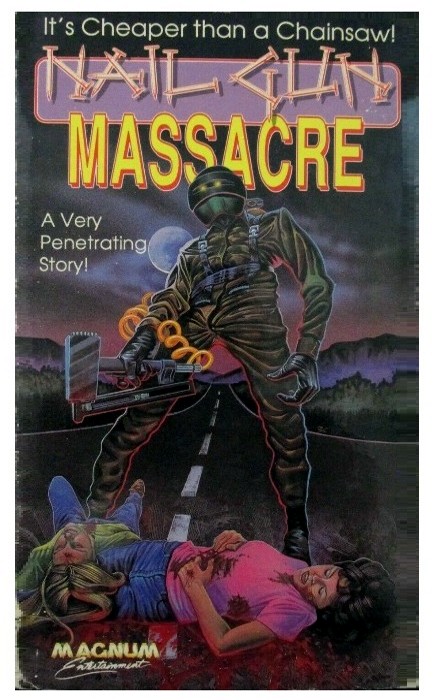
What can one say about the movie that uses the tagline “It’s cheaper than a chainsaw!”?
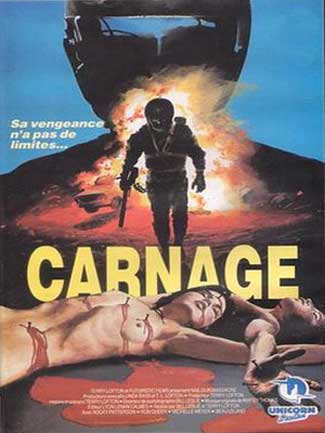
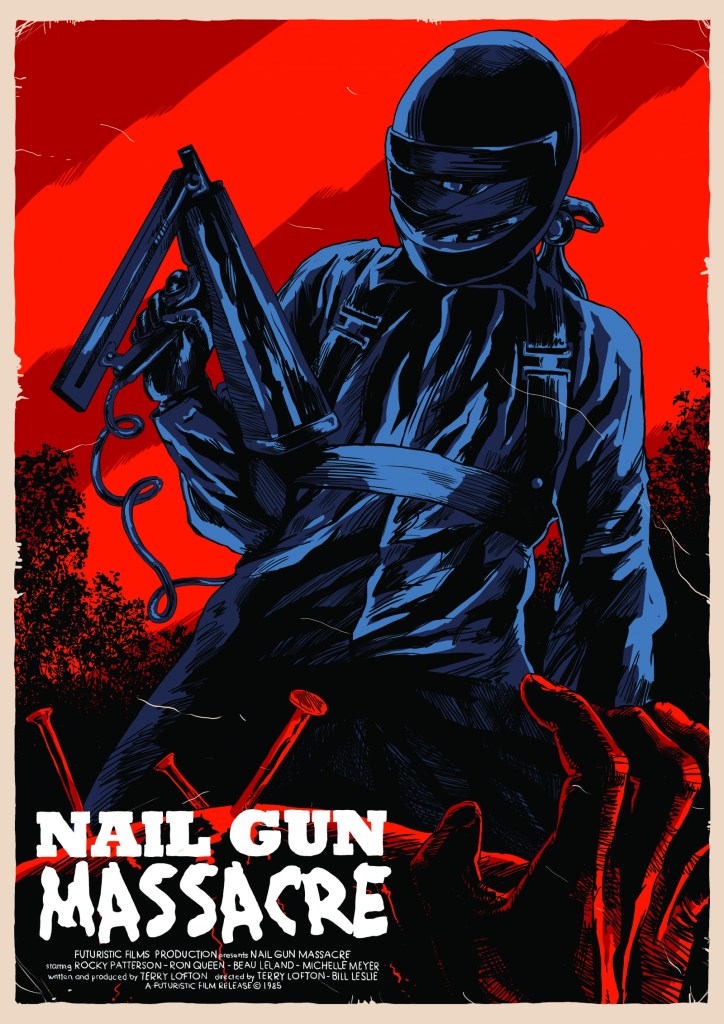
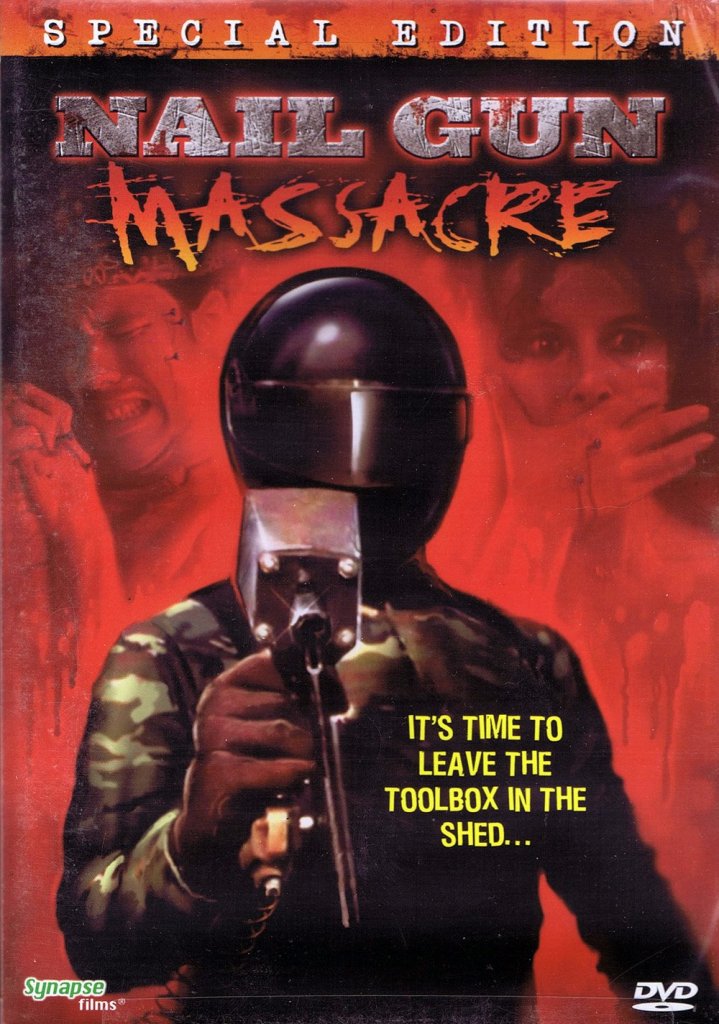
Written and co-directed by one-time The Dukes of Hazzard stuntman Terry Lofton (along with Bill Leslie), this movie was inspired by a story that he heard about a nail gun fight at a construction site. While the original script was eighty pages, the final shooting only used twenty-five of those pages and went from a serious film to a sillier tone, as Lofton figured no one would ever take this movie seriously.
At a construction site in east Texas — yay, the theme makes sense — six men assault Linda Jenkins. Months later, a camoflaged killer in a black motorcycle helmet hunts down the men one by one.
This is honestly the only slasher I’ve ever seen where a victim accidentally urinates on the killer, which you think would have had to have happened by now.
Beyond just the men who wronged Linda, the distorted voiced killer is pretty much indiscriminate about who he kills. Usually, it’s people having sex, which seems to happen in every other scene. In fact, the director claims that John Rudder’s wife divorced him over his scene with Shelly York as she believed they were really aardvarking.
There’s an astounding scene in this where a cashier looks directly at the camera. That’s Lofton’s grandmother, who worked in the store they used for the shoot. She has the script near her — you can see it — and was really upset when she saw the movie and realized how much sex was in it. The violence, as always, is fine. Just don’t have any horizontal mambo, please.
I guess there was construction all over East Texas at this time, which is certainly reflected by this film, which also has a nail gun fight for fun, because why not?
This movie has the longest takes, the most penises, the biggest freakouts, the most Dairy Queen product placement and the strangest synth score I’ve seen in a film. Normally just one of those things would be enough to make me fall in love with a slasher, but somehow, this one manages to get all of those into the same movie.
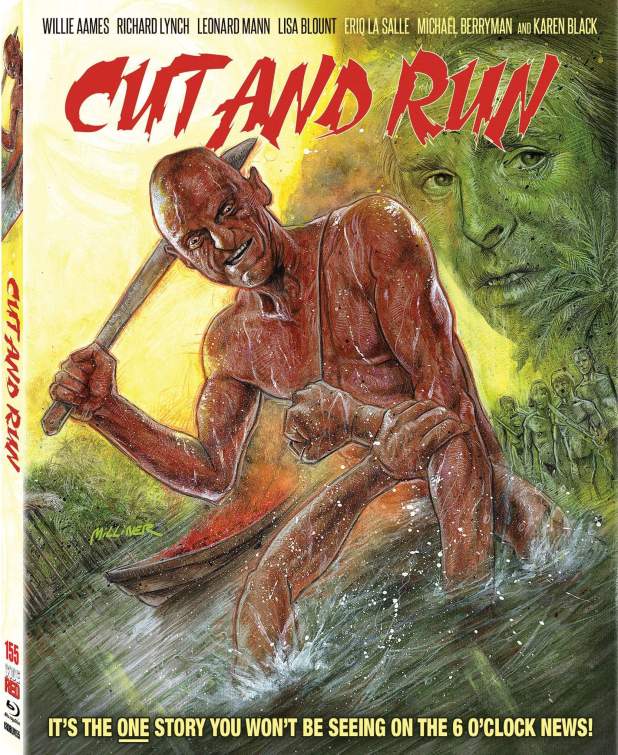
Cut and Run was originally going to be directed by Wes Craven with the working title Marimba, with Tim McIntire, Dirk Benedict and Christopher Mitchum as the cast. However, when money never showed up, they turned to Ruggero Deodato, who got a script from Cesare Frugoni and Dardano Sacchetti and ended up making Inferno in diretta.
There was a softer R-rated American version and then another one for places that were used to the madness that is Deodato in the jungle.
This one is simple, but the best exploitation movies always are. Reporter Fran Hudson (Lisa Blount, Prince of Darkness) is investigating a war in the jungles of South America between drug cartels and the army of Colonel Brian Horne (Richard Lynch). Yes, that’s right. Richard Lynch in the jungle commanding a cult of maniacs, including Michael Berryman.
Does that sell you? What if I told you that Willie Aames is in it? And he wears a Mickey Mouse shirt throughout?
Man, this movie has an Italian star for every Italian. Eriq La Salle from ER? I’ll give you Laura Gemser’s husband, Gabriele Tinti. Karen Black? I’ll raise you Barbara Magnolfi. Plus, you also get Italian Western actor Leonard Mann, John Steiner, Valentina Forte (from Blastfighter!) and Richard Bright.
Seeing as how this is a Deodato movie, there’s all manner of lunacy, like people being ripped in half and crucified. Instead of making another Cannibal Holocaust, he decided to make his own Apocalpyse Now, but with the kind of cast I’d choose to be in my version of that movie, with a chaser of Flavor Aid from Jonestown.
Claudio Simonetti did the score, which is really all you need to know. This movie is complete junk food, but the best kind of junk food that melts in your hands, your mouth, all over your face and ruins your new shirt, too. It’s filled with massive amounts of sleaze and gore and strangely enough, was filmed with actual English instead of the typical Tower of Babylon shooting style that Italian films usually use.
I often joke that John Carradine and Donald Pleasence never said no to a movie, but the films they refused were probably asked of Cameron Mitchell, who absolutely, positively would never ever turn down a role. He’s in the movie — released at the absolute peak of VHS rental mania — as the owner of a video store of the beyond, renting out all manner of sleazy films to an increasingly more bizarre cast of characters, including scream queen Michelle Bauer (Reform School Girls, Sorority Babes in the SlimeballBowl-O-Rama, Evil Toons) before she became so well-known.
Much like Terror In the Aisles, Zombiethon and Famous T&A, this is a compilation tape of horror films. But until the high class by comparison Pleasence and Nancy Allen-starring Terror In the Aisles, this is a bottom of the barrel — and that’s where we like it, thank you — scraping collection of clips from the Continental Video catalogue.
As Mitchell holds forth at the Shoppe of Horrors Video Store, one-and-done director Robert A. Worms III throws every film the label has at you. And while many reviewers have mentioned how bad these movies are, guess what? They’re the bread and butter of what we talk about here. And this bread may be soggy, but it tastes delicious.
For many, this was their first exposure to the films of Herschell Gordon Lewis, as clips of Blood Feast, Two Thousand Maniacs! and Color Me Blood Red are in this. Plus, there’s a whole mess of wonderful occult oddities like Enter the Devil(truly the peak or valley, depending on your point of view, for bad taste Satanic shockers), Suicide Cult, To the Devil A Daughter, Ruby and — spectacularly and incredibly grainily — Cathy’s Curse.
Continental Video would also release plenty more great junk in the years to come, such as Witchboard, Thrashin’ (which was the hardest movie to get in the days of Prime Time Video), Eaten Alive!, Daughters of Darkness, Hollywood Vice Squad, Mary Mary Bloody Mary, The Redeemer, Maniac Mansion, El Castillo de los Monstruos, two Fred Olen Ray Sleazemania compilations and the Bubba Smith exercise video Bubba Until It Hurts.
I have a free idea for Vinegar Syndrome or Severin. Remake this and throw in clips of all your new releases. After all, you have fans like me who pretty much buy everything you do. And buy it again. And again.
DAY 1. FAMILY TIME: Tired of seeing the same faces every day? Look at a movie instead! Rated PG or less. Ease in to it!
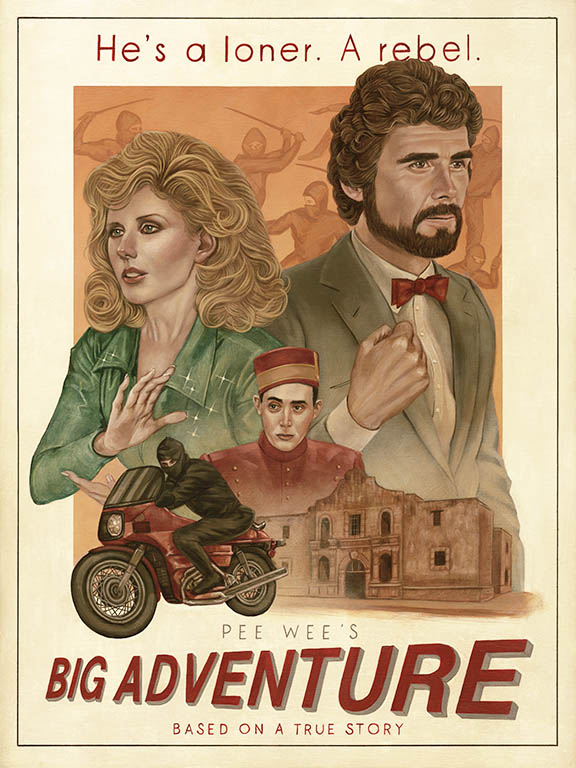
In the days before the internet, we could build our own cults. Amongst my family, we were obsessed with Pee-Wee Herman. Just imagine, in a time that could only be predicted by TV Guide, Pee-Wee would randomly show up in movies like Cheech & Chong’s Next Movie and Nice Dreams, where he was only known as “The Hamburger Guy.” As the 80’s began, Pee-Wee started by performing five months of the live The Pee-wee Herman Show at the Roxy Theater in LA and getting a taped special on HBO.
That special dominated my eight-year-old mind, presenting a world that at once childlike and at the other end, strangely sinister and adult. I watched it so many times that I could recite every single word and still can. The end, where Pee-Wee finally learns to fly, can often reduce me to tears.
In the five years between that special and this movie, Paul Reubens pretty much became Pee-Wee, even asking his parents to go by the names Honey and Herman Herman. His David Letterman appearances — major surprises, as we stated before — were riotous bursts of anarchy on a show that was already breaking nearly every rule of television. So when a Pee-Wee movie was announced, we lost our collective minds.
Somehow, Pee-Wee Herman is the rarest of cases of someone who became famous without losing a single ounce of his weirdness. And much like the HBO show that came before, I can still recite every word of this movie, quote it at will throughout the day and get misty-eyed just thinking of moments within it.
The story is incredibly simple: Pee-Wee’s most prized possession — his bike — has been taken by Francis. Now, he must get it back. A psychic tells our hero that his bike is in the basement of the Alamo, so we’re off to adventure.
That’s it. It’s that easy.
From wrestler Silo Sam chasing Pee-Wee around dinosaurs to his speech to Dottie (I actually gave this exact same “I’m a rebel, a loner” speech to a date once and was convinced she was going to slap me; she cried and told me it was the saddest thing she’d ever heard, somehow never seeing this movie before), dancing to “Tequilla” at a biker bar while Satan’s Helpers (look for Elvira) look on and so much more, there are so many moments in this film that simply listing them would take on the feel of Chris Farley talking to Paul McCartney.
I mean, without this film, you may not have Danny Elfman and Tim Burton making big budget movies.
To write the film, Reubens, Phil Hartman and Michael Varhol purchased the book Syd Field’s Screenplay and were as literal as possible. “It’s a 90-minute film, it’s a 90-page script,” said Ruebens. “On page 30 I lose my bike, on page 60 I find it. It’s literally exactly what they said to do in the book.” In my crazed mind, I also wish that Ruebens had followed through with his plan to remake Pollyanna with Pee-Wee in the lead.
There are so many easter eggs in this film, like the magic shop owned being named after Mario Bava, the Chiodo Brothers animating Large Marge, the Aleister Crowley head in the aforementioned magic shop, James Brolin playing Pee-Wee, the start of my crush on E.G. Daily, Professor Toru Tanaka as Francis’ butler and even the first acting role for Darla the dog, who was Queenie in The ‘Burbs and Precious in The Silence of the Lambs.
There are so many lines in this, too. I leave you with my favorite:
Simone: Do you have any dreams?
Pee-Wee Herman: Yeah, I’m all alone. I’m rolling a big doughnut and this snake wearing a vest…
PS: I have just one more ridiculous Pee-Wee story to tell. In 1989, Pee-Wee exchanged fake marriage vows with Chandi Heffner — the adopted daughter of Doris Duke, the richest little girl in the world. Chandi was a Hare Krishna devotee and sister of the third wife of billionaire Nelson Peltz and all of 35-years-old when she was adopted, as Duke believed that she was the reincarnation of her only biological child Arden, who died days after being born. Chandra and Pee-Wee were “married” by Imelda Marcos at Duke’s Honolulu mansion Shangri-La. If you think the world is not amazing and special, you’re a fool.
We couldn’t be more excited that Vinegar Syndrome is releasing this astounding blast of Mexican VHS horror on blu ray. If you love Fulci-esque blood-splattered movies that leap genre and feel through their running time, you need to see this movie. This article originally ran in Drive-In Asylum #19, which you can buy on their etsy store.
I was hunting for the perfect movie for this issue of Drive-In Asylum. My goal with each thing I write for this twisted tome is to discover something new. A film that perhaps people have missed. And certainly one that no one is talking about.
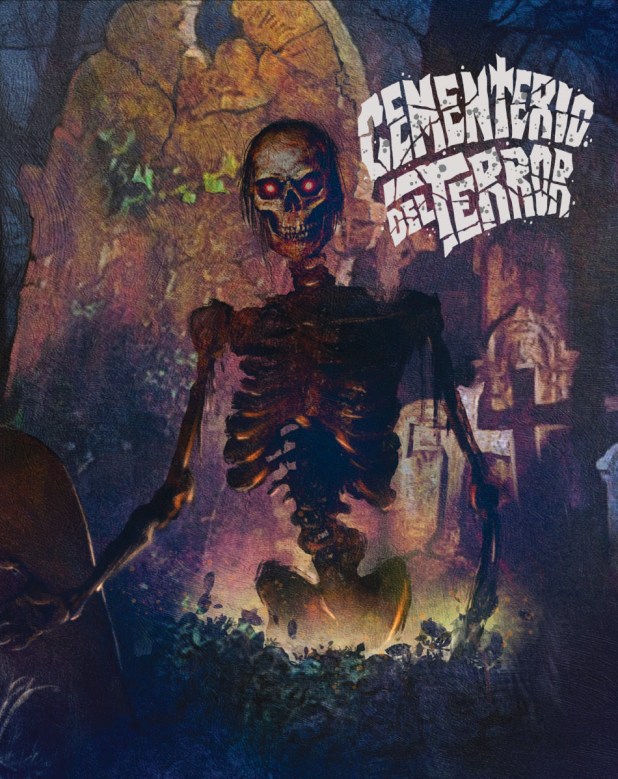
Cementerio del Terror is the perfect movie to answer all of those needs and more.
Directed by Rubén Galindo Jr., who also helmed the utterly baffling Don’t Panic! and Grave Robbers, this película de terror combines so many influences and films that it feels like the best DJ mix you’ve never heard of Evil Dead, Halloween and a children’s film while still boasting all of the grisly rojo gore that you crave.
Set in Texas, filmed in Spanish and utterly unconcerned with things like good taste or common sense, this movie appeals to every level of what I demand in cinema. Let me set it all up for you, muchacho: Dr. Cardan (Hugo Stiglitz, whose half-century movie career has led to roles in beloved junk like Tintorera…Killer Shark, Guyana: Cult of the Damned and Nightmare City) has left behind the scientific method to become a religious maniac determined to stop Satan himself from resurrecting the dead.
Then there’s Devlon, who has just killed seventeen people and his parents before being stopped by the police. Dr. Cardan knows that this is the exact body that El Diablo needs to begin his nefarious scheme, screaming “He’s not a man like you and me – he’s a demon!” as if he’s the Loomis to Devlon’s Miguel Myers.
If only six hard-partying teenagers armed with a book of spells didn’t steal the body of said serial killer. If only they hadn’t taken it to la casa junto al cementerio. If only they hadn’t accidentally raised the living dead.
This is the leap in logic this movie demands that you make: These sexy ladies were promised a rock ‘n roll concert by these moronic men and they make due with the body of a dead convict and rituals in a graveyard. These women were promised a rock concert and a jet set party and are instead rewarded with a bearded zombie who uses his fingernails to massacre every single one of them.
Everyone dies in the most bloody fashion possible, but only after they drink and dance to some of the worst disco you’ve ever heard, which makes this movie even better.
Just when you say to yourself, “The entire cast of this movie is dead!” a bunch of kids, led by one in a Michael Jackson tour jacket, enter the house and comically discover the disemboweled bodies of every one of the Satanic teens before they face off mano y mano with Devlon himself.
Throats are slashed. Blood is sprayed. Axes find their way into faces. Entire rooms get possessed. Kids goof around and hide behind tombstones as the film wildly shifts tone and becomes the goriest episode of Scooby-Doo ever.
Cementerio del Terror is unbridled joy, made by someone who it feels like got to play with all the toys that he always dreamed of owning. It shamelessly steals from so many films that it makes you throw up your hands and enjoy the ride. I mean, how many movies start off with buckets of crimson viscera and end with little kids saving the day before tossing in a shock ending?
There is no cynicism here, no winks to the camera that horror needs to be elevated and escaped from. That’s why I seek out stuff like this. These kind of flicks are a drug that I try and mainline into my veins at any opportunity. I suggest you do the same.
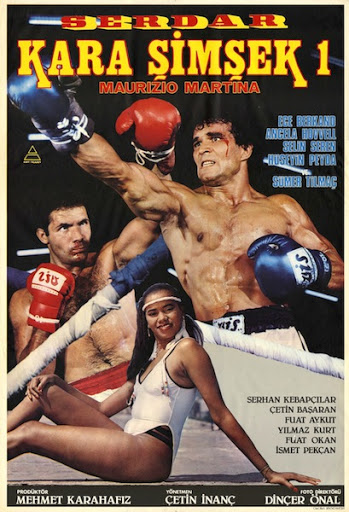
As you may know by now, I love the Rocky films. And after this week, you may not understand, but know my love for Turkish cinema. Now someone got pizza sauce in my Kuzu Tandır with this combo plate, written and directed by the always dependable Çetin Inanç and starring Serdar Kebapçilar. The two would also make Korkusuz (Rampage), which is the second ripoff of Rambo: First Blood Part II that Inanç would direct.
Translated as Black Lightning, this movie tells the tale of the Serdar, who must step into the shoes of his brother Baba, who has been killed in the ring by an Italian boxer. He also struggles to connect with his father Osman, who has been working in Germany for fifteen years, but really just cheating, drinking and living it up while his wife and children struggle in the slums.
If you wonder, why is this called Black Lightning, well the answer — thanks to Neon Harbor — is that the title was the name of the TV series Knight Rider when it played on Turkish television. If that level of copyright infringement gives you pause, perhaps you would do best not knowing that the themes from both Rockyand Love Story are used with no royalties paid.
This is the most normal of all the Inanç films I’ve watched. That doesn’t make it bad, but just don’t expect zombies to show up out of nowhere.
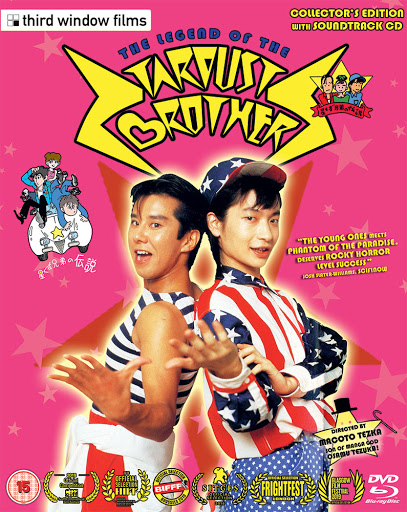
1985. Japan. Macoto Tezka (son of “The God of Manga” Osamu Tezuka) meets musician Haruo Chicada, who has already made a soundtrack to a movie that does not exist. Inspired by The Rocky Horror Picture Show and Phantom of the Paradise, along with the chance to work with some of Japan’s hottest bands, Tezka and Chicada would join up with a creative team that also included Lupin the 3rd creator Monkey Punch and directors Kiyoshi Kurosawa and Daihachi Yoshida.
They harnessed lighting and put it in a bottle that was lost at sea, as nobody really spoke of this movie for around thirty years, both in Japan and here in America.
We were missing out.
Punk rock rebel Kan and new-wave crooner Shingo are already broken up when we met them, former members of The Stardust Brothers, the greatest band of all time. What came between them? A girl? Their manager? Or are they making their lyrics the sad truth to their real lives? “Once you reach No. 1, you just go down.”
Look, any movie that has a cameo by UWF founder Akira Maeda and is dedicated to the memory of Winslow Leach is going to be a film that I’m going to proclaim to the heavens.
As is often the case with the movies that I love, the press savaged this movie. Tezka told Japan Times, “People are watching it with fresh eyes now, and I’ve had lots of positive comments. But I wonder about how I could have taken those ideas further, and all the films I might have made, if people had responded like that at the time.”
This is a movie in love with film, with music, with being young and being incredibly strange. Idol culture is fascinating and never more so when it is shown in this movie, which I urge you — yes, you reading this! — to watch right now. After all, this is “a movie that has traveled light years to find you.”
There was a 2016 sequel to this — Hoshikuzu Kyôdai no Aratana Densetsu — that I have to now track down. As for this film, it’s available to buy on Vimeo.
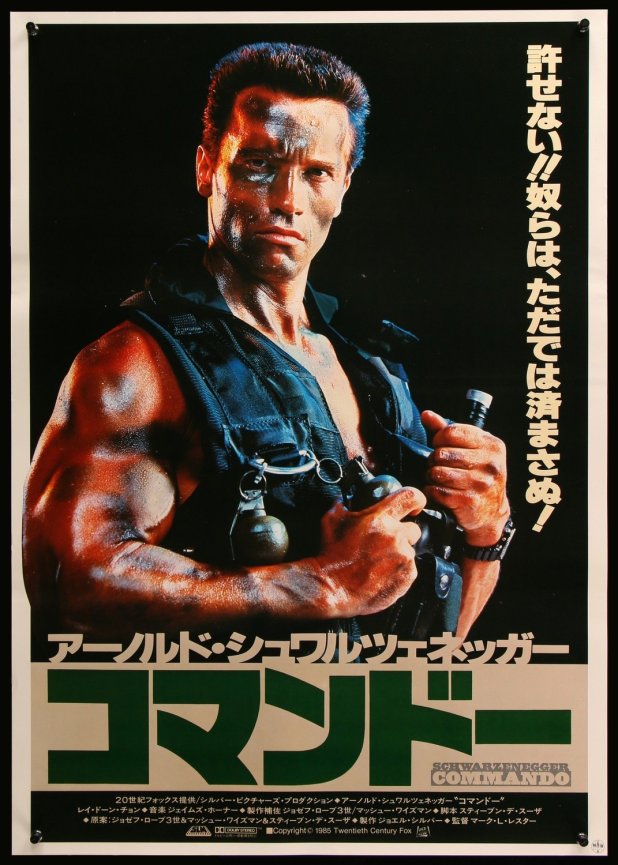
Do you remember that feeling where you wanted to be a character in a movie? As we grow up, that feeling goes away. Well let me tell you, I can still feel the yearning to be John Matrix that I felt as a 13-year-old. Sure, Conan the Barbarian and The Terminator made many take notice of Arnold. This is the movie that — to me — put him over the top.
Director Mark Lester told Empire, “It’s the granddaddy of action films as we know them today. And Arnold was the reason it got made.”
Who knew that it was originally a movie all about a soldier turning his back on violence? Well, that wasn’t what ended up on the screen. Instead, we have Arnold gleefully getting revenge on all manner of soldiers, thugs, mercs and habitual linesteppers for around 90 minutes of rip-roaring fun.
Yet when the movie starts, John Matrix is happy. He’s in the woods, feeding deer by hand, hanging out with his daughter Alyssa Milano and carrying trees around by himself. Then, after turning down an offer to come back in, a bunch of no-goodniks come on in and take his daughter. Even worse, his old best friend Bennett (Vernon Wells!) is their leader.
Also: Bennett dresses like, well, no one who has ever lived on this earth before. A chain mail sleeveless shirt would be enough, but then he has leather pants and fingerless gloves. It’s as if the entire design staff of Capcom, Data East, Konami and SNK all looked at the screen and said, “This is the blueprint for every fighting game we will ever make.”
Wells is legitimately unhinged in this movie. In that same Empire article, he said “.. I was so hyped to be in the movie, they could have asked me to jump off the Empire State Building and I probably would have. Making Commando was better than anything you could have smoked.”
Wings Hauser was going to play Bennett, which probably would have been awesome too.
This is a movie where Arnold murders between 81-102 people in twenty minutes. There’s a rocket launcher scene that sends me into a fit of hysteria. The hanging dudes off cliffs by their feet. All the wonderous one-liners. And oh yeah, “Let off some steam, Bennett!” You have no clue how many times that scene was rewound while we all screamed the line to one another.
Arnold made two films at Sherman Oaks and that place should have a gold statue of him that we can all genuflect in front of. This movie is a piece of cinema that no one would have the audacity to make today.
Look, when Dan Heyada is the big bad of your film, you’re doing it right.



 B&S About Movies
You must be logged in to post a comment.