WATCH THE SERIES: Ator

Conan the Barbarian and its success just meant that Italians could go back to making the peplum films they made for more than a decade in the 50s. The locations were there, the props were easy and all it took was the germ of an idea to send tons of Italian filmmakers out and about to make their own sword and sorcery movies, like Franco Prosperi’s Gunan, King of the Barbarians and Throne of Fire, Umberto Lenzi’s Ironmaster and Michele Massimo Tarantini’s Sword of the Barbarians.

For my money, no one made a better barbarian movie on a smaller budget than Joe D’Amato with his Ator films. Made from 1982 to 1990, three of these four films were filmed by D’Amato under his David Hills name. The other one was directed by Alfonso Brescia and D’Amato didn’t like it! As for actors, the first three feature Miles O’Keeffe and the fourth has Eric Allan Kramer as his son.

Instead of just being a big dumb lunk like Conan is in the movies — we can discuss Conan being a thief in the books and comics any time you’d like — Ator is also an alchemist, scholar, swordmaster and even a magician who can materialize objects out of nowhere.

We’ve pulled together our past reviews of Ator’s films, added some content and put them all in one place to introduce you to these astounding movies and hopefully get you watching them.

Ator the Fighting Eagle (1982): Once, Ator was just a baby, born with the birthmark that prophesied that he’d grow up to destroy the Spider Cult, whose leader Dakar (a pro wrestler who appeared in Titanes en el Ring against Martín Karadagian) tries to kill before he even gets out of his chainmail diapers.

Luckily, Ator is saved and grows up big, strong and weirdly in love with his sister, Sunya. It turns out that luckily, he’s adopted, so this is only morally and not biologically upsetting. His father allows them to be married, but the Spider Cult attacks the village and takes her, along with several other women.

Ator trains with Griba, the warrior who saved him as a child (he’s played by Edmund Purdom, the dean from Pieces!). What follows are pure shenanigans — Ator is kidnapped by Amazons, almost sleeps with a witch, undertakes a quest to find a shield and meets up with Roon (Sabrina Siani, Ocron from Fulci’s batshit barbarian opus Conquest), a sexy blonde thief who is in love with him.

Oh yeah! Laura Gemser, Black Emanuelle herself, shows up here too. It is a Joe D’Amato movie after all.

Ator succeeds in defeating Dakkar, only to learn that the only reason that Griba mentored him was to use him to destroy his enemy. That said, Ator defeats him too, leaving him to be eaten by the Lovecraftian-named Ancient One, a monstrous spider. But hey, Ator isn’t done yet. He kills that beast too!

Finally, learning that Roon has died, Ator and Sunya go back to their village, ready to make their incestual union a reality. Or maybe not, as she doesn’t show up in the three sequels.

Ator is played by Miles O’Keefe, who started his Hollywood career in the Bo Derek vehicle Tarzan the Ape Man, a movie that Richard Harris would nearly fist fight people over if they dared to bring it up. He’s in all but the last of these films and while D’Amato praised his physique and attitude, he felt that his fighting and acting skills left something to be desired.

Ator the Fighting Eagle pretty much flies by. It does what it’s supposed to do — present magic, boobs, sorcery and swordfights — albeit in a PG-rated film. It’s anything except boring. And it was written by Michele Soavi (StagefrightThe ChurchThe SectCemetery Man)!

You can watch it on Tubi in either the original or RiffTrax version.
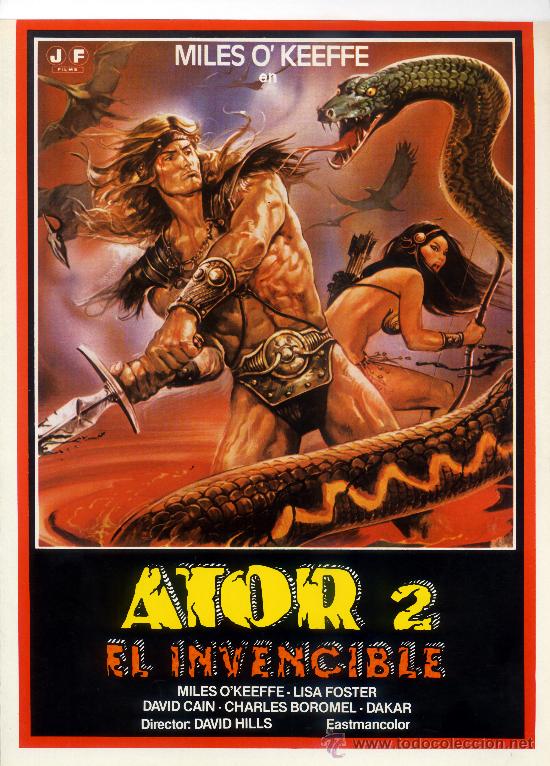
Ator 2 – L’invincibile Orion (1984): Joe D’Amato wanted to make a prehistoric movie like Quest for Fire called Adamo ed Eva that read a lot like 1983’s Adam and Eve vs. The Cannibals. However, once he called in Miles O’Keefe to be in the movie, the actor said that he couldn’t be in the film due to moral and religious reasons. One wonders why he was able to work with Joe D’Amato, a guy who made some of the scummiest films around.

Akronos has found the Geometric Nucleus and is keeping its secret safe when Zor (Ariel from Jubilee) and his men attack the castle. The old king begs his daughter Mila (Lisa Foster, who starred in the Cinemax classic Fanny Hill and later became a special effects artist and video game developer) to find his student Ator (O’Keefe).

Mila gets shot with an arrow pretty much right away, but Ator knows how to use palm leaves and dry ice to heal any wound, a scene which nearly made me fall of my couch in fits of giggles. Soon, she joins Ator and Thong as they battle their way back to the castle, dealing with cannibals and snake gods.

Somehow, Ator also knows how to make a modern hang glider and bombs, which he uses to destroy Zor’s army. After they battle, Ator even wants Zor to live, because he’s a progressive barbarian hero, but the bad guy tries to kill him. Luckily, Thong takes him out.

After all that, Akronos gives the Geometric Nucleus to Ator, who also pulls that old chestnut out that his life is too dangerous to share with her. He takes the Nucleus to a distant land and sets off a nuke.

Yes, I just wrote that. Because I just watched that.

If you want to see this with riffing, it’s called Cave Dwellers in its Mystery Science Theater 3000 form. But man, a movie like this doesn’t really even need people talking over it. It was shot with no script in order to compete with Conan the Destroyer. How awesome is that?

You can get this from Revok or watch Cave Dwellers on Tubi.

Iron Warrior (1988): 

I always worry and think, “What is left? Have I truly exhausted the bounds of cinema? Have I seen all there is that is left to see? Will nothing ever really surprise and delight me ever again?” Then I watched Iron Warrior and holy shit you guys — this movie is mindblowing.

Alfonso Brescia made a bunch of Star Trek-inspired Star Wars ripoffs in the late 70’s, like Cosmos: War Of the Planets, Battle Of the Stars, War Of the Robots and Star Odyssey. Before that, he was known for working in the peplum genre with entries such as The Magnificent Gladiator and The Conquest of Atlantis. And some maniacs out there may know him from his Star Wars clone cover version of Walerian Borowczyk’s The Beast — complete with the same actress, Sirpa Lane — called The Beast in Space.

Today, though, we’re here to discuss Brescia taking over the reins of Ator from Joe D’Amato after Ator the Fighting Eagle and Ator 2: The Blade Master. I expected another muddy cave dwelling movie livened up only by nukes and hang gliders. What I received was a movie where a frustrated artist was struggling to break free.

This movie goes back to the beginning of Ator’s life, where we discover that his twin brother was taken at a young age. Now, our hero travels to  Dragor (really the Isle of Malta) to do battle with a sorceress named Phaedra (Elisabeth Kazaand, who was in the aforementioned The Beast) her unstoppable henchman, the silver skulled, red bandana wearing Trogar (Franco Daddi, who was the stunt coordinator for both Bill & Ted’s Excellent Adventure and The Curse), who is the Iron Master of the Sword.

Princess Janna (Savina Gersak, who was in War Bus Commando) and Ator (the returning Miles O’Keefe) join forces and man, Janna’s makeup and hair is insane. She has what I can only describe as a ponytail mohawk and has makeup that wouldn’t be out of place on the Jem and the Holograms cartoon.

Imagine, if you will, a low budget sword and sorcery film that has MTV style editing, as well as gusts of wind, constant dolly shots and nausea-inducing zooms. It’s less a narrative film as it is a collection of images, sword fights and just plain weirdness. Like Deeva (Iris Peynado, who you may remember as Vinya, the girl who hooks up with Fred Williamson in Warriors of the Wasteland) saying that she created both Ator and Trogar to be tools of justice? This movie completely ignores the two that came before — and the one that follows it — and I am completely alright with all of it!

Supposedly, D’Amato hated this movie. Lots of people hate on it online, too. Well, guess what? They’re wrong. This is everything that I love about movies and proved to me that there is still some cinematic magic left in the world to find.

How about this for strange trivia? When they made the Conan the Adventurer series in 1997, Ator’s sword was repainted and used as the Sword of Atlantis!

You can buy this from RoninFlix.
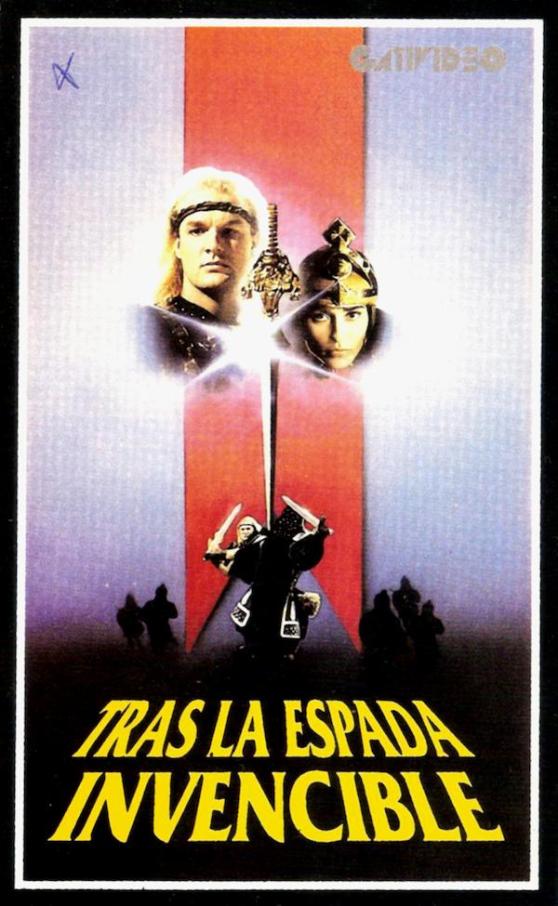
Quest for the Mighty Sword (1990): If there’s a 12 step group for people who watch too many Joe D’Amato movies, well I should be the counselor, helping talk people off the ledge after they think they need to watch Erotic Nights of the Living Dead or Eleven Days, Eleven Nights or…hell, I can’t do it. For all people heap scorn on the movies of the man born Aristide Massaccesi, I find myself falling in love more and more with each movie.

D’Amato hated what Brescia did with his creation, so he starts this one off by killing Ator and introducing us to his son. Obviously, Miles O’Keefe isn’t back.

This one has nearly as many titles as Aristide had names: Ator III: The HobgoblinHobgoblinQuest for the Mighty Sword and Troll 3.

That’s because the costumes from Troll 2 — created by Laura Gemser, who is in this as an evil princess — got recycled and reused in this movie. D’Amato proves that he’s a genius by having whoever is inside those costumes speak.

Let me see if I can summarize this thing. Ator gets killed by the gods because he doesn’t want to give up his magic sword, which he uses to challenge criminals to battles to the death. The only goddess who speaks for him, Dehamira (Margaret Lenzey), is imprisoned inside a ring of fire until a man can save her.

That takes eighteen years, because Ator the son’s mother gave the sorcerer Grindl (the dude wearing the troll costume) her son to raise and the sword to hide. She then asked him for a suicide drink, but he gave her some Spanish Fly and got to gnome her Biblically in the back of his cave before releasing her to be a prostitute and get abused until her son eventually comes and saves her because this is a Joe D’Amato movie and women are there to be rescued, destroy men and be destroyed by men.

This movie is filled with crowd-pleasing moments and seeing as how I watched it by myself, I loved it. Ator (Eric Allan Kramer, Thor in the TV movie The Incredible Hulk Returns and Little John in Robin Hood: Men In Tights) looks like Giant Jeff Daniels and his fighting skills are, at best, clumsy. But he battles a siamese twin robot that shoots sparks, a goopy fire breathing lizard man who he slices to pieces and oh yeah, totally murks that troll/gnome who turned out his mom.

This is the kind of movie where Donald O’Brien and Laura Gemser play brother and sister and nobody says, “How?” You’ll be too busy saying, “Is that Marisa Mell?” and “I can’t believe D’Amato stole the cantina scene!” and “What the hell is going on with this synth soundtrack?”

Here’s even more confusion: D’Amato’s The Crawlers was also released as Troll 3. Then again, it was also called Creepers (it has nothing to Phenomena) and Contamination .7, yet has no connection with Contamination.

Only Joe D’Amato could make two sequels to a movie that has nothing to do with the movie that inspired it and raise the stakes by having nothing to do with the original film or the sequel times two. You can watch this on YouTube.

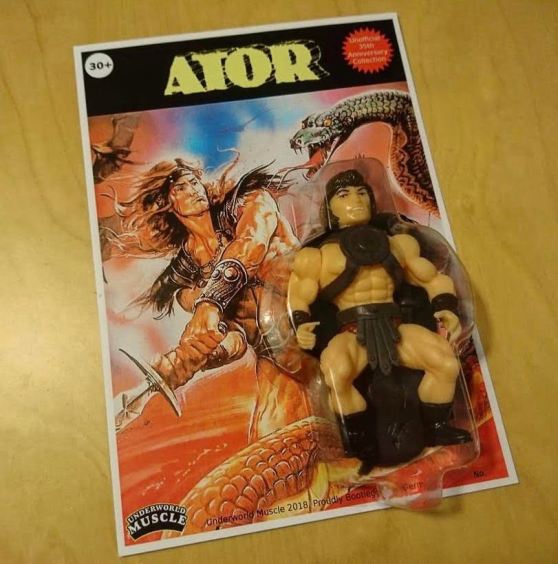
While there have never been any official Ator toys, check out the amazing custom figures that Underworld Muscle has made:

Thanks for being part of all things Ator. Which of the movies is your favorite?
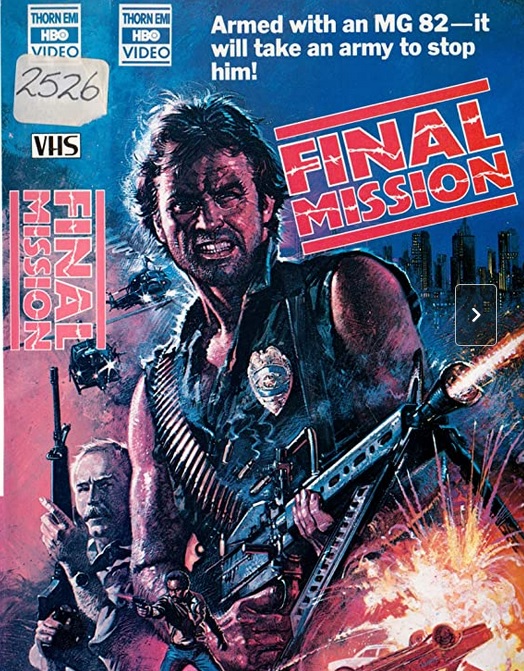
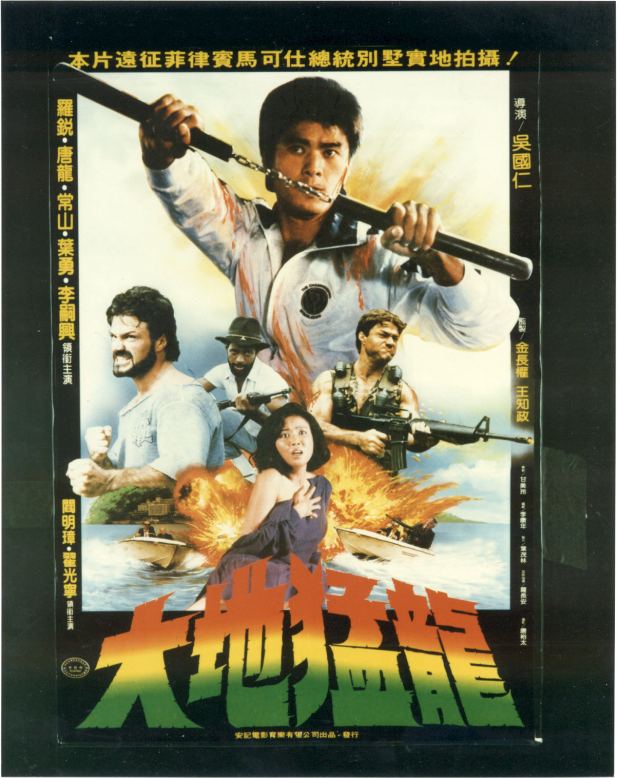
Philippine War Week II: Final Mission (1984)

Richard Young. Only 50 credits to his resume, but what a bunch of films: Night Call Nurses (1972), Inferno in Paradise (1974), Cocaine Cowboys (1979), High Risk (1981), The Ice Pirates (1984), Friday the 13th: A New Beginning (1985) — and don’t forget Saigon Commandos (1988), which, you guess it, pinches footage off the earlier Final Mission, courtesy of its acting common denominator, like any good Phillipines-backed namsploitation movie should. And if you know your Philippines warsploitation ’80s like we know you do: you know that Final Mission pinched from another war flick, somewhere in the Laos backwaters of it’s-not-Vietnam-it’s-the-Philippines. For it’s the Cirio way, baby!

And guess who’s the director behind Saigon Commandos? Surprise! Not Cirio H. Santaigo. Or Godfrey Ho. Or Jun Gallardo. Or Teddy Page. Nope. It’s Clark Henderson, who made his bones with the Corman House of Waste-Not-Want-Not in the production cues for Forbidden World, Android, and Wheels of Fire.

Oops. Getting excited over Philippine war flicks and digressing, again.

So, Uncle Cirio is a back with another Deacon-named character (not forgetting we had a Deacon Porter in The Devastator* and that later film is actually a script retread of Final Mission). This “Deacon” is Vince Deacon (Richard Young). This time, our ex-vet is not a wayward vet of the John Rambo variety. This Deacon has got his shit together and turned his Vietnam War decorations into a gig as a Los Angeles P.D. SWAT commander. But instead of countryside pot farmers with blood on their hands, with lots of blowin’ up and bullets in the woods, we’re in the big city.

So, when a gang attacks his family and Deacon kills one of the thugs in self-defense, the law coddles the criminal, natch, and our Deacon is suspended by the force. So his family heads out to the woods for a get-away-from-it-all camping trip . . . shite, we are back in the woods, after all. Oh, well.

Well, you guessed it: that attack was a hit — that failed — and now the thugs are back to finish the job. And who’s the chief thug? Deacon’s old, slighted ex-war buddy, Slater. Will the town sheriff help? Nope, he’d be Slater’s brother, you neophyte Philippine warmonger, get with the plot twists of these flicks, will ya? So, think of a happier, gentler, socially well-adjusted Rambo with a wife and kids and a job and having to protect them. So goes this “final mission” where the ultimate mission is projecting your family.

Oh, shit. Plot twist. His wife and son are dead. Uh, oh.

Anyway, in the spirit of keepin’ the “Rambo” a-go-go’in the woods: we have a Col. Trautman — only his name is Col. Cain — called in to talk some sense into his ex-soldier.

Right, Col. Cain. Just bring in the body bags. And don’t forget the “Aiahhh-yeeee” rail kills, but since we aren’t on a ship or inside an old factory and are in the woods: tree, cliff, and mountain kills. Oh, and flashbacks to ‘Nam . . . because Cirio’s heroes must always have a flashback because, well, how else can we reuse all of that old ‘Nam-shot-Philippines war footage. Of course, since we are in the California woods, again, don’t be surprised when that wooded battle footage returns in The Devastator two years later.

Dude, I don’t care. Xerox, copy, soldier, spy. I love this movie. One of Cirio’s ripped-off best as he tinkers with the Rambo Steenbecks, once again.

As you can see from the ’80s VHS sleeve, this had great direct-to-video distribution in the States and spun on HBO back in the day, so it’s not hard to find on disc. Ah, but we got you covered with the freebie on You Tube. Sample the trailer . . . if one minute of it doesn’t grab you, nothing will.

* Yeah, we reviewed it . . . and we are writing ahead, here. You gotta work it for, aking kaibigan. Right click that mouse and use the search box.

About the Author: You can learn more about the writings of R.D Francis on Facebook. He also writes for B&S About Movies.

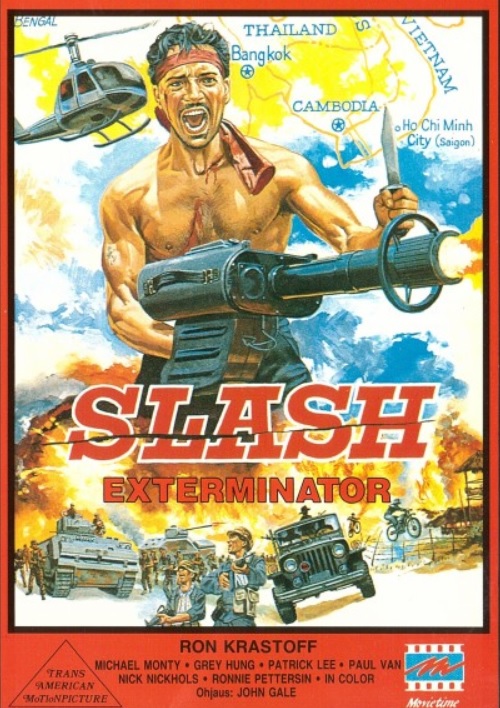
Philippine War Week II: Slash Exterminator (1984)

Oh, man. This friggin’ movie: Jun Gallardo and Romano Kristoff. Together. In the same movie. Help me, Kobol Lords. I don’t even think Sam the Boss is as excited as I. So, let me break it down as to why this pairing is important to your spiritual state of analog being. Strap on the popcorn bucket.

Jun Gallardo sometimes goes incognito as Jim Goldman and John Gale. After Bruce Lee’s untimely death, he took the 100-odd hours of footage from Bruce’s unfinished final film and “directed” Golden Harvest Studios’ bogus 1974, first version of The Game of Death. Across his 54 credits, Gallardo flushed/dumped the VHS RamboCommando cheese-clones that we love: The Firebird Conspiracy (1984)*, Commando Invasion (1986)*, and the BIG KAHUNAS: the Linda Blair-starring SFX Retaliator (1987), and the Shannon “Ms. Gene Simmons” Tweed and Reb Brown (Yor, Space Mutiny) non-war epic, The Firing Line (1988).

Spain’s Romano Kristoff — like his friend and eventual film co-star, Ron Marchini — parlayed his Spain and European Martial Arts championship titles into a Philippines-based film career. It all started with Bruce’s Fist of Vengeance (1980), but Kristoff came into his top-of-the-marquee own with Ninja’s Force (1984), in which he wrote, and co-directed with Teddy Page, and starred. Then there’s Ninja Warriors (1985) with Ron Marchini and Teddy Page, as well as Page’s RamboCommando rips Black Fire (1985) and Jungle Rats (1988). Then, there’s Kristoff’s two-fer with Mark “Trash” Gregory in Ten Zan: Ultimate Mission and Just a Damn Soldier (both 1988).

However, out of them all, Slash Exterminator — for moi — is the best Kristoff flick of them all, as it just never stops. What makes it great is not its RamboCommando feels-like-home-vibes: it’s the Philippines cinema vibes, with all of the expatriate American actors we know and love, such as Mike Monty, Ronnie Patterson, and Paul Vance. Seriously. Who needed to slog through auditions with U.S. TV series and low-budget films; the careers these guys had down under in the Pacific Rim is amazing. An actor’s gotta work and they worked — and then some. The only crime here is why Romano Kristoff failed to crossover to U.S. shores for a series of action films? Yeah, Chuck Norris was fine for those Cannon actioners. And so was Micheal Dudikoff. But why not Romano Kristoff?

I know, Philippines war flick digressing, again.

Okay, I get it: Romano is no Micheal Dudikoff or Chuck Norris in the acting department. But the action is great, so what’s the Mechado Stew beef? This ain’t a rip of Francis Ford Coppola’s Apocalypse Now or Oliver Stone’s Platoon: it’s a Stallone and Arnie ripoff. So, if you’re coming to the Philippines for the acting, then I have a raw fish-grown tapeworm bigger than a baby’s arm to serve you.

So, this time, our fair Rambo heads off to a small country being steamrolled by a communist threat: in steps Peter “Slash” Harris — and he is an exterminator of the first order. So, as with all of these Pacific Rim’er war flicks: we have a soldier and his commander who are buddies . . . then they are not, usually over a botched mission. Yeah, we wondered the same thing: How did these damn soldiers manage to live along enough . . . to have flashbacks . . . to make this movie? Shouldn’t they be dead?

Ack. Overthinking Philippine war flicks and trying to fill in the plot holes is futile. Just eat your Mechado and smile at the screen. Resist not.

So, Slash Harris is a reasonably well-adjusted chap. But not enough to be the big shot CIA boss his ex-commander, Major Andrew Scott (ubiquitous expatriate-cum-Philippines American actor Mike Monty) has become. So, when Scott and his wife (or was it daughter; depends on the country-dub you’re watching) Barbara (Gwenn Hung; same as Monty) run their missions between Cambodia and Thailand to stomp out the ol’ KBG-backed Communism plot-point, Babs is kidnapped. And Scott calls in the only man for the job. But John Rambo was busy. So he called in Peter Harris.

Hey, wait, a sec . . . Harris and Scott are still friends? Ugh. Unexpected plot twist change-up from Jun Gallardo. I’ve been namsploitation duped.

And that’s about it. Huts — from other movies — blow up. The rocket launchers sound like they’re out of a George Lucas space opera. Eh, whatever, Buck. You never get bored, here, as the bullets and explosions come at you in quick succession. And there’s all the stock footage you can handle. Ah, don’t forget that this is a Silver Star Studio production, so any war flick they produced prior to any other film, ends up in the next film. Oh, and amid the stock footage: a bare-chested and sweat-glistening — if that trips your triggers — Rom running around with bullet belts and machine guns.

Bottom line: Jun Gallardo and Romano Kristoff together is junk movie heaven. And you can head into the clouds with this freebie rip on You Tube.

You know what? I hate Romano Kristoff. . . .

Why does he get the cool name that nicks-down to Rom. Bad ass. Meanwhile Samuel and I are stuck with “Sam” and “Rick” and that’s why we write about movies and never starred in them. Would you rent a movie called Slash Exterminator starring Sam Panico and Rick Francis?

Nope. And you have Rom to thank for that.

* We’re writing ahead, here, so cut n’ paste those titles into that search box, aking kaibigan. But you can always click our “Philippines War Week” tag to populate all of our reviews from August and December.

About the Author: You can find R.D Francis on Facebook. He also writes for B&S About Movies.

Philippine War Week II: The Firebird Conspiracy (1984)

Editor’s Note: Welcome to the first review of our second — and final, ever — “Philippine War Week” blow out. Clicking that hyperlink will populate all of the reviews from our first week back in August. And we mean it: there ain’t gonna be no rematch rematch, aka a Part III. We just can’t. It’s too painful. But we’ll always have our ongoing fetish with shark flicks, right? After all is said and done, we reviewed 48 Philippine Namsploitation films in alland it all ends this Saturday, December 11 at 6 PM. Enjoy!


When all of these films “star” expatriate American actors Mike Monty and Nick Nicholson and Paul Vance (who written a few of these, including Slash Exterminator*, SFX Retaliatior and W Is War) and Gwendolyn Hung — under the eye of Jim Goldman, aka Jun Gallardo — you start to wonder if you’ve already reviewed the film. Even the video box art looks familiar. Even the plot is the same. And rest assure: the action is not only the same: it’s identical, as it is cut in from other Silver Star Productions. You just know Silver Star can’t afford those tanks and helicopters: it’s a sure double-your-Philippine Pesos they bought the footage off of Roger Corman. Or stole it from the Italians, as we shall soon see.

Is that Matt (above the “F”) and Kevin Dillon (under the “F”) in that paste-art mess?

Sadly, as with other Philippine war joints: this is not the least bit entertaining because, well, none of those actors I’ve mentioned, above, are here. Warren Flemming, Bianca De Lorean, Stephen Douglas, Patrick Burton — yes, who? is right because, they’re all one and done actors. Yeah, you know your film has problems when Vic Diaz and Dick Isreal (who’ve starred in over 300 South Asian epics, a piece) are your “top stars” as members of the evil “NVA” terrorist cell. Sure, the familiar Nick Nicholson and Mike Monty are here — as “soldiers” — but via that pesky footage cut in from another film.

And speaking of “footage from other films” mucking up the joint . . .

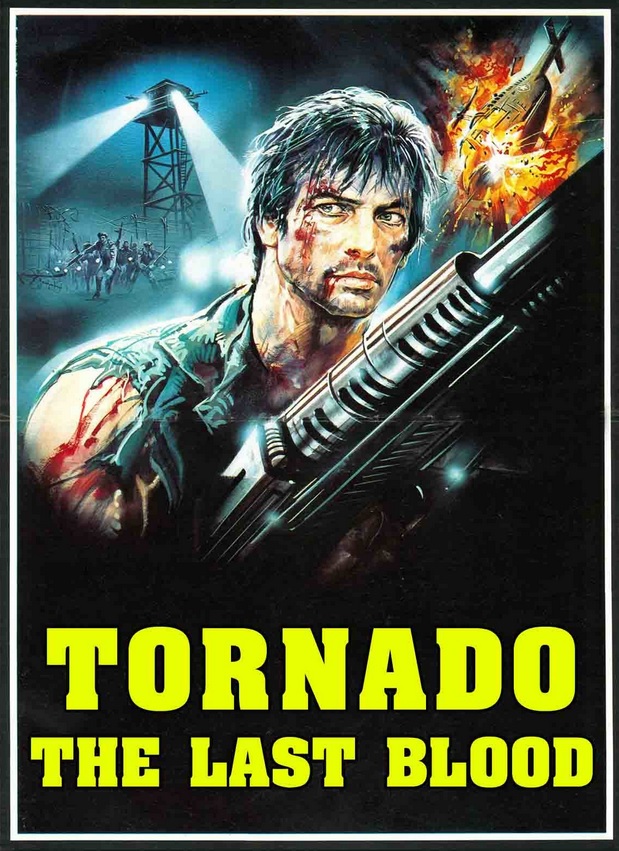
Sly? Is that you? No, it’s Giancarlo Prete, aka Timothy Brent.

Adding to the Chuck Norris-Stallone-Schwarzenegger fireball of confusion: this is also known as The Firebird Connection and Tornado II: Firebird. And yes, there is, in fact a Tornado I: a macaroni combat, aka a spaghetti combater, directed by Antonio Margheriti (Yor Hunter from the Future and Seven Deaths in the Cat’s Eye) and released in 1983. And that film was also called The Last Blood (aka Tornado: The Last Blood) — and you know why and what for. And guess what: the cover from Tornado I and II are exactly the same because Silver Star simply took the Margheriti art and added their own info to the box. So, yes: this film clipped Margheriti’s film for its war footage. And while there is no plot here (well, a confusing one), and the acting and dub is awful, there are bursts of entertainment by way of the endless barrage of blanks and squibs and falling bodies — even more so than a Stallone joint.

As for the plot . . . well, we actually have footage from a couple of films, here, such as Margheriti’s The Last Hunter (1980), because, well . . . ‘ol Tony cut footage from that marconi war joint into Tornado. Anyway, the “plot,” it seems, concerns an evil, North Vietnamese tyrant and his NVA organization on the loose in Vietnam as military fathers on both sides try to protect their daughters from the mayhem. The U.S. Ambassador father wants the tyrant at any cost — via Operation Phoenix (squad) — regardless of the body county, yes, even the children that perished during the Troy Mong oli offensive that killed 30 marines. And our plucky reporter (the dubbed Bianca De Lorean) of our U.S. Ambassador won’t shut the hell up about it.

Yeah, it’s all for the freedom-craving people of Vietnam. Yeah, no one on either side is padding their war chests (with that handful of diamonds fueling a subplot). But the film is padded with lots of poorly-dubbed voice overs to push the plot about a critical microfilm that can blow the lid off the “Firebird Conspiracy.” We think. But what we do know is that while it is a completely different film — sans any recycled war footage — Commando Invasion with Gordon Mitchell also has a plucky, won’t-shut-the-hell-up woman (she’s a “guide” instead of a reporter) and another subplot dealing with a fistful of diamonds. And I swear to god — it’s the same friggin’ rock-filled dead hand in both films.

You can decipher it for yourself on You Tube. Maybe this clip from the film will help? No, didn’t think so.

About the Author: You can learn more about the writings of R.D Francis on Facebook. He also writes for B&S About Movies.

The Jar (1984)

In the tradition of Curse of the Blue Lights, Manchurian Avenger, Mind Killer, Night Vision, and The Spirits of Jupiter, here’s another, early ’80s homegrown effort from the wilds of Denver, Colorado. Sure, there are other, obscure Mile Highers to review, such as Savage Water (1979), Lansky’s Road (1985), and Back Street Jane (1989), but good luck locating vintage VHS copies of those Rocky Mountain low budgeters, and there are no — unlike The Jar — freebie or with-ads online streams of those home growners to share.

Yeah, there’s nothing like a reputation among horror fans as “being the worst film ever made” to have a film transition — not by a reissues imprint (Arrow, Severin, Kino), mind you, but by the film’s fans — out of the analog snow drifts of the brick and mortar old to the digital streams of today. And when those same fans shout for a DVD/Blu restore . . . well, there must be something in those frames, right?

Outside of a brief, local theatrical release on April 16, 1984, The Jar is purely a direct-to-video effort (a genre lumped-in with shot-on-video films intended for direct-to-video release) that received its first, widespread distribution in 1987 via the Magnum Entertainment imprint. As result, we have a film that passes the James Whitcomb Riley SOV-duck test — and lands as a buckshot-filled mallard on our SOV stacks.

Well, eh, maybe.

While the proceedings aren’t exactly blowing off the lid off any canisters, The Jar is not that bad.

The debut, 1987 U.S. issue by Magnum Entertainment.

It’s hard to believe this lone effort by screenwriter George Bradley and director Bruce Toscano — an effort clearly influenced by Frank Henenlotter’s Basket Case (1982), with a soupçon of Sam Raimi’s The Evil Dead (1981), and a dash of Don Coscarelli’s Phantasm (1979) — was shot in Techniscope Anamorphic at a 2.35:1 aspect ratio (if we are to believe the IMDb). Sure, video tapes uploaded to video sharing sites suffer from repetitive, brick and mortar wear n’ tear renting and, regardless of what format a film is shot in, you’ll experience a VHS-wash out, but shot in 35mm? This film? The fuzzy, color-hazing duck a l’orange aromas of the S-VHS and U-Matic recording format of broadcast-news ENG cameras and 3/4-inch U-Matic videotape using Ikegami cameras, permeates the nostrils.

Regardless of the film’s rumored $200,000 price tag — keeping in mind the “Midnight Movie” and VHS rental classics of The Evil Dead shot for $375,000, Phantasm for $300,000, and Basket Case for $35,000 — The Jar comes across as a much cheaper production. In fact, while The Jar more closely resembles a Don Dohler 16mm-to-35mm backyard effort (his debut, The Alien Factor, shot for $3,500; his sophmore effort, Fiend, shot for $6,000), Bruce Toscano’s efforts — however valiant — are void of the against-the-budget Dohler charms we’ve come to adore. The Jar is a perpetually grainy and dark film where the framing is non-existent and the dubbing out-of-sync. It simply does not look like — regardless of its impressive-against-the-budget “Vietnam flashback,” complete with a helicopter; a rental which probably chewed up much of the budget — a $200,000 movie.

The Jar is a film with no middle critical ground: Those who love it, love it. And the haters are as cunning as they are cruel. There is, however, a sliver of middle ground when it comes to the film’s score: everyone agrees the ambient, Goblinesque keyboards by a one-and-done artist, Obscure Sighs (actually director Bruce Toscano and cinematographer Cameron MacLeod), is better than the film deserves. It’s those cherish, Italian-giallo Goblin memories that lend the few to name drop Dario Argento. True, Argento may drift into bizarre, disjointed narratives with out-of-nowhere twists in his works, but a soundtrack alone does not an Argento film, make. What everyone on both sides of the critical fence agree on: all of the respective film disciplines — in front and behind the cameras — took one hell of swing for fences, but instead, struck out.

This critic concurs.

The soundtrack is engaging. The film — in its technical aspects of cinematography, lighting, editing, and sound — is not. There is, however, something to appreciate in writer George Bradley’s insightful and inventive, religious-inspired chronicle. This reviewer sees an influence from The Holy Bible’s synoptic gospels narrative of the Temptation of Christ: the film’s lead character of Paul, our faux-Jesus, is sent off into “the wilderness” to be tempted by the jar’s inhabitant, our faux Satan.


“What the hell, R.D? Are you nuts? Did you watch the same film we did?” Bill Van Ryn bewilderingly drags his cigar. “First, it’s Ingmar Bergman, Brigadoon, Inca death masks and incestuous ghosts with The House That Vanished. Now you’re turning a best-forgotten, SOV piece of junk into a Jesus parable? Sam,” Bill chair swivels. “What the fuck is it with this guy? And tell him to stop featuring me in his rambling, half-assed reviews.”

“I know, Bill. I know. I’ll talk to him. Just leave him be for the moment. He’s quiet and happy in his corner. Besides, we have a Groovy Doom double feature to plan,” dismisses Sam the Bossman.

“Fuck those bastards,” R.D leans into and frantically fingers his laptop. “Here’s some Fellini and Ambrose Bierce references to frost your ass.”


When the final frame of the film’s end credits rolled, a single world appeared: Carrion, which was the film’s shooting title. From the Latin, caro, meaning “meat,” it refers to dead, rotting flesh — animal and human. Another of the film’s alternates titles — if we believe the IMDb — is Charon, the ferryman of Hades who carries souls of the newly dead across the river Styx.

You’ll recall that the powers at New Line Cinema retitled Sam Raimi’s Book of the Dead as The Evil Dead, due to reasoning that “you don’t want movie goers thinking they’ll have to read when seeing a movie.” If one takes a viewing of the script for The Jar — originally released in 1984 as Carrion — in that context, it seems screenwriter George Bradley brought a much more profound narrative, one that expands beyond our assumed, previously mentioned, VHS-horror rental inspirations.

In addition to a definite, Fellini’s Juliet of the Spirits (1965) inspiration, there’s also an Ambrose Bierce An Occurrence at Owl Creek Bridge (1890) vibe in Bradley’s pages. It is that Bierce connection — as result of our protagonist’s war flashbacks — that led some fans to opine The Jar reminds of the later-released Jacob’s Ladder (1990). That exquisite, Bruce Joel Rubin work is, itself, an afterlife amalgamation of the Genesis parable of Jacob’s Ladder, Dante Alighieri’s Inferno, tales from the Tibetan Book of the Dead, and Bierce’s short story.

Yes, I’ll debate you on this fact: That level of intelligence, as well as impressionistic ambiguity, is in the frames of The Jar.

Is the jar’s occupant, in fact, Charon itself? Is it a coincidence that many a Greek lekythos, that is, a vessel or canister, used to carry anointing oils for funerary rites, are decorated with artistic Charons and found in tombs? Is the jar of our film, in fact, a lekythos meant to anoint the dead? Is Paul, our protagonist, already dead, going through a series of tribulations on his trip through purgatory before reaching Heaven?

The visual craftsmanship of that intelligence, however, as we’ll come to discover, is not in the frames. The Jar is case of — well, a jar of — a film where noble ambitions, it seems, exceeded the skill sets involved. However, director Bruce Bradley and his cinematographer, Cameron MacLoed, are not two morons running around with a camera making a movie. The Jar certainly has its WTF moments of Euro-cinema ambiguity — which is my personal, celluloid jam — pitter-pattering afoot.

Paul’s Federico Fellini-inspired Vietnam flashback.

The most enjoyable aspect of reviewing lost tapes from the VHS fringes in our now, digital age is that the actors involved with the film are able to offer their experiences on social media, in this case, the IMDb: Gary Wallace, who portrayed the lead, Paul, confirmed the “amateur” aspects of the film.

Wallace tells us the film was shot for $200,000, in two stretches of two weeks: the first was shot in the fall, while the second shot in the spring, with pickup shots in the summer. No only were rehearsals non-existent during the shoot: all of the dialog was dubbed. The cast would shoot from 5 to 6 am until dark. Then return to the studio and dub until 1 to 2 am that morning. The process then repeated the next day, etc. Wallace also tells us that director Bruce Toscano — a photographer by trade — decided he “didn’t want the 60 Hz” signal so he could sync the recorded voices to the film. Toscano and his assistant [sound recording Ronnie Cramer, we assume] ended up cutting little pieces of tape and splicing them together to at least try to make the sound match the movie.

European VHS on Antoniana Video out of Spain.

“I think he [Bruce Toscano] and the script writer [George Bradley] had a vision of what they wanted the movie to be,” recalls actor Gary Wallace. “If I remember correctly, they were trying to portray various incidents of inhumanity and how [that] inhumanity could pass from one person to the next.”

That’s what the Jar — or at least the occupant of the Jar, is: a mystical, otherworldly canister/creature that tests the humanity of its possessor and, it seems, in order to save their own “humanity,” they have to pass the canister and its (forget the VHS cover) blue, demonic occupant (that looks a Ghoulies (1985) outcast) to another person. Or the Jar, after if finishes draining a soul, and prior to its host’s death, inspires its passing to another soul.

Now, here’s were the dark photography and poor framing we previously spoke of, comes in: but since we are low-budget cheating, here, it makes — from a creative standpoint — sense. Just not from a narrative one. Did Paul hit another car? Did a car hit him? Did he hit the old man? Did he just run off into a ditch and find the old man? Was the old man hitchhiking or just laying on the roadside? Did the Occupant of the Jar set a trap and make Paul drive off the road to find the old man, so the Jar could be passed on? (I personally think it’s the latter. It’s also obvious: The “accident” was shot — as with the nighttime car scenes for The Evil Dead, as well as Reggie’s ice cream truck wreck in Phantasm — on a darkened soundstage, well, an ad-hoc’d warehouse.)

Anyway, after an “automotive accident,” Paul picks up a crazed, old “hitchhiker” (as some critics have stated) obsessed with a jar he carries in a crumpled paper bag. After taking the man to his apartment — instead of the hospital (so goes the Jar’s power to do its will, IMO) — the man disappears (goes to Heaven or some afterlife, IMO): but leaves behind the Jar. Paul opens the Jar. And no matter how many times Paul gets rid of the Jar, it — with its fetus-like occupant (that never actually comes out of the jar to crawl around) — returns.

Another Felliniesque hallucination.

So starts off the film’s Coscarelliesque surrealism meets David Lynch symbolism (think Eraserhead) — only with none of either filmmaker’s level of non-linear style or viewer engagement. Paul’s disjointed hallucinations and/or dreams where reality meshes with illusion take him from watching his own birth in a blood-filled bathtub (my interpretation of who the teen in the bathtub, is), seeing himself crucified (as he looks down, deep inside a back alley dumpster), a black & white flashback when he interacts with his younger self (again, my interpretation), and a creepy little, Stephen King-type girl walking with a balloon in a park (Is it his dead daughter or little sister? I’m lost . . .), as well as a group of cloaked monks out in the rocky desert (carrying the cross to Paul’s crucifixion).

So — at the risk of plot spoiling — does Paul kill his pretty, romantically-inclined neighbor when she appears to him . . . as the old man who cursed him with the Jar? Does Paul eventually pass off the Jar to his boss to rid himself of the evil? Should we directly pass “Go” on the celluloid Monopoly board and go straight to the Aylmer in Frank Henenlotter’s Brain Damage (1988) to suck our brains dry? Have we gazed deeper, down inside The Jar than it probably deserved to be? Is it really better than most critics have opined?

No matter.

We know you’ll open The Jar because, you, like us, enjoy out-trashing the last trashy mess we just watched. Take comfort in knowing there’s at least a contingent that enjoy The Jar (including moi). The same can’t be said for the abysmal remake of Jacob’s Ladder. Yes, there was a remake released in 2019: everyone hated it. (Ditto for the 2019 remake swipe at David Cronenberg’s Rabid. Just why? Why? Oh, why!)

You can watch The Jar on You Tube (the Magnum version) and You Tube (the Antoniana version). The soundtrack also has its fans, as you’ll listen from the You Tube clips HERE, HERE and HERE. The second two are fan remixes that make it sound more Tangerine Dream than Goblin, however. But that’s not a bad thing.

Perhaps those remixes could be used in a remake? The story for a great film, is there.

About the Author: You can learn more about the writings of R.D Francis on Facebook. He also writes for B&S About Movies.

The Spirits of Jupiter, aka Planet Gone Mad (1984)

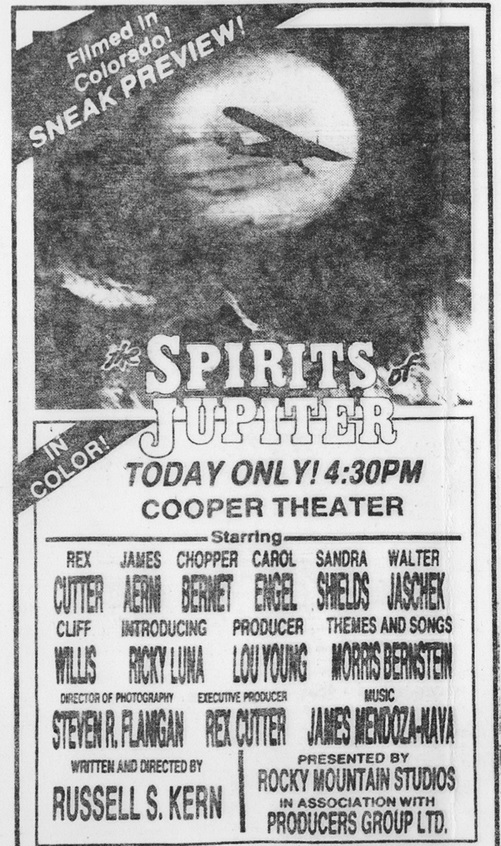
Editor’s Note, July 2022 Update: Thanks to our readers for quickly making this one of our most-visited reviews, with Denverites contacting us to discuss their memories of this mostly-never seen theatrically, hard-to-find film on grey-VHS. Even the director himself, Russel Kern, discovered our review — and his July 2022 memories of the production now end this review. Yes, the positivity of the Internet is real. Now, let’s sit back with a filling Denver Sandwich and a cold Colorado Bulldog and enjoy the show!

Update: July 2023: The Spirits of Jupiter: Uncut is now available for streaming on Amazon Prime and we have all the details, here.

Okay . . . now here’s what we had to say about the film in November 2021, as part of an “Apoc Films” theme week.


“Jupiter is in the house of Aries . . . the great one will cool his sword in blood.”
— The Roman god of Jupiter, or is that the Greek god of Zeus, over the opening credits, warning of man’s end

“Jupiter and Saturn, Oberon, Miranda and Titania. Neptune, Titan, Stars can frighten.”
— Syd Barrett

Denver on Film

After enjoying my revisiting with Micheal Krueger’s Denver, Colorado, shot-and-released SOV’ers Mind Killer and Night Vision (1987)*, my analog memories drifted back to this comic book shop renter: an unidentified flying oddball if there ever was one. Okay, The Spirits of Jupiter isn’t an official SOV, as it’s analogous to Don Dohler’s Fiend: a drive-in production shot on 16mm and blown up to 35mm. But you know how we feel about the 16 to 35 flicks: they walk and quack like an SOV duck, more so when our first exposure to those films wasn’t in a drive-in, but as a home video renter.

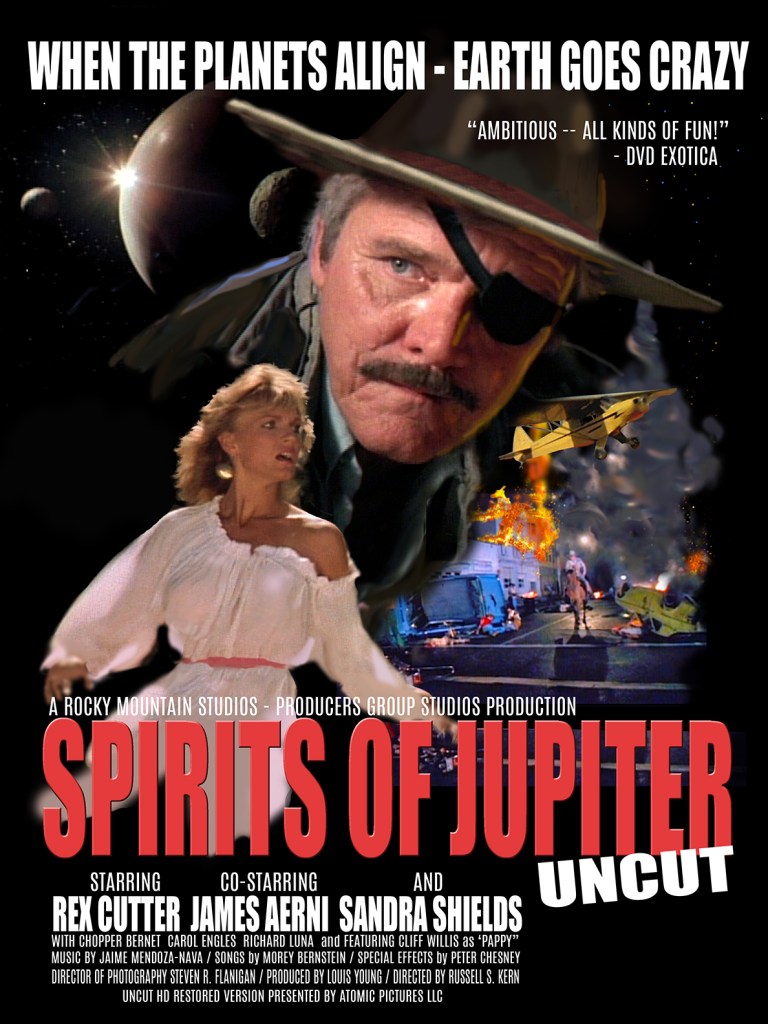
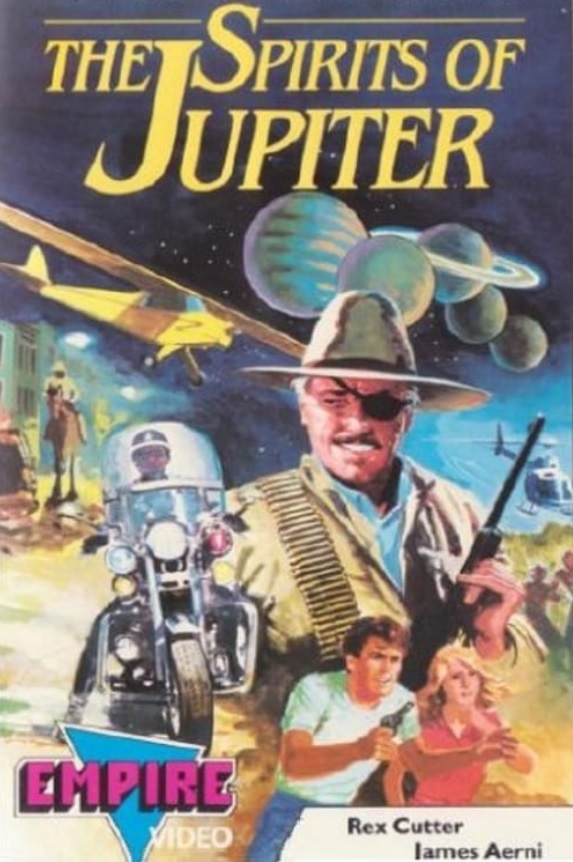
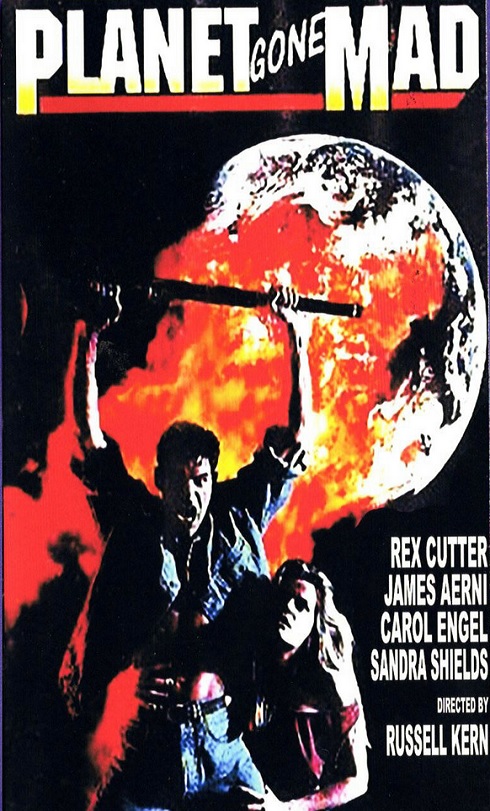
And with a cover like the one on the left, you can’t not rent it on the 5-5-5 or one-day .49 cent plan. As for the bogus cover on the right: it in no way represents the movie under the slipcover. The one on the left, however, ever so sadly, does.

Who’s Russell Kern?

Prior to making his directing debut within The Spirits of Jupiter, self-made Colorado filmmaker Russell Kern, in his scripting debut, cast go-to old codger TV western actor Sunshine Parker** in the G-rated family film, Spittin’ Image (1982). I vaguely remember that film spin spinnin’ on a lazy, UHF-TV afternoon, right around the same time I was first exposed to the likes of the not-really-kid-flicks The Little Dragons, Mystery Mansion, and the old man pedo-alien non-starter, The Force on Thunder Mountain. I have no interest in remembering anymore than that — or give it a review proper, seeing Sunshine Parker in another film, be damned.

At that point, Russell Kern vanished, only to return as the producer and director of the never-heard-of-or-seen drama Pools of Anger (1992), about a man who dedicates his life to suicide prevention. Is it a Christploitation flick? It appears on various lists, based on one’s opinion as such, but there’s no information on the web regarding the plot to verify if it is, in fact, a Christian-slanted tale. (Speaking of which: check out our “Exploring: ’70s Christian Cinema” feature, it’s loaded with films to check out.)

Anyway, let’s pop in a copy of the lone film by Russel Kern that I know all too well: the George Romero rip that is The Spirits of Jupiter . . . but we must emptor our caveats before we get started. . . .

Is this as bad as the Canadian in-the-woods-talking SOV apoc-romp Survival: 1990? Eh, er . . . an on-the-fence “No” to that question. Is it any better than the Gary Lockwood-starring South America-doubling-for-Texas apoc slop that is Survival Zone? Definitely a “No,” to that one, as that movie stinks but Lockwood’s presence makes it watchable. Did this all need a touch of David A. Prior? God help me, but a resounding “Yes!” Where was David A. Prior when we needed him with his fleet of post-apoc Jeep Cherokees from Future Force and Future Zone. Maybe if Cornell Wilde made this back in the ’70s and he had some planetary, gravitational pull junk science bring down the fall of man in his apoc-opus, No Blade of Grass. . . .

Instead, we got the production savvy-common sense of Prior’s celluloid partner-in-crime David Winters’s concrete-blocked wall space ships complete with PCs on folding tables from Space Mutiny.

Yes, for you are about to be Def-Conned, as well as Def-Fucked, 1.

Well, at least the citizens of Denver got to see it. And not the same version we watched for this review! The “plot” thickens. . . .

The Review . . . with Plot Spoilers

If you’re a fan of Cirio H. Santiago’s Equalizer 2000 and Anthony Maharaj’s Return of the Kickboxer (1987), Rex Cutter, Richard Norton’s co-star in both of those films (as Dixon and Col. Ted Ryan, respectively), stars here (and Executive Produces, as this is his vanity affair). Speaking of Kern’s debut film, Spittin’ Image: that film served as Cutter’s feature film debut, after getting his start as a background actor on several episode of Battlestar Galactica — as a Cylon Warrior. As is the case with most self-financed, regional-made flicks: the rest of the cast is one-and-gone, sans one: Chopper Bernet, who makes his acting debut, here. The ‘Chop is still crazy after all these years, with a lot of video game voice work on his resume for the G.I Joe, Marvel, and Star Wars franchises.

Okay, enough with the trivia. Let’s get into the “Romero Connection” of it all.

Hell, forget about the Romero premise. Look at the box: you’ve got a John Wayne lookalike (the hero), a CHiPs motorcycle cop (the villain), a racing Piper Cub, a helicopter, what looks like robed monks on horseback (that never show up in the film), a wayward couple on the run (to be rescued) — and Jupiter aligned with a bunch of planets. So what’s not to rent, here?

This film’s raison d’etre, however, isn’t just George Romero’s The Night of the Living Dead, well, more to the point, The Crazies. This time, instead of an errant chemical spill or crashed space probe, it’s the Jupiter Effect: an effect that fueled many of the speculative documentaries of the 1970s regarding humanity’s demise, as well as various Christploition apoc flicks.

Don’t laugh, ye reader: for the fear — as with the biblical-assured The Rapture — of the scientifically-predicted Jupiter Effect, was real.

Grade school and middle schoolers were chilled to the bone, via the pages of Scholastic magazine in our English classes and the pages of Popular Mechanics in our Industrial Arts classes. When you turned on TBN – The Trinity Broadcasting Network, Hal Lindsay, he of the bible prophecy document The Late Great Planet Earth, had all of the bible passages collated and correlated to “The Jupiter Effect” at the ready: for by March of 1982, the door would be opened for the rise of The Antichrist.

The “fear” began with the worldwide, international best seller, The Jupiter Effect (1974), written by John Gribbin and Stephen Plagemann. They advised that, on March 10, 1982, when Mercury, Venus, Earth, Mars, Jupiter, Saturn, Uranus, Neptune, and Pluto were aligned on the far side of the Sun, a multitude of catastrophes would befall the Earth, including a great quake along the San Andreas Fault; a devastating quake that would “snap” South California off the North American continent and plunge into the Pacific.

Well, er, ah . . . California is still here, so?

The duo wrote a second, lesser-selling (natch) book, The Jupiter Effect Reconsidered. Now, according to their new prediction: The Jupiter Effect actually happened, only two years earlier — and it triggered the eruption of Mount St. Helens in Washington State, on May 18, 1980.

Well, at least we got a movie out of it, with an honorable mention to Hal Lindsay, but a HUGE thanks to George Romero . . . we think. Yeah, let’s blame Georgie Boy.

In George Romero’s Pittsburgh in 1968: an errant military chemical spill triggered a worldwide zombie plague (meanwhile, in Jean Rollin’s La Morte Vivante, U.S aka’in as The Living Dead Girl*˟, a chemical spill over a coffin in a family crypt vamps (or zombifies) a too-soon-dead young woman; she triggers a plague, natch). In Russell Kern’s Denver in 1980: Jupiter’s “increased gravitational pull” affects the human brain (since it’s mostly made of water) — especially people with “certain blood types” — in higher elevations. And since the state of Colorado’s elevation runs between 10,000 to 12,000 feet, residents in the Rocky Mountains (especially in the highest point of the fictional Canon City) start acting irrationally (e.g., the town sheriff airs out the ol’ doggers on his desk — then shoots off his toes; implied, not shown, as we cutaway to Jupiter, again), then transform into flesh-hungry (on-a-budget, of course) zombies (i.e., people running around, growling, sans Fulci guacamole or Mattei grease paints; you know, just like a Rollin Spirit gummed-corn flakes n’ Karo Syrup and Red Dye #5 joint).

However, unlike a Romero joint: the local Denver acting troupe cavorting amid the frames stinks like the rotted, porcine non-thespin’ that it is. The effects — which take a snail’s pace to get to — are a bunch of cutaway-not-gory, clumsy rubber-misses. Our hero looses an eye in a (darkly shot) dog attack: end scene. Next scene: he’s sportin’ an eye patch. A butcher lops-off a customer’s hand (in a cost-effective wide shot): End scene. Next scene: there’s a rubber hand on the counter. A shovel-growling mob take a man to task, again, in a wide shot, for another SFX denial.

So, what about the plot?

That’s just it: we’re 40-plus minutes into this and there still isn’t one. There’s zero gore, for it’s all cost-effectively implied. And there’s not that much crazy. People are just unruly: men smack their wives and hold a knife to the throat, a bar fight breaks out, people rant at invisible people, and a woman threatens suicide — by jumping off a sidewalk. Of course, every time someone has an episode, there’s that pesky cutaway to Jupiter — so we know that Jupiter is at fault, here, and that the people of Denver aren’t just behaving at the usual, human status quo. Too bad we can’t blame all of 2020’s protests and CHOP n’ CHAZ zones shenanigans on gravitational shifts caused by a gas giant. (Oh, Jupiter, ye god of the skies and thunder: Did you organize the Kyrie Irving protest at the Brooklyn Barclay Center? I hope the heavenly collection plates cleaned up on the Nets losing their home opener loss to the Charlotte Hornets.)

Anyway, the lone unaffected here is our faux-John Wayne/Rooster Cogburn, aka Big Jim Diller, aka our fair Rex Cutter. And why isn’t Big Jim going nuts? Oh, you must have fast-forwarded though that plot-point: a midget Indian shaman who runs a desert junkyard warns Big Jim to wear a gold plate under his ten-gallon hat.

Finally, it took us an hour, but we’ve gotten to the apocalypse. And it ain’t all that apoc, natch.

Big Jim’s finally made it back to his hometown from his remote silver mine — now under a klaxon-echoing, car-carass and street fire-strewn apocalypse, complete with law enforcement vs. military machine gun fire (the only action-driven SFX in this borealypse) — to rescue his son and daughter, which he comes to discover, have been kidnapped by the town sheriff.

Ugh. Not this worn out apoc-plot, again.

Remember the apoc-slopper The Survivalist, where Marjoe Gortner makes it his life’s mission to bring Steve Railsback to justice — apoc fallouts, be damned? Well, our infected town Sheriff, who, before the plague broke out, suspected Big Jim of hiring illegal aliens (i.e. “undocumented workers”) to work his silver mine. And our sheriff will bring Big Jim to justice, Jupiter Effect fallouts — and racism — be damned.

Eventually, at the 70-minute mark — and we still have 40, yes 40 minutes to go — Big Jim hooks up with a group of scientists holed up in an abandoned mine that was secret-converted to a bomb shelter during the Cuban Missile Crisis. And be grateful they did: their junk science-babble about the moon, the Earth’s tides, and man’s body is 90% water, the brain is mainly water, etc., really helps along (not) the film’s exposition-heavy plot of all talk and no action. . . .

Now, moi, referring back to our Syd Barrett quote: I’d have scripted a conspiracy that Syd Barrett “Eddie Wilson’d” his own death and he converted the mine into a home (converting missile silos, bunkers, and other abandoned government installations is an architectural reality) and the ex-Pink Floyd leader solves the mystery: for “Astronomy Domine” foretold it all. But alas, Russell Kern, and not your fair R.D Francis, has the funds to fiance his own screenplays. So we end up with Rooster Cogburn, and not a faux-Syd Barrett, saving Denver from an apocalypse.

Yes. The Duke of Denver will save you. Where’s Issac Hayes when we need ’em? Or Sunshine Parker. Or Ernest Borgnine. . . . Hey, know your Escape from New York actors, buddy.

Wrapping It Up . . . with Some Zom-intel

In the end, Russell Kern’s The Spirits of Jupiter isn’t a horror film. It’s a not science fiction film. It is, however, a sometimes (very bad) comedy. It’s not a western, but in a Mad Maxian sense — courtesy of Cutter’s John Wayne-cum-Max Rockatansky — it is. And it takes us one hour fifty minutes to get there. Yes. Not 80. Not 90. But a snooze-inducing 110 minutes. A valiant effort? Sure. No one sets out to make a bad film . . . but this time, for this reviewer, this almost-forty year and forgotten grey-market apoc’er ain’t cutting it in my beloved apoc sweepstakes. No offenses to any of the hard-working cast and crew, intended. And I am not the only reviewer who expressed these same concerns. . . .

Ah, on the upside, let’s give Mr. Kern (some) credit where it is due:

If you know your zombie history: English romantic poet Robert Southy wrote a book, The History of Brazil (1819), and gave us the first use of the word “zombie” in the English language. Ah, but Southy pinched the term from Thomas Lindley, who used the West African-Kongo language term fourteen years earlier, in his Narrative of a Voyage to Brazil (1805). Back then, “zombie” referred to a “soulless corpse revived by witchcraft,” as well as a West African-Haiti voodoo serpent-deity. Then, once W.B Seabrook published his account of his travels in Haiti with The Magic Island (1929) — with a tale of freshly-dug bodies revived by sorcery — all clichéd Hell let let loose in Hollywood. And yes, you watched that book as the Bela Lugosi-starring White Zombie (1932).

Since then, the U.S., Italian and Spanish film industries, once the Tinseltown sprockets tired of the voodoo angle and the “when hell became full” inversion, gave us zombies via space probe crashes, by priest suicide, by secret government chemicals and warfare, and the corker, courtesy of Jorge Grau: by ultrasonic radiation to kill insects: yes, an insect killing machine, in The Living Dead at the Manchester Morgue (1974).

So, to Russell Kern one-upping Grau’s bug-machine zombies with new-and-improved Jupiter Effect-zombies: we thank you . . . well, just a little. . . .

As with Will MacMillan’s vanity SOV’er Cards of Death (which I friggin’ love to death), after a quick-and-gone local release, The Spirits of Jupiter, never seen a full-scale U.S. release and never made it out on video. While MacMillan’s vanity affair made it back to U.S. shores as a grey-market VHS out of Japan, Rex Cutter’s vanity effort crossed the ocean from the ports of the Netherlands and Poland as a U.S. grey marketer. The later, Euro-titled greys as Planet Gone Mad ain’t helping, either, as it leads you believe you’ve been duped with a repack of another apoc-sloppy non-starter, World Gone Wild (1987). And you wish you were duped with that Adam Ant-starring mess. And we thought Steve Barkett’s vanity apoc’er The Aftermath (1982) was a mind-trying watch. Well, Russell Kern topped it, or bottomed out, depending one’s celluloid masochistic perspective.

In the end, that’s what is all about at B&S About Movies: we may rip these old, ’80s VHS’ers now and again, but man: we love these films from the VHS shelves of grey-market yore. In fact, some commenters on the IMDb, Letterbox, and various VHS message boards have mentioned that they got their copies of The Spirits of Jupiter from VSOM, Video Search of Miami’s catalog (this Tap Talk thread will get you get you up to speed on that beloved, catalog-order shingle). That’s how dedicated we ’80s video junkies are to analog trench-warriors like Russell Kern. It’s guys like Kern that made comic book video store renting all-the-sweeter.

So, should you skip The Spirits of Jupiter . . . and stick with the small-town-gone-wild shenanigans of Bud Cardos with Mutant (1984) and Nico Mastorakis’s Nightmare at Noon (1988) for your eh-it’s-not-a-Romero-chemical-spill-joint-but-why-not-I’m-desperate-for-entertainment apoc fix? Opinions vary.

You can watch The Spirits of Jupiter on You Tube . . . then again, this 11 minute highlight reel should be enough to wet your whistle, padre. Eh, that may be too much too belly up to the bar for, Big Hoss. So toss back this two-minute reel of the “madness” scenes to diminish your own snow-drifting, analog madness.

Insights from Director Russell Kern in July 2022

“Well, I did enjoy your review, and little did you know: you reviewed the bootlegged, early version of Spirits of Jupiter. By the way: the equally-stolen Planet Gone Mad (the 2nd DVD cover in your nicely written piece) is a horrid, bootleg dub off the preview VHS [that was] further dubbed down to remove all our hard fought-for action. For instance: the deputies and sheriff blast the miner from the rooftop (our stuntman, Dave Ross, killed so many times in the movie because our 2nd stuntman, John was injured early on in a motorcycle stunt that was unusable in any version of the film). Though many have cited various influences on the story, I had this script [completed] from the late 1970s and never saw [George Romero’s] The Crazies. It was sold as, originally Zombie Hunters, as just a legalized, zombie extermination-extension from Romero’s idea. But we got a producer on board whose family had recently suffered a terrible tragedy; he was insistent we cut back the really good stuff, that is: the little girl seen earlier in the cemetery was to be drinking the shot fellow’s blood, as it dripped from the roof edge.

“I would argue that early on, in our final 75-minute version [again, we’ve reviewed the 110-minute bootlegged version], you get the ‘Prophesy’ special effects sequence, a headless restaurant customer, the murder of Happy the Miner (shot at least 20 times with dozens of effects squibs); the death by pistol and shotgun (more effects squibs) and subsequent fall of Dave Ross; Chief Switcher shooting off his toe, the airplane duel when the Chief tries to stop him on the runway, and the flight to the mine all in the first reel, roughly 12 to 15 minutes. In the next ten minutes: the miners attack and chop up the wonderful [actor] Walt Jaschek; one gets impaled on a forklift, another by pitchfork, and some good action as Drill gets to the plane of which propeller chops off the head of yet another miner during the escape, then Jaschek gets chopped up by shovels, then Drill kills two more from the air (an excellent shot). By the way, these were some good effects done by Sam Peckinpah’s SFX-guy who kindly came out for the fun of burning down a city on camera, Peter Chesney. Body Count Score: 15 minutes: 8 or 10, dead.

“And then it gets weird. . . .

“Steve Flanigan, my producing partner [who relays the same production issues in a 2013-review and interview of the film at Video Junkie.org], when we ran Producers Group Studios, did a fantastic job shooting Spirits of Jupiter worth mentioning in any review. [He completed] beautiful, wide screen camerawork from one of the two helicopters we [acquired] for the movie, as well as the Piper Cub-hero airplane. I think it wasn’t that the acting that was so bad . . . as the lack of judicious editing, hastily assembled into the version [you’ve reviewed] as we solicited a distributor. I take credit there, I’m afraid.

“Rex told us not to send out anything until it’s ready, but at the same time: he suffered from an urgent need for income, and the early rough cut, which was intended for us to trim down, is what most folks have seen [and you reviewed]. Tragically, the Los Angeles attorney handling the distribution, passed away, and his entire estate went into [legal] limbo. Pieces leaked out years later . . . and have now become the two examples you happen to have seen. That’s the bad part.

“The good part: we worked hard on that movie, put far more into it than we were paid, and shot it in two weeks in some of the most beautiful, as well as a few eerie locations, we have here in Colorado. We continue to enjoy working in Colorado. Thanks so much for looking at Spirits of Jupiter.”


Thanks much to Russell for being a good sport regarding our review and reaching out, contributing to the review. It is much appreciated. One day, hopefully, an official DVD or Blu-ray would be possible of the intended, 75-minute version. To that end, Russ: I’ve been planting seeds at a couple reissue shingles. Fingers crossed! Hey, if Delirium, UFO: Target Earth and Calamity of Snakes can be reissued, why not your movie?

* Other Denver-shot films we’ve reviewed include Curse of the Blue Lights, The Jar, and Manchurian Avenger. Other other, obscure Mile Highers indies we’d like to review, but there’s no copies to be had, are Savage Water (1979), Lansky’s Road (1985), and Back Street Jane (1989). And you thought the Pittsburghese the B&S staff spews is weird: turns out Coloradoans have their own regional colloquialisms. Bone-up before you hit the “303” and fit in. Don’t yinz embarrass us.

You can learn more about the major studio films shot in Colorado at Uncover Denver, 303 Magazine, and Colorado.com. Googling “films made in Colorado” will uncover more articles.

** Sunshine Parker’s career dates to Gunsmoke in the ’60s, with his best-known, recurring TV role in the ’70s on Little House on the Prairie. On the big screen, you know Parker best as Emmet: Dalton’s farm-loft landlord in Road House.

*˟Remade — or was it ripped, or sequeled — by Jean Rollin himself, as Revenge of the Living Dead Girls?

Check out our two-part Apoc flick series of reviews for more “End of the World” fun.

About the Author: You can learn more about the writings of R.D Francis on Facebook. He also writes for B&S About Movies.

Frankenstein 90 (1984)

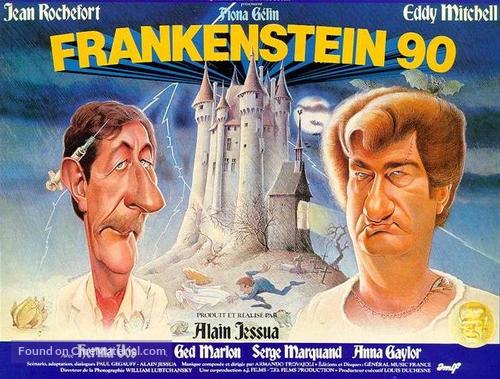
When you consider Frankenstein 90 against Frankenstein 70, Joe D’Amato’s Frankenstein 2000 and the deranged Frankenstein 80, it comes up very, very short.

Directed, written and produced by Alain Jessua, this film stars French singer and actor Eddy Mitchell as the monster. I’m struggling to say something nice about this movie and then I read that the effects were by Reiko Kruk and Dominique Colladant, who did the makeup for Herzog’s Nosferantu and Just Jaeckin’s Gwendoline and now I’m thinking how much I’d rather watch those movies.

The mad scientist’s wife leaves him from the monster while he falls for the bride, but you know, if you want to make a comedy of Shelley’s story, you have the high bar of Young Frankenstein to vault over, you know?

It also has the horrible notion that the suave and sophisticated new Frankenstein’s monster can assault a woman and she falls in love with him, which made me not want to watch this much longer and I’m doing an entire month f Jess Franco, so just imagine.


MILL CREEK DRIVE-IN MOVIE CLASSICS: Don’t Open Till Christmas (1984)

EDITOR’S NOTE: Ho ho no, we already wrote about this movie way back on December 18, 2017. It’s also part of our list of ten movies that ruin Christmas! Read on, little elf!

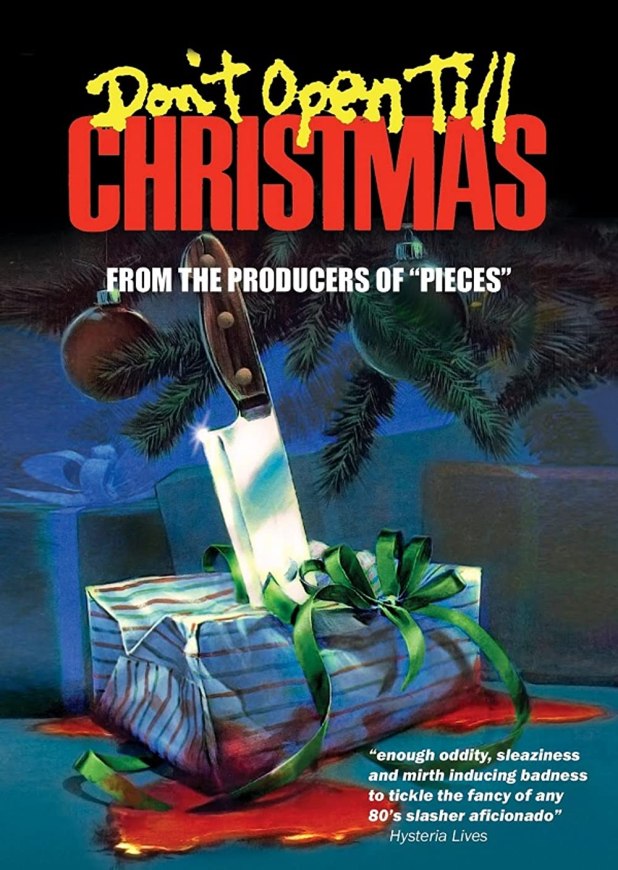
A guy in a Santa suit has sex with a woman in a filthy alley before they’re both killed by a man in a grinning see-through mask. Another Santa has his head impaled by a spear while his daughter watches. And yet another has his face grilled while roasted chestnuts on an open fire.

Scotland Yard inspector Ian Harris (Edmund Purdom, who wrote and directed this film as well as appearing in 2019: After the Fall of New York and Pieces) and detective Powell are perplexed. Plus, Harris just got a gift that says “Don’t Open Till Christmas.” They question Kate, whose father was a killed Santa, and her boyfriend, Cliff.

The next day, Cliff tricks Kate into coming to a porn studio. She storms off and he takes photos of a model dressed as Santa. A pair of police officers spot them shooting nudes in public, so he runs and the killer finds her, but lets her go. Oh yeah — and there’s a reporter named Giles digging around, too.

Things get worse. A strip club attending Santa gets knifed. The police think Cliff is the killer and the paper Giles says he works for has no idea who he is. And another Santa runs into the London Dungeon (yes, the place The Misfits sang about) and gets killed.

Even after undercover officers go after the Santa killer, they can’t find him and are killed themselves. The killer has a stripper who was there on the night he killed the Santa in her club and says that she will be the supreme sacrifice to Christmas evil. And Caroline Munro (!) is on stage in a nightclub when a Santa is chased on stage and stabbed in the face with a machete. Another Santa is castrated soon after.

It turns out that inspector Harris has no birth certificate and has gone on leave, disappearing to a mental asylum where Kate follows.

It turns out that Giles is Harris’ insane brother. Kate finds out first, but she is strangled and stabbed while detective Powell listens. Then, Giles lures him to his doom, as he electrocutes him in a junkyard.

Sherry escapes and Giles chases after her. She knocks him over a railing and he has a flashback of when he went insane: he caught his father, dressed as Santa, having sex with another woman. When his mother found out, Santa shoved her over a railing. But it’s too late for Sherry, as Giles has survived.

Finally, Harris wakes from a bad dream and unwraps his gift, complete with a card from his loving brother. It explodes, killing him and ending the film.

What I have just done is write about this film in a way that will probably make you want to watch it. It’s a slasher that even references Halloween in its opening credits. But it’s no Halloween.

According to tvtropes.com, “this utter sleazefest of a film is quite a jumbled and confused mess, and for good reason. While production began in 1982, the film remained in Development Hell for two years, due to the title of director continually changing hands; first up was Edmund Purdom (who also portrayed Inspector Harris) who walked off the set, prompting at least three or four others to fill in for him, with one only holding Purdom’s former position for a mere two days before being fired.”

Whew. You got better things to do this Christmas. Trust me.

2021 Scarecrow Psychotronic Challenge Day 28: The Super Ninja (1984)

28. THESE FISTS BREAK BRICKS: In celebration of the excellent new book, watch a martial arts movie.

John has two jobs: he’s a maverick NYPD cop. And, well, he’s also a ninja. A super ninja.

Alexander Rei Lo is the guy for this role because a look across his IMDB resume tells us that he sure was in a lot of ninja movies. Don’t believe me? How about this list: Ninja KidsNinja vs. ShaolinMafia vs. NinjaUSA NinjaNinja vs. Shaolin GuardNinja Death (three films), Wu Tang vs. Ninja, the nine-hour long Ninja: The Final DuelNinja CondorsNinja: The Battalion and two Ninja in the Deadly Duel films.

Anyways, it’s the 80s, drugs are everywhere and John the ninja cop gets framed. Using his shadow skills, he escapes and uncover a plot to steal his girlfriend’s father’s life work, so he travels to China to face the 5 Element Ninjas.

Honestly at this point, I’d get you $20 for the blu ray.

But then there’s an impossible long sex scene* set to the smoothest sax jazz and I want the UHD, I want to Kickstart a web series, I want to make two sequels to this with the original cast. I want Eugene Thomas to make a whole series of Spencer side stories. I want Stallone to watch the way they ripped off the first Rambo movie and say, “Heyyyyyyy alight!”

This movie taught me that if I want to beat the five elements of ninja — silly me thought there were only four elements and metal was a man-made thing — and a tiger ninja, I just need to “draw strengths from your future and past and see beyond the illusion of this world.”

Then again, one of these ninjas sets his hands on fire before he punches you.

You can watch this on Tubi or download it from the Internet Archive.

*The sex scene is so long that nearly two complete songs play during it.

SLASHER MONTH: Folies Meurtrières (1984)

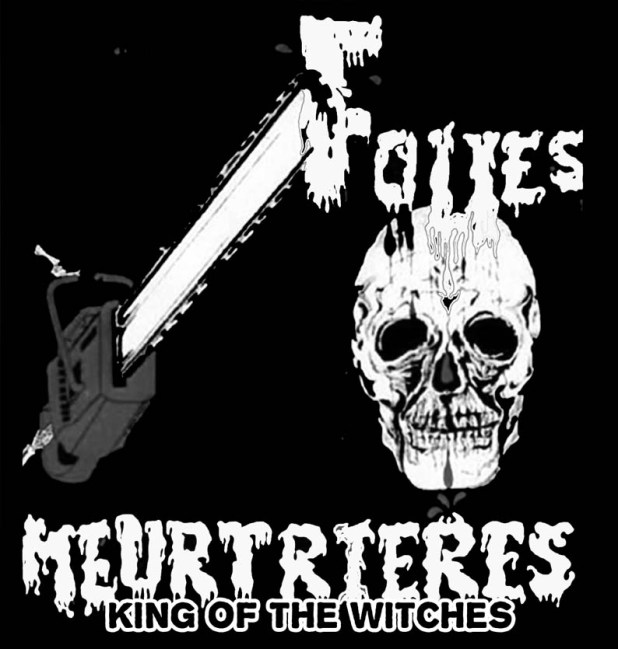
Shot on Super 8 at some time in the early 80s in France, this film is 52-minutes of a killer aimlessly killing, killing and killing some more while a fuzzed out synth soundtrack plays, the kind of music that those that say their films are “inspired by John Carpenter” but just have a neon color palette and a few keyboard songs on the soundtrack dream and wish and hope and pray that they could achieve.

Then everything changes.

And by changes, I mean the end of Maniac gets ripped off.

Look, I get it, this is a cheap knockoff of a slasher that may be bright enough to make fun of the things we accept in these films. But man, I kind of love these lo-fi movies that want nothing more than to make their own effects and do the best they can to entertain you. They’re not major movies — they were never intended to be — but they seem like they were a lot of fun to make.

I’ve heard that this movie is in the genre murderdrone, in which “90% of the movie is people wandering around and getting murdered set to shitty lo-fi bedroom synths and it’s increasingly hard to pay attention but you can’t look away and you’re stuck in a murdertrance.” This Letterboxd list has some more of those…

As for the man who made this, Antoine Pellissier, well…he’s a doctor now.