Seriously, this article should just say, “This is the best movie of all time” and nothing else.
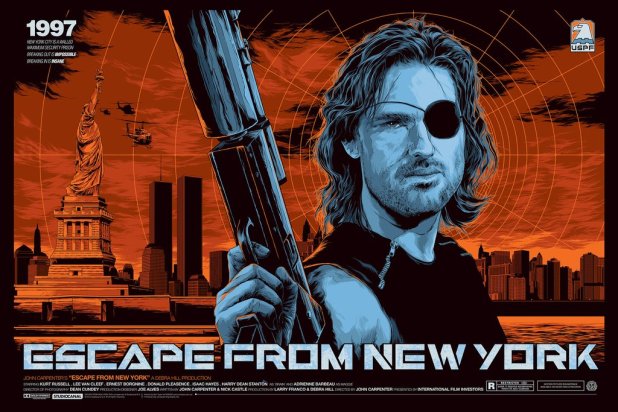
It is absolutely impossible for me to be impartial to this movie. How can you be? A western set inside a destroyed New York City that’s been converted into a prison for the worst people in America being invaded by someone even worse than all of them put together to rescue a President with only 24 hours to do it? Yeah, they don’t make them like this anymore.
Actually, they never did. This is a once in a lifetime film.
AVCO Embassy Pictures wanted Charles Bronson or Tommy Lee Jones to play Snake. Kurt Russell was still seen as a Disney kid. But Carpenter saw in him someone who could be a Clint Eastwood-like mercenary who lived for the next minute and nothing else.
The film slams us into 1997, a time and place where the world is constantly at war. As the President of the United States flies to a peace summit in Hartford, Connecticut, Air Force One is hijacked and crashed, with the President (Donald Pleasence!) being taken to New York City and captured by the Duke of New York City (Isaac Hayes!).
The police would never make it on a rescue mission. That’s when Police Commissioner Bob Hauk (Lee Van Cleef) gets an idea. Instead of sending in a military force, he sends Snake into the Hell on Earth that is New York City to save the President. If he completes the rescue mission, he gets a full pardon. And if not, well…he was going to die anyway. To keep Snake from running, he’s injected with micro-explosives that will kill him in 22 hours.
Driven in an armored cab by Ernest Borgnine to Harold “Brain” Hellman (Harry Dean Stanton!) to attempt to find the leader of the free world, Snake encounters all manner of enemies that he outwits, outfights and outright murders to complete his mission, including an incredible fight with pro wrestler Ox Baker (originally it was going to be Bruiser Brody, but he was in Japan at the time). Plus, you get appearances by Carpenter regulars like Adrienne Barbeau, George Wilbur, Dick Warlock, Nancy Stephens, George “Buck” Flower, John Strobel, Tom Atkins, Charles Cyphers and a voice cameo by Jamie Lee Curtis.
At the end, the President tells Snake he can have anything he wants. Snake only wants to know how he feels about everyone that had to die so that he could live. The President barely conveys gratitude as Snake walks away in disgust.
You can see echoes of Snake in nearly every post-apocalyptic movie that came after this film. In a perfect world, there would have been way more than just one sequel to this movie.
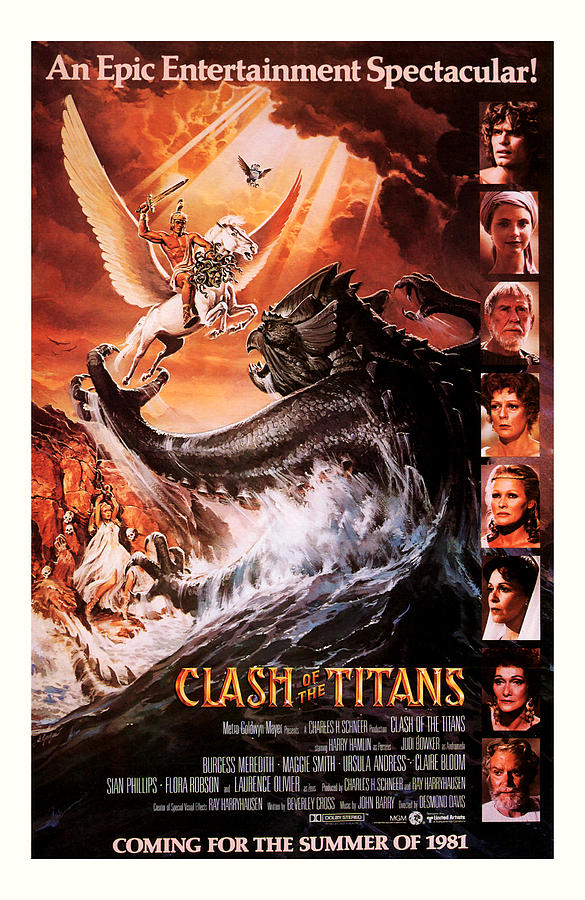
I saw this day one in the theater, all of nine years old, and ready to scream and yell and drive any adult near me insane with the sheer force of my absolute bliss at seeing a Ray Harryhausen movie in the theater and not on TV.
Columbia Pictures, who had distributed so many of Harryhausen and producer Charles H. Schneer’s films. But as always, change happened and the new heads of the studio no longer wanted to pay for such a big budget. Schneer took it to Orion Pictures, who insisted on Arnold Schwarzenegger playing the lead, but at that point, Arnold was unproven at dialogue. So that took the movie to MGM.
The producer wanted better-known actors to play the Gods in order to improve the film’s chances at the box office. He got exactly what he wanted, thanks to Maggie Smith as Thetis, Claire Bloom as Hera, Ursula Andress as Aphrodite and Laurence Olivier as Zeus. But the real star in this movie is Harryhausen, making his final film and giving us Calibos, Pegasus, Bubo the mechanical owl, Dioskilos, Medusa, the scorpions and the Kraken, which was a toy that I asked for to no avail.
While this film came out at the same time as Raiders of the Lost Ark, it was still one of 1981’s biggest hits. The story of Perseus (Harry Hamlin) and his love for Andromeda became one that 80s kids would know by heart. Sure, the Kraken is from Norse mythology and Calibos is from Shakespeare, but why argue?
Director Desmond Davis mostly worked in TV, but he does a fine job here. Even decades later and so many advances in animation and I still thrill to the release of the Kraken.
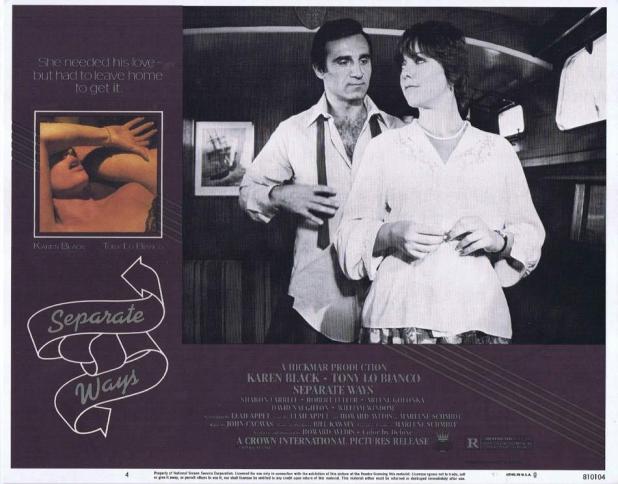
Karen Black is unhappy with her marriage, so she prays with her knees upward with a younger man (David Naughton! who also worked on Kidnapped!, the final film of Howard Avedis) after catching her husband, played by Tony Lo Bianco, aardvarking with one of his used car saleswomen.
So begins the exploration of how a woman finds herself and tries to determine if marriage still makes sense in 1981. I’d say that this is a tender exploration of relationships and how the sexual revolution has changed male and female dynamics. But then I saw the Crown International Pictures logo at the beginning and that Howard Avedis directed this and I realized that we’d be seeing Karen Black in all manner of skimpy costumes.
That said, man, I’ll watch Karen Black in anything. Even this.
But hey — there’s a small role for Sybil Danning, as well as Sharon Farrell. And let’s not forget Sybil also starred for Avedis in his next “affairs” flick, They’re Playing with Fire, and Angel Tompkins seducing her students in The Teacher.
Also — put this into your Letterboxd list of “Movies that have exotic dancing clubs where no one ever gets nude.”
EDITOR’S NOTE: Man, this movie is ready to punch you in the face! It originally was on our site on July 11, 2018.
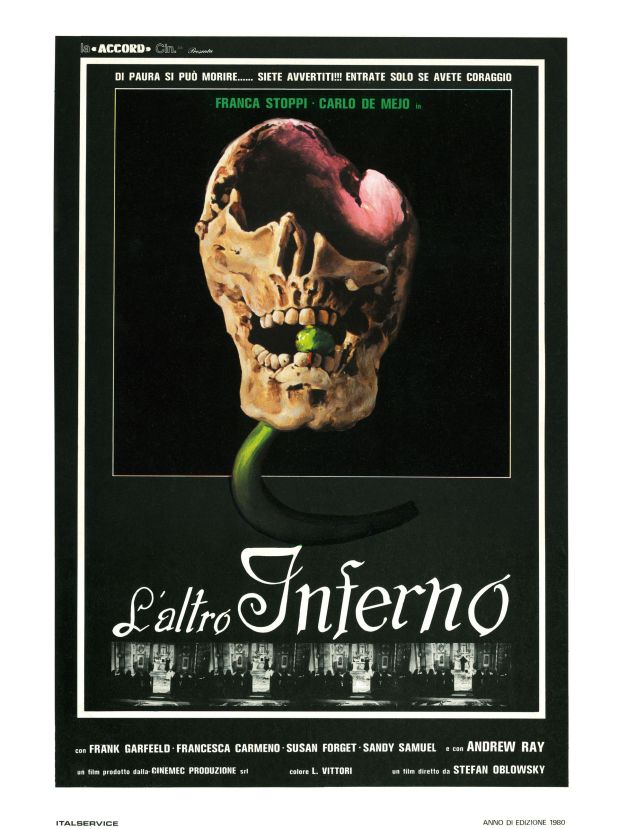
Get ready for a movie completely overflowing with blasphemy shot in the Convento di Santa Priscilla in Rome (once owned by FIAT but now owned by the Secret Service). Then again, the print that Severin used for the blu-ray was found behind a false wall in a Bologna nunnery! I sum up this movie with these three words: Not fucking around.
Written by Claudio Fragasso (Rats: The Night of Terror) and directed by Bruno Mattei (The Seven Magnificent Gladiators, Robowar), this is a pull no punches nunsploitation shockfest. You think mother! was bad? Then you are by no means ready for this one. A baby gets boiled alive and that’s the very least of the shocks in store. And if you’re Catholic, well, get ready to go to confession.
Boasting a Goblin score stolen from Beyond the Darkness, you’ll get a Mother Superior who rants and raves while locked in the basement, a gardener who is up to no good, possessions, a nun bragging about having sex with the Devil and so much more. And why the fuck are dolls hanging from the ceiling of a convent? Who knows!
Oh yeah — between priests being set on fire and a nun’s severed head in the sacristy, this movie is every nightmare you had in CCD class. When Mother Vincenza yells, “The genitals are the door to evil! The vagina, the uterus, the womb; the labyrinth that leads to hell; the devil’s tools!” you’ll either cheer or recoil in terror, depending on whether or not you ever sat through a five hour Good Friday mass.
Can the young scientific priest (Carlo De Mejo, City of the Living Dead, The House by the Cemetery) stop all of the screaming nuns and bring the fear of God back to this convent? Or will an evil cat bring his doom?
Seriously. This movie tested even my resolve of how far is too far. Which is just another way to tell you that I loved it.
Severin released what is the definite version of this film. And you can also watch it at Amazon Prime. It’s on Shudder too! You have plenty of options. Just make sure you’re ready to explain this one to your family and your clergyman.
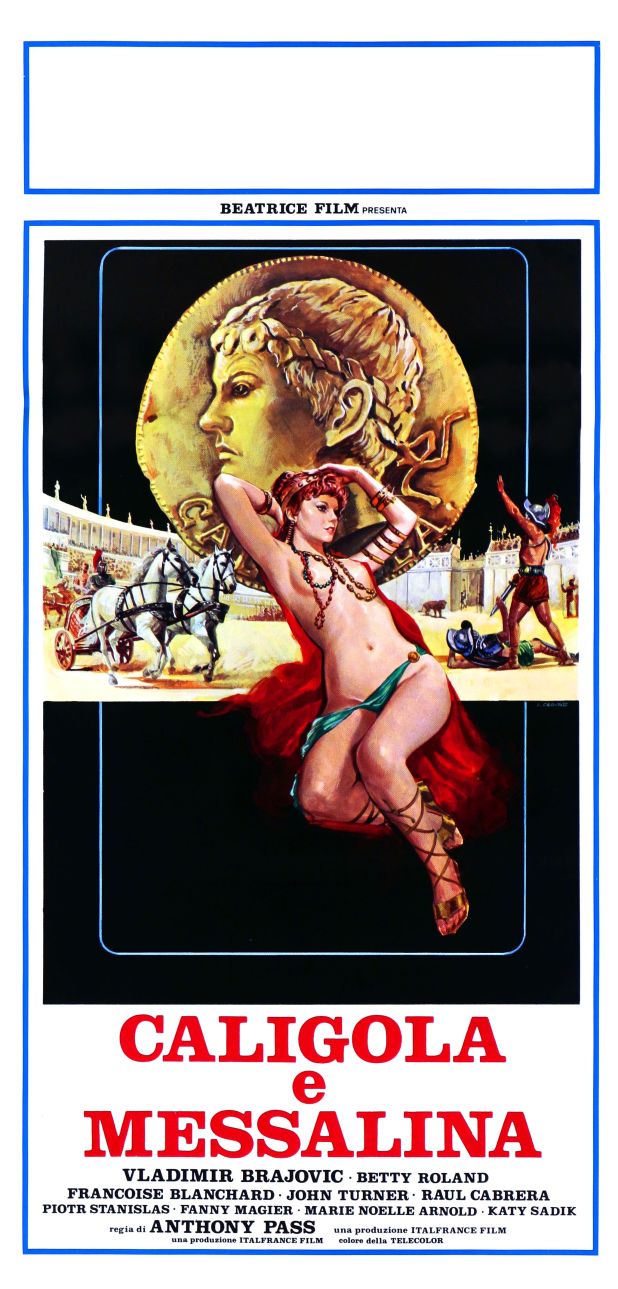
Vincent Dawn, in case you couldn’t guess, is Bruno Mattei and here, he’s making one of the several Caligulasploitation movies he’d churn out in his career. If you thought, “I liked Tinto Brass’ Caligula but I really wish it wasn’t so highbrow,” then Bruno — or Vincent — is your man.
Antonio Passalia, who co-directed this and Mattei’s other Romesplotation film, Nero and Poppea – An Orgy of Power, also appears in both of these movies as Cladius. But the real story revolves around Messalina (Betty Roland, who not to sound like a broken record, but also appeared in Nero and Poppea), who has one goal: to be Empress of Rome. If that takes fighting in the gladiator pits or literally blowing Claudius’ mind, so be it.
Meanwhile, Caligula’s sister Agrippina (Françoise Blanchard, The Living Dead Girl and, yes, both of these movies) sleeps with her own brother before eliminating him, all so that her son Nero can become Emperor. How will she make that move? Well, Messalina sleeps with everyone — even pulling off a surprise terzetto on her wedding night with a muscular man who is under 147 centimeters and somehow bedding a eunuch — and it comes back to haunt her when she becomes pregnant while her husband is fighting in a foreign war.
Agrippina is not to be stopped in her goals. She’s also a gladiator, albeit one that can do karate, and not shy when it comes to castrating her victims.
As if this movie couldn’t be any wilder, Mattei falls back to his tricks of, well, ripping off scenes from other movies, lifting from The Colossus of Rhodes, Pontius Pilate and The Beast.
To be honest, I’m shocked that there weren’t more of these Roman epics filtered through the nothing-held-back mania of Italian maniacs like Mattei. Maybe they didn’t sell as well as prison, cannibal and last days of the Third Reich films.
You can now order this from Severin, whether you want a Caligula Bundle that comes with a coin, foto-comic and a copy of Joe D’Amato’s Caligula…the Untold Story or you can order it all by itself. I’m ready for that cleaned up Italian extended cut. Alert the authorities.
Editor’s Desk: As result of their production synergies, we’ll also discuss the Star Wars-cum-Alien resume of Gold Key Entertainment’s nine direct-to-video/cable-telefilms, which includes the 1981-version of Lifepod.
“It’s a homage, not a remake.” — Tony Award-winning actor Ron Silver about his film directing debut
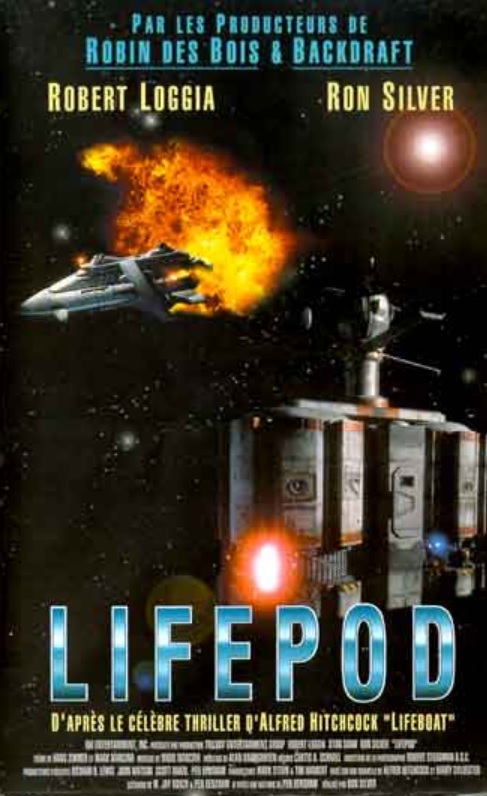
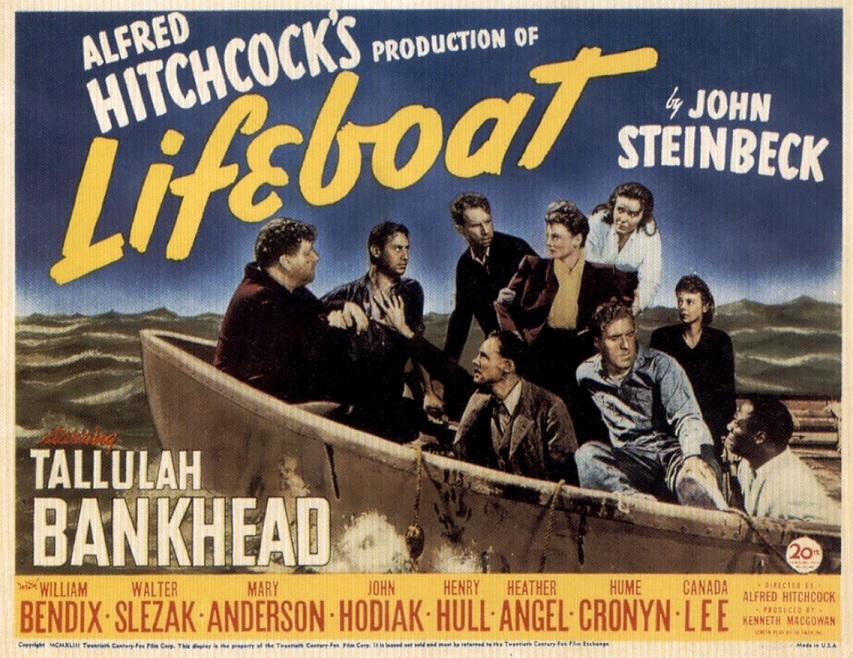
If you’re familiar with the classic, 1944 Hitchcock source material, you know that Lifeboat* was a World War II-set psychological thriller about a group of shipwrecked survivors adrift in a lifeboat — and they have to depend on a surviving Nazi officer to sail them to rescue.
This Fox Television sci-fi version — which aired simultaneously as a commercial-free Cinemax cable exclusive, was produced by Trilogy Entertainment, the studio that also produced Ron Howard’s firefighter drama Backdraft and Kevin Costner’s big screen Robin Hood romp — is written by Jay Roach, whose expansive resume has given us everything from the ’80s Animal House-inspired radio romp Zoo Radio to the Oscar-beloved Bombshell.
We’re so sorry, Uncle Albert.
This time out, our group of survivors (a great cast of Silver, Robert Loggia, C.C.H. Pounder, and Adam Storke, who you’ll recall as Larry Underwood in the ’94 TV adaptation of Stephen King’s The Stand) are lost somewhere between Venus and Earth on Christmas Eve in the year 2169 on a shuttle craft jettisoned from an exploded spacecruiser. And they spend the rest of the film — in plotting that reminds of John Carpenter’s The Thing remake — bickering over who is alien-infected set the bomb that destroyed their ship and has already murdered one of the survivors.
So, do the Star Wars-inspired bells and whistles satiate the younger Starlog magazine subscriber-set in digesting Hitchcock? Well, courtesy of the remake homage’s financial and creative backing by Trilogy and Fox, the production values are high and the acting is top notch . . . but didn’t we see this film already? Wasn’t this fodder for an old ’80s Battlestar Galactica or Buck Rogers in the 25th Century episode? Weren’t Starbuck and Cassiopeia or Buck and Wilma lost on a lifepod with a gaggle of ne’er do wells before their series cancellations?
Me and Kristin DeBell stuck in a space pod? Sounds like heaven.
No . . . wait a minute . . . now I remember!
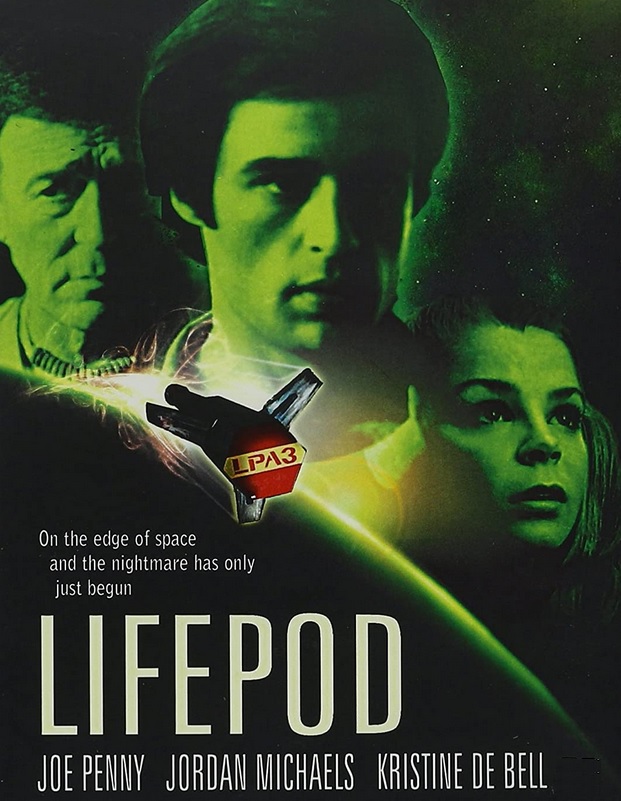
The “Glen Larson” Lifepod I am thinking of is the screenwriting and directing debut of go-to TV main titles designer Bruce Bryant (Salvage I) and his sci-fi remake (not a homage; this time) of the Hitchcock concept with 1981’s Lifepod. It’s this one, starring TV’s Joe Penny (Jake and the Fatman) and Kristin DeBell (Meatballs), made, by not by Glen Larsony, but by producer Allan Sandler for Gold Key Entertainment for the VHS home video shelves.
Yes . . . we are talking about the same Gold Key who gave us the early ’70s kid adventures of H.R Pufnstuff and Sigmund and the Sea Monsters. But, since this is B&S About Movies: Gold Key unleashed the likes of Amando de Ossorio’s Fangs of the Living Dead (1969), I Eat Your Skin (1971), UFO’s: It Has Begun (1981), Piranha(1982), and Don Dohler’s The Alien Factor upon the unsuspecting drive-in masses. (Is this the same Gold Key who also produced comic books; my beloved cheap jack Space Family Robinson issues bought in a three-pack off the comic rack at my local strip mall bookstore, in particular?)
So, the Penny-DeBell one is set 22 years after the Ron Silver one, in the year 2191, with the maiden voyage of the Whitestar Lines’ (know your British nautical history) new Arcturus cruiser in jeopardy on the way to Saturn (yes, this is better, at least in script, than Saturn 3).
Hey, wait a minute . . . this is SST: Death Flight all over again! No, wait . . . Starflight One (where’s Lee Majors?)**. Ugh, don’t you follow along, B&S readers: Lifepod ’81 is the same, but different: we have a talking “Mother” computer, like Alien, natch, who alerts everyone to abandoned ship . . . so instead of planting a bomb, the ship’s “main cerebral” is sabotaged. See, different. Oh, no! Wait . . . the ship was originally intended as an interstellar exploration vessel and the greedy corporation refitted the Arcturus into a pleasure cruiser . . . so, what we really have here is Hitchcock meets Kurbrick, aka a confused Hal has another temper tantrum over mission directives. But since there’s more than one lifepod bouncing amid the stars, we also have a touch of James Cameron’s Titanic in the pinch-o-rama spacestakes.
So, that’s that. There’s no there there, Joe. Uh, what?
Oh, by the Lords of Kobol . . . there’s another Lifepod movie! Is Glen Larson committing sci-fi larceny, again? Roger Corman, are you making more cheapjack sci-fi cable movies? Ugh, not more footage and sets from Space Raiders, again. Please, spare us the Buck Rogers plastic sets, Glen.
Aka, Lifepod. What, no “3” suffix, Mr. Distributor?
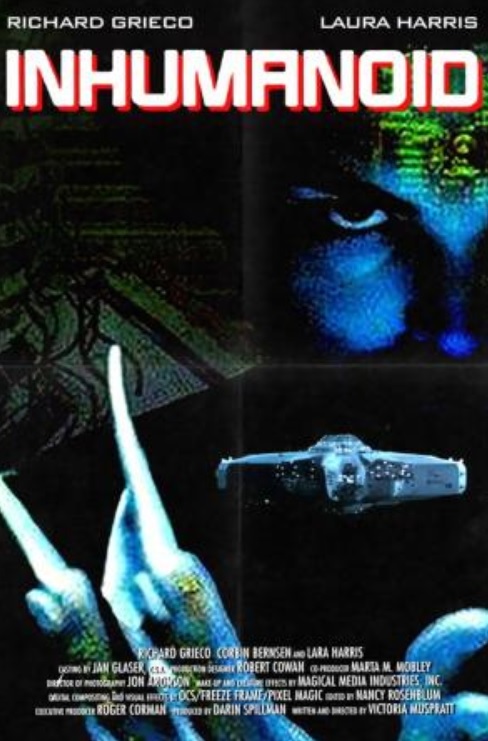
While it’s not a Larson or Corman flick (Oh, no! There’s a “Roger Corman Presents” title card!), this is, in fact, a third Lifepod flick, one that’s also known as Circuit Breaker and Inhumanoid in various markets. In this version of the battle of the Lifeboat/Lifepod sci-fi homages remakes reboots, this one was released direct-to-video in 1996 and stars Richard Grieco (Raiders of the Damned) and Corin Bernsen (The Dentist).
Ah, oh, okay . . . I see, it’s not the same, but different (you know, like when Within the Rock clipped Armageddon and Creature), since, in addition to Lifeboat, they’ve also ripped the 1989 Sam Neill-Nicole Kidman starring Dead Calm — with Richard Grieco as the star-stranded galactic serial killer, aka the Billy Zane role, and Corbin in the Sam Neill role.
Whatever.
I refuse, on principle, to never watch it: ever, as I have my limits on how much galactic feldercarb I can swallow a secton. Hey, wait a sec . . . yep, ol’ Rog is copycatin’ again! Event Horizon, which started out with the pitch of “Dead Calm in space” (and became something completely different by the time it hit the big screen), came out in 1997 — and it starred Sam Neill. Bravo, Rog! You beat ’em to the punch, again!
2001: A Space Boat Odyssey.
Gold Key Entertainment in Space!
I have, however, watched the 1981 and 1993 Lifepod flicks, and truth be told: they’re really not that bad and both are solid on the production and acting fronts — the ’81 Penny-version over the ’93 Silver-version for me.
So, does this mean the rest of Gold Key Entertainment’s Kessel Run are just as good as their version of Lifepod: a series of pumped-out-in-quick-back-to-back-succession sci-fi flicks by writer-director-producer Allan Sandler and his partner, Robert Emenegger (he’s the point man, here, as he wrote them, directed six, and by Atari and Casio, scored them all) between 1979 to 1981.
As far the order in which these were made or released: your guess is as good as ours. It’s possible — since it’s the best looking of the nine films and has the stronger, best-known cast — Lifepod ’81 was probably the last film produced. However, we’ll defer to the order in which the IMDb lists the films. Some are more easily available to purchase or stream, than others:
Captive (1980) — Two survivors of an alien spaceship crash-land on Earth and hold two people hostage. Cameron Mitchell stars with ubiquitous TV actor David Ladd.
PSI Factor (1980) — Aliens from another dimension appear on Earth as a scientist tries to learn of their intentions. The first Gold Key’er for Gretchen Corbett, alongside go-to TV bad guy Peter Mark Richman (one of his films was Jason Takes Manhattan).
Killing at Outpost Zeta (1980) — A team is sent to a remote planet outpost to investigate two missing expeditions. Jackson Bostwick, aka TV’s Captain Marvel from the ’70s Saturday morning series Shazam!, stars. Yes, that’s Paul Comi, aka Lt. Stiles, from Star Trek: TOS: the first season episode, “Balance of Terror” (and this almost plays like an old ST episode-arc). This one is still out there in 2023 on Tubi!
Beyond the Universe (1981) — A scientist tries to save the Earth after two atomic wars. Familiar TV actor Christopher Cary of Planet Earth (1974) with John Saxon, stars.
Escape from DS-3 (1981) — A man framed for a crime he didn’t commit breaks out of a satellite-based security prison. Jackson Bostwick returns (then he’s off to the Future Zone with David Carradine), alongside Cameron Mitchell’s son, Jr., who had a small role in the even-cheaper, somewhat similar production stumble, Space Mutiny (1988), that starred his dad, and sister, Cissy.
Lifepod (1981) — Our space-take on Hitchcock’s Lifeboat.
Warp Speed (1981) — A psychic is dispatched to an derelict vessel in space to discover what happened to her crew. Cam Jr. returns, his sister Camille is on board, along with Adam West, and early roles for TV actors David Roya (Law & Order franchise) and Barry Gordon (Archie Bunker’s Place).
Time Warp (1981) — An astronaut returns from space only to discover he somehow traveled through a “time warp” and is now one year into the future — rendering him invisible. Gretchen Corbett, Cam Jr. and Adam West, returns. As result of the Adam West-connection: Time Warp and Warp Speed are available as a double-feature DVD — and the only other of the series on Tubi. (Even after the likes of Adam’s work in Omega Cop and Zombie Nightmare, which are, well, you know: this is a major step down for him.)
Laboratory (1983) — Aliens kidnap a group of humans in order to perform experiments upon them. Camille Mitchell returns, alongside Martin Kove (John Kreese from The Karate Kid.)
Based on these film’s syndicated UHF-TV, pay cable plays, and VHS quick releases and common-cast actors threaded throughout — including many more, very familiar ’70s TV actors in support — there’s LOTS of stock prop, set, and footage recycling — courtesy of Steven Spielberg’s sister, Ann, as the Production Designer.
So, after Lifepod: Warp Speed my interest as the best of the bunch — as far as acting, sets, and script; it reminds of a cheaper Silent Running. Then, Killing at Outpost Zeta, since — even though it’s ripping Alien and foreshadowing Aliens — has some nice cinematic atmosphere that reminds of Mario Bava’s Planet of the Vampires (1965). But it is still pretty bad, with its motorcycle space helmets and flexi-hoses.
Let’s put it this way: Are you into Alfonso Brescia’s five Italian space operas that we covered with our “Drive-In Friday: Pasta Wars” tribute? Are you hankering for Filmation’s Ark II, Jason of Star Command, and Space Academy Saturday Morning “Star Wars” homages? Have you wondered if there were pseudo-sequels (at least in style and tone) to the Canadian Lucasian rip that is The Shape of Things to Come? Did NBC-TV’s plastic Kessel Run hopefuls The Martian Chronicles and Brave New World capture your imagination? Well, then, you’ll have yourself a fun-filled weekend of it-ain’t-George Lucas-or-even-Glen Larson-it’s-Allan Sandler sci-fi watching to occupy your time adrift on that intergalactic lifepod that Alfred Hitchcock built.
Oh, yes, there’s stock footage, sets, props, and costume recycling adrift in those there stars, keep looking up, young warrior!
Back to the Lifeboats, er, ah, Pods!
You can stream the 1981 Joe Penny-version on Amazon Prime and You Tube, and the 1993 Ron Silver-version on Amazon Prime and You Tube. If you absolutely must defy the Magic 8 Ball’s heeds beyond the trailer or skimming the upload . . . you can watch the 1996 Richard Grieco-version on You Tube.
** Be sure to check out our “Lee Majors Week“ tribute of film reviews. Also check out our month-long “Star Wars” tribute blowout rife with over 50 space opera droppings and clones reviews, as well as our “Space Week” tribute of films from the ’50s and beyond. And we got all your Alien-rips, too, with our “Ten Films that Ripoff Alien (and more)!” feature.
About the Author: You can learn more about the writings of R.D Francis on Facebook.He also writes forB&S About Movies.
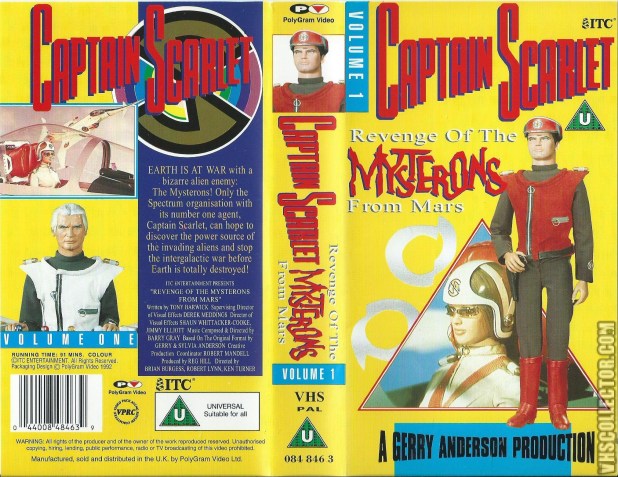
Along with 1980’s Captain Scarlet vs. the Mysterons, this film collects episodes of the 1967 series — “Shadow of Fear”, “Lunarville 7”, “Crater 101” and “Dangerous Rendezvous.” It wasn’t well-received by fans of the series and by anyone that hasn’t seen a Supermarionation series — in which Gerry Anderson filmed puppets and made them appear human — it may seem completely deranged.
In 2068, Earth has been at war with the Mysterons, who have a horrific way of dealing with their enemies: they kill them and replace them with clones under their control. Earth’s top military organization Spectrum had an agent named Captain Spectrum who was treated in just such a way, but he was so unstoppable that even his clone broke free from the Mysterons and came back to Earth.
On November 24, 1988, this movie aired as the second episode of Mystery Science Theater 3000 on KTMA. This would be the very first Turkey Day that fans of the show — well, it was only on one UHF channel at the time — would enjoy. The first episode was also shown that day, with Invaders from the Deep, another Gerry Anderson film, was riffed.
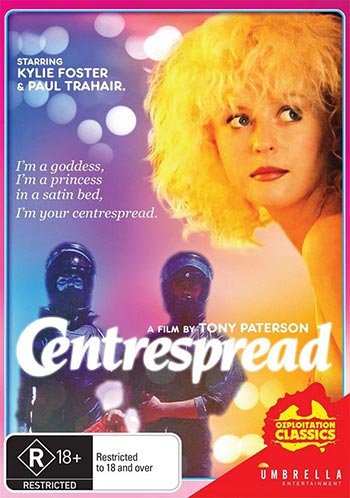
In 1981 Australia, the idea of the future that we live in today was one dominated by magazines. Those magazines would enforce the social order and the only violence and sex that anyone would see would be in those pages. So yeah, maybe they didn’t get the internet part down, but I guess some of this movie rings true. That said, if you’re expecting an Australian soft core movie to explain 2021, you’re drongo, mate.
Also, in the Australia of Centrespread, a movie that disappeared from theaters and most peoples’ memories until Umbrella re-released it, social castes are enforced and only by finding a new girl for the magazine will our protagonist keep moving up the social ladder. Yet when he meets and falls for Niki, he sees that life can mean something more. However, she gets an offer to be a big star.
Director Tony Paterson was an editor on Mad Max, Fantasm, Fantasm Comes Again and Death Games before getting behind the camera for the only film he’d direct.
This movie feels like something great is happening within it. It really is the difference between art and exploitation, because if you told someone this was a French film that only played small festivals, people would lose their mind. Tell them it played double bills with Felicity in Australia and they think it’s garbage.
John Llewellyn Moxey will never let you down. The man knew how to make TV movies filled with menace and dread. Take a look at his record of success — The House That Would Not Die, The Last Child, A Taste of Evil, The Night Stalker, Home for the Holidays, Where Have All the People Gone?, Nightmare In Badham County, Killjoy, Desire the Vampire — and see a group full of proven suspense winners.
Really, Moxley is making a giallo here. Stick with me.
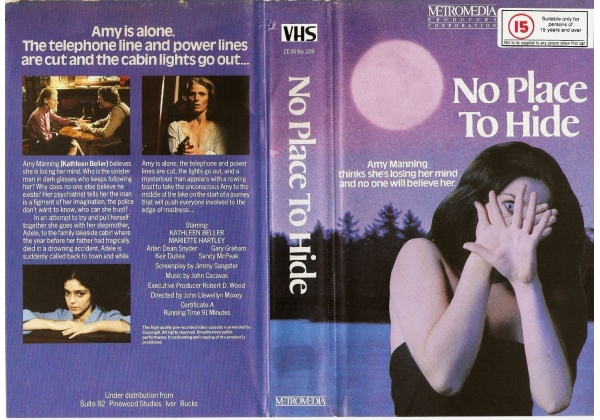
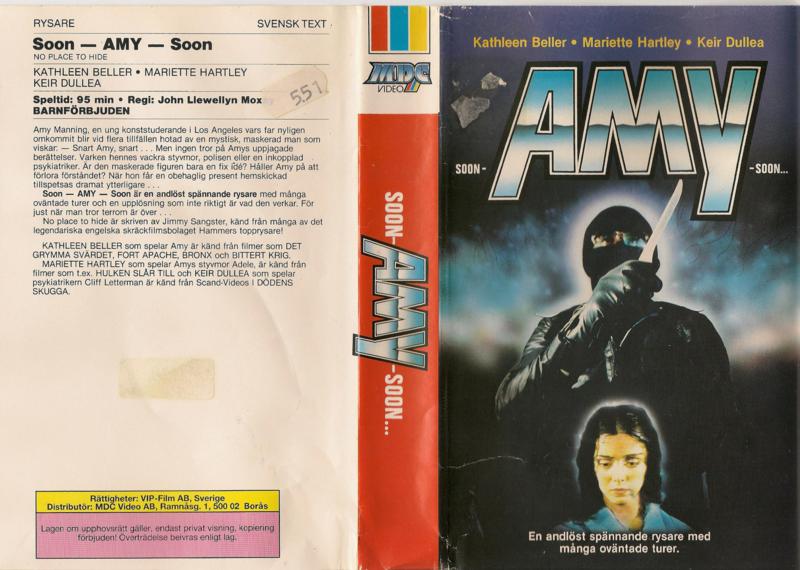
First, just take a look at the VHS cover art for how this was sold overseas* as Soon, Amy, Soon.
Now let me let you in on the plot: After leaving class, 20-year-old art student named Amy Manning (Kathleen Beller, who is nearly the Edwige Fenech of 70s and 80s TV movies about young girls in trouble with roles in this, Are You in the House Alone? and Deadly Messages; she’s also married to Thomas Dolby, a fact that amuses me beyond belief) gets in her car and is menaced by a masked, leather-gloved and knife-wielding maniac who whispers, “Soon, Amy. Soon.”
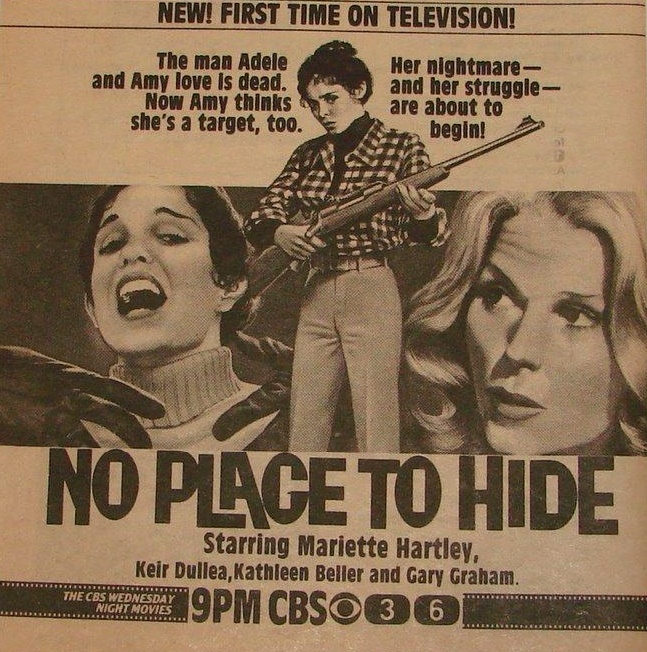
This is not the first time this has happened and the cops refuse to help her any longer. Only her stepmother Adele (Mariette Hartley) believes her and urges her to visit psychiatrist Dr. Letterman (Keir Dullea, who knows a thing or two about American — err, Canadian — giallo-esque films thanks to Black Christmas).
Could Amy’s issues be daddy-related? After all, he drowned on a trip she was supposed to go on, leaving her in the care of her stepmother. Or is there really a killer coming after her? After all, he keeps showing up every time she’s alone. And he’s sent her flowers. Or maybe she ordered them herself!
This film understands that not all giallo is offing gorgeous female characters, but also the gaslighting that comes with driving the central character to explore her psychosis. And just how does that hunky new man (Gary Graham from the TV version of Alien Nation) fit in?
Originally airing on March 4, 1981 on CBS, this is a film that has so many twists and turns, even switching the main character partway through the film and amping up the psychological trauma. It benefits from a tight script by Jimmy Sangster, who also wrote The Legacy; Scream, Pretty Peggy; Whoever Slew Auntie Roo?; and tons of stuff for Hammer including Dracula Prince of Darkness, The Revenge of Frankenstein; The Mummy and more. He also wrote one of the best non-Bond Eurospy films, Deadlier than the Male.
This is the kind of movie that makes me realize why I love TV movies. A quick plot, some murky darkness, great performances and an amazing last scene reveal that made me literally leap from my seat. You gotta check this on out.
*It was released in Brazil as The Eternal Escape, as Nightmare in France, Without Escape in Spain and Shadow of Evil in Germany.
Editor’s Note: This review originally ran on December 8, 2020, as part of our “Fast and Furious Week Part II” of film reviews. We’re taking a second, tweaked look at the film as part of our tribute to Lee Majors this week.
Damn you, Burt Reynolds! Damn you, Mel Gibson! And damn you, Canadian film industry! For we blame each of you for this utterly dumb collision of Smokey and the Bandit and Mad Max*. And does anyone remember 1979’s Americathon with “Mr. President” John Ritter? And we’ll blame Burt twice because, since this is a cross-country race to a “free zone” in California where there are no vehicular rules, we have a touch of Cannonball Run. What the hell, let’s blame David Carradine, too. For if 1976’s Cannonball had a jet plane, we’d have The Last Chase.
Yes. You heard us right. This is a post-apoc flick about a car vs. a jet plane. For in a petrol-void world, the last chase will not be between a futuristic, Spaghetti Westerneque cop and punk-mohawked warlord: the end shall be waged between a Porsche driven by an ex-bionic man and a fighter jet piloted by an ex-penguin.
Remember Firebird 2015 with Darren McGavin? Well, if you thought that future was FUBAR’d. . . .
Warning: The Logan’s Run-inspired city may not appear in the actual film.
In this futuristic tale that takes place in the year 2011, Lee Majors stars as our faux “The Bandit” and Mickey from Rocky, yes, Burgess Meredith, stars as our defacto “Sheriff Buford T. Justice.” Only the Pengy is a burnt-out, ex-hot shot Air Force pilot assigned to fire up a mothballed fighter jet to chase down Major’s ex-race car driver gas scofflaw. And with cars and motor racing banned, the powers that be use Lee’s mothballed celebrity as a government shill to pitch the “new order” to the oppressed masses.
And I, desperate for entertainment in my youth, went to my town’s little duplex to see this.
Shame on me.
But not shame on Lee Majors, as his Fawcett-Majors Productions was already kaput when this went into production. So the blame for this is squarely on Crown International’s shoulders, as Lee was only an actor for hire. Yes, we speak of the same Crown International whose drive-in oeuvre fell into public domain and has served as grey-marketed home video fodder for years — but has also given us Allegheny County frolicking lads many-a-gleeful Mill Creek 12-Pack Box Sets (Savage Cinema and Explosive Cinema) to enjoy and fill out our personal film catalogs.
It was expected that The Last Chase — courtesy of its sci-fi plot in a post-Star Wars cinema world — would break Lee Majors, finally (and deserving) — unlike his first four films The Norseman, Killer Fish, Steel, and Agency— into a theatrical career. Sadly, as with most of Crown’s films, The Last Chase suffered, not so much from its Rollerballesque story about a man’s quest for individuality in an corporate-run, Gestapo-like police state, but from its ubiquitously, oh so Crown low budget. And let’s not forget that Crown’s other Star Wars bid, Galaxina, was another one of their duds.
In a Devil’s Advocate world: If Lee’s Canadian-made, post-apoc bid had Warner Bros.’ and MGM Studios’ production scope of their respective ’70s apoc-flicks The Omega Man and Soylent Green made with Charlton Heston . . . well, Lee Majors would have had a theatrical career analogous to big Chuck, there’s no doubting that fact. Could you see Lee Majors in James Caan’s role as Jonathan E. in Rollerball? With Lee’s football acumen, I sure can. Somebody, call Stallone and cast Lee in the next The Expendables flick. Or buddy cop him with Bruce Willis.
Sadly, The Last Chase was another Crown International hopeful that tanked at the box office — one that coincided with Lee having to deal with the fact that he was contractually obligated to be on location filming in Canada — while his marriage was failing. And that he had to see Farrah and her new lover, Ryan O’Neill (The Driver), paraded around the tabloids. It’s believed the culmination of the film’s failure and his wife’s affair during filming led to Lee’s decision to return to television — with The Fall Guy — and give up on feature films. For if not for this film, his marriage could have been saved.
Argh! No freebie uploads? What the hell? This is a Crown International Pictures production, after all, and their entire catalog in the public domain. Oh, well. We did find this 3:00 opening credits clip, a trailer, an alternate-extended trailer, and a segment of the first 30-minutes, with Part 2 and Part 3. The Last Chase was originally released on VHS by Vestron Video (now a division of Lions Gate Entertainment), which licensed the film to DVD in May 2011 through Code Red Releasing.
* While we’ve never reviewed Mad Max itself, we certainly reviewed all of its knockoffs with our “Atomic Dust Bin of Apocalyptic Films ” Part 1 and Part 2 round-up featurettes packed with links to all of our reviews. We also discuss the awesome, Porsche 917-Chaparral hybrid from The Last Chase in our “Ten Post-Apocalyptic Vehicles” featurette.
About the Author: You can learn more about the writings of R.D Francis on Facebook. He also writes for B&S About Movies.


 B&S About Movies
You must be logged in to post a comment.