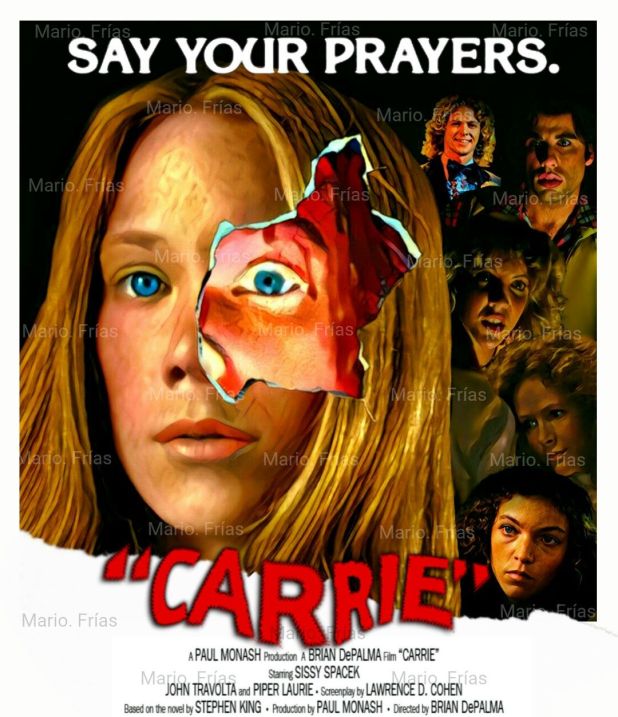
THE FILMS OF BRIAN DE PALMA: Carrie (1976)

EDITOR’S NOTE: This was first on the site on .

This is King’s first novel to be published and first one to be adapted to the silver screen. And if you ask me, it’s probably my favorite. Credit where it’s due — Brian De Palma presented a master class in how to build intensity and intensity in this film. It’s so perfect that it brings me to tears.

The difference between this film and any other teenager being abused who learns they have powers and gets revenge film is that we actually care about the teenagers. They’re real. Other than one of them being able to move things with her mind, their issues feel genuine. Some characters have shades of gray. And no one emerges unscathed in the end.

The film starts with shy Carrie White (Sissy Spacek) having her first period in the shower, surrounded by other girls. This typical nightmare scenario, one we expect to wake up from, like dreaming we’re stuck in school naked, is happening to her as the other girls pelt her with sanitary napkins. Christine Hargensen (Nancy Allen, Dressed to Kill) leads the others as they yell “Plug it up!” Carrie’s terror goes off as light bulbs explode and her teacher, Miss Collins (Betty Buckley, who is so perfect in this), has to console her.

At home, Carrie is abused further by her mother (Piper Laurie, Twin Peaks) who screams at her for her sinful thoughts. Dragged into a prayer closet, she must beg God to forgive her.

One of Carrie’s classmates, Sue Snell (Amy Irving, the only actress to show up in the sequel — more about that travesty tomorrow) feels guilty, so she asks her boyfriend Tommy (William Katt, House) to take Carrie to the prom. Miss Collins makes the girls pay for the way they treat by sending them to detention, where Chris’ behavior leads the teacher to slap her and suspend her from the prom.

That’s when Chris comes up with a horrible plot: they will name Carrie as prom queen and dump blood upon her, a scheme that she gets her boyfriend Billy (John Travolta) to make happen.

Carrie’s mom learns that she is going to the prom and accuses her of witchcraft. She uses her powers to throw her mother down. While at the prom, Carrie finds happiness that she has never known until now. She feels accepted. She feels love. And she has her first kiss with Tommy.

What follows is what makes this movie a classic.

Chris’ friend Norma (Totally P.J. Soles!) rigs the election and Tommy and Carrie walk to the stage to be crowned. At the last second, Sue tries to stop things and fails. And that’s when De Palma uses nearly every trick in his book to amp this scene up. Split screen, multiple angles, time distortions…it’s pure cinema.

This scene took two weeks and 35 takes to shoot, including an intense dizzying scene that was created by placing Spacek and Katt on a platform that spun in the opposite direction of a camera that was dollied away from the actors.

After all that build and suspense, the bucket of pig’s blood covers Carrie and knocks out Billy. Our heroine has a hallucination that her mother’s warning of everyone laughing at her has come true and she unleashes the full fury of her powers. Right and wrong, good and evil, everyone pays.

You’d never guess that Sissy Spacek was her high school’s homecoming queen.

Carrie walks away as Chris and Billy try to kill her with his car, but she easily makes it flip over and explode. Soon, she is back home, crying in her mother’s arms. Margaret confesses that Carrie is a child of rape, then stabs her in the back. She fights back by crucifying her mother and burying herself within the house.

As Sue comes to the grave, months after this all happens, she is startled by a bloody hand that emerges from the tomb to attack her. Yet it’s all a dream in a shock ending that has been — and will be — copied over and over.

This is a movie that has lost none of its power. If it’s not in your collection, you don’t have one to speak of.
THE FILMS OF BRIAN DE PALMA: Obsession (1976)

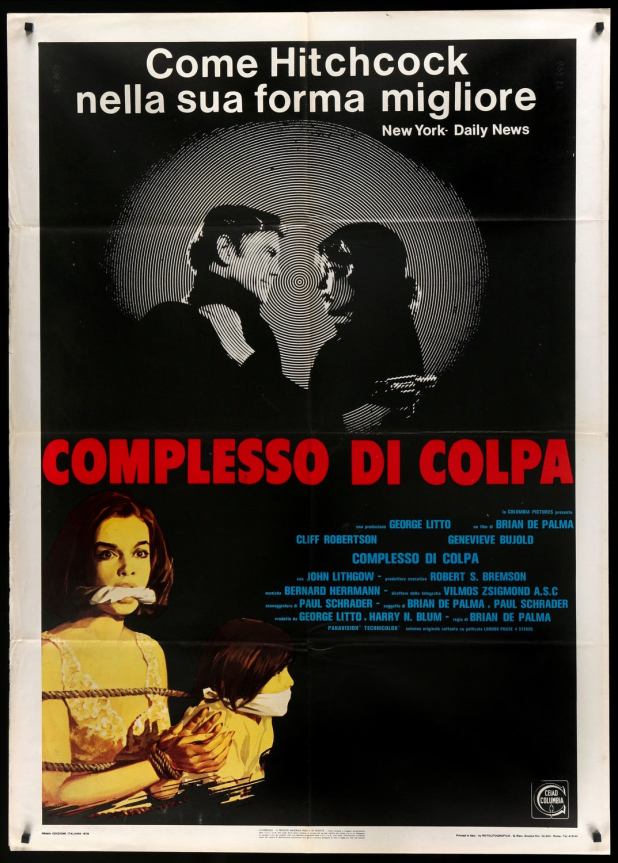
What’s the difference between a neo noir and a giallo? No, really, I want to know. Because in America, this even had a yellow poster and in Italy, it was called Compless di Colpa (Guilt Complex), which sure sounds like either a Hitchcock or giallo title.

Well, this is maybe more of the Hitchcock side of the equation, as this film takes the central theme from Vertigo while also have a score by Bernard Hermann.

Paul Schrader’s script was extensively rewritten and pared down by De Palma before shooting, which didn’t go over well with the writer. Yet that Hitchcock idea — a businessman is haunted by his dead wife before he falls for a young woman who looks exactly like her — remains. De Palma said, “Paul Schrader’s ending actually went on for another act of obsession. I felt it was much too complicated, and wouldn’t sustain, so I abbreviated it.” Herrmann agreed, telling the director that the script would never work. But Schrader’s idea of the movie going the whole way until another ten years past its conclusion — as he said, “an obsessive love where transcended the normal strictures of time” — as something he couldn’t bear to lose. It led to a rift between the two that las for years.

Michael Courtland (Cliff Robertson) is that businessman, a successful real estate developer whose wife Elizabeth (Geneviève Bujold) and daughter Amy (Wanda Blackman) are kidnapped and held for ransom. The police recommend that he give them paper instead of the cash, but the hand-off ends with a car chase and the kidnappers and his family killed in an explosion. Blaming himself for listening to the police, Courtand sinks into depression.

16 years later, he’s so obsessed by the loss that he’s even built a monument in America to the place where he first met Elizabeth, the Basilica di San Miniato al Monte. His business partner Robert Lasalle (John Lithgow) thinks he should get away and so they go to Florence, the original site of this building, and while there, Michael meets Sandra Portinari, a woman who looks exactly like his wife (and is also played by Geneviève Bujold). Of course, Courtland falls for her and works to transform her into the living version of his dead wife, even taking her home to be his new bride.

Of course, she gets kidnapped on their wedding night. The same ransom note from before sends Michael over the edge he’s already on. And once he learns the truth, well…everything gets very, very bloody. You kind of need to see it for yourself, because it’s pretty astounding — and very giallo — what the actual truth is.

The best review of this came from Roger Ebert, who said “Sometimes overwrought excess can be its own reward. If Obsession had been even a little more subtle, had made even a little more sense on some boring logical plane, it wouldn’t have worked at all.”

De Palma believes that Cliff Robertson was the biggest issue with this film. Sure, it was a success, but he sees the flaws because of the actor. He believes that Robertson would deliberately deliver a poor performance and line readings when shooting opposite Bujold. The actor also insisted on a dark tanning makeup, which seems wildly inappropriate for his role. It made lighting him so difficult that at one point cinematographer Vilmos Zsigmond shoved him against a wood wall and screamed, “You! You are the same color as this wall!”

Speaking of obsession, Herrmann became infatuated with Bujold as he scored the film. She made a surprise visit to the recording sessions and Herrmann’s friend Charles Gerhardt remembers, “As she spoke to Benny in a heavy French accent I could tell he was about to get the hanky out. She told him of all the trouble she’d had with Cliff Robertson because he spent all his time in makeup and didn’t make their love scenes meaningful. She said, “Mr. Herrmann, he wouldn’t make love to me — but you made love to me with your music.” And Benny started to cry. He would tell that story over and over at dinner, and start crying again every time.”

Hermann died five months later — he was to score Carrie but didn’t live long enough — and his widow found a photo of Bujold in his wallet.

THE FILMS OF WILLIAM GIRDLER: Grizzly (1976)

EDITOR’S NOTE: This was originally on the site on .

From 1972 to 1978, William Girder directed nine feature films and would have probably never stopped, were it not for the helicopter crash that took his life while scouting the Philippines filming locations. From Asylum of Satan and Three on a Meathook to The ManitouSheba Baby and Project: Kill, his films may have been derivative but they made money.

Here’s the best example. Around these parts, Girder is celebrated for Abby, a movie that was removed from theaters because of its similarity (let’s say total ripoff) of The ExorcistThat brings us to Grizzly, which is essentially Jaws on dry land. With a bear. A grizzly bear.

Grizzly found its inspiration when its producer and writer, Harvey Flaxman, came face to face with a bear during a camping trip. Co-producer and co-writer David Sheldon thought about how they could make a bear version of Jaws and they wrote a script that Girdler discovered and offered to finance, as long as he could direct.

Grizzly begins with military vet and helicopter pilot Don Stober (Andrew Prine, The Town that Dreaded SundownThe EliminatorsAmityville II: The Possession) flying over a national park and explaining how the woods remain untouched, much like they were in when Native Americans made their homes here.

The first two attacks happen quickly — in bear POV no less — when two female hikers are dismembered by the ursus arctos horribilis villain of this story. That brings in park ranger Michael Kelly (Christopher George, Gates of Hell/City of the Living DeadDay of the Animals, MortuaryPieces) and photographer Allison Corwin (Joan McCall, who besides being in Devil Times Five is also married to the film’s writer, Sheldon) in on the case.

At the hospital, a doctor tells the park ranger that a bear killed the girls, but the park’s supervisor blames the ranger and naturalist Arthur Scott (Richard Jaeckel, The DarkMako: The Jaws of Death and TV’s Salvage 1) for the girls’ deaths. And guess what? Just like Jaws, there’s no way the park is getting closed before tourist season.

The rangers all decide to search the mountain for the grizzly, which isn’t accounted for in their census of animals in the park. One of the rangers — of course — decides to get nude in a waterfall because that’s what you do when you’re hunting a killer bear and gets murked for her stupidity.

Kelly and Stober think they have found the bear from the air, yet it’s just naturalist Scott wearing an animal pelt and tracking the bear himself. Scott tells them that this bear is actually a prehistoric version of the grizzly that stands 15 feet tall and weighs at least 2,000 pounds.

No matter how many people the grizzly kills, no one will close the park. So when the story becomes national news, the owners of the park — a national park can have owners? — allow amateur hunters to shoot the shark (this has nothing to do with the very same thing happening in Jaws, right?). Those hunters are pretty much the worst people ever, as they use a bear cub as bait, thinking the grizzly will protect its young. Nope — it eats that baby bear and keeps on coming.

The grizzly literally shreds his way through the park and nobody closes it down until it murders a young mother and mutilates her child. And get this — the grizzly is so smart, it knows how to bury the naturalist in the ground and then waits for him to wake up so it can kill him. Can a bear be a slasher killer? Well, we already know that Bigfoot can be, thanks to Night of the Demon.

The grizzly kills every hero in this movie other than Kelly the photographer, who magically finds a bazooka in the wrecked helicopter and remembers the end of every shark movie: you must blow this beast up real good. She does and that’s the end of Grizzly.

An interesting personal note: I was telling my dad about this movie and he remembered that it has played on a bus that took he and my mother on a casino trip. That’s right — at 1 AM, pitch blackness, the TV on their bus blared this gorefest as loudly as possible. “I couldn’t wait for that movie to end,” was my mother’s review. My father’s was a bit kinder.

Warner Brothers originally wanted to finance Grizzly, but were furious that Edward L. Montoro and Film Ventures International (FVI) had taken the project. That’s because a year before, the studio sued both of these companies for copyright infringement when they released Beyond the Door in the US.

Sadly, while Grizzly was one of 1976’s best-performing films, earning $39 million worldwide (adjusted for inflation, that’s around $177 million in 2018 dollars), its distributor Edward L. Montoro and Film Ventures International kept all the profits. Girdler and Harvey Flaxman and David Sheldon (the film’s screenwriters/producers) had to sue to get their share.

Even after all that, Girdler still directed Day of the Animals, a spiritual sequel to Grizzly, for Montoro. While this film added Leslie Nielsen and Lynda Day George to the returning cast of Christopher George and Richard Jaeckel, it wasn’t as successful.

Grizzly just seems like a movie that’s buried in legal shenanigans. A sequel, Grizzly II: The Predator (also known as Grizzly II: The Concert, a title that would assuredly guarantee that I would buy this film) was made in 1983.

Filmed in Hungary by André Szöts and written by Sheldon, the co-producer and writer of the original, it was never released. The film had Louise Fletcher, John Rhys-Davies and unknowns but about to be big stars like Charlie Sheen (who took this movie over the lead in Karate Kid), George Clooney and Laura Dern in the cast, as well as live performances (hence Grizzly II: The Concert) by musicians like Toto Coelo (who had one song I can name, “I Eat Cannibals Part 1”) and Landscape III.

The movie was such a mess that the film’s caterer ended up rewriting it. And while the main filming was completed, special effects and all of the actual bear footage wasn’t. That’s because the film’s executive producer Joseph Proctor had disappeared with the money (and may have even been already jailed when filming began). While a mechanical bear was to be used, there was still footage shot of a live bear attacking concert-goers filmed (!). There’s a bootleg workprint, but the full film has ever emerged. This New York Post article has even more amazing info about Grizzly 2. Now that film has been released, if you’d like to see it.

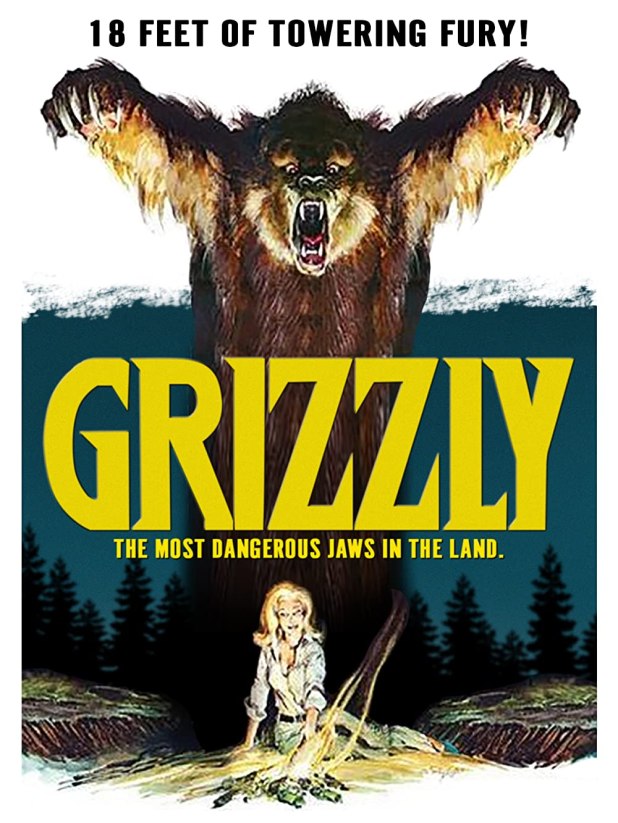
Finally, a trivia note for comic book fans. The amazing poster for this movie? Neal Adams did the art.

And in the universe of Tarantino, Don Stober was played by Rick Dalton, not Andrew Prine.

You can watch this on Tubi or get it from Severin.

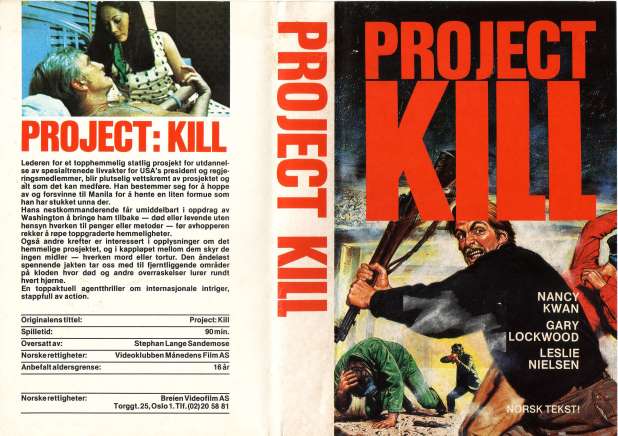
THE FILMS OF WILLIAM GIRDLER: Project: Kill (1976)

William Girdler said that Project: Kill was “…the beginning of what I can do if I’m given the opportunity. Here I’m not pinned down by cliches or lousy material. It’s the only picture I’m really proud of.”

John Trevor (Leslie Nielsen) has spent six years as part of an MK-ULTRA experiment that gives American soldiers better killing abilities through training, drugs and hypnosis. It’s kind of like a cult for killers and now, he wants out. He even tells his second-in-command Frank Lassiter (Gary Lockwood) that he’s about to escape. It’d all be great if the withdrawal didn’t make John incredibly violent or that an Asian gang wasn’t looking for him in the hopes of taking the drugs from his system and using them for their own army.

Come for Nielsen dressed like a 70s dad despite being billed as an action star, stay for his romance with Nany Kwan and by all means, come back for his fight with Lockwood on a beach. It even ends a lot like Scorpio, where the older killer tells the younger one, “Now they’re going to come after you.”

On the William Girdler web site, Girdler’s insurance man Joe Schulten said, “Project Kill was supposed to be distributed in a lot of countries. Nancy Kwan was an international star at the time, and it was booked up all over the place. But the man who was going to distribute the movie was either killed or committed suicide right before the film was scheduled to come out. So the release was tied up in an estate dispute. I don’t think Project Kill was ever released to movie theaters. I think it only showed up on cable in the eighties.:

Producer David Sheldon had the answer: “Project Kill was released in the theaters, though not a very wide release. It has been on television quite a bit and there’s a home video in the stores. We pulled the picture from Arnold Kopelson (Inter-Ocean Films) who was supposed to distribute the film overseas, but was taking too long. A company called Sterling Gold tried to take it next, but the owner was found murdered organized crime style. Finally, I put it with Picturmedia who released it theatrically and sold the home video rights. The CEO of Picturmedia is Doro Vlado Hreljanovic. Picturmedia has done a poor job in releasing the picture. It deserves more.

That said, it does have Vic Diaz in it.

Writer Galen Thompson went on to script SuperstitionThe Evil and several Chuck Norris projects while David Sheldon was part of GrizzlyLovely but Deadly and Foxy Brown.

You can watch this on Tubi.

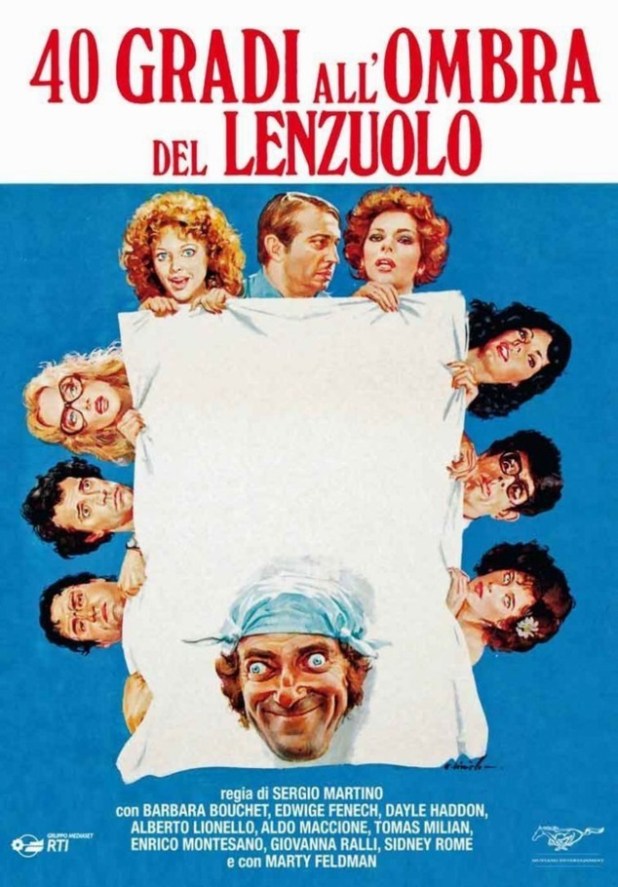
40 gradi all’ombra del lenzuolo (1976)

That title means 40 degrees in the shade of the sheet but you may know this Sergio Martino-directed. movie better as Sex With a Smile. In the U.S., all of those ads focused on Marty Feldman, who briefly shows up in one of the film’s five chapters. It’s American distributor Centaur/Surrogate even cut all of the credits and just have Feldman’s name in them along with changing the order of the stories.

“One for the Money” takes place in Switzerland as a rich Italian bride (Barbara Bouchet) meets a man (Enrico Montesano) who offers her 20 million lire (around $4.5 million dollars in 2023 U.S. cash) to make love. She blows him off but then starts to wonder “What if?”

“The Bodyguard” concerns a socialite (Dayle Haddon, who went from Disney movies like The World’s Greatest Athlete to movies like this and Just Jaeckin’s Madame Claude and The Last Romantic Lover) who hates how well her bodyguard (Feldman) keeps her secure. And then when she tries to escape him to met a new lover, she learns that maybe he was right to do his job so perfectly.

“Catch It While It’s Hot” is about a countess (Giovanna Ralli, What Have They Done to Your Daughters?) hooking up with her chauffeur (Alberto Lionello), while “Dream Girl” finds Edwige Fenech being so ravenous that she intrudes on the dreams of her neighbor (Tomas Milian), which he actually complains about. Come on, dude.

Finally, “A Dog’s Day” has a man save a woman (Sydne Rome, The Pumaman) from jumping off the ledge outside his apartment. They make a date and that’s when he meets her very jealous dog.

Martino’s sex comedies basically have the most attractive women ever dealing with men who look like buffoons. But I mean, would I fair any different upon trying to speak to Edwie Fenech or Barbara Bouchet? Also: Look for an appearance by Salvatore Baccaro, who played The Beast In Heat.

There’s also a sequel to this, Spogliamoci così, senza pudor, if you enjoy Italian sex comedies. In the same year that Martino made this, he also directed the poliziotteschi movies Gambling City and Silent Action as well as the giallo The Suspicious Death of a Minor. Few directors could hit so many genres with so much success.

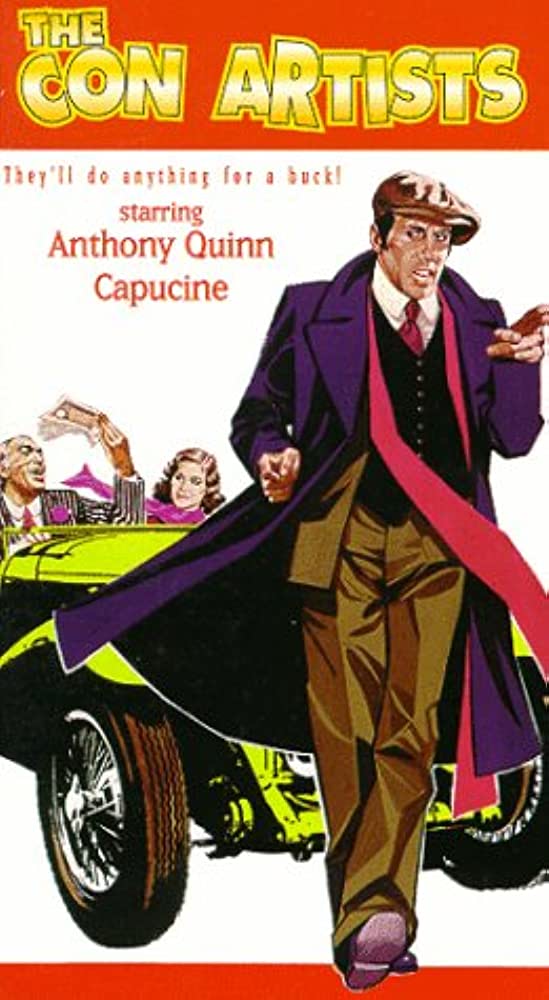
VIDEO ARCHIVES WEEK: The Con Artists (1976)

VIDEO ARCHIVES NOTES: This movie was discussed on the April 18, 2023 episode of the Video Archives podcast and can be found on their site here.

Also called Bluff, High Rollers, The Switch and The Con Maas well as its Italian title, Bluff – storia di truffe e di imbroglioni (Bluff – Histories of Scams and Cheaters), this movie finds director Sergio Corbucci making a transition from violent Westerns like DjangoThe MercenaryThe Great Silence and The Hellbenders and into making comedies such as The White, the Yellow and the BlackThe BeastWho Finds a Friend Finds a Treasure and Super Fuzz. You know those social media posts that say “four films, all the same director?” Corbucci made movies where a gunfighter’s hands were ruined before he opened a grave and massacred his enemies with a gigantic machine gun, Civil War soldiers keeping a treasure hidden in coffins and a mute hero who dies in front of his lover in an inverse of every Western ever with, well, a movie where a super cop is invulnerable against everything except the color red. It’s a big shift but his movies are united by their quality.

Philip Bang (Anthony Quinn) is expecting his ex-wife Belle Duke (Capucine!) and his daughter Charlotte (Corinne Clery!) to get him out of the high security prison he’s supposed to live out the rest of his days in. But in the middle of the plan, Felix (Adriano Celentano) gets sprung instead. He’s coerced into breaking Bang out — which he does — only to learn that the elder con man might not want to see his former love, as he stole plenty of money from her. That means it’s time for one movie long scam — well, a series of them — as Felix has fallen in love with Charlotte and Bang has reunited his gang.

Writer Dino Mauri directed and wrote Kiss the Girls and Make Them Die as well as serving as one of the writers of one of my favorite Franco Nero movies, Street Law. He wrote this along with Massimo De Rita, who wrote Violent CityThe Heroin Busters and Blastfighter.

The tagline was “A comedy of stings and double stings!” so if you’re wondering what movie this should remind you of, it does it twice.

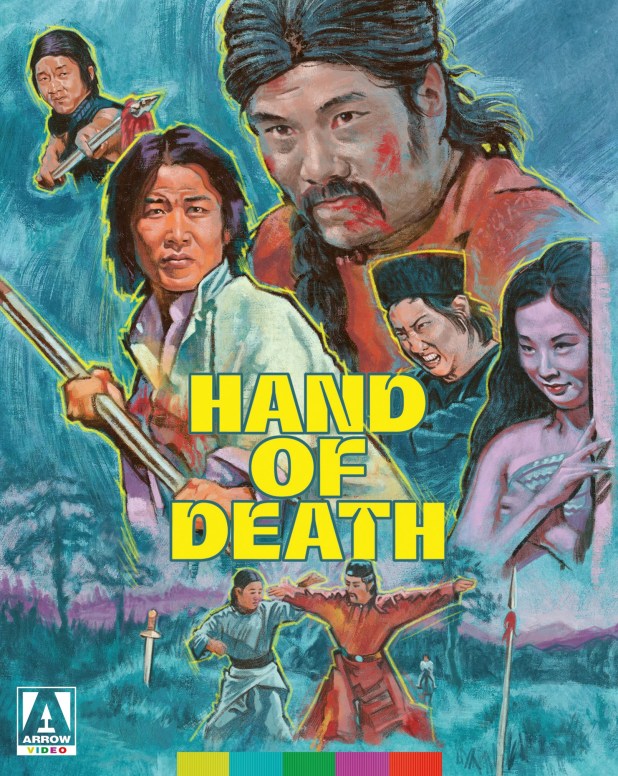
ARROW BLU RAY RELEASE: Hand of Death (1976)

When Golden Harvest first released this movie, no one knew who director and writer Wu Yu-sheng, actor Chen Yuen-lung or fight choreographer Hung Chin-pao were.

Today we know them as John Woo, Jackie Chan and Sammo Hung.

After Shih Shao-Feng (James Tien), a traitor to the Shaolin eliminates thousands of their number for his own power, a surviving Shaolin master named Yun Fei (Tan Tao-Liang) has one goal. Revenge.

The problem is that he’s going up against an army — and Tu Qing (Sammo Hung) — all by himself. He’s already lost one battle against Tu Qing and his extended iron claw technique. Saved by a blacksmith by the name of Tan Feng (Jackie Chan), and soon joins forces with a swordsman named Zorro (Yang Wei) who has refused to draw his weapon since he accidentally killed a lover.

You can see the influence of Chang Cheh on Woo, as he allows us to get to know every single hero so that their heroic sacrifice means something at the end of the movie. The action is great in this, giving you an idea of the magic that Woo would bring in the 80s, as well as the loyalty between violent men, another theme that continually comes up in his movies.

It’s interesting to see Woo tackling a traditional Hong Kong film, one about the Shaolin Temple, the brave warriors who defend it and the cruel ones who attempt to tear it down. Tao-Liang Tan fights literally armies of people in this all by himself and looks great doing it. Credit for the fight choreography goes to Hung, who also has to wear a ridiculous set of teeth.

The Arrow Video blu ray of Hand of Death has a 2K restoration from original film elements by Fortune Star. There’s also a new feature commentary by martial arts cinema experts Frank Djeng and Michael Worth; From Hong Kong to Hollywood, an archive featurette on John Woo’s early career, including interviews with Woo, Chow Yun-fat and Peter Lau; a never-before-seen archive interview with star Tan Tao-Liang, filmed by his former student Michael Worth; an archive interview with co-star Sammo Hung; the Countdown to Kung Fu credits; a trailer and image gallery.

You also get a double-sided fold-out poster featuring original and newly commissioned artwork by Colin Murdoch, a reversible sleeve featuring original and newly commissioned artwork by Colin Murdoch and an illustrated collectors’ booklet featuring new writing by film programmer William Blaik.

You can order Hand of Death from MVD.

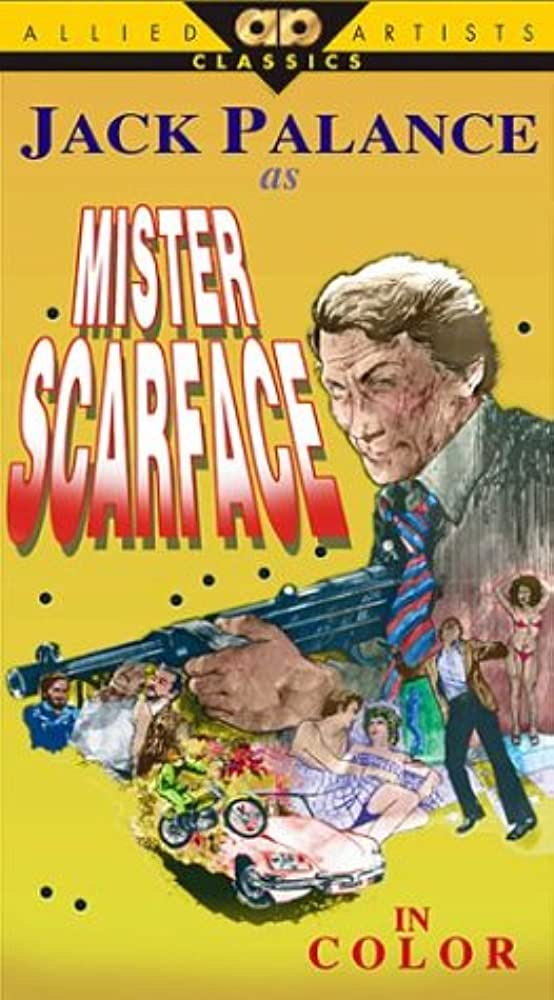
VIDEO ARCHIVES WEEK: Mr. Scarface (1976)

VIDEO ARCHIVES NOTES: This movie was discussed on the January 17, 2023 episode of the Video Archives podcast and can be found on their site here.

Also known as Rulers of the CityThe Big Boss and Blood and Bullets, this was directed by Fernando Di Leo. He started his career mainly being known for his writing, including A Fistful of DollarsFor a Few Dollars MoreMassacre TimeLive Like a Cop, Die Like a Man and so many more. He co-wrote it with Peter Berling, who was often in Kalus Kinski movies before writing a series of conspiracy novels about the Priory of Sion.

Tony (Henry Baer) works as a money collector for Cherico (Edmund Purdom) but he dreams of leaving his life of crime behind and settling on the beaches of Brazil. He decides to fast forward all the hard work of being a henchman by working with Rick (Al Cliver) and Napoli (Vittorio Caprioli) to rob the biggest boss of all, Scarface Manzari (Jack Palance).

It takes its time getting there, with Tony mostly cracking wise, cracking schools and, well, cracking smiles at the many ladies he sees during his days and nights of collecting blood money. He would have never even considered going after Scarface if he didn’t kill Cherico instead of repaying his debt. By the end, our hero has tracked his enemy — actually, his lifelong enemy, even if we don’t get that knowledge for some time — to a slaughterhouse where he wipes out the entire family.

Added bonus: Gisela Hahn (Devil HunterWhite Pop JesusDisco Fieber) is in the cast. And man, Jack Palance is so macho that he even makes a cigarette holder look manly. Like, the same kind of long effete cigarette holder that, let’s say, Cruella de Vil would use.

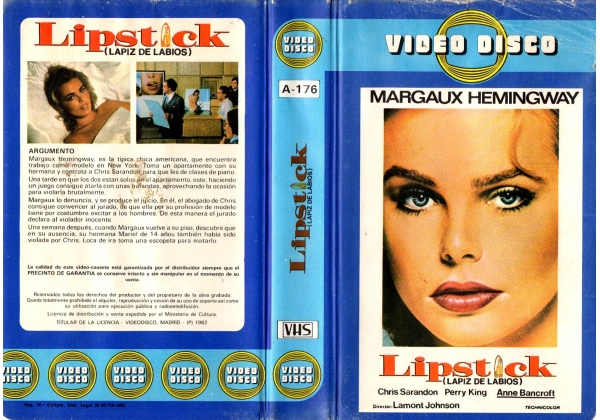
VIDEO ARCHIVES WEEK: Lipstick (1976)

VIDEO ARCHIVES NOTES: This movie was discussed on the November 22, 2022 and November 29, 2022 episodes of the Video Archives podcast and can be found on their site here.

Never trust Chris Sarandon.

I learned this at a young age with Fright Night, but this was before that and you still should never trust him. Don’t trust him in The Sentinel, don’t trust him in The Princess Bride, don’t even trust him as the voice of Jack Skellington.

Christine McCormick — played by Margaux Hemingway, herself a supermodel who appeared on the covers of Cosmopolitan, Elle and Vogue as well as serving as the spokesperson for Fabergé’s Babe perfume — is the face of a new brand of lipstick. She also is the guardian of her 13-year-old sister Kathy (Margaux’s sister Muriel, who was also in Star 80 and Personal Best), who has a young girl crush on her teacher, Gordon Stewart (Sarandon). For some reason, he thinks that Christine has the connections to get his music out to the world.

He comes to her beach photo shoot, but there’s no time to chat, and she forgets that they were to meet at her apartment. As he plays his atonal music — more on that in a second — she leaves the room to take a phone call from her lover Steve (Perry King, who really was in some awesome junk and I say that in the best of ways).

Hurt by her seeming rejection, his assault is brutal in its quickness. Saying, “So you fuck priests, too” he shoves a photo of her brother Martin (John Bennett Perry, Matt Perry’s dad) in her face, breaks it and then smears lipstick all over her face, telling her he wants it all over him. He ties her to the bed and takes her — the scene is too male gaze, too beautiful in a way because it’s a disgusting act — and even when they’re caught by Kathy, he suggests that the little girl joins them.

Once free, Christine gets a lawyer, Carla Bondi (Anne Bancroft), who tells her that it won’t be easy to convict him. And it isn’t. Christine’s sexual image as a model, even the fact that she has fantasies and a sex life, is used against her. So when Gordon goes free, it’s no great surprise.

Christine decides that she’s done with California and modeling after one last job. Except that the last job is in the same exact abandoned building where Gordon is rehearsing a synth ballet. He ends up finding Kathy, using her heartbeat as an instrument and then raping her as well. When she gets back to the photo shoot, Christine finds the rifle she had packed — literally, they packed to leave and are doing the photoshoot and then getting out of town — and shoots at Gordon as he tries to get away. As he gets out of the car, she pumps round after round into him. And in the end, no jury will convict her.

But maybe not. Because I believe that everything that happened after the not guilty verdict is in her head. There’s no way that she’d leave modeling literally from her last shoot. The coincidence that Gordon would be in the same building, in a California filled with places to rehearse, is infinite. The idea that she can successfully shoot him so many times in broad daylight and still not go to jail is the kind of fantasy that only appears in exploitation movies. Like Lipstick.

Director Lamont Johnson started as an actor and was mainly known for TV movies like Crash Landing: The Rescue of Flight 232Crisis at Central High and That Certain Summer, as well as Spacehunter: Adventures In the Forbidden Zone. It was written by David Rayfiel, who was the scriptwriter for The FirmHavana and the 1995 remake of Sabrina.

Michael Winner turned down producer Dino De Laurentiis’ offer to direct this film and that shocks me. In his autobiography, Winner said that “Chris Sarandon was not a very good actor unless he was playing nut cases.” Then again, he used him in The Sentinel.

Even stranger, in 1998’s Little Men, Muriel Hemingway and Sarandor played husband and wife Jo and Fritz Bhaer.

That’s really fashion photographer Francesco Scavullo shooting the lipstick ads, while the clothes for this movie were designed by Jodie Lynn Tillen, who was the costumer for Messiah of Evil and Lemora! While uncredited, Donfeld also worked on the clothes. He was most famous, perhaps, for creating the TV costume for Wonder Woman.

French singer and music composer Michel Polnareff did the music for this, which is beyond wild. It’s completely unsettling — he also did a disco soundtrack for the film — and when it plays while Gordon assaults Christine, it’s horrifying, setting up his assault of her body, brain and ears as his atonal noise blasts, filling the room with painful beats and shrill screams. Later, when it’s played in court and the jury must hear it, you nearly feel bad for the bad guy but no, he’s absolutely the worst.

Despite critics hating this movie and it failing with audiences, it was remade as Insaf Ka TarazuCollege Girl and Edi Dharmam Edi Nyayam in India and Arzu in Turkey.

The real victim? Margaux. This movie was supposed to launch her career in Hollywood, but Muriel got most of the notice. She would few movies over the next seven years — Killer FishThey Call Me Bruce and Over the Brooklyn Bridge, the first movie for Sam Firstenberg — before working in foreign genre movies like Goma-2 and straight to video films like Fred Olen Ray’s Inner Sanctum and Inner Sanctum II, Joe D’Amato’s A Woman’s Secret and Donald Farmer’s Vicious Kisses. Sadly, she became heavily involved in drugs and died at 41 from suicide. Her sister Mariel has always claimed that her death was not self-induced, but instead drugs.

Harlan Ellison, that cantankerous madman of my heart, once said of this movie, “Lipstick panders to the basest, vilest, lowest possible common denominators of urban fear and lynch logic. It is the sort of film that, if you see it in a ghetto theater filled with blacks, will scare the bejeezus out of you. The animal fury this film unleashes in an audience is terrifying to behold. It gives exploitation a bad name; and it has less to do with rape, which is the commercial hook on which they’ve hung the salability of this bit of putrescence, than it does with the cynicism of Joseph E. Levine, a man who probably has no trouble sleeping with a troubled conscience.”

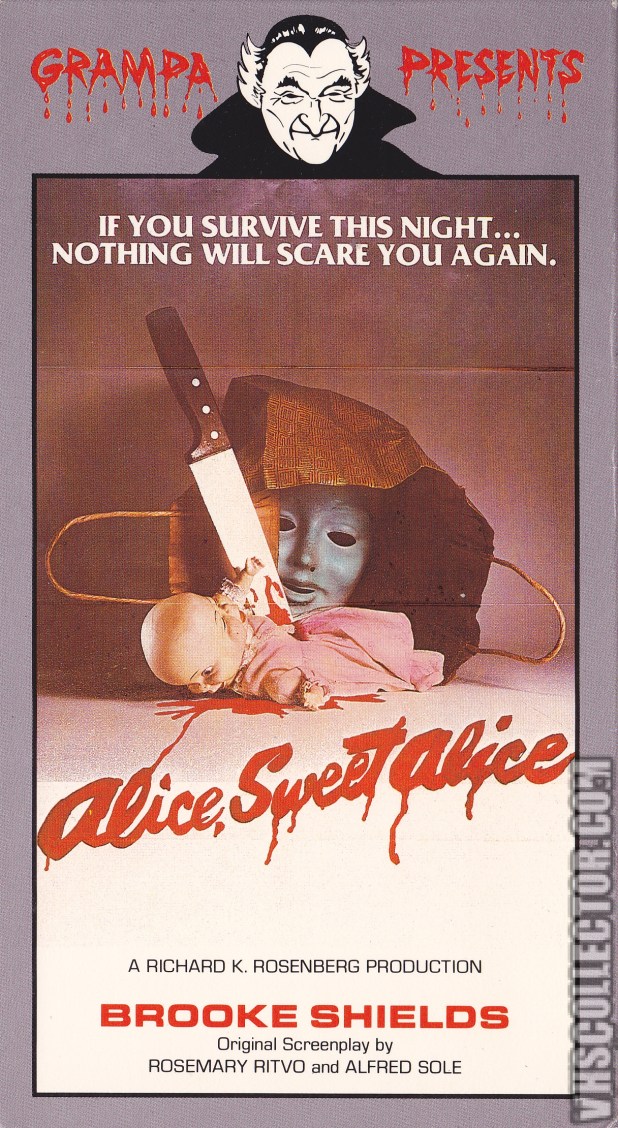
VIDEO ARCHIVES WEEK: Alice, Sweet Alice (1976)

VIDEO ARCHIVES NOTES: This movie was discussed on the October 25, 2022 episode of the Video Archives podcast and can be found on their site here.

Alfred Sole was an architect who dreamed of making movies. His first film, 1972’s Deep Sleep, which starred Deep Throat‘s Harry Reems and The Devil In Ms. Jones‘ Georgina Spelvin, was made for only $25,000. However, it was ruled obscene and pulled from theaters. His second film — the one we’re about to cover — may not have done well at first thanks to spotty distribution, but thanks to Brooke Shields’ popularity and multiple re-releases under multiple titles, like Holy TerrorCommunion and The Mask Murders.

Sole wrote the film with his neighbor Rosemary Ritvo, an English professor who he often discussed films with. A Catholic herself, they would often talk at length about the church in between discussing theater and horror films. Nicolas Roeg’s Don’t Look Now was a huge influence, as is obvious by the yellow raincoat worn by the film’s villain.

The film is set in 1961 Paterson, New Jersey, the hometown of the director, and as such much of it was based on his childhood. In fact, Mrs. Tredoni is directly based on a woman who lived next door to his grandmother who would look after the priests.

While Sole claims he had never seen any giallo before he made this, Alice, Sweet Alice is perhaps the most giallo of all American films before DePalma would make Dressed to Kill.

The film begins with Catherine Spages (Linda Miller, the daughter of Jackie Gleason and the mother of Jason Patric) visiting Father Tom with her two daughters, nine-year-old Karen (Shields) and twelve-year-old Alice (the astounding Paula Sheppard), who are students of St. Michael’s Parish Girls’ School. Father Tom gives Karen his mother’s crucifix as a gift for her first communion, making Alice jealous.

Alice is a wild child, her hair barely tied back, constantly in trouble for all manner of mischief. Is she a bad girl or just a misunderstood little girl dealing with the specter of her parents’ divorce in 1961, a time when this rarely happened and in a heavily Catholic neighborhood where this would surely be judged? Her antics include wearing a clear mask and repeatedly frightening and threatening her sister.

This all ends on the day of Karen’s first communion, when someone in the same school raincoat and mask as Alice kidnaps the young girl, strangles her, rips the crucifix from her neck and then sets her body on fire inside a church pew. This is insanely brutal and allows the viewer to know that this is not a movie prepared to take it easy on you.

At the same time, Alice enters the room and attempts to receive communion while wearing her sister’s veil. It’s never really established as to where she found it and whether or not she knew it belonged to her sister. There are no easy answers here.

Catherine’s ex-husband Dominick (Niles McMaster, Bloodsucking Freaks) comes back for the funeral and fulfills the giallo role of stranger pushed into becoming the detective. Furthering the giallo narrative, the ineffective Detective Spina takes over the case, pursuing the lead that Alice is the killer thanks to the suspicions of Catherine’s sister Annie. This lead seems even more obvious after the killer attacks Annie and Alice is found at the scene, wearing the same clothes.

Alice is sent to a psychiatric institution where it’s revealed that she’s been in trouble numerous times in school, a fact that Father Tom has concealed as he believed he could solve her problems.

The killer tightens her noose around Alice’s neck by luring her father to an abandoned building where she gets the jump on him, beating him with a brick, binding his body and pushing him off a ledge. Before he dies, he’s able to swallow the crucifix that the killer had stolen from his daughter. That’s also when we learn who the killer is, way before the film is over: it’s Tredoni, who sees Dominick and Catherine — and by extension their children — as sinners due to their premarital sex and divorce.

Alice may have been eliminated as a person of interest, but the danger remains. On a visit to Father Tom, Catherine learns that Tredoni lost a daughter on the day of her first communion, which taught her that children pay for the sins of their parents. In her grief, she gave herself over to the church. Her feelings about her calling are confirmed when Father Tom misunderstands her confession.

Finally, Alice’s scheme to leave cockroaches all over frightening landlord Mr. Alphonso neatly ties into Tredoni sneaking in to kill either her, Catherine or both of them. Alphonso is stabbed and the mad older woman runs to the church. Father Todd assures the police he can handle her, but even his mercy and the teachings of the church fail in the face of mania.

The end of this movie shocked me out of my theater seat. It’s visceral in its intensity and the end — where Alice walks away — is even more harrowing.

It’s rare to find a movie that completely destroys an audience. Alice, Sweet Alice did that when it played here to a full house as part of a Drive-In Asylum night of movies.

In these post-#metoo times, Alice takes on a whole new light. Nearly every male in the movie treats her blossoming womanhood as an invitation, from the lie detector operator who says that when he bound her breasts with the machine it looked like she wanted it to the guard at the children’s home who silently watches her as she meets with her parents. Perhaps even more disquieting is that Sheppard was 19 when this was made. Her only other film appearance is in the equally bizarre Liquid Sky, which is a shame, as she was incredible in both of these equally strange movies.

Alphonso DeNoble, who plays the grotesque Mr. Alphonso, also appeared in Bloodsucking Freaks. While his main career was a bouncer at a gay bar, as his side hustle Alphonso would dress up as a priest and hang around cemeteries, where widows would ask for a blessing and he’d indulge them for a monetary donation.

This film truly lives up to the ninth Satanic Statement: Satan has been the best friend the Church has ever had, as He has kept it in business all these years! And the Satanic Sin of Herd Mentality is obvious. To quote from the actual Chruch, “…only fools follow along with the herd, letting an impersonal entity dictate to you.”

Also, Alice posits that even the pre-Vatican II Catholic Church of 1961 was finding itself ill-equipped to understand the modern world and that people — from the old like Tredoni to the young like Alice — would suffer. Mostly, in the Church, it’s women that do most of that suffering, constantly propping up the male members yet never able to ascend to the power of the clergy, unless they want to be second best sisters.

Even 43 years after its debut, Alice Sweet Alice has the power to destroy. It’s a near perfect film that demands introspection and multiple viewings.

BONUS CONTENT:

For an even better look at this film, Bill Van Ryn of Groovy Doom and the horror and exploitation fanzine DRIVE-IN ASYLUM wrote this article for us last year.

We also had the opportunity to discuss this film with Alfred Sole’s cousin — and the maker of the astounding Desecration — Dante Tomaselli.