THE MOVIES OF AL ADAMSON: Nurses for Sale (1976)

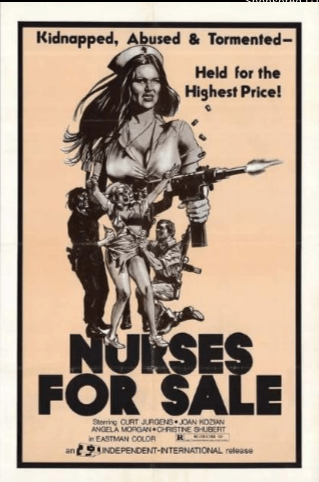
This is one of the many movies in which Independent-International used comic book artist Gray Morrow to do the art for the posters. He also did the poster and sales art for Brain of BloodCinderella 2000Dracula vs. FrankensteinNurse SherriFive Bloody GravesBlazing Stewardesses and Dynamite Brothers.

This film, produced by Sam Sherman and remixed by Al Adamson, was once Captain Roughneck from St. Pauli, which was directed and written by Rolk Olsen. In that movie, Captain Jolly (Curd Jurgens) and his men have been hired to smuggle a vaccine within a shipment of booze. When government officials try to take that booze from him, he destroys it and the vaccine gets stolen, which gets him blamed for taking it. There are also some nurses — they had to come in somewhere — kidnapped in the jungle.

It’s a little over an hour long and the new material from Adamson has some of the nurses making out. One of them is Swedish model Lenka Novak, who is also in Moonshine County ExpressCoachThe Great American Girl RobberyVampire Hookers and was one of the Catholic high school girls in trouble in The Kentucky Fried Movie.

THE MOVIES OF AL ADAMSON: Black Heat (1976)

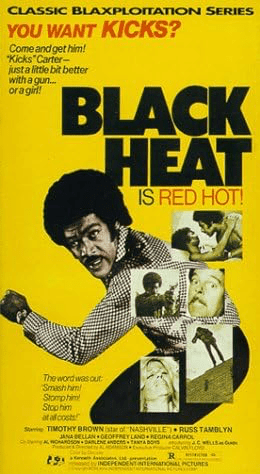
Tim Brown played football and acted, but because of the success of Jim Brown, who did the same things, he had to change his name to Timothy Brown. He stars in this as “Kicks” Carter, a Vegas cop fighting Ziggy’s (Russ Tamblyn) gang. He has to get revenge for his partner’s death and handle TV reporter Stephanie Adams (Tanya Boyd). Also: fight gun runners and save women from a house of ill repute. That’s a lot of work.

Directed by Al Adamson and written by John D’Amato, Sheldon Lee and Budd Donnelly, this is also known as The Murder Gang and Girl’s Hotel.

Regina Carroll shows up — well, she was Adamson’s wife — and so does Jana Bellan (Mary Lou from Sixpack Annie) and Adamson stock player Geoffrey Land. It seems like Tamblyn is having a lot of fun being an absolute lunatic and he makes this worth watching.

SUPPORTER DAY: Opening of Misty Beethoven (1976)

EDITOR’S NOTE: Today’s movie is brought to you by AC Nicholas, who has graciously become a Big B&S’er, a monthly supporter of the site and got to pick an entire week of movies. Would you like to have me write about the movies of your choice? It’s simple!

  1. Go to our Ko-Fi site and donate. There’s no set amount and I won’t tell you what to do. In fact, if you just keep reading for free, we can still be friends.
  2. Join as a monthly member for just $1. That makes you a Little B&S’er.
  3. As a Medium B&S’er at just $3 a month, if you pick a movie or a director, I’ll write about them for you. In fact, I’ll do one for each month you subscribe and even dedicate the post to you.
  4. For $5 a month, you basically get some major power. As a Big B&S’er, I’ll write an entire week on any subject you’d like. How awesome would that be? In fact, I’ll do it for every month you’re a member. Do you think any of your other movie sites will do that for you?

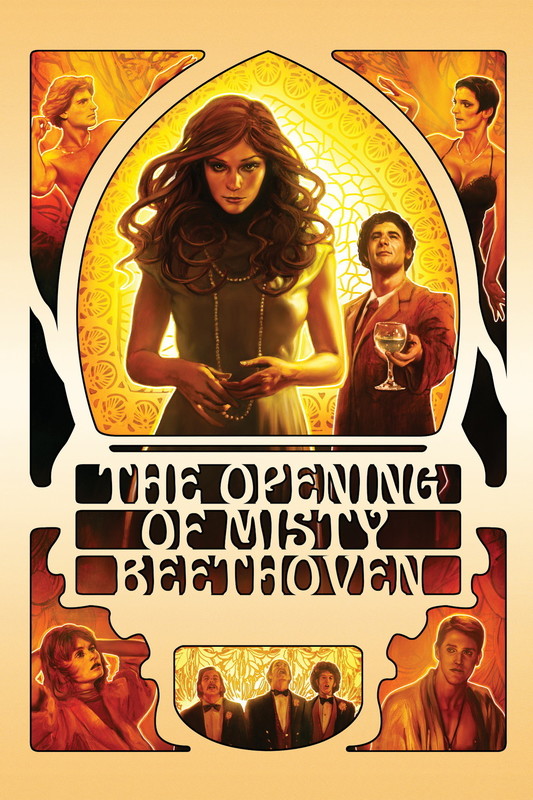
Adult films probably never had as big of a budget or as rich of a look as this movie, which was shot in New York City, Rome and Paris.

Dr. Seymour Love (Jamie Gillis) is our Dr. Henry Higgins because this is Pygmalion or My Fair Lady. He is transforming common streetwalker Dolores “Misty” Beethoven (Constance Money), a woman whom Love believes he can make into an elite and elevated lady who will impress Geraldine Rich (Jacqueline Beudant), the Colonel Pickering of this movie.

The goal will be that by the time of a party thrown by magazine publisher Lawrence Layman (Ras Kean) and his wife Barbara (Gloria Leonard), Misty will be the most wanted woman in the world. That’s not Kean in the threeway scene that follows. Instead, the female on male penetration has the stunt body of Casey Donovan. He’s also the homosexual art dealer who Misty seduces.

This was shot by cinematographer Paul Glickman, who used the name Robert Rochester. He was also the cinematographer for The Stuff and God Told Me To, as well as the director of photography for Al Adamson’s Dracula vs. Frankenstein. He was also nominated for the Best Animated Short Film Oscar for Calypso Singer and El Salon Mexico.

MILL CREEK THE SWINGIN’ SEVENTIES: The Swiss Conspiracy (1976)

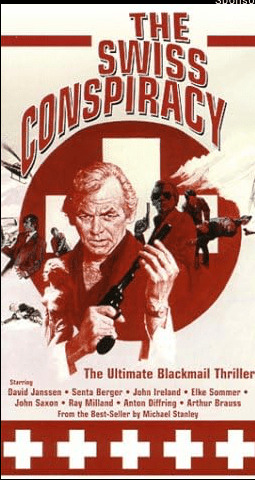
You probably know Jack Arnold better from directing movies like It Came from Outer SpaceCreature from the Black Lagoon, Tarantula and The Incredible Shrinking Man than spy thrillers. In this movie, a Swiss bank has its infamous secret bank accounts get compromised. They get David Christopher (David Janssen), a former U.S. Treasury official who now resides in Geneva to help.

He meets with the four people being blackmailed — one has already been killed — who include Denise Abbott (Senta Berger), Dwight McGowan (John Ireland), Robert Hayes (John Saxon) and Andre Kosta (Arthur Brauss). Who could be blackmailing them? Well, it could be any of the following people: bank vice-president, Franz Benninger (Anton Diffring), his mistress Rita Jensen (Elke Sommer) or two criminals, Korsak (Curt Lowens) and Sando (David Hess). Whoever the blackmailer is, they demand uncut diamonds as their payoff. Christopher has to head into the Andes, all alone, prepared to face off with whoever the blackmailer or blackmailers may be.

Hey it’s 89 minutes long and moves quick. It’s not the worst movie you’ve seen.

Don’t have the box set? You can watch this on YouTube.

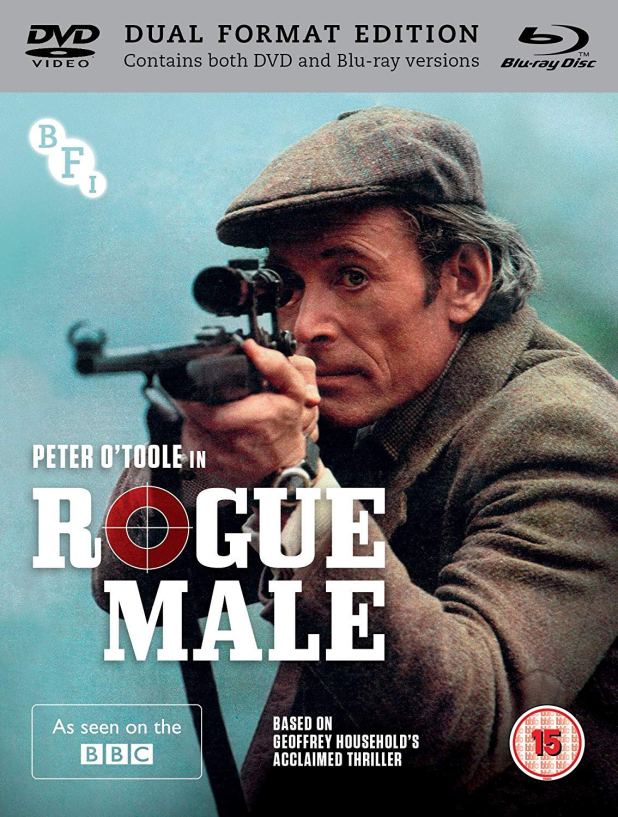
MILL CREEK THE SWINGIN’ SEVENTIES: Rogue Male (1976)

Based on Geoffrey Household’s 1939 novel Rogue Male, this BBC TV movie was directed by Clive Donner, adapted by Frederic Raphael and in addition to Peter O’Toole, it also stars Alastair Sim in his last film role.

In early 1939, before the start of World War II, Sir Robert Hunter (O’Toole) takes aim at Adolf Hitler with a hunting rifle. He hesitates to shoot, which ends with him being attacked by an SS guard. He’s tortured and claims that this was just an intellectual exercise to see if he could kill the leader. He’s a well-known British citizen, so to cover up the torture, they throw him off a cliff.

He survives and escapes to England, where a Nazi sympathizer named Major Quive-Smith (John Standing) recaptures him and demands that he writes a false confession that the British government demanded that he was given orders to kill the German leader. But he’s not giving up without a fight.

In 2007, Peter O’Toole named the film as his favorite among those that he had made. One of the reasons he was in it was because his wife Sian Phillips loved the novel.

Don’t have the box set? You can watch this on YouTube.

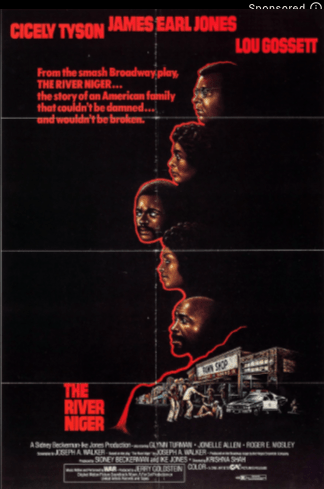
MILL CREEK THE SWINGIN’ SEVENTIES: The River Niger (1976)

Directed by Krishna Shah and written by Joseph A. Walker, this has an incredible soundtrack by the band War. It’s based on Walker’s 1972 play.

Johnny Williams (James Earl Jones) is a house painter and poet who has raised his family in Watts. His son Jeff (Glynn Turman) is home after failing out of the U.S. Air Force flight school and his wife wife Mattie (Cicely Tyson) is dying, but Johnny tries to remain positive. Yet when Jeff kills a rival gang member and a police officer gets killed, there’s a standoff with the cops that doesn’t end well for anyone.

The cast also includes Roger E. Mosley as Big Moe Hayes and Louis Gossett Jr. as Dr. Dudley Stanton.

This is shot in an all over the place style, somethimes in striking POV shots, other times in your face African masks dominating the entire shot. There seems to be so much crammed into this movie — Vietnam, alcoholism, racism, dealing with loss, Afrocentrism, the militarism of the Black Panthers — that it doesn’t have a solid focus, but these are the kinds of movies that had to be made and stories that had to be told.

Don’t have the box set? You can watch this on Tubi.

MILL CREEK THE SWINGIN’ SEVENTIES: Rulers of the City (1976)

Also known as The Big BossMr. Scarface and Blood and Bullets, this was directed by Fernando Di Leo. He started his career mainly being known for his writing, including A Fistful of DollarsFor a Few Dollars MoreMassacre TimeLive Like a Cop, Die Like a Man and so many more. He co-wrote it with Peter Berling, who was often in Kalus Kinski movies before writing a series of conspiracy novels about the Priory of Sion.

Tony (Henry Baer) works as a money collector for Cherico (Edmund Purdom) but he dreams of leaving his life of crime behind and settling on the beaches of Brazil. He decides to fast forward all the hard work of being a henchman by working with Rick (Al Cliver) and Napoli (Vittorio Caprioli) to rob the biggest boss of all, Scarface Manzari (Jack Palance).

It takes its time getting there, with Tony mostly cracking wise, cracking schools and, well, cracking smiles at the many ladies he sees during his days and nights of collecting blood money. He would have never even considered going after Scarface if he didn’t kill Cherico instead of repaying his debt. By the end, our hero has tracked his enemy — actually, his lifelong enemy, even if we don’t get that knowledge for some time — to a slaughterhouse where he wipes out the entire family.

Added bonus: Gisela Hahn (Devil HunterWhite Pop JesusDisco Fieber) is in the cast. And man, Jack Palance is so macho that he even makes a cigarette holder look manly. Like, the same kind of long effete cigarette holder that, let’s say, Cruella de Vil would use.

MILL CREEK THE SWINGIN’ SEVENTIES: James Dean (1976)

This movie was directed by Robert Butler, who also directed the pilots for Star Trek, Hogan’s Heroes, Batman and Hill Street Blues as well as four Kurt Russell Disney movies — Guns in the Heather, The Computer Wore Tennis Shoes, The Barefoot Executive and Now You See Him, Now You Don’t — and also Night of the Juggler and Turbulence. What a career!

It was written by William Bast, who had already written about his five-year relationship with James Dean in his book James Dean: a Biography and The Myth Makers, a drama about what Bast saw as the publicity-mad funeral of Dean and the damage it did to his family and hometown of Fairmount, Indiana. It was a TV movie in England and an episode of NBC’s Dupont Show of the Month as The Movie Star. He also wrote The Legend of Lizzie BordenThe Valley of Gwangi and The Betsy as well as creating The Colbys.

Bast is played by Michael Brandon in this movie. Strangely enough, in the 50s, Butler worked at CBS Television in charge of the studio audience ushers. James Dean got a job there through Bast but was soon fired by Butler. The movie also has someone else who knew Dean. Christine White, who plays a secretary, met Dean when she was his agent’s typist. She was his girlfriend from 1951 to 1954 and the two successfully auditioned for the Actors Studio. In the movie itself, White is played by Candy Clark.

There’s an interesting cast here. Amy Irving is a young Marilyn Monroe, Meg Foster plays another of Dean’s rumored lovers, Dizzy Sheridan (who went on to write Dizzy & Jimmy: My Life with James Dean: A Love Story, play next door neighbor Raquel on ALF and Jerry’s mom on Seinfeld) and strangely in the way that movies are, she was married to Stephen McHattie at the time, the actor who plays Dean.

Plus you get Jayne Meadows as Reva Randall, Katherine Helmond as Dean’s agent Claire Forger, Brooke Adams as Beverly and Julian Burton as Ray.

Don’t have the box set? You can watch this on Tubi.

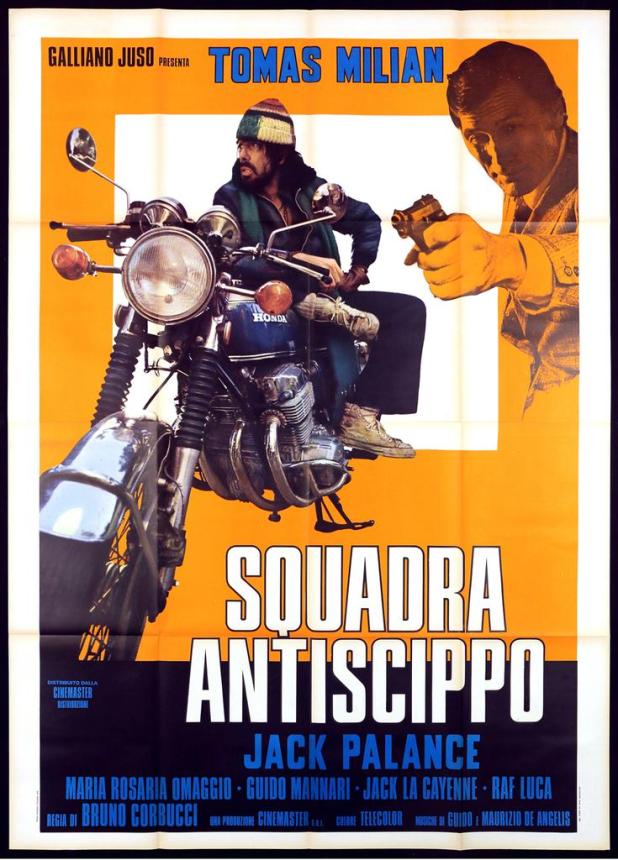
MILL CREEK THE SWINGIN’ SEVENTIES: The Cop In Blue Jeans (1976)

From 1976 to 1984, Tomas Milan starred in eleven movies in the Squadra antiscippo series. Starting with The Cop in Blue Jeans, these films include Hit SquadSquadra antitruffaLittle ItalyAssassino sul TevereDelitto a Porta Romana, Crime at the Chinese Restaurant, Delitto sull’autostrada, Crime in Formula One, Cop in Drag and The Gang That Sold America.

It all starts here with Milan as an undercover cop named Marshall Nico “The Pirate” Giraldi. A former street hood gone good, he works on the anti-mugging squad which puts him on the case of Norman Shelley AKA Richard J. Russo, a criminal played by Jack Palance.

Unlike every cop on the force, Nico dresses like he’s the guitarist in a Britpop band and has an unkempt beard. He even has a mouse named Captain Spaulding, named for the Marx Brothers’ movie Animal Crackers years before Rob Zombie did that. Actually, his look is a lot like Rob Zombie, come to think of it.

Nico gets even deeper into the mugging case when his girlfriend (Maria Rosaria Omaggio, The Tough Ones, Nightmare City) loses her latest manuscript to a snatcher. He’ll have to get to Shelley or Russo or whatever his name is, but that guy is busy choking out his underlings in the back seats of cars. This is a comedy and Palance is still terrifying.

Don’t have the box set? You can watch this on Tubi.

DRIVE-IN SUPER MONSTER RAMA PRIMER: Grizzly (1976)

EDITOR’S NOTE: This weekend is the Drive-In Super Monster-Rama! Get more info at the official Drive-In Super Monster-Rama Facebook page and get your tickets at the Riverside Drive-In’s webpage.

From 1972 to 1978, William Girder directed nine feature films and would have probably never stopped, were it not for the helicopter crash that took his life while scouting the Philippines filming locations. From Asylum of Satan and Three on a Meathook to The ManitouSheba Baby and Project: Kill, his films may have been derivative but they made money.

Here’s the best example. Around these parts, Girder is celebrated for Abby, a movie that was removed from theaters because of its similarity (let’s say total ripoff) of The ExorcistThat brings us to Grizzly, which is essentially Jaws on dry land. With a bear. A grizzly bear.

Grizzly found its inspiration when its producer and writer, Harvey Flaxman, came face to face with a bear during a camping trip. Co-producer and co-writer David Sheldon thought about how they could make a bear version of Jaws and they wrote a script that Girdler discovered and offered to finance, as long as he could direct.

Grizzly begins with military vet and helicopter pilot Don Stober (Andrew Prine, The Town that Dreaded SundownThe EliminatorsAmityville II: The Possession) flying over a national park and explaining how the woods remain untouched, much like they were in when Native Americans made their homes here.

The first two attacks happen quickly — in bear POV no less — when two female hikers are dismembered by the ursus arctos horribilis villain of this story. That brings in park ranger Michael Kelly (Christopher George, Gates of Hell/City of the Living DeadDay of the Animals, MortuaryPieces) and photographer Allison Corwin (Joan McCall, who besides being in Devil Times Five is also married to the film’s writer, Sheldon) in on the case.

At the hospital, a doctor tells the park ranger that a bear killed the girls, but the park’s supervisor blames the ranger and naturalist Arthur Scott (Richard Jaeckel, The DarkMako: The Jaws of Death and TV’s Salvage 1) for the girls’ deaths. And guess what? Just like Jaws, there’s no way the park is getting closed before tourist season.

The rangers all decide to search the mountain for the grizzly, which isn’t accounted for in their census of animals in the park. One of the rangers — of course — decides to get nude in a waterfall because that’s what you do when you’re hunting a killer bear and gets murked for her stupidity.

Kelly and Stober think they have found the bear from the air, yet it’s just naturalist Scott wearing an animal pelt and tracking the bear himself. Scott tells them that this bear is actually a prehistoric version of the grizzly that stands 15 feet tall and weighs at least 2,000 pounds.

No matter how many people the grizzly kills, no one will close the park. So when the story becomes national news, the owners of the park — a national park can have owners? — allow amateur hunters to shoot the shark (this has nothing to do with the very same thing happening in Jaws, right?). Those hunters are pretty much the worst people ever, as they use a bear cub as bait, thinking the grizzly will protect its young. Nope — it eats that baby bear and keeps on coming.

The grizzly literally shreds his way through the park and nobody closes it down until it murders a young mother and mutilates her child. And get this — the grizzly is so smart, it knows how to bury the naturalist in the ground and then waits for him to wake up so it can kill him. Can a bear be a slasher killer? Well, we already know that Bigfoot can be, thanks to Night of the Demon.

The grizzly kills every hero in this movie other than Kelly the photographer, who magically finds a bazooka in the wrecked helicopter and remembers the end of every shark movie: you must blow this beast up real good. She does and that’s the end of Grizzly.

An interesting personal note: I was telling my dad about this movie and he remembered that it has played on a bus that took he and my mother on a casino trip. That’s right — at 1 AM, pitch blackness, the TV on their bus blared this gorefest as loudly as possible. “I couldn’t wait for that movie to end,” was my mother’s review. My father’s was a bit kinder.

Warner Brothers originally wanted to finance Grizzly, but were furious that Edward L. Montoro and Film Ventures International (FVI) had taken the project. That’s because a year before, the studio sued both of these companies for copyright infringement when they released Beyond the Door in the US.

Sadly, while Grizzly was one of 1976’s best-performing films, earning $39 million worldwide (adjusted for inflation, that’s around $177 million in 2018 dollars), its distributor Edward L. Montoro and Film Ventures International kept all the profits. Girdler and Harvey Flaxman and David Sheldon (the film’s screenwriters/producers) had to sue to get their share.

Even after all that, Girdler still directed Day of the Animals, a spiritual sequel to Grizzly, for Montoro. While this film added Leslie Nielsen and Lynda Day George to the returning cast of Christopher George and Richard Jaeckel, it wasn’t as successful.

Grizzly just seems like a movie that’s buried in legal shenanigans. A sequel, Grizzly II: The Predator (also known as Grizzly II: The Concert, a title that would assuredly guarantee that I would buy this film) was made in 1983.

Filmed in Hungary by André Szöts and written by Sheldon, the co-producer and writer of the original, it was never released. The film had Louise Fletcher, John Rhys-Davies and unknowns but about to be big stars like Charlie Sheen (who took this movie over the lead in Karate Kid), George Clooney and Laura Dern in the cast, as well as live performances (hence Grizzly II: The Concert) by musicians like Toto Coelo (who had one song I can name, “I Eat Cannibals Part 1”) and Landscape III.

The movie was such a mess that the film’s caterer ended up rewriting it. And while the main filming was completed, special effects and all of the actual bear footage wasn’t. That’s because the film’s executive producer Joseph Proctor had disappeared with the money (and may have even been already jailed when filming began). While a mechanical bear was to be used, there was still footage shot of a live bear attacking concert-goers filmed (!). There’s a bootleg workprint, but the full film has ever emerged. This New York Post article has even more amazing info about Grizzly 2. Now that film has been released, if you’d like to see it.

Finally, a trivia note for comic book fans. The amazing poster for this movie? Neal Adams did the art.

And in the universe of Tarantino, Don Stober was played by Rick Dalton, not Andrew Prine.

Here’s the recipe I’ll be bringing.

Honey Bear

  • 1 oz. bourbon
  • 2 oz. apple cider
  • 1/2 oz. Cointreau
  • 1 oz. honey, orange and sage syrup
  • Sliced orange

Pre-work: To make the syrup use the following ingredients:

  • 1 cup water
  • 1/3 cup honey
  • 3 tbsp. sugar
  • 1 tsp. ground sage
  • 2 orange slices
  • 1 tsp. orange zest
  1. Heat a small pan on high, then heat up all ingredients to boiling.
  2. Simmer for 3 minutes and let cool. Store in refrigerator for up to a week.

To make the drink:

  1. Pour bourbon and honey, orange and sage syrup in an ice-filled glass.
  2. Top with apple cider.

You can watch this on Tubi or get it from Severin.